Retail News CRM

Tag: Tax

  • Thailand’s Central declares $89.6 mln tax on Big C Vietnam deal

    Thailand’s Central declares $89.6 mln tax on Big C Vietnam deal

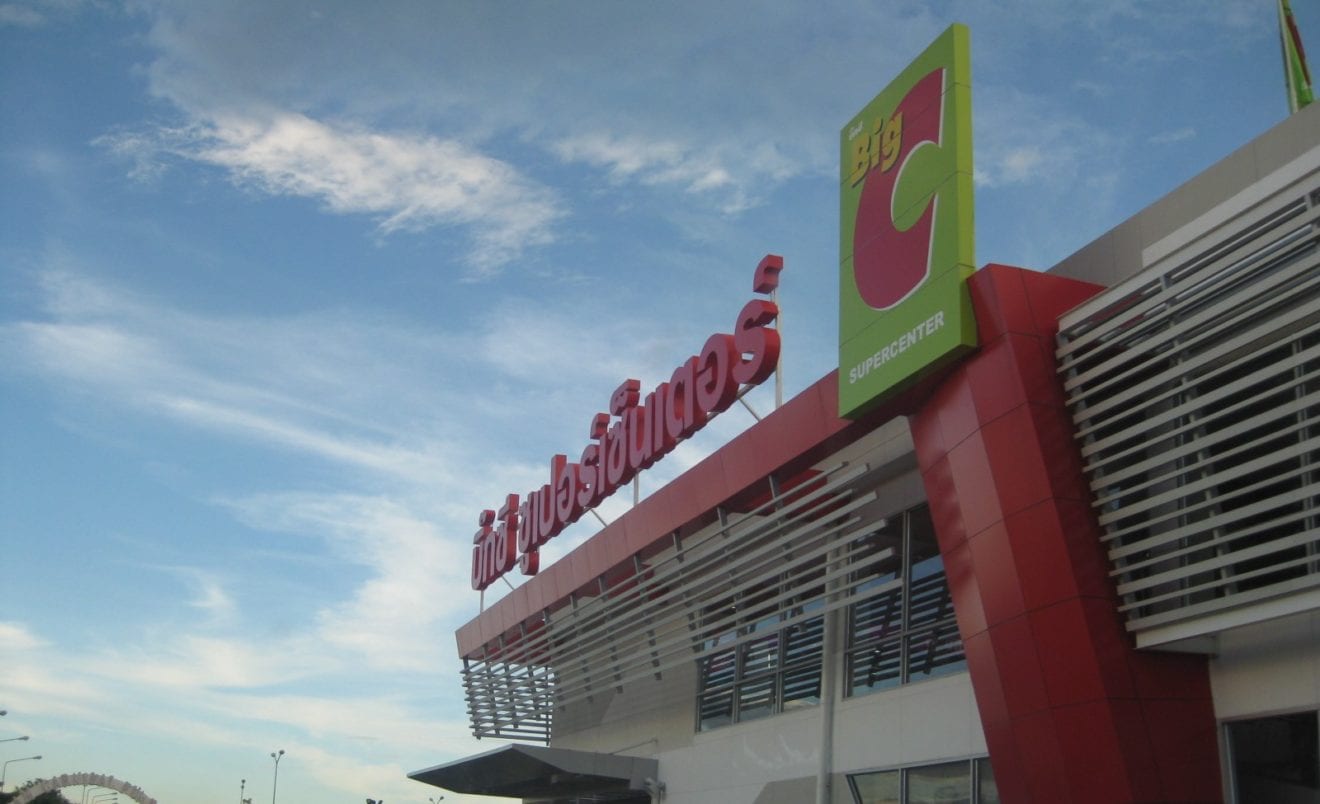
    Thai retail giant Central Group has declared around VND2 trillion (US$89.6 million) in tax on its acquisition of Vietnam’s biggest foreign-owned supermarket chain Big C, local media reported.

    Big C Vietnam, which declared the tax on behalf of its new owner, has paid VND380 billion ($17.03 million) of the amount, Tuoi Tre newspaper said on Monday, citing an unnamed source from the Ministry of Finance. The rest is expected to be collected later.

    The source did not comment on why the sum was much lower than the official estimate of VND3.6 trillion ($159 million) by the ministry’s General Department of Taxation.

    In June the department sent letters to Central Group and France’s Casino Group, the chain’s former owner, demanding them to pay tax on the $1.04 billion deal and threatening to block the ownership transfer.

    It reportedly said in the letters that the companies were far behind their tax obligation. According to the department, Vietnam’s laws stipulate that businesses have 10 days to pay taxes on the sale of their holdings after their negotiation is completed. The Big C deal was made public on April 29.

    At the end of last month, the tax authority reminded the companies of the tax again, saying they will be fined 0.05-0.07 percent per day for late payment.

    Big C is the largest foreign-owned retail chain in Vietnam with 33 supermarkets and 11 convenience stores. Many big players such as Vietnam’s largest retailer Co.op Mart, Japan’s Aeon, Thailand’s TCC and South Korea’s Lotte were interested when Casino announced its sale plan at the end of last year.

    Vietnamese electronics retailer Nguyen Kim, 49 percent owned by Central Group, also joined the Thai conglomerate in the acquisition of Big C. Their respective stakes have not been disclosed.

  • Indonesia Intensifies Awareness Campaign on Tax Amnesty Program

    Indonesia Intensifies Awareness Campaign on Tax Amnesty Program

    The Administration of President Joko Widodo (Jokowi) is racing against time to make its tax amnesty program a success, in order to increase the much needed state revenues.

    Officially launched on July 1, the tax amnesty program is effective from July 18, 2016 until March 31, 2017.

    The first period of its implementation is from July 18 until September 30, 2016; the second is from October 1 until December 31, 2016; and the third period is from January 1 until March 31, 2017.

    The tax amnesty program has a specific period, therefore there should be no delay in its implementation, President Jokowi was quoted as saying by new Finance Minister Sri Mulyani Indrawati recently.

    He particularly asked Finance Minister Sri Mulyani to complete all regulations on implementation of the tax amnesty.

    Regulations on the tax amnesty must be completed soon, so the program could be carried out successfully, Minister Mulyani said at the presidential palace, here on July 28, after receiving a directive by the President on the tax amnesty for officials of the tax directorate general of the finance ministry.

    The tax amnesty program is designed to be a significant incentive for taxpayers, since the compensation interest to be charged is only two percent, according to the minster.

    “We are trying, during the period from now until September, to create trust building, convenience and, finally, success in developing a tax system,” she said.

    The president asked every tax officer to not only be ready and proactive in the implementation of the tax amnesty program, but also to secure the state revenue, in general.

    For that purpose, tax officers should be honest, professional and have no conflicts of interest.

    In his directives, President Jokowi said he believed that the momentum to carry out the tax amnesty is right at present, as the public has been enthusiastic in attending the tax amnesty education sessions that have been held.

    The tax amnesty socialization activities have been well received, as the number of people attending the events were larger than those invited for the events, he explained.

    “From three socialization activities that we have carried out, I have seen huge enthusiasm from the public and businessmen. In Surabaya, 2,000 people were invited, and 2,700 people came. In Medan, it was even more. 3,000 people were invited, and 3,500 people came to the event,” the President said.

    Jokowi is scheduled to carry out the tax amnesty sessions in Makassar, Jakarta, and even Singapore in the near future.

    The Indonesian government has implemented a new tax amnesty program to boost tax revenues by encouraging the repatriation of funds stashed abroad.

    The government will impose a two to five percent tax on assets repatriated to the country by March 2017.

    These assets must be invested in Indonesia for a period of three years in funds managed by appointed banks and can be invested in several ways, including government bonds.

    The government said many rich Indonesians have parked thousands of trillions rupiah abroad to evade tax.

    At least Rp4,000 trillion of the fund are expected to be declared and Rp1,000 trillion of which would be repatriated and invested in the country.

    When launching the tax amnesty program on July 1, Jokowi urged the countrys business community, whose members had so far been stashing assets overseas, to avail the government`s program.

    “This is an opportunity that will not come again. Anyone who wishes to make use of it can go ahead and the rest should be prepared for the consequences,” the President stated.

    “So, we hope these funds are repatriated immediately. We will need Rp4,900 trillion in the next five years to develop infrastructure. The national budget can only provide Rp1,500 trillion and the rest must come from investment and businesses. There is no other alternative,” he explained.

    In the meantime, the Indonesian Police (Polri) will guarantee legal certainty and safety of tax amnesty applicants.

    Polri is supporting the governments tax amnesty program and has helped maintain the investment climate by not disturbing activities of investors already in Indonesia, the Head of Polris Crime Investigation Department (Bareskrim), Commissioner General Ari Dono Sukmanto said on July 28.

    The National Police is implementing the instructions of the President Joko Widodo and Law No. 11 Year 2016 on Tax Amnesty, to guarantee safety and legal certainty of the applicants, he added.

    Detectives should focus not only on merely finding wrongdoings of tax payers, particularly tax amnesty applicants, he remarked.

    Polri, in cooperation with several financial institutions, such as Indonesias Financial Services Authority (OJK), Bank Indonesias regional offices, and the Tax Directorate General, will issue appeals to businessmen and individuals, who have stashed their money overseas, to return their money to Indonesia and keep them in domestic banks.

    “Polri will also guarantee the secrecy of data of tax payers applying for amnesty. Those who leak the data will be punished,” he said.

    Furthermore, State-owned bank PT Bank Rakyat Indonesia (BRI) has set a target to collect funds at least worth Rp60 trillion from the tax amnesty program, through both bank and non-bank products.

    “The target would not be achieved without the dissemination of information that the BRI is ready to offer tax amnesty services to the clients and public, both in the country and overseas,” PT BRI Director Sis Apik Wijayanto noted at an event to raise awareness on the tax amnesty program in Lampung, on July 28.

    The BRI has disseminated information on its tax amnesty-related products and services across all its branches in the country.

    In Lampung Province alone, 14 branches and 97 units of BRI are ready to offer tax amnesty services, he remarked.

    The event was attended by 100 people, mostly businessmen from Lampung.
  • Taxing the internet giants: Catch me if you can

    Taxing the internet giants: Catch me if you can

    Southeast Asia is experiencing rapid growth in digital technology, social media, mobile activity and internet usage. Like every other emerging market that is witnessing rapid smartphone adoption, Indonesia is seeing mobile phones increasingly chosen as the platform for digital content consumption. According to US research firm eMarketer, spending on digital advertisement is growing very fast in Indonesia.

    The world consists of hundreds of different nations and legal jurisdictions, each with their own set of tax regulations. In cross-border transactions, the interaction of domestic tax systems can leave gaps that result in income not being taxed anywhere.

    Google is the poster boy of companies successfully practicing “tax optimization”. In the last couple of years, there have been intense discussions on how foreign-based online businesses have apparently failed to pay their “fair share” of tax.

    Multinational internet corporations with the help of their financial advisers used the tax treaty network and international structuring regime to minimize their tax burden through various mechanisms. In the digital era, taxing multinational companies becomes a lot more complicated.

    First, under international tax rules, local corporate tax will usually be levied on a business in its home country. The target country has the right to tax under traditional international tax concepts, if a non-resident business has a permanent establishment.

    Permanent establishment typically requires a relatively strong physical presence or a relatively high number of activities before a state has source-based jurisdiction over income.

    Most online businesses do not need these to do business; their online presence and payment systems are sufficient. It is very easy for businesses to claim that they have no taxable presence in a country. It becomes more difficult to apply traditional concepts to link an item of income with a certain location.

    Second, having a taxable presence is only the beginning of the story; countries then have to determine how much profit is attributable to that entity.

    There is a lack of definite legislation for guidance on this. Tax authorities have often left it to the companies to bargain with them.

    However, while negotiating, both parties will also be looking over their shoulders at their home country.

    Especially companies from the US, such as Google and Facebook, would prefer any tax they pay in other countries to be deductible as a credit against taxes to be paid in the US.

    Another question is how the government could tax a large business that has not yet been monetized, meaning it does not really earn any money, like WhatsApp? It is pretty much playing on the valuation, and taxes are applicable only when the business is sold.

    Third, governments are often slow to adapt their tax laws to technology. Many countries are now struggling with how streaming video services like Netflix fit into their tax structure.

    Historically, the problem with the taxation of digital goods is that the sales tax was designed to be imposed on the sale of tangible personal property.

    The tax base has been expanded over time to include several specific services, but many digital products are a mix of an intangible product and a service. Most transactions do not systematically fit into existing tax laws.

    Indonesia’s government has tried to address some of these problems. The Communications and Information Ministry has issued Decree No. 3/2016, which stipulates that internet companies providing services in the country must establish a permanent establishment.

  • Globe’s GCash adapted for tax payment

    Globe’s GCash adapted for tax payment

    The Philippines’ Bureau of Internal Revenue (BIR) has teamed up with Globe Telecom to improve tax collection via the GCash mobile money service.

    Under the partnership, Globe’s GCash and the BIR have relaunched the Philippines’ first electronic tax filing and payment system.

    Together with the USAID Facilitating Public Investment Project and the USAID E-PESO Activity, Globe relaunched the electronic filing and payment system on Tuesday with more enhanced features.

    The goals of the project are to improve tax collection and administration, curb corruption, and strengthen the business climate in the country.

    “The continuous payment of right taxes will continue and sustain the growth of the Philippines,” said BIR Commissioner Kim Henares in a statement. “The bureau aims to increase funding contribution for the country’s growing needs for basic infrastructure and social programs necessary to reduce poverty, thus, the government continues to push for the growth of the country’s fiscal space.”

    GCash was first introduced for national tax payments in 2005 when BIR’s thrust was to expand the provision of electronic services, most notably with the release of eBIRForms v6, an improved e-filing software that can serve all taxpayers.

    The use of GCash has now been expanded to allow payments for all types of taxes and also works with local and national government agencies to increase public’s awareness through the e-Bayad campaigns and enable usage of electronic payments in government transactions.

    GCash President Albert Tinio said GCash also helps the government utilize mobile money for collections and disbursements of social welfare benefits, government fees, and taxes. By limiting face-to-face transactions, the service is able to increase access to government services and reduce potential leakages especially in hard to reach areas.

    With the partnership in place, all Philippine taxpayers can use their mobile phone to pay for all types of taxes instead of going to BIR regional district offices or authorized agent banks with their cash or check.

    The Gcash mobile app can be downloaded from the Google Play Store for Android. Users need to register for the service and fund their Gcash account in any partner outlet.

  • Some 2,000 foreign companies pay no taxes

    Some 2,000 foreign companies pay no taxes

    Some 2,000 foreign companies in Indonesia did not pay taxes in the past 10 years on the pretext of having suffered losses, Finance Minister Bambang Brodjonegoro reported to President Joko Widodo (Jokowi).

    “They always claimed that they suffered losses,” the minister said at the Presidential Office here on Monday.

    Several of the foreign companies should have paid an average of Rp25 billion in taxes per year, he said.
    As a result, the state lost Rp500 trillion in taxes during the past 10 years, he said.
    He said the government will make every effort to minimize tax evasion.
    The minister also reported to the president that many residents who have more than one income source do not comply with tax obligation.

    “Only 900 thousand of 5 million taxpayers really pay taxes. In total, they pay almost Rp9 trillion in taxes,” he said.

    He said the Finance Ministry, through the Directorate General of Taxation, will coordinate with the Center for Financial Transaction Report and Analysis (PPATK) to trace the transaction data of taxpayers.
    PPATK Chief Muhammad Yusuf said the center is committed to helping the Directorate General of Taxation.

    “Everyday, PATK receives reports of 150 thousand financial transactions. We are trying to develop this information, analyze it and cooperate with the tax authorities so that we can take certain steps,” he said.

  • China changes the tax rules on purchases from overseas e-retailers

    China changes the tax rules on purchases from overseas e-retailers

    In some cases consumers will owe more tax, and in other cases less.

    Foreign online retailers and brands have benefited in recent years from China’s relaxed rules on purchases by Chinese consumers on overseas websites. China’s new rules on import duties and taxes will hurt some of those overseas online sellers, while helping others.

    The new rules, to take effect in April, provide an exemption from import duties for purchases from foreign websites of up to 2,000 yuan ($306) but add a sales tax of 11.9% that consumers don’t pay today. That sales tax is still less than the 17% value-added tax consumers pay when shopping in stores in China.

    The existing rules, which mirror the regulations for consumers bringing in purchases from abroad or receiving them by mail from friends overseas, allows a consumer to import up to 1,000 yuan ($153) worth of products at a time for personal use, up to 20,000 yuan in a year. Those purchases are subject to import duty—which generally vary from 10% to 50% of the purchase price, depending on the type of product—but the tax is waived if it’s under 50 yuan ($7.65.) That 50-yuan exemption will be eliminated in the new rules.

    The new policy will benefit sellers of products for which the duty is high, such as cosmetics, which are hit with a 50% duty tax, says Li Pengbo, CEO of China Cross-border E-commerce Research Center, a consulting company. But other items for which the duty is low, such as children’s products, the new rules will make it more expensive for Chinese consumers to buy from overseas websites, Li says.

    Here are some major product categories, with the duty tax percentage:

    • Food, 10%
    • Alcohol, 50%
    • Apparel, 20%
    • Cosmetics, 50%
    • Electronics, 20%

    Thus, under existing rules a Chinese consumer who buys a shirt for $50 on a foreign e-commerce site pays a fee of $10 (20% duty on a $50 purchase), whereas under the new rules he would pay only $5.95 (no duty, but a sales tax of 11.9%.) However, a consumer buying $30 of powdered milk today would pay no duty or sales tax (the duty would be $3, 10% of $30, but that is waived because no fee is charged if the duty is below 50 yuan ($7.65)), whereas under the new rules she would pay $3.57 (no duty, but a sales tax of 11.9%.)

    Both the new rules and the old ones also apply to foreign companies that sell on Chinese marketplaces under the relaxed cross-border e-commerce rules that China has adopted in recent years. Such major Chinese e-commerce operators as Alibaba Group Holding Ltd., JD.com Inc. and the Amazon China subsidiary of Amazon.com Inc. have created special sections of their online shopping sites featuring imported goods sold under the special cross-border rules. Those rules allow foreign companies to store items in 10 free-trade zones without clearing customs, and then send them through an expedited customs process when a Chinese shopper places an order.

    They also allow the sale, up to the limit for personal use—1,000 yuan today and 2,000 yuan when the new rules take effect in April—of goods that have not been authorized for sale in China, as long as they have been found safe in their home country. That’s a big deal for sellers of products like cosmetics and food that can take years to gain approval from the Chinese government for domestic sale.

    Chinese consumers have taken advantage of the cross-border e-commerce rules to buy significant quantities from foreign web merchants. China’s customs authority reported this month that the first seven of the free-trade zones established in China since late 2013 handled 100 million inbound parcels purchased from foreign e-retailers with a total value of $2 billion.

    The relaxed rules on purchases from foreign websites have drawn protests from domestic retailers who say they have to pay import duties on all goods they bring into the country and charge consumers the national 17% value-added tax.

    Gong Dingyu, founder and chief operating officer of Chinese children’s product retail chain Leyou, tells Internet Retailer, that the new rules represent of a different way to tax goods purchased from overseas e-retailers.

    “The old policy is unfair because traditional trading companies and physical stores don’t have the same favorable policy as cross-border e-commerce,” Gong says. “Also, without products being monitored and inspected by the Chinese government, online consumers could buy imported products with quality issues.”

    JD.com is No. 1 in the Internet Retailer 2015 China 500 and Amazon China No. 5. While Alibaba’s big online marketplaces Taobao and Tmall account for about three-quarters of online purchases in China, Alibaba is not ranked because it is a marketplace operator and not the merchant of record for any sales on its sites.

  • Malaysian banks in Indonesia to gain from BI rate cut

    Malaysian banks in Indonesia to gain from BI rate cut

    The interest rate cut by Bank Indonesia (BI) last week and further anticipated rate cuts in that country could be a game changer for Malaysian banks in Indonesia as they could see an uplift in their loan growth and earnings amid a challenging economic environment following weaker commodity prices and slower economic growth.

    Malayan Banking Bhd (Maybank) and CIMB Group Holdings Bhd’s units had been bogged down by provisions due to pressure on their asset quality but this scenario is set to change amid signs of further rate cuts by the Indonesian central bank.

    Maybank operates in Indonesia via PT Bank Maybank Indonesia Tbk and has about 80% shareholding in Maybank Indonesia Tbk while CIMB Group has 97.94% stake in PT Bank CIMB Niaga Tbk.

    CIMB Group chief executive Tengku Datuk Seri Zafrul Aziz, via an e-mail, told StarBiz the move to cut interest rates by BI would see further uplift in CIMB Niaga’s loan growth this year.

    “BI is adopting a growth strategy for its 2016 monetary policy. As such, we believe there will be further interest rate cuts this year. We expect CIMB Niaga earnings to improve this year on the back of sustained net interest income, improved non-interest income as well as lower loan provisions,” he said.

    He said the group was still positive on the longer-term growth and opportunities in Indonesia and were placing added focus on the consumer and small-medium enterprise (SME) segments in a bid to boost earnings growth.

    “With the government’s economic policy packages that aim to boost the economic growth in Indonesia, we are cautiously optimistic of our business growth there.

    “On the direction of the gross non-performing loans (NPL) of the industry, it is highly dependent on the macroeconomic shifts from commodity prices, the currency and consumer consumption. For CIMB Niaga, we expect gross NPLs to gradually reduce, going forward, from the high of 2015,” Zafrul added.

    For the third quarter ended Sept 30, 2015, CIMB Niaga’s gross NPL ratio improved to 3.17% compared with 3.35% in the same period a year ago as a result of sales of asset to an affiliated company of CIMB Group. Its loan loss coverage during the period increased to 120.96% from 82.89% a year ago.

    The group’s Indonesian arm posted a net profit of 442 billion rupiah (RM137.4mil) for the third quarter. Comparatively, it recorded 93 billion rupiah a quarter ago.

    The bank kept its position as Indonesia’s fifth largest bank by assets, with total assets standing at 244.29 trillion rupiah, representing a 7.3% increase year-on-year.

    Total gross loans rose 7.2% year-on-year to 178.89 trillion rupiah, driven largely by growth in corporate loans, consumer loans and in micro small-medium enterprise banking, while commercial loans remained flat.

    BI, on Jan 14, announced a 25-basis-point cut in its benchmark policy rate to 7.25% in a bid to lift an economy growing at its slowest rate in six years.

    Zafrul said CIMB Niaga would follow suit with the rate reduction and also make adjustments to its lending interest rate accordingly as the cost of funds would be correspondingly lower.

    He said the banking group has also identified a few key priorities for CIMB Niaga this year. These include looking at ways to optimise its SME franchise, further developing its treasury and market capabilities and growing the consumer banking business while focusing efforts to increase CASA (current account/savings account), improve asset quality and continuing with its stringent cost management initiatives.

    Additionally, Zafrul said CIMB Niaga would play a more active role as the leading digital bank in Indonesia with the support of a new core banking infrastructure.

    Meanwhile, despite weakening asset quality, Maybank Indonesia’s net profit for the nine months ended Sept 30, 2015 increased by 70.7% to 592 billion rupiah (RM187.1mil) from 347 billion rupiah a year ago. Its gross NPL stood at 4.34% in the third quarter from 2.55% last year. The bank posted loans growth of 6.6% to 111.5 trillion rupiah in the nine months from 104.6 trillion rupiah in the same period in 2014.

    On the loan growth for CIMB Niaga and Maybank Indonesia as a result of the interest rate cut, Malaysian Rating Corp Bhd head of banking Sharidan Salleh said: “During the nine months of last year, the two banks’ loans grew by about 7% year-on-year. We expect the banks’ loan growth could be higher in 2016 at about 9%-10% in tandem with the expected higher GDP growth at 5.3% in 2016 from 4.73% in 2015.

    “The economic growth is expected to be supported by Indonesian government-driven infrastructure projects. However, banks’ profits from Indonesian operations could be pressured by provisions and compressed margin. Given the current challenges in the economy, we expect the asset quality of these banks would remain under pressure in 2016.”

    UOB Kay Hian analyst Alexander Margaronis said that based on historical data, significant loan growth in Indonesia might take three quarters to pick up after the first rate hike.

    Furthermore, he said the relationship between time-deposit (TD) rate cuts to BI reference rate cut was 1:1 in the short term with no lag time.

    “As we expect further BI rate cuts down the road, cost of funds could come down further as time deposit rates decrease. This should keep the industry’s net interest margin relatively stable or even higher.

    “In the last major round of rate cuts by the BI (2009-2013), BI reference rates came down by a total of 350 basis points (bps) versus TD rates declining by about 500 bps whereas lending rates came down by about 300 bps,” Margaronis noted.

  • Thai retailers call for more tax breaks

    Thai retailers call for more tax breaks

    The government should continue endorsing tax breaks for consumers and open more duty-free shops to attract foreign tourists and boost the retail business, according to the Thai Retailers Association (TRA).

    “The tax measure endorsed for the last seven days of last year has helped the whole retail sector to grow by 3.1 per cent in 2015, up from 2.8 per cent in an earlier forecast.

    “It would be great if the government could extend this scheme to cover foreign tourists in order to encourage more spending while they stay in the country,” Jariya Chirathivat, president of the TRA, said yesterday.

    For domestic tourism, the government should continue the tax-deduction measure and implement it twice annually, in the first and second halves of the year. This would increase spending by local people, particularly for tourism, during the low and back-to-school seasons.

    The government should allow more operators to open duty-free shops in major towns and tourist destinations. It is hoped this would reduce the prices of luxury products and other goods, and encourage tourists to spend more.

    “The government should give the green light to more operators to run duty-free shops at major airports and in downtown areas. Currently, there is only one duty-free operator in Thailand.

    “The government should support this by having pick-up counters at major airports for tourists buying duty-free products in downtown shops. This would benefit the tourism industry,” Jariya said.

    The average daily spending per visitor is about Bt5,000, he said. Nearly one-third of that, or about Bt1,400, is for shopping. However, the average tourist shopping expenditure in Thailand is half that in Singapore and a quarter of the outlay in Hong Kong.

    “The problem is tourists don’t come to Thailand mainly for shopping, because most luxury goods here are more expensive than in Singapore or Hong Kong,” she said.

    To strengthen the retail business in 2016, the TRA has offered more proposals to the government for consideration, including speeding up investment in infrastructure projects to create jobs and increase incomes.

    Other ideas are imposing some measures to boost local consumption by focusing on middle-to-high-income earners, restoring shoppers’ confidence, and putting consumers in a shopping mood by running some campaigns during the low season.

    Reducing duties on luxury brand-name imports to attract more shopping from foreign tourists is also needed. According to the Global Blue survey for 2012-13, Thais were ranked sixth in claiming tax refunds on overseas shopping.

    The TRA said the 2015 special tax break was one of the government’s New Year gifts for Thais. All retailers and product makers are registered in the value-added-tax system.

    The measure, which offered tax deductions of up to Bt15,000, augmented consumer purchasing power. Earlier, the government imposed another measure to allow deductions of up to Bt15,000 for individual taxpayers who bought hotel accommodations and other services from tourism operators. Both tax breaks will together allow individual taxpayers to deduct up to Bt30,000 on their personal income tax.

    It was predicted that the shopping spree during the New Year celebrations rose 20 per cent or Bt25 billion and pumped Bt125 billion into the economy in the final month of 2015.

    According to the World Bank, Thailand’s tax collections should reach 21.35 per cent of gross domestic product, but only 16.02 per cent has been collected over the last few years.

    A study of the tax structure found only 327,127 companies and partnerships registered with the corporate-income-tax system, or only 12 per cent of the 2.7 million entities registered with the Commerce Ministry’s Business Development Department.

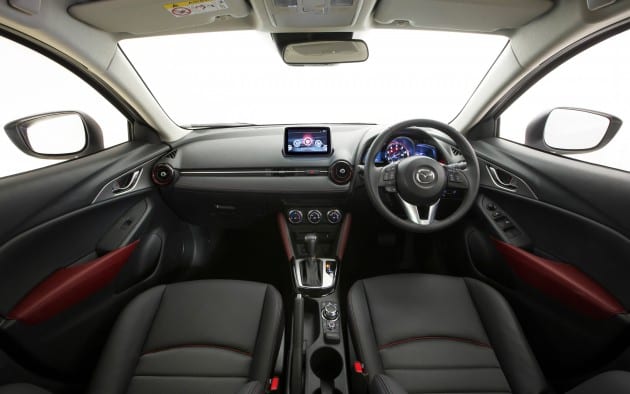
  • Mazda CX-3 goes on sale in Thailand

    Mazda CX-3 goes on sale in Thailand

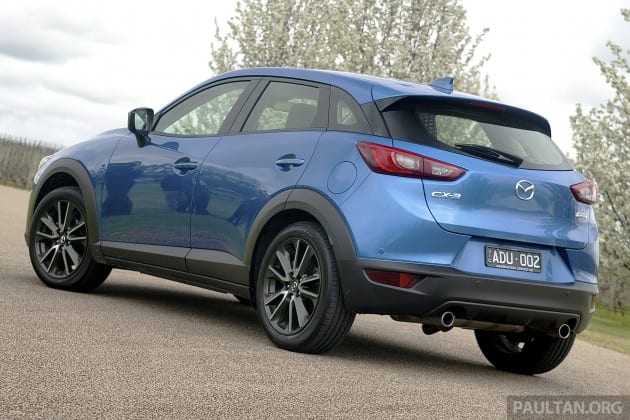
    The Mazda CX-3 has been launched in Thailand with prices kicking off at 835,000 baht – or at RM102k, give or take, with the current exchange rate. Taking into account our previous story, where the Malaysian-spec CX-3 is expected to retail from RM130k, that is still a considerable difference.

    Thai customers will be presented with a choice of five trims in total with two engine options – a 2.0 litre SkyActiv-G four-cylinder petrol engine and a turbocharged 1.5 litre SkyActiv-D four-cylinder diesel mill. The former puts out a total of 156 PS at 6,000 rpm and 204 Nm of torque at 2,800 rpm while the diesel unit manages 105 PS at 4,000 rpm and 270 Nm of torque from 1,600 to 2,500 rpm.

    A six-speed automatic transmission is the only gearbox choice offered on the Thai-spec Mazda CX-3 – an engine/gearbox combination that’s slated to be introduced for the Malaysian market, as well. As mentioned earlier, five trims are available – the base 2.0 E is priced at 835k baht while the 2.0 C and 2.0 S retail for 910k and 975k baht, respectively. The top petrol trim, the 2.0 SP, goes for 1.045 million baht.

    Mazda CX-3 4

    Sitting at the very top of the entire range is the aforementioned diesel model. Dubbed the 1.5 XDL, it goes for 1.155 million baht. As for standard equipment, the 2.0 E and C models are equipped with 16-inch wheels wrapped in 215/60 tyres while the rest of the range get 18-inch wheels shod with 215/50 rubber.

    The base 2.0 E and C are also equipped with halogen headlights while the 2.0 S, SP and 1.5 XDL get LED units with daytime running lights (DRLs). As for the interior kit, all models feature push-start button but the base 2.0 E misses out on the keyless entry system. Elsewhere, all models are also equipped with the seven-inch touchscreen and Commander Control interface save for the entry-level variant.

    Mazda CX-3 sTouring Oz 16

    Safety wise, the Thai-spec models appear well-equipped with DSC, EBD, traction control, Hill Launch Assist and an Emergency Signal System. The flagship diesel model one-ups the rest by adding on Advanced Blind Spot Monitoring, a Lane Departure Warning System, Rear Cross Traffic Alert and Smart City Brake Support.

    Also, the Mazda CX-3 is now assembled at the AutoAlliance (AAT) Plant in Rayong, Thailand – making said country the first nation to assemble the CX-3 outside of Japan. So while we wait for the local launch to take place, why not check out our review of Mazda’s HR-V rival here.

  • Mazda to cap prices once tax takes effect

    Mazda to cap prices once tax takes effect

    The Mazda CX-3 SkyActiv sport-utility vehicle was launched yesterday for the domestic market. Mazda began making the CX-3 last month at AutoAlliance (Thailand), a joint venture with Ford Motor Co.

    Mazda Sales (Thailand) has vowed to cap retail prices for large passenger cars and pickup trucks that are subject to a new excise tax next year.

    President Hidesuke Takesue said the Japanese car maker would opt to control production costs and manage volume carefully , as the excise tax rates would be based on ex-factory prices, not retail.

    Mazda is also committed to subsidising the difference in amounts incurred by the excise tax.

    From 2016 on, vehicles sold in Thailand will be subject to a new excise tax based on carbon dioxide emissions, E85-gasohol compatibility and fuel efficiency rather than just engine size as before.

    The excise tax on eco-cars with CO2 emissions below 100 grammes per kilometre will be cut to 12-14% from 17%, but the 10% rate for hybrid vehicles will remain.

    The company estimates prices for its Mazda3, CX-5 sport-utility vehicle (SUV) and BT-50 Pro pickup truck will increase by 3-5% early next year once the new tax regime takes effect.

    “There are many factors in setting car prices, based not only on excise tax but also an import duty for some auto parts, local tax and value-added tax, so the company will take all factors into account before announcing retail prices,” Mr Takesue said.

    For the Mazda2 eco-car, the retail price will drop by roughly 20,000 baht next year with the new excise tax.

    Mazda posted sales of 29,641 vehicles in the January-October period, up 2.2% year-on-year.

    The company also gained a higher market share during the period, to 4.8% from 3.89%.

    Mazda2 eco-cars had a 49.6% share of total sales for the period, followed by the BT-50 (21.4%), the Mazda3 (19.6%), the CX-5 (9.3%) and other models.

    Mr Takesue expects sales to grow by 10.7% this year to 38,000 vehicles after falling 35.1% in 2014 to 34,326.

    In related news, the company yesterday introduced the CX-3 SkyActiv, which it started making last month at AutoAlliance (Thailand), a joint venture with Ford Motor Co.

    The Hiroshima-based parent firm has invested 800 million baht in production of the model to serve the local market and exports.

    The Mazda CX-3 is available in both 1.5-litre SkyActiv-D (diesel) and two-litre SkyActiv-G (petrol) engines, with prices ranging from 835,000 to 1.155 million baht (to remain unchanged next year).

    The Mazda CX-3 is the fourth model on the SkyActiv platform in the Thai market after the CX-5 SUV, the Mazda3 and the Mazda2.

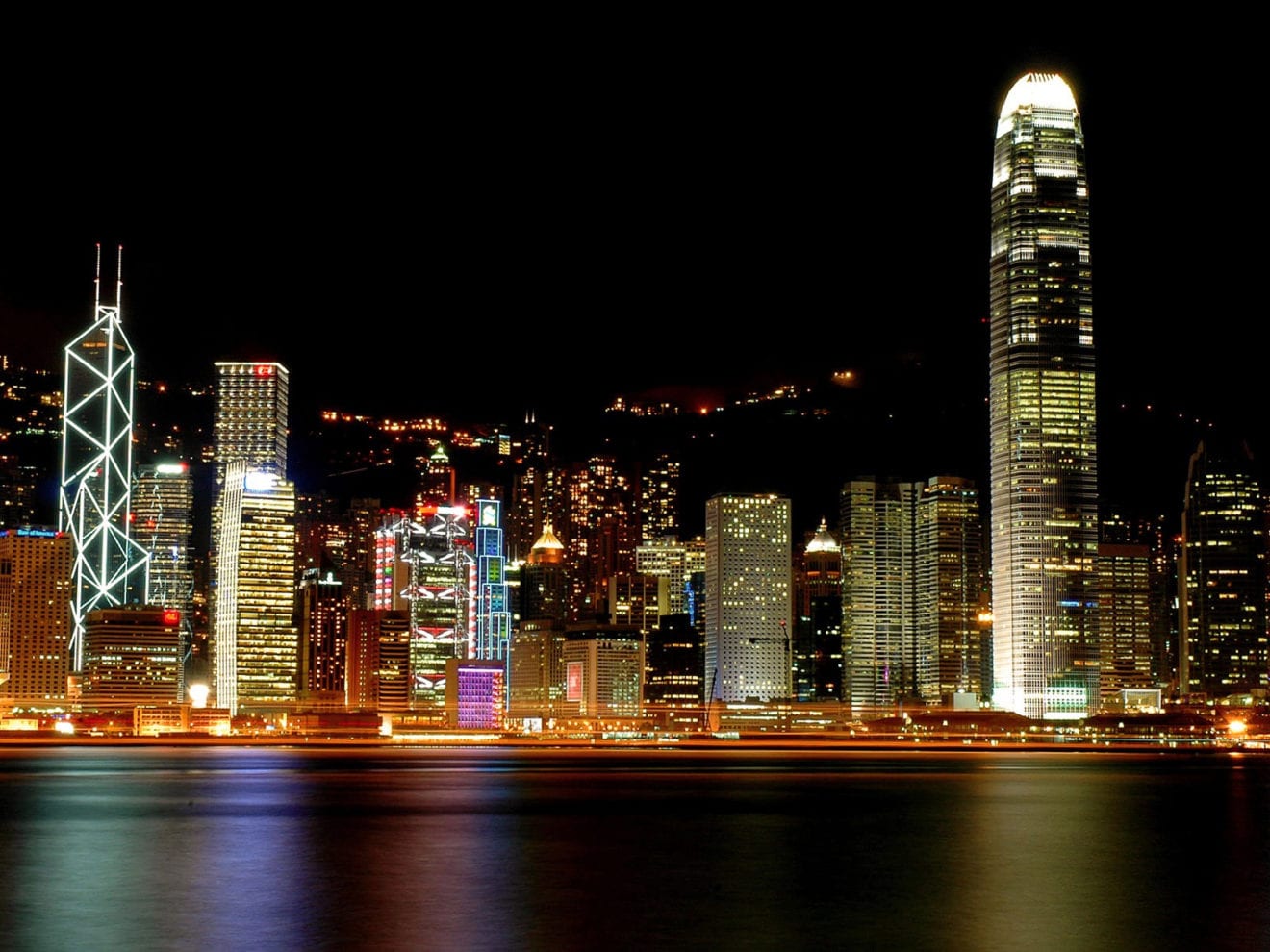
  • Hong Kong pop-up mall aims to ease tensions over mainland shoppers

    Hong Kong pop-up mall aims to ease tensions over mainland shoppers

    From London’s trendy Shoreditch to a downtown revitalisation project in Las Vegas, pop-up shopping malls have become all the rage among urbanites keen to sample craft beer and buy designer sneakers.

    But, in Hong Kong, plans for the first temporary mall are designed to assuage popular anger with visiting shoppers from mainland China — derided by locals as “locusts” — rather than cater to the whims of hipsters.

    As political tensions between Hong Kong and Beijing have risen, the semi-autonomous Chinese territory has seen a growing backlash against the thousands of “parallel traders” who come from the mainland every day in search of cheap baby milk, jewellery and other goods they can sell back home for a profit.

    Now two of Hong Kong’s biggest property developers have teamed up with lawmakers to turn a car park near the Chinese border into a mall made out of shipping containers that is meant to serve mainland visitors attracted by the city’s low-tax shopping.

    Wong Ting-kwong, one of the legislative council members promoting the project, said it would “reduce the nuisance brought by excessive mainland tourists and relieve the traffic inside the city”.

    Mr Wong is a member of the main pro-Beijing political party in Hong Kong, which has frequently come under attack for failing to defend residents’ interests in the face of pressure from the central government in China.

    He hopes that the mall, which will be about the size of two football pitches, according to a recently submitted planning application, will open for business early next year.

    The land for the pop-up mall is jointly owned by Henderson Land and Sun Hung Kai Properties, which are controlled respectively by Hong Kong billionaires Lee Shau-kee and the Kwok brothers.

    SHKP said that if the plan was approved by the government, they would lease the land for a nominal HK$1 ($0.13) per square metre to a charitable foundation, which would run the pop-up mall on a non-profit basis for two years.

    After that period, the developers expect to remove the shipping containers and start construction of a permanent mall on the same site.

    The initiative has succeeded in grabbing the headlines in Hong Kong, but those who have organised protests against mainland shoppers are far from convinced it will solve their problem.

    Ray Wong, a member of HK Indigenous, a group that campaigns against mainland Chinese influence in Hong Kong, said that while the pop-up mall could alleviate some pressures, it could also disturb local residents if it generated too much traffic.

    “I think the root of the problem is that mainlanders don’t trust Chinese goods so they have to turn to Hong Kong for guaranteed quality,” he said.

  • Indonesia liquor retailers brace for downturn

    Indonesia liquor retailers brace for downturn

    Indonesia liquor retailers fear the recent surprise increase in import tariffs on wine and spirits could more than double the price of some drinks.

    Indonesia’s Muslim-controlled government is effectively declaring war on drinkers. In April liquor sales were banned from convenience stores – a move recently blamed by Dairy Farm International for the closure of many of its convenience stores in Indonesia and prompting a strategic review of the entire chain.

    Last month the government announced shock tariff increases on a raft of imported products in a 1970s-styled economic move to protect inefficient local industry and deter imports. This despite its inclusion in the ASEAN bloc which encourages free trade within the region.

    Drinks industry executives told news agency Reuters the tariffs could “more than double prices” that were already sky-high, even by Asian standards. They fear an increase in smuggling activities and a black market for fake alcohol which is already an issue in China and Vietnam, leading to fatalities from people drinking chemical-enhanced fluids sold in fake branded bottles.

    The new tariffs, which took effect on July 23, force importers to pay 90 per cent duty on the value of wine and 150 per cent on spirits. The previous regime was a fixed amount per litre.

    “It’s quite a shock to the industry,” Dendy Borman, a board member at the International Spirit and Wine Association, told Reuters.

    And it could get even worse. Two extremist Islamic political parties want all liquor consumption in the country completely outlawed.

  • ‘Sin tax’ cuts cigarette smoking in Philippines

    ‘Sin tax’ cuts cigarette smoking in Philippines

    A “sin tax” on cigarettes has sharply cut smoking in the Philippines while also boosting government revenues, the internal revenue chief claimed on Monday.

    The number of cigarette packs put on store shelves by retailers fell by nearly a third between 2012 and 2014, said revenue chief Kim Henares.

    The government raised excise taxes on tobacco and liquor products in 2012 to raise revenues and discourage smoking, which kills nearly 88,000 Filipinos each year according to World Health Organisation data.

    “We exceeded the targets,” Henares told AFP.

    The government agency’s data showed 5.764 million packs were withdrawn from storage and placed on retail shelves in 2012, compared to 4.869 billion packs in 2013.

    By 2014 the figure was down to 3.917 billion packs, said Henares.

    Taxes are levied on the number of packs placed on store shelves rather than the number subsequently sold.

    Proceeds from the taxes on cigarettes rose to P74.328 billion ($1.69 billion) last year from 32.16 billion pesos in 2012, the agency said.

    Under the law, a portion of the revenues from sin taxes are allotted to finance government health programes including anti-smoking campaigns.

    A Department of Health survey in 2009 found that more than 28 per cent of the country’s adult population were smokers.

    The government first asked parliament to raise taxes on “sin” products as early as 1997, but a strong lobby by tobacco manufacturers delayed this for years.

  • Indonesia luxury tax scrapped

    Indonesia luxury tax scrapped

    Indonesia is to axe luxury taxes on most goods to encourage wealthy consumers to shop at home and boost the local economy.

    Finance Minister Bambang Briodjonegoro announced Thursday the move would put luxury goods pricing in the nation on a par with that in neighbouring countries.

    Luxury goods taxes – while seen by many as a fair means of extracting extra tax from the consumption of wealthier consumers, actually backfire in today’s world where people travel frequently and brands offer similar goods in a variety of markets. Locals with spending power tend to buy overseas instead of at home and tourists will buy luxury goods in locations where prices are lower and VAT cash back schemes are easy to use.

    The scrapped taxes apply to electrical goods, apparel and accessories. Importers will now have to pay 10 per cent of the price as “income tax” – up from 7.5 per cent.

    The government says the Indonesia luxury tax – typically around 20 per cent or more – will most likely be removed next week. Cars, boats and residential properties valued at over about US$150,000 will still be subject to ‘luxury’ taxes.

    Bambang says the move will encourage shoppers to buy at home rather than in neighbouring destinations like Singapore.

    “This aims at boosting people’s purchasing power. It makes the prices not expensive that it could ease people’s tendency to buy goods in foreign countries,” he said.

    “The removal of luxury tax policy is also expected to keep economic stability and raise tax earning,” said Bambang.

    There are few Asian countries now with high taxes on luxury goods – and Indonesia’s move will put pressure on them to follow suit and maintain competitiveness.

  • Thailand To Tackle Tax Avoidance On Imported Cars

    Thailand To Tackle Tax Avoidance On Imported Cars

    Thailand’s Government has confirmed that it is planning to change the way excise tax is calculated on imported vehicles as part of a wider plan to modernize Thailand’s excise tax system and increase tax revenues.

    Somchai Poolsawasdi, Director General of the Excise Department, said recently that the upcoming changes are designed to stop importers from using understated cost, insurance, and freight (CIF) valuations to reduce excise tax payable.

    Under the proposed new excise tax system, excise tax rates would be cut, but the tax would be based on the retail price of the vehicle, rather that its CIF valuation.

    Plans to change the basis of excise taxes to retail prices, instead of ex-factory prices, were announced by the Excise Department last year as an addition to the military-led Government’s tax reform plans. The new excise tax calculation methodology is intended to improve transparency (as ex-factory prices could be understated by manufacturers), and bring Thailand’s excise taxes in line with global standards. The Government says that the amendment would have no effect on consumers, but will increase excise tax revenues by around THB6bn (USD178m) annually.

    The new excise tax bill was approved by the Cabinet last month but must be endorsed by the Legislative Assembly before it can become law.