Retail News CRM

Tag: Tax

  • Ho Chi Minh City seeks to tax sales on Facebook

    Ho Chi Minh City seeks to tax sales on Facebook

    The Ho Chi Minh City government should work with Facebook on how to collect tax from businesses running on the social media site, officials said.

    The city currently hosts a dynamic e-commerce scene with more than 80,000 websites, half of which have stable business, but tax collection from the segment is low, said Pham Thanh Kien, head of the city’s trade department.

    “In particular tax collection has not been done from sales via Facebook,” Kien said at a meeting with the city’s tax authority. “(We) propose the People’s Committee work with Facebook on a mechanism to control tax collection.”

    Ho Chi Minh City, where the most active e-commerce in Vietnam takes place, should find out measures to prevent losses in tax revenues, Deputy Finance Minister Vu Thi Mai told tax officials at the meeting on Sunday.

    Just a quarter of Vietnam’s non-state businesses have declared value-added tax, Mai was quoted by the Tuoi Tre (Youth) newspaper as saying at the meeting.

    A majority of online businesses using social networking sites such as Facebook do not issue invoices, which has prevented the authority from collecting tax.

    Vietnam’s e-commerce market, which has one of the world’s fastest growth rates, jumped 37 percent in 2015 to around $4 billion, based on government statistics.

    The growth rate is about 2.5 times faster than that in Japan, according to Tran Duc Tam, an industry expert.

    The government has projected revenue by Vietnam’s online retail to hit $10 billion by 2020, accounting for 5 percent of the country’s retail market. Last year retail sales rose 10.2 percent from 2015 to $118 billion, based on government data.

    The online tax tightening plan has received mixed responses.

    “Facebook is just a channel to advertise products and communicate with customers. With no electronic invoicing, how to tax them?” a reader’s comment.

    Others raised concerns that many online retailers use anonymous accounts for transactions, while some others could be one-time or small-time sellers with insignificant revenues, making it hard for tax authorities to regulate activities.

    Online marketplaces such as Facebook have made it easy for small businesses and start-ups to set up business due mainly to the convenience they provide and the opportunity to connect with customers, Tuan Anh Pham wrote in another comment. He suggested market regulators take a cautious approach when it comes to requiring online retailers to pay taxes.

  • Finance Ministry tells online hotel booking services to pay tax

    Finance Ministry tells online hotel booking services to pay tax

    Agoda, Traveloka, Booking and Expedia have to pay VAT (value added tax) and CIT (corporate income tax), which is 5 percent of total revenue, for profits from doing business in Vietnam, according to the Ministry of Finance (MOF).

    MOF released the decision one month after Vntrip.vn, a Vietnamese owned firm, criticized Agoda for evading tax in Vietnam. It said the tax payment duty must be implemented by accommodation service providers on behalf of foreign contractors like the contractor withholding tax.

    If clients who book hotel rooms make payment directly to the accommodation service providers in Vietnam (hotels or guesthouses), and the service providers pay commissions to foreign contractors, the service providers will have to make tax declarations and pay tax.

    If clients pay money to foreign contractors, foreign contractors will transfer money to accommodation service providers, while retaining commissions. Taxation bodies will ask accommodation service providers to inform foreign contractors about tax duties and pay tax on behalf of foreign contractors.

    MOF said it released legal documents with an aim to stop the loss of revenue from tax collection as Vietnam could not collect tax from foreign companies which make profits from providing services to Vietnamese via the internet.

    Prior to that, in December 2016, Vntrip.vn held a meeting with the local press, saying Agoda evaded tax in Vietnam.

    The representative of Vntrip.vn affirmed that unhealthy competition was occurring in Vietnam as foreign service providers don’t have to pay tax, causing a loss of trillions of dong in revenue to the state budget.

    Vntrip.vn warned that Vietnam may lose VND10 trillion worth of tax by 2020, if it cannot find the way to collect tax from the company.

    Vntrip sent an official document to MOF denouncing Agoda and similar service providers for evading tax. The behavior by Vntrip then surprised the public, because Booking.com, who was the strategic partner of Vntrip, and Agoda were considered ‘brothers’ as they both belonged to the US-based Priceline.

    Another surprise was that before MOF released the decision officially asking Agoda to pay tax, the Vietnamese domain name of Agoda, the tourism website, unexpectedly stopped operation.

    Le Dac Lam, Vntrip’s CEO, applauded MOF’s decision.

    “Some people advised us to focus on doing business rather than spending time thinking about policies for foreign companies,” Lam said.

    Nguyen Duc Tai, president and CEO of The Gioi Di Dong, the largest domestic technology product distribution chain, said Vntrip should focus on its own business instead of suing other companies, because the move won’t bring benefits.

  • Weak green tax can lead to more single-use plastic bags

    Weak green tax can lead to more single-use plastic bags

    The weight-based environmental tax can do more harm than good if businesses try to ease the burden by making and using thin plastic bags. The Vietnam Chamber of Commerce and Industry (VCCI) has weighed in on a debate involving changes to the country’s Environmental Protection Law.

    Lawmakers are considering raising the environmental protection duty imposed on petroleum products by up to three times to VND8,000 per liter, and on plastic bags from the current VND30,000-50,000 to VND40,000-80,000 per kilogram, according to a proposal prepared by the finance ministry.

    However, the VCCI, which represents thousands of businesses across the country, said in a statement that plastic bags should be taxed individually instead of by weight.

    It said that when plastic bags are taxed based on their weight, producers are tempted to produce thin plastic bags.

    While disposable, thin bags require less material, they are unlikely to be reused and are more difficult to recycle, which means these single-use bags are more harmful to the environment than thicker bags, it said.

    “Current taxes do not go far enough to protect the environment,” it said.

    The VCCI also said taxes should also be imposed on other plastic products like Styrofoam cups and boxes.

    The environment ministry estimates that Vietnamese use more than 800 tons of plastic bags every day.

    Official figures from 2014 showed that in Ho Chi Minh City, nine million, or more than 50 tons of plastic bags, were being used every day, which was twice the number from four years earlier.

  • Vietnam’s car imports soar in January as tariffs fall

    Vietnam’s car imports soar in January as tariffs fall

    Tariffs on car imports from ASEAN countries will be fully removed by 2018. A growing middle-class population, rising disposable incomes and falling tariffs on cars imported from neighboring countries in Southeast Asia appear to be driving Vietnam’s car market.

    The country’s car imports in the first half of January soared 50 percent from the same period last year to about 5,000 units worth $116 million, customs data shows.

    This surge in imports is mainly due to a switch from motorbikes to cars. Around 75 percent of imported cars were classed as midsize sedans and the number of vehicles with nine seats and below nearly tripled from a year ago to more than 3,000 units.

    Vietnam still relies heavily on imported automobiles to meet domestic demand despite a slight year-on-year decline in 2016 to 113,567 cars after it imported a record-breaking number of 125,534 units in 2015, according to customs statistics, equivalent to a 77 percent jump from 2014.

    Since the Vietnamese government has targeted car manufacturing as a “spearhead industry”- one of the economy’s driving forces – car import taxes have remained high to shield domestic automobile producers from foreign rivals.

    However, following the ASEAN Trade in Goods Agreement, Vietnam will cut tariffs incrementally over the next few years on imported cars from ASEAN countries. With the tariff scheduled to be fully removed by 2018, import turnover from ASEAN neighbors is expected to increase exponentially.

    The tariff on cars from Thailand and Indonesia has been cut to 30 percent from 40 percent, effective at the start of this year, according to tax authorities. As a result, many imported cars will be 7 percent cheaper than previously.

    New cars imported from Thailand dominate the market, with Mazda, Toyota and Ford among the most popular.

    Sales of used cars are slowing, said the association of automobile manufacturers.

    The number of imported new cars from ASEAN countries is on the rise due mainly to relaxed tax policies, including lower import tariffs, value added tax and special consumption tax, which will benefit import companies and authorized dealers, said a car dealer in Hanoi.

  • Vietnam imposes tax duty on foreign room-booking sites

    Vietnam imposes tax duty on foreign room-booking sites

    Firms such as Agoda and Expedia will have to pay a 10 percent duty. The Ministry of Finance has told foreign accommodation booking services to pay taxes if they wish to continue operating in Vietnam.

    A document recently released by the ministry asked booking sites like Agoda, Traveloka and Expedia to pay a combined 10 percent of their total revenue made in Vietnam.

    Vietnamese accommodation providers that have signed contracts with these foreign sites are obliged to fulfill these tax duties on behalf of them.

    The ministry said that the move aims to prevent tax losses from foreign-based companies that are gaining from online business transactions.

    Vietnamese accommodation booking site Vntrip had previously held a press conference and sent a document to the ministry accusing Singapore-based travel agency Agoda and some other sites of tax evasion.

    Vntrip said that the acts of these foreign companies had resulted in huge losses to the state revenue and created unwholesome competition.

    This is not the first time the Vietnamese government has imposed taxes on international businesses operating in the country. Last September, the popular ride-sharing service Uber was officially ordered to pay taxes after two years of providing transport services in Vietnam.

  • Taiwan’s VAT On Online Retailers Becomes Law

    Taiwan’s VAT On Online Retailers Becomes Law

    On December 28, Taiwan’s President Tsai Ing-wen signed into law the amendment to the Value-Added and Non-Value-Added Business Tax Act to impose tax on foreign online sellers’ supplies to Taiwanese consumers.

    The amendment is intended to raise additional revenues and level the playing field for Taiwanese bricks-and-mortar retail and service businesses.

    The Ministry of Finance is to draw up the required tax regulations and procedures. In addition, it is to establish a website for simplified business registration and for filing VAT returns and paying VAT.

    Foreign online suppliers selling cross-border goods and electronic services to end consumers will have to register for tax in Taiwan through a permanent establishment, or appoint a VAT or non-VAT tax representative. The permanent establishment or agent will be required to file the necessary bimonthly tax returns. Significant penalties will be imposed for non-compliance.

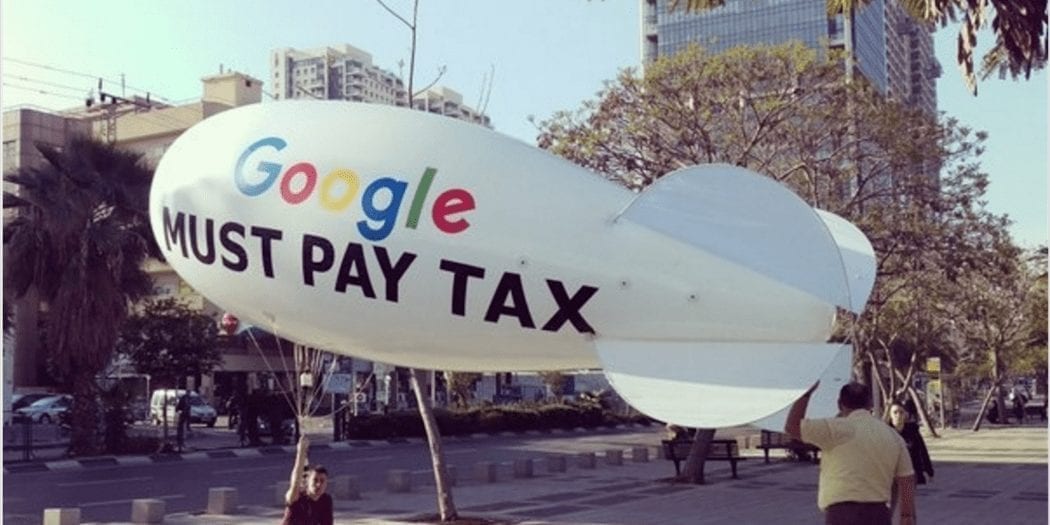
  • Tax office to summon Google to clarify data on revenue

    Tax office to summon Google to clarify data on revenue

    Director General of Tax Ken Dwijugiasteadi gave an assurance on Wednesday that he would summon Google representatives to confirm data that it submitted regarding the companys revenue in Indonesia.

    “I have the data, so I will ask for their confirmation on whether the figures that they submitted are accurate,” said Dwijugiasteadi.

    He did not mention when the summons would be made, but the agenda for the meeting has been decided due to Googles history of tax avoidance. The authorities have requested for a copy of electronic data relating to revenues from advertisements.

    He also hoped that Google will respond to the summons so the process of paying income tax on their revenues, which had already been significantly delayed, can be completed quickly.

    Dwijugiasteadi said that every company that operate and collect revenues in Indonesia are obliged to meet their tax obligations and contribute appropriately by paying the correct taxes to the state.

    “Regulations must be met and my job is to enforce them accordingly. I do not threaten or use force,” he added.

    The head of the Jakarta regional office of the Directorate General of Tax, Muhammad Haniv, said that Google has yet to submit additional financial reports that they requested regarding revenue collected in Indonesia.

    “We cannot fully trust their statements as we are still waiting for further supporting documents. Their income from sources such as pay per click and other applications are yet to be accounted for,” he added.

    He further questioned Googles reluctance to be listed as a permanent company in Indonesia as the company is already operating many of its servers in the country.

    “They already have servers in Indonesia. That is the physical evidence. Being permanently established requires a physical presence,” said Haniv.

    According to the Directorate General of Tax, Google was registered as a legal entity in Indonesia at Tanah Abang Tax Office III in Central Jakarta as a foreign investment company in September 15, 2011 as subsidiary of Google Asia Pacific in Singapore.

    Based on Indonesian income tax law, Google must be declared as a permanent company and all its revenue or income within Indonesia must be taxed.

    However, Google has rejected further tax inspections from the authorities and it will not take the status of a permanent company, despite its revenue being in the trillions with the majority coming from advertisements.

  • Vietnam to develop legal framework for Bitcoin

    Vietnam to develop legal framework for Bitcoin

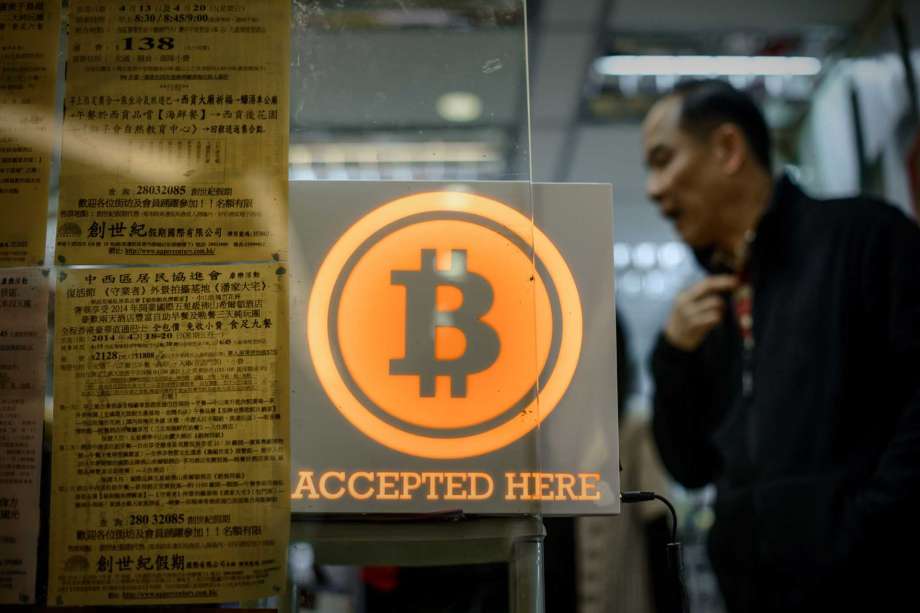
    The government is looking to cash in on taxes from the virtual money. Amid concerns that Bitcoin can be used for money laundering, creating chaos in the financial markets, Vietnamese regulators, rather than banning Bitcoin, are looking to manage the virtual money through a new legal framework.

    Since Bitcoin transactions are mainly conducted on the internet, it makes it difficult for the government to collect taxes. This means losses to the budget revenue due to tax evasion, said a recent government proposal.

    The proposal also pointed out that Bitcoin can be used to launder money, purchase illegal weapons and arms, and enable corruption and bribery.

    The justice ministry, along with the central bank, the information ministry and the trade ministry, has been tasked with bringing a regulatory framework to the table by the end of next year.

    Vietnamese lawmakers admit that they are behind other countries when it comes to defining virtual currency and how it can be regulated.

    They are also aware that electronic payments are on the rise in Vietnam, with over 2.2 million electronic wallets currently active across the country.

    Besides, as Vietnam is experiencing an e-commerce boom, Bitcoin and other types of virtual money could be used as non-cash payments in the future.

    Vietnam expects revenue from online retail to hit $10 billion by 2020, accounting for 5 percent of total nationwide revenue from sales of goods and services, according to the government’s e-commerce development plan for 2016-2020.

    The Southeast Asian country forecasts rapidly growing demand for online shopping with 30 percent of the population buying goods and services over the internet.

    The justice ministry said that there are no rules in place to regulate Bitcoin as well as other electronic forms of money, and this must change.

  • Korea lifts import duties on eggs

    Korea lifts import duties on eggs

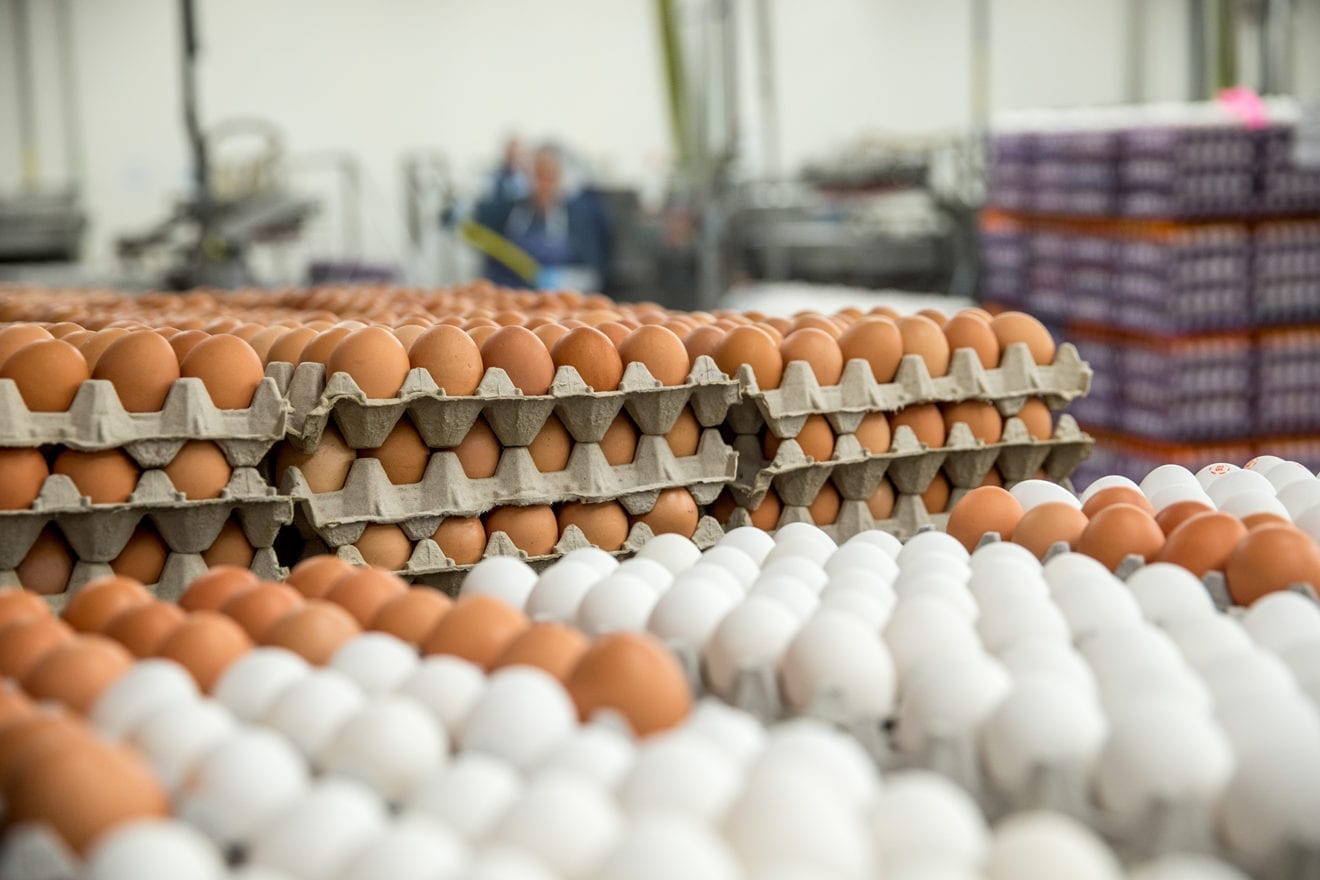
    The government will waive duties on imports of eight types of egg-related products, including fresh and powdered eggs, as the shortage in Korea is deepening after a widespread outbreak of avian influenza, which has led to the culling of nearly 30 million birds.

    The Korean government doesn’t import fresh eggs, but said Tuesday it would do so to alleviate the shortage. This is the first time in 18 years, which was when the country imported a small volume of fresh eggs from Thailand, that the Korean government imported fresh eggs from abroad, an official at the Ministry of Agriculture, Food and Rural Affairs said.

    “The data showed that we had very few occasions of importing fresh eggs from abroad in the past and even though they were imported, they were not for the public to buy at stores, but rather they were for other reasons such as medical research purposes,” said an official at the Ministry of Strategy and Finance. “This will be the first time for the government to allow importing large volume of fresh eggs.”

    The duty exemption will last until June. 30, the Finance Ministry said Tuesday. Currently, the import tariff on egg products ranges from 8 percent to 30 percent, but it will be suspended for six months.

    “The government has decided to remove tariffs on eggs to deal with soaring prices and shortage of them in the country due to AI,” said Kim Young-noh, a director at the Finance Ministry.

    The Finance Ministry said it will expedite inspections to have fresh eggs arrive as early as possible, or before the Lunar New Year holiday, when demand for eggs and poultry products tends to be higher.

    A total of 98,000 tons of egg-related products can be imported without tariffs, and among them 35,000 tons, or about 700 million, will be fresh eggs. The 700 million eggs can meet Koreans’ daily consumption for about 20 days.

    About 30.3 million birds have been slaughtered as of Tuesday, 50 days after the virus started to spread in the country. By type, layer chickens were affected the most. Nearly 22.45 million birds that were killed were layer chickens, which is about 32.1 percent of the layer chickens raised in the country.

    “About 30 percent of layer chickens are killed due to AI and the supply and demand problem will last at least six months from now [since the number of chickens for laying purposes needs to grow], said an official at the Agriculture Ministry.

    The average retail price for a tray of 30 eggs jumped 47.2 percent from 5,604 won ($4.66) a month ago to 8,251 won as of Tuesday due to the outbreak of the AI, according to data compiled by the Korea Agro-Fisheries & Food Trade Corporation (aT).

    The highest price reported to aT for a tray of 30 eggs was 9,700 won, which is 39 percent higher than the highest prices last month, which was when the shortage began after the country was hit by the virus on Nov. 16.

    Meanwhile, the government also has decided to distribute 7,200 tons of reserve fishery products to stabilize the heated market ahead of the Lunar New Year.

    The Ministry of Oceans and Fisheries said it will distribute its fishery products until Jan. 26 and local retailers, including traditional markets, will sell such goods 10 to 30 percent cheaper than retail prices.

  • Hong Kong’s rich have ways to get around property tax

    Hong Kong’s rich have ways to get around property tax

    People visit a viewing deck overlooking Victoria Harbour in Hong Kong. The city’s property prices have continued to climb because of the influx of mainland Chinese developers.

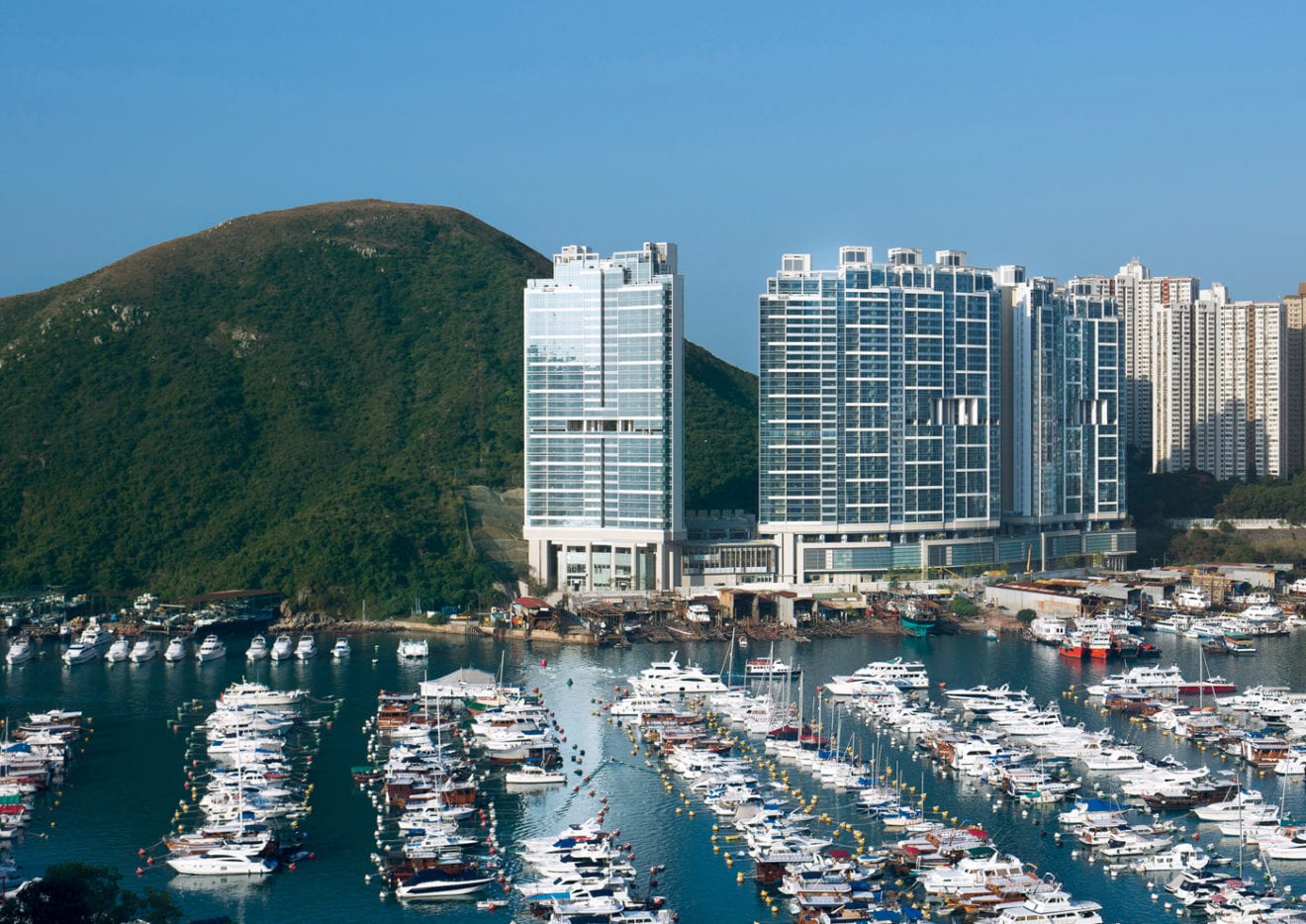
    Hong Kong: Here’s how billionaire Edwin Leong, one of Hong Kong’s largest retail landlords got around Hong Kong’s new property curbs and saved almost $17 million (Dh62.43 million) on his tax bill.

    He managed to qualify as a first-time homebuyer, purchasing three luxury apartments for HK$1.2 billion ($155 million) on the same day last month. Previously Leong had held no real estate in his name — despite owning more than 300 other properties, including apartments, hotels and shopping malls, through his company, Tai Hung Fai Enterprises Co., and having an estimated net worth of $4 billion.

    Wealthy buyers are finding legal ways around restrictions designed to cool home prices in the world’s least affordable city, where leaders are grappling to shrink a yawning wealth gap. Property prices have risen to near-record highs and sales volumes have surged since Chief Executive Leung Chun-ying announced the latest round of curbs on November 4, underscoring the challenges in taming the market.

    “Since the policies were introduced, most of the tycoons have been finding ways around them,” said Alan Wong, director of the Hong Kong market at Landscope Christie’s International Real Estate. About 70 per cent of new apartments sold since last month’s measures have involved first-time buyers who qualified for the lower rate, compared with about 30 per cent before the new tax was imposed, said Henry Mok, regional director of markets at Jones Lang LaSalle Inc.

    The government has tried to increase supply by releasing more land for sale, although prices have continued to climb because of the influx of mainland Chinese developers seeking a toehold in Hong Kong.

    Prices in the secondary housing market have risen 0.8 per cent since early November to just 1.4 per cent below a September 2015 record, according to Centaline Property Agency Ltd. Adrian Cheng, executive vice-chairman of New World Development Co., said the company was seeing a higher percentage of first-time buyers than before the new tax.

    Another method employed by the wealthy involves buying a shell company that owns a property, which is treated as a share transfer and only incurs a stamp duty of 0.2 per cent. If the company is registered offshore, the tax is zero.

    That’s the tactic used in the November 28 sale of a free-standing home with a yard and swimming pool in the Kowloon district that was appraised at HK$410 million. If it had been sold as a home rather than through the British Virgin Islands-registered company that holds the property, the sale would have triggered 45 per cent in taxes, including a flip tax because it was purchased earlier this year — a total of more than HK$180 million. Instead, the tax bill will be $0.

    In 2011, more than half of Hong Kong’s homes worth more than HK$20 million were sold via companies. Although the practice was virtually halted after the government in 2013 began taxing companies buying properties at higher rates than individuals, thousands of properties are still held in this way and can offer significant tax savings when they are resold.

    Wong from Landscope said he gets many requests from foreigners, mostly rich mainland Chinese, looking to buy one of these companies, as they would otherwise face the new 15 per cent tax plus an extra 15 per cent tax on non-permanent residents. In fact, the property agency’s website promotes the practice.

    “Beat the stamp duty hike,” the site says. “Intimidated by the 15 per cent stamp duty? No worries! Our keypersons have sourced an array of properties that can be sold via share transfer (of course you will need a lawyer to handle the process).”

    Still, because due diligence on the companies can be costly and complicated, only about 5 per cent of luxury homes are bought in this way.

    Leong’s purchase at the Mount Nicholson development, a mountain-nestled enclave, set a record for the most ever paid per square foot for a property in Asia, according to JLL. By being able to pay a lower stamp duty for first-time buyers, Leong saved 10.75 per cent in taxes.

    Two of the new apartments are adjacent units on the 17th floor and could be combined into more than 8,700 square feet of living space for Leong as his principal residence, more than 10 times the average size of a Hong Kong apartment. The third apartment, measuring 4,566 square feet, is 10 floors below and belongs to Leong and his family.

    The new tax is the latest in a series of measures since 2011 aimed at making it easier for low-income families to get onto the property ladder while increasing the costs for investors and foreign buyers. These include a tax that penalises people who resell within three years and an extra stamp duty of 15 per cent for non-permanent residents.

    The government’s new 15 per cent stamp duty replaced taxes ranging from 3 per cent on homes worth less than HK$3 million to a maximum of 8.5 per cent on those worth more than HK$21.7 million. The rates are half that for first-time buyers, which includes people who may have owned homes in the past but currently do not.

    “This is clearly a loophole,” said Raymond Yeung, chief economist at Australia & New Zealand Banking Group Ltd. in Hong Kong. “The government hadn’t thought about this before they launched the measure.”

    Singapore, which has been successful in driving down home prices since rolling out curbs in 2009, also levies a 15 per cent tax on foreigners and companies, while first-time homebuyers face lower stamp duties. Singapore and Hong Kong both define a first-time buyer as someone who currently does not own property in their name, regardless of whether they previously owned a home.

    Unlike Hong Kong, however, Singapore doesn’t allow first-time, multiple property purchases at lower rates.

    “The government is trying to cool the market, but there is no evidence that previous measures have done that,” David Webb, a Hong Kong-based shareholder activist who bought his own home 10 years ago through a company registered in the Seychelles. “There has been a whole series of misguided measures that have not had their intended effect.”

    Still, nobody’s talking about making getting around tax measures more difficult, said Denis Ma, head of Hong Kong research at JLL. “These are loopholes that haven’t been closed, and I don’t think they can be,” he said. “Hong Kong prides itself on being a very free market, and government intervention is not very high.”

  • Local banks post 4.5pc pre-tax profit rise

    Local banks post 4.5pc pre-tax profit rise

    Local retail banks achieved a moderate 4.5 percent growth in pre-tax profit between January and September this year, the Hong Kong Monetary Authority said yesterday.

    Annualized net interest margin — which measures the difference between the interest income generated by retail banks and the amount of interest paid out to their lenders – stood at 1.32 percent during the period.

    The figure stayed broadly the same as last year, Hong Kong’s de facto central bank said.

    It noted though that the January to September figure marked a slight improvement from the 1.3 percent recorded between January and June this year.

    HKMA attributed profit growth of local banks mainly to an expansion of their income from foreign exchange and derivatives operations and in dividends received from subsidiaries.

    A decline in their operating expenses also boosted the banking industry, but a fall in fee and commission income may offset profit growth.

    As retail banks’ total deposits increased at a faster pace than total loans, the loan-to-deposit ratio of retail banks declined to 55.2 percent at the end of the third quarter from 57 percent a quarter earlier.

    Retail banks’ total loans increased by 1 percent during the period, with loans for use in Hong Kong rising by 1.2 percent and loans for use outside Hong Kong expanding by 0.2 percent.

    The authority said lending by local banks in the mainland expanded by 3.2 percent to a combined HK$4.55 trillion at the end of the third quarter from the previous quarter.

    The HKMA said the loan-to-deposit ratio of local banks declined to 55.2 percent from 57 percent and the setback is attributed to a faster increase of deposits compared to loans that were disbursed to customers.

    Meanwhile, the Hong Kong interbank offered rate, or the rate of interest charged on short-term loans, continued to rise for the 11th day yesterday. One-month HIBOR yesterday edged up to 0.68 percent from 0.675 percent a day earlier, while three-month HIBOR increased from 1 percent to 1.00964 percent, according to data from the Hong Kong Association of Banks.

  • Indonesia challenges Google to disclose financial reports

    Indonesia challenges Google to disclose financial reports

    The Directorate General of Taxation will intensify its investigation on the suspected unpaid taxes by tech behemoth Google, claiming that the company’s tax settlement offer was too small.

    The government said that it would continue investigating Google as it has gathered preliminary evidence indicating that the firm has allegedly committed a criminal act.

    “Next year, it is not going to be about a tax settlement anymore,” Muhammad Haniv, the head of the Taxation Directorate General’s Jakarta branch, who is also the main investigator in the case, said on Tuesday.

    “We have to accelerate the process. We want Google to disclose its financial reports and the tax office will calculate the tax owed,” he said.

    He said the consequence of the tax office’s findings would be that Google had to pay taxes owed plus a 150 percent penalty.

  • Global Blue collaborates on Chinese VAT refund scheme

    Global Blue collaborates on Chinese VAT refund scheme

    Tax-free specialist Global Blue has partnered with the Bank of China to launch a VAT refund service to overseas tourists in Shanghai.

    Travellers in Shanghai are now able to save 9% on their purchases as China has introduced its first tax-free shopping scheme for foreign visitors. The scheme will be among the first of its kind in mainland China, allowing eligible travellers to reclaim the VAT imposed by the Chinese government, when making purchases within the country.

    For travellers, eligibility for VAT refunds will be based on a set of simple criteria. These include possession of a non-Chinese passport (or specified ID from Hong Kong, Macau and Taiwan), receipt of purchase showing spend of over RMB500 ($72) in one store on the same day, and proof that the traveller has remained in mainland China for no more than 183 consecutive days.

    If these eligibility criteria are met, merchants simply have to provide a VAT invoice, then issue the shopper with a Tax Refund Application form provided by the Chinese Government, which includes the description of purchased goods and the traveller’s details.

    Global Blue will work with Bank of China to encourage local retailers to sign up to the scheme. It will also provide licensed retailers with ongoing training to sales staff and consult on the processes surrounding the issuing and completion of VAT refunds.

    Already almost 200 stores in Shanghai have already signed up to the tax-free shopping scheme, including major department stores [e.g. Takashimaya, Pacific, Parkson and Bailian (Group) Department Stores], luxury brands (e.g. Chanel, Hermes, Tiffany and Louis Vuitton), high street names (e.g. Zara, Bershka and Marks & Spencer) and local retailers (e.g. Silk King, Lao Feng Xiang Jewellery and Chow Tai Fook Jewellery).

    Global Blue CEO Jacques Stern commented: “We are excited about launching this partnership with Bank of China, a true market leader in the international banking space. The VAT refund service represents a great opportunity for merchants in Shanghai to attract high-spending international travellers and encourage higher spend in-store. For visitors to the city, this scheme will bring obvious benefits, allowing them to shop and spend with leading Chinese merchants for less.”

    Bank of China vice president Mr. Wang added: “This is a very exciting period for Shanghai’s retail sector and we are confident the introduction of these services will be a powerful tool in helping businesses connect with valuable international shoppers. Global Blue’s experience of promoting and supporting Tax Free services around the world make it a valuable partner and we look forward to a long and happy working relationship.”

    In addition to merchant support, Global Blue will manage marketing activities inside and outside of China to increase traveller awareness of the VAT refund scheme. Promotional channels will include Global Blue’s website, app and a wide range of traveller focused collateral including SHOP Maps and point-of-sale materials. The partnership will also see Global Blue collaborating closely with local governments’ tourism departments.

    In addition to VAT refund services in Shanghai, Global Blue has also named Bank of China as a banking refund partner for returning Chinese shoppers across the country. Bank of China will operate refund counters from 10 branches throughout China, making it easier for Chinese consumers to claim overseas refunds back home.

  • Facebook Is Next on Indonesia Tax List as Google Deal Nears

    Facebook Is Next on Indonesia Tax List as Google Deal Nears

    Indonesia is eyeing Facebook as its next target in a government tax crackdown as it nears a settlement with Google Inc. Facebook, which counts more than 88 million Indonesians among its users, owes about 2 trillion rupiah ($148 million) to 3 trillion rupiah in unpaid taxes and penalties, Muhammad Haniv, head of the special taxpayers office at the Finance Ministry’s Tax Directorate-General, said on Wednesday in Jakarta. The office has sent a letter to the company in Ireland, calling for a meeting to discuss the issue and seek information on the company’s business interests in Indonesia, he said.

    Yunita Purnamasari, an external spokeswoman for Facebook in Jakarta, said Thursday she couldn’t comment at this stage on the tax demand. Apple, which is also being targeted by the tax office along with Twitter and Yahoo!, didn’t immediately respond to a request for comment.

    Indonesia’s government is seeking to boost revenue as it tries to keep the budget deficit below the legal limit of 3 percent. Authorities have turned to Instagram Inc. stars and merchants peddling goods and services on social media to bridge a revenue shortfall as an ambitious tax amnesty program loses steam after earning the government 97.1 trillion rupiah in the first three months of its start in July.

    Indonesia’s government plans to drop claims on any unpaid taxes and penalties it has sought from Google if a settlement is arrived through negotiations, Haniv said. The settlement with Google, the largest unit of Alphabet Inc., may come as early as next week and the government will focus on ensuring the company pays all future taxes, he said. The company owes about 5 trillion rupiah in taxes and penalties, he said.

    Taj Meadows, Google’s head of policy communications for Asia Pacific, declined to comment on Wednesday and referred to an earlier statement that said the company had paid all applicable taxes and will continue to fully cooperate with the Indonesian government.

    Indonesian tax officials have visited Google’s office in central Jakarta several times in recent months. The government had earlier sent Google a warning letter for refusing a tax audit that can result in criminal punishment, Haniv said in September.

  • Tax free shopping spend drops in Asia and Europe

    Tax free shopping spend drops in Asia and Europe

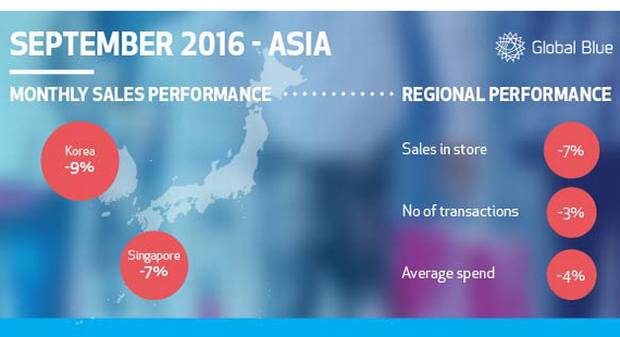
    Tax free shopping sales in Asia fell -7% year-on-year in September, compared to declines of -13% in August, according to Global Blue. The number of transactions dropped -3%, while average spend was also down -4% over the same period. Global Blue said Singapore, Japan and South Korea all saw declining tax free sales for the first time in three years.

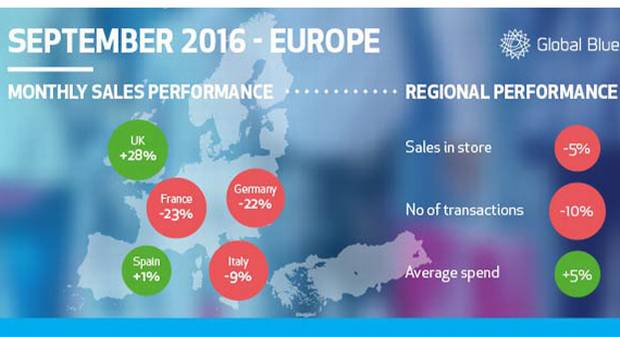
    In Europe, tax free shopping declined -5% year-on-year during September, compared to -3% in August.

    European transactions were down -10%, but average spend was up +5% year-on-year.
    asia_600x300

    Asian countries

    Global Blue said the increase in arrivals by middle-class Chinese travellers supported growth in tax free sales and the number of regional transactions, but was not enough to offset the decline in spend in Singapore, Japan and South Korea.

    Both Japan and South Korea saw a -9% dip in sales, while in Singapore sales fell -7%.

    The positive momentum seen earlier in the year has now gone, Global Blue said, reflected by the deep drop in average spend in Japan of -30% year, and the -13% fall in South Korea.

    In these two countries, the rise in arrivals was offset by the decline in average spend as a result of the strengthening currency in both countries. In September, the Japanese yen was +21% and the Korean won was +10% against the Chinese yuan, Global Blue noted.

    A shift in the Chinese traveller profile towards value seekers and experiential Free Independent Travellers is becoming the “new normal” across the region, the retail intelligence company said, which also had a negative impact on sales.

    Global Blue said it was witnessing a change in shopper profile in Japan’s department stores, as Millennials and Free Independent Travellers look beyond the country’s department stores and head to more niche or independent fashion and luxury retailers outside the Global Blue merchant network.

    With increasing numbers of less affluent Chinese arriving in Singapore from second- and third-tier cities, the country’s duty free retailers have been slow to offer a more diverse retail mix, Global Blue said.

    Chinese travellers are using Singapore as a departure point for cheaper shopping over the border in Malaysia.

    The number of travellers entering Singapore by land is rising (up +55% according to the latest Singapore Tourism Board figures reported in Jing Daily). Some of these tourists are on overland tours and therefore take in cheaper markets as well as Singapore’s high-end malls, unlike the higher-spending visitors who arrive by air.

    Singapore is also facing a challenge this quarter due to health concerns over the Zika virus outbreak, which is reducing visitor numbers, Global Blue noted.

    Chinese shopping across South Korea and Singapore saw tax free sales declines of -15% this month.

    While the tough comparison with 2015’s MERS-hit summer period has ended in South Korea, the Chinese are not returning in any great numbers due to the political tensions between the two countries, Global Blue noted.

    Hong Kongese tax free sales in South Korea and Singapore significantly declined in September (-77% and -98% respectively). While the local currency is strong, the legal context for the largely daigou traders is negatively impacting on sales, according to the company.

    Indonesians and Thais are now making up for the tax free spend at both destinations. In Singapore, Indonesian tax free sales are up +7% year-on-year, fuelled by positive currency exchange rates. In South Korea, Thais contributed to a massive sales spike of +87% year-on-year. Singaporean sales were also up +17% in September, a result of high net worth individuals who are regular shoppers in the region.
    eu-600x300

    European countries

    The tax free shopping decline in Europe is a slight improvement compared to the first half of the year, the company said, although countries hit by terrorism last year saw a reduction in sales.

    France and Germany continued to feel the effects of the downturn in visitors from Asia, with tax free sales down -23% and -22% respectively in September.

    The most serious decline in spending in France came from the Chinese, at -40%, while in Germany, Chinese spending was down -26%.

    Spain and southern European countries continued to outperform the continental Europe average of duty free sales, Global Blue said. Spain saw an increase in tax free sales of +1% compared to last September, while Greece increased total sales by +18%.

    The UK benefited from the fall in the pound and currently remains the best value luxury destination for duty free shoppers. The pound is now around -14% down on the euro since the Brexit vote, and almost -20% against the US dollar, Global Blue said.

    However, this situation is unlikely to last beyond next spring, the company noted, as most luxury goods are imported into the UK. From next season price increases on all imported goods will inevitably lead to higher prices in UK stores.

    The UK also benefited from the end of Ramadan and the annual back to school period for Chinese students, characterised by visiting families’ gift spending.

    The Chinese are the most valuable nation of shoppers for UK retailers, and they increased their spending by +25% during September.

    Saudi Arabia, Qatar, the UAE and Kuwait contributed to a +8% uplift in European sales in September.

    Cutbacks by the Saudi government, where well over half the population are state-employed, will put pressure on Saudi citizens’ outbound travel plans and spending in the medium term, Global Blue noted.

    Morocco posted a +28% rise in total sales in Q3 year-on-year, as shoppers avoided destinations that have suffered terrorist attacks. Cyprus saw a +11% uptick during the same period; Global Blue attributed this to an increase in Russian shoppers.