Retail News CRM

Tag: Tax

  • Europe turns on Facebook, Google for digital tax revamp

    Europe turns on Facebook, Google for digital tax revamp

    With public coffers still strained years after the worst of the debt crisis, EU leaders have agreed to tackle the question, spurred on by French President Emmanuel Macron who has slammed the likes of Google, Facebook and Apple as the “freeloaders of the modern world”.

    As recently as March, five of the world’s top 10 valued companies were Silicon Valley behemoths: Apple, Google’s Alphabet, Microsoft, Amazon and Facebook. (Germany’s SAP was Europe’s biggest and 56th on the global list).

    But tax rules today are designed for yesterday’s economy when U.S. multinationals — such as General Motors, IBM or McDonald’s– entered countries loudly, with new factories, jobs and more taxes for the taking.

    These firms had what tax specialists call “permanent establishment”, when companies showed a clear physical presence measured and taxed through tangible, real world assets.

    But today in most EU nations, the U.S. tech titans exist almost exclusively in the virtual world, their services piped through apps to smart phones and tablets from designers and data servers oceans away.

    Ghost-like, Silicon Valley has turned Europe’s economies upside down, but often with just a skeleton staff and some office space in markets with millions of users or customers.

    Nation-less 

    According to EU law, to operate across Europe, multinationals have almost total liberty to choose a home country of their choosing. Not surprisingly, they choose small, low tax nations such as Ireland, the Netherlands or Luxembourg.

    Thus, it is through Ireland that Facebook draws its wealth from millions of accounts across Europe. There are 33 million accounts in France and 31 million in Germany, according to recent data.

    While users enjoy the platform, Facebook tracks likes, comments and page views and sells the data to companies who then target consumers.

    But unlike the economy of old, Facebook sells its data to French companies not from France but from a great, nation-less elsewhere, with no phone number, address or physical “presence” for a customer who probably cares little.

    It is in states like Ireland, whose official tax rate of 12.5 percent is the lowest in Europe, that the giants have parked their EU headquarters and book profits from revenues made across the bloc.

    Indeed, actual revenues from advertising are minimal in France and Germany, but at Facebook HQ Ireland they grew to 7.9 billion euros, even though the vast majority does not come from the tiny EU island-nation of a mere 2.5 million users.

    Google follows the same pattern: in Germany in 2015, it had a little over 71 million users, in France just over 55 million. But in both nations, revenues are minimal.

    Yet, in Ireland, where the number of search engine users is less than five million, revenues for Google-parent Alphabet reached 22.6 billion euros in 2015.

    According to an analysis by Paul Tang, a specialist on tax issues at the European Parliament, France lost 741 million euros in tax revenue and Germany 889 million euros between 2013 and 2015 due to so-called “tax planning” by Google and Facebook.

    ‘No transparency’

    The Organisation for Economic Cooperation and Development believes that such tax schemes cost governments around the world as much as $240 billion a year in lost revenue, according to a 2015 estimate.

    “The actual activity of each company, including U.S. tech giants, is not known,” said Manon Aubry, spokeswoman for the NGO Oxfam.

    “Beyond the number of accounts or users in each country, it would be necessary to know in the case of Google for example, the amount of advertising sales in each country. We do not have it.”

    For car-ride smartphone service Uber, “we need to know the number of rides, but we don’t have it,” she said.

    “One of the first issues, therefore, is that of transparency: to rule that large companies publish data on activities and taxes paid in all the countries where they are present.”

    To the European Commission, the digital shortfall on tax is clear. The effective tax rate on the profit of digital giants in the EU averages only nine percent, while that of traditional companies exceeds 20 percent, it said.

    ‘Political crap’ 

    Apple, also based in Ireland, became one of the EU’s most emblematic tax cases when Competition Commissioner Margarethe Vestager ordered the iconic iPhone maker to pay 13 billion euros in back-taxes.

    Vestager said the U.S. giant had benefitted from illegal state aid, a gift from Ireland in exchange for choosing Dublin as its headquarters, with thousands of jobs at stake in the deal.

    Brussels says Dublin’s red carpet treatment accorded Apple an effective corporate tax rate of one percent on its European profits in 2003 — a rate that decreased to a scant 0.005 percent in 2014 — just a fraction of the official rate.

    “It’s total political crap,” Apple chief executive Tim Cook barked at the time.

    Undeterred, Vestager has gone after similar arrangements, such as those revealed in the Luxleaks scandal that exposed deals struck between Luxembourg and a long list of multinationals, including online U.S. retail giant Amazon.

    Faced with this situation, several solutions are under study.

    Driven by Macron, France has proposed an unusual idea that has so far divided Europe: tax the U.S. tech giants on sales generated in each European country, rather than on the profits that are cycled through low-tax countries.

    France says this proposal, presented by French Finance Minister Bruno Le Maire in September, has received the support of some 20 countries, including Germany, Italy and Spain.

    But there is fierce opposition from states like Cyprus, Malta, Ireland or Luxembourg — countries that have linked their EU membership to low corporate tax and thus transformed their economies from rural backwaters to financial hubs in a globalised world.

    Global, not EU, solution 

    Member states now agree that the problem would be best addressed at the international level, in the G20 or by the OECD, in order to prevent a high-tech exodus from the EU.

    Caught by surprise by the French initiative, the European Commission announced at the end of September that it will also propose solutions in 2018.

    Ideally, Brussels agrees that there needs to be a major reform of international tax rules, which would establish a closer link between the way value is created and the place where it is taxed.

    Without rejecting the French proposal, the commission wants to dust off an old project from 2011 — for a long time deadlocked because of the differences among the 28.

    Relaunched in October 2016, the idea has one of the most cumbersome acronyms ever to come out of Brussels: the Common Consolidated Corporate Tax Base or CCCTB — an ambitious bid to consolidate a company’s tax base across the EU.

    This draft legislation is currently being examined by the 28 EU member states and taxation of the digital economy could easily be included in the scope of the rules that may be adopted.

    Under the plan, all multinationals operating in the EU with total sales of more than 750 million euros would be fixed at only one place of taxation, with one tax administration.

    However, this tax would be distributed in all the countries where the company operates, and not according to the level of booked profit in each of these states, but according to the level of activity.

    This level of activity in each member state would be measured using a combination of factors, including the number of employees, the importance of tangible assets (buildings, machinery, etc.) and sales.

    French MEP Alain Lamassoure, co-rapporteur of the project, proposes to add a fourth idea: the volume of personal data collected and used by a digital platform wherever its services are used.

    But in Europe, all is made infinitely more complicated since the adoption of new European legislation on tax matters requiring unanimity of the EU’s current 28 members.

    In addition to these European proposals, the OECD is working on a global solution, which it must present to the G20 finance ministers at their next meeting in April in Washington.

    This initiative would have the merit of including Europe as well as the United States, Japan and emerging countries.

    Until last October, the United States had dragged its feet in efforts to better tax its national champions, but changed attitude. Specifically, it agreed to set up a working group with France in the OECD.

    “The Americans are in the same situation as us: their own tax system is not adapted to the current economy and they too are experiencing very substantial revenue losses that must be compensated,” EU economics commissioner Pierre Moscovici said.

    “Taxation of the U.S. tech giants is a global problem and the answer should be as well.”
  • AirAsia to refund travellers wrongly charged departure tax

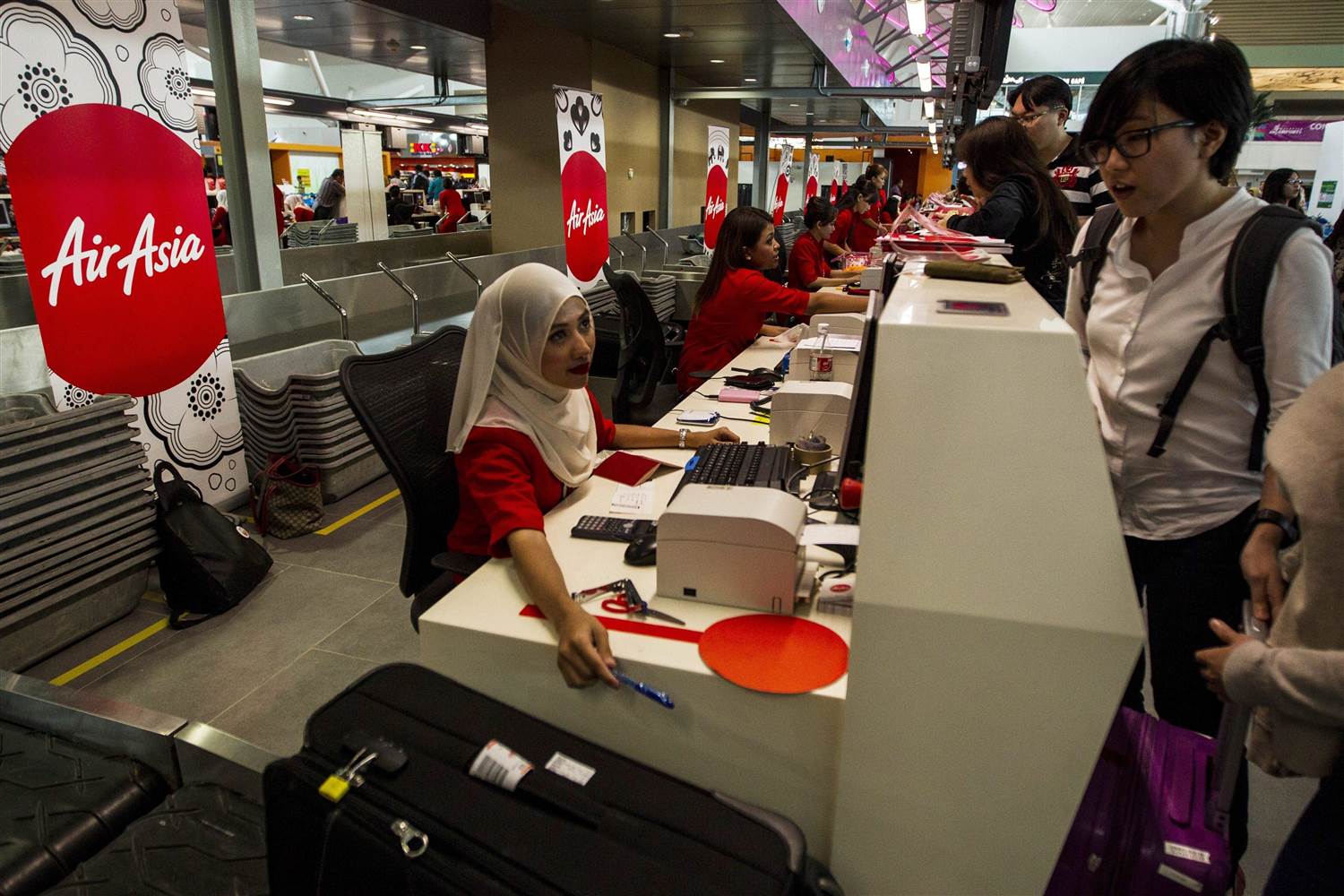
    AirAsia to refund travellers wrongly charged departure tax

    The Territory man who raised the issue of AirAsia incorrectly charging families leaving Australia is over the moon that those wrongly charged will be getting the $60 departure tax back.

    Air Asia has identified 9700 flyers who may have been incorrectly charged the $60.

    The Australian Consumer and Competition Commission said Territorians who flew from Darwin to Bali on Air­Asia between December 2010 and September 2017, and travelled with a child under 12, were getting their $60 back.

    AirAsia is issuing at least $500,000 in refunds.

    All passengers leaving Australia are required to pay a Passenger Movement Charge of $60, however children under the age of 12 are exempt from the tax.

    The NT News was alerted to the issue of overcharging in late September by Stuart Park resident Thomas Sawyer, who came across the discrepancy when he was booking flights to Bali for a family holiday.

    At the time Mr Sawyer said he tried to contact AirAsia, only to be told to send them the details of his tickets.

    “This is amazing news … it’s really good to hear, I am so pleased,” Mr Sawyer told the NT News yesterday.

    “I’m particularly pleased because I spent 12 months trying to get people to fix this before I went to the NT News for help.

    “I went to both local federal pollies Nigel Scullion and Luke Gosling’s offices and neither cared enough to do anything about it. I went to plenty of others as well with zilch outcome.

    “I went to the NT News and AirAsia fixed the issue within hours of the story appearing.

    “I like AirAsia and I just wanted the problem fixed.”

    The ACCC is alerting affected travellers they could be entitled to a refund if they were incorrectly charged the $60 fee on their children’s tickets.

    It is understood AirAsia has also started notifying by email those passengers eligible for a refund of the incorrectly applied Passenger Movement Charge.

  • Brussels to hit Amazon with large tax bill

    Brussels to hit Amazon with large tax bill

    Online retail giant Amazon will reportedly be slapped with a tax bill worth several hundred million euros following a lengthy EU investigation into a sweetheart tax deal with Luxembourg.

    The EU’s competition commissioner Margrethe Vestager is expected to issue her decision on Wednesday following a near three-year investigation into whether Amazon’s tax affairs complied with state aid rules, according to the Financial Times, which cited sources.

    The probe, which was launched in October 2014, looked at a 2003 tax agreement between Luxembourg and the retailer that saw most of Amazon’s European profits recorded in the country, but not fully taxed.

    Both Amazon and the European Commission declined to comment.

    It would be the latest EU regulatory decision to affect a major US firm, with Vestager putting the tax affairs of a number of high-profile targets including Amazon under the microscope in recent years.

    The EU Commission last year hit US tech giant Apple with a 13 billion euro ($A20 billion) tax bill in the wake of an investigation which found that Apple paid 50 euro in tax for every one million of profit made outside the US in 2014.

    The government and Apple are both appealing against the decision.

    McDonald’s is also facing fire from EU antitrust officials who are investigating claims that the fast food giant avoided more than 1 billion euro in tax through the use of a royalties loophole in Luxembourg.

    When it launched its investigation in 2015, the European Commission said the European arm of McDonald’s had paid virtually no corporation tax in Luxembourg or the US since 2009, despite making significant profits in the division.

    McDonald’s subsequently announced this past December that it was moving its non-US tax base to the UK, as it battled EU regulators over its tax affairs.

  • Cebu Pacific seeks extended travel tax exemption for some SE Asia routes

    Cebu Pacific seeks extended travel tax exemption for some SE Asia routes

    Cebu Pacific on Tuesday urged the government to extend the travel tax exemption on routes within Palawan, Mindanao and neighboring Southeast Asian countries, which expires next month.

    Travelers coming from the two Philippine islands who are going to Brunei, Indonesia and Malaysia were exempted from the P1,620 duty for 3 years from Oct. 24, 2014 to promote BIMP-EAGA, a Southeast Asian growth area.

    President Rodrigo Duterte also recently pushed for the revitalization of the BIMP-EAGA or the Brunei-Indoneseia-Malaysia-Philippines East Asia Growth Area.

    “We believe that this would provide relief to the Filipino travelers and accelerate trade and tourism between the member countries, in accordance with the spirit and intent behind the creation of BIMP-EAGA,” said Cebu Pacific vice president for corporate affairs JR Mantaring.

    The Mindanao Development Authority serves as the Coordinating Office of the Philippines for BIMP-EAGA.

    Cebu Pacific subsidiary Cebgo will start its Zamboanga-Sandakan route on October 29, 2017. The 4 times weekly service (Tuesdays, Thursdays, Saturdays, and Sundays) is the carrier’s 27th international destination.

  • Vietnam chews over special consumption tax on sugary drinks

    Vietnam chews over special consumption tax on sugary drinks

    The tax could help combat the country’s rapidly increasing obesity rate. The Ministry of Finance on Tuesday proposed levying a special consumption tax on a range of sweetened beverages. If approved, the proposal would see the tax imposed on carbonated and non-carbonated soft drinks, energy drinks, sports drinks and bottled instant coffee and tea.

    The ministry has suggested either a 10 percent or a 20 percent rate for the new sugary drink tax to be applied from 2019, with 10 percent being the preferred option.

    “The tax will help regulate the consumption of sweetened beverages, and it’s also an international norm,” the proposal said.

    A can of carbonated soft drink, for example, currently costs around VND10,000 ($0.44).

    At Tuesday’s press conference, the ministry cited a report by the World Health Organization (WHO) that shows excessive consumption of sugary drinks can lead to obesity. Obesity, in turn, has been linked to many health risks such as cardiovascular disease, hypertension and strokes.

    Meanwhile, a study unveiled in June found that about 25 percent of Vietnamese adults are overweight or obese. The obesity rate for children under 5 years old is also rising fast.

    Many Southeast Asian countries have already imposed sugary drinks taxes, according to the ministry. The current rate is 20-25 percent in Thailand, 5-10 percent in Laos and 10 percent in Cambodia.

    Myanmar, the Philippines and Indonesia are also considering imposing the tax.

    In Vietnam, special consumption taxes are levied on items and services considered unhealthy or luxurious such as tobacco, alcoholic drinks and cars.

  • Facebook traders face taxation anxieties

    Facebook traders face taxation anxieties

    Le Ha of Hanoi, who has been selling clothes on Facebook, is stressed and worried after receiving a message from tax authorities inviting her to come and declare her income.

    Ha is one of over 13,400 Facebook account holders in Hanoi who’ve been identified by the Hanoi Taxation Department as online traders.

    “I have been selling clothes through Facebook for years, getting about 10 orders each day with maximum daily sales of around VND5 million (US$220),” Ha told us, admitting that unlike other shop owners, she doesn’t have to declare her business or pay taxes.

    She was satisfied with her earnings and not having to bother about any intervention from State management agencies.

    The promise of attractive profits has prompted many people to jump on the bandwagon, catching the attention of authorities trying to reduce tax losses from State budget collection.

    A tax administration project for e-commerce business has been drawn up, with the two taxation departments of Hanoi and HCM City functioning as pioneers in bringing business owners selling merchandise on social media, especially Facebook, into the tax bracket.

    Vien Viet Hung, deputy director of Hanoi Taxation Department, told Vietnam News that the department had collected information on the identity and telephone numbers of the 13,422 Facebook traders.

    Since late June, the department has been sending SMS messages to these traders, encouraging and instructing them to voluntarily register their operations, declare income and pay taxes.

    However, after sending messages twice, only 1,000 of the 13,422 phone numbers have replied, and only around 500 have approached the department on their own to register to pay taxes, Hung said.

    In a recent interview with the Vietnam News Agency, Chairwoman of the Vietnam Tax Consultant Association, Nguyen Thi Cuc, said that under current laws, all institutions and individuals that are doing businesses, whether through traditional channels or via e-commerce platforms, are required to declare income and pay taxes.

    However, she also conceded that in the current situation, the tax collection was totally based on the willingness of traders, their authenticity, honesty and integrity.

    Income bracket

    According to the law, only online sellers with revenues over VND100 million a year will be subject to taxation.However, many Facebook merchants are afraid that the taxation process will be fair.

    “If paying tax is an obligation, we are ready to fulfill it, as long as it is fair to everyone. What if I tell the truth, while other Facebook sellers lie about their revenue? They will pay less or no tax, which is unfair,” Le Ha told us.

    Regarding income declaration, many argue that was very difficult to determine the exact revenue of those who do business on internet, so it is not possible to ensure fair treatment of honest sellers and those who deliberately evade taxes.

    But Ta Thi Phuong Lan, deputy head of the division in charge of personal income tax under the General Department of Taxation, said tax authorities can assess Facebook sellers’ revenue by checking their sources of goods, post offices, delivery companies, and bank payments.

    One of the most difficulties in determining Facebook traders’ income is the low rate of non-cash transactions in Vietnam, said Truong Thanh Duc, chairman of the Basico Law Firm.

    In other countries, buyers make payments via banks, so it is not difficult to identify the revenue from online business. Therefore, it is necessary to apply measures to encourage Vietnamese to use non-cash payment methods for online transactions, Duc said.

    Recently, the General Department of Taxation issued Document No. 2623/TCT-CS, asking local taxation departments to co-ordinate with network operators to gather information on online sellers, including identity and bank number accounts, so that they can monitor all online transactions.

    However, in response to the Vietnam News Agency, CMC Telecommunication Infrastructure Joint Stock Co (CMC Telecom) said they haven’t received any communication from tax authorities.

    The company said that if needed, they can explain and persuade customers to provide them with necessary and detailed information, but they can’t ensure that all the customers will agree to supply this.

    Step by step

    Transactions on the Internet are difficult to control and tax collection procedures can’t be comprehensively introduced in a short time, it should be done step by step, said Nguyen Huu Tuan, Head of the E-commerce Management Division of the E-commerce and Information Technology Department under the Ministry of Industry and Trade.

    To collect taxes, authorities should understand each business as they have their own specific characteristics, Tuan said.

    With millions of Facebook accounts, tax authorities should classify them based on the nature of their operations and key products, he said.

    In the first phase, the tax authority should target large and professional businesses. It is easy to identify these account holders as they will have popular Facebook pages with a large numbers of followers, likes, posts and comments, he said.

    The rest are likely to be individuals selling things online as a side job or even seasonal business. They do not sell goods regularly, so tax departments should carefully review the list before inviting them to their offices, Tuấn said.

    “There are petty traders with modest monthly incomes. If we try to control all Facebook sellers, we will use up significant resources and end up being inefficient,” he said.

    Sharing the same idea, Vien Viet Hung, deputy director of Hanoi Taxation Department, said to obtain necessary information on online businesses, tax departments nationwide should have enough staff who are well versed with social media networks.

    The Hanoi Taxation Department will seek co-operation and support from many concerned agencies like commercial banks, post offices, especially social networks like Facebook, to provide information about account holders, Hung said.

    Late last month, reporters of the Vietnam News Agency contacted the Facebook representative office in Vietnam with questions about the tax collection issue, but hadn’t  received any response at the time of going to print.

  • Mandiri aims to tap Singapore asset pool uncovered in tax hunt

    Mandiri aims to tap Singapore asset pool uncovered in tax hunt

    Bank Mandiri, Indonesia’s largest state-owned lender, on Wednesday said it is seeking to establish a private banking business in Singapore. The move comes amid a global crackdown on tax evasion that has exposed vast Indonesian wealth parked in the city-state.

    Indonesia’s nine-month tax amnesty program, in which the government allowed citizens to report previously hidden domestic or overseas holdings and pay a small penalty, turned up some 4,900 trillion rupiah ($367.5 billion) in declared assets. In a news conference on Wednesday, Mandiri President Kartika Wirjoatmodjo said around 700 trillion rupiah in declared cash and securities are still parked in overseas banks — mostly in Singapore.

    “It’s quite a sizable portion,” Wirjoatmodjo said. “We want to capture this market by giving them services in Singapore. We already have a complete range of products.”

    Indonesia has also pledged to join the Automatic Exchange of Information, a framework developed up by the Organization for Economic Cooperation and Development in which financial regulators will share information about foreign taxpayer accounts. “There will be no more space to place money that cannot be traced by tax authorities,” Wirjoatmodjo said, “so there will be a level playing field.” He explained that wealthy Indonesians have shunned state-owned banks like Mandiri to avoid scrutiny by authorities.

    At the moment, Mandiri can only serve corporate clients in Singapore. In order for the bank to serve wealthy individuals, it needs to be designated a “Qualified ASEAN Bank” by the Monetary Authority of Singapore under a bilateral agreement with Indonesia’s Financial Services Authority, according to Wirjoatmodjo. QAB status, a concept developed by Association of Southeast Asian Nations members, enables banks to operate as local lenders in ASEAN markets.

    Earlier in July, Mandiri became the first bank to obtain the QAB designation in Malaysia. Talks between Singapore and Indonesia, however, have not been officially announced.

    Mandiri is hardly the only bank targeting previously hidden assets. Oversea-Chinese Banking Corp., Singapore’s second-largest bank by assets, in May launched private banking operations in Indonesia to cater to high-net-worth Indonesians with assets of more than $1 million.

  • Indonesia to bring home tax money parked in Singapore

    Indonesia to bring home tax money parked in Singapore

    The government is to hunt down tax money from Indonesians who park their money in Singapore, following an offer from Singapore to allow Indonesia to access the financial data of Indonesians in the neighboring country.

    Singapore and Indonesia are soon to sign a Bilateral Competent Authority Agreement (BCAA) to implement the Automatic Exchange of Information (AEoI) between the two countries.

    Finance Minister Sri Mulyani Indrawati received the offer from Singapore on the sidelines of the G20 Summit in Germany last week.

    “This is a positive. I will follow up so that we can benefit from the agreement,” said Sri Mulyani.

    Sri Mulyani estimated that Indonesian wealth parked overseas amounted to about Rp 1 quadrillion (US$74.68 billion), 60 percent of which was in Singapore.

    Meanwhile, the Finance Ministry’s tax compliance expert Suryo Utomo said that of the Rp 835.7 trillion parked in Singapore that was declared during the tax amnesty, only Rp 84.52 trillion had been repatriated.

    Taxation Directorate General spokesman Hestu Yoga Saksama said that Sri Mulyani and Director General of Taxation Ken Dwijugiasteadi would visit Singapore sometime this month to follow up on the agreement initiated by Singapore.

    Indonesia and Singapore has an open exchange of information, said Hestu. He added that Indonesia should also seek a BCAA with Hong Kong, as well as stipulate confidentiality and data safeguards.

  • Ho Chi Minh City to crack down on tax-evading Facebook retailers

    Ho Chi Minh City to crack down on tax-evading Facebook retailers

    The tax man is threatening to shut down social media accounts, but savvy retailers know that it’s an empty threat. Ho Chi Minh City sent out tax demands to nearly 13,500 Facebook retailers over a month ago, but a representative from the city’s Tax Department told that so far only around 1,000 of them have responded.

    As a result, the city’s tax authorities have decided to work on tougher solutions to crack down on potential tax-evading online retailers, and have asked the Ministry of Finance to finalize regulations regarding tax declarations and deductions at source, as well as the supervision of online business activities.

    The city’s tax department also said it is considering a name-and-shame approach to individuals and organizations that refuse to pay tax.

    To combat retailers that open multiple Facebook accounts to avoid detection, the department claimed it had come up with multiple solutions, such as closing down accounts or sending officials posing as customers to confront them in person.

    It also said it would ask the State Bank of Vietnam for copies of retailers’ bank statements to determine their incomes, and courier companies would be asked to provide information on the quantity and value of the goods they transport for them.

    However, many online retailers say that the tax man has no authority over Facebook.

    Nguyen Thi Cuc, who chairs the Vietnam Tax Consultants’ Association, also told that Vietnam does not have a comprehensive tax policy for online businesses, and that collecting taxes is difficult because most transactions are conducted in cash.

    Many retailers claim they already have business licenses and have declared tax, and only use Facebook to advertise their products, while others say they earn less than VND100 million ($4,400) annually so they are not required to declare tax by law.

  • Facebook business must pay five per cent revenue tax

    Facebook business must pay five per cent revenue tax

    Small and home-based business owners who use the Facebook platform to sell products and have revenue of more than VND100 million (US$4,500) per year will be taxed at five per cent. The money will be paid through a tax registration, value added tax, personal income tax and other taxes depending on the goods they sell.

    “With revenue of over $4,500 each year, a business on Facebook paying nearly VND2 million ($90) for tax is acceptable,” Nguyen Thai Son, a taxation consultant, said in the Thanh Nien (Young People) newspaper.

    The tax level for those who have the same revenue in a traditional business is around four times higher, nearly VND8 million ($360), he said.

    In early June, the HCM City and Ha Noi Taxation Departments sent 13,400 notifications to Facebook businesses and over 1,000 businesses contacted with tax officials in HCM City.

    “To reduce tax losses from online business, tax authorities have woked with Facebook, Google and Apple Store to have e-commerce accounts, worked with banks regarding revenue and worked with police to have a list of those who haven’t paid tax,” Le Thi Thu Huong, deputy head of the HCM City Taxation Department said.

    “The taxation department will collect information from different sources and publish names of organisations and individuals who evade taxes, as well as request relevant authorities to close any e-commerce websites if they do not pay tax,” she added.

    Huong also said that individuals who have online business in social media will be provided a taxation registration and code.

    In developed countries, all people and organisations are required to declare income and pay taxes.

    “Collecting taxes on sales through social networks is necessary,” Huong added.

    Bui Quang Tin, a lecturer in business administration at HCM City University of Banking, said that transactions on the Internet are difficult to control and collecting taxes should be done step by step. Initially, there should be requirements that all individuals conducting business via Facebook must register their operations and declare their income.

    He also noted that with millions of Facebook accounts, in the first phase, the tax authority should target large and professional businesses, because many individual dealers operate as side jobs, or even seasonal businesses. If it tried to control all of them, it would use significant resources and probably be inefficient. The difficulty in managing online sellers and collecting taxes is said to be the consequence of the low rate of non-cash transactions in Viet Nam.

    According to an official estimation, e-commerce activity has been booming, with 80,000 active websites in the city, half of which run stable operations, but tax collection in the field was very poor, especially sales activities through Facebook.

    In fact, in 2015, revenue from e-commerce in Viet Nam reached $4.1 billion, an increase of five times compared with 2012. It is expected to reach $10 billion by 2020, accounting for 5 per cent of total retail sales in the country. Therefore, e-commerce will play a significant role in the Vietnamese retail sector in the future.

  • Google Settles Tax Matter with Indonesia

    Google Settles Tax Matter with Indonesia

    Alphabet’s Google has made an agreement with Indonesia for 2016 after a long-standing dispute over charges of insufficient annual payments to the government.

    The latest settlement figure has been estimated using a new method which will finally conclude to charges that the tech firm was avoiding the required tax payments in the country.

    The report also corresponds with information that a decision was expected very soon.

    Indonesia’s Finance Minister Sri Mulyani Indrawati said on Tuesday that they already have reached a deal with the group based on prior year but they cannot release the figure yet.

    Google has so far not provided any statement.

    It is a notable progress seeing that both parties have settled for just one collection year. The government had been going after the search giant for tax avoidance and failure to pay the required amount for the past five years.

    Indonesia is doing the same but is coming across complication with tracking the money flow in view of the fact that the revenue of Google’s Indonesian business is managed at its Asia Pacific headquarters located in Singapore.

    The search giant was expected to pay about $376 million in taxes for 2015 but only paid $391,000.

    Google had mentioned that the estimated size of Indonesia’s digital advertising market was at $300 million for the said year.

    If found to have failed with taking care of payments, the five years of back taxes will cost the company a fine of over $400 million for only the year 2015 which could put a slight pressure on Google’s swamp bank account.

    Indonesia is keen on increasing tax collection and is planning to make use of the newly loaded capital to reduce its budget shortage and add fund to their current infrastructure program in the country.

    Other governments around the world are searching as well so as to crack down on what they consider as business tax avoidance.

    Other News

    During the Ramadhan, Google Indonesia e-commerce consumer behavior presented data searches on areas associated with the celebration in the country rose up to 28 percent while spending added to 30 percent.

    The country’s e-commerce head Henry Prihatna said that fashion product had the biggest sales gaining 180 percent, home appliances with 100 percent high and cellular phones edged up 80 percent.

    On the other hand, Google’s shares closed its Monday session losing as much as 0.7 percent to $942.90 on the Nasdaq Composite Index as tech stocks declined nearly 75 percent with Apple, Microsoft and Alphabet falling almost 6.5 percent.

    The three companies make up for approximately 30 percent of the index’s weighting.

    However, some experts believed that investors do not have to worry as any decline is likely to be buying opportunity and that the market is overbought from a long-term point of view and estimations are extended.

    With regards to money flows, investors may think about merging the variation between rising and falling matter in the stock market or their preferred index with money flows so as to have a useful perspective.

  • How will Saigon track down Facebook retailers to collect tax?

    How will Saigon track down Facebook retailers to collect tax?

    Tax officials are reaching out to 13,500 retailers in their database, but they admit this will be a very tough task.

    For the first time Ho Chi Minh City has started a new tax collection campaign targeting retailers on Facebook, the most popular social network in Vietnam.

    Now tax officials are working to solve an anticipated problem: how to track down thousands of retailers across the city, many of whom are elusive, and how to calculate their earnings.

    Le Thi Thu Huong, a municipal tax official, said the city has a record of 13,500 retailers on Facebook and that the law only requires those with an annual revenue of VND100 million or $4,400 to declare tax.

    Tax officials will also need to figure out how to determine their taxable income, Huong said, noting that cash transactions are difficult to monitored.

    “Tax authorities will need the support and cooperation from relevant sectors such as banks, postal services and Facebook itself to collect tax effectively,” she said.

    District-level tax agents said they have been reaching out to the 13,500 retailers in the database, but to no avail.

    District 1 and Binh Thanh District have both sent out letters asking Facebook retailers to meet officials to discuss tax payments, only to find that many of the addresses listed on Facebook are fake.

    “If the retailers continue to keep quiet, we will come to them in person,” an official in Binh Thanh said.

    Another official said the database should be reviewed to remove inactive retailers first before district agents begin to send out requests.

    Nhung, an online retailer in Binh Tan District who sells clothes and cosmetics on Facebook, said her monthly revenue usually stays at VND30-40 million ($1,300-1,700) .

    She did not hide the fact that her address and phone number are not disclosed publicly on Facebook.

    “I think this is why the city’s tax department doesn’t have me in the database. So far I have not been contacted,” Nhung said. VnExpress chose not to publish her full name.

    “It’s not easy for tax authorities to have my personal information, unless they contact Facebook directly. But that is not likely to happen,” she said.

    Nhung also said most of her customers pay in cash.

    Mai, a cosmetics seller, said she has received a letter from District 1 even though she has a business license and has declared tax.

    She said she may just ignore the letter because it’s “not necessary.”

    Since February, Vietnam’s tax authorities have been looking at ways to collect taxes from online businesses that use Facebook and other social media sites such as Instagram and YouTube.

  • Vietna​m urges nearly 13,500 Facebook retailers to declare tax

    Vietna​m urges nearly 13,500 Facebook retailers to declare tax

    Most online transactions in Vietnam involve cash, which is difficult to track and tax. District tax departments in Ho Chi Minh City have sent out tax demands to nearly 13,500 Facebook retailers in a move to target tax avoidance by online businesses.

    Since February, Vietnam’s tax authorities have been looking at ways to collect taxes from online businesses that use Facebook and other social media sites such as Instagram and Youtube.

    Nguyen Nam Binh, deputy director of Ho Chi Minh City’s Tax Department, told VnExpress that the law requires online retailers earning over $4,400 a year to declare tax, so authorities are only targeting long-term and unregistered businesses.

    Despite the requests, Binh Thanh District’s tax department said the response had been limited.

    “Most business owners said their business were short-term and their revenue was not high enough to warrant the tax requirements”, said a department representative.

    In February, Facebook representative Huynh Kim Tuoc said at a conference that Vietnam’s e-commerce environment is thriving, with about 50 young people having already earned millions of dollars through online businesses.

    Local businesses in HCMC also told us their revenue rose significantly after they switched online, with some reporting earnings of up to tens of thousands of dollars per month.

    Chairman of Vietnam Tax Consultant Association Nguyen Thi Cuc told us that Vietnam’s tax policy for online businesses is incomplete and therefore not yet compulsory, adding that it’s difficult to collect taxes from online retailers in Vietnam as most transactions are still in cash.

    Vietnam is also struggling to control business activities from transnational corporations like Facebook and Google, she added.

  • HCM City tax department to monitor social media businesses

    HCM City tax department to monitor social media businesses

    The Ho Chi Minh City Department of Taxation has said recently that its data center is checking Facebook accounts used for conducting business, with a view to determining any tax obligations.

    Not all individual Facebook accounts, however, have to pay tax on their business. Those that are conducting “non-professional” business on an irregular basis and with low turnover will not have to pay tax.

    Only those with large sales and unpaid taxes are targeted, according to the head of the city’s tax department.

    Upon completing the checks, the department will submit plans to the city’s People’s Committee to coordinate with other departments to collect e-commerce business management taxes, including business Facebook accounts.

    At a meeting between city leaders and the department in February, the Department of Industry and Trade proposed collecting taxes from Facebook businesses.

    The Department of Tax Policy under the General Department of Taxation (GDT) is also studying the management of taxes on business activities conducted via social networks such as Facebook, YouTube, and Zalo.

    According to experts, collecting sales tax from Facebook business is not an easy task. Every organization and individual can now own multiple accounts on social networks for their business.

    Sales are mainly made in cash, so it is difficult to monitor. In addition, some people only do business via Facebook as a seasonal job or to earn more income, which also challenges tax management.

    The department’s current solution is to require people doing business on social networks to provide information such as their name, address, telephone number, and personal tax code, in order to control their business activities more strictly.

    In 2015, revenue from e-commerce in Vietnam reached $4.1 billion, an increase of five-fold compared to 2012, according to the latest data from the GDT. It is expected to reach $10 billion by 2020, accounting for 5 per cent of total retail sales in the country. E-commerce will therefore play a significant role in Vietnam’s retail sector in the future.

  • Ho Chi Minh City may tax online sales next month

    Ho Chi Minh City may tax online sales next month

    The city is making serious steps to collect sales taxes from small and home-based online business owners. Ho Chi Minh City’s tax department has said it will work with related departments to impose sales taxes on businesses running on Facebook and other online shopping sites.

    The department would submit the taxing plan to the city’s government for approval early next month, an unnamed official from the department told.

    The department said it would coordinate with information and trade departments, internet providers, banks and post offices to collect the tax.

    Last month, the trade department proposed the city work with Facebook on measures to collect tax from businesses running on the site.

    The General Department of Taxation later agreed with the proposal, saying it is working on measures to tax the businesses operating on Facebook, YouTube and Vietnamese messaging app Zalo.

    Tightening tax collection from online businesses is part of a plan to enhance state budget revenue collection.

    The city’s intent on taxing online sales has stirred up different opinions.

    Many said the tax collection is not an easy job for the authorities as many online retailers use anonymous accounts for transactions, not to mention that most purchase or sales transaction are cash-based.

    Vietnam’s e-commerce market, which has one of the world’s fastest growth rates, jumped 37 percent to around US$4 billion in 2015, data from the Ministry of Industry and Trade show.

    The growth rate is about 2.5 times faster than that in Japan, according to Tran Duc Tam, an industry expert.

    The government has projected revenue by Vietnam’s online retail to hit $10 billion by 2020, accounting for 5 percent of the country’s retail market.

    Retail sales in the first quarter of 2017 rose an estimated 9.2 percent from a year ago to $40.5 billion, the government said Wednesday, after an annual rise of 10.2 percent last year to $118 billion.

    Up to 60 percent Vietnam’s population is online.