Retail News CRM

Tag: Tax

  • Samsung to pay its biggest tax bill ever as profits rise

    Samsung to pay its biggest tax bill ever as profits rise

    Samsung Electronics is expected to pay 16.8 trillion won ($15 billion) in corporate taxes this year, up 20.1 percent from a year earlier, due to its record earnings, its regulatory briefing showed Monday. It is expected to cough up 28.6 percent of its operating profits, which reached an all-time high of 58.9 trillion won in 2018, according to its consolidated financial statement.

    The estimated tax amount is the highest amount ever for the company, 2.4 times the number from 2015 and over 14 times from 2009, its past reports showed.

  • Kering faces €1.4 billion Italian tax bill

    Kering faces €1.4 billion Italian tax bill

    Kering is facing an Italian claim for €1.4 billion (£1.2 billion) in unpaid taxes. The company’s Swiss-based Luxury Goods International (LGI) subsidiary has been under investigation for allegedly avoiding tax on earnings generated elsewhere. The probe has largely centred on Gucci, Kering’s star brand and biggest revenue driver. Italy’s tax police carried out checks at Gucci’s Florence headquarters and Milan offices in 2017, and drew up the report that has now been handed to Kering, a source close to the investigation said.

    Kering has consistently denied avoiding tax, saying its activities were fully compliant with all tax obligations.

    In its statement on Friday, the group said the Italian tax authorities’ findings for the years 2011-2017 had yet to be finalised by their own enforcement team.

    “Kering challenges the outcome of the audit report both on the grounds and the amount,” the company said, adding that it “does not have the necessary information” to record a provision against any potential bill for back taxes or penalties.

    The company has said that LGI is a substantial firm in its own right, with 600 employees handling inventory, billing and supply-chain logistics, with a business model “known to French and other competent tax authorities”.

    According to reports by France’s Mediapart newspaper and Germany’s Der Spiegel, Kering’s wholesale activities – the sale of products to retailers such as department stores – have come under particular scrutiny.

    Some business carried out by Kering employees in locations including Milan and Paris was billed through the Swiss unit, incurring lower tax rates, according to those reports.

  • Vietnam’s largest brewery, foreign-owned, refuses to humor taxman

    Vietnam’s largest brewery, foreign-owned, refuses to humor taxman

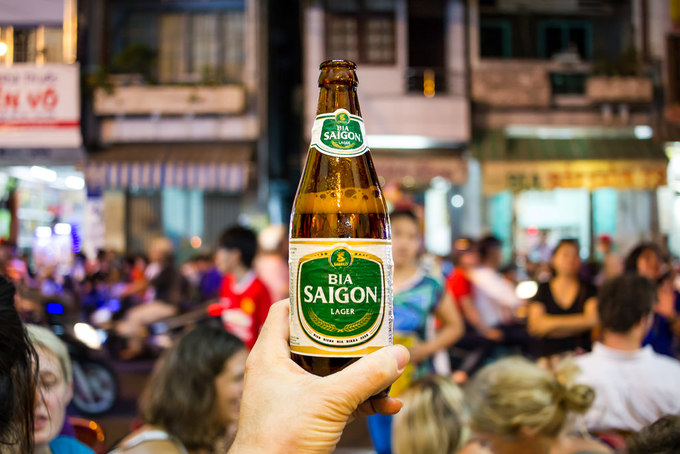
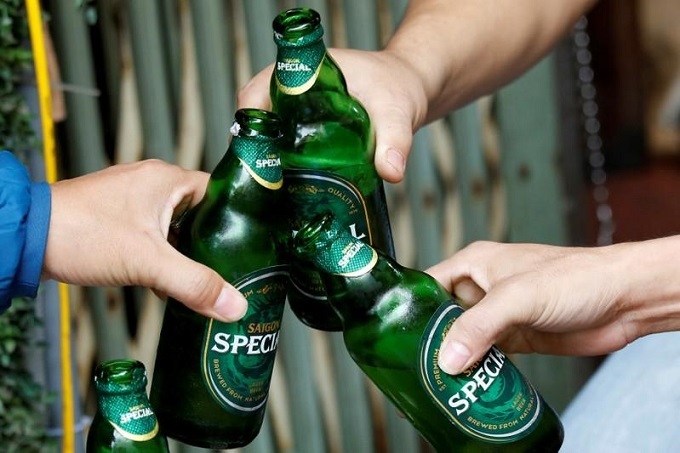
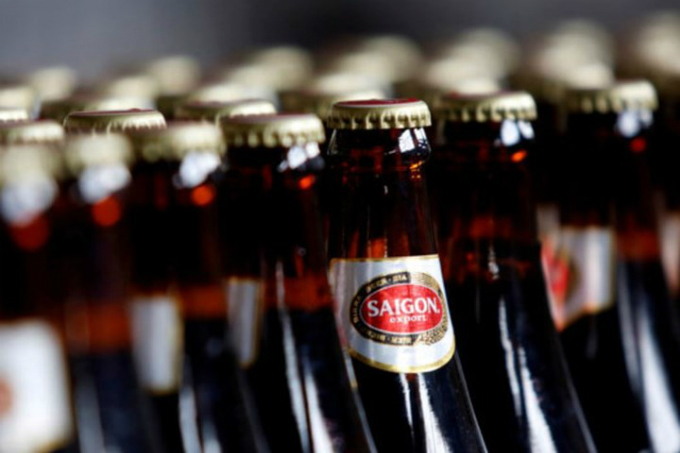
    While Sabeco is still at loggerheads with the taxman over alleged back taxes of $135.73 million, it has not provisioned for it. Its 2018 accounts make no mention of the amount in dispute though the HCMC Tax Department has claimed it owes that in taxes and fines and even tried to seize the money from the company’s bank account. Vietnam’s largest brewer, Saigon Beer Alcohol Beverage Corporation (Sabeco), claims it has accurately declared and paid taxes based on guidance from the Ministry of Finance and tax authorities.

    A month ago the department said it would seize VND3.1 trillion ($135.73 million) from the brewery’s bank account for overdue special consumption tax payable between 2007 and 2015 and penalties for administrative violations. But there was reportedly no money in the account.

    Le Duy Minh, deputy head of the tax department, said the account has been temporarily blocked.

    “We have asked Sabeco to provide details of other bank accounts, but it has not fulfilled that request.”

    Sabeco general director Neo Gim Siong Bennett said in a statement on December 30 that Sabeco had not violated any tax regulations.

    Thus, the enforcement action by the tax department was a violation of Vietnamese laws since it was taken “without a valid administrative decision” and “contradicts the written guidance issued by the finance ministry, General Department of Taxation and the city department itself.”

    Speaking about the dispute, Prime Minister Nguyen Xuan Phuc earlier this month asked the tax authorities to desist from action and wait for related ministries and other agencies to come to a decision.

    Mai Tien Dung, Chairman of the Prime Minister’s Office said that government agencies are scrutinizing the case as it involves “foreign elements.”

    Sabeco’s revenues last year rose 5 percent to more than VND36 trillion ($1.56 billion) but higher expenses and falling profits at its joint venture and affiliate companies caused its profit after tax to fall by 11 percent to VND4.4 trillion ($191 million).

    In December 2017 Thai Beverage acquired a 53.59 percent stake in Sabeco from the Ministry of Industry and Trade for $4.84 billion through a local entity, Viet Beverage (VietBev).

    Sabeco now has a 42.8 percent of the beer market, according to the Ho Chi Minh City Securities Corporation. It produced nearly 1.85 billion liters of beer last year.

  • Indonesia to put tax on e-commerce transaction

    Indonesia to put tax on e-commerce transaction

    The Ministry of Finance said on Monday that it will impose new rules requiring e-commerce sellers to share data with the authorities, while also stressing that they must pay taxes. Surging smartphone use and a rising middle-class income in Indonesia, home to 260 million people, has made its e-commerce industry a battleground for foreign investors.

    Global consultancy McKinsey projects spending in the Indonesian e-commerce market to rise to as much as $65 billion by 2022, from $8 billion last year, similar to the growth trajectory experienced in China between 2010 and 2015, and the government is trying to squeeze more from a market that traditional retailers have alleged avoids taxes.

    From April, all operators of online marketplaces will have to detail each seller’s turnover and report this to the authorities, the ministry’s tax spokesman Hestu Yoga Saksama said.

    The rules would apply to all online marketplace operators in Southeast Asia’s largest economy, including Lazada and Tokopedia, which are both backed by Chinese e-commerce giant Alibaba, and Bukalapak, which counts China’s Ant Financial among its investors.

    The Directorate General of Taxes said an online seller that makes at least Rp 4.8 billion ($340,000) in turnover must charge value-added tax to customers and pay this to the authorities.

    A seller must also pay income tax of 0.5 percent of turnover if it is a small or medium business, or a 25 percent corporate tax of profit if it is big enterprise, bringing the sector in line with requirements for conventional retailers.

    There were no new taxes being applied, but the rules were put in place to clarify what taxes each player in a marketplace is obliged to pay and to “create an equal treatment with conventional businesses,” the tax office said.

    The Indonesian E-Commerce Association (idEA) criticized the new rules, saying online sellers would instead choose to sell their products through social media, CNBC Indonesia reported.

    Tokopedia and Bukalapak both said they are still studying the possible impacts caused by the rules.

  • CIMB Thai’s FY18 net profit drops on higher tax expenses

    CIMB Thai’s FY18 net profit drops on higher tax expenses

    CIMB Thai Bank PCL’s unaudited con-solidated net profit for the year ended Dec 31, 2018 (FY18) fell 98.2% year on year to 6.9 million baht (RM883,732), dragged down mainly by higher income tax expenses. Profit before tax decreased 44.5% to 271.2 million baht year on year, mainly due to a 9.6% increase in operating expenses and lower net fee and service income and other income of 7.0% and 2.6% respectively. This was offset by a 5.3% growth in net interest income and a 2.6% decline in provisions.

    President and CEO Kittiphun Anutarasoti said CIMB Thai group’s consolidated operating income, on a year-on-year basis, increased 2.9% from 2017 to 13.54 billion baht from higher net interest income of 5.3% on the back of loan expansion and higher interest income on investments.

    Net interest margin over earning assets stood at 3.71% in 2018, compared with 3.89% in 2017 as a result of lower yield on earning asset.

    As at Dec 31, 2018, CIMB Thai’s total gross loans stood at 227.8 billion baht, making an increase of 6.9% from Dec 31, 2017.

    Deposits stood at 234.3 billion baht, an increase of 6.5% from at the end of December 2017. CIMB Thai said the modified loan-to-deposit ratio was higher at 97.2% against 96.8% as at Dec 31, 2017.

    The gross non-performing loan (NPL) stood at 9.9 billion baht, with a lower gross NPL ratio of 4.3% compared with 4.8% as at Dec 31, 2017. The lower NPL ratio was due to more efficient risk management policies, improved asset quality management and loan collection processes as well as the sale of some NPLs in 2018.

  • Vietnam’s Sabeco, taxman at loggerheads

    Vietnam’s Sabeco, taxman at loggerheads

    HCMC tax authorities have failed to collect $135.73 million in taxes and fines, while brewer Sabeco has cried foul. The Tax Department of Ho Chi Minh City informed Vietnam’s largest brewer Sabeco on December 24 that it would withdraw VND3.1 trillion ($135.73 million) from the beer company’s bank account to collect overdue special sales tax from 2007 to 2015 and penalties for administrative violations.

    However, the move failed because there was no money left in Sabeco’s Vietcombank account.

    Le Duy Minh, deputy head of the department, said that his agency has temporarily blocked Sabeco’s Vietcombank account.

    “We have asked Sabeco to provide details of other bank accounts but it has not fulfilled that request,” he said.

    But Sabeco claims that it has not violated the law.

    Sabeco general director Neo Gim Siong Bennett said in a statement Sunday that Sabeco has not violated regulations on the declaration, calculation and payment of special sales tax.

    He said the enforcement action by the HCMC Tax Department was a violation of Vietnamese laws, as it was taken “without a valid administrative decision” and “contradicts with the very written guidance issued by the Ministry of Finance, General Department of Taxation and Tax Department of HCMC.”

    He said Sabeco’s “legitimate interests are being threatened by the inconsistent views among State authorities.”

    As Sabeco is set to meet with Prime Minister Nguyen Xuan Phuc, the tax department will await the meeting’s results before taking further steps, Minh said.

    Following Sabeco’s meeting with Prime Minister Nguyen Xuan Phuc on Wednesday, the latter has asked the tax department to defer its enforcement actions.

    Mai Tien Dung, Chairman of the Prime Minister Office said that government bodies are carefully examining the case as it involves “foreign factors.”

    In December 2017, Thai Beverage acquired a 53.59 percent stake in Sabeco from Vietnam’s Ministry of Industry and Trade for $4.84 billion through a local entity, Viet Beverage (VietBev).

    Sabeco, formally known as Saigon Beer Alcohol Beverage Corp, recorded revenues of VND25.5 trillion ($1.1 billion) in the first nine months 2018, meeting 70 percent of its annual target.

    It occupies approximately 42.8 percent of the domestic beer market, according to the Ho Chi Minh City Securities Corporation. It produced nearly 1.8 trillion litres of beer in 2017.

  • Beer tax prioritized as foreign brands build market share

    Beer tax prioritized as foreign brands build market share

    The government is planning to overhaul the current cost-based alcohol-tax system to a quantity-based system, which may address concerns from local alcohol companies about cheap imported beer. According to the Ministry of Economy and Finance on Tuesday, current taxes on alcohol are based on costs, such as manufacturing or import prices. The government is currently working on a reform that will transition the system, established back in 1969, to a new one based on quantity, such as total volume or alcohol content.

    The initiative has been in the spotlight with Finance Minister Hong Nam-ki addressing the issue during his recent confirmation hearing.

    “[We] will consider a change next year without increasing prices,” said Hong. “[We] will consider strengthening the future competitiveness of the alcohol sector and the fairness of the alcohol-tax system as a whole.”

    The comments come as criticism mounts against importers that reportedly declare low import prices for foreign beer and maintain competitive or even cheaper prices than local beer.

    The tax base for local beer is based on the price of beer shipped out from distilleries, which includes costs for production and sales and a margin. For imported beers, the tax is calculated based on the import price paid by the importer and the customs duty. As importers can lower taxes by reporting low prices, foreign beers can maintain price competitiveness against local offerings.

    Local beer companies have argued against this cost-based tax system, saying it is a form of discrimination against Korean manufacturers.

    “The tax rates are identical, but because the tax base is high, there is a twofold difference,” said Kang Seong-tae, chairman of the Korea Alcohol & Liquor Industry Association at the annual National Assembly audit in October.

    The favorable tax system has allowed for the competitive pricing of imports and an increasing market share for foreign beers, rising to 16.7 percent last year from 4.9 percent in 2013.

    While the tax change may provide a level playing field, it raises concerns that widely popular promotions in which four beer cans are sold for 10,000 won ($8.89) may not survive the reform.

    The change, however, is unlikely to eliminate the promotions altogether.

    The government is considering a plan to introduce alcohol taxes of 850 won per one liter (33.8 ounces) of beer. The current average beer tax works out to roughly 850 won per liter, though it is calculated in a different way.

    When converting the current alcohol tax to an amount per liter based on figures by imported country from the Korea Customs Service, imported beers that are taxed higher than 850 won per liter include those from the United Kingdom at 1,194 won per liter on average; the Philippines at 1,032 won per liter; Ireland at 1,004 won per liter and Japan at 958 won per liter.

    Beers from these countries will likely attract a lower tax after the reform.

    Meanwhile, beer from countries that have lower average taxes per liter compared to the 850 won per liter standard will become more expensive. Beers from the Netherlands are currently taxed at 519 won per liter, Belgium 567 won per liter, the United States 654 won per liter and Germany and Denmark 735 won per liter.

    In general, premium imported beers have expensive import prices.

    With the introduction of a quantity-based system, taxes levied will become lower and the current promotions of four cans at 10,000 won will likely remain.

    However, promotions of six cans for 10,000 won will probably disappear as cheap imported beer will face higher taxes.

    “[We] will establish a reform plan for alcohol tax as early as the first half of next year by conducting research and gathering opinions,” said Kim Byung-gyu, director general of the Tax and Customs Office at the Finance Ministry. “[We] have an objective to ensure overall fairness in taxation and make changes without increasing the burden on the consumer.”

  • Google Korea office raided by tax agency

    Google Korea office raided by tax agency

    The National Tax Service (NTS) launched an investigation into Google Korea on Wednesday, sending an official to secure accounting documents at the company’s office in Gangnam District, southern Seoul. The investigation is thought to be into YouTubers suspected of avoiding taxes, as NTS Commissioner Han Sung-hee previously promised during the National Assembly’s annual questioning session in October to take measures to “prevent tax evasion” by well-paid YouTubers.

    Commissioner Han revealed that the NTS had advised 513 YouTubers to pay income taxes in the past, and was open to launching investigations into those who have not declared taxes.

    The raid comes just a day after global IT giants like Google and Amazon were ordered to start paying 10 percent value-added tax (VAT) in Korea from next July.

    The National Assembly passed a bill to revise the country’s Value-Added Tax Act in a move to impose VAT on foreign IT firms, the Assembly announced Tuesday. Specifically, the revision means IT firms will have to pay 10 percent in taxes for revenue made from business-to-consumer services, which include online advertisements and cloud computing services.

    Also subject to VAT will be revenue made from online-to-offline services like hotel booking platforms that market online to raise sales in physical stores, as well as sharing economy services, which are spearheaded by companies like Airbnb. The revision will go into effect from July 1 next year.

    “We will continue discussing the issue of taxing business-to-business transactions between Korean and overseas firms, which could not be agreed on in this revision,” said Rep. Park Sun-sook of the minor opposition Bareunmirae Party, who submitted the bill for the revision.

    Like in other countries, the issue of taxing global IT giants has been the subject of fierce debate in Korea. Politicians have long raised concerns over how little IT giants like Google are being taxed in Korea, while domestic IT firms have bemoaned how the “reverse discrimination” was allowing overseas competitors to thrive at the expense of domestic companies.

    Google Korea is estimated to have paid less than 20 billion won ($17.7 million) in corporate taxes in 2016, when it raised nearly 5 trillion won in revenue in Korea in the same year through the Google Play store and YouTube advertisements. In 2017, however, Naver, which earned slightly less at around 4.67 trillion won, paid a total of 423 billion won in taxes, or 20 times more than Google.

    Strengthening regulations on corporate taxes will be much more difficult to achieve than changing VAT rules, however.

    Current international agreements like the OECD Model Tax Convention and tax treaties protect enterprises from paying income tax to foreign countries if they do not have permanent establishments in those countries. Though the definition of permanent establishments is often questioned, by current standards, Korea is not home to permanent establishments of any of the major IT firms – they mostly operate small affiliates here and conduct most of their business online from headquarters in the United States and other countries.

    These global IT firms only need to fulfill the corporate tax requirements for revenues made by their Korean subsidiaries, which is not much.

  • Unilever Vietnam owes over $25mln in back taxes: state audit

    Unilever Vietnam owes over $25mln in back taxes: state audit

    The state auditing agency says Unilever Vietnam should pay over $25 million in back taxes for the 2009- 2013 period. Speaking at a National Assembly session on the draft bill on Tax Administration, State Auditor General Ho Duc Phoc pointed to the Holland-backed personal care products maker Unilever Vietnam as an example of taxes overlooked by the authorities.

    Phoc submitted an audit report that says Unilever Vietnam had under-declared its tax dues. The company took the case to the Prime Minister and the National Assembly’s Budget and Finance Committee. After re-examination, the State Audit concluded that the company had under-declared its tax dues by VND584 billion ($25 million).

    The auditor general said the company had accepted this figure, but requested that it is not charged for late payment.

    “Whether the company is fined will be decided by the General Department of Taxation, not us,” Phoc said.

    However, tax department officials as well as Unilever Vietnam representatives said that the company had not accepted the above figure despite the parties having discussed the issue many times.

    “The determination of the amount of tax arrears arising from errors in calculating the preferential tax rate that applies to Unilever Vietnam for its expansion activities in 2009-2013 is not related to transfer pricing,” said a representative of the General Department of Taxation.

    Representatives of the HCMC Taxation Department also confirmed that the decision to collect this sum from Unilever Vietnam has been made, but has not been accepted by the company.

    Unilever Vietnam denies having under-declared any tax obligation. Tran Vu Hoai, the company’s vice president of Sustainable Development and Public Relations, said the outstanding tax issue in question is “due to the differences in the stipulations of the Investment Tax Law and the Corporate Income Tax Law for the period before 2014.”

    “Such differences in the stipulations of the relevant laws have led to different interpretations, causing difficulties for businesses and relevant agencies in the implementation of the laws,” Hoai said.

    The crux of this issue lies in the differences that existed in terms of investment incentives between “new projects” and “expanded investment projects” between 2009 and 2013.

    Then, “expanded investment projects” were only entitled to a three-year corporate income tax (CIT) exemption, and a 50 percent CIT reduction in the five following years. Meanwhile, “new projects” could enjoy a preferential CIT rate of 15 percent for 12 years, three-year tax exemption, and a 50 percent reduction over the next seven years.

    Tax men and companies are divided over the definition of “new project” and “expanded investment project” as they apply to tax incentives.

    Unilever Vietnam has petitioned the Government, the Ministry of Finance and State Audit to find a satisfactory solution in compliance with Vietnamese laws and international regulations.

    Unilever Vietnam is not the only company that’s faced this problem. Suntory Pepsico Vietnam Beverage, GE, Piaggio Vietnam and Yamaha Motors have reportedly fought similar battles.

    Hoai said the matter is being handled by the Ministry of Planning and Investment, in collaboration with the Ministry of Finance and other agencies.

    In September, Prime Minister Nguyen Xuan Phuc assigned the Ministry of Planning and Investment the task of coordinating and working with the Ministry of Finance to resolve such issues for enterprises, in the spirit of ensuring non-retroactivity of the law.

  • Korea’s gas prices fall quickly thanks to fuel tax cuts

    Korea’s gas prices fall quickly thanks to fuel tax cuts

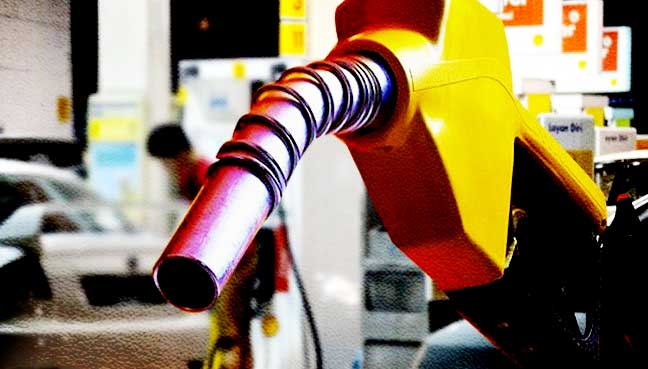
    The government fuel tax cut, which was implemented to ease the burden on rising crude oil prices, has turned out to be more effective than initially expected. According to the Ministry of Trade, Industry and Energy on Sunday, the average price of gasoline at gas stations nationwide was 1,575.2 won ($1.40) per liter during the second week of November. This is an 85.2 won, or 5 percent, drop, from the 1,660.4 won average just a week earlier.

    Diesel prices have also dropped to an average 1,419.2 won per liter, down 56.2 won, or 3.8 percent, from the first week of this month, when it was an average 1,475.4 won for the same amount.

    On Saturday, the ministry said the average price of gasoline had further fallen to 1,556.8 won per liter – 133.5 won less than the 1,690.3 won it sold for on Nov. 5, the night before the government’s fuel tax cut went into effect.

    On average, the government cut 15 percent off of all fuel taxes including gasoline and diesel in the hopes of easing the burden created by rising international crude prices. It was the first fuel tax cut adopted in a decade.

    “As the situation [of low-income households and small and medium-sized enterprises] becomes more difficult with rising international crude prices, we have decided to aim for a psychological effect that will help the economy by increasing disposable incomes,” Ko Hyoung-kwon, deputy finance minister said in late October.

    Among gas stations, the government-supported Altteul Gas Station saw the biggest drop in prices – its gasoline costs 135.5 won less than it did on Nov. 5.

    Other major brands including SK, GS, S-Oil and Hyundai Oilbank have cut gasoline prices by 133.3 won.

    By region, Jeju lowered its gasoline prices the most. The island has seen a 169.4 won drop in average price compared to Nov. 5. Daejeon followed, as prices have fallen an average of 149.6 won, while Incheon came in third after seeing a 142 won drop.

    Seoul gas stations on average lowered their prices by 134.9 won while Gyeonggi gas prices fell by 137.2 won per liter.

    Seoul and Gyeonggi account for 39 percent of all fuel sold in the country.

    However, as of Saturday, 173 gas stations around the country – 1.5 percent of the nation’s gas stations – have not taken part in lowering fuel prices. The ministry said that these gas stations failed to deplete all of the gas that they had stockpiled before the Nov. 6 fuel tax cut was implemented.

    The fuel tax cut will be applied for six months.

  • Exchange rates, tax worry Vietnam’s most profitable firms

    Exchange rates, tax worry Vietnam’s most profitable firms

    Exchange rate fluctuations and high taxes are the main concerns of Vietnam’s most profitable businesses, a recent report has found. The survey of the 500 most profitable companies this year, which include 41 foreign invested ones, by consultancy and market research firm Vietnam Report, said 51.4 percent of businesses considered exchange rate volatility as the biggest challenge this year.

    For 42.9 percent of respondents the tax burden was the biggest concern.

    Other factors that affect their profitability are red tape (37.1 percent), global economic instability (31.4 percent) and environmental disasters (25.7 percent).

    However, 90 percent expected their revenues to rise this year.

    Eighty percent said their profit had already exceeded last year’s, with another 8.6 percent saying it had drawn level.

    Almost all (97.1 percent) said the government has stewarded the economy well by curbing inflation and managing the exchange rate adroitly.

    But they wanted improvements to administrative procedures, infrastructure and access to land.

    The survey found the telecommunications-information technology sector having the highest return on equity, 30 percent, followed by transportation with 24 percent and pharmaceuticals with 21 percent.

    The Vietnam Oil and Gas Group or PetroVietnam is the most profitable company this year followed by telecomunications firm Viettel and Samsung Electronics Vietnam Co. Ltd.

  • Ban sugar imports, tax other sweeteners, Vietnamese government urged

    Ban sugar imports, tax other sweeteners, Vietnamese government urged

    Failure to stop cheap, smuggled sugar from flooding domestic markets has sent local inventories soaring, local reports say.

    The trade department of the Mekong Delta province of Hau Giang, which has more than 100 hectares (247 acres) of sugarcane farms, has asked the Ministry of Industry and Trade to strengthen its anti-smuggling forces in border areas.

    And as an immediate solution to help the domestic sugar sector, it suggested that the ministry temporarily halts all sugar imports, including temporary imports for re-export, as sugar supply has far surpassed demand.

    The ministry should also impose import tax on sweet substances that can replace sugar and control the quota of those products in the market, and reduce the value added tax on made-in-Vietnam sugar from 5 percent to zero, the department said.

    In addition, it proposed establishing a sugar and sugarcane development fund. “The ministry should instruct banks to loosen credit regulations and offer loans to individuals and firms in the sugar industry at preferential interest rates,” the department stated in its letter to the ministry.

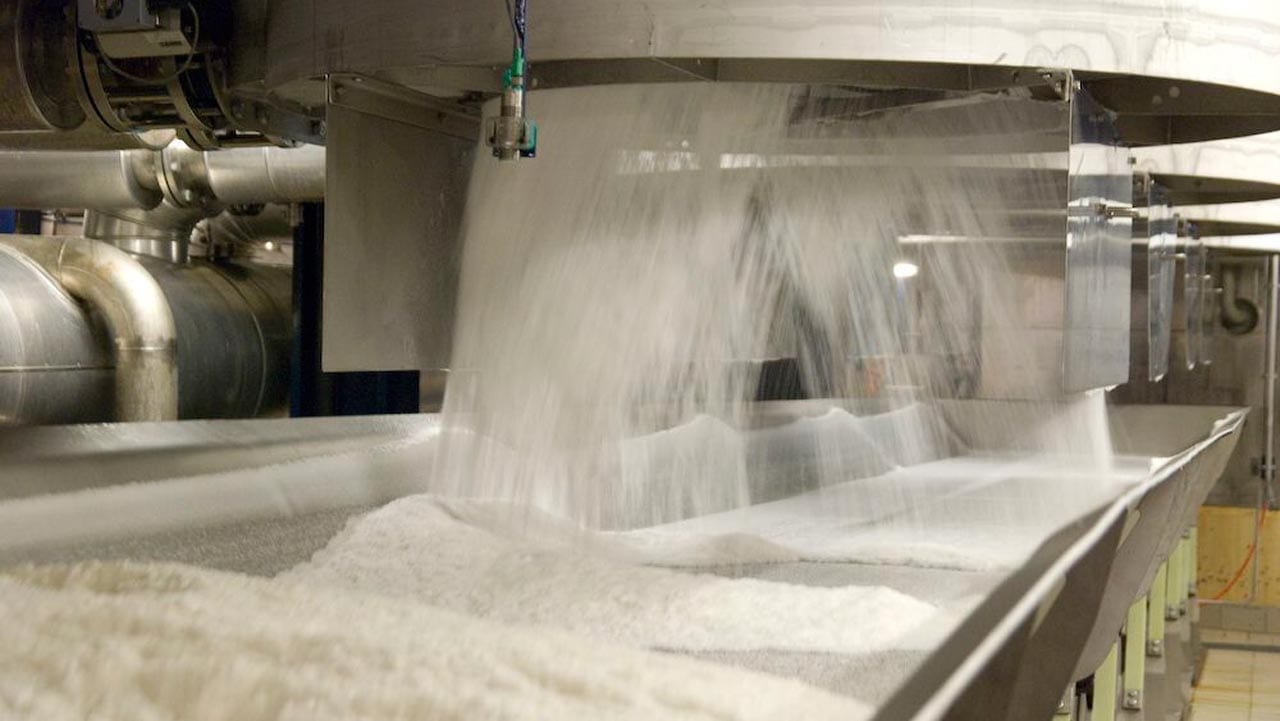
    The total unsold sugar inventory volume in Vietnam is now at a record level of 700,000 tons, including 300,000 tons in Hau Giang alone, according to the department.

    And the situation won’t get any better with just two months before Hau Giang sugarcane farmers harvest a new crop, with no guarantee for the output.

    Sugar traders said that imported sugar was more attractive to both wholesalers and retailers because it was cheaper.

    Hoa, a retailer in Ho Chi Minh City’s Go Vap District, noted sugar prices in the domestic market has never been this cheap.

    Sugar imported from Thailand currently wholesales at VND135,000 (around $6) per ten kilo pack. Vietnamese sugar costs VND5,000-10,000 more for the same quantity.

    Apart from Thailand, Vietnamese traders also buy sugar from China and South Korea.

    In June, smuggled sugar from Thailand bankrupted three of 10 factories in Vietnam’s Mekong Delta, industry insiders noted, adding that not much has been done to improve the situation.

    Nguyen Bao Ve, agronomist and professor at the Can Tho University said that high production costs for Vietnamese farmers, low productivity, and uncompetitive manufacturing technology were also part of the problem.

    Ve argued that it was essential to restore fair trade and take immediate action to prevent smuggling. “At the same time, the companies need to reform themselves, reduce costs, and cooperate with farmers to reduce sugarcane production costs.”

    He also warned that apart from improving productivity and innovating technology to match daily consumption of 6,000 tons of sugarcane, mechanizing production was of great importance. “Cambodia has fully mechanized sugarcane farming, while 60 percent of Vietnamese sugarcane farming is still conducted manually.”

  • New management targets lower profits for Vietnam’s top beer maker

    New management targets lower profits for Vietnam’s top beer maker

    Sabeco targets profits of VND4 trillion ($173 million) this year on revenues of VND36.09 trillion ($1.58 billion), a 2.4 percent rise over last year.

    Newly appointed chairman Koh Poh Tiong explained to shareholders that spending on brand promotion would be higher this year.

    He said rising cost of raw materials due to bad harvests across the world and the new special consumption tax, up to 60 percent from 50 percent, effective this year, would also hit profits.

    Last year Sabeco produced 1.8 billion liters of beer and reported sales of VND35.22 trillion ($1.54 billion), up 11.2 per cent year-on-year, and net profit of VND4.95 trillion ($216 million), up 9.6 percent.

    This is Sabeco’s first annual general meeting since the TCC Group, led by Thai tycoon Charoen Sirivadhanabhakdi, paid Vietnam’s Ministry of Industry and Trade (MOIT) VND110 trillion ($4.89 billion) for a 53.59 percent stake late last year.

    The management said that thanks to Sabeco’s collaboration with Thai Beverage it would be able to get raw materials cheaper in future.

    The firm also hopes to capitalize on ThaiBev’s experience in public relations, logistics and working with global PR agencies to promote its brand internationally.

    The management said Sabeco is exploring opportunities to expand capacity.

    Shareholders heard that the firm faced difficulties in competing with strong foreign brands, and so plans to further develop its distribution networks, especially in HCMC.

    Asked about the possibility that the Sabeco brand could disappear since “it is in Thai hands” now, especially if MOIT divests further, he said TCC Group plans to develop this brand since it had spent an enormous $4.89 billion to buy it.Koh said Sabeco has a 40 percent market share.

    Last April the ministry had called on Sabeco to pay VND2.5 trillion ($111 million) in undistributed profits to the government, the major shareholder with an 89.6 per cent stake as of December 31, 2016.

    Koh told shareholders that since the firm had submitted related documents to the government, he could not give them a more detailed answer.

    The AGM approved a new seven-member board for 2018-23 including four representatives of the Thai company – Koh, Michael Chye Hin Feh, Pramoah Phornprapha and Tran Kim Nga.

    Of the remaining three, chief accountant Nguyen Tien Dung and Luong Thanh Hai are MOIT’s representatives.

    The price of Sabeco (sticker SAB) shares on the Ho Chi Minh stock exchange has plunged since TCC Group’s acquisition.

    On July 20 it traded at around VND200,000 ($8.74), giving the company a market value of VND128 trillion ($5.6 billion).

    TCC Group had bought Sabeco’s shares at VND320,000 ($13.98).

    Koh told shareholders that the price merely reflects supply and demand in the market, while TCC looks at the long term and the firm’s future prospects.

    Vietnam is one of the top 10 beer producing countries in the world besides being the top consumer in Southeast Asia and the third largest in Asia with an average of 43 liters per person per year, according to Sabeco’s management.

    MOIT figures show that the brewery market growth has been slowing, growing at only around 5 per cent in the last five years compared with 10 per cent 10 years ago.

    Last year it grew at 5.6 per cent.

  • Gov’t Eyes $200m in Additional Revenue Next Year From Excise on Vaping Liquid

    Gov’t Eyes $200m in Additional Revenue Next Year From Excise on Vaping Liquid

    The Ministry of Finance estimates that the government may collect up to Rp 3 trillion ($207 million) in additional revenue next year from a new excise on tobacco extract, or vaping liquid, commonly used in electronic cigarettes.

    While Indonesians have been puffing on e-cigarettes since 2013, the government only imposed an excise on vaping liquid on July 1. Under a new regulation, the liquid is subject to a 57 percent excise tax, more than four times the maximum excise on regular cigarettes.

    The government requires up to 200 domestic producers to start attaching excise ribbons to the product containers and pay excise on it by Oct. 31. Only vaping liquids containing tobacco extract or nicotine are subject to the excise.

    “If there are any businesses not using the ribbon after the transition deadline, we will seize it,” said Heru Pambudi, director general of customs and excise at the Ministry of Finance.

    According to Noegroho Wahyu, acting director of excise, only three producers are currently registered but the government expects the remaining producers to do so before the deadline.

    The government will likely only collect between Rp 50 billion and Rp 70 billion in additional revenue from the new excise this year, but it eyes potential revenue of around Rp 3 trillion per year once all manufacturers are registered, Noegroho said.

    Vaping liquid is the latest commodity to attract excise as part of government efforts to curb people’s consumption of harmful substances. Indonesia is also considering to tax on plastic bags and soft drinks, but the government has yet to make a decision on the matter.

    Indonesia collected Rp 151 trillion in excise – mainly from cigarettes – last year, accounting for 9.1 percent of total state revenue.

    The government considers several aspects, including public health, impact on the industry and tobacco and clove farmers, in determining excise tariffs on tobacco products, Noegroho said.

    With vaping liquid subject to the maximum rate for tobacco-related products, there may not be any further increases in the future.

    Aryo Andrianto, chairman of the Indonesian Personal Vaporizer Association (APVI), said the excise rule means the government has officially acknowledged and provided the industry with legal certainty.

    Vaping liquid producers meanwhile plan to only increase their prices by a maximum of 20 percent to soften the blow on consumers, Aryo said.

    “They don’t mind [the increase],” he said.

    APVI members also hope the government may be more willing to support the industry’s export efforts.

    Deni Syarifa, chairman of the E-Liquid Micro-Entrepreneurs Association (APeM), estimates that manufacturers can export up to 2 million bottles of vaping liquid per month.

    “There is currently demand for around 5,000 to 10,000 bottles per month from just one country,” Deni said, adding that producers plan to ship the liquid to countries in Asia, Central America and Europe.

  • Vietnam Casino fined $15,000 for tax evasion

    Vietnam Casino fined $15,000 for tax evasion

    The Quang Ninh Tax Department says it has found the casino violating corporate tax and value-added tax regulations after inspecting returns filed in 2017 and its value-added-tax receipts until February 2018.

    The department has levied total fines of $15,000, including $10,500 for faulty reporting of value added tax and $3,700 for using illegal invoices.

    The Casino Gaming Club is the only gambling facility approved to serve foreigners exclusively in Ha Long Bay City, but it has been in the red since 2013.

    Last October, the company’s financial report stated that its losses in the third quarter had jumped 23 times from a year ago to more than $3.04 million.

    Managers said most of its customers were from Taiwan and mainland China, but their numbers have dwindled in recent times.

    In the first three months of this year, the company earned nearly $2.92 million in revenue, and around $69,000 in after tax profits. This is a sharp increase compared to a $908,000 loss during the same period last year.

    However, the company’s accumulated loss is estimated at more than $7.4 million on a total capital investment of $30.5 million.

    Vietnam has six casinos that are open exclusively for foreigners, and four of them are reporting losses.

    Earlier this year the government lifted a long standing gambling ban on Vietnamese nationals, allowing them to patronize two casinos, one on the southern resort island of Phu Quoc and the other at the Van Don Special Economic Zone in the northern province of Quang Ninh.