Retail News CRM

Tag: Tax

  • E-commerce, online services strip Vietnam of tax revenues

    E-commerce, online services strip Vietnam of tax revenues

    Vietnam is failing to effectively tax e-commerce and online services as it struggles to make tech giants set up abroad fulfill their taxation duties.

    “Taxing e-commerce and digital platforms is a new and difficult challenge. There is huge loss of tax in this area as servers are placed abroad,” Minister of Finance Ho Duc Phoc told the National Assembly on Wednesday.

    E-commerce sellers are based both in Vietnam and other countries, and it is difficult to locate and tax them, he added. Phoc was responding to lawmakers’ concerns about tax avoidance in online business.

    Nguyen Thi Le Thuy, a lawmaker from the southern province of Ben Tre, estimated that around 85 percent of tax from digital giants like Facebook and Google are lost annually.

    Other lawmakers said that the tax that Vietnam has been able to collect from these tech firms recently is not appropriate to their revenues in the country.

    Cross-border platforms like Facebook and Google have paid VND5.1 trillion ($220 million) in taxes for the period between 2018 and 2021, according to the finance ministry.

    Phoc said that his ministry has set up payment portal and explained to e-commerce platforms and tech giants their tax duties, but taxing them remains a difficult task.

    The ministry is considering the best method to tax e-commerce trade, and the long-term goal is to establish an online automatic taxing system.

    Vietnam has over 100 e-commerce platforms, including 41 that sell goods and 98 providing services.

  • Tech giants pay $220 million in taxes

    Tech giants pay $220 million in taxes

    Cross-borders platforms like Facebook and Google have paid VND5.1 trillion ($220 million) in taxes for the period between 2018 and 2021, says Finance Minister Ho Duc Phoc.

    He informed lawmakers in a report that by April 2021, Facebook had been taxed VND1.97 trillion; Google, VND1.9 trillion; and Microsoft, VND651 billion.

    The figures were 15 percent higher than Phoc’s report in March.

    Vietnamese authorities also collected VND735 billion from handling violations and tax avoidance by individuals and organizations providing cross-border digital and e-commerce services, the report said.

    Last year, Vietnam earned VND1.32 trillion from taxing cross-border platforms, up 15 percent from 2020.

    The General Department of Taxation said last year that Facebook, Google, Netflix, YouTube and other cross-border platforms were not fulfilling their tax obligations in Vietnam.

    Vietnam is also looking to tax online sellers, both on e-commerce platforms and social media, as e-commerce sales have been surging by double-digits in recent years.

    Phoc called for tightening regulations and upgrading the capacity of collectors in order to tackle tax evasion more effectively.

  • Facebook to charge 5 pct tax on Vietnam ads

    Facebook to charge 5 pct tax on Vietnam ads

    Facebook parent Meta will charge a 5 percent value added tax on all Vietnamese advertisements starting June 1 after assuring the government it will fulfill its tax obligations.

    Meta executives last week told Prime Minister Pham Minh Chinh that the company would register and pay tax as a foreign contractor doing business in Vietnam.

    Authorities have been calling for properly taxing tech giants like Meta and Google, pointing out they account for around 70 percent of the online advertisement market but use various means to evade tax.

    They taxed cross-border platforms a total of VND5 trillion ($218.5 million) between 2018 and last year.

  • Vietnam launches website to tax foreign tech giants

    Vietnam launches website to tax foreign tech giants

    The tax department has set up a website for collecting tax from foreign companies to make it easier for tech giants like Facebook and Google to fulfill their duties.

    The Portal of the General Department of Taxation for Foreign Providers (etaxvn.gdt.gov.vn) came online Monday for companies to declare their tax and track their payments.

    Until now foreign companies were paying their taxes through a third party, but now they could pay directly, Nguyen Van Phung, head of the Large Enterprise Taxation Agency, said.

    By filling in their details on the website, businesses could see how much they need to pay and bank account details, he said.

    “Foreign companies can now pay tax at any time, even from an airplane”.

    Generally, foreign firms are required to pay value-added tax and corporate income tax every quarter. Phung said many foreign firms have been leaving their Vietnamese partners with the burden of their tax, he added. There are at least 64 foreign service providers active in Vietnam, according to tax authorities.

    Vietnam taxed cross-border platforms like Google and Facebook a total of VND5 trillion ($218.53 million) in 2018-21. Authorities have been calling for properly taxing tech giants like Facebook and Google, pointing out they account for around 70 percent of the online advertisement market but evade taxes.

  • Vinamilk profits to decline for 2nd year in a row

    Vinamilk profits to decline for 2nd year in a row

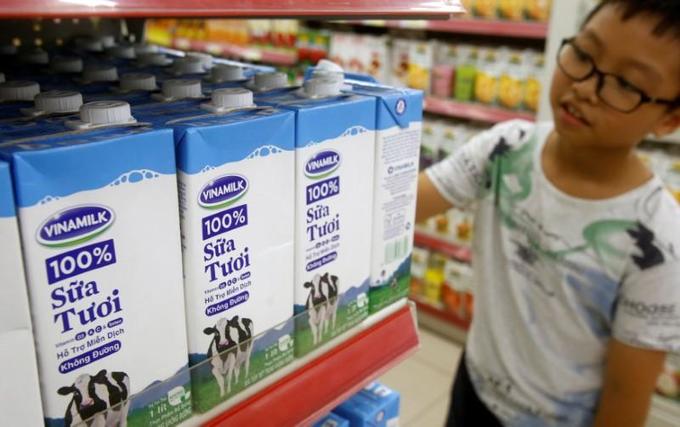
    Vinamilk is set to see profits decline for a second straight year in 2022 due to rising costs of raw materials and transportation.

    Vietnam’s leading dairy company targets pre-tax profits of VND12 trillion ($524.70 million), down 7 percent from last year, though revenue is likely to grow by 5 percent to VND64 trillion. Last year, profits were down 4.4 percent from a record VND13.52 trillion in 2020.

    The company said that last year it faced many challenges including a shortage of raw materials and rising prices of animal feed and transportation.

    Animal feed prices jumped 30-40 percent last year and are set to continue to rise this year, it said. Transport costs rose by 20 percent domestically and 500 percent globally, it said. The Covid-19 pandemic also made milking difficult due to prolonged social distancing, while the rising costs of animal feed forced farmers to switch to other vocations, it added.

    But the dairy giant aims reach a profit of VND16 trillion in 2026, up 33 percent from 2022. It targets revenues of VND86.2 trillion in 2026. Vinamilk plans to achieve these targets by stepping up research into new products and using new technologies for sustainable livestock farming.

    It also eyes new growth opportunities through mergers and acquisitions and new investments. Last year its exports rose 18 percent to VND1.8 trillion and went to 57 countries and territories. Vietcombank Securities said in a recent note that Vinamilk does not have much potential for growth in the next two or three years. The segment with the most growth potential in the next two years is beef, and it plans to start importing the meat from Japan this year.

  • Shareholders urge Amazon to boost tax transparency

    Shareholders urge Amazon to boost tax transparency

    Twenty-four Amazon investors are urging the tech giant to step up transparency in tax disclosures and adopt a new reporting standard, the Financial Times said on Sunday.

    Asset managers Nordea, Royal London, and several large European and U.S. pension funds are among those pushing for Amazon to issue a transparency report in line with Global Reporting Initiative (GRI) tax standard, the newspaper said.

    They want to bring a shareholders’ resolution demanding the new standard at the company’s annual meeting this year, it said, citing a letter to be sent this week to the U.S. regulator, the Securities and Exchange Commission.

    “Aggressive tax practices can expose a company and its investors to increased scrutiny from tax authorities, adjustment risks, and increase their vulnerability to changes in tax rules,” the investors said.

    These measures come at a time when nations are looking to protect their tax bases from deleterious practices, they added in the letter seen by the FT.

    The 100 groups that signed the letter included several environmental, social, and governance-focused, and religious funds, although not all were investors, the paper said.

    An Amazon spokesperson declined to comment on the resolution but pointed to last month’s no-action request when the company barred a similar shareholder proposal.

    “The proposal implicates exactly the type of ordinary business issues for which resolution should remain with the company’s management and board,” Amazon said.

    It would be impractical for shareholders to exercise direct oversight of such issues, it added.

    Amazon’s current extensive tax disclosures are in line with U.S. generally accepted accounting principles (“GAAP”), it said, adding that it has publicly reported tax payments in the United States, Britain, France, Italy, and Spain.

    A December shareholder proposal by the Greater Manchester Pension Fund and Oblate International Pastoral Investment Trust urged Amazon to adopt the new GRI tax standard, and make public breakdowns of financial, tax, and worker information by country.

  • Hong Kong flags tax breaks, handouts for Covid relief

    Hong Kong flags tax breaks, handouts for Covid relief

    Hong Kong will offer tax breaks, handouts, and subsidies to small businesses and residents, to mitigate the impact of a new wave of social restrictions to curb Covid-19 infections, Finance Secretary Paul Chan said in his 2022-23 budget speech.

    The measures were announced as hundreds of bars, restaurants and small retailers warned they were months away from closure, following the imposition of the strictest restrictions since the pandemic began in 2020.

    “Our economy and people’s livelihoods have been under immense pressure in recent months”, Chan told legislators via videoconference on Wednesday. “Economic performance in the first quarter is not optimistic.”

    Chan said “countercyclical measures” in the budget to support the economy totaled more than HK$170 billion ($21.79 billion), with anti-epidemic measures alone worth more than HK$54 billion.

    The global financial hub has doubled down on its “dynamic zero Covid” strategy, which aims to eradicate all outbreaks, following mainland China’s lead even as the rest of the world adjusts towards “living with the virus.”

    Given the city is facing thousands of infections a day and the numbers are growing, some analysts predict at least one or two-quarters of economic contraction after recovering last year from the city’s most prolonged recession in 2019-2020.

    Bars, gyms, beauty parlors and 12 other types of venues are closed, while restaurants cannot operate beyond 6.00 pm. Apart from grocery stores, most shops are deserted as residents are back working from home. The border is virtually shut with the finance sector complaining this has caused an exodus of talent and made operating a regional hub out of Hong Kong difficult.

    The new measures announced on Wednesday include a 100 percent reduction in salaries tax, capped at HK$10,000, handouts of HK$10,000 consumption vouchers, financial aid for the unemployed, and subsidies for directly impacted businesses.

    Hong Kong’s economy is expected to grow 2.0 percent to 3.5 percent this year after expanding 6.4 percent in 2021, Chan said.

  • India Will Not Give Tesla Any Tax Breaks

    India Will Not Give Tesla Any Tax Breaks

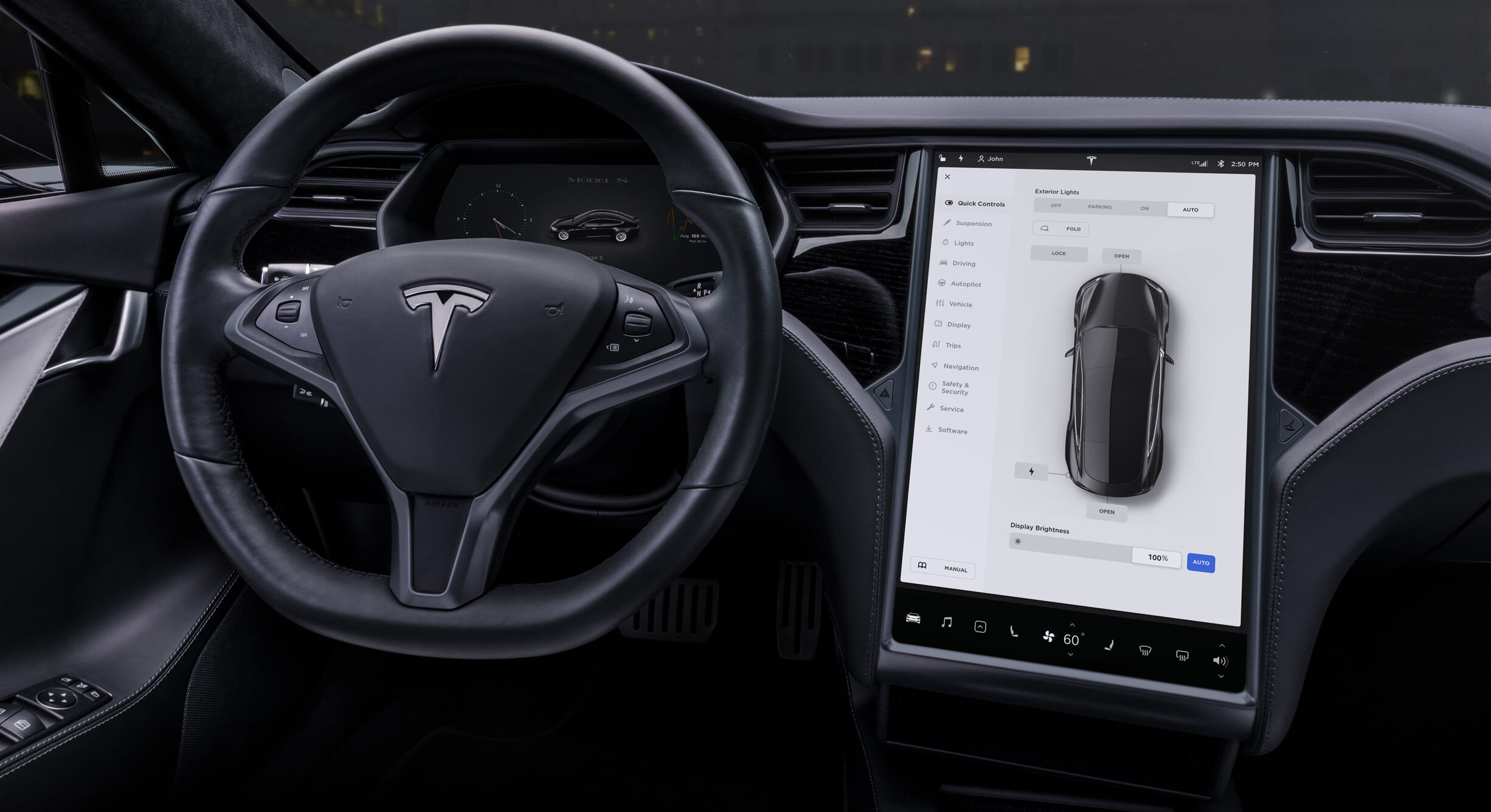
    Any special concessions and tax breaks for the world’s most valuable carmaker and electric car pioneer Tesla have been ruled out by the Indian government. In a report by ETAuto, it has been revealed that the government’s plans for local manufacturing have received an overwhelming response that could generate revenues of over Rs 2.3 lakh crore. Arun Goel, the heavy industries secretary, has revealed companies who have submitted proposals for localization have committed investments in India that go beyond the government’s projections.

    “We have received fresh investment proposals beyond the targeted INR 42,500 crore. The response has been overwhelming and the larger industry has been appreciative of our plan, which explains the robust investment commitment,” Goel said.

    But when asked about potential concessions to facilitate the entry of Tesla in India, he ruled out that possibility. “The concession plan is uniform (for the industry). We are a democracy,” he added.

    Transport minister Nitin Gadkari had also expressed concerns around Tesla’s proposed entry into India where it would start by selling imported vehicles made in its Shanghai Gigafactory.

    “The company (Tesla) wants workers from China and the market of India. This is not possible under the Modi government. Our government’s policy is that if the Indian market has to be used, job opportunities will also have to be given to Indians,” said Minister of State for heavy industries Krishan Pal Gujjar in the Lok Sabha opposing Tesla’s plans for entering India.

    Tesla’s predicament in India is a tricky one – it wants to leverage what will be the third-largest automobile market in the world, but its products aren’t viable for the market. Its cheapest models are vastly more expensive than the cost of the average sedan, which in turn is further hobbled by a potential 100 percent tax duty. Then there is the lack of local charging infrastructure which has been Tesla’s secret sauce.

    India doesn’t want to give Tesla tax breaks for numerous reasons. It has already secured investments from automotive giants like Hyundai and Mercedes who are making their top-tier EVs in India. It will need to extend the tax breaks to every car maker if exceptions were made for Tesla.

    Then there is the issue of Tesla likely importing its cars from China, a country with which India has had strained relations. On top of this, Prime Minister Narendra Modi’s government has championed localized manufacturing with its “Make in India” scheme so Tesla’s plans are at odds with what the Indian government wants.

  • Value-added tax to be cut to 8 pct from February

    Value-added tax to be cut to 8 pct from February

    A draft government decree reduces value-added tax on many products and services from the current 10 percent to 8 percent from Feb. 1.

    The decree on tax reduction to foster economic recovery approved by the National Assembly will also make expenses on pandemic prevention deductible.

    The VAT cut will lead to a loss of some VND49.4 trillion (over $2.1 billion) in revenues, according to the Ministry of Finance.

    The deductible expenses will lead to a loss of VND2 trillion.

    The lower VAT rate will not apply to telecommunications, information technology, financial activities, banking, securities, insurance, real estate, metal, and prefabricated metal products, mining (excluding coal), coke, refined petroleum, chemicals, and chemical products, and goods and services subject to excise tax.

  • In one country, the Apple Tax appears to be crushed for certain apps

    In one country, the Apple Tax appears to be crushed for certain apps

    Sundar Pichai and  Mark Zuckerberg, the CEOs of Google and Facebook respectively, allegedly signed off a secret and illegal ad deal according to BuzzFeed. As a result, Facebook was given “information, speed, and other advantages” during auctions for ad space run by Google. Yesterday, unredacted court documents revealed the involvement of the two CEOs in the deal.

    The documents are from a complaint originated by Texas and other states in December 2020 that accused Google of committing “false, deceptive, or misleading acts” while running its buy-and-sell auction system for digital ads. The complaint states that Google teamed up with Facebook in 2018 that Google called “Jedi Blue,” a name that riffs on the Star Wars movie franchise.

    Facebook unnerved Google by promoting a method called “header bidding” that was a threat to Google. With “header bidding,” publishers offer inventory to multiple ad exchanges before calling their ad servers. By hiking demand for limited inventory, publishers make more money.

    According to the complaint that was released on Friday, “Google understood the severity of the threat to its position if Facebook were to enter the market and support header bidding. To diffuse this threat, Google made overtures to Facebook.” The deal was made at the highest level of both companies and the complaint notes that “Google CEO Sundar Pichai also personally signed off on the terms of the deal.”

    The complaint also revealed that Facebook CEO Zuckerberg wanted to meet with the company’s COO Sheryl Sandberg before making a decision. While employees’ names were redacted in the court documents, their titles weren’t.

    Both Google and Facebook are under pressure for using anti-competitive methods. Google says that the lawsuit isn’t accurate, and company spokesperson Peter Schottenfels said, “We sign hundreds of agreements every year that don’t require CEO approval, and this was no different. And contrary to AG Paxton’s claims, the fact of this agreement was never a secret — it was well-publicized. It simply enables FAN [Facebook Audience Network] and the advertisers it represents to participate in Open Bidding, just like over 25 other partners do.”

    Facebook’s corporate parent Meta agreed with Google that the deal between the two tech giants did not call for Facebook to receive any particular advantages that other companies were not being given. “Meta’s non-exclusive bidding agreement with Google and the similar agreements we have with other bidding platforms, have helped to increase competition for ad placements,” said Meta spokesperson Stephen Peters. “These business relationships enable Meta to deliver more value to advertisers while fairly compensating publishers, resulting in better outcomes for all.”

    As you might have expected, Google is planning to ask a judge to toss the case. Both Google and Facebook have been under fire from lawmakers for antitrust issues. Last summer, bills were introduced in Congress with lawmakers worried that firms like Google, Facebook, Amazon, and Apple were using their dominance in businesses like online shopping, search, and entertainment in order to crush their competition.

    Additionally, Congress is concerned that these firms are making acquisitions that never should have received approval from antitrust regulatory agencies. As a result, there has been a call in Washington D.C. to force tech giants to break up into smaller companies.

    Last year, the filing fees imposed on transactions valued at over $1 billion rose while the same fees for transactions valued at less than $500,000 would decrease. The idea is to give tech giants the incentive to purchase smaller firms instead of larger ones. In addition, the higher fees are expected to generate $135 million for antitrust enforcement agencies in its first year.

  • Apple to change App Store prices in some regions

    Apple to change App Store prices in some regions

    Apple is bumping up prices in the App Store in some regions, the company announced on Wednesday. Citing taxes and foreign exchange rate changes, Apple says that apps will become more expensive in the following regions:

    • Bahrain: Increase of value-added tax from 5% to 10%
    • Ukraine: New value-added tax of 20%
    • Zimbabwe: New digital services tax of 5%

    Furthermore, there are some changes that involve the proceeds for developers. Prices will remain unchanged in the following regions but developers’ proceeds will be adjusted to account for some tax changes

    • The Bahamas: Decrease of value-added tax from 12% to 10%
    • Oman: New value-added tax of 5%
    • Tajikistan: Decrease of value-added tax from 18% to 15%

    Finally, three other regions will be subject to changes, again this involves the proceeds that developers receive from the App Store.

    • Austria: Value-added tax rate reversion to 10% after temporary decrease to 5% for qualifying e-books and audiobooks
    • Latvia: Value-added tax rate decrease from 21% to 5% for qualifying e-books and e-publications
    • Romania: Value-added tax rate decrease from 19% to 5% for qualifying e-books, audiobooks, and e-publications

    What does it mean for you?

    If you live outside the aforementioned regions – absolutely nothing. Otherwise, expect prices of apps to go up if you live in Ukraine, Bahrain, or Zimbabwe. As for the other six countries, it would be up to the developers.

    Some might choose to bump up the prices in order to keep the same level of proceeds from the App Store, while others might leave their app prices alone. Apple leaves the choice to the developers with the following statement:

    “You can change the price of your apps and in-app purchases (including auto-renewable subscriptions) at any time in App Store Connect. If you offer subscriptions, you can choose to preserve prices for existing subscribers.”

    The changes are expected to go into effect in the following days. When this happens, the Pricing and Availability section of My Apps will also be updated.

  • Toyota Joins Opposition To Proposed US EV Tax Credit

    Toyota Joins Opposition To Proposed US EV Tax Credit

    Toyota urged Washington on Tuesday not to “play politics” with environmental issues by offering tax credits for US-made electric vehicles, joining a chorus of foreign opposition to the issue. President Joe Biden’s focus on helping blue-collar American workers led to a proposal in his Build Back Better legislation to offer $4,500 in tax credits for electric vehicles built in the United States by union workers.

    Toyota, with 10 US-based auto plants employing 36,000 workers, favors “incentives for the purchase of electric vehicles to speed the transition” to all-electric, the company said in a statement.

    However, the Japanese automaker said the proposed credits for union-made vehicles devalue the work of those who chose not to join a union, and send a message that promoting unions is more important than combating climate change.

    “Let’s not play politics with the environment, the American autoworker or the American consumer,” Toyota said.

    “This isn’t fair. This isn’t right.”

    Washington’s major trading partners Canada and Mexico also sent letters to American congressional leaders in the past week objecting to the tax credits, saying they violate US commitments under the United States–Mexico–Canada Agreement governing trade.

    Canadian Trade Minister Mary Ng also warned the action would undermine the highly integrated continental auto industry.

    “If passed into law, these credits would have a major adverse impact on the future of EV and automotive production in Canada, resulting in the risk of severe economic harm and tens of thousands of job losses in one of Canada’s largest manufacturing sectors,” Ng said.

    “US companies and workers would not be isolated from these impacts.”

    A letter from Mexico’s US ambassador Esteban Moctezuma Barragan and two dozen other ambassadors said the tax credit “conflicts with the goal of the quick deployment of new sustainable technologies” since it would apply to only two vehicles out of over 50 electric vehicles currently available.

  • Vietnam considers tightening import tax on e-commerce deliveries

    Vietnam considers tightening import tax on e-commerce deliveries

    The Ministry of Finance is considering limiting the import of low-value packages through e-commerce platforms to close a suspected loophole.

    It wants to issue a new decree to limit each organization or individual buyer to be free of import tax on four orders at most each month.

    The proposal came amid the rising popularity of shopping on e-commerce platforms in Vietnam, with many products delivered directly from China.

    Vietnam currently does not apply an import tax on packages with a value of VND1 million ($44) or lower delivered via postal and delivery services.

    However, because there is no limit on the number of packages being sent, many buyers take advantage of this policy and split their goods into small packages to avoid tax, according to the Ministry of Finance.

    In the first six months last year, Hanoi alone imported $1 billion worth of products via postal and delivery services. The value in June was five times that of January, according to the latest data from the Ministry of Finance.

    A Hanoi company that imports products for Shopee and Lazada saw its value of imported products surging 50 times year-on-year to $70 million in the first quarter of 2021, the ministry said.

    Vietnam’s e-commerce market has seen an average annual growth rate of 25-30 percent in the last five years, according to Vietnam E-commerce Association (VECOM).

    Should the growth rate be maintained, Vietnam would rank third in e-commerce market size in Southeast Asia by 2025, behind Indonesia and Thailand.

  • India Considers Sharp Import Tax Cuts On EVs After Tesla Lobbying

    India Considers Sharp Import Tax Cuts On EVs After Tesla Lobbying

    India is considering slashing import duties on electric cars to as low as 40%, two senior government officials told Reuters, days after Tesla Inc’s appeals for a cut polarised the country’s auto industry. For imported electric vehicles (EVs) with a value of less than $40,000 – including the car’s cost, insurance and freight – the government is discussing slashing the tax rate to 40% from 60% presently, the officials told Reuters. For EVs valued at more than $40,000, it is looking at cutting the rate to 60% from 100%, they said.

    “We haven’t firmed up the reduction in duties yet, but there are discussions that are ongoing,” one of the officials said. India is the world’s fifth-largest car market with annual sales of about 3 million vehicles but the majority of cars sold are priced below $20,000. EVs make up a fraction of the total and luxury EV sales are negligible, according to industry estimates.

    Tesla, in its pitch to the government – first reported by Reuters in July, argued that lowering import duties on EVs to 40% would make them more affordable and boost sales. This triggered a rare public debate among automakers over whether such a move would contradict India’s push to increase domestic manufacturing. Even so, the government is in favour of a cut if it can see companies such as Tesla providing some benefit to the domestic economy – manufacture locally, for example, or give a firm timeline on when it would be able to, one of the officials said. “Reducing import duties is not a problem as not many EVs are imported in the country. But we need some economic gain out of that. We also have to balance the concerns of the domestic players,” the official said.

    Tesla CEO Elon Musk said on Twitter last month that a local factory in India was “quite likely” if the company was successful with vehicle imports but taxes on them are high. The second official said that since the duty cut is being considered only for EVs and not other categories of imported cars, it should not be a concern for domestic automakers – that mainly manufacture affordable gasoline-powered cars.

    India’s finance and commerce ministries, as well as its federal think tank Niti Aayog, chaired by Prime Minister Narendra Modi, are discussing the proposal and all stakeholders will be consulted, the person added. Both sources did not want to be identified as the discussions are still private. India’s commerce and finance ministries as well as Niti Aayog did not immediately provide comment.

    Automakers including Daimler’s Mercedes-Benz and Audi have for years lobbied for lower import duties on luxury cars but faced strong resistance mainly from domestic companies. As a result, India’s luxury car market has remained small with average sales of around 35,000 vehicles a year.

    Tesla’s demands have found support from Mercedes as well as South Korean automaker Hyundai Motor, which has around an 18% share of India’s car market.

    Tesla’s cars would fall into the high-end EV category, which are mainly imported into India and account for a much smaller percentage of sales. Mercedes, Jaguar Land Rover and Audi sell imported luxury EVs in the country.

    This time Tesla’s demands have found support from Mercedes as well as South Korean automaker Hyundai Motor, which has around an 18% share of India’s car market.

    Opposing the proposed cut are Tata Motors, which produces affordable electric cars in the country, and Softbank Group-backed Ola, which is making electric scooters in India.

    A third source familiar with the government’s thinking said there was awareness that a brand such as Tesla can make electric cars more penetrable in India, which is lagging other major auto markets in EV sales.

    The government is thinking about the best way to approach this and they want to see some benefit even if that only means Tesla pledges to source parts domestically, the person said.


  • Vietnam defers e-commerce tax by five months

    Vietnam defers e-commerce tax by five months

    Vietnam is set to delay an online tax on e-commerce vendors by five months to support economic recovery amid severe Covid-19 impacts.

    The Ministry of Finance has proposed to the government that the implementation of Circular 40 be postponed until January 1, 2022, Minister Ho Duc Phoc said Sunday. The circular was to take effect on August 1.

    The delay has been proposed as part of several solutions to support the recovery of businesses as the fourth Covid-19 wave spreads in Vietnam, infecting over 105,000 people, most of them in HCMC, often referred to as the nation’s locomotive.

    The circular imposes a 1.5 percent tax on e-commerce vendors with annual revenues of VND100 million ($4,354) or higher.

    E-commerce platforms are responsible for collecting this tax from vendors and paying it to the finance ministry.

    An average of 3.5 million transactions are made on e-commerce platforms each day in Vietnam, and the transaction value has been increasing steadily, according to official data.

    However, e-commerce platforms have proposed that they aren’t made responsible for paying tax on vendors’ behalf as it will create excessive costs and personnel burdens.

    Vietnam’s e-commerce market expanded by 18 percent last year to $11.8 billion, the only one in Southeast Asia to record double-digit growth amid the pandemic, according to the Vietnam e-Commerce and Digital Economy Agency.