Retail News CRM

Tag: Tax

  • Indonesia holds rate steady after six cuts

    Indonesia holds rate steady after six cuts

    Indonesia’s central bank kept its benchmark interest rate unchanged after six cuts this year, seeking to calm financial markets in the wake of the United States presidential election results.

    Governor Agus Martowardojo and his board held the seven-day reverse repurchase rate at 4.75 per cent yesterday. Analysts had said market volatility following Mr Donald Trump’s victory meant Bank Indonesia (BI) could not cut its benchmark rate for a seventh time this year.

    The rate hold “is in line with BI’s cautiousness in responding to the escalating uncertainty in the global financial market after the US election”, the central bank said in a statement.

    The central bank had reason to pause after taking aggressive action this year to boost growth amid a benign inflation environment.

    Expectations of more US interest rate increases caused the rupiah to plunge as much as 3.7 per cent against the US dollar last week, prompting BI to intervene to stabilise the Indonesian currency.

    “While BI is chasing for faster growth, one cannot be too complacent of the risks involved and how the rupiah traded post-US elections is a timely reminder of this,” DBS Group Holdings economist Gundy Cahyadi said before the rate decision.

    BI has cut its main policy rate this year by a total of 150 basis points. Despite the rate cuts, loan growth has continued to weaken.

    As of September, annual expansion of outstanding loans was at 6.47 per cent, its weakest in nearly seven years, as commercial banks grappled with increased levels of bad loans.

    The government is forecasting growth of about 5 per cent for this year, well below the 7 per cent targeted by President Joko Widodo when he came to office two years ago.

    Inflation remained subdued at 3.3 per cent in October, close to the lower end of the bank’s 3 per cent to 5 per cent target.

    “BI faces a difficult balancing act,” Capital Economics said. “Despite having cut interest rates six times this year, the domestic economy could clearly do with some additional support… But the threat of further falls in the rupiah means that BI is likely to act with caution.”

  • Government Push Google to Pay Tax

    Government Push Google to Pay Tax

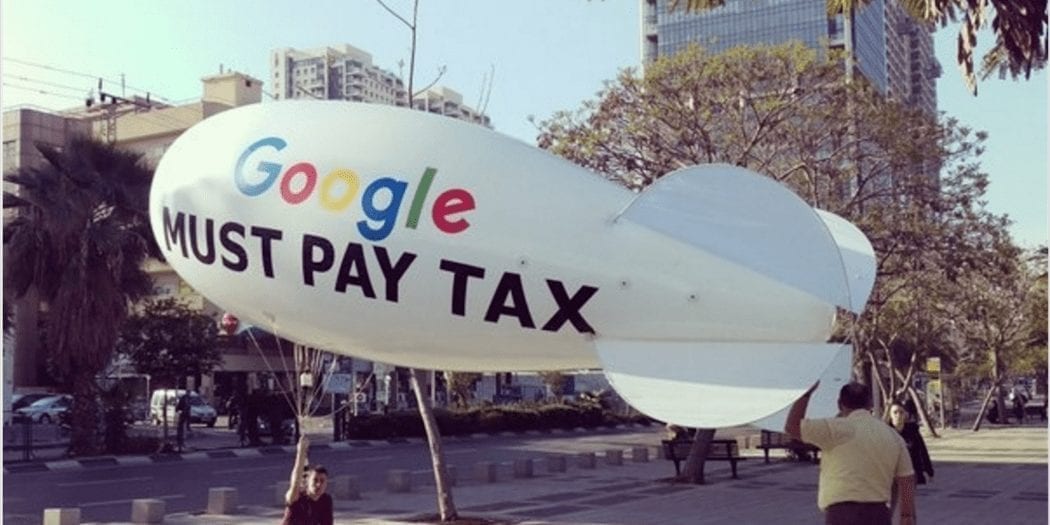
    Director General of Tax Ken Dwijugiasteadi confirmed that Google Asia Pasific Pte Ltd will settle their tax debts by the end of 2016. The government has decided to negotiate with the company instead of filing a report to the police. “Google must pay their tax debts this year, the company and the government will release a statement after the investigation,” Ken said on Monday.

    Ken had met with Google representatives last week. According to the Director General, Google has the right to file their objection towards the tax investigation results as long as an agreement has not been made. The company however, will be required to pay off their debts based on the investigation’s closing conference.

    In response to the issue, Google spokesman Jason Tedjakusuma refused to provide any comment. Jason also refused to respond to questions related to the results on last week’s meeting. “No comment,” Jason said briefly.

    The government estimated that Google Asia Pacific’s revenue, based on service and product sales in Indonesia, had reached Rp 5.5 trillion. On the other hand, Google representative office in Indonesia only generates revenues from advertising services.

    Google Indonesia had been registered at the Tanah Abang Tax Office as a foreign investment company since September 15, 2011. However, state officials cannot collect the company’s taxes because Google is not registered as an Indonesian legal entity.

    Yustinus Prastowo, Executive Director of Center for Indonesia Taxation Analysis doubted the government’s ability to force Google to pay their taxes by the end of 2016. “Even if there is a payment, it wouldn’t be as large as it was expected,” Yustinus said.

  • Rudiantara to Not Give Up on Google Tax

    Rudiantara to Not Give Up on Google Tax

    The Communication and Informatics Minister Rudiantara said that his office and the finance ministry are working to collect tax search engine, Google. “I support the effort. We will not give up,” he told Tempo in Pontianak, West Kalimantan on Tuesday, October 18, 2016.

    Rudiantara said he has no idea why Google tends to avoid paying taxes. “I do not know why. They choose not to pay their duties,” he said

    The minister added that Indonesia has sent a letter to Google, stating that all businesses in Indonesia are subject to taxes.

    “I told Google, if they plan to reach a settlement, we can talk this out,” said Rudiantara.

    Google has not registered as a corporate in Indonesia, although it reaps profit in Indonesia. It has also refused to pay taxes in the past five years worth Rp5.5 trillion.

  • Is it necessary to chase Google income?

    Is it necessary to chase Google income?

    Internet commercials are starting to take over the advertisement business from print and electronic media, especially television. Wide accessibility and ease of use are the internet’s main points of attraction. However, this poses new problems, as online advertisers are not bound by physical presence.

    Google’s business in Indonesia is a case in point, highlighting problems that accompany the advance of the digital economy, where the concept of space itself is being distorted. People can conduct business in places without having any physical presence there. The law of the land is failing to catch up to this new trend, with tax rules being one prominent example.

    Google’s business model allows such phenomena to arise. Payments for advertisements from Indonesia are sent to Google Asia Pacific Pte. Ltd. (GAP), a Singaporean company.

    Because of the tax treaty between Indonesia and Singapore, Indonesia must refrain from taxing the company’s income. Unless GAP has a permanent establishment (BUT) in Indonesia, such income cannot be taxed.

    The Directorate General of Taxation (DJP) claims that GAP’s business activities constitute a dependent agent BUT through the presence of PT Google Indonesia (GI). This view is contested by GI, which says GAP has no BUT in Indonesia. Moreover it refuses to cooperate with the DJP and resists investigation.

    The existence of a BUT as claimed by the DJP is doubtful. A dependent agent BUT exists when the agent (i.e. GI) basically conducts the non-resident taxpayer’s (GAP’s) business activities. The fact that there is an associated company in Indonesia and income sourced from Indonesia is not enough for the DJP to claim there is a BUT as a tax subject. The DJP needs to study the relationship between GAP and GI carefully. Is GI doing its own business or is it doing GAP’s business?

    Furthermore, even if the DJP makes the case that Google has a BUT in Indonesia, that does not mean that all of Google’s income can be attributed to that BUT. The next question is the functions performed by such a BUT. Are significant functions performed in order to generate all of the income?

    Profits attributed to the BUT are based on those significant functions performed there or the contributions of the BUT performed in GAP’s business. The DJP cannot tax profits that cannot be attributed to the BUT if functions related to those profits are not performed there.

    This approach is more or less the same as if the DJP accepted GI’s claim. If the DJP accepts the claim, then GI’s transactions with other members of the Google group will be treated as transactions between independent entities.

    Therefore, such transactions need to be priced properly by transfer pricing analysis. Such analysis will delineate GI’s role and responsibilities in the whole Google business model. From there, its contribution to the profits will be described, and on that basis we can calculate how much profit is attributable to GI.

    At the end of the day, both approaches look at the activities performed in Indonesia by GI. To be more precise, it depends on the company profiles and their roles and responsibilities in the whole business model of Google.

    Those factors determine the share/contribution in creating the value of the products of the group and thus the profit allocation. Creating a new BUT concept alone is not enough, because it does not solve the problem of attributing profits to the BUT.

    If the DJP really wants to capture the income, it should pay more attention to linking GI’s activities to Google’s income and maybe pursue GI through an audit, rather than trying to establish a BUT and attributing the profits later.

  • No Solution yet to Google Tax Issues

    No Solution yet to Google Tax Issues

    The Communications and Informatics Ministry said that it has not come up with the best solution in relation to the endeavor of collecting taxes from giant tech company Google, as the regulation on foreign app companies (over the top or OTT) has not been realized yet.

    “No solution yet, and I’m still coordinating with the Finance Ministry. But I keep on pushing to have a playing field level between the national OTT and the International OTT,” Communications and Informatics Minister Rudiantara said in Jakarta on Friday, October 7, 2016.

    Earlier, Rudiantara said that Google Indonesia was not running an advertising business. In addition, Google has not set up a permanent local entity (BUT) in Indonesia, making it difficult for the government to collect taxes from Google.

    Rudiantara called on Google to show its good will to discuss the issue.

    “However, the amount of taxes to be paid by Google remains Finance Ministry’s jurisdiction,” he said.

    Rudiantara had also set a target to finalize regulations on OTT companies in the third quarter of 2016. However, the realization remains sluggish since the Ministry cannot issue a regulation that is not applicable and enforceable.

    Google Singapore, as Google Indonesia’s holding company, refused to be audited by the Tax Directorate General, following a finding that Google gains income from Indonesia, although it has not yet established a permanent local entity in the country. The Tax DG found an indication of criminal offenses and conducted investigation into the company.

    Finance Minister Sri Mulyani has not provided details about steps to be taken to collect taxes from Google. However, Sri said that the government would continue to demand Google to fulfill its tax obligations.

  • Jakarta tax amnesty has little impact on banks here

    Jakarta tax amnesty has little impact on banks here

    The tax amnesty scheme in Indonesia has had a much smaller impact on funds flowing out of Singapore’s private banking industry than feared, an RHB report suggested on Tuesday.

    The funds flowing out of Singapore likely made up only 1-2 per cent of assets under management (AUM) of the private banking industry. Some 79 trillion rupiah (S$8.3 billion) was repatriated in the first nine-month phase of Jakarta’s tax amnesty programme.

    The scheme allows Indonesians to declare assets that were previously undeclared to tax authorities. In return, they paid a sharply reduced tax rate on those assets – just 2 per cent – in the first phase, which ended on Sept 30.

    The 79 trillion rupiah was 12 per cent of the assets of wealthy Indonesian clients that were declared to be kept in Singapore, according to data from the Indonesian government. Singapore has been a big draw for rich Indonesians. All in, the assets held here and declared to the Indonesian authorities made up 70 per cent of all overseas funds that had been declared.

    RHB calculated that the total assets of the three Singapore banks’ private banking segment stood at about S$321 billion. This means the amount repatriated to Indonesia from Singapore accounts for only 2.6 per cent of the three banks’ total AUM. These already exclude the asset base of the top private banks in Singapore, such as UBS, Citi, and Credit Suisse. So, all in, the impact on Singapore’s private banking industry should be about 1-2 per cent of all assets held here, RHB noted.

    “There is likely to be more repatriation of funds from Singapore to Indonesia going forward, but the experience of Phase 1 suggests that the amount repatriated is unlikely to be a large percentage of Singapore banks’ assets under management,” it said.

    This comes as the tax rate for those who repatriate their assets in Phase 2 rises to 3 per cent, one percentage point more than in Phase 1. The tax rate will be increased yet again in the third phase, Jakarta has said.

    Indonesian taxpayers had declared more than 3,600 trillion rupiahs in assets both domestically and overseas. An Indonesian tax authority quoted by The Straits Times said the country had set a 4,000 trillion rupiah target for the first phase.

    The tax amnesty scheme comes amid heightened scrutiny of tax evasion. Banks here had to file a suspicious transaction report on clients taking part in the programme, with the Singapore authorities later having to state publicly that participation in a tax amnesty scheme alone would not attract criminal investigation in Singapore. The Monetary Authority of Singapore (MAS) said that the use of suspicious transaction reports is a practice across other jurisdictions when handling tax amnesty cases.

  • China cuts cosmetics consumption tax

    China cuts cosmetics consumption tax

    China will reduce or remove consumption tax on all cosmetic products, the finance ministry said on Friday, as the country looks to stimulate domestic spending to help prop up slowing economic growth.

    The new policy will see consumption tax – previously set at 30 percent for all cosmetics – waived entirely for non-luxury cosmetic products, while the tax rate on more expensive cosmetics will be cut to 15 percent, the finance ministry said in a statement.

    The move, which comes into effect from Oct. 1, fits with China’s drive to make products more affordable to domestic shoppers, many of whom have traditionally looked to buy more expensive products overseas because of high tax rates at home.

    The cuts could be of some help to imported cosmetics brands, analysts said, but are unlikely to have a major or immediate impact because other steep tariffs mean prices domestically will remain high compared to markets overseas.

    “Cosmetic brands could benefit mildly from the tax reduction with more competitive pricing,” said Jefferies analyst Jessie Guo in a note on Friday. She added, though, that it would only “moderately” boost domestic demand.

    Last year, the ministry slashed import taxes on products from skin care to shoes in a bid to “push forward structural reform” as the country looks to shift its economy to consumption from flagging manufacturing and exports.

    The head of the world’s largest advertising firm, Martin Sorrell, said on Thursday the business environment in China was the toughest he had seen in around three decades, especially hitting international brands.

  • Indonesia raids Google office after warning on tax audit refusal

    Indonesia raids Google office after warning on tax audit refusal

    Google’s Jakarta office was raided by Indonesian authorities after they warned the company for refusing a tax audit.

    Officers visited Google’s office in central Jakarta “many times” in the past two weeks to collect data and repeatedly sought meetings with senior company officials, Muhammad Haniv, the head of special taxpayers at the Finance Ministry, said in a phone interview Thursday. Google has “paid all applicable taxes in Indonesia,” Taj Meadows, a spokesman, said by e-mail, adding the company is cooperating with the government.

    “Everyone must comply, whoever they may be,” Haniv said. “If you refuse to be audited, then we will keep chasing you.” The government had earlier written to the company warning it for refusing a tax audit, which can result in criminal punishment, he said.

    President Joko Widodo’s government is following in the footsteps of European authorities in pushing Google to pay more taxes as it steps up efforts to earn more revenue from internet companies. He’s under pressure to do so as this year’s state revenue is set to suffer an estimated 218 trillion rupiah ($17 billion) shortfall, while earnings from a tax amnesty program are set to miss his target.

    Indonesia May Block Websites of Tech Companies Avoiding Tax

    Indonesia has been asking internet companies to set up permanent local entities for tax purposes since as early as April. It’s also promising lower rates compared to the 30 percent corporate income tax and 25 percent value-added tax that would otherwise apply to Google’s sales of advertisement to local companies, according to Haniv.

  • Thailand may toughen tax rules for ICTs

    Thailand may toughen tax rules for ICTs

    The Thai government is considering toughening tax rules for international internet and technology companies, including mobile and internet commerce companies.

    The head of Thailand’s Revenue Department told that the government has set up a working committee for finding solutions for collecting tax from Google and other technology giants.

    Laws and regulations that haven’t been updated in 50 years could be amended to address the digital economy, the report states. The working committee is expected to report by the end of the year.

    Countries in Southeast Asia are increasingly pursuing higher taxes from large internet and technology companies, with Indonesia pursuing the company for five years of back taxes, and Australia recently getting stricter on companies with annual earnings of over A$100 million ($76.4 million).

    Large multinationals have been booking their regional profits in Singapore to take advantage of the city state’s lower tax rate and incentive programs. But Singapore’s finance ministry recently stated that it does not condone the artificial shifting of profits.

  • Google may face over $400 million Indonesia tax bill for 2015

    Google may face over $400 million Indonesia tax bill for 2015

    Indonesia has really slammed Google this time around. If you can’t pay the fine don’t do the crime. The latest with the two is that Indonesia is arranging to seek after Google for a long time of back charges, and the colossal exploratory giant could be condemned with a bill of more than $400 million for 2015 single-handedly, in the occurrence that it is found to have maintained a strategic distance from installments.

    Muhammad Hanif, leader of the assessment office’s exceptional cases branch, went to Google’s neighborhood office in Indonesia on Monday. The duty office claims Google Indonesia paid under 0.1 percent of the aggregate wage and esteem included expenses it owed a year ago.

    Google Indonesia emphasized an announcement made a week ago in which it said it keeps on participating with neighborhood powers and has paid all pertinent charges.

    On the off chance that discovered blameworthy, Google will need to pay fines of up to four times the sum it owed, conveying the greatest expense bill to 5.5 trillion rupiah ($418 million) for 2015. OUCH!

    The greater part of the income produced in the nation is reserved at Google’s Asia Pacific base camp in Singapore. Google Asia Pacific declined to be reviewed in June, provoking the expense office to heighten the case into a criminal one,

    Google’s contention is that they simply did tax planning. Tax arranging is lawful, however forceful expense arranging – to the degree that the nation where the income is made does not get anything – is not lawful. That’s right, the law will bite you, so make sure you do your homework beforehand.

    Tax avoidance, not at all like tax evasion, is legitimate. Be that as it may, numerous expansive organizations push into legitimate hazy areas with forceful methodologies intended to expand “charge effectiveness”. A typical approach to move benefits seaward is through exchange evaluating, when auxiliaries in various nations charge each other for merchandise or administrations “sold” inside the gathering. This is especially prevalent among innovation and medication organizations that have bunches of licensed innovation, the estimation of which is particularly subjective. These intra-organization eminence exchanges should be arm’s-length, however are regularly evaluated to minimize benefits in high-charge nations and amplify them in low-impose ones.

    The assessment office will summon chiefs from Google Indonesia who additionally hold positions at Google Asia Pacific, including that it is working with the Indonesian police.

    All around, it is uncommon for a state examination of corporate assessment structures to be swelled into a criminal case. It ordinarily takes no less than three years for an Indonesian court to settle on a choice on an assessment criminal case.

    The duty office wants to pursue back assessments from different organizations that convey content through the web (over-the-top administration suppliers) in Indonesia.

    The Indonesian correspondence and data service is chipping away at another direction for OTT suppliers, and the duty office has suggested that an organization with system nearness in Indonesia ought to likewise be liable to tax assessment.

    Lawsuits are a pretty common manner with society and especially businesses. The Law dictionary outlines it significantly. According to the most recently acclaimed statistics, approximately 95 percent of awaiting lawsuits end in a pre-trial settlement. This means that just one in 20 cases are determined in a court of law by a judge or jury. It also means that planning for a pre-trial settlement is a vital factor of any lawful policy. Evidently, many seasoned plaintiffs use the immensity of the pre-trial preparation period to assemble a case that persuades their opponents into resolving for a favorable sum.

    We have to consider that Google is a very, very, very successful business. So despite them possibly being hit with this bill, chances are they can afford to pay for it. But of course who wants to waste money like that? How much does Google make exactly? I’m sure you’re all wondering. Moz indicates that in 2013, Google made $58.8 Billion in revenues. In Q1 of 2014, Google reported making $15.4 billion – on track to beat $60B for the year. For the financial year 2010, Google reported revenues of $29.3 Billion.

  • Indonesia to look into Ford’s sales after report on tax avoidance

    Indonesia to look into Ford’s sales after report on tax avoidance

    Indonesia’s tax office said it will look into whether Ford Motor Co (F.N) had avoided paying appropriate taxes, after a local newspaper reported that the U.S. car maker modified imported Everest model vehicles sold in the country to pay a lower tax rate.

    Suara Pembaruan, citing an unnamed source, said Ford modified the seven-seater vehicles made at its Thailand factory into 10-seaters before importing them and then subsequently changing them back into seven-seaters for sale. It said the modifications happened from 2007 to 2014. (bit.ly/2coZtbk)

    An imported seven-seater like Ford’s Everest is subject to a luxury goods sales tax of 40 percent in Indonesia, compared with the 10 percent tax imposed on an imported 10-seater, the newspaper said in the report on Wednesday.

    “I will study the case,” Ken Dwijugiasteadi, director-general of taxes, told reporters on Thursday. “We will investigate anyone who carries out a tax violation.”

    Ford imported, sold and delivered its Everest vehicles to its dealers in Indonesia in both 7-seat and 10-seat configurations, a Ford spokesman said in an email.

    “We have always strictly complied with all Indonesia government regulations and policy, including all import-related tax and customs requirements, related to each of our Ford vehicles officially marketed and sold in the country,” he said.

    Ford announced in January it is closing all operations in Southeast Asia’s biggest economy, but if the car maker is proven to have caused state losses, it may have to pay back taxes of up to four times the amount it owed, according to Indonesian law.

    The automaker, which had a less than 1 percent market share in Indonesia, is also facing a potential lawsuit from its dealers there who demanded around $75 million in compensation after its move to withdraw from Southeast Asia’s biggest car market.

  • Rich Indonesians snapping up Singapore luxury homes as taxman calls

    Rich Indonesians snapping up Singapore luxury homes as taxman calls

    Never mind that Singapore is experiencing one of the worst property slumps in its history, demand for luxury housing is suddenly coming from an unexpected group: wealthy Indonesians.

    This year’s purchases by Indonesian nationals of homes valued at S$5 million or more have already nearly quadrupled from last year’s total.

    The stepped-up buying coincides with the passage of a law in Jakarta aimed at getting Indonesians to repatriate or pay taxes on an estimated US$300 billion that had fled to Singapore during previous periods of unrest, lest those who took their money out be found out for tax evasion – a reason cited by three property agents as a primary reason behind the purchases.

    Indonesians were the top foreign buyers at the luxury OUE Twin Peaks tower, which went on sale in July.

    “We’re seeing a big increase in Indonesians buying the most expensive property,” said Ang Kok Leong, a senior agent at SLP Realty Pte, who cited Indonesians’ concerns about Singapore’s upcoming move to share financial information as the single biggest motivation for his Indonesian clients. “These people are generally in tune with this kind of situation back home, so if I’m not about to let the Indonesians know what I have, I will buy in Singapore.”

    Indonesia, Singapore and other countries are adopting global tax reporting requirements to tell each other about nationals holding assets abroad. Indonesians moving money into property are counting on only assets held in banks, not in real estate, being shared, agents and brokers say.

    While the numbers in the official data are small, they show surging demand that likely understates the real total. Indonesians bought 30 Singapore properties valued at S$5 million or more between the start of the year and Aug 17, compared with only eight such deals for all of 2015, according to the Urban Redevelopment Authority. Disclosure of nationality is voluntary.

    During the first half of this year, Indonesians bought 189 properties of all values in Singapore, 23 per cent more than in the same period last year, data from Cushman & Wakefield Inc show. While purchases from Chinese and Malaysians declined during the second quarter, transactions by Indonesians rose 19 per cent.

    Not all Indonesians buying real estate are seeking to avoid taxes, of course, and some may see value in a market that bottomed out in prime areas at the end of 2015. Indonesians are drawn to property in Singapore’s center, especially the Orchard Road area where the OUE Twin Peaks towers are located. Apartment prices there have risen 0.6 per cent since their low at the end of 2015, according to Cushman & Wakefield.

    At the OUE Twin Peaks development, where luxury condos in the second tower of the 36-story high rises went on sale in July, the developer sold almost half the first batch of 86 units with price tags of as much as S$4 million, with Indonesians the top foreign buyers, according to Propnex Realty Pte, a company handling sales for the project.

    A Propnex agent who asked not to be identified said the strong demand from Indonesians came as a surprise. It’s a marked change from past sales of downtown luxury homes, such as the Marina One Residences last year, when Indonesian buyers accounted for just three of about 200 units sold, Cushman & Wakefield data show.

    Indonesian President Joko Widodo’s ambitious tax amnesty plan, under discussion since earlier this year and ultimately passed in June, is aimed at repatriating Indonesian cash stashed overseas while giving evaders a way to come clean.

    Under the amnesty, Indonesians are to pay a tax rate starting at 4 per cent on declared property or funds left overseas. It increases in stages to 10 per cent as the amnesty period draws to a close in March. Those who send their money home and keep it in Indonesia for at least three years pay 2 per cent and are offered a wide range of possible investments. Those who don’t declare and are found out face paying 200 percent of the tax owed.

    The tax amnesty deal may attract S$5 billion to S$9 billion of Indonesian funds deposited in Singapore, Sanford C Bernstein & Co analysts Kevin Kwek and Norbert Topouzoglou wrote in a July 21 report. Most of the assets are probably invested in properties, securities or businesses, and are thus less likely to be repatriated quickly, they said.

    Wealthy clients typically allocate about 20 per cent of their assets to property, according to Evrard Bordier, Singapore-based managing partner of Swiss private bank Bordier & Cie. That percentage might increase because of the new tax transparency standards from the Organization for Economic Cooperation and Development that both Singapore and Indonesia have agreed to, he said. They currently don’t include reporting on real estate holdings.

    “This global shift into increased transparency will no doubt result in subtle yet important changes in the portfolio allocation of a typical high-net-worth individual,” said Bordier, noting that the global trend toward sharing information across jurisdictions eventually will make hiding money in property difficult.

    In response to a request for comment, the Monetary Authority of Singapore and the country’s Ministry of Finance said Singapore is ready to help in “any case of suspected cross-border tax evasion.”

    Singapore and Indonesia have yet to agree to the mechanisms needed for the automatic exchanges of information under OECD tax standards, due to come into effect by 2018. Until then, information transfers including information on property ownership take place upon request between the two tax authorities.

    “Expectations of motivating substantial repatriation whilst there are still doubts/lack of clarity may be overly optimistic,” Vishnu Varathan, an economist with Mizuho Bank Ltd., said by e-mail. “Declaring taxable monies to be repatriated could subject their accounts/finances to more scrutiny.”

    Singapore is currently mired in its most prolonged housing slump on record. Home prices in the city-state fell for the 11th straight quarter in the three months ending June 30, posting the longest losing streak since records started in 1975.

    Singapore’s government is holding steadfast on cooling measures it has rolled out since 2009, for fear of inflating a property bubble. The measures, including a stamp duty on foreign buyers, limit the investment appeal of what is still a key high-end housing market in Asia. Wealth advisers and property agents say property is often seen as a conservative investment option and a way to store wealth at a time of economic uncertainty and mediocre returns in financial markets.

    “Indonesians see Singapore as a politically stable safe haven,” said Jasslyn Yeo, Singapore-based global market strategist for JPMorgan Chase & Co’s asset management unit. “This is an important factor, especially at this time when you see so much instability in the region.”

    Indonesian wealth fled the country as far back as the 1960s when violence against ethnic Chinese was part of a campaign by President Sukarno to stamp out Communism. Other periods of instability include 1998, when anti-Chinese riots coincided with the ouster of President Suharto, and thousands of ethnic Chinese took refuge in Singapore and elsewhere.

    Many Indonesians travel to Singapore for medical checkups and procedures, so locations near hospitals are at a premium, agents say. Indonesian citizens bought 42 of 211 apartments in the range of S$1 million to S$4 million earlier this year in the Cairnhill Nine condo development, within walking distance of two hospitals, Cushman & Wakefield data show. The second-largest group of foreign buyers was Malaysians, with 16 units.

    Unlike Singaporeans, who mostly buy to reside in properties and take time to decide, Indonesians often close deals in a matter of days and aren’t picky about details, the agents say. They typically look for amenities such as hot tubs and swimming pools, as well as private elevator entrances, a feature that has become popular in recent years.

    “This kind of buyer, sometimes they will come wearing big sunglasses if they’re famous, so you don’t recognize them, and often they come with their own family agent,” said Kent Tan, an agent with realtor Home Guru Pte, who has seen a recent uptick in the number of queries by Indonesians. “These buyers know Singapore’s market very well and have known it for many years.”
  • Jakarta’s tax amnesty gets a rich boost

    Jakarta’s tax amnesty gets a rich boost

    Two of Indonesia’s wealthiest men say they will participate in a government-led tax amnesty to clear their past omissions, boosting the scheme’s credibility.

    Mr James Riady, the son of Lippo Group’s founder, went to the Jakarta tax office yesterday to take part, said his spokesman Danang Kemayan Jati. Mr Tahir, founder of Bank Mayapada, who goes by one name, said by phone that his family would submit documents this month to support the plan.

    “If a big fish like Riady joins the programme in a public way, that lessens the restraint for everybody else to follow suit,” said OCBC Bank economist Wellian Wiranto in Singapore, according to Bloomberg.

    “We have seen the momentum start to build, so things are starting to look up for the tax amnesty.”

    President Joko Widodo has staked his credibility on a programme that the government estimates will generate 165 trillion rupiah (S$17 billion) in revenue.

    He ordered his Cabinet to summon the largest taxpayers, especially those with assets overseas, to ensure they take part. Since the amnesty began in July, the finance ministry has seen 4 trillion rupiah in penalty fees, or 2.4 per cent of the target.

    Tax rates under the amnesty will range from 2 per cent to 10 per cent over three stages, depending on how soon individuals declare their previously untaxed assets and whether the funds are repatriated.

    Indonesia has a population of 250 million, but only 27 million are registered taxpayers. Of these, just a million file tax returns regularly each year – one of the lowest figures among countries in the region.

    Newly minted Finance Minister Sri Mulyani Indrawati has said she is putting trust-building at the top of her agenda as she tries to get more Indonesians to pay taxes, to raise funds for a massive infrastructure plan aimed at stimulating growth in South-east Asia’s largest economy.

    “It’s not acceptable for a country like Indonesia to have a tax ratio that is very low,” she told Bloomberg in an interview last month. “This is… because both sides, the taxpayers as well as the government, have not been able to establish a good relationship based on trust, confidence and credibility.”

    She also pledged to address Indonesia’s complicated procedures and high tax rates compared with neighbouring countries.

    Individuals who sign up for the plan will be allowed to invest in assets such as gold, property and infrastructure projects, according to the finance ministry. Participants can also move funds between approved assets before a three-year holding period ends, the ministry said.

    The scheme has got off to a slow start, but could pick up pace with big businesses getting on board.

    Lippo Group, founded by Mr Mochtiar Riady in the 1950s, has stakes in property developer Lippo Karawaci, healthcare firm Siloam International Hospitals and retailer Matahari Department Store. It also has stakes in Singapore-based First Real Estate Investment Trust and Lippo Malls Indonesia Retail Trust.

  • Apple slugged with $19 billion tax bill

    Apple slugged with $19 billion tax bill

    The European Commission is ordering Apple Inc to pay Ireland unpaid taxes of up to €13 billion euros (A$19.15 billion), after ruling the firm had received illegal state aid.

    Apple and Dublin said on Tuesday the US company’s tax treatment was in line with Irish and European Union law and they would appeal the ruling, which is part of a drive against what the EU says are sweetheart tax deals that usually smaller states in the bloc offer multinational companies to lure jobs and investment.

    The US feels its firms are being targeted by the EU and a US Treasury spokesperson warned the move threatens to undermine US investment in Europe and “the important spirit of economic partnership between the US and the EU”.

    Starbucks Corp has been ordered to pay up to €30 million to the Dutch state, while Amazon.com Inc and McDonald’s Corp are also under investigation by the Commission, the EU’s executive arm.

    EU Competition Commissioner Margrethe Vestager questioned how anyone might think an arrangement that allowed Apple to pay a tax rate of 0.005 per cent, as Apple’s main Irish unit did in 2014, was fair.

    “Tax rulings granted by Ireland have artificially reduced Apple’s tax burden for over two decades, in breach of the EU state aid rules. Apple now has to repay the benefits,” Vestager told a news conference.

    Analysts said the size of the claim underlined the Commission’s aggressive stance, but since each case involves different circumstances and tax rules, lawyers said it was hard to see if further big claims were any more or less likely.

    Apple, which had more than US$200 billion (A$266 billion) in cash and readily marketable securities at the end of June, is likely to see the case drag out for years in EU and possibly Irish courts.

    The EU’s ruling challenges the way that Ireland agreed to tax the profits of Irish registered Apple subsidiaries, through which most of its non-US profits flowed.

    Apple Inc licences the rights to technology designed in the United States to Irish subsidiaries.

    These then hire contract manufacturers to make devices which they sell to Apple retail subsidiaries around Europe and Asia.

    Since the manufacturing cost is a small portion of device sales prices and retail subsidiaries are allocated a small operating margin, Apple Ireland is very profitable.

    In 2011, it earned US$22 billion after paying US$2 billion to its US parent in relation to the rights to Apple intellectual property.

    However, the Irish tax authority agreed only €50 million of this was taxable in Ireland, the European Commission said.

    Under the terms of Apple’s tax deal, first agreed in 1991 and renewed in 2007, Apple could allocate most of the profits earned by its Irish operating units to a “head office” that did not have any employees or own any premises.

    The Commission said this agreement had no basis in tax law and was not available to others, and so represented state aid.

    Irish Finance Minister Michael Noonan said he profoundly disagreed with the decision and in order to preserve Ireland’s attractiveness for investment he would appeal.

    Ireland’s low corporate tax rate has been a cornerstone of the country’s economic policy for decades, drawing investors from multinational companies whose staff account for almost one in 10 of the country’s workers.

    For many technology firms like Google and Facebook, a key attraction is that Ireland allows companies to adopt tax structures which see them pay much less than the 12.5 per cent headline rate. The companies say they follow all tax rules.

    Apple said it was confident of winning an appeal.

  • Honda hoping for 20% industrywide sales jump on Indonesian tax amnesty

    Honda hoping for 20% industrywide sales jump on Indonesian tax amnesty

    Indonesia’s tax amnesty could boost industrywide car sales by a fifth as people spend their newly declared wealth on big-ticket items, according to the local unit of Honda Motor Co.

    “The car ownership ratio in Indonesia is relatively low and there’s enough room for producers to sell more,” Jonfis Fandy, head of sales and marketing at PT Honda Prospect Motor, said in an interview Friday at the Gaikindo Indonesia International Motor Show.

    “If the tax amnesty program proves to be a success, we could see an increase of as much as 20 percent next year,” he said as people crowded around the latest models at the annual expo in Jakarta.

    Indonesia’s central bank estimates the reprieve, which runs through March 2017, could lure as much as 560 trillion rupiah ($43 billion) of undeclared income back to the country from overseas.

    If the amnesty lives up to those projections, it will lift economic growth and enable the government to continue with an ambitious infrastructure program.

    With a population of 256 million, Indonesia is Honda’s third-biggest overseas market after the U.S. and China.

    Honda, which is No. 2 in the Indonesian car market behind Toyota Motor Corp., posted 35 percent sales growth in the first half, official data show, compared with 1.2 percent expansion for the industry as a whole.

    Some of Honda’s fastest expansion is occurring in outlying areas of the archipelago, such as Sulawesi in eastern Indonesia, Fandy said. If the 20 percent growth estimate comes to pass in 2017, that would be the sharpest growth since 2012.

    Total car sales will rise to 1.05 million units in 2016 from 1.01 million last year, Yohannes Nangoi, chairman of Indonesia’s automotive industry association, known as Gaikindo, told reporters on Aug. 11.

    PT Astra International, which manufactures and distributes Toyota cars in Indonesia, recorded a 4.1 percent expansion in sales in the first half, Gaikindo figures show. Toyota controls 33 percent of the market, with Honda at 21 percent.

    “The comeback of the Indonesian market is extremely good for Japanese automakers” struggling with a shrinking home market, said Koji Endo, a Tokyo-based analyst at SBI Securities Co. “Honda may benefit the most as it has a big share in the motorcycle market there and people tend to step up to vehicles of the same brand.”

    Southeast Asia’s largest economy beat estimates to expand 5.18 percent in the second quarter from 4.92 percent in the previous three months. Bank Indonesia is forecasting full-year growth of 5.4 percent, including an estimated 0.3 percentage point increase from the amnesty.

    While the tax reprieve could boost automotive sales, it’s too early to tell how successful it will be and if Honda’s projection is achievable, said Isnaputra Iskandar, an analyst at PT Maybank Kim Eng Securities in Jakarta. Iskandar raised Astra International to a buy this month, citing the improving economy and a recent rule reducing the minimum level for hire-purchase deposits for vehicle purchases. Honda’s Indonesian unit isn’t listed.

    Honda sold 109,662 cars in Indonesia in the first half and is targeting 180,000 for the full year, said Fandy, who oversaw an almost quadrupling of sales in the 10 years through 2015. The company has the capacity to produce 200,000 cars a year at its manufacturing plant in Karawang, east of Jakarta, and has the flexibility to increase that to 240,000, he said.

    “Indonesia is among the few countries in the world with a bright future for the automotive industry,” Fandy said.