Retail News CRM

Tag: taxi

  • Breaking: Singapore Hands $155 Cash Boost to Eligible Taxi and Platform Workers amid Rising Fuel Costs

    Breaking: Singapore Hands $155 Cash Boost to Eligible Taxi and Platform Workers amid Rising Fuel Costs

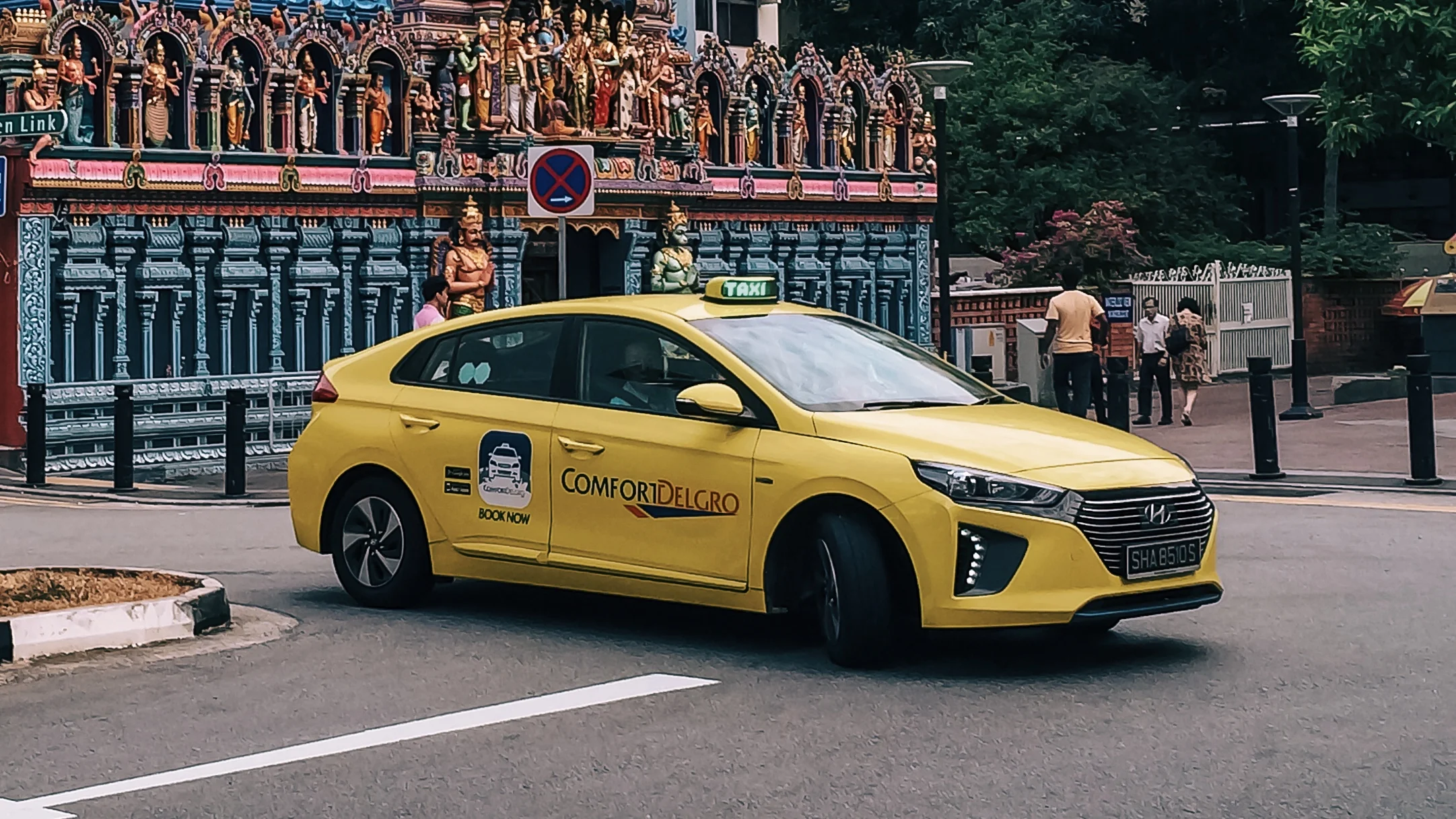
    Qualified platform workers and taxi drivers in Singapore are set to receive a cash assistance of S$200 (US$155) to mitigate the impact of increasing fuel prices. To be eligible, platform workers must have earned above S$500 per month from their platform-based jobs across all operators between December 2025 and February 2026. Similarly, taxi drivers must have had a vehicle rental contract with a taxi operator within the same timeframe.

    Automated Payments Processing

    The Central Provident Fund (CPF) Board will undertake the automatic processing of the payouts using income data submitted by platform operators for CPF contributions. Checkouts are expected to be disbursed via PayNow-NRIC by the end of April, or through GIRO by May 11. Recipients without connected bank accounts will be paid via GovCash by May 18.

    If eligible taxi drivers fail to receive their payments via the CPF Board, the Land Transport Authority will automatically disburse the payouts by mid-May.

    Support amidst Fuel Price Surge

    The cash relief, announced by Senior Minister of State for Finance Jeffrey Siow, is aimed at alleviating the burden of growing petrol costs on workers’ earnings. Fuel prices have been on a steady rise over the past month due to ongoing conflicts in the Middle East, although the government has no plans to intervene in regulating pump prices.

    Jeffrey Siow explained that direct support would be offered to small-medium enterprises, companies, drivers, and individuals most affected by the fuel price hike, as control of pump prices would be too blunt an approach and potentially regressive.

    Extended Support Calls

    Yeo Wan Ling, the assistant secretary-general of the National Trades Union Congress, applauded the initiative but added that similar support should also extend to self-employed drivers of combi buses and limousines. She expressed the union’s commitment to working closely with the government and industry partners to ensure that support reaches every affected worker.

    The relief payout is part of a larger support package valued at nearly S$1 billion, which aims to cushion the effects of escalating energy costs associated with the Middle East conflict. The package comprises a variety of measures to aid businesses, workers, and households, including advancing S$500 cost-of-living vouchers for households by six months and augmenting a one-off cash payout for qualified adults by S$200.

    Questions & Answers

    What is the eligibility criteria for platform workers and taxi drivers to receive the cash assistance?
    Platform workers must have earned above S$500 per month from their platform work across all operators between December 2025 and February 2026. Taxi drivers must have had a vehicle hire agreement with a taxi operator within the same timeframe.

    How will the payouts be processed and disbursed?
    The Central Provident Fund (CPF) Board will process the payouts automatically using income data submitted by platform operators for CPF contributions. Payments will be made via PayNow-NRIC, GIRO, or GovCash, depending on the recipient’s banking setup.

    What is the objective of this cash relief initiative?
    The initiative aims to alleviate the burden of rising fuel costs on the earnings of platform workers and taxi drivers in Singapore, particularly in light of ongoing conflicts in the Middle East that have led to an increase in fuel prices.

  • Singapore’s Top Taxi Operator Launches $62 Cross-Border Rides to Johor, Malaysia!

    Singapore’s Top Taxi Operator Launches $62 Cross-Border Rides to Johor, Malaysia!

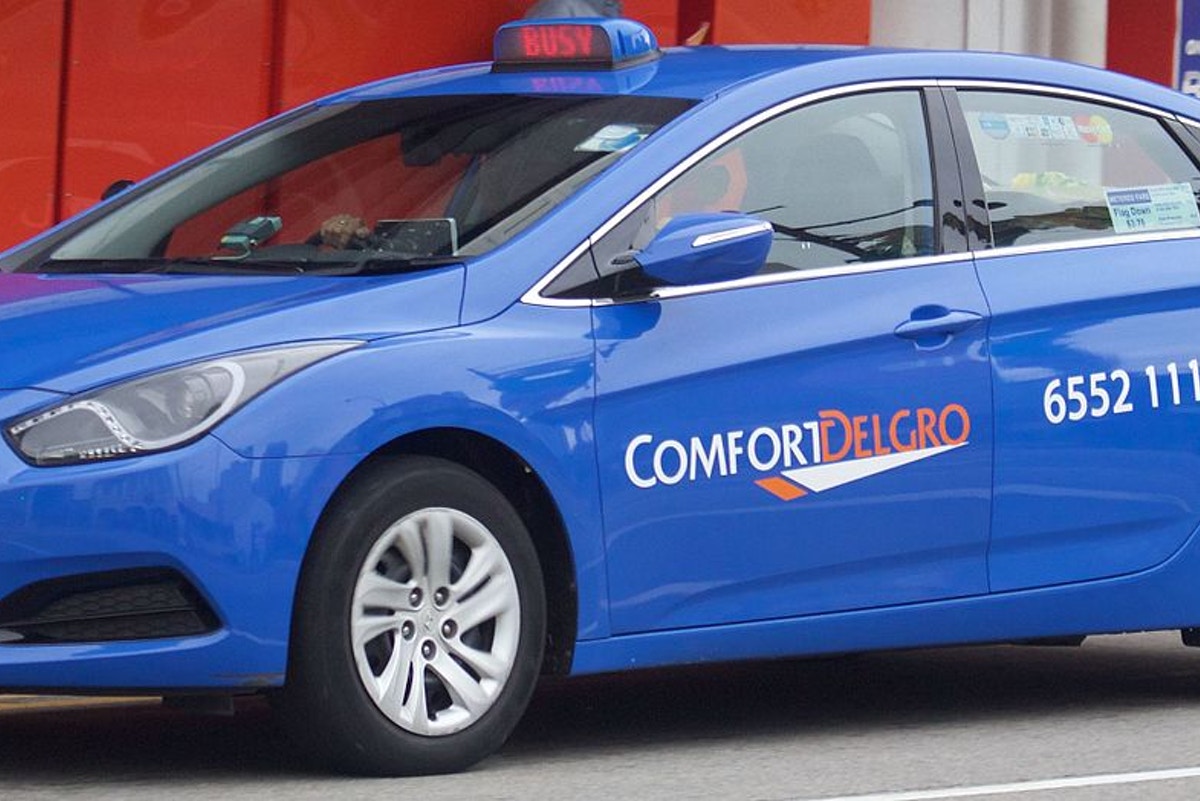
    In an exciting development for commuters in the region, public transport operator CDG has officially announced its new cross-border taxi service between Singapore and Johor Bahru. As detailed in a recent Facebook update, most pick-ups in Singapore will incur a fixed fare, with exceptions for those originating from Ban San Street terminal at S$60 and Changi Airport at S$120. All rides will conclude at the Larkin Sentral bus terminal in Johor Bahru, making it a critical link for daily travelers.

    Booking Made Easy

    Passengers can arrange their rides instantly or book in advance, up to 24 hours prior, by calling CDG’s hotline. This move comes as part of CDG’s reputation as Singapore’s largest taxi operator, boasting a fleet of over 8,400 vehicles. The company doesn’t just stop at taxis; it also provides bus, rail, and private hire services across 13 countries, including Malaysia and China.

    A Competitive Landscape

    With a lineup of 90 licensed cabbies ready to hit the road, CDG is stepping into a bustling market. The Johor–Singapore Causeway serves as one of the world’s busiest land crossings, with more than 350,000 people traveling daily—from Malaysians crossing over for work to Singaporeans hunting for bargains on goods and services.

    Despite the regulated framework allowing only 200 licensed taxis from each nation to provide cross-border services, reports indicate that illegal operators are creating turbulent competition for licensed drivers. Singaporean taxis must adhere to strict rules, picking up and dropping off exclusively at Larkin Sentral, while their Malaysian counterparts are confined to the Ban San Street terminal in Singapore.

    A Broader Vision for Transport

    Earlier this month, Singapore’s Land Transport Authority hinted at its ambitions to enhance the current scheme by integrating more pick-up and drop-off locations and collaborating with companies to develop app-based booking platforms. This initiative aligns seamlessly with the growing economic partnership between Singapore and Malaysia, fostered through the Johor–Singapore Special Economic Zone, which aims to draw in billions in investment while improving labor mobility.

    The anticipation doesn’t stop here; further expansions in cross-border transportation are on the horizon, including the much-anticipated Rapid Transit Link, expected to open by the end of next year. This connection is poised to ferry up to 10,000 passengers per hour in either direction, enhancing cross-border travel and trade significantly.

    Questions & Answers

    How can passengers book a ride with CDG’s new service?
    Passengers can book their rides immediately or up to 24 hours in advance via CDG’s hotline.

    What are the costs associated with pick-ups at different locations?
    The service charges a fixed fare for most pickups, with exceptions of S$60 from Ban San Street terminal and S$120 from Changi Airport.

    What future developments can commuters expect for cross-border transport?
    Future developments may include additional pick-up and drop-off points alongside the forthcoming Rapid Transit Link, projected to enhance capacity significantly.

  • Pony, the Chinese Robotaxi Innovator, Gears Up for Exciting Mass Production Launch!

    Pony, the Chinese Robotaxi Innovator, Gears Up for Exciting Mass Production Launch!

    Pony.ai, the Guangzhou-based autonomous driving company, is taking bold steps toward a new era of transportation by collaborating with state-owned giants Guangzhou Automobile Group and Beijing Automotive Group, alongside Japan’s Toyota. The ambitious goal? To roll out a fleet of 1,000 robotaxis by the end of the year, as revealed by Lou Tiancheng, co-founder and chief technology officer.

    “We are anticipating a pickup in production of robotaxis,” Tiancheng stated confidently, adding that the company has reinforced its partnerships with car manufacturers to validate the feasibility of scaling up driverless cab production.

    The Nasdaq-listed startup recently secured a significant milestone by obtaining a permit to operate its robotaxis in Shanghai’s Pudong New Area, enabling it to charge fares—a first for China’s bustling financial hub. This strategic move places Pony.ai at the forefront of the nation’s race toward autonomous urban mobility.

    The company’s fleet will initially cover the Jinqiao and Huamu districts, enveloping a span of 40 square kilometers, with ambitious plans to extend service into broader areas of Pudong. This region stands as a testing ground for modern technological advancements in a socialist framework, making it a critical area for innovation.

    “Advances in technology and favorable regulatory conditions have transformed the landscape for our expansion,” noted Leo Haojun Wang, the company’s chief financial officer. “The vehicle production is becoming more streamlined, and current regulations in both the U.S. and China now permit us to charge fares publicly.”

    Founded in 2016, Pony.ai has rapidly broadened its footprint, offering services in major cities including Beijing, Guangzhou, and Shenzhen. Recently, the company transitioned to a 24/7 service model, increasing accessibility from its previous operational hours of 7 a.m. to 11 p.m.

    Despite boasting a 4.3% rise in revenue to $75 million last year, Pony.ai is also contending with challenges, as its net loss has more than doubled to $275 million. It seems that while robotic dreams might be within reach, navigating the profitability maze remains a tricky endeavor.

    Questions & Answers

    What new partnerships has Pony.ai formed for its robotaxi production?
    Pony.ai is collaborating with state-owned Guangzhou Automobile Group and Beijing Automotive Group, as well as Japan’s Toyota, in a bid to produce 1,000 robotaxis by the end of the year.

    What recent milestone did Pony.ai achieve in Shanghai?
    Pony.ai secured a permit to operate its robotaxis in Shanghai’s Pudong New Area, allowing it to charge fares for the first time in China’s commercial heart.

    How has Pony.ai expanded its service hours recently?
    The company has transitioned to a 24/7 operating model, moving away from its previous hours of 7 a.m. to 11 p.m., thus enhancing accessibility for riders.

  • Singapore partner pulls out of Vietnam taxi joint venture

    Singapore partner pulls out of Vietnam taxi joint venture

    Singaporean transport firm ComfortDelGro has decided to sell its entire stake in the Vietnam Taxi Company to a local company and pull out of Vietnam.

    Under a deal it has signed, it will transfer its 70-percent stake in Vinataxi to the HCMC-based Helios Service and Investment Joint Stock Company for VND55 billion ($2.4 million).

    Vinataxi was established in 1992 by Vietnamese firm Tracodi and Hong Kong company Tecobest Investment, which sold its share to ComfortDelGro in 2003.

    The company reported revenues of VND20 billion and a loss of VND7.6 billion in 2020.

    In 2018, ComfortDelGro and another local firm, Savico, would up their joint venture, ComfortDelGro Savico Taxi, unable to cope with the fierce competition from tech-based taxi operators.

    According to ComfortDelGro, the Vietnamese market fetched revenues of $500,000 in the first half of this year, or less than 0.1 percent of its total revenues.

  • Grab, Vinasun to negotiate $1.8 million compensation dispute

    Grab, Vinasun to negotiate $1.8 million compensation dispute

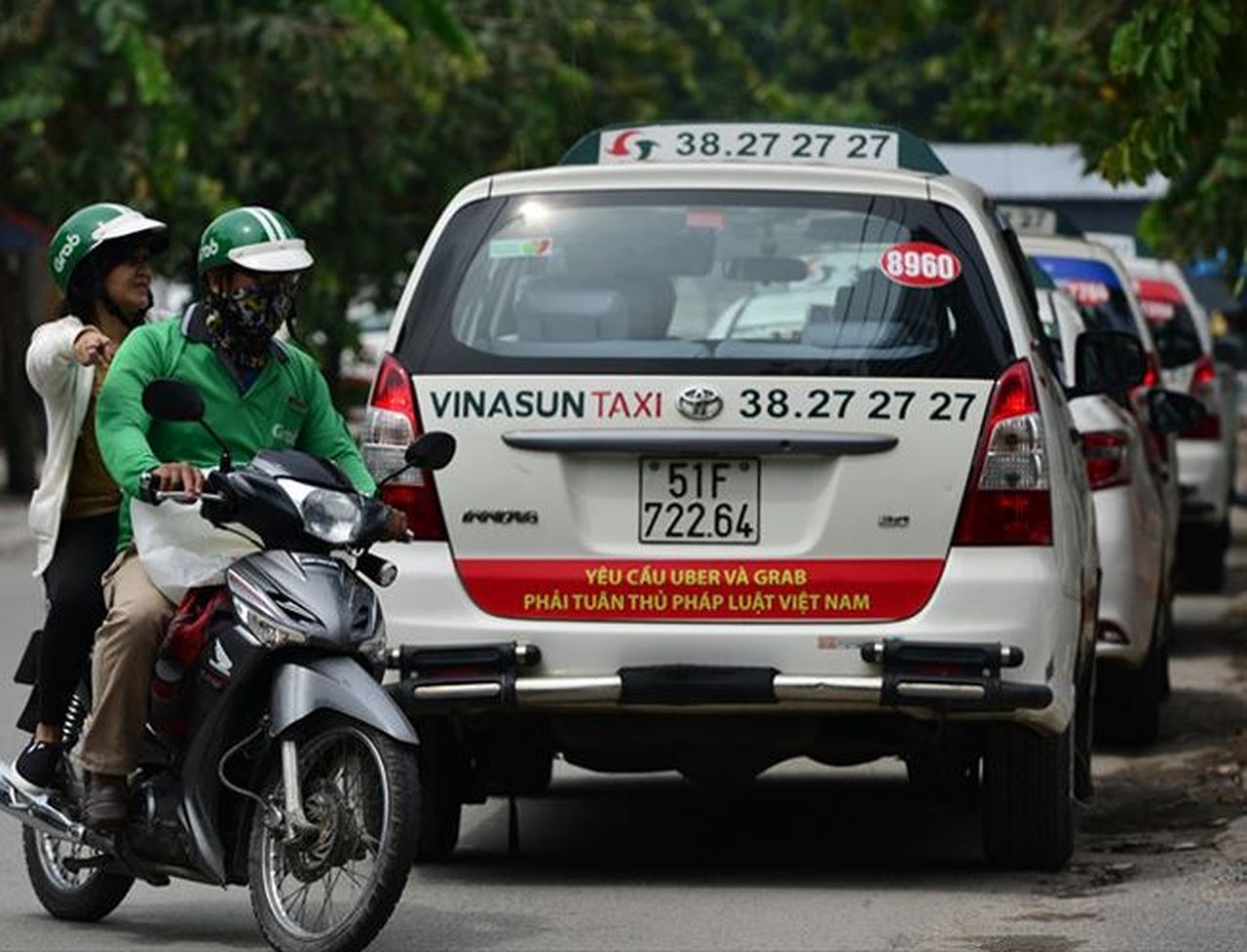
    Top taxi firm Vinasun and ride hailing firm Grab have told the court that they’ll negotiate a compensation dispute. The People’s Court of Ho Chi Minh City on Friday approved the litigants’ wish to ‘sit together,’ and temporarily suspended the trial. The suspension of trial is for no longer than a month, and the reopening date will be announced later, the court said.

    “The lawsuit has dragged on for over a year, but the claimant was not able to prove the damage, as well as the causal relationship with Grab’s influence. The defendant is also very worn out wasting time defending a wrong it did not commit,” said Luu Tien Dung, Grab’s lawyer.

    “This is one of the reasons why both sides have decided to negotiate,” he added.

    Vinasun filed the suit against Grab in June last year, accusing the Malaysia-based firm of abusing the Ministry of Transport’s pilot scheme and committing violations.

    It said Grab’s illegal activities were responsible for nearly VND42 billion (nearly $1.8 million) of the VND76 billion ($3.25 million) in losses that it suffered in 2016 and the first half of 2017.

    The trial began last February, but was adjourned a month later to allow for more evidence to be gathered. Grab protested the valuation of Vinasun’s losses.

    Last October, prosecutors asked the court to accept Vinasun’s petition for compensation of nearly VND42 billion (nearly $1.8 million) in one payment, dismissing Grab’s claim that it was a tech firm and not a taxi company.

    Grab responded by sending a letter to Prime Minister Nguyen Xuan Phuc, saying that identifying Grab as a taxi firm would be “a step backwards from Industry 4.0.”

    Under the latest draft of a decree prepared by the Transport Ministry, transport firms offering services with under 9-seater cars should be registered as taxi firms before they can apply ride-hailing technologies.

    This means that Grab and other ride-hailing firms would have to register their services again as taxi businesses and comply with corresponding legal responsibilities regarding their operating licenses, drivers’ profiles and tax duties.

  • Passenger Ejected from Bangkok Taxi Over $6 Flat Fare Dispute: What Happened Next?

    Passenger Ejected from Bangkok Taxi Over $6 Flat Fare Dispute: What Happened Next?

    In the bustling streets of Bangkok, a typical taxi ride turned into a drama that has now gone viral. A passenger found himself on the wrong side of a fare dispute when a taxi driver demanded a flat rate of BHT200 (approximately US$6.08), bypassing the meter altogether. This unusual encounter escalated quickly, prompting the passenger to call the police after he was unceremoniously kicked out of the vehicle.

    Posting the shocking incident on TikTok under the username @auppatam1 on May 29, the passenger recounted how the ride began with the meter running, but things took a turn when he refused to pay the inflated flat fare. When he asked to see the driver’s license or public transport ID, the driver denied having any such documentation, revealing instead that the vehicle’s registration had expired. The situation intensified as the passenger took a picture of the taxi’s license plate for evidence, which sparked an aggressive response from the driver. Ultimately, feeling unsafe, the passenger reached out to the police for assistance.

    The video quickly garnered attention and criticism on social media, with many users expressing their frustration over the lack of enforcement against fare violations. This incident has only amplified the concerns of locals and visitors alike, further solidifying a growing trend of avoidance when it comes to hailing taxis in Bangkok, a city where navigating transport can sometimes feel more taxing than the fares themselves.

    This saga raises questions about ride-hailing norms in the city and whether authorities will take action. After all, it’s hard to ignore that one bad ride can leave a lasting impression, much like a rogue tourist in a crowded market!

    Questions & Answers

    What triggered the police involvement in this taxi dispute?
    The passenger called the police after the driver demanded a flat fare instead of using the meter and forcibly removed him from the taxi.

    How did the situation escalate after the passenger exited the taxi?
    After photographing the taxi’s license plate, the passenger faced aggressive behavior from the driver, prompting him to seek police intervention.

    What has been the public reaction to this incident?
    The video of the dispute has sparked widespread criticism on social media, as many users expressed frustration over frequent fare issues, which deter them from using taxis in Bangkok.

  • Bangkok’s Suvarnabhumi Airport Stays Open Amid Taxi Drivers’ Protest Warnings

    Bangkok’s Suvarnabhumi Airport Stays Open Amid Taxi Drivers’ Protest Warnings

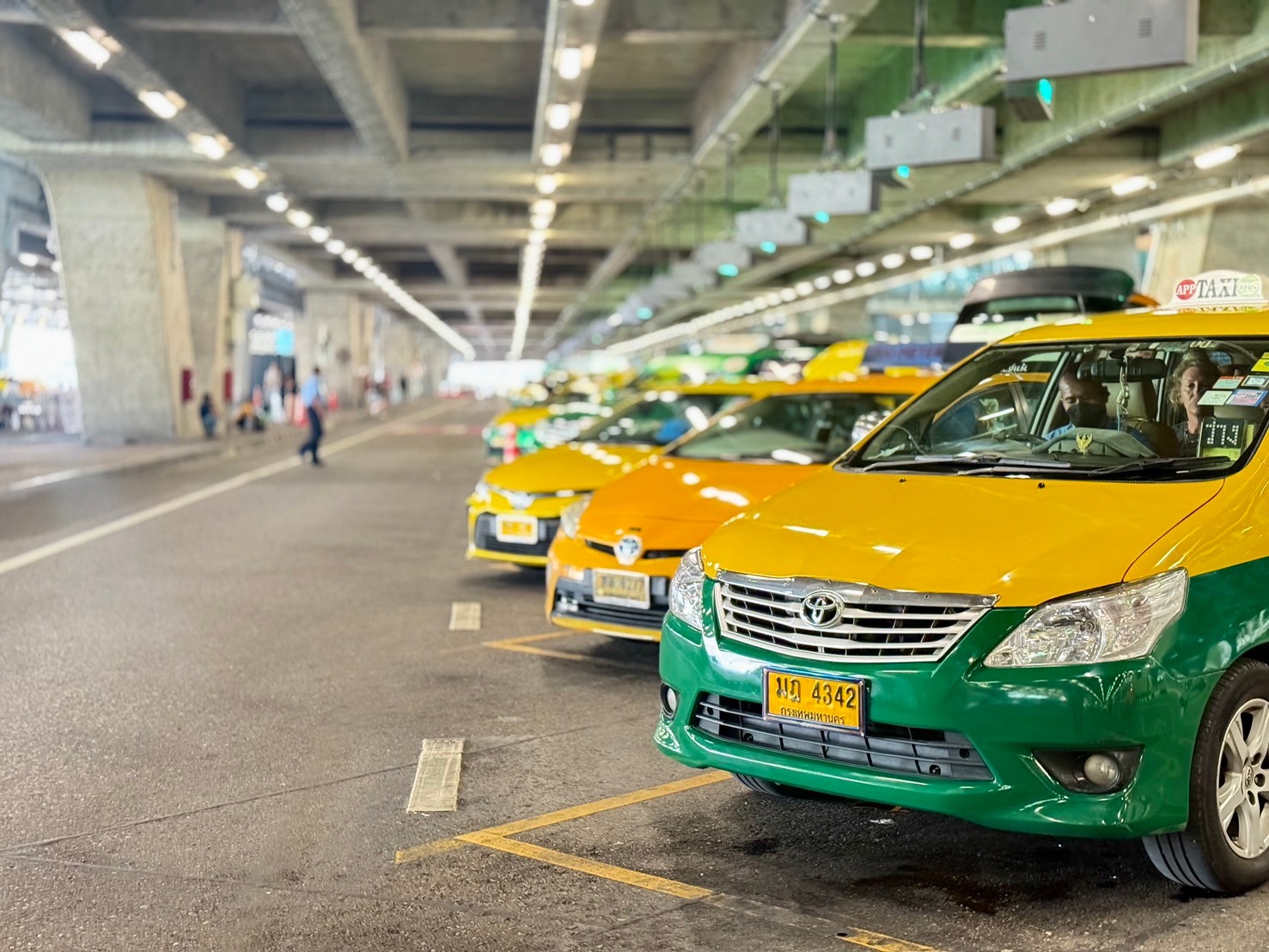
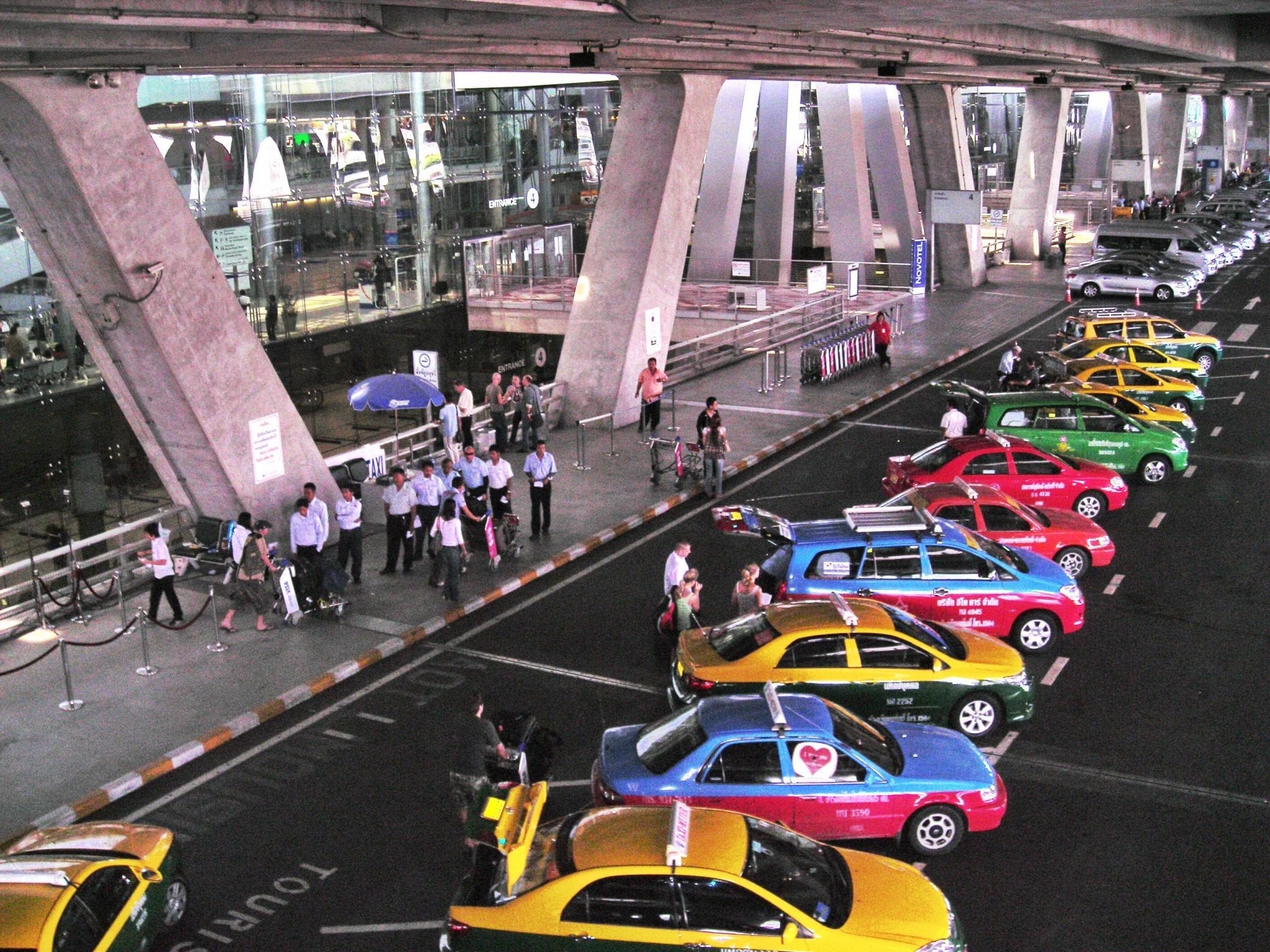
    Thailand’s Ministry of Transport has affirmed that Bangkok’s Suvarnabhumi Airport will remain operational despite threats from traditional taxi drivers planning to stage a blockade in response to the rising popularity of ride-hailing services.

    Taxi Drivers Voice Their Concerns

    Frustrations among taxi drivers have bubbled to the surface, as they argue that app-based platforms like Grab and Bolt are distorting the market with lower fares and lighter regulations, which they claim seizes a significant portion of their income. On May 21, a crowd of taxi drivers converged near Government House, issuing a stark warning: they would take drastic measures unless the government mandated a ban on these app-based services at the airport.

    In a firm rebuttal, the Department of Land Transport made it clear that any interference with airport access would not be tolerated, stating, “There cannot be any blockage of airports. Any wrongdoers will face legal action,” declared Director-General Chirute Visalachitra, as reported by Bangkok Post.

    Statistics Speak Volumes

    Currently, Suvarnabhumi records about 6,000 traditional metered taxi trips every day, compared to approximately 5,000 rides provided by ride-hailing apps, many of which operate using conventional taxis. Chirute emphasized the need for traditional taxi drivers to embrace the technological shift, saying, “Technology is undeniable. Taxi drivers must adapt.”

    Public Sentiment Shifts

    Tourists and locals have expressed long-standing grievances with traditional taxi services, spotlighting frequent issues such as meter refusals, inflated prices, and confusing routes, as highlighted by Pattaya Mail. One exasperated tourist remarked, “Even when they use the meter, they take the longer way—do they not know about Google Maps?” Another visitor stated that they immediately downloaded the Bolt app upon arriving at the airport, clearly favoring its reliability.

    The tide is turning, with many Thai passengers opting for ride-hailing services due to their perceived dependability, transparent pricing, and enhanced safety.

    And let’s be honest—between the taxi wars and tech transformations, one can’t help but wonder if we’re witnessing the dawn of a vehicular soap opera at Suvarnabhumi!

    Questions & Answers

    Will Suvarnabhumi Airport be affected by the taxi drivers’ protests?
    No, the Ministry of Transport has confirmed that the airport will remain open despite the protest threats.

    What are the main concerns expressed by traditional taxi drivers?
    Drivers are worried that ride-hailing services create an “unfair competition” by offering lower prices and operating under lighter regulations.

    How do passengers feel about traditional taxis compared to ride-hailing services?
    Many passengers prefer ride-hailing services for their reliability and clear pricing, as they have faced frequent issues with traditional taxi services, including inflated fares and longer routes.

  • Vietnam’s Vingroup launches electric taxi service in Indonesia

    Vietnam’s Vingroup launches electric taxi service in Indonesia

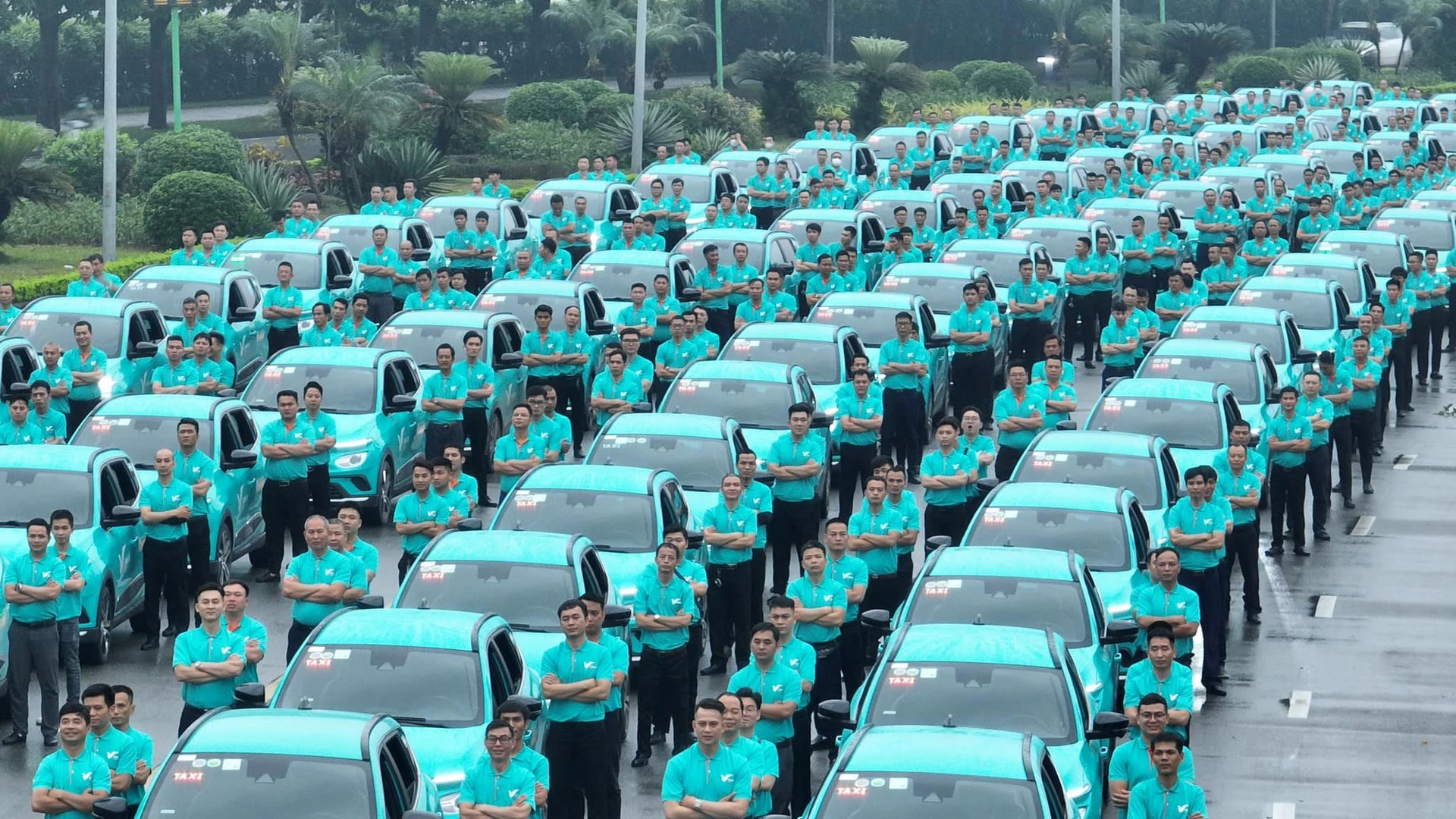
    Vietnam’s Green and Smart Mobility (GSM) JSC officially launched its Xanh SM electric taxi service in Indonesia on December 18.

    The Green and Smart Mobility JSC, which was established by billionaire Pham Nhat Vuong – founder and chairman of private conglomerate Vingroup, chose Indonesia as its second overseas market after Laos.

    With its smart and eco-friendly mobility solutions, GSM is determined to conquer one of Southeast Asia’s most promising ride-hailing markets while promoting global green transition.

    The launching ceremony took place in Jakarta with the attendance of many host government officials, ambassadors from several countries, and nearly 100 strategic partners of Xanh SM there.

    This marks the first time an electric taxi service has been launched in Indonesia, which is expected to meet the increasing demand for transport during the upcoming Christmas and New Year holidays.

    Dr. Pak Riyatno, Deputy for Investment Climate Development at the Indonesian Ministry of Investment and Downstream Industry, expressed his confidence that Xanh SM’s presence in Indonesia would not only encourage domestic and foreign investments in the green economy but also create new opportunities for innovation, job creation, and improved living standards for Indonesians.

    Vietnamese Ambassador to Indonesia Ta Van Thong noted that Xanh SM service aligns with the new strategies and policies of the Indonesian administration under President Prabowo Subianto, which aims to achieve net-zero emissions by 2060, or even 2050.

  • Philippines probes Grab over alleged sexual assault of Vietnamese passenger

    Philippines probes Grab over alleged sexual assault of Vietnamese passenger

    Philippine regulators have launched an investigation into the alleged robbery and sexual assault of a Vietnamese woman who booked a ride using the Grab ride-hailing app.

    The Philippines’ Land Transportation Franchising and Regulatory Board has requested the firm to explain the incident and given it five days to comply, quoting the agency’s chair Teofilo Guadiz III as saying on Wednesday. If found to be negligent, the firm could be suspended for at least 30 days and face fines.

    The robbery and sexual assault allegedly occurred on Sept. 5 when a Vietnamese woman booked a ride in Parañaque City.

    During the ride, the driver reportedly allowed another passenger to board the car.

    This passenger then reportedly took the woman’s phone and cash, which amounted to 35,000 Philippine pesos (US$623), before raping her inside the vehicle. The driver was arrested by the police on Sept. 7.

    Grab’s Philippine unit said on Thursday that the driver involved in the case has been permanently banned from the platform.

    It has reached out to the victim to offer assistance and will fully cooperate with the Philippine police in the investigation.

  • Grab no longer buying Trans-cab, Singapore watchdog says

    Grab no longer buying Trans-cab, Singapore watchdog says

    Grab, Southeast Asia’s biggest ride-hailing and food delivery firm, has called off its proposed acquisition of Singapore’s third-largest taxi operator, Trans-cab, according to a statement from Singapore’s competition watchdog.

    The Competition and Consumer Commission of Singapore (CCCS) said in the statement on Thursday evening that both Grab and Trans-cab had notified it on July 22 that they would no longer be proceeding with the proposed acquisition.

    “With the termination of the proposed acquisition, the parties have withdrawn their application to CCCS for a decision, and CCCS has accordingly ended its assessment of the proposed acquisition,” CCCS said in the statement.

    Trans-cab did not immediately respond to a request for comment after working hours.

    “(The) ruling does not change our determination to do everything that we can to offer affordable, reliable transport options to passengers in Singapore,” Yee Wee Tang, managing director at Grab Singapore.

    The commission added that it encourages businesses with acquisition plans to engage CCCS at an early stage if they think there are likely to be competition concerns.

    The commission first raised concerns about the taxi deal in October 2023 before asking Grab and Trans-cab for solutions to address competition concerns earlier this month.

    Grab is one of the city-state’s top ride-hailing companies, with the deal for Trans-cab reported to be worth around S$100 million ($74.55 million).

  • Grab chalks up first profitable quarter, but clouds loom

    Grab chalks up first profitable quarter, but clouds loom

    Grab Holdings reported its first quarterly profit on Thursday and unveiled a maiden share repurchase program, but the ride-share and food-delivery firm’s weak annual sales forecast fanned growth worries and weighed on its shares.

    While the Singapore-based company’s ride-share growth hit pre-pandemic levels in 2023, its food-delivery services is rebounding from a slowdown following a boom during the lockdown.

    “There will be revenue acceleration in the years beyond 2024 as investments in our new products bear fruit,” CFO Peter Oey told Reuters.

    He said Grab was building premium offerings in its mobility and delivery services that could generate high-value transactions.

    US-listed shares of Grab, which also said it expects an annual adjusted core profit, were down 2 percent at $3.38 in early trading.

    The company forecast fiscal 2024 revenue between $2.70 billion and $2.75 billion, compared with analysts’ average estimate of $2.80 billion, according to LSEG data.

    Grab said on Thursday it would repurchase $500 million worth of class A ordinary shares, and announced an early payment of the remainder of a term loan. This followed global peer Uber announcing its first-ever share buyback last week.

    Grab also projected full-year adjusted core profit of $180 million to $200 million, compared with estimates of $135.2 million.

    The company’s fourth-quarter revenue of $653 million beat estimates of $629 million. Revenue rose 26 percent in its mobility business on holiday quarter travel demand, while it increased 20 percent in its delivery unit.

    Grab posted a net income of $11 million in the fourth quarter, helped in part by a “reversal of an accounting accrual”.

    The company delivered its first adjusted core profit in its fiscal third quarter, aided by workforce reduction and cut to some incentives and technology costs over the past two years.

  • Vietnamese billionaire’s taxi firm to expand to Laos

    Vietnamese billionaire’s taxi firm to expand to Laos

    GSM, an exclusively all-electric taxi company owned by Vietnam’s richest man Pham Nhat Vuong, plans to open services in Laos this year.

    The company, which uses only VinFast electric vehicles, aims to ship 150 electric cars to Laos first, and then increase the number to 1,000 by the end of the year. The cars will be the VF 5 Plus and VF e34 models.

    It will eventually sell and lease VinFast electric cars, similar to its services in Vietnam.

    “This is the first step in GSM’s plan to go overseas, giving it a place in the regional and global markets, is to help introduce electric vehicles to users,” GSM CEO Nguyen Van Thanh wrote on his personal social media page.

    GSM was established in March by Vingroup chairman Pham Nhat Vuong, who owns a 95% stake. It offers taxi and motorbike ride-hailing services.

    The company has partnered with ride-hailing Be Group to incorporate VinFast vehicles in the taxi service.

    GSM is the largest buyer of VinFast cars, according to a report VinFast sent to the U.S. Securities and Exchange Commission in the second quarter.

    GSM had received 7,100 electric cars from VinFast by the end of the second quarter. It had earlier signed a deal with VinFast to buy 200,000 electric bikes and 30,000 electric cars.

  • Motorbike taxi driving unsustainable for laid off workers

    Motorbike taxi driving unsustainable for laid off workers

    More than a few workers made unemployed by increasing layoffs in Vietnam recently have become motorcycle taxi drivers only to realize it’s not a lasting solution.

    After starting his workday at 5 a.m., at 10 a.m. Le Van Manh had completed only one trip, which made him VND40,000 (around $1.7) in cash.

    Manh started working as a motorbike taxi driver four months ago, after two years suffering from his old factory’s unstable business performances.

    “The factory started layoffs, forced us to work overtime, and cut down on our salaries,” he said.

    His income as a factory worker used to be around VND20 million, but was reduced to only half that starting last year. Not being able to get by with that income, he quit his job and turned to ride-hailing applications, hoping for better financial rewards.

    Manh spent around 12 hours a day on the road after his career turning point. Things went smoothly at first, as he was able to earn between VND400,000 and VND500,000 a day during the first two months working as a motorbike taxi driver.

    But the number of drivers has increased over the recent months, and Manh now has to share his customer pool with his new “colleagues,” and thus, earn a lower income of only VND300,000, or even VND100,000 sometimes, per day.

    “I can only complete around 10 trips a day now, compared to over 20 trips a day before,” he said.

    According to data published by the General Statistics Office of Vietnam, more than 149,000 workers lost their jobs in Q1 this year, 13% higher than the previous quarter. Of these laid off workers, most worked in companies in the FDI sector based at industrial areas in and around the provinces of Dong Nai, Binh Duong, Bac Ninh, Bac Giang.

    The Private Sector Development Research Board projected that the layoff wave could continue in this year’s second half, due to both external and internal challenges for businesses.

    Not requiring any educational background or specific skill sets, motorbike taxi drivers are the first career choice for many laid off workers to make a new living.

    Hoang Van Trieu, a former truck driver at a Binh Duong-based wood warehouse, started working as a full-time motorcycle taxi driver three months ago, after becoming unemployed when his company went bankrupt. Having expected that the new occupation would help him cover his living expenses, he got depressed after a while.

    “I spend about 10 to 11 hours a day, in exchange for between VND300,000 and VND400,000,” he said. “I cannot get by if I maintain this as my full-time job.”

    He is now trying to look around for other career opportunities. The best scenario he can think of is being able to find an office job, which allows him to leave at around 4 p.m. or 5 p.m., so that he can hit the road and start the second “working shift” of his day as a motorcycle taxi driver until before midnight.

    Ride-hailing applications, of which the most popular in Vietnam are Grab, Gojek, and Be, were once considered a life saver for those that were looking for another occupation, including laid off workers looking for career chances or fresh graduates waiting for a job after finishing school.

    The Vietnam General Confederation of Labor estimated in 2021 that there were over 200,000 partner drivers working with Grab, which rose from around 175,000 in 2018. Of these, around 26% graduated from a higher educational institution or equivalent.

    Gojek reported that the platform surpassed 200,000 drivers in mid-2021, while Be announced that the number of its partner drivers surpassed 100,000 at the beginning of the same year.

    Drivers’ daily income was as high as between VND500,000 and VND600,000 at that time.

    However, things have become harder for drivers recently. The supply of drivers increased and the fees taken out by the applications rose and currently range between 30% and 39% of the amount charged to customers. All of these mean it has become harder for drivers to maintain their income.

    Nguyen Dinh Vuong, former worker at a Hanoi-based leather company, decided to return to his hometown after months of suffering from this “high cost, low reward” job. He spent around 12 hours working a day to get between VND300,000 and VND400,000 in return. With this income, he did not have much left after paying his bills.

    “Motorcycle taxi drivers in Hanoi have to work at least 12 hours to earn enough to get by,” he said. “The cost of living in my hometown Thanh Hoa is lower, so I spend less, and don’t have to work that hard.”

    According to him, many former industrial workers, who were laid off due to the downfall in the orders, are trying their best to get by, in the hope of an economic recovery that will lead to improved business performances and thus, higher demand for labor.

    Dr. Huynh Thanh Dien, an economic expert, made a prediction aligning with this hope. He projected that the labor market would soon retrieve a state of stability and temporary motorcycle taxi drivers would soon be able to return to their occupations.

    He also warned that partner drivers for ride-hailing applications should not be considered a long-term career goal, as the job cannot provide a stable income in the long run. Instead, it should be treated as a temporary “cover” occupation only while the economy follows its natural rhythm and proceeds on its way to recovery.

    In the meantime, these people have no other choices than optimistically enduring.

    “The economy can’t be gloomy forever,” Manh said. “As I heard from the news, the situation is predicted to become better in 2024, so I will try to get by and wait until then.”

  • Taxi company back in the black after four years

    Taxi company back in the black after four years

    Taxi firm Mai Linh Group reported its first profit of VND1 billion ($42,600) after four years in 2022.

    Its revenues surged by 57% to VND1.65 trillion on recovering demand for transportation after two years of Covid-19.

    It posted a loss of over VND270 billion in 2021.

    The company has overcome its most difficult period and is recovering, but its figures show that more work remains to be done, its chairman, Ho Huy, said in a letter to partners earlier this year.

    “We have not made as much profit as expected.”

    He added that the goal is to see every unit making profits this year.

    The company’s debt-equity ratio is a ridiculous 43. Anything in excess of two is considered risky.

  • Vietnam’s richest man launches electric taxi firm

    Vietnam’s richest man launches electric taxi firm

    Pham Nhat Vuong, Vietnam’s richest man, has established GSM, an all-electric taxi operator with a charter capital of VND3 trillion ($126.85 million). Vuong, who is also the chairman of Vingroup, owns a 95% stake in the company.

    GSM, which stands for “Green, Smart and Mobility,” will launch its taxi services starting in April in Hanoi, with plans to go nationwide by the end of the year.

    The company will also rent Vinfast’s VF e34 and VF 8 electric cars to transport companies.

    GSM expects to have 10,000 cars and 100,000 motorbikes, all made by VinFast, a unit of Vingroup.

    The company was established to speed up the completion of Vietnam’s green ecosystem and smart transport, said GSM CEO Nguyen Van Thanh.

    Customers can experience electric vehicles, whether for a few minutes in a taxi, or a few months in a rented car, which Thanh says will help speed up the green revolution in Vietnam.

    Last year, VinFast delivered 7,200 electric cars to Vietnamese customers. And in December last year its two models, the VF e34 and VF 8, were among the top 10 best-selling models in Vietnam.

    The company delivered its first electric cars to American customers on March 2.