Tag: Technology

  • LG and Naver are teaming up to make robots better

    LG and Naver are teaming up to make robots better

    LG Electronics and Naver are cooperating on the development of robotic capabilities.

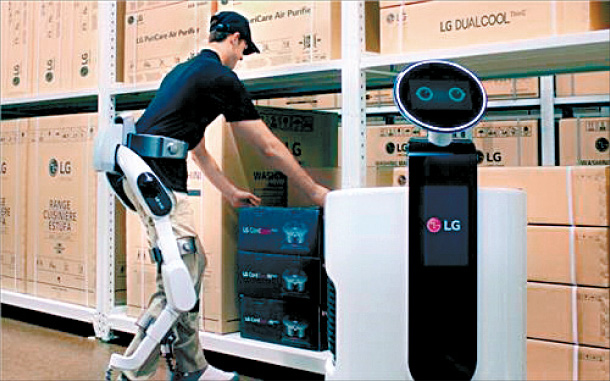
    Their first project will use Naver’s mapping and navigation technology to improve the functionality of LG’s CLOi GuideBot.

    LG’s guiding robot is currently in operation at Incheon International Airport. It escorts travelers to certain destinations within the facility.

    Naver Labs, the research and development arm of the Korean internet portal company, said its eXtended Definition & Dimension Map (xDM) solution will enable LG robots to self-drive indoors even when equipped with low-end sensors.

    The solution integrates Naver’s mapping, navigation and positioning technology to support various location-based services, such as augmented-reality walking navigation and autonomous driving, according to the company. Naver hopes to improve this by using big data collected by LG robots.

    The two companies said they will gradually expand collaboration to other areas of robot development after the first project. The agreement was reached during the Consumer Electronics Show (CES) in Las Vegas and announced Thursday. Both LG and Naver demonstrated their latest robot technologies at the exhibition.

    “One of our biggest achievements during CES was to reach an agreement with LG,” said Seok Sang-ok, head of the robotics team at Naver Labs. “With LG, we will find ways to develop technologies that improve lives.”

    LG has already announced other deals at CES, including a plan to work with Microsoft on autonomous car technology development and an agreement with Apple to source television programming.

  • LG to utilize Azure for autonomous systems

    LG to utilize Azure for autonomous systems

    LG Electronics will be utilizing a Microsoft product in the development of autonomous vehicle systems, LG said Wednesday. Under the agreement between the two companies, LG has gained access to Microsoft’s Azure cloud-computing platform for its self-driving car systems. Apart from storing vast amounts of data, the Azure platform also offers immense computing power for data-based applications and services.

    The two companies met Monday to sign a memorandum of understanding at the Consumer Electronics Show (CES) in Las Vegas. LG will connect with Azure in developing driver-support systems, cameras and a virtual assistant that can answer vocal commands.

    “Developing software for self-driving car components – whether it’s for navigation or infotainment – requires an enormous amount of data processing,” explained an LG spokesperson.

    “The agreement with Microsoft Azure is basically aimed at helping our software save and utilize as much data as possible in the shortest amount of time.”

    LG plans to use Azure’s high-performance computing and graphics processing units. According to the company, these tools can slash the time required to learn roads and traffic patterns from more than a full day to a few minutes. Higher processing speeds will also help the software learn patterns gathered from cameras regarding the driver, pedestrians and other objects on the streets.

    Another tool offered on the Azure platform is a voice assistant. LG plans to incorporate this into its infotainment system so that the car’s software can answer questions and receive commands.

    It could, for example, check traffic conditions, search for a restaurant nearby or call up favorite songs.

    The large amounts of data LG collects from self-driving cars will be saved in the Azure system, including photos of roads, obstacles and road signs collected from all over the world. LG will be able to utilize the data collected for further development. In the past, before cloud services existed, international data had to be shipped to Korea in hard drives.

    LG Electronics has been supplying components to self-driving carmakers since late 2016. The field is considered a future growth engine for the company.

    “In the upcoming age of autonomous vehicles, LG Electronics will shift the definition of cars from a means of transportation to a mobile space, which can turn into a conference room, a theater or a shopping mall,” said the company’s chief technology officer, Park Il-pyung, during a pre-show keynote speech on Monday.

  • Hyundai Mobis shows off futuristic concept self-driving car

    Hyundai Mobis shows off futuristic concept self-driving car

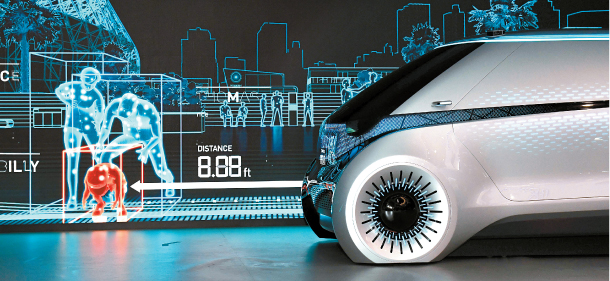
    Hyundai Mobis introduced its concept autonomous car equipped with 26 sensors and a special lighting system that enables cars to communicate with pedestrians at the Consumer Electronics Show (CES) in Las Vegas on Tuesday.

    The auto parts maker said it is the first time it has unveiled a concept car with at least Level 4 self-driving capability, which means cars can drive themselves without being actively monitored by the driver.

    The car comes with a modular self-driving kit comprised of various sensors – which function as eyes for the car – on the roof as well as lamps that can send messages to nearby pedestrians or cars. Mobis calls all of the technologies and parts used on the autonomous vehicle M.Vision.

    The kit on the roof – comprised of four lidar sensors, or laser-based radar, and five multifunctional camera sensors – are key strengths of M.Vision, according to Mobis.

    The modular kit can simply be mounted on the roof, so it can easily be used on different vehicles. The Korean company said it is best to put sensors on the car’s roof, considering that sensors can better detect the surrounding environment when they are placed higher above the car. To complement the kit on the roof, Mobis also installed five radar sensors and 12 ultrasonic sensors on the car’s lower body.

    The Korean company is on its way to make all sensors used in the kit with its own technology by 2020.

    The so-called communication lighting technology is a new innovation that Mobis thinks will greatly reduce fatal accidents involving autonomous cars and pedestrians.

    The company said it will use lighting to indicate to pedestrians and other drivers when the car is driving in self-drive mode. Autonomous cars will be able to detect a pedestrian from more than 450 feet away. Once someone is detected, car headlamps will project a red warning symbol to warn people it’s not safe to move around the vehicle.

    “Light has been used as a conduit for communication among vehicles and pedestrians for almost as long as the automobile has existed, so we are excited to lead the evolution of this technology to save lives and offer peace of mind to all that use the road,” said Mirco Goetz, director of lamp engineering at Hyundai Mobis.

    “Our primary focus on the safe progression to future mobility will enable our industry to continue the advancement of autonomous vehicle technology while helping to keep pedestrians and drivers out of harm’s way.”

  • Hyundai puts holograms on road to help with navigation

    Hyundai Motor Group unveiled a holographic AR navigation system, the first of its kind, in collaboration with start-up WayRay at the Consumer Electronics Show (CES) in Las Vegas on Tuesday. Hyundai partnered with the Switzerland-based start-up that specializes in AR technology and demonstrated the navigation system on the group’s luxury sedan, the Genesis G80.

    While conventional head-up displays (HUD) project a reflected image through a liquid-crystal display screen installed on the dashboard, the new holographic AR system displays what appear to be 3-D images on the road through the windshield and automatically adjusts the displayed information to the driver’s viewing angle.

    The AR navigation system, demonstrated at WayRay’s CES booth, also takes up considerably more real estate compared to existing HUDs, typically relegated to a small corner of the windshield, and displays a variety of driving information that includes navigational features and safety warnings.

    Information such as lane guidance, destination points and the current speed is shown along with advanced driver-assistance system features including lane departure warnings and forward collision warnings.

    Hyundai said an image size of 3.15 meters (10.33 feet) by 1.31 meters will be visible from the driver’s perspective, despite the actual projected image being just 310 millimeters (12.2 inches) by 130 millimeters. The company’s existing HUD was changed to incorporate WayRay’s system.

    Hyundai promised that the technology will bring changes to the conventional concept of a windshield.

    “Future mobility windshields will be more than just a piece of glass,” said Hwang Yun-seong, director of Hyundai Motor Group’s Open Innovation Business Group. “AR holographic powered glass will serve as a platform to provide new services and open up new in-vehicle experiences”

    Hyundai said that the two companies will continue to cooperate to expand the technology to display information that identifies objects on the road such as buses and crosswalks.

    The two companies also plan to incorporate real-time data such as traffic signals, surrounding vehicle information and road or weather conditions into the technology.

    Hyundai has worked on holographic technology since 2017 and invested in WayRay last September.

  • Samsung plans to release robots this year

    Samsung plans to release robots this year

    Samsung robots are coming this year. Kim Hyun-suk, president and head of Samsung Electronics’ consumer electronics division, said the company has been conducting research on the robotics market and is now preparing to launch several robots this year during a press conference with reporters on Monday, a day prior to the opening of the Consumer Electronics Show (CES) in Las Vegas.

    Until now, Samsung Electronics has stayed mum on whether it is making robots. “To develop robots, it’s important to have an artificial intelligence [AI] platform ready [to mount on the robots],” Kim said. “That AI platform is almost ready.”

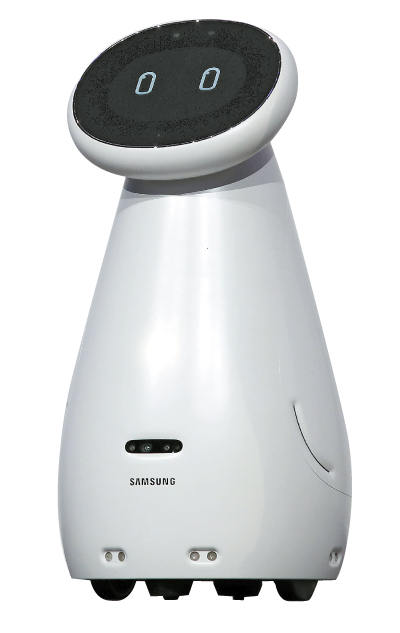
    Samsung unveiled three variations of its AI-based robot, dubbed Samsung Bot, at the briefing, revealing its robotics technology for the first time.

    The three Samsung Bots, labeled Care, Air and Retail, are designed to aid people’s health, and improve air quality and retail shop management. Samsung Bot Care, for instance, monitors users’ vitals like blood pressure and heartbeat and helps people take medicine at the right time. The robot can also call 119 and contact family members when it senses an emergency such as a heart attack.

    The electronics giant also introduced its wearable robot, dubbed GEMS. It assists people with difficulty walking due to weak muscles or injuries and reduces physical pain in the knees and ankles.

    “I can’t say for sure when the products introduced today will be commercialized,” Kim said. “There are possibilities that robot products not introduced yet could be commercialized first.”

    Kim added that demand for robots is expected to increase, especially due to societal aging, pointing out that robots like Samsung Bot Care will be useful for the elderly.

    “By exploiting Samsung’s know-how in AI, Internet of Things and developing multiple devices, we are considering our options for various types of robots,” Kim said.

    On concerns of whether Samsung’s own AI engine Bixby is losing ground due to the company’s AI partnerships with tech giants like Google and Amazon, Kim said that is a “misunderstanding.”

    Though Amazon’s Alexa AI assistant and Google Assistant may be a step ahead of Bixby in terms of technology and presence in the global market, Kim said partnerships make Bixby stronger, not weaker.
    The important thing, according to Kim, is that when people ask Bixby a question, the AI will be able to give out answers based on its own knowledge or by utilizing data from Google or Amazon.

    “No company has strengths in every aspect of business,” Kim said. “Though Bixby is a latecomer [to the AI assistant market], Samsung has relative strength in making devices compared to other tech companies, and Google and Amazon will focus on what they are good at.”

    Kim also commented on LG Electronics’ rollable TV that made headlines globally. LG’s rollable TV prototype can roll itself into a storage box that becomes a table with speakers.

    According to the Samsung president, there needs to be considerations on whether the product can be “economical.” He added that without the economic feasibility to commercialize the product, the prototype is a lot less meaningful.

    Brian Kwon, head of LG’s home entertainment division, said in a separate press briefing Tuesday in Las Vegas that the company will make rollable TVs its future growth engine.

    On concerns about the product’s cost, Kwon said while the price may be a barrier in widely expanding sales of the product right after launch, the company will strive to quickly improve the TV’s cost competitiveness.

  • Hyundai Cars to go online – and have legs

    Hyundai Cars to go online – and have legs

    By 2022, all cars made by Hyundai Motor will be connected to the internet, the automaker announced during a press briefing held Monday in Las Vegas ahead of the 2019 Consumer Electronics Show (CES). “We aim to have 10 million active users of our connected-car services globally and apply connected-car technology to all vehicle segments in the global market by early 2022,” said Suh Jung-sik, senior vice president of Hyundai Motor Group’s ICT division.

    At the CES, the company also introduced a vehicle in which the wheels are attached to robotic legs with a wide range of motion. Hyundai’s concept of a truly connected car is a car smarter than a computer that can share information not only with other vehicles on the road but also with homes, surrounding infrastructure and cities.

    Using connectivity, the cars can offer real-time traffic and parking lot information to drivers and also alert drivers remotely of theft. Remote adjustments of in-car settings, such as temperature, will also be possible.

    While Hyundai is already offering early versions of its connected cars in Korea, the United States, China, Canada and Europe, the automaker said it will establish additional big-data centers to offer similar services in countries like India, Brazil and Russia.

    To offer better connectivity worldwide, the carmaker is currently developing an operating system, a cloud platform and network technology for connected cars. The company also announced a plan to introduce an open platform on which third parties can develop new technologies using big data shared by Hyundai.

    Hyundai is not the only carmaker that came to CES with grand ambitions to take leadership in the connected car business.

    BMW will introduce the BMW Intelligent Personal Assistant, which can interact with drivers and allow for video meetings, shopping and other digital services inside cars. Audi is introducing a virtual-reality entertainment service for passengers in back seats. VR games or travel content will match the actual movements of the car. In the long run, the carmaker said the videos will reflect real-time traffic conditions so that if a car stops due to red light, the video will show an obstacle.

    Other participants, including Mercedes-Benz, Nissan, Bosch and Continental, all shared their focus on connectivity.

    “In the future, cars will be categorized as cars with hyper-connectivity and those without,” Suh of Hyundai Motor Group added.

    Apart from connectivity, Hyundai said it will develop personalized electric vehicles for everyone by giving customers the freedom to select software and hardware for their vehicles.

    To bolster open innovation, the carmaker has been setting up global open innovation centers to collaborate with foreign start-ups. Already there are three centers, established in Korea, the United States and Israel. Two more centers are set to be established, in Berlin, Germany and Beijing, China this year.

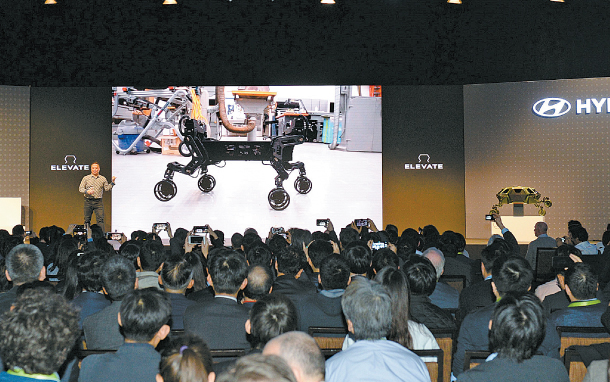
    Hyundai Motor and its innovation center in Silicon Valley, the Hyundai Cradle, introduced the “Elevate” concept vehicle at this year’s CES. It has four robotic legs specifically designed for rescue in challenging environments.

    U.S. design-consulting firm Sundberg-Ferar was involved in the development of Elevate, which Hyundai calls the ultimate mobility vehicle. It can swiftly move around places inaccessible to existing rescue transport.

    Hyundai said the Elevate’s body can be switched depending on the mission and that the robotic-leg architecture has five degrees of freedom. The company added that the vehicles can also aid people with physical impairments.

  • LG unveils TV that rolls up for storage

    LG unveils TV that rolls up for storage

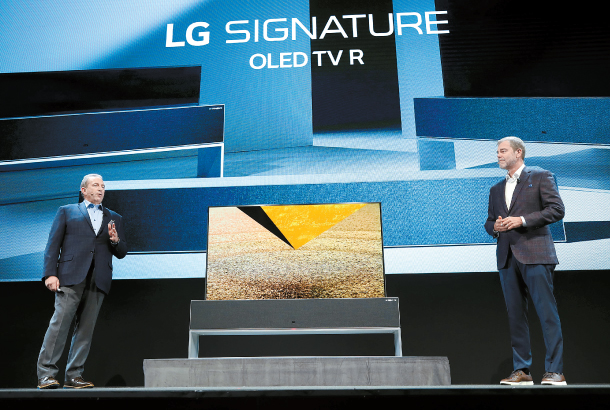
    LG Electronics unveiled the world’s first “rollable” television at the Consumer Electronics Show (CES) 2019 that launched in Las Vegas, United States, on Tuesday. Last year, its affiliate LG Display unveiled a prototype of a 65-inch rollable OLED display panel at the same event. Dubbed the LG Signature OLED TV R9, it uses the same technology, only it comes with an aluminium case at the screen’s bottom that looks like a long tissue box.

    A rolling OLED display was possible because unlike TV panels of the past, OLED screens don’t need backlight to show color, but have molecules that let out light on their own.

    The panel can roll itself up and down from the case so that the television set looks more like a long, rectangular table once the screen is completely inserted. LG boasts that the screen can maintain its color definition even as it rolls itself. R9 won the CES 2019 Innovation Awards in the video display sector.

    LG plans to launch global sales of R9 this year, starting from Korea. Its price was not disclosed, but it will be among LG’s premium television lineups. The advantage of the rollable TV set is that it can be placed in locations like the window side or in the middle of a room. For conventional TV screens, the popular choice was beside or on the walls as they take up space and block the view if installed elsewhere.

    The television set also comes with high-quality speakers and an artificial intelligence software that enhances the set’s performance to adjust definition and sound according to the film or video played. It also recognizes simple vocal commands.

    When the screens are rolled inside the case, R9 can work similarly to an audio set as it can play music via connection to smartphones or other portable devices. It also comes with various modes to use the screen apart from watching movies and TV shows.

    It can function like a huge electronic canvas that shows photos saved in your smartphone. For those who want to create a cozy atmosphere, it has a “Mood” mode that plays a video of a fireplace or displays mood-specific light on the screen.

    LG Display Vice Chairman Han Sang-beom expressed confidence in the panel in front of local reporters on Tuesday at the CES. According to Han, the rollable panel was rolled and unrolled more than 100,000 times during its development process.

    “We’re talking with other clients as well [apart from LG Electronics] for the rollable TV panels,” he said. “My plan is to target the premium market instead of aiming for sales volumes.”

  • Samsung to release feature-rich phone to take on Huawei

    Samsung to release feature-rich phone to take on Huawei

    Samsung is releasing a phone with robust functions specifically designed to meet the challenge posed by Huawei. It has fast internet speeds — utilizing 5G wireless — is foldable and has an innovative screen design. Last year’s smartphone market can be summarized in one sentence: Apple’s defense, Huawei’s catch-up and the fall of Samsung Electronics.

    According Counterpoint Research, Apple’s share in the super high-end smartphone market, those priced over $900 (880,000 won), was 79 percent in the third quarter of 2018. In the $600-$900 market (660,000 to 880,000 won), Apple (61%) surpassed Samsung Electronics (21%) by a large margin, and in the $400-$600 range (440,000 to 660,000 won), Huawei (17%) was right behind Samsung (25%).

    At this critical moment, Samsung Electronics celebrates the 10th anniversary of the release of its “Galaxy” smartphone. The Galaxy Black came to market in April 2009. A new Galaxy S10, a commemorative issued for the anniversary, will be unveiled at the Mobile World Congress (MWC) 2019 in Barcelona, Spain this February. The name of the new S10 is “Beyond.”

    Samsung’s says it wants to outdo itself with the latest release.

    In the new S10, Samsung’s Infinity-O Display will be embedded. The display has a small hole in the screen for the selfie lens, so almost the entire face of the device is screen. The proportion that is screen is more than in Apple products, which utilize more real estate for the lens.

    The fingerprint-identifying sensor does not require separate hardware, but is found within the screen. The sensor itself utilizes Qualcomm ultrasonic-wave technology, which can identify prints that are less readable due to water or soil on the screen. Instead of scanning the user’s iris, the new model will utilize facial recognition, as is done with iPhones.

    It is expected that Samsung will maintain the 3.5mm-earphone jack, which has been scrapped on iPhones. It will also be 5G capable, allowing for a 1.5-gigabyte movie to be downloaded in less than a second. Samsung announced last month it will supply the world’s first 5G phones to Verizon and AT&T.

    Huawei is expected to release its own 5G phone in the first half of the year.

    Early versions of the new Galaxy S10, to be released in February, will not be 5G capable. It is possible that the S10 with a 5G communications chip will be released separately, as was done with the Galaxy S5 broadband LTE-A model, which was separately released in 2014.

    It was expected that LG Electronics will release its 5G smartphone this April or May, but it changed its goal for release to late March. Apple might not equip new iPhones, which will be released this year, with a 5G-communications chip.

    A telecommunications industry source said, “Apple originally did not really care about the speed of telecommunications that much. Apple might embed 5G in the iPhone in fall.”

    Smartphone competitors are seen pushing foldable phones in 2019. According to market research firm Strategic Analysis (SA), shipments of foldable smartphones globally will increase gradually from 3 million in 2019 to 14 million in 2020, and ultimately to 30 million in 2022.

    Chinese phone market Royole released a foldable first, in October last year, ahead of Samsung Electronics and Huawei. Royole will release its 7.8-inch Flex Pie foldable phone at the 2019 Consumer Electronics Show (CES), to be held in Las Vegas from Jan. 8-Jan. 11. Royole led the market but has received criticism about the quality of its device.

    The Galaxy foldable phone will be released in February. It will have a 7.3-inch screen as well as a 4.58-inch screen. The initial run will be about 1 million units.

  • Smart Garments: The next big thing in sportswear

    Smart Garments: The next big thing in sportswear

    Fitness wearables are no longer just a matter of wrist straps or pieces of practical jewelry. Such technology now works via our clothing. Smart garments are all set to supercharge the fashion industry in the years to come. We are fortunate to have been living in an era which will go down in history as the apogee of technological advancement.
    Technology is an indispensable part of our life today. It has thoroughly morphed all aspects of human life — right from the way we communicate,travel, exchange information to the way we eat, live and drink. Hence, it is but only natural that technology has heralded a propitious change in the way we dress and clothe ourselves today.

    After the huge success of fitness wearables like Apple Watch, Fitbit, Polar fitness monitors, etc., etc., smartness and intelligence is progressively making inroads into the clothes we wear. The fashion world, more so in the last few years, is abuzz with words like wearable technology, smart garments, intelligent garments, e-textiles, etc.

    Although used interchangeably, in a broad sense, they all refer to any piece of clothing with integrated sensors and digital components. The integrated technology monitors the physical conditions of the user and uses big data analytics to predict and show the results.Newer smart clothing technologies can also sense and monitor the environment condition as well.

    GROWTH DRIVERS

    A recent survey by the World Economic Forum (WEF) reveals that 92.1 percent of corporate leaders believe 10 percent of people will wear clothes connected to the internet by 2025, and 85.5percent believe 105 percent of eyewear will be internet connected.

    Growing use across various industrial verticals such as sports and fitness, healthcare, military and defense is driving the smart clothing market globally. The rising demand for monitoring body activities through sensors is expected to surge the demand for smart clothing market over the forecast timespan. Growing awareness among individuals regarding fitness is providing an impetus to the industry growth. In addition, the inclination of athletes towards the use of these products to prevent injuries and optimize their performance will have a positive impact on the business. Additionally, incorporation of newly developed and advanced fibers such as nanofibers and hybrid materials is expected to drive the growth of smart clothing market.

    THE MARKET SIZE

    As per the US based global market research and management consulting company Global Market Insights Inc., the size of the smart clothing market was over US$ 150 million with shipments of around 800,000 units in 2016. The market is expected to balloon to over US$ 4 billion by 2024, and shipments are forecast to grow at over 50 percent CAGR.

    Smart t-shirts are emerging as one of the most popular and widely used categories of this segment in recent times. Projected to grow at over 50 percent CAGR from 2017 to 2024, these smart garments can provide biometric data such as heart rate, breathing rate and volume, muscle activity, etc., which are utilsed to optimize performance and workout plans professionally. Smart jackets are set to witness growth over the future owing to the ability of these products to control the mobile devices of the wearer and connect to several services such as music and camera, device charging, etc., directly from the jacket.

    Military and defense applications are predicted to witness high growth with a CAGR of over 55 percent from 2017 to 2024. In order to gain visibility into the health of a soldier as well as crucial battlefield insights, various government institutions are investing heavily to develop technologically advanced military uniforms.

    The US smart clothing market, the biggest hitherto in the world, is estimated to witness huge adoption and will dominate the industry with the significant revenue share. Increasing investments by various sports associations to eliminate the possibility of any preventable injuries of highly paid professional athletes is expected to fuel the industry growth.

    The Asia Pacific smart clothing market is expected to witness substantial growth over the forecast timespan. This can be attributed to the growing adoption of various wearable devices coupled with the increasing demand for advanced features in the products. In addition, rising security concerns and increasing military and defense budgets across countries such as India and China is predicted to witness huge demand for these products.

    THE INDIAN SCENARIO

    The smart garments segment is still in its nascent stages in India, and very under-developed compared to its peers in the Asia Pacific.

    The Indian ecosystem is just experiencing the advent of wearable technology and while the initial focus is mainly on the fitness and healthcare sector, there is a lot of scope for innovation in the existing product line – such as gamification, introducing social incentives to encourage community / group adoption as well as building an augmented product by providing a comprehensive set of services and charging based on usage. There are immense opportunities in the other sectors as well.

    Here is a look at some of the best Indian companies who are shelling who are breaking new ground in the smart garment industry:

    SYGNAL – Hyderabad based startup, Broadcast Wearables Pvt Ltd. is an AI based wearables company on a mission to make everyday devices smart. It is the parent holding of SYGNALS who has the distinction of producing the world’s first touch- enabled t-shirt.

    Loaded with a bunch of sensors packed in a small chip, the brand’s smart t-shirts are equipped to track a plethora of things including, the number of steps taken in the entire day, calories burnt even in the slightest form of exercise, floors climbed, distance walked or run. It can also navigate the wearer to a desired location. All the data is synched through Bluetooth to the app, and can be viewed for at least three days.

    LECHAL – Hyderabad based Ducere Technologies Pvt Ltd., is another noteworthy name in the field of Indian smart fashion. The company’s offering Lechal uses GPS to track down the users location through a GPS linked app, which then sends vibrations to his soles, thus telling him which turn to take. Built into the shape of a small pod which comes fitted into insoles, it functions through an app installed on a smartphone. The app also allows the user to keep a record of his route and tracks the steps taken, the distance travelled and the calories burned. The pods have a claimed life of 15 days on each charge.

    BOLTT – Boltt is a ‘sports tech-brand’ that is developing next generation consumer-centric solutions for personal health & fitness. Known for its advanced artificial intelligence (AI) ecosystem, Boltt provides ‘connected fitness solutions’ bundled with the hardware.The hardware includes smart shoes, stride sensor and activity tracker. The Boltt sensor is powered by Garmin’s patented SDM Technology. Boltt’s AI is aimed at solving problems in health and fitness coaching by providing real-time audio feedback and provides customised workout suggestions. As of now, there are Boltt’s wearables portfolio encompasses such as Boltt Fit, Boltt Beat, Boltt Beat 2.0, Boltt Ace, Boltt Verve Luxe, etc.

    ARROW – Popular shirt brand Arrow from Arvind Ltd., launched its first smart shirt and India’s first smart garment in 2016. The Smart Shirt comes with an inbuilt chip on the cuff that can be programmed by downloading the Arrow mobile app on a near field communication (NFC)-enabled smartphone. The Smart Shirt allows the wearer to share things like his LinkenIn profile, his Facebook profile or visiting card through a tap on the shirt’s cuff with a smartphone. Among other functions it performs are connecting via Bluetooth to play your favourite songs on the phone or switching your phone to ‘meeting mode’.

  • Mobile Payments in China is expected to witness three-fold growth by 2023

    Mobile Payments in China is expected to witness three-fold growth by 2023

    Low credit card usage, and increasing popularity of eCommerce coupled with a growing middle class in China have accelerated the growth of mobile payments in the country. China has also seen an increase in cross-border payment transactions, primarily due to growth in sectors such as eCommerce, travel and overseas education. Frost & Sullivan recently reportedthat nearly 65% of Chinese tourists have used mobile payments abroad, approximately six times higher than the average non-Chinese traveler.

    “In China, eCommerce is a powerful incentive for users to purchase smartphones that enable mobile payment features. The social aspect that mobile payments brings can serve as an integral step in building trust and learning about digital services, especially in rural communities,” said Ms  Mei Lee Quah, Industry Principal Analyst, Information & Communication Technologies (ICT) Practice, Digital Transformation at Frost & Sullivan.

    The market of mobile payments services in China is expected to grow at a compound annual growth rate (CAGR) of 21.8% from 2017 to 2023, growing three-fold from US$29.93 trillion to US$96.73 trillion. The total number of active mobile payment customers is expected to reach 956 million by 2023 from 562 million in 2017 which will attract additional investments from mobile payments market participants.

    Frost & Sullivan’s recently published report, Chinese Mobile Payments Services Market, Forecast to 2023, highlights the growth opportunities presented in the market, namely:

    •    Rural region penetration
    •    Addressing the elderly market

    The report also offers detailed analysis of the mobile payment market in China with a focus on key market players such as AliPay and WeChat Pay, and their business and revenue models. The Chinese market for mobile payment offers not only market opportunities for solution providers intending to operate within the domestic market but also learning points for global mobile payment solution providers.

    Frost & Sullivan predicts that China will continue to be a major player in the global mobile payment services market and service providers in the country will continue to focus on improving and enhancing security on mobile payment platforms.

  • Indonesian Consumers Face Harassment by Fintech Debt Collectors

    Indonesian Consumers Face Harassment by Fintech Debt Collectors

    As a result, she faces constant harassment by debt collectors who call her, wait outside her home, and even go as far as contacting her parents, family members, friends and acquaintances. “I was not expecting these fintech firms to subject their customers to such dreadful practices. They accessed my contact list and messages [on my mobile phone]. They even called my current bosses,” Cintia said.

    “My friends even told me that these fintech firms were defaming and harassing them, sending my friends’ personal photos to their bosses and some of the people in their contact lists, calling my friends imposters,” she added.

    The trouble started a few months ago after she borrowed Rp 1 million each from Uang Kita, Kantong Darurat and Perdana (previously known as Rupiah Plus).

    Risks Associated With Collateral-Free Loans

    Each fintech firm has a different set of requirements borrowers must meet, but most of them do not ask for any collateral, which comes with one major drawback: high interest rates.Despite customers only needing an identity card and a cellphone number to borrow emergency cash, these loans carry interest rates of 1 percent per day for a maximum tenor of 14 days. This exceeds by far the already steep interest rates of 29.9 percent per year that credit card companies charge their customers.

    Customers must also be prepared for some unpleasant treatment from these fintech firms if they fall behind on their repayments.

    “At first, I started borrowing money just for fun but I ended up with these debts and I’m making one debt to pay another debt. I want to pay it off in installments, but they refuse to accept it. They want me to settle the loans in full,” Cintia said.

    Misna Wati, who works for an undisclosed company in Jakarta, has owed money to 25 fintech firms since May last year. She said she regularly receives harassing phone calls and WhatsApp messages from debt collectors and representatives of the firms.

    “We are worried all the time. We did not expect them to be able to access our contacts, call logs, even messages,” said Misna, who declined to state her age and occupation.

    Misna and Cintia are now both seeking assistance from the Jakarta Legal Aid Institute (LBH).

    Need for Strong Data Protection

    With numerous reports about breaches of data privacy by the financial industry, the House of Representatives must accelerate the process involved in passing the data protection bill.The bill, which was supposed to be enacted last year, has now been included in the 2019 priority list of the National Legislation Program, which means that the House might deliberate it sometime this year.

    While Ministerial Regulation No. 20 of 2016 is intended to protects users’ personal data on the electronic system, it is deemed insufficient in preventing large-scale data breaches.

    The regulation only stipulates administrative penalties for violations or the settling of disputes between offenders and system providers or data owners, but does not allow for the recovery of damages related to customer data breaches.

    The bill, if it is passed into law, would apply both in Indonesia and abroad, but only to Indonesian citizens and Indonesia-based business entities.

    The regulation is very important as Indonesia has more than 143 million internet users, which is more than half of the country’s population, according to data compiled by the Internet Service Providers Association (APJII) in 2017.

    Fintech’s Popularity

    Fintech services have gained popularity in Indonesia over the past few years due to their seamless technology systems, innovation, customer-focused approach and simplicity. Fintech companies also offer payment systems, financial assistance and fundraising options.According to a joint study by global technology giant Google and Singaporean wealth fund Temasek, Indonesia’s internet economy – the financial value of all digital services – could exceed $100 billion by 2025, compared with $27 billion last year.

    But despite numerous benefits, the microcredit industry is still poorly regulated in Indonesia and the government is currently dealing with a rising number of illegal or unlicensed fintech firms operating in the country.

    The government banned 738 illegal financial technology websites and applications last year in a bid to protect consumers.

    As Indonesia is now one of the centers of the digital financial industry in the region, it attracts numerous companies from neighboring countries that establish a presence in the country, but which often choose not to obtain licenses from industry regulator, the Financial Services Authority (OJK).

    Most of the unlicensed fintech apps and websites are from China, Malaysia and Thailand. These fintech firms do not have registered offices, either in Indonesia or in their home countries.

    “The OJK has instructed us to ban unlicensed fintech websites and apps,” Ferdinandus Setu, acting head of public relations and communication at the Ministry of Communication and Information Technology, said in a statement last week.

    He said the ban so far applies to 211 websites and 527 smartphone apps, which seemed to have been increasing since August last year.

    There were 171 illegal fintech apps available for download on Google Play in November last year, compared with 144 in August. The ministry also recorded 77 illegal fintech websites in September.

    The ministry said no illegal fintech websites and apps were recorded between January and July last year.

    Ferdinandus said besides the OJK’s instruction, the communication ministry’s actions were also carried out after collecting public reports through a web crawler known as AIS, which filters out content deemed illegal under Indonesian law, such as pornography, the spreading of false news and the promotion of terrorism and radicalism.

    The ministry encouraged members of the public to report websites offering financial services that may be deemed illegal, or fintech companies that are not registered with the OJK.

    Reports can be submitted to aduankonten.id, or @aduankonten on Twitter. A task force comprising more than 13 ministries and agencies will investigate the reports.
  • JD driverless delivery vehicles up for test

    JD driverless delivery vehicles up for test

    JD driverless delivery vehicles have been deployed in live testing in two Mainland China cities. The technology-cum-e-commerce company has opened two smart-delivery stations in the cities of Changsha and Hohhot, strengthening its autonomous logistics capabilities. The stations are carrying out research and development testing and personnel training to solve issues related to last mile delivery.

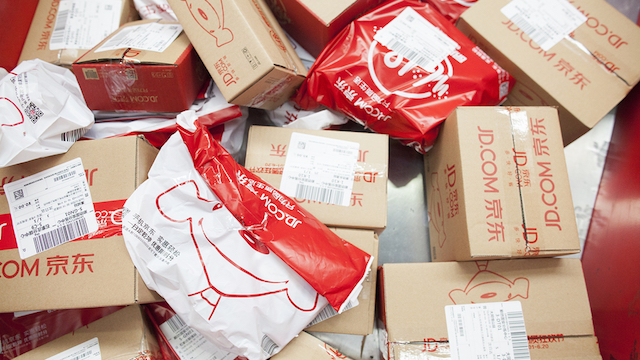
    The JD driverless delivery vehicles can be loaded with up to 30 parcels before autonomously delivering them within a 5km radius. The vehicles can plan routes, avoid obstacles and recognise traffic lights.

    The vehicles have locked boxes so each customer’s purchases are kept separate. Once the robots reach their destination, facial recognition technology enables customers to easily and securely collect their parcels from the correct locker.

    When running at full capacity, the two delivery stations, operating with a half-half split between robots and human couriers, can deliver up to 2000 packages a day.

    The JD driverless delivery vehicles are part of the company’s Boundaryless Retail vision, in which consumers can buy whatever they want, wherever and whenever they want it.

    “As China’s largest retailer, JD is in the unique position of being able to research and develop, and commercially deploy, innovative new technology that is shaping the future of shopping worldwide,” said Chen Zhang, JD’s chief technology officer.

    “As JD opens its technology up to other companies and industries, the features that we’ve already rolled out in China from automated warehouses to virtual shopping are going to be enjoyed by consumers everywhere,” he said, referring to the company’s Retail as a Service strategy.

    CES debut

    The opening of the smart delivery stations comes days before JD attends its first Consumer Electronics Show in Las Vegas, Nevada – the world’s largest event for the latest technology, innovation and creative thinking.

    The company will showcase cutting-edge technology which is changing the way consumers shop in China, and which it says will revolutionise global commerce. Visitors will be able to see how JD uses its drones to deliver consumer goods and medical supplies to remote areas in China, and catch a glimpse of the world’s first fully-automated fulfillment centre. They will also see how underground urban logistics will make shopping more convenient than ever, and fundamentally alter how cities work.

    This year, CES attendees will be able to see JD’s futuristic technology up close and even try some of it for themselves at the company’s interactive booth.

    Aside from drones and delivery robots, visitors will be able to experience drone flights in virtual reality, as well as JD’s augmented-reality fitting and styling software. They will also see how JD is developing Internet of Things technology that enables consumers to remotely control the smart devices in their homes, even from their cars.

    JD will also give people the chance to try a special exoskeleton worn by staff in JD warehouses that makes lifting heavy objects easier.

  • Seoul launches zero-fee digital payment system

    Seoul launches zero-fee digital payment system

    The city of Seoul has moved to ease the transaction-fee burden on small and medium-sized businesses (SMBs) by launching the “Zero Pay” zero-fee digital payment system. The system has been set up in partnership with banks and fintech firms in response to shop owners paying excessive proportions of their monthly sales into credit-card transaction fees.

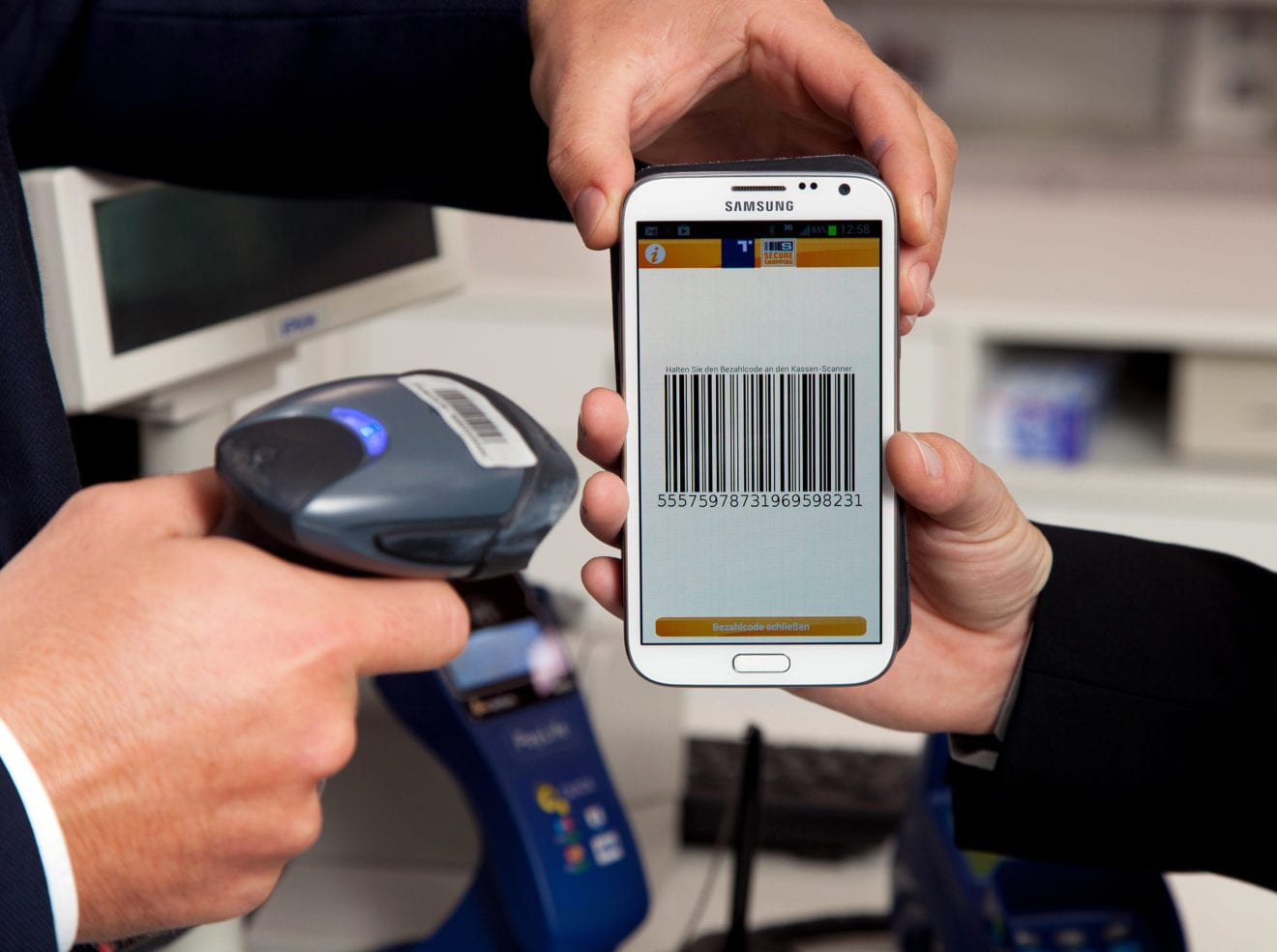
    Twenty banks and digital payment firms – with the notable exclusion of KakaoPay, South Korea’s most popular mobile payment service – are participating in the zero-fee digital payment system, which is digital-wallet activated via QR codes through which money is transferred directly between bank accounts.

    Businesses with annual sales less than KRW800 million (US$708,820) will not be charged transaction fees, while those with higher takings will be charged fees well below the credit card industry standard of 2.2 per cent.

    “If consumers and citizens use Zero Pay whenever possible, it will be a great help for self-employed businessmen,” said Seoul city mayor Park Won-soon.

    Around 16,750 stores have signed on to the Zero Pay program so far.

  • Retailers to lose US$130 billion from card-not-present fraud: Juniper

    Retailers to lose US$130 billion from card-not-present fraud: Juniper

    Increasingly complex card-not-present fraud will cost retailers US$130 billion globally in digital sales over the next five years. A Juniper Research study predicts that retailers’ slow pace in keeping up with new fraud prevention requirements will allow cybercriminal practices to become more widespread as more and more consumers shop online. It observes that established point-of-sale vendors will need to move towards mobile POS technology in order to expand their reach into fresh markets and reduce their exposure to card-not-present fraud.

    “A layered fraud detection and prevention (FDP) solution naturally helps directly preventing fraud, but it also offers major gains in terms of recovering potentially lost revenue through false positives,” said the report’s author Steffen Sorrell. “This is something about which retailers remain undereducated, and has allowed fraudsters to capitalise on relatively low FDP spend”.

    An implication of the Juniper research is that a low understanding of FDP investment return is causing the low uptake of the technology. the report anticipates digital payment players will be spending $9.6 billion annually on FDP solutions by 2023.

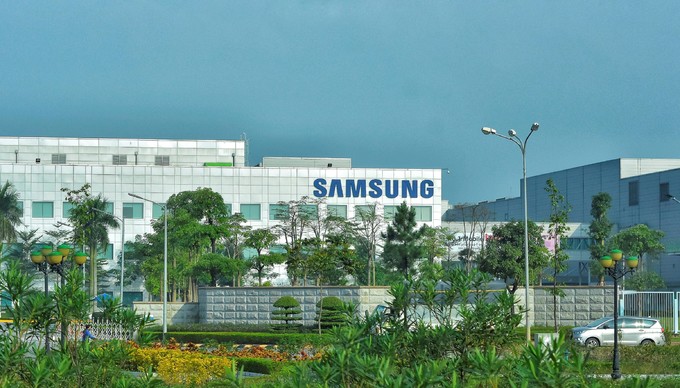
  • Samsung signals big 5G equipment push, again, at factory

    Samsung signals big 5G equipment push, again, at factory

    Samsung Electronics Vice Chairman Lee Jae-yong’s first appearance in the field this year was to celebrate the start of production at a 5G network equipment factory Thursday. His field visit comes as the company puts more weight this year on the 5G network-equipment business, which involves components used in 5G networks. These components are supplied to telecommunications companies.

    Lee and several other top executives, including Koh Dong-jin, CEO and president of the IT & mobile division, were present at the celebration ceremony held at the company’s factory and office complex in Suwon, Gyeonggi.

    “The 5G market is a new field, and we have to build competence with the mindset of a challenger,” Lee told employees during the event.

    Lee and the team of executives stopped by the cafeteria of the complex for lunch, resulting in posts on Instagram featuring Lee and employees.

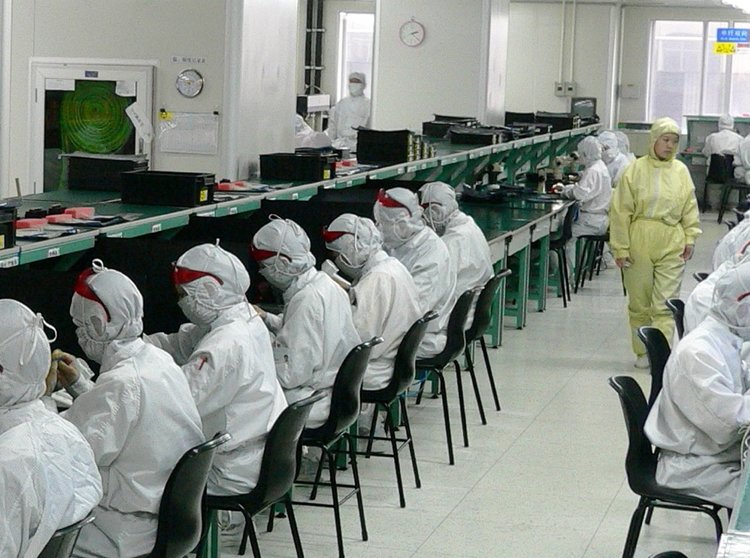
    The manufacturing line for 5G equipment in Suwon is the first in the industry to be designed using “smart factory” principles. It utilizes 5G connections to enhance productivity and reduce the rate of defects.

    The company originally manufactured 5G network equipment in Gumi, North Gyeongsang, but had the production line relocated to Suwon, the site of its R&D center. This was done to help create synergies between the manufacturing and R&D facilities, said a spokesman.

    Samsung signaled last August that 5G connectivity is one of its four growth engines for the future when it announced a plan to invest $161 billion by 2021.

    The business area is receiving considerable attention from global technology companies. 5G connectivity is vital not only to telecommunications in the future, but will also be an essential component of other, related state-of-the-art technologies, such as autonomous cars, AI-powered robots and virtual reality.

    Samsung’s presence in the global telecommunications equipment market is relatively low, with a share of around 11 percent for fourth-generation LTE equipment, according to market research firm Dell’Oro. The larger players include Huawei, Ericsson and Nokia, all with shares of more than 25 percent.

    The company’s current goal is to hit a 20 percent market share in the 5G equipment market next year.

    Samsung has been expanding its client base for 5G equipment mainly in Korea and the United States. Names on the list include SK Telecom, KT, AT&T and Verizon. Samsung hopes to leverage those client relationships to attract other customers.

    The company plans to release the Galaxy S10 in March. It will be its first smartphone to support 5G connections.

    Kim Young-ki, Samsung’s president of network business, said at an event last November that the company will invest a total of $22 billion to develop 5G-network technology.