Retail News CRM

Tag: Technology

  • Wearables are pivoting from fitness to wellness

    Wearables are pivoting from fitness to wellness

    The wearables market has grown over the past decade, and now a new generation of tech wearables is looking to differentiate itself by looking to the buzzy wellness industry for growth. The industry and definition of wellness has expanded to incorporate aspects of mental health, fitness and physical health, beauty and more, resulting in a new class of consumerism and ample opportunity for companies to tap into it.

    In the past few years, wearables brands Bellabeat, Oura and Motiv have launched, focusing more on a holistic approach to health and less on being performance-oriented.

    Instead of fitness bracelets, they’re packaged as necklaces, rings or water bottles. And, in addition to the usual sleep tracking, heart rate and pedometer functions, their features include guided meditation, menstrual-cycle tracking and integration with Amazon Alexa.

    “You see so many fitness and wellness [wearable] brands right now, and they are uniquely aware of their competitors. They are thinking outside the box in order to be the best,” said Aimee Gaudin, international head of marketing at Smartech stores.

    Smartech itself is designed to bridge the gap between lifestyle and technology.

    In store, it sits between Selfridges’ tech, home goods and lifestyle departments. Currently, Smartech is negotiating with Selfridges to display and sell Motiv rings in Selfridges’ beauty section as a marketing opportunity for the brand, Gaudin said.

    “A lot of high-end department stores focus on fashion and don’t have much tech, so I always [position] our products as a fashion product, but for Motiv, I will [position] it as a beauty product first,” she said.

    Motiv’s customer base runs the gamut from “tech nerds to trendy moms,” according to Tejash Unadkat, CEO of Motiv.

    The company had initially anticipated that it would attract a similar customer base to Fitbit, which is known for its fitness fanatics, but in fact the brand “rarely” attracts them, he said.

    Motiv has consciously marketed itself as a holistic device, with a strategy of being placed in mainstream stores, instead of fitness or early-adopter tech ones, in order to continue to expand its customer base. For example, last month the brand began retailing in Nordstrom in its seasonal health and wellness section, showcasing the sleep-tracking function of the device.

    “Internally, we say the Motiv ring is not a fitness ring but a smart ring that has features around security, convenience and health,” said Unadkat.

    Overall, the wearables market is expected to see $42 billion in sales in 2019, according to Gartner, with $16.2 billion specifically on smartwatches.

    Fitbit earned its first quarterly profit since the third quarter of 2016 in early November by focusing less on fitness and more on mainstream smartwatches.

    Bellabeat, the female-focused wellness wearable, is also delving into the watch category with the launch of Time on Dec. 6, which looks like a classic analog timepiece.

    Since the brand launched in 2013, it has primarily focused on associating itself as a beauty and wellness device, according to Urska Srsen, founder and CEO of Bellabeat.

    “It’s very much a beauty product because beauty is a strong component of women’s wellness,” she said. “We see beauty as a reflection of the love and self-care you invest in yourself.”

    The brand is sold through retailers like Neiman Marcus and John Lewis in the U.K., in addition to its own e-commerce site. Its other smart products include a water bottle and a clip-on device that can also be worn as a necklace or bracelet.

    Bellabeat markets itself to the average woman who is neither a tech early-adopter nor a gadget enthusiast, Srsen said. Instead, they look for women who are equally interested in fashion and beauty as they are in wellness.

    By focusing on the $4.2 trillion dollar wellness market, these brands are attempting to avoid the pitfalls that traditional fitness tracker companies like Fitbit have experienced in the past with slow growth due to a niche focus on performance-oriented devices.

    “This is something we have to make retailers understand,” Srsen said. “Our customers are shopping in wellness and beauty; they aren’t looking in the tech and fitness section. We aren’t just educating retailers on where they should be displayed, but we’re also educating them on a new category around the intersection of tech, beauty, wellness and fashion.”
  • LG U+ CEO says Huawei gear is not a risk

    LG U+ CEO says Huawei gear is not a risk

    LG U+ CEO and Vice Chairman Ha Hyun-hwoi has made it clear that the carrier does not think there are any security threats related to its use of Huawei equipment in its 5G infrastructure. Ha made the statement during a year-end press briefing on Wednesday in Yongsan District, central Seoul, rebuffing claims by some lawmakers that there is a risk of security leaks through the use of the Chinese tech giant’s equipment in the network. LG U+ currently partners with Huawei as well as Samsung Electronics, Ericsson and Nokia for its 5G infrastructure.

    According to Ha, the Chinese IT company has already applied for security certification of its 5G network equipment from an international certifying body in Spain. The CEO added the public will be able to see how secure the equipment is once the evaluations are complete next year.

    “Security concerns apply to every equipment vendor we partner with, not only Huawei, and we need to thoroughly verify all the equipment [we use] is secure,” Ha said. “There are roughly 170 countries that are already using Huawei’s network equipment, and there hasn’t been any security problems reported so far.”

    Locally, Huawei has set up equipment that abides by over 70 security guidelines set by the Korea Internet & Security Agency, according to LG U+.

    The main reason for the carrier taking the risk of using the controversial equipment is because 5G infrastructure needs to be built in conjunction with the existing network equipment for 4G long term evolution (LTE), some of which LG U+ also bought from Huawei. Ha said price, technological competitiveness and the ability to deliver the equipment in a timely manner were also considered when choosing the vendor.

    LG U+ has built 5,500 base stations to service the next-generation 5G network as of Wednesday, while its local competitors have reportedly established less than 1,000 5G base stations.

    On why the mobile carrier is rushing to establish its 5G infrastructure, Ha said, “It is important to have a head start to have a competitive edge in [5G] services considering the quality tests we need to go through before March [when the high-speed network is commercialized for smartphones].”

    Ha said the company invested roughly 4 trillion won ($3.6 billion) to set up its 5G infrastructure, including at 5G spectrum auctions.

    The company said it hopes to take up a larger share of the market, which is dominated by SK Telecom, with 50 percent, and KT, with 30 percent.

    “In July 2011, when we first began the LTE service, our local market share was 17.7 percent, but the share increased to 21.2 percent over time as of the end of October,” LG U+ said in statement. “We think next year could be the best time to shake up the competing structure.”

    The carrier is preparing a 5G-based smart factory service with its affiliates LG Electronics and IT service company LG CNS, targeting enterprise customers. For individual customers, LG U+ is focusing on augmented reality and virtual reality content that can offer an immersive experience of watching sports games and K-pop concerts at home.

    The CEO also commented on speculations that the carrier will acquire paid TV service operator CJ Hello. Ha said it has opened up its options to cable TV operators other than CJ Hello and plans to finalize the deal within the first half of next year. Industry sources, however, still say negotiations between the two parties have nearly come to a close and final results are likely to come out around March.

  • After Flipkart, Walmart eyes another Indian startup that specialises in AI

    After Flipkart, Walmart eyes another Indian startup that specialises in AI

    Walmart Labs India, the local product development division of US retail giant Walmart, last week announced it would hire key tech team from Artificial Intelligence (AI) and data analytics start-up Int.ai — its second acqui-hiring in the country within three months.

    Three engineers — including co-founders Vinay Kumar NP and Praneeth Doguparthy — from Int.ai will join Walmart Labs India.

    They will be part of the health and wellness portfolio under Customer Technology at Walmart Labs, the company said in a statement.

    “We are glad to welcome the Int.ai team to the big Walmart Labs family and believe that their expertise will be a great addition to our data analytics capabilities,” said Hari Vasudev, Country Head and Vice President – Technology, Walmart Labs India.

    This is the second acqui-hiring Walmart Labs India has made — after micro-app startup Appsfly in September where it merged Appsfly’s six-member team into its customer experience engineering group.

    Founded in 2016, Int.ai has invested and built expertise in architecting an analytics automation framework which will support Walmart Labs in developing solutions and supporting large-scale businesses.

    “After working for almost 3 years on it, we are very happy to let you know that our entire team will be joining Walmart Labs, India,” Vinay and Praneeth said in a separate statement.

    “We started Int.ai in the beginning of 2016 with an ambitious mission to build an AI-powered personal data analyst for every business executive,” they added.

    Int.ai developed expertise in blending Machine Learning with data analytics to uncover insights that significantly impact business metrics.

  • TikTok plans to expand in Vietnam

    TikTok plans to expand in Vietnam

    Short-form video hosting service TikTok is planning to step up its Vietnam operations, targeting a wider Vietnamese customer base. TikTok, a product of Bytedance, a Chinese software company headquartered in the U.S., offers a short video sharing application, 15 seconds per video for basic accounts. It’s initial content is primarily lip syncing, dancing, or recording with fancy stickers and other effects.

    The TikTok app has quickly attracted the attention of many young people, particularly at school age, but is yet to appeal to older adults.

    Diep Que Anh, national director of communications for TikTok Vietnam and other emerging markets, said that the application is trying to “age” its content to widen its user coverage.

    It has to do this before it can become an advertising platform that can satisfy the demands of its client brands, some experts and industry insiders have said.

    Not revealing specific numbers, Que Anh estimated that Vietnamese users spend an average of 28 minutes per day on TikTok. Its prime time, when the app sees the highest traffic in the country, is 6 p.m.-8 p.m. every Friday and Saturday.

    The platform is still in its ad-free phase. “There have been brands who have approached us regarding advertising, but we do not intend to monetize our service at the present time,” Que Anh said, adding that they were waiting for the market to mature.

    TikTok has opened its first representative office in Ho Chi Minh City with around 70 employees. Que Anh said this number will continue to grow to several hundred employees.

    “After just one year, Vietnam has become our biggest market in Southeast Asia,” she said.

    According to Que Anh, TikTok now covers Singapore, Thailand, Indonesia, Malaysia and the Philippines.

    The Telegraph reported that in October, after receiving an additional $3 billion in capital from firms led by Softbank, KKR & Co and General Atlantic, Bytedance boosted its valuation to $75 billion, officially surpassing Uber to become the most valuable technology startup in the world.

    The Telegraph and many other newspapers call Bytedance a Chinese tech firm, although Que Anh noted TikTok’s headquarters is in Los Angeles, the U.S., and that its products are already in 150 markets.

    TikTok’s strength in the global advertising market is growing rapidly. According to Google’s ‘Best of 2018’ list, TikTok is the only social networking application named in User’s Choice Awards App of the year, while Facebook, Instagram or Youtube are no longer in the list.

    Some reports estimate that the global audience for this app this year is about 500 million.

    In Vietnam, the most successful content trend of the year – the 2018 AFF Cup, resulted in more than 120,000 videos released on the event, which attracted 54.8 million views.

  • Google Launches New Products and Services for Indonesia

    Google Launches New Products and Services for Indonesia

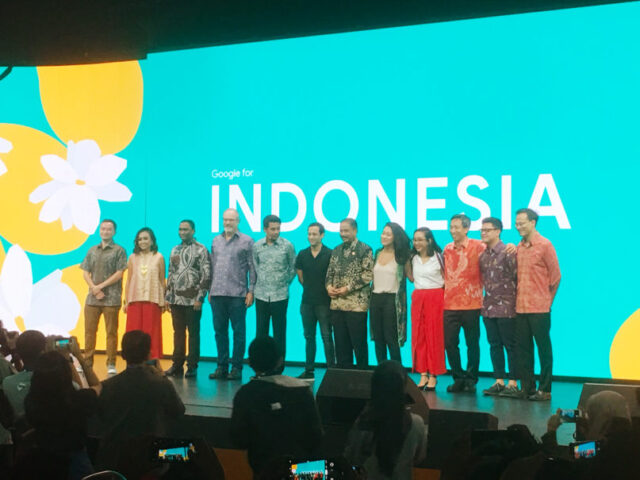
    American technology giant Google announced a slew of new products and services that promise to benefit Indonesia’s rapidly growing digital economy.

    WizPhone 

    What surprised the audience most during the third annual “Google for Indonesia” event in Jakarta on Tuesday was the announcement of the WizPhone. The device, with styling reminiscent of the 1990’s, is the first Indonesian-made mobile phone equipped with Google Assistant, the tech giant’s artificial intelligence-powered virtual assistant.

    The WizPhone, which runs a lightweight mobile operating system known as KaiOS, will be sold at Alfamart convenience stores across Indonesia for only Rp 99,000 ($6.80).

    AI for Indonesian Translations 

    “More than half of online content is available in English, but only 1 percent of web content is available in Bahasa Indonesia,” said Ken Tokusei, director of international search at Google. This means that most internet content may not be accessible to some Indonesians.Tokusei said Google was working with Wikimedia to deploy a neural machine translation system that uses artificial intelligence to translate Wikipedia content from English to Bahasa Indonesia. Relevant search items that only used to be available in English will now also be available in Bahasa Indonesia, he said.

    Google Go

    With the use of artificial intelligence, the Google Go application can now be used to narrate articles on your favorite news websites, which is particularly handy if you are on the go. Just press “play” on any website and Google Go will read the text out loud to you in real time.This feature even works with a slower 2G connection as it is designed to use less data. The app is already available in Google Play and will also come preinstalled with all Android Oreo Go edition devices.

    “Our applications, such as YouTube-Go, Google-Go and Assistant-Go, have been designed to only use 50 percent of the phone memory compared with traditional applications,” Google Indonesia managing director Randy Mandrawan Jusuf said.

    New Features

    Bahasa Indonesia was added as an option in Google Assistant on all Android and iOS devices last April, which allows locals to set alarms or call people in their mother tongue. Scott Huffman, engineering lead for Google Assistant, said many people ask the application to tell them a joke to brighten up their day.One of the new features available in Google Assistant helps you book online transportation. You can tell it where you want to go and the digital assistant will open the Go-Jek or Grab app for you.

    This feature is currently only available in English, but Bahasa Indonesia will be added soon. Go-Jek Indonesia chief executive Nadiem Makarim said his company is looking forward to enabling Google Assistant to directly book rides without the need on to open the Go-Jek app.

    Another new future is a partnership with Indosat, Indonesia’s second-largest telecommunications service provider. Through Google Assistant, Indosat customers can now access their monthly bills and manage and monitor their quotas.

    A third new feature is the accessibility of news update, anywhere, anytime. All you need to do, is say, “listen to the news today,” and your digital assistant will do the rest.

    Advanced Google Maps Features

    Krish Vitaldevara, director of product management at Google Maps, said the navigation feature now has new options to make your daily commute easier. It allows you to follow public bus locations in real time. It also allows you to share the progress of your journey in real time, so if your bus is running late, you can keep your friends or family in the loop about your expected time of arrival. Google Assistant will even be there to remind you when to get off the bus.

    Business Application

    Google My Business is designed to help business owners connect with and attract more customers. Think of it as a social media platform for your business. Business entities now can make posts that will appear on their business profiles on Google Search and Maps, and share updates about products, offers and even events.It also allows customers to follow and interact with businesses.

    According to a Deloitte study, businesses can experience revenue growth of up to 80 percent by having an online presence. Based on this, Google has made it its mission to help Indonesian companies grow their online presence.

    “This country is full of determined and enthusiastic people; people who are ready to take over the world,” Randy said.

  • Dickson Concepts unveils HK$1bn new retail format

    Dickson Concepts unveils HK$1bn new retail format

    Dickson Concepts has unveiled a new luxury retail concept merging the cutting-edge technology with a personalised styling service, to be launched under the Harvey Nichols banner. The first flagship store for the new format will be unveiled at Pacific Place in Autumn next year, with plans to expand the concept globally.

    Dickson Concepts says it plans to invest HK$250 million on the Pacific Place store and up to a further HK$1 billion in technology and technology-related companies, together with additional stores abroad.

    The project has evolved from the strategic partnership between Dickson Concepts and its Harvey Nichols Group subsidiary in the UK, announced in March, in which the parent company gained access to the department store’s digital expertise and will use it to create a seamless inventory across the UK and Hong Kong businesses, allowing customers to shop the entire range and even consult with store staff online. The move has trebled the number of products available to shoppers.

    In a statement, Dickson Concepts said it will build on the Harvey Nichols business based on two formats – one being the flagship new format store just announced, the other the traditional flagship store format which Harvey Nichols Landmark operates under.

    “Together, the two formats will allow Dickson Concepts to maximise and fully develop the potential of Harvey Nichols in different parts of the world.”

    Day and night service

    The new concept store will allow Harvey Nichols to offer “day and night service” for the first time, with in-store stylists serving customers during the day and Harvey Nichols’ UK stylist network servicing the e-commerce platform during the night.

    “The service will allow customers to shop live and obtain styling advice from Harvey Nichols’ stylists in Hong Kong and the UK via instant messaging, photo sharing, and live video streaming, even during late evening in Hong Kong. Products selected can then be shipped directly to the customers’ home, office or our Hong Kong store for personal service and immediate alteration by our expert tailors as maybe required, thereby creating a service that is unmatched by pure online operators,” the company said.

    The live online shopping functionality is powered by global retail technology company Hero, with which Harvey Nichols signed a strategic partnership in June.

    “Technology is core to Harvey Nichols’ new store format and is carefully interwoven into the store to drive the most immersive, enjoyable, and personalised shopping experience possible,” the company said.

    “In its new retail format, Harvey Nichols’ online exclusive offering will be interspersed into the presentation of physical products to provide customers with the full view of the most up to date and exciting products available, while allowing even frequent customers to explore and discover new product stories on every visit. Customers will be able to scan any digital products showcased in the store directly onto their own smartphones, or alternatively be served with an expert team of stylists.”

    The Pacific Place store will feature an online style lounge where dedicated stylists will work to provide each customer with product recommendations built around the customer’s personal taste, needs and preferences.

    “This will allow each customer to be presented with a selection of coordinated outfits that are completely tailored to them, without experiencing the frustrations of surfing through thousands of products available online to find the perfect piece.”

    The new store will be located on the second level of the current Harvey Nichols store at Pacific Place, and will showcase three times the offering. The existing store will be reduced in size from 84,000sqft to 42,000sqft,  resulting in a large reduction in fixed costs and substantially increased sales due to the significant increase in products and brands offered. “As such, the new format will allow Dickson Concepts to maximise sales densities and profits, compete against pure online operators, while offering customers the most curated product and service offering possible,” the company said.

  • LG U+ 5G pass self-drive test on expressway

    LG U+ 5G pass self-drive test on expressway

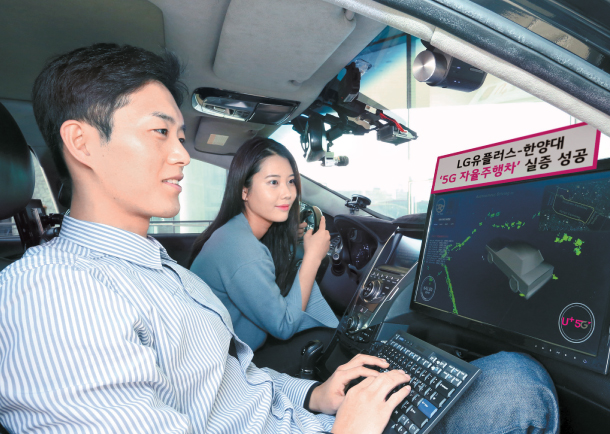
    LG U+ has successfully tested a 5G-powered self-driving vehicle on an expressway for the first time. The mobile carrier announced Tuesday that a self-driving car developed by Hanyang University successfully drove on LG U+’s 5G network for 25 minutes across seven kilometers (4.35 miles) of busy city roads including the Gangbyeon Expressway and Olympic Expressway.

    A low latency video transmitter developed by LG U+ delivered real-time footage of the test drive to Hanyang University. Two cameras attached to the self-driving vehicle recorded the front and rear of the car.

    During the test drive, the vehicle had to react to certain scenarios such as avoiding obstacles and changing course. The vehicle was also tested to see how it reacts to new traffic information such as a blocked parking lot entrance.

    The vehicle was remote controllable, offering added safety measures in case of emergency.

    It was the first time that a self-driving car has completed a test drive on such a scale on an expressway or high-speed road in Korea, according to the company.

    “Self-driving cars that run on the 5G network will make important contributions to solving social problems like traffic volume and accidents,” said Sunwoo Myung-ho, who teaches automotive engineering at Hanyang University.

    “It’s significant that we were able to produce substantial results with self-driving cars through cooperation between industry and academia,” said Kang Jong-oh, who manages future technologies at LG U+. “We will continue to invest our efforts into developing self-driving car technology through cooperation between mobile carriers and the auto industry.”

    LG U+ will continue to work with Hanyang University to polish its 5G-based self-driving car technology.

    Competitors SK Telecom and KT are also actively investing in self-driving technology. KT, for example, successfully tested a self-driving bus at Incheon International Airport last month.

  • Kakao postpones carpooling service

    Kakao postpones carpooling service

    Kakao Mobility announced las week that it would postpone the official launch of its carpooling service after a week of fierce protests from the local taxi industry. The Kakao affiliate started offering a beta version of the service last Friday that was made available to a randomly selected pool of users nationwide. On the same day, it declared that the official launch date of its carpooling service would be on Dec. 17.

    “After much consideration, we decided to postpone the official launch in order to listen and apply a wider range of opinions from taxi drivers, users and many others,” Kakao said in an official statement Thursday afternoon.

    But it did not specify when the official launch will be delayed until. The statement sparked rumors that this may be the start of Kakao indefinitely postponing the service’s official release, which the company denied.

    “What we know for now is that it’s not going to happen this year,” said a Kakao spokesperson. “But this doesn’t mean the delay is going to be an indefinite one. The exact date is still a matter of discussion.”

    The beta service will continue to be offered to random users selected regardless of age and region. Kakao explained that the beta service was being offered to a very limited pool of users, just enough to examine the technology and check the effect it may have on taxi drivers.

    The announcement comes six days after the beta service and the official launch date were released.

    The backlash from taxi drivers has been fierce, with widespread protests that culminated in a 57-year-old taxi driver setting himself on fire in front of the National Assembly in western Seoul on Monday.

    Two days later, a committee that consists of two taxi company associations and two taxi driver labor unions announced plans to stage a protest in Seoul on Dec. 20, with more than 100,000 people expected to attend. This would be the third protest targeted at putting a stop to carpooling services.

    Regardless of Kakao’s decision to postpone the launch, a source from the committee said there is no change to the plans for the protest.

    Taxi drivers also launched a sleep-in protest in front of the National Assembly starting from Wednesday, with members of the four organizations continuing their vigil in shifts through the night.

    Kakao, the local taxi industry and government officials have been in talks for more than half a year, but are still failing to agree on a solution to the carpooling service issue.

    Kakao wants to introduce a carpooling service during busy commuting hours, but drivers say that even if rides are limited to twice a day, they will still eat up around 59 percent of all taxi demand.

  • Hyundai Motor bets 6.7 billion dollars on hydrogen cells

    Hyundai Motor bets 6.7 billion dollars on hydrogen cells

    Hyundai Motor Group said it will invest 7.6 trillion won ($6.7 billion) in fuel-cell electric vehicles (FCEV) by 2030, betting big on hydrogen as the energy source for the future. The group announced what it called its “FCEV Vision 2030” on Tuesday, promising to build production capacity of 500,000 FCEVs yearly by 2030 to take the lead in the fledgling industry. It added that the investment will generate some 51,000 new jobs by 2030.

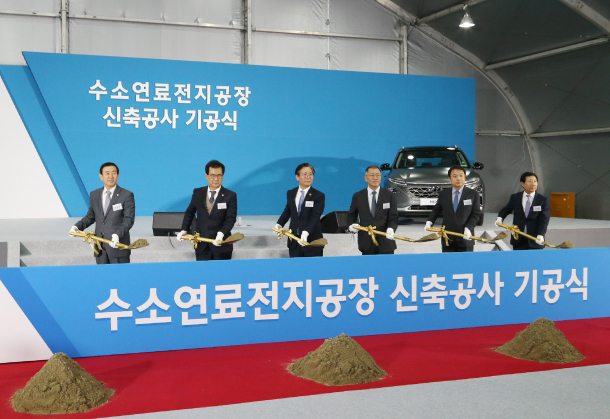
    As a first step, Hyundai Mobis, the auto parts and software affiliate of Hyundai Motor, held a groundbreaking ceremony for its second fuel cell stack factory in Chungju, North Chungcheong, on Tuesday.

    If the factory is completed in 2022, Hyundai Motor Group’s production capacity for fuel cell stack will expand from its current 3,000 units per year to 40,000 units.

    “Hyundai Motor Group will become the first mover in the new hydrogen society that will arrive soon,” said Chung Eui-sun, Hyundai Motor Group’s executive vice chairman, in a speech at the ceremony in Chungju on Tuesday.

    “The group plans to expand the fuel cell stack production capacity to 700,000 units by 2030, including for the 500,000 FCEVs we plan to make by that year.”

    The ceremony was attended by Minister of Trade, Industry and Energy Sung Yung-mo, Hyundai Motor President Chung Jin-haeng and Hyundai Mobis President Lim Young-deuk.

    Hyundai Mobis’ Chungju plant is focused on producing parts for eco-friendly vehicles like hybrid and electric cars.

    Last year, it constructed a new section dedicated to making fuel cell stacks with a capacity of 3,000 units per year.

    The carmaker forecasts that hydrogen will be used as an energy source in shipbuilding, railways and forklifts in the future and said it would start a business supplying fuel cell modules to other companies. The additional 200,000 units of FCEV modules that are not used in Hyundai Motor’s own FCEVs by 2030 will be sold elsewhere, the carmaker said.

    Executive Vice Chairman Chung said the FCEV industry will become a new growth engine for Korea.

    “Ninety-nine percent of auto parts in FCEVs are made domestically,” Chung said, “which is why its growth will have big ripple effects on other companies related to the industry. Through co-investment with partner companies, [Hyundai Motor] will try to build new growth engine for Korea’s future car industry.”

    Currently, some 130 partner companies are providing parts for fuel cell stacks made by Hyundai Mobis.

    Hyundai Motor has been making hefty investments in FCEVs along with rival Toyota. It was the first carmaker in the world to make a mass-produced FCEV model in 2013 called the Tucson ix35. It launched a hydrogen-powered Nexo SUV early this year.

    Since last year, the carmaker has been chairing the Hydrogen Council, a global lobbying group. Other companies represented on the council include Daimler, BMW and Air Liquide.

    The Korean government plans to supply 16,000 FCEVs and build 310 FCEV charging stations by 2022. There are currently only around 10 stations available to the public in Korea.

    China plans to supply 1 million FCEVs by 2030 and construct 1,000 charging stations. Japan plans to supply 40,000 FCEVs by 2020 and build 160 charging stations.

  • Google plans a representative office in Vietnam

    Google plans a representative office in Vietnam

    A senior Google official says the tech behemoth is studying the process of opening a representative office in Vietnam. Google senior vice president Kent Walker told Deputy Prime Minister Vuong Dinh Hue at a meeting Tuesday that the opening of a rep office in the country would follow the principle of ensuring that host country regulations do not contradict the firm’s international commitments.

    A report on the government website chinhphu.vn also quoted Walker as saying that he agreed with the Vietnamese government on the need for cyber-security to ensure a stable society. Google will cooperate with authorities in achieving this goal, he said.

    The rep office announcement came as Vietnam’s cybersecurity law is set to take effect next month. The law requires digital businesses like Facebook and Google to open a representative office in Vietnam.

    Deputy PM Hue said that he appreciated Google’s contribution to a draft decree on guidelines to implement the law and ensure cyber-safety and security.

    “Vietnam’s market advantages and the adaptability of its young workforce will be attractive factors for Google to open a representative office in Vietnam,” he said.

    Meanwhile, a Google spokesperson said on Wednesday: “We remain very excited to see how technology is being used by businesses and people in Vietnam. There are a number of different factors we look at before opening an office, but we have nothing to announce at this time.”

    Vietnam’s Cybersecurity Law, which was passed in June, requires tech businesses to store the data of Vietnamese users in Vietnam, and to provide this data to the Ministry of Public Security upon receipt of requests in writing, in cases where any infringement of the cybersecurity law is being investigated.

    Seventeen U.S. lawmakers in July urged the CEOs of tech giants Facebook and Google to resist changes stipulated by the law.

    However, Vietnam’s Ministry of Foreign Affairs reasserted that the cybersecurity law is designed to protect rights of organizations and individuals.

  • Emart goes digital in high-tech Uiwang store

    Emart goes digital in high-tech Uiwang store

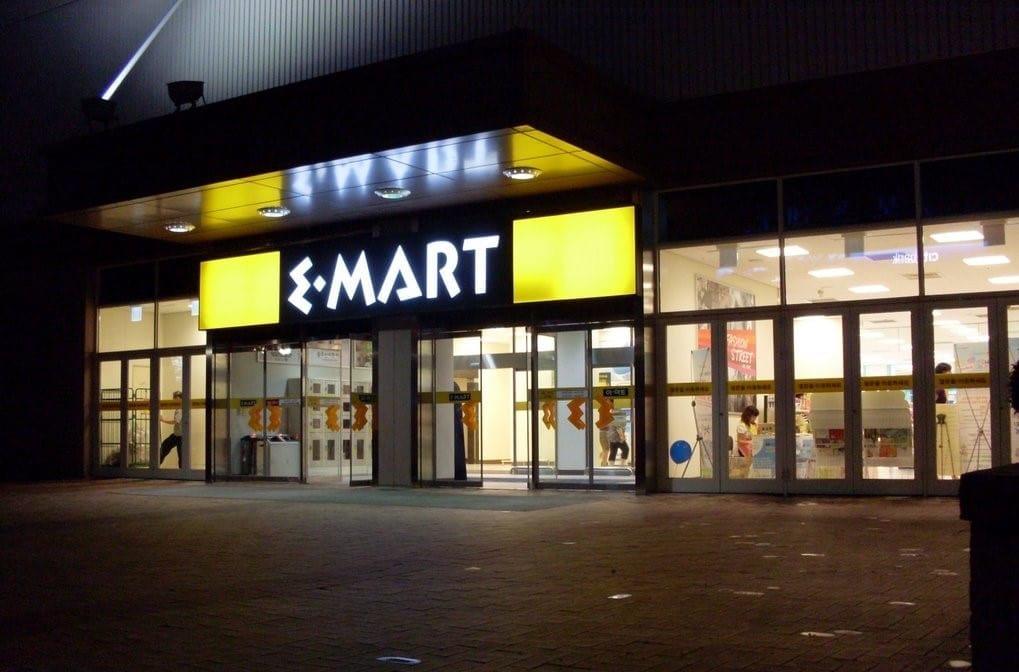
    Emart is going fully digital with its brand new Uiwang branch that will open in Gyeonggi tomorrow. Innovative features of the Uiwang branch – the first Emart store to open in 30 months – include digital displays instead of paper signs and guide robots that can escort customers to desired products. The Uiwang store will span 9,917 square meters (106,745 square feet) across two basement floors in a commercial building.

    “We will introduce a revolutionary format of offline stores that breaks away from tradition in order to meet the challenges of our fast-changing era,” read an Emart report.

    Going paper-free is a big change that Emart hopes will both appeal to customers and help management.

    Price labels will be digitalized and controlled by a central server in the Uiwang branch, allowing store managers to display and change prices with unprecedented ease and speed. The new store will also install digital signage, or electronic displays, alongside elevators, moving walkways and cashiers instead of paper posters for advertisement and notices.

    “By minimizing paper usage, we can provide consumers with a unique shopping experience while practicing green management and boosting productivity,“ read the Emart report.

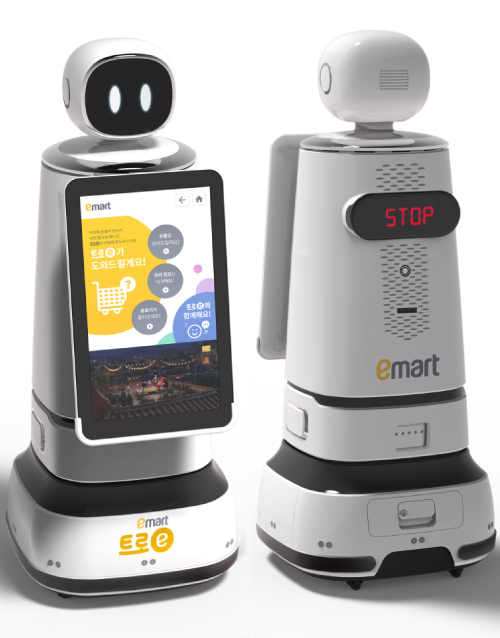
    The new Uiwang store will also be home to Tro.e, an autonomous robot equipped with a 27-inch touch screen that is capable of guiding consumers to desired products and making casual conversation. Like Pepper, a robot the company employed earlier this year at its Seongsu branch in eastern Seoul, Tro.e will only be available for a limited time on a test run at Uiwang.

    Emart developed Tro.e, named after the Swedish word tro, which means trust, together with Future Robot, one of the official robot providers for the PyeongChang Winter Olympics.

    The grocery section of the new store will only be located on the lower floor of the store, while the upper floor will host a variety of affiliated shops including Electro Mart, Pierrot Shopping, Daiz, Boots and a Kakao Friends Store.

    Emart will open a 660-square-meter “Culture Lounge” for customers to read books and purchase beverages.

    “We will continue striving to offer consumers a unique shopping experience with our distinctive products and digital shopping environment,” said a senior manager in charge of development at Emart.

  • Tech, engineering to have great demand for workers in Vietnam: survey

    Tech, engineering to have great demand for workers in Vietnam: survey

    The technology and engineering sectors will see strong growth in human resources demand in Vietnam in the next five years. The growth is forecast by 90 percent of experts polled in a survey recently released by online recruitment website VietnamWorks.

    The survey was done in the second half of this year by polling more than 200 human resources professionals in management positions at multinationals and top Vietnamese companies.

    According to the survey, 62 percent forecast increased demand for arts, design, entertainment, sports, and media workers.

    Forty-two percent said there would be a decline in administrative and clerical work in five years though these are among the top three in terms of demand this year. VietnamWorks said this is because repetitive jobs like these are likely be replaced by machines.

    Fifty-nine percent of respondents believed developments in automation and information technology would be the most influential factors in the labour market in the next five years.

    Mobile Internet and cloud technology would be the next major factor, according to 57 percent, and processing power and big data, according to 54 percent.

    Forty percent said privacy issues and greater awareness of environmental responsibilities would have a great impact on the labor market demand.

    As socio-economic factors alter the nature of jobs, employers will require more sophisticated skills and abilities. The respondents expected cooperating with others, people management, emotional intelligence, and judgement and decision making to be the top cross-functional skills needed in future.

    Gaku Echizenya, general director of Navigos Group, which owns VietnamWorks, said: “The market is experiencing major changes with the fourth industrial revolution. Therefore, businesses need to keep up-to-date with market information from reputable sources to respond promptly to changes, allowing them to set out a strategy to recruit and attract talented people.”

    Employees need to actively educate themselves in IT and digital knowledge, and develop crucial skills such as cooperation with others and people management to increase their competitiveness, he added.

  • Kakao’s carpooling app goes live in beta test

    Kakao’s carpooling app goes live in beta test

    Kakao’s carpooling service was introduced Friday for beta testing and will be officially rolled out Dec. 17. The start of the service comes after months of battling fierce opposition from local taxi services. They staged a strike on Oct. 18, two days after the IT company started accepting applications from carpool drivers.

    With the beta service, the Kakao T mobile app, a platform for all of Kakao’s mobility services from taxi hailing to navigation, was upgraded to enable the “Carpool” button on its main screen. The beta service will not be accessible to everybody.

    “The beta service is aimed at increasing the stability of the technology and collecting opinions,” Kakao said in a statement. “For that reason, it will only be offered to some users.”

    The selection of testers will be random and independent of age and location. Anyone upgrading the Kakao T app Friday will see the new “Carpool” button, but only the selected users will be able to input words in the destination box. Those who weren’t selected will see an image with the words “This service will launch soon.”

    The base fare is set at 3,000 won ($2.68) for the first 2 kilometers (1.24 miles), the same as for regular taxis. After that point, the fare will increase proportional to the driving time and distance. The company did not disclose details, but a spokesman said the cost will be equivalent to around 70 to 80 percent of regular taxi fares.

    Kakao’s carpool drivers are allowed to offer carpooling services twice a day at any time of the day. The twice-a-day rule is due to the domestic law that limits carpooling to commuting purposes. More than 50,000 drivers who met Kakao’s requirements have been selected so far.

    A government-led task force composed of lawmakers from the ruling Democratic Party, public officials and taxi companies met Friday to discuss carpooling. Executives from Kakao Mobility, the affiliate in charge of the IT company’s transportation services, decided to launch the same day,

    Kakao acquired the Luxi carpooling app in February and completed preparations for its service later in the year.

    The official launch was postponed previously as the task force failed to reach an agreement on the service’s details, including the fare and limits on use. During a task force meeting held Thursday, some government officials opposed Kakao’s request to release the service that same day, demanding more time to find common ground.

    Korea has been a difficult place for carpooling. Uber closed down its service in 2014, and Seoul’s local government questioned the legality of carpooling app Poolus in 2017.

  • For first few years, Koreans will be biggest users of 5G

    For first few years, Koreans will be biggest users of 5G

    Korea is forecasted to have the highest proportion of fifth-generation (5G) smartphone usage in the world over the next couple of years, a market tracker said on Sunday. According to Strategy Analytics’ Service Provider Group, the adoption rate of 5G smartphones in Korea is expected to reach 5.5 percent in 2019 and 10.9 percent in 2020, which will be the highest level among major global nations.

    The estimate is based on the fact that Korea is to commercialize 5G services next March, making it the first country in the world to do so, with tech giant Samsung Electronics planning to release a model featuring the high-end technology, the market tracker said.

    By 2020, 5G will account for 4.7 percent of total market share in the United States, 5.2 percent in Japan and 2.8 percent in China, Strategy Analytics said, adding that its penetration rate would increase after that date in line with the broader establishment of the network.

    In 2021, the adoption rate of 5G smartphones is expected to begin to surge in major countries, with numbers hitting 27 percent in the United States, followed by 21.3 percent in South Korea, 19.7 percent in Japan and 8.5 percent in China.

    “The 5G standard will become the mainstream of the global network industry in years to come,” said an industry insider.

  • Indonesia’s Go-Jek Starts Trial Launch in Singapore, Challenges Grab

    Indonesia’s Go-Jek Starts Trial Launch in Singapore, Challenges Grab

    Indonesian ride-hailing firm Go-Jek kicked off a trial launch in parts of Singapore on Thursday and plans to roll out an array of services through its app in early 2019, challenging dominant player Grab in the small city-state. Both Go-Jek and Grab are raising billions of dollars and investing aggressively in the race to corner a bigger share of Southeast Asia, as more of the region’s 640 million consumers go online and use smartphones to shop, commute and make payments.

    Go-Jek, backed by the likes of Tencent Holdings, Alphabet Inc’s Google and Singapore state investor Temasek Holdings, is initially launching ride-hailing service in parts of Singapore after forming a partnership with DBS Group Holdings, the region’s biggest bank.

    “As this is a new product, we will obviously give promotions, but at the end of the day, it shouldn’t only be pricing that differentiates our services,” Go-Jek’s president, Andre Soelistyo said on Thursday.

    Grab, backed by Japan’s SoftBank and Chinese ride-hailing firm Didi Chuxing, bought Uber Technologies’ loss-making Southeast Asian business this year, marking the first big consolidation in the region.

    Following this, Singapore’s anti-trust watchdog slapped Grab and Uber with fines and imposed measures to open up the local market to competitors after concluding that their merger had driven up prices.

    Go-Jek’s executives declined to give any details on how many drivers it had signed up or a target for market share in Singapore but said payment services would be launched later.

    Started in 2011 in Jakarta, Go-Jek has evolved from a ride-hailing service to a one-stop app through which its customers can make online payments and order everything from food, groceries to massages.