Tag: telco

  • The Snapdragon 735 chipset could lead to lower prices for 5G phones

    The Snapdragon 735 chipset could lead to lower prices for 5G phones

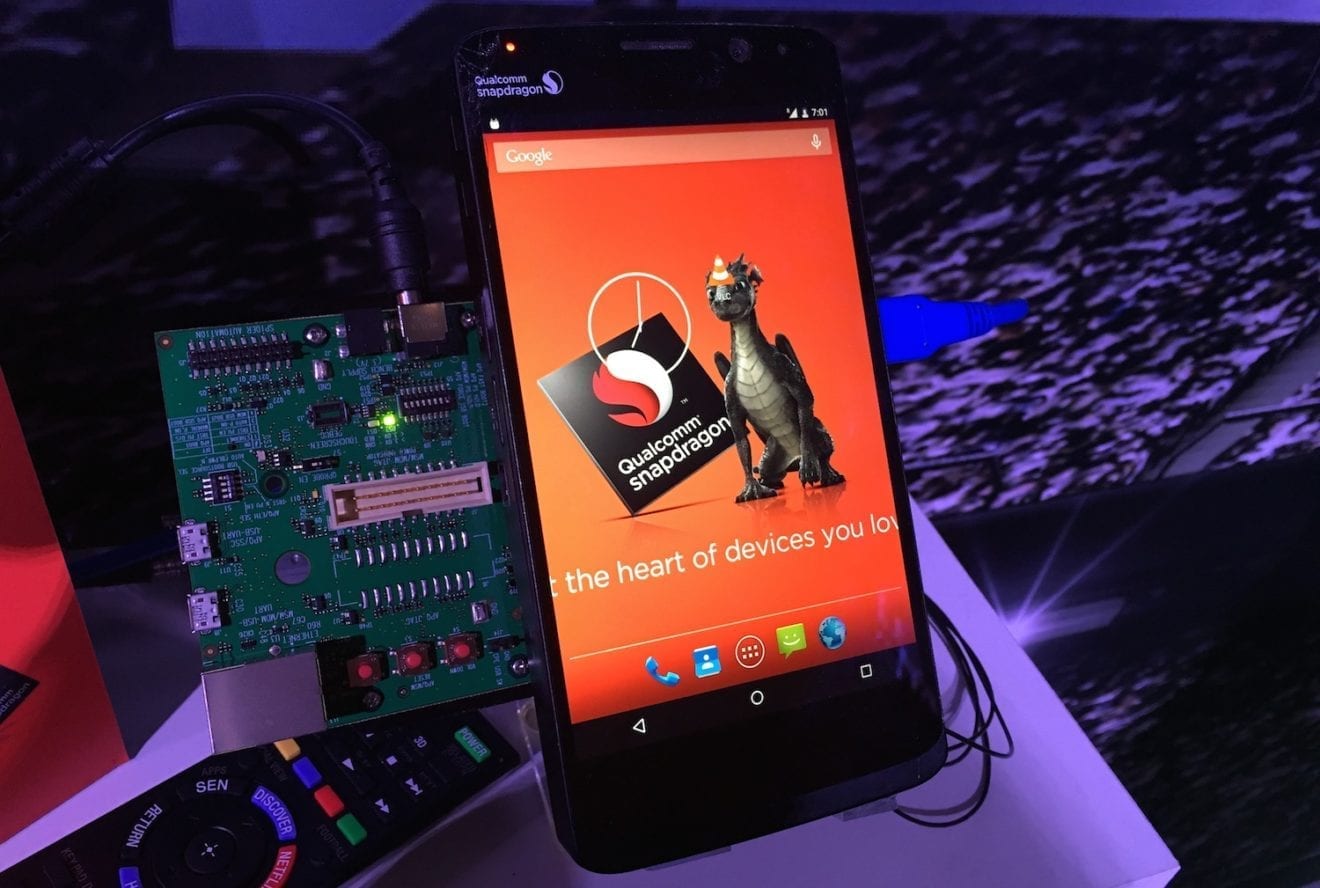
    Everyone is awaiting Qualcomm’s introduction of its next-generation flagship SoC, the Snapdragon 865 Mobile Platform. This could take place sometime next month. Meanwhile, you might recall that six months ago the chipmaker unveiled the Snapdragon 730 chipset and the Snapdragon 730G gaming-focused chip.

    The Snapdragon 735, while designed by Qualcomm, will apparently be manufactured by Samsung using its 7nm EUV LPP (Low Power Plus) process. The lower the process number, the higher the number of transistors that can fit inside an integrated circuit. By adding transistors, chips become more powerful and energy-efficient. By next year, both Samsung and rival TSMC should be rolling 5nm chips off of its assembly line (more on this later). The EUV stands for extreme-ultraviolet lithography, a technology that allows chip dies to be more precisely marked up for transistor placement; this will also allow more transistors to fit inside a chip. When you consider that Huawei’s Kirin 990 SoC with an embedded 5G modem contains about 10.3 billion transistors, you can understand how precise chip production must be.

    The Snapdragon 735 SoC is rumored to feature eight cores with a pair of Cortex-A76 cores to do the heavy lifting; the remaining six Cortex-A55 cores will be earmarked for general housekeeping. The latter will reportedly run at a clock speed of 1.73GHz, and the two high-performance cores at 2.26GHz and 2.32GHz. If the rumored specs are legit, the chipset will come with the Adreno 620 GPU and support up to 12GB of RAM and 4K video at 60fps. And there is good news for consumers; the Snapdragon 735 SoC is said to be 5G ready, which means that support for the next generation of wireless will be available on more mid-range (and less expensive) phones.

    It should be noted that Qualcomm has yet to introduce the component. The Snapdragon 735 SoC will replace the 730 which is produced using the 8nm process and ships with the Adreno 618 graphics processor. Some features of the current chip, such as support for the new Wi-Fi 6 standard and the multi-core Qualcomm AI Engine, will undoubtedly be found in the Snapdragon 735 chipset. Qualcomm said earlier this year that it would bring 5G support to its mid-range series 7xx and series 6xx Snapdragon chipsets.

    As for the eagerly awaited Snapdragon 865 Mobile Platform, the other day Chinese luxury goods manufacturer, 8848 was the first to announce a phone that will be powered by Qualcomm’s new flagship chipset. The Titanium M6 5G will ship next year with the Snapdragon 865 SoC inside. While Qualcomm could introduce the chip next month, it won’t be found inside any consumer devices until next year.

    What we know about the Snapdragon 865 is that Samsung’s foundry unit will manufacture it using Samsung’s 7nm EUV process. The Snapdragon 855 and the overclocked Snapdragon 855+ chipsets were both produced by the world’s largest independent foundry, Taiwan Semiconductor Manufacturing Company (TSMC) using TSMC’s 7nm process. 2021’s Snapdragon 875 Mobile Platform will be produced by TSMC using its new 5nm process. At 5nm, integrated circuits are packed with as many as 171.3 million transistors per square millimeter.

    Both Samsung and TSMC have roadmaps taking production to 3nm. The latter is reportedly working on ways to keep increasing the number of transistors inside a chip to increase both power and energy consumption. Just to show you how far we’ve come, the Apple iPhone 4, released in 2010, featured Apple’s A4 SoC under the hood. That chip was designed by Apple, equipped with ARM’s Cortex-A8 CPU, and built by Samsung using its 45nm process.


  • Mavenir extends alliance with Vodafone Idea to fortify presence in India

    Mavenir extends alliance with Vodafone Idea to fortify presence in India

    This partnership will focus on three thrust areas. First, building a universal secured Cloud capable of hosting multiple tenants and third-party applications. Second, building a fully automated platform that enables self-provisioning of various workloads. Third and most importantly, setting up a joint innovation lab and a team that will consistently innovate on Chipset, Operating System, and work at the Application level to offer unique APIs and enables new use cases and delightful experience to VIL customers.

    “Vodafone Idea has the largest Edge Cloud deployment in India. Our partnership with Mavenir will enable continued innovation in optimizing data path algorithms for VOLTE. We look forward to setting up a joint lab and an agile team that will enable onboarding third-party applications on our distributed cloud”, said Vishant Vora, CTO, Vodafone Idea Limited whose team is spearheading this initiative.

    The partnership has led to the contextualization of software algorithms, leading to unprecedented efficiencies. VIL and Mavenir partnership has been extended to include collaboration with chipset manufacturers and Operating System providers. The stack being deployed is all open sourced and benefits from consistent innovation led by global open community.

    “Next frontier in our partnership will be to extend the platforms deployed to host new applications serving IOT and CDN use cases. We plan to build platforms that can host varied OS and varied workloads. We aim to automate deployment and assurance and thereby extend self-provisioning capability for VIL customers. We are excited to set up a joint lab and team, consistently innovate and work with VIL and its customers in an agile manner to turn around new solutions fast,” said Pardeep Kohli, President and CEO Mavenir.

    Mavenir has partnered with VIL in IMS-VOLTE deployments. In future, the partnership aims to extend the platform being deployed for IMS-VOLTE applications to host other Captive and third-party workloads. Mavenir will partner with VIL to extend its distributed Network cloud as secured platform to multiple retail, SME users and start-ups.

  • Vietnamese operators to begin 5G testing as of 2019

    Vietnamese operators to begin 5G testing as of 2019

    Starting from the capital, Hanoi, the country aims to upgrade its mobile network along with the southern commercial hub of Ho Chi Minh City.

    “Vietnam should be among the first nations to launch 5G services in order to move up in global telecom rankings,” said Nguyen Manh Hung, the country’s minister of Information and Communications.

    Hung, previously the chairman and general director of Viettel Group, wants to reacquire Vietnam’s rank among the top countries worldwide in terms of major exporter of 5G gear through boosting the development of local equipment. He also plans to make the licensing and approval process easier for Vietnam’s IT sector.

    Several partnerships have been made in order to facilitate the procedures: VNPT has teamed up with Nokia on 5G, while MobiFone signed an agreement with Samsung Electronics to cooperate on 4G and 5G networks earlier this year.

    In 2017, Ericsson held the first 5G demonstration in the country in partnership with the Vietnam Authority of Radio Frequency Management.

    While MobiFone and VNPT are on the list of state-owned companies slated for privatization by 2020, Viettel is to remain in government hands.

  • Telstra launches first 5G device in Australia

    Telstra launches first 5G device in Australia

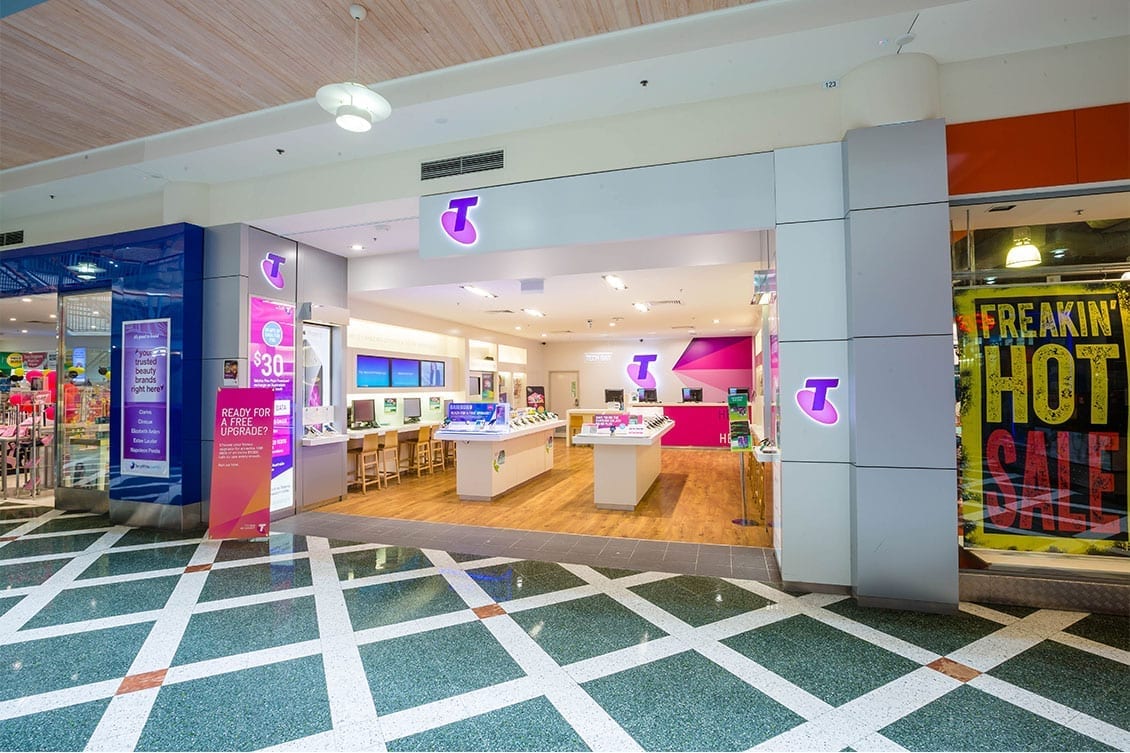
    The Australian-based company began marketing its broadband plans for the new HTC 5G Hub and will soon start selling the Samsung Galaxy S10 5G. They also plan to introduce their mobile plans for the new technology by the end of June.

    The company said it would offer free 5G access for around 12 months.

    “We have already started building our 5G coverage in some areas and, as we did with 3G and 4G, we will progressively roll out the new technology over time,” said Telstra’s chief executive officer Andrew Penn in a statement.

    The operator is currently working on rolling out 5G in ten cities and plans to expand the coverage to around 35 other cities within the next 12 months.

    Telstra turned on 5G base stations back in December 2018 in some parts of Sydney and Melbourne all of which amounted to 187 5G-compatible sites in the two cities.

    They acquired 3.6GHz spectrum for AUD 386 million. The company claims to have around 60Mhz of contiguous 5G spectrum in Australia’s major capital cities and around between 50 to 80Mhz of contiguous spectrum in regional areas.

    “Our launch of the HTC 5G Hub is the moment 5G becomes a reality for Australian consumers,” said Penn.

    “Since 2016, we have been working with some of the world’s leading technology brands to ensure Australians are among the first in the world to be able to access 5G.”

  • Cinia and MegaFon to develop new Arctic telecom infrastructure

    Cinia and MegaFon to develop new Arctic telecom infrastructure

    The arctic is one of the most environmentally protected areas in the world, making permits for laying cables to be very difficult to obtain.

    Ari-Jussi Knaapila, CEO of Cinia, said, “The Arctic cable will contribute to the socio-economic development of the Arctic areas. The cale is an environmentally sustainable way to boost global, regional and local economies. At the same time, the cable will connect three continents, covering approximately 85 percent of the world’s population.”

    The new route will offer low latency, physical diversity and high network availability which will serve the markets of Europe, some parts of Russia, Japan and North America.

    CEO of MegaFon, Gevork Vermishyan said, “MegaFon is proud to join a major international infrastructure project that will not only connect several continents via the Arctic but also will benefit MEgaFon as a leader of digital opportunities by enabling the development of network infrastructure for customers in the Arctic region and the Far East.”

  • Viettel Global reports profit surge

    Viettel Global reports profit surge

    Telecom giant Viettel Global Investment JSC has made VND1.17 trillion ($50.5 million) in pre-tax profits after reporting a loss last year. Viettel Global, which covers overseas investments by military-run Viettel Group, had made a VND15.77 billion ($681,000) loss in the same period last year, according to the company’s audited consolidated financial statements.

    Revenues in the first six months reached VND7.9 trillion ($341 million), down 1.5 percent year-on-year, but a sharp decrease in the cost of sales improved profits, the company’s management board said.

    In the first half of the year, the company focused more on its core business of telecommunications, raised its average revenue per user (ARPU) and cut down the sale of equipment with low-profit margins. This raised the company’s operating profit margin (excluding financial income) to 35.3 percent from 26.4 percent in the same period last year.

    Revenue in Southeast Asia, especially driven by growth in the Cambodian market, accounted for 53 percent of Viettel Global’s revenue in the first six months, followed by Africa with 33 percent and South America with 14 percent.

    Viettel Global was established in 2006 to spread Viettel Group’s presence in foreign markets. It currently operates in ten markets, namely Cambodia, Laos, Timor Leste, Mozambique, Burundi, Haiti, Peru, Cameroon Tanzania and entered Myanmar last year.

    Viettel Global said it has plans to enter new markets, mainly in ASEAN.

    Viettel Global is one of the largest enterprises on Vietnam’s Unlisted Public Companies Market (UPCoM) in terms of both asset size and market capitalization. As of June 30, the company’s total assets were VND59 trillion ($2.54 billion), of which equity accounted for VND25 trillion ($1.08 billion).

  • First 5G network broadcasts in Vietnam

    First 5G network broadcasts in Vietnam

    Telecom giant Viettel broadcast its first 5G network Saturday from its network of 5G base stations in Ho Chi Minh City.

    “The official broadcast of 5G in Ho Chi Minh City is an important milestone in Viettel’s strategy to make Vietnam one of the first countries in the world to commercialize 5G services,” Viettel deputy director Tao Duc Thang said in a statement.

    The 10 stations will be used by Viettel, the nation’s largest telecom firm, to comprehensively check and assess its 5G service before launching it commercially next year.

    Military-run Viettel installed the first 5G station in Hanoi early this year and made the first 5G phone call in May. It was the first firm in the country to receive permission to trial 5G services in January, followed by MobiFone.

    Last November, Information and Communication Minister Nguyen Manh Hung said at a conference that Vietnam should test 5G in 2019 and ensure nationwide coverage by 2020.

    “Vietnam should be one of the first countries to launch the network, at least in Hanoi and HCMC,” he had said. The country had been one of the last in Southeast Asia to roll out 4G services.

    5G is said to offer speeds 100 times faster than 4G, primarily used for smartphones and other similar devices. 5G is also expected to support new applications like remote medical procedures and autonomous driving.

  • Google shuts down service that helped carriers provide better coverage

    Google shuts down service that helped carriers provide better coverage

    Google has shut down a service that was aimed at helping carriers around the world improve their coverage, by providing them with aggregated data from Android devices. The closure comes at a time of heightened concerns about data privacy across the industry.

    Google’s Mobile Network Insights service was launched in 2017 as a free tool for wireless providers around the world that allowed them to see weak spots in their network coverage. The service was “essentially a map showing carriers signal strengths and connection speeds they were delivering in each area.”

    Thee data shared by Google were aggregated and anonymized, meaning that carriers didn’t get information about individual users, but it was still a valuable tool for providers, as they could see stats about the performance of their network in different regions. The platform also displayed stats relating to competitor services, which were not identified by name.

    The data for Google’s Mobile Network Insights was sourced from devices running Android, which totals to about 75% of the world’s smartphones, but was limited only to users who had “Location History Sharing” and usage and diagnostics enabled on their Google accounts. Despite this, Google opted to discontinue the service in April, without citing any formal reasoning behind the decision. Carriers around the world were simply notified of the closure.

    A Google spokeswoman has confirmed for Reuters that the service is now, indeed, discontinued and that changing “product priorities” was the main driving factor behind the decision. However, people with knowledge of the decision claim that Google’s move was motivated by “concerns about data privacy,” and possibly to avoid further scrutiny from lawmakers.

  • Vodafone named ‘national retailer of the year’

    Vodafone named ‘national retailer of the year’

    Vodafone was crowned ‘national retailer of the year’ at the Australian Retailers’ Association’s annual awards in Melbourne on Thursday.

    The telecommunications company said it had made significant improvements to its business and customer experience since a low point a few years ago by making common sense decisions and backing its people.

    This was a fitting result, given this year’s theme, ‘Retail Morphosis’, which is all about how retailers adapt to change in order to succeed.

    “Although the retail landscape will continue to be disrupted by emerging technology and international competitors, it is truly gratifying to see the industry filled with hardworking retailers who continue to power retail through innovation and adaption,” Russell Zimmerman, executive director of the ARA, said.

    Retailers including Petstock, Bakers Delight, Birdsnest, Coles Group and Biome were recognised for their achievements in innovation, marketing, customer experience and more. The winners in all 12 categories are listed below.

    The awards took place at Myer Mural Hall on Thursday morning, and featured fashion parade capturing the history of Australian retail from the 1920s to the 1990s, with outfits curated by Myer and hair and make-up created by Chiseled Hair.

    Consumer futurist Amanda Stevens delivered a keynote speech on what the latest consumer research insights reveal about the opportunities for growth in the sector, and host Steve Plarre, CEO of Ferguson Plarre Bakehouses, entertained the audience with a rendition of ‘Uptown Funk’.

  • AT&T launches 5G service in New York City

    AT&T launches 5G service in New York City

    After Sprint and Verizon, it’s AT&T’s turn to bring 5G to another US city. The carrier has just announced that starting today, customers in New York City will be able to use its 5G service if they own a compatible device.

    However, AT&T’s 5G network won’t cover the entire city and it will be available in limited areas initially. Sadly, unlike other US carriers, AT&T wouldn’t list areas in New York City where customers will be able to access its so-called 5G+ network.

    For the time being, select customers in NYC can access AT&T’s 5G+ network using the Samsung Galaxy S10 5G on the carrier’s AT&T Business Unlimited Preferred plan. As such, the AT&T 5G service is only for business customers, at list initially.

    NYC is the 21st city in the US with AT&T 5G, but the carrier announced plans to offer nationwide 5G in the first half of 2020, so there’s more to come.

  • JD takes stake in Beijing Digital Telecom

    JD takes stake in Beijing Digital Telecom

    Chinese online retail platform JD is acquiring 9 percent of Beijing Digital Telecom.

    The consumer electronics retailer, which operates from around 3000 physical stores throughout China selling predominantly phones and computers, will expand JD’s offline presence within the market, including lower-tier cities.

    The transaction value has not been disclosed, as it falls below the amount that requires public notification under US Securities and Exchanges Commission regulations.

    At the same time, Beijing Digital Telecom is entering a joint venture with a network-technologies developer and provider Suqian Jiashi, which is wholly owned by JD. The firm is investing RMB191 million (US$28.5 million) for a 49 percent stake, while Suqian Jiashi is putting in RMB 204 million ($29.6 million).

  • Singapore Telcom Debuts Mobile Payment in Japan

    Singapore Telcom Debuts Mobile Payment in Japan

    Singtel launches its cross-border mobile payment capabilities in Japan, joining a handful of sectors outside of finance making a run at market share in the payments business.

    Singtel’s VIA, cross-border mobile payment alliance in Asia, debuts first in Tokyo’s Haneda Airport before expanding to the rest of the city and beyond in popular tourist locations such as Osaka, Kyoto, and Hokkaido. NETTERS is the participating network enabling payments.

    The VIA network enables tourists from Singapore (mobile wallet: Dash) and Thailand (mobile wallet: AIS Global Pay) to make payments in Japan using QR code in the local currency at a «competitive rate», the release said.

    In Southeast Asia, digital payments are gaining widespread acceptance and fast replacing cash as the preferred transaction mode,» said Arthur Lang, CEO of Singtel’s International Group, adding that announcements of more wallets joining would be made in the coming months.

    This is a big step in further bridging the digital economies of Japan and Southeast Asia, facilitating travel for our customers and connecting Japanese merchants to more consumers, he added.

  • Judge’s ruling is bad for Qualcomm

    Judge’s ruling is bad for Qualcomm

    Back in May, Judge Lucy Koh ruled that Qualcomm’s business practices are anti-competitive. The judge, already known for presiding over the iconic Apple v. Samsung patent trial sat through the FTC v. Qualcomm non-jury trial held earlier this year. Judge Koh found that the chipmaker’s business practices violated antitrust laws. These included Qualcomm’s “no license, no chips” policy and its failure to license standard-essential patents to competitors at a fair, reasonable and non-discriminatory (FRAND) manner. These are patents that companies need to license so that their products can meet technical standards. Qualcomm was also called out by Judge Koh for charging royalties based on the retail price of a phone instead of just the cost of its chips.

    Of course, Qualcomm says that it will appeal the decision since it requires the company to renegotiate its contracts and licensing agreements with manufacturers. Qualcomm is also complaining that all of these negotiations can make it difficult for it to complete talks with phone producers who want to purchase Qualcomm’s 5G modem chips. And the ruling would force the company to work out deals with its rivals over licensing of its standard-essential patents.

    Qualcomm also is seeking a stay of the decision until it exhausts the appeals process. This way it doesn’t have to go through the whole exhaustive renegotiation process and then reverse the new deals if it wins on appeal. Even though that might make sense to some, Judge Koh has denied Qualcomm’s request. A spokesman for the chipmaker says that it will immediately request a stay from the 9th U.S. Circuit Court of Appeals.

    The FTC v. Qualcomm trial was held in January and featured testimony from employees of several phone manufacturers. Many testified about Qualcomm’s onerous terms for licensing its IP and how it bases the royalties it charges manufacturers on the entire retail price tag of a phone. So instead of paying a percentage of a $20-$40 part for each unit sold, phone manufacturers were charged a percentage of retail prices amounting to $400 and up for each phone rung up with a Qualcomm part. This is the difference between the chipmaker receiving dollars per phone or pennies per phone.

    One of those who took the stand was Apple supply chain executive Tony Blevins. At the time, Apple and Qualcomm were not on speaking terms and both companies had filed multiple suits against each other. But that all changed in April after closing arguments were heard in a trial that pitted Apple against Qualcomm. A settlement was announced that resulted in Apple paying Qualcomm an undisclosed amount (believed to be as much as $4.5 billion) and in return, Apple received a licensing agreement for six years (with a two-year option) and a multi-year chip supply agreement. In addition, both sides dropped all lawsuits filed against each other.

    One phone manufacturer happy with Tuesday’s decision is LG. It doesn’t want to see Koh’s decision stayed because it is currently negotiating a licensing and chip supply deal with Qualcomm and is worried that it might be forced to sign another “unfair” deal with the company. And needless to say, the FTC was also against a ruling that would stay the decision.

    Unless the decision has stayed, LG and other phone manufacturers will probably be working out new deals with Qualcomm while the appeals process goes on. It could take more than a year before a final decision is rendered by an appellate court. Wall Street weighed in with its decision and in after-hours trading on Wednesday (the market closed regular trading early for the July 4th holiday), the stock dropped by $2.49 or 3.25% to $76.63.

  • Apple decision forces Intel to auction its smartphone modem patents

    Apple decision forces Intel to auction its smartphone modem patents

    Intel confirmed plans to exit the smartphone business a few months ago, but news about the auction of its smartphone modem assets emerged only today. The announcement follows Apple’s decision to buy 5G smartphone modems from Qualcomm rather than Intel.

    Although the US company said it will continue to produce 4G smartphone modems and honor all orders, it will no longer invest in 5G modem product line following the announcement. Instead, Intel will shift focus on its 5G network business, which is expected to grow in the coming years

    According to a new report from IAM, Intel has decided to auction all its IP relating to cellular wireless connectivity. There are no less than 8,500 patents that Intel is now looking to sell in order to recover some of the resources it invested. The report also mentions that Intel is launching this auction separate to its efforts to sell the smartphone modem division, hoping that a potential buyer for both will appear.

    Intel’s inability to meet Apple’s deadlines proved to be fatal for the business in the end, as the Cupertino-based company decided to make sure it’s got enough 5G modems in 2020. Left without the main client for its smartphone modem division, Intel is forced to cut its losses and refocus on those businesses that apparently bring much more money.

  • Docomo Pacific set to launch first VoLTE services for Guam and the CNMI

    Docomo Pacific set to launch first VoLTE services for Guam and the CNMI

    As part of the rollout of the next generation of wireless technology, DOCOMO PACIFIC is preparing to launch the first VoLTE services in Guam and the CNMI.

    VoLTE or Voice over Long-Term Evolution allows customers to place a phone call over your LTE connection instead of the traditional voice network, resulting in high-definition (HD) Voice services providing clearer audio quality.

    VoLTE lets you experience HD Voice calls with minimal background noise, making it much easier and clearer for both people on a call to hear one another. The mixture of voice and data to make calls will produce faster call setup times and quicker connections. Additionally, VoLTE services are less power-intensive than calls being made over a 3G connection, resulting in better battery life.

    VoLTE allows the efficient use of network resources, helping to lower operational costs. With the use of VoLTE, voice traffic is routed over the 4G LTE network used to transmit data, freeing up spectrum for the 5G technology that DOCOMO PACIFIC will launch soon.

    On June 19th, DOCOMO PACIFIC engineers made the first commercial VoLTE call on Guam and the following day they made the first VoLTE call to Saipan. The commercial launch of VoLTE services will begin to roll-out in July 2019 for VoLTE capable devices on DOCOMO PACIFIC’s network. VoLTE services will be an added value to our existing services and will not come at any additional cost.

    “DOCOMO PACIFIC is excited to be the first to bring another innovative service that improves the voice quality of calls for our customers in the Marianas. VoLTE is the future of voice communications and we can’t wait for our customers to have a higher quality experience while talking with family and friends. As we prepare to launch 5G technology soon, VoLTE is another step in our journey to be the technology leader and bring the best and fastest services to our customers,” DOCOMO PACIFIC President and CEO Roderick Boss said.

    In March 2019, NTT DOCOMO was the first to bring 5G to Guam with the opening of the DOCOMO 5G Open Lab Guam. The 5G Open Lab allows worldwide partners including businesses on Guam to test the first 5G environment and co-create practical solutions using 5G.