Tag: telco

  • Indosat Ooredoo Reports Revenue Growth of 8% for Q1 2020 Year-on-Year

    Indosat Ooredoo Reports Revenue Growth of 8% for Q1 2020 Year-on-Year

    President Director and CEO Indosat Ooredoo, Ahmad Al-Neama, said, “Building on the growth momentum from 2019, Indosat Ooredoo has delivered a strong performance in Q1’20. We are on track with our 3 years’ turnaround plan and see positive momentum continuing in the coming quarters. We all are facing unprecedented challenges and Indosat Ooredoo has been taking proactive & progressive steps to ensure that we support our employees, customers, and community in this challenging situation. We were amongst the first to implement virtual ways of working for our employees to ensure their health and safety. We have accelerated our network rollout plan to make sure that people can stay connected during these times. Steps have been taken to support business continuity for enterprise customer and Indosat Ooredoo continues to support government initiatives in these tough times. Indosat Ooredoo remains committed to accelerating Indonesia’ digital economy agenda and will continue to support to navigate our country through this pandemic.”

    Revenues of IDR6,523.1 billion were recorded for 1Q 2020, an increase of IDR476.9 billion or 7.9% higher compared to 1Q 2019. Indosat Ooredoo’s Cellular, MIDI, and Fixed Telecommunication business each contributed 82%, 15%, and 3% respectively to the consolidated operating revenues for the period ended 31 March 2020. Indosat Ooredoo recorded net loss of IDR605.6 billion, increased by IDR313.1 billion over net loss recorded in 1Q 2019 primarily driven by one-off impact of organization rightsizing and loss on foreign exchange.

    The Company operated 133,186 BTSs as of 31 March 2020, adding 51,680 BTSs compared to last year. To date, the Company has operated 52,174 4G BTS.


  • Once again, ZTE is in trouble with the U.S.

    Once again, ZTE is in trouble with the U.S.

    Before Huawei was banned from its U.S. supply chain last May, fellow Chinese manufacturer ZTE was blocked from its state-side supply chain in 2018. While Huawei was able to thrive despite its placement on the U.S. Commerce Department’s entity list, ZTE almost went out of business. Surprisingly, a tweet from President Donald Trump set the wheels in motion for a settlement that ultimately saved the company.
    But ZTE is once again in the Trump administration’s crosshairs. The smartphone and networking equipment manufacturer is being investigated for allegedly bribing foreign officials to help its global operations. The Justice Department has not revealed any information about the investigation. In 2016, the Commerce Department fined ZTE $1.19 billion for selling goods and services to Iran and North Korea despite U.S. trade sanctions against both countries.
    As part of the punishment, ZTE was banned from its U.S. supply chain for seven years; the Commerce Department suspended the ban as long as the manufacturer was following all of the penalties placed on it by the U.S. government. But once the Trump administration realized that ZTE was paying bonuses to some employees in violation of that agreement, the supply chain ban was initiated in April 2018 running through March 2025.
    Unlike Huawei, which rode a wave of Chinese patriotism and still managed to deliver approximately 240 million handsets last year (second behind Samsung and ahead of Apple), ZTE does not design its own chips and did not prepare for a ban as Huawei had done by stockpiling chips. ZTE, which was the fourth-largest smartphone manufacturer in the U.S. prior to the 2018 ban, was running into trouble. But out of nowhere, President Trump disseminated a tweet expressing concern for the jobs being lost in China because of the supply chain ban. Trump wrote that he had instructed the Commerce Department to reach a deal with ZTE. Weeks later, a deal was made. ZTE paid the U.S. $1 billion and put $400 million into an escrow account in case it committed any illegal acts in the future (like the new charges). The Chinese manufacturer also agreed to overhaul its Board of Directors and replace its executive team. A compliance team from the U.S. was placed inside the company.
    ZTE was never able to regain its position as a top smartphone vendor in the states. Motorola took over its spot as the fourth most popular brand in the U.S. and that continues. The U.S. still considers ZTE to be a national security threat. Back in November, the FCC voted to block the Universal Service Fund (USF) from purchasing networking equipment from ZTE and Huawei. The $8.5 billion fund is managed by the regulatory agency and is funded through a fee tacked on to consumers’ wireless bills. The USF is charged with helping rural carriers provide internet service to rural Americans. Many of these operators used Huawei and ZTE gear for their 3G and 4G networks.
    The FCC and the U.S. government want these rural operators to remove any Huawei and ZTE equipment that is embedded in their networks. The FCC has already estimated that this will cost nearly $2 billion to accomplish over a two-year period. Congress has approved a resolution offering rural carriers $1 billion to remove this gear from their networks. Both Huawei and ZTE are considered national security threats because of their ties to the communist Chinese government. U.S. lawmakers are concerned that the two companies place backdoors in their equipment that gather intelligence and send it to Beijing. ZTE and Huawei have repeatedly denied these allegations.
  • Huawei lawsuit against ‘unconstitutional’ ban in the US is thrown out

    Huawei lawsuit against ‘unconstitutional’ ban in the US is thrown out

    A judge has ruled against a lawsuit filed by Huawei in the US relating to a ban on government personnel using the company’s devices.

    Huawei filed the lawsuit on the basis that the ban was “unconstitutional” back in 2018. Since then, Huawei has faced increased US-led scrutiny globally over claims the company is controlled by Beijing – an allegation the company denies.

    US District Court Judge Amos Mazzant ruled that Congress has the right to ban federal agencies from using equipment manufactured by specific firms.

    In a 57-page ruling on Tuesday, Mazzant wrote: “Contracting with the federal government is a privilege, not a constitutionally guaranteed right—at least not as far as this court is aware.”

    Huawei is now considering its options and said in a statement the “approach taken by the US Government in the 2019 NDAA provides a false sense of protection while undermining Huawei’s constitutional rights.”

    Earlier this month, the Department of Justice charged Huawei and its subsidiaries with racketeering and conspiracy to steal trade secrets.

    Last week, a bipartisan US delegation voiced their concerns about Huawei during this year’s Munich Security Conference.

    Secretary of State Mike Pompeo claimed that Huawei, and other firms backed by Beijing, are “trojan horses for Chinese intelligence”. Meanwhile, Defense Secretary Mark Esper said China is conducting a “nefarious strategy” through companies like Huawei.

    From the other side of the House, Republican Speaker Nancy Pelosi said the use of Chinese telecoms equipment would be “choosing autocracy over democracy” and “putting the state police in the pocket of every consumer in these countries”.

    February is typically a great month for those in telecoms as it’s a time when everyone convenes at MWC in Barcelona to show off their latest technologies, make deals, and celebrate the industry. Of course, this year’s MWC has been canceled over fears about the spread of the deadly coronavirus.

    The best recent news for Huawei arrived last month when the UK government announced it will be allowing the company to have a “limited role” in national 5G networks following a comprehensive security review.

    Huawei will be hoping for fewer months like February for the rest of 2020.

  • Huawei Lawyers Accuse U.S. for Overlooking HSBC Misconduct

    Huawei Lawyers Accuse U.S. for Overlooking HSBC Misconduct

    Huawei’s legal representatives claim that U.S. authorities had knowledge of the bank’s violations against Iran sanctions but chose not to pursue the matter.

    In exchange, HSBC allegedly cooperated to support the American federal prosecutor’s case against the Chinese telecom tech giant.

    The government agreed to overlook HSBC’s continued misconduct, electing not to punish the bank, prosecute its executives or even extend the monitorship,» according to a report citing a letter filed by Huawei’s lawyers. «[In return], HSBC agreed to cooperate with the government’s efforts to depict Huawei as the mastermind of HSBC’s sanctions violations and supply witnesses to the government’s stalled investigation of Huawei.»

    This is the latest development in the legal battle involving allegations against Huawei of bank fraud and Iran sanction violations with more charges coming later this month. In an indictment unsealed last year, Huawei’s chief financial officer Meng Wanzhou – currently fighting extradition from Canada to the U.S. – was accused of defrauding banks by misrepresenting the smartphone maker’s relationship with Skycom Tech Co Ltd, a suspected front company in Iran.

    The timing couldn’t be worse for HSBC’s interim chief executive Noel Quinn who is not only fighting to regain shareholder confidence after 2019 profits plummeted but also for his job, as the bank has yet to name a permanent chief.

  • Apple’s chip supplier sees strong demand for 5G phones

    Apple’s chip supplier sees strong demand for 5G phones

    Despite the current coronavirus pandemic, trade wars, and uncertain economic times ahead, the world’s largest independent foundry sees strong growth in the near future. Taiwan Semiconductor Manufacturing Company (TSMC) is sinking billions more into its chip manufacturing business. Last week, the firm’s board of directors announced that it was going to budget $6.74 billion to build more fabrication facilities and increase its production capacity.
    Last month, the company said that it planned on spending between $14 billion and $15 billion for capital expenditures this year up from the $10 billion-$11 billion it spent last year. The 2020 spending includes $2.5 billion for its 5nm process chips and $1.5 billion for its 7nm chips. Let’s back up a bit. What TSMC does is manufacture chips for companies that design their own components but don’t have the facilities to actually produce them. That includes some of your giant tech companies like Apple, Qualcomm, Huawei, and others. Last week, TSMC said that the coronavirus has not led to any reduction in orders from its customers.
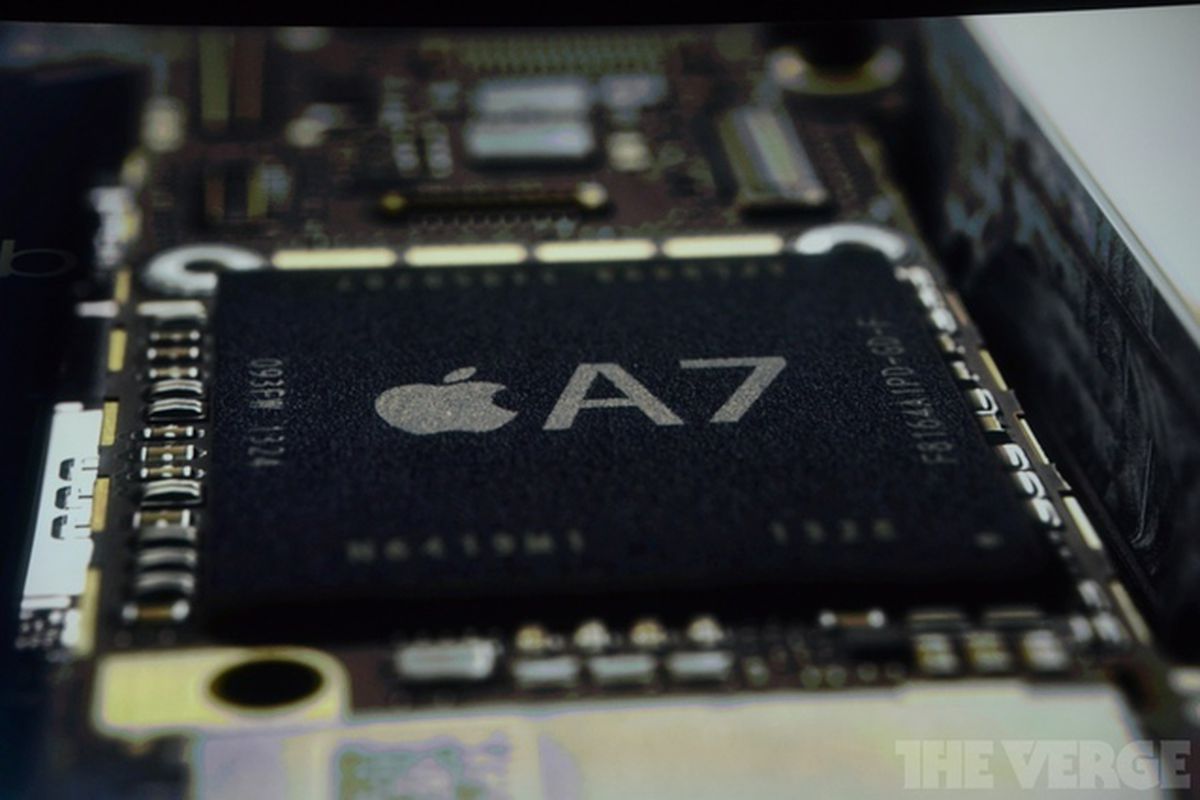
    The process node refers to the number of transistors that can fit into a dense area like the inside of an integrated circuit. The lower the number, the larger the number of transistors inside a chip. That is important because as more transistors are placed inside an IC, the more powerful and energy-efficient it is. For example, Apple’s current A13 Bionic SoC containing 8.5 billion transistors is manufactured using TSMC’s enhanced 7nm process.
    Starting in the middle of this year, the company will begin producing 5nm chips and the Apple A14 Bionic will reportedly be packed with 15 billion transistors making it more powerful and energy-efficient than the A13 Bionic. This means that Apple could have a huge performance lead over most Android phones when it releases the 2020 iPhone models later this year. That’s because the Qualcomm Snapdragon 865 Mobile Platform, the chip that will power most flagship Android phones in 2020, is manufactured by TSMC using its 7nm process node. The only Android phones that could match the 2020 iPhone’s performance this year could be the Huawei Mate 40 line. That’s because Huawei’s 5nm flagship chipset is due to roll off of TSMC’s assembly line later this year.
    Speaking of the A13 Bionic, Apple recently said to increase the production of the chip due to higher than expected demand for the iPhone 11 series. Additionally, the upcoming iPhone 9, due to be introduced next month, will employ the A13 Bionic chip. Reliable TF International analyst Ming-Chi Kuo believes that Apple could sell as many as 30 million iPhone 9 units this year and each one will be powered by the A13 Bionic chip. With a price rumored to start at $399 and up, the iPhone 9 will look just like the iPhone 8 but will sport the more powerful chip and include a 50% hike in memory from 2GB to 3GB of RAM.
    As for the A14 Bionic, TSMC sees strong demand for the new 5G iPhone models that will be powered by this SoC. The latest rumor has Apple releasing four iPhone models this year including the iPhone 12 (5.4-inch screen, dual cameras), iPhone 12 Plus (6.1-inch screen, dual cameras), iPhone 12 Pro (6.1-inch screen, triple cameras) and the iPhone 12 Pro Max (6.7-inch screen, triple cameras). All four will be equipped with the TSMC built Snapdragon X55 5G modem chip which supports both sub-6GHz and mmWave 5G spectrum. That means the new iPhones will be compatible with the 5G signals disseminated by all four major U.S. wireless carriers.
    Last year, the semiconductor industry had its worst year since the dot com collapse of 2001 with revenue declining 12% on an annual basis to $412 billion. But TSMC’s decision to throw billions into new production facilities indicates that at least one of the industry’s leading firms is confident that the business is turning around.

  • Viettel used fake accounts to discredit rivals

    Viettel used fake accounts to discredit rivals

    Facebook has removed a network of accounts and pages linked to Vietnamese telecom giant Viettel for allegedly using disinformation tactics to discredit rivals.

    The social network behemoth said Wednesday it had removed 13 accounts and 10 pages linked to Vietnam’s biggest telecom provider Viettel and its Myanmar venture Mytel for “violating” its “policy against coordinated inauthentic behavior”.

    The move marks the first time Facebook has taken action against businesses for directly using disinformation against competitors.

    Facebook said the individuals behind the network used fake accounts to manage pages posing as independent telecom consumer news hubs. They posed as customers to criticize their rivals, it stated in a release.

    “The page admins and account owners typically shared content in English and Burmese about alleged business failures and planned market exit of some service providers in Myanmar and their alleged fraudulent activity against their customers.”

    The world’s largest social media platform also noted that although the people behind these activities, which originated from Myanmar and Vietnam, attempted to conceal their identities and coordination, its investigation found links to Mytel in Myanmar and Viettel in Vietnam.

    Viettel owns a 49 percent stake in Mytel.

    The controversial pages have around 256,600 followers, and admins have paid around $1.15 million for ads on Facebook in U.S. dollars and Vietnamese dong, it added.

    Military-run Viettel said in a statement Friday that as a company with a presence in 11 countries, it always complies with the laws and business ethics in each market.

    The company is verifying the allegation and is willing to cooperate with Facebook. It will punish anyone guilty of misconduct, Viettel said.

    The company added it supports Facebook’s efforts to clean up the social network environment and expects the latter to function in a cooperative manner to avoid making unilateral allegations.

    Viettel’s revenue last year rose 7.5 percent year-on-year to $251 trillion ($10.78 billion), accounting for 50 percent of Vietnam’s telecom revenues. The company eyes to commercially launch 5G services in June using its own equipment.

  • Viettel soars in global valuable brand ranking

    Viettel soars in global valuable brand ranking

    Vietnam’s largest telecommunication service provider Viettel has climbed 126 positions to be ranked 355th most valuable brand in the world in 2020.

    Currently valued at VND134.9 trillion ($5.8 billion), up 34 percent compared to 2019, Viettel was placed 102nd in Asia, and 7th in Southeast Asia, according to Brand Finance, a London-based branded business valuation consultancy.

    The company saw its consolidated revenues increase by 7.4 percent in 2019 over 2018, and it currently occupies 53 percent of Vietnam’s mobile network market.

    Viettel successfully operated 5G phone calls on self-developed equipment on January 17, and is expected to commercially launch 5G services this June. It plans to expand its operations both within Vietnam as well as in 10 foreign markets.

    There are just 36 telecom companies in the 2020 listing of the world’s top 500 brands by value. Most of the  36 branks saw their values fall. Over the past five years, the combined value of all telecom brands in the Brand Finance Global 500 listing has fallen slightly, reaching $558.4 billion in 2020, compared to $567.7 billion in 2015.

    The Brand Finance Global 500 list covers 10 sectors in 29 markets, using a sample size of 50,000 adults over 18 years old. For the latest ranking, surveys were conducted online from September to December 2019.

  • Australian telco undertakes crucial restructuring of senior management

    Australian telco undertakes crucial restructuring of senior management

    Vodafone Hutchison Australia (VHA) has carried out a major overhaul of its senior management, with two of its top executives resigning just a few days before the Federal Court’s ruling on its halted merger with TPG Telecom.

    Vodafone stated that both Kevin Millroy and Ben McIntosh, CTO and CCO of the company respectively, were already planning to depart the company this month, citing mutual decisions.

    Millroy will be replaced by Barry Kezik who has been part of the network team for almost a decade, while Ana Bordeianu will take over McIntosh’s responsibilities.

    Vodafone CEO Inaki Berroeta stated, “It’s going to be an exciting year for Vodafone and our customers with the launch of 5G and continuing to drive competition in the market at every opportunity.”

    He added, “Kevin and Ben have been key players in one of the most successful turnarounds in Australian corporate history, and they are handing over to extremely capable leaders, so I wish them both all the best for the future.”

  • Telenor Group welcomes new leadership for Asian divisions

    Telenor Group welcomes new leadership for Asian divisions

    Telenor Group has announced its new Chief Executive Officers in three of its Asian subsidiaries- Telenor Myanmar, dtac in Thailand and Grameenphone in Bangladesh.

    Sharad Mehrotra, CEO of Telenor Myanmar, has been appointed the new CEO of dtac, Telenor Group’s mobile operator in Thailand. He replaces Alexandra Reich, who is seeking new leadership opportunities. Hans Martin Hoegh Henrichsen, currently Chief Corporate Affairs Officer in Telenor Myanmar, will become acting CEO after Mehrotra. Grameenphone’s Deputy CEO and CMO, Yasir Azman has been appointed the new CEO of the Bangladeshi operation, with current CEO Michael Foley relocating to Africa, where his family is based.“After leading our Thai mobile operator through a challenging transition including new spectrum and network rollout and a renewed focus on customer satisfaction and distribution excellence, Alexandra Reich has delivered solid results according to the back-to-growth strategy outlined in dtac’s Capital Markets Day in June 2019. We are grateful to Reich for her willingness to step in and support dtac in the very important transformational phase, and we wish her all the best in her next leadership role. With Reich seeking new opportunities, we are pleased that Sharad Mehrotra will join dtac and bring valuable insights and knowledge to Thailand from Myanmar and India, where he has managed a strong commercial turnaround,” says Sigve Brekke, President and CEO of Telenor Group.“I am also pleased Yasir Azman has accepted the challenge to lead our operations in Bangladesh. While also serving as deputy CEO, he has run one of our best performing sales and distribution organizations in Telenor Group. Having risen through the ranks, it’s extra special to welcome Azman as the first home-grown CEO of Grameenphone. I’d like to take this opportunity to thank Michael Foley for leading the company through an impressive digital transformation as well as his valuable contributions also in Pakistan and Bulgaria,” adds Brekke.

    The changes are effective as of 1st February 2020.

  • Verizon’s 5G network goes live in three more cities

    Verizon’s 5G network goes live in three more cities

    Verizon’s 5G network covered 31 cities in the United States until recently but starting today, three more cities will benefit from Verizon’s 5G mobility service. The carrier announced its 5G network is now live in three more cities: Little Rock, Kansas City, and Cincinnati.

    Just like every other city on the list, these three won’t feature full 5G network coverage. If you live in one of these cities, here is where you should be able to take advantage of 5G blazing-fast data speeds.

    • Little Rock: parts of Midtown, University District, Birchwood, Otter Creek and near landmarks such as UAMS College of Medicine, the University of Arkansas at Little Rock, Rock Creek Square Plaza Shopping Center, and Outlets of Little Rock.
    • Kansas City: parts of Downtown, Midtown-Westport, Plaza Midtown, Olathe and near landmarks such as The Garment District, Kauffman Center for the Performing Arts, Rockhurst University as well as inside and around the professional football stadium.
    • Cincinnati: parts of Downtown, Mt. Adams, West End, Evanston, Walnut Hills, Corryville, Clifton, Price Hill, Over-The-Rhine, Mt Auburn, Avondale, Newport (KY), Dayton (KY), Bellevue (KY) near landmarks such as Great American Ballpark, Duke Energy Convention Center, Serpentine Wall, City Hall, Xavier University, Cincinnati Zoo, Hebrew Union College, Cincinnati Christian University and Newport Waterfront (KY).

    Besides the three cities included in today’s announcement, Verizon’s 5G network is live in parts of Cleveland, Columbus, Hampton Roads, Charlotte, Greensboro, Grand Rapids, Miami, Salt Lake City, Spokane, Hoboken, Memphis, Des Moines, Los Angeles, Boston, Houston, Sioux Falls, Dallas, Omaha, Chicago, Minneapolis, Denver, Providence, St. Paul, Atlanta, Detroit, Indianapolis, Washington DC, Phoenix, Boise, Panama City, and New York City.

  • Telenor Group welcomes new leadership for Asian divisions

    Telenor Group welcomes new leadership for Asian divisions

    Sharad Mehrotra, CEO of Telenor Myanmar, has been appointed the new CEO of dtac, Telenor Group’s mobile operator in Thailand. He replaces Alexandra Reich, who is seeking new leadership opportunities. Hans Martin Hoegh Henrichsen, currently Chief Corporate Affairs Officer in Telenor Myanmar, will become acting CEO after Mehrotra. Grameenphone’s Deputy CEO and CMO, Yasir Azman has been appointed the new CEO of the Bangladeshi operation, with current CEO Michael Foley relocating to Africa, where his family is based.

    “After leading our Thai mobile operator through a challenging transition including new spectrum and network rollout and a renewed focus on customer satisfaction and distribution excellence, Alexandra Reich has delivered solid results according to the back-to-growth strategy outlined in dtac’s Capital Markets Day in June 2019. We are grateful to Reich for her willingness to step in and support dtac in the very important transformational phase, and we wish her all the best in her next leadership role. With Reich seeking new opportunities, we are pleased that Sharad Mehrotra will join dtac and bring valuable insights and knowledge to Thailand from Myanmar and India, where he has managed a strong commercial turnaround,” says Sigve Brekke, President and CEO of Telenor Group.

    “I am also pleased Yasir Azman has accepted the challenge to lead our operations in Bangladesh. While also serving as deputy CEO, he has run one of our best performing sales and distribution organizations in Telenor Group. Having risen through the ranks, it’s extra special to welcome Azman as the first home-grown CEO of Grameenphone. I’d like to take this opportunity to thank Michael Foley for leading the company through an impressive digital transformation as well as his valuable contributions also in Pakistan and Bulgaria,” adds Brekke.

    The changes are effective as of 1st February 2020.

  • Vietnam eyes 5G equipment sale to US

    Vietnam eyes 5G equipment sale to US

    Vietnam hopes to sell locally-made 5G equipment to the U.S. as it prepares the commercial launch of the telecom technology this year.

    Information and Communications Minister Nguyen Manh Hung proposed to a delegation of the U.S. House of Representatives Monday that they initiate discussions of 5G technical standards to see if made-in-Vietnam equipment could enter the U.S. market.

    Vietnam plans to commence commercial operations of 5G this year, becoming among the first countries in ASEAN to do so, he said.

    The minister had set the stage for launching the new telecommunications technology by making the first 5G phone call on January 17, using equipment manufactured by Vietnamese telecom giant Viettel.

    The military-run Viettel is set to become the sixth firm in the world to launch its own 5G equipment after Ericsson, Nokia, Huawei, Samsung, and ZTE.

    Viettel plans to commercially launch 5G services this June. It has been testing and installing equipment since last year.

    Hung, a former Viettel CEO, has been pushing 5G research in Vietnam since taking over as communications minister towards the end of 2018. He asked local firms to produce their own equipment so that Vietnam is among the first countries in the world to launch 5G technology.

    The number of 5G subscriptions in Vietnam could hit 6.3 million by 2025 or 6 percent of total mobile subscriptions, technology conglomerate Cisco has forecast.

    In ASEAN, Singapore is expected to lead the way in launching 5G in 2020, followed by Vietnam, the Philippines, Malaysia, and Thailand, according to U.S. consulting firm AT Kearney.

    5G is said to offer speeds 100 times faster than 4G and support new applications like remote medical procedures and autonomous driving.

  • ZTE acquires significant chunk of NFV network equipment

    ZTE acquires significant chunk of NFV network equipment

    Moreover, in this bidding, ZTE has also won the bidding for the user plane in Shandong, Anhui, Fujian, Yunnan and other 12 provinces in China, demonstrating ZTE’s leading position in the fields of NFV cloudification and the next-generation core network.

    The phase-1 project of China Mobile’s NFV network includes six parts: PS network VNFs of eight regions and 31 provinces, IMS network VNFs, virtual-layer software, distributed storage, MANO, and system integration. This purchase marks the beginning of the large-scale construction of the NFV cloud network of China Mobile, the world’s largest operator.

    As a technology leader and provider of cloudified products and solutions, ZTE has partnered with China Mobile to build a secure, reliable, mature, and stable end-to-end cloudified network, by means of four years and five stages of pilot and verification in NFV field.

    Furthermore, ZTE’s NFV infrastructure TECS, Ceph-based carrier-grade distributed and unified storage platform CloveStorage, carrier-grade server operation system CGSL, 2/3/4/5G fully integrated cloud core network Common Core and the AI-based automatic O&M management system CloudStudio have also been put into commercial use in global operators’ networks and government & enterprise networks, laying solid foundation for 5G commercialization and vertical industry applications.

  • One-Third of Chinese Tourist Payments Made Through Mobile

    One-Third of Chinese Tourist Payments Made Through Mobile

    The mobile payment’s penetration of the Chinese tourist market continues to grow with 3.4 times out of 10 transactions made through the channel in 2019.

    Whilst the user base remained stable, usage increased compared to 2018 when 3.2 out of 10 transactions were made through a mobile payment platform, according to a report jointly released by Nielsen and Alipay. This was in spite of the fact that Chinese tourist was increasingly shifting travel destinations from popular East Asian countries in favor of more distant locations where cash is more prominent.

    «In contrast to Asian tourism markets where Chinese mobile payment solutions were adopted earlier, some European countries are witnessing an acceleration of the acceptance of Chinese mobile payment solutions,» the report explained.

    In the U.K. and France, for example, the percentage of Chinese tourists who used mobile payments increased to 65 percent in 2019 while per capita mobile-based spending rose about 10 percent.

    Despite only being ranked as the sixth most popular travel destination for the Chinese in 2019 (9 percent), Singapore was a leader in mobile payments (77 percent).

    Unsurprisingly, the city-state is reaping the rewards from its early and collective efforts including the government’s decision to name e-payments as a national priority in its 10-year plan for a «Smart Nation». And 66 percent of the surveyed merchants in Singapore hopes to run more digital retail operations and improve marketing through mobile payments platforms, the report added.

    Rounding out the remaining top five Chinese tourist mobile payment leaders are South Korea, Japan, Australia and Thailand.

  • Qualcomm has started a price war that will impact prices of 5G phones

    Qualcomm has started a price war that will impact prices of 5G phones

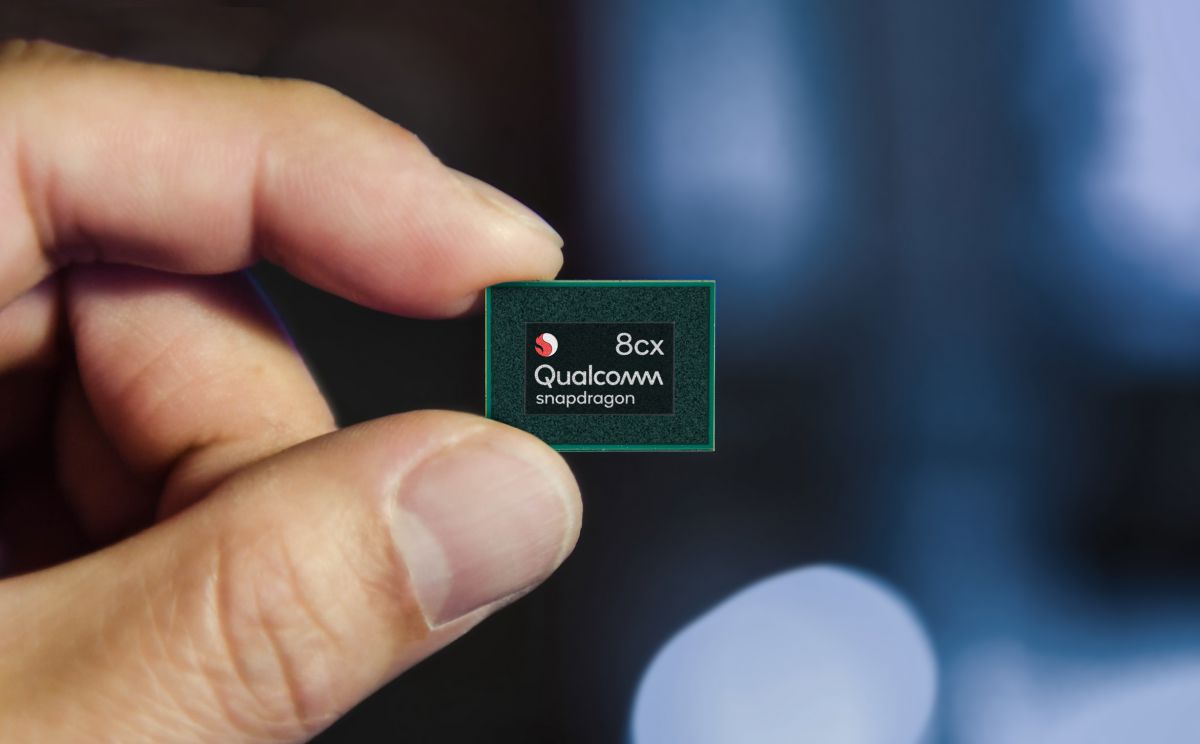
    A report issued by reliable analyst Ming-Chi Kuo says that a price war has begun in the 5G chip industry. Kuo’s note to clients, says that Qualcomm has cut pricing for its mid-range 5G Snapdragon 765 chipset after sales of high-end 5G smartphones fell short of expectations. By cutting the cost of its mid-range 5G chips to manufacturers, Qualcomm is trying to get these firms to produce more affordable 5G handsets to entice the public. The price cuts will also extend to Qualcomm’s low-end chips as well.
    As a result of the price cut, Kuo sees MediaTek facing pricing pressure for its Dimesnity line of 5G chips three to six months earlier than expected. Instead of achieving gross margins of 40% to 50% for its chips as the consensus expects, the analyst sees MediaTek’s margins dropping to less than 30%-35%.
    Qualcomm has reportedly cut the price of the 5G Snapdragon 765 chipset (SD7250) by $25-$30 to $40. MediaTek’s Dimensity 1000 5G chipset costs the company $45-$50 to make and it sells for $60-$70 per chip. As a comparison, Qualcomm’s top-of-the-line Snapdragon 865 Mobile Platform with the Snapdragon X55 5G modem costs $120-$130 and has not had its price cut. The company’s flagship chip outperforms the MediaTek Dimensity 1000 and Qualcomm sees no need to drop the price of its high-end chipset.
    The recently announced MediaTek Dimensity 800 chipset, which supports only the slower sub-6GHz 5G signals, is due to be released in May. This chip, developed for lower-priced 5G handsets, is expected to be sold at a price of $40-$45 per chip and costs MediaTek $30-$35 to make. There might not be that much room for MediaTek to maneuver in response to Qualcomm’s pricing actions.
    The pricing shakeup could cost MediaTek some business. The company’s major 5G chip customers like Oppo, Vivo, and Xiaomi are said to be switching orders for 20 million to 25 million chips from MediaTek to Qualcomm. These components are scheduled to be shipped next month.
    The Snapdragon 765 SoC is equipped with eight Kryo 475 CPU cores running at a clock speed as fast as 2.4GHz. It features an integrated Snapdragon X52 5G modem that supports both mmWave and sub-6GHz 5G signals, and sports the Adreno 620 graphics processor. There is also a Snapdragon 765G for gaming phones that is equipped with an enhanced version of the GPU offering 10% faster graphics rendering compared to the standard Snapdragon 765 chipset.
    The Dimensity 1000 also has an integrated 5G modem and is packed with four performance Cortex-A77 CPU cores running at a clock speed of up to 2.6GHz. Four efficiency Cortex-A55 CPU cores are also included. This SoC is equipped with the ARM Mali-G77 MC9
    Qualcomm’s salvo would have less of an impact on the market if MediaTek’s margins were a little wider. A larger margin would allow the company to take a hit and still thrive. But the Dimensity 1000 brings $10-$25 per chip to MediaTek’s bottom line and the Dimensity 800 garners profits of $5-$15 per chip.
    MediaTek’s Dimensity 1000 and Dimensity are manufactured by TSMC using its 7nm process. The Snapdragon 765/765G will be manufactured by Samsung using its 7nm process. The flagship Snapdragon 865 Mobile Platform is also a 7nm chip, and it also will be produced by TSMC. Qualcomm originally planned to have Samsung’s foundry roll out the Snapdragon 865, but the chipmaker was concerned about allowing Samsung to get a peek under the hood of its top chipset for 2020.
    Chip prices might also run into pressure halfway through this year when TSMC starts producing more powerful and energy-efficient 5nm chips. Among the first to be manufactured will be Apple’s A14 Bionic and Huawei’s next high-end IC expected to be named the Kirin 1020.