Tag: telco

  • Singtel and Hyundai Motor to develop Singapore’s smart manufacturing and mobility technologies

    Singtel and Hyundai Motor to develop Singapore’s smart manufacturing and mobility technologies

    Hyundai Motor Company and Singtel today signed a Memorandum of Understanding (MOU) to collaborate on a range of ventures to support smart manufacturing, connectivity for electric vehicle battery subscription service. The MOU follows Hyundai Motor Group’s announcement in October 2020 that it is setting up a new state-of-the-art Hyundai Motor Group Innovation Centre Singapore (HMGICS) to conduct studies on future mobility and explore innovative solutions, services and disruptive technologies to revolutionize commuters’ transport experience.

    Hyundai Motor will combine its expertise in developing innovative automotive and manufacturing solutions with Singtel’s capabilities in 5G, Internet of Things (IoT), and next-generation info-communications technologies and solutions to develop Industry 4.0 advanced digital solutions to   transform the way vehicles are currently manufactured. The parties will develop and pilot a 5G-enabled smart factory use case for HMGICS’ intelligent manufacturing platform, and potentially scaling it up for deployment across Hyundai’s manufacturing plants globally.

    “Hyundai is delighted to work with Singtel, implementing next-generation communication solutions that will enhance mobility experiences for our customers,” said Hong Bum Jung, Senior Vice President of HMGICS at Hyundai Motor Company. “We also hope to explore future innovative solutions and business opportunities with Singtel to help realise Singapore’s Smart Nation vision.”

    Hyundai and Singtel will also work together on an IoT communications solution for the batteries powering Hyundai’s electric vehicles (EVs) in Singapore. The IoT system enables Hyundai to monitor the telemetry, or automatic data transmission, of the batteries’ real-time status and performance.

    The data-driven insights can enhance the EVs’ reliability, advancing Singapore’s EV ecosystem and Smart Nation vision of connected and sustainable mobility solutions.

    Andrew Lim, Managing Director, Government and Large Enterprise, Group Enterprise at Singtel said, “Our collaboration with Hyundai Motor is timely given the Singapore Government’s decision to phase out internal combustion engine vehicles by 2040 and the recent Budget announcement on new policies to encourage more Singaporeans to switch to driving electric vehicles. By pushing the boundaries of what is possible with 5G, IoT and other advanced technologies, we also want to build up Singapore’s smart manufacturing and Industry 4.0 capabilities and strengthen its innovation ecosystem.”

  • SK Telecom, Shinsegae Group among bidders for eBay’s Korean business

    SK Telecom, Shinsegae Group among bidders for eBay’s Korean business

    South Korea’s SK Telecom, retailer Shinsegae Group and private equity firm MBK Partners were among those that entered non-binding, preliminary bids for the sale of eBay Inc’s South Korean business, the telecom company, and two sources with knowledge of the matter said on Tuesday.

    EBay Korea operates open market e-commerce platforms Gmarket, Auction and G9, and was South Korea’s third-largest e-commerce firm in 2020 with 12.8% market share, according to Euromonitor.

    The sources declined to be identified as not authorized to talk to the media. MBK Partners, Shinsegae Group, and eBay Korea declined to comment.

    Seoul-based analysts said that eBay hopes to fetch up to 5 trillion won (S4.42 billion) with the sale.

    However, they said the actual sale price may be lower, due to its recent drop in market share compared to rivals such as Korea’s No. 1 e-commerce firm Coupang, and disadvantages of the unit’s traditional “open market” form of e-commerce which simply connects sellers with buyers.

    EBay Korea’s market share has been overtaken in recent years by Coupang, which directly handles inventory, differentiated itself with speedy delivery and raised around $4.6 billion in a blockbuster New York listing earlier this month, as well as Naver Corp, which operates South Korea’s dominant online search portal.

    EBay Korea’s 2020 revenue was estimated to be about 1.3 trillion won, with a 5.3% on-year increase in transactions, compared to a 19% growth in South Korean e-commerce market, KTB Investment & Securities analyst Kim Jin-woo said.

  • Huawei launches “Make any room a data center” products

    Huawei launches “Make any room a data center” products

    In his opening remarks, Brandon Wu, Chief Technology Officer (CTO) of Huawei’s Asia Pacific Enterprise Business Unit, emphasized the need to ensure enhanced resiliency across all industries, given the impact of the global pandemic.

    Wu explored the key trends emerging in edge computing, namely: better-connected infrastructure, increased resiliency through the use of edge computing, and enhanced reliability through the use of Artificial Intelligence (AI).

    According to the estimation by Gartner, within four years, 75% of data generated by enterprises will be processed at the edge. Demand for real-time interaction is driving businesses to bring computing power closer to end-users.

    • Small and edge data center are therefore making an appearance in several industries and scenarios:Retail: Small and edge data centers can exist within retail outlets as retailers close the gap between online and offline sales.
    • Manufacturing: Edge data centers deployed in distribution warehouses are capable of managing growing volumes of inventory and shipping data; in factories, such data centers manage data generated from sensors as well as communications between equipment, contributing to a growing IIoT.
    • Telecoms: Central offices of telco companies are being converted to computing rooms and used as edge data centers to make networks more dynamic.

    Mahesh Choudhary, Solution Architect for the Huawei Digital Power Line, launched the new solution directly from the Huawei Digital Power Innovation Experience Center, offering a real-life demonstration for event attendees. Changing the game with SmartLi inside —Huawei’s smart lithium battery Uninterruptible Power Supply (UPS) —now any room can be made into a data center.

    With far lower requirements placed on ceiling height, the Huawei Modular Data Center Solution has no need for a traditional raised floor design. Instead, air conditioner pipes and strong-and weak-current cables are routed from top-down, meaning that equipment can be accommodated in ceiling heights as low as 2.6 m, far below the 3 m minimum height required for a traditional data center.

    At the Smart Modular Data Center Product Launch, Huawei’s partner — NetCraft Information Technology (Macau) Co., Ltd. — shared its experiences cooperating with Huawei. Benjiman Wong, the company’s Sales Director, said: “With the Huawei Modular Data Center Solution, all required components are modular. An easy way for customers to understand this solution is to consider that each component is like a building block: you can build up your castle by adding different blocks together, so you can add more blocks in the future when needed.”

  • Singapore offers best mobile experience in South East Asia

    Singapore offers best mobile experience in South East Asia

    At a country-level, Singapore won in all metrics tested, with the most important win being the highest Excellent Consistent Quality in South East Asia, with 84.5% of connections having a network experience suitable for use-cases like 1080p video streaming, real-time mobile gaming and HD video calling. Singapore also had the highest Core Consistent Quality in the region at 94.4%.

    Consistent Quality is a set of metrics that Tutela has developed to objectively evaluate when connections are (or are not) enabling users to do the things they want to on their mobile devices. There are two sets of thresholds, Excellent and Core. A connection that hits the Excellent threshold is sufficient for use-cases like 1080p video streaming, HD video calling, and multiplayer gaming, while a Core connection should be sufficient to stream standard-definition video or handle day-to-day activities like web browsing or uploading photos to social media. The percentages seen in this report represent the percentage of tests for subscribers on a given operator that was above the Excellent or Core thresholds.

    Singapore also had the fastest download speed at 26.2 Mbps, the fastest upload speed at 14.7 Mbps, and the most responsive network with a latency result of 9.0 ms. However, Vietnam was always very close behind, with second-place winnings for both Excellent Consistent Quality (72.3%) and Core Consistent Quality (86.1%).

    The report was released by Tutela Technologies, a global crowdsourced mobile data company, and evaluated over 55 million speed and latency tests, conducted on the smartphones of real-world users of national mobile operators within Common Coverage Areas, between August 1st and January 31st, 2021.

    Per country findings were as follows:

    Singapore:

    • By operator in Singapore, StarHub dominated in four of the seven metrics tested, including the highest Excellent Consistent Quality with 87.3% of users having a network experience suitable for 1080p video streaming or HD group video calling.
    • StarHub also had the highest Core Consistent Quality, Tutela’s measure of whether a connection is good enough for everyday uses, like email, social media, and SD video streaming, the fastest download speeds, and the most responsive network in the country.

    Indonesia:

    • Telkomsel won six out of the seven metrics tested, with Indosat Ooredoo being the only other operator to make it onto the leaderboard in Indonesia with the fastest median upload speed.
    • Telkomsel was in first place for Excellent Consistent Quality with 65.0%, and also in first for Core Consistent Quality with 83.5%. However, there was only a 3% difference between the operator and second-place Indosat Ooredoo.

    Malaysia:

    • In Malaysia, the leaderboard was shared by at least four operators, with U Mobile offering its users the best mobile experience in the country. The operator won the highest Excellent and Core Consistent Quality, and fastest upload speed.
    • Digi had the fastest median download speed in Common Coverage Areas across Malaysia with 10.6 Mbps but came third in the upload speed test with 6.2 Mbps. Maxis had the most responsive network in the country, while Celcom had both the best 5G/4G coverage and total coverage.

    Thailand:

    • By operator in Thailand, AIS won in four of the seven categories tested, including the highest Excellent Consistent Quality and most responsive network. However, TrueMove was also on the leaderboard in three of the seven categories including the highest Core Consistent Quality and both the fastest download and upload speeds.
    • With only two operators in the Philippines to compare, Smart outperformed Globe in six out of the seven categories tested, with Globe taking out one category with the best total coverage.

    Vietnam:

    • Viettel Mobile in Vietnam offered the best mobile experience to its users, winning in five categories and tying for first place with Vinaphone for fastest median download speeds.
    • MobiFone was on the leaderboard in one category with the highest Core Consistent Quality.
  • Reliance Jio increases spectrum footprint by 55% in India

    Reliance Jio increases spectrum footprint by 55% in India

    Through this acquisition, RJIL’s total owned spectrum footprint has increased significantly, by 55%, to 1,717 MHz (uplink+ downlink). RJIL has the highest amount of sub-GHz spectrum with 2X10 MHz contiguous spectrum in most circles. It also has at least 2X10 MHz in 1800 MHz band and 40 MHz in 2300 MHz band in each of the 22 circles. RJIL has achieved complete spectrum derisking, with an average life of owned spectrum of 15.5 years. RJIL’s spectrum has been acquired in the most cost-efficient manner with an effective cost of Rs 60.8 crore per MHz.

    With the enhanced spectrum footprint, especially contiguous spectrum, and pan-India infrastructure deployed, RJIL has enhanced network capacity to service its existing users as well as hundreds of millions of more subscribers on its network.

    The acquired spectrum can be utilized for the transition to 5G services at the appropriate time, where Jio has developed its own 5G stack.

    Sh. Mukesh D Ambani, Chairman, Reliance Industries, said, “Jio has revolutionized the digital landscape of India with the country becoming the fastest adopter of Digital Life. We want to ensure that we keep on enhancing experiences, not only for our existing customers, but also for the next 300 million users that will move to digital services. With our increased spectrum footprint, we are ready to further expand the digital footprint in India as well as get ourselves ready for the imminent 5G rollout.”

  • Nepal selects frequency to embark on 5G services

    Nepal selects frequency to embark on 5G services

    Nepal’s National Telecommunication Authority (NTA) has determined its 5G frequency as the country prepares to deploy 5G service. NTA will follow the recommendations set out by the National Frequency Management Forum, a body initiated by the NTA, the Ministry of Communications & Information Technology (MoCIT) and telecommunications operators.

    According to NTA’s spokesperson, Meen Prasad Aryal, the National Radio Frequency Policy Determination Committee has received a proposal with recommendations using 700 MHz, 900 MHz, 2300 MHz and 2600 MHz for the low-band spectrum, 3300 MHz, 3400 MHz, 3600 MHz and 4100 MHz for the mid-band spectrum, and 26 GHz for the high-band spectrum.

    Established to manage existing and new spectrums, the National Frequency Management Forum performed studies for 5G spectrums before recommending a suitable spectrum for allocation. The National Radio Frequency Policy Determination Committee must now approve NTA’s proposed frequencies before spectrums will be allocated to operators.

  • Trump takes one last shot at maiming Huawei before he leaves the White House this week

    Trump takes one last shot at maiming Huawei before he leaves the White House this week

    Even though President Donald Trump will be leaving the White House this coming Wednesday, he took the time to spank the Chinese phone and networking equipment manufacturer Huawei one last time. In May 2019, Trump cited security issues for his decision to put Huawei on the Entity List. This move prevented the firm from accessing its U.S. suppliers without permission from the Commerce Department. Despite this move which resulted in the loss of Google as a supplier, Huawei persevered; for a brief period of time this year, it was the top phone manufacturer on the planet in terms of shipments.

    Exactly one year to the day that it was placed on the Entity List, Huawei received another big blow from the Trump administration. Starting last September, any foundry manufacturing chips using American-sourced technology needs a license from the U.S. to ship to Huawei. The latter was the second-largest customer of the world’s largest foundry, TSMC, and was blocked from receiving cutting-edge chips that it had designed itself. The U.S. also browbeat its allies over the last few years in an attempt to prevent them from using Huawei’s networking equipment on their 5G networks.

    American lawmakers were quick to call Huawei a national security risk because of the company’s alleged tie to the Communist Chinese government. Concerns that Huawei’s phones and base stations contain backdoors used to spy on U.S. consumers and corporations have never been proven. The U.S. also banned rural carriers from using the Universal Service Fund (managed by the FCC) to purchase networking gear from Huawei and is forcing these firms to remove any Huawei equipment used in their networks.

    In the final days of the Trump administration, licenses allowing U.S. firms to sell to the Chinese manufacturer are being revoked and applications from U.S. suppliers to obtain such licenses are being rejected. Reuters has seen an email sent from the Semiconductor Industry Association (SIA) that documents the Commerce Department’s recent actions. In the email, the SIA notes that the Commerce Department had released “intents to deny a significant number of license requests for exports to Huawei and a revocation of at least one previously issued license.” The SIA email stated that a broad range of products was included in the latest action and many U.S. companies have been waiting months to hear whether they would be allowed to sell to Huawei. More than 150 license requests were pending amounting to $120 billion worth of goods and technology.

    Just last week, the Trump administration blacklisted Chinese phone manufacturer Xiaomi by demanding that U.S. investors divest themselves from any investments made in the company by November 11th, 2021.

  • Viettel profits grow despite pandemic

    Viettel profits grow despite pandemic

    Telecom giant Viettel managed to shrug off the effects of the Covid-19 pandemic and achieve its revenue and profit targets in 2020.

    The military-owned firm reported revenues of VND264 trillion ($11.47 billion), up 4.4 percent from 2019, and pre-tax profit of VND39.8 trillion, up 4.1 percent.

    Viettel attributed the results to its digital transformation and switch from being a telecom services provider to a digital services provider. In 2020, the platforms it developed included digital infrastructure, solutions, content, and finance, and cybersecurity.

    Its 10 overseas markets reported a 25 percent increase in profits to VND5.6 trillion in the first nine months of 2020, while at home it remained the leader in mobile services and fixed broadband with a 54.2 percent market share.

    By manufacturing 5G equipment and trialing 5G services, the company made Vietnam one of only six countries in the world to master the technology.

  • Viettel revamps as it eyes to enter Cuba

    Viettel revamps as it eyes to enter Cuba

    Viettel Group, Vietnam’s largest mobile network operator, which is wholly owned and operated by the Ministry of Defense, has plans to expand to sister socialist countries Cuba and North Korea, both of which are in the early stages of building up mobile phone networks. Earlier plans to expand to Venezuela have been put on hold owing to the dismal economic state of the latter nation.

    According to Viettel executives, the company is seeking to hold negotiations with the two countries in order to gain a foothold in their underdeveloped wireless markets.

    In Cuba, the company is waiting for a decision by Empresa de Telecomunicaciones de Cuba, the state-owned telecom provider and operator of the sole mobile network Cubacel whether it would grant Viettel a license.

    In North Korea, where Koryolink, a joint venture between the North Korean state and Egypt’s Orascom Investment Holdings, has reached millions of subscribers since its 2008 launch, Viettel had sought permission to build a mobile network as early as in 2010 but is still waiting for sanctions to be lifted and for the country to open its market to foreign investors.

    Viettel in its international expansion has set sights on a number of otherwise overlooked destinations. It began its global expansion by setting up a joint venture in Laos in 2008 and became the largest mobile phone operator in Cambodia after launching operations there in 2009. Since that time Viettel has expanded its operations to Burundi, Cameroon, East Timor, Haiti, Mozambique, Peru, Tanzania and eventually Myanmar.

    Between 2015 and 2017, the company invested over $2.23 billion or its foreign expansion strategy and by 2017, Viettel’s international operations covered an area of more 350 million potential subscribers. The company has invested in heavily in infrastructure in Myanmar where it is seeking to double its five million-subscriber base by the end of this year.

    The company has said that it will stop investment in the African market where the company has struggled to make a profit due to poor economic growth. According to telecommunications industry insiders, Viettel is in talks to buy stakes in existing telecommunication firms in Indonesia and Malaysia and a 20% stake in an unnamed European mobile carrier. Plans are to expand further in Bangladesh, Nepal, Belarus and Ukraine in the near future.

  • The World’s largest wireless carrier is removed by the New York Stock Exchange

    The World’s largest wireless carrier is removed by the New York Stock Exchange

    This past Thursday, the New York Stock Exchange (NYSE) said that it would stop handling transactions involving the securities of China Mobile, China Unicom and China Telecom. The move by the securities exchange comes after U.S. President Donald Trump, back in November, banned American companies and consumers from investing in 31 outfits that Trump said are owned or controlled by the Chinese military.

    Among the three telecom firms mentioned by the NYSE last week, China Mobile is the world’s largest wireless provider. As of last October, the carrier had more than 946 million subscribers. Compare that figure with the 120 million+ subscribers that Verizon counted at the end of the last quarter; the latter is the largest mobile carrier in the states.

    As you might imagine, Chinese government officials are not pleased. The Chinese Ministry of Commerce said in a statement, “This kind of abuse of national security and state power to suppress Chinese firms does not comply with market rules and violates market logic. It not only harms the legal rights of Chinese companies but also damages the interests of investors in other countries, including the United States.” The Ministry not only said that it will take action to protect its firms, it also asked the U.S. to agree to a compromise over issues like trade and human rights. It isn’t clear exactly what actions China is considering against the U.S.

    Over the last two weeks the outgoing Administration has been even tougher on China than it has been. On January 20th at noon ET, the Biden era begins and China is hoping that the seating of the new U.S. president eases tensions between the two economic powers. Yesterday, China’s senior diplomat Wang Yi said that relations between China and the United States had reached a “new crossroads” and “a new window of hope” is on the way.

  • Ooredoo welcomes Maldives to a new digital age with the roll out of 5G Services & 5G AirFibre

    Ooredoo welcomes Maldives to a new digital age with the roll out of 5G Services & 5G AirFibre

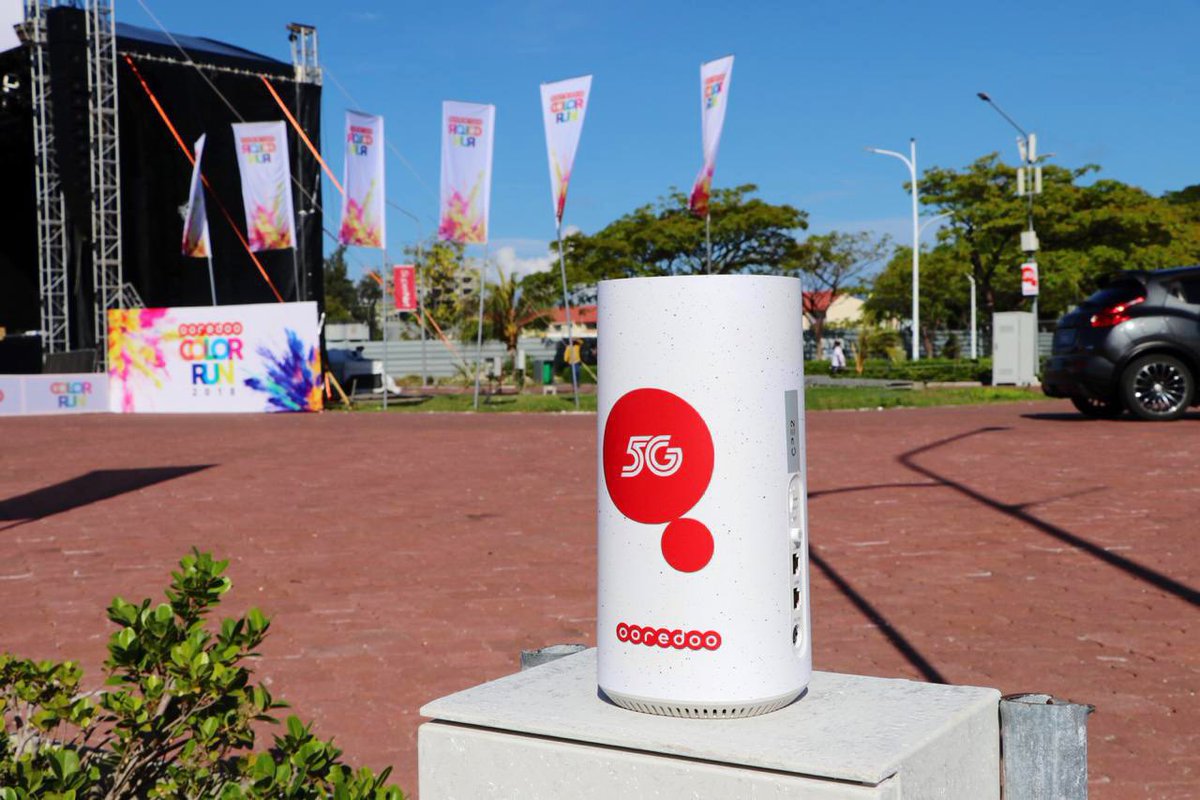
    Telecom giant Ooredoo announced the commercial launch of its 5G services in the Maldives, with the initial rollout covering a large percentage of the capital city of Male’, including key business hubs, hospitals, public spaces and more.

    At a special event held today to celebrate the kickstart of the 5G era for the company, Ooredoo Maldives also launched 5G AirFibre – the first 5G powered Home Broadband services in the Maldives providing speeds that are tenfold.

    The event was attended by the Minister of Communication, Science & Technology, Hon. Mohamed Maleeh Jamal who officially launched Ooredoo 5G services in the Maldives, the Minister of Economic Development, Uz. Fayyaz Ismail, Chief Executive of CAM, Ilyas Ahmed, Chief Technology Officer of Presidents Office, Mr. Hamid Shafeeu, as well as the Chairman of Ooredoo Maldives, Mr. Andrew Kvalseth, the Board of Directors and employees of Ooredoo Maldives who joined the event virtually to be part of this historic moment for the company.

    Speaking at the event, the Minister of Communication, Science & Technology, Hon. Mohamed Maleeh Jamal said: “5G technologies have the potential for extraordinary breakthroughs across industries, which is now being witnessed worldwide. As the role of internet connectivity continues to become more and more crucial for the country’s social and economic growth, the roll-out of 5G technologies in the Maldives creates a strong digital infrastructure on which creative new solutions can be built on for the betterment of our communities. I would like to thank the management and staff of Ooredoo Maldives for their strong commitment towards a Digital Maldives, by continuing to invest in creating a stronger and more capable network which can power new technologies and innovations, at a time when it is needed more than ever.”

    Najib Khan, Managing Director and CEO, Ooredoo Maldives said: “Over the past year, we have seen a huge shift towards digital across industries, from healthcare, education, communication, governance, e-commerce and more. Despite the challenges faced by the pandemic, our team has prioritized the roll-out of 5G services, understanding its unparalleled capabilities to unlock the full power of a connected society – something that is of pivotal importance in the new normal. We are equally proud to launch the first 5G broadband services in the Maldives, which overcomes the challenges faced in installation of fibre optic cables in congested areas such as Male’. A flexible alternative which offers comparable internet speeds to fiber broadband, 5G AirFibre services will accelerate fiberisation through airwaves of Ooredoo 5G. Today, we welcome a new digital age in the Maldives, enabling endless possibilities and innovative new digital services for people and businesses. We reaffirm our commitment to the people of Maldives, ensuring our support in transforming their digital lifestyles to achieve the full benefits of the digital world.”

    5G technology not only promises a fundamental boost in speed, but offers significantly lower latencies, increased capacities and is much more reliable. Paired with IoT Technologies, this unlocks a wave of advances such as intelligent homes, smart cars, drone deliveries and much more than can transform life as we know it and power healthcare services, education and even entertainment such as sporting events & gaming.

    Available for both prepaid and postpaid customers, Ooredoo 5G covers a large percentage of the capital city, on certified handsets. With the official launch of 5G, we are working with global operators to certify the network on additional handsets as soon as possible. The coverage map for Ooredoo 5G is available on Ooredoo Maldives website.

    In addition to 5G mobile services, customers in the capital city can also experience the superfast speeds of 5G via 5G AirFibre Home Broadband. The enhanced connectivity with 5G AirFibre will provide incredibly high speeds which is extremely positive news for local communities and businesses; especially for small and medium business working remotely or working from homes. Customers in Male’ can now check the eligibility of their area and pre-book their 5G AirFibre devices via Ooredoo Maldives website.

    Ooredoo Maldives also announced 5G Experience zones, for customers who are curious to test out 5G and 5G AirFibre services. This includes the first 5G powered VR Café’ in the Maldives and Ooredoo Club Premier Lounge.

    Ooredoo was the first operator in the world to have launched a live commercial 5G network in Qatar in early 2018 which marked a major technological breakthrough for Ooredoo and the global telecommunications industry. Following its vision to create communities powered by digital services, the company continuously made investments in North Africa, the Arabian Gulf to Southeast Asia to enhance customers’ digital experiences. Ooredoo Maldives will continue to enhance its network across the nation in order to connect customers to the best technologies and services that the digital world has to offer.
  • Vietnamese telcos begin testing 5G services in earnest

    Vietnamese telcos begin testing 5G services in earnest

    Vietnam’s three major telecom companies are racing to test 5G services to achieve the government’s goal of making the country one of the earliest to adopt the technology.

    State-owned Vinaphone last week became the first to conduct 5G commercial tests in both Ho Chi Minh City and Hanoi.

    In Hanoi, VnExpress reporters using 5G devices were able to reach download speeds of 721 megabit per second (Mbps), or 10 times higher than 4G speeds. In HCMC, it reached 1,000 Mbps, with downloading a 1.16 gigabyte (GB) app taking around 34 seconds.

    Vinaphone also unveiled its 5G routers developed in partnership with Finland’s Nokia.

    The device collects 5G waves and broadcasts it as wifi signals, enabling Internet use in households without the need for fiber-optic cables.

    Military-run Viettel commercially tested its 5G broadcast in Hanoi on November 30, achieving 10 times the download speeds of 4G when the user is in one place and five times when traveling in a vehicle.

    Viettel has put up 100 base stations in the city’s three downtown districts, and users with 5G devices can start experiencing the technology without the need to change their sim cards.

    Of the 100 stations, it produced 15 in-house and bought the rest from Sweden’s Ericsson.

    The company plans to expand to Da Nang and HCMC soon.

    Le Dang Dung, the chairman of the company, said when 5G transmission is stable it could help doctors perform surgeries through the Internet and factories could be completely automated.

    Another state-owned telecom firm, MobiFone, began commercially testing 5G services in HCMC on November 27, achieving average speeds of 600-800 Mbps, going up to 1,500 Mbps.

    The company plans to install 50 stations in the city this month.

    But it will take time for smartphone makers and networks to perfect 5G operations.

    Some Huawei, Xiaomi, Asus, Nokia, and Oppo devices can use 5G, but Samsung devices have to wait until the end of the year at least, and it is unclear when iPhone devices will be able to connect in Vietnam.

    The subscription rate is a concern among users. Currently, operators are providing free data to promote the new technology, but it is unclear what the tariffs will be.

    During the commercial test period, the Ministry of Information and Communications has limited the rates to the same level as for 4G, but operators can later change them.

    Pham Ngoc Tu, head of Vinaphone’s services research and development department, said it is still too early to determine 5G rates, and the company needs to establish around 50,000 stations to calculate prices.

    Communications minister Nguyen Manh Hung said in 2018 that Vietnam would be one of the first countries in the world to launch 5G services.

    It was seven or eight years behind in adopting 3G and 4G technologies, but not with 5G, he promised last month, adding that it would be widely available in the country from next year.

  • Huawei, Qualcomm, and Oppo are arguably the three most innovative firms in wireless technology

    Huawei, Qualcomm, and Oppo are arguably the three most innovative firms in wireless technology

    This might not come as a surprise to some people living in China, or to those who make a living by following the goings on of the wireless world, but there is a good case for calling Huawei the most innovative outfit in this realm. The company’s Mate series phones are traditionally one of the top technologically based smartphones in the world each year. However, the powerful 5nm chips it designed for this year’s Mate 40 line can no longer be shipped to the company because of a new U.S. export rule. The rule bans foundries like TSMC from shipping cutting-edge chips to Huawei without a license if said chips were produced using American technology.

    An industry report cited by the South China Morning Post states that from the beginning of this year through the end of October, Huawei filed 8,607 patent applications related to wireless technology. That put the firm at the top of the pack, well ahead of San Diego, California based chip designer Qualcomm; the latter sought 5,807 patents during the same January to October time period. Chinese smartphone manufacturer Oppo was third with 5,353 patent applications. Database provider incoPat, headquartered in Beijing, is responsible for the data used to compile the list.

    According to incoPat, both China and the U.S. led the way with each making up 32% of the patents filed from January through October. Japan was next with 15% followed by the 7% submitted by South Korea. IncoPat says that the information it uses comes from patent filings available to the public in the field of wireless communications. This includes patents filed to protect inventions related to 5G technology. The report issued by incoPat notes “As a key area of modern communications, wireless communication network technology has always been a very important part in the 5G research and development process. With the new technological competition and new globalisation situation, wireless communication network technology is becoming an important strategic choice for enterprises to face international competition.”

    5G is the next generation of wireless connectivity and the countries that control 5G will have an advantage economically. That is why, seeing how innovative Huawei is and not wanting to be left behind, back in June the U.S. Commerce Department amended the entity list ruling that prevents Huawei from working and doing business with U.S. based firms. Now, American tech companies are allowed to work alongside Huawei to help create global 5G standards. The U.S. feared that being left out of the meetings attended by Huawei would hold the U.S. back in terms of the development of 5G.

    Huawei is also the leader in helping the 3GPP develop standards for 5G. 3GPP (the 3rd Generation Partnership Project) is a term that covers standards organizations that help create protocols for mobile telecom. After Huawei, Ericsson and Qualcomm provide the most contributions to 3GPP for 5G standards. According to SCMP, this year 3GPP completed its next set of standards for 5G which include possible applications for 5G such as autonomous driving, smart factories, and remote surgery.

    Earlier this month, China’s Ministry of Industry and Information Technology (MIIT) said that the country has built nearly 700,000 base stations in 2020 topping its original target of 500,000 for the whole year. As the world’s leading provider of networking equipment, Huawei is also an important supplier of 5G base stations. In fact, published reports indicate that Huawei will replace Ericsson this year to become number one in 5G base stations. Ericsson is expected to see its market share decline from 30% last year to 26.5% in 2020. Huawei, on the other hand, should see its 5G base station share rise from 27.5% last year to a leading 28.5% in 2020. That is, along as it can find enough 5nm Kirin 9000 chipsets to power these base stations. As we mentioned earlier in this article, the U.S. is preventing Huawei from receiving cutting-edge chips from TSMC.

  • Vietnamese startup acquires US mobile testing platform

    Vietnamese startup acquires US mobile testing platform

    Vietnamese tech startup Kobiton has acquired U.S.-based mobile testing platform Mobile Labs Inc after raising $14 million for the purpose. Kobiton, which provides a platform for app developers to test their products, said in a statement that the acquisition would help customers deliver apps of higher quality faster by utilizing artificial intelligence.

    The acquisition was funded by U.S.-based investment funds BIP Capital and Fulcrum Equity Partners.

    Ha Ngoc Vinh Du, director of Kobiton in Vietnam, said that the acquisition was also positive news for the Vietnam tech industry as it confirms the talent of Vietnamese tech engineers among the global tech community.

    Jim Douglass, the partner at Fulcrum Equity Partners, said that companies are increasingly reliant on their mobile channels to improve revenues, and they need new ways to test their apps on real devices without sacrificing quality.

    Kobiton, with offices in Ho Chi Minh City and Atlanta, U.S., was founded by Vietnam-based KMS Technology in 2016. It has over 50 IT engineers and developers in its employ. Its platform is used by over 60,000 developers worldwide.

  • Viettel, MobiFone licensed to commercially test 5G

    Viettel, MobiFone licensed to commercially test 5G

    Telecom giants Viettel and Mobifone have received licenses to commercially test 5G broadcast in Vietnam’s two largest cities.

    Military-owned Viettel has been allowed to test in Hanoi with a maximum of 140 base transceiver stations while state company MobiFone can do so in Ho Chi Minh City with 50 stations.

    The tests will help the companies evaluate their technology and market size before beginning commercial operations.

    The companies need to follow cybersecurity safety and privacy regulations while running the tests, the ministry said.

    The first 5G phone call in the country was made on January 17 using equipment manufactured by Viettel, which has been conducting non-commercial tests and installing equipment since last year.

    The number of 5G subscriptions could hit 6.3 million by 2025 or 6 percent of total mobile subscriptions, technology conglomerate Cisco has forecast.

    5G is said to offer speeds 100 times faster than 4G and support new applications like remote medical procedures and autonomous driving.