Tag: telco

  • V2X apps to drive $1.2b market by 2022

    V2X apps to drive $1.2b market by 2022

    The latest SNS Telecom & IT research, V2X (Vehicle-to-Everything) Communications Ecosystem: 2019 – 2030 – Opportunities, Challenges, Strategies & Forecasts, suggests that global spending on V2X (Vehicle-to-Everything) communications technology – based on both IEEE 802.11p and C-V2X (Cellular V2X) standards – will reach $1.2 billion annually by the end of 2022.

    V2X communications technology allows vehicles to directly communicate with each other, roadside infrastructure, and other road users to deliver an array of benefits in the form of road safety, traffic efficiency, smart mobility, environmental sustainability, and driver convenience.

    V2X is also helping pave the way for fully autonomous driving through its unique non line-of-sight sensing capability which allows vehicles to detect potential hazards, traffic, and road conditions from longer distances and sooner than other in-vehicle sensors such as cameras, radar, and LiDAR (Light Detection and Ranging).

    Adoption on track

    Although legacy V2I (Vehicle-to-Infrastructure) technologies are currently in operational use worldwide for ETC (Electronic Toll Collection) and relatively simple V2I applications, advanced V2X systems – capable of supporting V2V (Vehicle-to-Vehicle), V2I and other forms of V2X communications – are beginning to gain broad commercial acceptance with two competing technologies vying for the attention of automakers and regulators. These are the commercially mature IEEE 802.11p/DSRC (Dedicated Short Range Communications) standard, and the relatively new 3GPP-defined C-V2X (Cellular V2X) technology which has a forward evolutionary path towards 5G.

    With an initial focus on road safety and traffic efficiency applications, Toyota and General Motors (GM) have already equipped some of their vehicle models with IEEE 802.11p-based V2X technology in Japan and North America.

    Volkswagen will begin deploying IEEE 802.11p on volume models in Europe starting from 2019, while Geely and Ford plan to integrate C-V2X in their new vehicles by 2021 and 2022 respectively.

    Luxury automakers – including BMW, Daimler, Volkswagen’s subsidiary Audi, and Volvo Cars – already deliver certain V2X-type applications through wide-area cellular connectivity and supporting infrastructure such as appropriately equipped roadwork trailers.

    Challenges ahead

    Despite the ongoing 802.11p/DSRC versus C-V2X debate, regulatory uncertainty and other challenges, global spending on V2X communications technology is expected to grow at a CAGR of more than 170% between 2019 and 2022. SNS Telecom & IT predicts that by the end of 2022, V2X will account for a market worth $1.2 billion, with an installed base of nearly 6 Million V2X-equipped vehicles worldwide.

    The report noted that despite the ongoing 802.11p/DSRC versus C-V2X debate, regulatory uncertainty and other challenges, global spending on V2X communications technology is expected to grow at a CAGR of more than 170% between 2019 and 2022. SNS Telecom & IT predicts that by the end of 2022, V2X will account for a market worth $1.2 billion, with an installed base of nearly 6 Million V2X-equipped vehicles worldwide.

    While Toyota and other Dedicated Short Range Communications (DSRC) proponents are pushing ahead with their plans to roll out IEEE 802.11p in North America, Europe and Japan, pre-commercial C-V2X deployments have recently gained considerable momentum, spearheaded by cellular industry giants such as Qualcomm and Huawei – with support from automakers including Ford, BMW, Daimler, Groupe PSA, SAIC, Geely, Volkswagen’s luxury brand Audi, and Jaguar Land Rover (JLR).

    Regional markets are also visibly divided with the Chinese Government backing C-V2X, Europe leaning towards IEEE 802.11p through its recently published delegated act on C-ITS (Cooperative Intelligent Transport Systems), and heated debates ensuing in the United States as a result of the 5GAA’s waiver request to allow C-V2X deployments in the 5.9-GHz band.

    Betting on the future

    As a result, a number of automotive OEMs are beginning to adopt a flexible approach by choosing to deploy different technologies in different regions as they commit to V2X. For example, although GM has equipped its Cadillac CTS sedan vehicles with IEEE 802.11p in North America, the automaker is actively working with business partners to prepare for C-V2X deployment in China.

    Besides becoming a standard safety feature on an increasing number of vehicles, V2X communications technology – through its unique non line-of-sight sensing capability – will play a critical role in ensuring the safe and efficient operation of autonomous driving systems, particularly with the commercialization of next-generation V2X standards, specifically 5G-V2X and IEEE 802.11bd.

    The globally harmonized 5.9-GHz band continues to remain the preferred spectrum for V2X communications technology, with the exception of Japan – where the national regulator has allocated a single 9 MHz channel in the frequency range 755.5 – 764.5 MHz for safety-related applications based on V2V and V2I communications.

    Early discussions are ongoing for the potential use of new bands, most notably in the 3.4 – 3.8 GHz and 5.9 – 7.2 GHz frequency ranges, as well as millimeter wave spectrum for LOS (Line-of-Sight) and high data rate V2X applications. Recent field trials using 39-GHz spectrum in the United States have demonstrated that millimeter propagations for V2V communications can work well in the distance range of 100 meters, without advanced beamforming techniques.

  • Telstra launches tiered loyalty program

    Telstra launches tiered loyalty program

    Australia’s Telstra has announced a new tier-based loyalty program designed to allow customers to earn points for every dollar they spend with the operator.

    The Telstra Plus program will be available to both prepaid and postpaid customers. Members will accumulate points they will be able to exchange for discounts on new devices and accessories.

    Through partnerships, Telstra will also offer access to benefits such as discounted sport and movie tickets and complementary extras.

    Membership to the tiered system will be calculated based on spend over the previous 12 months. The higher tier services include benefits such as priority call handling and 24×7 tech support, as well as yet to be announced entertainment bonuses.

    Telstra CEO Andy Penn said Telstra plans to extend the new offering to its roughly 8 million customers from May.

    “Every service, subscription or hardware repayment will see customers earn points towards new technology, and we think that’s a pretty powerful offer,” he said.

    “The first 5G devices will be available with Telstra soon, opening up even more opportunities for Australians to get more out of life through technology and helping our customers take advantage of all our network has to offer… In addition to the better value we provide our customers through our larger network coverage and data speeds, we’re upping the ante through rewarding our customers for their loyalty over time.”

  • Tower market to grow at 4.56% CAGR from 2019-24

    Tower market to grow at 4.56% CAGR from 2019-24

    The global telecom tower market is on track to grow at a CAGR of over 4.56% between 2019 and 2024, according to Research and Markets.

    In a new report, the research firm stated that tower sharing has become one of the major growth drivers for the telecom industry as the tower leasing concept takes hold.

    This leasing concept has enable mobile operators to invest heavily in developing their infrastructure in rural areas, which is in turn bringing in new revenues to tower operators.

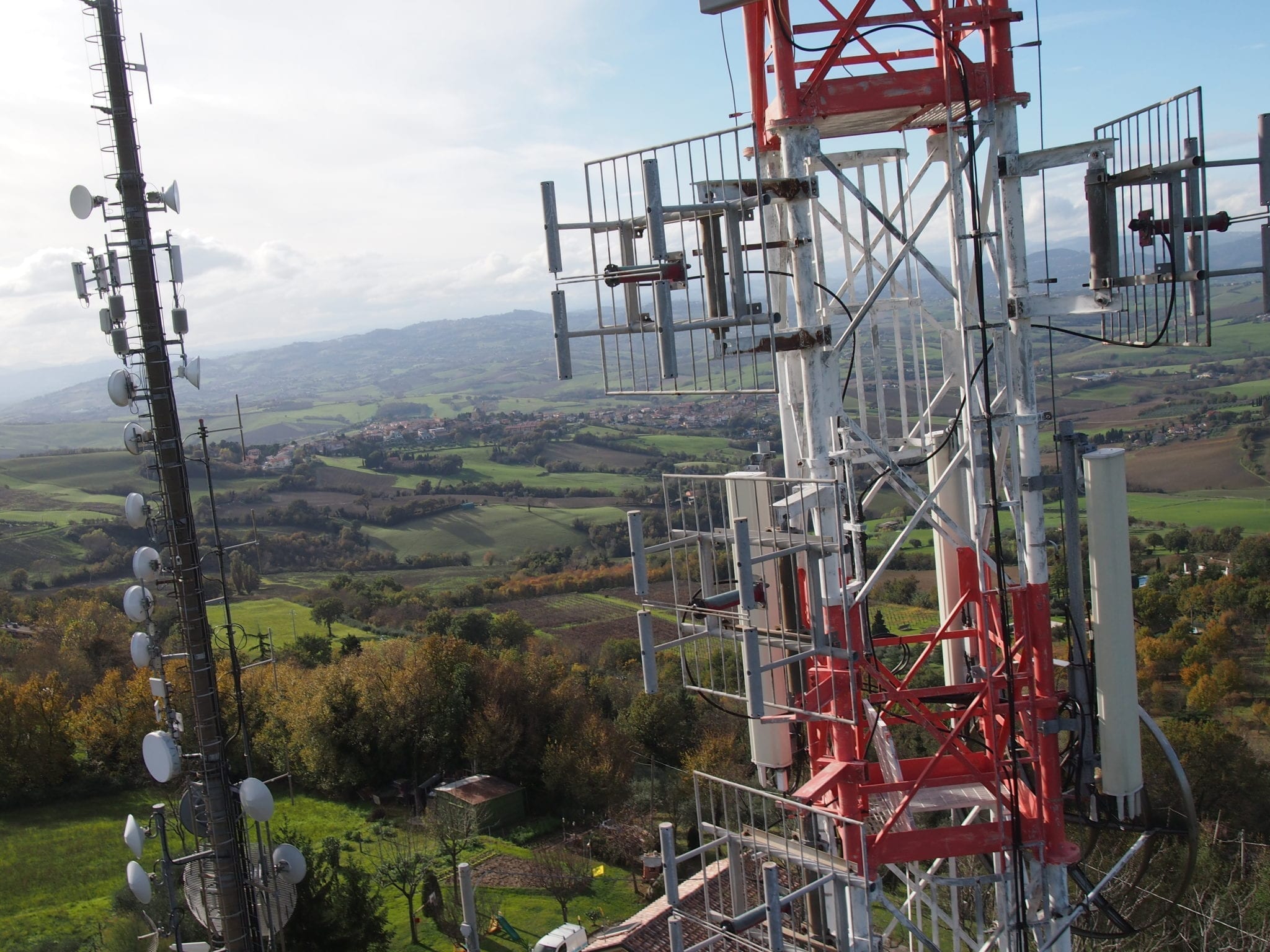
    Major market trends include expected significant growth in demand for lattice telecom towers, designed to manage heavy loads making them suitable for central communication hubs and backbone sites in disaster-prone areas.

    The primary purpose of a lattice tower is to support more than one antenna for communication purposes.

    The report also notes that the telecom tower market is currently highly competitive, with several major players dominating the market in terms of total share. These include India’s Bharti Infratel, China Tower – the joint venture established to operate the towers of China’s big three mobile operators, Helios Towers Africa and American Tower Corporation (ATC).

  • Telstra awarded 131 cell sites under Black Spot program

    Telstra awarded 131 cell sites under Black Spot program

    Australia’s Telstra has announced it has been awarded 131 sites as part of the fourth round of the government’s Mobile Black Spot program.

    The operator will deploy a mixture of new mobile base stations and small cells at the 131 locations, and will contribute $23.3 million of the $55.6 million co-investment required to fund the new sites, with the remainder coming from the federal and state governments.

    The new sites will include 49 in New South Wales, 23 in Western Australia, 22 in Victoria, 19 in South Australia, and 18 in Queensland.

    Telstra said it has so far deployed more than 550 new mobile base stations across regional and rural Australia as part of the Mobile Black Spot program.

    Meanwhile the operator expects to have spent a total of around A$8 billion ($5.66 billion) in total mobile investment over the five years ending in June, with nearly A$3 billion of this spent in rural areas.

    “Our investments will help towns and communities relying on mobile connected devices more than ever before,” Telstra CEO Andy Penn said.

    “The partnerships we have formed with Governments at all levels are providing connectivity and services to many areas of Australia where it was otherwise uneconomical to do so.”

    He said Telstra’s mobile network now spans nearly 10,000 base stations covering more than 2.5 million square kilometers.

    The announcement came shortly after the government revealed it has allocated a further A$160 million for the Mobile Black Spot program, which has now been extended to a further two rounds.

  • MWC2019 was a “reality check” for telcos

    MWC2019 was a “reality check” for telcos

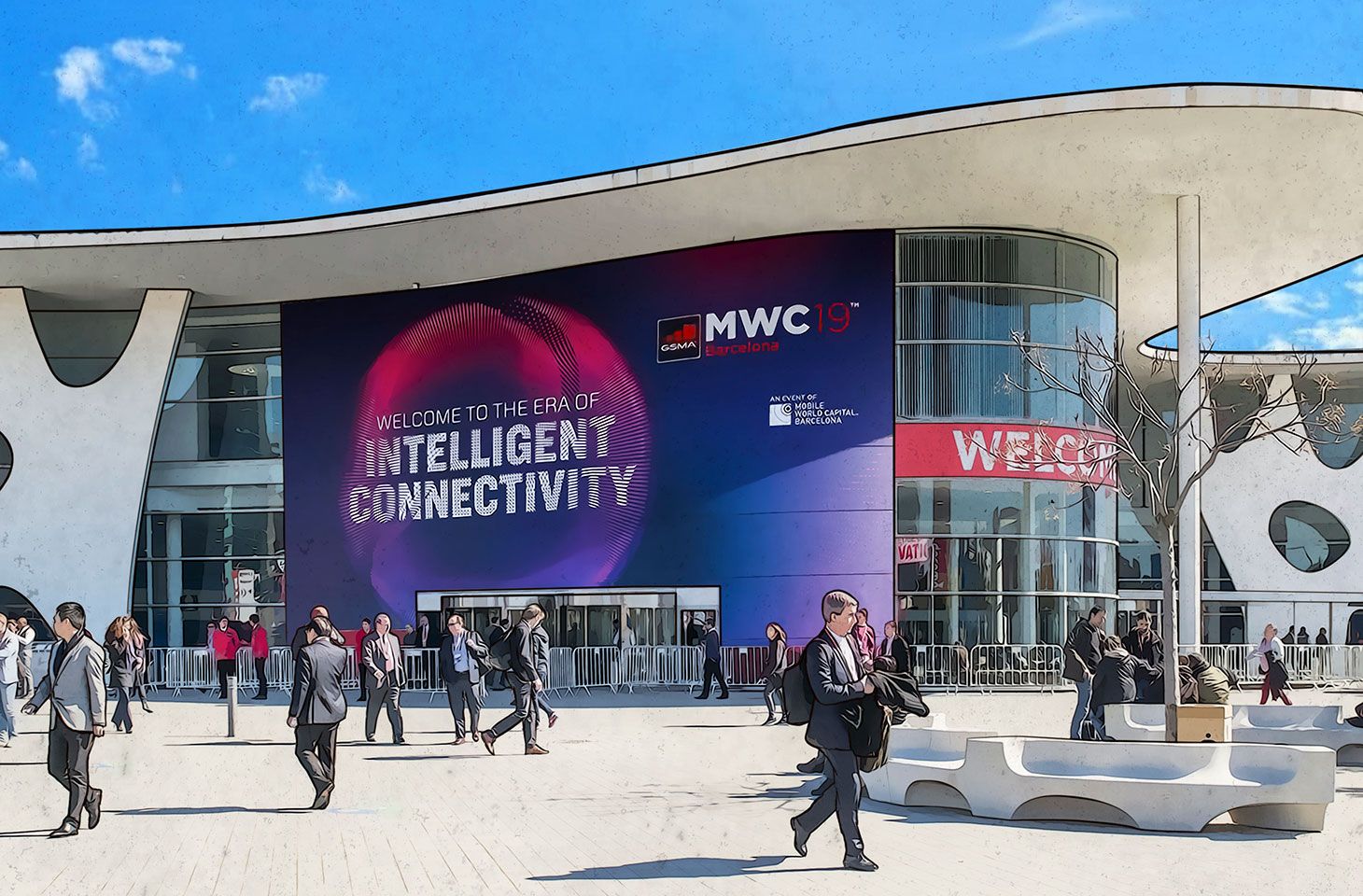
    MWC 2019 demonstrated the mobile industry knows it needs to change and without that change and a massive recalibration of its fundamental business model and modus operandi, it will become obfuscated, according to ABI Research.

    “MWC 2019 could best be characterized as displaying an anxiety borne from an industry suffering from a combination of split personality disorder and ADHD,” wrote Stuart Carlaw, Chief Research Officer at ABI Research, in the firm’s post-conference whitepaper: A Reality Check from Mobile World Congress 2019.

    One half of the industry encompasses an emerging band of technology companies that are addressing some pressing industry-centric issues with real-world solutions based on direct vertical market customer need.

    “The other half of the industry is made up of a carrier community that is moving at the same pace as the Titanic attempting to turn and avoid the iceberg. Too slow and too late,” added Carlaw.

    ABI Research had seven analysts at MWC 2019, which was held in Barcelona, Spain, between Feb. 25-28, 2019. The analysts focused on the following compelling transformative technologies:

    • 5G & Mobile Network Infrastructure
    • Digital Security
    • M2M, IoT & IoE
    • Smart Cities & Smart Spaces
    • Smart Mobility and Automotive
    • Smartphones and Wearables

    Some of the analysts’ conclusions about 5G and mobile network infrastructure from the whitepaper include:

    • Mobile Service Providers (MSPs) are becoming more rational in discussing what 5G can and cannot do. And, are realizing that 5G will be a slow affair.
    • Telcos and their partners will first use 5G to target the consumer market as that is the area where telcos have the know-how, reach, and experience.
    • Private LTE is slowly getting momentum in a market where 5G takes all the headlines. MSPs and network vendors already have well-tested and reliable technologies that can be used to deliver solutions in the enterprise space.
    • A new trend is emerging in the convergence of MSPs and cloud giants as the two categories need each other. This is part of the wider discussion around edge computing, network cloudification, and the role of 5G in creating new applications and supporting the growth of vertical markets.
  • CTG, Global Switch, Daily-Tech open Singapore data center

    CTG, Global Switch, Daily-Tech open Singapore data center

    China Telecom Global, Chinese data center infrastructure developer and operator Daily-Tech and the UK-based Global Switch have jointly open a data center in Singapore’s Woodlands district as part of their three-way partnership.

    The S$280 million ($206.4 million) Global Switch Singapore Woodlands data center spans 25,000 square meters and has been constructed to operate to Tier III+ standards.

    The Singapore data center is the second to be built under the three-way partnership after the HK$5 billion data center in Tseung Kwan O that opened in December 2017.

    The Singapore Woodlands data center is designed to a power usage efficiency of just 1.34, making it the most power efficient data center available to customers in Singapore. The data center services are powered by 30MVA of utility power supply capacity and backed by a 24/7 networks operations center.

    The data center will connect to China Telecom Global’s network of subsea and terrestrial cables as well as other data centers around the world. It is Global Switch’s 12th data center globally.

    “This is a milestone entry into the Southeast Asian countries’ market for Daily-Tech through our strategic business partnership,” Daily-Tech chairman Li Qiang said.

    “Customers in the region – particularly those looking to expand through China’s Belt and Road projects, will now find more convenient connections and access to well-managed services to support their business growth. This partnership offers customers commitment, a track record in servicing and bespoke services, and best practice management.”

  • NTC extends migration date to eight-digit landline numbers

    NTC extends migration date to eight-digit landline numbers

    The Philippines’ National Telecommunications Commission has extended the migration to eight digit landline numbers in the Greater Metro Manila area by six months, at the request of the banking industry.

    The Bankers Association of the Philippines (BAP) and the Credit Card Association of the Philippines (CCAP) have requested more time to prepare for the introduction of eight digit landline numbers by implementing the necessary changes to their operations and systems.

    As a result, the NTC has ordered local operators to extend the migration date to October 6 from March 18.

    Both Globe Telecom and PLDT have announced they will comply with the demand and informed customers of the delay.

    Globe Telecom has stated that until January 5, customers still incorrectly dialing an old 7-digit number will hear a special announcement stating that the format has been changed to 8 digits.

    The company has also pledged to continue remaining customers of the upcoming migration over all available channels – including SMS, email and social media – up to the deadline.

    “We will make the necessary adjustments when it comes to our internal systems and communication efforts to ensure smooth service continuity for all of our affected customers,” Globe general counsel Froilan Castelo said.

    “Our teams are continuously working closely with the NTC and other telcos to assist affected customers before, during, and after the migration.”

  • India may allocate 5G trial spectrum in June

    India may allocate 5G trial spectrum in June

    The Indian government is reportedly planning to allocate spectrum to mobile operators for 5G trial services in June.

    A panel established to set the terms for 5G trials is expected to soon begin deliberations on the spectrum that will be allocated for the trials, as well as the trial time period and other factors, citing government sources.

    Operators could then commence trials in July or August, and a spectrum auction for commercial 5G services may take place from September onwards.

    According to the report, the Department of Telecom is currently in the process of appointing an auctioneer and drafting bid documents for the online auction.

    Incumbent operators Bharti Airtel and Vodafone Idea have reportedly engaged vendors including Huawei, Ericsson and Nokia over the proposed trials.

    But the mobile industry has expressed concern that the expected high cost of 5G rollouts could further damage the financial performance of what is already a highly indebted industry.

    The market’s three operators – which also include Reliance Jio Infocomm – have an estimated total net debt of nearly 8 trillion rupees ($114.15 billion), due in part to high spectrum prices during previous auctions.

  • Airtel taps Ciena for high-speed backbone network

    Airtel taps Ciena for high-speed backbone network

    India’s Bharti Airtel has contracted Ciena to deploy a large-scale photonic control plane backbone network that will connect more than 4,000 towns across the nation.

    Under the agreement, announced at Mobile World Congress in Barcelona, the companies will collaborate to deploy a network spanning 130,000km.

    The network deployment, which the companies said will be one of the world’s largest photonic control plane deployments, forms part of Airtel’s Project Leap network transformation program.

    Airtel plans to use the network to serve exploding demand for high-speed data services, and to enable the delivery of high-speed broadband to end users over 4G/5G/FTTH architectures.

    For retail and enterprise customers, the network will also support bandwidth on demand, optical VPNs, latency based routing and dynamic data center interconnection.

    Airtel CTO Randeep Sekhon said the backbone architecture will be capable of working with data rates of 400Gbps and higher, and delivering low-latency software-controlled connectivity for cloud infrastructure.

    “Airtel has always pioneered the introduction of cutting-edge network technologies to serve its customers. We are pleased to work with Ciena to build one of world’s largest optical spine and leaf networks, which is also a big step towards 5G readiness by leveraging our huge fiber assets,” he said.

    “This will not only scale our network for massive capacity but also protect traffic and enhance service delivery to all our customers. It will also help Airtel further strengthen its position as a key enabler of digital experiences in an increasingly connected world.”

  • VMware announces 5G-ready Telco Cloud platform

    VMware announces 5G-ready Telco Cloud platform

    VMware has announced the launch of its 5G-ready Telco Cloud platform, as well as new solutions aimed at helping ease operators’ migration to 5G.

    Announced at Mobile World Congress in Barcelona, the new Telco Cloud platform is optimized for both 4G and 5G using a single architecture that supports both networks.

    “5G is at a massive inflection point, and planning decisions made today will have far reaching financial and operational ramifications for CSPs going forward,” VMware EVP for strategy and corporate development and GM for Telco NFV Group Shekar Ayyar said.

    “By moving away from the inflexible, hardware-defined architectures of the past, and rolling out 5G as a fully-virtualized architecture right out of the gate, telcos will be able to beat competitors to market with new value-added services and improve the performance and operational efficiencies of their networks. VMware today provides the best foundation for the 5G-ready telco cloud.”

    The company also announced new and upgraded solutions in its telco portfolio aimed at helping operators prepare their networks for 5G.

    These include VMware Smart Assurance 10, that will provide full integration with VMware vCloud NFV, the new VMware NSX-T 2.4 Data Center release, and an expanded VMware Ready for NFV Certification Program.

    The upgraded portfolio also includes Vmware HCX – which is designed to help operators build hybrid highways interconnecting heritage infrastructure and 5G environments on which commercial OpenStack ecosystem workloads can be migrated to a distributed, multi-cloud architecture.

  • Indian telcos call for fiber deployment fund

    Indian telcos call for fiber deployment fund

    Indian operators are calling for the establishment of a fund to help incentivize deployments of fiber across the country ahead of the introduction of 5G.

    The Cellular Operators Association of India (COAI) has urged the government to offer incentives including tax relief, rationalization and reduced red tape on investments in order to encourage the deployment of more fiber.

    The industry body believes a national policy should be established that would include the introduction of uniform and reasonable approval processes and right of way policies.

    As part of the government’s National Digital Communications Policy, the government is considering introducing incentives, and establishing a special purpose vehicle to grant low-interest loans to operators to fund network expansion.

    The policy also calls for the introduction of a new National Fibre Authority to help meet operators’ needs for fiber backhaul. The government aims to increase India’s fiber footprint fivefold by 2022 to around 7.5 million route kilometers. According to the policy, less than a quarter of current telecom towers are connected to a fiber backbone.

  • Thai telcos to establish telecom CERT

    Thai telcos to establish telecom CERT

    Eight Thai telecom operators have reportedly signed an agreement to establish a dedicated telecom computer emergency response team (CERT).

    The operators, which include incumbents AIS, Dtac and True as well as state-owned operators TOT and CAT, will establish the CERT over the next 12 months.

    The collaboration will initially involve sharing information about cyber threats, as well as collaborating on analytics to deal with threats to state agency websites and e-commerce sites.

    Other signatories include Symphony Communication, CS Loxinfo and United Information Highway.

    The move to establish a dedicated industry CERT is in line with the cybersecurity bill recently passed by Thailand’s National Legislative Assembly. The telecom body will be the second industry CERT to collaborate with the national CERT after the finance industry.

    The telecom CERT will be self-regulated and managed by the Telecommunications Association of Thailand, the report states.

    The association is seeking funding of 20 million baht ($630,000) from telecoms regulator NBTC to help pay for the establishment of the CERT. The full budget has not yet been set, but all members are expected to contribute.

  • BSNL, Nokia to collaborate on public safety networking

    BSNL, Nokia to collaborate on public safety networking

    Nokia and Indian state-owned operator BSNL are expanding their relationship with an agreement to jointly explore opportunities in the public safety sector.

    Under the agreement, Nokia will become BSNL’s OEM technology partner for public safety projects in support of the government’s efforts to advance public safety standards in the country.

    The two companies will explore developing solutions for first responders based on Nokia‘s ViTrust line of critical communications products.

    This will include the Nokia Ultra Compact Network, a portable solution designed to allow the deployment of a mission critical LTE mobile broadband network within minutes of arrival.

    The companies will explore opportunities in industry segments including smart cities, border enforcement, and mines and quarries in remote areas, and will work with India’s National Disaster Response Force (NDRF) to augment public safety communications systems with LTE technology.

    “As a trusted telecom service provider, BSNL is committed to providing the best technology solutions for public safety professionals,” BSNL chairman and managing director Anuam Srivasta said.

    “Our technology partnership with Nokia is a crucial step in this direction. We have a longstanding working relationship with Nokia, and this project starts a new chapter in our journey. Nokia’s innovation and leadership in mission-critical communications will allow us to deliver a best-in-class public safety network.”

    Last week the two companies announced another collaboration aimed at using LTE technology to improve operational efficiency at Nokia’s Chennai manufacturing plant.

  • KT secures $26.5m smart meter project in Uzbekistan

    KT secures $26.5m smart meter project in Uzbekistan

    South Korean telco KT has signed a 30 billion won ($26.5 million) contract with state-run power electricity supplier Uzbekenergo to install smart meters in Uzbekistan. Under the deal, KT will install smart meters in 360,000 households throughout the central Asian country over the next two years. KT has made its foray into Uzbekistan’s energy sector since it secured a 120 billion won deal ($106 million) with Uzbekenergo to provide its smart energy meters in 2015.

    The company so far installed its smart meters in 1 million Uzbek households throughout the three provinces of Samarkand, Jizzakh and Bukhara as a result of the first contract.

    Smart meters are electronic devices that record electricity consumption and have a two-way, real-time communication feature between the power company and its customers.

    With the smart energy meters, Uzbek households can monitor their real-time power usage and view online billing, enabling them to use electricity in a more efficient and effective way, KT said in a statement.

    Following the deal with Uzbekenergo, KT said it hopes to expand its smart meter business to the energy sectors in other Eurasian countries.

    “This project shows KT’s success in building trust in Uzbekistan with our technological excellence,” said Yoon Kyoung-Lim, head of KT’s global business office.

  • StarHub offering free local calls to prepaid customers

    StarHub offering free local calls to prepaid customers

    Singapore’s StarHub has started offering prepaid customers free outgoing local calls as long as they have an active data plan. The company will continue offering prepaid customers free local calls for the duration of their data plan, even if they run out of data.

    StarHub offers customers a choice of six prepaid data plan over its Happy Prepaid app, starting at S$2 for 30MB of data and free outgoing calls for three days. An S$8 mid-tier option adds 1GB and free calls for seven days, while an S$25 plan offers 5GB of data and free calls for 30 days.

    “Just by being on our new prepaid data plans, customers can enjoy the best of two worlds – surfing on Singapore’s fastest 4G network and chatting with family, friends and co-workers easily and affordably,” StarHub VP of marketing Donovan Kik said.

    “Simplicity is key and we will continually enhance our services to ensure we deliver the best possible experience to customers.”