Tag: telco

  • StarHub pursuing network sharing to cut costs

    StarHub pursuing network sharing to cut costs

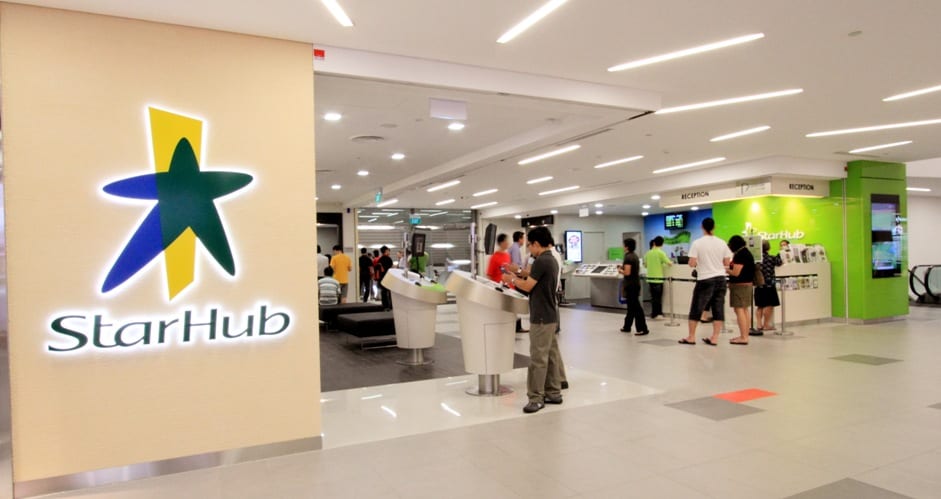
    Singapore’s StarHub has revealed it is pursuing network sharing arrangements to further cut costs, after announcing a planned 12% reduction in the operator’s workforce.

    The operator could reach a commercial network sharing agreement shortly and be reaping financial benefits by the end of next year, the company’s CEO Peter Kaliaropoulos.

    The company’s new CEO, who took his position in July, said sharing of facilities is a necessity once an industry hits maturity.

    StarHub and smaller rival M1 have already indicated that they are evaluating further collaboration on mobile infrastructure sharing to reduce costs.

    Earlier this month, StarHub announced it will cut 300 jobs as part of cost reduction efforts aimed at saving S$210 million ($152.3 million) over the next three calendar years.

    According to the report, Kaliaropoulos believes StarHub needs to be leaner and more agile and focus its resources on growth areas such as its enterprise business.

    The company is under particular pressure due to the recent entry of Australia’s TPG as Singapore’s fourth mobile operator. Kaliaropoulos warned that the Singapore market may not be large enough to sustain four mobile operators, hinting that the smallest player may find it difficult to survive.

  • Small Cell Forum puts orchestration, SON on roadmap

    Small Cell Forum puts orchestration, SON on roadmap

    The work program for the Small Cell Forum for the coming year covers “every aspect of densification,” including policy improvements for siting and spectrum, 5G-enabling technologies and the next iteration of its enterprise action plan, according to SCF. One of the work items focuses on the edge computing landscape, which the forum describes as an excellent example of an area where a common framework will be essential to avoid fragmentation—but one where every operator will deploy differently to support different use cases.

    Indeed, the pushing of intelligence, processing and cloud services to the edge of the network is making the small cell into a “gold mine” by adding many more services to the connectivity, according to SCF. Technologies like ETSI’s Multi-access Edge Computing or the OpenFog initiative, which is now the basis of an IEEE standard, are ways to distribute cloud services widely and bring them close to the users, supported along with radios on small cells equipped with processors or in separate miniservers. The distributed topology reduces latency and backhaul costs and improves responsiveness and QoS for users, the forum notes.

    The forum has been bringing operators, vendors and other stakeholders together as part of “Densification Summits” that it has held in the US, China and India over the past 12 months, discussing how to map clear and cost-effective migration paths to dense, software-driven and automated 5G networks. As such, the forum says it has been able to gather a range of requirements from industry and enterprise as to what future networks should enable.

    Another important task for the forum is developing a full road map for orchestration and SON. “Unsurprisingly, on the eve of commercial 5G, many of the issues which operators highlighted relate to that new standard—for instance, how it will interwork with WiFi, and what a 5G small cell for massive IoT applications should look like,” the SCF stated. “And some of the Forum’s most important 4G technologies will be revisited to plot a 5G migration, including the nFAPI interface for virtualized small cell networks.”

    According to the forum, one of the most important foundations of the new work program is the Enterprise, which is based on a year of in-depth discussions within SCF’s Enterprise Advisory Council. It identifies requirements that are common to all sectors and can be addressed by a unified small cell platform, while also drilling down on the specific variations within individual markets such as hospitality, healthcare and commercial property.

    SCF says it has been increasingly engaged with spectrum regulators and national and municipal authorities to help them understand the benefits of densification and how it can be accelerated by the right rules. Activities in 2018-19 will take this work further, to remove more of the barriers that challenge at-scale deployment.

    Last month, the FCC voted to approve rules aimed at speeding up the deployment of small cells and other 5G network equipment by regulating in part the fees and timelines cities and states can impose on wireless network operators and other wireless players.

    US outdoor small cell antenna shipments increased 84% in 2017, according to a report from EJL Wireless Research. The firm is forecasting that US outdoor small cell antenna shipments will increase by 75% in 2018 due to increasing demand from all four US national mobile operators as well as neutral host operators.

  • Singtel, StarHub and M1 must keep innovating to stay in the game

    Singtel, StarHub and M1 must keep innovating to stay in the game

    Signs have not been good lately for Singtel, StarHub and M1, the country’s three large telecommunications companies. Technological innovations, as well as changes in regulations, have sent shock waves through the big three companies, and virtual mobile telcos such as MyRepublic, Zero1 and Circles.Life have also posed a threat to the larger players.

    But with new kid on the block, TPG Telcom, set to launch later this year, the question remains whether there is still a place for one more large telecommunications company in an already crowded market.

    The existing telcos say that since the country is small and has a mature mobile market with very high rates of penetration, perhaps three’s a company, but four would be a crowd.

    In other places such as Germany, Denmark and the UK there is consolidation of only three mobile network operator (MNO) providers. Indonesia, whose population of 250 million is huge, compared to Singapore’s 5 million, is also leaning toward consolidation.

    Three years ago, the  Info-communications Development Authority of Singapore (IDA) asked whether expanding mobile services in the country is a viable option. Today, opinions still are divided as to whether or not there is room in Singapore for a fourth telco.

    One concern is that tougher competition will lead to fewer revenues in the mobile sector, which would in turn discourage service innovation, and even investments as well.

    On the opposite side is the IDA, which has evolved into the Infocomm Media Development Authority (IMDA), says that there is space for telcos to innovate their services, as well as room for more competition in the market.

    When a new MNO enters the market, this may also spur existing ones to further invest in innovating their networks in order to stay competitive.

    TPG Telecom, which is based in Australia, is already making quite a splash in Singapore, with a special offer for seniors, an audience not often catered to by telcos. TPG is giving a fee mobile plan for people aged 65 and above, complete with a SIM card, 3GB of data and unlimited mobile calls.

    Other telcos are greeting TPG’s launch as a splash of cold water on their faces, to get them to innovate their strategies. The telco industry is marked by both competition and innovation, and companies have to work hard to keep up. Their strategies must remain both quick and agile to remain enticing to existing customers as they attract others.

    For example, telcos have been threatened by over the top (OTT) voice, text and messaging options that only require WiFi for consumers to make calls and send messages. This has meant that telcos can no longer rely on old revenue streams that depended on subscription plans, infrastructure and bandwidth, as consumers ceased to need them as much.

    Big players in the tech market such as Apple, Amazon and Google offer such OTT services merely using data connections, which removes the need for additional infrastructure.

    Industry experts predict that WhatsApp, Skype and different OTT applications will cause telcos the loss of around US$400 billion in revenue for this year alone.

    How then can telcos, which have invested millions on infrastructure, secure their future despite fewer returns on those investments, or else, face the possibility of growing redundant in the industry.

    Perhaps the bigger question here is not whether there is room in the country for yet another mobile telecommunications company, but to ask whether the existing companies are doing enough to innovate in order to maintain relevance in a quickly evolving industry.

  • Indian telco sector facing three more quarters of losses

    Indian telco sector facing three more quarters of losses

    India’s telecoms sector is facing at least three more quarters of losses due to the ongoing price war, according to industry body the Cellular Operators’ Association of India (COAI).

    The Indian GSM industry body’s director general Rajan Mathews told that he believes the market’s current tariffs are unsustainable in the long term.

    The industry’s woes are being added to by high license fee and spectrum charges, including high upfront payments, which has guaranteed that the current fiscal year will be tough for the industry.

    The current situation commenced in 2016 when disruptive new entrant Reliance Jio Infocomm entered the market with entirely free services during an extended promotion period. The operator continues to charge only for data, at low rates.

    Jio’s strategy prompted established operators to cut prices to compete, and prompted a wave of consolidation that has seen the market reduced to just three private operators – Jio, Bharti Airtel and the combined Vodafone India and Idea Cellular (now Vodafone Idea).

    Mathews said that there is light at the end of the tunnel, and clarity I expected to emerge in the fiscal year 2019-2020, which begins in April next year.

    But he warned that if tariffs continue to decline it will be detrimental to the health of the industry as it will threaten operators’ ability to invest in emerging technologies and in expanding coverage.

  • Webscales must team with telcos on atmospheric satellite projects

    Webscales must team with telcos on atmospheric satellite projects

    The summer of 2018 brought different fates to moves by Facebook and Google to offer broadband services using high-flying drones and balloons (atmospheric satellites) to the unserved in remote rural areas.

    GlobalData, feels that webscales need to partner with telcos globally to address the affordability challenge of reaching out to the unconnected in rural markets with atmospheric satellites.

    Atmospheric satellites fit in the space between true satellites commonly used for communications and ground-based networks. Their theoretical advantage over satellites is much lower cost. Launching a balloon or a drone and equipping it with a radio base station represents a much cheaper way of covering large swaths of land. Considering one-third of the world population remains unconnected, the lower costs associated with balloon- or drone-based coverage is compelling.

    However in June 2018, following several setbacks over a period of four years, Facebook abandoned developing its own high-flying solar-powered drones (Aquila project) for delivering internet. However, the California-based social media giant said that it will focus on working with partners like Airbus on high altitude platform station (HAPS) system, which is capable of beaming down high-speed internet.

    On the other hand Alphabet, the parent company of another social media company, turned its Project Loon balloon broadband initiative into an independent company and announced its first commercial project with partly-state owned Telkom Kenya in July 2018. The partners plan to launch balloon-based 4G/LTE services commercially to parts of central Kenya, starting from 2019.

    Loon’s pilot with Telkom Kenya may provide the clearest test of whether atmospheric satellites can really work. This puts pressure on Loon to demonstrate it has a viable technology.

    “Things get more complicated when the practical challenges of covering the unconnected masses with drone- or balloon-based mobile signals are considered,” GlobalData telecom technology and software analyst Emir Halilovic said.

    “For starters, the potential customers for services provided from atmospheric satellites are not concentrated in one part of the world; rather, they are spread across remote, rural, or tribal areas, in many different countries and continents.”

    Truly addressing this group would require the participation of multiple operators in dozens of countries. Moreover, most of the unconnected usually do not live outside areas where they can get mobile service; they just cannot afford a mobile plan. Drones and balloons do little to address the ’affordability’ challenge.

    Halilovic concludes: “Still, there are reasons to continue to pursue atmospheric satellites to provide coverage to the underserved rural communities, which could use internet connection to improve access to medical services in isolated locations, for example. Another use case for atmospheric satellites is quick restoration of communication services in natural disasters. Telcos should therefore continue to test atmospheric satellites to support development of such services.”

  • Korean telcos object to universal fare plan

    Korean telcos object to universal fare plan

    South Korean operators are protesting the government’s proposed introduction of a “universal fare plan” that would require the market’s top operator to provide a low-cost plan to help households reduce mobile costs.

    The government is planning to revise the Telecommunications Business Act to require the top ranked operator to offer a plan including 200 minutes of voice calls and 1GB of data for around 20,000 won ($19).

    While the regulation would technically only impact incumbent SK Telecom, rivals KT and LG U+ have complained they would have no choice but to release similar plans to remain competitive.

    The three operators are protesting the government’s plans on the basis that it could be devastating to their profitability – SK Telecom estimates that operating profits for the three companies could be reduced by up to 60% as a result of the move – and that it imposes too much state intervention into their businesses.

    This would be coming at a time when operators will need to make huge investments in 5G infrastructure to support their goals of launching 5G services in early 2019.

    Government and SK Telecom officials failed to reach a consensus during a meeting to discuss the proposed change by the Regulatory Reform Committee late last month, the report states. The committee plans to hold a new meeting next week to continue the discussion.

    Under the proposal, the universal fare plan would be revised every two years. But SK Telecom has argued that the plan would effectively force operators not to conduct marketing activities and eliminate the incentive to compete with each other.

  • Duterte sets up third telco oversight committee

    Duterte sets up third telco oversight committee

    Philippines president Rodrigo Duterte has established an oversight committee to support his ongoing goal of attracting a third telco player into the market.

    The president has signed an administrative order establishing the committee, which will work to ensure that the entry of a new major player into the telecom market is undertaken in “an integrated and transparent manner.”

    The committee will consist of a representative from the department of ICT as a chairperson, from the department of finance as a vice-chair, from the Office of the Executive Secretary and from the National Security Adviser.

    It will be tasked with assisting regulator NTC with the formulation of terms of reference for the selection and assignment of radio frequencies to the proposed new player and oversee timely implementation of the third telco policy.

    The committee will also have the power to call on government agencies for assistance if needed.

    Duterte has been pushing for some time to introduce a third player to break the PLDT-Globe duopoly. The ICT department has previously indicated plans to hold a “beauty contest” selection process some time this year, and Duterte has been courting Chinese operators to take a minority interest in the proposed new player.

    But the government has missed its deadline of ensuring a third player was up and running by March, and has now moved this deadline until the end of June or July.

  • Philippines’ Duterte urges fast-track for third telco

    Philippines’ Duterte urges fast-track for third telco

    The Philippines’ president Rodrigo Duterte has announced plans to fast-track the entry of a third operator into the market, and wants the operator to be up and running within the first three months of next year.

    Duterte has directed the Department of Information and Communications Technology and regulator the National Telecommunications Commission to approve all applications and licenses within seven days of a completed submission.

    The president last month approached the Chinese government with the opportunity to become the Philippines’ third major player in partnership with a local company. The as-yet unnamed Chinese telco would take a 40% stake in the venture with a consortium of local companies expected to own the remaining 60%.

    Philippines’ courts have meanwhile been warned against interfering and prolonging the process of the entry of the third player.

    The government has meanwhile moved to allay fears that China’s entry into the telecoms sector may compromise national security in light of the ongoing South China Sea dispute, noting that foreign players already hold minority stakes in incumbent operators Globe and PLDT.

  • Operators stepping up preparations for 5G

    Operators stepping up preparations for 5G

    Many operators have accelerated preparations for the arrival of 5G, and are increasingly looking to the enterprise as well as the consumer market as potential customers, research from Ericsson indicates.

    A survey of operators that have publicly announced intentions to deploy 5G shows that 78% are conducting 5G trials, up from just 32% during a similar survey last year.

    In addition, 28% of the respondents plan to deploy 5G next year. Operators have meanwhile further evolved their business strategies for 5G services to extend beyond the consumer market.

    “In the 2016 survey, 90% of the respondents pointed to consumers as the main segment in their 5G business planning,” Ericsson head of 5G commercialization Thomas Noren explained.

    “This year, it is an even split between three segments and operators have identified business opportunities not only in the consumer segment but also with enterprise users and specialized industries.”

    With operators considering the consumer market to be becoming saturated, 5G planning has been more evenly distributed across specialized industry segments (58%), business users (56%), and consumers (52%).

    The industry segments considered to have the most potential include media and entertainment, automotive and public transport, with energy and utilities as well as healthcare being considered other attractive potential markets.

    The survey also found that a clear majority of operators believe that the IoT will play an important role in the 5G ecosystem.

  • Philippines may lift foreign ownership caps on telcos

    Philippines may lift foreign ownership caps on telcos

    The Philippines government is considering lifting foreign ownership restrictions on local telecoms companies and other utilities to help stimulate the industry.

    The government has proposed to raise the current cap limiting foreign direct ownership to 40% of a utility company up to 70%. While the economic planning ministry believes the change could be implemented with the passing of a new law, the 40% cap is enshrined in the constitution and some analysts believe lifting the cap would require a constitutional amendment, which would be very difficult to pass.

    The Philippines’ duopoly of telecoms operators are both part owned by foreign investors. PLDT is around 25% owned by Hong Kong based First Pacific and Globe Telecom is 20% owned by Singtel and operated as a joint venture with Ayala Group.

    Philippines president Rodrigo Duterte has been firmly calling or the telecoms industry to improve services for Filipinos, and has threatened to bring in new competition to improve competition and quality. He has also asserted that foreign investment is needed to improve the Philippines’ telecoms sector.

    Duterte is scheduled to deliver his second State of the Nation Address today.

  • DoCoMo to deploy Ericsson’s UDN

    DoCoMo to deploy Ericsson’s UDN

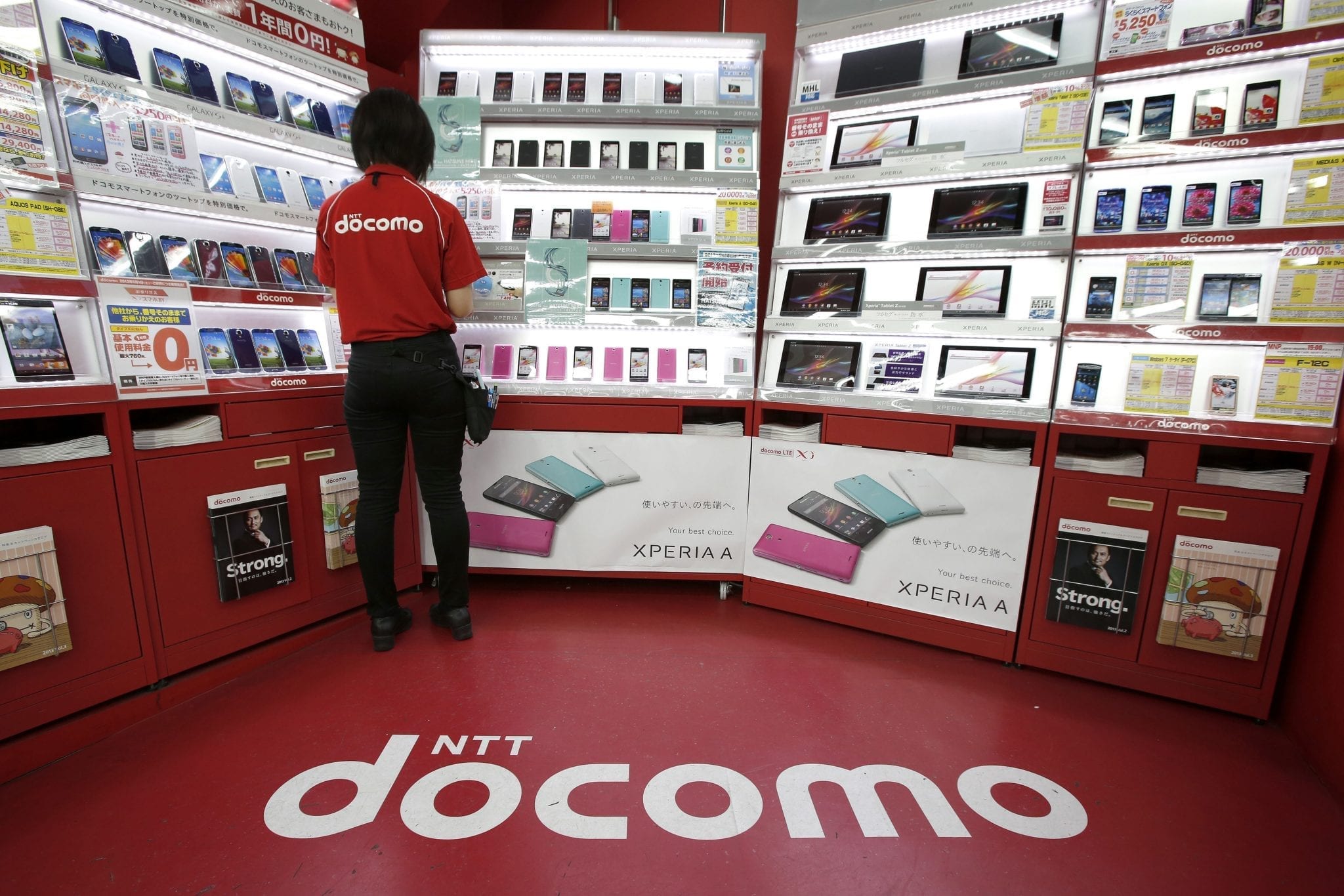
    Japan’s NTT DoCoMo has contracted Ericsson to provide the vendor’s Unified Delivery Network (UDN) global content delivery network solution for the DoCoMo mobile network.

    The contract marks Ericsson’s first deployment of its UDN in Japan. DoCoMo will initially use the platform to roll out content distribution services, and will follow this up by introducing future value added services including toll-free data for certain content.

    Ericsson’s UDN is designed to connect content providers worldwide with the last mile reach network operators can offer.

    It is designed to aggregate network capabilities to allow services to be optimized and monetized in new ways, while offering operators the ability to efficiently scale the delivery of OTT services and high-quality video content.

    “For future services, NTT DoCoMo foresees that consumption of 4K video, virtual reality and augmented reality content will increase and believes a platform like a UDN adds value in the high-speed 5G era,” the operator’s GM of service design Takaaki Sato said.

    Ericsson head of UDN service provider partnerships Cillilan Maher said its UDN ecosystem now encompasses 55 content providers and 40 operators worldwide.

    “As part of [this ecosystem], DoCoMo will be able to significantly advance the traditional content delivery network model,” he said.

    “As a service provider partner, they will be able to garner incremental revenue and can participate as a content provider, driving traffic through both their own network and the UDN ecosystem.”

  • Myanmar cellcos cleared to use 1800 for 4G

    Myanmar cellcos cleared to use 1800 for 4G

    Myanmar’s Ministry of Communications and Information Technology (MCIT) has granted permission to the market’s mobile operators to launch 4G over the 1800-MHz spectrum assigned to them.

    Mynmar Posts and Telecommunications, Telenor Myanmar and Ooredoo Myanmar have been cleared to use 2x10MHz of 1800-MHz spectrum allocated under a 12 year license.

    Operators will be required to pay an $80 million usage fee, the ministry’s Posts and Telecommunications Department has revealed.

    State-owned MPT has announced that with the approval the operator will be expanding its network to 4G, starting with the cities of Nay Pyi Taw, Yangon, and Mandalay. The operator will offer customers the ability to swap their existing 2G and 3G SIMs to a 4G SIM free of charge.

    MPT has teamed up with KDDI and Sumitomo for its mobile operations as part of the liberalization of Myanmar’s telecoms sector.

    Telenor Myanmar and Ooredoo Myanmar will meanwhile be able to use the spectrum to expand their respective 4G operations to more cities and regions.

    Telenor Myanmar launched 4G services in July last year, and now offers 4G in 19 cities. Ooredoo Myanmar launched 4G in May  in Yangon, Mandalay, and Nay Pyi Taw, and has since expanded the network to the Magwe Region.

  • Hong Kong cellcos call for clear spectrum roadmap

    Hong Kong cellcos call for clear spectrum roadmap

    Hong Kong’s mobile operators are all calling on the government to develop a clear spectrum roadmap that covers the release and allocation of spectrum for 5G services.

    HKT has called on the government to perform an “urgent and radical overhaul” of its mobile spectrum policies and practices to prepare for the introduction of 5G mobile technology.

    The Office of the Communications Authority (OFCA) must improve its “archaic mobile spectrum principles and practices,” or the telecoms industry and Hong Kong as a whole will suffer irreparable damage, the operator has argued.

    In a response to the government’s public consultation on the re-assignment of 900-MHz and 1800-MHz mobile spectrum, widely used for mobile services, HKT said a new, forward looking plan for spectrum management is needed to meet the future needs of the industry and Hong Kong society.

    The operator called an earlier attempt by the government to attract new market entrants “an example of the complete failure of its policy.”

    While 21 ViaNet originally bid for 30 MHz of 2.3-GHz spectrum with the stated aim of launching mobile services, the company subsequently decided to use the spectrum for local fixed services, and then reduced its use of the valuable spectrum to only cover certain village houses. HKT said this wasted “valuable mainstream mobile spectrum which is in short supply in Hong Kong.”

    “Hong Kong is facing a severe spectrum deficit and is seriously lagging behind the other developed markets in policy making. The government’s current spectrum rollout plan has failed to set the stage for early adoption of 5G,” HKT group managing director Alex Arena said.

    “Along with the archaic principles and practices adopted by the CA for building access, spectrum charging, and spectrum management, this poses a clear and substantial threat to Hong Kong’s services based economy, consumer satisfaction, our role as a telecommunications hub, our ability to service as a gateway to Mainland China, and our ability to be a creative center.”

    HKT wants the government to provide a clear roadmap for the release of adequate spectrum to the industry, classify mobile operators as utility providers and facilitate their access to buildings and land for cell site installation and manage spectrum in a way that incentivizes investment by industry.

    In addition, HKT is calling for an overhaul of the current spectrum utilization fee (SUF), replacing the current system of charging on a per MHz basis to reflect the large bandwidth that will be required for 5G.

    The operator said in 2016, spectrum costs represented 12.2% of its operating costs, well above OFCA’s calculation of 3-4%.

    “As we move into the information economy, our telecommunications infrastructure is a vital national resource. There is no time to waste. The Government needs to resolve these matters now,” Arena said.

    “HKT, together with the rest of the industry, looks forward to engaging in active dialogue and discussion with the Government about the way forward.”

    In a separate submission, rival SmarTone also called for the development of a clear spectrum roadmap.

    The operator indicated that it supports the adoption of a hybrid approach combining administrative acquisition of spectrum with a market based approach to its release, one of the three options being proposed for the future management of spectrum assets.

    Meanwhile 3 Hong Kong’s submission has asserted that the regulator should be giving existing licensees of 900-MHz and 1800-MHz spectrum a right of first refusal while reallocating the frequency bands.

    The operator argued that taking spectrum away from mobile operators would hinder long-term investment and innovation and risk disrupting customer service continuity. An excessive SUF is the equivalent to a spectrum tax on mobile users and is against the public interest, the submission added.

  • Telco API revenues set to reach $207b by 2022

    Telco API revenues set to reach $207b by 2022

    Global revenues from telecommunications application programming interfaces (APIs) is on track to reach $207 billion worldwide by 2022, Research and Markets has predicted.

    A new report from the research firm finds that the telco API market has significantly matured in recent years. But much of the market activity has so far been limited to larger operators in developed countries, leaving significant room for growth in emerging markets.

    During the past five years, operators have leveraged APIs to derive wholesale transaction revenues from third-parties such as OTT providers and enterprises, as well as communication-enabled application revenue, the report states.

    Operators have the potential to achieve incremental growth by providing a variety of services and application support, such as robo and unwanted call blocking services to support do not call registries and compliance with consumer protection regulation.

    But in the long term, revenue from traditional consumer centric services supported from telecom APIs is expected to level off, with revenue associated with IoT services becoming the new markte driver.

    The report predicts that communication-enabled network revenue will plateau as IoT network support revenue becomes a more substantial revenue component for Telecom APIs by 2025.

  • How will telcos handle the video “cash cow”?

    How will telcos handle the video “cash cow”?

    Huawei hosted over 500 media and analysts to its 14th annual Analyst Summit, with a variety of executives discussing their roadmaps.

    “Huawei will remain committed to building more connections, enlarging data pipes, and driving digital transformation,” said rotating CEO Eric Xu in an opening keynote.

    Xu said that cloud services are already a basic business model. “Beginning in 2017, Huawei will focus on public cloud services. We will invest heavily in building an open and trusted public cloud platform, which will be the foundation of a Huawei Cloud Family.”

    This cloud-based unit “will include public clouds we develop together with operators, and public clouds that we operate on our own,” said Xu.

    William Xu, executive director and chief strategy marketing officer, said that digital transformation “opens up immense new potential for value-driven growth in traditional industries.” He said that ICT infrastructure is a pillar for economic growth, and that “the cloud in particular is key to unleashing the power of connectivity.”

    He said “Huawei recommends that countries and industries turn their attention to digital transformation as a driver for growth, and pursue greater development and investment opportunities in emerging fields like cloud computing, IoT, and big data.”

    Ryan Ding, executive director and president of products & solutions, said in his keynote that operators in some markets are beginning to monetize video services, with an early winner being high-definition streaming of sports events. Ding pegged video at “70% of [mobile] traffic” in the near future, with 1K (1080p), 2K and 4K options available depending on the operator.

    In a media roundtable interview, Ding offered more granular data on the future of mobile video, describing it as a “new cash cow for mobile operators.”

    “We believe that 2K on smartphones and 4K on TVs is the sweet spot,” he said, noting that “different countries have different situations.”

    Ding described sports as the most popular content worldwide, giving an example of Spanish pubs that draw punters with live 4K broadcasts of football matches. As he described it, the largest TV features traditional match coverage while additional displays show different views of the same match—an experience viewers won’t get at home. He also said Huawei’s X Lab Insights estimates the overall entertainment market opportunity alone at $650 billion worldwide by 2020.

    Ding isn’t bullish on videoconferencing, but sees opportunities in the video surveillance market. There are 1.3 million CCTV cameras in Beijing alone, he said. “Last year in China, operators deployed 40 million IPTV sets,” said Ding. “This number is comparable to the number deployed from 2005-2015.”

    The Huawei president of products & solutions urged operators to migrate legacy systems to the cloud, adding that those in China are better positioned for the move than operators in Europe who are more vested in their legacy systems.