Tag: telco

  • TPG wins auction to be Singapore’s fourth cellco

    TPG wins auction to be Singapore’s fourth cellco

    Australian fixed line operator TPG Telecom has won the new entrant spectrum auction to become Singapore’s fourth mobile network operator.

    TPG submitted the winning bid of S$105 million ($72.8 million) for a provisional allocation of 60 MHz of spectrum in the 900-MHz and 2.3-GHz spectrum bands.

    TPG outbid MyRepublic to secure the new license and spectrum.

    Final allocation of the spectrum will require payment of the relevant spectrum fees, and the commencement date of spectrum rights will be scheduled after the planned general spectrum auction to be held in the first quarter.

    Regulator IMDA said the new spectrum rights are expected to commence on April 1 at the earliest. TPG will also be eligible to compete in the general spectrum auction if the operator so chooses.

    As a condition of its bid, TPG will need to provide nationwide street level 4G coverage within 18 months of the new spectrum rights commencing, road tunnels and in-building coverage within 30 months and coverage of MRT underground stations and lines within 54 months.

    Singapore MVNO Circles.Life, which launched earlier this year as the market’s fourth postpaid mobile service provider, has welcomed the move.

    “Circles.Life welcomes IMDA’s on-going efforts to support competition and look forward to TPG Telecom’s entry into the telco space in Singapore… We hope TPG Telecom will continue to support our ambition to bring more innovation and choice to the market,” the company’s co-founder and director Rameez Ansar said.

    “In the short-term, the impact may be limited until TPG Telecom enters the market in about two years from now after building the required infrastructure. Meanwhile, we are focusing on targeting the data savvy segment.”


  • Accuris, iPass to offer Wi-Fi solution for cellcos

    Accuris, iPass to offer Wi-Fi solution for cellcos

    Wi-Fi roaming, interworking and service policy enablement provider Accuris Networks has entered a partnership with global Wi-Fi operator iPass to offer mobile operators and MVNOs the ability to integrate carrier Wi-Fi into their service offerings.

    The companies will offer a combined solution enabling mobile operators to access the global iPass Wi-Fi footprint for service delivery and traffic offloading.

    The solution will integrate iPass’ SmartConnect technology into the Accuris Networks Wi-Fi e-client to enable client connection analytics. The solution will support integration with pre-paid service plans and existing billing systems.

    “Not only will this partnership offer our connectivity services to a billion potential end users, but it will also enable MNOs and MVNOs to dramatically accelerate the introduction of cutting-edge Wi-Fi solutions to the market,” iPass CEO Gary Griffiths said.

    “In particular, we see this partnership as integral in delivering on our strategy to connect users seamlessly and intelligently on Wi-Fi and cellular networks.”

    “Mobile operators increasingly see the value in Wi-Fi as a central pillar to their connectivity and mobile broadband strategy, “ Accuris Networks CEO Jeff Brown added.

    “Accuris Networks has proven capability in combining controlled Wi-Fi service to their core service portfolio. Now, by teaming with iPass, which boasts an unparalleled global Wi-Fi footprint and Wi-Fi analytics technology, we can offer our customers a complete mobile-centric Wi-Fi solution.”

  • Spark deploys 200G OTN technology

    Spark deploys 200G OTN technology

    New Zealand’s largest operator Spark has deployed the market’s first 200G per wavelength production fiber link using equipment from Nokia.

    The operator’s new 200Gbps network link connects its core network with the global gateway, and will co-exist with Spark’s existing 10G and 100G channels.

    Spark general manager of networks Colin Brown said the upgrade is aimed at meeting massive growth in demand for bandwidth in an increasingly digital world.

    “Nokia has helped Spark NZ reach a new milestone with our world-class optical transport network, achieving our vision of a data-driven future for New Zealand and underpinning an integrated network including fiber, 3G, 4G, 4.5G, wireless broadband and Wi-Fi,” he said.

    Spark is using Nokia’s optical transport network technology. The vendor said it has now shipped its 200G solution to more than 88 customers worldwide, and demand is growing rapidly as operators see the benefits of 200G 8x quadrature amplitude modulation (8QAM).

    “Like many operators, Spark has faced relentless growth in bandwidth demand, largely driven by an increase in video streaming by business and consumer users,” Nokia head of Oceania Ray Owen said.

    “By taking a flexible approach to this challenge with New Zealand’s first 200Gbps fiber link, together with Nokia, Spark is well placed to meet continued demand growth while meeting existing user expectations.”

  • New Zealand’s Spark warned off marketing Gigabit plans

    New Zealand’s Spark warned off marketing Gigabit plans

    New Zealand operator Spark has been cautioned against advertising its high-speed fiber services as “gigabit” plans by competition regulator the Commerce Commission.

    The ISP launched its fastest fiber service yesterday, labeling it “Ultra Fast Fibre MAX” instead of the planned Gigabit name.

    The Commerce Commission held that advertising the service as a Gigabit speed would mislead consumers into expecting speeds of 1,000Mbps, whereas the Spark service will deliver speeds of between 700Mbps and 900Mbps.

    As well as Spark, the Commission also plans to get into contact with other ISPs making similar claims, noting that it has received enough consumer complaints to deem the action necessary.

    The Commission hasn’t made a formal ruling, but said Spark had recognized the concerns the regulator had raised and decided to take action accordingly.

    But the Telecommunications Users Association has criticized the decision as being “pedantic”, noting that other markets advertise similar-speed plans as Gigabit services, and that technical constraints will mean services always fall below their full potential speeds.

  • Optus offers bonus data for viewing ads

    Optus offers bonus data for viewing ads

    Australia’s second largest mobile operator Optus has introduced a new ad-supported offer allowing customers to be allocated extra data or credit by agreeing to have marketing messages displayed on their device’s lock screen.

    The Singtel subsidiary has announced Optus Xtra, which gives prepaid customers the option to earn 1GB of bonus data on eligible monthly plans or $2 of extra credit on daily plans every 28 days.

    Optus has developed the service in partnership with New Zealand based mobile advertising start-up Postr. The company has developed a technical platform for lock screen advertising and has similar operator partnerships in New Zealand and Southeast Asia.

    As well as static ads, the platform can give customers the option of viewing a video version of the ad or visiting an advertiser’s website. Users can nominate interests across eight categories – beauty, employment, fashion, government and politics, health, money, technology and travel.

    Singtel’s digital marketing subsidiary Amobee manages advertising for the service.

    “Optus Xtra is a mobile advertising solution that puts mobile first and allows advertisers to reach audiences who have opted-in to see ads that are highly relevant to their interests and preferences,” Amobee managing director for Australia and New Zealand Liam Walsh said.

    “The Optus Xtra lock screen format lets brand advertisers target highly engaged audiences, where they are guaranteed a full screen creative canvas and 100% viewability.”

  • Smart Axiata deploys SMS spam filtering suite

    Smart Axiata deploys SMS spam filtering suite

    Cambodia’s Smart Axiata announced it has deployed an SMS spam filtering and A2P SMS monetization platform from 365squared for its more than 8 million customers.

    The operator is using the 365secure service to continuously monitor and filer SMS traffic from any source on a round-the-clock basis. The service is designed to detect and block fraudulent SMS messages delivered through gray routes.

    Smart will also be able to use the service’s proprietary 365analytics software to conduct detailed traffic analysis and reporting. The implementation was conducted by 365squared last month.

    “Spam messages are disliked by everyone. The partnership with 365squared stands on our desire to strengthen customer relationships based on trust,” Smart Axiata CEO Thomas Hundt said.

    “By filtering intrusive and uninvited messages we provide to our customers peace of mind and therewith step up our customer experience efforts further.”

    Smart Axiata launched LTE services in January 2014, and has now expanded the network to cover 25 key provincial capitals as well as other key cities. The company’s combined 2G, 2.5G, 3G, 3.75G and 4G mobile network covers more than 98% of the Cambodian population.

  • Singtel expands ReadyRoam to 26 countries

    Singtel expands ReadyRoam to 26 countries

    Singtel has expanded its ReadyRoam mobile data roaming service to cover multi-destination roaming across 26 countries in Asia, Europe and North America.

    The ReadyRoam 1GB for 30 days service will allow customers to use the same pool of data while traveling between any of the supported countries.

    The base service supports roaming between 11 Asian markets – China, Hong Kong, India, Indonesia, Japan, Macau, New Zealand, the Philippines, South Korea, Taiwan and Thailand – for S$20 ($14).

    For customers traveling further afield, ReadyRoam USA and Europe supports roaming to the above countries, as well as Canada, Denmark, France, Finland, Germany, Ireland, Italy, the Netherlands, Norway, Portugal, Spain, Sweden, Switzerland, the UK and the USA.

    Excess usage will be charged at S$0.019 per MB or S$0.034 per MB depending on a customer’s plan.

    “It’s the holiday season and many of our customers and their families will be traveling,” Singtel VP of mobile marketing consumer Singapore Diana Chen said.

    “Our enhanced ReadyRoam 1GB for 30 days will allow them the convenience of remaining contactable via their Singtel SIM card number while roaming seamlessly across multiple destinations.”

  • Globe Telecom to secure controlling stake in Taodharma

    Globe Telecom to secure controlling stake in Taodharma

    “Accordingly, the change of our stake in Taodharma shall be reflected in the pertinent regulatory reports,” Globe Telecom said in its statement. Taodharma does buying, selling, distributing, marketing all kinds of goods, including mobile communication devices and accessories.

    It is also engaged in establishing, operating and maintaining retail stores in the Philippines that sell telecommunications or internet-related services, gadgets and devices.

    Globe Telecom partnered with Allphones Australia, and Taodharma’s parent firm Tao Corp in 2014 to boost its postpaid customer base by expanding its sales distribution channels. This gave birth to Allphones Philippines, a national reseller of mobile phone solutions across multiple carriers.

    Tao Corp is a community of companies in the Philippines focused on supply-chain services related to health & wellness, distribution and marketing, resources, and financial services.

    Allphones claims to be the largest specialist multi-carrier mobile telecommunications retailer in Australia having over 170 retail outlets. Australia Philippines currently has 46 retail outlets.

  • Vodafone India boosts 1H revenue by 5.9%

    Vodafone India boosts 1H revenue by 5.9%

    Vodafone India has reported solid revenue growth for the first half of its financial year despite parent company Vodafone’s decision to take a €5 billion ($5.36 billion) writedown of its Indian operations.

    Service revenue for the first half increased 5.9% to 225.79 billion rupees ($3.32 billion), with mobile data revenue up 18.8% to 46.17 billion rupees.

    The operator crossed the 200 million customer milestone during the period, with a 6.7% year on year growth in subscribers to 200.7 million. Vodafone India is the market’s second largest by subscribers after Bharti Airtel.

    Vodafone’s network in India meanwhile grew to around 140,000 cell sites, with a little over half of these being 3G or 4G sites.

    The operator had a revenue market share for the quarter of 22.5% during the first quarter, up 0.6 percentage points year-on-year. But the company reported a service revenue ARPU during the second quarter of just 186 rupees, reflecting the tight competition in the market.

    With the entry into the Indian market of Reliance Jio Infocomm, these competitive pressures are only getting worse.

    In light of this, Vodafone Group has written down the value of its Indian business by €5 billion as the company braces for an expected significant revenue impact.

  • Global 5G subscribers to reach 500m by 2022

    Global 5G subscribers to reach 500m by 2022

    Global 5G subscriptions will grow rapidly once the technology is available, Ericsson has forecast, with the vendor predicting that subscriptions will reach 500 million by 2022.

    North America is expected to lead the way in 5G uptake, with 5G projected to account for 25% of subscriptions in the region by 2022. But APAC will be the second fastest growing region, with 5G accounting for 10% of subscriptions.

    Ericsson’s latest Mobility Report also projects that global mobile subscriptions will grow to 8.9 million, with 90% of these for mobile broadband, and 6.1 billion unique subscribers in 2022.

    As of the third quarter of this year, there were 84 million new mobile subscriptions being added per quarter, for a total of 7.5 billion. India had the most net additions for the third quarter of 15 million, followed by China’s 14 million, Indonesia’s 6 million and Myanmar and the Philippines’ 4 million each.

    By the end of 2016 there will be 3.9 billion smartphone subscriptions worldwide, Ericsson said, with nearly 90% of these registered on WCDMA/HSPA and LE networks. This is expected to grow to 6.8 billion and 95% of subscriptions by 2022.

    The report also shows that mobile video is projected to grow by 50% annually through to 2022 to account for nearly 75% of all mobile data traffic. Increased use of live video streaming to contact friends, family and followers is meanwhile expected to contribute to a 39% annual growth in social media traffic.

    Finally, the report suggests that IoT will account for around 18 billion of the 29 billion connected devices forecast by 2022.

  • Philippines to hold auction for 3rd telco in mid-2017

    Philippines to hold auction for 3rd telco in mid-2017

    The Philippines’ telecoms regulator NBTC plans to hold a spectrum auction for a third entrant into the mobile market in mid-2017.

    The spectrum surrendered by incumbents Globe and PLDT as a condition of their acquisition of San Miguel’s telecoms assets will be bundled together for the auction.

    According to the report, spectrum in the 700-MHz, 2500-MHz, 800-MHz and 3500-MHz bands will be put on the block.

    Several groups have already expressed an interest in potentially participating in an auction to create a third operator. Conglomerate San Miguel had originally intended to fulfil this role, but negotiations with Australia’s Telstra to form a joint venture for the purpose fell through earlier this year.

    San Miguel subsequently sold off all its telco assets to the two incumbent operators for around $1.5 billion. The main motivation was to gain a part of the 700-MHz spectrum band, which San Miguel held the exclusive rights to.

    But as a condition of the acquisition Globe and PLDT were required to relinquish part of the 700-MHz band – as well as spectrum in the 850-MHz, 2500-MHz and 3500-MHz bands – to allow for the potential entry of a third competitor.

    Advocacy groups have expressed concern that the bundle of spectrum due to be put up for auction will not be enough to sustain a major third player, noting that PLDT and Globe between them own nearly 80% of the total available spectrum. Parts of the remaining 20% will be unusable due to the presence of guard bands.

  • Dtac taps Nokia to revamp core network

    Dtac taps Nokia to revamp core network

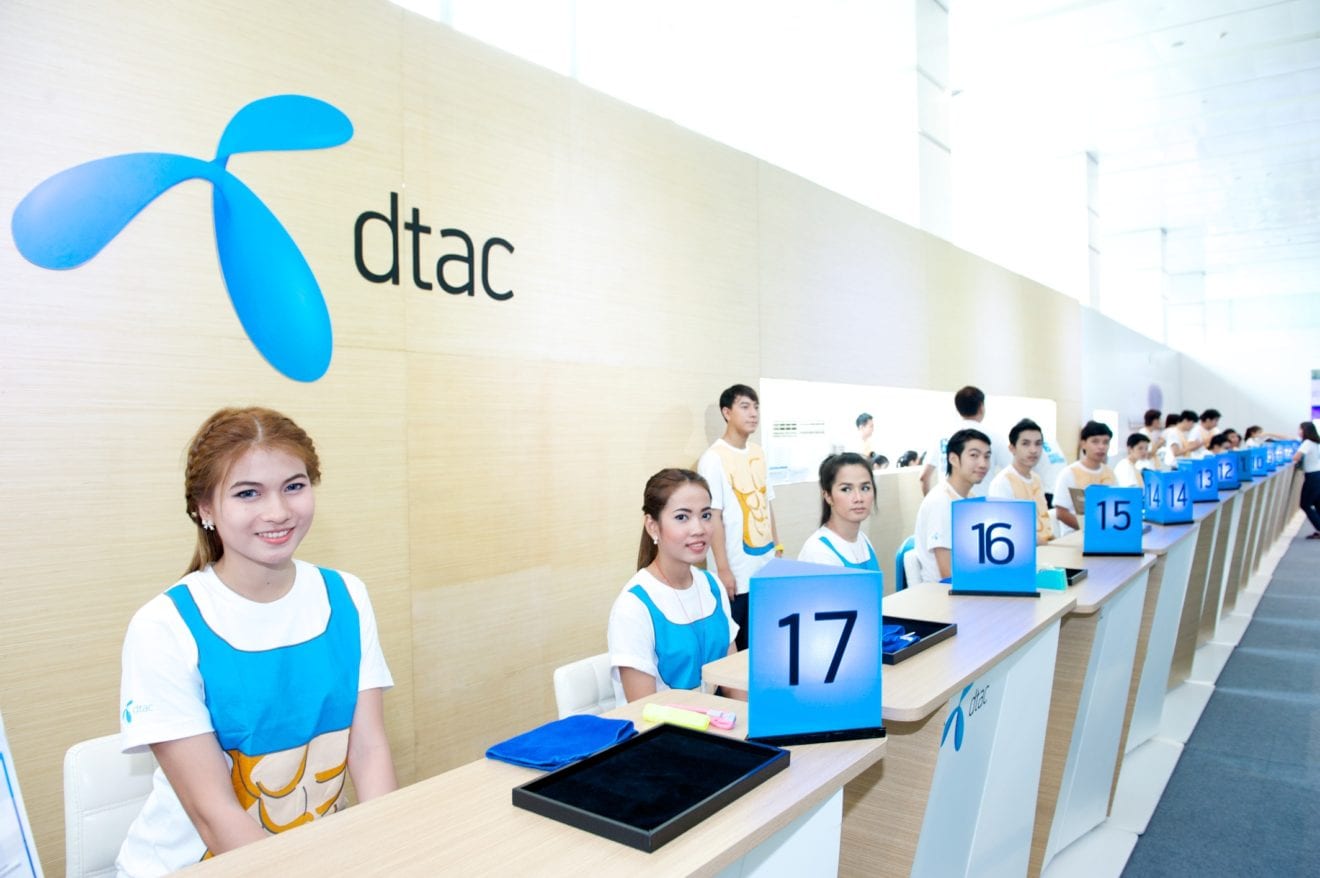
    Thailand’s Dtac has become the market’s first mobile operator to implement an SDN-ready IP/optical network using equipment from Nokia.

    Dtac is implementing the technology to replace its existing IP core routing and DWDM infrastructure, in order to achieve the capacity to serve Thailand’s fast-growing mobile subscriber base.

    The deployment also includes Nokia’s security gateway for Dtac’s LTE network.

    “Over the last two years we’ve seen demand for mobile broadband grow exponentially,” Dtac CTO Prathet Tankuranun said.

    “As we prepare for future advanced technologies we’ve made a strategic choice for an SDN-ready IP/Optical network because it gives us the control and agility needed to run an efficient network that can rapidly adjust to evolving demand patterns. This deployment with Nokia is an important next step in our migration towards full SDN automation.”

    Nokia Thiland head Sebastien Laurent added that the deployment “provides the foundation for an SDN-centric network and will allow dtac to implement on-demand services while also easing operation and maintenance demands.”

  • Bangladesh’s CityCell has spectrum reinstated

    Bangladesh’s CityCell has spectrum reinstated

    Cash-strapped Bangladeshi operator CityCell has resumed operations after having its spectrum temporarily reinstated by a Supreme Court ruling.

    The Bangladesh Telecommunication Regulatory Commission (BTRC) revoked CityCell’s spectrum last month for failing to pay its spectrum renewal, license and associated fees.

    But the court has asked the government to restore CityCell’s spectrum and allow it to continue operations for the time being.

    If CityCell fails to pay 1 billion taka ($12.7 million) to BTRC by November 19, the regulator will have the authority to revoke the spectrum again, the court order states.

    CityCell has been operating since 1993 but has a low market share and revenue base. The company earned just 1.39 billion taka in revenue during the 2014-15 financial year. The BTRC has calculated that CityCell owes 4.77 billion taka in unpaid fees.

    The operator is 44.5% owned by Singtel, 37.9% owned by Pacific Motors and 17.5% owned by Far East Telecom.

  • GTel Mobile has become Vietnam’s fourth 4G licensee

    GTel Mobile has become Vietnam’s fourth 4G licensee

    GTel Mobile has become Vietnam’s fourth 4G licensee, joining MobiFone, Viettel and VNPT in securing a license.

    As with the major operators, GTel Mobile has secured permission to deploy 4G services on the 1800-MHz band.

    GTel Mobile is owned by Vietnam’s Global Telecommunications Corporation (GTC).

    The operator was originally established as a joint venture between Russia’s Vimpelcom and GTC, providing services under the Beeline brand, but Vimpelcom sold its indirect 49% stake in April 2012. The company now provides services under the Gmobile brand.

    The news comes days after the government revealed it had allocated 4G licenses to MobiFone, Viettel and VNPT. The telecoms ministry has set a target of ensuring at least 95% of Vietnam’s population is covered with 3G or 4G infrastructure by 2020.

    GTel’s license acquisition leaves Vietnamobile as the market’s only operator yet to secure a 4G license, the report adds.

  • Vietnam grants 4G licenses to three cellcos

    Vietnam grants 4G licenses to three cellcos

    Vietnam has granted 4G licenses to three of the market’s major mobile operators – MobiFone, military-run Viettel and state-owned VNPT.

    The operators have been granted permission to roll out LTE services over the 1800-MHz band.

    Each of the three operators have been piloting LTE and LTE-Advanced services in multiple cities, with Viettel launching a trial in late 2015, VNPT testing services since January this year and MobiFone commencing a pilot in July.

    The licenses will be allocated as part of Vietnam’s government-approved telecommunications development plan, which includes a target of covering 95% of the population with 3G and 4G services by 2020 as part of efforts to ensure nationwide coverage of broadband infrastructure.

    According to the report, major operators have indicated they will be ready to launch LTE soon after receiving the licenses. They will be valid until 2024.