Tag: telecom

  • China Telecom reports record double-digit growth in 2021

    China Telecom reports record double-digit growth in 2021

    China Telecom’s “Cloudification and digital transformation” strategy has paid off. In 2021, China Telecom’s net profit reached RMB25,948 million, representing an increase of 24.5% year-on-year. Operating revenues amounted to RMB439.6 billion, growing by 11.7% over the preceding year.

    In 2021, the company implemented its “Cloudification and digital transformation” strategy, developed integrated intelligent information services with a customer-oriented approach, and built core sci-tech innovation capabilities and the new information infrastructure. The company also established industrial and capital ecologies featuring strong alliances and open cooperation, while carrying out system and mechanism reforms, achieving new results in high-quality development.

    China Telecom continued to enhance its 5G coverage and network quality, innovated e-surfing cloud handset device ecology, enriched the 5G application and privilege portfolio, and launched 5G cloud packages. The company optimized the service experience for users through ultimate convergence, facilitated the upgrade of individuals’ demands for emerging information consumption, continued to unleash the new round of data traffic benefits, and propelled the scale and value enhancement of its mobile subscribers.

    In 2021, mobile communication service revenues reached RMB184.2 billion, representing an increase of 4.9% from the previous year. The total number of subscribers reached 372 million, with subscribers’ net addition maintaining the industry-leading position for four consecutive years. Meanwhile, the penetration rate of 5G package subscribers reached 50.4%, maintaining the industry-leading position.

    Combining cloud, security, 5G, data, and intelligence, China Telecom developed scene-based integrated intelligent solutions and proactively empowered the transformation and upgrades of traditional industries. In 2021, revenue from industrial digitalization reached RMB98.9 billion, representing year-on-year growth of 19.4%.

    On 20 August 2021, the company successfully listed on the Shanghai Stock Exchange, leveraging wider financing channels to expand ecological cooperation and implement more flexible incentive measures.

    Chairman Ke noted that China Telecom has had a promising start under the “14th Five-Year Plan” in 2021. In 2022, the company will seize opportunities arising from the development of the digital economy, putting all efforts into promoting high-quality development and jointly creating a new pattern for the information and communications industry.


  • Malaysia confirms utilizing SWN model for 5G implementation

    Malaysia confirms utilizing SWN model for 5G implementation

    The Malaysian government is sticking to its plan of deploying 5G through a single wholesale network (SWN). In a joint statement from the ministries of finance and communications and multimedia, up to 70% equity in the wholly state-owned 5G company, Digital Nasional Berhad (DNB), will be available to telcos.

    Malaysian finance minister Tengku Zafrul Aziz emphasized that the maintenance of the SWN model is the government’s firm stance on policy continuity. “The implementation of 5G will drive the country’s socio-economic transformation and this is estimated to contribute RM 659 billion to the value of GDP until 2030,” Aziz explained.

    The finalized decision has come in contrast to the concerns among wireless carriers that a single, shared 5G network could hamper digital competitiveness. Nonetheless, the government will retain a 30% equity stake in DNB while the majority of the stakes are intended for operators. It is worthy to note that this special-purpose vehicle company was established in early March 2021 to drive 5G infrastructure development in Malaysia.

    Accessing DNB’s 5G network is estimated to cost less than what major local telecom operators such as Celcom Axiata, Digi, Maxis, and U Mobile have incurred during 4G rollouts. In line with this, DNB has offered free 5G services to service providers until March 31 as part of its commercial trial. Aiming to achieve 80% coverage of populated areas by 2024, the trial is bound to be extended until June 30 to allow more operators to sign up.

    Access to high-quality 5G services would accelerate the recovery of the post-pandemic Malaysian economy. Moreover, “the SWN model will help bridge the urban-rural digital divide to enable all Malaysians to enjoy high-quality 5G services and be widely available to them through telecommunications companies,” said Malaysian communications and multimedia minister Annuar Musa.

    In retrospect, the Malaysian government refused the prior recommendation of having a dual wholesale network (DWN) model and selected Ericsson to develop the country’s 5G network infrastructure.

  • Singtel launches industry’s first all-in-one platform for enterprise 5G edge computing and cloud services

    Singtel launches industry’s first all-in-one platform for enterprise 5G edge computing and cloud services

    Singtel expands its offering for the enterprise market with the launch of Paragon, a revolutionary platform that aggregates networks, edge computing, public cloud, and applications ecosystems to accelerate enterprises’ digital transformation.

    Offering an all-in-one solution for digital transformation, Paragon seamlessly aggregates and manages low-latency networks and edge cloud resources, allowing enterprises to tap on Singtel’s 5G network to securely deploy applications across the edge at Singtel MEC and a public cloud of choice. Through a single interface, enterprises can activate network slices on demand, deploy mission-critical applications on Singtel MEC and access a robust ecosystem of partner applications.

    This significantly reduces the complexity and time needed to adopt 5G MEC and low-latency applications and services, giving enterprises the agility, flexibility, and scalability needed to transform operations and adapt to new business models in a digital economy.

    “Many enterprises are undergoing rapid digitalization while exploring and developing tailored 5G solutions for deployment in their industries. We understand the challenges and complexities that they face in managing the various networks, edge cloud applications, and services with the required cyber security, resiliency, and demanding service assurances required, cost-effectively. Paragon was conceived, developed, and delivered to help enterprises meet these needs through a single platform,” said Bill Chang, chief executive officer, group enterprise, Singtel.

    One-stop digital transformation platform and strong 5G MEC ecosystem

    Developed in-house, Paragon empowers enterprises to adopt Singtel’s 5G network to deploy their edge computing applications and services independently, securely, and within minutes. These capabilities are bundled on the platform to provide enterprises a unified experience, delivering always-on connectivity and low latency with high bandwidth throughout to support industry 5G use cases including advanced logistics and manufacturing, smart transportation, and real-time fleet management and monitoring.

    Network 5G slices can be created almost instantly, autonomously, and as many times as needed. A network slice can be utilized only when needed for an intended duration to ensure cost optimization. Since enterprises pay only for what they use, Paragon reduces the operational and costs overhead otherwise incurred by businesses.

    For enterprises, the benefits are a shorter innovation curve and time-to-market, as well as better performance and faster decision-making at the edge, critical for use cases including autonomous systems like robotics, drones, and vehicles, immersive, video-rich experiences and powerful real-time edge AI use cases. Already, Paragon is being deployed for testbeds in the public sector. For instance, 5G trial uses cases are underway at Singapore’s Sentosa to bring the about built environment and tourism transformations.

    Through the Paragon Marketplace, which operates as an app store, Singtel’s ecosystem of partners can integrate their offerings through a robust industry-standard application programming interface (API) to rapidly build and deploy their solutions on the platform. As such, existing cloud-based 4G applications can migrate to 5G with ease. On the other end, end customers can easily source and adopt applications that solve their business challenges.

    Plans are in the pipeline to scale Paragon regionally and globally with other telcos. Partners on board Paragon can extend their solutions to multiple markets. Through the Singtel Partner Programme, Singtel aims to co-create and test more innovative solutions, driving wider 5G adoption across markets to bring forward a 5G future.

  • Ooredoo Group Returns to Mobile World Congress 2022 as Telecoms Industry Continues Progress in Post-Pandemic New Normal

    Ooredoo Group Returns to Mobile World Congress 2022 as Telecoms Industry Continues Progress in Post-Pandemic New Normal

    Ooredoo, one of the world’s leading providers of ICT and a 5G pioneer, is to return to Mobile World Congress 2022 as the event resumes at the end of February.

    The key themes for this year’s event are 5G Connect, Advancing AI, Cloud Net, FinTech, Internet of Everything and Tech Horizon. In line with these themes, Ooredoo will update the industry on the many exciting developments it has been working on since the last edition of MWC, and will share exciting news of its latest partnerships, products and solutions.

    One such partnership is with FIFA, with Ooredoo Qatar being selected by the sports giant and the Supreme Committee for Delivery and Legacy to provide a global network connecting Doha with various points of presence in Europe and Asia. The telco leader will explain how it is to build a dedicated multi-100Gig network that will offer broadcasters the quality and resiliency required for broadcast-grade video production, with media rights licensees being offered optimised resilient media solutions.

    Ooredoo Qatar will also share details of a groundbreaking solution, developed in partnership with technology giants Ericsson and Nokia, that will revolutionise connectivity for customers in the oil and gas industry. Having identified that such customers needed to replace older technology with a solution that facilitated connectivity in remote, challenging locations such as those offshore, Ooredoo and its partners developed a dedicated LTE network that would provide high-availability voice and data services to support oil and gas applications and operations in such remote locations beyond the normal fixed and mobile network footprint.

    In addition, the company will update the telecoms industry on its exciting venture into eSports, sharing details on its own eSports brand, Ooredoo Nation – Gamers’ Land. Recent developments include the launch of gaming Add-ons for postpaid plans; the launch of Channel 0, a dedicated gaming channel on Ooredoo tv; the latest Ooredoo Arena tournaments; and the signing of a partnership with Dell Technologies to provide sponsorship that will contribute to the eSports scene in Qatar and the region.

    Aziz Aluthman Fakhroo, Managing Director and CEO, Ooredoo Group, said: “We are delighted to once again be participating in Mobile World Congress, the most important international event in our industry. As a pioneer in 5G, with a strategic commitment to investment in innovation and technology, we have several exciting developments to announce at the event, in line with the key themes. We look forward to sharing our experience and expertise, and to discovering news from our peers and the industry.”

  • Fourth radio interface technology added to 5G standards

    Fourth radio interface technology added to 5G standards

    Members of the International Telecommunication Union (ITU) have approved the fourth technology as part of ongoing standards development for 5G mobile services.

    Known as “DECT 5G-SRIT”, the new technology supports a range of uses, from wireless telephony and audio streaming to the industrial Internet of Things (IoT) applications, particularly in smart cities. It was added in the first revision to ITU’s key recommendation IMT-2020, which broadly encompasses fifth-generation, or 5G, networks, services, and devices.

    This ITU Radiocommunication Sector (ITU-R) Recommendation – providing a set of global technical 5G standards – reflects continual consultation and discussion among governments, companies, regulators, and other stakeholders dealing with radiocommunication worldwide.

    Along with fostering connectivity across borders, ITU promotes the global rollout of 5G as a key driver to achieve the UN’s 17 Sustainable Development Goals.

    “New and emerging technologies like 5G will be essential to build an inclusive, sustainable future for all people, communities, and countries,” said ITU’s secretary-general, Houlin Zhao. “Under the ongoing International Mobile Telecommunications or IMT program, our diverse global membership continues its long-standing contribution to advance broadband mobile communications, furthering our mission to leave no one behind in connecting the world.”

    ITU – the United Nations agency entrusted with coordinating radio-frequency spectrum worldwide – has published the specifications for the new technology as RecommendationITU-R M.2150-1.

    The technology is designed to provide a slim but strong technical foundation for wireless applications deployed in a range of use cases, from cordless telephony to audio streaming, and from professional audio applications to the industrial Internet of Things (IoT) applications, such as building automation and monitoring.
    The European Telecommunications Standards Institute (ETSI) laid the essential groundwork jointly with the DECT Forum, a worldwide association of the digital enhanced cordless telecommunications (DECT) or wireless technology industry.

    ITU’s radiocommunication director, Mario Maniewicz, said: “The highly collaborative process involves substantial input from and coordination with the ITU Member States, equipment manufacturers, network operators, standards development organizations, and the academic community. ITU provides a unique global framework to discuss the capabilities of new radio technologies.”

    Andreas Zipp, chairman of the DECT Forum, welcomed the addition of the new technology to IMT-2020. “Inclusion as part of ITU’s global 5G standards affirms the significance of this technology moving forward,” he said

    Other candidate radio interface technologies underwent the international mobile telecommunication (IMT) evaluation process over the past year, although only one qualified to be added at this stage.

    The revised IMT-2020 recommendation now includes the new standard, which European standards developers recognized could support 5G uptake everywhere.
    “The ETSI DECT standard received IMT-2000 approval more than twenty years ago,” noted ETSI’s chief technical officer, Adrian Scrase. “5G therefore presented an ideal opportunity to develop this new, non-cellular, radio standard, which is particularly suited for smart meters, Industry 4.0, building management systems, logistics and smart cities.”

    Based on the requirements set out in ITU’s evaluation process, the radio interface technology demonstrates worldwide compatibility in terms of operation, equipment, and roaming. Italso addresses the ultra-reliable low latency (URLLC) capability stipulated by IMT-2020 – the underlying global coordination framework for so-called 5G services.

  • ZTE and China Mobile launch SPN intelligent fault diagnosis system

    ZTE and China Mobile launch SPN intelligent fault diagnosis system

    ZTE Corporation and the Liaoning branch of China Mobile have verified the rule/policy-based SPN intelligent fault diagnosis system on the intelligent management, control and analysis platform ZENIC ONE (UME) and deployed it across Liaoning province in China.

    4GThe system, jointly developed by ZTE and China Mobile, orchestrates the policies for the diagnosis flow through innovative flexible programming of fault diagnosis rules. Thereby, the intelligent management and control system can quickly respond to and meet the requirements of O&M staff to implement minute-level fault location.

    In traditional PTN/SPN network operation, it is difficult to develop alarm-relativeness rules, so the location of substantial faults depends on the experience of senior O&M engineers. The diagnosis usually takes several hours with low efficiency. ZTE has found a new way of fault diagnosis to flexibly orchestrate diagnosis rules and policies in accordance with service scenarios to improve the efficiency of fault diagnosis and location.

    Based on the cloud native and microservice architecture of the ZENIC ONE (UME), ZTE integrates the SPN intelligent fault diagnosis system onto the ZENIC ONE (UME) as an independent tool. This system uses the knowledge graph to build the diagnosis rules and develop the diagnosis process through a series of atomized diagnosis rules, which can be independently programmed by Drools. At the same time, the system adopts the jBPM workflow graphs and flexibly orchestrate rules and policies for different service scenarios, thereby enabling one-touch fast fault diagnosis and location of 4G and 5G base stations backhaul services.

    ZTE and China Mobile have verified the fault diagnosis function of the system in 4G and 5G base station backhaul service interruption and packet loss scenarios on the existing network in Liaoning province. The faults are successfully located through backtracking and review of faults history. The fault location time is shortened from hours to minutes, and the graphical diagnosis policies and flows are completed by one touch. The system significantly reduces the O&M difficulty in existing network and highly improves the O&M efficiency.

    Moving forward, ZTE and China Mobile will continue using AI technologies to promote system self-learning and enrich application scenarios such as mobile apps. On this basis, both parties will further implement closed-loop management from fault diagnosis to automatic service recovery, and push autonomous networks to evolve its service guarantee capability from L2 to L3.

  • Telenor sale could endanger Myanmar activists

    Telenor sale could endanger Myanmar activists

    The sale of Telenor’s Myanmar subsidiary could place the personal data of its 18 million customers in the junta’s hands. As Telenor finalizes the sale of its Myanmar business to a military-linked group, concerns have been raised that sensitive data will be infringed and that families of activists in hiding will be put in harm’s way.

    According to sources, the sale will be completed by 15 February. Last July, Telenor announced that its Myanmar subsidiary would be sold to Lebanon’s financial firm, M1 Group. Military-linked Shwe Byain Phyu was later known to be a co-investor in the sale approved by the junta.

    Justice for Myanmar has since urged the Norwegian government to intervene in the sale. There had been reports that the Ministry of Transport and Communications (MOTC), ruled by the junta, had made more than 200 requests to Telenor for information including records of calls, over the past year.

    Telenor has since said that customers in Myanmar are handled by Telenor Myanmar and that Norwegian or EU data protection regulations do not apply to its subsidiary.

  • Singtel partners with Microsoft their first public MEC solution in Asia

    Singtel partners with Microsoft their first public MEC solution in Asia

    Singtel will launch the first Microsoft Azure Edge Zones integrated with Singtel’s 5G network, delivering multi-access edge compute (MEC) for enterprises in Asia. The solution combines the speed, hyperconnectivity, and high bandwidth of Singtel’s 5G network with Microsoft Azure services, enabling developers to deploy and manage mission-critical applications that require high throughput and low latency. It will boost business capabilities in areas such as metaverse-based real-time simulations, and live video analytics in a multi-tenant environment. Customers will be able to use their existing Azure subscriptions.

    Bill Chang, chief executive officer, group enterprise at Singtel said, “This collaboration is a key milestone for edge computing in Asia. We’re always looking for ways to support enterprises in leveraging the potential of 5G for digital transformation to drive innovation for the benefit of consumers, business users and entire industries. This solution enables enterprises to streamline the integration of 5G and MEC into business operations, facilitate the development of new solutions, and scale and transform their business.”

    In addition to running low-latency applications at the edge using Singtel’s 5G network, the solution has the potential to transform operations in sectors such as public safety, urban planning, healthcare, banking, civil service, transportation and logistics. It also offers public sector customers high security and better performance for end-users, enabling new intelligent edge scenarios.

    Customers can leverage these capabilities, only paying for the amount of compute and storage they use for the duration which they use it, replicating the cloud consumption model at the network edge and saving on additional operational overhead.

    Dr. Yousef Khalidi, corporate vice president Azure for operators, Microsoft said, “With Azure for operators, Singtel empowers its customers to unlock business value at the network edge. The integration of Azure compute services with Singtel’s 5G network will enable enterprises and developers to provide low-latency applications across industries such as public sector and healthcare.”

    The solution will be publicly available in the second half of 2022 for Azure customers in Singapore through the Azure portal to rapidly develop, test and deploy 5G applications such as autonomous guided vehicles, drones, robotics and virtual, augmented or mixed reality, at the edge of Singtel’s 5G network. Government agencies and enterprises of all sizes that have built their business applications and operations on Microsoft Azure’s plug-and-play cloud computing service can conveniently leverage the benefits of 5G and MEC as well.

  • CITIC Telecom CPC appoints new CEO

    CITIC Telecom CPC appoints new CEO

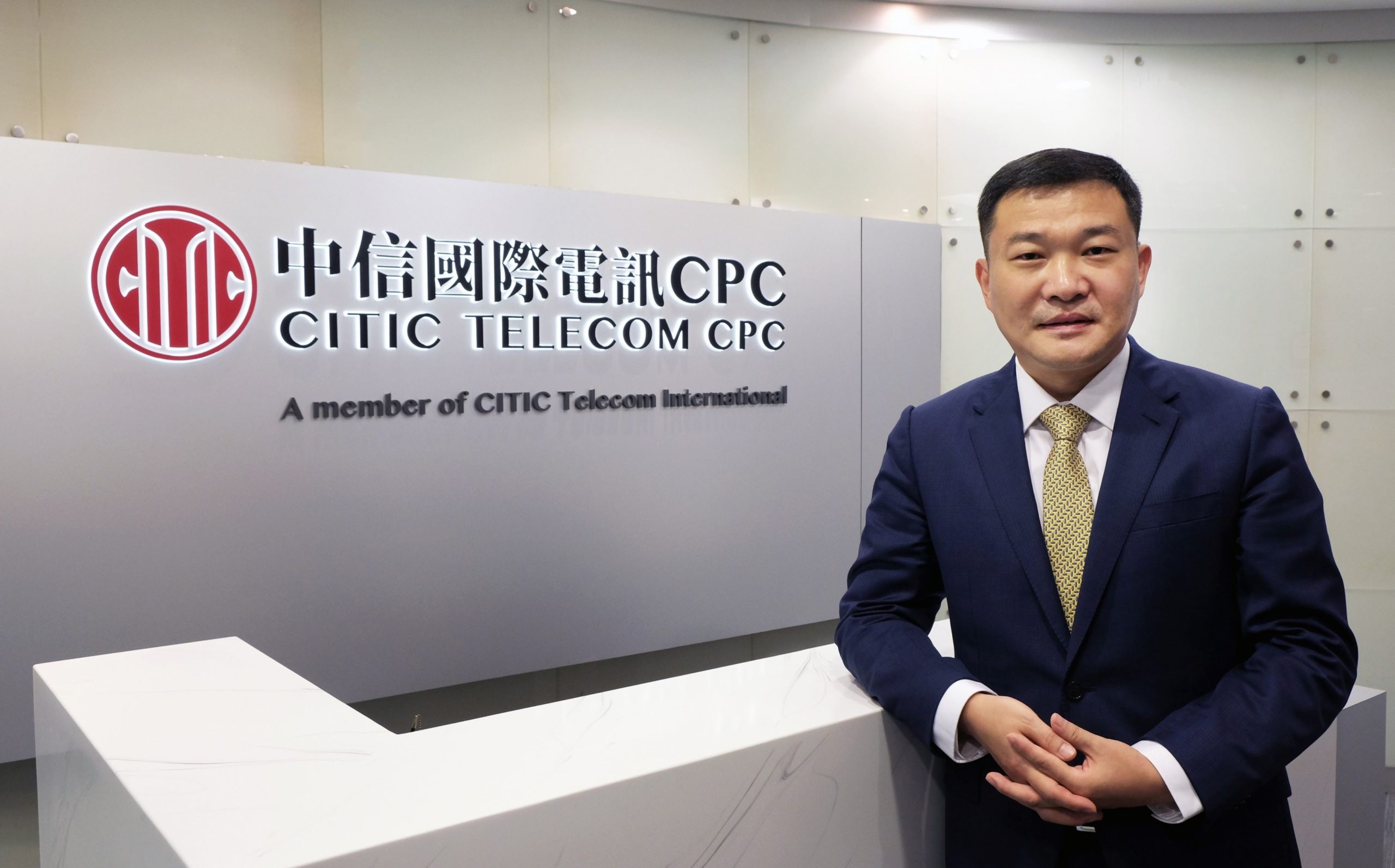
    CITIC Telecom International CPC Limited (CITIC Telecom CPC), a wholly-owned subsidiary of CITIC Telecom International Holdings Limited, announced that Brook Wong, vice president of CITIC Telecom has been appointed to the additional role of chief executive officer of CITIC Telecom CPC effective 1st February, 2022, succeeding Esmond Li who has decided to retire and step down from CEO of CITIC Telecom CPC after over 20 years of service in the Group.

    “Wong has long been a visionary in telecommunications, applying his tremendous insight, depth of experience, and passion for technology to the cause of creating the innovative and intelligent future,” said Frank Cai, vice chairman of CITIC Telecom CPC. “We are delighted to welcome Wong to CITIC Telecom CPC, and I’m confident that he will lead the team to continue pursuing our motto ‘Innovation Never Stops’ and to win in this fast-changing, dynamic industry. I believe that all of us will benefit from his leadership and expertise.”Wong is the vice president of CITIC Telecom, overseeing China market since 2008. He has extensive leadership experience working with various telecommunications companies. An expert in developing and executing strategies for the Greater China market. His ability to see the big picture, from crucial market development to macro strategic perspectives, will be invaluable to CITIC Telecom CPC’s customers.

    “I am honored and truly proud to be appointed to lead CITIC Telecom CPC. Under all the former managements’ leadership and accomplishments, together with its innovation, technology, and talents, it lays a solid foundation for a leading DICT service partner around the globe. We are committed to delivering the most innovative and intelligent solutions to propel the ICT industry forward,” said Wong. “Over the 14 years I have worked at CITIC Telecom, I have seen the many ways in which our people, product, and service create a rapidly growing and innovative company. I look forward to working closely with the management and the team, to continue promoting our company culture of ‘unity, collaboration, tolerance and caring’, to lead and accelerate CITIC Telecom CPC to be ‘best-in-class global-local intelligent DICT service partner”, to foster customer-oriented corporate culture, create a win-win situation with our partners, and strive for new heights.”

  • Globe debuts Asia’s first eco-SIM

    Globe debuts Asia’s first eco-SIM

    net-zeronet zero carbon emissions by 2040, and we align with the ambitions of many organizations to work for the better good and build a sustainable future.  The Eco-SIM card is small, but it has a big impact on plastic and polymer waste and is another example of how we innovate to drive change. We are excited to partner with Globe on this pioneering initiative in the Philippines with a goal to roll it out throughout Asia,” said  Jon Cahilig, head of mobile connectivity solutions for Asia, Thales Digital Identity & Security.

    In 2019, Globe became a signatory to the United Nations Global Compact, committing to implement universal sustainability principles on human rights, labor, environment, and anti-corruption in its operations. In January 2021, Globe formally expressed its support to the globally-recognized Task Force on Climate-Related Financial Disclosure (TCFD) in January. Along with more than 1,800 companies worldwide, Globe supports the framework set by TCFD and is committed to following recommendations towards effective climate-related disclosures.

    To further this commitment in 2021, Globe became the first publicly-listed Philippine company to be listed by the Science Based Target initiative (SBTi) committed to set science-based targets, in line with the 1.5°C global warming scenario of the Paris Agreement and the #RacetoZero Campaign. These commitments cover both the mid-term (2030) and long-term (2050) targets.

    “In order for us to truly move the needle in the fight against climate change, we all must take on the responsibility to act sustainably. This partnership with the Thales Group not only enables us to come up with a solution for our telco business, but it also gives our customers the opportunity to step up and choose to live more sustainably,” said Yoly Crisanto, Globe’s chief sustainability officer and SVP for corporate communications.

    In 2018, Globe was also the first in the country to introduce electronic SIMs or eSIM, as another alternative to the physical SIM cards. eSIMs are digital SIMs embedded in compatible mobile phone models, allowing its users to manage multiple profiles using different mobile numbers on just one device and effortlessly switch lines that fit their purpose. It also allows gadgets like smartphones and smartwatches to be connected under one mobile number.

    Globe strongly supports the United Nations Sustainable Development Goals, particularly UN SDG No. 12, which highlights the roles of responsible consumption and production patterns as crucial steps toward building a circular economy. Globe is committed to upholding the 10 United Nations Global Compact principles and 10 UN SDGs.

  • China Mobile and ZTE complete first URLLC live network verification

    China Mobile and ZTE complete first URLLC live network verification

    ZTE together with China Mobile Research Institute, the Guangdong branch of China Mobile, and MediaTek, has completed all the test items of URLLC key technologies in Guangzhou, China. This is the first URLLC (ultra-reliable low-latency communication) verification on the live network in the industry.

    The verification, by virtue of ZTE’s end-to-end network equipment and MediaTek’s M80 chip platform, was conducted on the commercial 2.6GHz 5G network, including all items like low bit rate MCS/CQI form, R15 mini-slot, slot repetition and PDCP (packet data convergence protocol) duplication. The test results show that the air interface delay is reduced by about 20%, and the reliability of the locations with medium and good signal strength is up to 99.999%.

    URLLC is one of the three basic applications of 5G. As a key factor for entering the industry verticals, URLLC accelerates the development of 5G network. In the future, with wide 5G industrial applications, URLLC can be applied in various scenarios such as AR/VR, smart grid, remote driving and industrial control, which have special requirements for low-latency and high-reliability connections. The verification has passed laboratory IODT (interoperability development testing), Beijing Information Port laboratory acceptance, and Guangzhou commercial outfield testing and acceptance, proving that ZTE’s base station equipment and technical solutions can meet URLLC requirements for low latency and high reliability in terms of both functionality and performance. In addition, through the flexible combination of standard technologies and implementation solutions, the 5G wireless network capability system for URLLC scenarios is formed to meet the differentiated requirements of industries, laying a solid foundation for the applications of URLLC in industry verticals and boosting the rapid development of digital economy.

    Moving forward, ZTE and China Mobile, together with other industry partners, will strengthen cooperation to explore diversified application scenarios to enhance the ultimate low-latency and high-reliability capability of 5G network. All of them will actively promote the application of URLLC in industries, and facilitate the digital transformation of industry verticals and the development of innovative services in China.

  • Vietnam to begin 6G technology research and development

    Vietnam to begin 6G technology research and development

    Vietnam will start researching 6G wireless networks in 2022, says Information and Communications Minister Nguyen Manh Hung. Addressing a 2021 telecom review conference last weekend, Hung said Vietnam’s telecom industry should “be in the top group in terms of deploying 5G and developing 6G networks in the world.”

    He said Vietnam will carry out 6G research this year alongside nationwide deployment of the 5G network. According to the ministry Department of Telecommunications, a steering committee for 6G research development has been formed. Vietnam is one of the world’s first ten countries to set up this committee.

    Hung also set a target of 6G frequencies being licensed by 2028 before moving on to its commercial rollout.

    “Telecom networks must quickly transition to cloud-based and software-based architectures, so that the network becomes intelligent and flexible, and can be software-configured into numerous specialized sub-networks. Open RAN will be used as a technology for 5G, 6G development,” he said.

    Vietnamese companies should target to successfully research and manufacture 5G and 6G equipment, transmission equipment, and terminal equipment, he added.

    A representative of the department said that Vietnam will commercialize 5G this year and aim to have 25 percent of the population using the technology by 2025. He said 4G services currently cover 99.8 percent of the country.

    Three major telecom providers VNPT, MobiFone, and Viettel have been commercially trialing 5G services in 16 provinces and cities.

    6G technology is the next step after 5G that is being researched in a few countries including the U.S. and China.

    In theory, 6G could reach speeds of one terabit per second, it has been reported.

    The 6G network is expected to lay the groundwork for an “intelligent era” in which AI and robots become commonplace. However, no technical standards or frequencies for 6G have been agreed upon as yet.

  • M1 partners with AWS to improve customer experiences

    M1 partners with AWS to improve customer experiences

    M1 Limited (M1), one of Singapore’s leading Mobile Network Operators (MNO), announced its collaboration with Amazon Web Services (AWS), to launch Maxine, a VoiceBot for M1’s hotlines.

    Maxine is built on Amazon Connect, AWS’s omnichannel cloud-based contact center service that helps improve contact center agent productivity and end-user customer experiences. Powered by AWS Artificial Intelligence (AI) technologies such as automatic speech recognition and natural language understanding, Maxine is able to engage in more lifelike conversations with customers. Combined with M1’s Session Initiation Protocol (SIP) trunk services for high quality digital voice communication, Maxine will help improve end-user customer experiences by engaging them in open-ended conversations instead of menu-driven interfaces.

    Since Maxine’s rollout in the last quarter of 2021, M1 is seeing an improved performance to the existing call system with the VoiceBot performing sophisticated functions such as authentication of callers with a One-Time Pin (OTP), or sharing the customer’s position in the call queue and estimated waiting time. In comparison with December 2020, M1’s Net Promoter Score (NPS) for December 2021 has seen a marked 40% increase, largely attributed to Maxine’s ability to capture callers’ intentions which then improves call agent productivity by freeing them up to focus on more complex cases.

    The deployment of Maxine is part of M1’s continuous transformation journey to be a digital platform. As a cloud native solution, M1 is able to regularly develop and deploy new and incremental features and capabilities that enhance Maxine’s services.

    The easy to use and quick to deploy solution enables M1 to scale up and down in a short period of time. It also provides call center agents the flexibility they need to work remotely, without compromising the customer experience.

    M1 has its 1627 (Bespoke), 1622 (Business) and 1800-843-8288 (Prepaid) hotlines operating on the Amazon Connect platform. This will be progressively rolled out to other hotlines. M1 is also supporting other members of the Keppel Group that are making the transition to adopt Maxine, starting with Keppel Electric.

  • Maxis to power Ranhill’s voice and cloud connectivity

    Maxis to power Ranhill’s voice and cloud connectivity

    Maxis has been selected by integrated water supply company Ranhill SAJ Sdn Bhd (Ranhill) as their voice and cloud connectivity provider. Maxis will leverage its extensive portfolio of converged solution offerings and capabilities to support Ranhill’s digitalization journey focusing on greater operational efficiency and customer service excellence.

    With its industry-leading next-generation enterprise-grade network, Maxis will be connecting 77 of Ranhill’s sites across Johor including their headquarters and water treatment plants through its SD-WAN. Higher bandwidth and a resilient network will also enhance Ranhill’s workforce management capabilities with the latest applications. They will then have real-time visibility of their data and be able to make decisions to increase the productivity and efficiency of their 2,000 employees.

    “We are pleased to be selected by Ranhill as their connectivity, voice, and cloud solutions provider. Through our unique capabilities and experience, we are able to offer Ranhill a fully managed service portfolio from onboarding right up to 24/7 support with greater cost-effectiveness and flexibility.  As their partner, we want to ensure that their connectivity needs are met so that they can operate efficiently and have the peace of mind of being well prepared for their digital transformation journey and to Always Be Ahead in a changing world,” said Paul McManus, chief enterprise business officer, Maxis.

    “Selecting Maxis as our service provider and partner is an integral step to realizing our vision of becoming a world-class water utility company. By connecting all our sites with the latest technology from Maxis, we will be better equipped to support the people of Johor through efficient management of quality water supply. We now have the necessary infrastructure and platform to unlock the benefits of digitalization as part of our ongoing effort to further enhance customer experience,” said Nor Ifuan Md Nor, chief executive officer, Ranhill SAJ.

    Maxis’ managed SD-WAN services runs on Cisco Meraki technology, and enables operational tasks such as configuration, management, and maintenance to be significantly simplified. There are significant benefits of SD-WAN as enterprises look to become more agile through automation and intelligence. They will have access to a converged connectivity solution that is flexible, scalable, and cost-effective. The built-in security in SD-WAN also enables end-to-end secure communications and the implementation of security policies across the network.

    “Connectivity has always been important but even more so today, as more customers are using multi-cloud environments, and this continues to increase. Together with Maxis, Cisco is proud to be providing Ranhill with secure and optimized access to business-critical resources. This partnership speaks volumes on how we are able to come together to deliver a solution to Ranhill that will allow secure and optimal access to workloads.

    Through this collaboration, customers can securely connect to the cloud with the signature simplicity they have come to expect from Cisco Meraki,” said Vicki Batka, vice president of Asia Pacific, Japan & China partner sales, Cisco.

    Future Opportunities in the Pipeline

    In addition to boosting Ranhill’s fixed and wireless connectivity, Maxis is also able to address their voice communications needs. Prior to this deployment, Ranhill had various challenges in getting high quality voice services, particularly at their rural sites. With Maxis’ voice solutions now extended to the underserved areas of Ranhill, their customers and employees gain access to seamless voice services.

    Maxis and Ranhill are also exploring collaboration in the future for initiatives related to Internet of Things (IoT), cloud services, and cybersecurity. This will be part of Ranhill’s next phase of digitalisation in their organisation.

  • China Mobile shares rise marginally in Shanghai debut

    China Mobile shares rise marginally in Shanghai debut

    China Mobile Ltd shares debuted on the Shanghai Stock Exchange on Wednesday, soaring to 63 yuan, 9.4% higher than the offer price of 57.58 yuan in early trading, before closing at about 0.52% higher at 57.88 yuan.

    The carrier’s Shanghai shares traded more than 40% higher compared to its Hong Kong-listed shares, which closed 3.33% higher on the same day, boosted by an earlier announcement to buy back up to 2.05 billion shares worth about US$13 billion.

    Raising US$7.64 billion, China Mobile’s public share offering is also China’s largest in a decade.

    China Mobile’s homecoming listing is closely watched. In May 2020, China Mobile exited the New York Stock Exchange when it was added to a growing list of Chinese companies blacklisted by the US. China Telecom and China Unicom were also ousted from the US exchange.

    China Mobile said that proceeds from the offering will be used to expand 5G capabilities, cloud infrastructure, and intelligent ecosystems.