Tag: telecom

  • Globe Backs Digitalization Plans Of New Philippine Government

    Globe Backs Digitalization Plans Of New Philippine Government

    Globe Telecom has announced that it supports the digitalization plans of the Philippines’ new administration.

    One of the leading digital solutions providers, Globe stated that it is ready to collaborate with the government to provide its industry leading product line and services to improve digitalization in public offices and agencies, as well as deliver speedier and more reliable transactions to the public.

    Globe’s CEO, Ernest Cu, said in a statement, “We welcome the new administration’s goal of increasing digitalization in government for streamlined processes. This will ultimately redound to improved public service– an aspiration that Globe deeply shares with the government as we serve a customer base of 92 million people.”

    He added, “Our network and infrastructure are ready to support the government and we look forward to working closely with the new administration to achieve this shared goal.”

    Globe has so far installed 234 additional cell sites across the country as of the first quarter of 2022, pursuant to its goals of 1,700 new sites this year. And it has put up 91 new tower companies, each on air since the beginning of this year.

    The company also upgraded more than 3,500 mobile sites, and accelerated its 5G coverage by installing 380 new 5G sites, all by the end of the first quarter of this year.

  • Telenor Group aims to build new tech firm for stronger growth

    Telenor Group aims to build new tech firm for stronger growth

    Telenor Group’s CEO, Sigve Brekke, stressed that they are aiming to deliver a new technology firm in Thailand’s telecom sector by collaborating with other international companies.

    This comes after Telenor and Axiata were granted regulatory approval in Malaysia to proceed to the Celcom-Digi merger.

    In his statement, Brekke said, “What Telenor is trying to build in Thailand is not a telco company. We are trying to build a new technology company that will enable Thailand to take advantage of the perfect storm of technologies and deliver new products and services for Thailand. We can only do so if we have scale to partner these global companies. A small local telco will not be of interest to these global companies who are going after scale.”

    Jørgen Rostrup, EVP and Head of Telenor Asia meanwhile said, “We believe the amalgamation of dtac and True will create a strong company who can invest and contribute to future digital and technology development in Thailand. This is an opportunity for Thailand to be propelled into growth 2.0 and put the country in the forefront. Thailand needs two strong market players, not one strong and two weak.”

    The company also stressed that Thailand now enjoys 86% mobile access, or about 98.5 million mobile connections from 20 years ago.

    Brekke added that for the next two decades, Telenor’s development in the local market is seen to be different, wherein the industry will be facing what he calls a “perfect storm of new technologies”. These include the integration of artificial intelligence, Internet of Things and 5G.

    He also predicts a data explosion and AI will be necessary to justify of the huge amounts of data generated, as well as the need for 5G speed for a much wider connection.

  • ZTE and IPMA partner for innovative project management in Philippines

    ZTE and IPMA partner for innovative project management in Philippines

    ZTE has signed an MOU (Memorandum of Understanding) on strategic cooperation with International Project Management Association (IPMA) Philippines in Manila. The strategic cooperation between IPMA Philippines and ZTE Philippines further recognizes ZTE’s mature corporate project management capability.

    This is ZTE’s first overseas IPMA corporate membership, and the company has become a corporate member simultaneously certificated by IPMA International and IPMA Philippines.

    IPMA is a non-profit international academic organization, with commitment to promoting professional development of international project management. IPMA, PMP and PRINCE2, are known as the three major international project management organizations. IPMA’s membership certification is widely recognized, representing the highest-level certification of project management across the globe.

    At the ceremony, IPMA Philippines and ZTE Philippines principally agreed on joint development and win-win collaboration. IPMA will invite ZTE to deeply participate in industry symposiums, industry forums and professional training meetings, as well as joint application for telecommunications-related awards and reviews of outstanding project management cases. In return, ZTE will give its priority to the interviewees who have passed the IPMA certification.

    “With the development of its business in the Philippines for more than 15 years, ZTE has extensive experience in project management and project delivery,” said Jin Zhichao, General Manager of ZTE Philippines. “ZTE is keen to explore and learn excellent experience and effective management approaches from different industries or IPMA corporate members, further improving the level of ZTE’s project management and corporate competitiveness. At the same time, we are willing to share our own experience with them.”

    “I am looking forward to the cooperation between the two parties. IPMA has been developing project management competencies for years, and regularly organized various symposiums and forums every year,” said Prof. Mariano Roque Senga, Chairman of IPMA Philippines. “I hope ZTE, as a leading enterprise in the field of telecommunication engineering, can participate in exploration and in-depth cooperation with other corporate members on project management approach.”

  • China Broadnet Launches 5G Services

    China Broadnet Launches 5G Services

    China Broadnet has officially launched its services, joining China Mobile, China Telecom and China Unicom to become the country’s fourth mobile operator.

    The state-owned telecom operator launched its official website to debut 5G mobile phone services on 27 June 2022. Integrating local radio and TV carriers across China, this service brings new developments to the integration of national cable TV networks and 5G.

    In 2019, China Broadnet obtained its 5G commercial license from the Ministry of Industry and Information Technology. It has been assigned the 700 MHz band to cater for wireless network developments nationwide. China Broadnet has also entered into an agreement with China Mobile to share its network.

    According to China’s Ministry of Industry and Information Technology (MIIT), the total number of mobile phone users reached 1.66 billion as of end of May. Of which, 428 million were 5G users, up 73.34 million from the previous year.

  • Indonesia’s Smartphone Market Declined by 17.3% in Q1

    Indonesia’s Smartphone Market Declined by 17.3% in Q1

    Indonesia’s smartphone market had a muted start in 2022, declining 17.3% year over year (YoY) and 13.1% quarter over quarter (QoQ) and reaching 8.9 million units in 1Q22, according to a report by International Data Corporation’s (IDC).

    Lower consumer buying power due to the higher prices of goods, such as gas and commodities (including mobile phones) and a lower supply of entry-level smartphones in the market were contributing to this decline. There was a tight supply of smartphones in the US$200 and lower price band as low-end 4G chipset supply remained constrained, leading to a 22% YoY decline in this segment. The high YoY decline also resulted from the normalizing demand after the pandemic-induced growth drivers subsided. All factors combined to put additional pressure on a seasonally low quarter.Smartphone shipment in 2Q22 is expected to be lower than the shipment in 2Q21. For 2Q22, the Ramadan period gave the necessary boost for April. In addition, the government mandated that the religious holiday allowance should be paid in full in April 2022, giving consumers extra liquidity. However, this additional liquidity may be eroded as the government increased the value-added tax (VAT) from 10% to 11% on April 1, 2022, which effectively increases the price of goods. Furthermore, the price of nonsubsidized fuel Pertamax also increased.

    “The higher prices are expected to add extra pressure on consumers’ buying power. Vendors may not be able to absorb the price increase above a certain level, thus resulting in higher overall selling price,” says Vanessa Aurelia, Associate Market Analyst at IDC Indonesia. Smartphone shipment is expected to stay flat throughout 2022, compared to the 2021 shipment.


  • Private Cellular Networks for Next-Gen Enterprise Connectivity

    Private Cellular Networks for Next-Gen Enterprise Connectivity

    Revenue for the global private cellular network (PCNs) market is poised to reach $8.3 billion by 2026, according to forecasts by the IDC. Tapping on the growth of this emerging market, Cradlepoint, together with Ericsson, converges technologies for private cellular that modernizes daily operations and communications for enterprises. Telecom Review Asia Pacific connects with Lindsay Notwell, Senior Vice President, 5G Strategy & Global Carrier Operations, Cradlepoint, to learn about breakthroughs in PCNs and their value to industries.

    Private cellular networks, though still emerging, are quickly gaining traction. Can you tell us about the current market for private cellular networks globally and in the Asia Pacific?

    The propagation characteristics of Wi-Fi are simply inadequate to support emerging enterprise use cases. While 2.4GHz Wi-Fi offers large coverage at lower data rates, 5GHz Wi-Fi delivers high data rates but a smaller coverage area. On top of coverage and capacity limitations, enterprises face security vulnerabilities – reasons that lend acceleration to PCNs. The advent of Industry 4.0, together with 5G innovations that bring capabilities such as low latency, edge compute and high bandwidth, drives further interest in 5G private networks to support connectivity at scale.

    In the words of George Mulhern, CEO of Cradlepoint, “Anything that can be wireless, will be wireless.” PCNs are transforming LAN, similar to the early days of SDN and SD-WAN. We believe that PCNs hold the future of connectivity.

    Increasingly, enterprises and governments demand a greater degree of control in an end-to-end environment to achieve enhanced security and performance capabilities. Since Wi-Fi and public networks cannot provide the desired reliability and security in enterprise settings, private cellular becomes a requirement. Widespread adoption of MEC and edge computing fuel the need to be closer to the edge, making PCNs a value proposition. Currently, we are witnessing a rise in use cases across mines, large distribution centers, manufacturing facilities and transportation hubs, where security and interference-free connectivity are critical.

    As we know, one of the lifeblood of PCNs is spectrum. Some world governments have started to make dedicated spectrum available for private networks to enable IoT and other applications. For instance, Germany has opened doors to private networks by offering corporate licenses to spectrum. In the US, the Citizens Broadband Radio Service (CBRS) allows unlicensed, lightly-licensed and licensed spectrum to be shared. However, outside of the US, we find ourselves working with operators that possess licensed spectrum to deploy PCNs. Even though operators have been developing the ecosystem to provide private cellular, it is not the same when enterprises can deploy their networks.

    What are the challenges for deploying PCNs and how is Cradlepoint making breakthroughs in this area?

    Our first private cellular network was deployed about six years ago in the north of the Arctic circle in Canada, to conduct mining in a remote area. To provide wide-area connectivity, one of our partners built a dedicated, on-site infrastructure that provided Wi-Fi and ethernet using our endpoints. This was how we became a hub for wide-area connectivity and got started on PCNs.

    In the market, PCNs have been slower to take off in countries when spectrum is unavailable or the process to obtain spectrum is unclear to enterprises. Yet, enterprises are still on the hunt for a solution that is affordable, reliable, secure and easy to implement and use to support new applications. But enterprises must understand that Private Cellular requires proper planning, many components, and expertise. An average enterprise simply does not have the resources that operators do, which is why it is so important to find vendors and system integrators that have the experience and know-how to select the right products for the enterprise needs.

    In the industry, we recognize that many manufacturers and operators possess the infrastructure for PCNs, but do not have end-to-end solutions that enable easy private cellular deployment for enterprises. Take for instance CCTVs, robotics and drones that do not have 5G radio built into them: Cradlepoint comes in with endpoints that convert 4G or 5G into Wi-Fi and ethernet connectivity to enable private cellular connectivity. With Cradlepoint software platform, NetCloud Manager, enterprises have more visibility at the edge of the network, while also making it easy for them to manage thousands of endpoints so that these devices can operate seamlessly. Cradlepoint is dedicated to working with our integrator and ecosystem partners to help deliver the best solutions for every niche requirement.

    Can you tell us about partnerships forged by Cradlepoint and elaborate on some real-world use cases?

    One use case is the mining industry in Canada, where our endpoints powered by NetCloud connect 10-meter high autonomous earth movers that would otherwise incur a downtime cost of $100,000 per hour if connectivity is disrupted. Another use case is ports, where private networks cover a wide area to support connected devices such as cameras to track logistics, safety and security. These networks also play a big role in autonomous logging trucks, shipping cranes and autonomous vehicles for governments. These business-critical use cases require great precision and monitoring, as well as uninterrupted connectivity as it can impact safety. In these industrial-setting use cases, private networks triumph over Wi-Fi.

    In the wake of the pandemic, we are also seeing a lot of traction from the public sector, particularly in distance education, where PCNs help to control the content that students have access to. This is the same for corporations with large campuses, where private networks are deployed to ensure coverage, easy management and data that is stored internally.

    With our NetCloud Services, we have a platform – not just a device – that eases management and the ability to communicate sensor data to the right places. Our framework has been expanded to platforms like Amazon IoT Greengrass and Azure IoT Central to bring relief to operational work. Essentially, we offer enterprises a private cellular solution at the edge that is easy to use, wide-area, secure and affordable when harnessing emerging technologies.

  • Thai PM Announced Thailand 5G Alliance

    Thai PM Announced Thailand 5G Alliance

    At the Thailand 5G Summit 2022, Thailand’s Digital Economy Promotion Agency (DEPA) announced the establishment of the Thailand 5G Alliance with the support of Thai Prime Minister H.E. General Prayut Chan-o-cha. The summit was co-hosted by Thailand’s Ministry of Digital Economy and Society (MDES), DEPA, GSMA APAC 5G Industry Community, and Huawei.

    Over 1,000 government officials attended the event’s opening ceremony, including researchers, partners, and journalists who came to experience and explore the possibilities of 5G-powered digital transformation created by the alliance’s partners like Huawei. Participants focused on the business potential and application cases of 5G and the efforts that have already been made to promote commercial 5G use and benefit the 5G business ecosystem in Thailand.

    During his “5G Leader in the Region” keynote at the event, the Prime Minister explained the alliance would be to help Thailand become a digital center for the entire ASEAN region. He said, “The government has assigned MDES to lay down the policy framework and action plans to promote applications of 5G technology and manage the telecommunication infrastructure that supports 5G technology. This framework will also encourage new product and services development based on 5G infrastructure and will promote continuing usage and a digital industry ecosystem from infrastructure deployment. Additionally, it will also promote collaboration between the public and private sector, through companies such as Huawei, to commercially drive Thailand’s 5G technology development in every industry and elevate Thailand’s competitive advantages towards the Thailand 4.0 era.”

    The alliance will include DEPA, and representatives from multiple Thai government agencies, the private sector, as well as industry associations such as the Office of the Digital Economy and Society Commission (ONDE), the Office of The National Broadcasting and Telecommunications Commission (NBTC), the Federation of Thai Industries, Advanced Info Service plc (AIS), True Corporation plc (True), the Thai IoT Association and the Telecommunications Association of Thailand Under the Royal Patronage. As a founding member, Huawei will also play an important role. The Thailand 5G Alliance’s main goal will be to increase the country’s economic value by promoting the use of industrial 5G applications to achieve service system upgrades in public health, security, education, transportation, factory management and modern agriculture. Ultimately, these advancements will elevate quality of life, equally, and economic efficiency in Thailand.

    The Prime Minister continued on saying, “The Thailand 5G Summit 2022 will be the starting point for domestic and international collaboration. It also showcases the telecommunication infrastructure that supports 5G technology in Thailand, which contributes to the development of digital startups and a digital workforce. This collaboration will expand technology and digital innovation, drive economic competitiveness and the digital economy, which will promote Thailand as an investment hub, and the 5G technology leader in the region – with telecommunication infrastructure that supports 5G applications.”

    Chaiwut Thanakmanusorn, Minister of Digital Economy and Society, also spoke at the event on the broader benefit industry collaboration in this field, “Technology development and digital innovation play a pivotal role in increasing digital applications in various sectors. 5G technology is a key infrastructure component for the country’s future economic and social transformation. The Ministry of Digital Economy and Society, through DEPA, is happy to be joining forces with partners like Huawei to organize events like this Thailand 5G Summit 2022.”

    Nuttapon Nimmanphatcharin, DEPA President and CEO, continued, “5G technology is an important digital infrastructure component. DEPA predicts that the Thailand 5G Summit 2022 will create up to 5 billion baht in economic value. It is an important collaboration between the public and private sector, including private supply chains and more than 60 domestic and international investors to help support the country’s development. This summit will coordinate between the government, the private sector, and educational institutions to set regulations for 5G applications and support the country’s development.”

    Simon Lin, President of Huawei Asia Pacific, praised this newest announcement, saying, “We are truly inspired by how Thailand has rapidly emerged as a 5G leader in the ASEAN region… 5G technology is a critical element in digital transformation, but it’s not a full solution in and of itself. So, beyond connectivity, Huawei will work with the industry to build a range of capabilities in areas like industry application, end-to-end system integration and innovation ecosystem.”

    Julian Gorman, Head of GSMA, Asia-Pacific Region, also noted that, “The establishment of the 5G Alliance is a significant milestone for Thailand as it is the first alliance to develop a 5G ecosystem in Southeast Asia. The GSMA APAC 5G Industry Community is pleased to collaborate with Huawei, the leading global ICT company, to drive applications of 5G technology in the Thai industrial sector to the maximum potential.”

  • India Approves 5G Spectrum Auction, Includes Bandwidth for Private Networks

    India Approves 5G Spectrum Auction, Includes Bandwidth for Private Networks

    India will be holding a 5G spectrum auction by the end of July, with frequencies set aside for private mobile networks.

    This was announced by the Union Cabinet chaired by Prime Minister Narendra Modi. 72 GHz of spectrum will be auctioned for a 20-year tenure across frequency bands including 600 MHz, 700 MHz, 800 MHz, 900 MHz, 1800 MHz, 2100 MHz, 2300 MHz, 3300 MHz, and 26 GHz. According to the Department of Telecommunications (DoT), 5G will be rolled out first in 13 major cities including Ahmedabad, Bengaluru, Chandigarh, Chennai, Delhi, Gandhinagar, Gurugram, Jamnagar, Hyderabad, Pune, Lucknow, Mumbai, and Kolkata.

    All three telecom operators, Reliance Jio, Vodafone Idea and Bharti Airtel are expected to participate in the upcoming auction. In addition, enterprises can acquire spectrum directly from the DoT to set up private networks to support applications in IoT and AI.

    Bandwidth reserved for private networks has been met with mixed sentiment. On one hand, the Cellular Operators Association of India (COAI) argues that this could diminish revenue. On the other hand, the Broadband India Forum (BFI) claims that this is a misconception.

  • ZTE Lands Largest Share of China Mobile 10G GPON ONT Tender

    ZTE Lands Largest Share of China Mobile 10G GPON ONT Tender

    Bandwidth-intensive 4K video, gaming and IPTV applications, coupled with emerging 5G and IoT services, spur unprecedented demand for higher bandwidth.

    According to the Global System for Mobile Communications Association (GSMA), the number of IoT connections will reach close to 25 billion by 2025. In addition, a surge in connected devices in homes and across industries makes it pressing for operators to evolve toward gigabit broadband, through the adoption of passive optical networking (PON) technology, to deliver gigabit experiences.Data from the consultancy Global Market Insights shows that global shipments of GPON products crossed 250 million units in 2021. The GPON market is forecasted to grow at a compound annual growth rate (CAGR) of over 10% from 2022 to 2028. A market segment that contributes to significant GPON growth is fiber-to-the-home (FTTH), which is essential for the implementation of smart home applications like home automation and home security.

    Large-scale deployment of newer services requires the evolution of GPON to 10G GPON. Many operators across the globe are deploying 10G GPON to provide higher bandwidth and lower latency. In China, which is a frontrunner in gigabit construction, the three major operators have been accelerating 10G GPON deployment in recent years.

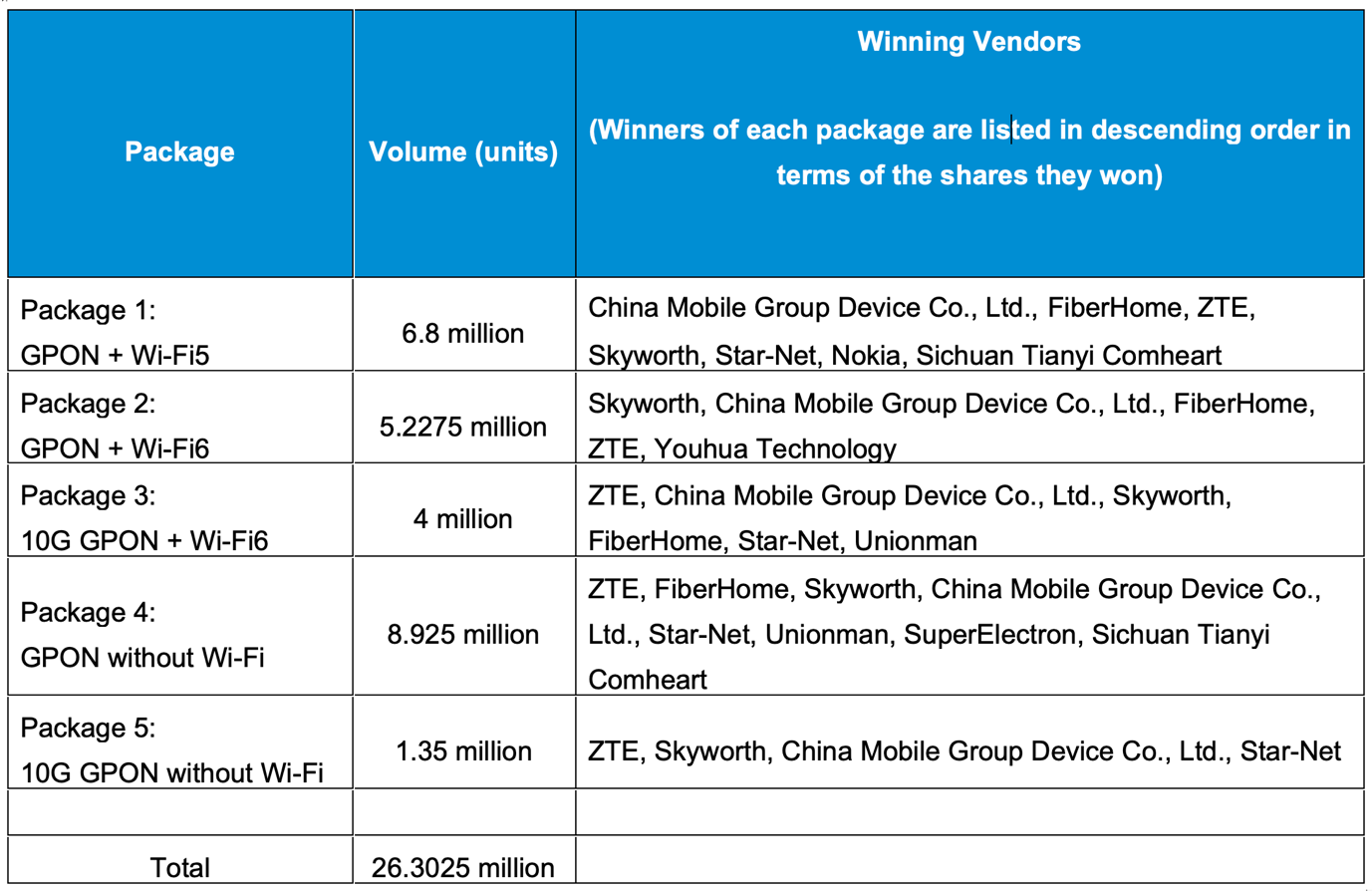
    In May 2022, China Mobile announced the results of its optical network terminal (ONT) tender for 2022-2023. With a total volume of 26.3025 million units, the tender represented the largest centralized procurement of ONTs by any operator in the Chinese market this year, drawing participation from numerous vendors.

    Based on the tender results, ZTE clinched a portion of all the five bidding packages and was the top winner in three of them. In the two packages for 10G GPON with Wi-Fi 6 and 10G GPON without Wi-Fi, ZTE landed the largest share, which testifies to its leadership in the commercial deployment of 10G GPON technology.

    ZTE ranked first for shipments of PON ONT devices with a 33% share of the global market in 2021, according to research firm Dell’Oro Group.

  • Mongolia to Take Digital Development to a New Level

    Mongolia to Take Digital Development to a New Level

    At Asia Tech Singapore 2022, HE Bolor-Erdene Battsengel, State Secretary, Ministry of Digital Development and Communications, Mongolia, took to the stage to share her views on the changing roles of women in tech with fellow guest panellists.

    Digital governance is a key agenda for many countries. What have been some initiatives rolled out?

    Mongolia aims to build a digital nation. In this context, a number of basic system and structural changes have been made. For example, to accelerate digital transformation, the former agency named Communication and Information Technology Authority was reorganized this year into the Ministry of Digital Development and Communications. E-Mongolia platform has successfully launched an integrated e-government system. The E-Mongolia academy has also been established to further develop, improve and maintain the E-Mongolia System. The fundamental laws of digital governance, such as the Law on Public Information, the Law on Digital Signatures, the Law on the Personal Data Protection, and the Law on Cyber ​​Security, have also been approved by the Parliament of Mongolia.

    Mongolia implemented the e-Mongolia platform a couple of years ago to digitalize public services. Can you tell us about the progress of this initiative and how this has impacted the lives of Mongolians?

    We first introduced the E-Mongolia system on 1 October 2020. The main achievement is that today, it has become a large system that includes 656 services from 61 government organizations. In total, more than 12 million services have been provided online through this system. The system currently has 1.3 million users. That means one-third of the adult population uses the E-Mongolia platform. A total of 656 most demanded public services can be obtained from this system, from applying for a driver’s license to applying for a passport. Features such as offering services based on customer behavior have recently been added.

    Mongolia is a vast and one of the least densely populated countries in the world. Can you tell us how this has been a challenge for 5G adoption and what is the 5G journey like so far?

    Our country has approved a policy to introduce 5G networks in 2020. In 2021, 5G pilot tests were successfully conducted twice. This year, the Ministry of Digital Development and Communications and the Communications Regulatory Commission are preparing the spectrum management for the introduction of 5G in Mongolia. In addition, mobile operators are preparing to invest in 5G. It has also successfully completed a 5G readiness assessment with the support of the International Telecommunication Union (ITU).

    Our country has a large territory and a sparsely populated region. This situation poses the biggest challenge when building a 5G network. In other words, the investment for establishing a 5G network will require a lot. In addition, 5G requires more robust fiber optic infrastructure. The next big challenge is a small, but highly competitive market. For instance, Mongolia has more than 3 million citizens served by 5 mobile operators.

    What are some plans in the pipeline for the Ministry of Digital Development and Communications of Mongolia?

    As I mentioned, our country aims to become a digital nation. The government has announced that information technology is one of the priorities of the economy. The Ministry of Development was implemented within the government, and the Parliamentary Standing Committee on Innovation and Digital Development was established. Our ministry has also approved a digital nation strategy. The strategy has six sub-objectives: digital infrastructure, e-governance, cybersecurity, digital literacy and inclusion, innovation and production, and national development accelerator.

    As I have said before, we have passed laws to accelerate the nation’s digital development to a new level. Emphasis will be placed on the implementation of these laws and the approval of compliance regulations.

  • Global Enterprise WLAN Continues Strong Momentum

    Global Enterprise WLAN Continues Strong Momentum

    The enterprise segment of the worldwide wireless local area network (WLAN) market continued its strong growth in the first quarter of 2022 (1Q22) with revenues increasing 17.1% year over year to $1.95 billion, according to results published by the International Data Corporation (IDC).

    The 17.1% annualized growth builds on the enterprise WLAN market growing 20.4% in 2021 compared to 2020. Growth in the enterprise WLAN market continues to be driven by the latest Wi-Fi standard, known as Wi-Fi 6 or 802.11ax. Wi-Fi 6 access points made up 70.3% of the revenues in the Dependent Access Point (AP) segment and accounted for 59.3% of unit shipments within the segment. Wi-Fi 5 products, also known as 802.11ac, made up the remaining balance of Dependent AP sales.The consumer segment of the WLAN market declined 3.6% in 1Q22 with the quarter’s unit shipments declining 2.2% on an annualized basis. Adoption of Wi-Fi 6 continues in the consumer segment of the WLAN market too: In 1Q22, Wi-Fi 6 made up 31.4% of the market’s revenues, up from 28.2% in the fourth quarter of 2021.

    “In the first quarter of 2022, enterprises around the globe continued to invest in WLAN technology as a key component of their network and digital transformations. Meanwhile, the Wi-Fi 6 standard continues to be a significant driver of growth in the enterprise WLAN market as enterprises deploy in the newest Wi-Fi technology,” said Brandon Butler, Research Manager, Network Infrastructure at IDC. “After a rocky macroeconomic environment over the past two years due to the COVID-19 pandemic, the enterprise WLAN market continues to be resilient as organizations invest in wireless connectivity.”

    From a geographic perspective, the enterprise WLAN market grew across most regions of the world. Growth was particularly strong in Asia/Pacific, where the market in the People’s Republic of China grew 55.6% year over year in 1Q22. In the broader Asia/Pacific region (excluding Japan and China) (APeJC), the market increased 22.3% in the first quarter; Japan’s market declined 4.8% in 1Q22.

    The enterprise WLAN market in the US rose 8.8% year over year in 1Q22. Canada’s market declined 2.5%, while the market in Latin America rose 27.6% in the quarter. In Western Europe the market grew 20.6% in 1Q22; in Central and Eastern Europe the market grew 2.1% in the quarter and in the Middle East & Africa, the enterprise WLAN market rose 19.5% year over year. At the country level, Germany was the largest market in Western Europe, making up 21.2% of the region’s revenues. In Germany, the market grew 37.6% year over year in the first quarter, propelling growth for the broader Western European region.


  • India Targets to Roll Out 6G by 2030

    India Targets to Roll Out 6G by 2030

    At an event celebrating the Telecom Regulatory Authority of India’s (TRAI) 25th anniversary, Prime Minister Narendra Modi said that the country is on track to roll out domestically developed 6G by the end of the decade.

    Currently, India’s 5G developments are still underway. Modi noted that connectivity will determine the pace of India’s growth, making it important for the country to pursue modernization at every level.He called for accelerated 5G network deployments to boost the Indian economy, which is projected to add $450 billion to the country.

    “5G technology will bring positive change in the governance of the country, ease of living and ease of doing business,” Modi stressed. “It will boost growth in agriculture, health, education, infrastructure and logistics.”

    At the same time, Modi announced the country’s first 5G testbeds, which would enable start-ups and industry players to test and validate their products locally and reduce dependence on foreign facilities.

    The Telecom Regulatory Authority of India (TRAI) had recommended a base price for upcoming spectrum auctions. According to sources, the Department of Telecommunications (DoT) is likely to move the 5G spectrum auction proposal to the Union Cabinet for approval next week.


  • ZTE COO Xie Junshi: Digitalization is the key to greater societal resilience

    ZTE COO Xie Junshi: Digitalization is the key to greater societal resilience

    At the post MWC22 sharing session recently organized by the GSMA, Xie Junshi, EVP and COO of ZTE, explored several exciting new trends in scenario-based 5G applications, mobile technologies, and industry development in an increasingly digitalized world.

    Xie noted that digitalization in the volatile, uncertain, complex and ambiguous (VUCA) era is continuously strengthening the “immune system” of our society, playing an irreplaceable role in tackling not only the current pandemic but also long-term public health issues such as ageing populations while promoting sustainable development. With digitalizationaccelerating around the world, both the technology and market are changing disruptively, creating more innovations and greater potential. To maintain a competitive edge, CSPs are pursuing the transformation to DSPs. Focusing on scenarios and value creation, ZTE aims to work jointly with all partners to build a digital and intelligent ecosystem.

    Below are the highlights of Xie’s sharing:

    Accelerating global digitalization is boosting the society’s immune system

    Digitalization is the key to greater societal resilience in the post-pandemic era. Whether in telecommuting, online collaboration, or digital factories, digitalization provides support for our lives and helps guarantee the health of the entire economy. Digitalization is also playing a pivotal role in tackling VUCA and population aging while promoting green, low-carbon, and sustainable development.

    Driven by scenario and value, both the market and technology are changing disruptively. The diverse range of exhibitors and fascinating content at MWC 2022 highlight the evolution from mobile Internet to IoE and AIoE, marked by ubiquitous 5G connectivity, AI advancement, cloud-network convergence, and new technologies. Today, without a doubt, global digitalization is accelerating, creating more technological innovations and greater market potential. To maintain a competitive edge, CSPs are pursuing the transformation to DSPs.

    In every industrial revolution, higher efficiency has always been the most critical factor. This current revolution of digitalization is no exception. At MWC 2022, most of the digital innovations presented by exhibitors, including ZTE, focus on higher efficiency. For instance, ZTE shared innovations for simplified infrastructure, efficient and intelligent operations, as well as agile innovations for achieving growth in the second curve of digital services. ZTE has also adopted scenario-based approaches to realize the ultimate experience and efficiency, promoting sustainable development and future technological advancements.

    Sustainable development is the key goal of enterprises, while the key to promoting 5G application in the to-B field lies in three aspects

    For 5G networks, consumers look forward to a better experience, while enterprises look for lower costs, higher efficiency, and business growth. So far, in the to-B field, 5G technology has been widely applied to verticals. For example, to assist or replace manpower, 5G-powered automated guided vehicles (AGVs) are used in flexible production lines, 8K machine vision for more efficient quality inspection, and unmanned or remotely controlled machines to assist in operations.

    To facilitate greater breakthroughs in the to-B field, however, it is important to achieve collaboration with operators and enterprises where every party stands to benefit. Together, there are three aspects to work on: creating and sustaining competitive differentiation, developing effective business models to speed up value creation, and exploring the path to mass customization.

    Competitive differentiation means that ZTE can provide unique and optimal solutions, and hence stand out from the competition. When delivering 5G solutions for verticals, it is important to determine whether 5G technology is indispensable, or whether the 5G-powered solutions have unparalleled advantages over others. This is how competitive differentiation can be sustained.

    As for speeding up value creation in the early stage of 5G application, it is important to focus on customers’ pain points and distinctive needs in fragmented scenarios. On this basis, ZTE can explore more scenarios in different fields, so as to accelerate the development of 5G application in the to-B field.

    To achieve higher profitability, mass customization is the optimal choice. This is why ZTE aims to build underlying capabilities of digital infrastructure and component-based cloud capabilities. Through flexible orchestration of such capabilities, agile innovation can be implemented, meeting the requirements of different applications in various scenarios. In addition, this allows ZTE to continue to build successful experience across different scenarios and consolidate a strong digital foundation, to enable rapid iteration and continuous evolution.

    Evolving consumer expectations drive 5G application in the to-C field, and joint efforts are required for building the infrastructure and ecosystem

    The rapid development of the mobile Internet is driven by evolving consumer expectations and improving human capabilities. The same will be true for the application of 5G in the to-C field. For example, consumer demands boost the development of applications that can provide real-time, immersive, and interactive audio-visual experience, such as UHD videos, AR and VR applications, and cloud gaming. This has been a trend in countries with wide 5G network coverage, including China and South Korea. With 5G technology, we can now watch live sport events with a panoramic view, freely zoom in or out, and switch between different camera positions. In this way, consumers can stay at home and enjoy personalized and immersive experiences in real time. In order to make the much talked-about metaverse a reality, we need to enhance network capabilities, computing power, and storage capabilities, for which 5G technology plays a vital role.

    To promote 5G applications in the to-C field, wide and deep network coverage is of great importance. More specifically, we need optimal, cost-effective 5G solutions that can guarantee continuous and intensive network coverage both outdoors and indoors, even on high-speed trains, airplanes, and ships. ZTE has already made many innovations in the to-C fields. In addition, easy-to-use and cost-effective terminals, together with different kinds of content services, will help give rise to improved applications in a stronger and healthier ecosystem.

    ZTE is committed to building a “1+2+3” digital ecosystem.

    The next major chapter of 5G development will start with the arrival of 5G-Advanced. While 3GPP Releases 15, 16, and 17 represent the first phase of 5G standards, 5G-Advanced marks the start of the second. Following up on 5G commercial deployment and empowerment of verticals worldwide, 5G-Advanced focuses on better user experience and more industry applications.

    In December 2021, together with its industry partners, 3GPP approved a work package for its Release 18, marking the start of 5G-Advanced evolution. The work package includes 28 study or work items in a variety of scenarios, including eMBB, real-time interactive new media, network intelligence, IoT featuring high-precision positioning and low power consumption, IIoT, integrated sensing and communication (ISAC), fused location, and satellite-cellular network integration. These efforts will bring us brand new capabilities, applications, and experiences. Toward 5G-Advanced, ZTE will continuously work with industry partners to promote technological innovation and industrial transformation.

    To gain a firm foothold in this process of network evolution, ZTE is always committed to building a “1+2+3″ digital ecosystem, looking to address key pain points and create greater value for customers.

    So what exactly is ”1+2+3”?

    “1” refers to a solid foundation consisting of chipsets, algorithms, and architectures. ZTE continuously strengthens its foundation to gain momentum for growth.

    “2” refers to intelligence and security, which are crucial to 5G networks and business.

    “3” refers to capability, performance, and efficiency, which should be continuously improved through innovations and are key to the prosperity of 5G.

    With the evolution to 5G-Advanced, ZTE will work with industry partners and advance technological innovations to reinvent a digital world.

    China’s 5G development will make greater contributions to global industries and markets.

    As of January 2022, a total of 1.425 million 5G base stations have been built in China, making 5G networks available in over 98% of counties and 80% of towns. Mobile 5G connections now exceed 518 million. More crucially, over 10,000 innovative 5G use cases have been created, which span the fields of manufacturing, health care, education and transportation.

    In the 5G era, China has been an active contributor in many aspects:

    • The moderately advanced pace of network construction in China has boosted the growth of the 5G industry.
    • China has continued exploring and promoting large-scale 5G application, consolidating the foundation of the entire industry.
    • China actively pushes forward the co-building and sharing of networks for higher resource efficiency.

    China has a wide range of wireless scenarios and a sound foundation provided by its digital economy, and is witnessing the growth of huge potential in consumer markets and various industries. With the moderately advanced pace of 5G network construction, excellent network coverage and guaranteed performance, China’s unique environment is set to produce a range of more applications and continuous innovation, and contribute to global industries and markets.

    Video link to Xie’s sharing at MWC22 :

    https://res-www.zte.com.cn/MediaFiles/4/F/4/%7B4F48E19C-7979-4844-861C-99C0759DA7F4%7D202204151635.mp4

     

  • Mobile money industry reached record $1 trillion in 2021

    Mobile money industry reached record $1 trillion in 2021

    Mobile money adoption and use saw continued growth in 2021, processing a record $1 trillion annually, according to the GSMA’s 10th annual “State of the industry report on mobile money”.

    The industry enjoyed a substantial increase in the number of registered accounts, up 18% since 2020 to reach 1.35 billion globally. The volume of person-to-person transactions were up to more than 1.5 million every hour. The report reveals that one of the most significant drivers of growth was merchant payments, which almost doubled year on year. It also highlights how mobile money continues to act as a core pillar of financial and economic inclusion, particularly for women.

    Providing significant growth in merchant payments

    Mobile money diversified its value proposition beyond person-to-person transfers and cash-in/cash-out transactions in 2021. It is now playing an important role in the daily lives of people and businesses, especially in low and middle-income countries (LMICs). The growth of ecosystem transactions such as merchant payments, international remittances, bill payments and bulk disbursements, together with interoperable transactions, are accounting for a more significant share of the global mobile money transaction mix.

    Merchant payments were instrumental in the growth of the mobile money industry in 2021. The value of merchant payments almost doubled, reaching an average of $5.5 billion in transactions per month. Providers are demonstrating that they can attract businesses to their platform with better incentives, such as efficient remote onboarding processes. For example, since Safaricom’s M-PESA began allowing companies to register for an account online in Kenya, more than 18% of new merchants are self-onboarding.

    “2021 was the year mobile money started to really diversify to B2B services. Beyond traditional person-to-person transactions, such as transferring money to family or friends, the industry is now central in helping small businesses operate more efficiently, and serve their customers better” said Max Cuvellier, head of mobile for development, GSMA.

    Increasing financial inclusion for women

    Mobile money has also been a driving force for financial inclusion for the world’s most vulnerable, particularly women. Mobile money is empowering women to take more control over their finances and purchase goods that they urgently need. Additionally, 44% of  providers responding to the GSMA Global Adoption Survey now offer credit, savings or insurance products, creating opportunities for underserved individuals to invest in their livelihoods and futures.

    With the gender gap in mobile money account ownership raging from 7% in Kenya to 71% in Pakistan – there remain some barriers to vulnerable people benefitting from mobile money. Owning a mobile phone is an obvious pre-requisite to using mobile money, and women across LMIC’s are 7% less likely than men to own a mobile phone. Overall, 143 million fewer women own a mobile than men. Additional barriers to mobile money access include a lack of awareness of mobile money and a deficit in perceived relevance, knowledge and skills.

    While some progress has been made, the report makes clear that more must be done to address the mobile money gender gap across LMICs. Concerted action is required from policymakers, the private sector, donors and other stakeholders to learn from success stories, address the issue and ensure that existing gender inequalities are not further entrenched, especially in light of the COVID-19 pandemic.

    Mobile money enables access to humanitarian aid, utilities and agricultural solutions

    As highlighted in the report, in 2022, the number of people needing humanitarian assistance is predicted to soar to 274 million. Mobile money is expected to play an increasingly important role in both donations – where it makes delivery systems more efficient and transparent for humanitarian actors and donors – and the receipt of aid.

    The UN Refugee Agency sent $700 million in cash and value assistance (CVA) to 8.5 million recipients in 100 countries in 2020. They have set up digital payment programmes in 47 countries,15 of which use mobile money. In many humanitarian settings, the digitisation of CVA via mobile money has the potential to promote agency and dignity, and foster financial inclusion.

    Mobile money also helps to enable access to basic utility services and agricultural solutions in LMICs. And to ensure this work continues, the mobile industry and humanitarian sector must keep working together to advance inclusive digital and financial inclusion even further for those who need it most.

  • Huawei reports record-high net profit, solid growth in digital power, cloud and carrier businesses

    Huawei reports record-high net profit, solid growth in digital power, cloud and carrier businesses

    Huawei’s net profit recorded an all-time high in 2021, increasing 75.9% year-on-year to reach 113.7 billion yuan. However, revenue declined by 28.6% from the preceding year, totaling 636.8 billion yuan. The company’s R&D expenditure reached 142.7 billion yuan, accounting for 22.4% of total revenue, and the highest R&D amount the tech giant recorded in the past decade.

    Despite a decline in revenue, Huawei reported an increased cash flow totaling 59.7 billion yuan, while the liability ratio dropped to 57.8%.

    Speaking at Huawei’s 2021 annual report press conference, Meng Wanzhou, Huawei’s chief financial officer noted that Huawei has a sound financial standing, where higher profitability and operating cash flow can be attributed to improved management and product portfolios.

    “The value of a company is not reflected in its financial performance, especially for a high-tech company like Huawei. Future-oriented, long-term investments can better reflect the real value of a company,” said Meng. “The real value of Huawei lies in the capabilities of the teams and platforms built with our long-term R&D investments. They are key to Huawei’s long-term sustainability and competitiveness.”

    In 2021, Huawei’s carrier business generated 281.5 billion yuan in revenue, accounting for 44.2% of total revenue. Of which, more than half of its carrier business took place outside of China. Notable growth in Huawei’s carrier business can be attributed to 5G networks deployed for carriers in 13 countries, including Switzerland, Germany, Finland, the Netherlands, South Korea, and Saudi Arabia.

    In terms of industrial 5G applications, Huawei has signed more than 3,000 commercial contracts, with many large-scale commercial deployments across industries including manufacturing, mining, steel, port, chemical, cement, power grid, and healthcare. Leveraging its simplified site solution, renewable energy, and intelligent technologies, Huawei has helped carriers in more than 100 countries, including the Netherlands, Indonesia, Poland, and the UAE, deploy green sites.

    “Major trends such as digitalization, intelligence and carbon neutrality are the directions that will define our ongoing development,” said Guo Ping, Huawei’s rotating chairman. Citing Huawei’s recent wins for its innovative products and solutions at the MWC Barcelona, Guo added that Huawei’s digital innovations are recognized by carriers and industry peers.

    Owing to accelerated digital and intelligent transformation across industries, Huawei’s enterprise business also witnessed rapid growth. Revenue for enterprise business reached 102.4 billion yuan, accounting for 16.1% of total revenue. Specifically, new businesses including cloud services, digital power, and intelligent automotive components experienced robust growth of more than 30% in 2021.

    According to Gartner’s report on the global IaaS public cloud services market in 2020, Huawei ascended to the second spot in China, and successfully ranked 5 among the top global IaaS vendors ­– therein becoming the fastest-growing of all major vendors in Asia Pacifc and globally.

    At present, Huawei cloud spans 61 availability zones within 27 geographical regions, covering more than 170 countries. A platform used widely by both the public and private sectors, Huawei cloud reaches more than 2.3 million developers, 14,000 consulting partners, and 6,000  technological partners, serving over 4,500 cloud products in the market.

    As one of the most populous and diverse regions in the world, Asia Pacific presents huge prospects for digital transformation and digital economy growth. With more countries embracing digitalization as a national agenda, Jun Zhang, director of Huawei Asia Pacific public relations reiterated Huawei’s ambition to ramp up on delivering connectivity and intelligence, and advancing low carbon and digital inclusion initiatives.

    Addressing Huawei’s commitments to the region, Jun noted that a key priority is expanding network coverage to bridge the region’s digital divide. For instance, Huawei has deployed a new system in the Philippines, leveraging mobile devices and AI to protect rainforests from illegal logging and animal poaching. In the high-altitude and isolated Papua region, Huawei has also successfully delivered 4G connectivity to a million residents.

    In terms of providing low carbon solutions, Huawei Digital Power has helped customers in the region reduce up to 17 million tons of carbon emissions. In Singapore, for instance, Huawei supported Sunseap Group with industry-leading solar inverters to build one of the world’s largest offshore floating farms.

    To address an ICT talent shortage, Huawei will invest $50 million over the next five years to train 500,000 ICT talent in the region. In Malaysia, Huawei will establish the Women’s Leadership Foundation (WLF) to impart skills in business analytics, AI, big data and blockchain to 2,500 women. In the next three years, Huawei will also commit about $100 million to its Spark program to grow the region’s start-up ecosystem.

    Recognizing that innovation is key to maintaining Huawei’s competitiveness, about 10% to 20% of total revenue goes into R&D each year. In the past decade, Huawei has since amassed over 845 billion yuan in R&D investments. To date, Huawei has built three research centers and five labs and innovation centers in the region.

    “We will keep investing heavily in R&D to stimulate innovation and cultivate Asia Pacific talents to continuously provide the most advanced and high-quality products and services for our clients,” Jun said. “We will continue to deliver industry-leading 5G solutions and work with our customers to build high-quality 5G networks.”

    Especially in Southeast Asia, where digital economies have been forecasted in the e-Conomy SDEA 2021 report to reach $1 trillion by 2030, Guo expressed that Huawei will invest heavily in technologies including 5G, AI, cloud, deepening cooperation with more governments and stakeholders to accelerate countries’ digital transformation journeys.

    Elaborating on Huawei’s partnership with Indonesia, the largest economy in ASEAN, Guo said, “In spite of the ongoing pandemic, Indonesia’s Coordinating Minister for Maritime and Investment Affairs Luhut Binsar Pandjaitan took the time to visit Huawei in person at the end of last year. During our meeting, we discussed areas in which Huawei can work with Indonesia, like ICT infrastructure and digital transformation, particularly 5G, cloud infrastructure, and the construction of its new capital city.”

    Elsewhere, Huawei has invested approximately $15 million to develop a 5G ecosystem innovation center in Thailand. More notably, Huawei jointly launched Thailand’s Siriraj World Class 5G Smart Hospital, ASEAN’s first 5G smart hospital. This year, Huawei and Siriraj Hospital will establish a joint innovation lab to incubate over 30 innovative 5G applications.

    Huawei will channel investments in three key areas, namely system architecture, architecture optimization and software performance improvement, and theoretical exploration. Establishing a highly trustworthy and reliable supply chain is also important in today’s challenging climate.

    For its global carriers and enterprise customers, Huawei will work toward building green, simplified, and intelligent ICT infrastructure and facilitate digital transformation in all industries. ICT technologies will be integrated across industry scenarios to meet differentiated customer requirements.

    Moving forward, Guo stressed that “Huawei will advance its journey of digitalization, intelligent transformation, and low carbon.