Tag: tesco

  • Orion is out in bidding for Tesco’s Korea operations

    Orion is out in bidding for Tesco’s Korea operations

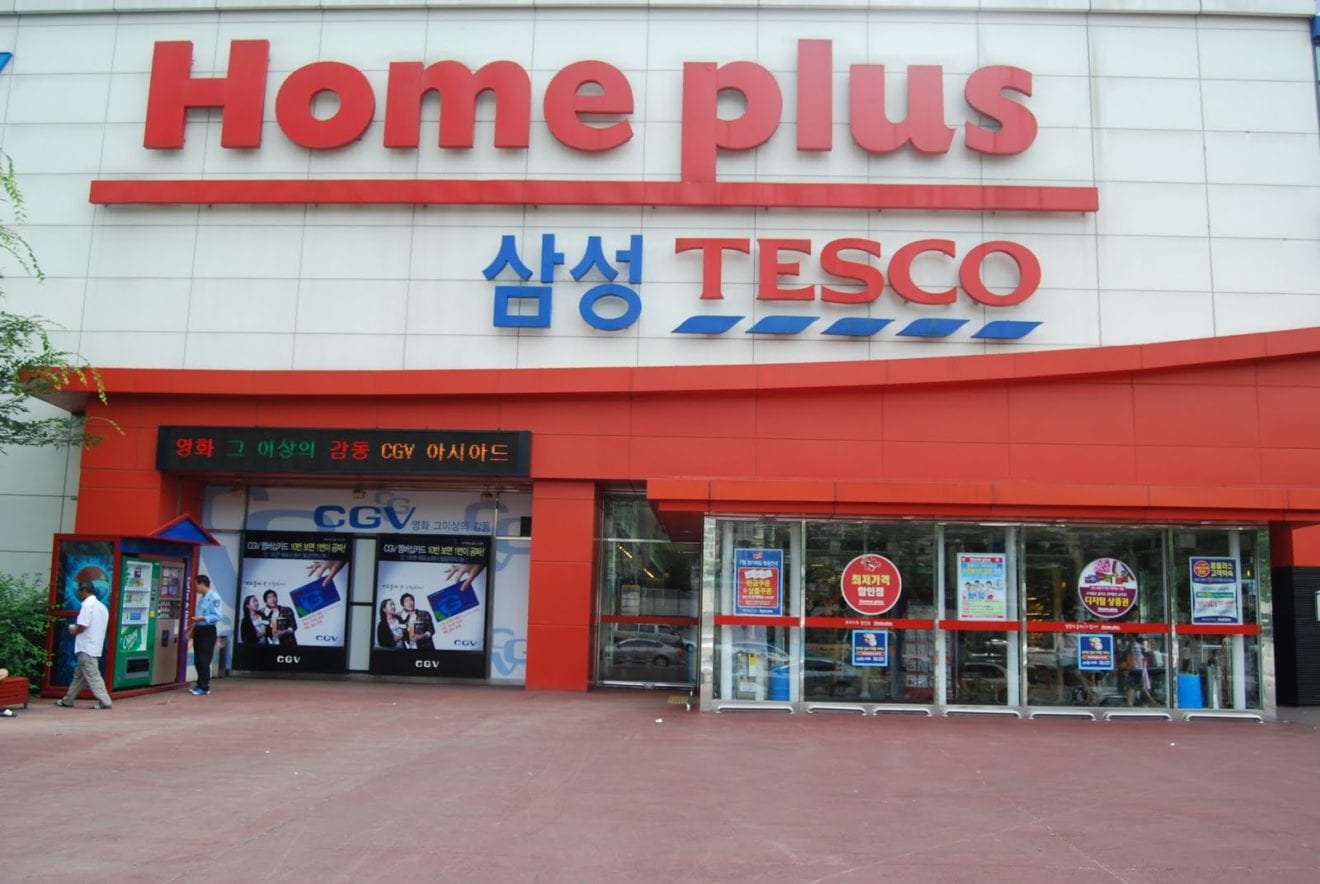
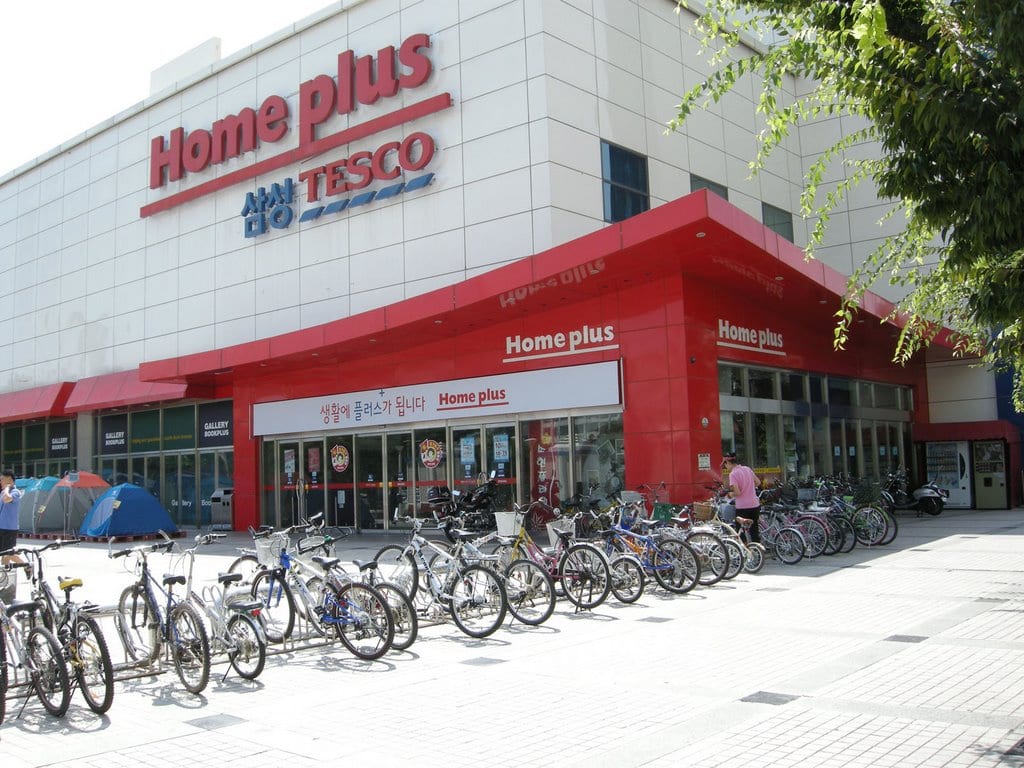
    Private-equity firms such as MBK Partners and the Carlyle Group are among the short-listed bidders for Homeplus, a local discount retailer owned by the U.K. grocery chain Tesco, according to people with knowledge of the matter.

    Affinity Equity Partners and Goldman Sachs’ private equity arm have also been short-listed, while the local snack maker Orion, which had submitted a bid, failed to move to the next round after a bid at the lower end of the bidders’ range. Orion’s bid was said to have been between 4 and 5 trillion won ($3.6 billion to $4.4 billion).

    Orion shares jumped 5.7 percent on Thursday after the news of its withdrawal. “Homeplus was probably too big of a prize for Orion to handle. Its failure has been expected,” a brokerage analyst said.

    Hyundai Department Store, which had earlier shown interest in bidding, decided not to, the retail company said. The chain is currently focused on getting a license for a duty-free business in Seoul.

    The Homeplus sale is expected to fetch around $6 billion for the troubled U.K. grocery chain Tesco, which is dealing globally with massive losses and huge outstanding debts. The sale of its Korean operations is part of its efforts to secure cash as it tries to stay afloat.

    Tesco entered the Korean retail market jointly with Samsung C&T in 1999, initially controlling 81 percent stake in Homeplus but gradually buying out Samsung’s stake.

    Homeplus operates 107 hypermarkets and 828 express stores across Korea, and is the third-largest discount retailer, after E-Mart and Lotte Mart, according to regulatory filings.

    Korea’s discount retailing market is estimated to be worth 34.9 trillion won as of the third quarter of 2014, down from 45.1 trillion won a year earlier. The sector has been hurt by an economic slump and government regulations that restrict operations during weekends to protect mom-and-pop stores.

    Homeplus saw a net loss of 299 billion won last year. Homeplus Tesco reported a net loss of 48.8 billion won and Homeplus Bakery contributed a net loss of 6.7 billion won.
  • Tesco Asia carve up likely

    Tesco Asia carve up likely

    A carve-up of Tesco Asia operations seems increasingly likely with credible reports in three different nations now of serious expressions of interest.

    While markets await firm news of progress of HSBC’s quest to find a buyer for the Tesco Korea business, the latest news is that Japan’s Aeon has expressed interest in buying Tesco Malaysia, reportedly valued in the region of £900 million.

    That follows an approach from Thai billionaire Dhanin Chearavanont late last year who prepared a speculative bid by his company Charoen Pokphand Group (CP) to buy back the troubled Tesco Plc’s Thai business, which he sold during the Asian financial crisis. That bid was initially rejected but if Tesco is selling its Korean and Malaysian operations it is likely to let Thailand go as well if it can gain a fair price.

    If all three sales were to proceed, it would almost certainly see the Tesco Asia operations rebranded under new owners – in Thailand, most likely under the Lotus brand, in Malaysia stores would be merged into Aeon’s existing network and in Korea – that would entirely depend on the successful bidder.

    Reuters has reported reliable sources confirming Aeon’s interest in Tesco Malaysia. Aeon is cashed up, has a heavy focus on expanding across Southeast Asia and a merger of its network with Tesco’s would give it 29 stores, making it a formidable competitor to local hypermarket operator Giant, which has a lower market positioning to Aeon’s more premium offer.

    The Japanese retail and property giant entered Malaysia by acquiring the Carrefour operation in 2012 for €250 million.

    Meanwhile, KKR has reportedly rejoined the race to buy Tesco Korea’s Homeplus network which is estimated to be worth US$6 billion, after sweetening its preliminary offer. All the prospective shortlisted buyers reported by the UK and Korean financial press are private equity companies, including Affinity Equity Partners, Goldman Sachs, Carlyle Group and MBK Partners.

    However in a market as complex as Korea, it is highly likely any of those bidders would want to partner with a local retail operator for the business connections and local market knowledge.

  • Tesco’s South Korea empire draws interest from private equity giants

    Tesco’s South Korea empire draws interest from private equity giants

    KKR and Carlyle, the US private equity firms, have been invited to bid for the Asian business, which trades as Homeplus, while London-based CVC Capital Partners has also been asked to bid.

    The decision to sell the South Korean stores comes as the retail giant’s chief executive Dave Lewis looks to streamline the business, to concentrate on its core UK shops and raise cash.

    After two decades of uninterrupted growth, Tesco has been struggling after it became distracted by overseas expansion and failed to spot the threat of discounters like Aldi and Lidl.

    The retailer is now looking to slash capital spending, as well as fund a vicious supermarket price war and put more people on the shop floor.

    Hong Kong-based Affinity Equity Partners and Asia-focused MBK Partners were also invited to bid, and Hyundai Department Store, which is separate from the car maker, said today that it was considering bidding.

    Tesco, advised by HSBC, has asked for indicative bids later this month.

    If the sale is achieved it would be Asia’s biggest private equity deal and the region’s second biggest consumer deal ever. Sovereign wealth funds could be involved in the financing of it, given the size of the sale.

    Homeplus is Tesco’s largest business outside Britain, with more than 400 stores, 500 franchise stores and over six million customers a week.

    But the business has been under some pressure, with falling like-for-like sales for the last two years.

    Tesco is also selling its £1 billion Dunnhumby data business, and has already sold its Blinkbox digital entertainment service and Tesco Broadband to TalkTalk for an undisclosed sum.

  • Tesco Malaysia to launch self-checkout lanes

    Tesco Malaysia to launch self-checkout lanes

    Tesco Malaysia has chosen NCR self-checkout know-how for introduction into its hypermarket community.

    The 2 corporations says the know-how will supply “a quicker and extra handy checkout choice” for its clients in Malaysia.

    “Clients will now have the liberty to scan, bag and pay for items themselves, with out having to attend in lengthy queues.” (Sure, the press assertion did say that; thus confirming Tesco has a customer support drawback – Ed).

    The Tesco retailer at IOI Metropolis Mall in Putrajaya, the chain’s latest, would be the website of the primary pilot deployment, to be adopted by Tesco KSL Metropolis in Johor.

    The NCR self-checkout answer works by a touchscreen that “intelligently guides consumers by way of the checkout course of with animated demonstrations for less complicated and quicker transactions”. NCR will present consulting, coaching and providers to make sure clean deployment.

    “We’re delighted to work with Tesco to increase the advantages of self-checkout to a different new market in Asia,” stated Michael Cawley, VP of Asia Pacific with NCR Retail.

    “By leveraging our strong international deployment experiences, we’re serving to retailers not solely to enhance their buyer providers and differentiate their in-store experiences, but in addition enhance their working prices.”

    Tesco first began utilizing NCR SelfServ checkout within the UK in 2002. The know-how is now out there at Tesco shops in Eire, the US, Central and Japanese Europe, South Korea and Thailand. NCR says its personal analysis exhibits self-checkout options can scale back wait occasions by as a lot as 40 per cent whereas almost two thirds of consumers say shops that provide the choice of self-checkout present higher buyer providers.

    NCR shipped extra self checkout models globally in 2014 than all different distributors mixed for the fifth consecutive yr, based on strategic analysis and consulting agency RBR.

  • Tesco Korea technique paying off

    Tesco Korea technique paying off

    Tesco’s obvious technique to attract out bidders for its Korean Homeplus operation is already paying off.

    Whereas personal fairness gamers have been apparently despatched invites to bid, the best way the information of the as but formally unconfirmed sale plan has unfold, has drawn two public declarations of curiosity.

    One is decidedly mischievous – from snack maker Orion, well-known for its “Choco Pie” dessert bought in supermarkets throughout Asia. Simply the place it might discover £6 billion to purchase Tesco Korea is unclear.

    The opposite is from Korea’s Hyundai Division Retailer (no relation to the automotive firm). Hyundai is value about US$three billion, so the probability of it pulling off a reverse takeover in its personal proper is slim. However it might make a worthy companion for a personal fairness investor, comparable to KKR, Carlyle, Affinity Fairness Companions, CVC or MBK, all of whom have been formally invited to bid. Native information, overseas capital and the looks of native possession to a finicky native shopper base would show a strong basis for progress and capital achieve.

    The top results of these two declarations creates the looks that there’s robust curiosity and demand within the Tesco Korea operation which, whereas worthwhile, faces challenges in sustaining market share.

    At the very least one of many events says it has acquired an info memorandum which tends to place past doubt Tesco Plc’s intentions.

    Tesco CEO Dave Lewis has already confirmed at Unilever he was unafraid of robust selections. And he’s dealing with many in his new position – his largest but to place Tesco Korea on the block.

    With a worth of circa £6 billion, it brings an entire new definition to the time period ‘hearth sale’. But when consumers are in search of a reduction given Tesco’s UK operational woes, they’ll be disenchanted.

    The method has been managed by HSBC and an obvious collection of leaks to information media, which, to date, are working properly, presents a protected and risk-free technique of testing the water. If the bids are available and the provides appear affordable, Tesco has a excellent news story of a robust return, a big discount in its debt and a stronger monetary base with which to proceed its residence market reforms and strengthen market share and income. If nobody significantly bites, Tesco can break its silence, deny a sale was ever on – and blame the media and market hypothesis for a misunderstanding.

    Our prediction: Tesco will promote the Korean operation and it’ll get a great worth for it, as a result of one or two or extra of these personal fairness gamers, working with a Korean associate with information of the retail business, will be capable of extract worth out of the enterprise that has hitherto eluded Londoners pulling strings from afar.

  • MERS fears drive Koreans on-line

    MERS fears drive Koreans on-line

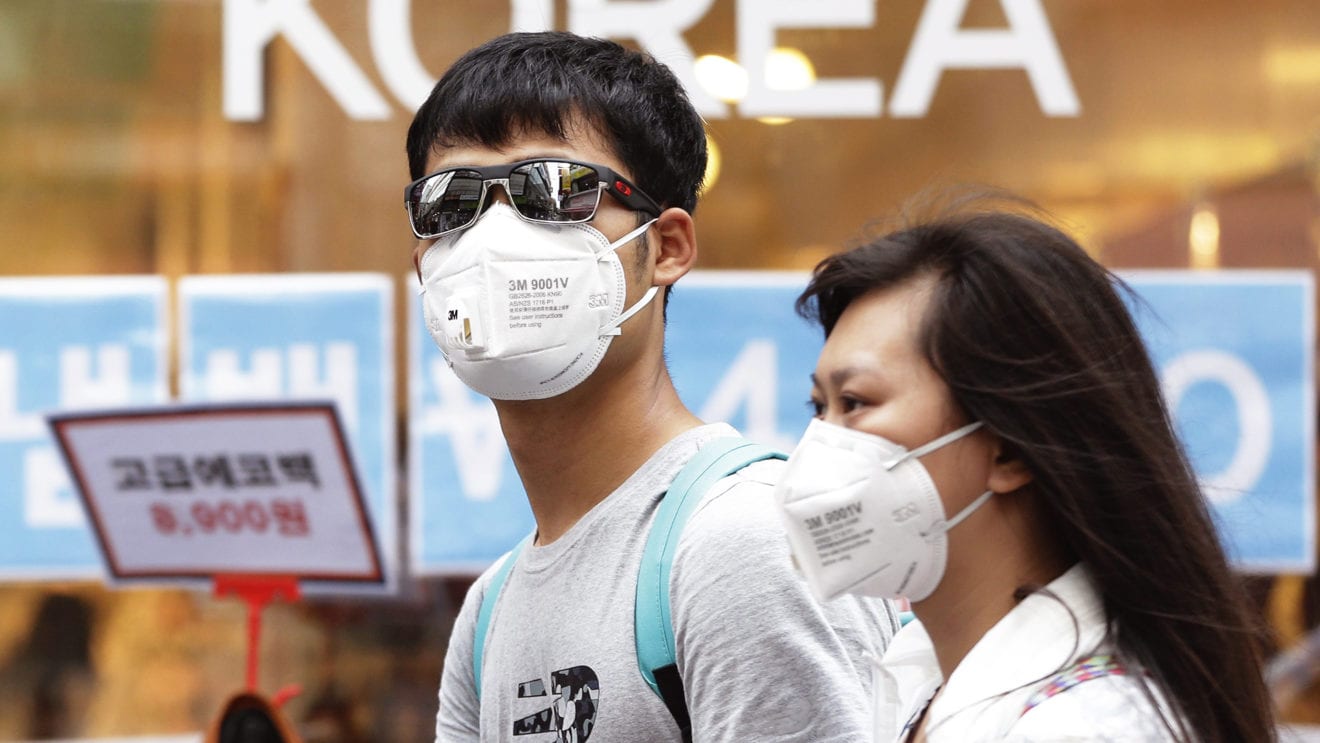
    South Koreans are more and more turning to on-line channels for grocery purchasing as they eschew their traditional visits to grocers amid the continued unfold of Center East Respiratory Syndrome (MERS), business knowledge exhibits.

    South Korea has reported 150 MERS infections because the first case was confirmed on Might 20, the most important outbreak outdoors of Saudi Arabia the place the respiratory sickness was first reported in 2012. As of Monday morning (June 15) 16 individuals have died from the illness.

    Knowledge by the nation’s three largest grocers — E-mart, Residence Plus and Lotte Mart – exhibits well being considerations are driving Koreans on-line, with eCommerce orders and order quantities rising within the double digits as MERS infections and MERS-related deaths rise.

    Market chief E-mart noticed its on-line gross sales soar 63.1 per cent between June 1 and June 11, in contrast with the identical interval a yr earlier. The variety of orders additionally jumped 51.9 per cent.

    By product class, ready-to-cook house meals gross sales shot up 90.1 per cent adopted by a 83 per cent rise in recent meals and 69.9 per cent improve in processed meals.

    Tesco’s House Plus reported a 48.1 per cent improve in on-line gross sales and a 37.5 per cent rise when it comes to order worth. Lotte Mart noticed its on-line gross sales develop 26.eight per cent in contrast with a 10 per cent gross sales stoop at its brick-and-mortar branches.

    The unprecedented unfold of the doubtless lethal virus has emerged as a bugbear for Asia’s fourth-largest financial system that’s already grappling with limping exports.

    Final week, the central financial institution slashed the coverage price to a brand new low of 1.5 per cent as a part of “pre-emptive” efforts to stop MERS from adversely affecting sentiment and consumption.

  • Tesco to sell off Homeplus

    Tesco to sell off Homeplus

    British retailer Tesco has kicked off a sale process for its South Korean unit, whose market value is estimated at around $5 billion, according to industry sources on Friday.

    The U.K. retail giant sent out a teaser letter to prospective buyers on Thursday and hired HSBC as the sale broker for Homeplus.

    “With this pace, Tesco may be able to begin the preliminary bid in July and wrap up the takeover deal in October,” an official at an investment bank said.

    Tesco owns a 100 percent stake in Homeplus, South Korea’s second-largest supermarket chain, which runs more than 140 stores as well as franchise and convenience stores in the country.

    Industry watchers see global buyout firms Carlyle Group, KKR & Co. and CVC Partners and Korea’s National Agricultural Cooperative Federation, or NongHyup, as potential bidders for the business.

    There seems to be a low possibility that Korean retail players will participate in the bid due to the hefty price tag and regulations on monopoly. The operation of the country’s No. 1 supermarket chain E-Mart and No. 3 Lotte Mart would be restricted by government regulations if they took over Homeplus.

    The sale of the South Korean business comes after Tesco reported the biggest ever loss in British retail history in April and its credit rating was cut to junk status by Moody’s and S&P earlier this year.

    Tesco entered the Korean market in 1999 in a joint venture with Samsung. Homeplus has grown to become its largest business outside the U.K.

  • Tesco Korea on the block

    Tesco Korea on the block

    UK retailer Tesco has reportedly engaged HSBC to handle the sale of its South Korea retail operations.

    Tesco Korea is the hypermarket big’s largest division outdoors its UK house market and analysts estimate the enterprise might fetch between US$5 and $7 billion, sufficient to make a considerable gap in its debt and restructuring bills.

    Analysts within the UK recommend personal fairness corporations can be the more than likely potential bidders for the operation, particularly funding arms of Korean banks.

    Tesco, the world’s fourth largest retailer by gross sales, might comply with retain a stake within the enterprise

    post-sale, and/or license its model, which has robust recognition out there.

    Tesco says on its web site it has greater than 400 shops in Korea, together with 500 franchised shops, and serves greater than 6 million clients each week.

    “We’ve got a worthwhile on-line enterprise and 22 of our award-winning digital shops in South Korean subways and bus stops assist time-pressed clients store on-the-go utilizing their smartphones.”

    The shops are fed by three distribution centres, the most important the Hamahn Recent Distribution Centre, which can also be the most important recent distribution centre in Asia, processing greater than 40 million packing containers per yr.

    “We have now elevated the supply of ready fruit & veg and ready-meals in our shops. “We’ve additionally responded to financial pressures by providing a variety of Homeplus own-brand merchandise in three classes, from ‘Good Zone’ fundamentals on the lowest worth level to ‘Greatest Zone’ premium merchandise,” the corporate says.

    In addition to promoting items in Korea, Tesco says it exports £36 million of largely non-food merchandise from Korea to the remainder of the Tesco Group.

    Tesco has been tipped to divest a few of its Asian operations since an accounting scandal and falling market share within the UK decimated its share worth and new CEO Dave Lewis was appointed to attempt to flip across the struggling organisation.

    Tesco additionally has operations in Thailand and Malaysia

    The corporate posted a pretax lack of £6.38 billion (US$9.52 billion) for the yr to February 28, largely resulting from writedowns. Its everyday operations stay worthwhile.

    Tesco’s overseas retail competitors have already exited Korea, discovering the market, dominated by native gamers, robust to crack. Walmart bought 16 shops there to Shinsegae in 2006 and France’s Carrefour bought out to E.Land Group the identical yr.

  • Tesco Gives More Detail on Supplier Deals After Scandal

    Tesco Gives More Detail on Supplier Deals After Scandal

    Tesco provided more information about how it accounts for relationships with suppliers on Wednesday after an accounting scandal that contributed to an annual loss of 6.4 billion pounds ($9.5 billion).

    Britain’s biggest retailer announced last year it had overstated profits by 263 million pounds due to booking deals with suppliers too early, prompting a criminal investigation by Britain’s Serious Fraud Office.

    As it announced the biggest loss in its 96-year-history on Wednesday, Tesco said it was increasing transparency and seeking to build “longer-term, mutually beneficial partnerships” with its suppliers as it tries to rebuild trust in the market.

    It is seeking to simplify the deals it negotiates with suppliers, noting it was currently using over 20 different kinds of payment terms, including multiple offers and rebates when agreed sales volume targets are met.

    It also gave more details on how it accounts for supplier deals and the impact on its balance sheet and said it had launched new guidelines for staff in this area.

    UK consumer watchdog Which? demanded an investigation on Tuesday into “misleading and confusing” pricing tactics over seven years in areas such as multi-buy offers at British grocers.

    Led since September by Dave Lewis, a former executive at major Tesco supplier Unilever, the retailer said it had met with over 100 suppliers to draw up new business plans to focus ranges and improve efficiency in its supply chain.

    Suppliers are feeling the squeeze due to a fierce price battle between Tesco and its main rivals, Sainsbury’s, Asda and Morrison’s, with 146 food producers entering insolvency in 2014, up from 114 in 2013, according to accountants Moore Stephens.

  • Tesco posts record loss

    Tesco posts record loss

    Tesco has reported a £1.4 billion preliminary full year group trading profit on increased sales.

    But it lost a massive £7 billion in writedowns and one-off charges to create a record annual loss of about £6 billion.

    In Asia – where Tesco operates hypermarkets in China, Thailand, Malaysia and Korea – group profit fell 18.4 per cent in the year to March 31, to £565 million. But that was a far better performance than in the UK, where profit slumped 78.8 per cent to just £467 million, and in Europe, down 31.9 per cent to £164 million.

    In something of an understatement, CEO Dave Lewis described the year as “very difficult”.

    “The results we have published today reflect a deterioration in the market and, more significantly, an erosion of our competitiveness over recent years. We have faced into this reality, sought to draw a line under the past and begun to rebuild, and already we are beginning to see early encouraging signs from what we’ve done so far.”

    Indeed, if one could overlook such massive writedowns, the trading news was positive.

    UK like-for-like sales were up for first time in over four years, driven by better availability, service and pricing; like-for-like sales performance improved to one per cent in the fourth quarter which, by grocery retailing standards, is significant.

    Lewis highlighted “tough trading conditions overseas”, especially in Korea.

    But he said the transformation program outlined in January was progressing well, the portfolio review ongoing.

    “Over the last six months we have put customers back at the centre of everything we do. By focusing on the fundamentals of availability, service and targeted price reductions, we have seen a steady increase in footfall, transactions and, most significantly, volumes. More customers are buying more things at Tesco,” he said.

    “We are making deep changes to the way we organise and run our business, with a simpler, more agile office team, more colleagues serving customers and a new approach to the way we work with suppliers. I do not underestimate how difficult some of these changes have been for the team and I thank everyone for their professionalism and contribution at this time of great change.”

    Lewis said the market remained challenging and the company was not expecting any let up in the months ahead.

    “When you add to this the fundamental changes we are making to our business and our offer, it is likely to lead to an increased level of volatility in short-term performance. Our clear priority – and the one that will deliver sustainable value for our shareholders – is to improve consistently for customers. The changes we have made and will continue to make put us in a stronger position to do this.”

  • Tesco Lotus slashes prices

    Tesco Lotus slashes prices

    The Thai operator of Tesco Lotus hypermarket chain is cutting the prices of essential fresh foods by 10-50 percent for six weeks to revive consumer spending.

    Prices of more than 100 fresh food items including meat, seafood, vegetables, fruit and eggs are being reduced by up to half to help consumers during the difficult economic situation.

    The campaign began on Thursday at Tesco Lotus hypermarkets nationwide and will run for six weeks.

  • Tesco China drags down partner

    Tesco China drags down partner

    Tesco China has been blamed for dragging China Resources Enterprise into the red.

    CRE, which operates the Vanguard hypermarket chain in China, has reported its first annual loss in more than 20 years and blames the start-up costs for its venture with embattled Tesco for the red ink.

    CRE has effectively taken control of Tesco China when the latter effectively admitted defeat in Asia’s largest grocery market, unable to penetrate the domination of local brands and store networks.

    Now CRE has warned that it may take three to five years to turn the ailing Tesco business around.

    “Looking ahead, the group’s top priority in 2015 is to improve operational efficiency and reduce losses,” chairman Chen Lang said a statement.

    He warned profitability would remain volatile, with increased competition from eCommerce businesses and the Chinese government’s crackdown on gift-giving and graft affecting sales.

    CRE reported a net loss of HK$161 million (US$20.75 million) in 2014 – a massive turnaround from the HK$1.91 billion ($246.3 million) profit of 2013.

    Revenue from the 3000 supermarkets and hypermarkets CRE runs, rose 15.3 per cent to

    HK$168.86 billion ($21.8 billion).

    The Chinese retailer will be hoping its eCommerce venture, to be launched later this year, will help restore profitability, along with a change in focus of its store development program to smaller new stores, speciality stores and convenience stores rather than hypermarkets.

  • Tesco Thailand bid spurned

    Tesco Thailand bid spurned

    As speculation mounts over the future of its Asia business units, a bid for Tesco Thailand has reportedly been rebuffed.

    As reported in November, Thai billionaire Dhanin Chearavanont prepared a speculative bid by his company Charoen Pokphand Group (CP) to buy back the troubled Tesco Plc’s Thailand business division, which he sold during the Asia financial crisis.

    Reuters now reports Chearavanont held “preliminary talks” with Tesco after securing the support of the Bank of America in November, but Tesco spurned his approach. He has now secured support from UBS and Siam Commercial Bank (SCB) for another bid for the business, which could be worth about US$10 billion.

    A sale of the Thai operation – and/or its Korean, Malaysian or Indian businesses – would greatly benefit Tesco’s balance sheet, and its credit rating now classified essentially as junk status by ratings agencies.

    Citing “people familiar with the matter” Reuters reported Tesco and the Thai tycoon are not currently engaged in any talks, however he is ready to proceed with a formal offer if Tesco decides to sell the Thailand operations.

    “While it is not known why Tesco turned down Dhanin’s approach, his sustained interest in the asset could be positive for Britain’s biggest retailer, which is battling sluggish growth at home and has been hit by ratings downgrades and an accounting scandal,” said Reuters.

    Chearavanont, 76, bought back Siam Makro in 2013 for $6.6 billion and reacquiring Tesco would give him control of a substantial part of Thailand’s retail market.

    The future of Tesco’s offshore businesses has been under increased speculation since new CEO Dave Lewis took the helm of the company, under siege from regulatory probes into profit exaggerations and substantial loss of market share in its core UK home market.

    Lewis enigmatically said in January Tesco was “committed to keeping all of the operations we have overseas, until we make any decisions otherwise”.

    Tesco Thailand acquired a controlling interest in Chearavanont’s Lotus supermarket business in 1998 for £206 million, rebranding it Tesco Lotus. The chain has now grown to 1700 shops – from hypermarkets to convenience stores. Investment banker Morgan Stanley estimates Tesco Thailand to be worth between US$7.2 billion and $9.9 billion.

  • Tesco China stores rebranded

    Tesco China stores rebranded

    Tesco may well be a recognised brand name globally, but it doesn’t wash with Chinese consumers.

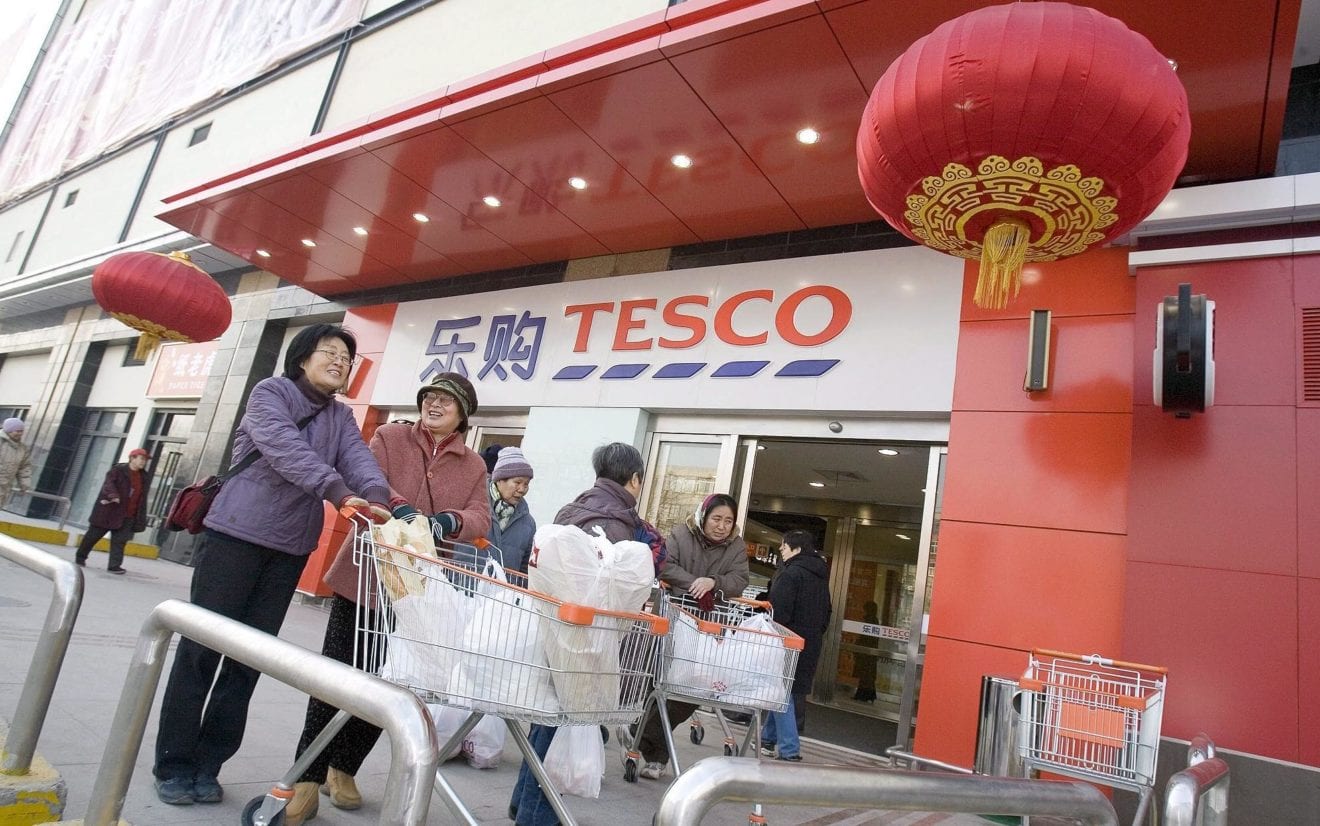
    Last year, Tesco sold a majority stake in its China retail business to local retailer China Resources Enterprises. This month, China Resources has revealed it is rebranding all 135 Tesco China stores under its Vanguard name.

    “The decision to change the brand was made based on the overall perception in the market,” CR Vanguard CEO Hong Jie said in an interview with China Business News.

    “Tesco is a globally recognised name, but Vanguard is better known and well-received in China,” he said.

    China Resources is aiming to turn around the troubled chains profitability within three years after merging the backroom operations into Vanguard’s.

    CR Vanguard owns more than 4100 stores in China and entered a joint venture with Tesco in May last year, leaving the British retailer with just 20 per cent of the business.

    While the Tesco brand name might be about to disappear, both parties see positive benefits from the continuing partnership. CR Vanguard acquired a usefully-sized bolt-on store network to build its critical mass in the market, which should surpass the combined sales of Walmart and Carrefour in China. It gained advanced FMCG business practices from Tesco.

    China remains a strategically important growth market for Tesco, with the joint venture combining Tesco’s ‘best in class’ retail practices, international sourcing and multi-channel capabilities with CRE’s strong local knowledge and brand.

    The two companies are in the process of merging their property businesses and plan to launch an eCommerce offer at the end of March.
    Vanguard will also sell 761 Tesco own-brand products with some Vanguard-branded lines joining Tesco’s shelves, as the two brand’s supply chain networks are integrated.

    Tesco also separately has its international sourcing headquarters based in Hong Kong, from where it sources more than 50 per cent of all clothing and 40 per cent of other non-food items. It buys about £2 billion worth of goods and services from China for the Tesco Group annually.

  • Shop Tesco with Google Glasses

    Shop Tesco with Google Glasses

    Tesco has become the first retailer to launch a Google Glass enabled service with a basic version of its shopping app now available for users of the wearable device.

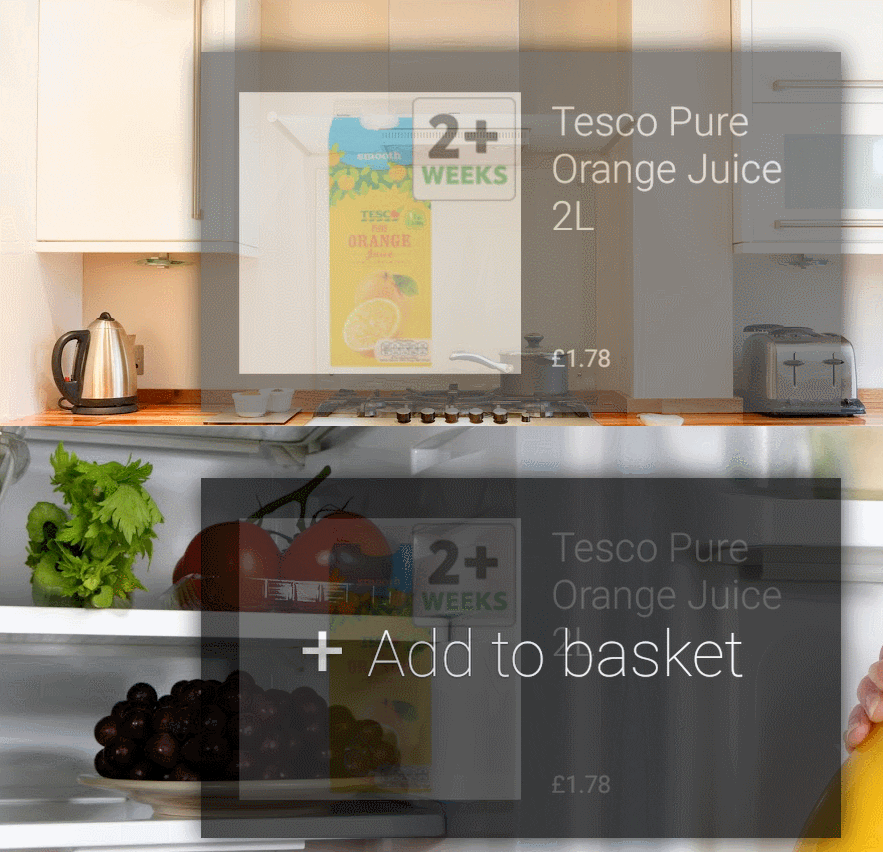
    The Glassware has been developed by Tesco Labs, which experiments with disruptive technologies that have the potential to change the way customers shop. The Tesco Grocery Glassware lets customers browse goods, view nutritional information and add items to their shopping basket hands-free.

    Initially the service is only available in the UK, but it is likely to be rolled out in Thailand, Malaysia or Korea if there is demand, especially given Tesco’s use of its Asian divisions to test new technology, (for example its virtual stores in South Korea subway stations).

    In this, its first foray into providing services for those using wearable technology, Tesco has intentionally kept the functionality of the app simple as it evaluates the consumer response to wearables and the likelihood of increased demand.

    Pablo Coberly, innovation engineer at Tesco Labs commented: “At Tesco we want to ensure we have the means in place to allow customers to shop whenever, however they want which is why we’re testing the possibilities of customers topping up their online basket with Glass”

    The Tesco Grocery Glassware works alongside customers Tesco.com grocery accounts, automatically adding products to the customer’s online basket for them to then review and order by computer, tablet or mobile.”

    Coberly said Tesco does not envisage Glass becoming the new platform for shopping as its functionality is different, and more immediate.

    “Instead, it complements other devices and integrates shopping into everyday life because products can be ordered or added as and when customers realise they need replacing.”

    He says the future of the Tesco Grocery Glassware will be driven by customer needs and demand.

    “We’re keen to see how customers react to shopping with Glassware and welcome feedback or suggestions from customers using Glass.“

    Glass users can install Tesco Grocery Glassware through MyGlass on their mobile device or desktop.