Tag: Thailand

  • Baidu Wallet launches Southeast Asia foray

    Baidu Wallet launches Southeast Asia foray

    China’s Baidu Wallet has launched its mobile payment service in Thailand, on the eve of the traditional Thai new-year celebration Songkran.

    Part of the Baidu search-engine group, the digital payment service is now connected to more than 400 merchants in four Thai cities – Bangkok, Chiang Mai, Pattaya and Phuket. It covers restaurants, shopping malls and spas.

    Baidu Wallet is also set to launch in South Korea and Japan, with plans to also expand into Hong Kong, Macau and Taiwan.

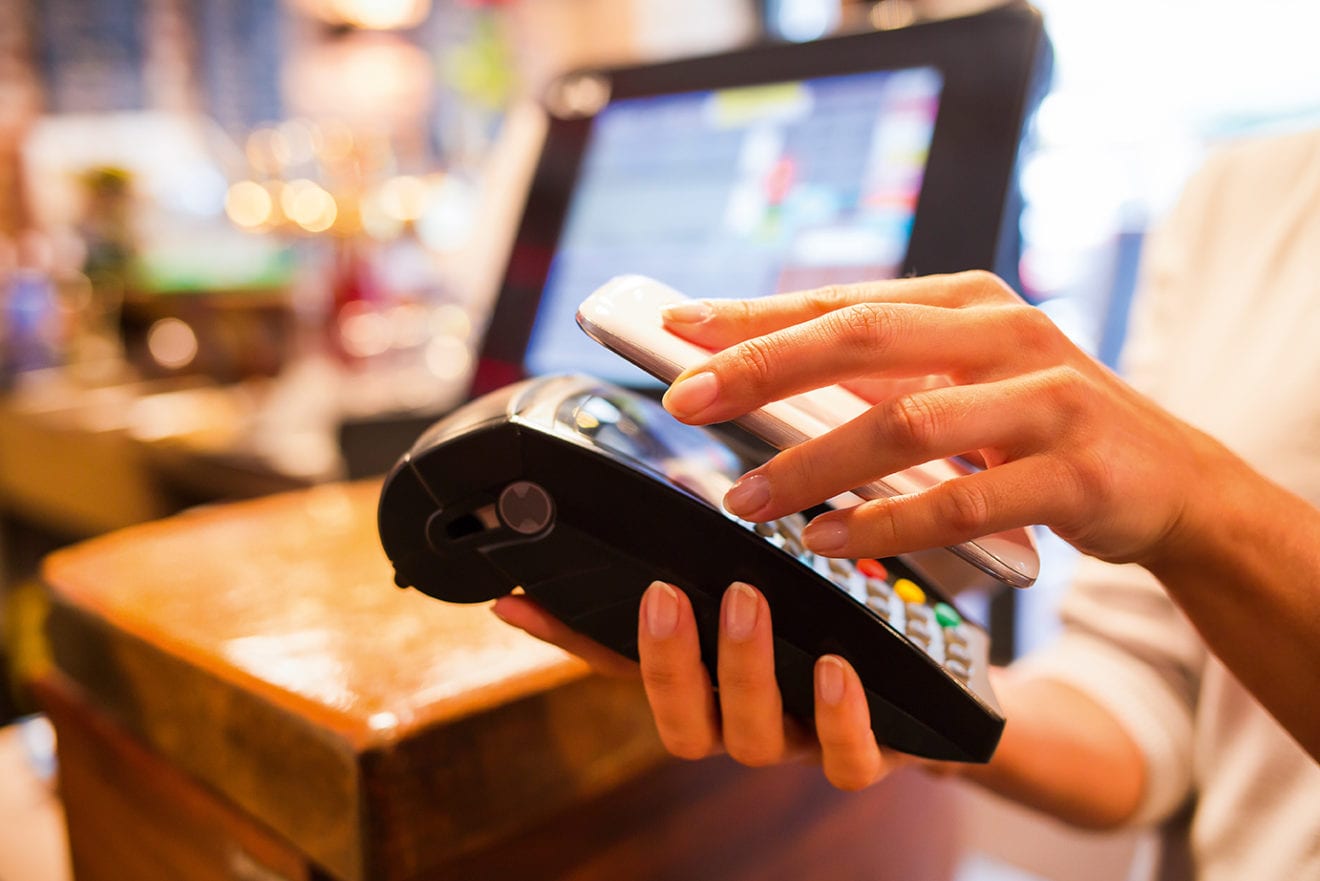
    Baidu Wallet’s smartphone app means Chinese travellers can avoid the bother of exchanging currency. They need only scan the QR codes of partnered merchants and enter the amount of Thai baht they need. The app converts the figure to yuan based on real-time exchange rates.

    China has the highest adoption rate in the world for technology-enabled payment systems, according to a new survey by market data company Nielsen. With information from 13,000 respondents across 26 countries, the survey shows that 86 per cent of Chinese respondents paid for online purchases over a six-month period, while the global average rate was half that at 43 per cent.

    A report by consultancy iResearch shows that China’s mobile payment transactions reached $373.2 billion in the third quarter of last year, a 64 per cent increase year-on-year.

    China has been the biggest source of international tourists since 2012, says the Tourism Authority of Thailand. There were 7.9 million Chinese tourists last year – 27 per cent of total international arrivals.

    Chinese travellers spent 6400 baht (US$180) a day each on average, with most tourists spending 5690 baht.

    A report from Forrester Research says the rapid growth of smartphones is driving an eCommerce boom across Southeast Asia, the world’s third-largest digital marketplace after China and India. This boom is being paralleled by strong payment growth via mobile. Companies are boosting their investments in online and mobile platforms such as Carousell in Singapore and Tarad in Thailand, where 35 per cent of purchases are made via a mobile device.

    Alipay, from Alibaba, has introduced an online shopping service Thailand duty-free shop King Power, and the WeChat app payment option launched in Thailand at the beginning of this year.

  • Siam Discovery about to launch ‘retail revolution’

    Siam Discovery about to launch ‘retail revolution’

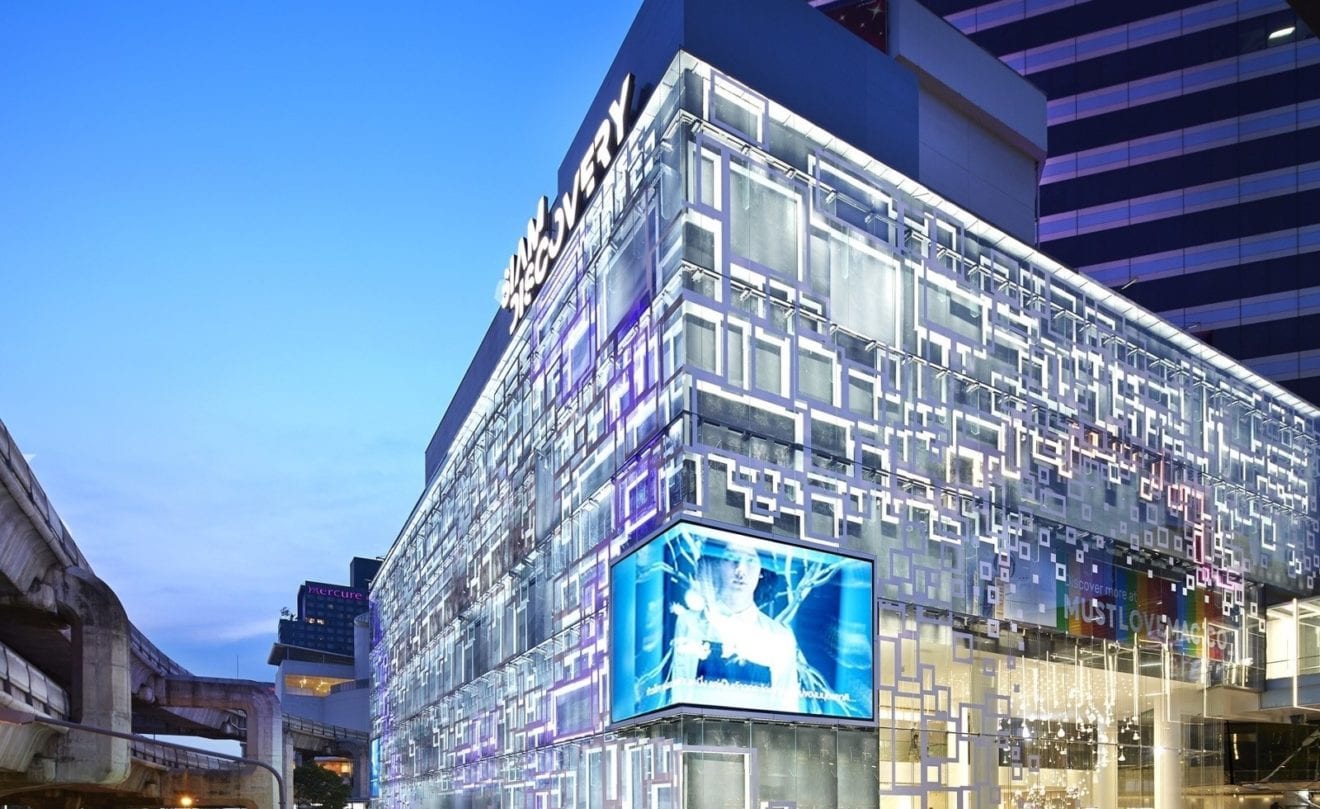
    After a Bht 4000 million (US$113 million) overhaul, Siam Discovery will re-open in Bangkok this month as a self-described “hybrid retail development”.

    As well as Thailand’s largest lifestyle speciality store, the complex will feature an “arena of lifestyle experiments”.

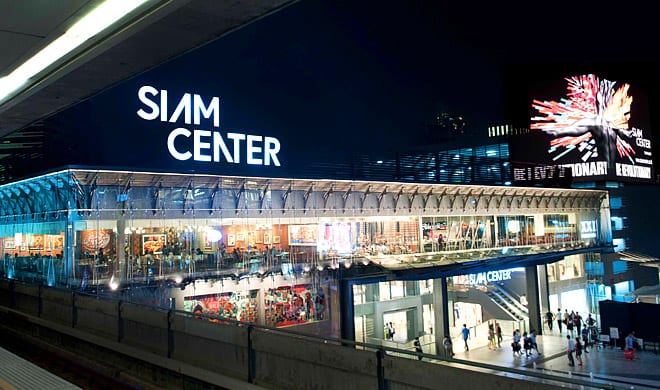
    Opening on May 28, the complex is owned and run by Siam Piwat, which also has Siam Paragon, Siam Center, Paradise Park and, in a joint venture, IconSiam. This new development will be sub-branded The Exploratorium, and introduce what CEO Chadatip Chutrakul describes as a “revolutionary new retail concept”.

    This concept is spread across 50,000 sqm, and senior executive vice-president Charnchai Cherdchuwongthanakorn says the company expects to double its sales per square metre as well as reinforce Siam Piwat’s reputation as a thought-leader in Thailand’s retail sector.

    Siam Discovery – The Exploratorium will encourage visitors to experiment and discover what they like. Without the constraints of a particular brand or school of design, products are brought together under a single universal concept that puts customers at the centre, says the company.

    Charnchai says that in its first year the eight-level complex is expected to draw 100,000 visitors a day, with a mix of 65 per Thais and 35 per cent tourists. Before the renovation the centre had 750,000 visitors a day.

    There are many firsts and concept stores in the centre…

    • In a partnership with the Department of Export Promotion, Siam Discovery will feature award-winning designers in the Objects of Desire Store.
    • Nike will launch its only concept store for Southeast Asia, including a personalised embroidery service.
    • Designer Issey Miyake which have its first concept store outside of Japan, called the World of Issey Miyake and offering products for men for the first time in Thailand.
    • Home decorative brands like Hay, Kartell and Tom Dixon and Kartell will open their first concept stores in Thailand, and artists Lisa Larson and Yayoi Kusama will make their Thailand debut.
    • As well featuring designs from Tokyo Fashion Week, Siam Discovery will highlight Asian designers with brands such as Beautiful People, Discord by Yoji Yamamoto, Dressed Undressed, Factotum and Yoshio Kubo being introduced to Thailand.
    • As a world first, music magazine Billboard will have a cafe with a food-and-drink corner catered by Dean & Deluca and a live radio show.
    • An innovative retail service developed by Siam Discovery will offer customers a personal stylist and a private dressing room.
    • Tokyo Bike will offer cycling products and equipment as well as a customised bicycle fitting service and a test-ride space.
    • Starbucks Coffee will feature a coffee drip for hard-core coffee fans, plus furniture made from recycled coffee grounds.

    Siam Piwat is spending Bht 300 million on the grand opening. But first, 500 members of the public will be able to experience the space first by entering an online draw. Also before the opening, a 7m-tall “Discovery Man” will go on a promotional roadshow throughout Bangkok.

    A Discovery Man exhibition at the opening of Siam Discovery is being curated by Japanese designer Oki Sato, who was chief advisor for the building’s design and interior.

    A highlight during the grand opening period will be Social Discovery, an interactive exhibition that is a collaboration between Siam Discovery and creative designer Black Egg. It will combine storytelling with digital technology to create an experience themed “When Obsession Becomes Identity”.

  • Retail changes hit Vietnamese labels

    Retail changes hit Vietnamese labels

    After acquiring supermarket chains in Vietnam, Thai retail groups have started strengthening the distribution of products from Thailand to the detriment of Vietnamese labels.

    Central Group and BCJ Group now have more than 50 supermarkets and convenience stores in Vietnam, and VietnamNet reports that more than half of the retail market share in Vietnam is now in Thai hands.

    Metro wholesale supermarkets, which have changed from German to Thai ownership, now feature Thai products in a special area by the main entrance, including household appliances, clothing, processed food and cosmetics.

    VietnamNet says the volume of Vietnamese goods in supermarkets and shopping malls has dropped two-thirds, being replaced by Thai products.

    Vietnamese manufacturers have complained about the volume of their products being cut back after Metro changed hands. Vietnamese goods have reportedly also been replaced at other retail chains, including Big C and B’s Mart.

    Saigon Food general director Le Thi Thanh Lam says that foreign-owned retail chains always demand high discount rates from suppliers.

    Vietnam High-quality Product Association chairperson Vu Kim Hanh says Thai goods will become a major rival for Vietnamese.

  • Babyshop mulls major GCC expansion to reach 270 stores in 2016

    Babyshop mulls major GCC expansion to reach 270 stores in 2016

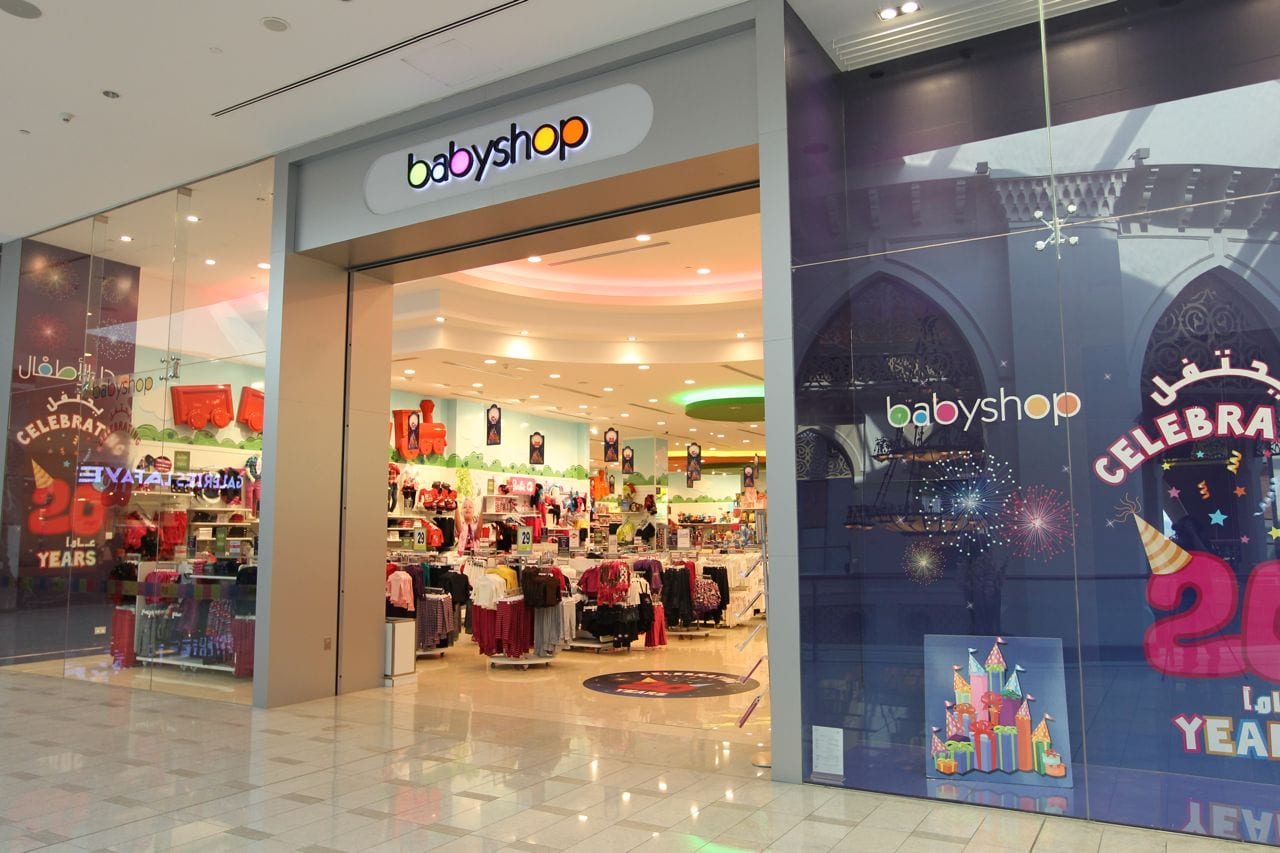
    Babyshop is looking to launch 25 stores in Saudi Arabia alone in two years, says Vinod Talreja, CEO of the retail unit under Dubai-based Landmark Group.

    Retail sector data from various markets, including the US, highlights the current global economic outlook. The markets in the MENA region, the UAE in particular, have already been hit by the dip in tourist flow. What are your projections?

    The retail sector in the MENA region has witnessed strong growth over the years, driven by strong economies, high disposable incomes and increased population, and will continue to see growth in the coming years.

    Having said this, in business, there could be periods where markets and situations could be a little slower than the other highly aggressive times. Such situations only give us retailers the opportunity to fuel innovation and strive even harder, working towards improved business growth using various different channels and activities that are in sync with the objectives of the business. Enhancing value propositions while closely catering to customers’ needs and requirements is one way of dealing with situations such as these.

    At Babyshop, we are continuing to expand. We are a company that has been expanding consistently for the past many years and our growth plans will not be affected by any short-term market challenges, as our business plans are laid out with long-term future strategy in mind.

    In terms of tourism to the region and to the UAE in particular, the upcoming Expo 2020 will definitely propel economic growth, thereby boosting the overall retail sector.

    The emirate is targeting 20 million visitors per year by 2020 and this will clearly have a tremendous impact on the sales of every category, proportionate with this massive number of visitors and thus taking retail to new heights.

    In 2015 alone, Dubai attracted more than 14.2 million overnight visitors, recording a solid 7.5 per cent increase over 2014, which is double the United Nations World Travel Organisation’s (UNWTO) projected three to four per cent global travel growth for the same period.

    These numbers clearly reiterate that the region is geared and well-positioned for the expected huge numbers which in turn will surge sales to significant levels across, thus fostering growth and invigorating the local economy.
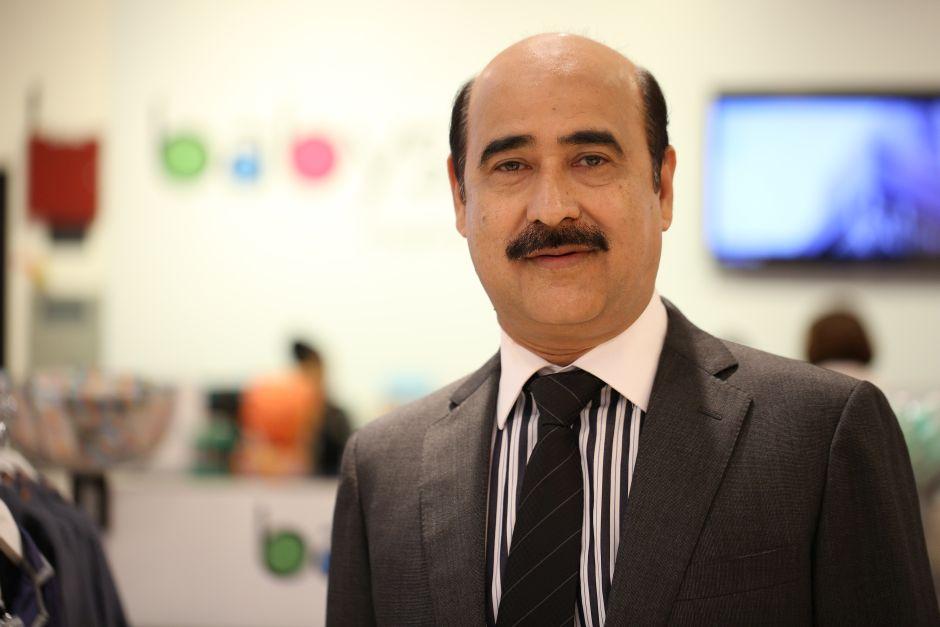
    Vinod Talreja, CEO Babyshop

    Babyshop, as well as its parent group Landmark, has an impressive footprint in the GCC. Although it has a few stores in the regions beyond MENA, the presence there is not much felt.

    Is it that the mid-market retailer is not so optimistic about those markets or is it that the “comfort zone” in the home region pulls it back?

    Babyshop, started in 1973, has 235 stores across 19 countries in the MENA region. The number is expected to reach 270 by end 2016. The brand is also well on track to achieve its target of 300 stores by end 2017, expanding into regions beyond the GCC.

    With a strong retail sector, Saudi Arabia today stands as our largest market, with 116 stores, followed by the UAE with 47 stores. We also have significant presence across the rest of the GCC and Egypt, Jordan, Lebanon, Iraq, Yemen, Libya, Kenya, Nigeria, Tanzania, Pakistan, Thailand and Kazakhstan.

    With a long-term vision of having significant footprint across the world, Babyshop has plans to expand into three new territories in 2017, with a major focus on the GCC, predominantly Saudi Arabia; Africa, with an emphasis on North Africa; and Thailand.

    We are extremely optimistic about our foray into newer markets in the MENA region and beyond, where retail sales are expected to continue and the retail space pipeline remains strong. These markets continue to be hotspots for the growth of retailers at both the regional and international levels.

    In a clear indication of the fundamental role the brand plays, this noteworthy presence of Babyshop and the aggressive expansion plans beyond this region into newer territories confirms its leading position at the frontline of the retail industry.

    What factors do you consider when choosing a new market for entry?

    Entering a new geography is a very important decision any brand can make and requires significant effort and commitment to implement an appropriate entry plan. In fact, target-marketing selection is a key part of our overall strategy at Babyshop and typically involves a significant in-depth analysis to understand various factors.

    Keeping in mind the vision and mission of Babyshop, the key factors that we consider before entering any market are the size of the market, its growth potential, the consumers and their purchase patterns and habits, competition, ease of accessibility to the local residents and, most importantly, the capital investment required to enter the chosen market.

    Is India on the list of new markets that you will be entering as part of your expansion plans, bearing in mind that it is going to be one of the fastest-growing economies this year?

    Our expansion plans set for the coming years are focused on the GCC, Africa and Thailand. These are highly favourable regions, with continued backing and support of the local governments, increased business prospects and growing population.

    As per AT Kearney’s Global Retail Development Index 2015, with a population of 30.8 million in Saudi Arabia, total retail sales grew at a CAGR of 7.7 per cent during 2010-2014 to reach $103 billion. In the next two years, we are looking to launch 25 stores in that market alone.

    India is currently not on the cards; however, with the market being a promising retail segment, we might consider it within our strategy in the future.

    Is franchising in retail by regional brands a new direction that is being witnessed? Landmark is seen to be taking the lead on this. How is Babyshop doing this?

    Franchising in general is just another way of reaching out to larger and booming retail segments, while being able to respond to local tastes, the changing needs of consumers and catering to distinct consumer groups by offering them a different product mix of high-quality products.

    Today, we are present in Nigeria, a market that we tapped into in January 2016 in a franchising model with Artee Group, along with Splash and Lifestyle, the other leading fashion and lifestyle brands of Landmark Group. We also have a presence in Thailand under the same model with Robinson, the exclusive distributor for Babyshop products in the market, as well as in Kenya, where The Junction and Sarit Centre are a franchise held with Deacons, a leading retail company in the East Africa region.

    The fresh approach adopted for the brand has showcased incredible success so far with great consumer feedback garnered. In Thailand alone, we plan to open ten stores over the next year.   We will be continuing to launch in various other regions under the franchising model in the coming years as well.
  • Lalamove Delivers Lifestyle Services with LINE

    Lalamove Delivers Lifestyle Services with LINE

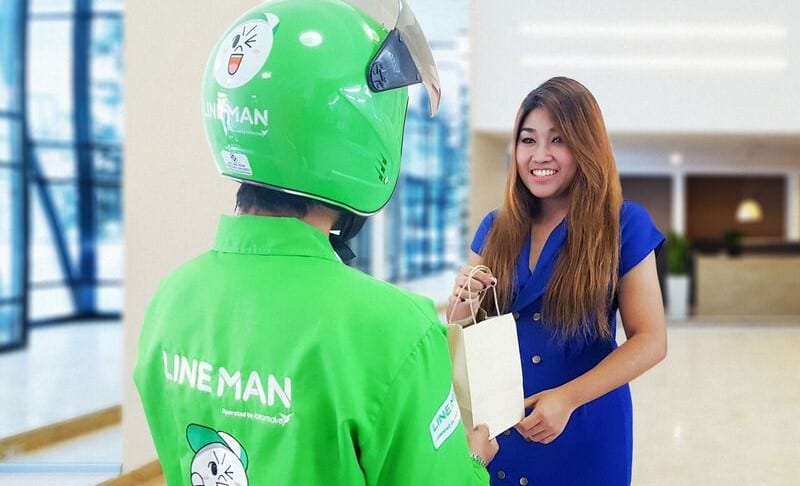
    Hong Kong based on-demand delivery app Lalamove is partnering with the world’s leading mobile platform LINE to expand on its delivery services in Bangkok.  The LINE MAN app is aimed at bringing reliable on-demand services to consumers as well as providing convenience to their increasingly busy lifestyles.  LINE MAN is one of LINE’s first ventures to “be more than a chat app” and LINE has chosen Thailand to be the first market to launch LINE MAN.

    The LINE MAN smartphone platform offers three services: document and package delivery, food purchase and delivery, and convenient goods purchase and delivery.  The delivery of all 3 services is provided by Lalamove, and currently limited to within Bangkok for now with plans for expansion.  LINE has a large user base of over 33 million in Thailand.

    Lalamove-LINE_3

    The announcement follows a global conference in March 2016 where LINE revealed a five-year plan to create a ‘smart portal’. The goal is to close the loop between businesses and LINE users and go beyond their original chat app strategy.

    Santit Jirawongkraisorn, Co-founder and Managing Director of Lalamove Thailand believes partnering with LINE is a natural progression. “This year, we have been marketing our online delivery services primarily to small and medium sized businesses. The addition of LINE MAN will bring Lalamove’s high quality services that many businesses have enjoyed to general consumers, which appeals to the Lalamove strategy and brand.”

    Meanwhile, the choice of Lalamove to deliver LINE MAN services demonstrates real confidence in the logistics app profile. According to Ariya Banomyong, Managing Director of LINE Thailand, “LINE MAN aims to offer best quality lifestyle services and help businesses leverage digital tools to connect with consumers, and Lalamove, as a leading on-demand delivery service provider in Thailand, made them a natural choice for LINE MAN”.

    LINE MAN will offer courier services through the Lalamove fleet of motorcycles, with cash payments.  Consumers will be able to order food via restaurant database app, Wongnai.

    LINE MAN is free to download at the Google Play store and Apple store.

    https://onelink.to/lineman

  • Lazada opens m-commerce tech hub in Thailand

    Lazada opens m-commerce tech hub in Thailand

    Southeast Asian e-commerce company Lazada Group has opened a tech hub in Bangkok, Thailand to drive strategic mobile development initiatives.

    The Lazada Tech Hub in Thailand will focus on advancing the design and engineering of Lazada’s mobile shopping and selling sites and apps for Southeast Asia.

    With almost 30 million app downloads and more than 60% of its GMV represented by mobile sales by the end of December 2015, Lazada Group has been investing in m-commerce through new app and mobile site initiatives.

    In the next few months, Lazada Tech Hub aims to hire more than 50 staff, including iOS and Android developers, Go Programming Language developers, and Quality Assurance automation engineers. The tech hub team will operate from EmQuartier in Central Business District Bangkok.

    Lazada Group opened its first tech hub in Ho Chi Minh, Vietnam in November 2012. A second tech hub was opened in Moscow, Russia in February 2015. Together, the three tech hubs are dedicated to driving product engineering and technology infrastructure.

    “Mobile innovation is a discipline any serious online player must build, and having the best talent is critical to designing products and solutions that are not only intuitive but improve the quality of experience and life for our consumers and sellers,” Lazada CTO for operations Ifor Evans said.

    “We believe that Thailand attracts a highly-skilled talent pool. And, as the leading shopping and selling destination, Lazada is both enviably-positioned and committed to raising the bar for mobile and tech development in the region.”

  • Siam Discovery ready to offer new experiences

    Siam Discovery ready to offer new experiences

    Siam Discovery will open its doors on May 28 and will become Thailand’s largest lifestyle speciality store. The 40,000-square-metre complex will also be the Kingdom’s “Biggest Arena of Lifestyle Experiments” in retail space.

    Mayuree Chaipromprasith, senior vice president for business promotion at Siam Piwat, said that with the facelift the new Siam Discovery complex would serve individual shoppers who are curious and want to try new things as well as discover new experiences.

    “Both Siam Paragon, Siam Center, and the latest new Siam Paragon will have their own unique positioning, and will not cannibalise each another,” said Mayuree.

    She said Siam Paragon offers high-end fashion brands, while Siam Center will serve people who look for trendy fashion products made by local Thai designers. Siam Discovery, however, will provide hybrid lifestyle products, a combination of imported luxury and local brands.

    “The three shopping complexes will share the core values of Siam Piwat, which are: understanding [shoppers and tenants]; trustworthy; missionary; daring [with new innovations that break the rules]; and a commitment to excellence,” said Mayuree.

    She said the new Siam Discovery will offer lifestyle experiments for individual consumers in their areas of interest. The complex will create hybrid experiences in retail space, which will break all retailing rules.

    Charnchai Cherdchuwong-thanakorn, senior executive vice president for retail business development at Siam Piwat, |said the company will spend Bt300 million on the grand opening event and opening promotions of Siam Discovery, which aim to make Bangkok the retail hub of the Asean Economic Community (AEC) and the world’s favourite shopping destination.

    “The new Siam Discovery marks the introduction to Thailand of a new retail concept – a hybrid retail destination spread across 40,000 square metres. We expect to double |our sales per square metre with the new concept as well as |reinforce our reputation as a thought-leader in Thailand’s retail sector, creating unprecedented destinations that compete with the best of the world’s destinations,” he said.

    Charnchai said that highlight brands or stores at the new Siam Discovery centre will be divided into five different categories: everyday products; trend products; innovative products and services; sustainable products; and collaborations and Absolute Siam products.

    “We expect the new Siam Discovery complex to draw approximately 100,000 shoppers a day in the first 12 months, of which 65 per cent will be Thais and the rest 35 per cent foreigners,” Charnchai said.

  • Central Group sells Big C Thailand stake to rival

    Central Group sells Big C Thailand stake to rival

    Thailand’s Central Group is a step nearer to settling on Big C Vietnam  after selling its stake in Big C Thailand to a rival retailer.

    Central has accepted an offer from rival TCC Group for its 25 per cent holding of Big C Supercenter, reported to be worth at least 50 billion baht (US$1.4 billion).

    The deal follows French retail group Casino’s decision to sell its Thailand and Vietnam units this year in a bid to cut debt. Both businesses have hypermarkets, supermarkets and convenience stores.

    Central Group, Thailand’s biggest retailer led by tycoon Tos Chirathivat, lost out to TCC’s flagship retail unit Berli Jucker in the battle to gain control of the Thai unit, but has agreed to pay 920 million euros (US$1.1 billion) for Big C Vietnam.

  • Foreign retailers in Vietnam under attack

    Foreign retailers in Vietnam under attack

    Complaints by Ho Chi Minh City businesses about foreign retailers in Vietnam have sparked the prime minister to order an investigation.

    Members of the Ho Chi Minh City Union of Business Associations (HUBA) say the growing number of foreign retailers in Vietnam have a loose rein to expand at a pace that will eventually hurt local companies.

    HUBA has sent at least two letters to the government raising questions about the legality of some business activities by foreign retailers, reports Thanh Nien News.

    Vietnam laws forbid foreign businesses to distribute products such as rice, cane sugar and cigarettes, but these items are still available at the supermarkets and convenience stores of most foreign retailers, including South Korea’s Lotte and Big C, Tuoi Tre reports.

    Following the complaints, Prime Minister Nguyen Xuan Phuc has ordered relevant agencies to check into foreign retailers, including mergers and acquisitions.

    Media reports say Mega Market Vietnam, which owns Metro wholesale stores, is expected to be first to face the scrutiny. The stores were originally run by Germany’s Metro before being acquired by Thailand consumer group TCC this year.

    Statistics show that Vietnam is home to more than 700 supermarkets and 132 shopping malls, mostly in the main centres of Hanoi and Ho Chi Minh City.

    Meanwhile, Hanoi Association of Supermarkets chairman Vu Vinh Phu says a supermarket in the northern city of Hai Phong had its revenue fall 30 per cent six months after a foreign superstore opened.

    Foreign companies now control more than half of Vietnam’s retail market, says the association, and many producers complain they are struggling to have their products in foreign supermarkets mainly because the retailers ask for high discounts, says HUBA vice-chairman Pham Ngoc Hung.
    Meanwhile, products from countries such as Japan, Malaysia, South Korea and Thailand are becoming more and more popular.

    Vietnam’s retail sales rose 10.6 per cent from 2014 to VND2469 trillion (US$109.4 billion) last year, official figures show.

  • Mr Pizza follows K-pop into Thailand

    Mr Pizza follows K-pop into Thailand

    South Korean pizza brand Mr Pizza has opened its first store in Thailand, with plans to add four more outlets this year.

    Its debut store is in the commercial and entertainment district of Ratchada Rd in Bangkok, in the first basement floor of the seven-storey The Street mall.

    Mr Pizza owner MPK Group says this is the first foray out of Korea for the franchise, and a second store will open in The Promenade mall in Kannayao, Bangkok, in July.

    “Thailand is one of the biggest markets in Southeast Asia, and food and beverage accounts for 40 per cent of the country’s $7 billion franchise industry,” says Son Dong-hee from MPK. “With the popularity of Korean pop culture, I am sure we will be successful in Thailand.”

    To prepare for the Thailand franchise business, the Korean food company established a joint venture with Thailand food retailer Foodland Supermarket last year. Foodland Supermarket runs 18 retail stores and about 50 restaurants, including dim sum restaurant Tim Ho Wan and fusion-food restaurant Long Table.

  • The ‘Thai goods’ era’ has arrived

    The ‘Thai goods’ era’ has arrived

    Vietnamese manufacturers’ biggest rival is Thailand, experts say. The country exports a wide range of goods, from chicken to slippers, from cosmetics to electric cookers. 

    vietnamnet bridge, english news, Vietnam news, news Vietnam, vietnamnet news, Vietnam net news, Vietnam latest news, vn news, Vietnam breaking news, dissolved businesses, VCCI, Thai goods, Big C, Central Group, Thai billionaires
    Most recently, Central Group has acquired Big C at the price of $1.04 billion

    Figures show the flood of Thai goods in the Vietnamese market.

    1.Vietnam spends $8.2 billion, or VND180 trillion to buy Thai goods, from slippers to cars.

    According to the General Department of Customs (GDC), the turnover of imports from Thailand increased by twofold from $4.5 billion in 2009 to $8.2 billion in 2015.

    Of this, the petroleum imports from Thailand increased from $590 million to $1.16 billion.

    The other products which also witnessed sharp increase in import turnover were computers, paper and electronics.

    Though Vietnam is an agricultural country which has big advantages in producing tropical fruits, it still imports fruits from Thailand in large quantity. The fruit import turnover increased during that time.

    Vietnam also imports steel, precious metal, chemicals, machines, household use electrical products and pharmaceutical drugs from Thailand.

    2.Thailand is a big vehicle exporter to Vietnam.

    In 2015 alone, Vietnam imported 25,136 vehicles from Thailand. If counting car parts, Vietnamese spent $1 billion to buy cars and car parts from the country. By the end of 2015, Thailand ranked fourth among the biggest car exporters to Vietnam, after China, South Korea and India.

    In the first quarter of 2016, Vietnam imported 19,700 cars from all markets, including 7,814 cars from Thailand, a sharp increase of 64.5 percent compared with the same period last year.

    3.Vietnam is Thailand’s seventh biggest importer.

    According to Thai agencies, the two-way trade turnover between Vietnam and Thailand in 2013 was $439 million. The figure is expected to increase to $15 billion by 2020.

    Vietnam is the seventh biggest importer for Thailand, while Thailand is the 10th ASEAN largest investor with 300 projects under implementation in Vietnam.

    3.Thai businesses have completed a series of merger and acquisition (M&A) deals in Vietnam.

    In 2012, BJC group of the Thai billionaire Charoen Sirivadhanabhakdi spent 1 billion baht, or VND656 billion, together with Mongko, opening a supermarket to distribute Thai goods in Vietnam, Laos and Cambodia.

    In early 2013, BJC took over the retail chain developed by Vietnamese Phu Thai Group and Japanese Family Mart and renamed the chain B’s Mart.

    In August 2014, BJC spent 655 million, or $879 million, to buy Metro Cash & Carry Vietnam.

    In September 2014, the Thai billionaire decided to spend 1 billion baht, or VND650 billion, from now to 2018 to expand 205 B’s Marts in Vietnam.

    In January 2015, Power Buy, belonging to Central Group, bought 49 percent of Nguyen Kim home appliance chain’s stake. It is also the owner of Robins chain in Vietnam.

    Most recently, Central Group has acquired Big C at the price of $1.04 billion.

  • TrueMove backs out of 900-MHz auction

    TrueMove backs out of 900-MHz auction

    Thai mobile operator TrueMove has decided not to participate in the upcoming 900-MHz auction on May 27 after all.

    The decision was made public late last night in a leaked filing to the stock market regulator. Dtac had already announced it was not participating, which would likely leave AIS as the sole bidder in the auction.

    The auction for 10 MHz of 900-MHz spectrum will start at $2.1 billion, the last price by Jasmine in the December auction before it forfeited its deposit after being unable to raise funds to pay for the licence.

    The letter to the Securities Exchange Commission said that following the board’s meeting on May 16, True’s board has decided not to participate in the auction. True already has enough high frequency spectrum for capacity (on 1800 and 2100-MHz) and low frequency spectrum for coverage (850 via CAT and 900) to meet demand. True has a total of 55 MHz of spectrum which is enough for 2G, 3G and 4G services.

    Just days earlier at a panel organized by Thailand’s IT Press Club NBTC secretary-general Takorn Tantasit strenuously defended “his” decision to include True in the auction. “I have listened to every side of the argument. Whatever decision I make, it is possible I will be investigated and may face jail,” he said.

    Takorn also announced at the ITPC panel that AIS had decided to participate in the auction.

    Takorn had indeed decided to include True, but that decision was overturned by the NBTC board on spectrum cap grounds. The NBTC board in turn was overturned by the junta using article 44, the absolute power clause, in the interim constitution.

    Junta order 16/2559 section one paragraph 3 clearly states that the NBTC is to hold the auction in a way that is fair for the benefit to the state and to the people or to ensure competition. In order to do so the NBTC may amend any regulations needed but it has to report to, and receive authorization from, the leader of the national council for peace and order.

    The leader of the NCPO is Prime Minister General Prayut Chanocha.

    With Dtac firmly against participating in the auction at the elevated price, the need for a competition was used to overturn the NBTC board and allow True back in for more 900-MHz spectrum.

    Prime Minister and Junta leader Prayut Chanocha is currently in Russia so any decision is likely to be deferred until he gets back.

    All eyes are now on AIS which is understood to be convening its board to make a decision today (May 17) whether or not to participate in the auction.

  • Brooks Brothers Thailand opens Bangkok flagship

    Brooks Brothers Thailand opens Bangkok flagship

    Classic American menswear retailer Brooks Brothers has opened a flagship store at Bangkok’s Gaysorn Shopping Centre, to be followed by more outlets in the city.

    The new Brooks Brothers Thailand store’s interior features a finished wood floor, with shelves stocking garments of various checks, plaids, gingham and stripes. Brooks Brothers produced seersucker as early as the 1950s, and the Bangkok store displays a mannequin in a seersucker suit.

    Brooks Brothers, a private company owned by an Italian billionaire, launched in the US in 1818 and is the oldest retailer in the US. It speaks of personal wealth and achievement. Brooks Brothers suits were featured in the television drama Mad Men.

  • AIS abandons plan to rent TrueMove’s 2G network

    AIS abandons plan to rent TrueMove’s 2G network

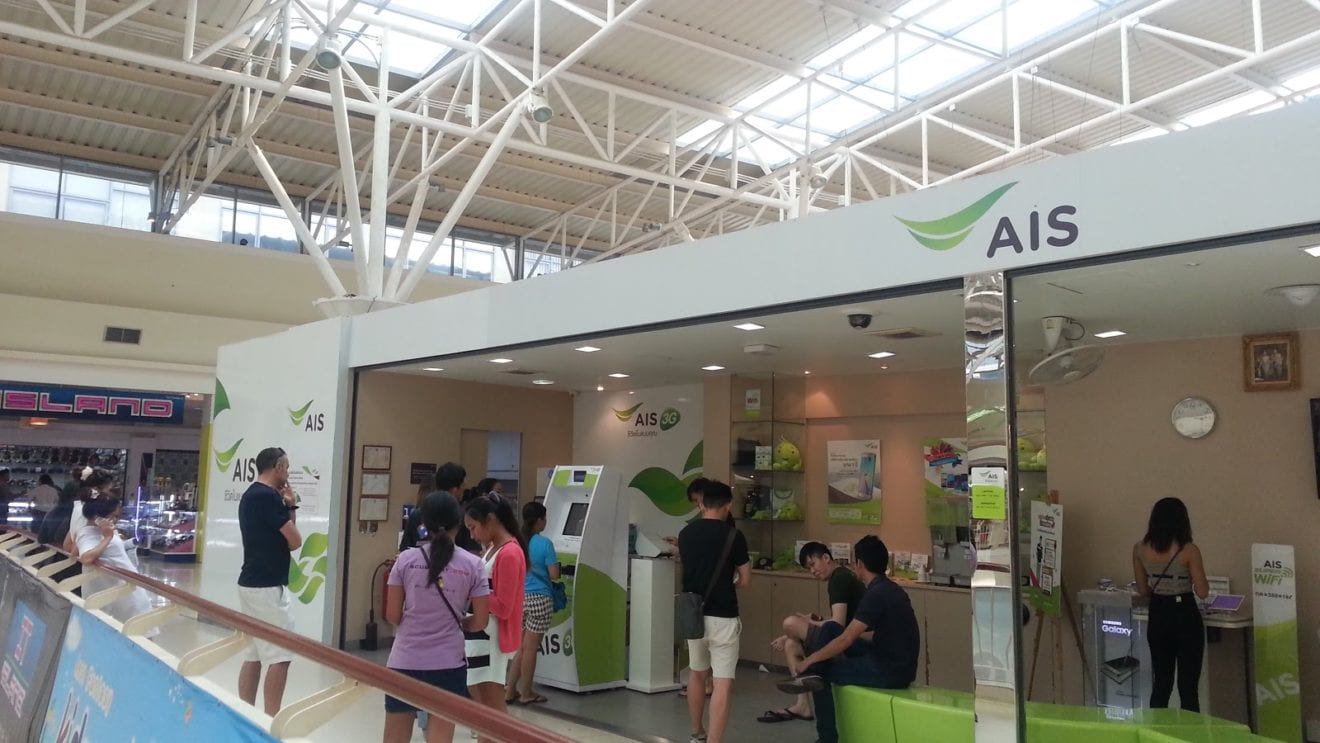
    Thailand’s AIS and TrueMove have abandoned plans to enter a mobile network rental agreement after being unable to accept mutually agreed upon terms.

    AIS no longer intends to rent TrueMove’s 900-MHz network to allow it to continue serving its 900-MHz 2G customers in the wake of the expiration of its 900-MHz license, telecoms regulator NBTC’s secretary-general told.

    The two operators had been negotiating a network rental agreement since mid-April, concentrating on network roaming on the 900-MHz spectrum and customer migration between AIS’s and TrueMove’s networks.

    The government had been encouraging AIS to rent True Move’s existing network to allow it to retain some of its existing 2G customers in order to end a dispute over an extension of AIS’s use of its 900-MHz network.

    AIS is reportedly also facing government pressure to hand over 8 million 2G customers to TrueMove to free up the 900-MHz spectrum due to be re-auctioned on May 27.

    But AIS intends to participate in the auction, and may therefore be able to secure the spectrum needed to ensure service continuity.

  • Thailand retail growth trails other destinations

    Thailand retail growth trails other destinations

    While Thailand retail industry growth is up slightly and there have been more international tourists, more Thais are shopping abroad, and tourists are spending more in other regional destinations.

    Thailand’s first-quarter growth in the retail industry was 2.6 per cent – failing to hit the Thai Retailers Association (TRA) projection of 3 per cent.

    President Jariya Chirathivat says same-store sales growth for several retail formats declined year-on-year, particularly hypermarkets and convenience stores.

    “This is the first time in two decades that Thailand’s retail industry has [shown] declining rates for several years,” says Jariya. Growth has fallen from 12 per cent in 2012 to 2.8 per cent last year.

    She says retail consumption has weakened because of declining farm product prices hitting the purchasing power of middle- and low-income consumers.

    While there were 12 per cent more foreign tourists in Thailand last year (29.5 million), there was no effect on the sales of semi-durable goods such as clothes, make-up, leather products, shoes and watches.

    Tourists in Singapore and Hong Kong on average spent 1900 baht (US$54) and 5300 baht ($150)respectively per head per day, while the figure for Thailand was 1155 baht ($33).

    Tourism Authority of Thailand figures show that the number of Thais shopping abroad grows by 9 per cent a year. Thais spent 170 billion baht on shopping overseas last year, with brand-name products accounting for 50.8 billion baht.

    “We’re concerned the retail industry might not be able to maintain investment levels in the long run if consumer spending continues to decline,” says Jariya.