Tag: Thailand

  • E-commerce firms face rivals from Japan, Thailand, China, South Korea

    E-commerce firms face rivals from Japan, Thailand, China, South Korea

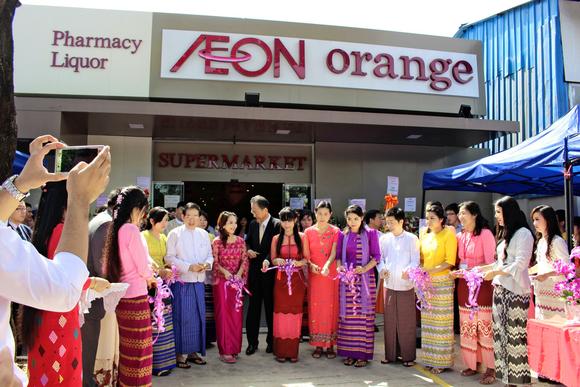
    Aeon, a Japanese e-commerce group, has launched aeoneshop. The website began its operation on January 1, 2017, mostly distributing the products from Japan and the ones bearing Topvalu, an Aeon’s private band. In Vietnam, nearly 1,000 products bear the brand.

    Of the products it distributes, Aeon hopes ‘Me va Be’ (mother and babies) products will be popular with Vietnamese mothers who like Japanese goods.

    Initially, Aeon will only delivery goods in HCMC. Like other e-commerce websites, Aeon will provide free deliveries to orders worth at least VND300,000.

    Analysts said that Aeon’s policies on goods purchases, payments and exchanges are nearly the same as other e-commerce firms.

    With Aeon in Vietnam, the market now has the most powerful rivals in the region. Two months ago, South Korean Lotte launched the Lotte.vn website, hoping for an ambitious plan to hold 20 percent of market share and become a top player in the market.

    Meanwhile, Jack Ma of China, a billionaire who owns Alibaba, has taken over Lazada in Vietnam, while Thailand’s Central Group bought Zalora Vietnam through Nguyen Kim, of which it holds a large capital stake.

    The Vietnamese e-commerce market is known as a ‘money burning machine’, meaning that investors pay big money even though profits are unpredictable.Competing against the four big players from Japan, South Korea, Thailand and China are three Vietnamese groups – Adayroi (Vingroup), Tiki (VNG) and Vuivui (The Gioi Di Dong).

    Lingo, Beyeu and Deca all have left the market because they ‘did not have enough money to burn’. Tiki has reported a loss of VND160 billion in the last eight months since it received investment from VNG.

    Analysts believe that those who have more powerful financial capability will win the battle, leaving the field to foreign companies.

    Commenting about the competitiveness of aeoneshop.com and Lotte.vn, Nhip Cau Dau Tu said they had the advantage of confidence. Lotte.vn focuses on cosmetics and fashion products because ‘South Korean cosmetics’  are popular in Vietnam.

    Aeon focuses on electronics and children’s products because products from Japan have a good reputation among Vietnamese.

    The second advantage is the large store network. Aeon, for example, besides the four shopping malls in HCMC and Hanoi, also has 18 Fivimart shops in Hanoi and 66 Ministop shops in HCMC after acquiring 30 percent of Fivimart and 49 percent of Citimart stakes.

  • Krungthai Bank to transfer tax refunds via Prompt Pay

    Krungthai Bank to transfer tax refunds via Prompt Pay

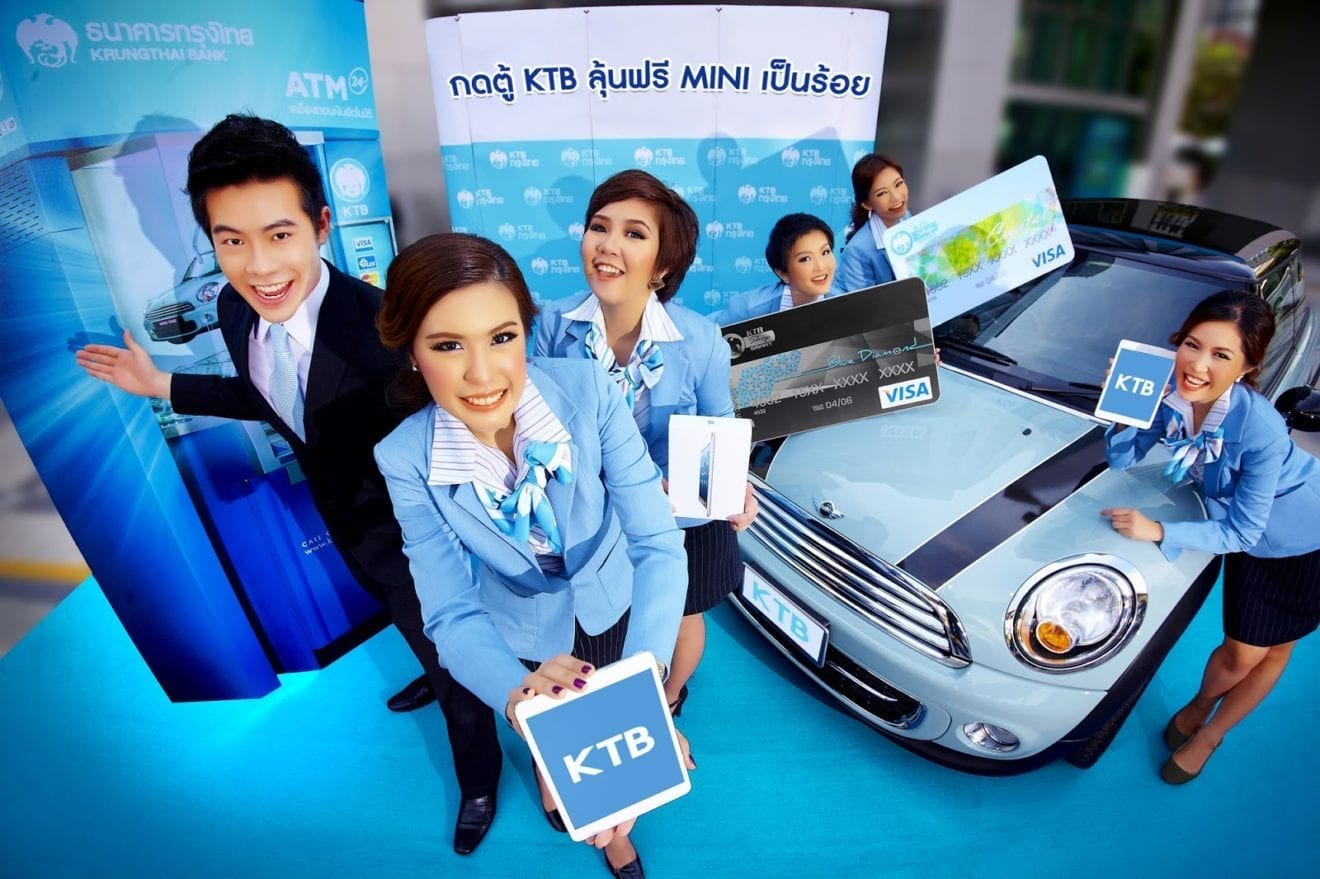
    Krungthai Bank has announced it is now fully ready to utilize the National E-Payment system ‘Prompt Pay’ and will starting January 4, 2017 use it to transfer senior citizen and disability stipends as well as tax refunds for the public.

    Vice President for Business Finances at Krungthai Bank Songpol Cheewpanyaroj has announced that from January 4 2017 onward, Krungthai, as the bank tasked by the Revenue Department with forwarding tax refunds to citizens signed on to the Prompt Pay system, will begin doling out the funds through the e-payment method. He noted that citizen can continue to register for the system between January 1 and March 31 so that they may use it to receive their refund.

    In February, the bank will also be using Prompt Pay to distribute government stipends to the elderly and disabled and urged those eligible for the assistance to register for Prompt Pay soon.

    At present, over 2.2 million citizens are in the Prompt Pay system, which was already used to disperse low-income earner aid to some 300,000 people.

  • Massive Failure of KBANK before New Year

    Massive Failure of KBANK before New Year

    Kasikorn Bank says it is working to fix the complete outage of its services Friday before New Year, which comes just before a bank holiday.

    On a day many say they need access to their money the most, K-Bank’s ATMs as well as online and mobile banking systems have been offline since Friday morning and were still unavailable as of 5pm.

    The bank has yet state the cause of the error, but responded to complaints on its Facebook page and Twitter account it was trying to solve the problem.

    The bank said it could not provide the specific time its website and application services would be working again.

    K-Bank’s mobile system was also disrupted briefly Thursday evening.

  • Easy Pass users can now top up with MasterCard via “easyBills”

    Easy Pass users can now top up with MasterCard via “easyBills”

    2C2P, Expressway Authority of Thailand (EXAT) and MasterCard have partnered to launch a new top-up channel for Electronic Toll Collection System for Easy Pass users in Thailand. Easy Pass users can now top up their cards easily with their MasterCard via easyBills’ mobile application or its website (www.easyBills.in.th), without having to pre-register their cards with the respective issuing banks. They will enjoy benefits including points accumulation upon card usage, extended due dates for payments made through the credit card, convenient storage of their favorite billers for repeat usage and checking their historical transactions, as well as the ability to set bill alerts on their calendar.  A thousand gift cards worth 500 baht each will be given away to the top 1,000 MasterCard cardholders who accumulate the highest Easy Pass top-up value via easyBills from now till 28 February 2017.

    Mr. Piyachart Ratanaprasartporn, Chief Executive Officer of 2C2P (Thailand) Co., Ltd., said:  “easyBills is an innovative payment service catered to digital users who are familiar with the online platform. The collaboration marks the first time that Easy Pass users can easily and conveniently top up their cards without cash, using their MasterCard without pre-registering with their banks, simply by downloading and using the easyBills mobile application on either iOS or Android, or by visiting easyBills’ website.

    easyBills helps consumers pay their bills easily, bringing convenience to everyone. It is equipped with special features that enable users to store their favorite billers for future usage, store their credit card details securely for future payments with 2C2P’s PCIDSS Level 1 certification and set biller alerts on their calendar to remind them of the payment due. Users will receive their payment confirmation via their emails,” Mr. Piyachart added. 

    Mr. Antonio Corro, Country Manager for Thailand & Myanmar, MasterCard, said, “MasterCard is very pleased to join our partners to increase convenience to our customers. They can now top up their Easy Pass card through the easyBills mobile application and website, with their MasterCard that is issued by all the banks in Thailand. They can be assured that all the online transactions are secure, while enjoying the privileges from using MasterCard. We believe this service will pave the way for Thailand to become a cashless society soon.”

    Mr.Narong Gieddech, Governor of Expressway Authority of Thailand (EXAT) said: “Since 2010 we have provided our service for the Electronic Toll Collection (ETC) system;  there are 1.3 million Easy Pass card users. We are excited to join hands with MasterCard and 2C2P who developed easyBills. easyBills’ application and website will be the 12th top-up channel for Easy Pass. This service will be bolstered by Thailand’s National e-Payment system, which the government is set to launch to transform Thailand into a cashless society.”

    easyBills “Pay Bill Easily…Get More Easier”, is developed by 2C2P in collaboration with MasterCard. Through this service, cardholders can pay utility bills, such as electricity, water supply, telephone, mobile phone top-up and e-wallet, as well as for insurance premium, online products, games, books and several other bills all in one app, anywhere anytime. Most importantly, security meets the international standard of 3D Secure.

    There will be a giveaway of a thousand Tesco Lotus gift cards worth 500 baht each. The prizes will be awarded to the top 1,000 MasterCard cardholders who accumulate the highest top-up value on their Easy Pass via easyBills from now until February 28, 2017.

  • PappaRich Malaysia considering IPO

    PappaRich Malaysia considering IPO

    Food chain PappaRich Malaysia is considering a Singapore IPO, possibly this year.

    Insiders say the company, which opened its first restaurant in Malaysia in 2006, aims to achieve a valuation of at least S$200 million (US$140 million) in the share sale.

    PappaRich would follow other Southeast Asia-based restaurant chains including ABR Holdings, which runs Swensen’s ice cream parlours, and kopi tiam restaurant chain Oldtown in gaining a listing to fund expansion.

    paparich-logo


    A PappaRich representative says a listing has always been a consideration as the company considers fundraising options to support its expansion plans.

    Oldtown, which makes instant coffee and runs cafes, has risen 18 per cent in Kuala Lumpur trading over the past 12 months, and shares of Thai dessert chain After You, which raised US$21 million in a Bangkok IPO last month, have surged 167 per cent from their offer price.

    More than a million customers dine at the PappaRich outlets monthly, according to its website. The company has about 100 outlets globally including Australia, China, New Zealand, Singapore and the US.

  • Thai electric car rolls out

    Thai electric car rolls out

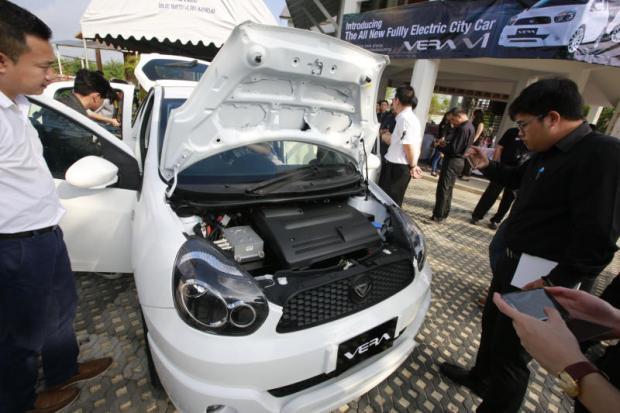
    Thailand’s first electric car brand has made its debut amid scepticism from an industry expert about its commercial viability. Vera Automotive, founded on Oct 7, 2015 by five Thai engineers from King Mongkut’s Institute of Technology Ladkrabang (KMITL), yesterday introduced the Vera V1 battery electric vehicle (BEV), powered with a battery capacity of 22 kilowatts per hour, which can be registered with the Land Transport Department as a passenger car.

    The maximum speed of the Vera V1 is up to 105 kilometres an hour. It can run up to 180km per charge, which takes six hours to complete.

    Co-founder Wanchai Meesiri said all Vera cars are designed by Thai engineers under the Thai brand, but the company has hired the Chinese carmaker Geely Automotive to produce the BEVs. The company imports the cars as completely built-up (CBU) vehicles to Thailand.

    Vera V1 is subject to all related taxes similar to other imported vehicles, including an 80% import duty, a 10% excise tax for all types of electric vehicles, a 10% interior tax and a 7% value-added tax.

    Yossapong Laoonual, chairman of the Electric Vehicle Association of Thailand (Evat), said it’s a good sign for the country to create its own electric vehicles, even if the vehicles are made by foreign firms.

    A retail price below 1 million baht is affordable for Thai customers, he said.

    But Asst Prof Yossapong warned that any startup that is selling electric vehicles has to plan its marketing strategy carefully, as the Thai car market has many dimensions for consumers to consider, including brand, service and trust.

    “Electric vehicles for Thailand remain very new, and they’re unlikely to become popular or proliferate in the short term,” he said. “If you are a new company or brand, the best solution is to sell electric vehicles as a fleet to other agencies, which are easier to provide after-sales services for.”

    Mr Wanchai said the primary purpose for establishing Vera Automotive is to make Thai BEVs for the local market.

    Managing director and co-founder Werachet Khan-ngern said Vera vehicles aim to capture only a niche market.

    He expects to sell about 100 units of Vera this year.

    “We hope in the foreseeable future the government will come up with clearer policies and supporting measures once the number of electric vehicles increases,” Mr Werachet said.

    He said the firm will provide after-sales services at its head office on Ladprakao Road.

  • Bangkok to get 14 new malls as Thailand gets the shopping bug

    Bangkok to get 14 new malls as Thailand gets the shopping bug

    Retail space, in particular shopping malls, will continue to grow this year, with health, beauty and pharmacy stores becoming the new retail battlefield.

    Fourteen retail projects will open in Bangkok and its suburbs this year, adding a total of 272,800sqm of space, said Mr Surachet Kongcheep, associate director of Colliers International Thailand. Of the total, five are shopping malls totalling about 178,640sqm, seven community malls totalling 51,850sqm, one department store of 36,000sqm, and one retail plaza with 6,310sqm in an office building.

    Colliers said the seven community malls due to open in Bangkok this year are We Retail Nana with 2,100sqm on Sukhumvit Road, ZY Walk Chula Soi 5 (4,500sqm) on Banthadthong Road, Happy Avenue Don Muang (4,053sqm) on Songprapa Road, Canapaya (17,094sqm) on Rama III Road, Landmark Mahachai (5,000sqm) on Rama II Road, Muang Thong City Park (phase 1, 17,000sqm) on Chaeng Watthana Road, and Hyde Sukhumvit (2,100sqm) on Sukhumvit Road. Fewer community malls are opening this year compared to the past few years, following the lacklustre performance of some community malls in the past one to two years.

    The five shopping complexes to open are Iconsiam, a luxury retail project developed by a joint venture between Siam Piwat Co, the operator of Siam Center and Siam Discovery, and Magnolia Quality Development Corp, the real estate developer under Charoen Pokphand Group, on Charoen Nakhon Road with 51,500sqm, Show DC on Rama IX Road, Ikea@CentralWestgate in Nonthaburi’s Bang Yai district, Gaysorn II near Ratchaprasong intersection with 6,000sqm and G Tower with 7,140sqm on Ratchadaphisek Road. Meanwhile, one department store to be opened this year is Iconsiam with 36,000sqm. Pearl Bangkok is a retail plaza on Phahon Yothin Road with 6,311sqm.

    Outside of Bangkok, several retail projects are set to open upcountry this year. Central Pattana Plc plans to open at least three shopping complexes with one each in Samut Sakhon’s Maha Chai district, Nakhon Ratchasima and Phuket. Robinson Department Store Plc plans to develop three new branches this year. Two are lifestyle shopping complexes in Phetchaburi and Kamphaeng Phet provinces, and the location of the third has not been disclosed.

    TSCA president Wallaya Chirathivat said new investment in shopping malls during 2016-17 has declined to 70 billion baht (S$2.83 billion), down from 100 billion over the past four to five years. Retail investment slowed due to economic slowdown at home and abroad.

    Mr Chatrchai Tuongrattanaphan, adviser to the Thai Retailers Association, said he believes consumer purchasing power will gradually improve this year.

    “The health and beauty sector will be the new retail battlefield this year because Thailand is gearing towards an ageing society, and when people earn more, demand for health and beauty products also rises,” he said.

    The local health and beauty business in 2016 is expected to be valued over 280 billion baht. Health and beauty store chains are Boots, Watsons, Tsuruha, Pure and Matsumoto Kiyoshi.

    Siam Makro Plc, the operator of Makro cash-and-carry stores under CP Group, will slow the opening of new stores in Thailand and shift focus to nearby countries instead. Siam Makro recently set up a subsidiary, Makro Ros, to operate its cash-and-carry store operations in Cambodia. The opening of Makro stores in Cambodia will be under a joint venture with a local partner.

    Domestically, Siam Makro will focus on opening Makro Food Service stores to cash in on the continuing growth of the hotel, restaurant and catering business.

    Meanwhile CP All Plc, the operator of 7-Eleven convenience stores, is expected to open some 700 new stores this year, on a par with last year. Mr Chatrchai said he expects Thailand’s retail market — currently worth 3.4 trillion baht — to grow by 3 per cent last year, and growth in 2017 will probably be higher.

  • No-grow period for Tesco Asia

    No-grow period for Tesco Asia

    Tesco Asia’s sales growth stalled in the third quarter as Thais stopped spending during the mourning period for their late king.

    First quarter growth was 3.3 per cent and second quarter growth 3 per cent. But during the third quarter, according to results released it shrank to an underwhelming 0.4 per cent.

    Tesco CEO David Lewis said the slowdown reflected “a particularly strong step up in the comparative” period. “Our sales performance in Asia also reflects some weakening in consumer spending in Thailand during the Christmas period. We are proud that our colleagues have continued to serve our customers so well during such a sad time for the nation, following the death of King Bhumibol Adulyadej.”

    International like-for-like sales grew 1.2 per cent reflecting a strong seasonal performance last year. While there was little sales growth in Thailand, Lewis says the company managed to expand its market share there during the quarter.

    Globally, the UK-headquartered retailer continues to improve under Lewis’ stewardship with the company winning back market share and sales growth returning. UK like-for-like sales grew 1.8 per cent.

    “We are very encouraged by the sustained strong progress that we are making across the group. In the UK, we saw our eighth consecutive quarter of volume growth and delivered a third successful Christmas.

    Our fresh food ranges proved particularly popular, outperforming the market with great quality, innovative new products and even more affordable prices. Internationally, we have continued to focus on improving our offer for customers in challenging market conditions,” he said in a statement.

    “We are well-placed against the plans we shared in October to become more competitive for customers, simpler for colleagues, and an even better partner for our suppliers, whilst creating long-term value for our shareholders.”

    David Alexander, senior analyst with Verdict Retail, says Lewis’ pragmatic approach to steering the Tesco ship out of choppy waters looks more assured with each passing update.

    ‘The numbers from third quarter and Christmas trading are hardly spectacular, but they represent a further positive step in the steady progress the ex-Unilever boss has made since taking charge.”

    Alexander says simplifying the offer has been at the heart of Tesco’s turnaround strategy.

    “On a broader level, this has resulted in the dismantling of the Phil Clarke legacy; trimming the fat from Tesco’s balance sheet with the sales of Giraffe, Blinkbox, Euphorium and HomePlus. At its heart though, it is about delivering an improved experience for the people that can make the difference for Tesco: staff and customers. Poor product availability and customer service had been issues plaguing the troubled Tesco of old, so store ordering systems have been improved, stock is now replenished earlier on in the day and deliveries to large stores are now more likely to arrive on time. What’s more, this year Tesco recruited an extra 15,000 seasonal staff to assist over the Christmas period, up from 4000 last year, making for a smoother process for customers in-store.”

    Alexander says while these changes are not revolutionary, they have been critical in reshaping Tesco.

    “Time and again, Lewis has displayed an unflinching willingness to make the tough calls – witness the highly public standoff with Unilever over supplier pricing in the wake of the weaker pound and the recent announcement that 1000 staff are to be made redundant in its distribution network, again to “run its business more simply and in a way that best serves customers”.”

    Although the numbers coming from both Tesco and rival Sainsbury’s are left in the shade by the festive performances of Aldi, Lidl and a resurgent Morrisons, both can take considerable heart from what appears to have been a very strong end to the year in grocery, believes Alexander.

    “With tougher times predicted to be just around the corner, Tesco cannot afford to take its foot off the pedal.”

  • Thai NBTC to relax per-second 4G billing condition

    Thai NBTC to relax per-second 4G billing condition

    Thailand’s telecoms regulator has relaxed an earlier directive requiring per-second billing for 4G services to only require operators to bill half of a service on a per-second basis.

    The National Broadcasting and Telecommunications Commission’s (NBTC) telecoms committee has decided to change the directive to no longer require operators to charge entirely on a per-second basis.

    Although the initial per-second requirement was introduced May last year, the NBTC has yet to enforce it because it has proven unpopular with affected operators.

    Operators have been resisting the move to per-second billing on the grounds that it would unfairly penalize customers that have signed up to fixed allocation or unlimited call or data plans, stating that charging per second would cost heavy usage customers more than the bucket plans.

    The NBTC requirements would cap 4G tariff rates at 1.13 satang ($0.0003) per second. The requirements were a condition of the 4G mobile broadband licenses issued to AIS and TrueMove last year. Second-ranked Dtac is not required to comply.

    AIS has reportedly warned that the company would have to abolish their existing tariff plans if the directive is enforced, while True Move is appealing the directive in court.

  • Lalamove to expand to 100 Asian cities

    Lalamove to expand to 100 Asian cities

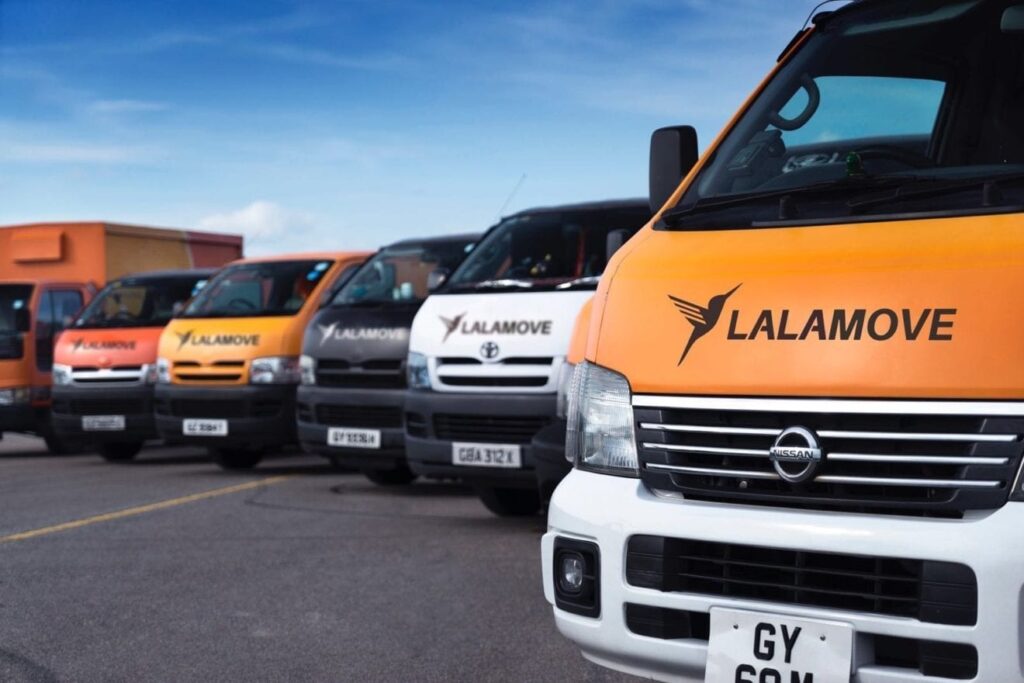
    Hong Kong-based logistics startup Lalamove has raised US$30 million in Series B funding to enable it to push into more than 100 cities in Asia by the end of the year.

    It is already established in 45 cities across China and Southeast Asia.

    Since it launched as EasyVan in 2013, the company has raised a total US$60 million in funding, with its latest round being led by Xianghe Capital from Beijing, with Blackhole Capital participating as a new investor. Previous investors Crystal Steam and Mindworks Ventures also contributed.

    Lalamove MD Blake Larson says the company is close to being profitable.

    Lalamove says it already has the largest service area for intracity deliveries in Asia with more than 500,000 drivers using the platform. More than 5 million people have used the service.

    Founder/CEO Shing Chow said he believes the logistics industry is underpenetrated by mobile platforms, citing the US$1.7 trillion market in China as an example.

    “The evolution of the logistics industry has not been as rapid as some other markets like communication, but we believe we are at a tipping point where transformation will now happen very rapidly.”

    Dubbed the “Uber for logistics” because it applies the on-demand economy to the delivery industry, Lalamove lets users choose pick-up and drop-off points, type of vehicle and either “advance booking” or “immediate delivery”.

    A company can schedule up to 20 stops per order, customise an account with “favourite drivers” and use one-click optimised routing to save time, reports E27.

    In Thailand, Lalamove partnered with Japanese chat company Line to set up Line Man so its user base could buy and deliver documents, packages, groceries and food items.

    In November, the company expanded into the Philippines, where its option to request round-trip deliveries for cash-on-demand was important.

    The company rebranded from EasyVan in November 2014, ahead of its Bangkok launch.

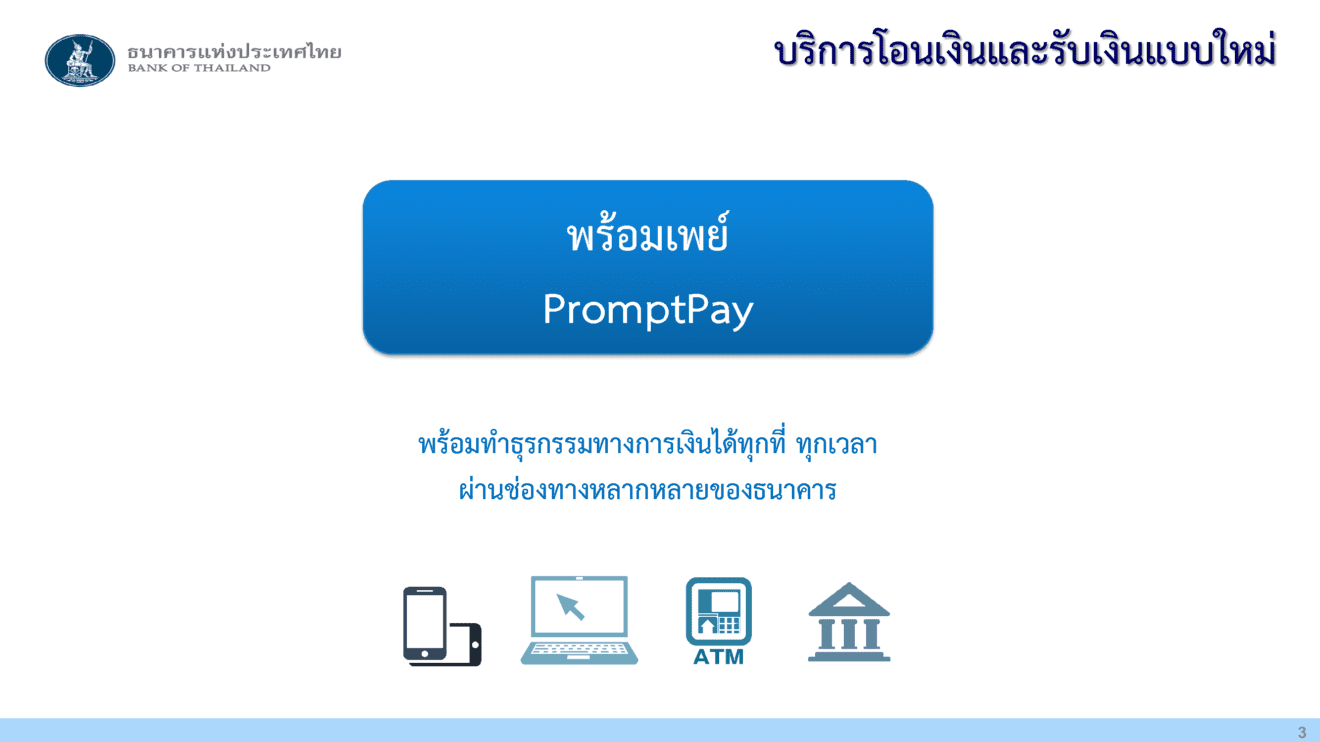
  • Prompt Pay to revamp e-banking in Thailand

    Prompt Pay to revamp e-banking in Thailand

    The digitalization of banking remains a top priority for banks across Asia, including in Thailand. In January 2016, the Thai Bankers’ Association announced plans to develop a new five-year strategy that included digitization and next-generation payment infrastructure, financial inclusion, contribution to society, regional integration, and legal and regulatory enabling.

    Chief among the ambitions of digitization is see between 50-60% of transactions becoming cashless by 2020, up from 25% in January 2016. One of the beneficiaries of this over-arching initiative is e-Payments, which is forecast to account for up to 70% of total transactions by 2020, up from the current 30%.

    According to the Oxford Business Group report “Banking in Thailand goes increasingly digital” three initiatives have been planned to help meet these targets: the development of a payment system roadmap, publication of common standards and establishment of shareable payment infrastructure.

    In July 15, 2016, the Bank of Thailand announced plans to roll out a national e-payment service in partnership with a number of commercial banks as well as four institutions owned by the government. The aim of the project is to further transition Thailand into a cashless society.

    In November 2016, market research firm YouGov polled 1,022 Thai netizens’ views on the service several months after the announcement and subsequent marketing of the service, including a highly public delay of the service in October.

    According to the poll, 74% of polled netizens confirm intent to use the service, suggesting consumers view the service as a welcome advancement to current payment options. Only 7% of those polled have not heard of the service.

    Over half (54%) of those polled see Prompt Pay as enabling them to make payments across multiple channels with internet banking as the most popular option. But 20% intend to use Prompt Pay solely for internet banking, and 15% say they plan to use Prompt Pay for mobile banking.

    The YouGov poll suggests that e-payment services are growing in popularity. About 53% of those polled identified True Money as a service they have recently in the past month compared to 38% over the past 3 months. Linepay and Rabbit were alternative e-payment services also popular among those polled at 17% and 15% respectively.

  • Fierce competition takes heavy toll on smartphone market in Bangkok

    Fierce competition takes heavy toll on smartphone market in Bangkok

    Thailand’s increasingly crowded smartphone market has wreaked havoc on handset companies’ profit last year, with Japan’s Sharp Corp becoming the latest victim to be quietly forced out of the market.

    Chinese handset maker ZTE Corporation, meanwhile, disputed rumours that the company has decided to pull out of the Thai smartphone market due to stiff competition.

    However, industry veterans believed more intense competition is around the corner this year.

    Sharp confirmed that the company is now inactive in the Thai smartphone market without providing a reason after resuming its presence here just one month ago through Commtiva Technology, a Taiwan-based distributor of wireless communication products.

    Oran Rungsereechaitrakul, former marketing manager of Commtiva (Thailand), said the company had just been verbally informed by its parent firm Commtiva that the group stopped selling Sharp mobile phones from Dec 30 last year.

    Lorna Liang, country manager for device of ZTE Thailand, said the company remains strongly committed to the Thai market despite facing fierce competition.

    “We are continuing business as usual. We have set long-term strategic plans to expand our presence in Thailand after entering the country less than two years ago,” she said.

    ZTE will still focus on the smartphone segment priced 3,000-7,000 baht apiece, where it has a particularly strong presence in Thailand, through distribution channels with mobile operators and retail shops.

    ZTE will roll out 2-3 smartphone models by March.

    Ms Liang also threatened to take legal action against those who spread or publish rumours regarding the company’s alleged business closure before checking with the company, saying spreading false information will cause consumers to lose trust and confidence in the company.

    According to internal reports by Huawei and Oppo, Samsung is clearly dominating the local smartphone market with a 40% share, followed by Apple with an estimated share of less than 15%, with Chinese brands Oppo and Huawei having a 12% and 8% market share, respectively.

    The growth of Oppo was particularly impressive as it rose quickly to become the third largest smartphone brand in Thailand in terms of sales volume for 2016.

    Consumers in this massive market are rapidly being won over by Chinese and household brands that incorporate much of the functionality of an Apple iPhone or Samsung Galaxy, but at a fraction of the price.

    Handset makers are also facing an undeniable shift in consumption trends in the digital lifestyle age.

    Samsung stayed on top of Thailand’s smartphone market last year, despite being battered by the Galaxy Note7 recall and increased competition from China.

    The Korean company recalled the Note7 in September last year after reports of overheating lithium-ion batteries. Replacement phones also ran into similar problems, leading the company to halt production of the smartphone in October.

    Samsung will continue facing stiff competition from Apple in the high-end smartphone market, while simultaneously facing pressure at the lower-end from Chinese makers.

    Overall, the Thai handset market grew by only 2% to 22 million units in 2016 — the smartphone industry’s slowest growth rate for a year.

    Chinese brands Oppo, Huawei and Vivo posted strong growth rates in sales even as Samsung and Apple saw their volumes drop. Other smaller players and newcomers like Asustek, Motorola, Lenovo, ZTE and France’s Wiko will pose competition to the giants this year, which would need to take measures to survive in the market.

    Taiwan’s HTC has already been forced out of the Thai smartphone market, while Sony and LG announced they will sell selective models here.

    Pairoj Thavornsapanant, assistant managing director of TG Cellular World, a leading mobile distributor, said product design and quality as well as strong sales and distribution networks are becoming critical for smartphone companies to succeed and survive in the country’s mature market.

    “Consumer acceptance of a smartphone brand is another vital factor in business success,” he said, adding that consumer acceptance is expected to take 3-5 years.

    Leo Zhao, sales director of Oppo (Thailand), said the local smartphone market has already reached a mature stage as the smartphone has become a must-have device in the digital era.

    Thailand’s smartphone market is expected to grow at the same pace as last year’s 2-3% to reach 25 million units in 2017, he said.

    Mr Zhao said the handset replacement cycle will be faster with Thais expected to replace their mobile phones every 10 months this year, compared with 12-15 months in 2016, because consumers take advantage more quickly of smartphone advances.

    The middle to high-end markets will continue growing faster than the entry smartphone market because consumers prefer superior user experience, faster connection and high-end specifications.

    High-end smartphones priced over 15,000 baht accounted for 6% of total sales in 2016, up from 3.5% in 2015.

    Entry level smartphones priced below 4,000 baht made up 40% of total sales last year, down from 50% in 2015.

    “Thailand’s smartphone industry will see more consolidation over the next few years and there will be less than 10 survivors in the local market,” said Mr Zhao.

  • Standard Chartered to Exit Thai Retail Banking Next Year

    Standard Chartered to Exit Thai Retail Banking Next Year

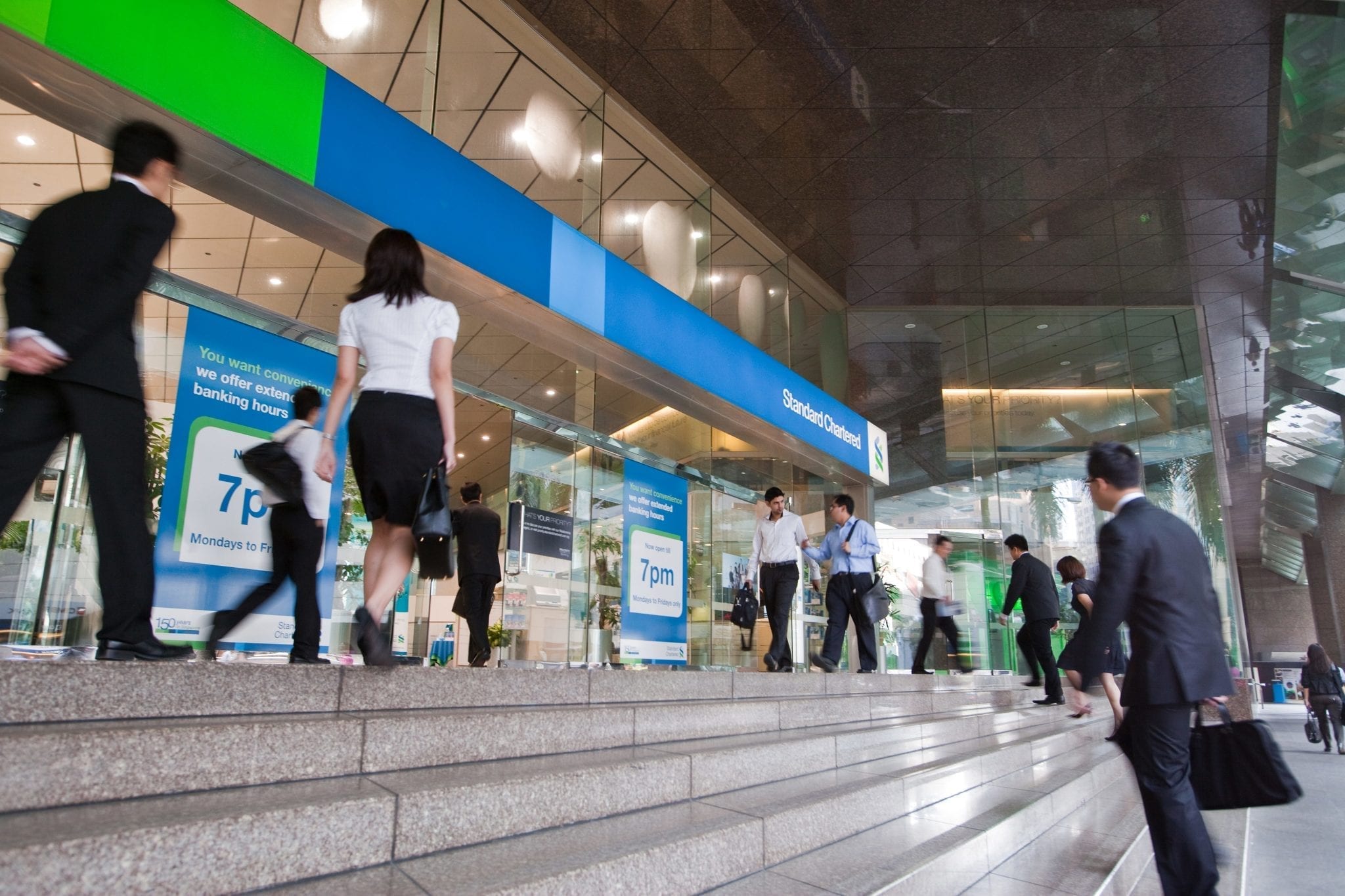
    Standard Chartered Plc plans to transfer its Thai retail-banking business to Thailand’s Tisco Financial Group Pcl next year, exiting an operation that the U.K. lender said lacked the scale to generate adequate returns.

    The net asset value is about 5.5 billion baht ($153 million), according to a stock exchange filing by Tisco on Thursday, which didn’t disclose a price for the deal. Tisco shares climbed to a record.

    Standard Chartered will continue to operate corporate, institutional and commercial banking businesses in Thailand, but the small size of the retail operation made it “increasingly difficult to achieve the returns that we aspire to,” the lender’s Thai head, Plakorn Wanglee, said in a press release.

    “It’s very tough to survive in Thailand’s retail-banking business for small players with very fierce competition,” Isara Ordeedolchest, an analyst at SCB Securities in Bangkok, said by phone. “The outlook for banks should improve significantly in 2017 as a consumption recovery and higher government spending will spur economic growth.”

    The Asia-focused Standard Chartered is targeting a turnaround after last year posting its first annual pretax loss since 1989. In a sign that the Thai operations were not a bright spot, the bank in February recorded a $126 million goodwill impairment on its business in the country.

    One unit of Tisco Financial, Tisco Bank Pcl, will take over operations including personal lending, mortgages and deposits, while another, All-Ways Co., will take over the credit-card business, the exchange filing said. The deal is subject to approvals.

  • Thai telcos bracing for a challenging 2017

    Thai telcos bracing for a challenging 2017

    After a rough 2016 there is no respite in sight for Thailand’s telecoms sector, with operators still dealing with heavy costs accrued from recent 4G auctions, strict competition and OTT challengers.

    AIS CEO Somchai Lertsuthivong as stating that he has never seen as challenging a year for the mobile sector as 2016, after nearly three decades of experience.

    AIS and DTAC, which together have a revenue market share of around 80%, have both cut their financial forecasts for 2016 as a result of these challenges.

    AIS expects to report an eibtda margin decline of between 37% and 38% in 2016 from 45.6% in 2015 due to the rising costs as well as one-off expenses related to the shutdown of its 2G network. Dtac expects its ebitda margin to decline to 27% to 30% compared to 31.8% in 2015.

    Operators expect 2017 to be just as challenging. As well as high spectrum costs, operators have had to grapple with a surge in operating costs as they offered heavy subsidies including free 4G handsets to lure customers.

    The sector will also have to deal with surging data consumption as 4G take-up increases. According to the report, Dtac plans to transition away from competing on price with heavy subsidies, and instead compete by offering a superior customer experience.

    AIS is meanwhile responding to the OTT threat by pursuing more digital partnerships with local content providers and businesses. Operators are also exploring partnering with cable providers to offer triple-play services bundling internet, telephone and TV.

  • DHL eCommerce offers e-commerce expertise and logistics services to help Thai rice farmers

    DHL eCommerce offers e-commerce expertise and logistics services to help Thai rice farmers

    DHL eCommerce, a division of Deutsche Post DHL Group, has collaborated with the Ministry of Commerce in Thailand to offer e-commerce expertise and logistics services free of charge for a period of four months to help Thai farmers grow their business and reap the benefits from selling on e-commerce platforms. This follows recent challenging market conditions which have seen an oversupply of rice and strong export competition.

    do_download

    Partnering with the Thailand Ministry of Commerce’s Department of International Trade Promotion (DITP), DHL eCommerce works with farmer co-ops across Thailand to help set up and enable an easy and streamlined process to manage their online inventory and ship to consumers domestically. Experts from DHL eCommerce advise and support farmers by integrating their sales processes with e-commerce portals on BentoWeb, a local e-commerce services provider which has been pre-integrated with the DHL eCommerce Customer Web Portal. Once on BentoWeb, farmers will be able to easily arrange for deliveries and shipments quickly at a click of a button, allowing rice goods to be picked and dispatched to end consumers located in Thailand.

    The collaboration combines the global logistics experience of DHL with the in-depth local market knowledge from DHL eCommerce Thailand, the Ministry of Commerce Thailand and BentoWeb, allowing farmers to benefit from solutions that are tailored to their specific needs. The Ministry of Commerce will work on promoting and registering farmers on www.thaitrade.com/rice while BentoWeb will enable the online order process and inventory management for the farmers. DHL eCommerce will pick up the products from the farms and deliver them free of charge to the consumers directly.

    “We are extremely honored to have this opportunity to use our e-commerce expertise and logistics services to make a positive impact on the farmers’ businesses and their livelihoods. As an organization operating in Thailand, providing both domestic as well as international delivery services to the local businesses, we are committed to the Thailand market. Wherever and whenever we can contribute to the local communities, we will do our utmost best to support,” said Kiattichai Pitpreecha, Managing Director, DHL eCommerce Thailand.

    Thailand is one of the world’s leading rice exporters with an expected output of 25 million tonnes of rice expected in the 2016/17 production year. “The Ministry of Commerce has been rolling out a series of programs aimed at helping the local farmers and one such initiative is this collaboration with DHL eCommerce Thailand to help farmers sell their produce online. We have been working together in the past three weeks to onboard these farmers onto the e-commerce platform so that domestic consumers can place orders and have DHL eCommerce deliver to their doorsteps. We are extremely heartened that an organization such as DHL eCommerce is putting their foot forward to help the local communities,” said Mrs Apiradi Tantraporn, Minister of Commerce, the Royal Thai Government.

    For farmer co-ops like Ban Um-sang Rice Community, they have managed to take the matter of the rice supply glut in their stride and tap onto the opportunities of e-commerce thanks to DHL eCommerce. Ban Um-sang Rice Community explained, “The internet has opened up more possibilities for us farmers to do business. We can communicate and connect with customers directly, previously impossible with more traditional methods. We don’t have to worry about organizing our deliveries too, as they are taken care of by experienced logistics specialists. By giving us more options, e-commerce makes us less affected by existing market forces and gives us the freedom to improve our sales in new ways.”

    In addition to DHL eCommerce’s international delivery capabilities, it has since the beginning of this year been offering domestic delivery services in the Thai market. Identifying the country as one of the fast-growing e-commerce markets, DHL eCommerce established end-to-end domestic and international delivery solutions for Thai e-commerce merchants. The company has a 3,000 sqm central distribution center in Bangkok and a network of over 40 depots located throughout the country for nation-wide logistics connectivity. By 2017, DHL eCommerce aims to more than double the number of depots and enhance its fleet with two-wheel vehicles that can surmount Thailand’s complex last-mile delivery challenges.