After launching in Korea, French fast-casual restaurant chain Lina’s Paris is planning to roll out across Southeast Asia.
Working with a franchisee, it already has 10 restaurants in Korea and has just opened a kiosk in Seoul Art Center with 100 seats.
Founded in 1989, Lina’s Paris offers French-style breakfasts, sandwiches, salads, hot dishes, soups, fresh juice, sorbet and pastries. The outlets are designed as comfortable lounges with free WiFi and Parisian decor. In some countries the offer includes organic and gluten-free food.
Lina’s Paris has nearly 50 restaurants in six countries, and says it is now actively seeking partners in Southeast Asia.
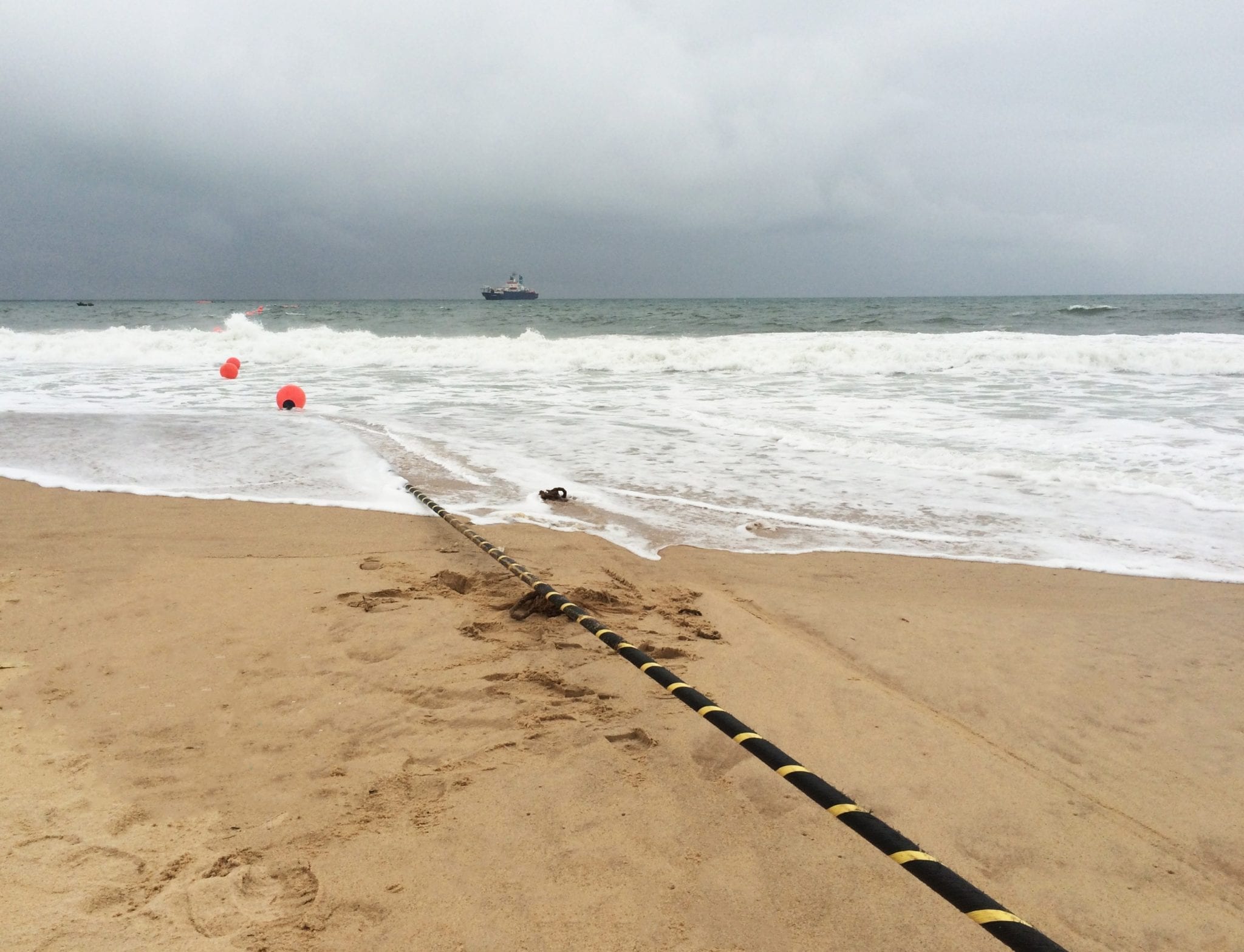
The Asia Pacific Gateway (APG) submarine fiber optic cable line has been put into operation after four years under construction.
The APG, funded by VNPT, Viettel, FPT and CMC, aims to boost Vietnamese Internet speed.
The operation of the network aims to reduce dependence on the Asia-America Gateway (AAG) as the AAG faced incidents three times last year, which affected not only individual users but also enterprises.
The APG boasts a capacity of 54 Tbps, the highest of any network in Asia. With a total length of approximately 10,400km, the cable line connects mainland China, Hong Kong, Taiwan, Japan, the Republic of Korea, Malaysia, Singapore, Thailand and Việt Nam.
Initiated in 2009, the APG is a partnership between Chunghwa Telecom (Taiwan-China), China Telecom (China), China Unicom (China), KT Corporation (RoK), NTT Communications (Japan), PLDT (the Philippines), Telekom Malaysia (Malaysia) and VNPT (Việt Nam).
Viettel has also been investing in an Asia Africa Euro-1 (AAE-1) cable system, connecting countries in Asia, Africa and Europe. The cable line is expected to operate this year.
Jubilee Enterprise, a listed diamond-jewellery retailer in Thailand, has revealed a plan to open physical stores under two strategic brands.
Chief executive officer Unyarat Pornprakit said Jubilee Enterprise was currently managing two brands, Jubilee Diamond and Forevermark.
“Jubilee Diamond is a diamond-jewellery brand that the company owns, which is currently the No 1 diamond-jewellery brand in Thailand, with the largest number of outlets, more than 120 branches across the country,” she said.
“Meanwhile, Forevermark is a diamond brand owned by De Beers Group for which Jubilee Enterprise is Thailand’s exclusive authorised retailer.
“The business plans for the two brands are different in direction and each will contribute to the company in a different way.
“Forevermark has so far been in Thailand for less than a year but is the No 1 diamond brand in the world. Forevermark has a unique diamond selection process and works exclusively with top-class diamond cutters, which results in all Forevermark diamonds being stunningly beautiful. The difference is so obvious we can experience it with the naked eye.
“‘Beautiful’ is one of the promises of the Forevermark brand, where other promises are ‘rare’ and ‘responsibly sourced’. Therefore the plan for Forevermark involves brand education and outlet expansion.
“We currently only have three doors outlets for Forevermark but all of them perform quite well. We plan to have at least three and as many as five more doors outlets by the end of 2017. We see potential in more locations within Bangkok as well as other major cities,” Unyarat said.
She said that for now the company only had Forevermark exclusive rights for Thailand, including e-commerce. Thus no plans to take Forevermark outside the country are on the drawing board yet.
The focus of the outlet expansion for Forevermark will be physical stores in Thailand.
For Jubilee Diamond, the company is looking into the obvious potential within Cambodia, Laos, Myanmar and Vietnam but no solid plans have been drafted yet.
As Thailand’s retail developers have started their own overseas expansion, the company’s choice of investment platforms has also increased. Its expansion strategy will likely involve business partners, but not for financial reasons.
“One of the key trigger points will be when our e-commerce platform is launched. Even without the platform, there are some demands from nearby countries through digital channels. Therefore, physical expansion may not be our first overseas initiative,” Unyarat said.
She said the budget for next year’s expansion would mainly go into diamond inventory, which can always be liquidated. Normally, the investment per branch expansion is around Bt7 million and Bt10 million. So the total cost for the new outlets would be between Bt80 million and Bt100 million next year. Other costs are significantly less critical, thus make the company’s expansion plan a safe move.
“Jubilee Diamond’s business plan does not have brand expansion as a key strategy, since the brand is already the largest in the market.
The key business driver for Jubilee Diamond is market differentiation, which comes from product innovation, a unique brand experience, and supply sourcing strategy.
“Best-quality diamonds have always been the brand’s key strength, but a few years ago, Jubilee Diamond began slowly introducing a unique brand experience and product innovation,” she said.
Unyarat said the company’s outlet-expansion strategy would be tied closely with partners that are major retail developers.
“For the Jubilee Diamond brand, you can expect to find our stores in all major shopping complexes and department stores. So by next year, there should be at least over 125 Jubilee Diamond stores throughout Thailand,” she said.
After securing dominance in its home market, China’s Alibaba Group Holding is racing to conquer the still nascent e-commerce market in Southeast Asia. Although the size of the market in Southeast Asia pales in comparison with China’s, it is expected to grow 32 percent on average each year through 2025, according to one industry executive.
US-based Amazon.com Inc also has its sights set on the region, making a face-off with Alibaba all but certain. Alibaba got to the Southeast Asian market first, but its victory is far from assured. Experts said there is no silver bullet for success, especially in an evolving e-commerce market facing difficulties of its own.
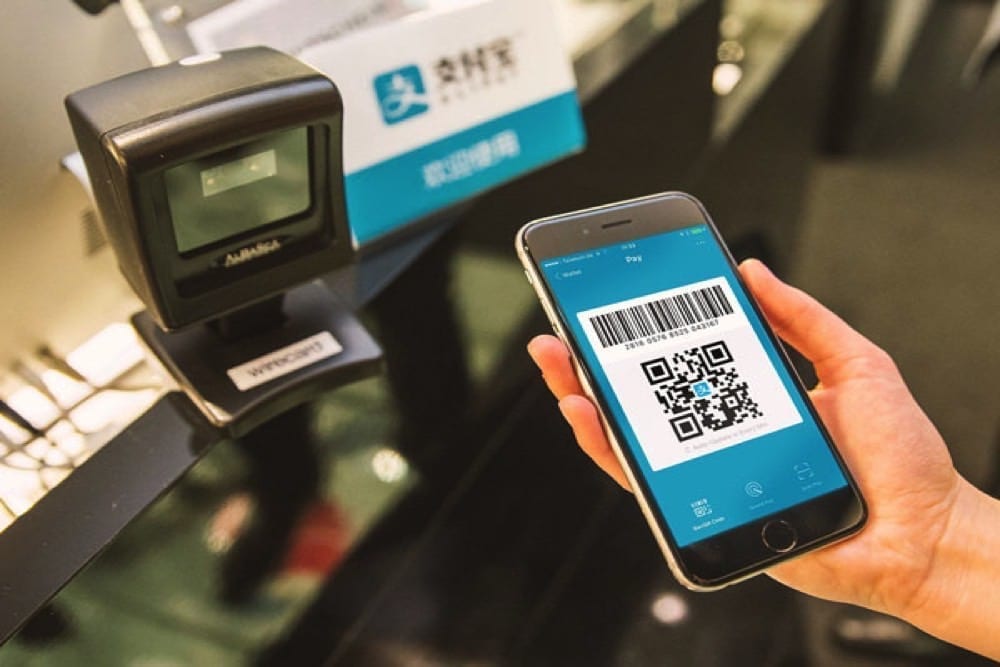
A 7-Eleven convenience store in Phuket, Thailand, that accepts Alipay.
Among the glossy, green trees in Phuket, the largest island in Thailand, the landscape is dotted by many 7-Eleven convenience stores that accept Alibaba Group Holding’s mobile payment application Alipay.
“Alipay is available in almost all 7-Eleven convenience stores here, and people are encouraged to use it with random discounts,” an employee at a 7-Eleven store on Thanon Patak Road in Phuket, who declined to be identified, told the Global Times on Saturday.
7-Eleven has added Alipay to its payment options at more than 9,000 outlets across Thailand since April.
Alibaba’s move to get Alipay into Thailand is widely perceived as a way to attract Thai smartphone users and technology-savvy consumers as it expands into Southeast Asia in 2016.
In April, the Chinese e-commerce giant acquired a controlling stake in Lazada, considered the Amazon of Southeast Asia, for $1 billion.
In November, Alibaba furthered its expansion by taking over the Singaporean online grocer RedMart via Lazada.
Alibaba’s CEO Zhang Yong said several times at press conferences in 2016 that the company’s next major goal is to help merchants on its platform enter the Southeast Asian e-commerce market.
However, expanding into Southeast Asia might be easier said than done. In the region, many people are familiar with the concept of e-commerce by name only and don’t have much of an inclination to try it.
A new frontier
A 20-something resident in Phuket surnamed Kung was surprised when she heard that Chinese shoppers spent 120.7 billion yuan ($17.4 billion) on online purchases via Alibaba’s bazaars on November 11 alone.
“My friends and I seldom shop online and do not really intend to do so because we can get whatever we need in the market or at nearby convenience stores,” Kung told the Global Times on Friday.
The woman’s biggest concern is quality. She dislikes that she can’t feel the texture of clothing sold online and worries about unwittingly buying knockoffs.
The poor reception for online shopping is reflected on the streets of Phuket, where few express deliverymen can been seen – unlike in China, where they are commonplace.
Lazada Thailand CEO Alessandro Piscini acknowledged on Thursday that Southeast Asia has a small e-commerce industry.
At a press conference with about 200 Chinese reporters in Phuket on Thursday, Piscini cited the region’s 3 percent online retail penetration rate (as of November 2015), which represented about $6 billion in sales. By comparison, China had an online retail penetration rate of 14 percent and online sales totaling $293 billion during the same period.
Still, Piscini was optimistic, saying that the small penetration rate shows that Southeast Asia has a large untapped market for e-commerce. He predicted that the region’s e-commerce market will grow by 32 percent annually to more than $200 billion by 2025, thanks to local government encouragement for the digital economy and urbanization, as well as the region’s rapidly growing middle class.
By 2020, Southeast Asia’s GDP is expected to grow by an average rate of 5.5 percent a year, Piscini said. Middle-class consumers around 35 years old will account for 60 percent of the region’s overall population, which will grow to 668 million from the current 644 million, according to latest estimates by the global statistical information provider Worldometers.
Looming rivalry
Amazon.com reportedly plans to launch in Southeast Asia in the first quarter of 2017, meaning that Alibaba and its US-based competitor will soon clash in the region.
Amazon’s entry into Southeast Asia will be done via Singapore, where “the level of customer spending and consumer culture is more closely aligned with Western markets,” TechCrunch reported in November, citing unnamed sources.
The grocery store business is shaping up to be the first battleground in the region between Amazon and Alibaba, according to the report. The rivalry between the two tech mammoths in the Southeast Asian market seems unavoidable as both have stepped up their international expansion.
“The two account for a huge amount of their home e-commerce markets, with Alibaba holding about 80 percent of online sales in China and Amazon controlling about 60 percent of the US market, so competing for new territory is a logical move,” Lu Zhenwang, founder of Shanghai Wanqing Commerce Consulting, told the Global Times on Sunday.
Alibaba should not be fazed by the potential threat of Amazon, experts said.
The Chinese company has an edge on the shopping side, but also got an early start with logistics and payments via acquisitions, experts noted.
In November, Alibaba’s financial arm Ant Financial signed an investment deal with Ascend Money, a leading online payment firm in Thailand, which also operates in Indonesia, the Philippines, Vietnam, Myanmar and Cambodia. It also snapped up a stake in Singapore’s Singpost, which is experienced at delivering parcels across Asia.
Dearth of development
Alibaba may have got to Southeast Asia ahead of Amazon, but being first doesn’t guarantee victory.
“Southeast Asia is a varied e-commerce market and full of challenges that need to be overcome,” said Liu Dingding, a Beijing-based independent analyst.
In addition to weak market reception, delivery is also perceived to be a tough issue.
Lazada Thailand CEO highlighted the complexity of delivery in Southeast Asia during Thursday press conference, citing the region’s underdeveloped infrastructure.
Liu agreed, noting that the underdeveloped infrastructure hindered the inter-city cargo or parcels delivery, which harmed users’ experiences.
According to Kung, residents in Phuket usually need to wait for one to two weeks to get their online purchases. In China, this usually takes about three days.
Against this backdrop, the e-commerce ecosystem in the region is still evolving, giving anyone a possibility to lead the market as long as it can find the right local partners, Liu said.
“Amazon, though a latecomer to Southeast Asia, still has the chance to win because it has more experience than Alibaba in expanding its business in the international marketplace,” Liu told the Global Times on Sunday.
Praphan Rangsiyopas, Vice President Marketing of AEON Thana Sinsap (Thailand) Public Company Limited, together with Chanisa Kaewruen (third right), Deputy Managing Director Marketing Event and Business Relations Division, and Saruntorn Asaves (third left), Assistant Managing Director Marketing Promotion and Customer Relationship Management of Siam Piwat Co., Ltd., attended the recent launch of “Siam The Ultimate Giving” campaign.
The Siam Ultimate Giving campaign offers Aeon credit cardholders special privileges, such as movie tickets for two at Major Cineplex cinemas with every 5,000 baht of accumulated purchases at Siam Paragon, Siam Center, and Siam Discovery. With every 2,000 baht of accumulated purchases, cardholders receive two coupons for a lucky draw for chances to win prizes worth over 7.8 million baht, including a brand new BMW 218i GT. The campaign runs until January 15, 2017.
Thai AirAsia X (TAAX) will suspend route expansions until at least mid-2017, after Thailand’s aviation industry receives international safety approval.
The long-haul, low-cost carrier sees a good chance to launch new routes after the International Civil Aviation Organization (ICAO) has decided to remove the red flag imposed on Thailand for its aviation safety shortcomings.
“A good timing for our new route launch will come only after [ICAO’s] red flag is off, maybe in mid-2017,” TAAX chief executive Nadda Buranasiri told the Bangkok Post.
The Civil Aviation Authority of Thailand (CAAT) has earlier this month expressed hopes that it will pass the next ICAO audit in June next year, thus clearing the major impediment to the country’s aviation industry put in place in June 2015.
Mr Nadda declined to name specific countries TAAX wants to fly to and whose governments frown upon the flights of carriers registered in countries on the UN agency’s blacklist.
The essence of ICAO’s red-flagging means that Thai-registered airlines are not allowed to open new routes, nor raise the frequency of existing flights to foreign countries, nor change aircraft types already deployed for current services.
But it is up to individual countries to follow the ICAO ruling. Some such as Japan, South Korea and Australia, are known for strictly following the rulings, while others like China use their own judgement whether to allow Thai-registered airlines.
But Mr Nadda said countries in Eastern Europe and Down Under are under study for future coverage.
TAAX will spend time over the next six months to look at the ideal routes.
In that period, the airline will make use of its spare aircraft capacity, resulting from the termination of its Tehran and Muscat services, on Dec 5 and Jan 19 next year respectively, for charter purpose.
TAAX has already shifted some the spare capacity for charter flights between China and Thailand, he said.
There are six Airbus 330-300 wide-body jets, each configured with 377 seats, in TAAX’s current fleet and, there is no plan for additional aircraft acquisitions next year.
He affirmed that TAAX’s core services from Bangkok’s Don Mueang airport to Tokyo and Osaka, Seoul and Shanghai continue unabated.
While the clampdown on inbound Chinese tourist scams hurt business in the past three months, Mr Nadda said TAAX’s Chinese flights are back on track.
TAAX expects to finish 2016 with 8 billion baht in revenue, 1.1 million in carried passengers with a load factor of 82-85%.
Thailand’s foreign direct investment into Vietnam has been increasing sharply in recent years, according to a survey report by researcher Pittaya Suvakunta from Thailand’s Thammasat University
Suvakunta’s report on Thai FDI in Vietnam was circulated at an international conference on Vietnam studies held in Hanoi recently.
The researcher cited data from Vietnam’s Ministry of Planning and Investment as saying that as of June 2016, Thailand had had 466 projects in Vietnam with total pledged capital of US$9.44 billion, ranking 10th out of the 116 countries and territories investing in Vietnam.
In 2015, as many as 53 new Thai projects were licensed into Vietnam, besides many others allowed to raise their investment capital, totaling US$262 million of fresh capital.
Key Thai investors in Vietnam include CP Vietnam Corporation with US$328 million of investment capital, SAS CTAMAD with US$72.6 million, Long Binh Development Joint Venture Company with US$46 million in Dong Nai Province, and TCP VINA Chemical Plastic Company with US$90 million in Go Dau Industrial Park, Dong Nai Province.
Thailand’s FDI in Vietnam flows into a wide range of sectors such as energy, retail, agriculture, processing, building material, and animal feed.
“Thousands of Thai firms wish to join hands with Vietnamese partners to leverage the existing potential of both countries,” said Sanan Angubolkul, president of the Thailand-Vietnam Business Council, at a recent press conference in Hanoi.
According to Tharabodee Serng-Adichaiwit, general manager of Bangkok Bank Public Company Limited in Vietnam, Vietnam is one of the best destinations for Thai investments in Asia and there will be more Thai investments into Vietnam in the near future.
Bangkok Bank has recently tripled its capital so that it can provide more loans for Thai investors to expand business in Vietnam.
Many Thai firms have plans at hand to expand their Vietnam operations.
For example, CP will spend US$150-200 million building a fish feed processing plant, and a processed chicken and cold storage plant in Vietnam.
Meanwhile, Siam Cement Group (SCG) is also seeking additional funds to increase investment in the domestic market and Southeast Asia. SCG is currently building a new petrochemicals complex in Vietnam and recently announced plans to inject at least 100 billion baht (US$3.3 billion) to expand operations in Southeast Asian markets.
The South Korean e-commerce leader 11street has opened an online marketplace in Thailand during the festive season to capitalise on rapid growth in online shopping. The wholly owned subsidiary of the mobile operator SK Telecom aims to become Thailand’s biggest e-commerce player by 2020.
Hong Cheol-jeon, chief executive of 11street (Thailand), said he was excited about giving Thai shoppers the chance to experience the innovative platform from Korea. On its soft opening day last Weddnesday, 11street beat its target with more than 10 million baht in transactions.
More than 600,000 customers have experienced the platform so far. The 11street platform has attracted more than 6,000 local sellers and aims to have 20,000 by the end of 2017.
Earlier in August, the company opened its first “sellers’ campus” to train Thai entrepreneurs interested in conducting business online. The 11street platform is designed to work across different operating systems with a seamless experience from desktops to tablets and mobile devices. One feature is a Korea Street, offering products from Korea for sale in Thailand at competitive prices.
Mr Hong said that in the digital era where data and people are connected, security is one of the most important elements for the platform developer. “Our platform is equipped with latest technology for escrow to ensure the security of online transactions,” he said. Online sales account for lees than 2% of the total retail market in Thailand, meaning there is still huge potential room for growth.
“Compare that with South Korea where the e-commerce market is worth approximately US$47 billion, which is 18% of the $252-billion retail market,” he said.
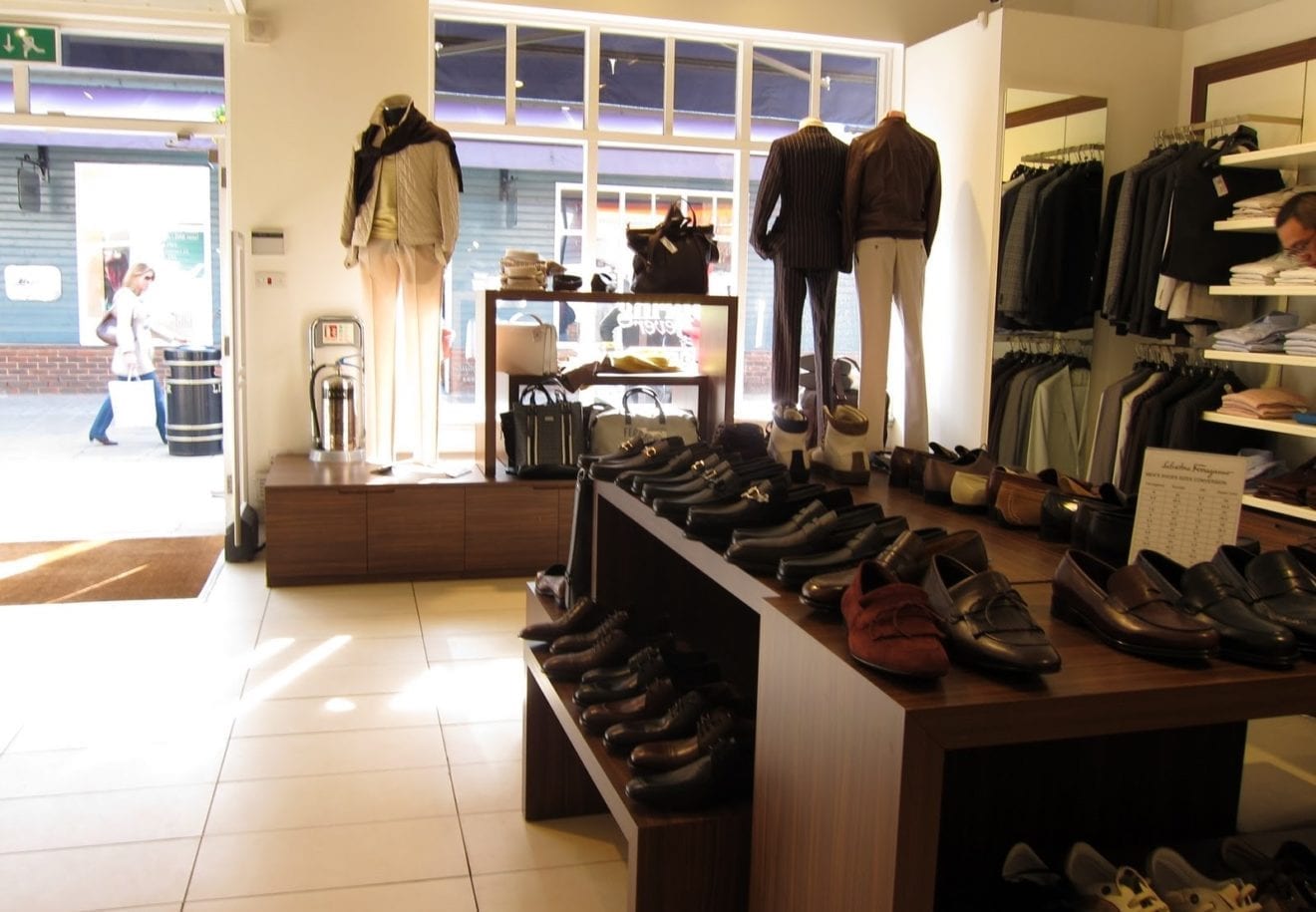
Italian fashion label Salvatore Ferragamo has taken over four JVs created in partnership with Trinity (Fung Group), which distributes the brand in South Korea and Southeast Asia.
Ferragamo says it has bought the companies’ 20 per cent share, still owned by Trinity through Trinity Luxury Brands Holdings and Ferrinch. The value of the transaction has not been disclosed.
Impacting Ferragamo Korea, Ferragamo (Malaysia), Ferragamo (Singapore) and Ferragamo (Thailand), the takeover follows an agreement signed in 2012. This included a purchasing option allowing for Salvatore Ferragamo to take full control of the JV companies.
At the time, Ferragamo had already increased its stake in the four companies to 80 per cent.
In the past few years, the Asia-Pacific region has become Salvatore Ferragamo’s main market, accounting for 35.5 per cent of its global revenue. At the end of September, the label’s sales in the region amounted to €360 million (US$375 million), equivalent to a 0.3 per cent decrease compared to the first nine months of the previous fiscal year.
Thai AirAsia X has completely pulled out of the Middle East, a market that appears unready for TAAX’s long-haul, low-cost business model. The airline, part of Asia’s biggest no-frills airline group, is axing Bangkok-Muscat and Bangkok-Tehran routes launched in June this year, due to poor traffic demand at both ends of the each of the routes.
The termination of Bangkok-Muscat takes effect on Jan 19 and the suspension of Bangkok-Tehran flights became effective on Dec 5, according to insiders. TAAX has struggled to keep the two routes afloat by rationalising capacities to match actual demand. In November, the carrier reduced the frequency of service on both routes to two flights a week, the minimum level acceptable by the market, down from three flights a week at launch.
TAAX deploys Airbus 330-300 wide-body jets configured with 377 seats on all its routes. The arrangement did not work out well, leading TAAX to terminate Middle East flights altogether. When TAAX inaugurated its Tehran flight on June 22 and Muscat service on June 28, the airline became the first low-cost carrier to offer regular non-stop services on those routes. TAAX’s departure means that all connections between Bangkok and the two Middle Eastern capitals will be handled by full-service airlines. Bangkok-Tehran flights are operated by Iran-based Mahan Airlines and Thai Airways International (THAI), which commenced service in October. The non-stop Bangkok-Muscat flights are flown by Oman Air, while Thai Airways offers regular services to the Omani capital with a stopover in Karachi.
Insiders said the poor performance by TAAX was in sharp contrast with a rosy outlook perceived earlier this year. TAAX chief executive Nadda Buranasiri said in May the lifting of economic sanctions against Iran in January had turned Tehran into a new economic frontier and an emerging tourism market.
“There seemed to be strong initial demand for both routes, but it tapered off to become unsustainable eventually,” said an insider who asked to remain anonymous.
In a release, TAAX apologised for ending its Middle Eastern services and offered full refunds for affected passengers.
Performance ratings continue to determine pay decisions in the majority of Thai organisations, a recent Aon Hewitt survey found.
With high turnover rates highest among junior managers and supervisors in the Land of Smiles, there is growing pressure on these staff to maintain their performance levels and prove their worth.
According to the Total Compensation Measurement Study and Benefit Survey 2016 by Aon Hewitt, performance continues to determine pay-related decisions for 95.1% of organisations in Thailand.
With junior management and supervisor levels recording voluntary turnover rates of 14%, and involuntary turnover rates of 5.3%, one tactic being utilised is to offer wage increases, with salary increments ranging from 4.7% to 6% in 2016 across industries polled.
Across the Thai economy, the retail and life sciences sectors offered the most generous wage increase in 2016, with an average increment of 6%.
On the other hand, the travel industry witnessed the lowest average salary increase, at 4.7%.
The study also showed that other strategies were used to keep hold of employees.
For example, 72.2% of employers offered individual performance awards, while 38.9% offered special recognition as short-term incentives to retain staff.
“The high turnover rate among junior managers should warn employers in Thailand to think about their compensation policies in the context of their overall talent retention strategy,” said Panuwat Benrohman, Country Leader, Aon Hewitt, Thailand.
Panuwat cautioned that companies have a responsibility to arm junior managers with the skillsets necessary to make the step up from individual contributor roles.
“With ‘better external opportunities’ and ‘limited growth opportunity’ among the top three reasons for attrition, a focus on learning and development will help employers in Thailand build a strong leadership pipeline from within, while still compensating high performers attractively,” he added.
A total of 174 organisations across all key industries in Thailand participated in the survey.
In August this year, Thailand’s e-commerce enterprise Ascend Group has finished migrating its existing businesses as well as new ventures to the cloud, a move that is expected to support its ambitious regional expansion plans.
The Ascend Group owns and operates business-to-consumer (B2C) marketplaces WeMall and iTrueMart, and the consumer-to-consumer (C2C) platform WeLoveShopping. It also operates TrueMoney, a wallet solution for digital payments, among other allied businesses.
Chaiwat Ratanaprateepporn, Chief Technology Officer of Ascend Group, said the company is looking beyond the country’s borders to expand its e-commerce business in the ASEAN region.
“Most of the operations we have now in ASEAN are under the TrueMoney business. We have Myanmar and Thailand as headquarters, then we have businesses in Cambodia, Vietnam, Indonesia and the Philippines,” he said. Services currently consist of mobile wallet, remittance, top up services, bill payments and the e-commerce payment gateway.
With a combined population of approximately 600 million, the ASEAN region has a booming e-commerce landscape, which is only logical for the Thai group to target.
The Ascend Group’s cloud journey started in November 2014 when the company adopted a “cloud first” policy. This has allowed the company to reduce infrastructure build time, improve flexibility and accelerate speed-to-market.
Chaiwat said the cloud journey is among the preparations it is doing for the expansion move.
“Why we are moving to the cloud? Our TrueMoney business in Thailand has been around for more than 10 years, while our e-commerce business has been around for just over three years. But we want our start-up companies (though they are no longer startups) to have the same capabilities. They were born in the cloud and are using cloud technologies to move fast and offer customers better services,” he explained.
In the first quarter of 2015, iTrueMart, an e-commerce retail destination for home appliances and electronic products, hit critical mass.
“We looked for alternative solutions on how we can manage the traffic and cost and using the technology so we decided to move to Amazon Web Services (AWS). Later that year, we also moved some of the services of TrueMoney to AWS as well,” Chaiwat recounted.
In the second quarter this year, Ascend also moved the services of WeLoveShopping.com completely to AWS. Thus, its three flagship e-commerce websites are already 100 percent in the cloud. For TrueMoney, however, the company is opting for a hybrid cloud strategy because of the different banking regulations in each of the six ASEAN countries, which make it difficult to operate purely on the cloud.
Chaiwat, who oversees the digital transformation of the company’s IT infrastructure, shared that when the company launched the WeMall in Thailand, they did so without adding new technical staff to implement, operate and support in addition to iTrueMart.
“And that is because we leveraged the innovative tools and technology of AWS,” he said. “Ultimately all of this innovation will allow us to better serve our customers and create efficiency that will result in better value for people who shop on Ascend Group’s e-commerce properties.
The company’s goal is to become the leading e-commerce business in the ASEAN region and leverage the digital technology to expand business opportunities for merchants in Thailand and the region.
Next steps in the cloud
What is next for Ascend Group’s cloud journey?
Chaiwat disclosed that the company’s cloud strategy comprised of three steps. The first step or Version 1.0 is moving the services to the cloud, which they accomplished in the past two years. The second step or Version 2.0, which is being implemented now is using the technology the technology to do more optimizations for cost savings, more automation so they can gain better productivity in the workforce.
The next step or Version 3.0, which will be implemented starting next year, is really moving to more high-end technology as the data and analytics, machine learning and other capabilities that will help us serve the customers better.
“What we are aiming ahead are data and analytics. Right now, we are data-driven, meaning we use analytics to do reports on how the transactions are growing. But this is business intelligence, not yet analytics. We are aiming to move there using the capabilities of AWS,” he said.
For companies starting on their own cloud journey, Chaiwat said it is important to identify or define the benefits that they would want to derive from the cloud. It should help in creating guidelines and the roadmap.
He stressed, however, that going to the cloud is not all about the benefits. “The company has to transform the workforce, upskill them, and adopt a different mindset and way of working,” he said.
Nick Walton, Head of ASEAN at AWS, affirmed that e-commerce in Southeast Asia is booming, especially e-commerce on mobile devices.
“AWS has analytics for mobile, which I think will be relevant for Southeast Asia,” he said. “There are two types of e-commerce – the new e-commerce providers (online only) and the bricks and mortar retailers that are adding the e-commerce experience to the mix. We look at the ability to quickly scale up, get promotions to market quickly, make the needs very successful sales. The last thing you want is a very successful marketing campaign that is let down by the website not performing.”
The other place for e-commerce is analytics. “This is where we see a good application of the AI technologies like Amazon Polly, a service that turns text into lifelike speech,” Walton noted.
Siam Retail Development plans to open 10 shopping malls and mixed-used projects in Bangkok and upcountry Thailand at an expected investment cost of Bt50 billion (US$1.3 billion) over the next five years.
In Bangkok, the group has developed Fashion Island Shopping Mall, Terminal 21 Asoke and The Promenade and Life Center. Terminal 21 Korat, in the northeastern region of Nakhon Ratchasima, opened this month as the company’s first upcountry shopping mall.
Under its five-year investment plan, the affiliate of Land and Houses Group plans to open another Terminal 21 complex in Pattaya in 2018 at a cost of Bt7 billion, which will also include a 500-room hotel and is already under construction.
Investment opportunities are also under consideration in other provinces such as Khon Kaen, Nakhon Si Thammarat, Phuket, Ubon Ratchathani and Udon Thani as well as Bangkok.
Siam Retail Development executive director Prasert Sriuranpong says the 10 proposed malls will have an average cost of Bt5 billion.
Some of the extra projects, including Terminal 21 Korat, include hotels and/or residences, convention centres and common halls. The company has invested Bt6 billion in the Terminal 21 Korat project.
Nakhon Ratchasima, the second-most populous province after Bangkok with 2.6 million people, is one of the most appealing provinces in Thailand for investors, says the Registration Administration Bureau of the Department of Provincial Administration. It has the highest GDP in the region, and is a tourism centre with more than 5 million visitors a year.
Siam Retail Development expects its Terminal 21 Korat complex to attract 55,000 visitors a day and anticipates revenue, mainly from retail-space rental, of Bt700 million in the first year. Highlights of the complex are a 110m-high Skydeck, plus a convention hall and sport podium, with 400 hotel rooms in the works.
Suripong Tantiyanon (left), Visa Country Manager, Thailand and Noppadon Pakprot (right), Deputy Governor for Tourism Product and Business, Tourism Authority of Thailand(TAT), launch Thailand Spectacular Year End 2016, aiming to boost inbound tourist spending during the festive seasons.
The joint promotional campaign rewards non-Thai Visa cardholders with special privileges and complimentary gifts when they spend at 14 shopping complexes throughout Bangkok, from now until January 31, 2017. TAT forecast that more than 375,000 tourists will visit Thailand during the four-day New Year period, generating more than THB 5.5 billion of revenue for the country, a 12-percent increase from the same period last year.
Waraporn Nilpanich (third left), Vice President Credit Card of AEON Thana Sinsap (Thailand) Public Company Limited, together with Voralak Tulaphorn (middle), Senior Vice President Marketing of The Mall Group Co., Ltd. has launched “The Magic of Giving” campaign to reward AEON credit cardholders this New Year.
Accumulated spending of every 3,000 baht at the Mall shopping center with AEON credit cards, entitles cardholders to receive a gift voucher of up to 1,000 baht. Besides, cardholders will receive x3 lucky draws for chances to win prizes valued over 1 million baht when spending every 1,000 baht. The campaign runs until January 11th, 2017