Tag: Thailand

  • Report predicts $25b in eCommerce revenues

    Report predicts $25b in eCommerce revenues

    Southeast Asia eCommerce revenues are projected to exceed US$25 billion by 2020, according to new research by growth partnership company Frost & Sullivan.

    Despite acquisitions, market exits and many online retailers struggling to achieve profitability, the market earned $11 billion last year, says the report, from its Telecommunications and Digital Services program, Analysis of the Southeast Asian E-commerce Market. The study examines market trends and opportunities in six key Southeast Asian markets – Indonesia, Malaysia, the Philippines, Singapore, Thailand and Vietnam.

    Key findings include continuing rapid growth as the industry evolves.

    Total revenues from business-to-consumer (B2C) eCommerce in the six markets will increase at a compound annual growth rate of 17.7 per cent.

    Malaysia and Thailand were the largest eCommerce markets in the region last year, generating revenues of $2.3 billion and $2.1 billion respectively. But by 2020, both these markets are expected to be eclipsed by such emerging economies as Indonesia and Vietnam.

    “Despite being relatively young, the eCommerce market in Southeast Asia is developing quickly, thanks to an astounding rate of digital adoption,” says Frost & Sullivan Asia-Pacific lead consultant for eCommerce and digital transformation, Cris Duy Tran.

    “However, companies pursuing an Amazon-style B2C mass-market business model are struggling to turn a profit, and there have been several mergers and acquisitions and market exits,” he says.

    “With fewer players in the market, eCommerce players are beginning to compete beyond price points and logistics, and are moving into new areas such as Online-to-Offline (O2O) eCommerce and loyalty programs.”

    Although the mass-marketing approach has not worked so far in Southeast Asia, he says there are many exciting opportunities in specialized eCommerce and peer-to-peer (P2P) eCommerce. Services such as Carousell, Shopee and Tokopedia are aggressively pursuing a “mobile first” strategy, and Frost & Sullivan expects to see more sector-specific services in areas such as travel, food delivery and luxury goods.

    Challenges

    While the opportunities for growth are immense, says the report, the eCommerce market in Southeast Asia is not without challenges.

    Several key factors that inhibit growth have been identified, including low credit-card ownership – less than 7 per cent of the population in all Southeast Asian markets except for Malaysia and Singapore. In some countries, more than half of the population does not have a bank account, making payment the biggest challenge for eCommerce companies.

    Logistics is another issue hampering eCommerce growth, especially in areas with complex geographies such as Indonesia and the Philippines. However, recent investments by regional logistics players such as aCommerce and SingPost have strengthened eCommerce logistics infrastructure in these markets.

    China’s rapid expansion in eCommerce is providing further impetus for online retail growth in Southeast Asia, says the report.

    “The eCommerce revenue in China represented 12.1 per cent of all retail sales last year, surpassing the US, Europe and Japan,” says Tran. “Given the massive adoption of eCommerce in China, Southeast Asia is set to follow a similar upward trajectory, even though eCommerce now represents less than 2.5 per cent of all retail sales.”

    With more mergers and acquisitions likely during the forecast period, more exciting market developments can be expected in the near future, says Tran.

  • SCB Easy Application on the Fritz Pending Upgrade

    SCB Easy Application on the Fritz Pending Upgrade

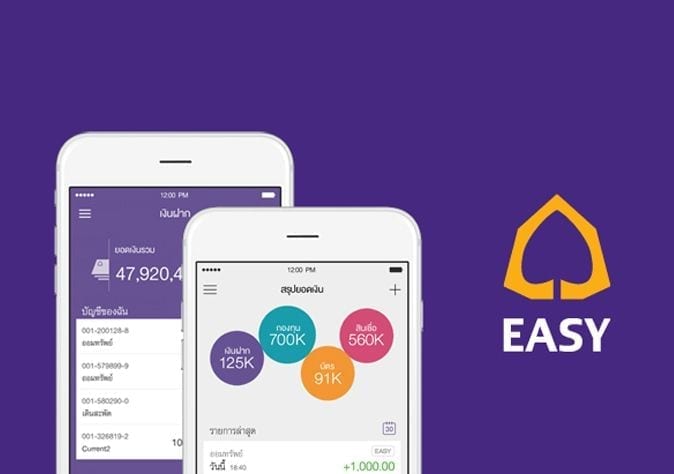
    Customers of Siam Commercial Bank (SCB) might have recently found out the hard way that the SCB Easy App is on the fritz and hasn’t been working as properly as it should’ve been.

    SCB has already suspended the service of the app yesterday, in order to be able to properly update the system.

    According to SCB, the disruption of service was due to the increased use of system for financial transactions. However, the app will hopefully be up and running again by Sept. 10 after the system upgrade.

    Customers, fortunately, are still able to use the bank’s services through other channels, including their website: www.scbeasy.com

  • Asian online shoppers habits uncovered

    Asian online shoppers habits uncovered

    Asian online shoppers research, locate, engage with and purchase products and services in entirely different ways in different markets, according to a new report.

    For example, almost all consumers in Indonesia knowingly provide brands with wrong details, including name (93 per cent), phone number (94 per cent), and email address (95 per cent) when researching or shopping online

    And the biggest driver of online-to-offline (O2O) conversions is with email in Singapore; SMS in Indonesia; chat apps in China; social media in Malaysia and Thailand and video ads in Hong Kong.

    And 27 per cent of consumers in China and 10 per cent of consumers in Singapore unknowingly input wrong payment details, breaking the region’s eCommerce’s momentum.

    Those are among many takes from The Digital Consumer View 2016 (Asia) report, released by global information services specialist Experian today, containing research from International Data Corporation (IDC), aimed at helping businesses better understand digital consumers in Asia.

    The report reveals how consumer behaviour varies across the key Asian markets of Singapore, Malaysia, Indonesia, Thailand, Hong Kong, and China, based on surveys with over 1200 digital consumers.

    Differences exist across channels (SMS, app notifications, email, social media, chat apps), devices (smartphone, feature phone, Wi-Fi/cellular tablet, wearable) and content (ads in email, ads in mobile apps, ads in social media, video ads on websites, and search ads). The findings highlight the complexity of reaching digital consumers in Asia across many channels, but also highlight how crucial that is, says Jeff Price, MD of Southeast Asia at Experian.

    “While the region is fast-growing, consumer behaviour in each market has unique disparities. Businesses today cannot succeed without intelligent insights based on consumer data,” he advises.

    “Asia is in the midst of a great digital revolution, with an explosion of smart devices, social media interactions and eCommerce transactions. While this evolution has greatly enabled and empowered both sides, it has also challenged businesses to be more effective and targeted in the way they communicate and market to this modern, digital-savvy consumer.

    “For companies to keep up with digital consumer behaviours – how they act on information – it’s absolutely vital to adopt and leverage what their consumers are providing them with every day – invaluable data. Businesses slow to act on this data will see their competitive advantage erode.”

    Key findings

    Experian - DCV - Region - Key findings

    • Search and discovery: Social media is the top channel in Singapore (31 per cent), Malaysia (49 per cent), Indonesia (67 per cent) and Thailand (58 per cent). It’s equally important as chat apps in China (47 per cent); in Hong Kong, video ads (63 per cent) trumps all.
    • Triggering product interest: Social media, once again, is the key driver in Singapore (28 per cent), Malaysia (44 per cent), Thailand (49 per cent) and Hong Kong (25 per cent). However, in Indonesia it’s SMS (62 per cent), and in China it is chat apps (48 per cent).
    • Triggering purchase intent: Email is the biggest driver of online to offline conversion in Singapore (27 per cent); SMS tops in Indonesia (57 per cent); chat apps in China (45 per cent); social media in Malaysia (44 per cent) and Thailand (51 per cent); and video ads tie with social media in Hong Kong (23 per cent).
    • Finding good deals: For unplanned purchases stemming from promotions, email leads in Singapore (34 per cent); social media in Malaysia (50 per cent), Indonesia (68 per cent) and Thailand (58 per cent); SMS in Hong Kong (36 per cent), and social media in China (51 per cent).
    • Brand engagement: Email is key for marketers to build engagement in Singapore (58 per cent) and Thailand (60 per cent); chat apps in Malaysia (62 per cent) and China (70 per cent); banner ads in Indonesia (56 per cent), and SMS in Hong Kong (61 per cent). While email is important, marketers need to be wary: more than 70 per cent of consumers reported receiving too many emails, up from 52 per cent in 2015.

    Experian - DCV - Region - The rise of omni-channel engagement 1

    Shiv Putcha, associate director, consumer mobility and telco strategy with IDC Asia Pacific, says businesses and brands cannot afford to ignore Asia’s multi-trillion-dollar digital commerce market. China alone is now the world’s largest retail market.

    “The challenge lies in the fact that the region has extraordinary differences – language, economy, purchasing power – and consumer behaviours, especially with the digital generation. That uniqueness will not diminish over the next few years and may even increase, making it challenging for marketers not using data-driven insights to research, plan and execute effectively. The Digital Consumer View 2016 (Asia) will hopefully serve as a valuable guide to deciphering some of these key trends, mapping the path forward for brands and their connected consumers.”

    Experian - DCV - Region - Top 3 types of ads that influence consumer's buying behavior

    Key Learnings for marketers in Asia

    • Over-reliance on a single marketing channel will not work. Depending on the country and its current state of digital sophistication, marketers need to think carefully about the right mix of channels to employ.
    • Quality over quantity. Consumer preferences for receiving promotional material varies from market to market, and by specific use cases. On a broader level, more is not necessarily better. A relevant and targeted message will ensure better conversion. Too much, and consumers are inclined to unsubscribe, delete, or mark content as spam.
    • The quality and integrity of data is crucial for marketers to find success. A significant number of consumers across the region either knowingly or unknowingly provide inaccurate information, which in turn causes errors and inaccuracies in marketer’s data sets. Around 27 per cent of consumers in China but only 10 per cent in Singapore unknowingly input wrong payment details; 40 per cent of consumers in China, and over 20 per cent of consumers in the rest of the region provide a wrong address at online checkout.

    Asia comprises 49.6 percent of the world’s Internet users, according to Internet World Stats (2016), digital commerce in the Asia-Pacific (excluding Japan) region will rise to US$17 trillion by 2019, up from US$7 trillion in 2015 according to International Data Corporation (IDC). The combination of rising incomes, increased consumption, acceleration of internet use, and the proliferation of mobile broadband access continues to unlock tremendous opportunities for marketers across the continent.

  • Dunnhumby strives to deliver innovative state of the art “media planning”

    Dunnhumby strives to deliver innovative state of the art “media planning”

    Dunnhumby, a leading customer science company, today announces a 29.8% year-on-year growth in gross revenue, as it continues to be an innovator in retail business by significantly expanding its retail media services over the past few years.

    Analyzing data on consumer spending behavior, Connect Media from dunnhumby is able to understand the customer decision-making process, and therefore better tailor marketing and advertising, both online and offline, to enhance customers’ decisions in buying products, while at the same time earn brand loyalty.

    “We’re able to offer a seamless customer journey, through-the-line, from home, when customer on the moves, on mobile, to the point of sales,” said Teeradet Dumrongbhalasitr, Head of TESCO Commercial South East Asia, dunnhumby Thailand. “dunnhumby begins with understanding the customer’s mind, then we pick the right knowledge to match media that suits the campaign’s objectives. We then choose the right touch point on the customer’s journey to communicate with them.”

    Over the past couple of years, Connect Media from dunnhumby has supported many of Thailand’s leading brands to successfully deliver their message to customers and build their brands at Tesco Lotus. 

    “dunnhumby strives to create new execution, new platform, new measurement to deliver innovative state of the art media. This makes Connect Media clearly different from other media in the market,” said Mr. Teeradet.

    It isn’t just the new innovations like its ibeacon on-location technology, or its unique approaches, like personalized opportunities, that is responsible for Connect Media’s success in “Return on Customers” for companies, though, but also its combination of innovative media solutions for ultimate impact and penetration in the market.

    “Of course, digital channels and platform synergy are becoming increasingly important in empowering customers’ shopping experiences and targeting individual customers, but we should also not neglect ‘point of sales media’, and advertising on the sales floor in its ability to influence customers at their moment of truth” added Mr. Teeradet. “Although customers may very well have a clear idea of what they want before they enter the store, the influence of promotions and media at point of sales can always change their purchase intention.”

    Connect Media from Thailand shows no sign of slowing in terms of growth and expansion, and in the coming months seeks to better “humanise” online interactions, and continue to evolve the shopping experience through creative offline platforms.

    “We will be focusing on as of yet untapped markets in the coming months, while strengthening key categories,” said Mr. Teeradet.

     In line with Connect Media’s history of leading the retail industry in innovation, Connect Media will also be focusing on business opportunities in other sectors, and looking at ways to solidify their position in the marketplace by potential data partnerships.

  • The new tallest building in Thailand looks like a pixelated image in mid-download

    The new tallest building in Thailand looks like a pixelated image in mid-download

    At 1,029 feet, the MahaNakhon is now the tallest building in Thailand. The 77-story tower beats the skyscraper that previously held the title, Baiyoke Tower II, by 33 feet.

    To celebrate its debut on August 29, the building lit up Bangkok’s skies with a fantastic light show. The skyscraper’s signature ribbon, which is made to like a partially-downloaded spiral of pixels, lit up, creating a beacon in the capital city’s skyline.mahanakhon-oma_ole_scheeren_v_4

    The building is designed for a mix of retail, hotel and residential use — it holds 200 condo units managed by Ritz-Carlton Residences.

    The Office for Metropolitan Architecture — the firm founded by famed Dutch architect Rem Koolhaas — announced plans for the building in 2009, but the final design was completed by international architecture firm Büro Ole Scheeren. The firm teamed up with Thai residential property developer PACE Development, and the building reportedly cost 18 billion baht ($520 million) to complete.

    PACE hopes to sell some of the hotel space and observation decks to a local real estate investment trust next year, the Bangkok Post reports. Some of the revenue from that sale will likely recoup construction costs — as will ticket sales for the building’s observation deck, and rents from the other hotel and retail spaces. Gourmet grocery store Dean & Deluca is also expected to open in the building.

    But it might not stay Thailand’s tallest skyscraper for long. A new structure, the Rama IX Super Tower, is proposed to be built in 2019. At 2,018 feet tall, it would be almost twice the size of the MahaNakhon.

  • Thailand aims to rethink Thaicom concession

    Thailand aims to rethink Thaicom concession

    Thailand’s ICT ministry plans to renegotiate the terms of Thaicom’s satellite concession, in the wake of a recent Supreme Court ruling against the amendment allowing Shin Corp to reduce its minimum holding in the company.

    The court recently found former ICT Minister Surapong Suebwonglee guilty of criminal malfeasance over the agreement to amend the terms of the concession, and sent him to jail for a year.

    Shin Corp was allowed to reduce its stake in what is now Thaicom to 40% from 51%, which the court found was against telecoms law. The court held that the move unfairly boosted Thaicom’s competitiveness and put the business at risk of foreign dominance.

    As a result of the ruling the ministry plans to device a new investment model for the satellite industry to replace the licensing regime.

    The government is considering four investment options – turning Thaicom into a state enterprise, a public-private joint venture majority owned by the state, a more flexible public-private joint venture model or the existing licensing model with higher fees.

    Negotiations with Thaicom are expected to be complete by early next year. The current concession, which involves fees amounting to 20.5% of revenue, is due to expire in 2021.

    Thaicom operates three of its satellites under the concession regime, while two more are operated under an NBTC licensing system involving a license fee of 5.75% of total revenue.

  • Pop-star eateries for Bangkok’s Show DC complex

    Pop-star eateries for Bangkok’s Show DC complex

    K-pop star Psy of Gangnam Style is one of several celebrities who will have eateries at the upcomingShow DC/YG Republique integrated food and entertainment complex in Bangkok.

    He will have a noodle house, while other Korean stars featured are singer Rain with After The Rain restaurant, and boy band BTS (Bangtan Boys) with Brick Cafe.

    Mr. Chayadit Hutanuwatra, Chairman of SHOW DC Corp Ltd (Right) and Dr. Julianne Hur, Vice President of The The Mall OF Korea (Left)

    Mr. Chayadit Hutanuwatra, Chairman of SHOW DC Corp Ltd (Right)
    and Dr. Julianne Hur, Vice President of The The Mall OF Korea (Left)

    This was revealed at a media update event, which featured a K-pop fashion show featuring Thai model Rawiwan Bunprachom (“Yoghurt”).

    Show DC 5

    Mr. Chayadit Hutanuwatra, Chairman of SHOW DC Corp Ltd (Center), Mr. Thammarat Thuratong, Celeb E-san’s owner (Far Right), Dr. Wichuda Na-Songkhla Sriyaphai (Far Left), Deputy Managing Director of Wandee Culinary Art School

    Near Rama IX Road the Bht9.5 billion (US$274.8 million) project is 90 per cent complete and on track to open in November. It covers 18,000 sqm over six levels, and more than 400 brands have already signed up 93 per cent of the retail space.

    Show DC 1

    K-District @Show DC will be the largest K-Pop town outside Korea. As well as retail and restaurants, it will showcase an acting and talent academy from Korea, plus Korean plastic surgery clinics, cosmetics, fashion and lifestyle shops.

    Show DC 2

    “Our plan is also to stimulate the economy and promote Thai products by putting together best-in-class Thai products at the Thai Thai Market, covering 2500 sqm on the fourth floor,” says Show DC chairman Chayadit Hutanuwatra. The market will feature 150 shops.

    Outlets at the project’s “Shop & Enjoy” experience include Asia Herbs Association, Hot Star (Taiwanese snacks), Kanna (health food), Krua Wandee Culinary Art School and Stick House (Italian-style ice cream), along with fashion brands BKK Original and H&M.

  • CBRE Research urges landlords to engage

    CBRE Research urges landlords to engage

    Online and offline retailing in Southeast Asia is expected to merge further, according to a new study by CBRE Research Singapore.

    Its report It’s All About Place-making urges landlords to play their part to stay ahead in a fast-changing retail landscape where consumers transit seamlessly from physical to digital platforms.

    CBRE Research projects that nearly 4 million sqm of city retail stock across Malaysia, Singapore, Thailand and Vietnam will be completed in the next three to five years. CBRE studied retail stock in Bangkok, Hanoi, Ho Chi Minh City, Jakarta, Kuala Lumpur and Singapore.

    “Some retail developments across these six cities have had to shut down in the face of high vacancy rates and low footfall as they failed to capture consumers and retain tenants,” says the report. “One suggestion is for landlords to acquire eCommerce platforms or set up logistics networks to give consumers the fully integrated omnichannel experience.”

    Established shopping centres with online platforms that provide “click-and-collect” or “store-to-door” services give consumers a higher sense of reliability and earn trust as well, says the report.

    “Both physical and online-only retailers are also more inclined to expand their footprint in these shopping centres in their bid to incorporate an omnichannel strategy.”

    Wave of change

    Combining both online and offline channels is one of five strategies CBRE Research recommends to landlords as Southeast Asian economies cope with structural shifts in the face of disruptive technologies.

    This wave of change has affected retail sales across the markets, with CBRE Research using the PLACE acronym…

    Place-making: Conceptualising shopping developments with the consumer’s experience at the forefront. A good social experience makes a strong positive association on the consumer and is tougher to replicate on the digital platform, says the company.

    Leveraging technology: Landlords should take advantage of the high internet and smartphone penetration among SEA consumers to improve the offline shopping experience. Technology can provide consumer insights and interaction while helping boost foot traffic and sales.

    Actively engaging: Forging personal connections with consumers is imperative for landlords to stand out from the competition and gain loyalty. Tenant engagement, and landlords need to find ways to show support.

    Combining channels: Landlords can break down the silos between online and offline by helping tenants incorporate an omnichannel strategy through vertical and horizontal integration, such as acquiring an eCommerce platform or setting up a logistics network to fulfil delivery needs.

    Engaging digital tenants: Landlords should seek to lease space to up-and-coming eCommerce retailers as they are likely to be more savvy about digital marketing and in tune with modern consumer needs.

    New needs

    “The onus of ensuring that stores in shopping centres remain an important and relevant touch point for consumers should not lie with retailers solely,” says CBRE Research Singapore/Southeast Asia head Desmond Sim. “The roles of the asset manager, landlord and shopping centre need to evolve to cater to the new needs of retailers and consumers amid stiff competition.

    “This task is all the more urgent as the market is anticipating a surge in internet use among developing countries, particularly Indonesia and Vietnam where mobile phone use has the greatest potential to increase.”

    Store-based retailing will stay the key point of purchase among SEA consumers in the next five to 10 years and account for at least 90 per cent of total sales value, says CBRE Research. However, landlords will face increasing pressure to make every visit to the shopping mall a memorable experience.

    With its headquarters in Los Angeles, CBRE Group is a commercial real-estate services and investment firm with more than 400 offices worldwide.

  • Mega Market emerges from Thai investment

    Mega Market emerges from Thai investment

    Eight months after being acquired by TCC Thailand, Metro Cash & Carry Vietnam has undergone a range of changes, including a new name – Mega Market.

    Since taking over Metro, the Thai group has accelerated agricultural projects to support Vietnamese producers. In July, TCC started exported hundreds of tonnes of Vietnamese fruits and vegetables to Thailand through Big C Thailand. It has also been seeking other suppliers for such products as avocados, sweet potatoes and oranges.

    Mega Market now has 19 wholesale centres across Vietnam, with three each in Hanoi and Ho Chi Minh City.

    As the main shareholder of Big C Thailand (97.94 per cent), TCC Group has plans to merge Mega Market with the Thai supermarket.

    TCC Thailand chairman Charoen Sirivadhanabhakdi says Vietnam offers good resources for agricultural development.

    TCC Thailand paid US$704 million to acquire Metro Vietnam in January, buying Big C Thailand the following month for US$3.5 billion.

  • Former Thai ICT minister spends first night in jail

    Former Thai ICT minister spends first night in jail

    Former ICT Minister Doctor Surapong Suebwonglee is spending the night in jail after being found guilty of criminal malfeasance regarding an amendment to the Thaicom / Shin Satellite contract.

    The case, brought by the counter corruption commission, accused Surapong and former ICT Ministry Permanent Secretary Kraisorn Pornsutee and former Space Administration Bureau director Chaiyan Pungkiatpairoj (himself later permanent secretary) of illegally amending the concession to allow Shin Corporation to lower its shareholding of Shin Satellite from not less than 51% to not less than 40%.

    This materially changed the requisites in the concession contract as it would lessen the risk Shin Corporation had in Shin Satellite, and it could, though unlikely, open the way for the 60% of shareholders to get together to outvote concession holder Shin Corporation.

    Such a material change would have needed cabinet approval.

    The courts noted that while Surapong did submit evidence that he had asked the Thaksin Shinawatra cabinet for approval; and evidence that the attorney-general said he had the power to go ahead with the amendment whilst the cabinet approval was pending, Surapong had omitted one important detail.

    The former ICT Minister withheld information from the attorney-general that the cabinet secretariat had refused to table the amendment as it would have been a conflict of interest.

    Thaksin Shinawatra’s family and associates (driver, cook, and maid) still held a controlling stake in the company that bore his name at that time.

    Doctor Surapong was given a one year jail sentence beginning immediately and was led away to jail immediately after the verdict was delivered. The two others were given one year jail sentences, suspended for five years.

  • Entrepreneur Now Awards 2016 nominations now open

    Entrepreneur Now Awards 2016 nominations now open

    Entrepreneur Now has launched the Entrepreneur Now Awards 2016 at a kickoff event at the Work Loft in Silom. This is the second year for the award ceremony which aims to honour and support SMEs in Thailand. The awards are organised with more than 20 community partners including many local chambers of commerce.

    There are eight categories in this year’s awards:

    • Outstanding female entrepreneur
    • Eco-entrepreneur
    • Creative entrepreneur
    • Innovative entrepreneur
    • Social enterprise entrepreneur
    • Most entrepreneurial team
    • SME (50 employees to 100)
    • Best newcomer

    In order to apply, entrepreneurs need to submit an application by October 31st, including uploading a 3-minute video about their company. Nominated startups will attend a networking evening with the judges, a group of seven diverse representatives from local startups, corporates, universities and organisations.

    The awards are open to both Thai and foreign SMEs with under 100 employees, provided they have a registered company in Thailand.

    This year’s awards ceremony will be held on November 23rd and organiser Pacharee Pantoomano promised it will be “bigger and better” than last year, with over 10 million baht worth of prizes available.

    The criteria the judges will use to select Thailand’s best entrepreneur are “uniqueness, eco-sustainability, striking achievements, recognition and traction, overcoming challenges, value in Thailand and ASEAN, vision and personal growth”.

    Judge Jacky Cheng said it was exciting to “mentor real businesses, not just ideas”.

    Duanghamon Kaewphongsri won last year’s Oustanding female entrepreneur award with her startup, Annette I Tim Tuk Tuk, selling artisan ice cream from iconic tuk-tuks. K. Duanghamon announced they are about to open their new 800 sqm factory and create products for export.

    Another of last year’s winners, Jonas Becker from Thinkatorium encouraged as many entrepreneurs as possible to apply: “There’s nothing to lose. It’s a good way to reflect on your company, where you are and where you want to be”.

    Probably the most complex part of the application process for startups is preparing the three minute video. The judges encouraged startups to include facts and figures. Rather than try to cover everything, focus on the criteria which best apply to you. K. Pacharee noted that many startups reuse their video to represent themselves at future events. Entepreneur Now will prepare additional help for preparing the video component in the next few weeks.

    Startups have until October 31 to submit their application via the Entrepreneur Now website.

  • Korean fashion brands in Zalora pop-up

    Korean fashion brands in Zalora pop-up

    South Korean fashion brands are featuring in an online pop-up store on regional sites of online fashion portal Zalora.

    It’s all part of a concerted bid to expand recognition of Korean fashion bards across the broader Asia-Pacific region.

    Launched in Singapore, the Premium Korean Fashion pop-up shop is open until October in Zalora sites in Singapore, Malaysia, Indonesia, the Philippines, Hong Kong and Taiwan, according to the officials at the Korea Trade-Investment Promotion Agency (Kotra) and the Korea Fashion Association.

    Seventeen South Korean designer brands, which have been recognised for their competitiveness both at home and abroad, are showcasing their products on the pop-up store.

    A launch ceremony was attended by some 80 Southeast Asian fashion journalists and so-called power bloggers. It marks South Korea’s first marketing activity targeting the entire Southeast Asian region.
    At the event, Giulio Xiloyannis said there is growing interest in Korean fashion in Southeast Asia and that the opening of the pop-up store is not only a new attempt but also an important event for Zalora.

    A Kotra official said the trade agency will step up efforts to gain access to major online portals in an effort to make inroads into regional markets.

    “Southeast Asia is emerging as the next eCommerce market after China as youths account for a large portion of its population and regional economies are growing at a fast pace,” Lee Byung-woo, head of Kotra’s office in Kuala Lumpur. “Efforts will be made to help Korean brands gain a foothold there.”

  • Thailand Post plans B500m upgrade

    Thailand Post plans B500m upgrade

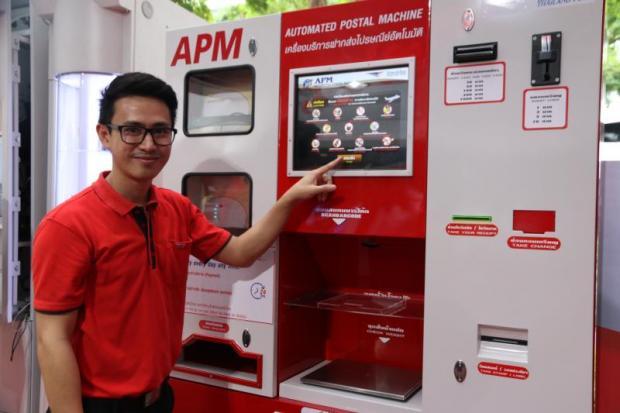
    A Thailand Post staff member shows an Automated Postal Machine — one of several new products and services the agency is offering to enhance e-commerce and to pamper new generation users.

    Thailand Post is spending 500 million baht on upgrading its core information technology (IT) automation systems and distribution centres to boost service innovation for the next-generation of online merchants and digital lifestyle consumers.

    The move is intended to fight back against the influx of no-frills messenger service apps like Lalamove, a Hong Kong-based delivery-matching mobile application, and parcel delivery service providers looking to capitalise on Thailand’s burgeoning e-commerce market.

    Of the total 500 million baht in spending, 300 million will go towards upgrading IT automation systems. The remaining 200 million baht will go to improving flexibility within and across its distribution centres.

    “We’re also in the process of transforming ourselves to become more digital in a drive to improve services and maintain our leadership in the home delivery service market,” said Samorn Terdthampiboon, president of Thailand Post.

    Thailand Post plans to roll out a slew of innovative services over the next seven months.

    For instance, she said PromptPost, a pre-registration mobile app service for high volume parcel delivery, will allow users to reduce the parcel processing time from eight seconds when they employ the service at a post office to two seconds when using Thailand Post’s semi-automated processing counters.

    Mrs Samorn said Thailand Post will soon provide an e-money service called THP Card, which allows people to use a card to pay for all Thailand Post services at its post offices across the country.

    Customers can also top up their cards at Thailand Post locations nationwide.

    She added Thailand Post plans to apply for an operating licence with the Bank of Thailand to provide an e-wallet service in the near future.

    Thailand Post has expanded its cross-border trading and e-commerce services to Indochina, crossing the Cambodian, Laotian and Myanmar borders to reach Chinese consumers.

    Mrs Samorn said Thailand Post is ready to enter Asean Economic Community (AEC) markets following a comprehensive organisational restructuring and the implementation of its enhancement schemes.

    Cross border revenue represented 14% of Thailand Post’s total, boasting bright prospects for revenue growth thanks to the booming business-to-business e-commerce market.

    Up to 37% of cross border revenue comes from its mail delivery service, and 6% from its mail system used to send financial statements and business letters to the retail and financial sectors.

    Mrs Samorn said Thailand Post expects its revenue to grow by 22% to 24.3 billion baht this year. Net profit is expected to reach 3 billion baht this year.


  • Foodpanda is selling its Indonesia business and rethinking the rest of Southeast Asia

    Foodpanda is selling its Indonesia business and rethinking the rest of Southeast Asia

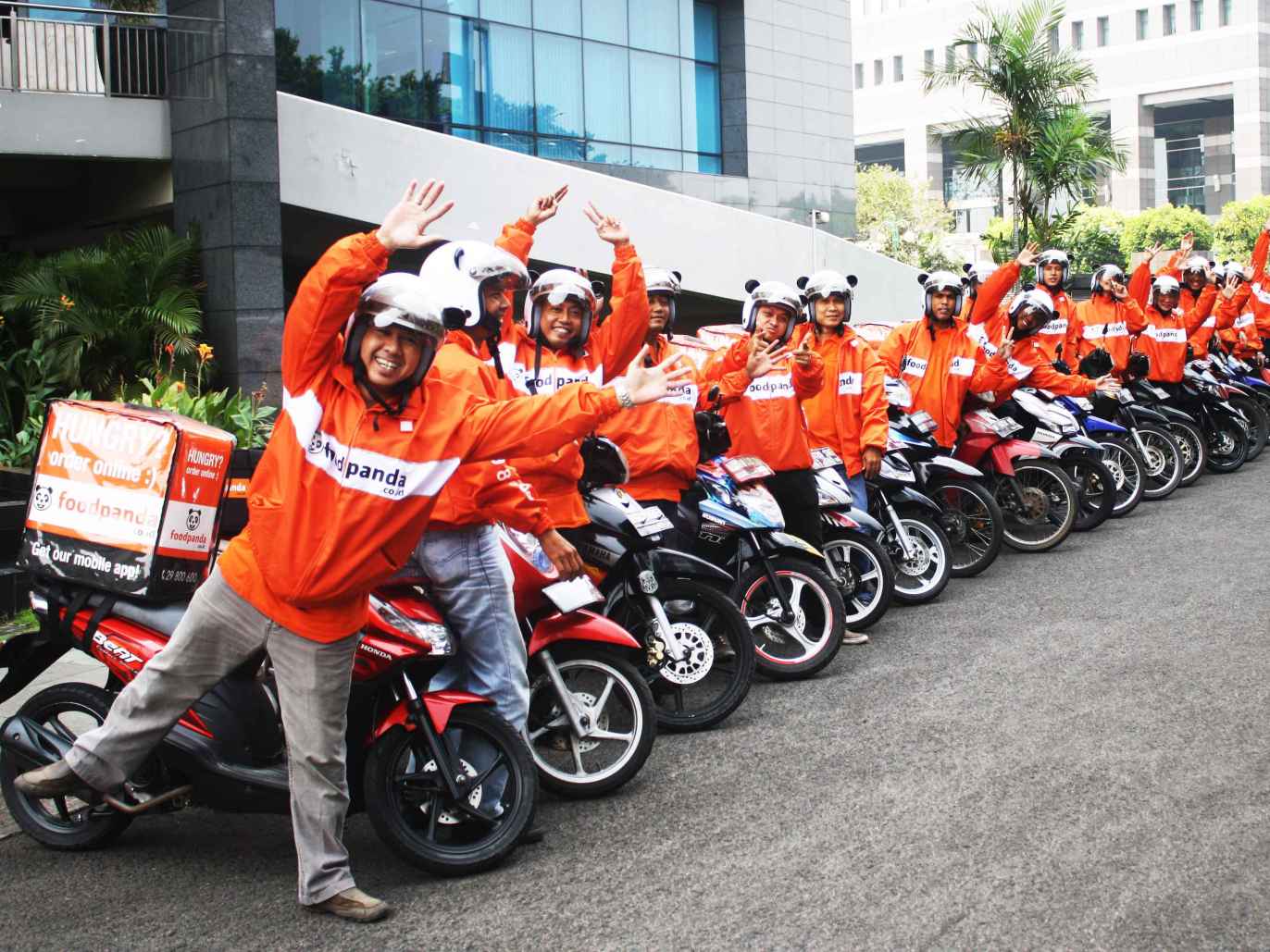
    Foodpanda, the food delivery startup backed by Rocket Internet, is selling its operations in Indonesia and evaluating its presence in the rest of Southeast Asia as part of a push towards profitability.

    Multiple sources close to the company told that its business in Indonesia, the world’s fourth-most populous country, is available to potential acquirers for less than $1 million — and an all-cash deal isn’t even a requirement. Foodpanda, which is active in 500 cities across five continents worldwide, has slashed the asking price for its Indonesia operations to basically zero after more than a year of unsuccessfully trying to offload it, one source added.

    The intention mirrors the sale of its business in Vietnam last year. The company reportedly tried to offload its India business earlier this year without success.

    Foodpanda provided the following statement which, if you strip out the grandiose terms, does hint at transactional activity up ahead:

    Foodpanda has grown very fast in Southeast Asia over the last couple of months and strengthened its market leading position in the region. Driven by our increased dominance in the region we have experienced interest from a variety of different parties to partner or to invest which we are evaluating now.

    Indonesia may be Southeast Asia’s largest economy but it has proven to be a challenge due to factors including competition and local market conditions. Go-Jek, a motorbike taxi-on demand company that this month raised $550 million, is the primary thorn in Foodpanda’s side. The company offers food delivery as one of its many services, and it is able to price that business competitively thanks to its massive fleet of 200,000 drivers and revenue from other services. Grab also offers services like food delivery, while Uber is tipped to follow suit.

    One source close to Foodpanda added that Jakarta’s challenging traffic congestion and a lack of infrastructure have added complexities.

    Reviewing regional presence

    Foodpanda is actively seeking to cash out of Indonesia, but that may not be its only exit from Southeast Asia.  We understand from a source that the company is reevaluating its entire business across the region, and it has already made tentative efforts to sell in some countries. The company expanded in Asia via a series of acquisitions, which, in many cases, ironically leaves it without obvious suitors.

    News of its reassessment of Southeast Asia comes just weeks after Foodpanda co-founder and CEO Ralf Wenzel claimed that the company is profitable in two of its markets — Europe and the Middle East — but not Asia.

    Wenzel told Reuters his company is “focused on improving market share” in Asia, which has included asset exchanges with competitors, in order to turn its finances positive there.

     “Over the next couple of months we will turn break-even and then profitable in the first Southeast Asian countries,” Wenzel added.

    While the Foodpanda CEO claimed profitability in Asia is “just a matter of scale,” our sources said that discarding under-performing units — which Wenzel did not mention — is a very key part of the plan.

    Challenging investment climate

    Foodpanda raised $210 million last year — including a $100 million injection from Goldman Sachs and a separate $110 million round — but the climate for investment is tougher now. One source close to Rocket Internet told us that the venture builder is not optimistic about landing capital for many of its older, more capital-intensive businesses, including Foodpanda.

    That’s evidenced by a recent round of capital for Global Fashion Group (GFG), a collection of Rocket Internet-backed fashion marketplaces worldwide. GFG raised $330 million but the capital came from a collection of trusted Rocket Internet entities and at a huge mark down. The group’s valuation plummeted from $3.4 billion at its last raise to $1.1 billion.

    Sources speaking at the time told us that GFG CEO Romain Voog met with more than 90 investors, but came home empty-handed.

    GFG had already preempted that challenge by discarding some of its unprofitable business units in Southeast Asia — does that sound familiar?! — which included the sale of Zalora Thailand and Lazada Vietnam for low prices and triggered high-level execs to leave. Rocket Internet isn’t alone to struggle in Southeast Asia, though. Groupon sold its Indonesia business to fitness membership startup KFit, a fairly unorthodox acquirer, after it had already exited other Asian markets.

    Now it looks like Foodpanda is following a similar approach. While Southeast Asia is often noted for its 600 million cumulative population and growth potential, today its nascent digital economy is challenging for many online retail companies.

    This year has marked a different approach for Rocket Internet in Asia. This summer, it finally offloaded Jabong, its fashion marketplace in India, to rival Myntra in a $70 million deal this summer, while Alibaba bought a majority stake in Amazon-like Lazada for $1 billion in April. Despite a seemingly decent outcome on the face of it, many Lazada investors were left disappointed, and the company itself ran out of money thanks to spiraling loses.

  • Singtel sale slide offset by Indonesia, Thai mobile affiliates

    Singtel sale slide offset by Indonesia, Thai mobile affiliates

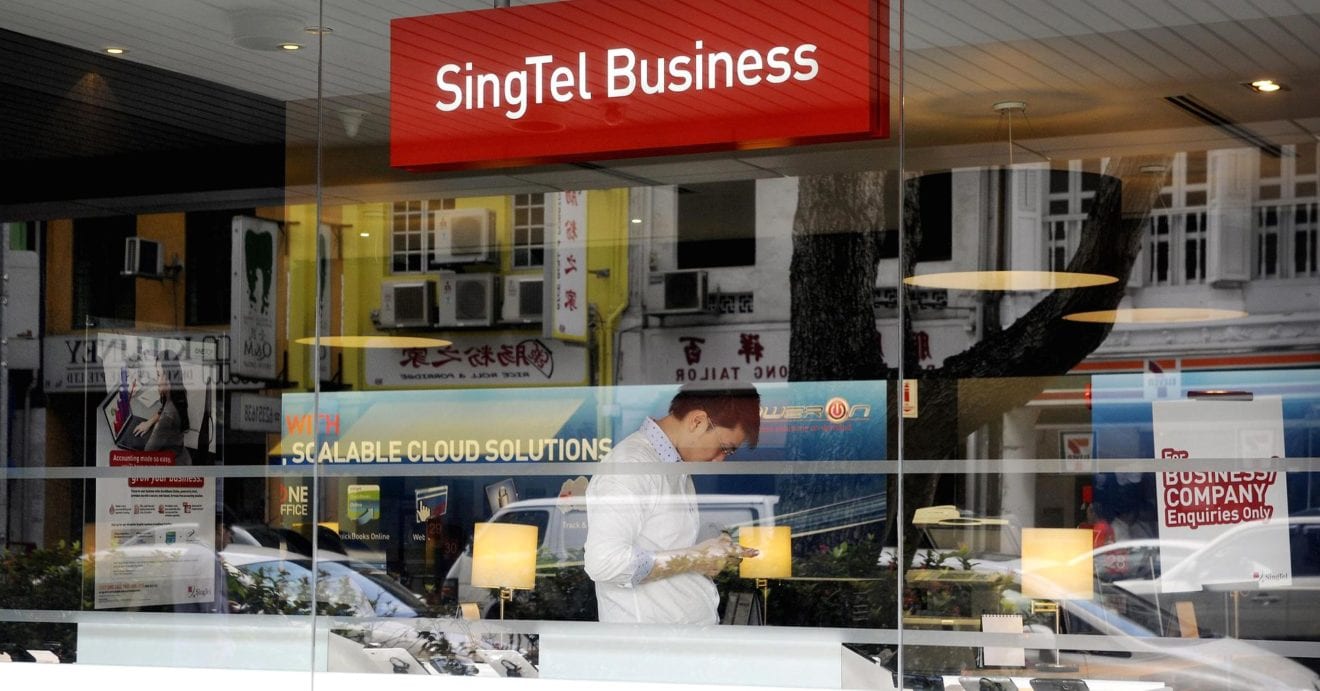
    Singapore Telecommunications announced a net profit of S$944 million for its first quarter ended June, up 0.3 per cent on the year, mainly due to stronger contributions from its mobile affiliates in Indonesia.

    Singtel’s sales fell 7.1 per cent on the year to S$3.9 billion. Singapore consumer revenue declined by 8.5 per cent to S$558 million. The growth in mobile data use could not fully offset the revenue decline in roaming and voice services in the city-state. The company’s operating revenue in Australia also fell by 15 per cent due to higher mobile service credits from device repayment plans and a weaker Australian dollar.

    Weaker equipment sales also dragged revenue down for both countries. “Equipment sales both in Singapore and Australia showed a decline and that reflects lower re-contracting volumes. There was also a higher take-up of SIM-only plans where they don’t buy the handset from us,” said Chua Sock Koong, group chief executive of Singtel, in a media briefing on Thursday.

    Contributions from Singtel’s other mobile affiliates helped to offset its losses. Indonesian mobile operator Telekomunikasi Indonesia’s profit after tax jumped 31.1 per cent on the year to US$244 million (S$327.78 million), supported by strong growth in voice, data and digital businesses. Thailand’s Advanced Info Service also generated higher contribution for the quarter, a 5.1 per cent increase to US$98 million after tax on the year.