Retail News CRM

Tag: Tiffany

  • First Tiffany store opens in New Delhi

    First Tiffany store opens in New Delhi

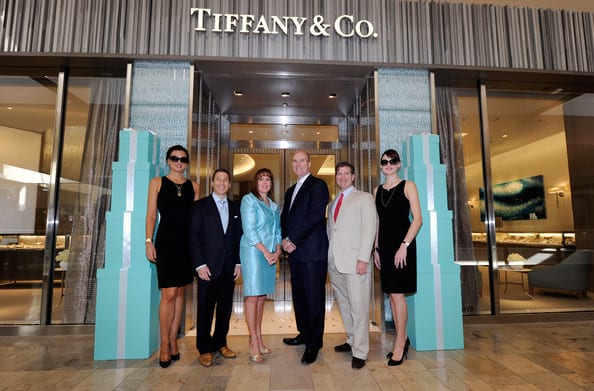
    The first Tiffany India store has opened, located in New Delhi’s upmarket The Chanakya shopping center.

    The 2600sqft store was described as “an important milestone for our iconic brand” by Tiffany & Co CEO Alessandro Bogliolo.

    “As a global luxury jeweler with stores in many of the world’s most important cities, Tiffany’s emergence in New Delhi presents a unique opportunity, particularly given India’s growing luxury consumer base and passion for jewelry,” he said.

    The Tiffany India store stocks the full range of Tiffany’s jewelry collections, hardware, and home & accessories collections.

    Meanwhile, Tiffany & Co shareholders have approved a multibillion-dollar takeover offer by French luxury-goods maker LVMH, scheduled to take effect later this year.

    Tiffany operates more than 300 stores in more than 25 countries, including 80 in the Asia-Pacific region.

  • Tiffany Flagship Next Door opens in New York

    Tiffany Flagship Next Door opens in New York

    Tiffany & Co has opened The Tiffany Flagship Next Door – a two-year pop-up store in New York City.

    Located at the adjacent 6 East 57th Street, the Flagship Next Door will serve as Tiffany’s New York City flagship store until the transformation of No 727 Fifth Avenue is complete next year.

    The store’s main floor features high jewellery and famous collections including Tiffany T, Tiffany Paper Flowers, Tiffany Victoria, Tiffany Keys, and Tiffany HardWear. The Tiffany Men’s Collections is presented on the second floor, while third floor displays love and engagement collections and the fourth floor offers homewares and accessories

    The Tiffany Flagship Next Door also features private selling rooms and a VIP salon, offering customers the same level of service that they were accustomed to in the original flagship store.

    The store is designed around a vaulted, escalator-flanked atrium and retains “a playful, fun look with a modernised attitude”, the company said in a statement. Inspired by the original store, the new store’s interior uses concrete and stainless steel as its main materials.

    Tiffany brand codes are displayed throughout the store, from wood paneling with Tiffany’s Flora and Fauna motif stenciled onto crates, to Tiffany’s signature Wheat Leaf motif reimagined as a ‘Color Block’ painted feature wall.

    “We have created something truly unique and visually dynamic with this space,” said Reed Krakoff, chief artistic officer at Tiffany & Co.

    Tiffany unveiled its transformation plans for its iconic New York City flagship store last year. The building is an architectural icon that has served as the cornerstone of Manhattan’s shopping district since 1940. The brand says the transformation of the New York flagship store marks a new chapter on Fifth Avenue and further interlaces the brand into the fabric of New York City.

  • Tiffany in ‘a difficult position’ on lacklustre Hong Kong, home market sales

    Tiffany in ‘a difficult position’ on lacklustre Hong Kong, home market sales

    Both overall and comparable-store sales growth at Tiffany came in flat during the last quarter, neither metric helped by the challenges in Hong Kong which overshadowed strong trading in the Chinese mainland.

    However, putting Asia to one side, it is clear that Tiffany’s main difficulties are coming from the US and European markets where it is struggling to generate growth.

    Similar to last quarter, sales in the Americas were down by 4 percent on both a total and same-store basis. Much of the slide is down to lower spending by tourists – something that has dogged the company for a few quarters and which we see as an ongoing issue as the firm enters the holiday period. Domestic demand slipped, mostly among middle-income shoppers who are cutting back on expensive, unnecessary purchases. Tiffany has not been able to entice them with its latest collections and we continue to see defections away from luxury to niche mid-priced brands which are less expensive but still offer stylish and fashionable products.

    While Tiffany’s customer share among the more insulated higher-income groups remains stable, the ongoing decline in share among middle-income shoppers is worrying. Tiffany is reliant on these customers to drive growth and the future trajectory of the economy suggests that shoppers in this segment are likely to become even more cautious and reluctant to spend next year. This includes more affluent millennial consumers that Tiffany has been trying to court.

    While brand awareness and favorability among this cohort has increased, this has not translated into purchases, partly because of a reluctance to spend large amounts of money and partly because some of the early sparkles of more youthful marketing has started to wear off.

    All of this leaves Tiffany in a difficult position. Within its core markets, sales to tourists are falling, a large part of its customer base has become more reticent about spending, and it is not replacing these losses with new customer groups. The softer sales numbers that result from such a dynamic are also having an impact on the bottom line where net income fell by 17 percent over the prior year.

    LVMH is inheriting challenges

    Tiffany’s weakness does not undermine the various changes the group has made over recent years, nor do they devalue the brand. However, they show that LVMH, which will take control of the company in the first half of next year, is inheriting a group where much more effort is needed to engineer future growth.

    The hope of LVMH will be that this position can be counterbalanced by driving higher sales overseas via a more effective distribution strategy. However, this will take time to engineer so in the short term Tiffany will remain exposed to a weaker performance.

    Unfortunately, it does not look like the holiday period will provide any respite for Tiffany. Our data continues to show that jewelry will not be a winning category over the holiday period, mostly because of rising economic concerns and prioritisation of more practical gifts. Fortunately, this will be mitigated, at least in part, by the softer comparative results that Tiffany will come up against. Even so, we are not optimistic that growth will return to the levels being delivered a year or so ago.

    In short, LVMH has bought a solid brand that will nicely complement its existing portfolio. However, it paid full price for a business that still needs a lot of work to reach its potential.

  • LVMH-Tiffany deal signed

    LVMH-Tiffany deal signed

    Subject to regulatory approvals, the LVMH-Tiffany deal is sealed: the French luxury fashion powerhouse will take over the iconic New York City-headquartered jeweler.

    But it may be mid next year before the transaction is completed after shareholder and regulatory processes are complete.

    LVMH will pay US$135 per share in cash for Tiffany, giving the jeweler an equity value of €14.7 billion or $16.2 billion.

    The LVMH-Tiffany deal provides “an exciting path forward,” said Tiffany chairman Roger N Farah, describing LVMH as “a group that appreciates and will invest in Tiffany’s unique assets and strong human capital, while delivering a compelling price with value certainty to our shareholders”.

    Bernard Arnault, chairman, and CEO of LVMH and now within striking distance of becoming the world’s richest man when this deal is settled, described Tiffany as “a company with an unparalleled heritage and unique position in the global jewelry world”.

    “We have immense respect and admiration for Tiffany and intend to develop this jewel with the same dedication and commitment that we have applied to each and every one of our Maisons. We will be proud to have Tiffany sit alongside our iconic brands and look forward to ensuring that Tiffany continues to thrive for centuries to come.”

    It was a quick deal, coming little more than one month after the rumors of negotiations broke and will mark the beginning of a new chapter in the 180-year-old company’s history.  But the two spokesmen said completing regulatory filings and the formalities of shareholder approval might take until “mid-2020”.

    With more than 300 stores worldwide, Tiffany will give LVMH a strong position in the jewelry sector in which it is underrepresented compared to luxury-goods rival Richemont. The French company says the LVMH-Tiffany deal will strengthen its watches and jewelry division and complement its huge portfolio of 75 brands. Most significantly, it gives the luxury retail group a strong presence in the key US market.

    Farah said Tiffany undertook “a thoughtful internal process” and sought expert external advice before agreeing to terms with LVMH.

  • LVMH takeover of Tiffany & Co looks to be settled

    LVMH takeover of Tiffany & Co looks to be settled

    Luxury jeweler Tiffany & Co looks set to be bought by French luxury group LVMH after the latter increased its offer to more than US$16 billion.

    Sources have told multiple international media organizations that a deal may be announced as early as today, Europen time before stock markets there open.

    The two companies’ boards met yesterday to finalize the deal, which would be LVMH’s largest acquisition yet and substantially boost its North American business.

    LVMH initially bid $14.5 billion for Tiffany in late October when it had a market valuation of $11.9 billion, but the target company’s board rejected the offer saying it undervalued the business.

    An analyst at OC&C Strategy Consultants in Hong Kong said adding an iconic American brand to its portfolio would enable the French luxury group to get closer to the heart of American luxury customers.

    “It would reinforce LVMH’s jewelry portfolio, which was relatively limited until now compared to rival luxury groups like Richemont. Acquiring Tiffany provides LVMH not only the entry into the fine jewelry segment but also the more accessible segment, which is growing at a faster pace than fine jewelry,” he said.

    During recent years, Tiffany has achieved success in rejuvenating the brand, expanding its jewelry collections from a wedding and engagement-focused jewelry to more fashionable, everyday collections to better cater to younger consumers’ increasing need of self-indulgence.

    “To satisfy consumers’ pursuit of “newness”, they shortened the cycle of new product launches. In addition, they are also one of the pioneer luxury players in embracing digital platforms by opening a pop-up store on Tmall Luxury Pavilion and engaging with consumers creatively through WeChat, among others,” said the analyst.

  • Louis Vuitton parent about to acquire US jeweller Tiffany & Co

    Louis Vuitton parent about to acquire US jeweller Tiffany & Co

    Luxury house LVMH has reportedly made a US$14.5 billion offer to acquire high-end jewelry retailer Tiffany & Co as part of an ongoing attempt to expand into the US market.

    The jewelry firm currently has a market valuation of $11.9 billion, but the Financial Times quotes sources saying the US company is likely to reject the offer saying it undervalues the business.

    The offer was lodged earlier this month, valued at US$120 per share which represented a 30-per-cent premium on the share price at the time. Since then, Tiffany’s share price has increased, so the offer now represents a smaller 22-per-cent premium but is way lower than Tiffany’s share price in July last year when it peaked at $139.50.

    A Reuters report stated that the potential acquisition comes “at a time when the US luxury jeweler grapples with the impact of tariffs on its exports to China”. The report said Tiffany has yet to respond and is currently reviewing the possible deal.

    Unlike other luxury firms, LVMH’s business has not appeared to suffer a significant impact from the Sino-US trade war or pro-democracy protests in Hong Kong, where the premium retail market has been hit by a decrease in Chinese tourists from the mainland. The firm beat sales forecasts for this year’s third quarter.

    Neither company has commented on the bid.

  • Tiffany to open Blue Box Cafe in Hong Kong

    Tiffany to open Blue Box Cafe in Hong Kong

    Luxury jewelry retailer Tiffany & Co is set to open its largest flagship store in Asia at One Peking Road – and with it the first Blue Box Cafe in Hong Kong.

    The flagship and cafe – the first in Asia –  will soft open early this month and mid next month respectively. Both outlets have been designed to offer new experiences for long-time patrons of the firm, with One Peking Road displaying the full range of the house’s products and the cafe bringing a slice of New York City to tropical Hong Kong.

    The cafe features the brand’s own crockery and utensils to complement the cultured ritual of afternoon tea, reflective of the artistry and craftsmanship of the house.

    In anticipation of The Tiffany Blue Box Cafe in Hong Kong opening, reservations for seating are being taken through the firm’s online platform, allowing online users the chance to be the first to experience something which has, until now, only been available in Tiffany & Co’s flagship store in New York City.

  • Sales up for Tiffany in China, other markets struggle

    Sales up for Tiffany in China, other markets struggle

    Double-digit sales growth for Tiffany in China provided some encouragement for the US jewelry retailer in what was otherwise an unremarkable half.

    And despite the brand’s strength on the mainland, Tiffany’s CEO Alessandro Bogliolo expressed concerns about the second half, referencing the ongoing social disruption in Hong Kong.

    “As with the first quarter, we are encouraged in the second quarter by sales growth attributed to our local customer base globally, which was again led by double-digit growth in Mainland China,” he said, noting sales to tourists were softer.

    “With the tough comparison to last year’s strong performance in the first half behind us, and in spite of the headwinds of weak demand from foreign tourists, currency exchange rate pressures and continuing business disruptions in Hong Kong, we are actively managing what is in our control and positioning our brand to win – accelerating new product introductions and keeping a visible profile.”

    Across Asia-Pacific, total net sales decreased 1 per cent in both the second quarter and the first half, to US$298 million and $622 million, respectively, which included comparable sales declines of 3 per cent in the second quarter and 4 per cent in the first half, balanced by the opening of new stores and increased wholesale sales. The declines were largely due to currency changes.

    Sales performance throughout the first half reflected strong growth by Tiffany in China, softness in Hong Kong and mixed performance in other markets in the region.

    In Japan, total net sales of $155 million were unchanged in the second quarter and decreased 2 percent to $300 million in the first half, and comparable sales decreased 1 percent and 2 percent, respectively. On a constant-exchange-rate basis, sales decreased 1 percent in both quarters, while comparable sales decreased 3 percent and 2 percent, respectively.

    Neil Saunders, MD of GlobalData Retail, said that after taking into account the strong prior-year numbers the Tiffany results reflected a marked deterioration from the type of growth being achieved several quarters ago.

    “Domestic (US) demand slipped modestly, mostly among middle-income shoppers who are cutting back more on expensive, unnecessary purchases. Tiffany has not been able to entice them with its various collections in the way it was doing last year.”

    However, he said GlobalData’s research showed that while marketing efforts are not necessarily driving sales, the company is improving traction with younger shoppers.

    “From our data, brand awareness is still rising among the under 35 cohort; however, conversion among this age band has been static over the past few months, meaning that Tiffany is not doing enough to activate this group.”

    Saunders said the planned launch of a range focused on male customers provides a strong an opportunity for Tiffany, but warned it will take time before it resonates, mostly because the retailer’s overall offer remains very focused on women and men know the brand through shopping for women.

    “We do not think this initiative will be an overnight success. It will likely take a long time to change the perception of men and to get them actively shopping with the brand.”

    He concluded that while Tiffany’s sales were not yet reflecting the efforts being invested in improving the brand, it was important that the company “holds its nerve”.

    “Many of the strategies the company has put in place to refresh the brand are directionally correct and are working. There is a case for greater innovation in ranges, especially more modestly priced collections, as well as some elevated marketing over the holiday period. However, neither of these things will entirely counteract a tougher external environment – it will only take the edge off the difficulties.”
  • Reliance-Tiffany partnership in India wins the right approval

    Reliance-Tiffany partnership in India wins the right approval

    The Reliance-Tiffany partnership in India will allow Tiffany & Co to offset subdued demand in US and Europe, says data and analytics company GlobalData.

    The US-based luxury jeweler Tiffany & Co formally announced last week it was forming a joint venture with India’s Reliance Brands Limited (RBL), a part of the Reliance Industries Limited (RIL), to open a line of stores in India. That move was widely predicted earlier.

    Shagun Sachdeva, consumer insights analyst at GlobalData, says India is the fastest-growing luxury market in the Asia-Pacific region, expected to grow at a compound annual rate of 14.2 percent between 2017 and 2022, to reach US$7billion by then.

    “The projected healthy growth can be attributed to the positive economic outlook, growing younger upper-middle-class population coupled with growing brand-consciousness, and the increasing popularity of the online channel for luxury shopping.”

    Sachdeva said Tiffany & Co, famous for its diamond engagement rings and famous blue boxes, has been trying to enter the Indian market for a long time.

    “By leveraging Reliance’s long-standing brand presence and product positioning, it will be able to expand globally and offset the subdued demand in the US and Europe.

    “After the deployment of omni-channel model and the introduction of the iconic British toy retailer Hamleys in India earlier this year, the latest move by Reliance to open Tiffany stores in Delhi later this year and in Mumbai in 2020 through a joint venture is in line with its strategy to bring the best-in-class products to the emerging Indian luxury market,” she said.

    “It provides a unique opportunity for Reliance to bolster its consumer-focused units, retail, and telecoms, to match the strength of its leading oil and gas business.”

  • Reliance to launch Tory Burch, Tiffany in India

    Reliance to launch Tory Burch, Tiffany in India

    Reliance Brands is launching two of its US brands – lifestyle label Tory Burch and jeweller Tiffany & Co in India.

    The brands will set up shop at Jio World Centre mall in Mumbai in April next year.

    The move is Tiffany & Co’s third attempt to establish a presence in India, following a growing network of international locations already set up in China, Australia, Canada, France, UK, Hong Kong, Japan, and the UAE. Tory Burch is primarily sold at specialty stores worldwide, including Saks Fifth Avenue, Harrods, Bergdorf Goodman, Bloomingdale’s and Nordstrom.

    Reliance Brands already retails several luxury labels in the territory, including Ermenegildo Zegna, Brooks Brothers and Bally.

  • New Tiffany Philippines store opened

    New Tiffany Philippines store opened

    American luxury jewellery and specialty retailer Tiffany & Co will open a new freestanding boutique at Greenbelt 4 in Makati City, the Philippines tomorrow, July 12.

    The coming launch was featured in Lifestyle online magazine for its understated luxurious design inspired by the New York flagship, featuring “off-white and pale gray walls and lone chandelier floating above the main glass-and-chrome vitrine at the centre, which displays the key collections … Satellite vitrines on either side showcase the high jewellery pieces, available in the Philippines for the first time.”

    While the firm has had a presence in the Philippines for many years at Rustan’s stores, the new boutique will showcase a broader selection of the firm’s jewellery.

    “At Rustan’s, they could do only mostly silver jewelry and engagement rings,” said Tiffany’s country manager Mario Katigbak. “When I came in, we found that there is a market for Tiffany high jewellery.

    “Unlike other brands where it’s the design that’s selling, at Tiffany, it’s the stones. The market is very ready. It’s more sophisticated and ready to appreciate the quality of the stones, more than just the design. Tiffany does its own cutting, and it’s very important for them where the stones are mined. It’s an evolution to a higher level of jewellery.”

    Tiffany’s diamonds are laser-etched with a microscopic serial number to help identify their quality and point of origin.

  • Lower tourist spend hits Tiffany & Co sales

    Lower tourist spend hits Tiffany & Co sales

    Tiffany & Co sales were hit by what CEO Alessando Bogliolo described as “dramatically lower worldwide spending attributed to foreign tourists” during the first quarter.

    Globally, sales fell by 3 per cent in the three months to April 30, to US$1 billion and comparable sales fell by 5 per cent. “Significant foreign exchange headwinds” were also responsible for the result, with sales down a more modest 2 per cent on a constant-currency basis.

    While not releasing breakdowns by country, Bogliolo said global sales attributed to local customers, led by sales in China, grew year on year. “We believe this growth in sales to local customers reflects progress in executing our strategic priorities, including innovations across products, communications and the customer experience, and that Tiffany is positioned for improving trends in the second half of 2019.”

    Net earnings of $125 million were 12 per cent lower than the prior year’s $142 million.

    Tiffany & Co sales in Asia-Pacific declined 1 per cent to $324 million and comparable sales declined 5 per cent due to the effect of foreign currency translation; on a constant-exchange-rate basis, total sales rose 3 per cent and comparable sales were unchanged.

    “These results reflected a continuation of strong growth in Mainland China and mixed results in other markets,” the company said in a statement. “These sales results also reflected lower spending attributed to foreign tourists.”

    In Japan, total net sales declined 4 per cent to $145 million and comparable sales declined 4 per cent, but on a constant-exchange-rate basis, total sales and comparable sales were equal to the prior year. These results were also affected by lower spending attributed to foreign tourists.

    In Europe, total net Tiffany & Co sales declined 4 per cent to $102 million and comparable sales declined 7 per cent. In the Americas, total net sales declined 4 per cent to $406 million, and comparable sales declined 5 per cent.

  • Free Ice creams at Tiffany Singapore

    Free Ice creams at Tiffany Singapore

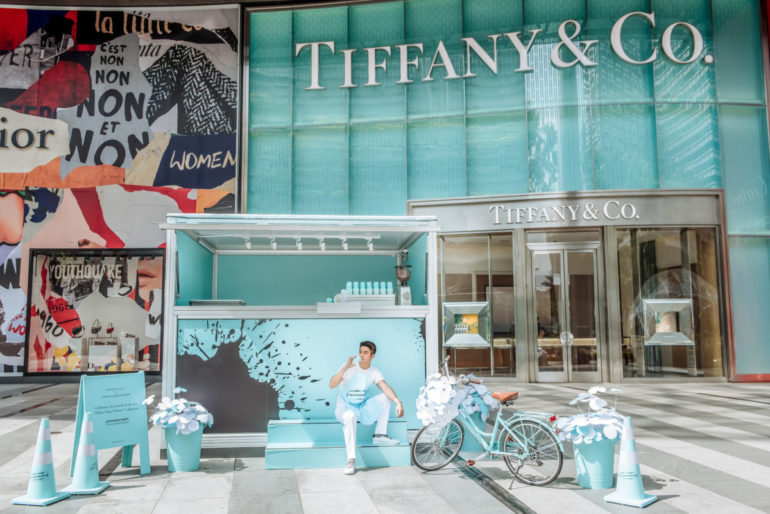
    Tiffany Singapore celebrates the launch of Tiffany True collection with Tiffany Blue benches in front of its stores.

    Tiffany Ion Orchard is its first location and other venues include Clifford Square, Ngee Ann City, Gardens by the Bay, Marina Bay Sands, Singapore River and Sentosa Cove.

    Visitors who post a creative photo with any of the benches and include the hashtags #TiffanySingapore #BelieveInLove on their social media will get a free rose ice-cream cone.

    Customized love poems are also available to all visitors.

    Tiffany True is described as “a more modern interpretation of the same ultimate expression of commitment”.

    “Tiffany True is a next-generation symbol of love and commitment, the next chapter into the future,” said Reed Krakoff, Tiffany & Co’s chief artistic officer.

    “It gives people a different choice that’s equally inspired and equally special.”

    Last year, Tiffany & Co partnered with local bakery brand Tiong Bahru Bakery to offer free coffee and croissants outside its Ion Orchard store.

  • Greater China delivers record sales numbers for Tiffany & Co

    Greater China delivers record sales numbers for Tiffany & Co

    Tiffany & Co has reported worldwide net sales rose by 7 per cent to a record US$4.4 billion last year, fuelled by solid growth across almost every Aian market.

    In Asia-Pacific, total net sales increased 13 per cent to $1.2 billion for the full year, with Greater China leading the charge. However, sales slipped 1 per cent to $316 million in the fourth quarter, largely due to a slowing of spending in Mainland China.

    Comparable sales rose 5 per cent during the full year and fell 3 per cent in the fourth quarter. In Japan, total net sales increased 8 per cent to $643 million in the full year and 3 per cent to $196 million in the fourth quarter. Comparable sales increased by 7 per cent and 3 per cent, respectively.

    The company’s net earnings for the full year benefited from a lower effective tax rate, rising to $586 million. 75 per diluted share.

    CEO Alessandro Bogliolo said softer trends in the second half of the year reflected, in part, what the company believes were external challenges and uncertainties.

    “Most important, we are still in the early stages of a journey to achieve long-term sales, margin and earnings growth for this legendary brand, and are making progress across our key strategic priorities. I continue to strongly believe that Tiffany has vast global growth opportunities and we look forward to realising our full potential in the future.”

    During the year, Tiffany opened 10 company-operated stores, closed four and relocated 10. As at the end of January, the company operated 321 stores (124 in the Americas, 90 in Asia-Pacific, 55 in Japan, 47 in Europe, and five in the UAE). There was a net gain of three in Asia.

  • Tiffany sales reported drops

    Tiffany sales reported drops

    US jewellery retailer Tiffany & Co has reported a 1 per cent drop in worldwide net sales and 2 per cent drop in comparable sales for the two months to December 31. While Tiffany sales grew strongly in China over the holiday period, softening in other markets that are more dependent on foreign tourist spending led total net sales across Asia Pacific to fall 3 per cent from the prior corresponding period to US$226 million. Comparable sales in the region fell 4 per cent.

    “With continued strong sales growth in mainland China (by a double-digit percentage), solid results in Japan and healthy growth in e-commerce sales, overall holiday sales results came in short of our expectations which had called for modest year-over-year growth,” Tiffany CEO Alessandro Bogliolo said.

    “We attribute the difference partly to lower sales to foreign (primarily Chinese) tourists globally, and to softening demand attributed to local customers in the Americas and Europe, which we believe may have been influenced more than expected by external events, uncertainties and market volatilities.”

    Total sales across the Americas declined 1 per cent to US$514 million, while Europe dropped 4 per cent to US$132 million.

    Japan, however, saw positive growth over the period of 4 per cent – increasing to US$150 million, attributed to higher spending by local customers.

    Based on these results, the business now expects worldwide net sales for fiscal 2018 will increase by 6 to 7 per cent compared to the prior year, as opposed to the high-single digits previously expected.

    “Now the focus is to grow to new heights,” Bogliolo said. “To this purpose, we will continue to pursue the six key strategic priorities we introduced earlier in 2018 … which will require our ongoing effort and commitment for years to come.

    “We acknowledge that external pressures, difficult year-over-year sales comparisons and annualised internal spending are expected to have some negative effects on fiscal 2019 results, mostly in the first half of the year, but we believe Tiffany is on a solid path for improved sales, margins, earnings and cash flow generation over the long term.”