Retail News CRM

Tag: Tiffany

  • Breakfast at Tiffany’s in Singapore pop-up store

    Breakfast at Tiffany’s in Singapore pop-up store

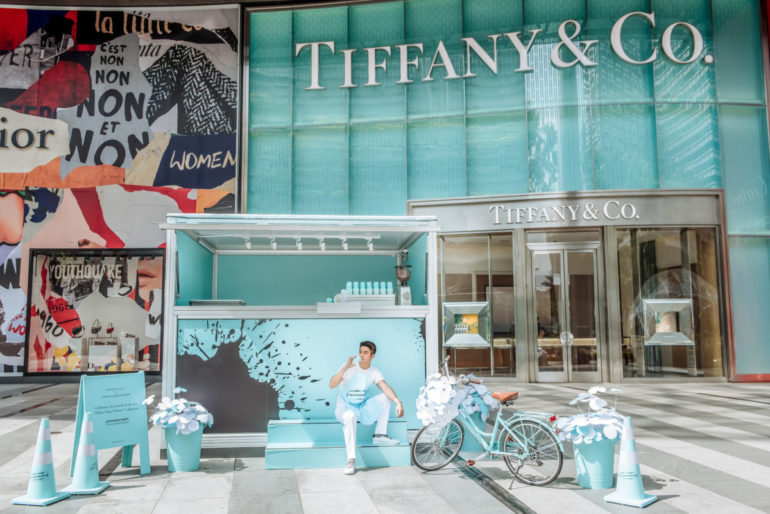
    Singapore locals can now have breakfast at Tiffany’s with a new pop-up for the iconic New York jeweller of the same name opening at ION Orchard mall this month.

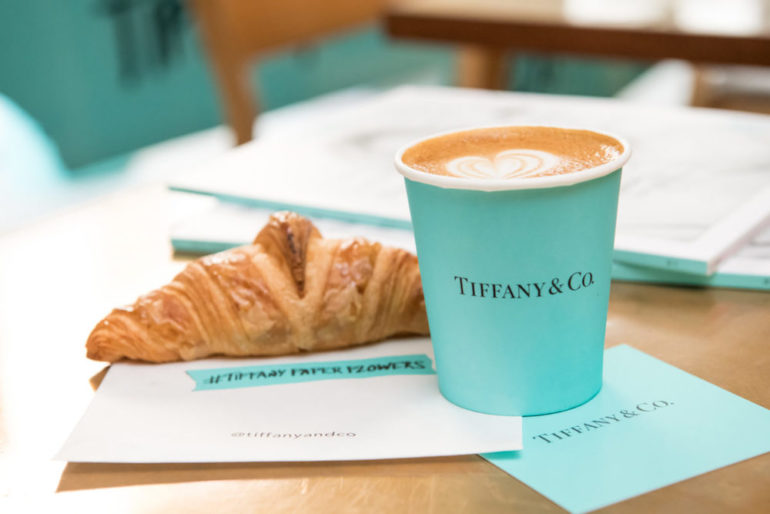
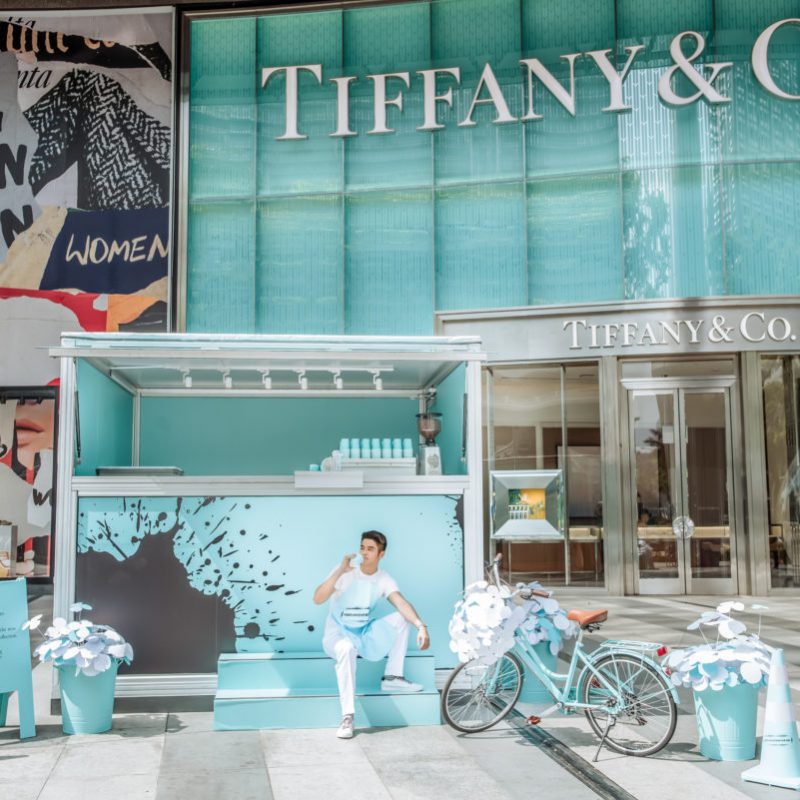
    The Audrey Hepburn-linked jeweller has taken over the Tiong Bahru Bakery located on Eng Hoon Street and will serve clients breakfast treats such as pastries and fresh coffee from the bakery all day.

    The bakery’s counter and seating area, as well as menus and signage has been decked out in the signature Tiffany’s blue just for the occasion. There is also a second pop-up, a smaller Tiffany blue coffee cart, inside the mall located right outside the jeweller’s store.

    The week long pop-up marks the launch of Tiffany & Co.’s ‘Paper Flowers’ collection, the first from the jeweller’s new creative director Reed Krakoff. The collection is fronted by the actress Elle Fanning.

    Inspired by paper flowers, the collection includes rings, necklaces and earrings, each design blooming in a flower motif to look like a paper flower.

    Prices range from S$4,100 for a pendant to S$565,000 for a necklace.

    The pop-ups can be found at Tiong Bahru Bakery, where items will be sold all-day long, and outside the Tiffany & Co.’s boutique at ION Orchard from 10am to 2pm.

    The Tiffany & Co.’s ‘Paper Flowers’ pop-up event runs from August 27 to September 3.

    Thereafter, the new ‘Paper Flowers’ collection is available at all Singapore stores and counters including ION Orchard, Ngee Ann City, Marina Bay Sands and Changi Airport.

  • Tiffany’s new strategy boosts sales in Asia-Pacific

    Tiffany’s new strategy boosts sales in Asia-Pacific

    An expanding Asian store network has helped New York jeweller Tiffany & Co achieve strong sales increases in the first half of this year.

    Tiffany sales in Asia-Pacific soared 28 per cent in the second quarter, to US$301 million and by the same rate in the first half, to $629 million.

    The company says same-store sales rose by 13 per cent in the first half.

    Management attributed the sales growth across greater China and most other Asian markets largely to higher spending by local customers and, to a lesser extent, spending by foreign tourists.

    In Japan, net sales increased 11 per cent to $155 million in the second quarter and 14 per cent to $305 million in the first half, with comparable sales rising 9 per cent and 12 per cent, respectively, mainly due to locals increasing their spending.

    CEO Alessandro Bogliolo said the company is still in the early stages of addressing its six key strategic priorities, and is pleased with initial customer reactions to its new communication, product and in-store initiatives.

    “We are pleased with our sales and earnings growth and the strength and breadth of the results in the first half of this year, but it is worth noting that strategic investment spending is increasing for the remainder of the year, as expected, which is intended to support longer-term sustainable growth.”

    Global results

    Globally, higher earnings in both periods resulted from broad-based growth in worldwide sales, increases in gross margin and lower effective tax rates, partly offset by higher investment spending. Worldwide second-quarter net sales rose 12 per cent to $1.1 billion, with comparable sales rising 8 per cent. Net earnings rose 26 per cent to $145 million.

    Worldwide first-half net sales increased 13 per cent to $2.1 billion, due to geographically broad-based growth and increases in all product categories; comparable sales increased 9 per cent. Net earnings increased 38 per cent to $287 million.

    The company is about to embark on its recently announced multi-year remodeling of the New York City flagship building.

    “We believe that the thoughtful combination of making short- and long-range strategic investments is necessary to achieve the full growth potential of this legendary brand,” said Bogliolo

    Tiffany sales in Asia-Pacific were partly boosted by rebounding spending on jewellery and luxury goods by Chinese mainland visitors to Hong Kong.

  • Tiffany & Co turns yellow cabs blue

    Tiffany & Co turns yellow cabs blue

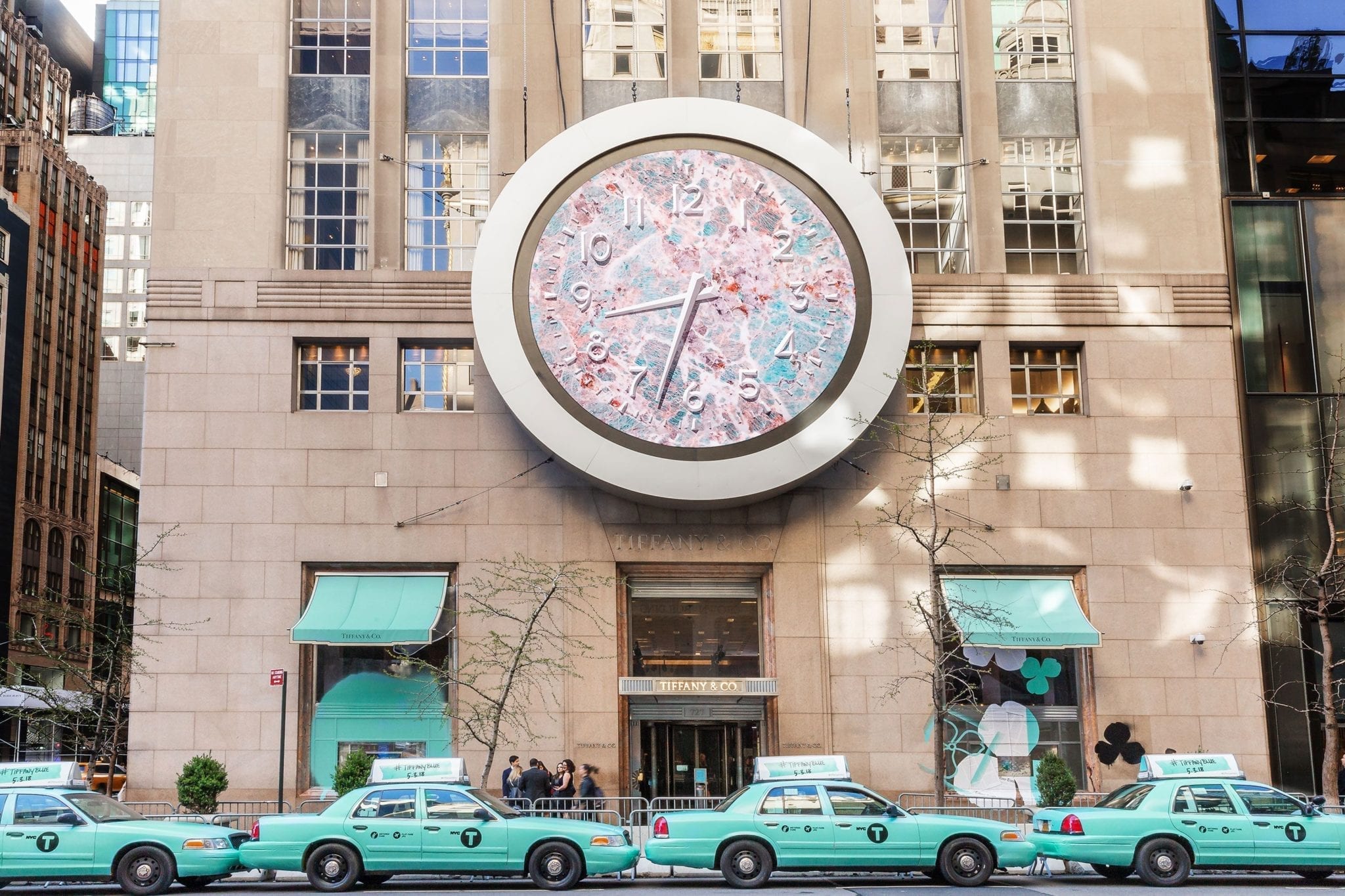
    Tiffany & Co has turned New York City’s yellow cabs to the jewellery brand’s trademark eggshell blue.

    Seven locations across the city have also been given the blue treatment, inspiring an Instagram scavenger hunt.

    The move celebrates chief artistic officer Reed Krakoff’s first jewellery collection for the label, themed around the iconic moment from the movie Breakfast at Tiffany’s in which Audrey Hepburn’s character stands in front of the store’s window with a coffee and croissant.

    The Atlas clock at the Fifth Avenue flagship store has also been transformed into a digital screen featuring behind-the-scenes footage and vignettes from a campaign film.

  • Tiffany post a strong growth in 2017

    Tiffany post a strong growth in 2017

    Tiffany & Co worldwide has finished its latest year with solid sales growth, both geographically and across product categories, says CEO Alessandro Bogliolo.

    Strong sales growth in Mainland China was offset by lower sales in most other countries.

    “We are focused on six strategic priorities,” says Bogliolo, as the American luxury jewellery revealed it fourth-quarter/full-year figures to the end of January.

    He lists the priorities as:

      • Amplifying an evolved brand message
      • Renewing product offerings and enhancing in-store presentation
      • Delivering an exciting omnichannel customer experience
      • Strengthening the firm’s competitive position and lead in key markets
      • Cultivating a more efficient operating model
      • Inspiring an aligned and agile organisation.
        Total net sales in Asia-Pacific grew by 10 per cent to US$1.1 billion for the full year and 13 per cent to $320 million in the fourth quarter; comparable store sales declined 1 per cent and rose 3 per cent respectively.

    Total net sales growth reflected higher wholesale and retail sales, says the jeweller, while on a comparable store sales basis, the full-year decline reflected strong sales growth in China offset by lower sales elsewhere.

    Meanwhile, fourth-quarter sales growth benefited from performance across Greater China. On a constant-exchange-rate basis, total sales rose 8 per cent in the full year and 9 per cent in the final quarter, with comparable store sales declining 2 per cent and 1 per cent respectively.

    In Japan, total net sales of $596 million in the full year were 1 per cent below the prior year, while sales in the fourth quarter rose 2 per cent to $189 million; comparable store sales declined 1 per cent and rose 1 per cent, respectively.

    Tiffany worldwide net sales increased 4 per cent during the year to $4.2 billion, reflecting sales growth in most regions and across most jewellery categories. Net earnings of $370 million were 17 per cent below the previous year’s $446 million.

    For the fourth quarter, worldwide net sales rose 9 per cent to $1.3 billion, resulting from growth in all regions and across all product categories; comparable store sales rose 3 per cent.

  • Celebrating Lunar New Year with offers from DFS

    Celebrating Lunar New Year with offers from DFS

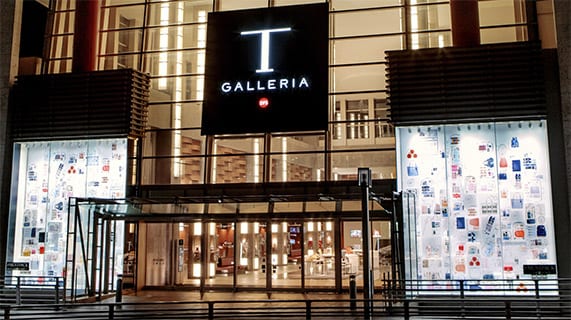
    To celebrate Lunar New Year and the arrival of the Year of the Dog, luxury travel retailer DFS Group will offer special promotions and interactive activities at certain T Galleria and DFS stores worldwide next month.

    There will also be exclusive offers from the group’s Give Joy Together gift guide.

    In-store activities will include a Pokemon Go-inspired game featuring the DFS Lunar New Year dog character Lolo. This will be available at T Galleria by DFS, Hong Kong, Canton Road; T Galleria Beauty by DFS, Hong Kong, Causeway Bay; and T Galleria by DFS, Angkor. It will also be at outlets in Hawaii and Sydney.

    Other activities include a Fortune Tree and Wishing Tree with lucky prize envelopes, and a personalised charm giveaway set for customers taking advantage of Give Joy Together promotions.

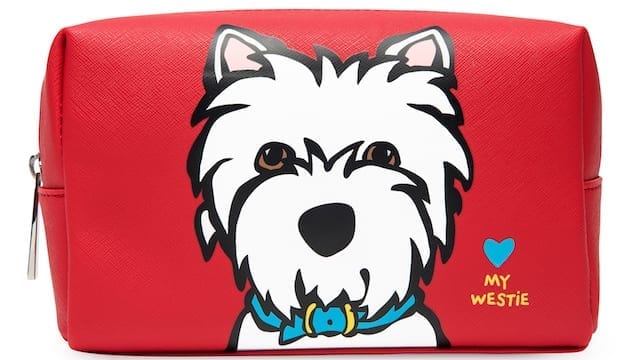
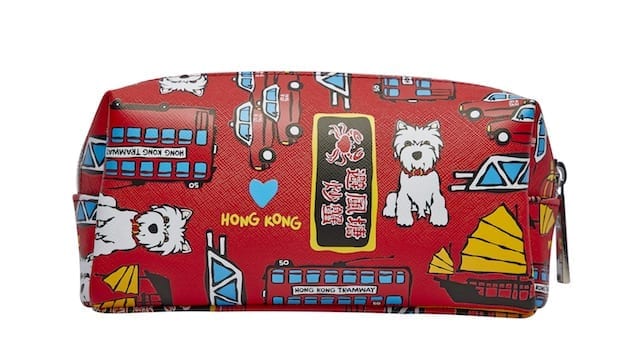
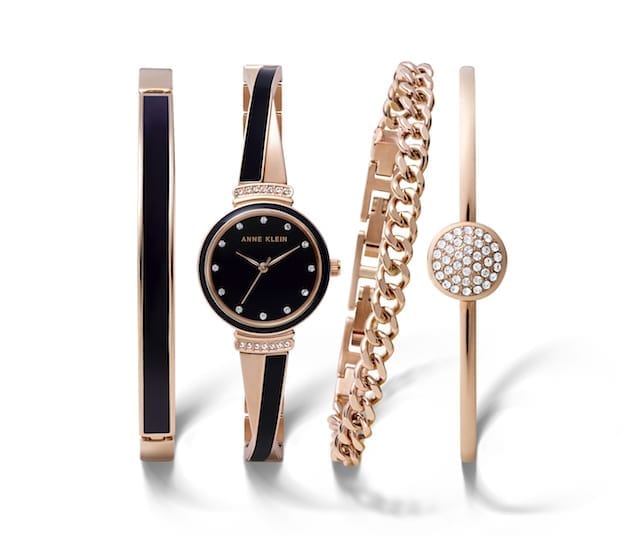
    Exclusive products for the month include: Anne Klein Blush women’s ceramic watch with Swarovski crystals; Bulgari Serpenti Twist Your Time, with either mother-of-pearl or red dial; Emporio Armani Connected touchscreen smartwatch; Estee Lauder limited-edition Pure Color Envy Sculpting Eye Shadow & Lipstick; Hamilton’s Ventura Elvis 80 automatic men’s watch with a complimentary exclusive Elvis Presley tote bag; Marc Jacobs exclusive tote bag; Marc Tetro Hong Kong Pug cosmetic bag and Westie tote bag; Swarovski Haves bracelet, pendant and earrings; and Tiffany & Co Keys Fleur de Lis Key and Keys Petals pendants.

  • Tiffany polishes up outlook on holiday sales rise

    Tiffany polishes up outlook on holiday sales rise

    Tiffany holiday season sales surged 16 per cent in Asia-Pacific, driven by strong performances in Hong Kong, Mainland China and Korea.

    The region accounted for US$232 million of Tiffany’s $1.05 billion global sales in the two months to December 31. The figures were driven by a 7 per cent increase in same-store sales, new store openings and an increase in wholesale turnover, the US-headquartered company said in a statement.

    Management attributed Asia-Pacific retail sales growth primarily to higher spending by local customers.

    On a constant exchange rate basis, total sales and comparable store sales increased 13 per cent and 4 per cent, respectively.

    In Japan, Tiffany holiday season sales increased just 1 per cent to $145 million and comparable store sales were unchanged. Management noted a difficult comparison to exceptionally strong growth in spending attributed to local customers in last year’s holiday period.

    In Europe, Tiffany holiday season sales rose 14 per cent to $136 million and in the Americas by 7 per cent.

    As at December 31, Tiffany operated 316 stores (125 in the Americas, 87 in Asia-Pacific, 54 in Japan, 46 in Europe, and four in the UAE), a net increase of two year-on-year.

    CEO Alessandro Bogliolo, said the company was pleased with the improvement in sales during the holiday period across all regions and categories, both instore and online.

    “While our major fashion jewellery collections continued to perform well, customers were equally excited about our fine jewellery, watches and our new home and accessories collection.

    “This recent return to growth in worldwide comparable store sales, fuelled by a substantial improvement in the Americas and Asia Pacific, is consistent with our commitment to generate solid and sustainable growth in sales, operating margin and earnings that is at least comparable to our industry peers over the long-term.”

  • When Tiffany gasps chasing in modern luxury retail

    When Tiffany gasps chasing in modern luxury retail

    At this time of year, New York City’s Fifth Avenue is a sparkling sea of holiday lights. There’s Cartier with its illuminated Panther; Harry Winston with its diamond-shaped orbs; and then there’s Tiffany, which seems to have decked its store with lights that Las Vegas discarded in the 1970s. It is a small point, but it is one that underscores the fact that parts of the Tiffany business remain firmly out of step with the modern world of luxury retail.

    Yet there is progress: only parts of the group are behind the curve. A year or so ago, the whole organisation appeared to be struggling to keep up, but a raft of initiatives have since helped to pull elements of the proposition into the 21st century.

    This work shows up in the latest numbers which continue along an improved trajectory. Total sales are up by a respectable 3 per cent, and while comparable sales remain in decline, it is encouraging to see this is no longer because of weakness in the North American market. On the bottom line, net income rose by 5.4 per cent.

    What has Tiffany done to engineer this improvement?

    The product has to be the starting point, with the greater emphasis on fashion and designer collections generating interest among younger consumer segments. The urban Tiffany HardWear range has performed particularly well, while Elsa Peretti’s assortment of pieces has added a gentler contemporary edge to the offer.

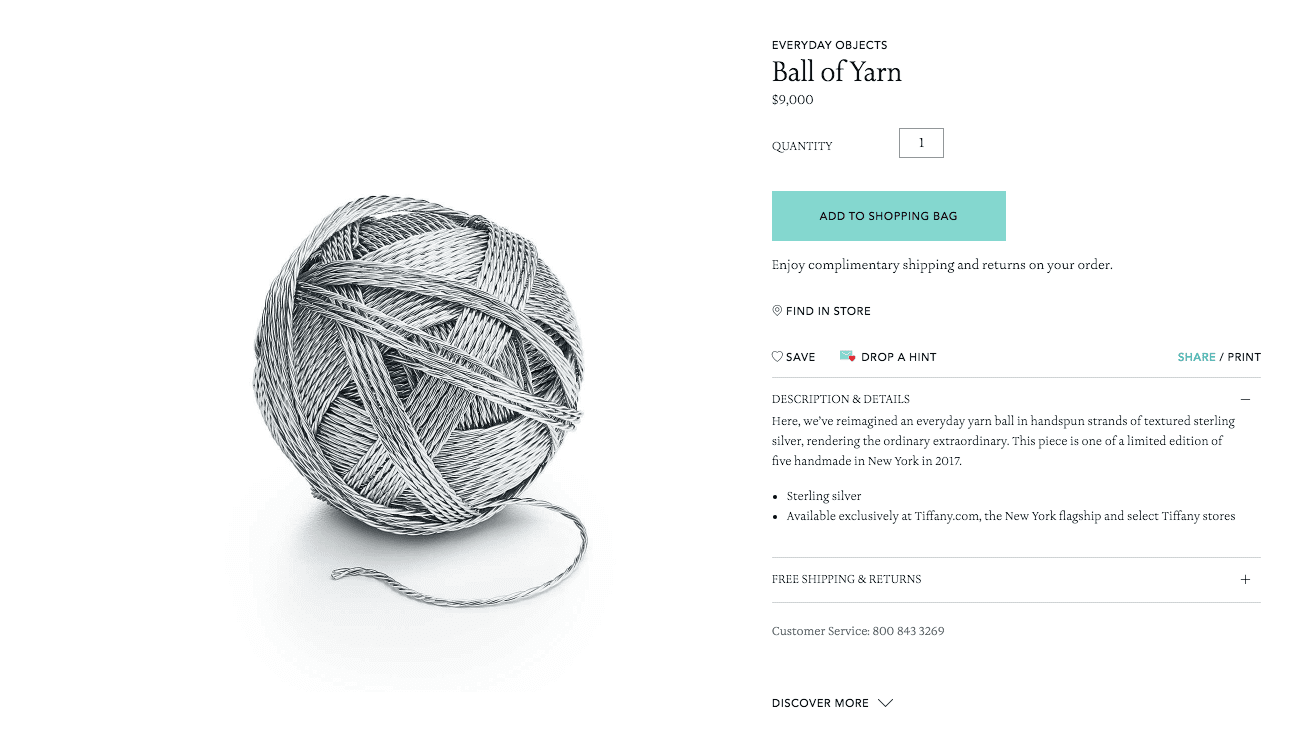
    Tiffany has recently followed up this success with the whimsical Everyday Objects collection of decorative accents. It is unlikely that the $9000 sterling silver ball of yarn nor the $1000 silver tin can will be to everyone’s taste or budget, although they generated some favorable publicity for the brand.

    Behind these headline items, more accessible pieces like the bone china ‘paper’ cups at $95 are likely to attract more interest. The point is that Tiffany is trying something new and is grabbing the attention of shoppers.

    As well as using its products to showcase the brand, Tiffany has also upped its game in general marketing and advertising. These have been more in vogue than past campaigns, and the use of celebrities like Janelle Monáe, Zoë Kravitz, & St. Vincent (Annie Clarke) is helping consumers to see the brand in a new, more modern light.

    Moving online

    One interesting consequence of this gentle repositioning is that many of the younger shoppers Tiffany is starting to attract are going online rather than into stores. This has resulted in some robust e-commerce numbers. It is to Tiffany’s credit that it has responded by improving the website experience and by increasing the amount of content across its platforms.

    This outperformance of online is likely to continue, which presents a dilemma to Tiffany. Many of its stores are in desperate need of refurbishment and ideally, need to be brought up to the same standard as the new Union Square shop in San Francisco. This is an expensive undertaking and one that the group may struggle to justify if more sales are migrating online.

    The new Blue Box Cafe in the New York flagship is a smart way of pulling people into the store, but this initiative can’t be easily replicated across the estate. Moreover, it is a shame to draw people into a shop that still feels dated and fusty.

    Despite all the progress, further change, especially in stores, is essential. For as much as Tiffany has made strides, it has not yet regained that full youthful vigour that so many of its peers exhibit. The gaudy, old-fashioned lights on its New York store underscore that there is much more thinking, and much more work, to do in the reinvention of this heritage brand.

  • Tiffany & Co beats Wall St forecast

    Tiffany & Co beats Wall St forecast

    New York-based luxury jeweller Tiffany & Co has reported improved second-quarter results, with its sales and net income both posting gains, beating Wall Street expectations.

    Tiffany’s on Thursday reported a net income of $US115 million, or 92 US cents per share, compared with $US105.7 million, or 84 US cents per share, a year ago.

    The average estimate of 10 Wall Street analysts surveyed by Zacks Investment Research was for earnings of 88 US cents per share.

    The company posted revenue growth of three per cent to US$959.7 million in the period, also exceeding Wall Street forecasts. Six analysts surveyed by Zacks expected US$933.2 million. Tiffany credited the growth to higher sales of wholesale diamonds, stronger wholesale sales in Asia-Pacific and strong e-commerce sales growth.

    However, sales in stores open at least a year, a key metric of a retailer’s health, declined two per cent during the quarter.

    Jefferies analyst Randal Konik said the results show Tiffany’s stores in the Americas are stabilising, and high-margin fashion jewellery sales are gaining momentum.

    Tiffany officials said customer traffic returned to normal levels at the chain’s flagship New York store that experienced disruption last fall because of security around President Donald Trump’s personal home and offices on the same block.

    For the full fiscal year, the retailer forecast growth in its adjusted earnings per share in the mid-single-digits-percentage with sales up in the low-single-digit percentage.

    Tiffany shares ended Thursday down US$1.17, or 1.3 per cent, at US$87.55. They have climbed 13 per cent since the beginning of the year, while the Standard & Poor’s 500 index is up 9 per cent. The stock has increased 27 per cent in the last 12 months.

    Neil Saunders, managing director of GlobalData Retail, said Tiffany’s more positive results show the early promise of progress at a company that has often struggled to remain relevant in the modern era of retail.

    “That said, there are still some areas of residual softness, especially in terms of same-store sales and particularly across the Americas,” Saunders said. “As Tiffany management recognizes, there is a lot more work to do before the company is back on the ground of firm, sustainable growth.”

    Saunders said one of the more promising areas of progress is the company’s attempts to better connect with younger consumers – a constituency with which it had lost traction. Some of this is down to improved product – with the more contemporary, fashion-focused “Return to Tiffany” collection of silver jewelry having been well received. Collections by designers like Elsa Peretti and Paloma Picasso have also stimulated interest and have added a much-needed contemporary edge to Tiffany’s product mix.

    “With improvements to the assortment, Tiffany also understands that it needs to communicate to younger shoppers to increase the resonance of the brand,” Saunders said. “Here we are encouraged by marketing campaigns, including fall advertising featuring Janelle Monáe, Zoë Kravitz, & St. Vincent (Annie Clarke). These campaigns have a much more modern feel and successfully highlight the changes that are being made on the product front.”

    According to Saunders, it will take time for the changes to percolate through to customers and to drive sales – not least because jewelry is an infrequent purchase.

    “However, we are pleased that Tiffany has made the changes in time for the important holiday season and believe the chain will reap some rewards over the final half of its fiscal year.”

    Saunders said one of the areas where they have long been critical is store design. While they are neat and well maintained, he said, many of Tiffany’s stores look old fashioned and, for the younger consumer, can be intimidating. In essence, they convey a message of old-world luxury which is increasingly at odds with what consumers want and with what many competitors are delivering.

    “The company now seems to have recognized this with the ongoing remodeling of some of its main stores,” he added.

    Saunders said the Union Square shop in San Francisco, which was redesigned earlier in the year, has been well received and is delivering results.

    “In our view, the design strikes exactly the right balance between something that feels youthful and modern but which maintains an air of exclusivity and luxury,” he said. “If this thinking can be rolled out to other stores, including non-flagship locations, we believe Tiffany can make real progress in terms of driving up same-store numbers.”

    He added for all of the advancements, there is much more to be done, and Tiffany remains a work in progress.

    “However, we believe that there is now a sense of momentum and energy at the company that was simply not there a few years ago. The new management team is responsible for this, and the recent appointment of Alessandro Bogliolo as CEO should ensure that change continues at pace.”

  • ‘Tiffany’ rings cost Costco $19.4m

    ‘Tiffany’ rings cost Costco $19.4m

    US wholesaler Costco is facing a $19.4m  bill for damages after jewellery chain Tiffany sued it for infringing its trademark by selling “Tiffany” engagement rings.
    The ruling by a US district judge is the latest twist in a long-running legal battle going back to 2013.

    Costco, which is to appeal against the decision, argues that “Tiffany” is now a generic term for the rings.

    But it has now been told it must call them “Tiffany-style” instead.

    The dispute centres on the sale of solitaire-style rings, comprising a diamond mounted on a single band with six prongs.

    Costco, which had sold 2,500 of them, put them on display with the label “Tiffany”, although they were not in fact made by the jeweller.

    An earlier court ruling in October 2016 ordered Costco to pay $5.5m in compensatory damages and $8.25m in punitive damages.

    But in a further court decision on Monday, the compensation was increased to $11.1m, while the amount of punitive damages still stands.

    Kate Swaine, a partner at law firm Gowling WLG, said: “This damages award may seem excessive given that only 2,500 products were sold, but if it can be argued that an infringement is blatant and where it relates to such a well-known brand, the claimant is entitled to seek punitive damages.

    “Brand owners will welcome this decision as an indication of the risk that third parties run in trying to make associations with famous brands.”

    The cheapest engagement ring on Tiffany’s US website currently costs $12,000 (£9,300) while customers can buy one from Costco’s website for only $380 (£295).

  • Tiffany & Co. opens Hong Kong airport pop-up

    Tiffany & Co. opens Hong Kong airport pop-up

    Tiffany & Co. has opened its Hong Kong international airport pop-up store earlier this month.

    Located at Shop 6E188A, Departures East Hall on Level 6 of Terminal 1, the temporary boutique is situated right next to the famous New York jeweller’s standalone airport store.

    Inside, the pop-up store is divided by floor-to-ceiling glass panels, to increase openness and light. From a bird’s eye view, the store is designed like a diamond and is mostly white, with graphic embellishments coloured in the house’s signature Tiffany blue.

    Moreover, the store hosts special Tiffany’s collections, which will be launched consecutively to maintain interest in the store. First up, is the Wedding Diamond Series, followed by the themes Stylish Accessories, Christmas Season and Valentine’s Day.

    The new Tiffany’s pop-up serves as a convenient second shopping avenue for departing travellers leaving Hong Kong, in particular, tourists returning to mainland China.

    Hong Kong’s visitor numbers increased 1.9% in April 2017 on the same month last year, according to data from Hong Kong Tourism Board. Mainland Chinese visitor numbers increased 1.8%, while non-mainland visitor numbers lifted 2.2%, said HKTB.

  • China drives Tiffany Asia sales growth

    China drives Tiffany Asia sales growth

    Tiffany Asia sales rose 9 per cent on the back of new store openings in 2016, with a solid fourth quarter balancing out a difficult year.

    In the Asia-Pacific region, total sales of US$1 billion in the full year were approximately equal to the prior year and total sales of $284 million in the fourth quarter were 9 per cent up on 2015 as the company benefited from store network expansion.

    Tiffany Asia opened four new stores last year and another in Japan, taking its network to 85 in Asia-Pacific and 55 in Japan. Globally, it opened 11 and closed five.

    Same-store sales declined 9 per cent for the full year, but 2 per cent in the final quarter. On a constant-exchange-rate basis, total sales rose 1 per cent in the full year and 10 per cent in the fourth quarter, while comparable store sales declined 7 per cent and 1 per cent, respectively.

    “During the year, management attributed performance in this region to increased purchasing by local customers and declines in spending by foreign tourists. In addition, there was strong retail sales growth in China, increased wholesale sales in Korea, a decelerating rate of retail sales decline in Hong Kong and varying performance in other countries,” Tiffany said in its results announcement.

    In Japan, total sales rose 12 per cent to $604 million in the full year and 15 per cent to $185 million in the fourth quarter; comparable store sales increased 16 per cent and 19 per cent, respectively, while wholesale sales declined in both periods.

    On a constant-exchange-rate basis, total sales in the full year were approximately equal to the prior year while total sales in the fourth quarter were 8 per cent above the prior year with comparable store sales growth of 5 per cent and 12 per cent, respectively, partly offset by a decline in wholesale sales. Management attributed sales growth in both periods to higher spending by local customers, with declines in spending by Chinese tourists.

    Worldwide results

    Worldwide quarterly net sales increased 1 per cent to $1.2 billion and same-store-sales were unchanged from the prior year. Net earnings were $158 million, compared with $163 million in the prior year.

    For the full-year, sales reached $4 billion, down 3 per cent on 2015, reflecting a 5 per cent decline in same-store-sales. Performance was generally soft across all jewellery categories. On a constant-exchange-rate basis net sales and comparable store sales declined 3 per cent and 5 per cent respectively.

    Net earnings were $446 million, compared with the prior year’s $464 million.

    Chairman and interim CEO Michael J Kowalski said the company expects the macroeconomic and geopolitical challenges of the past year to continue in 2017.

    “We strongly believe that Tiffany’s strategies are sound and that we have meaningful growth opportunities. Our management team is focused on accelerating the execution of our strategies to deliver extraordinary products, communications and experiences that will delight our customers around the world. Through strong leadership and this accelerated execution, we believe we are well-positioned to deliver attractive total shareholder return over the long-term,” he said.

    Tiffany “failing to connect”

    Analyst Neil Saunders, MD of GlobalData Retail, said while Tiffany sales in the final quarter were soft, they at least indicate the declines which have plagued the company for a long period are starting to level off.

    But he maintains a lot of work lies ahead to reconnect with customers.

    “Although the business is making some progress, that progress is patchy and does not indicate a company that is back to full health. Indeed, under the detail of the numbers it is clear that Tiffany still has issues in a number of regions, including the Americas and Europe.

    “Part of the decline in the Americas is down to lower tourist spend which is impacting some flagship stores; that said, trend is now starting to dissipate and the effect on results is only slight compared to where it was at the start of the year. However, in the final quarter this was exacerbated by disruption at the Fifth Avenue flagship store which, due to its proximity to Trump Tower, saw customer traffic dip by around 14 per cent over November and December, and sales drop by 7 per cent in the final quarter. Given that this store usually contributes almost a tenth of company sales, it is reasonable to attribute some of the decline to this exceptional factor,” Saunders said.

    “The troubles, however, run wider than flagships and tourists. Tiffany is a brand that is increasingly overlooked by American consumers, especially younger demographics. Just as was the case at the start of the year, Tiffany is still failing to connect with many shoppers segments and continues to lose ground to rivals.”

    Saunders says jewellery has become a less-significant holiday purchase.

    “Jewellery is no longer at the top of the Christmas list. For a brand like Tiffany, where lavish gifting is an important driver of buying, such a trend is distinctly unhelpful.”

    Looking ahead, he says, it is clear Tiffany wants to re-establish its relevance and to project a much more distinctive image.

    “The advertising during the Super Bowl, which highlighted Lady Gaga as the face of the brand, was a good start. However, it is not enough: it needs to be accompanied by a step change in products, store environments, and the general approach to selling. There is a need for a more fundamental and deeper shift in the brand’s direction.

    “Fortunately, recent changes made to the management team, including the appointment of Reed Krakoff as chief artistic officer and the hiring of three new board members, should act as a catalyst for this change.”
  • Tiffany CEO in shock resignation

    Tiffany CEO in shock resignation

    Tiffany CEO Frederic Cumenal has stepped down, effective immediately.

    Cumenal assumed the role just last April after a long transition to replace previous CEO Michael Kowalski, who is now chairman, Kowalski will take back the role while a search gets underway for a permanent replacement.

    The iconic US jewellery retailer is facing a raft of challenges. Weak holiday sales impacted on its share price, its top designer departed three weeks ago and turnover in its flagship store in Manhattan has been impacted by increased security procedures for the neighbouring Trump Tower.

    Abroad, tourist spending has slumped and the high US dollar value has impacted on sales revenues in its native currency.

    In a statement, Tiffany was complimentary about Cumenal.

    “On behalf of the entire board…, I would like to thank Frederic Cumenal for his contributions to Tiffany,”Kowalski said. “At a time of continuing challenges in the global luxury market, Frederic has enhanced the management team and taken important steps to position Tiffany for success in the long term. We wish him the best in his future endeavors.”

    Kowalski said the board was disappointed by recent financial results, but remained committed to its current core business strategies.

    “The board believes that accelerating execution of those strategies is necessary to compete more effectively in today’s global luxury market and improve performance. As such, we remain focused on enhancing the customer experience, increasing the rate of new product introductions and innovation, maximising marketing effectiveness, optimising the store network, and improving our business operations and processes, all while efficiently managing our capital and costs.

    “We believe these initiatives and the pace of their execution are key to driving shareholder value,” he said.

    Cumenal said he had great confidence in Tiffany’s brand, strategic direction and people. “I believe the company will have many exciting opportunities in the future.”

  • Tiffany progress more technical than strategic

    Tiffany progress more technical than strategic

    Following on from a very weak second quarter, it is pleasing to see Tiffany nudge back into growth on a total sales basis.

    The 1 per cent uplift is modest, but it is far better than the string of poor numbers the company has been posting for well over a year. That said, the figures do not show that all the problems at Tiffany have been resolved. Indeed, part of the increase is attributable to the very easy comparatives from the prior year; and part is down to the strength of the yen against the dollar, which aided performance in Japan. These are rather technical gains, and are not growth produced by a sound underlying strategy.

    That Tiffany still has issues is demonstrated by the Americas figures, where sales declined by 2 per cent on both a total and comparable basis. This comes off the back of a 7 per cent and 9 per cent decline in total and same store sales in the prior year.

    Notably, the impact of the strong dollar on sales to tourists at Tiffany’s flagship stores now seems to have dissipated and annualised out; if anything, the company noted that tourist sales were relatively strong over the quarter.

    This dynamic means the blame for the dip comes, primarily, from domestic demand. Here, Conlumino’s data shows that Tiffany continues to suffer from a decline in both the number of American consumers who consider it for jewellery purchases as well as the proportion who end up buying from it. In a category like jewellery, where purchases are relatively infrequent, not being firmly on the consumer radar is an issue as it gives Tiffany little opportunity to recapture ‘lost’ spending.

    There is an argument to be made that as US department stores see customer traffic weaken, Tiffany should be picking up some trade – at least for mid to higher end purchases. However, this does not seem to be happening. Instead, consumers are migrating to more contemporary premium brands, as well as to custom and direct-to market-players like Blue Nile – which was recently acquired by Bain Capital.

    These represent the new growth spots of consumer demand in jewellery – spots to which Tiffany, with its ‘old world’ image do not have immediate and ready access.

    Thankfully for Tiffany, its weak performance in the US was not replicated elsewhere this quarter. Sales in Asia-Pacific rose by 4 per cent, after a better performance in China. However, comparable sales in the region are still in decline, not helped by continued slides in Hong Kong and Australia. Japan also saw some strong uplifts, with a 13 per cent increase in total sales. However, these were a function of the strong yen and once this impact is removed sales dipped by 4 per cent on a constant currency basis.

    While sales in Japan benefitted from a favorable exchange rate, Europe had no such tailwind. The depreciation of sterling and the euro saw sales decline by 10 per cent on a total basis and by 14 per cent on a same-store basis. Even so, underlying demand in the region – like in the US – remains soft.

    Tiffany has a lot more work to do before it gets into sustainable growth.

  • Asia leads Tiffany sales decline

    Asia leads Tiffany sales decline

    Asia has led a decline in global sales for US jeweller Tiffany & Co in both the first half year and the second quarter periods to July 31.

    Same-store Tiffany sales plunged 13 per cent in the six months in Asia-Pacific – excluding Japan where they rose 10 per cent, but fell on a constant currency basis.

    Sales growth in China and Korea was offset by a continuation of significant declines in Hong Kong and more moderate declines in most other markets, the company reported.

    Same-store North America sales declined 9 per cent in the six months, largely due to declining spending by Chinese tourists in the US.

    “The global environment continues to reflect well known challenges that we believe have had broad effects on spending by local customers, as well as foreign tourists, especially from China,” said CEO Frederic Cumenal.

    “We are managing expenses efficiently, but also maintaining our marketing spending as a percentage of sales and continuing to invest in key strategic initiatives and opportunities to further strengthen Tiffany’s competitive position among global luxury brands.”

    In the Asia-Pacific region, total sales of US$230 million in the second quarter and US$469 million in the first half were down 6 per cent and 7 per cent, respectively, and comparable store sales declined 12 per cent and 13 per cent. On a constant-exchange-rate basis, total sales and comparable store sales declined 3 per cent and 9 per cent in the second quarter and 4 per cent and 11 per cent in the first half.

    During the second quarter, worldwide net sales declined 6 per cent to $932 million and comparable store sales declined 8 per cent. Net earnings rose 1 per cent to $106 million, in the prior year. Net earnings declined 5 per cent from the prior-year period’s $111 million, which excludes a specific charge in that period.

    In the first half, worldwide net sales of $1.8 billion were down 7 per cent and comparable store sales declined 9 per cent. On a constant-exchange-rate basis, worldwide net sales and comparable store sales declined 6 per cent and 9 per cent, respectively.

    Net earnings for the half year were $193 million.

    Gross margin increased to 61.9 per cent in the second quarter and 61.6 per cent in the first half, due to lower product input costs, changes in product sales mix and price increases taken in the past year.

  • Ralph Lauren sales tumble

    After a slight uptick in performance at the close of last year, Ralph Lauren sales have tumbled.

    Compared to 2015 – when total revenues declined by 5 per cent, wholesale by 9 per cent, and retail by 3 per cent – the latest sales figures are decidedly weak.

    In the first quarter of the new fiscal year, net revenues fell for a fifth straight quarter, dropping 4 per cent to US$1.6 billion

    The wholesale numbers are wholly understandable and are thanks, in large part, to the car-crash that is the American department store channel. While Ralph Lauren has representation in stores like Macy’s the fact that its sales areas look like a flea-market do nothing to help the brand or its revenues. This is further exacerbated by the generally weak customer traffic at department stores across the past few months.

    The retail numbers are much more of a disappointment, and a concern given that this division delivers the largest chunk of revenue. Ralph Lauren has been keen to emphasise its Way Forward Plan, which it says is changing the operational structure of the business so that it can deliver growth. As much as many of the actions are prudent, it feels like the company has been turning itself around in perpetuity. At some point, these actions need to deliver growth – something they are currently failing to do at either the sales level, or on the bottom line where the company posted a $31 million operating loss for the quarter.

    Decisive action is needed to put the brand on the right track. This includes withdrawing from department stores like Macy’s which are now actively damaging the Ralph Lauren brand, and focusing only on more upscale department stores like Nordstrom and Neiman Marcus as sales channels.

    A proper brand review is also needed as Ralph Lauren has become muddled and confused and is simply not competing effectively against brands like Vineyard Vines, which have good traction with younger, high spending consumers. Some action has already been taken to simplify the brand structure but much more clarity is needed in communicating the various parts of the offer to consumers. At present the various parts of Ralph Lauren are too hit and miss.

    Reconnecting with younger consumers is also a priority. Rather like Tiffany, Ralph Lauren is seen as an older, established brand that, while not actively disliked, is less relevant than it was a generation ago. Spin-offs like Club Monaco and RRL have helped to remedy this, but the company needs to put more energy and effort around extending and expanding their reach.

    That said, current plans should deliver some cost savings over the course of this fiscal as operations are streamlined. However, expect the plan’s impact on revenue to be negative across at least the next quarter.

    • Håkon Helgesen is a retail analyst at Conlumino.