
Tag: Tiffany

  • Asia leads Tiffany sales decline

    Asia leads Tiffany sales decline

    Asia has led a decline in global sales for US jeweller Tiffany & Co in both the first half year and the second quarter periods to July 31.

    Same-store Tiffany sales plunged 13 per cent in the six months in Asia-Pacific – excluding Japan where they rose 10 per cent, but fell on a constant currency basis.

    Sales growth in China and Korea was offset by a continuation of significant declines in Hong Kong and more moderate declines in most other markets, the company reported.

    Same-store North America sales declined 9 per cent in the six months, largely due to declining spending by Chinese tourists in the US.

    “The global environment continues to reflect well known challenges that we believe have had broad effects on spending by local customers, as well as foreign tourists, especially from China,” said CEO Frederic Cumenal.

    “We are managing expenses efficiently, but also maintaining our marketing spending as a percentage of sales and continuing to invest in key strategic initiatives and opportunities to further strengthen Tiffany’s competitive position among global luxury brands.”

    In the Asia-Pacific region, total sales of US$230 million in the second quarter and US$469 million in the first half were down 6 per cent and 7 per cent, respectively, and comparable store sales declined 12 per cent and 13 per cent. On a constant-exchange-rate basis, total sales and comparable store sales declined 3 per cent and 9 per cent in the second quarter and 4 per cent and 11 per cent in the first half.

    During the second quarter, worldwide net sales declined 6 per cent to $932 million and comparable store sales declined 8 per cent. Net earnings rose 1 per cent to $106 million, in the prior year. Net earnings declined 5 per cent from the prior-year period’s $111 million, which excludes a specific charge in that period.

    In the first half, worldwide net sales of $1.8 billion were down 7 per cent and comparable store sales declined 9 per cent. On a constant-exchange-rate basis, worldwide net sales and comparable store sales declined 6 per cent and 9 per cent, respectively.

    Net earnings for the half year were $193 million.

    Gross margin increased to 61.9 per cent in the second quarter and 61.6 per cent in the first half, due to lower product input costs, changes in product sales mix and price increases taken in the past year.
  • Ralph Lauren sales tumble

    After a slight uptick in performance at the close of last year, Ralph Lauren sales have tumbled.

    Compared to 2015 – when total revenues declined by 5 per cent, wholesale by 9 per cent, and retail by 3 per cent – the latest sales figures are decidedly weak.

    In the first quarter of the new fiscal year, net revenues fell for a fifth straight quarter, dropping 4 per cent to US$1.6 billion

    The wholesale numbers are wholly understandable and are thanks, in large part, to the car-crash that is the American department store channel. While Ralph Lauren has representation in stores like Macy’s the fact that its sales areas look like a flea-market do nothing to help the brand or its revenues. This is further exacerbated by the generally weak customer traffic at department stores across the past few months.

    The retail numbers are much more of a disappointment, and a concern given that this division delivers the largest chunk of revenue. Ralph Lauren has been keen to emphasise its Way Forward Plan, which it says is changing the operational structure of the business so that it can deliver growth. As much as many of the actions are prudent, it feels like the company has been turning itself around in perpetuity. At some point, these actions need to deliver growth – something they are currently failing to do at either the sales level, or on the bottom line where the company posted a $31 million operating loss for the quarter.

    Decisive action is needed to put the brand on the right track. This includes withdrawing from department stores like Macy’s which are now actively damaging the Ralph Lauren brand, and focusing only on more upscale department stores like Nordstrom and Neiman Marcus as sales channels.

    A proper brand review is also needed as Ralph Lauren has become muddled and confused and is simply not competing effectively against brands like Vineyard Vines, which have good traction with younger, high spending consumers. Some action has already been taken to simplify the brand structure but much more clarity is needed in communicating the various parts of the offer to consumers. At present the various parts of Ralph Lauren are too hit and miss.

    Reconnecting with younger consumers is also a priority. Rather like Tiffany, Ralph Lauren is seen as an older, established brand that, while not actively disliked, is less relevant than it was a generation ago. Spin-offs like Club Monaco and RRL have helped to remedy this, but the company needs to put more energy and effort around extending and expanding their reach.

    That said, current plans should deliver some cost savings over the course of this fiscal as operations are streamlined. However, expect the plan’s impact on revenue to be negative across at least the next quarter.

    • Håkon Helgesen is a retail analyst at Conlumino.
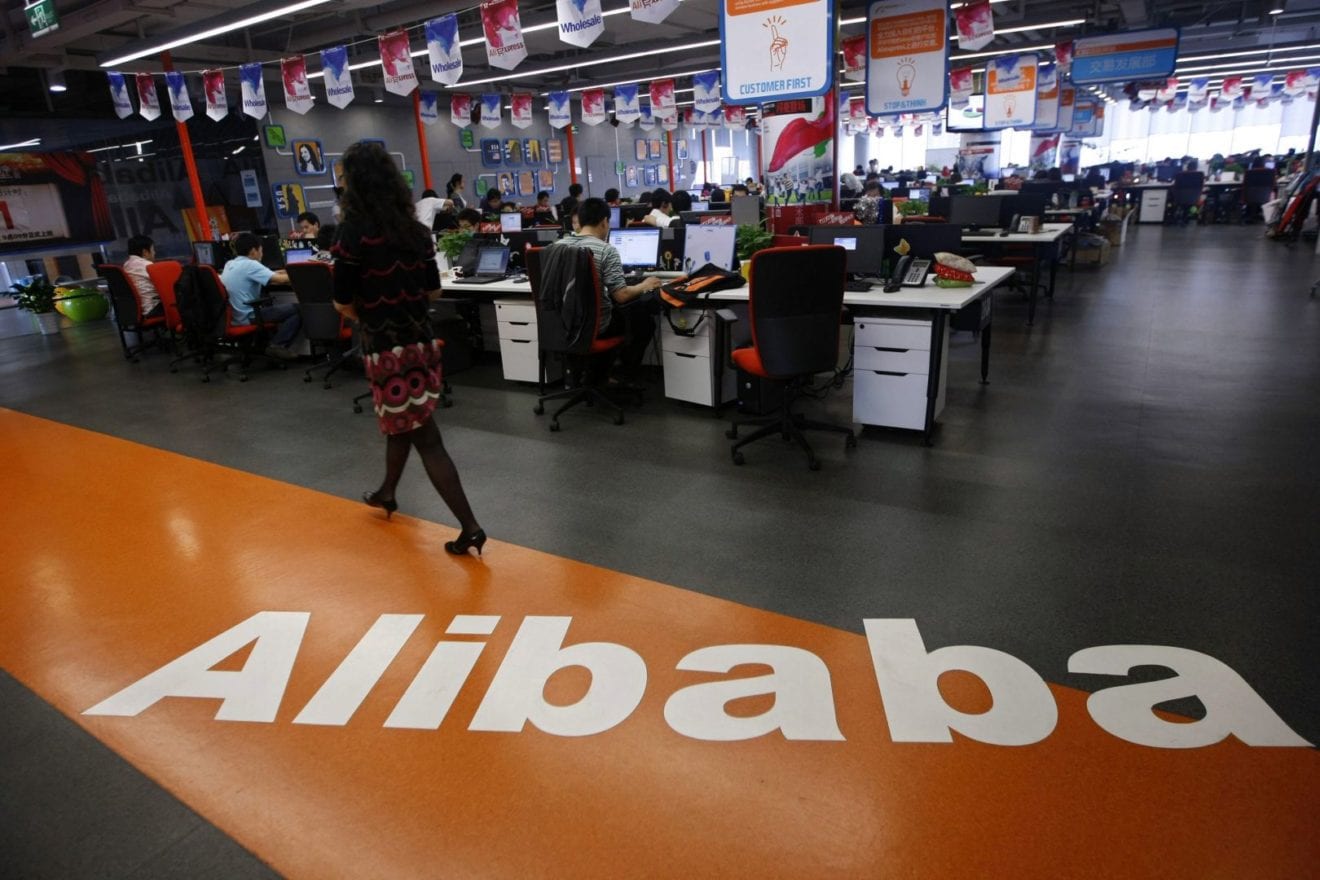
  • Alibaba suspended from counterfeit-fighting group

    Alibaba suspended from counterfeit-fighting group

    After Alibaba had its IACC membership suspended, founder Jack Ma has cancelled his keynote address to the counterfeit-fighting group’s conference.

    Ma was to have been a drawcard speaker at this week’s two-day annual spring conference of the International AntiCounterfeiting Coalition (IACC) in Orlando, Florida, an event that attracts more than 500 leaders from business, law, security and government.

    His move also follows Alibaba Group and the coalition creating the IACC MarketSafe Expansion Program last week. The original program was created by Alibaba and the IACC in 2013 in recognition of the counterfeiting problem being too pervasive and complex for any single company or industry to fight alone.

    Alibaba last month became the world’s first eCommerce company to join the IACC, the largest non-profit organisation dedicated to combating product counterfeiting and piracy. At least three members of the Washington-based coalition, including board member Tiffany & Co, quit the group in protest and others threatened to leave after Alibaba was admitted as a member. The IACC suspended the new category in which Alibaba had been admitted, effectively terminating its membership.

    Alibaba Group president Michael Evans has stepped in to speak at the conference instead.  Alibaba international corporate communications head Jennifer Kuperman repeated that the company is “firmly committed to the protection of ­intel­lectual property rights and combating counterfeits”.

    On the same day Ma cancelled his conference appearance, he had lunch with US President Barack Obama at the White House, telling reporters afterward that the meeting had been “very good”.

    Among the brands that quit the IACC in protest was Michael Kors, which blasted the organisation for providing “cover to our most dangerous and damaging adversary”.

    Michael Kors was followed out by Gucci.

    Alibaba has meanwhile hired an army of employees to weed out fake brands from its website. It has also called for comprehensive changes at the IACC so it can counter trends and new technology in counterfeiting “instead of being held captive by some members’ interests”.

  • Singapore retail rents fall

    Singapore retail rents fall

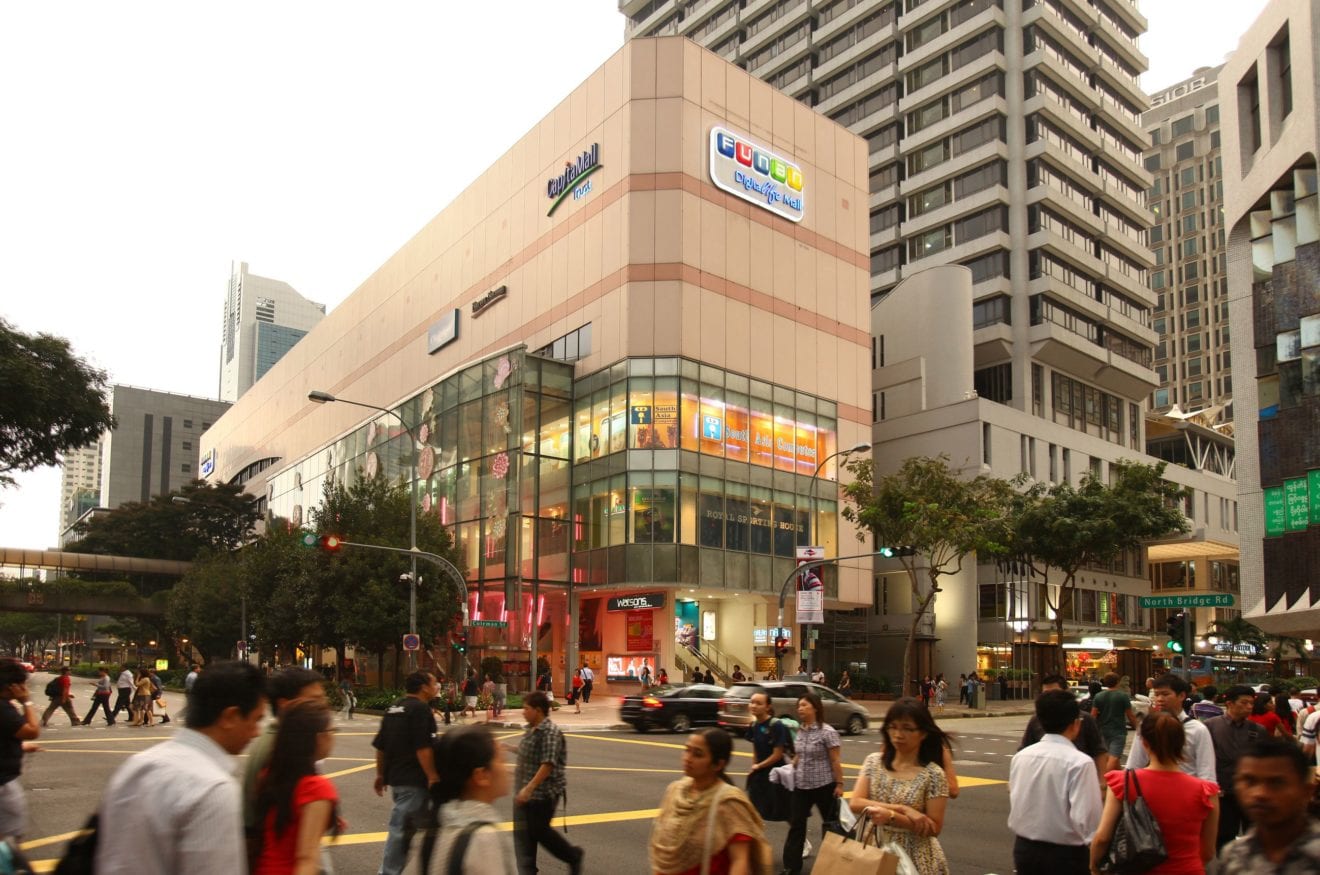
    Singapore retail rents are falling according to the latest figures from real-estate company DTZ Southeast Asia.

    Average monthly first-storey rent across the island eased by 1.2 per cent quarter-on-quarter to about S$30.15 (US$22.22) a sqft in the first quarter this year, says the company – the fourth consecutive quarter of decline. This is 7 per cent down on a year ago.

    Headwinds continued in the retail market in Orchard/Scotts Rd, as average monthly first-storey rent there fell 1 per cent to about $37.65 a sqft..

    According to the latest Singapore Urban Redevelopment Authority (URA) statistics, the occupancy rate in the area fell by 2.1 points to 92.3 per cent last year, the lowest since 1996.

    Retailers in Orchard/Scotts Rd are expected to face pressure, especially in the face of regional competition from Bangkok, South Korea and Taiwan, which offer affordable shopping. Cheaper air fares coupled with a relatively strong Singapore dollar made shopping more expensive in Singapore, and also contributed to weaker retail sales.

    In the other city areas, the occupancy rate dropped by 1.6 points to 91.6 per cent, and average monthly first-storey rent fell by 2 per cent to $21.35 a sq ft.

    Rents were also pressured by the relatively large impending supply this year: mixed-use projects slated for completion include OUE Downtown Gallery, Tanjong Pagar Centre and Duo Galleria.

    In similar vein, the occupancy rate in suburban areas fell by 1.4 points to 92.0 per cent, and average monthly first-storey rent subsided 1 per cent to about $31.40 a sqft.

    Service critical

    DTZ director of retail Anna Lee says quality of service has become even more critical for onground retailers.

    “With competition from eCommerce coming at full force, retailers are placing greater emphasis on providing highly personalised services. Many have revamped stores to include private rooms and lounge areas with superior furnishings.”

    An example is the new Tiffany & Co outlet at Ion Orchard. Apart from being the brand’s first street-facing store in Singapore, the two-storey outlet also showcases a private viewing space with custom furnishings. Another example is Dior, which has also had a revamp at Ion Orchard. It now has lounge areas, marble features and luxurious carpets, and has added a personal stylist to provide shoppers with fashion advice.

  • Tiffany struggles as Mainlanders baulk

    Tiffany struggles as Mainlanders baulk

    If Tiffany was hoping for some holiday respite following a year of negative numbers it will be sorely disappointed by its latest results.

    Indeed, the pace of decline has actually accelerated since the third quarter, which covered the three months up until the end of October. Given the significant opportunity that the holiday season affords this is a worrying outcome.

    Reported in US dollars, worldwide net sales of $961 million were 6 per cent lower than the prior year.

    Despite some solid growth in China and Japan – the latter coming off weak comparatives – the poor numbers out of Hong Kong, which has suffered from a decline in visitors from the Chinese mainland, pulled down the regional result.

    In the Asia-Pacific region, on a constant-exchange-rate basis total sales and comparable store sales declined 6 per cent and 9 per cent, respectively. A continuation of strong sales growth in China was more than offset by significant weakness in Hong Kong and Singapore, with varying performance in other markets. Reported in US dollars, total sales of $187 million were 11 per cent below the prior year.

    In Japan, on a constant-exchange-rate basis total sales increased 12 per cent and comparable store sales rose 10 per cent, reflecting higher sales to local customers and foreign tourists. Reported in US dollars, total sales rose 9 per cent to $123 million.

    Globally, as it did throughout 2015, Tiffany has pinned the blame for its sales declines on the strong dollar. There is truth in such an assertion, although it is not the whole truth. This is evidenced by the fact that even on a constant currency basis worldwide sales still fell by 3 per cent in total and by 5 per cent in comparable terms. Clearly, there are forces other than fluctuating exchange rates at play.

    The Americas is a case in point. Although the magnitude of the sales decline in the region was broadly similar to that posted last quarter, it still represents a marked deterioration in trade. The claim that tourist spending on jewellery in key locations like New York was down thanks to an unfavorable exchange rate has some validity, even if it sits somewhat uncomfortably with MasterCard data that shows 2015 was a record year for international visitor spending in the Big Apple. However, sales were not just down at Tiffany’s stores in tourist destinations, they were down across most of the US.

    One of the factors at play, at least in the US, is a shift in holiday purchasing. Prior to the economic downturn of 2008 the period between Thanksgiving and Christmas was key for jewellery buying. Today, while it remains the most important single period for purchasing, it accounts for a much smaller share of annual sales than it once did. Jewellery is no longer at the top of the Christmas list. For a brand like Tiffany, where lavish gifting is an important driver of buying, such a trend is distinctly unhelpful.

    As important as this factor may be, it is exacerbated by the more competitive environment for jewellery and the rise of other brands. Against this backdrop Tiffany has lost some of its relevance, especially to more moderate spending shoppers. The company has tried to arrest this development with new collections such as Tiffany T, but the results to date have been lacklustre.

    These brand issues are somewhat less relevant to the Asian markets where Tiffany is still seen as a hallmark of fine jewellery.

    The consequence of a weak holiday period is that final quarter profits will now come in lower than previous guidance.

    Tiffany is ending its fiscal year with very little sparkle.

  • China August Retail Sales: E-Commerce Remains Robust

    China August Retail Sales: E-Commerce Remains Robust

    China reported August retail sales that grew 10.8%, which beat the consensus 10.6%. Most encouraging was that online retail sales remain robust, underscoring my bullish view on Alibaba. As for offline retail, jewelry grew off a lower base so we view this of a lower quality while it appears that offline electronic retailers are taking share from online retailers, which is a negative to JD.com. We see China retail numbers to be a good read-through to companies such as BABA and JD as well as North American companies with exposure to China such as Tiffany. We reiterate my bullish view on BABA and Nike and our cautious view on JD and TIF.

    Online retail numbers remain robust for the first eight months of the year, and this is a positive indicator to Alibaba. For the first eight months, online retail sales grew 36% and accounted for 9.8% of total retail sales vs. 8% a year ago. Worth reminding investors is that China leads the world in e-commerce penetration and we expect penetration to continue to grow, driven by mobile device penetration in second and third-tier cities as well as the lack of proper retail infrastructure in those cities. We can easily envision China’s online retail penetration to reach 20% in the next 10 years driven by those two factors as well as higher mobile consumption driven by online-to-offline services that are heavily invested in by BABA, Baidu and Tencent. Looking at the individual segments, online sales of services was up a whopping 41%, as were discretionary items such as food. Apparel grew 27% and other discretionary items grew 39%. All these figures imply that August online sales alone grew 27% y/y, still solid given the near-term weakness of the Chinese economy.

    As for offline retail, jewelry grew 17% y/y vs 14% in July but it was largely due to a lower base from last year. As such, we would not be quick to jump into TIF stock until we see material improvement from the demand side. Interestingly, home appliances and electronics accelerated in the month, up 14% vs. 8% in the prior month. This could potentially be a negative to JD.com given this could imply that BABA and Suning JV may be taking share from JD in the online segment.

    In conclusion, we remain bullish on BABA while cautious on JD and TIF.

  • Tiffany China sales soar

    Tiffany China sales soar

    Jeweller Tiffany & Co says its 30 China stores posted record double-digit sales growth in the second quarter.

    China is the world’s second largest luxury market and accounts for 10 per cent of the US company’s global store network.

    And despite the Chinese economy’s much-publicised slowdown, demand remains high for in fashion brands like Tiffany and Apple.

    Tiffany said in its quarterly earnings report it has no plans to adjust its China strategy despite the devaluing currency and stock market decline.

    Tiffany China will open an unspecified number of new stores in the year ahead and has previously said it is looking at tier 2 cities in addition to building its presence in traditional luxury market hubs of Shanghai and Beijing.

    The company says it expects strong growth in the quarter ahead.

  • Asia remit for new Tiffany exec

    Asia remit for new Tiffany exec

    Tiffany & Co has appointed Philippe Galtié to the position of senior VP – international.

    Galtie, who is currently with super luxury brand Cartier, will direct all of the sales channels for Greater China, Asia-Pacific, Japan and EMEA.

    He takes up the new post on August 17.

    Frédéric Cumenal, Tiffany & Co CEO, said, Galtie brings to Tiffany & Co a seasoned understanding of the global retail landscape.

    “This knowledge will have a significant impact on the oversight and management of our store design and strategic planning teams.”

    Galtié, 54, began his career with a range of general management and global marketing roles at Moët-Hennessy, Mars Inc, Eridania Beghin Say and the Nestlé Group. For the past 15 years he has worked at Cartier, where he served as country head or other senior positions throughout Japan, Greater China and the Asia Pacific regions. Most recently, Galtié held the role of Cartier’s international retail director.

    Tiffany is the internationally-renowned jeweler founded in New York in 1837. Through its subsidiaries, Tiffany & Co. manufactures products and operates Tiffany & Co retail stores worldwide, and also engages in direct selling through Internet, catalog and business gift operations.