Retail News CRM

Tag: tourist

  • K-Beauty Boom: CJ Olive Young Records Massive Surge in Tourist Spending

    K-Beauty Boom: CJ Olive Young Records Massive Surge in Tourist Spending

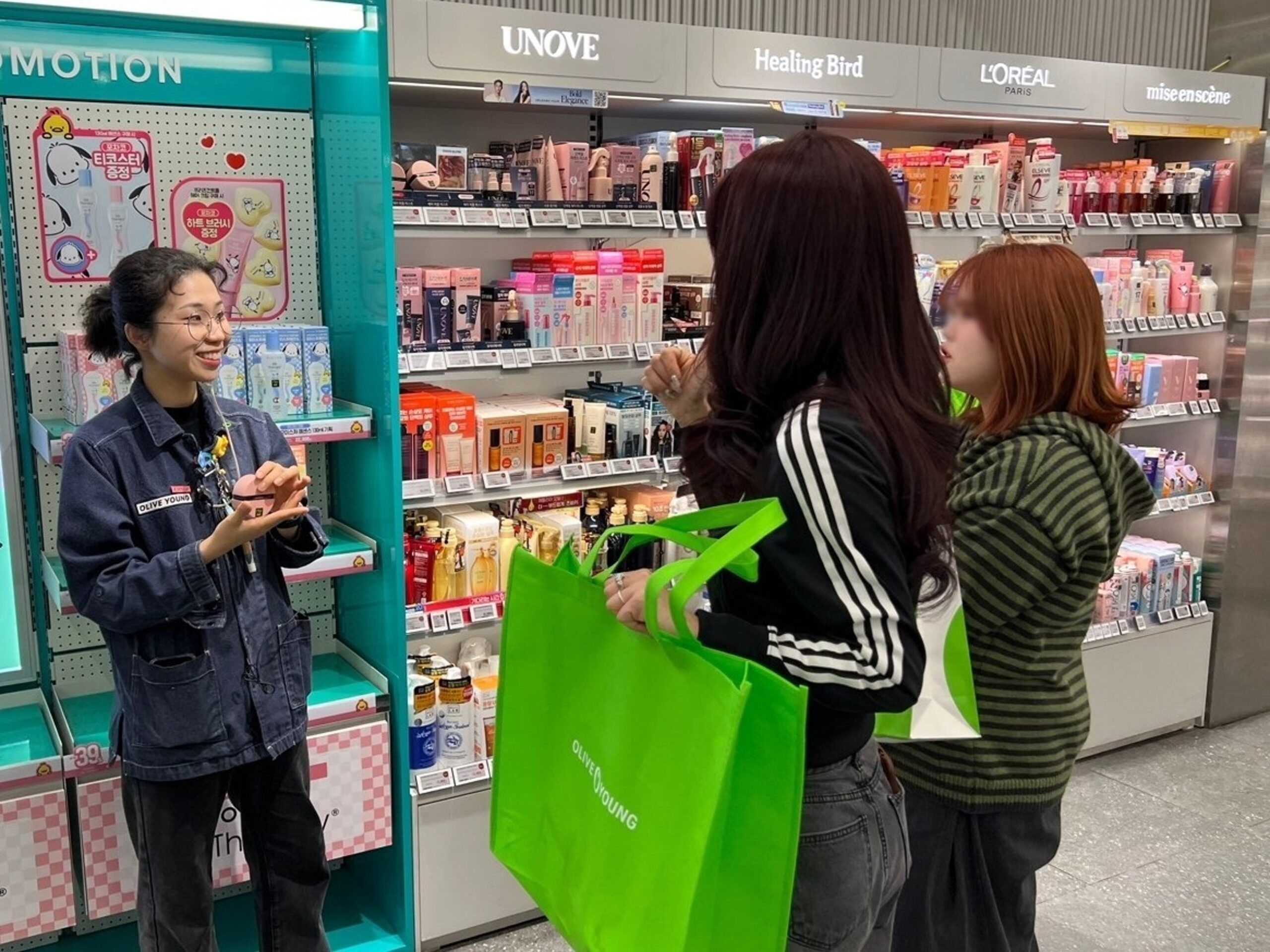
    CJ Olive Young, a South Korean retailer, has experienced a significant surge in sales from international patrons at its physical locations throughout the country. According to the company, between January and November, foreign visitors contributed to a staggering 1 trillion won (about US$680 million) in sales. This represents a twenty-six-fold jump compared to the previous year.

    Sales Figures Show Increasing Global Interest

    The company’s data reveals that sales to international customers, which accounted for roughly 2% of overall offline revenue in 2022, increased to approximately 10% in 2023. This year, these sales have exceeded 25%, demonstrating CJ Olive Young’s mounting allure to worldwide shoppers.

    The spokesperson for CJ Olive Young expressed the significance of achieving 1 trillion won in sales from international visitors. The spokesperson highlighted that it represents a collective accomplishment, achieved in partnership with small, medium-sized, and indie brands that have engaged with customers globally through CJ Olive Young.

    The company expressed its dedication to ensuring that K-beauty, or Korean beauty, is more than just a trend. They see it as a compelling reason for repeat visits to Korea and an integral component of the country’s domestic inbound tourism.

    High Patronage Under the Global Tax-Free Program

    The retailer further revealed that under the Global Tax-Free (GTF) program, a staggering 88% of domestic cosmetic purchases were made at CJ Olive Young outlets. This figure indicates that nearly nine out of every ten foreign shoppers prefer the chain. Moreover, tax refunds were claimed by visitors from 190 distinct nationalities at the retailer’s locations.

    The retailer also noted an increasing trend of foreign customers visiting multiple stores. Around 40% of these shoppers reportedly explore two or more locations to experience varying store layouts and curated product selections.

    Consumers Diversifying Their Purchases

    In addition to visiting multiple locations, international shoppers have also shown a growing interest in diversifying their purchases. According to company data, 58% of foreign shoppers buy products from six or more brands, and 33% make purchases from ten or more brands. This trend points towards a growing interest in a broad range of K-beauty products.

    Questions & Answers

    How much has CJ Olive Young’s sales to international customers increased?
    Sales from international customers have seen a twenty-six-fold increase compared to the previous year, with foreign visitors contributing to a staggering 1 trillion won (about US$680 million) in sales between January and November.

    What proportion of domestic cosmetic purchases under the GTF program were made at CJ Olive Young outlets?
    Under the Global Tax-Free (GTF) program, a substantial 88% of domestic cosmetic purchases were made at CJ Olive Young outlets.

    What shopping trends among foreign customers have been noted by CJ Olive Young?
    Foreign customers are increasingly visiting multiple store locations and diversifying their purchases. Around 58% buy from six or more brands, and 33% buy from ten or more brands, demonstrating a growing interest in a broad range of K-beauty products.
  • South Korean Retailers Innovate To Welcome Returning Chinese Tour Groups Amid Changing Consumer Trends

    South Korean Retailers Innovate To Welcome Returning Chinese Tour Groups Amid Changing Consumer Trends

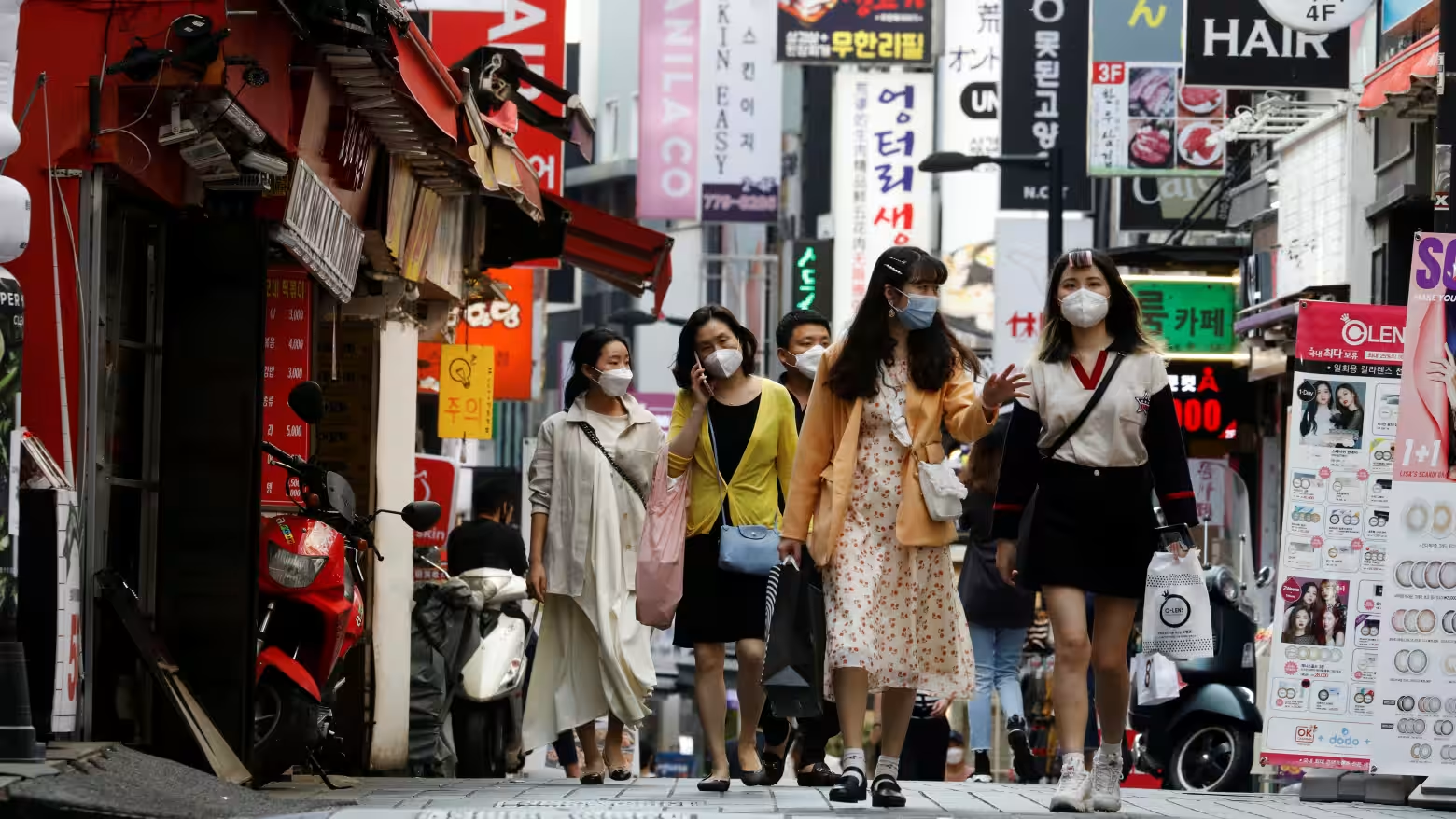
    As South Korea prepares for the much-anticipated return of Chinese tour groups from September 29, retailers are taking proactive measures to welcome them. To cater to these visitors, who will be allowed visa-free entry, a wave of new promotions is on the horizon, and retailers are expanding their product ranges. Instead of focusing solely on luxury cosmetics, retailers are branching out to incorporate fashion, lifestyle, and even convenience store exclusive items.

    Change in Chinese Tourists’ Preferences

    In the mid-2010s, Chinese travelers, often referred to as “Youke,” were known for their bulk purchases of high-end skincare products. However, recent industry data indicates a significant shift in their preferences. Currently, eyewear brands such as Gentle Monster, K-fashion labels, health foods, and lifestyle goods are gaining popularity among these travelers.

    Retailers’ Innovative Strategies

    In response to these changing demands, Lotte Department Store has launched curated boutiques as part of the “Kinetic Ground” platform. These boutiques will feature trendy domestic brands. In addition, the department store’s duty-free branch has plans to inaugurate a new “K-Beauty Hall” in Myeongdong, accompanied by an expansion of local specialty food offerings.

    Shinsegae Department Store is orchestrating a “Global Shopping Festa” around the Chuseok holiday, with a focus on categories popular with foreign shoppers. Convenience chains are also making preparations. GS25 is advertising Greek yogurt, highballs, and K-pop albums as emerging favorites. They have even released a “K-Convenience Store Guidebook,” presenting product rankings and celebrity snack choices. Additionally, 7-Eleven is promoting souvenir items that represent Korean symbols like the national flag and old currency.

    Duty-Free Shops Gear Up

    Duty-free shops, known to benefit most from group tourism, are also gearing up. Lotte Duty Free is bolstering relationships with agents in second- and third-tier Chinese cities such as Chongqing and Qingdao, while Shilla is setting its sights on corporate travel groups. Shinsegae Duty Free is honing in on smaller groups that tend to spend more. Retailers are further enhancing the shopping experience by introducing experiential attractions like revamped “Star Avenues” and Artificial Intelligence (AI)-aided translation services to facilitate shopping for international visitors.

    Challenges Ahead

    Despite these proactive measures, retailers face several challenges. One critical issue is the shift in travel patterns towards individual tourism, making it uncertain whether duty-free operators will regain their past dominance. Another concern is the increase in hotel costs since the pandemic, which could potentially impact package competitiveness.

    A duty-free executive expressed optimism, stating that visa-free entry for Chinese group tourists might signal a turning point for Korea’s tourism recovery. However, the real litmus test lies in whether spending bounces back. The industry is eagerly waiting for the APEC summit in late October, hosted by Seoul, as it could provide more clarity on the situation. The event is also likely to attract China’s President Xi Jinping.

    Questions & Answers

    What changes are South Korean retailers making to accommodate the return of Chinese tour groups?
    Retailers in South Korea are launching new promotions and expanding their product offerings. They are diversifying their product lineups to include not just luxury cosmetics, but also fashion items, lifestyle goods, and exclusive convenience store products.

    How are duty-free shops preparing for the return of Chinese tour groups?
    Duty-free shops are looking to strengthen ties with agents in Chinese cities, targeting corporate travel groups, and focusing on smaller, high-spending groups. They also aim to improve the shopping experience by introducing experiential attractions and AI-powered translation services.

    What challenges do retailers face with the return of Chinese tour groups?
    Retailers are facing challenges such as the shift in travel patterns towards individual tourism, which raises questions about the future dominance of duty-free operators. Additionally, rising hotel costs since the pandemic could impact package competitiveness.

  • Indonesia to Improve Sanitary Facilities in Major Tourist Sites

    Indonesia to Improve Sanitary Facilities in Major Tourist Sites

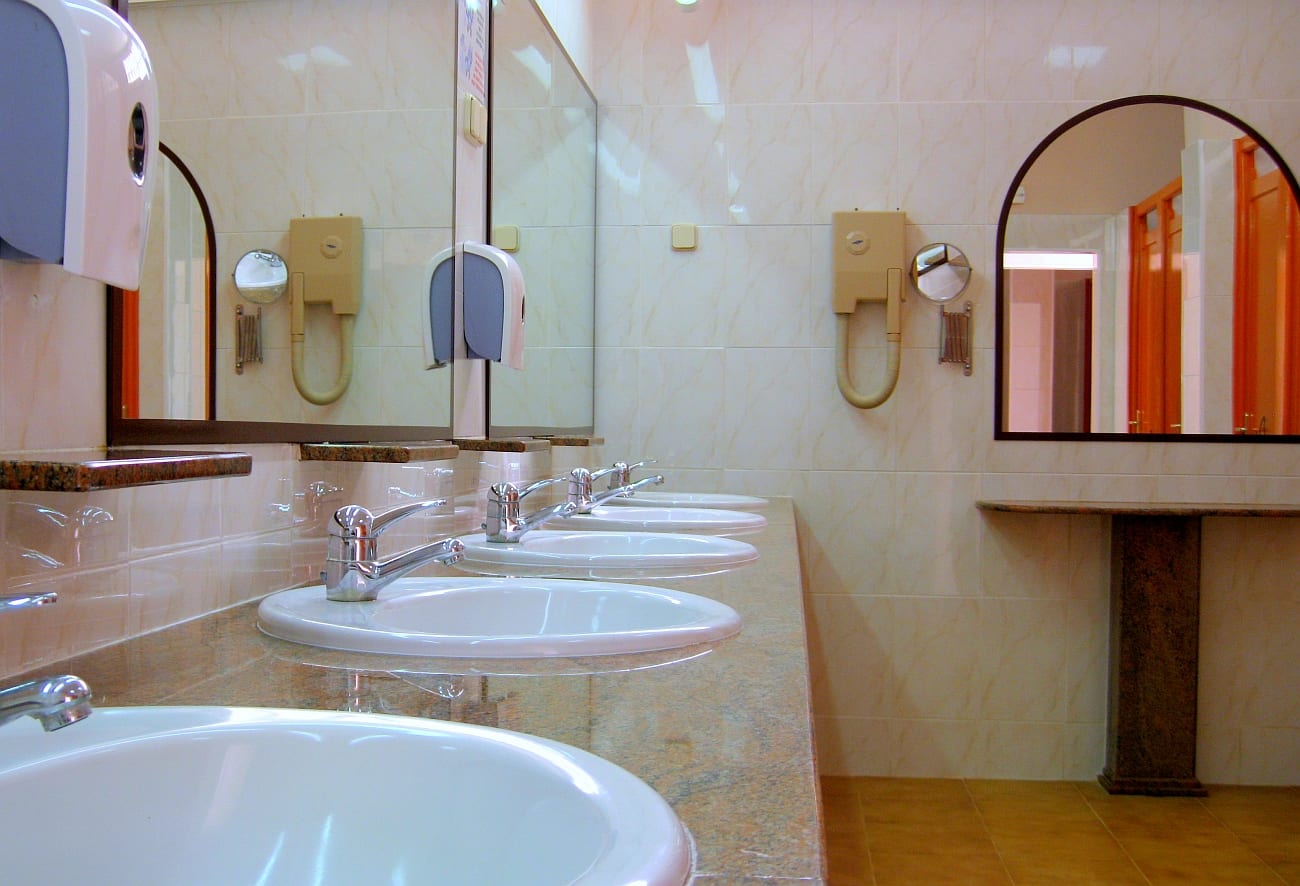
    In a bid to meet the target of 20,000 tourist arrival in 2016,  Public Works and Public Housing Ministry announced that it will build sanitation facilities in 10 major tourism destinations in Indonesia.

    It also said that the construction would involve municipal tap water company PDAM to provide clean water, while the sanitary facilities would be provided by the Ministry.

    Public Works and Public Housing Minister Basuki Hadimuljono said that the construction of those sanitary facilities is important to increase of tourists visiting Indonesia. He also said that the projects would begin this year.

    Basuki added that budget allocated for the projects is not too bit and ensured that the procurements would be done by the government.

    One of the major tourist destinations that still lack sanitary facilities and clean water is Labuan Bajo in East Nusa Tenggara province.

    “Sanitary facilities must be in good condition so tourists would be happy to come and visit,” Basuki said in Jakarta on Saturday (23/1).

    Furthermore, Public Works and Public Housing Ministry said that it would also help improving access to those tourist destinations.

    According to Director of Bina Marga (Highway) of the Public Works and Public Housing Ministry Hediyanto, the Directorate would build strategic roads to those tourist destinations.

    According to Hediyanto, the Ministry is now focusing on road infrastructures in several tourist destinations like Raja Ampat and Tanjung Lesung.

    “The government has allocated Rp4 trillion to build roads,” he added.

  • Hollister teams with social media stars to launch new brand Social Tourist

    Hollister teams with social media stars to launch new brand Social Tourist

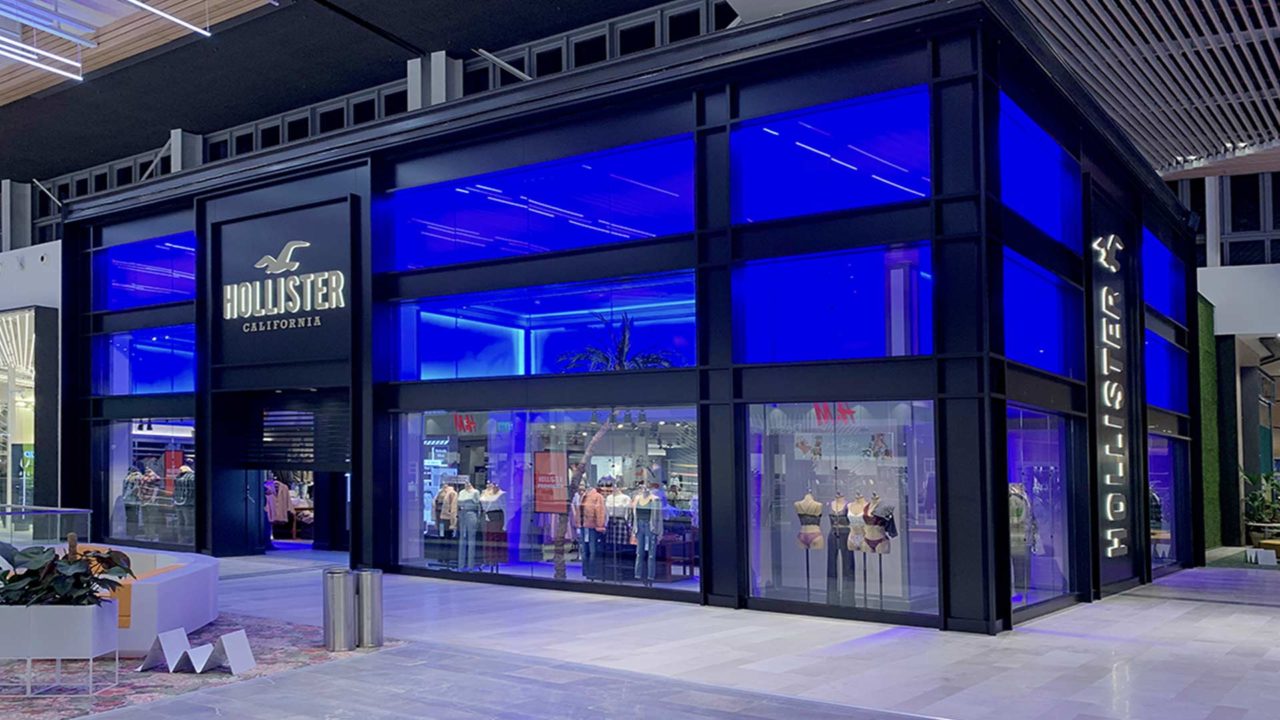
    Hollister Co., a division of Abercrombie and Fitch is building upon its successful relationship with leading social media personalities Charli and Dixie D’Amelio to launch Social Tourist, a new trend-forward apparel brand within the Abercrombie & Fitch Co. portfolio. For its initial May 20 launch, Social Tourist will be available exclusively in Hollister stores and online.

    The launch of Social Tourist marks the beginning of an exclusive, multi-year apparel agreement between Abercrombie & Fitch Co. and the D’Amelio sisters. The new brand has been imagined and inspired by Charli and Dixie’s experiences at the epicenter of social media, and also reflects Gen Z’s unique lens of living in a digitally native environment. Hollister has leveraged its pool of talent, resources, and global reach, as well as its connection to the global teen customer, to authentically bring Charli and Dixie’s vision to life.

    Working together with Hollister, Charli and Dixie have been involved in every aspect of Social Tourist, including product selection, design, branding, positioning and marketing. The family has a strong background in the apparel industry with their father, Marc D’Amelio, having over 30 years of experience in sales and design. Marc will serve as a consultant for Social Tourist.

    Social Tourist will have four distinct apparel lines: gender-inclusive items, trend pieces such as dresses and skirts, everyday essentials featuring premium basics, and swim. Each collection will include limited-edition items, with new products dropping approximately every month.

    “We’ve always loved fashion, and it’s been amazing to be so involved in this process. We feel like Social Tourist really represents both of us and explores how our generation is balancing who they are on social media with real life,” said Dixie D’Amelio. “The first product drop is all about introducing the brand to our fans, and the second drop in June reflects our individual personalities – designs that reflect Dixie’s personality are a bit edgier, with dark color palettes and patterns, where my vibe is shown through super feminine and cute styles. We can’t wait to put our vision out into the world!” added Charli D’Amelio.

    “Charli and Dixie are the quintessential example of what it’s like to grow up in the digital world, and we’ve always believed they authentically represent our teen customers’ mindset both online and in real life. We’re thrilled to unlock new opportunities for all of us beyond our co-created products, which strongly resonated with our global customers. Given the high demand, we knew we could take our relationship further,” said Kristin Scott, Global Brand President at Abercrombie & Fitch Co. “Creating a new brand virtually was no small feat, but the excitement and energy of the D’Amelio family, combined with the talent and experience of the Hollister family, has allowed us to push boundaries and make this a reality.”

    In working with Hollister since 2020, the social media stars have served as “Chief Jeanealogists,” where they tested and approved every aspect of Hollister’s denim; launched the #MoreHappyDenimDance TikTok challenge, which garnered over 5.4 billion views worldwide; and dropped a series of limited-edition, co-created collections. The sisters currently have a combined 250 million followers across their social media handles and in November 2020, Charli became the first TikTok user to surpass 100 million followers on the platform.

    Abercrombie & Fitch Co. is represented by Philip Daniels of Ginsburg Daniels Kallis and Bruce Paige of Vorys, Sater, Seymour and Pease. The D’Amelios are represented by UTA and Gary Stiffelman, Robert Kahan, and Kevin Yorn.

    Safe Harbor Statement under the Private Securities Litigation Reform Act of 1995

    A&F cautions that any forward-looking statements (as such term is defined in the Private Securities Litigation Reform Act of 1995) contained herein or made by management or spokespeople of A&F involve risks and uncertainties and are subject to change based on various important factors, many of which may be beyond the Company’s control. Words such as “estimate,” “project,” “plan,” “believe,” “expect,” “anticipate,” “intend,” and similar expressions may identify forward-looking statements. Except as may be required by applicable law, we assume no obligation to publicly update or revise our forward-looking statements.

    Risks and uncertainties related to the duration and impact of the COVID-19 pandemic on the Company and the factors disclosed in “ITEM 1A. RISK FACTORS” of A&F’s Annual Report on Form 10-K for the fiscal year ended January 30, 2021, in some cases have affected, and in the future could affect, the company’s financial performance and could cause actual results for fiscal 2021 and beyond to differ materially from those expressed or implied in any of the forward-looking statements included in this press release or otherwise made by management.

  • Luk Fook upbeat despite plans to trim Hong Kong store network

    Luk Fook upbeat despite plans to trim Hong Kong store network

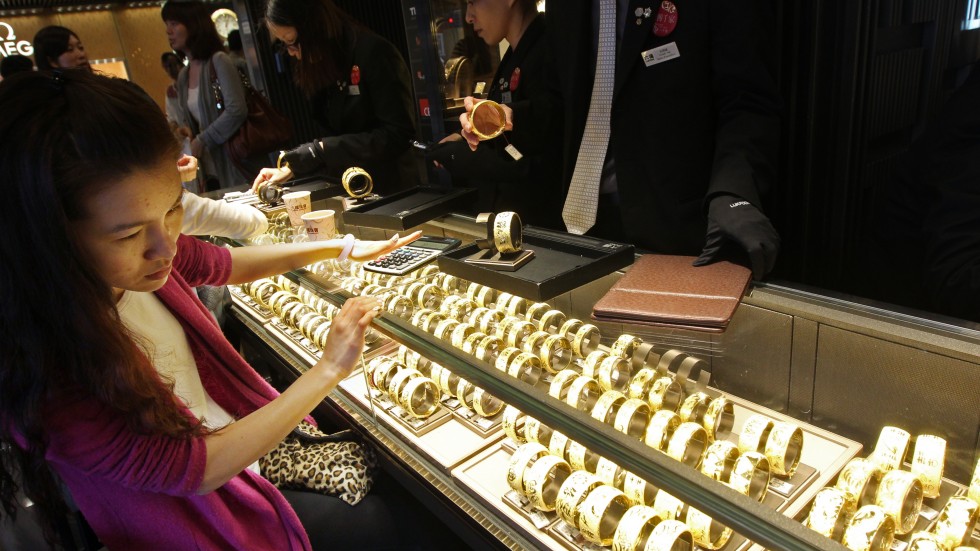
    Hong Kong-headquartered Luk Fook group has followed its archrival Chow Tai Fook in revealing plans to shutter stores in the territory’s tourist areas – but it sees growth opportunities in Macau.

    “The group will reduce the number of shops in areas which are considerably impacted by the social incidents in Hong Kong, and search for opportunities for opening new shops in Macau market,” chairman Wai Sheung Wong advised shareholders in a stock exchange filing.

    However, unlike Chow Tai Fook, which plans to close about 15 stores in Hong Kong when leases come up for renewal from this coming April, Luk Fook still expects to achieve a net gain of three stores this financial year in Hong Kong and Macau.

    “Rental renewal depends very much on whether profit is expected for the relevant shop under new rental,” said Wong. “A single-digit drop in the rental renewal is predicted for the current financial year and a double-digit drop for the next financial year.”

    The continuing impact of the strong gold price, US-China trade war and social incidents in

    Hong Kong on market sentiment saw same-store sales for the jeweler fall by 25 percent during the December quarter. Same-store sales of gold products fell by 20 percent and of gem-set jewelry by 32 percent.

    On a positive note, the overall decline eased when compared to the previous quarter. Sales in Hong Kong and on the mainland fell by a lower rate than in the September quarter, while the Macau market returned to growth since October. Sales in Hong Kong and Macau fell by 27 percent, which the group attributed to a high gold price and a “substantial decline” in the number of visitors to Hong Kong contributed by the recent ongoing social activities.

    In the first two weeks of January, the same-store sales decline gradually narrowed in Hong Kong and there was continued growth momentum in Macau.

    Luk Fook has responded to falling sales by reducing staff, however this has been achieved by natural turnover without the need for a redundancy scheme.

    As of December 31, the group had 1969 Lukfook shops, 45 Goldstyle shops, three Dear Q stores and three 3D-Gold shops operating on the mainland – 2020 in all.

    “Apart from actively seeking expansion opportunities in Macau, the group will also speed up expansion in Mainland, with the target of at least 300 net shop additions there for the 2020 financial year, most of which would be licensed shops at low-tier cities,” said Wong.

  • AuMake pivots to sell to Asian tourists

    AuMake pivots to sell to Asian tourists

    AuMake says it will focus on catering to Asian tourists at its Australian outlets, shifting away from its original business model of targeting Chinese shoppers intent on posting their products to the mainland.

    The ASX-listed company’s 16 shops initially concentrated on selling Australian products to “daigou” – residents who frequent the stores, which each have a designated parking area, in order to send bought items to China in parcels.

    “From early 2018 and due to the locations of our stores in Sydney’s CBD, we began to observe the increasing visitation of Asian tourists and their propensity to purchase less well-known and higher margin products relative to daigou,” AuMake executive chairman Keong Chan told shareholders on Wednesday.

    AuMake announced in April that it had acquired the Broadway business, including its six Australian stores popular with foreign tourists, for $14.2 million.

    “AuMake will continue to service daigou however this will increasingly be transitioning offline traffic to the company’s online platforms, to maximise efficiencies and profitability,” Chan said.

  • Chinese tourists are embracing ‘themed travel’

    Chinese tourists are embracing ‘themed travel’

    Themed travel is a fast-growing trend among Chinese tourists – with more than two in three from mainland cities prepared to try it as a hobby.

    Themed travel is a relatively new tourism category identified by markers, including concepts such as health and wellness, wedding photography and self-drive tours.

    “Having new experiences is important when it comes to traveling,” explains Saskia Zhao, travel and leisure analyst at Mintel China Reports. “In light of this, companies in China’s travel industry are moving beyond simply offering traditional travel products and are introducing themed travel to the market.

    “There are two ways in which themed travel is commonly defined in China: by travel method, for example, self-drive tours, or travel itinerary, for example, photography or wedding theme. Our research shows that hobbies and in-depth travel experiences are what’s motivating Chinese consumers to try themed travel,” she said.

    “To appeal to these consumers, customization and offering experiences of superior quality are key. The focus of innovation in themed travel can be expanded from new routes and destinations to selling hobby-based experiences like food and outdoor activity tours. This will also allow consumers to meet with like-minded individuals, seeing how socialization is another key driver for the themed travel market.”

    Research by Mintel suggests a desire for new experiences seems to be what’s driving interest in the category.

    Three in five urban Chinese respondents (of 3000 surveyed online aged 20-49) say they are motivated to try themed travel because it would make a suitable hobby (66 percent) and is an in-depth travel experience (64 percent). Opportunities for socializing is another driver with 45 percent of respondents saying the desire to meet people with similar interests is a reason why they would like to try themed travel.

    Popularity of self-drive tours

    While still a relatively new concept, self-drive tours are picking up in China. According to Mintel research, 52 percent of urban Chinese respondents have taken the more common self-organized tour (eg excluding RVs and self-drive tours) for their personal leisure travels in the last 12 months*, while 49 percent say that they have taken self-drive tours. Self-drive tours are especially popular among the post-80s generation with 57 percent of respondents having tried this way of themed traveling. This is followed by 48 percent of post-90s and 41 percent of post-70s consumers.

    Health-and-wellness-themed travel

    Finally, Mintel research reveals an opportunity for travel suppliers with health and wellness-themed travel. As many as 74 percents of Chinese respondents cited enjoying a slower-paced lifestyle as the most important reason to try health and wellness-themed travel; while 67 percent associate health and wellness-themed travel with a nice environment and being beneficial to physical health, respectively.

    For health and wellness-themed travel, the top activities consumers are willing to pay more for include hot springs (67 percent) and body-care services, such as massages or a spa, (63 percent).

    “Healthy lifestyles are trending in China, opening up an opportunity for travel suppliers to explore health and wellness-themed travel,” said Zhao.

    “Consumers say that enjoying a slower-paced lifestyle is important when it comes to health and wellness-themed travel – likely because they long to relieve the stresses of daily life.

    “Companies in the health-and-wellness travel space can also motivate consumers with claims such as improving physical health and living in pure and healthy environments that are free from pollution. When premiumising their health and wellness-themed travel offerings, companies should look at capitalizing on natural elements such as hot springs and forest ‘oxygen zones’, as well as self-indulgent experiences like spas,” Zhao concluded.

  • Hong Kong protests blamed for less tourists

    Hong Kong protests blamed for less tourists

    Ongoing Hong Kong protests have been blamed for a 40-per-cent slump in inbound visitors to the territory in August.

    Given travelers account for about 50 percent of Hong Kong retail turnover, that figure does not bode well for official retail sales figures for the month, due to be released in early October. A predicted double-digit decline now seems inevitable, especially as the luxury sector is hardest hit by a drop in visitors.

    In a weekend blog post translated by Reuters, finance secretary Paul Chan said August’s year-on-year fall of 40 percent followed a more modest decline of 5 percent in July.

    He said hotel occupancy rates have dropped by as much as half and room rates are down as much as 70 percent as operators battle for a dwindling customer base.

    “The most worrying thing is that it does not seem that the road ahead is easily going to turn any better,” Chan said in his blog, as translated by Reuters.

    Despite chief executive Carrie Lam’s announcement that the much-despised extradition bill was being formally withdrawn (as opposed to suspended), protestors returned to the streets during the weekend. While the majority were peaceful, a small group of radicals smashed up MTR station facilities and lit fires in the heart of the luxury shopping precinct of Central, including one at a station entrance. Those images are playing across television screens and online worldwide, potentially discouraging visitors from traveling to Hong Kong.

    Chan said the Hong Kong protests have severely damaged the territory’s image as a safe international city.

  • Sands China mall sales increase when land-based visitors return

    Sands China mall sales increase when land-based visitors return

    Sands China mall revenue rose 5.8 per cent last year as Mainland China visitor numbers rebounded. Sands China owns The Venetian Macao, Sands Cotai Central, The Parisian Macao and The Plaza Macao shopping centres which boast a combined 1.87 million sqft of retail-mall space. They form a key part of the company’s giant gaming and resorts business in the territory, which combined posted US$8.67 billion in sales last year, up more than 14 per cent, and achieved a post-tax profit of $1.87 billion, up 17 per cent.

    The company says mall revenues for the year increased 5.8 per cent overall to $507 million, compared to $479 million the previous year.

    The increase was primarily driven by higher turnover fees from Shoppes at Four Seasons, Shoppes at Venetian and Shoppes at Cotai Central, and from additional retail space becoming available at Cotai Central.

    The strongest-performing mall complex was the smallest of the four, The Plaza Macao, which has the 241,548sqft gross leasable area (GLA). It achieved 99 per cent occupancy with a base rent of $460 per sqft and tenant sales of $4373 per sqft, contributing $145 million in revenue, up 10.7 per cent year on year.

    The weakest-performing mall was The Parisian Macao, with 89.8 per cent occupancy of its 295,915sqft GLA. Base rent per sqft was $156 and tenant sales per sqft $649. Revenue there fell 13.6 per cent year on year to just $57 million.

    The company’s largest Macau property, and its first, The Venetian Macao, has 813,376sqft of GLA. It achieved total mall revenues of $233 million last year – up 6.4 per cent – with 90.3 per cent occupancy, a base rent of $263 and tenant sales of $1746.

    Sands Cotai Central, with 519,681sqft GLA, achieved $69 million in revenue – up 9.5 per cent – and achieved 91.5 per cent occupancy. Base rent was $108 and tenant sales $892.

    Sands China said its food and beverage revenues rose 4.1 per cent last year to $304 million, driven primarily by increased foot traffic.

    Chairman Sheldon G Adelson said Macao’s development and evolution as Asia’s leading tourism destination accelerated during the year, with market-wide visitation from China reaching a record 25.2 million visits, an increase of 14 per cent compared to last year.

  • Retail report says holiday sales were disappointing

    Retail report says holiday sales were disappointing

    Shoppers did not spend as much as expected this past holiday season. Holiday sales were up just 2.9 percent in 2018, the National Retail Federation said, on the heels of the Commerce Department announcing retail sales for December fell 1.2 percent, the largest decline since September of 2009. NRF, the retail industry’s trade organization, had been calling for 2018 holiday sales, those from Nov. 1 through Dec. 31, to rise between 4.3 and 4.8 percent.

    “It appears that worries over the trade war and turmoil in the stock markets impacted consumer behavior more than we expected,” NRF President and CEO Matt Shay said in a statement. “There’s also a question of whether the government shutdown and resulting delay in collecting data might have made the results less reliable.”

    NRF said online and other nonstore sales were up 11.5 percent this past holiday season, while the group had been calling for growth of between 11 and 15 percent.

    It said sales, both in stores and online, were down 1.5 percent in November year over year, and in December were up just 0.9 percent. It added that October sales were up 5.7 percent year over year, but spending during that month isn’t included in NRF’s holiday sales tally.

    NRF chief economist Jack Kleinhenz said the sales results were “truly a surprise” and “in contradiction to the consumer spending trends” NRF had been monitoring.

    The fresh retail sales data from the Commerce Department has, meanwhile, raised new concerns about a recession. But economists also say the biggest drop in nine years clashes with other data and may be suspect.

    NRF is still calling for retail sales, excluding automobile dealers, gasoline stations and restaurants, to climb between 3.8 and 4.4 percent this year, amounting to as much as $3.84 trillion.

  • Where Chinese tourists go for shopping

    Where Chinese tourists go for shopping

    Hong Kong, Tokyo, Seoul and Singapore were among the hottest shopping destinations for Chinese tourists last year, according to Ctrip. In the latest big-data report from the Chinese travel-services provider, Edinburgh, Singapore and San Francisco were also among the top 10. Last year, nearly 150 million overseas trips were made by Chinese tourists, who collectively spent US$120 billion.

    London was the city that saw the highest per-capita spending by Chinese tourists – more than US$4428 – followed by Paris, Macau, Dubai, Okinawa, Kyoto, Osaka, Nagoya, Hong Kong, Singapore and Fukuoka.

    Europe is still a hot destination for Chinese luxury goods buyers because prices there are much lower than the global average, and a tax-refund system also facilitates sales.

    Despite the recovery of the British pound last year, the UK remained a popular destination for Chinese tourists, said Ctrip.

    Experts noted that Chinese consumers would still be a focus of competition between shopping destinations this year, and many retailers internationally have upgraded their shopping facilities to lure Chinese tourists.

  • Malaysia ranks second in SEA for Chinese tourist transactions during CNY

    Malaysia ranks second in SEA for Chinese tourist transactions during CNY

    Malaysia is the second largest market in Southeast Asia for Chinese tourists spending over the Chinese New Year holiday season, as recorded by Alipay, the digital payment and lifestyle platform offered by Ant Financial, an affiliate company of Alibaba Group. The transactions were recorded between Feb 4 and 10 this year. Malaysia saw a 16% increase in average per-capita spend by Chinese tourists this year, with a growth in transaction volume by 71% compared to 2018.

    What’s more, Chinese millennials can no longer claim to be the dominant user group spearheading spending while travelling, as 68% of Chinese tourists born between 1960 and 1979 were found to be the main driving force in outbound tourism and overseas consumption.

    Alipay head of business operation for cross-border business Janice Chen said this year’s findings highlight how mobile payment is taking root in China’s outbound tourism market, and it is excited to see the robust growth in the use of Alipay by overseas tourists from third-and-fourth tier cities and middle-aged vacationers.

    “While providing a better experience for Chinese travellers, Alipay is, at the same time, a huge drawcard for overseas merchants as a platform to help grow their business,” Chen said in a statement.

    This is in accordance to a recent report published by Nielsen and Alipay, called the 2018 Trends for Mobile Payment in Chinese Outbound Tourism.

    Chinese tourists are bringing their cashless lifestyles outside of China, paying for 32% of their overall travel transactions using mobile payment, overtaking their use of cash for the first time ever.

    The survey found that merchants offering Alipay as a payment option has experienced growth in both foot traffic (58%) and revenue (56%).

    Heinemann, a travel-retailer with a store in Kuala Lumpur International Airport 2 (KLIA2) has also reported an increase in sales. Its general manager for retail operations Alexander Maas said since implementing Alipay, it is now able to provide added convenience to its customers from China, and provide them with a familiar shopping experience, ultimately seeing over 20% of all its transactions completed on the Alipay app with Chinese tourists.

    With the increased popularity of Alipay among both young and old Chinese tourists, brick-and-mortar retailers across the region can continue to adopt Alipay as a payment option to further boost profitability moving forward.

  • Agoda’s top Chinese New Year 2019 travel rankings

    Agoda’s top Chinese New Year 2019 travel rankings

    Bangkok, Tokyo, and Taipei are the top three most popular destinations for Asia-Pacific travellers over the Lunar New Year period in 2019, according to booking data from Agoda. This year, Osaka, slips from the third spot in 2018 to sixth, while Taiwan scoops three of the top ten destinations, with Taipei in third, and Kaohsiung and Taichung in fifth and seventh respectively. Overall, Japan, Taiwan, and Thailand will benefit the most from travellers celebrating the Lunar New Year.

    Travels during the Spring Festival tend to be reserved for family bonding and indulging in food and leisure activities that the whole family can enjoy. It is thus not surprising that most travellers in the region have chosen gourmet and retail paradise in Bangkok, Tokyo, Taipei, Kuala Lumpur and Singapore among their top ten destinations.

    The Lunar New Year is celebrated in many cities across Asia, but Chinese travellers enjoy the longest holiday. With a week to spare, Chinese tourists are spending the new year in cities such as Hong Kong, Tokyo, and Bangkok.

    This year, HongKongers chose to change things up, travelling to Japan, Thailand, and Taiwan over the previously favoured Korea. In fact, Korea dropped out of the top three destinations altogether to settle at the fifth spot. Staycations have also risen in popularity, and Hong Kong has made its way into the top ten this year as well.

    Singaporeans prefer to travel to neighbouring countries for their relatively short Lunar New Year public holidays. For the first time, staycations have emerged as a popular choice for those who prefer staying behind to celebrate the festival.

    Taiwanese are travelling within the region for Chinese New Year, with Kaohsiung rising up to clinch the top position. For the first time in three years, Kyoto has slipped out of the top ten rankings.

    Malaysians continue to favour travelling within the region to celebrate Lunar New Year. In 2019, domestic destinations take up eight out of the top ten destinations. Thailand remains the only overseas destination in the top ten list for Malaysian travellers over the period.

    Indonesians are venturing further afield this year to celebrate the Lunar New Year, with Kuala Lumpur and Tokyo taking up two out of three of its top travel destinations. Japan is rising in popularity, as the region adds Sapporo – with its winter wonderland – into Indonesia’s top ten destinations.

  • eat darling eat opens in Hong Kong

    eat darling eat opens in Hong Kong

    This February, foodies in Hong Kong will salivate over scrumptious treats and desserts at eat darling eat, the new Causeway bay eatery that is bringing a playful twist on iconic Chinese desserts to spread love and evoke warm childhood memories.

    The 1,300 ft design-centric space is bold, surreal and out of the ordinary, sharing an array of lip-smacking treats with an eclectic twist. Situated in Fashion Walk, eat darling eat is the latest addition under Ming Fat House. The dessert spot is further enhanced by the interior design, with large playful stickers on the walls, and creative food photographs that make visitors do a double take. At eat darling eat, all delicious culinary creations are all about stimulating the senses, each of them made with utmost care and loving attention.

    eat darling eat’s extensive menu features iconic Hong Kong desserts such as the homemade fluffy Pineapple Buns (HK$38) that are quintessential to the city, filled with pineapple custard. Chinese “tong sui” desserts get a modern reinterpretation with such intriguing combinations such as double-boiled Papaya (HK$68) with snow fungus, candied papaya and mascarpone cheese. Sweet Potato (HK$68), a sweet potato soup playfully pairs with a luscious chocolate cake and taro ice cream; and Red Bean (HK$68), mixed with tangerine peel soup with a scoop of matcha ice cream.

    Other signature creations are home-made icy treats that have a modern flavour. Set to become a favourite is the Double-strength Milk (HK$48), that features two scoops of the milk flavoured ice cream that are infused with Chinese rice wine. Sichuan Pepper (HK$48), with scoops of the ice cream that bring out the spicy taste of Sichuan peppercorns and complemented with the sweetness from candied bacon.

    The icy treat that is sure to be popular amongst the fans is the Chinese Ginger Vinegar (HK$48), creatively topped with crispy pork skin. Inspired by a traditional Cantonese dish that is typically shared by new mothers to celebrate the arrival of a newborn baby, this trail blazing creation promises a spoonful to remember.

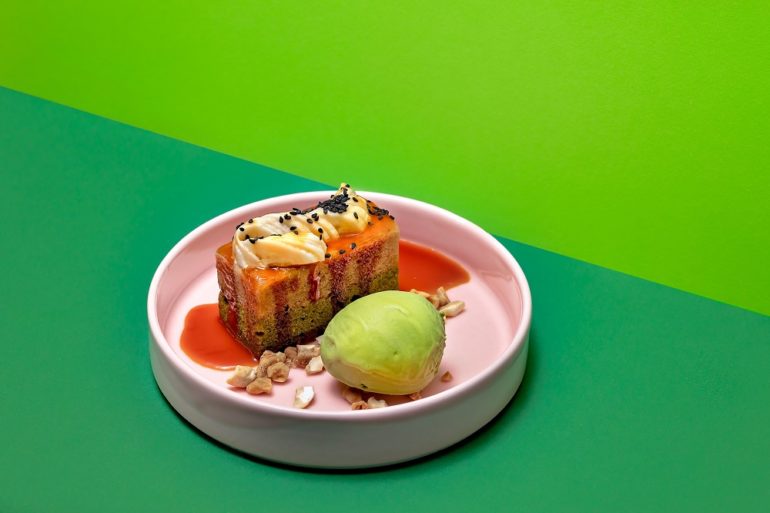
    Other delectable desserts include the Lava Cake (HK$78), featuring a decadent Valrhona dark chocolate filled cake with the earthy taste of walnut soup, and Matcha Cake (HK$58), a sweet caramel sponge cake topped with caramelised banana, and finished with scoops of matcha ice cream.

    “At eat darling eat, we strive to bring the element of traditional Hong Kong desserts that not only touch the heart, but also add a modern twist that will create new memories for our customers,” explained Jonathan Bui, owner of eat darling eat.

    The creative talent behind these quirky and tasty desserts is Executive Chef Jason Luk who tucked international experiences under his sleeve having worked in Bangkok, Shanghai and Miami. In Hong Kong he has honed his skilled at The Drawing Room and Zuma Hong Kong and brings a limitless array of culinary ideas at eat darling eat.

    “While living abroad, I learned a lot about desserts in other places, but at the same time I missed eating food from home. Since coming back to Hong Kong, I want to share the recipes from my experiences and present them to foodies in Causeway Way, which is the perfect place to showcase new and exciting trends and styles,” says Jason.

    eat darling eat offers guests a respite from busy Causeway Bay with its whimsical interiors that mirror the eclectic menu. The design draws inspiration from the experimental Post-modern era, incorporating designs, shapes and colours that challenge convention.

    The interior highlights split-level architecture, where the lower level entrance area is an open concept, while the upper space is framed as a theatre featuring fluorescent colours and reflective surfaces. The overall design is bold, surreal and out of the ordinary, emphasizing the creativity of the desserts.

    While eat darling eat offers mainly fun and playful desserts, it also offers savoury dishes for lunch and dinner that can be chosen from the a la carte menu and signature lunch menu alongside an extensive coffee, tea and cocktail menu. eat darling eat invites diners to take a break, slow down, and savour the moment in the midst of the hustle and bustle of Causeway Bay.

  • The Shoppes at Marina Bay Sands hit record high in 2018

    The Shoppes at Marina Bay Sands hit record high in 2018

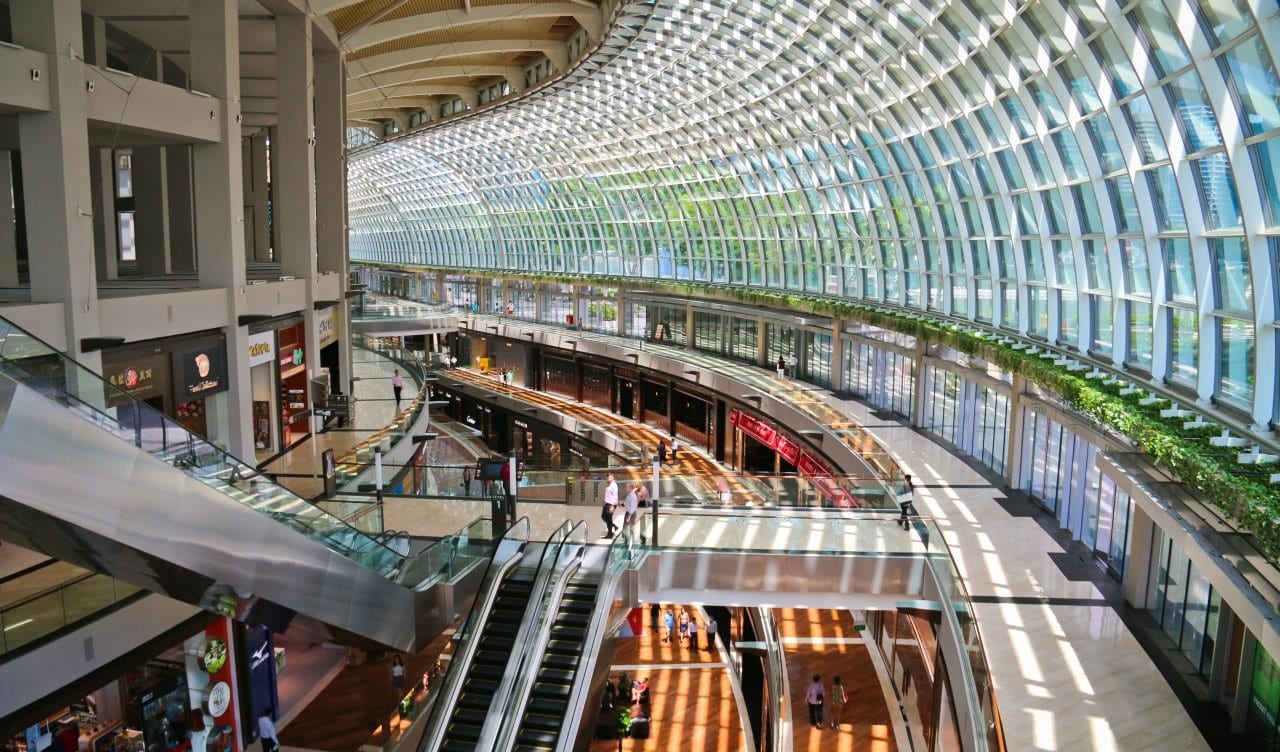
    The Shoppes at Marina Bay Sands has capped its most successful year ever, breaking revenue records in 2018 and strengthening its leading position as the luxury shopping destination in Singapore. The luxury mall, which enjoys an occupancy of 95.4%, rang in a record mall revenue of US$179 million last year, a 7 per cent rise against the same period in 2017 – by far its best performance since opening. In 2018, retail tenant sales at The Shoppes jumped 19 per cent to US$1,898 per square foot from the preceding year.

    The Shoppes also kept its top position in tourism shopping, capping a record year to represent an estimated 25 per cent of the tax-free tourist market in Singapore. This is based on industry metrics that track tax-refunded tourist receipts.

    John Postle, Senior Vice President of Retail, Marina Bay Sands, said, “2018 has been an exceptional year for the mall, as we not only achieved our highest sales revenue in history, but also solidified a leading position in tourism shopping. This is so rewarding, given the competitive retail landscape and growth of online shopping.”
    The performance is also the result of an ongoing retail remix strategy that started in 2012, which saw the mall double its footprint with luxury brands in the form of duplexes, as well as expansion into luxury childrenswear.

    This strategy, coupled with attractive programming such as late-night shopping, in-store exclusives, and one of the most generous loyalty programmes in Singapore, has resulted in 120,000 shoppers walking through the doors of the mall daily. This includes locals as well as its biggest tourism markets of China, Indonesia and Japan.

    Jan Moller, Country Managing Director, Singapore & APAC Sales, Global Blue, said, “As one of Asia’s leading shopping destinations, The Shoppes at Marina Bay Sands continues to outperform other luxury malls in Singapore to own the greatest share of inbound tourist spend in the luxury sector in 2018.”