Tag: tourist

  • Which tourists spend the most overseas?

    Which tourists spend the most overseas?

    Overseas spending by South Korean tourists ranks among the top of advanced economies, research data showed on December 5. Figures provided by the Korea Economic Research Institute, affiliated with the Federation of Korean Industries, put the proportion for South Korea at minus 1.9 percent in 2016, ranking it the fifth highest among 32 member states of the Organization for Economic Cooperation and Development (OECD).

    The institute derived the proportion by subtracting overseas expenditures by South Koreans from foreigners’ spending in South Korea and measured the sum’s ratio against household spending.

    Higher numbers in the negative means that local citizens spent more abroad that what inbound foreigners spent.

    Results showed Norway topped the list with minus 4.3 percent, followed by Lithuania (minus 2.7 percent), Belgium (minus 2.5 percent) and Germany (2.3 percent).

    In the case of Japan, the number turned positive in 2014 and came to 0.6 percent in 2016.

    “The outflow of spending is the result of choices by local and foreign consumers of tourism services,” the institute said. “It indicates weaknesses in the competitiveness of the domestic tourism industry.”

    The institute cited a report last year from the World Economic Forum that said South Korea’s competitiveness in prices fell from 84th in 2007 to 88th in 2017.

    “(This) was one of the important elements that undermined South Korea’s competitiveness in the tourism business,” it said.

  • Hamleys Japan in talk for theme park JV

    Hamleys Japan in talk for theme park JV

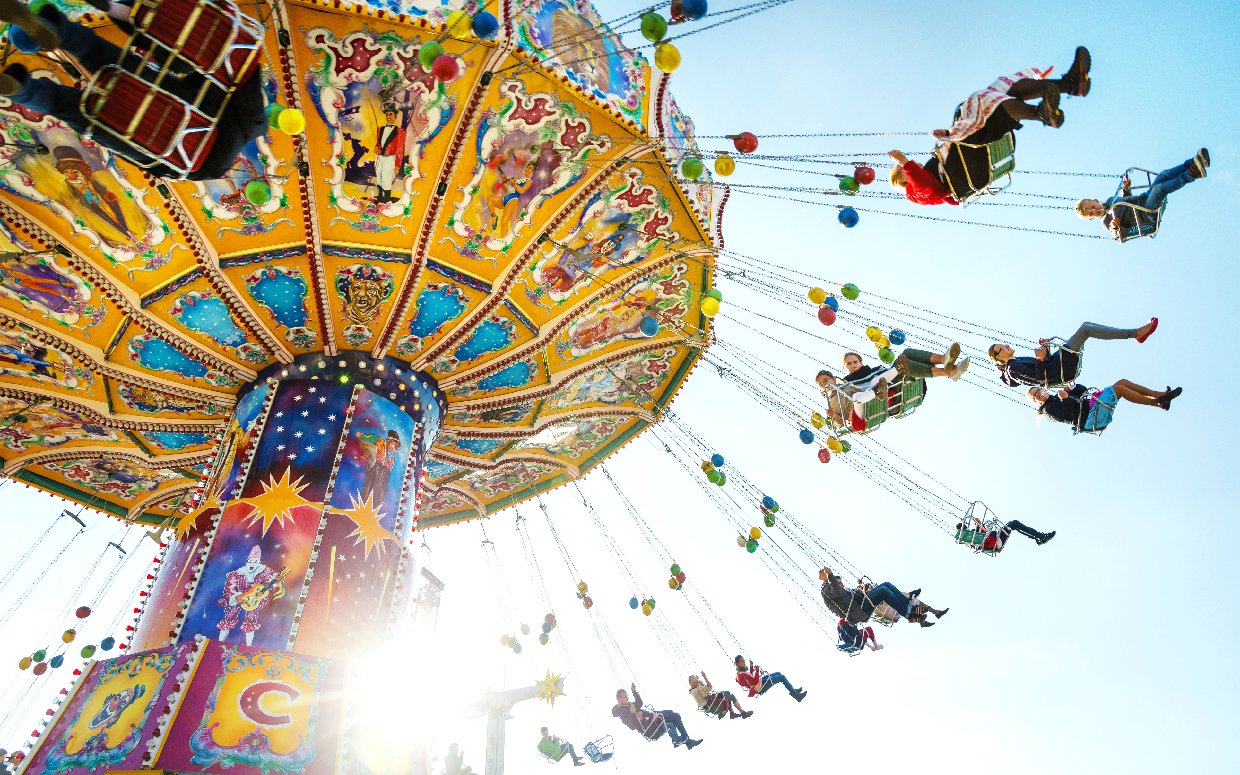
    Chinese-owned, British headquartered toy store chain Hamleys has entered the Japanese retail market, opening two theme-park styled outlets. Hamleys Japan is targeting 4 million visitors to each store within the first year, with a view to opening 30 stores in the territory over the next five years.

    The new stores have opened in Yokohama (at 32,300sqft) and Fukuoka (at 58,100sqft) in partnership with local video games firm Bandai Namco in a £300 million (US$381.7 million) venture. Each store features around 6000 products on sale and entertainment facilities such as merry-go-rounds, games corners and infant play spaces.

    Hamleys CEO Ralph Cunningham said Japan represents “an exciting and important market” and is key to Hamleys’ continued international growth strategy.

    “We look forward to bringing smiles to the faces of children and families all over Japan and delivering the unique Hamleys in-store experience to this fantastic market.”

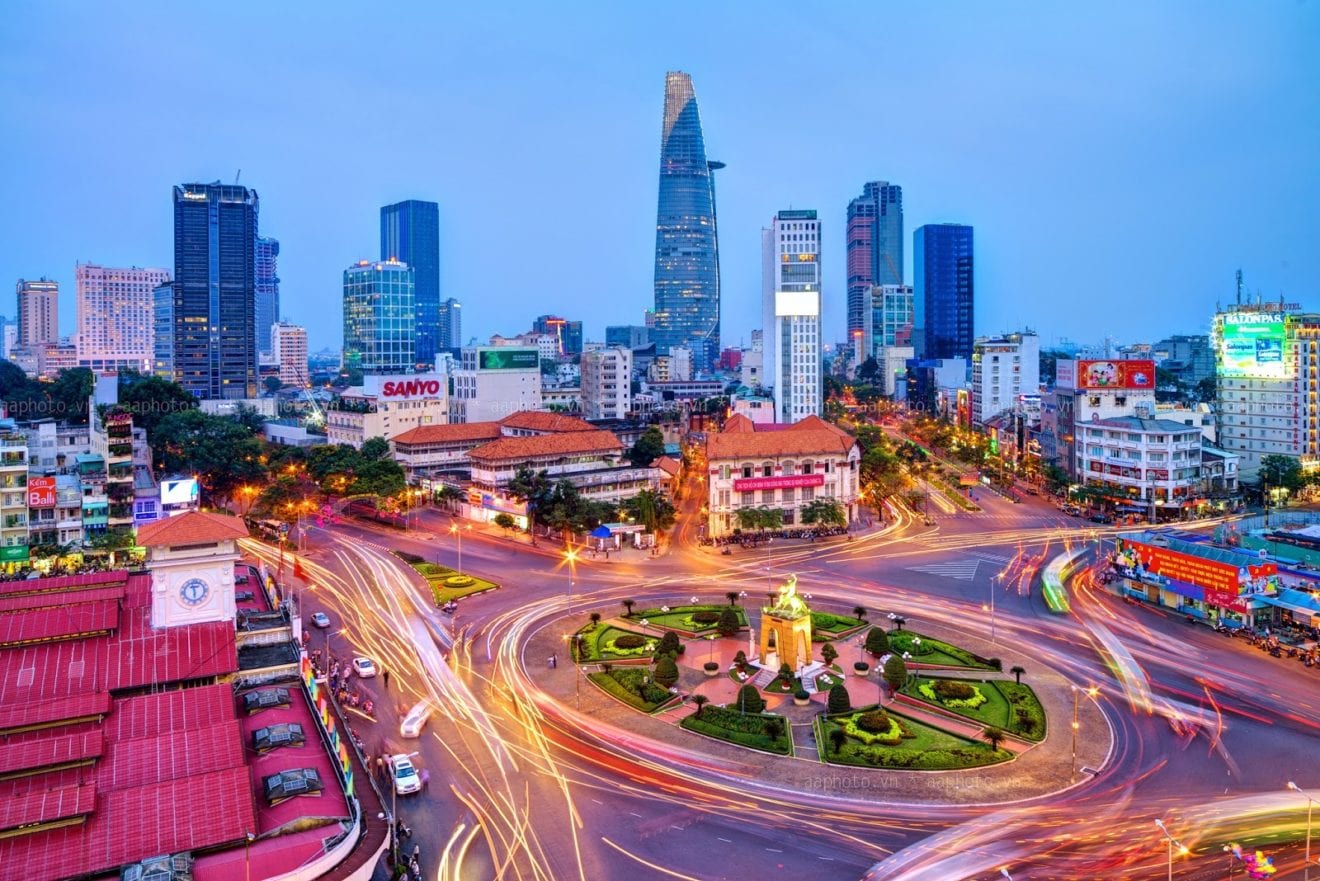
  • Vietnam needs more hotels as tourism blooms

    Vietnam needs more hotels as tourism blooms

    The “golden age of tourism” in Vietnam presents robust hotel development opportunities in Vietnam’s biggest cities. Troy Griffiths, deputy managing director of real estate consultant Savills, said Ho Chi Minh and Hanoi are “under-hoteled per population, per travel and per airlift capacity”.

    “Hotel is a particularly dynamic sector at the moment as Vietnam is experiencing a golden age of tourism, with international tourism rising 20-30 percent year-on-year and more Vietnamese travelling than any time before,” Griffiths said.

    “There’s a demand for five-star hotels which will be really a strong asset class for the future,” he added.

    As of November, 14.12 million foreigners visited the country, up 21.3 per cent year-on-year and exceeding last year’s 12.9 million, according to the General Statistics Office.

    South Koreans dominated the surge at 46.5 percent, followed by Hong Kong (32.8 percent), Finland (29.6 percent), mainland China (26.9 percent), Taiwan (15.6 percent), and Denmark (15.4 percent).

    In the same period, domestic travelers rose 20.91 percent.

    “Hanoi and HCMC had been pretty quiet in the past as they went through a bit of a bad phase, when international visitors would pass and go straight to Da Nang, Phu Quoc and Nha Trang.

    “Now we see they are actually coming to Hanoi and HCMC because they are both very charming cities for international tourists,” Griffiths said.

    “And their stay is lengthening. That means more five-star demand.”

    Vo Quoc Phuong Trang, head of hotel investment consultancy at real estate service firm Jones Lang LaSalle (JLL), also said that Hanoi and HCMC, with their steady economic and tourism growth, would continue to draw foreign investors in the high-end hotel segment, which Trang said has low risk but offers steady revenue.

    A report released in July this year by global consulting firm Grant Thornton stated that increasing numbers of well-to-do Vietnamese citizens are choosing to stay in five-star hotels and spend lavishly when they travel within the country.

    Vietnamese citizens accounted for 19.2 percent of 4-star and 5-star hotels guests in 2017, according to the report. Although this is a slight decrease from last year’s figure of 20.8 percent, the number of domestic guests staying at upscale hotels had increased for three consecutive years from 2014 to 2016.

    The country has seen a strong influx of international hotel brands and hotel management companies in the last few years. From 30 hotels with international brand names in 2010, the number had increased to 79 at the end of last year, according to Savills.

    There has been a particularly big jump this year with recent announcements by Mandarin Oriental and Movenpick in HCMC and Best Western Premier in the central province of Quang Binh, it said.

    The emergence of Vietnamese hotel operators is also a highlight in the local hospitality landscape.

    “Vietnamese hotel developers are also getting mature. They are acquiring international knowledge and becoming a really strong force in their own right as we have already seen across the resort cities with Vingroup, FLC, BIM and Sun Group,” Griffiths noted.

    Savills’ third-quarter report shows that the 5-star segment in Hanoi continued its strong performance in Q3 though the high travel season for foreign tourists lasts from the beginning of Q4 to April.

    Occupancy rate of five-star hotels in the capital city was highest, at about 80 percent, followed by four-star hotels (65 percent) and three-star hotels (59 percent).

    Average revenue of five-star hotels was $100/room/night, double that of four-star and three times that of three-star properties, the report said.

    Data said, ten out of 19 high-end hotels in the best locations in HCMC have foreign owners. These include Sheraton, Caravelle, InterContinental, Asiana Saigon, and Sofitel.

    In Hanoi, nine of 16 high-end hotels have foreign firms as major owners such as Melia, Sheraton, Sofitel Metropole, Nikko, and Pan Pacific being the major names.

  • Genting sues The Walt Disney Co for cancelled theme park contract

    Genting sues The Walt Disney Co for cancelled theme park contract

    Genting Malaysia Bhd’s share price fell as much as 18.6% today on news that it is suing Twenty-First Century Fox Inc and The Walt Disney Co for more than US$1 billion (RM4.19 billion) for terminating their contract to develop a Fox-branded theme park at Resorts World Genting in Malaysia. The Fox theme park is a key selling point of the Malaysian casino resort group’s multi-billion ringgit Genting Integrated Tourism Plan.

    Genting Malaysia told Bursa Malaysia today it is suing Fox Entertainment Group, LLC, Twentieth-Century Fox Film Corp, FoxNext, LLC (collectively known as FOX), Twenty-First Century Fox, Inc (21CF) and The Walt Disney Co for the termination of a memorandum of agreement (MoA) relating to the theme park project.

    The Walt Disney Co is in the process of acquring Twenty-First Century Fox.

    Genting Malaysia was the most actively traded counter on the local stock market today, closing 16.7% lower at RM3.00 with some 276.3 million shares traded. It opened lower at RM3 and fell as much as 67 sen from its last adjusted closing price of RM3.60, to trade at a low of RM2.93.

    In a filing with Bursa Malaysia, Genting Malaysia said it has filed legal proceedings in the US against FOX, 21CF and Walt Disney, in response to a notice issued by FOX in which it terminated the MoA and claimed about US$46.2 million (about RM193.6 million) in accelerated payments.

    “Genting Malaysia denies that FOX had grounds to terminate the MoA, denies any liability resulting therefrom, and has pursued cause of action against FOX for breach of contract, and breach of the implied covenant of good faith and fair dealing, among others,” it said.

    The group has also pursued cause of action against Disney and 21CF for inducing breach of contract and for interference with contract.

    The group said it intends to fully enforce its rights under the MoA, claim for the cost of its investments and consequential and punitive damages that in total will exceed US$1 billion, and such other reliefs to be determined by the court.

    Genting Malaysia said the litigation is not expected to impact its current business operations. It said the validity of the causes of action as well as the availability and extent of Genting Malaysia’s damages cannot be ascertained at this juncture.

    To recap, Genting Malaysia entered into the MoA dated June 1, 2013 with Twentieth-Century Fox Licensing & Merchandising, a division of Fox Entertainment Group, Inc. Genting Malaysia was granted a licence to use certain intellectual property rights associated with Fox theatrical motion pictures in connection with the design, development, construction and operation of what was to be called the Twentieth-Century Fox World Theme Park. The MoA was subsequently amended on June 10, 2014 and June 9, 2017.

  • Duty-free sales may hit all-time record this year

    Duty-free sales may hit all-time record this year

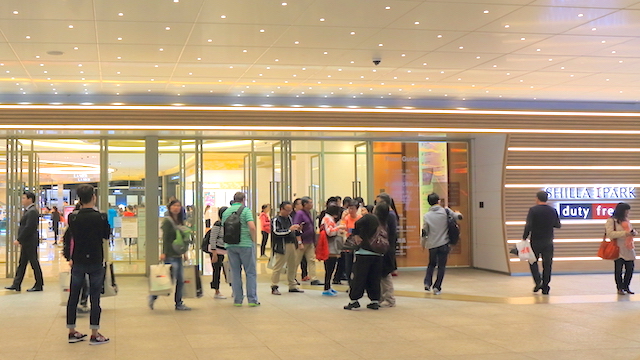
    Korea’s duty-free sales are likely to set a new annual record this year despite Chinese group tour traffic not having fully recovered.  According to the Korea Duty Free Shops Association, duty-free store operators made $1.44 billion in October, a 28.6 percent increase year on year. This takes Korea’s total duty-free revenue between January and October to $14.3 billion, surpassing 2017’s full-year revenue of $12.8 billion.

    “The local duty-free market was 14 trillion won [$12.4 billion] in size last year – some forecast this year will reach a new all-time record of 18 trillion won,” said a source at one of Korea’s largest duty-free store operators.

    The growth is meaningful considering that Chinese group tours are not fully back in the market.

    Industry watchers and analysts attribute the increase in duty-free sales this year to “daigongs,” or individual Chinese merchants that purchase Korean goods and resell them at home.

    Before Chinese group tours were banned in March 2017 after Korea’s deployment of the U.S. Terminal High-Altitude Area Defense antimissile system, they were a major source of revenue for local duty-free stores. As traveling to Korea for Chinese became more difficult, the reselling business began to grow.

    “Revenues are going up this year but we’re still waiting for group tours to come back,” said another source at one of top three duty-free companies.

    Sales increases are generally good news, but industry watchers warn that operating profits will not grow as fast as revenues. Attracting daigongs entails high marketing costs. New duty-free outlets opened in Seoul this year, which means competition to pull in daigongs may become more intense.

    Signs suggest restrictions on group tours from China are easing. Some online tour agencies have started marketing group tour packages to Korea on their websites. Last week, China’s largest online tour agency Ctrip posted Korean tour products on its website, but erased them the same day.

  • Hong Kong Top 10 Most Visited Cities in Asia Pacific: Mastercard

    Hong Kong Top 10 Most Visited Cities in Asia Pacific: Mastercard

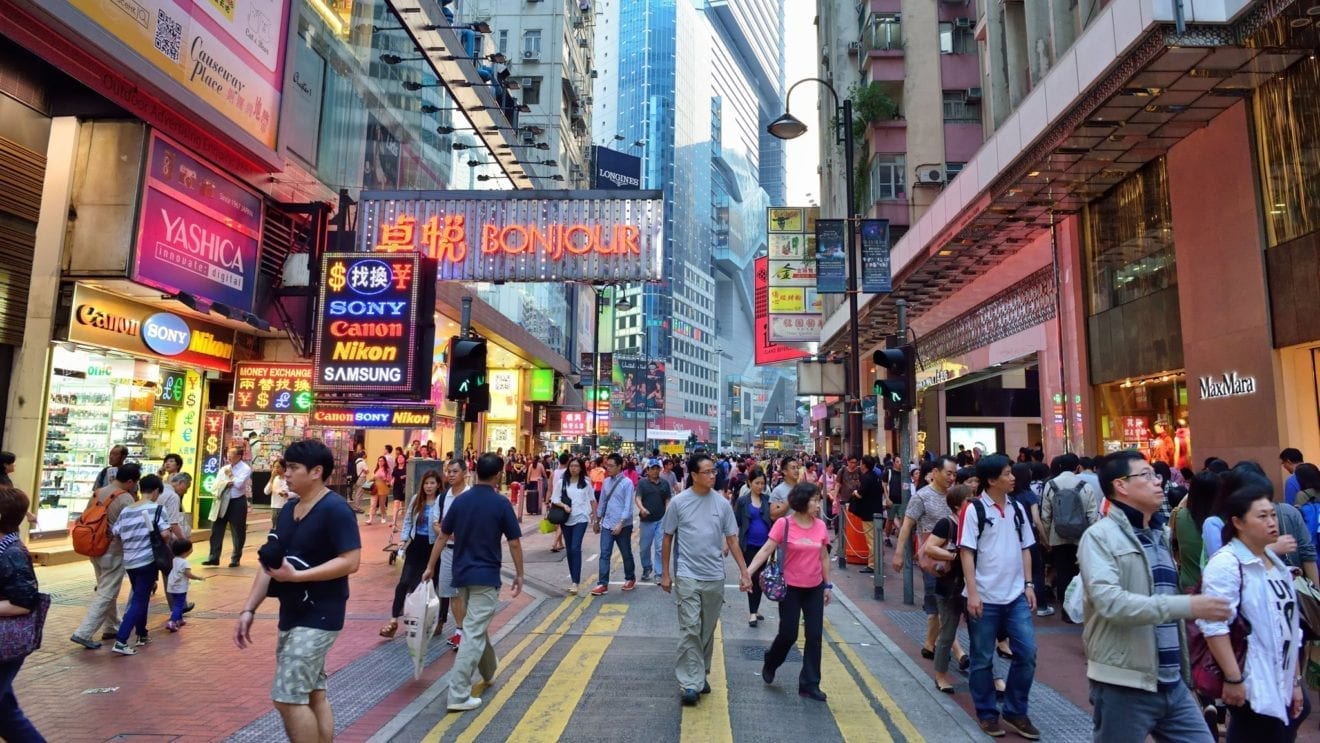
    Hong Kong is listed as one of Asia Pacific’s top 10 most visited destinations for the eighth consecutive year in the Mastercard Global Destination Cities Index 2018 released. Ranked 14th globally and seventh in Asia Pacific, Hong Kong welcomed 9.03 million international overnight visitors in 2017. Despite dropping a notch from ranking the sixth the previous year, the city saw a slight increase in international overnight visitors from 2016 which saw 8.86 million visitors. Overnight visitor arrivals to Hong Kong are forecast to grow by 0.9 percent in 2018.

    The city is currently at the tenth spot regionally, and is also expected to see 3.78 percent growth in international overnight visitor spending from US$5.92 billion in 2017.

    Ranking the world’s 162 top destination cities, the Index analyzes visitor volume and spending for the 2017 calendar year and provides a forecast for annual growth, insights on the fastest growing destination cities, and a deeper understanding of why people travel and how they spend around the world.

    Global & Asia Pacific Highlights:

     Bangkok remains to be the No. 1 destination city in the world with 20.05 million international overnight visitor arrivals, while London came in a close second with 19.83 million visitors. Paris and Dubai came at the third and fourth spots, with 17.44 million and 15.79 million visitors respectively. Singapore remains at the fifth spot with 13.91 million visitors.

     Forty-eight point five percent of travelers to the global destinations came from China, which ranks at number two among the top origin countries, next to the United States with 57.4 percent.

     Dubai continues to be the top ranking destination city in the world based on overnight visitor spend, having recorded an International Overnight Visitor Spend of US$29.70 billion, followed by Makkah and London with US$18.45 billion and US$17.45 billion each.

     The top three overnight international visitors in Hong Kong last year were from the Republic of Korea (12.9 percent), the U.S.A. (9.6 percent) and Taiwan (9.5 percent).


  • OneSiam Bangkok teamed up with Air Asia to lure Chinese shoppers

    OneSiam Bangkok teamed up with Air Asia to lure Chinese shoppers

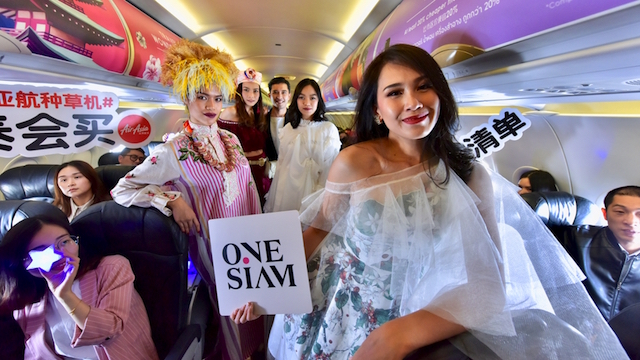
    Bangkok’s three shopping centres grouped under the OneSiam brand, are collaborating with Air Asia to encourage more Chinese tourists to Thailand. The malls – Siam Paragon, Siam Center, and Siam Discovery – have received backing from the Tourism Authority of Thailand (TAT)’s Chengdu office to launch a campaign called Air Asia x OneSiam present Thailand Shopping Festival. It will run from now through to the end of the Lunar New Year celebration early next year.

    The partners believe the campaign will help achieve an anticipated 15 per cent increase in Mainland Chinese tourists visiting Thailand next year.

    Chinese remain the largest demographic group of tourists visiting Thailand, according to Charun Chuennaitom, director of the TAT Chengdu Office. TAT data shows that between January and August this year, an estimated 25.8 million tourists travelled to Thailand, 10 per cent more than during the same period last year. Chinese accounted for 7.7 million of those, up by 16.5 per cent.

    Tanavan Arkaleephan, director of tourism department at Siam Piwat, said OneSiam is a popular destination for Chinese travellers.

    “Each day there is an estimate of 150,000 to 200,000 shoppers in Siam Paragon, 120,000 to 150,000 in Siam Center and Siam Discover, separately. The ratio of Thai visitors to Chinese visitors is 60 to 40.”

    He said the top five tourist sources to regularly visit OneSiam are China, Hong Kong, South Korea, Malaysia and Singapore, but Chinese remain the majority group.

    Tourists who between now and February 28 present an Air Asia boarding pass to One Siam staff at the Siam Paragon tourist lounge, and who follow the OneSiam WeChat account, can receive privileges and promotions from partnering brands, including vouchers from OneSiam, product samples from Pralyn, 30 per cent discounts on body massage therapy from The Beauty Art, and discount offers from Thai designer brands.

    Tourists can enter to win tickets from Air Asia and shopping vouchers at OneSiam.

    Air Asia offers direct flights from Bangkok to 15 destinations in China.

    Nattinee Tawanchulee, director of commercial at Thai AirAsia, said as part of the collaboration, Air Asia has a surprise in store for travellers on some flights from Chongqing to Bangkok, with an in-flight fashion show showcasing special collections from Thai brands including Fri27Nov, Iconic, Kloset, Rotsaniyom, and Theatre.

  • Malaysia ahead of US in global Chinese tourist transactions

    Malaysia ahead of US in global Chinese tourist transactions

    Malaysia has climbed ahead of the US to become the ninth largest market worldwide for Chinese tourists’ spending overseas.

    This was recorded during China’s summer holidays, which took place between July 1 and Aug 31 this year.

    According to Alipay, a mobile and online payment platform offered by Ant Financial, the volume of transactions made by Chinese tourist using Alipay in Malaysia grew five times this year compared to the same period in 2017. This growth also makes Malaysia the only other Asian country apart from Cambodia to make the top 10 list.

    “Malaysia is a hotspot for Chinese tourists. When we established our network with Malaysian merchants in May last year, we looked forward to seeing both Chinese tourists and local businesses mutually benefit from our presence.

    Today, Chinese travellers can continue enjoying the smart lifestyle they enjoy back home, and Malaysian merchants are able to expand on their service offerings and see profit with Alipay,” said Cherry Huang, general manager, cross-border business for South and Southeast Asia Alipay.

    The two-month annual holiday period celebrated in China saw Alipay process almost three times as many in-store overseas transactions than during the 2017 summer break. It also saw a 43% increase in the average per-capita spend per user this year, going from RMB2,073 (RM1,257) to RMB2,955 (RM1,792).

    China was the third largest source of tourist arrivals (at 2.28 million) for Malaysia in 2017 and more tourists are expected to arrive over the years. Alipay’s presence locally allows merchants to leverage on Chinese tourists’ preference for cashless payments. This is evidenced by Nielsen’s findings highlighting that 99% of Chinese tourists have Alipay installed on their devices, with over 90% preferring mobile payments abroad given the option.

  • Who’s travelling to Japan?

    Who’s travelling to Japan?

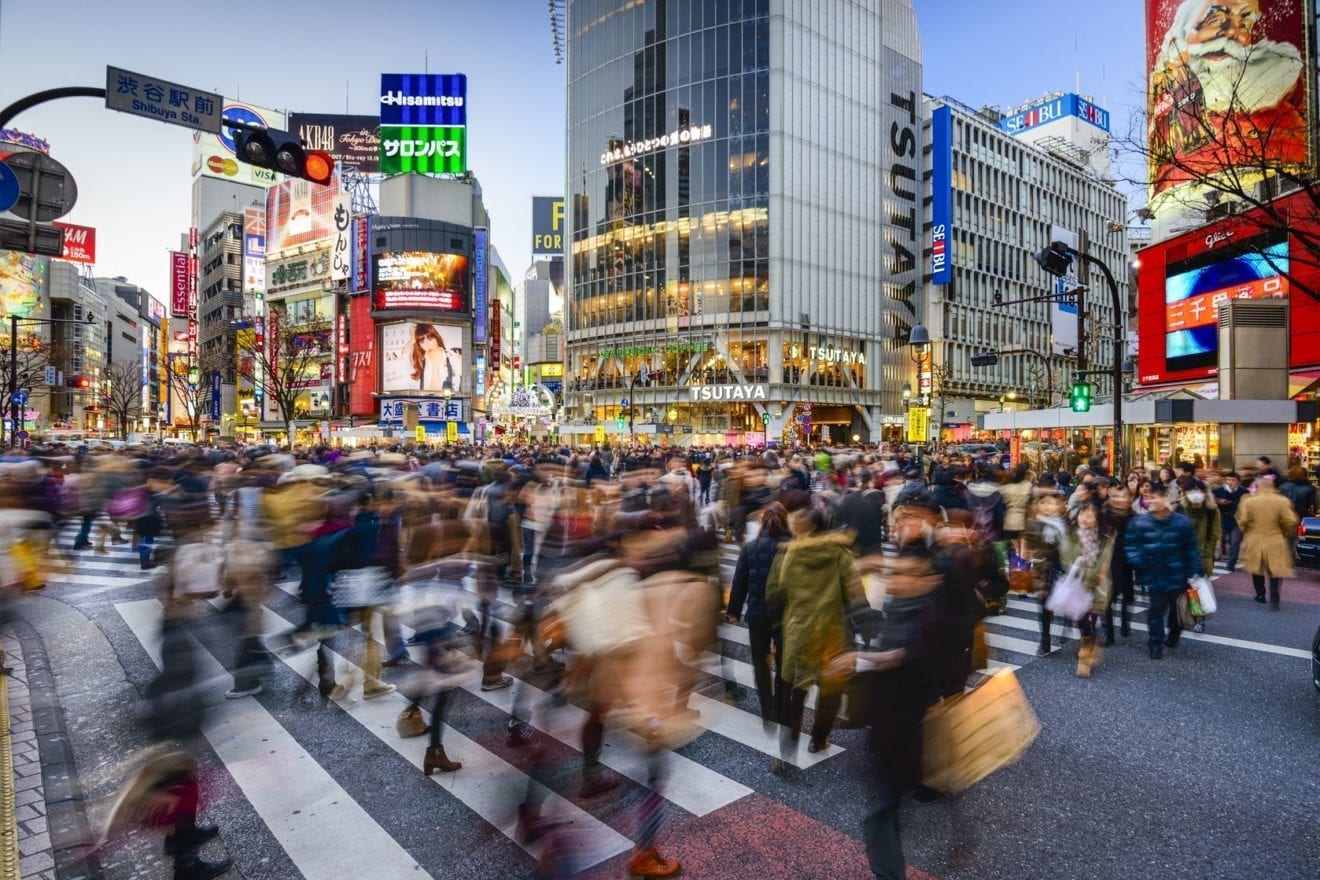
    Japan’s tourism bonanza shows no signs of abating. The country welcomed a record 28.6 million visitors from abroad in 2017, an increase of 19.3% on the year. Travelers also spent significantly more: 4.4 trillion yen ($39.68 billion), up 17.8%.

    So, where are all of these people coming from? Where are they going? And what are they spending their money on?

    The numbers clearly show geographical proximity is a major factor. Mainland China was the No. 1 source of visitors to Japan last year, accounting for 7.35 million, or 25.6% of the total. South Koreans were close behind at 7.14 million, or 24.8%.

    Back in 2007, only 942,439 Chinese tourists came to Japan. But over the next decade, the figure soared by 680.5%.

    Traffic from Taiwan and Hong Kong was also brisk in 2017: the former accounted for 4.56 million visitors, or 15.9%, while the tally from the latter came to 2.23 million, or 7.7%.

    Although China has played a big role in the tourism boom, it is only part of the story.

    Japan has seen exponential growth in the number of tourists from South East Asia. In terms of sheer growth rate from 2007 to 2017, Vietnam actually led the pack, with an 868% increase over 10 years. Arrivals from Thailand surged 489.3%, while those from Indonesia jumped 448.7%.

    What is interesting is also to see where do they go. As for where international travelers stayed in 2017, the usual destinations came out on top: Tokyo, Osaka, Hokkaido and Kyoto. But in terms of growth from the previous year, Tokyo ranked only 33rd out of the country’s 47 prefectures, with Osaka placing 22nd, Hokkaido 26th and Kyoto 19th.

    Oita Prefecture, in the Kyushu region, logged the biggest rise in overseas visitors. Known for its popular hot springs, Beppu Onsen and Yufuin, the prefecture appears to be capitalizing on tourists’ growing tendency to favor uniquely Japanese experiences over shopping.

    Next up was Saga Prefecture, which is now served by more direct, budget flights from Asian cities. Saga is adjacent to another popular destination, Fukuoka Prefecture, making the area a convenient option with ample accommodations.

    At No. 3 was Aomori Prefecture, in the northeastern Tohoku region. This was partly thanks to international carriers: China’s Okay Airways opened a direct flight from Tianjin to Aomori in May, and Korean Air also increased its flights. “Overseas tourists are going to places like open air hot springs by the seaside or hotels with no electricity for visitors — destinations even Japanese people don’t visit that much,” said Akihiko Tamura, commissioner of the Japan Tourism Agency.

    Few will be surprised to find that Chinese tourists topped the spending ranking, forking out an average of 230,382 yen per person in 2017. The bulk of that money went toward shopping.

    Visitors from the U.K. and Australia, meanwhile, spent the most on food and drinks as well as hotels. Visitors from Spain, France and Italy shelled out the most on transportation.

    South Koreans, on the other hand, placed at the bottom of the rankings for hotels, food and drinks, transport and shopping — and, naturally, overall spending. Yet this does not mean they are frugal travelers: since Japan is only a brief flight away, they tend to stay for shorter periods than tourists from other countries, limiting their spending.

  • Soekarno Hatta Airport Now Have Tourist Information Center

    Soekarno Hatta Airport Now Have Tourist Information Center

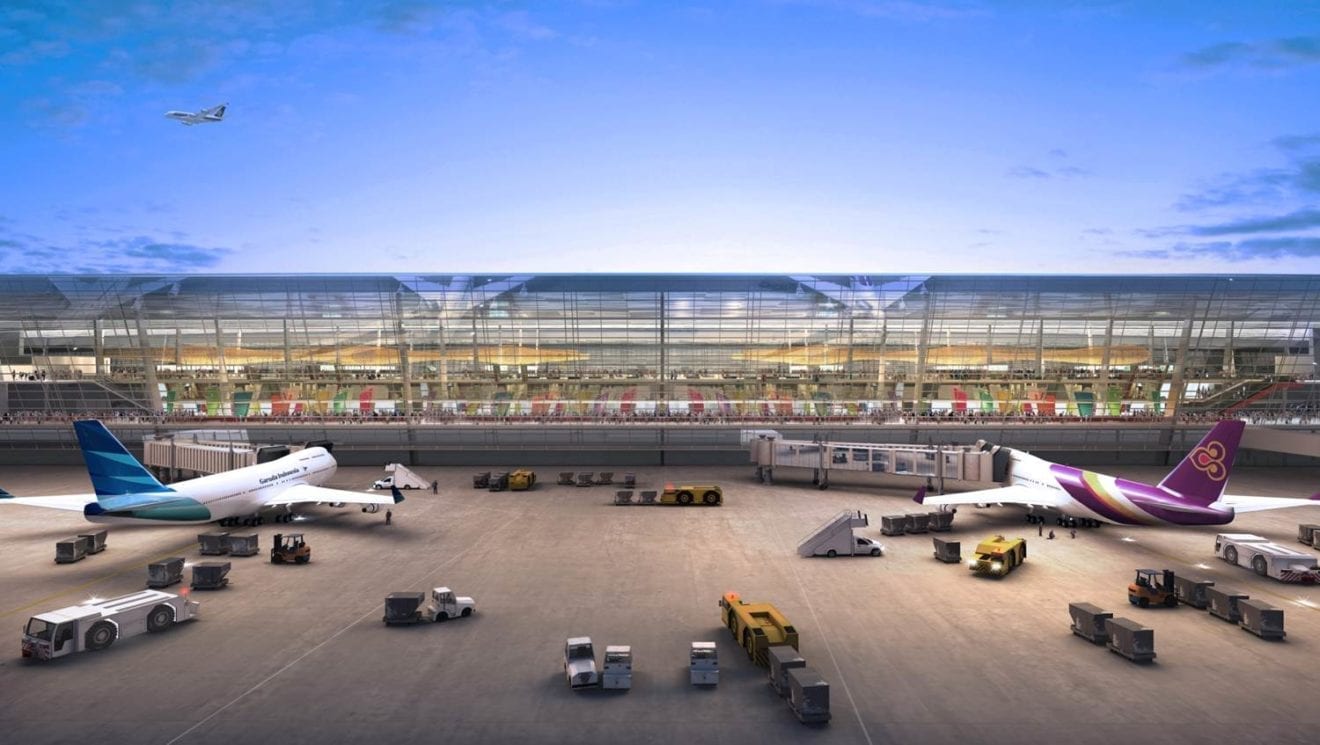
    State-owned operator Angkasa Pura II, Tourism Ministry and Transportation Ministry have launched Tourist Information Center at Terminal 3 of Soekarno Hatta International Airport.

    TIC services that have been operating since June 19 will serve to promote Indonesian tourism. “In order to achieve the full-year target of tourist arrivals,” Angkasa Pura II president director Muhammad Awaluddin said today in a written statement.

    Awaluddin said that Terminal 3 will serve international flights which allow TIC to promote Indonesia’s tourist destinations.

    Promotional contents at the TIC are a wide range of tourist destinations in Indonesia prepared by Tourism Ministry, particularly in relation to the branding ‘Wonderful Indonesia’ and ‘Pesona Indonesia’ (Indonesian Charm).

    The TIC will also enrich Terminal 3 digital contents. Angkasa Pura II is committed to turning Soekarno Hatta into a digital airport in line with the company’s vision of becoming the best smart connected airport operator in the region.

    Tourism Minister Arif Yahya expects TIC in Terminal 3 to become some kind of tourism supermall. Meaning that tourists may get information on tourist attractions, transportation, accommodation, etc. which can be accessed immediately by making reservations and paying for the best tourism experience.

    Angkasa Pura II and Tourism Ministry are committed to collaborating for the development of tourism sector. That includes enhancing international flight connectivity in all airports operated by the company, including Soekarno Hatta.

  • Vietnam finishes third in Southeast Asia race for tourist dollars

    Vietnam finishes third in Southeast Asia race for tourist dollars

    Thailand is way ahead of the game, but Vietnam welcomed record tourism revenue in 2016. Tourists arrivals in Vietnam past the 10 million mark last year, and the $18 billion in revenue collected by the sector contributed around 7.5 percent to the country’s economy.

    According to tourism data, Vietnam fell far short of Southeast Asia’s most popular destination,Thailand, which received over 30 million international arrivals and bagged nearly $46 billion from tourists.

    The entire region, excluding Myanmar and Brunei, raked in an estimated $120 billion from tourism. However, the figure was just half that earned by the United States alone.

    On average, each visitor to the U.S. spent approximately $3,000, while in Asia, their spending was three times less.

    However, Vietnam made significant progress by rising eight places in a global tourism competitiveness index compiled by the World Economic Forum. It also said the country could take better advantage of this momentum by focusing more on sustainable environment policies.

    Tourists are mostly lured by Vietnam’s rich natural and cultural resources.

    By 2020, the sector is expected to contribute 10 percent to Vietnam’s gross domestic product and is set to welcome 17-20 million foreign visitors per year.

    By 2030, it is aiming to become the leading destination in Southeast Asia.

  • Mainland China accounts for 28m of 30m Macau visitors

    Mainland China accounts for 28m of 30m Macau visitors

    Macau’s total visitor arrivals rose a nominal 0.8% to a new record 30.95m in 2016, with nearly 28m travelling from Greater China markets (+0.1%), a slight increase of 0.1%, whereas the much smaller international visitor arrival total grew by 7.9%.

    This will be encouraging news for DFS Macau in particular, plus Duty Free Americas, Dufry and many other standalone retailers currently operating shops in Macau’s hotels and tourist district.

    MACAU GAMBLING ON CASINO RECOVERY

    The increase also comes at a time when Macau’s casino business appears to be recovering some of its big spenders, with last December’s revenue up an impressive 8%.

    Most of these big ’high rollers’ were put off visiting the location, following Beijing’s crack down on irresponsible gambling by some mainlanders three years ago.

    Having said that, there was still a 3% fall in Macau’s overall gambling revenue to $28bn last year and this is still the Special Administrative Region of China’s biggest source of revenue by far [three times the gambling revenues generated in Las Vegas-Ed].

    Macau also continues to be only territory anywhere in China that is allowed to operate casinos.

    MACAU STILL NEEDS A LOT MORE HOTEL ROOMS

    The huge new bridge being constructed to link Hong Kong and Macau and the planned expansion of ferry operations to Macau are also expected to greatly increase visitor arrivals – although this expansion will only as good as the number of hotel rooms that are available – around 35,000 at present.

    In the meantime, the MGTO says it continue to work towards completing the tourism development goals in the 5- year development plan formulated by the SAR Government aimed at turning Macau into a World Centre of Tourism and Leisure.

    Macau welcomed more than 20m Mainland visitors last year, up by 0.2%, with 44% from Guangdong Province. There were also nearly 9.56m ‘independent’ visitors from the Mainland. An increase of 8.8% was recorded for the Taiwan market, whereas the sum of Hong Kong visitors dropped by 1.8%.

    HALF A MILLION KOREANS VISITED MACAU LAST YEAR

    As for international markets, South Korea still ranked highest, contributing over 660,000 visitors to Macau last year (+20%). Southeast Asian markets also performed well, with visitors from Thailand registering the largest growth of over 30% among the top ten source markets.

  • Taiwan, South Korea feel pinch as Chinese Lunar New Year tourism slows

    Taiwan, South Korea feel pinch as Chinese Lunar New Year tourism slows

    The weeklong Lunar New Year holiday season has started in China, and surrounding countries and regions are expecting the usual surge in spending by Chinese tourists. This year, however, things may be different.

    According to China’s biggest online travel agency, Shanghai-based Ctrip, the number of Chinese visiting foreign countries during the holiday period this year is expected to level off, at around 6 million, as a weaker yuan has made shopping overseas less advantageous.

    The depreciation of the yuan has slowed the growth in the number of Chinese tourists going abroad. A survey found that prices of tours to Asian destinations from China during the Lunar New Year holiday season rose more than 10% after the yuan fell 6.6% against the U.S. dollar.

    In addition, the popularity of countries and regions whose relations with China have been strained has sharply dropped among Chinese tourists. The hardest hit may be Taiwan and South Korea.

    Taiwan has seen a decline in Chinese tourists since President Tsai Ing-wen, whose party advocates independence for the island, took office last May. Relations between Taipei and Beijing have cooled significantly under Tsai, compared with the eight-year reign of her predecessor, Ma Ying-jeou.

    The number of Chinese tourists visiting Taiwan during all of 2016 fell to 3.51 million from 4.18 million a year earlier, according to the Taiwanese Tourism Bureau.

    “We haven’t been seeing Chinese tourists lining up for visas for Taiwan since mid-2016,” a Taiwanese Tourism Bureau official said. The situation has been improving recently thanks to the approaching Chinese New Year holiday, but “incoming Chinese tourists will still drop substantially from a year ago, for sure,” the official said.

    The decline in tourists participating in group tours has been the most noticeable, compared with visits by self-guided Chinese tourists, according to the bureau.

    Self-guided Chinese travelers tend to go to different places and eat differently, compared with group tourists. Group tourists visit popular spots such as Sun Moon Lake or Alishan, shop more in souvenir stores, and eat group meals, while self-guided tourists like to visit exotic towns such as Jiufen, Shifen and Pingxi. Independent travelers also spend more time in the southern Taiwanese town of Kenting, enjoying beaches and water activities.

    South Korea

    South Korea expects 140,000 Chinese tourists will come to the country during the Lunar New Year holidays, an increase of 4% from a year earlier, according to the Korea Tourism Organization.

    The country used to be one of Chinese tourists’ most popular destinations. During all of last year, 8.1 million Chinese visited South Korea, up 34.8% from 2015. They accounted for 46.8% of foreign visitors to the country. But growth has slowed, reflecting China’s souring relationship with South Korea over the U.S. military’s introduction of the Terminal High Altitude Area Defense missile defense system on the Korean peninsula. Word in the local tourism industry has it that Chinese government officials have instructed travel agencies to reduce the number of visa applications for South Korea.

    The slowing growth in Chinese visitors is worrisome for duty-free shop operators in South Korea. In an attempt to attract Chinese tourists, industry leader Lotte Duty Free has begun giving gifts to all shoppers from greater China at its head store in Seoul if they make purchases worth $1,000 or more.

    At Gimhae International Airport in Busan, the Busan Tourism Organization set up a photo zone where tourists can take a photo with a model dressed in Korean royal apparel. The agency will also host welcoming events at the Busan International Passenger Terminal for Chinese tourists arriving on cruise ships. Interpreters and volunteers will be dispatched to the terminal to help them.

    In a distinct contrast, Malaysia, which has maintained good relations with Beijing, is enjoying a substantial surge in Chinese tourists.

    Thanks to a number of promotions by the Malaysian government, tourist arrivals from China have increased considerably. Between March and December last year, the number reached 2.2 million, compared with 1.2 million during the same period in 2015. That number is expected to increase further as the country looks to draw in more holidaymakers during China’s “golden week” break.

    Alibaba Group has launched Alitrip Malaysia Tourism Pavillion, an e-marketplace offering travel products and services.

    Following in the footsteps of budget carrier AirAsia, Malaysia Airlines has extended its reach further into China’s second- and third-tier cities. The national flag carrier will start nine new routes in 2017, connecting Malaysian cities to destinations including Haikou, Nanjing, Fuzhou, Wuhan, Chengdu and Chongqing. AirAsia is one of the biggest foreign airlines operating in China, offering over 300 weekly flights.

    Retailers in Hong Kong are also feeling the effect of the weaker yuan. Mainland visitors may be back for the Chinese New Year, but their waning spending power is seen as bad news. “Many of them are looking for bargains rather than luxury goods, and shopping for themselves rather than friends and relatives,” said Thomson Cheng Wai-hung, chairman of the Hong Kong Retail Management Association.

    Businesses have mixed views on Chinese New Year sales. Retailers are worried about a falling Chinese yuan that discourages spending. The Hong Kong dollar’s peg to the stronger U.S. dollar will make shopping more expensive for mainlanders. “This is negative for us,” said Cheng. Tourism sector lawmaker Yiu Si-wing expects hotel bookings to be satisfactory, as a recent correction in room rates will partly offset the currency impact for mainland tourists.

    In December, Chinese tourist numbers in Hong Kong reversed months of declines to grow 6.1% from a year earlier, led by a 9% spike in mainland arrivals during the four-day Christmas holiday. But recent official statistics show that their average spending per trip was 7,100 Hong Kong dollars ($915) in the first half of last year, down from HK$9,000 in 2014.

    “Hong Kong’s tourism industry has entered a period of adjustment,” Gregory So Kam-leung, the territory’s secretary for commerce and economic development, said on Jan. 23. He said the territory would roll out 16 food trucks selling local snacks and international cuisine, in addition to an annual night parade at an estimated cost of HK$33 million, to woo visitors during the week of the Chinese festival.
  • Why Vietnam should care about how much Chinese tourists splurge

    Why Vietnam should care about how much Chinese tourists splurge

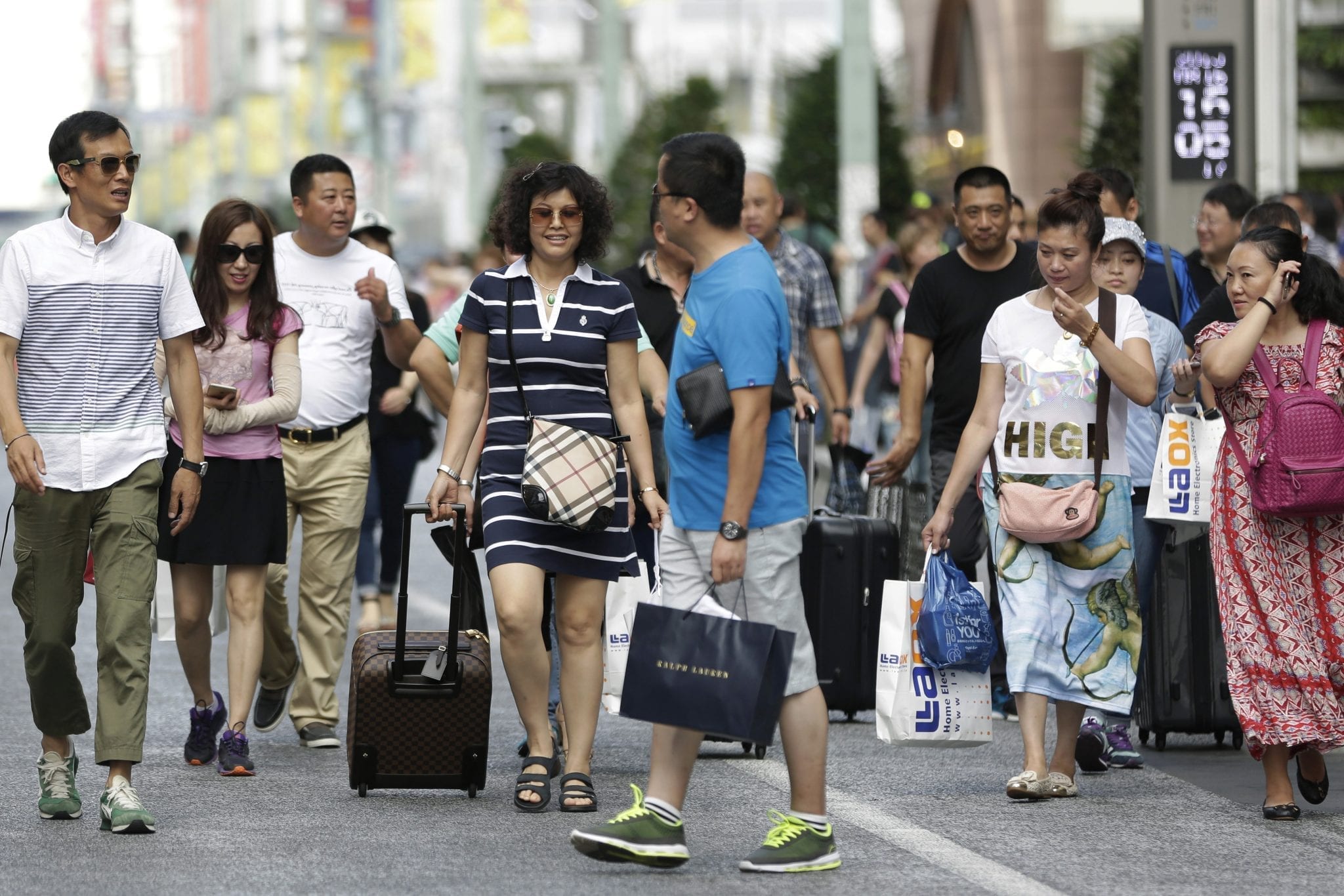
    More spending by Chinese visitors can boost Vietnam’s GDP by 1 percentage point. As more Chinese travel around the world, they leave bigger impacts wherever they go. Now experts say for countries that receive a large number of Chinese arrivals, including Thailand and Vietnam, their economic growth will be influenced by the spending habits of these visitors.

    A 30 percent increase in spending by Chinese tourists would boost Vietnam’s gross domestic product by nearly 1 percentage point, citing Credit Suisse. For Thailand, that would be around 1.6 points.

    Vietnam’s economy is expected to expand 6 percent this year, before speeding up to 6.8 percent next year.

    Mainland China accounted for 30 percent of all tourists to Vietnam, with more than 2.48 million coming in the first 11 months this year, up 54 percent from the same period last year. It was the biggest source market, and only came after Hong Kong in terms of growth.

    In October, the Chinese Tourism Administration released a top 10 list of favorite destinations for Chinese travelers, ranking Vietnam at seventh.

    Edward Lee, an economist with Standard Chartered Plc in Singapore, said that tourism in Southeast Asia will benefit from the growing Chinese demand.

    The number of Chinese tourists into Asia as a whole has grown tenfold since 2000, Lee said. They now account for a quarter of tourists in Thailand, which came first in the China’s list of top 10 favorite destinations.

    “Chinese tourism is pretty big for ASEAN now, and all the countries rely on Chinese visitors to keep coming and keep spending,” Lee was quoted as saying.

    Many direct flights are serving Vietnamese major cities from China. A large number also entered via northern border provinces, particularly Quang Ninh, home to the much loved Ha Long Bay.

    Quang Ninh has announced that it will ease visa requirements for Chinese visitors from January 1, allowing groups of Chinese travelers to stay for up to three days without a visa.

    Harry Sa, a research analyst at the S. Rajaratnam School of International Studies, told that “China can do wonders for the economy and the countries in the region understand.”

    Most countries welcome that, even those that have tensions with China, he said, referring to the overlapping claims in the South China Sea (which Hanoi calls the East Sea) that involve Malaysia, the Philippines and Vietnam.

  • Australia leads top ten sources of tourist arrivals in Bali

    Australia leads top ten sources of tourist arrivals in Bali

    Australia led the ten top sources of tourist arrivals in the resort island of Bali in the January-September 2016 period, an official said.

    “The number of Australian tourists visiting Bali in the first nine months of this year reached 850,326, up 16.85 percent from 727,678 in the same period last year,” chief of the Central Statistics Agency (BPS) Office in Bali, Adi Nugroho said here on Sunday.

    Most of the Australian tourists traveled to Bali by direct flights. Only 18,554 of them went to the island by cruise liner.

    More and more Australians visited Bali as they regarded it as their “second home”, he said.

    Australia contributed 23.36 percent of the overall tourist arrivals in Bali at 3.63 million over the period, up 21.69 percent compared to the same period last year when the figure was recorded at 2.99 million.

    Adi Nugroho said nine of the ten top sources of tourist arrivals in bali saw a significant increase in the number of tourist arrivals in Bali. Only the number of Malaysian tourists fell 6.64 percent to 138,203 from 138,203.

    Meanwhile, China occupied the second place with 35.84 percent of the total budget fund.