Tag: tourist

  • Number of Chinese tourists to Bali shoots up 36%

    Number of Chinese tourists to Bali shoots up 36%

    The number of visits by Chinese tourists to Bali shot up 35.84 percent to 741.740 in the first nine months of this year from 546,035 visits in the same period last year.

    “The number of visits by holiday makers from China is now the second largest after those from Australia, which has continued to top the list of 10 largest countries of origin of foreign visitors to Bali,” head of the regional branch of the Central Bureau of Statistics (BPS) Adi Nugroho said here on Saturday.

    Adi said currently China accounts for 20.38 percent of the number of visits by foreign tourists to Bali.

    There were 3.63 million of visits by foreign tourists to Bali in the January-September period this year or an increase of 21.69 percent from 2.99 million in the same period last year.

    Adi Nugroho Australia contributed 23.36 percent to the total; number of foreign visits to Bali. Japan was the third place contributing 4.94% followed by Britain accounting for 4.52 percent, India for 3.57 percent, France for 3.56 percent, Malaysia 3.55 percent, the United States 3.44 percent, South Korea 3.04 percent, and Germany for 3.22 percent.

    He said the increase in the number of tourists from China was attributable to improved economic condition of the worlds most populous country and second largest economy.

    In addition, the countrys flag carrier Garuda Indonesia has provided direct flight between Bali and a number of cities in China such as Shanghai, Baijing and Guangzhou since 2015.

    China has become a target for market expansion by Garuda Indonesia for its international services.

    More than 100 Chinese travel abroad every year making that country the most potential tourist market which would benefit airlines.

    Chinese Consul General in Denpasar, Bali, Hu Yinquan, asked the government to provide sufficient interpreters for Mandarin to facilitate Chinese visitors, who could not speak in English.

    Hu Yinquan also asked that Mandarin also included in signposts as he believed more Chinese tourist would visit Bali in the coming years.

    In Manado, North Sulawesi, Chinese made up around 50 percent of foreign visitors in the third quarter of this year.

    “Chinese guests contributed 50 percent to the occupancy rate of the Lion Hotel and Plaza Manado,” says Sales Marketing Manager of Lion Hotel and Plaza Manado Anatje Pingkan Pinaria.

    Indonesia, however, is still far lagging behind Thailand in attracting Chinese holiday makers.

    Altogether, Indonesia recorded 8.36 million visits by foreign tourist until September this year or an increase of 8.5 percent year-on-year.

    Tourism Minister Arief Yahya said earlier this week, the increase gave greater optimism that the target of 12 million visits by foreign tourists to the country this year would be achieved.

    “In three consecutive months – July-August and September, the number of visits by foreign tourists exceeded one million. We hope that the number would be larger in October, November and December,” the minister said.

    In September, there were 1,006,653 foreign tourist visits or an increase of 9.40 percent year-on-year from 920,128 in the same month last year, he said in a statement.

    Based on data from the Central Bureau of Statistics (BPS) and the Tourism Ministry, the number of foreign tourist visits in the first nine months of the year was 8,362,963 or 8.51 percent higher than 7,707,034 visits in the same period last year.

  • Business council expects 100 thousand Russian tourists to Indonesia

    Business council expects 100 thousand Russian tourists to Indonesia

    Russia-Indonesia Business Council expects an increase in the number of Indonesian tourists to Russia and vice versa in 2016 and the coming years, in order to strengthen relations and economic cooperation between the two countries.

    A statement from the Russia-Indonesia Business Council received by ANTARA here on Thursday said that tourism was a topic of particular concern at the annual Business Forum held on October 31 in Jakarta.

    Mikhail Kuritsyn, the CEO of Russia-Indonesia Business Council, expected 100 thousand Russian tourists to visit Indonesia in the coming years, and 18 thousand Indonesian tourists to visit Russia in 2016.

    He also called for the diversification of tourism in Indonesia, so that Russian tourists would not only visit Bali Island but also other tourist destinations, which are spread across various islands in the country.

    Direct flights from Jakarta to Moscow will be the first step in enhancing the tourism cooperation.

    The national flight carrier, Garuda Indonesia, is expected to become the operator for Indonesia – Moscow flight before the second quarter of 2017.

    The Russia-Indonesia Business Forum was attended by the Russian Federation Minister of Industry and Trade, Denis Manturov; the Indonesian Minister of Maritime Affairs and Fisheries, Susi Pudjiastuti; the Indonesian Coordinating Minister for Economic Affairs, Darmin Nasution; and the Russian Federation Ambassador Extraordinary and Plenipotentiary to Indonesia, Mikhail Galuzin.

    The forum was participated by 150 delegates from Indonesian companies and 100 representatives from Russian companies, including Russian Railways, United Shipbuilding Corporation, Rosneft, Rusal, Rusnano and Rostech.

    The Russia-Indonesia Business Council is a non-governmental organization which was established to bring together Russian and Indonesian businesses.

    Its main mission was to develop a mutually beneficial business relationship in order to strengthen and expand economic trade, investment and scientific cooperation between the two countries.

  • Squeeze in Chinese tourists starts to bite

    Squeeze in Chinese tourists starts to bite

    The Chinese government’s forced reduction of tourists visiting Korea by 20 percent is already dealing a blow to businesses.

    “Even today, tourism offices in several provincial governments are acknowledging they are lowering the numbers of tourists going to Korea,” said an insider working in China’s tourism industry on Tuesday. “In several areas, there were even orders to send visitors to the Philippines instead of Korea.”

    chart

    Relations between China and the Philippines, which were sour for some time due to a territorial dispute in the South China Sea, recently softened after President Rodrigo Duterte visited China last week.

    Seoul’s ties with China have gotten frostier after it decided to deploy a U.S. missile defense shield that Beijing opposes.

    Businesses that rely on Chinese visitors are worrying that the decision will hit them hard. It hasn’t been long since they overcame the aftermath of last year’s Middle East respiratory syndrome (MERS).

    The first signal came from the stock market: shares of companies that could be hurt posted sharp declines Tuesday as news spread. Cosmetics leader AmorePacific fell 7.12 percent to 345,500 won ($305.06). LG Household and Healthcare lost 8.34 percent to 846,000 won. The impact was evident in tourism shares as well: Hotel Shilla lost 6.94 percent and HanaTour retreated 8.04 percent. All shares failed to recover Monday’s closing prices on Wednesday. Companies running group tours were most vulnerable.

    According to the Korea Tourism Organization, 2.4 million Chinese tourists came on group tours last year, 41 percent of the total number of Chinese tourists to Korea, which was approximately 6 million. As group tours are organized two to three months before departure, the decline is expected to really show by year’s end.

    “If Chinese group tours fall by 20 percent, the annual loss in relevant industries may reach a minimum of 2 trillion won,” said researcher Shen Jia at the LG Economic Research Institute. “If the decline spreads to individual tourists, the economic damage will deepen even further.”

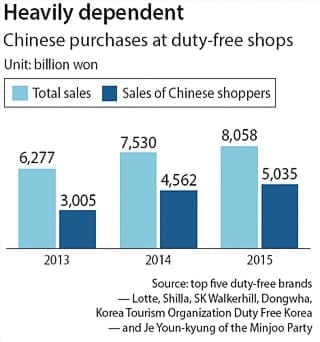
    Duty-free shops are nervous. Last year, the top five duty free operators – Lotte, Shilla, SK Walkerhill, Dongwha and Korea Tourism Organization’s Duty Free Korea – earned 5.4 trillion won in revenues from Chinese tourists, 62 percent of total sales of 8.6 trillion won.

    Through September of this year, Chinese tourists spent 3 trillion won at Lotte Department Stores. As soon as the news of the cutback spread Tuesday, duty-free stores organized emergency meetings with Chinese partners to devise some kind of a backup plan.

    There are currently nine duty-free shops in Seoul, with four more waiting to open next year. Competition in the duty-free industry is fierce, as it is one of the most robust retail markets in Korea. “A sudden drop in Chinese shoppers will cause considerable impact to both current and future duty-free operators,” said a spokesperson for Shilla Duty Free.

    Mid-priced hotels are nervous too. They are popular with group tours. “Half of the guests at business hotels in Myeong-dong or Dongdaemun are Chinese, and most are from group tours,” said Park Jong-mo, manager of the Ramada Hotel and Suites Seoul Namdaemun. “The market supply is rising, with new mid- and low-priced hotels being built in the city center. We’ll be seeing more vacant rooms.”

  • Macau tourist arrivals rise over Golden Week

    Macau tourist arrivals rise over Golden Week

    Macau’s move to reposition itself from gaming hub to shopping and entertainment destination appears to be paying off already.

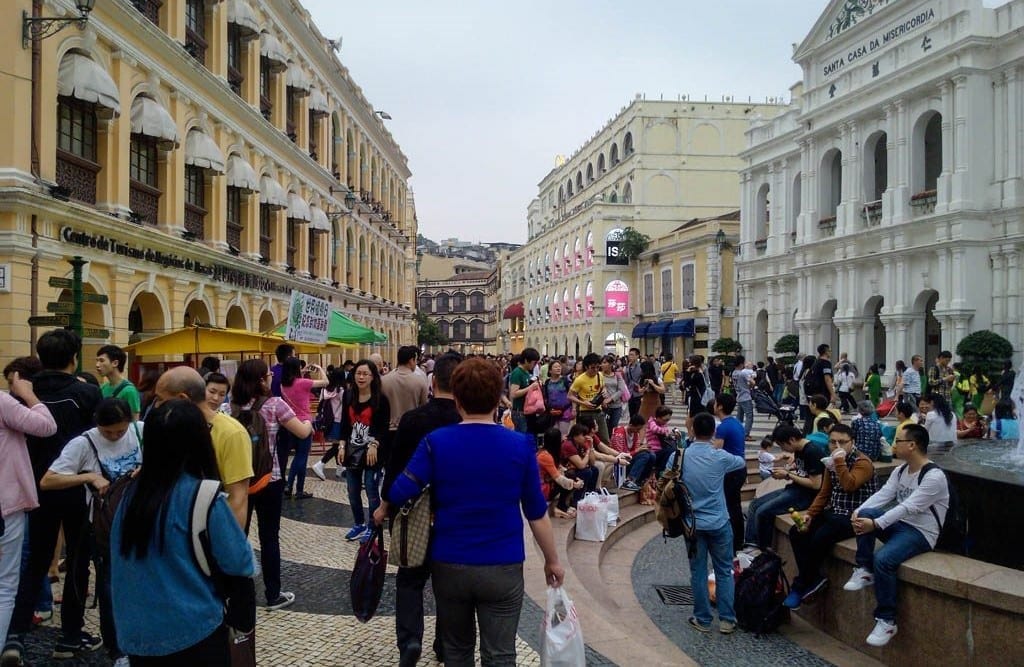
    Tourist numbers rose in Macau over Golden Week as an expanding shopping offer and shows drew 8.45 per cent more visitors than the same period last year.

    During Golden Week – from October 1 to October 10 – 1.61 million people visited Macau according to data from the Public Security Police Force.

    Total border crossings at the city’s seven immigration checkpoints reached 4.7 million for the 10 days: 2,355,720 arrivals and 2,359,090 departures.

    Of the seven border checkpoints, the Border Gate recorded the highest number of arrivals and departures, at 1.15 million and 1.28 million, respectively. The second popular border was the Outer Harbour Terminal on the Peninsula, with 157,211 arrivals and 150,749 departures recorded.

    The busiest day of Golden Week was the third day with 520,386 border crossings registered.

  • Chinese tourists cancel trips to South Korea after THAAD

    Chinese tourists cancel trips to South Korea after THAAD

    Analysts warn of possible blow to tourism, retail industry

    A number of Chinese tourists are cancelling trips to South Korea in the wake of the country’s decision to deploy a missile defense system, a trend which experts say might lead to a blow to South Korea’s tourism industry if it continues, as the sector depends heavily on visitors from China.

    A Beijing while-collar worker surnamed Wang who planned to travel to South Korea in August told the Global Times that although she has already placed a non-refundable payment on a hotel, she was cancelling because of THAAD.

    “After all, there are still a number of travel destinations where I can go,” Wang said.

    Travel agencies in China and South Korea have also noticed the trend.

    Xu Xiaolei, manager of marketing at China’s CYTS Tours Holding Co, said that there have been a handful of clients who cancelled their bookings on a South Korea tour recently.

    “Also, compared with last year, the recruitment process for tours to South Korea during the Golden Week three-day holiday has been slow.” Xu told the Global Times on Monday.

    South Korean tourism industry officials, along with officials from travel agencies that specialize in hosting Chinese tourists in the country, have said that there are “a rising number of Chinese tourists cancelling reservations for August,” according to report on koreabizwire.com.

    The most recent cancellation was for the Chimaek festival, an annual celebration of fried chicken and beer that began on July 27 in Daegu, a city in southeastern South Korea.

    To attract Chinese tourists, the committee came up with a scheduled program in May and organized a train for incoming tourists from Seoul to Daegu, Korea JoongAng Daily reported on July 25.

    The number of Chinese tourists who signed up for the organized tour was 500 by early July, the report noted.

    But in the two weeks since South Korea announced the deployment of the Terminal High Altitude Area Defense (THAAD) anti-missile system, which has received intense backlash among the Chinese public, over 60 percent of the bookings have been cancelled, said the report. As a result, the committee has decided to offer a sightseeing bus instead of the originally planned train.

    Several days ago, Daegu’s 23-year-old sister city in China, Qingdao, East China’s Shandong Province, said it would not be participating in the festival due to “inappropriate timing,” the report noted, citing a Daegu city official.

    The Qingdao government also called off plans for a Daegu government exchange visit to the Qingdao Beer Festival, which started on July 29, amid public outcry to boycott South Korean products, the official said.

    Heavy reliance on Chinese tourists

    Recent years have witnessed a soaring number of Chinese tourists visiting South Korea.

    The number of Chinese arrivals grew 29.4 percent year-on-year to 3.82 million in the first six months of 2016, accounting for 48.8 percent of the country’s foreign visitors, the Korea Tourism Organization data showed.

    Wei Changren, CEO of Beijing-based Jinlu Consulting, told the Global Times on Monday that South Korea’s tourism and travel retail sector rely heavily on visitors from China.

    In the first half of 2016, an estimated 65 percent of the sales volume of Samsung Group’s Shilla Hotel and Resort, the country’s second largest duty free shop, was generated by Chinese visitors, up 45 percentage points over the same period last year.

    “About 70 percent of Chinese tourists travel to South Korea to shop. But average spending by Chinese tourists has decreased recently,” Zhu Zhengyu, an industry analyst with Enfodesk told the Global Times on Monday. “If the number of Chinese visitors continues to drop, the retail industry in South Korea will suffer.”

    Zhu’s opinion is echoed in a report published by Samsung Securities, which reveals that if the number of Chinese visitors shrinks by 1 percent, the operating profit of Shilla Hotel and Resort could fall by 2.6 percent.

    “Besides, considering the size of China’s economy and population, no other country can fill the vacancy if Chinese visitors go away,” Zhu said.

  • East Lampung to develop 11 tourism attractions

    East Lampung to develop 11 tourism attractions

    The government of East Lampung District in Lampung Province, through the local Culture and Tourism Office, is making every effort to develop 11 tourism attractions in the district in its attempt to attract even more local and foreign tourists.

    “East Lampung district government is ready to develop 11 tourist attractions that include natural, marine, and cultural tourism,” local Culture and Tourism Office Chief Mastur remarked.

    Among many districts in the province, East Lampung is rich, beautiful and an interesting area with friendly people and a lot of tourist attractions.

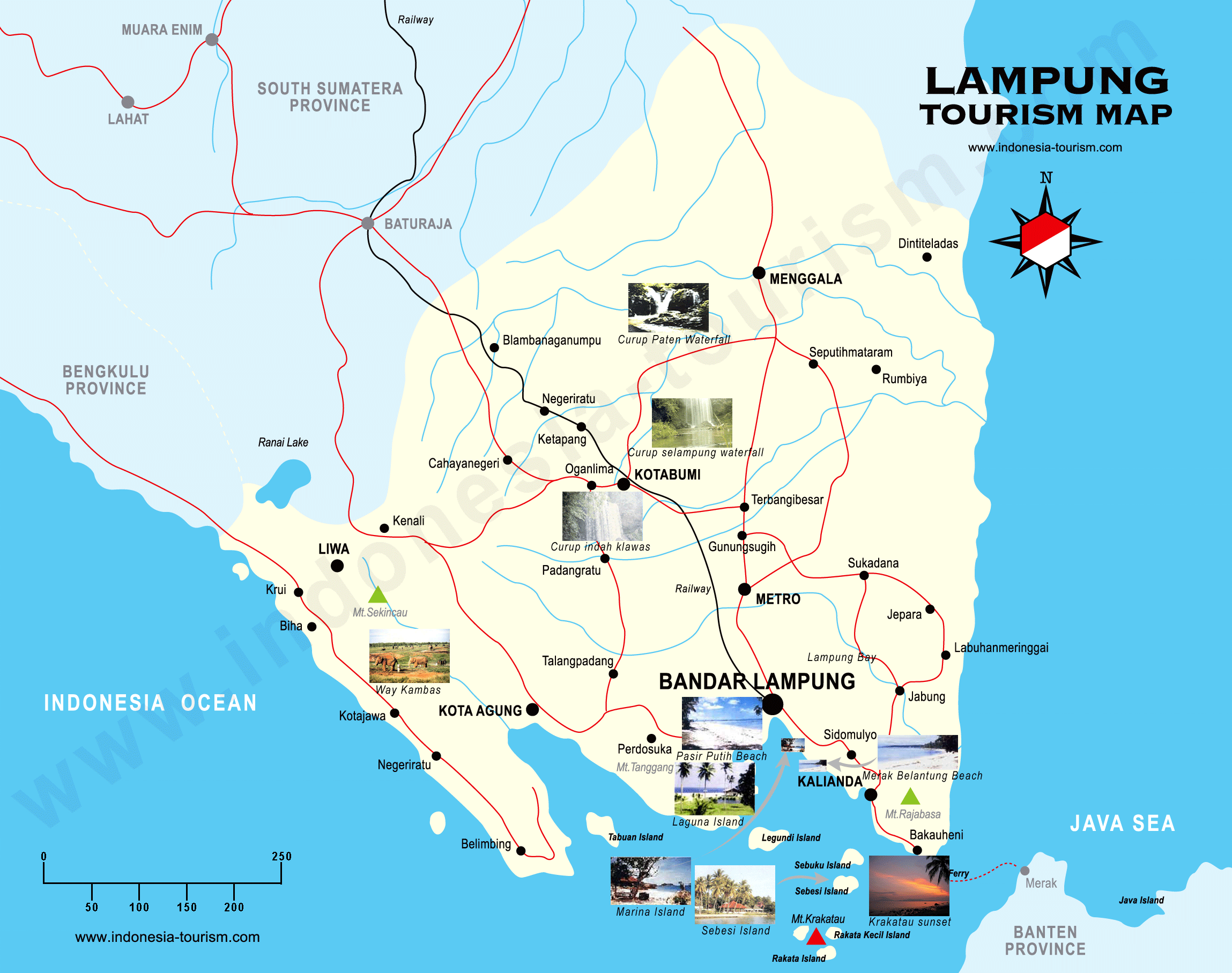
    According to him, among the 11 tourist attractions to be developed include the Way Kambas National Park, Pugung Raharjo Archaeological Park, Kerang Mas beach, Lake Kemuning, Lake Beringin, agro tourism and cultural tourism.

    Of the 11 tourist attractions, Mastur said Kerang Mas beach in Labuhan Maringgai is now being developed.

    Once this beach development is completed, Lake Kemuning and Lake Beringin will also be developed in stages in an effort to attract 250 thousand tourists to East Lampung in 2016.

    “Our target is to see 250 thousand tourists visiting these tourist attractions this year,” Mastur said.

    Lampung province has 64 waterfalls, numerous small, beautiful islands, and seven leading tourist areas where supporting infrastructure facilities are being improved.

    The seven leading tourist areas are the Waikambas National Park; South Bukit Barisan National Park; Kiluan Bay; Tanjung Setia and Krui Marine Tourism; Siger Tower; Mount Anak Krakatau and Sebesi Island; and Bandarlampung Tourism Area.

  • Chinese tourist shopping myths proven wrong

    Chinese tourist shopping myths proven wrong

    Myths about the behaviour and spending patterns of Chinese tourists abroad have been debunked by a new report.

    A study by Oliver Wyman seeks to dispel common misconceptions about outbound Chinese travelers, illustrating how global destinations can sharpen their appeal to meet their changing needs and expectations.

    “The Changing Face of the Chinese Traveller” may help global travel destinations, such as Hong Kong, sharpen their appeal to meet travellers’ changing expectations, explains Hunter Williams, Oliver Wyman partner and author of the report.

    Myths discussed include “They go abroad only to shop,” “They spend indiscriminately,” “They are always in groups”, “Independent travelers are quickly replacing groups,” and “Chinese travelers are more trouble than they are worth.”

    Myth 1: “They go abroad only to shop”.

    Not true. While nearly 100 per cent of travellers shopped during their trip, fewer than 15 per cent of Chinese travellers surveyed cited shopping as the main reason for their trip, in contrast to 63 per cent who specified sightseeing as their top motivation. This impacts the ways in which destinations around the world appeal to this audience.

    “In Hong Kong, where slowing growth in Chinese travellers and their spending has seen retail sales fall 12.5 per cent in the first quarter of 2016, the city will need to become less dependent on shopping by Mainland Chinese visitors and encourage spending on other activities,” said Williams. “Indeed the study reveals that Korea, now the most popular destination for Chinese travellers, is now the destination where shopping is the primary motivation for travel.

    Myth 2: “They spend indiscriminately”.

    Not entirely true. Relatively speaking, Chinese travellers do spend large sums while abroad. On average, they spend around US$3000 per person, roughly the equivalent of a month’s household income. It is also true that they spend a lot on shopping – approximately US$1200 – which may have helped to fuel the misconception that they spend indiscriminately. However, only around half of the spending is on themselves. More than 32 per cent is to purchase gifts for others, and 19 per cent is for resale back home.

    “Chinese travellers have sophisticated needs, so retailers need a segmented approach that emphasises unique value – it’s no longer enough to offer a blanket approach.”

    Myths 3 & 4: “They are always in groups” or “Independent travelers are quickly replacing groups”.

    Not true. Both the number of tour-group travellers and the number of independent travellers are on the rise, showing both individuals and groups will continue to be important traveller segments for some time to come. Independent travellers are not replacing group travellers, but are complementing them.

    “For example, Hong Kong and Macau rank close to the top for the percentage of independent trips, while Taiwan ranks close to the bottom,” says Williams. “At the same time, over the past few years group travellers have actually accounted for a larger share of all travellers dispelling the misconception that groups are gradually being replaced by individual travel.

    “However, The Chinese travellers surveyed considered tour operators to be the single least useful source of information, showing tour operator relationships are no longer enough.”

    Myth 5: “Chinese travelers are more trouble than they are worth”.

    Not true. As a result of cultural misunderstandings, Chinese tourists can often be misjudged. For example, there is no tipping culture in China and it is often socially acceptable to eat food on public transport. Explaining service charges upfront and the proper usage of facilities can reduce miscommunication. Similarly, rules, and penalties for breaking them (such as cleaning fees for smoking in non-smoking rooms), should be clearly communicated. Open two-way communication is the surest way to avoid misunderstanding, says Williams.

    “Today there is no such thing as the archetypal Chinese traveller as this group is complex and multi-faceted. If consumer facing businesses make broad generalisations and buy into the misconceptions, they will miss key opportunities. Businesses need a cohesive Chinese traveller strategy, where the realities of each region and destination must be considered separately.”

    Further findings

    The report, conducted among 1750 Chinese people who had travelled abroad in the past year, also revealed key travel habits. In retail, duty free captures more than one third of total shopping spend. Cosmetics are the most commonly purchased category, followed by alcohol. However, department stores and shopping malls are the most frequently visited channel. They still receive nearly one third of spend, with clothes, food and souvenirs being the most purchased categories.

    Hong Kong has tended to be the default first destination for Chinese travellers with watches and jewellery their most popular shopping category by some distance, with Sogo, Aeon and The Landmark being amongst the most popular retail players.

    • With offices in 50+ cities across 26 countries, Oliver Wyman is a global leader in management consulting that combines deep industry knowledge with specialised expertise in strategy, operations, risk management, and organisation transformation. Oliver Wyman is a wholly owned subsidiary of Marsh & McLennan.
  • Indonesia is favorite tourist destination for Australians

    Indonesia is favorite tourist destination for Australians

    Data obtained from the Australia Bureau of Statistics revealed that 105,500 Australians visit Indonesia every month, Tourism Minister Arief Yahya noted in a press statement received by us here on Monday.

    The minister said the figure showed that Indonesia was a favorite tourist destination for Australians.

    “The data, which was released a month ago, for the first time revealed that Indonesia was the most preferred tourist destination among Australians,” Arief noted.

    According to the bureau, earlier, most Australians visited New Zealand, with an average of 99,400 tourists per month.

    “This is certainly due to the visa-free policy extended to Australians visiting Indonesia,” the minister remarked, adding that the ministry along with the Foreign Ministry and the Indonesian Consulate General across Australia had promoted the policy in the country.

    The Indonesian tourism branding called Wonderful Indonesia has been promoted in several regions in Australia through various mass media, including social media.

    “Our international openness is assessed by the World Travel and Tourism Competitiveness Index as one of the measurable values,” Arief stated.

    The minister believes that the statistical figures were accurate and can be used in tourism development programs.

    The minister said the 10 priority tourist destinations, especially the maritime tourist sites, have been drawing Australian visitors.

    Of the 10 tourist destinations, seven are maritime tourist sites: Tanjung Kelayang in Bangka Belitung, Tanjung Lesung in Banten, Mandalika in West Nusa Tenggara, Wakatobi in Southeast Sulawesi, Seribu Islands in Jakarta, and Morotai in North Maluku.

    The maritime tourist sites are divided into three main zones: coastal, underwater, and sea. The third one is an inter-island tourist zone that can be explored by yacht.

    “Most of the Australian tourists prefer tourist sites in the coastal zone, with waves ideal for surfing. We have several new surfing spots in Banyuwangi, Mentawai, and Nias,” Arief added.

  • Lotte launches smartphone app for Chinese tourists

    Lotte launches smartphone app for Chinese tourists

    Lotte Group has launched a smartphone app for Chinese tourists visiting Korea.

    The application is called ‘TianTianLeTian’, and provides visitors with information on shopping, tourism, and other services offered by Lotte companies.

    Department stores and large discount stores have already launched mobile solutions for Chinese tourists, but Lotte Group’s new software marks the first time an app was developed by an entire group.

    In addition to tourism information, TianTianLeTian also provides users with mobile coupons for Lotte Members, Lotte Duty Free Store, Lotte Department Store, and Lotte World.

    The app also provides suggestions for places to dine, popular tourist spots, the latest travel information and content from Hallyu stars. Maps are provided in Chinese, and translation services are also provided.

    In collaboration with Zai Seoul, a startup company specialising in travel information targeting Chinese tourists, the location and information of 1800 small shops are listed.

    Lotte will provide small businesses who subscribe to its service with big data related to keywords frequently used in searches by Chinese tourists, human traffic, and shopping habits, helping companies develop marketing strategies to attract Chinese tourists.

    Lotte’s decision to develop a new app was the result of a change in travel habits for Chinese tourists, and a move towards independent travel instead of group packages.

    According to data from the Korea Tourism Organization, the number of Chinese tourists visiting Korea individually nearly doubled in 2015 to 3.5 million compared to the 1.64 million visitors in 2013. The organisation expects 5.5 million individual Chinese tourists to visit this year.

    To target individual travelers who get most of their information through mobile devices while traveling, Lotte started development of the application in April 2015. The beta version was released on January 6, and the number of downloads has already reached 40,000.

  • Thailand geared to increase foreign tourist spending

    Thailand geared to increase foreign tourist spending

    The other proposals are; instant VAT refund, exclusion of VAT from some items, reduction of import tariffs of some consumer product items, and the scheme to promote “Thailand Brands Sale”.

    The proposals are aimed at boosting foreign tourists’ spending in Thailand.

    Rawittha Pongnuchit, a tax-law expert and former deputy director-general of the Revenue Department as chairman of the duty-free association, said that all the proposals would boost the economy.

    “We are pleased that the government responded (to our proposals) and is ready to materialise the proposals within the specified timeframe,” he said.

    He added that pick-up counters at all international airports would facilitate foreign tourists’ shopping. This would lead to more jobs and higher income at airports.

    It is agreed that all the airports would have the counters within 60 days.

    The decision followed a meeting yesterday between Finance Minister Apisak Tantivorawong, Tourism Minister Kobkarn Wattanavrangkul, and representatives of the Thai Shopping Centre Association, Thai Retailers Association, and duty-free shop association.

    A working committee will be set up to study on the exclusion of VAT from some items. The Revenue Department is tasked to explore overseas experiences involving instant VAT refund.