Tag: trade

  • Vietnam agriculture export shows progress

    Vietnam agriculture export shows progress

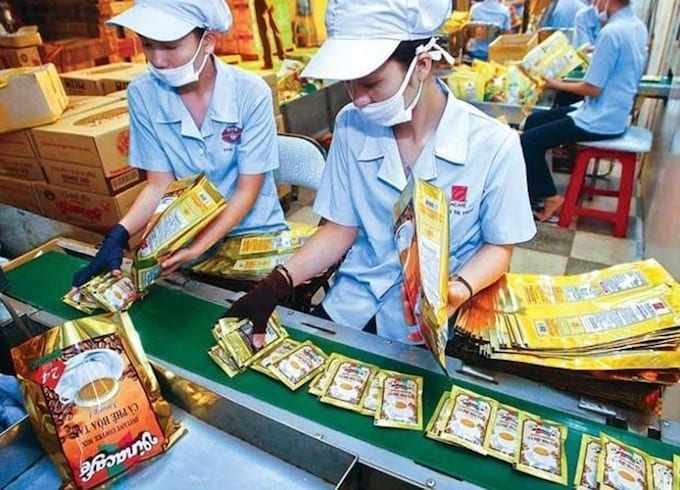
    Vietnam’s coffee exports grew 21.5 percent and rice exports 3.4 percent year-on-year in the first ten months, government data showed on Monday.

    Coffee 

    Coffee exports from Vietnam will rise an estimated 21.5 percent between January and October from a year ago to 1.58 million tons, equal to 26.3 million 60-kg bags, the General Statistics Office said in a report on Monday.

    Coffee export revenue for Vietnam, the world’s biggest producer of the robusta bean, rose 1.1 percent to $2.98 billion in the 10-month period, the report said.

    October coffee exports were estimated at 130,000 tons, worth $230 million.

    Rice

    Rice exports in January-October from Vietnam were forecast to rise 3.4 percent from a year ago to 5.24 million tons. Revenue from rice exports in the period was forecast to grow 16.1 percent year-on-year to $2.64 billion.

    October rice exports from Vietnam, the world’s third-largest shipper of the grain, were recorded at 350,000 tons, worth $180 million.

    Energy

    Vietnam’s January-October crude oil exports plunged 45.4 percent year-on-year to an estimated 3.22 million tons.

    Crude oil export revenue in the first 10 months of 2018 fell 24.8 percent to $1.82 billion.

    Oil product imports in the 10-month period were estimated at 10 million tonnes, falling 5.1 percent from the same period last year, while the value of product imports rose 20 percent to $6.77 billion.

    Vietnam’s January-to-October liquefied petroleum gas imports increased 5.7 percent from a year earlier to 1.2 million tons.

  • For Vietnamese exporters, ASEAN market remains bridge too far

    For Vietnamese exporters, ASEAN market remains bridge too far

    Vietnamese companies are struggling to sell their products to ASEAN member countries despite the abolition of tariffs within the bloc. Analysts blame this on their lack of market information and poor understanding of consumer needs among other factors.

    With the formation of the ASEAN Economic Community (AEC) three years ago, members had to reduce over 90 percent of their tariff lines to zero percent, though Vietnam, Laos, Cambodia, and Myanmar were allowed until 2018 to do so.

    Yet Vietnam’s intra-ASEAN exports accounted for only 11 percent last year while this number for other members averaged 24 percent even in 2016, Nguyen Thi Tue Anh, deputy head of the Central Institute of Economic Management (CIEM), said at a recent conference.

    Anh said besides Vietnamese enterprises’ lack of market information, they have also failed to adequately differentiate their products from those of competitors within the bloc.

    A spokesperson for a business based in southern Soc Trang Province said his company, which produces dried fish and other fisheries products, wants to take its products to the ASEAN market but does not know how.

    He said that there are many factors such as package design, marketing and market research, and it does not know where to begin since all are equally important.

    Ha Xuan Anh, chairman of HCMC-based textile maker Son Viet, said his company’s products – undergarments – are sold at many modern retail outlets. But for the last 10 years it has sought to sell to Singapore, Thailand and Malaysia, and has been unable to do so.

    He explained that though the quality of his company’s products is competitive, Vietnamese brands remain unknown in these markets.

    It only sells in markets with less competitive products such as Laos, Cambodia and Myanmar.

    Pham Thiet Hoa, director of the HCMC Investment and Trade Promotion Centre (ITPC), also blamed the weaknesses of Vietnamese enterprises for their inability to export, listing lack of product diversification, failure to closely liaise with authorities responsible for foreign affairs, and poor marketing.

    ITPC said small companies entering a new market alone would find it very difficult to identify foreign business partners and distribution chains.

    Hoa said it is therefore necessary for trade envoys to work with their counterparts in foreign markets to bridge this gap.

    Participating in fairs, exhibitions and trade promotion programmes in target markets enables companies to assess the competitiveness of local rivals, he said.

    Despite the free trade environment, each country in the bloc has differences in culture, religion and consumer preferences, and businesses need to understand them before venturing into those countries, he said. “Enterprises should also carefully study the technical barriers and legal regulations to avoid losses.”

  • EU pushes for approval of trade agreement with Vietnam

    EU pushes for approval of trade agreement with Vietnam

    The European Commission submitted for approval on Wednesday a free trade agreement with Vietnam. The E.U.-Vietnam trade and investment agreements will need approval from the E.U.’s 28 members and from the European Parliament.

    The parties have agreed a related accord to promote democracy and human rights, including commitments, dialogue and possible sanctions. E.U. Trade Commissioner Cecilia Malmstrom said no one denied there were human rights problems in Vietnam.

    “We are talking openly about this with our Vietnamese counterparts and the trade agreement will not make Vietnam a fully fledged democracy overnight. It is one tool in the toolbox that we have in relations with Vietnam and other countries,” she said.

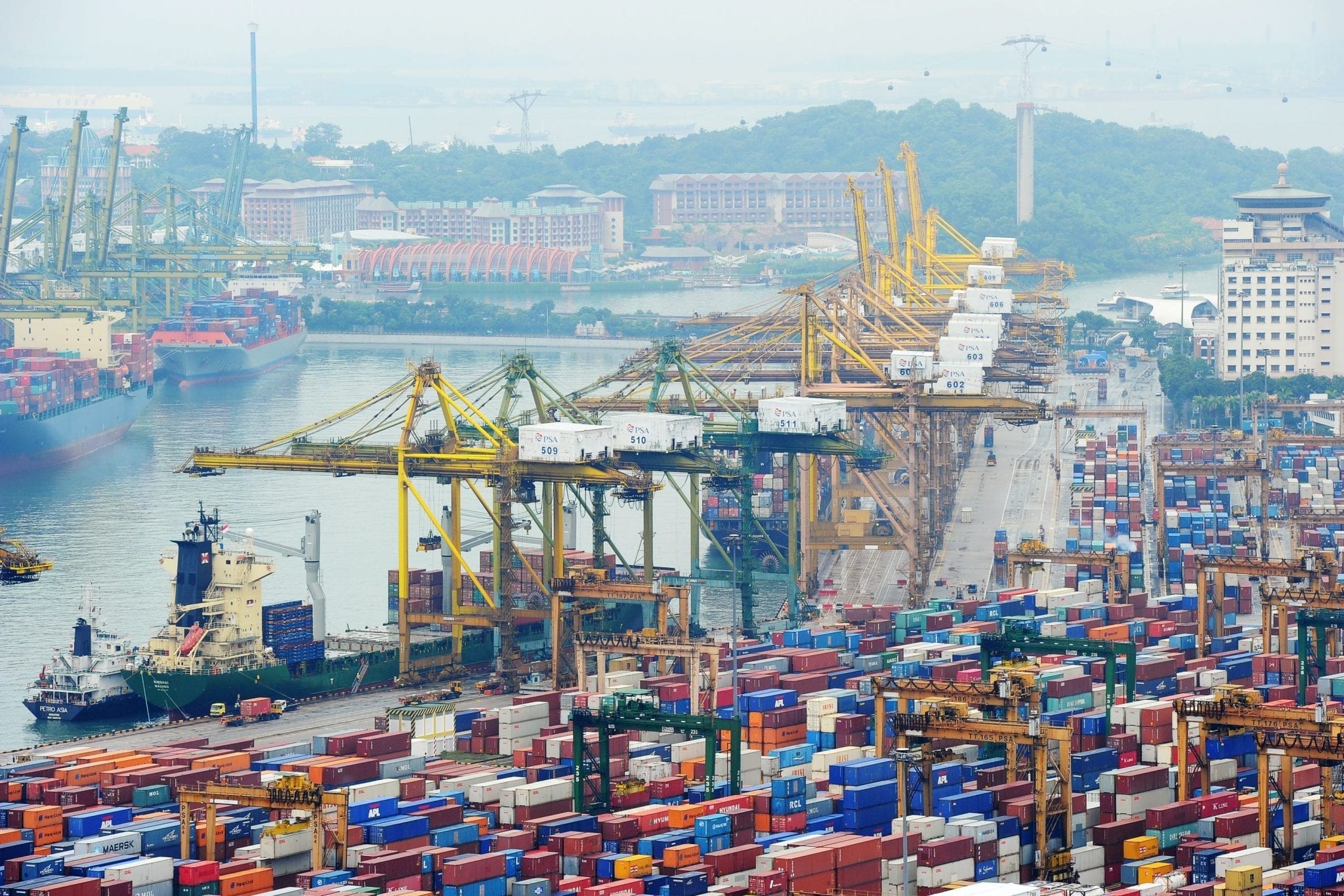
    The European Union will sign a trade deal on Friday with Singapore, another member of the Association of Southeast Asian Nations (ASEAN), and is in talks with Indonesia.

    It is unclear whether the European Parliament, which is expected to debate and vote on the Singapore agreement as well as the E.U.-Japan free trade deal, will have time to pass the Vietnam accord before E.U. elections in May.

    The trade deal would eliminate 99 percent of all tariffs, although some staged over a time period and some, notably agricultural products, limited by quotas.

    Vietnam, for example, would cut its duty on E.U. car imports from 78 percent to zero over 10 years and for wines and spirits, from around 50 percent, over seven years. E.U. companies would also be able to bid for Vietnamese public contracts.

    In return, the European Union would take seven years to eliminate its duties on certain Vietnamese products, such as its major textiles, clothing and footwear exports.

    Vietnam has pledged to protect 169 European food and drinks products, such as champagne or Parmigiano Reggiano cheese, meaning such names could only be used for E.U. imports.

    The agreement includes a chapter on sustainable development, such as implementing international standards on labour rights and the Paris climate accord.

  • Indonesian trade deficit narrows in August

    Indonesian trade deficit narrows in August

    Indonesia’s trade deficit narrowed in August, but the gap was larger than expected as exports growth slowed, government data showed on Monday, adding to pressure on the rupiah and local stocks.

    Southeast Asia’s largest economy reported a trade deficit of US$1.02 billion (RM4.22 billion) for last month, much bigger than the US$680 million gap expected in a Reuters poll.

    The country had a revised US$2.01 billion trade deficit in July, the largest in five years.

    August imports were worth US$16.84 billion, up 24.65% from a year earlier, data released by the statistics bureau showed. This compared with expectations of a 26.53% t rise in the poll. Meanwhile, exports growth slowed to 4.15% from a year earlier to US$15.82 billion in August, compared with the poll forecast of a 10.03% increase.

    Imports of consumer goods posted the biggest annual growth last month, while exports of agriculture products fell nearly 21% from a year earlier, the data showed, contributing to the slowdown in exports. Higher oil and gas imports also contributed to the deficit, according to the statistics bureau.

    The rupiah slipped further after the data came in to trade at 14,885 per dollar, 0.57% below Friday’s close. The Indonesian currency traded at 14,880 per dollar before the data.

    The rupiah has been trading at 20-year lows after being sucked into an emerging market rout, with selling exacerbated by concern over the country’s ability to plug a yawning current account deficit.

    Jakarta’s benchmark stock index also extended falls to trade 1.8% lower, while the 10-year bond yield rose to 8.428% from 8.382% at yesterday’s opening.

    The tariffs were not applied in August, but analysts have said importers may have frontloaded overseas purchases ahead of the increases.

  • Vietnam posts surprise $2.2 bln trade surplus in August

    Vietnam posts surprise $2.2 bln trade surplus in August

    Strong growth in telephone and textile exports helped Vietnam post a $2.2 billion trade surplus in August, according to customs data.

    The August surplus even surpassed Vietnam’s $2.1-billion surplus for all of last year, and was a positive signal for economic growth, which is expected to beat the government’s forecast of 6.7-percent target for 2018.

    Exports in August rose 15.6 percent from a month earlier to $23.48 billion, while imports rose 1.6 percent to $21.28 billion, the customs department said on its website.

    Exports in January-August rose 16.7 percent annually to $158.4 billion, led by shipments in smartphones, garments and electronic home appliances, and were on track to outperform the government’s full-year target for a 7-8 percent increase.

    Vietnam, the largest producer of smartphones for Samsung Electronics, shipped $45 billion worth of telephones and spare parts in the eight-month period, up 32 percent annually, easily outstripping the government’s estimate of $30.9 billion, the report showed.

    Textile, garments, electronic and computer exports also rose strongly in the first eight months with a combined value of $52 billion, also much higher than the government’s estimate of $37.9 billion, official data showed.

    Exports of steel and ingots jumped 55 percent in the eight-month period to $3.1 billion, higher than the government’s estimate of $2.9 billion.

    The United States has slapped steel import duties on steel products from Vietnam that originated in China, to deter Vietnam from being used for transhipment by China to avoid U.S. tariffs.

    Eight-month imports were up 12.4 percent at $153.7 billion, producing a trade surplus $4.69 billion, the report showed.

  • Indonesia to Unveil Higher Import Tariffs Soon Amid Push to Aid Rupiah

    Indonesia to Unveil Higher Import Tariffs Soon Amid Push to Aid Rupiah

    Indonesia will release a list of goods subject to higher import taxes in the next few weeks, ministers said on Friday (24/08), part of efforts to shrink a widening current account deficit and curb pressure on its shaky currency.

    The rupiah on Friday slipped to 14,660 to the dollar, its weakest level since October 2015.

    A central bank official on Thursday blamed the rupiah’s drop on high demand for dollars by local importers. But the currency has also been caught up in a flight from emerging market assets as US interest rates rise and worries about global trade fights increase.

    Indonesia’s July trade deficit was the biggest in five years and the second-quarter current account deficit, at 3 percent of gross domestic product, was the largest in nearly four years.

    “We are reviewing 900 imported commodities to see the domestic industry’s capability in producing them,” Finance Minister Sri Mulyani Indrawati told a news conference with other ministries and Bank Indonesia (BI).

    Indrawati previously said the government would impose a 7.5 percent tariff on about 500 imported goods that can be locally made.

    Southeast Asia’s largest economy currently applies a 2.5 percent import tax on a vast range of products for registered importers, but it charges 7.5 percent for unregistered importers.

    Suahasil Nazara, head of the finance ministry’s fiscal policy office, said the government was rethinking the tariff difference between registered and unregistered importers.

    “We will hike the import tariffs from the current rates to give a signal, ‘let’s use domestic production,’ ” Nazara said.

    Trade Minister Enggartiasto Lukita said the measures to contain imports should not disrupt investment because the list would not include raw materials for production.

    A senior government official told the list, which is not finalised, will focus on semi-durable and perishable goods, including consumer goods used by hotels and restaurants.

    Stabilising the rupiah has been a top priority for the government and BI. The central bank has raised interest rates four times by a total of 125 basis points since mid-May.

    BI governor Perry Warjiyo said the central bank continues to intervene in the FX and bond markets to defend the currency.

    The government’s measures to control imports also include delaying some infrastructure projects and forcing a greater use of biodiesel.

  • Vietnam posts $3.1-billion trade surplus in Jan-July

    Vietnam posts $3.1-billion trade surplus in Jan-July

    Vietnam’s trade surplus in the first seven months was $3.1 billion as exports rose 15.3 percent year-on-year to $133.7 billion.

    Domestic companies accounted for $39 billion of the exports, up 18.7 percent, while foreign firms registered $94.7 billion, up 14 percent, according to the General Statistics Office (GSO).

    Cell phones and components topped the list of exports at $26.1 billion, followed by textile and garment at $16.5 billion and electronics and computers and components at $15.7 billion.

    The U.S. was the biggest importer, with shipments rising by 8.9 percent to $25.5 billion.

    The EU was second with $24.2 billion, up 12.9 percent, followed by China with $19.5 billion, up 24.7 percent.

    Imports rose by 10.2 percent to $130.6 billion, with domestic companies accounting for $54.16 billion spent by firms, up 12.7 percent.

    Imports by foreign companies were up 8.5 percent.

    The GSO has however warned exporters and importers to be prepared for any eventuality given the ongoing trade war between the U.S. and China.

    The U.S. imposed 25 percent tariffs on an initial $34 billion of imports from China on July 6, which then led China to respond with similar sized tariffs on U.S. products.

    The Donald Trump administration claims the tariffs are necessary to protect national security and U.S. businesses’ intellectual property, and to reduce the country’s trade deficit with China.

    The administration said Wednesday that Trump has sought to ratchet up pressure on China for trade concessions by proposing a higher 25 percent tariff on $200 billion (152.33 billion pounds) worth of Chinese imports.

  • US-China Trade War Will Affect Indonesia Regional Economies

    US-China Trade War Will Affect Indonesia Regional Economies

    Regional economies in Indonesia will be affected if the United States suspends its special tariffs for some of the country’s exports, a minister said on Tuesday (10/07).

    The US is currently reviewing Indonesian products on its Generalized System of Preferences (GSP) list — a trade incentive that gives duty-free entry to 129 poor and developing countries and territories.

    Last year, Indonesia ran a $9.7 billion trade surplus out of its total $17 billion exports to the US.

    It is the fourth biggest GSP beneficiary, after India, Thailand and Brazil.

    “If the exports of [the listed] products or commodities are disrupted, we are worried that our regional economies, where the goods come from, will also be affected,” National Development Planning Minister Bambang Brodjonegoro said on Tuesday.

    Indonesia’s exports, not only to the US, come mostly from the manufacturing sector, especially in Java.

    Last year, they made up 76 percent of the country’s total exports and were worth $125 billion, nearly $15 billion more than in the previous year.

    West Java and East Java together were the main contributors ($44 billion) to the country’s total experts, followed by East Kalimantan, Riau, Riau Islands and North Sumatra.

    “We can divert our exports to other countries and this should not be a problem. But we need to prepare ourselves,” Bambang said.

    Indonesia has been trying to enter markets in Africa and South America to lessen dependence on its traditional importers such as China, the US and Japan.

    However, exports to Africa (mainly South Africa and Egypt) amounted to only $264.7 million last year, Ministry of Trade data show.

    A team consisting of Ministry of Trade, Ministry of Foreign Affairs and Ministry of Agriculture officials is set to visit the US at the end of July, with a lobby mission to keep the special tariffs for Indonesia unchanged.

  • Indonesia to Review Capital Goods Imports to Control Current-Account Deficit

    Indonesia to Review Capital Goods Imports to Control Current-Account Deficit

     Indonesia plans to review the import of capital goods for big government projects to help manage its current-account deficit, Finance Minister Sri Mulyani Indrawati said on Tuesday (03/07).

    The move forms part of a series of coordinated policy measures to bolster the country’s financial markets.

    The rupiah, stocks and bonds have sold off as investors flee emerging markets amid rising interest rates in the United States, higher oil prices and the threat of a full blown US-China trade war.

    The vulnerability of Southeast Asia’s biggest economy has been increased by worries about its current-account deficit.

    Bank Indonesia has raised its benchmark rate by a total of 100 basis points, with the latest hike coming on Friday, amid efforts to defend the rupiah and stem capital outflows.

    Sri Mulyani said the current-account deficit was “a source of negative sentiment” for investors, so authorities were looking at ways to reduce it.

    “We will look at the content, whether a project is urgent to be completed and must import capital goods,” she said, describing the measure as “a short-term correction for long-term development.”

    Indonesia’s current-account deficit was 1.7 percent of gross domestic product last year, but is expected to widen to somewhere below 2.5 percent in 2018 as economic activity improves, the central bank has said.

    Between January and May this year, Indonesia imported $4.1 billion worth of goods in relation to the government’s infrastructure push and another $1.1 billion in defense equipment, central bank data showed.

    The rupiah hit 14,455 to the dollar on Tuesday, the weakest since October 2015 as Asian currencies are roiled by global trade tensions.

    Bank Indonesia Governor Perry Warjiyo said on Tuesday that the central bank will work with the government to reduce the deficit and pledged to keep intervening in the currency and bond markets.

    Bank Indonesia will remain “pre-emptive, front-loading and ahead of the curve” in its policy setting, he said, including by making sure it is ahead of other emerging markets in terms of attracting investors.

    “When they want to invest in emerging markets, they will compare yields, risk premium and other things. When we make decisions, we have to benchmark ourselves against others,” he said, comparing Indonesia’s real interest rate to India’s before and after Friday’s 50-basis-point rate hike.

    India, Indonesia and the Philippines are considered Asia’s most externally vulnerable economies due to current-account deficits and also due to their appetite for oil imports.

    Sri Mulyani also warned companies to prepare to absorb shocks in their balance sheet from a weaker rupiah and higher interest rates.

  • China’s First-Half Coal Imports Surge, Indonesia the Winner

    China’s First-Half Coal Imports Surge, Indonesia the Winner

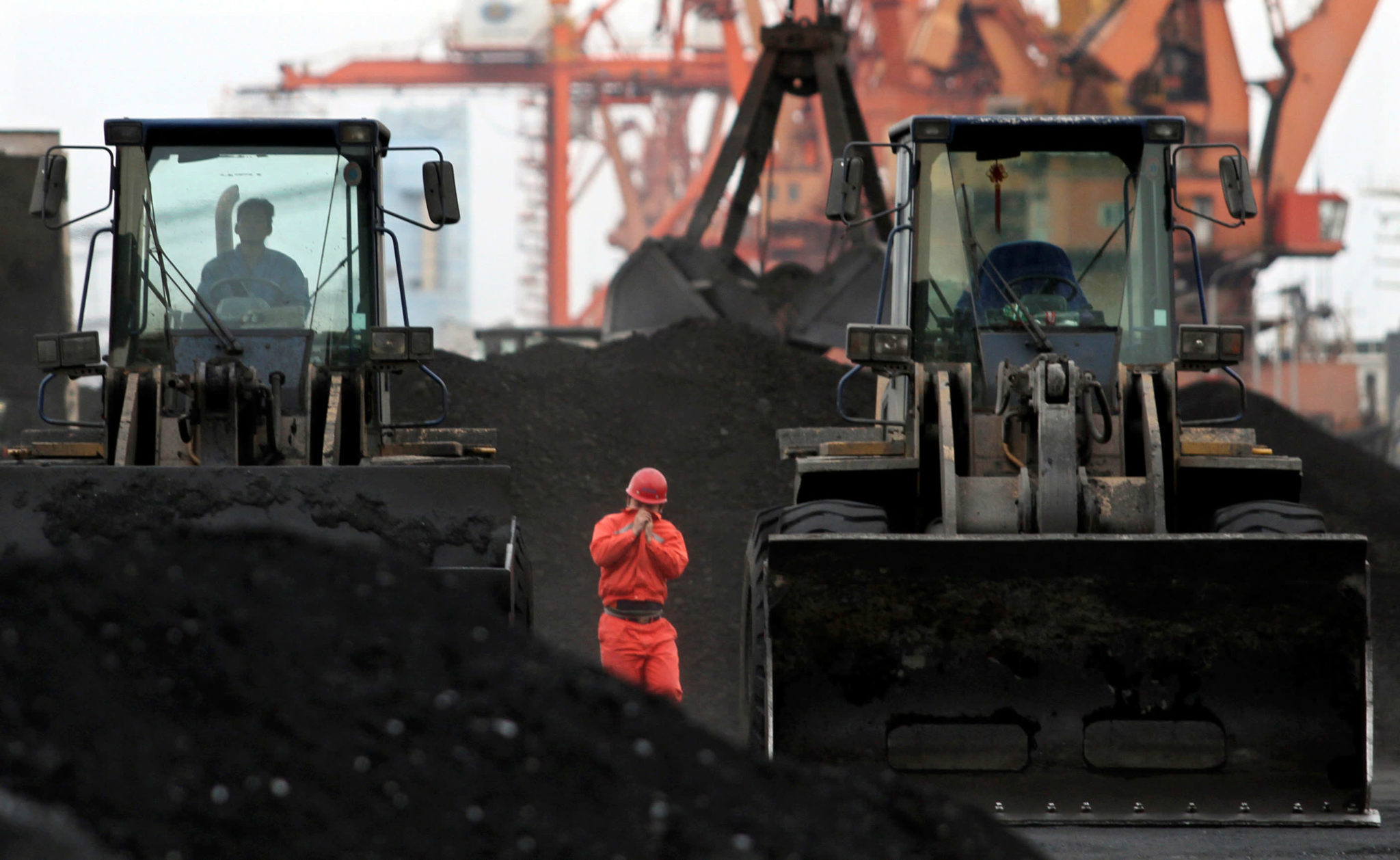
    China’s seaborne coal imports are on track to have surged by around 14 percent in the first half of the year, with Indonesia emerging as the big winner among exporters.

    Imports are likely to be around 126.6 million metric tons in the first six months of this year, up from 111.3 million tons for the same period in 2017, according to vessel-tracking and port data compiled by Thomson Reuters Supply Chain and Commodity Forecasts.

    It also appears that June may be the strongest month so far this year, with 22.1 million tons discharged, or in the process of discharging, as of Tuesday (26/06).

    The final figure may be slightly higher, at around 25.9 million tons: The data is filtered only to show ships that have already discharged, are discharging or awaiting unloading, and more cargoes may be handled in the final days of June.

    The strongest month so far this year for China’s coal imports from the seaborne market was March’s 23.2 million tons, according to the data.

    A look at the breakdown of where China is sourcing its coal reveals a surprise packet – Indonesia.

    China has imported about 15.3 million tons more coal from the seaborne market in the first half of 2018 compared with last year. On a net basis, it’s all from the Southeast Asian country.

    Imports from Indonesia were around 61.8 million tons in the first half, up from 46.3 million for the same period in 2017.

    Low Sulphur

    The strength of shipments from Indonesia may raise some eyebrows among those who believe China is trying to lower air pollution from burning coal, partly by using less and partly by switching to higher-quality coal.

    Indonesia’s exports are predominantly lower-grade coal, typically with an energy value of 4,200 kilocalories per kilogram (kcal/kg) or less.

    However, Indonesia’s coal is also typically low in sulphur. That makes it useful for Chinese coastal power plants to blend with higher-sulphur domestic supplies or imports.

    This allows them to lower emissions of sulphur dioxide and nitrogen oxide, albeit at a small penalty to the efficiency of the boiler.

    It’s also worth noting that Indonesian coal trades at a substantial discount to higher-quality thermal coal from main regional rival Australia.

    Indonesian 4,200 kcal/kg coal, as assessed by Argus Media, was at $48.71 a ton in the week ended June 22. The weekly index for 6,000 kcal/kg coal at Australia’s Newcastle Port was $116.27.

    The discount of the Indonesian grade to Newcastle has widened substantially over the past year, going from 50 percent at the end of June 2017 to the current 58 percent.

    While this is encouraging additional cargoes from Indonesia, it also means that Australian exporters are enjoying higher prices, even if their volumes are more or less the same.

    China imported 42.84 million tons from Australia in the first six months of the year, fractionally higher than the 42.62 million tons in the same period in 2017, according to the vessel-tracking data.

    Russia Up, United States Down 

    While Indonesia and Australia dominate supply to China, it’s worth noting that Russia also managed to lift deliveries, with imports rising 27 percent to 10.3 million tons in the first half.

    China’s imports from the United States, which are predominantly coking coal used in steel-making, dropped in the first half to 2.09 million tons, a decline of 38 percent.

    This occurred well before any potential impact of proposed Chinese tariffs on coal from the United States, which may be imposed as part of the escalating trade dispute between the world’s two largest economies.

    The decline so far this year in imports from the United States is more likely related to Australian coking coal being more competitive – and available, given the absence this year of major weather-related outages.

    Overall, China’s increased appetite for imported coal appears to be contributing to higher prices, with the Newcastle index up 12 percent so far, hitting a six-year high of $118.09 a ton in the week ended June 17.

  • Global stocks are bouncing after Trump made a conciliatory move in the trade war

    Global stocks are bouncing after Trump made a conciliatory move in the trade war

    Stocks in both Europe and the Americas are bouncing on Wednesday after President Donald Trump made a move that looks likely to deescalate the trade war developing between his adminstration and the rest of the world.

    Earlier, Trump announced the details of a plan to crack down on Chinese investment in US technology companies, and the final results were weaker than expected.

    The news buoyed investors, who have previously been nervous about the possibly devastating consequences a trade war could have on the global economy.

    Major share indexes in both Europe and North America are significantly higher on Wednesday as a result of the announcement, with the USA’s benchmark Dow Jones Industrial Average up by almost 250 points.

    While Trump’s climb down has soothed Western markets, things in Asia overnight were not pretty, with the earlier escalation of trade tensions having a significant negative impact on Chinese markets, with stocks in the world’s second largest economy suffering major losses.

    China’s benchmark share index, the Shanghai Composite, dropped 1.1% on Wednesday — leaving it nursing losses of 22% from its most recent high, extending the bear market it entered at the beginning of the week. Bear markets are characterised by a fall of 20% or more from a high.  

    Negative sentiment in Asia overnight also saw Hong Kong’s Hang Seng drop 1.7%, and the Shenzhen Composite fall 1.8%.

    For China, there is an ongoing double whammy of bad news. As well as Chinese stocks falling into a bear market, the country is also witnessing a major slide in the price of its currency, the yuan, which overnight fell to its lowest level in more than six months.

    The USD/CNH, or the US dollar versus the offshore traded yuan, hit a high of 6.6105 earlier, leaving it at the highest level since December 20 last year.

    An increase indicates the US dollar is strengthening against the yuan.

    Along with escalating trade tensions between the United States and China, the yuan has been under pressure in recent months from a softening in Chinese economic data as well as divergent monetary policy settings between the PBOC and US Federal Reserve.

  • Indonesia Posts $1.52b Trade Deficit in May on Higher Oil Prices

    Indonesia Posts $1.52b Trade Deficit in May on Higher Oil Prices

    Indonesia’s trade deficit narrowed to $1.52 billion in May, but was worse than expected, due to higher oil prices, the country’s statistics agency said on Monday.

    That compared to a revised $1.63 billion deficit posted in April, which was the largest in four years. A poll by Reuters was for a deficit of $380 million in May.

    Imports grew by 28.12 percent from a year earlier, after jumping by 35 percent in the previous month. Analysts had expected imports to grow 13.88 percent.

    “This increase [in imports] was due to higher oil prices,” Suhariyanto, the statistics agency’s chief said.

    Global oil prices rose in recent months due to supply concerns for some major producers.

    Total imports in May were valued at $17.64 billion.

    Exports from Southeast Asia’s largest economy grew by 12.47 percent annually in May, a higher-than-expected rate, with shipments of metals boosting the total exports to $16.12 billion.

  • Malaysia exports in April up 14% to RM84.2b from a year ago

    Malaysia exports in April up 14% to RM84.2b from a year ago

    Exports grew 14% to RM84.2 billion in April 2018 from a year ago, driven by electrical and electronic (E&E) products, refined petroleum, crude petroleum, timber and timber-based products, palm oil and palm oil-based products, while liquefied natural gas (LNG) and natural rubber recorded decreases in export volume and average unit value.

    This is the second highest monthly export value recorded for the year after March’s exports of RM84.5 billion.

    Imports expanded by 9.1% from a year ago to RM71.2 billion, supported mainly by capital goods, as intermediate goods and consumption goods imports fell.

    Malaysia’s total trade grew 11.7% from a year ago to RM155.4 billion in April, bringing the total trade balance to a surplus of RM13.1 billion (50.9%), according to the Statistics Department.

    FXTM global head of currency strategy & market research Jameel Ahmad said the annualised 14% growth in exports for April will certainly help provide positive momentum for the country’s second quarter gross domestic product (GDP), which is expected to continue growing above 5%.

    He noted that this will take away some concerns in the manufacturing sector which experienced the biggest decline in new orders since late 2016 and reduce risks, which could weigh down GDP prospects.

    Re-exports were valued at RM20.1 billion (+84.3%) in April and accounted for 23.9% of total exports. Domestic exports increased RM1.2 billion (1.8%) to RM64.1 billion.

    On a month-on-month (m-o-m) basis, Malaysia’s total trade in April saw an increase of RM1.2 billion or 0.8% from March, while the trade surplus stood 11% or RM1.6 billion, lower.

    Meanwhile, on a m-o-m basis, April exports decreased 0.3% or RM224.7 million from RM84.5 billion in March, mainly attributable to decreases in mineral fuels (1.3%) followed by animal and vegetable oils and fats (0.7%) and inedible crude materials (0.5%). However, in seasonally adjusted terms, exports registered an increase of 9.5%.

    Imports rose RM1.4 billion or 2.0% from RM69.8 billion contributed by consumption goods although on a seasonally adjusted terms, imports increased RM6 billion (8.8%) to RM74 billion.

  • Canada initiates dumping inquiry into steel imports from China, Vietnam, South Korea

    Canada initiates dumping inquiry into steel imports from China, Vietnam, South Korea

    The Canadian International Trade Tribunal (CITT) said on Monday it has initiated a preliminary dumping inquiry into steel imported from China, South Korea and Vietnam.

    The tribunal will investigate whether the alleged dumping and subsidizing of “cold-reduced flat-rolled sheet products of carbon steel” from these countries have harmed Canada’s steel industry.

    CITT, which operates in Canada’s trade remedy system and reports to parliament, said it will determine the results of the investigation on July 24 and will provide the reasons for the same on August 8.

    Canada’s steps follow U.S. actions from last week when the United States Commerce Department had slapped steep import duties on steel products from Vietnam that originated in China after a final finding they evaded U.S. anti-dumping and anti-subsidy orders.

    The global steel industry is struggling with a glut of excess production capacity, much of it located in China, that has pushed down prices.

  • Indonesia Wins Appeal Against EU Over Anti-Dumping Duty on Biodiesel

    Indonesia has won an appeal against the European Union in a dispute over the bloc’s anti-dumping duty on biodiesel, the Ministry of Trade said in a statement on Wednesday (21/03).

    The European Court of Justice, the EU’s highest court, ruled that the bloc must do away with anti-dumping duties of between 8.8 percent to 23.3 percent on imports of Indonesian biodiesel products.

    Indonesia is one of the world’s largest exporters of palm oil-based biodiesel.

    “With the elimination of these duties, businesses can once again export biodiesel to the EU,” said Oke Nurwan, director general of foreign trade at the ministry.

    He added that the elimination of duties was valid from March 16, 2018.

    The Indonesia Biofuel Producers Association welcomed the ruling.

    “We’re asking producers to prepare exports soon,” said Paulus Tjakrawan, vice chairman of the association.

    He declined to give an estimate on expected export volumes.

    The EU court ruling reinforces a decision made by the World Trade Organisation (WTO) earlier this year, which said the EU needed to bring its measures into conformity with WTO agreements.

    Indonesia also plans to challenge anti-subsidy duties in the United States in a US court and at the WTO.

    Indonesia has also been pushing domestic biodiesel consumption as part of an ambitious plan to develop its biofuels industry. It plans to expand biodiesel subsidies to cover palm-oil blended fuels for use by its huge mining sector in addition to the power sector.