Retail News CRM

Tag: trade

  • Asia stocks quiet, dollar firm after upbeat US job data

    Asia stocks quiet, dollar firm after upbeat US job data

    Asia stocks hovered near four-month highs on Monday after a mixed performance on Wall Street at the close of last week, while the dollar firmed against the yen following strong US job and manufacturing data. MSCI’s broadest index of Asia-Pacific shares outside Japan was almost flat. It had scaled a four-month peak on Friday along with a surge in its global peers.

    Trade was subdued with many of the region’s markets closed for the Lunar New Year. China’s financial markets are closed all week, while those in South Korea are shut until Thursday.

    Hong Kong’s Hang Seng, which is trading for only half a day, edged up 0.2%.

    Japan’s Nikkei added 0.5%.

    On Wall Street on Friday optimism from a surge in January US job growth was offset by a weaker-than-expected outlook from Amazon.com Inc that battered retail stocks. The Dow nudged up 0.26% while the Nasdaq shed 0.25%.

    “Key points for the markets this week will be how the remaining US corporate earnings releases turn out, and whether they are in line with recent upbeat data,” said Junichi Ishikawa, senior FX strategist at IG Securities in Tokyo.

    “While corporate earnings and fundamentals remain key, political developments, notably the US-China trade situation, remain potential risk factors,” he said.

    A US Labor Department report on Friday showed nonfarm payrolls jumped by a stronger-than-forecast 304,000 jobs last month, the largest gain since February 2018.

    That report, along with better-than-expected ISM manufacturing activity numbers for January, pointed to underlying strength in the world’s biggest economy.

    “After last week’s risk appetite revival, the data pulse and the tone of Fed speakers will be important. For the Goldilocks market to continue, we need to find a delicate balance between improving data and still-neutral central banks,” strategists at ANZ wrote.

    Global equity markets performed strongly last week after the Federal Reserve pledged to be patient with further interest rate hikes, signalling a potential end to its tightening cycle.

    Friday’s robust economic data triggered a sharp rebound in US Treasury yields, in turn lifting the dollar.

    On Monday, the US currency was a shade higher at 109.555 yen after advancing 0.6% on Friday.

    The euro was little changed at $1.1456 after getting pulled back from a high of $1.1488 on Friday.

    The Australian dollar was mostly steady at $0.7244 after slipping 0.4% the previous session.

    The benchmark 10-year U.S. Treasury yield was at 2.686% after climbing nearly 6 basis points on Friday to pull away from a four-week low of 2.619% earlier last week.

    West Texas Intermediate (WTI) US crude oil futures extended Friday’s rally and were last up 0.3% at $55.42 per barrel.

    On Friday, WTI futures had rallied 2.7% on the upbeat US job report, signs that Washington’s sanctions on Venezuelan exports have helped tighten supply and data showing US drillers cut the number of oil rigs.

  • Vietnam per capita income matches Malaysia’s 20 years ago

    Vietnam per capita income matches Malaysia’s 20 years ago

    Vietnam’s recent economic achievements notwithstanding, much effort is needed for it to close the gap with other countries, a minister has said. Minister of Planning and Investment Nguyen Chi Dung said at a conference Wednesday that while Vietnam’s GDP per capita had surged by 27.4 times in the last 30 years to almost $2,590 last year, Malaysia had achieved this figure 20 years ago.

    Thailand had done so 15 years ago and Indonesia 10 years ago.

    The main limitations of its economy were low labor productivity, economic efficiency and competitiveness, and the country also faced the risk of being stuck in the middle-income trap.

    According to the 2018 Vietnam Annual Economic Report, average productivity per worker was VND60.73 million ($2,600) in 2017, lower than that of China, Japan, the Philippines, Thailand, and Cambodia.

    Currently the country also faced challenges like the U.S.-China trade war, the minister said.

    For these reasons, institutional reforms were necessary to achieve a more sustainable economy, he noted.

    Macroeconomic stability and high economic growth with innovation in science and technology were imperative.

    The private sector had to remain one of the pillars of the economy in future, Dung said. “If Vietnam doesn’t catch the 4.0 train, the gap between it with other countries will become wider. Vietnam needs to narrow that gap.”

    Vietnam’s GDP has grown at 6.8 percent a year on average for the last 20 years, and the economy has grown 39 fold in the period to $245 billion last year.

    Growth last year was 7.08 percent, the highest in a decade.

  • Vietnam’s exports slow down

    Vietnam’s exports slow down

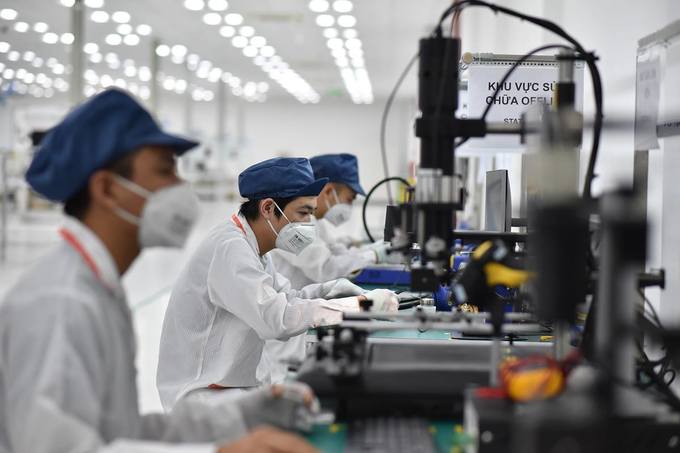
    Vietnam’s exports fell by 1.3 percent year-on-year in January to $20 billion as phone shipments fell sharply. Exports of phones were 27.5 percent down at $2.9 billion, according to the General Statistics Office. Computer and electronics exports fell 5 percent to $2.3 billion.

    But exports of textiles and garments rose by 6.7 percent to $2.7 billion, footwear by 12.8 percent to $1.6 billion and machinery and equipment by 15.2 percent to $1.4 billion.

    The U.S. was the biggest importer ($4 billion) followed by China ($3.8 billion) and the EU ($3.2 billion). The country’s Southeast Asian neighbors only accounted for $2 billion.

    Meanwhile, Vietnam’s imports rose by 3.1 percent to $20.8 billion.

    Last year exports were worth $244.72 billion, up 13.8 percent, and imports cost $237.51 billion, giving Vietnam its highest trade surplus ever of $7.21 billion.

  • Sandro parent unphased by trade spat

    Sandro parent unphased by trade spat

    The parent of affordable-luxury fashion labels Sandro, Claudie Pierlot and Maje appears unphased by the Sino-US trade spat, vowing to continue its expansion in the region. SMCP’s CEO Daniel Lalonde said in an interview that the company plans to continue to open new stores in Mainland China and invest in e-commerce across the region.

    “From our perspective, everything is still intact [in China]. Any slowdown in our business is related to the comparison base … and we still expect to grow that market by more than 20 per cent this year,” Lalonde said. “We’re still confident on the region.”

    France-based SMCP is controlled by Chinese company Shandong Ruyi. This week it reported an 8.1 per cent increase in fourth-quarter sales to €276.1 million.

    SMCP has doubled its annual sales during the past four years, reaching €1 billion last year, largely due to rapid expansion in Mainland China. Asia is now SMCP’s third-largest geographic market behind France and the rest of Europe, with China accounting for the bulk.

    However, he said sales in Hong Kong were “a little softer” as a result of currency fluctuations between the Hong Kong dollar and the renminbi.

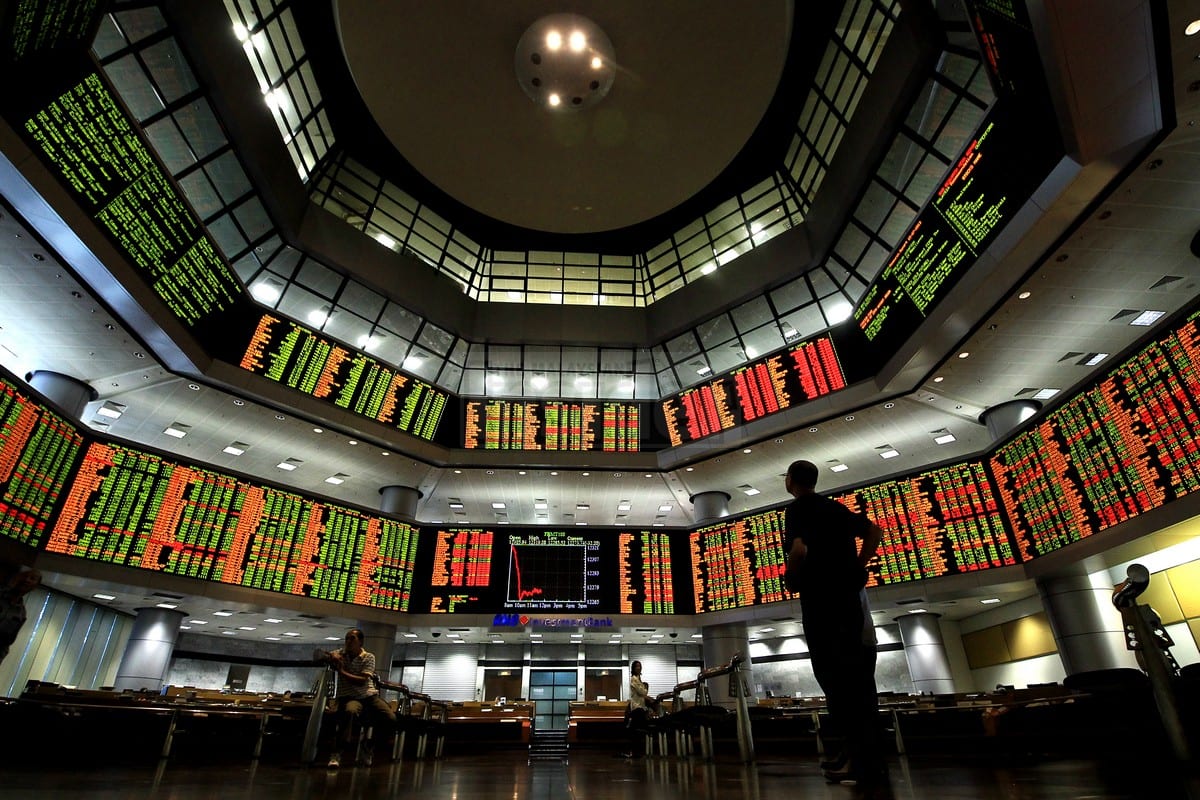
  • Bursa Malaysia’s Q4 earnings fall 6.2% to RM51.9m

    Bursa Malaysia’s Q4 earnings fall 6.2% to RM51.9m

    Bursa Malaysia Bhd’s net profit in the fourth quarter ended Dec 31, 2018 (Q4FY18) was down by 6.2% to RM51.9 million, from RM55.27 million a year ago, mainly due to lower contribution from the securities segment.

    Revenue for the quarter declined 8.7% to RM128.9 million, compared with RM141.2 million in the previous corresponding quarter.

    The exchange has approved a second interim dividend of 11.6 sen per share for FY18, amounting to about RM93.7 million which is payable on Feb 28, 2019. With that, the total dividend (including special dividend) declared for the year amounts to 33.6 sen per share.

    Bursa’s full-year net profit was slightly up by 0.4% to RM224.04 million, from RM223.04 million a year ago, while revenue decreased by 1.2% to RM550 million, against RM556.8 million previously.

    For the year under review, securities market trading revenue increased 2.4% to RM265.8 million from RM259.6 million in FY17, mainly due to higher average daily trading value (ADV) for securities market’s on-market trades (OMT) in FY18.

    However, non-trading revenue saw a marginal decrease of 0.1% to RM165.9 million from RM166.1 million in FY17 due to lower listing and issuer services revenue.

    Bursa CEO Datuk Seri Tajuddin Atan said despite market volatility and challenging global economic environment, the exchange’s financial performance remained resilient.

    “Throughout the year, to create a more facilitative environment, we continued implementing initiatives to further enhance the vibrancy and liquidity of the market,” he added.

    At 2.35pm, Bursa’s share price was trading 7 sen or 0.9% lower at RM7.32 on 751,900 shares done.

  • Asia shares slip as China’s Huawei in legal hot water; focus on Sino-US talks

    Asia shares slip as China’s Huawei in legal hot water; focus on Sino-US talks

    Asian shares stumbled on Tuesday and the dollar hovered near two-week lows as prospects for a long-awaited Sino-US trade deal was dealt another blow after the United States levelled sweeping criminal charges against China’s telecom giant Huawei. MSCI’s broadest index of Asia-Pacific shares outside Japan got off to a shaky start with losses accelerating as other regional markets opened.

    Australia and New Zealand led the losses, with their benchmark indices down 0.7% each while South Korea’s KOSPI was off 0.3%. Chinese shares opened in the red too, with the blue-chip index down 0.2%.

    Japan’s Nikkei slid about 1%. US stock futures also lost ground following from a torrid overnight session on Wall Street, with E-Minis for the S&P 500 down 0.4%.

    Investor sentiment, already shaken by pessimism over global growth, took another hit after the US Justice Department unsealed indictments against China’s top telecom equipment maker, Huawei, accusing it of bank and wire fraud to evade Iran sanctions and conspiring to steal trade secrets from T-Mobile US Inc.

    The jolt to Huawei could undermine prospects for a trade deal between the economic giants as markets nervously await a fresh round of trade talks with Chinese Vice Premier Liu He set to meet US officials on Wednesday and Thursday.

    Further complicating matters, China triggered the legal process on Monday for the World Trade Organization to hear Beijing’s challenge to US tariffs, and berated the United States for blocking the appointment of judges who could rule on it.

    Souring US-China relations roiled global markets for much of last year, and have kept investors on the back foot this month. The trade war’s broadening impact on world growth is one reason the US Federal Reserve has signalled it will be patient on policy after raising rates four times in 2018.

    Overnight, markets got a reminder of the potentially damaging economic impact of the Sino-US trade war as Wall Street stocks were hit by profit warnings.

    The losses came as shares of Caterpillar and Nvidia Corp nosedived after the two manufacturers joined a growing list of companies cautioning about the crippling effects of softening Chinese demand.

    Caterpillar plunged more than 9% for its worst single-day drop since August 2011 while chipmaker Nvidia slid 13.8%.

    “Both companies are seen as industry bellwethers and their disappointing results provide further evidence that this time China’s slowdown is for real,” said Rodrigo Catril, Sydney-based strategist at National Australia Bank.

    The downbeat global growth impulse mean investors will look for further confirmation the Fed will pause its rate-hike cycle at a two-day policy meeting ending Wednesday.

    Overnight on Wall Street, the Dow and S&P 500 each closed down 0.8% and the Nasdaq was off more than 1%.

    WARNING BELLS

    Worryingly, earnings at China’s industrial firms too shrank in December, pointing to more troubles for the country’s vast manufacturing sector already struggling with a decline in orders, job layoffs and factory closures.

    Slowdown fears slugged the US dollar which faltered to its lowest in two weeks on Monday. The dollar’s index, which measures the greenback against a basket of major currencies, was last at 95.758.

    Against the safe haven Japanese yen, the dollar was down at 109.17, on track for a third straight session of losses.

    Markets will have more catalysts this week with over a 100 of the S&P500 companies reporting results, including Amazon, Apple and Facebook.

    Many economists, including the International Monetary Fund, have cut their forecasts for global growth this year citing the US-China trade war.

    “Slowdown is feeding into some acute areas of economic unease,” US investment bank Citi said in a note, citing recent disappointing factory output data out of Europe and China.

    “In some respects, markets seem to have reacted more to recent negative changes in economic data than at other points in recent decades,” it added, while noting investors are now pricing in a 1% contraction in global earnings per share (EPS) this year.

    “This would be the worst year-on-year percentage change in EPS since 2015” even though economic growth is seen much higher this year than in 2015.

    Elsewhere, Sterling dithered against the dollar ahead of voting in Britain’s parliament on Tuesday that aims to break the Brexit deadlock. It was last at $1.3148

    Oil bounced after hefty overnight losses. US crude was last up 16 cents at $52.15 a barrel while Brent gained 18 cents to $60.11.

    US gold futures hovered near a seven-month high around $1,302.3 per ounce. Spot gold was last at 1,303.3 after breaking above a key psychological barrier of $1,300 an ounce on Friday.

  • Companies, workers struggle as cracks appear in China’s economy

    Companies, workers struggle as cracks appear in China’s economy

    Cracks are opening in China’s mighty economy: investors are backing away from deals, factories are moving abroad and companies are shedding jobs. The world’s second-largest economy is losing steam, hitting its slowest growth in almost three decades last year, and flagging further in recent months. While gross domestic product grew at 6.6% in 2018 – a rate that would be the envy of most nations – China’s efforts to cut its debt mountain have weighed on the economy.

    Private businesses in particular face new hurdles as costs rise and financing becomes harder to come by, while the trade war with the United States has not helped.

    Here is a look at some of the struggles faced by Chinese companies and people:

    Game over for gamers

    Feeding China’s addiction to video games seemed an easy bet for Beijing Yixin Technology, a tech startup behind the mobile game Farm Take Home.

    The game allows players to harvest wheat, raise chickens and plant apple trees – a bucolic refuge from the pressures of urban China.

    But in real life, the tech firm has struggled to find investors.

    “In December our company’s funding ran out, we had an investment lined up, but the money never came through,” said chairman Cui Yi. “This month I arranged another investor, then he backed out too. I think we can’t hold out.”

    His company is not alone.

    Venture capital funding dried up at the end of last year. Total investment in the fourth quarter fell 13% from a year earlier, according to data from Preqin market research.

    Policymakers are partly to blame, pushing a war on debt and financial risk that has cut the funding flowing into investment firms, industry insiders say.

    Another government diktat halted new video game approvals for months – officially due to youth gaming addiction concerns – sending firms like Beijing Yixin into a deep freeze.

    Trade war

    Other companies are facing the fallout from the trade war with the United States.

    More than a handful of exporters have sought to get around US tariffs by building factories outside China, according to a review of public stock filings.

    Others are sending workers home early for Chinese New Year or cutting overtime.

    Last month China’s exports fell.

    “It has hit our profits,” Harry Shih, manager of Runfine Bearings in eastern Zhejiang province, said of the trade war.

    Washington slapped 25% taxes on many types of ball bearings in July. Shih said he had shared the cost increase with his customers, roughly half of whom are from the US.

    “Business is going down for most companies including factories. Like me they have the same problems, profits are going down” as costs rise, said Shih.

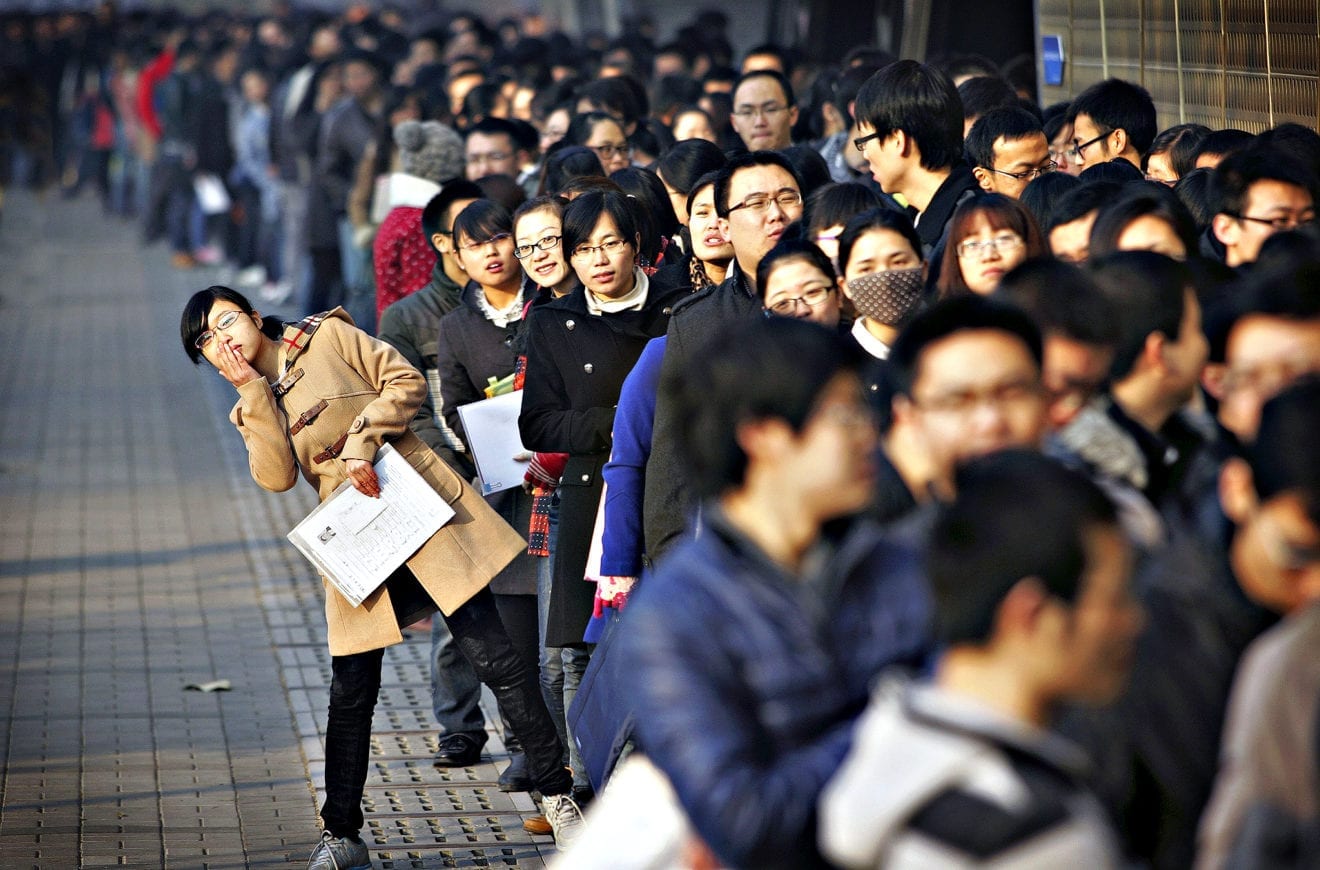
    Job crunch

    Official data shows unemployment at a stable rate, rising slightly to 4.9% last month. But independent data paints a different picture.

    In October-December advertised tech positions fell by 20% from a year earlier, after declining 51% in the third quarter, according to data from Zhaopin, China’s largest recruitment website and Renmin University.

    China’s economy “faces downward pressure, and to some extent this pressure will be transmitted to the job market,” said Meng Wei, a spokeswoman for the National Development and Reform Commission, China’s state planner.

    A lawyer who consults on labour disputes, Guo Xuehai of Beijing Zhonghai Law Firm, said, “there are definitely more employees coming for help than before,” but added this was usually the case at this time of the year.

  • Vietnam makes debut in Bloomberg innovative economy index

    Vietnam makes debut in Bloomberg innovative economy index

    Vietnam has for the first time entered the Bloomberg Innovation Index of the world’s 60 most innovative economies. It scored 45.92 out of 100 in the 2019 index. Other new entrants include India, Mexico and Saudi Arabia. Bloomberg said: “The index analyzes dozens of criteria using seven metrics, including research and development spending, manufacturing capability and concentration of high-tech public companies.”

    Vietnam’s highest rankings were 34th in high-tech density and 39th in patent activity. It ranked a lowly 59th in productivity.

    Its productivity in 2017 was among the lowest in Asia despite growth, according to the Vietnam Annual Economic Report released by the Vietnam Institute for Economic and Policy last year.

    An average Vietnamese worker made VND60.73 million ($2,600), lower than the rate for Cambodia, Indonesia Malaysia, the Philippines, and Thailand, it said.

    In the Bloomberg index, South Korea retained its top place from last year and was followed by Germany, Finland, Switzerland, and Israel.

    Other Southeast Asian countries were Singapore in sixth place, Malaysia (26th) and Thailand (40th).

  • China will flood US with its product

    China will flood US with its product

    Turnover in the Chinese retail industry will eclipse that of the US later this year, according to analyses. “Nothing is going to stop them,” said one commentator as new data emerged showing a fast-narrowing gap between the two markets. The fact China would overtake the US was never in doubt – China’s population of 1.4 billion is vastly more than the US population of 325 million.

    According to data from eMarketer, total Chinese retail sales will grow 7.5 per cent this year to reach US$5.636 trillion. But growth in the US is likely to be significantly slower at just 3.3 per cent, reaching $5.529 trillion.

    Not even the slowdown in China’s economic growth is likely to affect the figures – a rebound may even hasten the milestone.

    GlobalData Retail MD Neil Saunders says a big factor in the speed of China’s retail growth is the way the industry has evolved. In the US, retailers were established well before the advent of the internet meaning adapting to the new online environment has meant managing their brick-and-mortar stores while pursuing growth online.

    But in the US, the market began to mature in an online world, and online spending there will account for more than 30 per cent of total retail sales this year. In the US, online is predicted to account for less than 11 per cent.

    “The US retail environment grew up in a very different era,” says Saunders. “It grew up before the internet. There is a historical difference and an evolutionary difference, which has created this very different backdrop to retail.”

    The rapid rise of the Chinese retail industry has been fuelled by rising incomes across the country, the urbanisation of the population and a burgeoning middle class.

  • Dollar eases as focus shifts to Fed meeting

    Dollar eases as focus shifts to Fed meeting

    The dollar eased versus most of its peers on Monday as investors turned their attention to this week’s Federal Reserve policy meeting, with traders wagering policymakers will signal a pause in their tightening cycle. The Federal Open Market Committee meets between Jan 29-30, and Chairman Jerome Powell is widely expected to acknowledge growing risks to the US economy as global momentum weakens.

    The dollar fell 0.2% versus the offshore yuan to 6.7406. The rally in the yuan also fuelled a bounce in the Australian dollar, which gained 0.18% versus the dollar to $0.7195. Kiwi dollar strengthened by 0.3% to $0.6859.

    “The general direction for the dollar is still down and markets will be taking cues from the FOMC this week,” said Sim Moh Siong, currency strategist at Bank of Singapore.

    “The Fed will most likely keep rates steady this year given the state of economic growth outside the US”

    The dollar index, a gauge of its value versus six major peers was marginally lower at 95.74, after falling 0.8% on Friday.

    A deal to reopen the US government for now after a prolonged shutdown also reduced investor demand for the safety of the greenback.

    ‘The re-opening of Federal government after one-month shutdown fuelled ‘risk on’ rally in the US equities and slashed demand for safe-haven currency like USD, leading to sharp decline of the dollar index last Friday,” said Margaret Yang, markets analyst at CMC Markets.

    Over the past two months or so, Powell and several other Fed policymakers have taken a more cautious approach on further monetary tightening, leaving the dollar underpowered after it enjoyed a boost from the Fed’s four rate increases last year.

    Traders are bearish on the dollar for 2019.

    Amid a weakening global economy and US-Sino trade tensions, the US central bank is widely expected to hold rates steady this year to avoid hurting growth at home. Interest rate futures markets are pricing in no rate hikes for 2019.

    Investors are also anxiously waiting news from high-level US-China trade talks on Tuesday and Wednesday to see if the world’s largest economies can reach a compromise that will end their trade war. President Donald Trump has threatened to hike tariffs on Chinese goods if there is no significant progress in the negotiations.

    The yen added 0.2% in early Asian trade at 109.34.

    The dollar has gained around 1.2% on the yen over the last two weeks. Not helping the yen was the Bank of Japan’s downgrade of its inflation forecasts last week when it also maintained its accommodative monetary policy, as widely expected.

    Moreover, Japanese investors have been net buyers of foreign bonds over the last few weeks, stoking demand for dollars. This likely explains why the safe-haven yen has not appreciated during this period even though risks of a global economic slowdown have rattled investor sentiment.

    The euro was marginally higher at $1.1411.

    The single currency managed to cling on to a 0.4 percent gain made last week despite the European Central Bank downgrading its growth forecasts for the near term.

    Growth data out of Europe’s economic powerhouses such as Germany and France has been weaker-than-expected and analysts expect the ECB to remain dovish for an extended period.

    Traders believe Europe’s slowdown and a dovish ECB are priced into the euro, which has traded in a $1.12-$1.16 range over the last three months.

    Sterling was marginally lower, fetching $1.3193.

    Cable gained 2.5% last week after a report in the Sun newspaper that Northern Ireland’s Democratic Unionist Party had privately decided to offer conditional backing for British Prime Minister Theresa May’s Brexit deal this week.

    However, Ireland’s Deputy Prime Minister Simon Coveney said on Sunday the backstop was already a compromise drawn up to meet May’s negotiating red lines, and the EU and Ireland were united in the view it “was not going to change”.

    Analyst expect sterling to remain volatile. Britain is set to leave the European Union on March 29, but the country’s members of parliament remain far from agreeing a divorce deal.

  • OCBC: Malaysia could restore fiscal health in 3 years

    OCBC: Malaysia could restore fiscal health in 3 years

    Malaysia has a reasonable chance of restoring its fiscal health within three years if the economic growth remains stable with new revenue streams and stable expenditure, according to OCBC Bank chief economist Selena Ling. “But if you have a case where the global environment is very serious and dire and there is no deal between US and China… then it becomes a very hostile environment for any developing country to operate in,” she said last Friday.

    She noted that if the global economy remains at a status quo for the rest of the year and crude oil prices stabilise, Malaysia may miss the fiscal deficit target by 0.1-0.2 percentage points.

    Having said that, the potential slippage is not expected to be “very severe” that will derail Malaysia off its targets.

    “Rating agencies also want to see a multi-year plan. If it’s just a slippage of one year that you can attribute to a lot of external factors, probably the rating agencies will give you a pass. It’s really not a one year story they’re looking for,” she explained.

    The government has projected fiscal deficit to ease to 3.4% of gross domestic product (GDP) this year from 3.7% in 2018. It looks to further narrow the fiscal deficit to 3% and 2.8% in 2020 and 2021, respectively.

    Ling projects Malaysia to record a full-year GDP growth of 4.4% for 2019 amid slowing global growth and the ongoing external headwinds.

    Malaysia’s ringgit, on the other hand, could appreciate to RM4 against the greenback in the event of a weak dollar.

    She said the strengthening of the ringgit will have less to do with domestic factors as the slowdown in economic growth is seen as benign, coupled with an unlikely change in the Overnight Policy Rate (OPR).

    Another reason that could be supportive of strong ringgit is the risk of the US economy falling into a recession next year.

    Meanwhile, Ling expects oil prices to be subdued and could result in a shortfall in government coffers if they remain at the current level of around US$50 per barrel until year-end.

    Although Budget 2019 is based on the oil price assumption of US$70 per barrel, she does not see a need to recalibrate the budget at this juncture, but it will exert pressure on seeking new revenue sources.

    “As far as the budget revision is concerned, I suspect (it will) not be so soon because the US$70 is a medium-term price target and oil prices have been volatile in the last six months.

    “But if you look at the average price, it is relatively stable and maybe for the next budget in October 2019, they (the government) may revise the oil price assumption,” she added.

  • Imported vehicle sales in Korea up nearly 10% in 2018

    Imported vehicle sales in Korea up nearly 10% in 2018

    The value of imported vehicles sold in Korea last year jumped 9.9 percent to 17.47 trillion won ($15.49 billion) from a year earlier on demand for German models, industry data showed Thursday. In 2018, imported carmakers sold a combined 260,705 vehicles in Asia’s fourth-biggest economy, up 12 percent from the previous year, the latest findings showed.

    According to the Korea Automobile Importers and Distributors Association (Kaida), strong demand for vehicles made by Mercedes-Benz, Audi and Volkswagen pushed up sales numbers.

    Imported auto brands accounted for a record 16.7 percent of all vehicles sold and registered in the domestic passenger car market for 2018, up from 15.23 percent in the previous year, Kaida said.

  • Gold rises as growth concerns, US govt shutdown weigh on dollar

    Gold rises as growth concerns, US govt shutdown weigh on dollar

    Gold prices rose on Thursday as the dollar declined due to concerns the prolonged U.S. government shutdown will limit economic growth at the same global growth is slowing as well. Spot gold was up 0.1 percent at $1,283.31 per ounce, as of 0326 GMT, while U.S. gold futures were down 0.1 percent at $1,282.60 per ounce. “We are seeing a weaker U.S. dollar for the moment, which is in general supportive for gold,” Michael McCarthy, chief market strategist at CMC Markets said.

    However, McCarthy cautioned that bullion price gains are limited by slowing investor buying as indicated by price charts used by technical traders.

    “The issue for gold is there is a very heavy resistance seen around $1,290 and $1,310. A further weakening of the U.S. dollar could be supportive. But, we need something to really push gold through the resistance level,” he said.

    The U.S. dollar index, which measures the greenback against a basket of six major currencies, fell for third day, dropping 0.3 percent during that period. However, Asian shares rose on Thursday after Wall Street managed to end higher.

    On Wednesday, U.S. President Donald Trump said that the United States was doing well in trade talks with China, saying at a White House event that China “very much wants to make a deal.”

    However, a prolonged U.S. government shutdown reminded investors of risks to growth to the economy.

    White House economic adviser Kevin Hassett said in a CNN interview the U.S. economy could see zero growth in the first three months if the partial government shutdown lasts for the whole quarter.

    Meanwhile, investor focus turned to the European Central Bank (ECB), which is widely expected to keep its monetary policy unchanged at its first policy meeting of 2019 that ends later on Thursday.

    Market watchers also expect ECB to acknowledge growing threats to the euro zone economy.

    “The ongoing trade war, Brexit and slow global growth narrative are supportive for gold at present levels, as is Chinese seasonal demand,” MKS PAMP Group said in a research note.

    “That being said, Comex non-commercial and exchange-traded fund (ETF) holdings remain extended, so we expect a bit of tug of war in the short-term between $1,270-$1,300.”

    Holdings of SPDR Gold, the largest gold-based ETF, was at its highest since June 2018.

    Among other metals, palladium, which hit a record high of $1,434.50 an ounce last week on low inventories and rising demand, rose 0.1 percent to $1,348.50 an ounce.

    Silver was down 0.1 percent $15.35 an ounce, while platinum was steady at $795.

  • RAM Malaysia lowers inflation forecast for 2019 to 2%

    RAM Malaysia lowers inflation forecast for 2019 to 2%

    RAM Ratings, which expects inflation to inch up to 0.3% in December 2018 from 0.2% in the previous month, has revised its full-year headline inflation forecast for 2019 to 2.0% from 2.7%. The rating agency said in a statement that inflation in December 2018 is estimated to rise to 0.3% from 0.2% in the preceding month due to dissipation of deflationary pressures from the transport fuel component.

    The price of RON95 petrol fell 3.3% year on year in December, after a 4.5% drop in November.

    On that note, overall inflation is envisaged to come in at 1.0% in 2018.

    As for 2019, RAM Ratings has revised its headline inflation projection downwards to 2.0%, mainly due to changing expectations on global oil prices, which are increasingly pointing to a lower average range of US$60-US$65 (RM248-RM269) per barrel for 2019.

    RAM head of research Kristina Fong said the rating firm’s sensitivity analysis indicates that for every US$5/barrel move in the price of Brent crude, headline inflation potentially changes 0.3 percentage point.

    “The move back to the weekly Automated Pricing Mechanism for pump prices – effective January 2019 – is not expected to exert any significant downward pressure on inflation given the short period it will be in place ahead of the anticipated targeted fuel subsidy mechanism to be implemented in second quarter 2019.

    “Moreover, global oil prices are expected to trend a little higher compared to the start of the year, An escalation in oil (petrol) prices beyond RM2.20/litre will trigger the use of subsidies to maintain this ceiling. This will also contain inflationary pressure,” she added.

    The Department of Statistics released the December inflation data yesterday.

  • Malaysia may feel bite of China economic slowdown

    Malaysia may feel bite of China economic slowdown

    The slowdown in China may impact Malaysia more given the strong trade linkage with China, according to PublicInvest Research. “China is not only our biggest trade partner in 2018 (YTD 2018: 16.7%) but also our largest export market (YTD 2018: 13.9%) and our second biggest import source after Singapore (YTD 2018:19.8%). This could bring negative ramifications not only to Malaysia but also to other peers like Singapore, Thailand, Indonesia and the Philippines and hence, the growth prospects of Asean-5,“ the research house said in a report.

    In fact, it said, the simmering trade stress has caused noticeable dent to export momentum in November with Singapore, Thailand and Indonesia suffering a contraction in exports. This could be repeated in December.

    PublicInvest Research said unfavourable outcomes to the trade negotiation may see longer times taken for growth to normalise due to demand deficiencies which are always more damaging than supply shocks.

    “Other than this, the pullback in global financial and commodity markets arising from pockets of stress mentioned above can hurt Malaysia as well due to contagion effects. This can bring down the ringgit in addition to putting a cap in the prices of our key commodity exports like crude oil, crude palm oil and rubber,“ it explained.

    The slowdown in China is particularly alarming and shows signs of worsening following the release of its 2018 growth of 6.6% (2017: 6.8%), the slowest since 1990.

    “We don’t see negative surprises in this as it is within the People’s Bank of China’s estimates,“ it said, adding that the International Monetary Fund (IMF) expects China’s slowdown to continue, forecast to ease to 6.2% in 2019 amid firmed commitment to reforms and rebalancing on the back of the trade collision with the US.

    PublicInvest Research said the slew of IMF downgrades could result in negative ramifications not only to global financial markets but also commodities. Risk aversion could heighten, pushing investors to take less risks which may be precursor to elevating demand for safe haven assets particularly bonds.

    “Among all the growth risks mentioned by IMF, we are particularly concerned over China given its extensive trade network and huge economy.”

    PublicInvest Research said unfavourable trade negotiations could be harmful not only to China’s outlook but also emerging economies, particularly Asean, given their strong interdependence on trade. This could lead to inexorable downturns to Asean economies, particularly those that depend on China’s exports (intermediate goods).

    “Over and above all, we think that China still has sufficient tools to support growth should trade negotiations turn unfavourable although the impact could still be there.”