Tag: tv

  • Panasonic to launch new auto battery line at ex-TV screen plant in Japan

    Panasonic to launch new auto battery line at ex-TV screen plant in Japan

    Japan’s Panasonic said on Friday it will start producing automotive batteries at its former television screen plant in Japan, accelerating its battery drive to meet anticipated demand for electric vehicles.

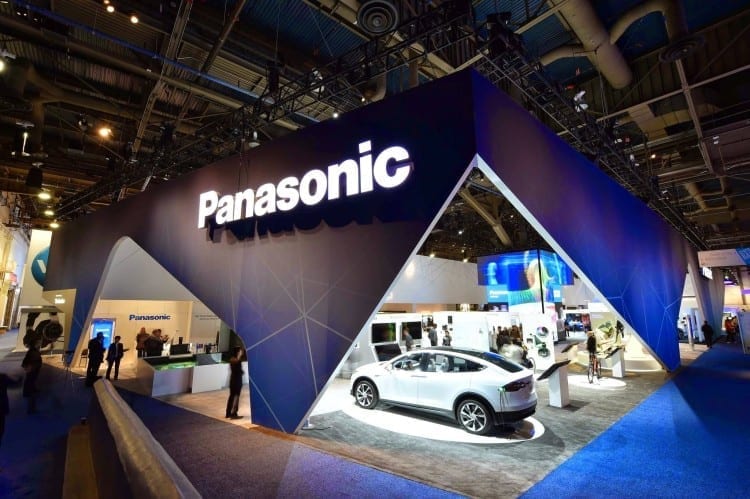
    Panasonic, the exclusive battery cell supplier for Tesla’s mass-market Model 3, is reinventing itself as a provider of advanced auto parts to escape the price competition of smartphones and other lower-margin consumer products.

    The new battery production will start at its LCD plant in Himeji, western Japan, in the financial year from April 2019, using space left vacant after it closed its unprofitable TV screen manufacturing business last year.

    The company declined to comment on the size of new investment or the production capacity of the new line.

    The Himeji plant currently produces screens for vehicle dashboards and medical equipment, but output has dropped significantly after it exited TV screen production.

    Panasonic sees batteries as a key driver for its plan to nearly double its automotive business revenue to 2.5 trillion yen ($22 billion) in the year through March 2022.

    Already one of the leading suppliers of automotive lithium ion batteries, it currently has five production sites in Japan.

    It started mass production of battery cells at Tesla’s Gigafactory in Nevada earlier this year and plans to follow suit at a new plant in Dalian, China.

  • Hotels told to cough up for playing music on TV by Vietnam’s copyright watchdog

    Hotels told to cough up for playing music on TV by Vietnam’s copyright watchdog

    Collection of the controversial royalty fees will resume after a three-month break following a public backlash.Vietnam’s music copyright watchdog has announced that it will resume charging hotels across the country royalty fees for playing music on TV.

    The Vietnam Center for Protection of Music Copyright (VCPMC) will be charging all hotels VND25,000 ($1.1) per year for each room equipped with a TV.

    The amount is based on similar fees charged in other countries based on information provided by the International Confederation of Societies of Authors and Composers (CISAC) and adjusted to Vietnam’s economy, the center stated.

    At a press conference on Monday, the VCPMC cited Vietnam’s intellectual property law to reaffirm its right to collect royalty fees from hotels that play music.The culture ministry has asked the VCPMC to start collecting fees again after they were put on hold in May following a public backlash, according to Pho Duc Phuong, the center’s director.

    The center also said that 80 percent of the royalties would go to the copyright holders and it would only retain 20 percent to cover its operating costs, Tuoi Tre (Youth) newspaper reported.

    The collection process will be public and transparent, and the royalties will be paid to the copyright holders every three months, said Nguyen Hoang Giang, director of the VCPMC’s northern chapter.

    “The hotels will supply us with lists of songs they frequently play, and after subtracting administrative expenses, we will split the royalties equally among copyright holders,” Giang said.

    However, the VCPMC did not explain how the hotels will be able to compile these lists, or how it will verify them.

    In May, the center’s southern chapter started asking 1, 2 and 3-star hotels in Da Nang to pay music royalty fees and threatened to take legal action against those that refused to cooperate. Many hotel owners were surprised to learn about the new fees and were quick to protest, claiming most visitors don’t use their TVs to play music and not all hotels play music in their lounges.

    However, the VCPMC has been charging 4 and 5-star hotels music licensing fees for the last 10 years, and has been organizing conferences since 2013 to inform all hotel owners of copyright laws and regulations, Tuoi Tre quoted Dinh Trung Can, the VCPMC’s deputy director, as saying.

    Following the public backlash in May, the Copyright Office of Vietnam instructed the VCPMC to temporarily stop collecting music royalty fees until it could devise a more transparent and appropriate roadmap for the collection process.

    The VCPMC is a non-governmental and non-profit collective copyright management organization. It claims to represent nearly 4,000 songwriters and copyright holders of Vietnamese songs, and more than 4 million international writers.

  • Catch spends millions on trust play

    Catch spends millions on trust play

    Catch Group’s first foray into the world of TV advertising has cost the e-commerce company millions, as it looks to bolster its brand awareness ahead of the imminent arrival of Amazon.

    It’s first TV campaign, which has been airing for two-weeks, is part of a long-term marketing play to first establish Catch’s new marketplace image in the local market before beginning to communicate price and range later down the line.

    Catch Group’s head of marketing, Ryan Gracie, told that the campaign was initially designed alongside the company’s re-brand to drive awareness and begin building trust – something pureplay retailers have struggled with in recent years.

    “Building a brand online is very hard and you have to really take yourself above the line if you want to be a trusted, credible brand,” Gracie said.

    “We’re a pureplay, we don’t exist physically so it’s important for us to exist on these other channels.”

    Gracie was unable to say what the return looks like so far, but said a decision was taken by management on TV knowing that assessing the benefits wouldn’t be clear cut.

    “The hard costs of the media spend is a major inhibitor, because you can’t explicitly measure the impact of it,” he said.

    “What do you get when you advertise on TV? You get a warm and fuzzy feeling, but you have to trust it’s going to work.”

    The ads themselves depict Australians in various scenarios screaming “catch” – in line with the company’s “screaming good deals” philosophy.

    Catch is investing in marketing on both sides of the market at the moment, having also stepped up its B2B marketing since its brand relaunch to encourage more suppliers to jump on its platform.

    Catch Group co-founder Gabby Leibovich told sister site Internet Retailing in August that more than 200 brands have signed up to the marketplace, with 25,000 new SKUs recently added across several new categories.

    Nati Harpaz, CEO of Catch Group, is the chairman of Octomedia, Inside Retail’s parent company.

  • Saigon Co.op to launch retail startup TV reality show

    Saigon Co.op to launch retail startup TV reality show

    Vietnam grocery retailer Saigon Co.op has launched a TV reality show on retail startups.

    The show called “One Billion Start up With Saigon Co.op’’ aims to find and train the next generation of successful entrepreneurs. It will kick off on October 15 and run until December 31 this year.

    Broadcasted weekly on HTV9, the show expects to attract around 5000 candidates with three finalists standing a chance to receive the Grand Prize of VND1 billion (US$44,000), and become the owner of a Co.op Smile modern grocery store.

    A typical Co.op Smile store has flexible operational space suitable with urban and suburban residence and stocks 750 – 1300 products across various categories.

    Saigon Co.op aims to work with the Ho Chi Minh City government to drive entrepreneurship and make the city the birthplace for start-ups.

    Qualified challengers will compete against one another in a “common house” on specific knowledge, creativity and situation management, which are crucial factors for a successful start-up.

    “With the growing start-up trend, we are looking to encourage the younger generation to participate in the challenge to gain more knowledge towards having a successful business,” said a Saigon Co.op representative.

    During the competition, Saigon Co.op will provide competitors with useful advice, including retail business models, mobile sales tips, store design and advertising and marketing concepts to drive customers into stores.

  • Facebook makes new bid for TV viewers with expanded video

    Facebook makes new bid for TV viewers with expanded video

    Facebook had signed deals with news and entertainment creators Vox Media, BuzzFeed, ATTN, Group Nine Media and others to produce shows.

    Facebook on Wednesday made its biggest move to date to compete in the television market by expanding its video offerings with programming ranging from professional women’s basketball to a safari show and a parenting program.

    The redesigned product, called “Watch,” will be available initially to a limited group in the United States on Facebook’s mobile app, website and television apps, the company said.

    The world’s largest social network added a video tab last year, and it has been dropping hints for months that it wanted to become a source of original and well-produced videos, rather than just shows made by users.

    Reuters reported in May that Facebook had signed deals with millennial-focused news and entertainment creators Vox Media, BuzzFeed, ATTN, Group Nine Media and others to produce shows, both scripted and unscripted.

    “We’ve learned that people like the serendipity of discovering videos in News Feed, but they also want a dedicated place they can go to watch videos,” Daniel Danker, Facebook’s product director, said in a statement on Wednesday.

    Chief Executive Mark Zuckerberg said in a Facebook post that Watch would allow users to “chat and connect with people during an episode, and join groups with people who like the same shows afterwards to build community.”

    Facebook said the shows would include videos of the Women’s National Basketball Association, a parenting show from Time Inc and a safari show from National Geographic. Facebook is already broadcasting some Major League Baseball games and that would continue, the company said.

    ATTN said on Wednesday it had two original series coming to Facebook Watch: a health program with actress Jessica Alba and a relationship advice show.

    Eventually, the platform would be open to any show creator as a place to distribute video, Facebook said.

    The company, based in Menlo Park, California, faces a crowded market with not only traditional television networks but newer producers such as Netflix Inc and Alphabet Inc’s YouTube as well as Twitter Inc and Snap Inc .

  • Aldi enters TV cooking space

    Aldi enters TV cooking space

    Supermarket chain Aldi has signed up to its first TV cooking show sponsorship deal as the German retailer escalates its market share fight with local behemoths Coles and Woolworths.

    Aldi will feature its pantry on Channel Seven’s new production, Hell’s Kitchen, hosted by celebrity chef Marco Pierre White.

    White is a former guest judge on rival Ten Network program, MasterChef, which has had a partnership deal for the past nine years with Coles.

    Aldi’s deal with Hell’s Kitchen follows its sponsorship of Nine Network renovation show, The Block, in 2015.

    The discount retailer has stepped up its media strategy, with new a branding campaign launched in May adding to sponsorship of kids’ soccer.

    In May Aldi said it had almost 10 per cent of Australia’s $80 billion plus supermarket sector.

    In the past 12 months, Aldi has also increased its range by about 100 new products and spent more than $75 million on lowering grocery prices during the first months of 2017.

    More recently, the German giant signed up to the Australian Government’s voluntary Tax Transparency Code (TTC).

    The discount supermarket retailer said it has ‘consistently maintained an open and positive working relationship with the Australian Taxation Office,’ and that since achieving profitability in the Australian market, has paid on average 31 per cent of pre-tax profits to the ATO.

  • Sony relaunching OLED TVs

    Sony relaunching OLED TVs

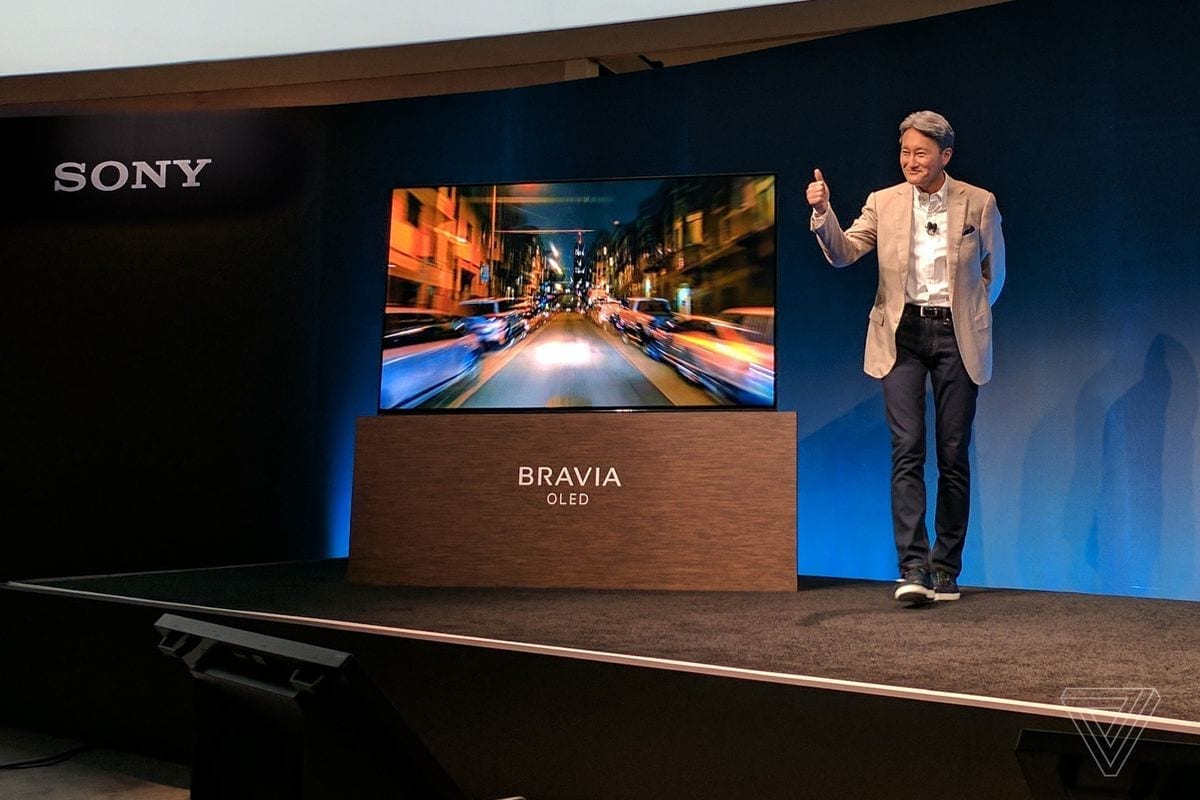
    Sony’s high-definition OLED television, which hits domestic stores next month, will mark a return after sales were halted in 2010. But instead of maintaining its fiercely independent streak, the Japanese group is enlisting the aid of South Korea’s LG Display this time around.

    Good vibrations

    The Bravia A1 series, which Sony said Monday will go on sale June 10, will carry a price tag of around 800,000 yen ($7,092) for the 65-inch model, while the 55-inch will go for about 500,000 yen. Not only does the organic light-emitting diode display generate realistic hues, it also doubles as a speaker. These sets do not come equipped with conventional speakers since the thin, bendable OLED layer is capable of emitting sound vibrations.

    LG Electronics, sister company of Sony’s panel supplier LG Display, also produces its own OLED TVs. Japan’s Toshiba and Panasonic are rivals as well. “OLEDs will really take off this year,” said a source from a major Japanese electronics retailer.

    Sony developed a prototype OLED TV in 2001 and launched the world’s first household model in 2007. But those 11-inch sets failed to attract buyers, and Sony suspended sales in 2010.

    Around that time, a glut in global LCD supplies led to a drop in prices, sending TV segments across the board into the red. Sony withdrew from a joint panel operation with South Korea’s Samsung Electronics. The Japanese company’s TV business later underwent restructuring and a spinoff.

    Sony merged its OLED panel business with Panasonic’s, and that unit is due to become a subsidiary of Japan Display later this year. Sony no longer has in-house panel technologies for consumer TVs.

    The company is making a comeback to big-screen OLEDs because “the performance of the panels we can procure have reached a convincing level,” said Ichiro Takagi, executive vice president at Sony.

    The group continued to develop professional-use TVs and advanced image processing technology even after suspending sales in 2010 in order to “be in a position to release a new model at any time,” said a Sony executive.

  • TV as a Service market to reach $1.5b in 2021

    TV as a Service market to reach $1.5b in 2021

    In a recent video software market report, ABI Research evaluates expectations of the new TV as a Service (TVaaS) business model and finds that TVaaS revenues will grow from 10% in 2016 to 35% of video software revenues in 2021. The TVaaS model states that recurring revenues based on video consumption, transactions, or subscriber-related metrics will take over traditional hardware sales, software and IP licenses, and service-related revenues. TVaaS opportunities will grow to $1.5 billion in 2021.

    “Companies that wish to succeed in the TVaaS realm need to commit to customer-oriented solutions, including investing in 24/7 operational capabilities and robust engineering organizations,” said Sam Rosen, managing director and vice president at ABI Research.

    “Solutions need to support the hybrid cloud methodology where they can be deployed in public cloud infrastructure, as well as customer’s own data centers. Also important to operators is the use of microservice-based architectures that allow larger customers to adopt one or two components of a solution around a specific pain point.”

    Most major vendors now demonstrate products with TVaaS components. Major examples include Cisco’s Infinite Video suite, Nagra’s intuiTV product, and Ericsson’s MediaFirst suite. Similar TVaaS trends are also occurring in product lines outside of middleware, including DRM, guide licensing and metadata, transcoding and QoE measurement.

    In terms of readiness to transition to TVaaS architectures and business models, DRM leads the movement at a 56% transition rate by 2021, followed by transcoding and its 36% transition rate within the same time. Middleware, as well as guide licensing and metadata, will only transition to 20% and 12%, respectively.

    “Video software markets are in a period of rapid disruption, highlighted most aggressively by Ericsson’s revelation that its media unit’s operating income showed a loss of 25% of revenues in 2016, accelerating to 33% in the fourth quarter,” said Rosen.

    “To survive the upheaval, these markets must adopt models that showcase a unique balance of service-oriented integration and development offerings, intellectual property (IP) licensing, traditional software licensing and TVaaS.”

  • Gurmeet Choudhary approached for Indonesian TV Show

    Gurmeet Choudhary approached for Indonesian TV Show

    Gurmeet Choudhary, who was last seen onscreen in “Laali Ki Shaadi Mein Laaddoo Deewana” has been approached to feature in an Indonesian television show. The actor says it came as a surprise to him.

    “It came as a pleasant surprise. The makers recently flew down to India to meet me and narrated me the concept of the show they are planning to make there. I liked the idea and will take a final call on the show soon,” Gurmeet said in a statement.

    The actor’s show “Geet – Hui Sabse Parayi” recently released in Indonesia (in Indonesian language) and has been hugely appreciated by the people there. He also starred in bollywood films like “Khamoshiyan”.

    According to sources, Gurmeet loved the idea and is considering the offer. He is expected to fly to Indonesia in May for the final discussion on the TV show.

  • TV programme “Startup Nation” to air shortly in Vietnam

    TV programme “Startup Nation” to air shortly in Vietnam

    Vietnam Television (VTV) and HCM Communist Youth Union on Monday announced a new TV programme titled “Startup Nation,” which is expected to promote startups inVietnam.

    The announcement was witnessed by Deputy Prime Minister Vương Đình Huệ, Minister of Science and Technology Chu Ngọc Anh, Minister of Agriculture and Rural Development Nguyễn Xuân Cường, leaders of the youth union and major companies in Vietnam.

    The talk show format will air on VTV1 every Friday evening from April 14 and rebroadcast Saturday afternoon.

    Another programme titled “Startup Coffee” will air from April 10 every morning as part of the programme “Good Morning” on VTV1.

    VTV Director General Trần Bình Minh said the programme producers wanted to deliver a message on startups, which is “Renovation is continuous and enduring. It’s not just a movement but a path for the nation to follow.”

    He said successful businessmen would be invited to “Startup Nation” to share experiences and comment on startup models or business trends in Vietnam and across the world. They could then suggest or invest in promising startup ideas.

    The TV programme is part of the Government’s mission to makeVietnam a nation of startups.

    First Secretary of HCM Communist Youth Union Lê Quốc Phong said the youth would applaud the new programme, which offers them an opportunity to present their startup dreams, and make those dreams a reality.

    Phong said the youth expected relevant agencies to hear their ideas and suggestions thanks to the TV programme and subsequently timely adjust policies to support them.

    In the first quarter of this year, 26,478 new enterprises were established in Vietnam, a record number in the last six years.

    Last year,Vietnam recorded the establishment of 110,100 new enterprises, the highest number compared with the previous years. Last year is the first time the country had more than 100,000 new enterprises in one year, which is said to be the result of the Government’s strong promotion of startups.

    Vietnam is expected to have one million enterprises by 2020.

  • Panasonic targets 50% sales jump for TVs in Indonesia

    Panasonic targets 50% sales jump for TVs in Indonesia

    Electronics giant Panasonic Corp. is seeking to sell up to 50 percent more TVs in Indonesia this year by offering online shopping and a greater variety of models. The company’s TV sales have been stagnant for three years.

    “We hope this year we can sell around 250,000 to 300,000 units,” said Erwin Lim, a Panasonic Gobel Indonesia product manager. The figures represent increases of 25 to 50 percent from 200,000 TVs sold last year.

    As part of its goal, Panasonic launched a website designed to help consumers select TV models according to their needs and budgets.

    “We want to strengthen our relationship with our customers and make it easy for consumers to choose products effectively and efficiently according to their needs and budgets,” Panasonic Gobel President Hiroyoshi Suga said.

    Lim said one challenge is that TVs are not a primary need for consumers in Indonesia.

    “Therefore, we will also innovate (our marketing) in order to increase sales,” Lim said. “We will begin to focus marketing on digital means, seeing a trend in today’s society.”

    Referring to Panasonic’s medium-term target over the next three years, Lim said the company wants to move to the No. 2 or No. 3 position by boosting its market share to 14 percent or 15 percent from the current 11 percent.

    Panasonic, currently No. 4 in the market, is seeking to catch up with third-ranked Sharp, a Japanese firm owned by Taiwan’s Hon Hai Precision Industry.

  • TCL Electronics pictures broader appliances market beyond TVs in Thailand

    TCL Electronics pictures broader appliances market beyond TVs in Thailand

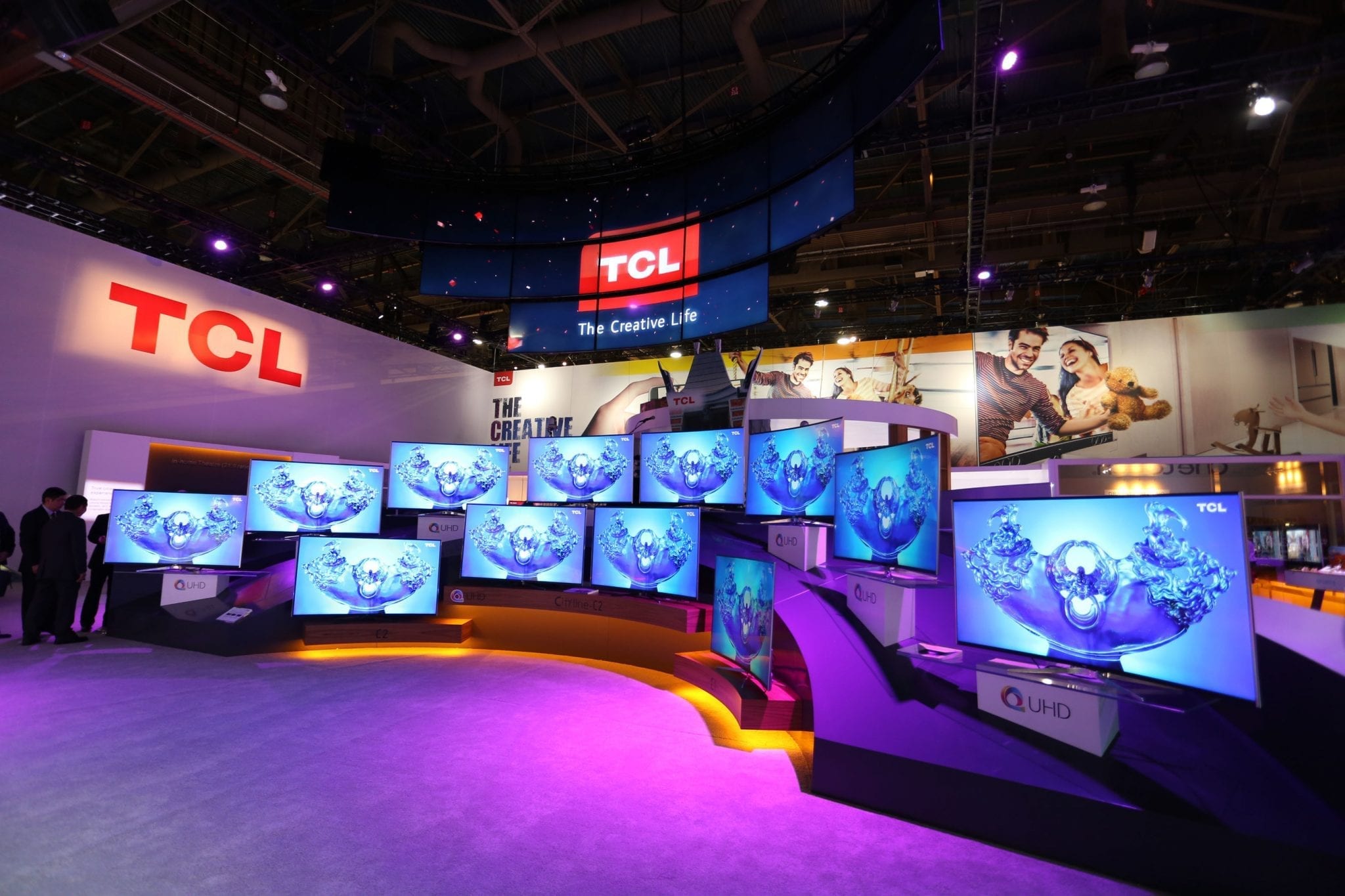
    TCL Electronics, a Chinese electrical appliance manufacturer that sells televisions in Thailand, is considering expanding its product range in the country. The company is conducting a market study that may pave the way for it to sell other home appliance products, including air-conditioners, refrigerators, and washing machines. Such a move would reduce TCL’s reliance on only one product line in the Thai market.

    Thailand’s overall consumer electronic market dropped 3 per cent year on year to Bt34.5 billion in the first 11 months of last year. Sales of flat-screen and plasma televisions dropped slumped by 8 per cent |over the period to about Bt23.3 billion.

    In contrast, overall sales of home appliance products, such as refrigerators, air-conditioners, and washing machines, increased by 6 per cent to Bt54 billion in the first 11 months of 2016.

    Sandy Zhou, head of marketing at TCL Electronics (Thailand), said TCL Thailand was keen to add a broader range of electrical appliances to its offerings in Thailand, meeting rising consumer demand in the segment. The strategy also would help TCL to improve its operational efficiency and lower management risk.

    She said that TCL Thailand achieved sales of Bt2.5 billion last year, maintaining its position as a top-three TV player in Thailand with 8 per cent market share.

    Zhou said TCL’s main income is derived from products such as Smart TV and QUHD TV, which cover the mid to premium ends of the market. TCL’s customer base can be categorised as 45 per cent in Bangkok, with 55 per cent in the rest of the country.

    “TCL Thailand expects to increase our market share in the local TV market to 10 per cent or approximately 300,000 units (Bt3.2 billion in sales value) this year. For other home appliances, our products will be launched on the market in the third and fourth quarters of this year,” she said.

    “We however have no plan to set up a manufacturing facility for our consumer electronic and home appliance products in Thailand at this moment,” said Zhou.

    TCL Thailand has been established in Thailand for more than 13 years, building up a brand loyalty and good teamwork in its workforce.

    “For this year, our strategy is to expand our sales channels domestically. We plan to increase the number of our dealers here by 30 per cent, and by 15 per cent for the number of modern retail stores. We also plan to adjust the image of our existing 100 showrooms in the Kingdom to be under the ‘Creative Life’ concept,” she said.

    Zhou said that TCL had 75,000 employees throughout Asia, the Americas, Europe and Oceania, with sales organisations in more than 80 countries and regions, and 23 research institutions and 21 manufacturing and processing bases worldwide.

    “TCL Thailand will focus on Thailand only. TCL Group also has offices in the Philippines, Vietnam and Indonesia,” she added.

    TCL Thailand pursues its business with customer- and product-oriented strategies. Core strategies include a focus on brand awareness and price performance through maximising product value and performance efficiency.

    Wannapong Tawara, associate director of GFK Retail and Technology, a market research company in Thailand, said Thailand’s TV market value in 2017 should be similar to that of 2016, considering consumers are still cautious on discretionary spending.

    However, electrical appliances including TVs that are designed to be connected with other applications appeared to be in high demand, tapping into new consumer lifestyles, Wannapong said. With this in mind, electric appliance makers should consider introducing a variety of products that offer complex entertainment and service options and are well priced and easy to use, while coming with good after-sales service.

  • Apple may produce original TV and movie content

    Apple may produce original TV and movie content

    Apple has reportedly become the latest technology company to plan a foray into producing original television and movie content.

    Sources told that Apple is preparing to produce original content for its $10 per month music streaming service, to help it better compete against Spotify.

    Apple Music has been testing the water with some documentary content about musicians but now plans to make the jump into premium programming.

    According to the report, Apple hopes its content could prove to be as internationally popular and critically loved as programming such as Netflix’s Stranger Things.

    But the company does not appear to be planning to spend the vast sums that would be required to become a direct competitor to Netflix and comparable services or premium cable networks such as HBO. Instead, Apple has firmly set its sights on Spotify, which currently has around twice the paying subscribers as Apple Music, at around 40 million to around 20 million.

    Apple has been exploring directly entering the entertainment business for years, but nothing has yet eventuated, the report states.

    But with the smartphone market rapidly maturing and competition intensifying in key markets such as China, the company needs to find replacement revenue streams to compensate.

  • Tata Sky offers 600 channels and services

    Tata Sky offers 600 channels and services

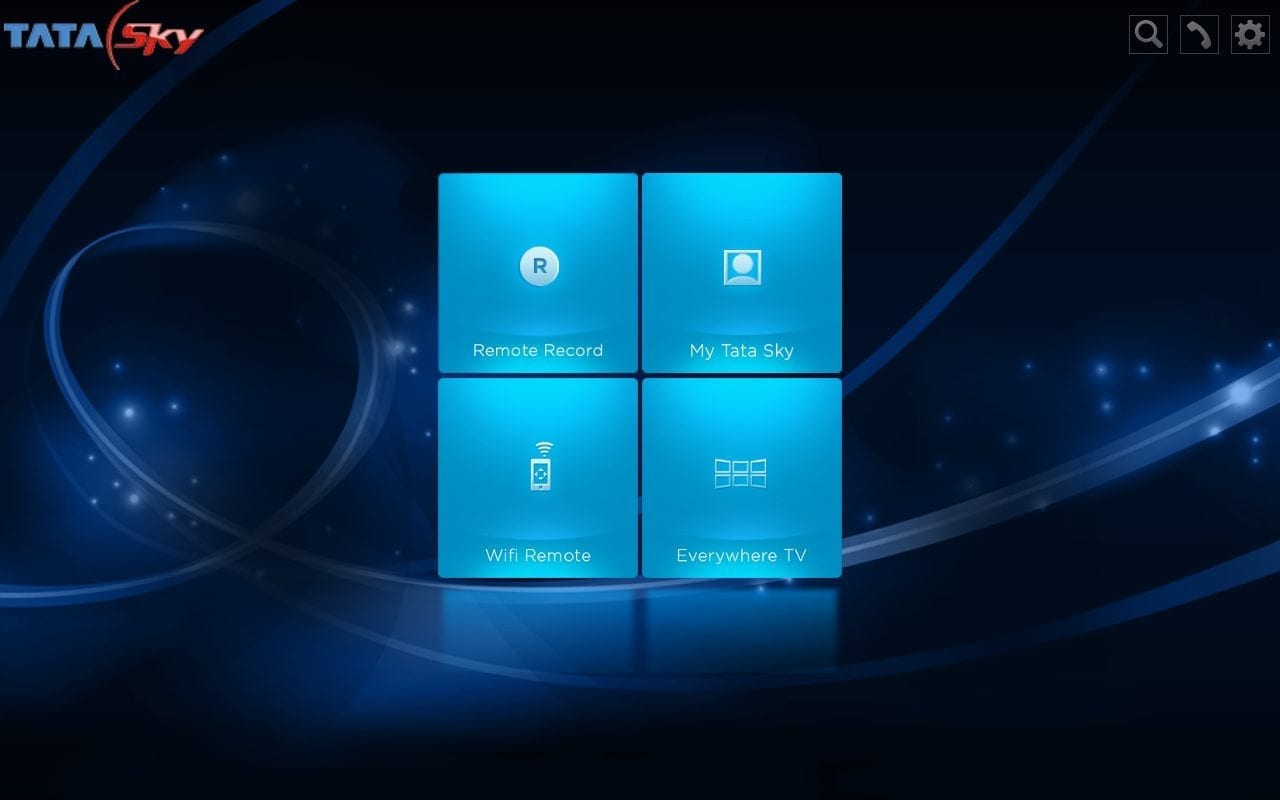
    Tata Sky in India has unveiled its offerings #MaxJingalala of 600 channels and services, which is said to be the highest ever in the DTH sector.

    Tata Sky today is a market leader in HD channels along with maximum number of Tamil, Telugu, Kannada, Malayalam, Marathi, Bengali, Oriya, Punjabi and Assamese channels on offer.

    As of December 2016, Tata Sky is offering an unprecedented 76 HD (highest in the industry) and 483 SD channels. The bouquet of 31 value added services, 15 SD & HD movie platforms specials, 9 exclusive +1 channel feeds, have been a clear differentiator and a key focus area for the brand.

    “Consumers in India consider the number of channels provided by an entertainment platform to be among the second-biggest reason to make their purchase decisions,” said Malay Dikshit, Chief Communications Officer of Tata Sky. “Tata Sky is leaving no stone unturned to offer the maximum number of channels and services to its subscribers. Hence offering Sabse Zyada Manoranjan catering to every member of the family is key to the Tata Sky offering.”

    Throughout 2016, Tata Sky has pioneered in the Pay TV sector with offerings ranging from enabling internet browser application on the Set Top Box, introducing Kids Showcase, Bengali & Punjabi movies MAMI films, m-Visa payment option to first of its kind interactive services such as Comedy, Devotion, Music + and Gurus.

    The year also saw popular campaigns from Tata Sky such as Pyaar Jingalala (13 series ad films), Das Saal Jingalala and Family Jingalala (starring Amitabh Bachchan).

    Some of the other first-ever in the sector that Tata Sky has under its hat are the launch of 4k Set Top Box in India, Karaoke service on STB, unique interactive services Classroom and Smart manager and the world’s first Daily Recharge option.

  • Ericsson, 20th Century Fox ink feature film deal

    Ericsson, 20th Century Fox ink feature film deal

    Ericsson has entered int o an exclusive, multi-year feature film deal with leading international content distributor 20th Century Fox Television Distribution for its subscription video on demand (VOD) service, Nuvu.

    The output deal includes 20th Century Fox-produced titles along with an extensive selection of global film franchises for territories across sub-Saharan Africa in multiple language.

    Titles include The Maze Runner, The Devil Wears Prada, Rio 2, Dawn of the Planet of the Apes, The Fault in Our Stars, The Monuments Men, and Kingsman: The Secret Service, as well as film franchises such as Die Hard and X-Men.

    “Through this partnership, Nuvu subscribers will have access to some of Hollywood’s hottest films as part of their package, localized on a market-by-market basis,” said Thorsten Sauer, head of broadcast and media services at Ericsson.

    The built-in ability to distribute content to consumers during off-peak periods is a core feature of the service. This minimizes data costs for both operator and consumer, addressing the key cost challenge that has so far been an obstacle for VOD uptake in Africa.

    Further, Ericsson has signed an exclusive media delivery services contract with Australian public service broadcaster, Special Broadcasting Service (SBS).

    The contract sees Ericsson aggregate, prepare and deliver content from multiple international content owners and distributors through its broadcast and media services hub in London and deliver media assets directly into SBS’s headquarters in Sydney in a format ready for transmission.