Retail News CRM

Tag: tv

  • Comcast beats Apple by announcing its own TV streaming service

    Comcast beats Apple by announcing its own TV streaming service

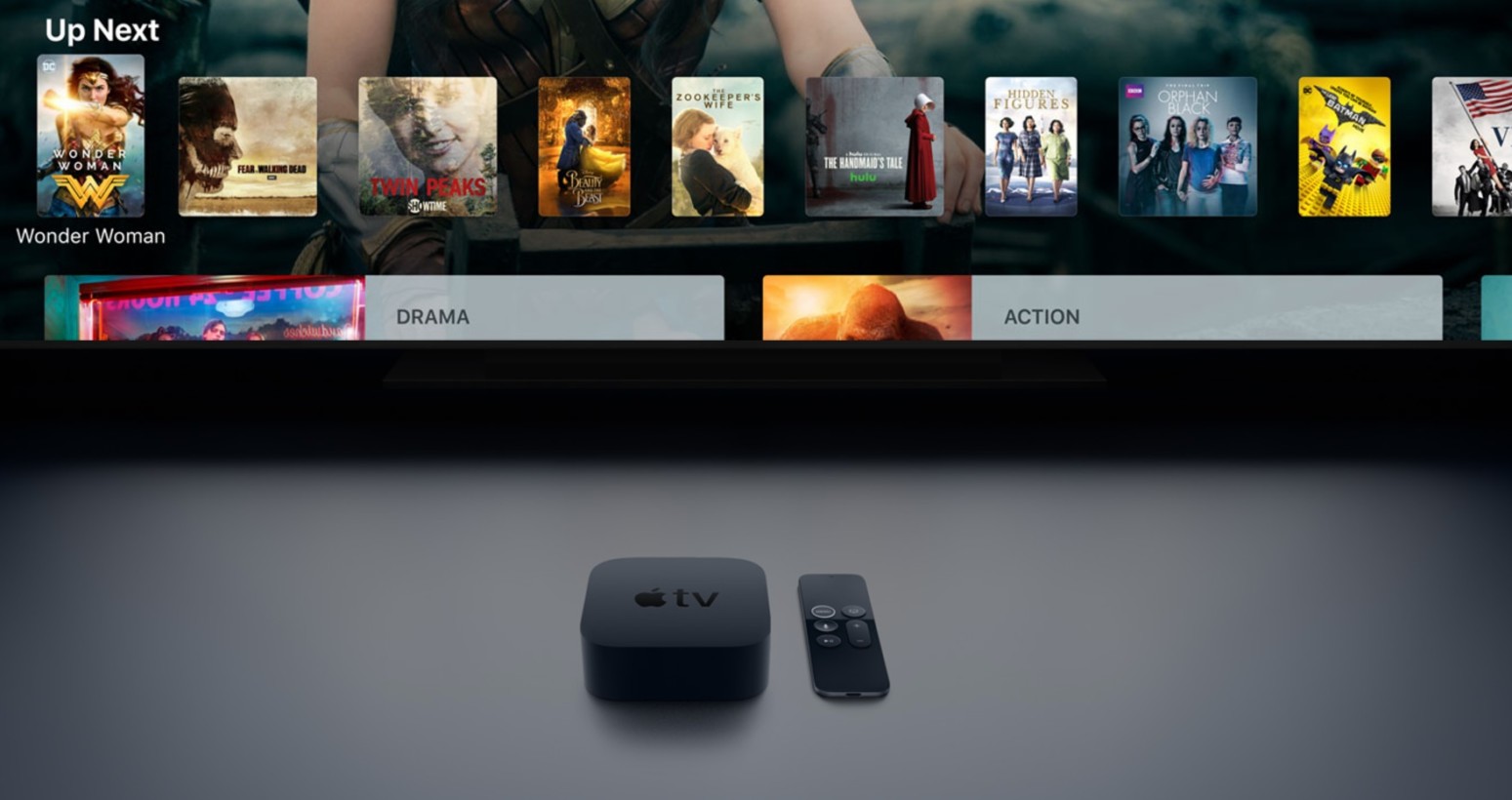
    Comcast beats Apple to it and announces its own TV streaming, the Xfinity Flex. Although Apple’s TV service isn’t official yet, the latest report claims it will work just like Comcast’s when it comes to content.

    However, Comcast’s Xfinity Flex is available to Internet-only customers and for an extra monthly fee. The service promises to provide customers with an easy way to use their TV and voice control to manage all their connected devices in their home. Basically, if you’re an Xfinity Internet customer, starting next week, the Xfinity Flex service will be available to you in a package that contains an Internet-connect, 4K HDR streaming TV device.

    Along to the streaming TV device, the retail box will also include a voice remote, one integrated guide for accessing popular streaming video and music choices (Netflix, Amazon Prime Video, HBO, Showtime, Pandora, iHeartRadio), along with Comcast’s home Wi-Fi, mobile, security, and automation services.

    The price is $5 per month and the subscription will give you access to more than 10,000 videos (TV shows and movies), as well as live TV from ESPN3, Xumo, Pluto, Tubi TV, Cheddar, and YouTube.

    On top of that, Comcast said that all Xfinity Flex customers will be able to upgrade to the full Xfinity X1 cable service directly from the guide, to get access to hundreds of live channels, tens of thousands of on-demand titles, and a cloud DVR.

    Keep in mind that if you’re an Xfinity Internet-only customer, you will have to pay the $5/month for the Xfinity Flex on top of what you’re already paying for your existing Internet plan.

  • Online electronics retailer EasyTalk fined for TV Commercial

    Online electronics retailer EasyTalk fined for TV Commercial

    Electrical equipment seller EasyTalk has been convicted of five charges under the Product Eco-Responsibility Ordinance.

    The company is the first of seven Hong Kong electronics retailers caught suspected of violating the Product Eco-Responsibility Ordinance (PERO), with the other six to face hearings this month and next.

    EasyTalk Group Company was convicted and fined $6500 at Fanling Magistrates’ Courts yesterday on five charges of contravening PERO when selling a television set.

    Under PERO, which came into effect last August, when distributing regulated electrical equipment, sellers must have a removal service plan (RSP) endorsed by the Environmental Protection Department (EPD) and proactively inform consumers of the sellers’ obligation for the provision of a free statutory removal service as well as the relevant removal terms in writing.

    Moreover, sellers must arrange a free removal service for consumers to dispose of the same type of waste equipment and provide a recycling label and a receipt containing the prescribed wording when distributing regulated electrical equipment.

    A spokesman for the EPD said the organisation received a complaint last August about a customer purchasing a television set from EasyTalk Group through the instant-messaging application WhatsApp. Staff of the company claimed that the EPD would collect the used television set for recycling in several days. However, the customer was later requested to make the removal arrangements himself after the purchase.

    During an investigation, EPD enforcement officers found that the seller not only did not arrange the statutory removal service for the complainant, but also did not have an RSP endorsed by the EPD and did not provide recycling labels as well as a receipt containing the prescribed wording according to the regulation.

    The spokesman reminded all retailers – those with physical stores and those selling online or via apps – that they must not make false statements to consumers or offer them a removal service that is contravening the law, thus avoiding relevant liabilities and charging consumers for the removal service.

    First-time offenders are liable to a maximum fine of between $5000 and $100,000. Upon a second or subsequent conviction, the fine increases to between $10,000 and $200,000.

    Consumers have been urged to contact the EPD immediately if they find any seller not conforming to the PERO regulations.

    “The EPD will take strict enforcement action against sellers who violate the PERO,” he said.

  • No original shows at launch for Apple TV service

    No original shows at launch for Apple TV service

    Apple’s TV service is still a no show, but that’s probably going to change very soon. The Cupertino-based company plans to use the March 25 event to outline how it will take on rivals like Amazon and Netflix, a new Bloomberg report claims. While Apple is gearing up to launch its TV service, the company needs to sign deals with Pay-TV programmers like HBO, Showtime, and Starz, which in return must decide whether or not Apple is either a threat or a potential partner.

    If everything goes well, Apple TV will offer HBO and Showtime TV shows at launch, but no original content, people familiar with the matter claim. Apple’s own movies and TV shows are still in development and might not be ready until later this year at the earliest. Although Apple may take the wraps off its TV service this month, it’s almost certain that it will not be actually available until fall.

    Another important thing to note is that Apple plans to integrate the TV service into the iPhone, iPad and set-top box’s TV app, which will offer two types of content: Apple original shows or content bought/funded by the company, as well as content from third-party media companies like HBO and Showtime.

    The same report mentions that the first partnerships are expected to be closed as early as Friday, but since the talks are still going on, it’s impossible to predict what will happen.

  • Vietnam media giant could lose $20 mln as YouTube pulls plug on deal

    Vietnam media giant could lose $20 mln as YouTube pulls plug on deal

    Digital media conglomerate Yeah1 is set to lose 28 percent of future revenues after YouTube unilaterally terminated its content hosting agreement with it. The company’s financial statements for 2018 showed that activities connected to YouTube generated around VND462 billion ($19.93 million) for Yeah1, or nearly 28 percent of its revenues.

    Profit after tax from these activities were worth VND92 billion ($3.9 million), accounting for more than half of its total profits.

    The termination came after YouTube claimed SPRINGme Pte. Ltd, a Thai multichannel network (MCN) in which Yeah1 owns 16.93 percent had violated its policies with some of its channel management activities.

    Yeah1 Group shares plummeted on Monday following Youtube’s announcement, losing 7 percent. The share fell by 7 percent each in the next two trading sessions too.

    Yeah1 started offering entertainment services combined with advertising after becoming YouTube’s MCN partner in 2015.

    An MCN acts as an intermediary connecting creators of video content and YouTube for a cut. Content creators in return receive benefits such as copyright protection, income tax support, access to IP licensed contents to develop new products, and optimized advertising.

    For Yeah1, views from Vietnam account for nearly 73 percent of total views but only contribute about 18 percent of revenues. The rest comes from ad revenues generated in 150 other countries, with the U.S., Germany and Canada being the main contributors.

    Founded in 2006, Yeah1 is Vietnam’s largest MCN ecosystem, operating TV channels, movie studios, YouTube networks, and digital news.

    It was also the first media company to go public, listing on the Ho Chi Minh Stock Exchange (HOSE) last June.

  • Telenor Pakistan partners with Netflix

    Telenor Pakistan partners with Netflix

    Telenor Pakistan today announced its partnership with Netflix, the world’s leading internet entertainment service. As part of this partnership, Telenor’s postpaid and corporate customers in Pakistan will be able to add their Netflix subscription fee to their monthly mobile bill, eliminating the need to share additional credit card or debit card details.

    New and existing Netflix subscribers in Pakistan will be able to select the option to pay through their Telenor mobile bills from the payments page of Netflix. They can simply complete this process by entering their Telenor mobile number, followed by the OTP (one time password).

    “Leading Pakistan’s digital transformation, we are always on the lookout for innovative ways to integrate solutions and maximize utility for our customers,” said Sardar Abubakr, Chief Digital & Strategy Officer at Telenor Pakistan. “Telenor Pakistan’s partnership with Netflix will help us achieve that through our industry-first Direct Carrier Billing (DCB) service. With this partnership, our customers will be able to get seamless access to Netflix’s stellar catalogue of original and licenced content.”

    Netflix launched its service in Pakistan in 2016 enabling its members to enjoy unlimited, ad-free entertainment on any internet connected mobile phone, laptop, desktop, tablet, or television.  More than 139 million Netflix paid members in over 190 countries enjoy TV series, documentaries and feature films across a wide variety of genres and languages.

    To promote digital and e-commerce ecosystem in the country, Telenor Pakistan launched Direct Operator Billing (DOB) in 2014 in collaboration with mobile payments company Fortumo and digital & social games publisher Gameloft for purchase of exclusive Gameloft titles and content from the gaming ecosystem. Direct Carrier Billing (DCB) was launched in 2017 through which customers may purchase content from Telenor Apps and Google Play Store, Gamebird related content and now for Netflix subscriptions as part of their mobile bills.


  • LG U+ expected to acquire CJ Hello this week

    LG U+ expected to acquire CJ Hello this week

    LG U+’s plan to acquire cable TV company CJ Hello could be finalized as early as this week. Progress with the deal has been slow since Korea’s smallest mobile carrier first began considering the acquisition early last year. Industry sources said Monday that the deal is mostly finalized and, with a board meeting scheduled on Thursday, is likely to be concluded this week.

    With the acquisition, LG U+ will become the second-largest player in the domestic paid TV market. KT, with both an internet protocol TV (IPTV) service and satellite subsidiary KT Skylife, is currently the market leader.

    Paid TV services in Korea include cable TV, satellite TV and IPTV.

    LG U+ will likely acquire a 53.92 percent stake in CJ Hello from CJ’s entertainment arm CJ ENM. The cost is expected to be around a trillion won ($888.6 million).

    The acquisition would give the mobile carrier more negotiating power when acquiring or producing content. The carrier could also be in a strong position to lure CJ Hello’s 4.16 million subscribers, as of the first half of 2018, to its mobile service by offering favorable rates.

    LG U+ is already using its partnership with Netflix to attract more customers to its mobile and IPTV service.

    Once the mobile carrier decides to go ahead with the deal, it then needs to be approved by the Fair Trade Commission (FTC), the Ministry of Science and ICT and the Korea Communications Commission. In 2016 when SK Telecom tried to acquire CJ Hello, then CJ HelloVision, the deal fell through as the antitrust body disapproved on the grounds that the acquisition could hurt fair market competition.

    This time, though, FTC head Kim Sang-jo hinted during a recent interview that the commission would take a more positive stance regarding the deal considering the rapid changes in the media market. Kim questioned whether broadcasting and telecommunications can be considered completely separate in a quickly changing market.

    It is still to be seen whether LG U+ will more explicitly announce its intent to acquire CJ Hello and expand its paid TV services. The carrier is holding a press briefing for the launch of a new IPTV service targeting senior citizens in Seoul. Many questions are expected to focus on the acquisition deal and future IPTV strategy.

    Competitors KT and SK Telecom are also considering acquiring cable broadcasting companies to counter LG U+’s move. KT is reportedly interested in acquiring cable broadcasting company D’Live, which has a 6.45 percent share of the Korean paid TV market as of the first half of 2018. KT and KT Skylife control more than 30 percent of the market while CJ Hello owns 13 percent and LG U+ has 11.41 percent.

  • Netflix streams its way into Korean hearts

    Netflix streams its way into Korean hearts

    Netflix viewership is growing faster than ever in Korea. According to mobile app tracker WiseApp on Tuesday, 1.27 million Android users in Korea used the Netflix app in December last year. That’s nearly four times, or 274 percent, more than the beginning of the year, when just 340,000 Android users had used the app in January 2018. Nearly half, or 41 percent, of Netflix users were in their 20s.

    WiseApp estimated that there are around 900,000 paying Netflix users across all devices in Korea who spend a monthly 11.7 billion won ($10.5 million) combined on the platform.

    Netflix users are allowed to share their account with family members and friends, so the number of paying customers is always lower than the number of users. Netflix also offers a one-month free trial, giving first-time users unlimited access to the platform for a limited time.

    Onlookers have suggested a variety of possible explanations for Netflix’s growing success in Korea and the rest of the world.

    Park Yong-hu, an IT expert who has previously worked for Kakao and Baedal Minjok operator Woowa Brothers, believes the absence of advertisements allows Netflix original content creators greater freedom to come up with fresh and innovative material.

    “Platforms that host advertisements often run into the problem of whether to prioritize users or advertisers first,” said Park. “For companies like Netflix, however, where the client and user are the same, they have the advantage of being able to clarify their vision.”

    Netflix confirmed that it doesn’t try to limit creators.

    “Netflix never requests creators change their stories,” added a spokesperson from Netflix in Korea. “Creators are guaranteed that they will create the content they want and Netflix just helps to realize their dream.”

    Convenience is another feature winning over users.

    From smart TVs to tablets, there are over 1,500 different types of smart devices that Netflix currently supports. The 14,500 won premium subscription option in Korea allows up to four people to use the platform at the same time, even in 4K ultra-high definition.

    With Netflix’s Smart Downloads, users don’t even have to bother downloading shows themselves. The smart feature automatically deletes an episode a user has finished watching and downloads the next one.

    Netflix’s recommendation system also attempts to offer users enough content that fits their preference so that they keep using the service.

    “Netflix does not gather user data by categorizing them into groups like ‘a male bachelor in his thirties living in Seoul,’ but we instead [suggest shows] by looking at the types of content that they have watched and the reviews they have left,” said a Netflix spokesperson.

    Netflix’s vast potential was most recently demonstrated by the tremendous success of its original film “Bird Box” starring Sandra Bullock. In a move untypical for the company, Netflix took to Twitter to reveal that 45 million users worldwide had streamed the post-apocalyptic hit within its first week of release last month.

    This year, the streaming platform is ambitiously trying to make its debut in the Korean drama scene. It has already confirmed the launch of several original Korean drama series with genres ranging from teen-romance to zombie-thriller, and started strong with the release of “Kingdom” last week, starring famous actors including Bae Doo-na of “Cloud Atlas.”

    Some believe it will be just a matter of time before Netflix becomes a force to be reckoned with in the domestic drama industry.

    “The threat Netflix is posing to Hollywood means that even production and distribution of video content cannot escape the currents of the fourth industrial revolution,” said Park.
  • Naver to open up TV service, take on YouTube

    Naver to open up TV service, take on YouTube

    Local IT giant Naver announced plans Thursday to make its Naver TV service an open platform where anybody can freely upload videos, pitting it in direct competition with YouTube. The company said it would apply the change during this year’s first half. Originally, only people with more than 300 subscribers on other video platforms were permitted to create a channel on Naver TV.

    Unlike YouTube, considered the playground of individual creators, most traffic at Naver TV is to come from short videos from TV shows uploaded by broadcasting or cable channels, like TvN or JTBC. Lowering the bar is intended to draw in the legions of individual creators who have begun to emerge in Korea over the last two years.

    “Naver TV was originally focused on offering video from TV for users that flow in via our search engine,” said a company spokesperson.

    “We gradually had small- or mid-sized studios upload web dramas or famous beauty creators joining our platform and by that experience we learned the patterns of how original content is consumed. Now we want to make it accessible to more creators.”

    Last week, Naver lowered the bar to 100 subscribers and simplified the process required to set up a channel, as a first step to earn feedback and find areas that need improvement before fully opening the door to everyone.

    As a strategy to boost users, Naver is devising a compensation system to reward creators according to their performance. Channels with more than 300 subscribers and whose videos were played for more than 300 hours will be offered the choice to roll advertisements.

    Naver CEO Han Seong-sook publicly stressed the importance of online videos multiple times last year, expressing a will to develop that sector.

    “The internet market is rapidly restructuring to be centered on videos – Naver will also invest more in line with this change,” she said in a conference call in July, pointing out how the younger generation no longer spends time on portal sites or social networks, but on video platforms.

    Naver’s traditional strengths are not in video but other services, such as its search engine, blogs and online communities. Regardless, the company has invested in its video services. Apart from Naver TV, its other main video service is V LIVE – a platform via which K-pop idols can host live streamed videos with fans. Around 70 to 80 percent of users at V LIVE are based overseas.

    “Instead of running a single platform like YouTube, our direction at the moment is to divide platforms according to usage and optimize the service that fits their respective purposes – V LIVE for fans and Naver TV for general creators,” said the Naver spokesman.

  • Korean Netflix shows target a global audience

    Korean Netflix shows target a global audience

    Ahead of the launch of Netflix’s first original Korean drama series today, executives from the streaming giant expressed confidence in the global popularity of Korean content at a press briefing in Seoul, Thursday. Kim Min-young, the director of content at Netflix in Korea, said that she expected to win over fans with the company’s first-ever original Korean drama series “Kingdom,” a highly-anticipated zombie series that launches on the streaming platform.

    “‘Kingdom’ will launch in 190 countries in 27 languages at the same time, with dubbing provided in 12 different languages,” Kim said.

    “We expect many users will want to watch it, as it can appeal to both people who like zombie thrillers or just Korean content … I believe in our creators and [the popularity] of Korean media, which is also the reason why Netflix launched Korea’s own content team in the country last year.”

    Before last May, the team that produced and licensed content to Netflix for the Korean market worked from Singapore at the company’s Asia-Pacific headquarters. Following the relocation, the Korean content team has been pursuing licensing and production activities more actively, working with domestic content producers like JTBC and Studio Dragon.

    Regarding original production in Korea, Kim said she benchmarks successful foreign Netflix original dramas like Spanish title “Elite” and Turkey’s “The Protector” that became huge hits with users across the world.

    “Our ultimate goal is to present entertainment to consumers, and from our experience, we found it necessary to give creators the freedom to tell the story they want to share,” said Kim.

    “As you can see with ‘Black Mirror: Bandersnatch,’ we will help producers to not be hindered from doing what they want because of technological limits.”

    “Black Mirror: Bandersnatch” is a choose-your-own-adventure film by Netflix that allows users to choose one of many action courses for the characters throughout the movie to determine how the plot progresses. Kim hinted that the impressive technological feats as shown via the interactive video could also be made possible in Netflix’s Korean programs.

    “We were also satisfied with the performance of our original entertainment program ‘Busted!,’ as reflected by our decision to produce a second season,” she said.

    The Netflix team also addressed concerns that Netflix provided limited service offerings and imposed unfair deals on its Korean partners.

    “Although we can’t provide all content available out there, we conduct analyses to discover what content users want,” Kim said. “But we have contents like ‘Friends,’ ‘Walking Dead’ and ‘Kim’s Convenience’ which users can’t access elsewhere.”

    In response to a rumored nine-to-one profit division between Netflix and Korean distributors like IPTV operator LG U+, Nigel Baptiste, director of partner engagement at Netflix, said that he could not “go into the specifics of what the deals are with our partners,” but the goal was to help “everyone in the ecosystem benefit.”

    The team did reassure users that subscription fees will not rise anytime soon in Korea.

    “We did increase prices in the U.S. … but we don’t have plans to do so right now [in Korea],” said the vice president of Asia-Pacific communications, Jessica Lee.

    Netflix is planning to release several new series in Korea this year – the first seasons of “Love Alarm,” “My First First Love,” “School Nurse Ahn Eun Young” and the second season of “Busted!”

    Mobile app research company WiseApp reported that some 900,000 Koreans used the Netflix mobile app on Android phones alone last September.

  • LG unveils TV that rolls up for storage

    LG unveils TV that rolls up for storage

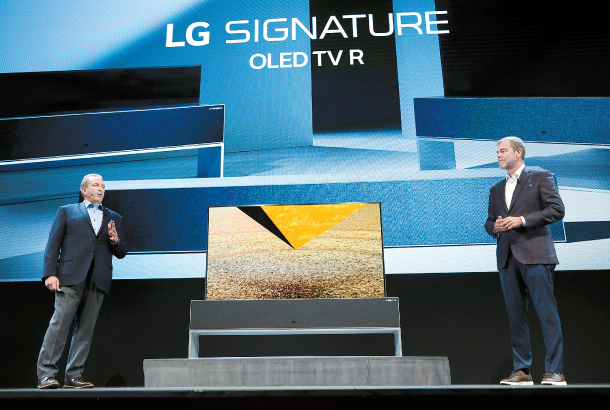
    LG Electronics unveiled the world’s first “rollable” television at the Consumer Electronics Show (CES) 2019 that launched in Las Vegas, United States, on Tuesday. Last year, its affiliate LG Display unveiled a prototype of a 65-inch rollable OLED display panel at the same event. Dubbed the LG Signature OLED TV R9, it uses the same technology, only it comes with an aluminium case at the screen’s bottom that looks like a long tissue box.

    A rolling OLED display was possible because unlike TV panels of the past, OLED screens don’t need backlight to show color, but have molecules that let out light on their own.

    The panel can roll itself up and down from the case so that the television set looks more like a long, rectangular table once the screen is completely inserted. LG boasts that the screen can maintain its color definition even as it rolls itself. R9 won the CES 2019 Innovation Awards in the video display sector.

    LG plans to launch global sales of R9 this year, starting from Korea. Its price was not disclosed, but it will be among LG’s premium television lineups. The advantage of the rollable TV set is that it can be placed in locations like the window side or in the middle of a room. For conventional TV screens, the popular choice was beside or on the walls as they take up space and block the view if installed elsewhere.

    The television set also comes with high-quality speakers and an artificial intelligence software that enhances the set’s performance to adjust definition and sound according to the film or video played. It also recognizes simple vocal commands.

    When the screens are rolled inside the case, R9 can work similarly to an audio set as it can play music via connection to smartphones or other portable devices. It also comes with various modes to use the screen apart from watching movies and TV shows.

    It can function like a huge electronic canvas that shows photos saved in your smartphone. For those who want to create a cozy atmosphere, it has a “Mood” mode that plays a video of a fireplace or displays mood-specific light on the screen.

    LG Display Vice Chairman Han Sang-beom expressed confidence in the panel in front of local reporters on Tuesday at the CES. According to Han, the rollable panel was rolled and unrolled more than 100,000 times during its development process.

    “We’re talking with other clients as well [apart from LG Electronics] for the rollable TV panels,” he said. “My plan is to target the premium market instead of aiming for sales volumes.”

  • Samsung cooperates with Apple

    Samsung cooperates with Apple

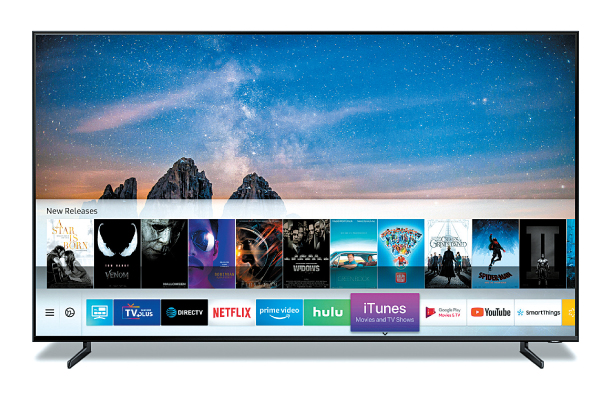
    Samsung Electronics is teaming with arch-rival Apple to enable its smart TVs to access video, audio and other programming from iTunes. It is the first time the two have cooperated on content. The partnership was announced Monday. Beginning this spring, Samsung smart TVs will have iTunes movies and TV as a default option, along with YouTube and Netflix. For customers with older versions of Samsung smart TVs, the service can be added with a software update.

    Apple’s new movie and TV streaming service is set for official introduction in March. Samsung Smart TVs will be the first non-Apple devices to have access to the service.

    Another feature to be made possible on Samsung TVs is AirPlay 2, a function that allows for wirelessly access to movies, photos, podcasts or music from Apple devices.

    Until recently, before Chinese manufacturers became smartphone leaders, Apple and Samsung competed intensely for domination in the market.

    The two were also embroiled in a seven-year patent battle that was only concluded last year.

    Despite the rivalry, they have continued to do business with each other. Samsung has supplied Apple with smartphone chips and displays.

    At an event held in Las Vegas Monday before the Consumer Electronics Show 2019, the president of the Samsung visual display business, Han Jong-hee said that the collaboration is a “win-win” for both companies while customers will benefit from a wider range of choices.

    “For now, the collaboration will be about content. But in the future, I expect there to be other fields in which we can work together as well,” said Han. According to another senior executive at the event, the project was initially suggested by Samsung.

    The company suggested that it is open to partnerships with other companies as well, saying in a press release that it aims to minimize the barriers between products and providers to offer a “rich selection of content.”

    For Samsung, Apple programming will give it an upper hand in attracting customers.

    The war in the TV market is now as much about what is available on devices as it is about brighter, more colorful and slimmer panels. How TVs seamlessly link to online resources is one of the major battlegrounds.

    The partnership also reflects how Apple is increasingly putting weight on services instead of hardware – the reason it came up with the iTunes video streaming service. Global iPhone sales are falling short of expectations as customers don’t change phones as frequently as before and many are being turned off by the high prices.

    Samsung brings with it the strength of being No. 1 in the global TV market, with more than a 40 percent share.

    “We look forward to bringing the iTunes and AirPlay 2 experience to even more customers around the world through Samsung smart TVs, so iPhone, iPad and Mac users have yet another way to enjoy all their favorite content on the biggest screen in their home,” said Eddy Cue, senior vice president of Internet Software and Services at Apple.

  • Wavy waterfall by LG

    Wavy waterfall by LG

    Models showcase LG Electronics’ 260 flexible OLED signage displays put together to form a waterfall at the company’s Consumer Electronics Show 2019 exhibition entrance in Las Vegas on Monday. The annual event, which will host over 4,000 companies this year, began yesterday.

  • Samsung starts selling 2018 QLED TVs in Singapore

    Samsung starts selling 2018 QLED TVs in Singapore

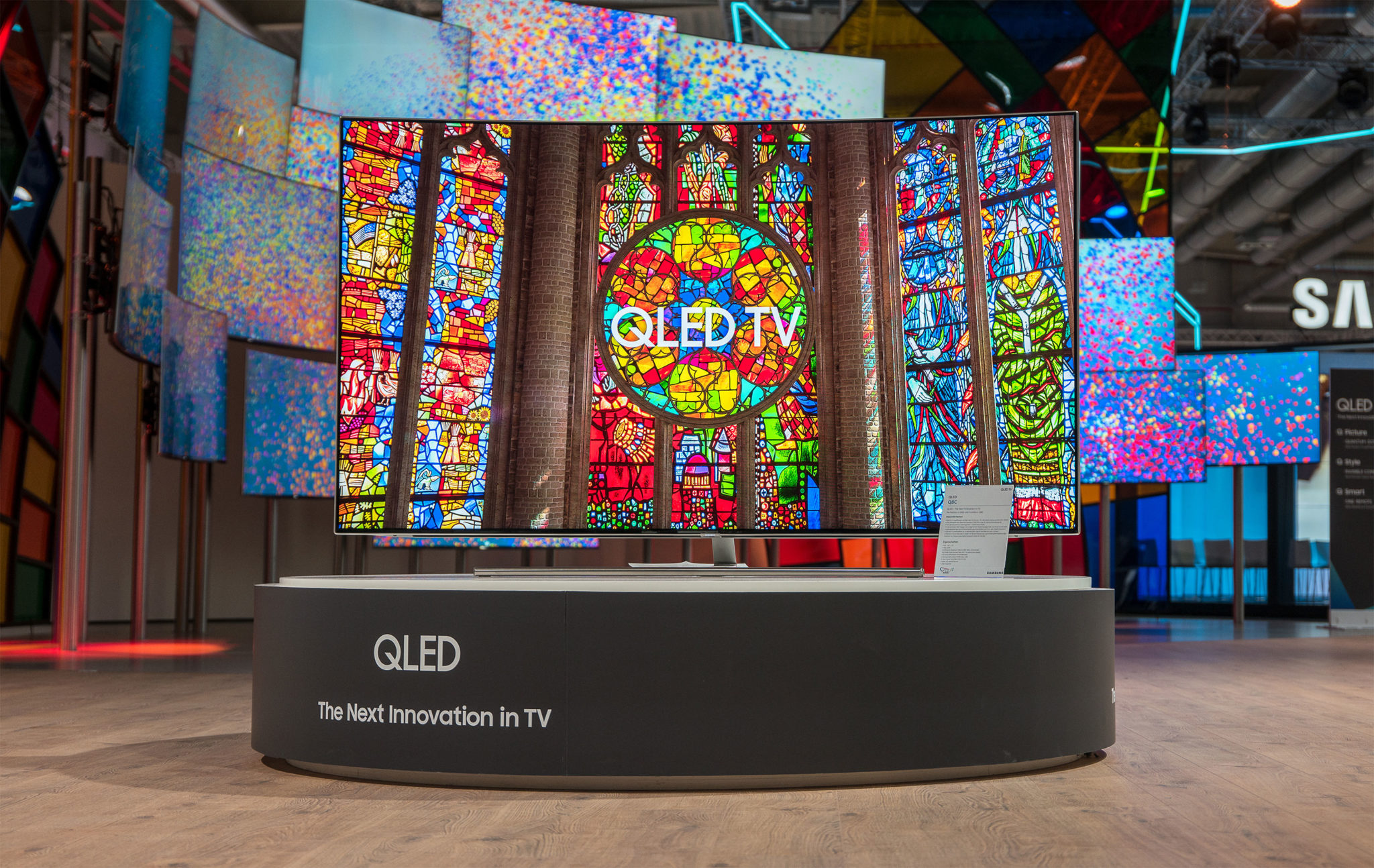
    Samsung showed off its 2018 range of QLED or quantum dot light-emitting diode TVs this week in Singapore, seeking to win over users with its technology as rival OLED TVs start gaining traction.

    The new TVs promise more vibrant colours and with a higher dynamic range by using the QLED technology that the Korean manufacturer has kept to in recent years.

    It relies on what are known as quantum dots, or individual diodes or dots on a screen, that are able to offer a wider range of colours and improve brightness over regular LED or LCD TVs.

    That said, Samsung’s QLED TVs are still LED TVs. They are just the very best or souped-up versions available. To many premium TV buyers, however, the rival technology OLED used by LG, Sony and Panasonic has become more attractive because it offers deeper blacks and smoother motion.

    I did not have a chance to compare the two technologies side by side at this week’s Samsung launch. Just by looking at the new QLED lineup, I can say they are impressive as well.

    I certainly can see details in the bright and dark areas in the demo footage. This is an improvement over traditional LCD or LED screens that require a layer of colour filters, back-lit by white LEDs. Perhaps the biggest draw for Samsung’s QLED TVs is being able to integrate well with the interior design of your home.

    The company has improved on its Invisible Connection solution with the use of a single fibre optic cable to send visual and audio signals to the TV from a single box.

    It gives you four HDMI inputs, one Ethernet port, component inputs and a coaxial cable port. There’s one fibre optic audio output to send audio signals to the living room’s speaker system.

    Having this single fibre optic cable certainly makes it easier to hide all the home AV components. With a 15-meter cable included, Samsung certainly increases the number of options when it comes to placing your AV devices.

    The other new feature is the Magic Screen where the TV can show the latest weather forecast and stream music with the on-screen wallpaper matching the wallpaper that TV has covered. This creates an illusion that it is a transparent screen instead of a black rectangular abyss if we switch off the TV.

    I feel this will be a useful screen for the reception of an office, a meeting room where you can leave the screen on the whole day.

    For those who are sensitive to electricity bills, switching off the TV is definitely a better idea. Besides I can just get a quick audio weather update or stream music from Google Home if there’s a need.

    The top-range Q9F starts goes up to S$12,999 for a 75-inch version. If you prefer QLED on the budget, there’s a Q7F version costing S$10,499 for a 75-incher, S$6,399 for 65 inches and S$4,499 for 55 inches.

  • Sesame Street Asia is making its way in Fashion

    Sesame Street Asia is making its way in Fashion

    Sesame Street Asia is expanding its fashion and lifestyle offerings with new apparel and accessory collections.

    Cookie Monster, Elmo and the rest of the gang from the Sesame Street children’s television series have been interpreted by regional fashion labels. These include:

    • Lalabobo. The premium casualwear brand has already introduced a Sesame Street capsule collection in its 200-plus stores in China. The collaboration features pieces for women and children including sweatshirts, sweaters, bomber jackets, jeans, down garments and dresses.
      • B.Duck. The Hong Kong-based retailer launches a Sesame Street collection for adults and children this month, including graphic t-shirts, sweatshirts and pants.
      • Tyakasha. The Shanghai-based fashion label this month introduces a collection of Sesame Street apparel and accessories including lunch boxes, umbrellas and mobile-phone cases via its online shop.
      • Chocoolate. The Hong Kong-based fashion label will debut a line of Sesame Street t-shirts, hoodies and tote bags next month to be sold also in Canada, China, Macau, Singapore and Taiwan.
      “Collaborating with these fashion labels allows our brand to continue expanding and growing as we approach our landmark 50th anniversary,” says Sesame Workshop senior VP Ed Wells, who also head up international media and education.
  • Samsung to debut MicroLED TVs this year

    Samsung to debut MicroLED TVs this year

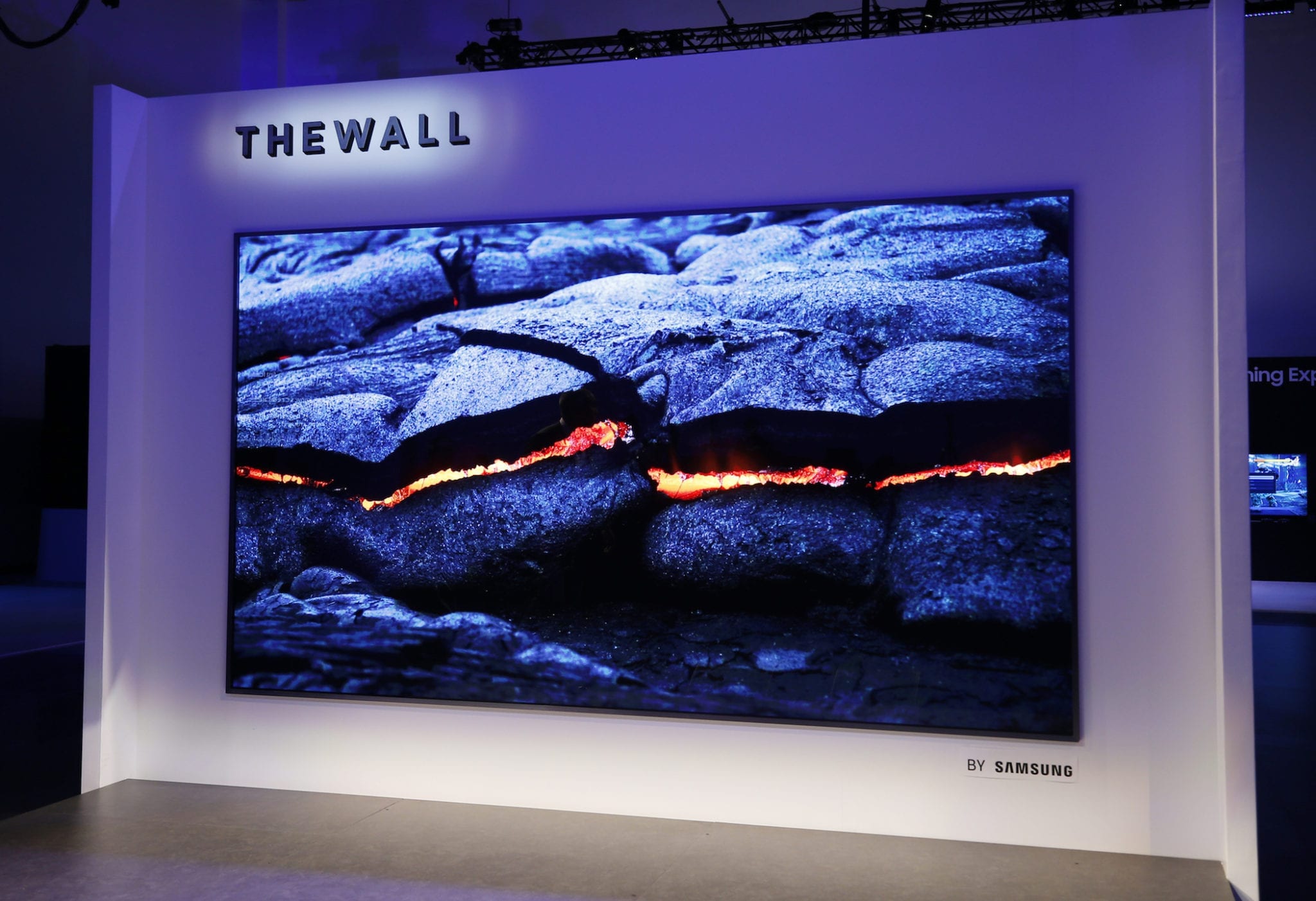
    Samsung Electronics will launch televisions using MicroLED next-generation display technology by the end of the year, with price tags that could reach $300,000.

    Samsung will be able to work flexibly with customers on screen size, thanks to the modular design of its MicroLED panels, design chief Lee Don-tae told.

    Although details have not been settled, the TVs due out this year could be even larger than the 88-inchers leading Samsung’s current lineup. Samsung plans to market them as a high-end offering in the U.S. and the Middle East, and as a potential replacement for computer projectors.

    MicroLED, which uses massive numbers of tiny light-emitting diodes per screen, is seen as the next big thing in display technology. Unlike LCD and many OLED TVs on the market, it does not rely on color filters, using elements that emit red, green and blue light instead. It is also believed to offer better images with a wider viewing angle. Competition is already heating up. Apple has begun developing its own MicroLED displays, according to American reports.

    Samsung itself has pulled out of OLED TVs, which take their name from the organic LEDs they employ. But the company remains critical of rivals’ products, most of which use white OLEDs simply as a light source rather than to produce color. Samsung employs OLEDs that emit their own colors in smartphone displays that it makes.

    Meanwhile, the LG group has emerged as a key player in displays based on white OLEDs. In addition to using them in its own TVs, it is also now supplying the panels to 13 TV manufacturers, including Sony.

    OLED TVs are rapidly becoming a fixture in luxury markets. The global market for them nearly quintupled between 2015 and 2017 to roughly 1.33 million units, according to Euromonitor International. Samsung is struggling to remain a leading player in high-end TVs with its lack of OLED models and wants to gain a head start in next-generation MicroLEDs.