Retail News CRM

Tag: uber

  • Uber to triple number of drivers, launch ‘UberPool’

    Uber to triple number of drivers, launch ‘UberPool’

    Uber is set to expand its pool of drivers and will launch “UberPool”, a carpooling service, in Bangkok next year.

    The private car company will increase the number of its drivers from 30,000 to 100,000 by next year as currently it can only serve around 85 percent of customers with an estimated wait time of 5.5 minutes. 

    Uber also plans to launch “UberPool”, a carpooling service on the Uber app that matches customers with fellow riders heading in the same directions to split costs, The Nation reported.

    About 2 million Bangkokians have taken an Uber ride since its launch last year. The company wants to cut its pick-up time to three minutes, said Chan Park, general manager for Southeast Asia.

    The areas with the highest demand for Uber are Ratchaprasong Junction, Sathorn road, and Suhkumvit road. 

    For the cheaper UberX, the business has grown 12-fold since its launch six months ago. 

    “Thailand is a huge potential market. The firm’s business focus will be consumer-centric so that it will create business opportunities in Thailand. It also has plans to expand to big cities,” said Barry Levy, acting managing director of Uber Thailand. 

  • Singapore’s taxi drivers unhappy with Uber, transport minister responds

    Singapore’s taxi drivers unhappy with Uber, transport minister responds

    It seems that taxi drivers in Singapore are fearful of Uber, which threatens their livelihood by using private drivers to pick up passengers.

    While they didn’t riot in the streets or overturn cars (Singapore clamps down hard on unruly behavior), they’ve privately complained to Khaw Boon Wan, the newly minted minister of transport, as he campaigned during the just-concluded general elections.

    All this was revealed in a blog post written by the minister. Khaw says his ministry is taking another look at rules governing such transportation apps.

    “Apparently, UberX signs on drivers to drive private hire cars to provide a booking type of transport service, and these drivers do not need a vocational licence unlike taxi drivers,” he says. “While taxi drivers welcome competition, they demand that the playing field be level. I think our taxi drivers have a point.”

    UberX is just one of Uber’s many services.

    It seems Khaw is taking a cautious and consultative approach, and that’s a good sign. He acknowledges that young people enjoy using services like Uber and Airbnb, and that the government must not resist innovation. He urges that “we must always be fair to players, whether incumbent or insurgents, and strike a balanced approach.”

  • Uber Says Special Interests Challenge Push Onto Indonesia Roads

    Uber Says Special Interests Challenge Push Onto Indonesia Roads

    Uber Technologies Inc. plans to set up an Indonesian entity to deal with challenges from authorities to its push into one of Asia’s largest markets.

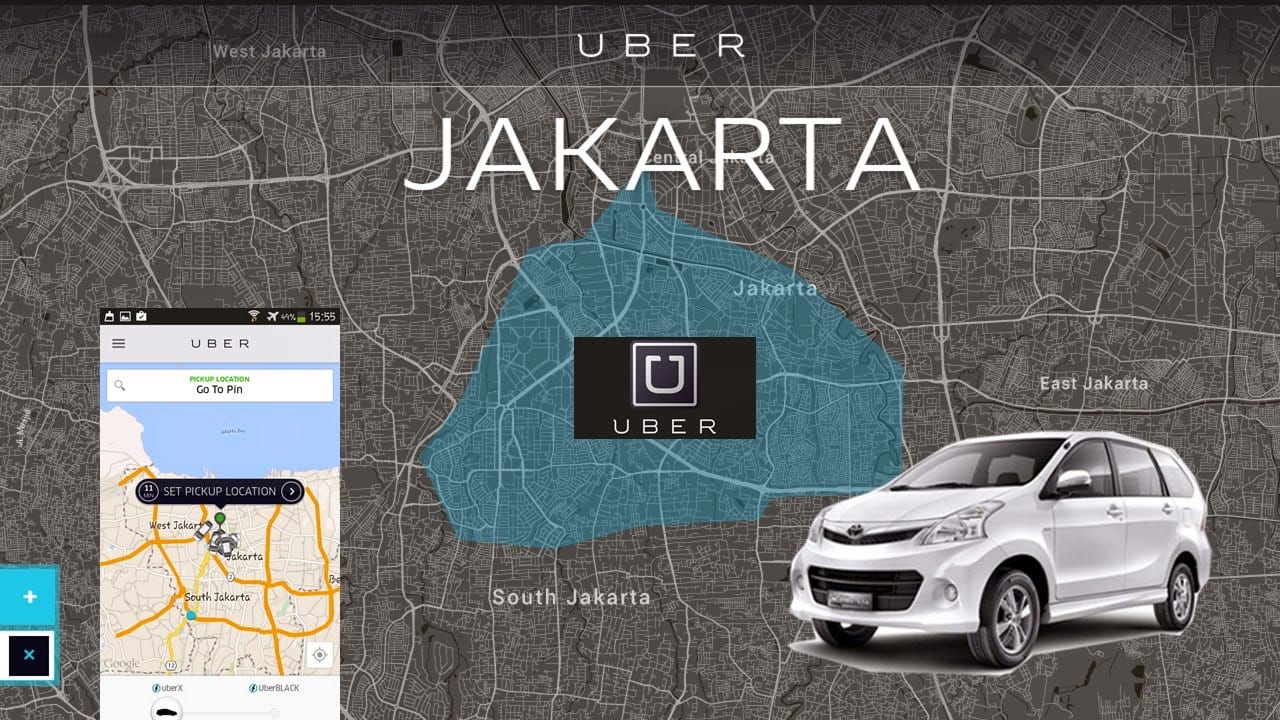
    The ride-hailing company has had cars seized in Jakarta this month and drivers questioned by police, Michael Brown, Uber’s regional manager for Southeast Asia, said in an interview. The company needs to register to pay tax, Jakarta Governor Basuki Purnama said in a televised briefing on Friday, after saying it doesn’t have the right permits.

    Uber is in discussions to submit an application to become a registered onshore entity as asked by Jakarta authorities, Brown said on Monday. The company is obeying Indonesian law, is tax compliant and is working with the government to “get aligned” with everything it is asking for, he said.

    “We see some things here that are new and challenging,” Brown said, referring to “special interests” working against the San Francisco-based company that he declined to identify. “We don’t like that.”

    Indonesia’s President Joko Widodo is trying to attract investment and tackle corruption to spur an economy growing at its weakest pace since 2009, yet U-turns on policies from taxes to foreign worker permits have left investors confused. Foreign direct investment has stagnated and the rupiah is Asia’s second-worst performing currency this year.

    Cars Confiscated

    Some of Uber’s junior employees have been taken to police stations for hours of questioning, Brown said. Police confiscated 30 Uber cars but didn’t detain drivers, said Jakarta police spokesman Muhammad Iqbal.

    The smartphone application allows users to order rides from private drivers. It is offering fares at discounts of as much as 50 percent compared to taxi operators in greater Jakarta, home to an estimated 30 million people and some of the world’s worst traffic. Its competition includes taxi companies such as PT Blue Bird and PT Express Transindo Utama.

    Uber has run into strident opposition from taxi drivers in the U.S. and abroad as it has expanded to build its business, valued at $50 billion.

    Uber has sent a message to customers in Jakarta, asking them to take to Twitter to tell the authorities why they need it.

    “Uber can say what it wants,” said Adrianto Djokosoetono, the head of the country’s land transport association and a director at Blue Bird, Indonesia’s largest provider of taxis, car rentals and chartered buses. “They are in a tricky situation having to follow the laws so they have to ask for public support.”

  • Uber Takes The eCommerce Route In Indonesia

    Uber Takes The eCommerce Route In Indonesia

    After being recently shut down in multiple countries over its controversial “tech company” status, Uber seems to have found a workaround at least in Indonesia.

    The company has announced plans to register itself as an eCommerce business so as to avoid taxes, and taxi-medallion regulations, which has brought troubles to its door in almost all of its major business markets.

    With the registration, the company plans to establish itself as a foreign-owned entity registered as an Internet portal, said Uber Indonesia’s Country Head Alan Jiang.

    “Indonesia is a super-key market for us,” he said.

    The ride-hailing company has been cutting corners in its everlasting struggles against local and national laws in all of its market, but in Indonesia the plans come after the local police in Jakarta arrested five Uber drivers as part of a wider investigation in a case filed by other taxi companies accusing Uber for challenging market rates with its predatory pricing scheme.

    For expanding its business in the country, Uber has not only been offering its service for 30 percent less than the main local taxicab companies, but has also not been charging commission on rides, Jiang said.

    “In the future we will take a service fee and when we do we will pay all the applicable taxes on that,” he said. “I don’t have a specific timeline for when.”

    As it struggles to keep its business open in several markets, the company has repeatedly justified its business model. “Uber is a technology company,” the company said. “We do not own, operate vehicles or employ drivers.”

  • Indonesia police launch Uber investigation

    Indonesia police launch Uber investigation

    Police in Jakarta have launched an investigation into Uber after local taxi companies filed a complaint against the ride-hailing app in the latest regulatory battles to blight the company’s expansion plans in Asia.

    Five of Uber’s drivers in the country were detained last week, as local competitors questioned the legality of its operations.

    Local authorities released the drivers this week, but the Organization of Land Transportation Owners (Organda), the Jakarta-based association behind the initial complaint, is pursuing the investigation.

    “What they do is create the apps, hire individual cars, and operate just like other public transportation — like other official taxis — but without the proper licence,” says Shafruhan Sinungan, chairman of the organisation.

    “Uber taxis compete in a wild way,” Mr Sinungan said. “Other regular taxi operators have to make big investments to establish a company, providing land for parking and garages, paying tax to the government and hiring workers.”

    Alan Jiang, acting head of Uber in the country, said it was “really just a misunderstanding of what Uber’s business model is”.

    He added that “there are some interest groups that want us to get a taxi licence”.

    In a statement following the detention of its drivers this week, Uber said it “is fully compliant with applicable transportation laws and accredited by the local government”.

    Indonesia is an increasingly important market for Uber, because of its population of 250m people, high smartphone penetration and a burgeoning middle-class.

    The company, one of the world’s most valuable private technology companies, has expanded rapidly in the country since it launched in August last year, growing tenfold over the past year, in terms of the maximum number of rides per week.

    Although the Indonesian market has traditionally been dominated by Blue Bird, the family-run operator that listed on the local stock exchange last year, competition is heating up.

    Southeast Asian taxi-hailing app, Grabtaxi, is also expanding quickly, while Gojek, a Jakarta-based start-up, has developed an app to connect riders with Indonesia’s motorcycle taxis, called ojeks, which are also used for food delivery.

    These new players are unlikely to be caught up in the regulatory wrangling, according to Agustinus Reza Kirana, an analyst at Bahana Securities, a local brokerage.

    “It’s a different business line — it’s not just about passengers but also couriers,” Mr Kirana explains.

    The company has been expanding aggressively across Asia in recent months, with plans to move into several new cities across India and invest $1bn this year in China alone.

    But Uber has faced resistance. Police raided its office in Guangzhou in April, and the app was temporarily banned in New Delhi, following the alleged rape of a passenger by an Uber driver.