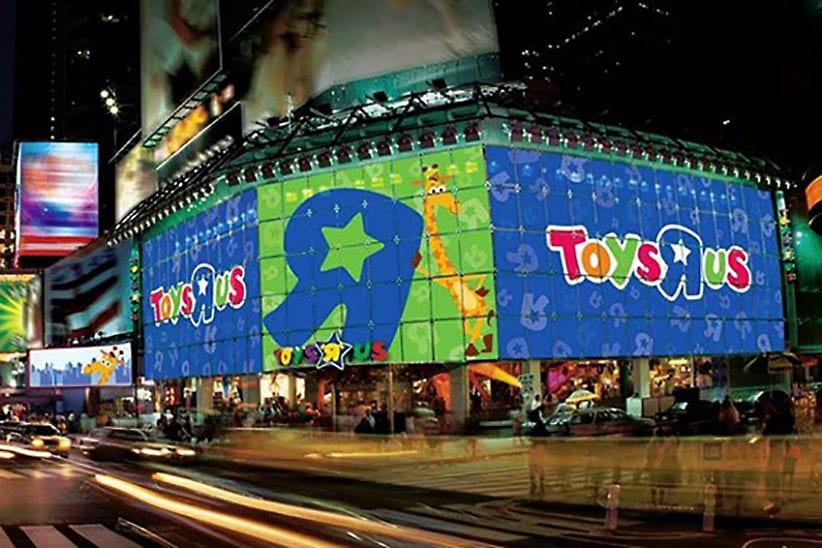
Selected sites of Toys R Us US stores may be taken over by Amazon.
Bloomberg reports the bankrupt toy retailer is in talks with the e-commerce giant over the future of an unspecified number of stores which could be converted to Amazon’s growing portfolio of offline retail spaces. The company recently acquired grocery chain Whole Foods, which has 450 sites, and has been opening physical book stores in selected US markets.
Toys R Us US is closing down more than 700 stores, many of which have moderate- to large-sized footprints suited to bulky goods or grocery retailing.
Bloomberg’s sources said Amazon is not interested in the Toys R Us brand but sees opportunities to use physical stores to deliver online purchases faster. It may possibly use the sites to demonstrate its Alexa voice-activated technology.
Amazon has previously negotiated taking over Radio Shack stores after that chain collapse, but no deal was reached.
Charlotte Olympia US has collapsed, with all of its store closed.
The US retail arm of the UK-headquartered luxury fashion and shoe retailer is believed to have debts amounting to US$19.2 million, and assets of just $3.2 million. It had four stores: in New York, Las Vegas, Beverly Hills and Orange County. A fifth store in Bel Harbour, Florida, was closed last year.
In its bankruptcy filing, the company cited “unprecedented disruption in the retail market”.
The stores were operated by Pinktoe Tarantula and its affiliates Desert Blonde Tarantula and Red Pump Tarantula.
“The brick-and-mortar retail environment has been experiencing, and continues to experience, unprecedented disruption due to a confluence of factors, including the proliferation of online retailers, changing consumer tastes and demographics, and increased competition,” the companies said in the filing. “Despite selling the iconic Charlotte Olympia brand and taking steps to reduce their expenditures, the debtors’ operations are not profitable due to the widespread disruption in the retail industry.”
Charlotte Olympia’s US wholesale business is unaffected by the bankruptcy of the retail operations.
The fashion label was founded in 2007 by Charlotte Olympia Dellal and also has stores in the UK, Dubai, Thailand and Russia. Its clothes and shoes are stocked by upmarket department atores around the world, including MyTheresa, Saks and Bloomingdale’s, and online on Net-a-Porter.
US discount department store chain Target has raised its quarterly profit and sales forecasts, after a better than expected festive trading period.
Comparable sales growth of 3.4 percent in the November/December period was driven by strong traffic growth and continued strength in digital sales, which are expected to grow more than 25 percent in 2017.
Stores fulfilled 70 percent of Target’s digital volume in November/December, meaning that stores enabled approximately 80 percent of the company’s comparable sales growth in that period.
“As we look ahead to 2018, we will build on the foundation we established this year by launching additional exclusive brands, enhancing our digital capabilities, opening approximately 30 small-format stores and tripling the size of our remodel program to more than 325 stores,” said Brian Cornell, chairman and chief executive officer of Target Corporation.
While Target’s holiday growth is respectable and makes it a holiday winner, GlobalData Retail managing director Neil Saunders prior year comparatives – when same-store sales fell by 1.3 per cent – are very weak and since that time Target has undertaken a raft of initiatives that should have boosted performance.
“All that said, the growth does indicate that Target is on the right track and that it’s various ventures are starting to pay dividends. However, we believe that it also highlights some deficiencies in execution – especially in stores.”
“Target’s holiday focused Wondershop is another example of a lost opportunity. Like last year, Target’s range of holiday decorations and sundries was comprehensive and, in our view, one of the best in the market. However, also like last year, Target buried this offer at the back of the store and, as a consequence, lost custom. We note that more effort was made to signpost the collection this year, but this proved to be inadequate.”
Digital was the undoubted success, according to Saunders, with robust online growth underpinning performance.
“Overall, this is a positive outcome. It shows Target is doing the right things and that its ideas have merit. However, it also indicates the need for more care in execution, a faster roll-out of the initiatives, and a greater sense of ambition. Ultimately, Target is doing well, but it could be doing better.”
With both total and comparable sales in positive territory, the latest results from Target US are undoubtedly another step in the right direction.
Unfortunately, the pace at which the company is moving is slow, as attested to by the modest 0.9 per cent increase in same-store sales. It has also cost the company a great deal to travel even this short distance, with both operating profit and net income down sharply over the prior year. Sales reached US$16.67 billion in the quarter.
All of this raises two questions. Is Target US on the right track? And, is the effort and expense of the company’s turnaround worth the potential reward? The answer to both queries is yes, albeit with some reservations.
On the expense question, it is a fact that no retailer of Target’s scale and size can implement a quick turnaround in today’s retail market. The process of reinvention takes time, effort and money – all of which have to be expended before any eventual rewards are reaped. In Target’s case, pressure on the bottom line has come from increased staffing costs, lower prices, and improvements to stores and products. In our view, these things should not be seen as costs, but as investments in the future of the company. Without them, Target’s future would be bleak.
The second question flows from this. If Target US needs to invest, is its current strategy going to deliver? Over the past few months, GlobalData Retail has undertaken extensive analysis on Target’s reinvention process, visiting new and refurbished stores, analysing sales patterns, surveying shoppers, and talking to staff. From this, we conclude that Target is making the right moves. However, we also recognise that there is room for improvement.
One of the most significant blocks of investment is that directed at store refurbishment. Here, Target is completely reinventing the in-store experience by creating a more open format with improved visual merchandising and a more logical layout. Decor, fixture design, lighting, and signage are also being upgraded. The early results of this process are positive. A store like Talking Stick in Arizona has gone from being a dingy, down-at-heel shopping experience to an attractive, modern space which is pleasant and comfortable to shop.
GlobalData Retail’s customer survey responses show shoppers have both recognised the transformation and are positive about it. Customer satisfaction for Talking Stick customers, for example, rose significantly after the conversion. Metrics like frequency of shop, amount of time spent in the store, and average basket size are all rising. However, they are doing so at a gradual pace which suggests the return on the improvement expense will only accrue over time. This is one of the reasons why store only comparables increased by a meager 0.1 per cent, with the rest of the increase coming from the digital operation.
Brand direction
Just as store improvements have been welcomed by customers, so too have Target’s new own brands. In apparel, Goodfellow & Co and A New Day are gradually attracting the attention of younger, fashion-conscious shoppers and clearly Target is starting to see better clothing sales as a result. However, this process is gradual: it is taking time to persuade people who have never bought clothing at Target to look again at the offer.
One slight concern with the new brands is the execution in store, especially for the Project 62 home label. As much as the styling and positioning are solid, the assortment available in most shops is limited, and the way in which it is merchandised is poor. It is almost as if Target lacks the confidence to push this range heavily. Target needs to be bolder with these new brand assets if it is to attract more customers and improve sales.
Pricing has been another area of expense, especially on the grocery side of the business. As much as this has helped to drive some sales, Target still lacks a comprehensive food strategy. This part of the operation will not see significant traction until Target comes up with much clearer points of differentiation – something that appears to be a long way off.
As much as Target is making progress, we believe it needs to be bolder and more creative. Many legacy issues, such as a lack of stock control which leaves frequent gaps on shelves, also need to be resolved.
All that said, the company is now in a much stronger position than it was at this time last year which bodes well for the holiday quarter and beyond.
For the past few years, Black Friday has become a focal point for many US and UK retailers – and for media outlets hungry for images of shoppers bursting into stores in pursuit of posh televisions. The event, supposedly named after the moment when retailers move into profit for the year, has quickly escalated into a four-day shopping festival. But it is not the only game in town – or even the biggest.
Black Friday falls the day after Thanksgiving in the US (November 23 this year) and is followed up by a long-weekend extravaganza which culminates in the online-focused “Cyber Monday”. It has recalibrated, and brought forward, many consumers’ pre-Christmas shopping plans.
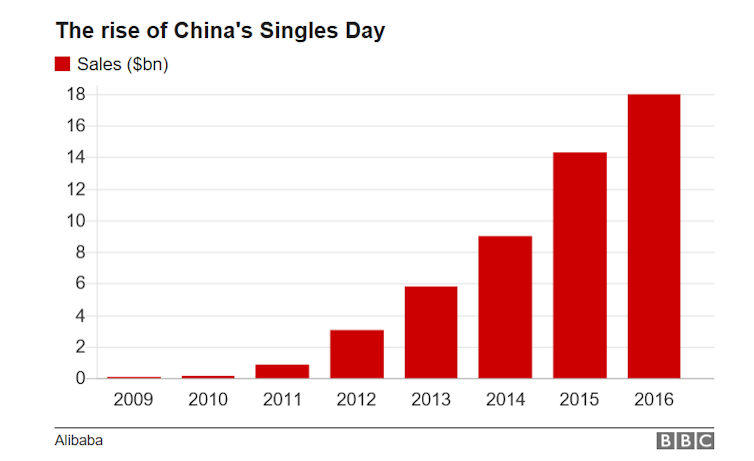
However, unlike Black Friday, China’s November 11 “Singles Day” is still predominately focused on local consumers and completely dominated by one online retailer – Alibaba. The economic impact of Black Friday is dwarfed by this online one-day retail festival from China. Singles Day has gone under the radar for most of the general public in the West, but in 2016, Chinese shoppers spent an incredible US$17.8 billion in 24 hours on the Alibaba online platform – China’s Amazon equivalent.
This online sales bonanza shifts more goods than the Black Friday and Cyber Monday sales days in the US combined. Black Friday in the US saw online sales hit a record of just over US$3 billion in 2016.
Origins
Singles Day started as an obscure “anti-Valentine’s” celebration for single people in China back in the 1990s. The popular story is that it was started by students at Nanjing University who celebrated their singledom by treating themselves. It takes place on November 11 every year and is sometimes known as “bare sticks holiday”, after the way the date is written (11/11).
The event is also known as “Bachelors’ Day”, and it’s not hard to see why. China has a surplus of males caused by years of the government’s “one child” policy. By 2020, sociologists expect the gender imbalance to have widened to 35m and by 2030, it is estimated that one in four Chinese men in their late 30s will never have married. That is a big market.
Black Friday was, of course, initially driven and then “exported” to the UK and other markets by major US retailers, specifically Walmart and Amazon. In China, it was the e-commerce giant Alibaba which adopted Singles Day in 2009, just as online shopping started to explode.
It has now become a day when everyone, regardless of their relationship status, buys themselves gifts. Alibaba spotted this as a chance for retailers to generate interest and excitement and to boost sales in the lull between China’s Golden Week national holiday in October and the peak Christmas season.
Like much of the global growth in online sales, Singles Day has been driven by mobile. Nowhere is this more stark than in China where, with 1.3 billion smartphone users, mobile shopping is huge. Around 37 per cent of Chinese shoppers buy products using their phones, compared to the global average of 13 per cent.
We’ve seen that Alibaba’s sales numbers for Singles Day are astonishing. And the growth has been too. The chart below shows how Singles Day sales for Alibaba have risen over the past seven years. Last year alone, sales were up 32 per cent on the previous year.
Alibaba/BBC, Author provided
According to Alibaba, during the event on 2016 they processed more than a billion payment transactions in total, with 120,000 transactions per second at peak and their distribution system processed more than 657m delivery orders.
Analysts have predicted this year’s event could see Alibaba rack up sales of US$20 billion despite a slowdown in China’s economy, partly due to it having a broader audience.
Copy cats
Of course those kinds of numbers attract the interest of Western retailers too and the 2016 event saw 37 per cent of total buyers purchasing products from international brands or merchants. Companies like US retailers Costco and Macys as well as Britain’s Top Shop and House of Fraser have marketplaces on Alibaba’s Tmall site have already got involved.
And, for the first time, Alibaba’s 2017 Singles Day festival will bring more than 100 Chinese brands to overseas buyers, offering special promotions targeting over 100m overseas Chinese consumers in Asia and around the world.
There is one rather sensitive obstacle to the adoption of Singles Day in the UK, however. The eleventh day of the eleventh month is Armistice Day when Britain marks the end of World War I and the nation remembers all those who have died in military service. There will be many who think it distasteful to run a shopping event on that day. However, as David McCorquodale, head of retail at KPMG, pointed out: “Singles Day in China is the biggest promotions day in the world. [The date] will stall its entry to the UK, but not forever.”
Given the rapid globalisation of most retail trends and the way online retail now allows immediate access to millions of products from thousands of manufacturers, it is indeed impossible to envisage that Singles Day won’t extend it’s reach, in some form, to Western consumers very quickly.
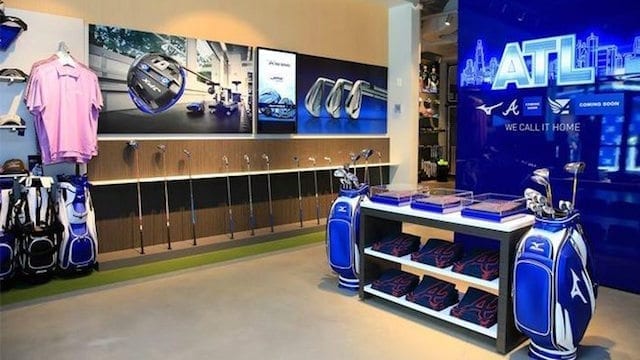
Japanese sports brand Mizuno has launched into the US, unveiling the Mizuno Experience Center at The Battery Atlanta in Georgia.
Designed to be an immersive environment that tells the Mizuno story through its gear, the center offers interactive displays using RFID technology with specialised labs for each sport. Customers can touch and test items, which are then customised for their fit.
“Our goal is to provide a personalised and customised experience in a premium, one-of-a-kind environment,” says Mizuno US president Mark O’Brien.
“The centre gives athletes the ability to find the right gear to optimise their performance and meet their personal preferences,” says O’Brien. “This is the only Mizuno centre of its kind in the western hemisphere.”
Throughout the year, the Mizuno Experience Center will host public and private events with professional athlete appearances as well as visits by Mizuno craftsman (gloves and bats).
South Korea’s Samsung Electronics said Friday it’s considering building a factory to make household appliances in the United States as various industries brace for potential protectionist trade policies under the administration of President Donald Trump.
A spokeswoman for Samsung said the plans were “purely in the evaluation stage” and no decisions have been made. She didn’t want to be named, citing office rules.
Samsung also said in an emailed statement on Friday that it continues to assess “new investment needs in the United States. The news drew the attention of Trump, who tweeted “Thank you, @Samsung! We would love to have you!”
Most Samsung televisions, refrigerators and other household appliances sold in the United States are made in Mexico.
The spokeswoman refused to say whether Samsung was worried about the possibility of the United States moving to impose tariffs on products imported from Mexico.
A spokesman from LG Electronics, another South Korean technology company, said it is also considering building a manufacturing plant in the United States and will decide on the matter within the first half of the year. He also didn’t want to be named, saying that the matter was sensitive.
AirAsia X has received clearance from the Federal Aviation Authority (FAA) to fly to any destination in the the US, making its foray into an entirely new market as it looks beyond the Asia Pacific.
“The airline is the first Asian low-cost carrier to secure approval to operate scheduled passenger flights to the US,” it said on Tuesday.
AirAsia X is considering flights to several US states including Hawaii as part of its route expansion plans.
Its group CEO Datuk Kamarudin Meranun said this was a major milestone for AirAsia X.
“Our expansion up until now has concentrated on Asia, Australasia and the Middle East, and we are excited about our first foray into an entirely new market as we look beyond Asia Pacific.
“I’m confident travellers will respond well to our award-winning service and the kind of connectivity we can offer with our Fly-Thru product. As part of our expansion plans, we are also looking to resume our very popular London route, and are working towards securing the necessary approvals.”
Kamarudin said none of this would be possible without its Allstars, especially group chief operating officer Anaz Ahmad Tajuddin, who passed away two weeks ago.
“We wouldn’t be where we are today if he chad not laid the foundations with his blood, sweat and tears, and his bravery in the face of cancer showed us the true meaning of strength. This is for you, Anaz.”
Fly-Thru allows guests to seamlessly connect to anywhere within AirAsia’s wide network with just one stop at Kuala Lumpur, Malaysia – Asia’s No. 1 low-cost carrier hub – and other convenient transit hubs in Thailand and Indonesia, without having to pass through immigration and with their baggage checked through to the final destination.
Rebounding Hugo Boss Asia sales have prompted the German fashion retailer to revise its profit outlook.
The company’s stock price soared as much as 10 per cent after management said improved sales in Asia and Britain mean its profit decline will be less than previously predicted in the current financial year.
Hugo Boss Asia like-for-like sales soared 20 per cent in the latest quarter, after currency adjustments.
Asia accounts for about 20 per cent of Hugo Boss’ global sales and after currency adjustment, regional revenues rose 5 per cent in the fourth quarter – a significant turnaround from the 3 per cent decline of the previous quarter. The increase was aided by adjusting pricing more into line with those of the US and Europe.
It is now forecasting an operating profit for 2016 which is better than the previously predicted decline of between 17 and 23 per cent. Final results will be revealed on March 9.
Rival fashion retailers Gucci and Louis Vuitton have also recently reported improving sales in Mainland China as consumers open their wallets again, encouraged by government policies aimed at boosting local consumption rather than shopping abroad.
CEO Mark Langer said in a statement that fourth-quarter results underline the company is on the right track.
Total sales fell 3 per cent to 725 million euros (US$769 million), down 1 per cent on a currency adjusted basis, but a far better result than the third-quarter’s fall of 6 per cent. The damage was done in the US where sales fell 14 per cent on a currency-adjusted basis, partly due to the brand’s decision to stop selling in discount and outlet stores.
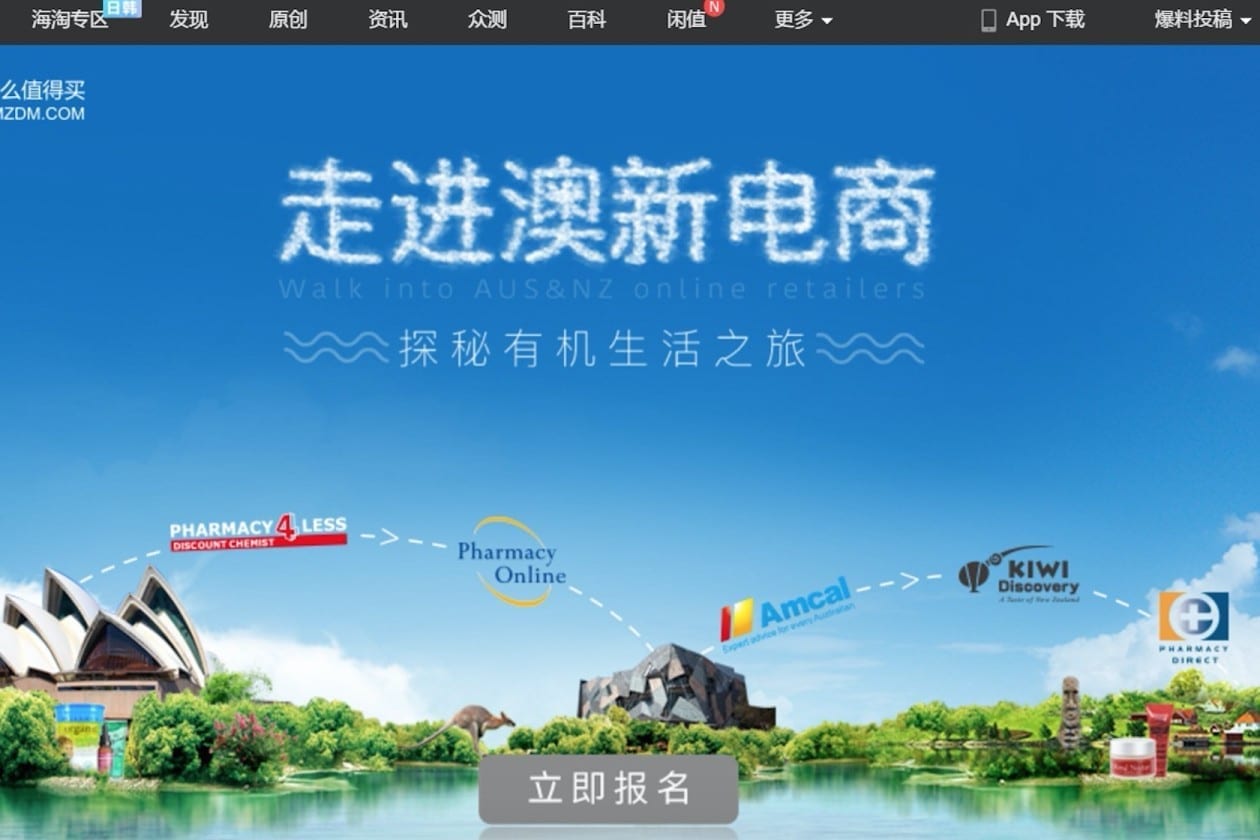
Today marks the official U.S. launch of Azoya, an integrated turnkey e-commerce solution provider, which will help U.S. retailers and manufacturers break into the Chinese market with less risk in 2017 through fully-managed cross-border e-commerce. Azoya made the announcement to open the National Retail Federation (NRF) annual Big Show, January 15-17, 2017, at Jacob K. Javits Convention Center, New York City, Booth #344.
As the world’s largest e-commerce market, China is lucrative, growing and ravenous for U.S. products. In 2015, cross-border consumer e-commerce reached $40 billion in 2015 with an annual growth rate of 50 percent.1 Top-selling categories include cosmetics and skincare, baby and mom products, healthcare products, fashion apparel, and groceries.
“To simplify foreign expansion and ensure long-term growth in China, we build an e-commerce ecosystem for U.S. retail companies,” says Franklin Chu, Managing Director, Azoya International. “Our behind-the-scenes work means Azoya is invisible to Chinese customers who prefer to buy products directly from the U.S. retail company.
Established in 2013, Azoya International is a leading solutions provider in cross-border e-commerce to China. To date, over 35 retailers in 12 countries have partnered with Azoya to expand into China with ease, including French fashion retailer La Redoute and Feelunique, the largest online beauty retailer in Europe.
The U.S. Department of Agriculture said Friday it is discussing with Korea ways for American egg producers to tap into the Korean market that is suffering from an egg shortage as a result of a massive outbreak of avian influenza.
Amid the rising egg prices due to the outbreak of bird flu that was detected in November, the department spokesperson said that the U.S. and Korea are “engaged in technical discussions to provide access for U.S. egg producers to the Korean liquid egg market.
“Imports from the U.S. could help limit escalating production costs for processed food manufacturers in Korea and shield consumers from soaring egg prices,” the official added.
He did not mention when the U.S. will start exporting eggs to Korea.
Starting Saturday, the Korean discount store chain Homeplus raised the retail price of 30 eggs by 9.6 percent to 7,990 won ($6.67) at its 142 stores. Homeplus has increased its egg prices five times in a month and retail prices have jumped 31.4 percent over the month.
The latest price hike by Homeplus came a day after its rival Emart increased the price of 30 eggs by 8.6 percent to 7,580 won.
Officials of the companies expect egg prices to go up again ahead of the Lunar New Year holiday later this month.
The American spokesperson also said that the U.S. Department of Agriculture is working with the Korean government and U.S. industry associations to facilitate and expedite registration of additional U.S. suppliers of table eggs to the Korean market.
“In the U.S., many government agencies cooperate to ensure the safety of U.S. egg products including the Agricultural Marketing Service, the Animal and Plant Health Inspection Service, the Food Safety and Inspection Service, and the Food and Drug Administration,” the official said.
Since the bird flu outbreak, Korea’s quarantine officers have culled more than 30 million birds, including 25.8 million chickens, which has resulted in the reduction of the country’s daily egg output by about 30 percent.
To encourage imports, the Korean government decided earlier this week to remove import tariffs on egg products until Jun. 30. Currently, Korea imposes tariffs of 8 to 30 percent on imported egg products.
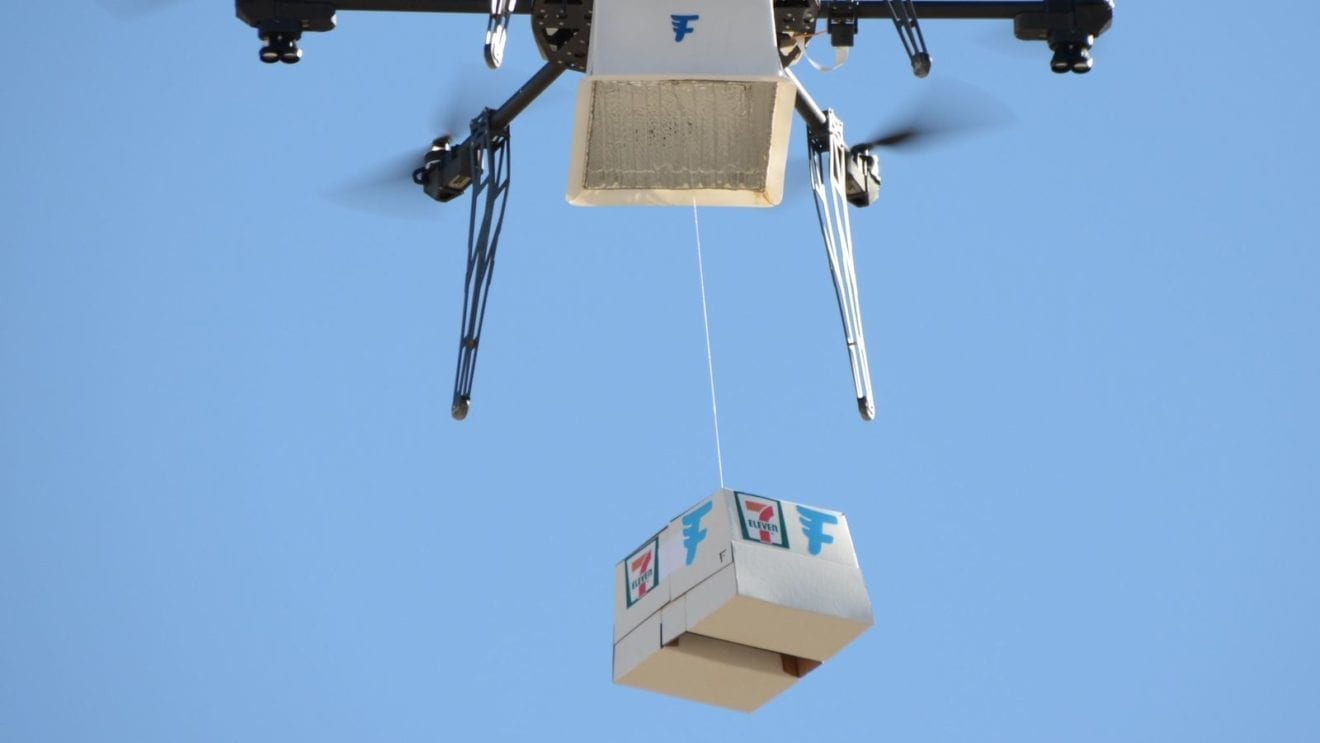
Drone delivery service, Flirtey, and 7-Eleven have completed 77 autonomous drone deliveries to customer homes in the US after the two kicked off their commercial collaboration in July.
Flirtey conducted regular weekend deliveries in November from a 7-Eleven store to a dozen select customers who used a custom app to place their unique order. Along with listing all items available for delivery, the interactive app also notified customers when their drone was loaded, when it departed from the store and when it was arriving at their doorstep.
Once an order was placed, 7-Eleven merchandise – including items such as hot and cold food and over-the-counter medicines – were loaded into a custom Flirtey drone delivery container and flown autonomously using precision GPS to a local customer’s house.
Popular items delivered included hot food items, cold beverages and over-the-counter medicines such as 7-Select Night Time Cold & Flu Relief, 7-Select Headache Relief and aspirin.
Filipino restaurant company and global fast-food chain Jollibee Foods Corporation (JFC) has opened its first Canadian outlet, Jollibee Winnipeg.
With 35 stores already in North America, it plans to continue its march into Canada with three more outlets next year, at Winnipeg Northgate, Scarborough, and Mississauga, to be followed by Edmonton in 2018.
In the US, it is also set to open its first store in the state of Florida, in Jacksonville, and its first store for Manhattan, New York.
“It has been a joy to see the happiness families experience when visiting our locations in the US, and we are thrilled to now bring that same feeling into Canada at such a festive time like this,” says JFC group president for north America and foreign franchise brands Jose Minana.
“Winnipeg is a fitting choice for Jollibee’s first Canadian store because it has largest density of Filipinos to the total population of the city,” says JFC North America VP/GM Maribeth dela Cruz.
JFC is currently the largest Asian restaurant company in market capitalisation, working in 12 markets including Brunei, China, Hong Kong, Singapore and Vietnam. It has 3236 stores globally, of which 1111 are Jollibee branded. Other brands in its portfolio are Burger King, Chowking, Greenwich, Hong Zhuang Yuanm Mang Inasal, Red Ribbon and Yonghe King.
JFC also has investments with the brands 12 Hotpot, Highlands Coffee, Pho 24, Dunkin Donuts in China, and US-based burger chain Smashburger.
Luxury cashmere brand Sandriver has officially entered the US market, building on its base of 11 stores in Asia and a worldwide eCommerce presence.
Sandriver cashmere has been active in the international fashion scene since 2007, sourcing directly from the grasslands of the Alashan Plateau in Inner Mongolia, home to 70 per cent of the world’s cashmere.
Founder and CEO Juliet Guo (Guo Xiuling) is an Inner Mongolian native, and has built the brand’s own sourcing base of 30 local herding families, some of whom operate on Guo family-owned grasslands.
Setting itself apart from global fashion giants, Sandriver says it hones its niche role in the industry by merging the traditional sophistication of cashmere with the innovation of modern fashion.
Its creative team comprises a dynamic group of international designers and artists, including world-renowned Japanese designer and multiple fashion award recipient Junko Koshino, French-Columbian artist Francesca Brenda-Mitterrand, and German and Chinese fashion designers Antje Weidner and Qin Wanyu.
Sandriver cashmere continues to attract attention on an international scale and has been presented at major fashion shows in both Tokyo and Paris. Its collections suit a variety of budgets and tastes with prices ranging from around US$100 to $3000 for original designs.
Product lines include, among others, scarves and wraps for every season, full-length coats and blankets, reversible and ready-to-wear garments and comfortable ensembles. Recent additions include kids wear and luxury travel garments and accessories.
Sandriver products are available online, shipped directly from Shanghai to the US via DHL Express within four days, and include a local US-based return policy.
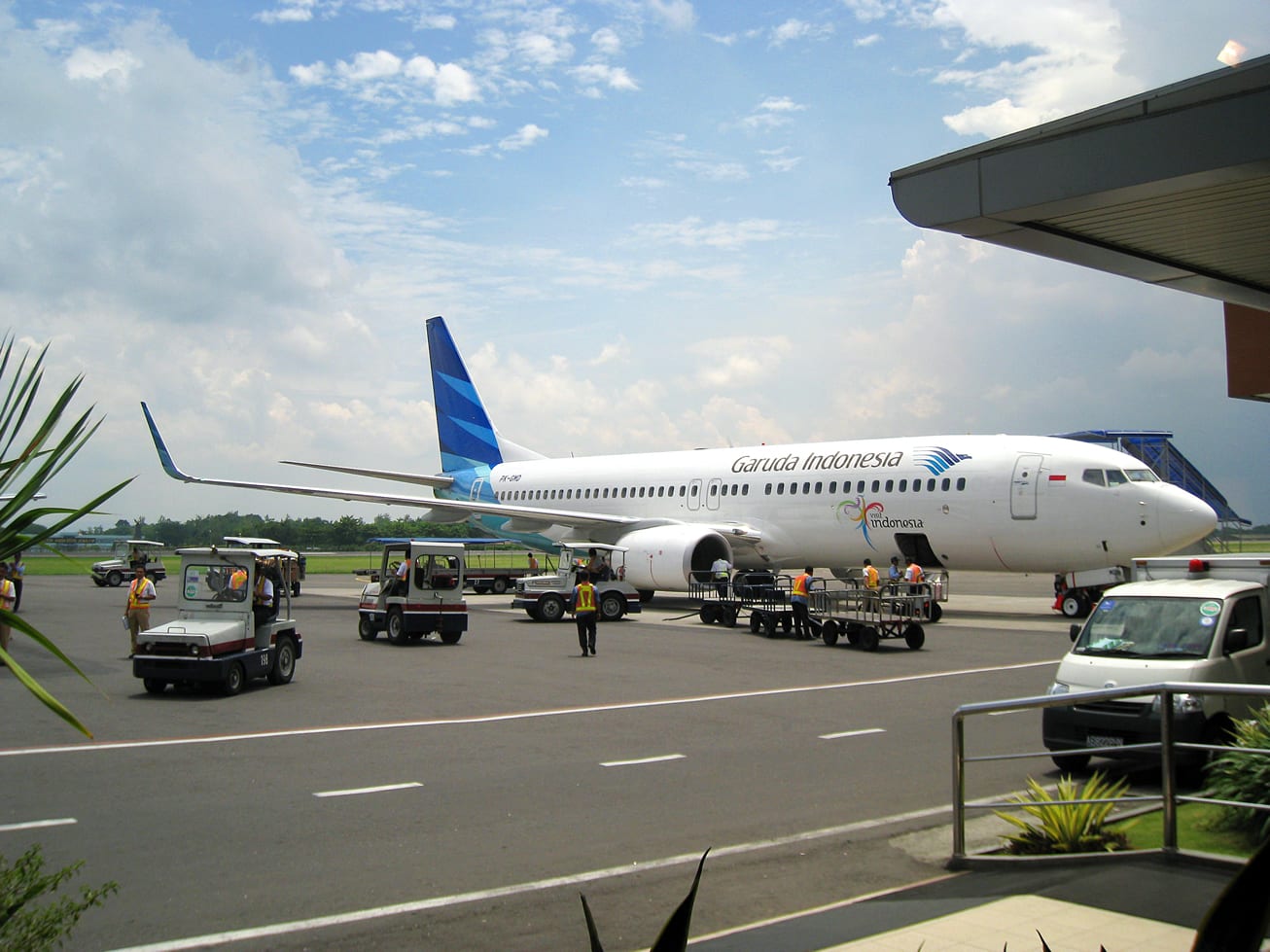
National carrier Garuda Indonesia plans to serve flights to the United States starting next year.
Vice President Corporate Communications Garuda Indonesia Benny S. Butarbutar said Garuda’s plan to fly to the United States is one of the measures to strengthen its business expansion.
“The plan to fly to the United States is business expansion to strengthen the position of Garuda Indonesia as a global player in the aviation industry,” Benny said in a press release on Saturday (10/9).
Benny said Indonesia’s flight market potentials to the United States is quite high, reaching 400 thousand passengers per year.
Based on this potential, Garuda Indonesia targets a return flight to Los Angeles will go and New York, as the two cities with the highest market potentials.
Benny added, in realizing the strategic plan, Garuda Indonesia has initiated various preparations, including a feasibility study of the potential market, profitable routie, and the type of fleet to be utilized optimally, and many others.
Garuda Indonesia plans to use large-bodied Boeing 777-300ER fleet to fly to America.