Tag: US

  • Time is running out for Sears offer

    Time is running out for Sears offer

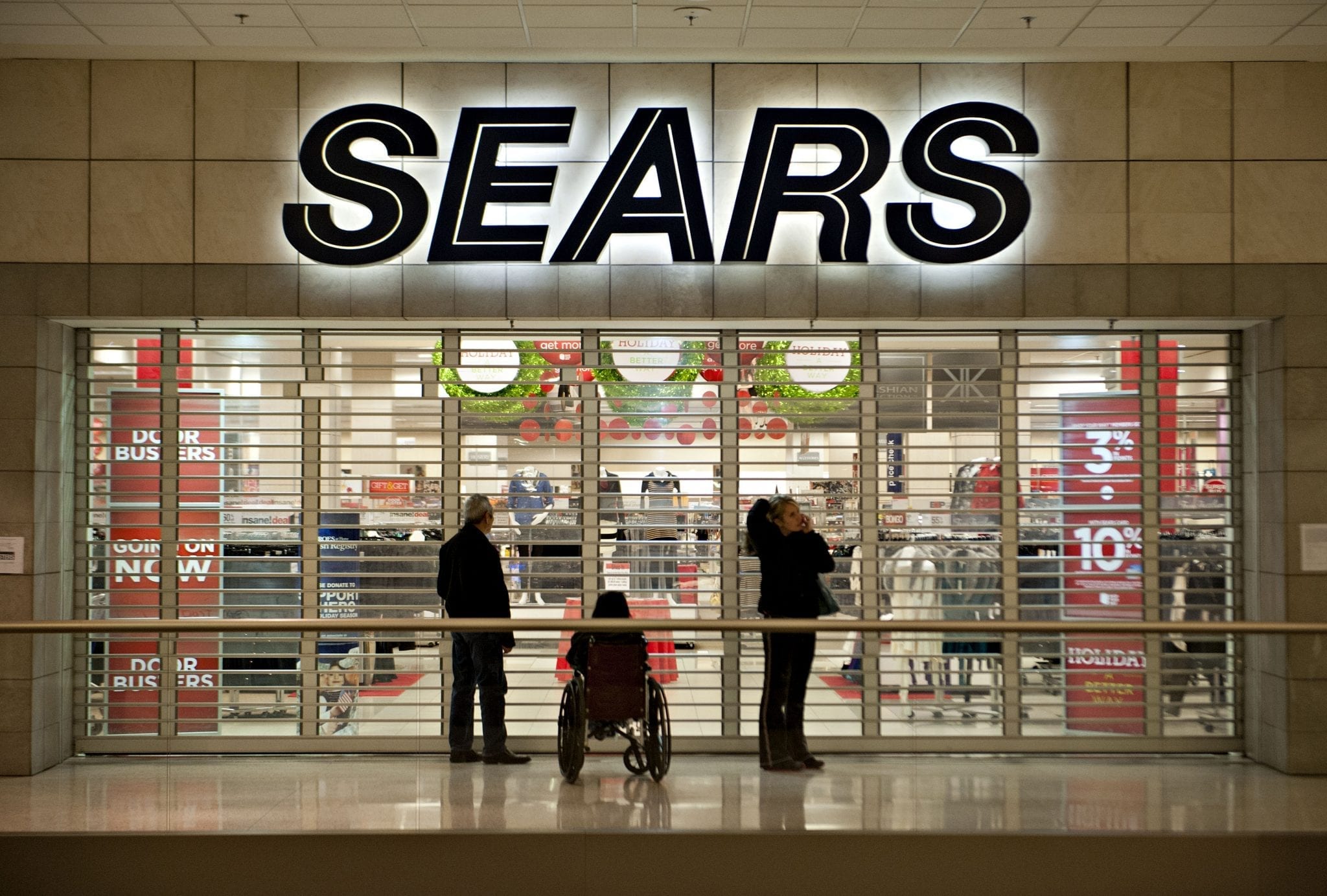
    Sears chairman Eddie Lampert’s last minute plans to save the bankrupt retail chain are set to be terminated on Friday afternoon, New York time, should they be determined to not be a “qualifying bid”. The first plan, a US$4.4 billion offer to purchase Sears, would provide ongoing positions for 50,000 employees and is the “best outcome for the debtors and their creditors and other stakeholders,” according to documents filed with the US Securities and Exchange Commission.

    The second plan, however, is an offer to acquire at least 250 stores as a going concern, as well as certain assets across the home services division and certain intellectual property.

    Earlier this week the business confirmed a further 80 stores would be closing by March, alongside the 40 already announced, with liquidation sales expected to begin in early January 2019.

    GlobalData Retail managing director Neil Saunders mused that the brand had hit rock bottom and was “essentially worthless” in its current state.

    “Ultimately, reinventing Sears now would be akin to raising the Titanic and making is seaworthy again: a thankless and rather pointless task,” Saunders said.

    Lampert stepped down as company chief executive when it filed for bankruptcy in October.

  • US-China talks on bilateral trade to impact Malaysia’s equity

    US-China talks on bilateral trade to impact Malaysia’s equity

    The discussion between the US and China with respect to their bilateral trade would likely be the highlight for the equity market next week, says an economist. It could also be a source of market instability, said Bank Islam Malaysia Bhd chief economist Dr Mohd Afzanizam Abdul Rashid. He said market players are currently worried about the turbulence across global markets.

    “Generally businesses have become more risk-averse as some countries especially China and Asean nations had recorded below the 50-point demarcation line in their manufacturing index.

    “In fact, the US ISM manufacturing index has shown a similar trend, falling by 5.2 points to 54.1 in December 2018.

    “Naturally, businesses would reduce their capital expenditure and labour hiring as they would become wary of demand prospects, so we can expect equity markets to remain weak in the near term,” he said.

    Mohd Afzanizam said the current support level is at 1,653.

    The FBMKLCI might test this level should the discussion not pan out favourably, he added.

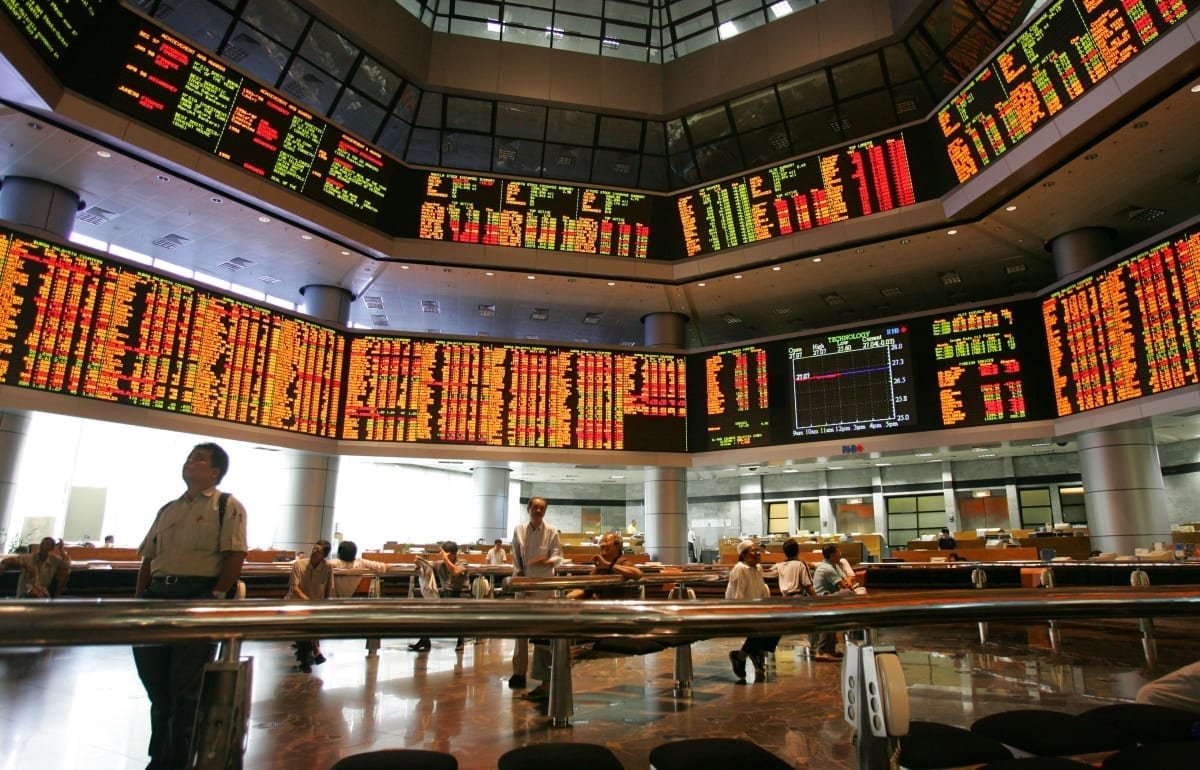
    For the holiday-shortened week, the FBM KLCI was traded mostly lower, mainly affected by external factors such as US political uncertainties, mounting concerns over poor global growth and the talks on the potential interest rate hikes by the Federal Reserve.

    The local bourse and its subsidiaries were closed on Tuesday for the New Year holiday.

    On a Friday-to-Friday basis, the benchmark FBM KLCI settled 22.29 points weaker at 1,669.78.

    The FBM Emas Index depreciated 124.28 points to 11,413.02, the FBMT100 Index decreased 131.24 points to 11,323.34, the FBM 70 declined 67.72 points to 13,023.80, the FBM Emas Syariah Index erased 152.51 points to 11,356.91 but the FBM Ace edged up 34.23 points to 4,294.43.

    Sector-wise, the Finance Index lost 99.90 points to 17,241.79, the Industrial Products and Services Index eased 1.18 points to 165.63, while the Plantation Index was 16.84 points weaker at 6,880.90.

    Comparing Friday-to-Friday, the weekly turnover rose to 7.22 billion units worth RM4.79 billion from 5.70 billion units worth RM4.15 billion.

    Main Market volume increased to 5.17 billion units valued at RM4.37 billion versus 4.16 billion shares valued at RM3.85 billion.

    Warrants turnover advanced to 1.23 billion units worth RM282.94 million compared with 948.80 million units worth RM202.97 million.

    The ACE Market volume appreciated to 719.60 billion shares valued at RM127.20 million against 556.26 million shares valued at RM90.05 million.

  • Jollibee aims for international growth

    Jollibee aims for international growth

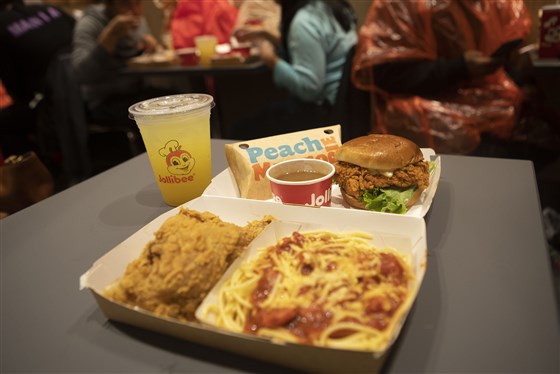
    It’s been called the “McDonald’s of the Philippines,” and the late Anthony Bourdain dubbed it “the wackiest, jolliest place on earth.” Jollibee, a fast food chain based in the Philippines, has become one of the world’s largest restaurant franchises, with more than 4,000 stores in 23 countries, including 37 in the United States. (For comparison, McDonald’s has more than 37,000 worldwide and 14,000 in the U.S.)

    Known for its fried chicken, sweet spaghetti and “Aloha burger,” Jollibee serves fast-food with a Filipino twist: The spaghetti, for instance, includes cheese and mini hot dogs, and the fried chicken is meant to be eaten with rice and gravy.

    While Jollibee first came to the U.S. in 1998, opening locations in areas with large Asian populations including California, Hawaii and Illinois, the company’s latest investments and openings, including one near Manhattan’s Times Square, are part of a new strategy that the company hopes will make it one of the “top five restaurant companies in the world.”

    Incorporated in 1978, the company started as a pair of ice cream parlors before adding hot meals to its menu when McDonald’s announced they were coming to the Philippines.

    “We told our friends back then that we wanted to compete with McDonald’s, and they told us not to confront the giant,” Ernesto Tanmantiong, Jollibee’s CEO and younger brother of founder Tony Tan Caktiong, said. “Instead of chickening out, we served Chickenjoy.”

    The company now owns 14 global brands. In February, it acquired stakes in Smashburger and fast-casual Mexican chain Tortas Frontera, both U.S.-based companies.

    Arthur Dong, professor of strategy and economics at Georgetown’s McDonough School of Business, said the acquisitions gives them “a bigger media footprint into the North American market, and a push into becoming one of the biggest companies in the world.”

    Dong added that Jollibee’s success in the North American market, as well as its other overseas locations, makes a huge impact on the Philippine economy.

    “Any success anywhere contributes to the company’s success overall and would make Jollibee at home more successful and endure a lot more things, in terms of their future expansion opportunities,” he said.

    Jollibee’s most recent opening in New York City was highly anticipated, with some customers lining up for 20 hours.

    Dong said that the New York opening is a wise move in line with what some economists call the “dense market theory,” which suggests that when a franchise opens a location in an urban area with populations that reside and work in high-rise buildings, it increases the chances of one’s success because of that population density.

    “It’s perfect because rather than putting a billboard up to advertise their brand, Times Square is like a billboards haven itself,” Dong said. “In cities, they go from zero to 60 very quickly because of the sheer amount of foot traffic. Because this new location is near Times Square, the result of that is they’re able to capture the attention of not only natives, but people who don’t even reside from New York City, and that gives exposure to the Jollibee menu and their concept.”

    Justin Callan from the New York City neighborhood of Coney Island said that, as a non-Filipino, he has always felt welcomed at Jollibee. He and his girlfriend, Faye, were the first customers in line for Jollibee’s Manhattan grand opening on Oct. 27. “All you have to do is open up the door and let the people smell it — that’s what got me,” he said.

    Jollibee executives hope to open 150 stores in the U.S. and 100 stores in Canada over the next five years.

    “This is our entry into the mainstream, not just Filipino, market — we are catering to a bigger spectrum, and want to keep strengthening our foothold both in the U.S. and globally,” Tanmantiong, the CEO, said.

  • Honey Birdette debuts in US

    Honey Birdette debuts in US

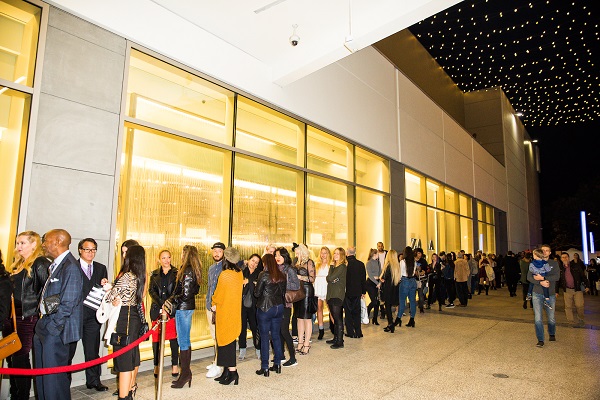
    Australian Lingerie brand Honey Birdette has launched its first US store in Westfield Century City, Los Angeles, focused on a unique design including whisky bar carts and ‘press-for-champagne’ buttons. The store will offer exclusive and limited-edition products, and is fronted by a glass mirrored store front centred by a gold tiled entry arch.

    “We are focusing on unique designs concepts for all of our future boutiques and each footprint will have its own unique element,” Honey Birdette founder and managing director Eloise Monaghan said.

    “Some might have a champagne bar for example, a private salon in one, a peep show in another, a stage or a catwalk.”

    The store opened to more than 500 shoppers who lined up to shop the brand physically for the first time in the US, and featured a DJ, champagne towers and confetti cannons.

    The brand currently trades within 57 locations in Australia, as well as across three locations in the United Kingdom.

  • China Slowdown, Trade Disputes Weigh on Asia Factory Activity

    China Slowdown, Trade Disputes Weigh on Asia Factory Activity

    Factory activity weakened across Asia in December as the Sino-US trade war and a slowdown in Chinese demand hit production in most economies, strengthening the case for a pause in interest rate hikes in the region in 2019. A series of purchasing managers’ indexes (PMI) for December released on Wednesday mostly showed declines or slowdowns in manufacturing factory activity across the region. In China, the Caixin/Markit PMI slipped into contraction territory for the first time in 19 months, broadly tracking an official survey released on Monday.

    China’s weakness spilled over to other Asian economies, with Malaysia’s manufacturing activity shrinking to its weakest pace of expansion since it launched the survey in 2012 and Taiwan contracting to its lowest since September 2015.

    Meanwhile, official economic data out of Singapore showed its gross domestic product grew more slowly than forecast in the fourth quarter as the city-state’s manufacturing sector contracted on a quarterly basis.

    In other regions, the eurozone was expected to post steady manufacturing activity growth, while US activity was seen a tad slower, but firmly in expansion territory, in a sign that so far China has suffered more bruises from its trade frictions than the United States.

    With growth slowing and inflation below or barely within the target in most countries, Asian central banks are unlikely to continue their tightening cycle this year, barring any shocks in currency markets.

    “We are really seeing a global slowdown into this year, and in Asia, particularly export-oriented countries are hurting,” said Irene Cheung, Asia strategist at ANZ.

    “Our expectation for central banks is that most of them won’t change policy in 2019 and these numbers coming out on the weak side won’t change that outlook.”

    The world’s two largest economies agreed at the start of December to a 90-day truce following tit-for-tat tariffs that have disrupted the flow of hundreds of billions of dollars of goods between the two countries.

    The two sides have pledged to hold frequent talks in the next two months, but uncertainty over whether they can bridge massive differences over commercial practices and intellectual property rights remains very high, despite US President Donald Trump noting “big progress” in a tweet.

    Tariffs are not the only drag on China’s economy. Beijing’s sustained drive to reduce debt risks in the economy has cooled the property market and curbed credit flows to the private sector. Meanwhile, the government’s intensified crackdown on pollution has dented industrial activity.

    In a key annual conference last month, China’s top leaders said they will boost support for the economy in 2019 by cutting taxes and keeping liquidity ample while promising to continue negotiations with Washington.

    “The People’s Bank of China may have to ease further to offset the impact of tariffs,” said Robert Michele, chief investment officer and head of fixed income, J.P. Morgan Asset Management.

    China’s economic growth slowed to 6.5 percent in the third quarter of last year, the weakest since the global financial crisis. As reported, government advisers had recommended a growth target of 6.0-6.5 percent for this year at the annual meeting, though the final figure won’t be made public until the annual parliament meeting in early March.

    Oil Drive

    A sharp drop in the crude price at the end of last year has helped sentiment in Asia’s oil-importing economies, where trade deficits are a key vulnerability.

    Indonesia’s PMI index, although still weak historically, rose to 51.2 from November’s 50.4, a four-month high. India’s declined to 53.2 from 54.0 but capped the strongest quarter for the country’s manufacturing sector since late 2012. Philippines PMI was also 53.2.

    But Malaysia, which relies heavily on oil revenues, saw its weakest reading ever at 46.8.

    Taiwan and South Korea, which are heavily focused on tech production, also saw their activity shrink. The US-China trade war affects chip orders and coincides with a slowdown in demand for smartphones globally.

    The contraction in South Korean manufacturing activity continued last month albeit at a slower pace, its PMI showed, with new export orders declining for a fifth consecutive month. Taiwan’s PMI, meanwhile, fell to its lowest since September 2015. Japan publishes PMIs on Jan. 4.

    Vietnam’s PMI fell to 53.8 from November’s 56.5, but the index’s 2018 average was the highest since the survey’s debut in 2011.

    The Southeast Asian economy is widely seen as benefiting from the US-China trade war as companies look to establish operations in the country to avoid the tariff crossfire.

  • Sears US to close further 80 stores by March

    Sears US to close further 80 stores by March

    Bankrupt US retailer Sears has informed 80 further stores of impending closure, in addition to the 40 store closures already announced. The second batch of closures is expected to be finalised by late March 2019, with liquidation sales expected to begin in early January 2019. The closures have been made in an effort to accelerate and facilitate the ‘strategic transformation’ of the business, as well as assist its financial restructuring, though GlobalData Retail managing director Neil Saunders notes that the brand is now at rock bottom.

    “As a last roll of the dice, Sears has attempted to shrink its way to success by closing stores,” Saunders said.

    “While closure sales have helped to temporarily boost footfall and revenue at some shops, they have done nothing to put the firm on a sound footing. Nor have the efforts improved perceptions.”

    According to data from the research firm, overall customer usage of both the Sears and Kmart brands has fallen over the holiday period, and brand perception has fallen below the year prior.

    “Ultimately, reinventing Sears now would be akin to raising the Titanic and making it seaworthy again: a thankless and rather pointless task,” Saunders said, continuing that liquidation is the most likely outcome at this point of the bankruptcy process which began in October 2018.

    “In our view, the lack of bids and the difficulties [Sears chairman] Eddie Lampert is having in raising finance for his own offer reflects the fact that Sears is essentially worthless.”Adtech Ad

    Lampert stepped down as company chief executive when it filed for bankruptcy in October, and made a last-minute US$4.4 billion bid to buy the retailer in late December.

    The bid would “offer employment to up to 50,000 associates”, according to CNBC, and may divert the liquidation process should Sears’ advisors decide the bid to have come from a “qualified bidder”.

  • Higher Fed interest rate could weaken Vietnamese currency

    Higher Fed interest rate could weaken Vietnamese currency

    The U.S. recent interest hike might result in a high demand for U.S. dollars in Vietnam, weakening the local currency further, experts say. The U.S. Federal Reserve Wednesday raised its interest rates for the fourth time this year to 2.25-2.5 percent. The Fed has projected two more hikes next year.

    Every time the Fed raises its interest rate, the interest rate for the greenback will increase at international banks, economist Nguyen Tri Hieu said.

    He said that with the interest rate on dollar accounts at Vietnamese banks at zero percent currently, investors might look to deposit their money in international banks for at least 2 percent.

    “This could result in a bleeding of dollars which could lead to a lower supply of the greenback in Vietnam.”

    Hieu added that the smaller supply of dollars will increase its exchange rate against the dong.

    The Fed interest rate increase will pressure the USD-VND exchange rate, as the dollar strengthens further over the dong.

    Local banks will push their interest rates up to prevent their customers from exchanging local currency to the U.S. dollar, he said.

    According to Ngo Dang Khoa, HSBC country head of global markets, another risk is that the U.S. dollar is forecast to be stronger next year, making a weaker dong a high possibility.

    Economist Hieu said that a strong dollar will also increase its exchange rate against the Chinese yuan, which will create even greater pressure on the dong.

    If the dong value remains unchanged, it will become stronger against the yuan, and Chinese exports to Vietnam could increase, resulting in a higher trade deficit than Vietnam has already has with the country, he said.

    However, other observers have said that as the fourth hike has been predicted, the Vietnamese market has prepared itself for the new interest rate and short-term impacts could be mitigated.

    Khoa with HSBC also said that there won’t be major responses from the Vietnam market following this hike, especially the forex market, as investors have already expected the interest rate to be raised.

    The local finance market won’t have to bear major impacts because of the raise, as the State Bank of Vietnam has recently taken measures to control the exchange rate and interest rate to stabilize the market, he said.

    The dong has fallen by some 1.57 percent, against the greenback since the beginning of the year. The dong hit 23,419 to the dollar on Friday.

    Prime Minister Nguyen Xuan Phuc had said in August that the devaluation of the dong needs to be kept within a 2-percent band this year compared with the end of last year.

  • Sears to be fined US$443 million

    Sears to be fined US$443 million

    Bankrupt U.S. retailer Sears has been hit with a charge of approximately US$443 million due to store closures. The charges relate to markdowns, severance costs and lease termination costs related to the business’ Chapter 11 bankruptcy, filed due to its inability to hit a debt payment deadline in October.

    The company said some of the charges, revealed in a regulatory filing, have already been incurred, with the remaining charges to be booked in the fourth quarter.

    At the time, Sears chairman Edward Lampert told investors that while the business had made progress, its plan had not delivered the desired results.

    “Addressing the Company’s immediate liquidity needs has impacted our efforts to become a profitable and more competitive retailer,” Lampert said.

    GlobalData Retail managing director Neil Saunders noted there was no clear path to success for the retailer.

    “The group has tried to shrink its way to profitability for years to no avail, so it is hard to see why pursuing the same strategy under the auspice of Chapter 11 would result in a different outcome,” Saunders said.

    Saunders said that several reasons have contributed to this outcome, but foremost among them is Sears management’s failure to evolve the store offering as retail modernised.

    “Ultimately, Sears needs not just to fix its financial problems. It also needs to repair the deficiencies in terms of retail strategy… only a complete change of management will bring this about.”

  • E-mart US buys supermarket operator

    E-mart US buys supermarket operator

    South Korean discount retail chain E-mart is acquiring US food retailer Good Food Holdings for US$270 million. A subsidiary of retail conglomerate Shinsegae, the E-mart US acquisition intends to stabilise and expand its operations in North America. It is the company’s first acquisition of an overseas firm.

    Good Food operates 24 stores across the American West under three brands: Bristol Farms, Lazy Acres and Metropolitan Market. Its original executive board will be retained by E-mart.

    Good Food Holdings employs 3100 people and brings in average sales of KRW 670 billion ($596.75 million) per annum. E-mart plans to open a premium store-restaurant in Los Angeles next year called PK Market.

  • US, China trade war finally (temporary) stops

    US, China trade war finally (temporary) stops

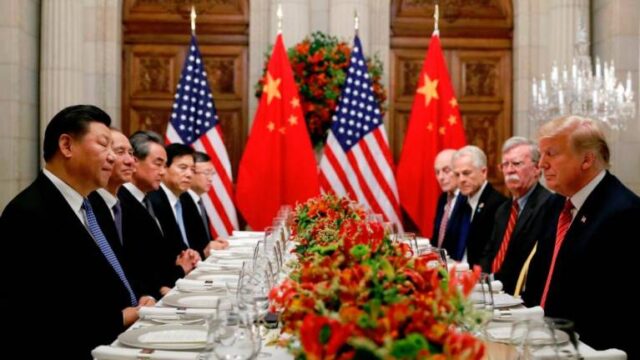
    China and the United States agreed to a ceasefire in their bitter trade war on Saturday after high-stakes talks in Argentina between US President Donald Trump and Chinese President Xi Jinping, including no escalated tariffs on Jan 1. Trump will leave tariffs on US$200 billion (RM835.8 billion) worth of Chinese imports at 10% at the beginning of the new year, agreeing to not raise them to 25% “at this time”, the White House said in a statement.

    “China will agree to purchase a not yet agreed upon, but very substantial, amount of agricultural, energy, industrial, and other product from the United States to reduce the trade imbalance between our two countries,“ it said.

    “China has agreed to start purchasing agricultural product from our farmers immediately.”

    The two leaders also agreed to immediately start talks on structural changes with respect to forced technology transfers, intellectual property protection, non-tariff barriers, cyber intrusions and cyber theft, services and agriculture, the White House said.

    Both countries agreed they will try to have this “transaction” completed within the next 90 days, but if this does not happen then the 10% tariffs will be raised to 25%, it added.

    The Chinese government’s top diplomat, state councillor Wang Yi, said the negotiations were conducted in a “friendly and candid atmosphere”.

    “The two presidents agreed that the two sides can and must get bilateral relations right,“ Wang said adding they agreed to further exchanges at appropriate times.

    “Discussion on economic and trade issues was very positive and constructive. The two heads of state reached consensus to halt the mutual increase of new tariffs,“ Wang said.

    “China is willing to increase imports in accordance with the needs of its domestic market and the people’s needs, including marketable products from the United States, to gradually ease the imbalance in two-way trade.”

    “The two sides agreed to mutually open their markets, and as China advances a new round of reforms, the United States’ legitimate concerns can be progressively resolved.”

    The two sides would “step up negotiations” toward full elimination of all additional tariffs, Wang said.

    The announcements came after Trump and Xi sat down with their aides for a working dinner at the end of a two-day gathering of world leaders in Buenos Aires, their dispute having unnerved global financial markets and weighed on the world economy.

    After the 2½ hour meeting, White House chief economist Larry Kudlow said the talks went “very well,“ but offered no specifics as he boarded Air Force One headed home to Washington with Trump.

    China’s goal was to persuade Trump to abandon plans to raise tariffs on US$200 billion of Chinese goods to 25% in January, from 10% at present. Trump had threatened to do that, and possibly add tariffs on US$267 billion of imports, if there was no progress in the talks.

    With the United States and China clashing over commerce, financial markets will take their lead from the results of the talks, widely seen as the most important meeting of US and Chinese leaders in years.

    The encounter came shortly after the Group of 20 industrialised nations backed an overhaul of the World Trade Organisation, which regulates international trade disputes, marking a victory for Trump, a sharp critic of the organisation.

    Trump told Xi at the start of their meeting he hoped they would achieve “something great” on trade for both countries. He struck a positive note as he sat across from Xi, despite the US president’s earlier threats to impose new tariffs on Chinese imports as early as the next year.

    He suggested that the “incredible relationship” he and Xi had established would be “the very primary reason” they could make progress on trade.

  • SK’s Chey says group is committed to U.S. society

    SK’s Chey says group is committed to U.S. society

    The chairman of Korea’s SK Group was in Washington on last Wednesday, vowing to make a commitment not only to the U.S. market but also its people and society. Chey Tae-won, who heads Korea’s third-largest conglomerate by assets, formally opened the Washington office of chipmaker SK Hynix in the presence of dozens of American dignitaries, including former U.S. Secretary of State Colin Powell.

    What was initially meant to be an opening ceremony was expanded under the name “SK Night” to provide a platform for Chey to explain the group’s current operations and investment plans in the United States, group officials said.

    “Past years, every different SK subsidiary … opened up their branches in the East Coast and West Coast, Texas … but they never actually [had] real communication with society,” Chey said in a speech.

    “Well this time, we will be investing in the U.S. about more than $7 billion here and there,” he said, citing as an example the planned construction of an electric vehicle battery plant in Jackson County, Georgia.

    “That’s going to be a $1.6 billion investment, and we’re going to hire right now more than 1,400 people,” he added to applause. “But within five years and if the market allows us, then we can expand [investment to] $5 billion and hire more than 6,000 employees there.”

    The plant is to be built by the group’s energy-chemical business, SK Innovation. On Monday, SK Biopharmaceuticals said it has applied to the U.S. Food and Drug Administration to win approval for sales of a newly-developed epilepsy treatment drug.

    Chey has pushed to expand SK’s presence in North America this year to add to business networks in China, the Middle East and Southeast Asia. During his stay here, he met with American business partners and local subsidiaries to help expand their presence on the continent.

    “[By opening up] the Washington office, I’m trying to show our commitment not only [to the] business side but also social value and commitment to society,” Chey said, adding that the group’s target is to “grow together” with U.S. society.

  • Trade war refugees race to relocate to Vietnam, Thailand

    Trade war refugees race to relocate to Vietnam, Thailand

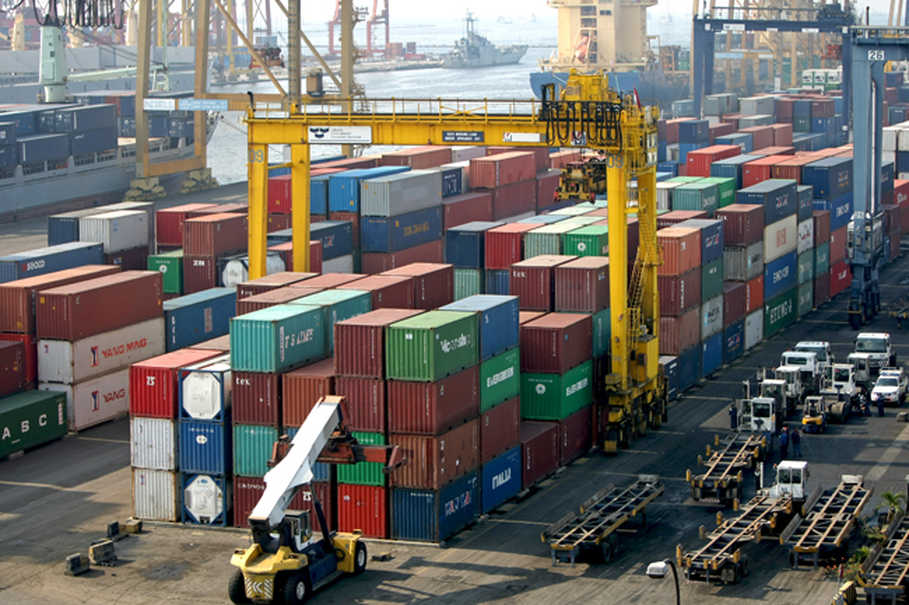
    Experts say this is the biggest shift in cross-border supply chains since China joined the World Trade Organisation in 2001. Fred Perrotta spent four years building a network of Chinese suppliers for his line of trendy backpacks, but as soon as the United States announced tariffs on almost half of its Chinese imports, he started looking for suppliers in other countries.

    That process is now so far advanced it would be too late to reverse it even if U.S. President Donald Trump and his Chinese counterpart Xi Jinping call a truce in their growing trade war at this week’s G20 summit, the 33-year-old said.

    Perrotta’s company, Tortuga, is joining what industry experts say is the biggest shift in cross-border supply chains since China joined the World Trade Organisation in 2001.

    The shift is creating stiff competition to secure new facilities in neighboring countries and rebuild supply chains outside of China, home to a fifth of global manufacturing.

    “Everyone is nervous and scrambling around,” Perrotta said by phone from Oakland, California, where he recently took delivery of the first samples from a potential new supplier in Vietnam.

    “Long-term, we will probably shift everything.”

    The scramble is driven by the risk of more, and higher, U.S. tariffs on China, and fears that nearby emerging economies can only accommodate new businesses on a “first come, first served” basis.

    Vietnam and Thailand are emerging as preferred destinations, but they still face capacity constraints ranging from red-tape to skilled labor and limited infrastructure.

    Frenzied activity 

    In an interview with more than a dozen company executives, trade lawyers and lobby groups in various industries revealed a frenzy of activity across Asia in recent months: executives are requesting product samples, touring industrial parks, hiring lawyers and meeting with officials.

    In June, Hong Kong-listed furniture maker Man Wah Holdings bought a factory in Vietnam for $68 million and said earlier this month it plans to almost triple its capacity to 373,000 square meters by the end of 2019.

    “The acquisition is to mitigate the risks posed by tariffs,” Man Wah said in a statement.

    Vietnam-based industrial real estate developer BW Industrial says inquiries have surged since October, and all its factories are now leased out.

    “The manufacturers are from all over the world but they all have production plants in China and need to start production ASAP,” Chris Truong, a sales manager at BW Industrial said.

    In Thailand, SVI Pcl, which provides electronics and manufacturing solutions, said it has just selected four new deals worth about $100 million with existing customers who have operations in China.

    “The trade war is good for us,” CEO Pongsak Lothongkam said. “We have been approached by so many companies that we have to prioritize.”

    KCE Electronics, Southeast Asia’s biggest maker of printed circuit boards (PCBs), has been contacted by U.S. companies who want to seek a new supplier to replace one in China, CEO Pitharn Ongkosit said.

    “It’s a good opportunity. Many customers have contacted us to ask about our products and prices. But there are no sales yet as it will take time,” he said.

    Stars Microelectronics Pcl, another Thai electronics manufacturing services provider, is also getting new business.

    “Two (or) three companies will start moving their production base (out of China) to us soon,” CEO Peerapol Wilaiwongstien said.

    Cambodia is also attracting interest, with Parsippany, NJ-based bicycle maker Kent International Inc shifting Chinese production to the Southeast Asian country.

    “We have a big business in the United States,” Arnold Kamler, the company’s majority owner and chief executive said. “There is no choice but to as rapidly as possible look to move production away from China.”

    Disruption 

    The re-sourcing and relocation efforts mark an acceleration of an already established trend as China’s economy shifts towards services, consumption and high-tech production.

    “We are on the cusp of the biggest sourcing disruption that we have seen in a generation,” said Stephen Lamar, executive vice-president of the American Apparel&Footwear Association, whose more than 1,000 members contribute over $400 billion annually to U.S. retail sales.

    “The No. 1 thing I hear from companies is along the lines of: ‘For years we have been talking about diversifying from China and now we have to actually do it’.”

    Shifting production can take years to complete: firms need to secure funding, find the right suppliers, sort out new logistics – all while dealing with new legal and accounting issues in a country they may not know well.

    “Any relocation away from China is going to be very slow and very uncertain,” said Aidan Yao, senior Asia EM economist at AXA Investment Managers.

    Low tech goods and low value manufacturing would be the quickest to migrate while higher value-added exports in the machinery, transport and IT category would likely take decades to relocate due to high R&D costs and competitive Chinese labor costs, UBS said in a note earlier this month.

    Yet a regional client poll by Citi conducted in the last month showed more than half of them already adjusting their supply chain to limit upheaval to their business.

    China’s sophistication in areas such as automation means no one country can replace China, said trade lawyer Sally Peng of Sandler, Travis&Rosenberg.

    “So everyone is looking for that China Plus One, Plus Two, Plus Three country strategy, all the way to Africa,” she said.

    Companies hold out little hope for a truce in the trade dispute when Trump and Xi are due to meet on the sidelines of the G20 summit in Buenos Aires this week.

    Indeed, Trump said on Monday he expected to move ahead with raising tariffs on $200 billion in Chinese imports to 25 percent from the current 10 percent.

    While Chinese export data shows little sign yet of an impact from the trade war, some economists say that is because companies are rushing to get shipments out ahead of more tariffs.

    Collateral victims 

    To be sure, smaller emerging Asian economies are not necessarily licking their lips about the prospect of the trade war between the world’s top two economies worsening.

    Growth has slowed in the third quarter across Southeast Asia, as well as in Taiwan, Japan and South Korea, with officials partly blaming the trade war for it.

    Thailand’s exports of electronic integrated circuits, for instance, rose 4 percent to the United States in October but fell 38 percent to China. Vietnam’s manufacturing sentiment indicator is the highest in Asia but is well off its peak.

    A lack of infrastructure is also a problem for countries seeking to pick up business.

    Thailand is 41st in World Bank infrastructure quality rankings, Vietnam is 47th, compared to China’s 20th ranking.

    Bangkok is seeking to address that with its Eastern Economic Corridor, an ambitious $45 billion development project which plans improvements to deep water ports, airports and railways.

    Beyond infrastructure bottlenecks, red tape – particularly in Vietnam – remains hard to navigate and skilled labor is not easily available.

    Vietnam’s unemployment rate is 2.2 percent. Thailand’s is even lower.

    “The proportion of unskilled labor in Vietnam remains large and there hasn’t been any effective plan to improve this issue, and I don’t see any significant change in five or even 10 years,” said the vice chairman of the Vietnam Electronic Industries Association, Nguyen Phuoc Hai.

    “Whether cheap labor will remain one of Vietnam’s advantages in the face of the fourth industrial revolution is questionable.”
  • Ashley furniture now available in Thailand

    Ashley furniture now available in Thailand

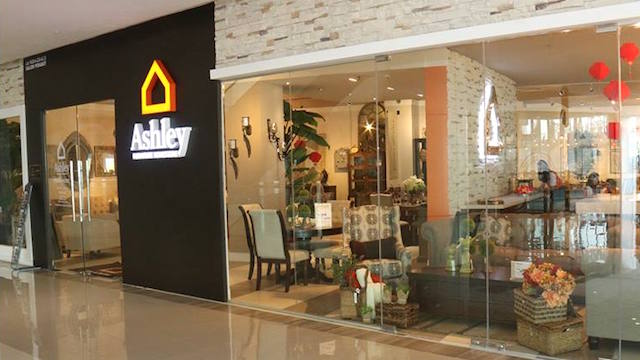
    US furniture retailer Ashley has launched in Thailand, partnering with local home furnishing and decor chain Chic Republic. The move is expected to help the brand capitalise on growing market demand and consumer purchasing power in the territory. Ashley president and CEO Todd Wanek said Thailand is a critical and potentially huge market for Ashley, due to its fast-growing middle-class affluence and population of 70 million.

    “There is huge demand for American contemporary and transitional looks in Thailand. This is why Ashley took the time to find the right partner, test the market thoroughly and made this decision after more than three years of finding the right fit.”

    Chic Republic’s strategy for expansion aims to target mid- to high-income consumers.

    It aims to sell Ashley’s products online via www.chicrepublicthai.com, and at four retail stores in Bang Na, Pradit Manutham, Ratchaphruek and Pattaya.

    Chic Republic CEO Kijja Pattamasattayasonthi said the outlook for furniture and home decor sales for the remainder of this year and into next is positive, due to demand from middle- to high-income customers, whose spending confidence has increased, as well as support from the increasing numbers of low-rise and high-rise high-end property projects.”

    Ashley has operated globally for more than 70 years, and has worked in the Asia-Pacific region for five years. It has more than 850 branches in 150 countries and brought in global sales of more than US$6 billion last year, accounting for 5 per cent of the brand’s total sales.

  • US Cyber Monday online sales to reach record US$7 billion

    US Cyber Monday online sales to reach record US$7 billion

    American consumers were on track to spend US$ 7.8 billion in online shopping on Cyber Monday, up 18.3 percent from last year, according to Adobe Analytics, which tracks 80 percent of online transactions at 100 of the largest retailers in the US. Cyber Monday, which falls on the first Monday after Thanksgiving Day and Black Friday, is considered the biggest online shopping day of the year.

    Last year, it hit a record US$ 6.6 billion in online sales.

    With growing online sales, Black Friday might be stealing Cyber Monday’s thunder. Online sales for Black Friday reached US$ 6.22 billion, up 23 percent compared with last year.

    Smartphone-enabled purchases amounted to US$ 2.1 billion, accounting for one third of the overall sales.

    Figures from Internet Retailer, a publisher of e-commerce news and analysis, predicted that the total amount to be spent over the period between Thanksgiving Day and Cyber Monday will reach US$ 21.6 billion.

    For the whole holiday season, which will last until end of December, online sales could hit a record US$ 124 billion, up by 15 percent from last year, Adobe Analytics said.

    Figures from market research firm eMarketer put overall US holiday online sales at around US$ 123 billion, which accounts for 12 percent of the estimated 1 trillion retail sales for this holiday shopping season.

    According to an annual survey, US consumers will spend an average of US$ 1,007 dollars during this holiday shopping season, up 4.1 percent from last year, the National Retail Federation said earlier.

  • China could use Vietnam to avoid US tariffs: experts

    China could use Vietnam to avoid US tariffs: experts

    Experts said the U.S.-China trade war puts Vietnam at risk of fraud as capital moves into the country to avoid U.S. sanctions. Vietnamese products would face tough competition from China in both the domestic and overseas markets, Nguyen Thi Thu Trang, director of the Vietnam Chamber of Commerce and Industry’s (VCCI) WTO Center, said at a recent conference on the impact of the Sino-American trade spat.

    In the domestic market, China might seek to dump its goods on Vietnam to avoid Donald Trump’s tariffs. Cheaper Chinese goods competing with Vietnamese goods will not benefit Vietnam’s economy.

    In overseas market, China might borrow the “made in Vietnam” label to dodge U.S. tariffs.

    If this cannot be controlled, there could be grave consequences for Vietnamese firms since the U.S. might apply the same tariffs as they have done on China, according to industry insiders.

    Ho Duc Lam, chairman of the Vietnam Plastics Association, said his industry has been impacted by having to compete directly with Chinese companies as China might borrow the “made in Vietnam” label to dodge U.S. tariffs.

    Tran Dinh Thien, an economist and member of the Prime Minister’s Economic Advisory Group, noted that the trade war brings both opportunities and challenges for Vietnam, but it is up to local companies to identify the opportunities.

    He said the trade war has hit investors’ confidence causing them to pull out of emerging markets including Vietnam. The global supply chain is badly disrupted as a result, and the investment environment has become uncertain, he said.

    Lam argued that to protect domestic companies the government should consider import taxes if there are signs of a safeguard action.

    It should not issue licenses if there is no guarantee that more than two thirds of the production chain would be in Vietnam, and should promote free trade agreements with Europe and others to reduce Vietnam’s dependence on the U.S. and China, he added.

    Trang of the VCCI said since the trade war shows no signs of ending soon production enterprises should monitor the situation to respond nimbly to changes and should know where and how to take advantage of potential opportunities.

    It is known which goods face sanctions, so businesses should research about customers for those goods and offer them a better deal, she said.

    The U.S.-China trade war escalated in September with the U.S. levying an additional 10 percent tariff on about $200 billion worth of Chinese products. Washington is set to raise the tariffs to 25 percent in January if there is no agreement between the both sides.

    China retaliated with 5 and 10 percent tariffs on $60 billion worth of U.S. products.