Retail News CRM

Tag: US

  • McDonald’s challenging US market mitigated by international sales

    McDonald’s challenging US market mitigated by international sales

    Strong international sales ensured respectable McDonald’s results in the latest quarter as the fast-food giant encountered challenges in its core US market. Global sales slipped 3 per cent in the three months to December, to US$5.16 billion, although this was largely due to currency translations, without which sales would have been flat. While the company did not break out Asian performance, it said international same-store revenue rose 5.2 per cent.

    Same-store sales in the US rose 2.3 per cent, primarily due to increased prices, given foot traffic in stores fell by 2.2 per cent. Global visitor numbers crept up by a mere 0.2 per cent.

    Breakfast remains its most challenging category, with the chain struggling to attract diners in the mornings. While that mealtime accounts for about a quarter of its total sales, the breakfast market is experiencing fierce competition among rival chains.

    “We’re doing well with average check growth but we really want the customer to come back and more often,” CEO Steve Easterbrook said in an investor presentation about the McDonald’s results.

    He said McDonald’s is trying to recover breakfast customers by trialling different price promotions, launching localised advertising campaigns and improving the drive-through service.

    More stores, more kiosks

    Globally, McDonald’s plans to open a net 750 new stores this year. It will also speed up the rollout of its digital touchscreen ordering systems. Easterbrook says stores with self-ordering kiosks were achieving higher sales than those without.

    Commenting on the McDonald’s results, Neil Saunders, MD of GlobalData Retail, said the kiosks and order-by-app services need to be rolled out faster.

    “This isn’t just a case of installing and implementing the technology, it is about getting customers to actually use it. Consumers need to be given more incentives to use the new ways of ordering, especially mobile, as many still shun the technology,” said Saunders.

    “Longer term, more automation in the kitchen is also critical – something that will be particularly beneficial now McDonald’s menu options are more varied and complex.”

    Saunders described the latest McDonald’s results as “reasonable”. But he said a 6.7 per cent decline in operating income suggests that McDonald’s is having to work harder for much slimmer rewards.

    “In our view, this does not sit well with the increasing complexity and higher levels of capital expenditure the company is introducing into the business.”

    Saunders believes McDonald’s is on the right track. “However, this year will be a more challenging year than last and it will be a balancing act between keeping both customers and franchisees happy.”
  • Asia shares slip as China’s Huawei in legal hot water; focus on Sino-US talks

    Asia shares slip as China’s Huawei in legal hot water; focus on Sino-US talks

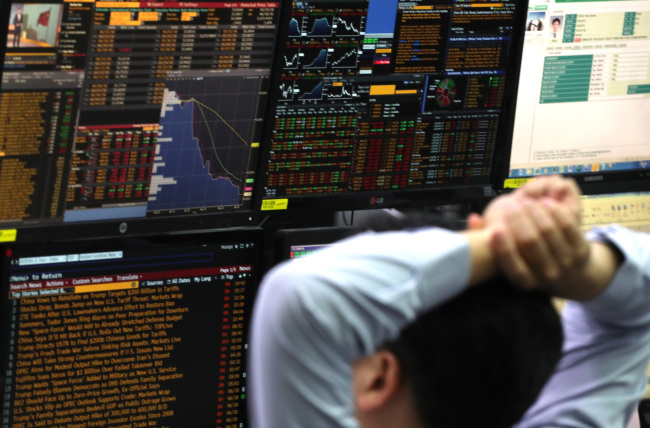
    Asian shares stumbled on Tuesday and the dollar hovered near two-week lows as prospects for a long-awaited Sino-US trade deal was dealt another blow after the United States levelled sweeping criminal charges against China’s telecom giant Huawei. MSCI’s broadest index of Asia-Pacific shares outside Japan got off to a shaky start with losses accelerating as other regional markets opened.

    Australia and New Zealand led the losses, with their benchmark indices down 0.7% each while South Korea’s KOSPI was off 0.3%. Chinese shares opened in the red too, with the blue-chip index down 0.2%.

    Japan’s Nikkei slid about 1%. US stock futures also lost ground following from a torrid overnight session on Wall Street, with E-Minis for the S&P 500 down 0.4%.

    Investor sentiment, already shaken by pessimism over global growth, took another hit after the US Justice Department unsealed indictments against China’s top telecom equipment maker, Huawei, accusing it of bank and wire fraud to evade Iran sanctions and conspiring to steal trade secrets from T-Mobile US Inc.

    The jolt to Huawei could undermine prospects for a trade deal between the economic giants as markets nervously await a fresh round of trade talks with Chinese Vice Premier Liu He set to meet US officials on Wednesday and Thursday.

    Further complicating matters, China triggered the legal process on Monday for the World Trade Organization to hear Beijing’s challenge to US tariffs, and berated the United States for blocking the appointment of judges who could rule on it.

    Souring US-China relations roiled global markets for much of last year, and have kept investors on the back foot this month. The trade war’s broadening impact on world growth is one reason the US Federal Reserve has signalled it will be patient on policy after raising rates four times in 2018.

    Overnight, markets got a reminder of the potentially damaging economic impact of the Sino-US trade war as Wall Street stocks were hit by profit warnings.

    The losses came as shares of Caterpillar and Nvidia Corp nosedived after the two manufacturers joined a growing list of companies cautioning about the crippling effects of softening Chinese demand.

    Caterpillar plunged more than 9% for its worst single-day drop since August 2011 while chipmaker Nvidia slid 13.8%.

    “Both companies are seen as industry bellwethers and their disappointing results provide further evidence that this time China’s slowdown is for real,” said Rodrigo Catril, Sydney-based strategist at National Australia Bank.

    The downbeat global growth impulse mean investors will look for further confirmation the Fed will pause its rate-hike cycle at a two-day policy meeting ending Wednesday.

    Overnight on Wall Street, the Dow and S&P 500 each closed down 0.8% and the Nasdaq was off more than 1%.

    WARNING BELLS

    Worryingly, earnings at China’s industrial firms too shrank in December, pointing to more troubles for the country’s vast manufacturing sector already struggling with a decline in orders, job layoffs and factory closures.

    Slowdown fears slugged the US dollar which faltered to its lowest in two weeks on Monday. The dollar’s index, which measures the greenback against a basket of major currencies, was last at 95.758.

    Against the safe haven Japanese yen, the dollar was down at 109.17, on track for a third straight session of losses.

    Markets will have more catalysts this week with over a 100 of the S&P500 companies reporting results, including Amazon, Apple and Facebook.

    Many economists, including the International Monetary Fund, have cut their forecasts for global growth this year citing the US-China trade war.

    “Slowdown is feeding into some acute areas of economic unease,” US investment bank Citi said in a note, citing recent disappointing factory output data out of Europe and China.

    “In some respects, markets seem to have reacted more to recent negative changes in economic data than at other points in recent decades,” it added, while noting investors are now pricing in a 1% contraction in global earnings per share (EPS) this year.

    “This would be the worst year-on-year percentage change in EPS since 2015” even though economic growth is seen much higher this year than in 2015.

    Elsewhere, Sterling dithered against the dollar ahead of voting in Britain’s parliament on Tuesday that aims to break the Brexit deadlock. It was last at $1.3148

    Oil bounced after hefty overnight losses. US crude was last up 16 cents at $52.15 a barrel while Brent gained 18 cents to $60.11.

    US gold futures hovered near a seven-month high around $1,302.3 per ounce. Spot gold was last at 1,303.3 after breaking above a key psychological barrier of $1,300 an ounce on Friday.

  • Companies, workers struggle as cracks appear in China’s economy

    Companies, workers struggle as cracks appear in China’s economy

    Cracks are opening in China’s mighty economy: investors are backing away from deals, factories are moving abroad and companies are shedding jobs. The world’s second-largest economy is losing steam, hitting its slowest growth in almost three decades last year, and flagging further in recent months. While gross domestic product grew at 6.6% in 2018 – a rate that would be the envy of most nations – China’s efforts to cut its debt mountain have weighed on the economy.

    Private businesses in particular face new hurdles as costs rise and financing becomes harder to come by, while the trade war with the United States has not helped.

    Here is a look at some of the struggles faced by Chinese companies and people:

    Game over for gamers

    Feeding China’s addiction to video games seemed an easy bet for Beijing Yixin Technology, a tech startup behind the mobile game Farm Take Home.

    The game allows players to harvest wheat, raise chickens and plant apple trees – a bucolic refuge from the pressures of urban China.

    But in real life, the tech firm has struggled to find investors.

    “In December our company’s funding ran out, we had an investment lined up, but the money never came through,” said chairman Cui Yi. “This month I arranged another investor, then he backed out too. I think we can’t hold out.”

    His company is not alone.

    Venture capital funding dried up at the end of last year. Total investment in the fourth quarter fell 13% from a year earlier, according to data from Preqin market research.

    Policymakers are partly to blame, pushing a war on debt and financial risk that has cut the funding flowing into investment firms, industry insiders say.

    Another government diktat halted new video game approvals for months – officially due to youth gaming addiction concerns – sending firms like Beijing Yixin into a deep freeze.

    Trade war

    Other companies are facing the fallout from the trade war with the United States.

    More than a handful of exporters have sought to get around US tariffs by building factories outside China, according to a review of public stock filings.

    Others are sending workers home early for Chinese New Year or cutting overtime.

    Last month China’s exports fell.

    “It has hit our profits,” Harry Shih, manager of Runfine Bearings in eastern Zhejiang province, said of the trade war.

    Washington slapped 25% taxes on many types of ball bearings in July. Shih said he had shared the cost increase with his customers, roughly half of whom are from the US.

    “Business is going down for most companies including factories. Like me they have the same problems, profits are going down” as costs rise, said Shih.

    Job crunch

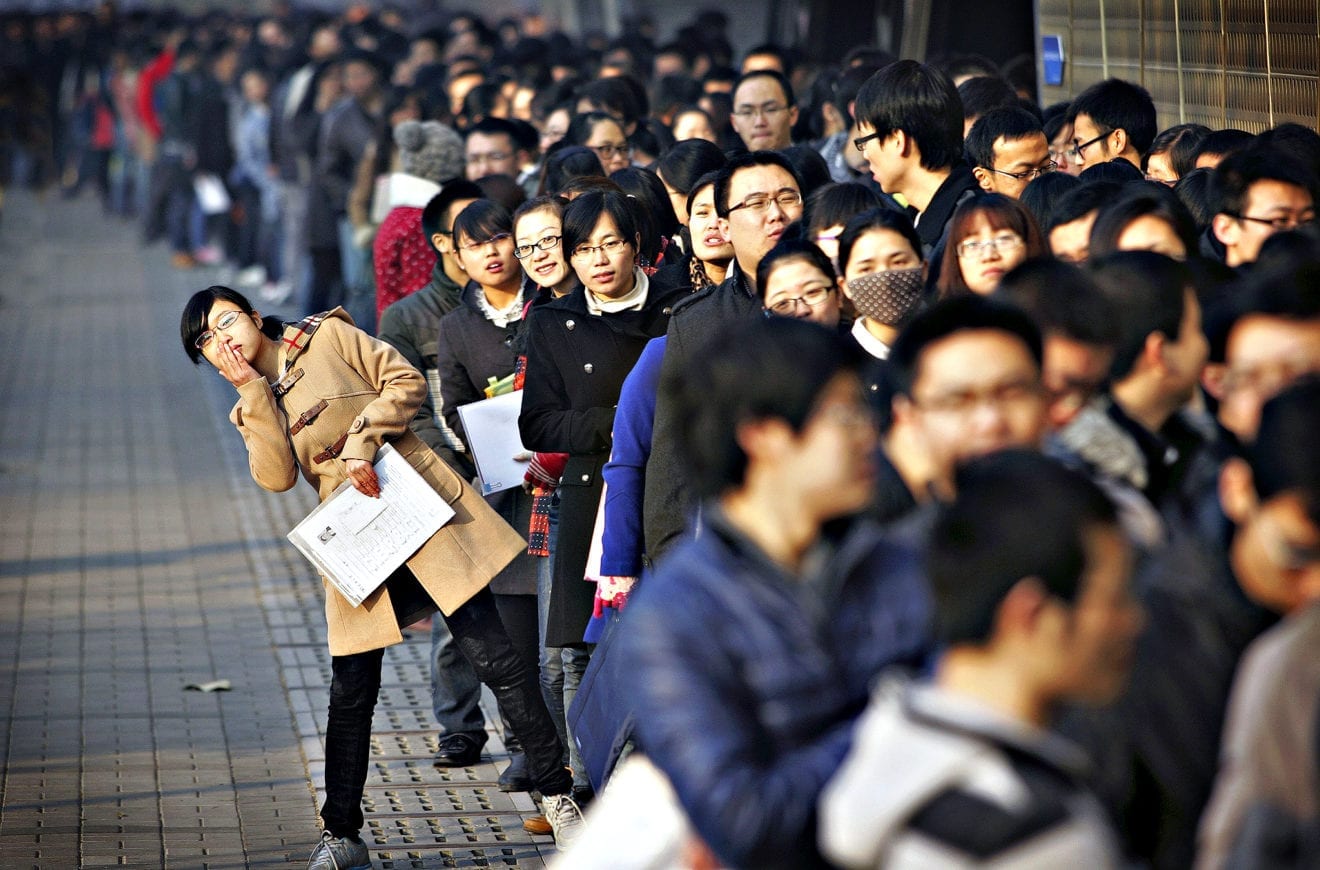
    Official data shows unemployment at a stable rate, rising slightly to 4.9% last month. But independent data paints a different picture.

    In October-December advertised tech positions fell by 20% from a year earlier, after declining 51% in the third quarter, according to data from Zhaopin, China’s largest recruitment website and Renmin University.

    China’s economy “faces downward pressure, and to some extent this pressure will be transmitted to the job market,” said Meng Wei, a spokeswoman for the National Development and Reform Commission, China’s state planner.

    A lawyer who consults on labour disputes, Guo Xuehai of Beijing Zhonghai Law Firm, said, “there are definitely more employees coming for help than before,” but added this was usually the case at this time of the year.

  • Oil prices fall on worries fuel demand to stall amid slowing global growth

    Oil prices fall on worries fuel demand to stall amid slowing global growth

    Oil prices declined on Thursday amid lingering concerns over slowing global economic growth that may limit fuel demand and after a surprise build in U.S. crude inventories. International Brent crude oil futures were at $60.89 a barrel at 0352 GMT, down 25 cents, or 0.4 percent, from their last settlement, having closed down 0.6 percent in the previous session.

    U.S. West Texas Intermediate (WTI) crude futures were at $52.40 per barrel, 22 cents lower from their last settlement.

    “Crude oil came under further pressure as concerns of faltering global growth remained at the forefront in investor’s minds,” ANZ Bank said.

    The prospects of future oil demand are getting clouded by the global growth worries, analysts said.

    “With the IMF downgrading 2019/20 and the continued rhetoric from Davos reiterating that they expect global growth to slow down over the next two years, is providing selling pressure in oil,” said Hue Frame, portfolio manager at Frame Funds in Sydney.

    Earlier this week, the International Monetary Fund (IMF) cut its world economic growth forecasts for 2019 and 2020, due to weakness in Europe and some emerging markets.

    Meanwhile, world leaders and top executives are meeting in Davos, Switzerland, this week to discuss how to steer policy amid worries of slowing economic growth, damaging trade wars and Brexit.

    Oil market sentiment was also weakened by an increase in U.S. crude inventories after refineries cut output, data from industry group the American Petroleum Institute showed on Wednesday.

    Crude inventories rose by 6.6 million barrels in the week ended Jan. 18 to 443.6 million, compared with analysts’ expectations for a decrease of 42,000 barrels, the API said. Refinery runs fell by 152,000 barrels per day.

    “Sharp production cuts by OPEC+ have kept crude oil futures supported however as market reports indicate for a marked output reduction in Dec 2018,” said Benjamin Lu, analyst at Phillip Futures.

    “Though oil prices have demonstrated for higher upside potential in the first quarter of 2019, mounting economic challenges will continue to impede exponential gains in the longer term,” Lu added.

  • Gold rises as growth concerns, US govt shutdown weigh on dollar

    Gold rises as growth concerns, US govt shutdown weigh on dollar

    Gold prices rose on Thursday as the dollar declined due to concerns the prolonged U.S. government shutdown will limit economic growth at the same global growth is slowing as well. Spot gold was up 0.1 percent at $1,283.31 per ounce, as of 0326 GMT, while U.S. gold futures were down 0.1 percent at $1,282.60 per ounce. “We are seeing a weaker U.S. dollar for the moment, which is in general supportive for gold,” Michael McCarthy, chief market strategist at CMC Markets said.

    However, McCarthy cautioned that bullion price gains are limited by slowing investor buying as indicated by price charts used by technical traders.

    “The issue for gold is there is a very heavy resistance seen around $1,290 and $1,310. A further weakening of the U.S. dollar could be supportive. But, we need something to really push gold through the resistance level,” he said.

    The U.S. dollar index, which measures the greenback against a basket of six major currencies, fell for third day, dropping 0.3 percent during that period. However, Asian shares rose on Thursday after Wall Street managed to end higher.

    On Wednesday, U.S. President Donald Trump said that the United States was doing well in trade talks with China, saying at a White House event that China “very much wants to make a deal.”

    However, a prolonged U.S. government shutdown reminded investors of risks to growth to the economy.

    White House economic adviser Kevin Hassett said in a CNN interview the U.S. economy could see zero growth in the first three months if the partial government shutdown lasts for the whole quarter.

    Meanwhile, investor focus turned to the European Central Bank (ECB), which is widely expected to keep its monetary policy unchanged at its first policy meeting of 2019 that ends later on Thursday.

    Market watchers also expect ECB to acknowledge growing threats to the euro zone economy.

    “The ongoing trade war, Brexit and slow global growth narrative are supportive for gold at present levels, as is Chinese seasonal demand,” MKS PAMP Group said in a research note.

    “That being said, Comex non-commercial and exchange-traded fund (ETF) holdings remain extended, so we expect a bit of tug of war in the short-term between $1,270-$1,300.”

    Holdings of SPDR Gold, the largest gold-based ETF, was at its highest since June 2018.

    Among other metals, palladium, which hit a record high of $1,434.50 an ounce last week on low inventories and rising demand, rose 0.1 percent to $1,348.50 an ounce.

    Silver was down 0.1 percent $15.35 an ounce, while platinum was steady at $795.

  • Samsung factories ready to make 5G and foldable phones

    Samsung factories ready to make 5G and foldable phones

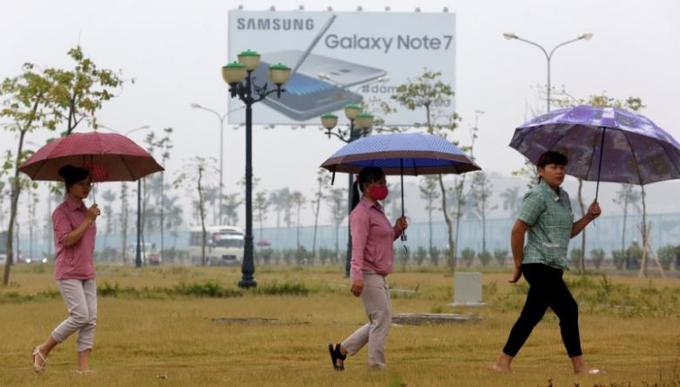
    Samsung Electronics is ready to roll out both 5G and foldable phones, two of most highly-anticipated products from the electronics company. While Samsung has already announced a plan to introduce new Galaxy phones at an unpacking event next month in San Francisco, it is confirmed on Tuesday that Samsung’s global production base in Vietnam has completed preparation to mass-produce 5G phones.

    The 5G phone is tentatively called “Galaxy S10 X.” Two Samsung factories, located in the provinces of Bac Ninh and Thai Nguyen, both north of Hanoi, produce 150 million smartphones a year. The 5G-enabled version of Galaxy S10 produced in Vietnam will be exported globally, starting with the United States. The first one million units of Samsung’s first foldable phone will be produced at the company’s production plant in Gumi, North Gyeongsang.

    The 5G phone “will roll out three to four weeks after the basic Galaxy S10 model hits the market. However, we have finished all preparations to mass produce a 5G phone,” a source from Samsung Electronics said.

    The phone will likely be introduced during the unpacking event on Feb. 20 along with three other versions of Samsung’s 10th-generation Galaxy family: S10, S10+ and S10 light.

    Phones that can connect to the 5G network are expected to bring revolutionary changes in media consumption habits. A 5G phone can download a 1.5 gigabyte movie in under a second.

    Samsung’s first 5G phone is likely to come with a 6.7-inch screen, larger than the 6.1-inch screen of S10 or 6.4-inch screen of S10+.

    The 5G-connected S10 will be powered by the Exynos 9820 chipset.

    Though it is designed for 5G connections, the phone will still be able to connect to 4G LTE as 5G infrastructure development is still underway. Even in Korea, where 5G infrastructure is quickly being built, next-generation connectivity is a work in progress.

    Samsung will first supply 5G phones to five telecom companies, including Verizon, AT&T and Sprint, all in the United States, and SK Telecom and KT in Korea

    Although the 5G phone will be introduced at the unpacking event, the actual launch of the model will come a bit later than the new S10s.

    While basic versions will be released in early March, the actual 5G-capable models will be available at the end of March.

    Samsung has greatly tightened security at its S10 production sites in Vietnam factories after a picture of the Galaxy S10 was leaked online.

    As for the company’s foldable phone, tentatively dubbed the “Galaxy F,” initial production will take place at the Gumi plant. Industry sources project that Samsung is likely to introduce the foldable phone at the unpacking event as well, but will release the phone April at the earliest.

    Federico Casalegno, head of the Samsung Design Innovation Center in North America, said “the foldable phone is a breakthrough in technology innovation,” during a press briefing last week.

    Industry insiders say the main reason for making foldable phones at the local Gumi plant is to prevent technology leaks and better control the initial production volume of the phone.

    “We are not yet ready to mass-produce foldable phones as well in Vietnam,” a spokesperson from Samsung said. “The first one million units of foldable phones and 5G phones to be sold in the Korean market will be produced at the Gumi plant, which is in charge of producing our premium products.”

  • Samsung spent $3.12M lobbying in U.S. last year

    Samsung spent $3.12M lobbying in U.S. last year

    The American subsidiary of Korean tech giant Samsung Electronics spent $3.12 million on lobbying U.S. politicians and officials last year, the second-largest amount following 2017, data from a Washington-based research group showed Monday. Samsung Electronics’ lobbying expense was the ninth largest among electronics companies operating in the United States, moving up two notches from a year earlier, according to the Center for Responsive Politics (CRP).

    Microsoft spent the most with $7.18 million, followed by Qualcomm with $6 million, Oracle with $5.47 million and Apple with $5.09 million, said the nonprofit research group, which tracks the effects of money and lobbying on elections and public policy.

    Among foreign companies, Samsung Electronics was the second-biggest lobbying spender after German engineering group Siemens.

    The Korean tech conglomerate has been intensifying its lobbying efforts in its key market since U.S. President Donald Trump took office in 2017 and advocated more protectionist trade policies.

    Samsung’s lobbying expenses over the past two years amounted to $6.62 million, far surpassing $6.04 million spent during former President Barack Obama’s second term from 2013-16, data showed.

    Trade-related issues were Samsung’s main lobbying target in the United States last year, with 13 cases out of 81 total in this area.

    The company also made extensive lobbying efforts for the telecommunication sector as it has been exploring ways to expand its foothold in the 5G network equipment market.

    Last month, Samsung and American telecommunication company Verizon announced their plan to launch 5G-compatible smartphones in the U.S. market in the first half of 2019.

  • Hyundai, Kia move ahead with recall in U.S.

    Hyundai, Kia move ahead with recall in U.S.

    Despite a government shutdown, Hyundai and Kia are moving ahead with a recall of about 168,000 vehicles to fix a fuel pipe problem that can cause engine fires. The problem stems from improper repairs during previous recalls for engine failures. The affiliated Korean automakers have been dogged by fire and engine failure complaints from across the nation. They’re both under investigation by the U.S. National Highway Traffic Safety Administration, which has been trying to figure out whether initial recalls covered enough vehicles. But the agency is mostly closed due to the shutdown.

    In addition to the recall, each automaker says it will do a “product improvement campaign” covering a total of 3.7 million vehicles to install software that will alert drivers of possible engine failures and send the cars into a reduced-speed “limp” mode if problems are detected.

    Nhtsa employees who do safety investigations and recall notifications are not at work. Under normal circumstances, the agency would review the recalls to make sure they are adequate and post details on the agency website. It would also monitor notices to customers, and ensure customers could check to see if their vehicles are included.

    Kia spokesman James Bell said the company is proceeding with the recall and campaign regardless of government delays.

    “Making our customers comfortable is vastly more important than making sure we’re following additional government processes right now,” he said. Kia sent letters to dealers around Jan. 10 notifying them of the recall, he said.

    But a U.S. auto safety advocate called the recalls inadequate and said the product improvement campaigns should instead be recalls that are overseen by Nhtsa.

    An Nhtsa spokeswoman said she could not comment due to the shutdown.

    Hyundai and Kia started recalling 1.7 million vehicles in 2015 – about 618,000 of which are Kias – because manufacturing debris can restrict oil flow to connecting rod bearings. That can cause bearings in 2-liter and 2.4-liter four-cylinder engines to wear and fail. The problem can also cause fires. The repair in many cases is an expensive engine block replacement.

    Now the companies are acknowledging that the engine replacements may not have been properly done in all cases by dealers. A Kia statement says the high-pressure fuel pipe may have been damaged, misaligned or improperly tightened while the engines were being replaced under recall. That can allow fuel to leak and hit hot engine parts, causing fires.

    Kia says it has six reports of fires among the vehicles being recalled for possible fuel leaks, while Hyundai says it has no fire reports. Neither company had any reports of injuries.

    The fuel injector pipe recall covers some 2011 through 2014 Kia Optima cars, 2012 through 2014 Sorento SUVs, and 2011 through 2013 Sportage SUVs, all with 2-liter and 2.4-liter four-cylinder engines. Also covered are many 2011 to 2014 Hyundai Sonata cars and 2013 and 2014 Santa Fe Sport SUVs.

    More than 2 million 2011 Sonatas from the 2011 through 2018 model years and Santa Fe Sports from 2013 through 2018 are covered by the software and engine-knock sensor updates. About 1.7 million Kias, including the 2011 through 2018 Optima, the 2012 through 2018 Sorento and 2011 through 18 Sportage, are covered.

    The companies say owners of the recalled vehicles will be notified by letter. Dealers will check the fuel pipe for leaks and replace the pipe if needed.

    Kia is only doing the fix on 68,000 of its 618,000 vehicles recalled for the engine problems, while Hyundai is recalling 100,000 of more than 1 million. Hyundai said only vehicles that had engines replaced in the previous recalls are covered by the new recall.

    He also raised concerns about the government shutdown’s impact on Nhtsa, which he said should be open to handle critical safety recalls.

  • Sears saved by chairman’s last minute $5.2 billion bid

    Sears saved by chairman’s last minute $5.2 billion bid

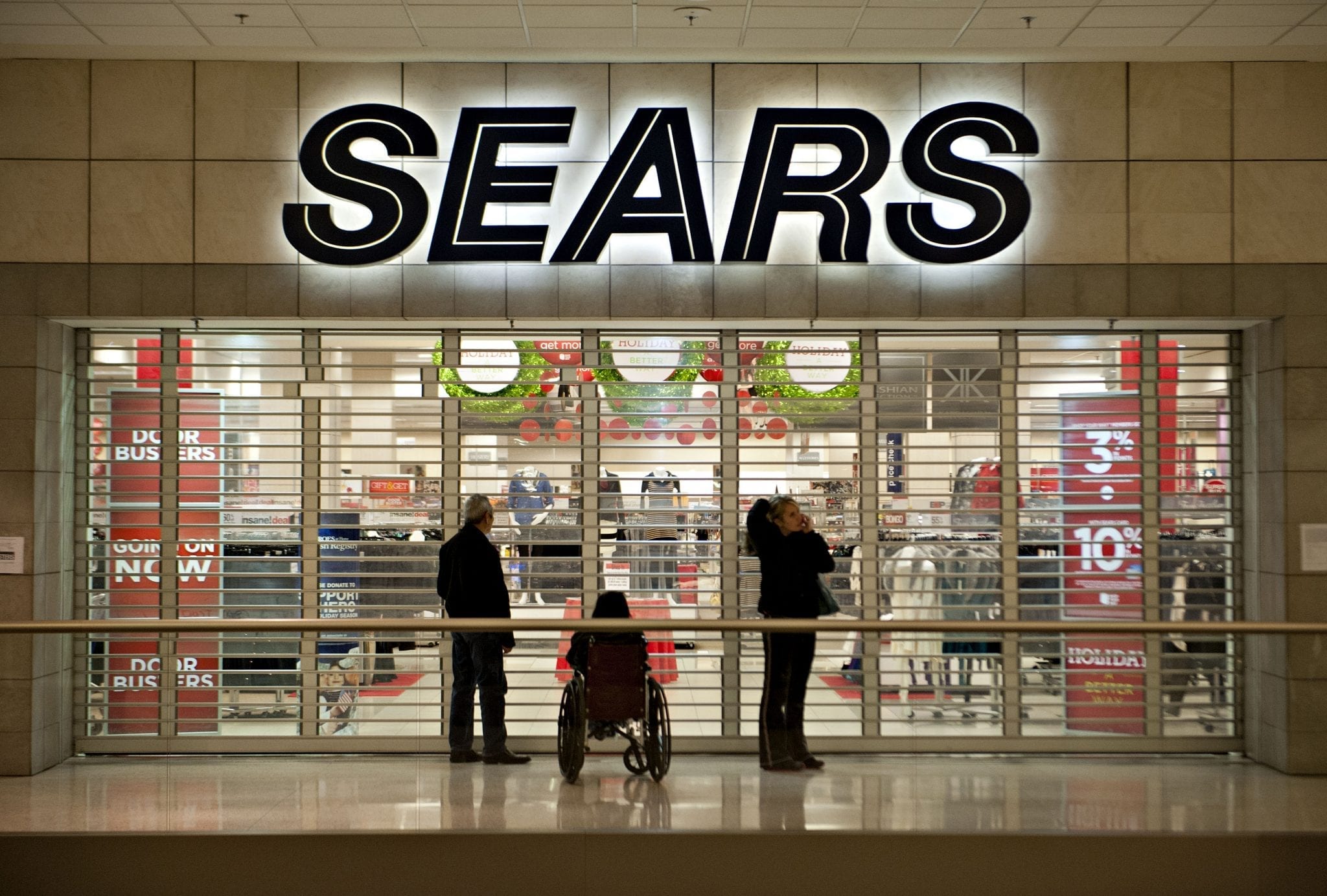
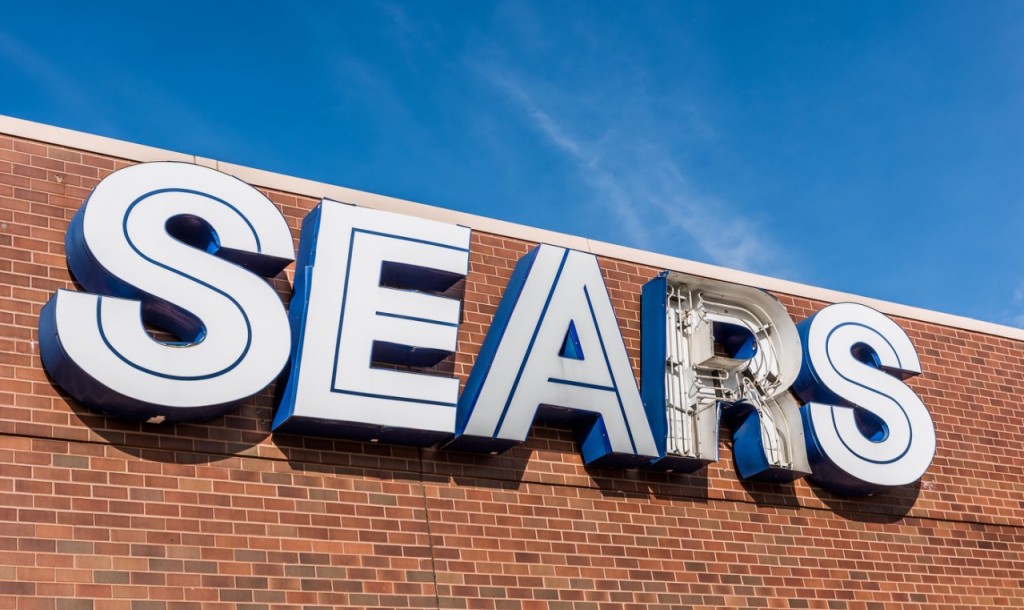
    Bankrupt US retailer Sears has been saved from liquidation following a successful, last-minute US$5.2 billion bid by chairman Eddie Lampert, subject to court approval. The acquisition includes substantially all of the company’s assets as an on-going concern and preserves the positions of 45,000 employees.

    “We are pleased to have reached a deal that would provide a path for Sears to emerge from the chapter 11 process,” Sears’ restructuring committee of the board of directors wrote in a release to investors.

    “Importantly, the consummation of the transaction would preserve the employment for tens of thousands of associates, as well as the relationships with many vendors and suppliers who provide Sears with goods and services.”

    Provided the sale is approved by the Bankruptcy Court, the transaction is expected to close on February 8, 2019.

    The retailer had previously announced plans to close up to 120 stores, though it is not clear whether these closures will go forward with the successful bid.

    Lampert made the last-minute bid after several prior offers were turned down for being “administratively insolvent” – unable to cover fees and vendor payments owed by the retailer.

    After initially offering US$4.4 billion to purchase the business, as well as a secondary offer to purchase just 250 of its locations, Lampert was forced to raise his bid to US$5 billion in an effort to get the sale completed.

    But even this bid was deemed insufficient, and Lampert, through bidding vehicle ESL Investments, upped the offer to US$5.2 billion.

    The new bid, while successful, will mean roughly 5000 fewer staff able to keep their jobs as a result of the bankruptcy.

    Sears applied for bankruptcy in October 2018, citing a failing turnaround effort to transform the business and unlock the value of its assets.

    GlobalData Retail managing director Neil Saunders pointed to Sears’ efforts to “shrink its way to profitability”, and that continuing to do so under the guise of bankruptcy was unlikely to result in a successful outcome for the business.

    “Ultimately, Sears needs not just to fix its financial problems,” Saunders said.

    “It also needs to repair the deficiencies in terms of retail strategy… only a complete change of management will bring this about.”

  • Trade war could drag Malaysia’s GDP down to 3.2% this year

    Trade war could drag Malaysia’s GDP down to 3.2% this year

    A full-blown trade war could drag Malaysia’s gross domestic product (GDP) growth to 3.2% this year, from an earlier projection of 4.7%, according to Affin Hwang Investment Bank Bhd head of research and chief economist Alan Tan. Tan said if the trade spat between the US and China were to escalate to a situation where tariffs are fully implemented on all Chinese goods, Malaysia’s GDP growth could be hit closer to 1.5 percentage point.

    “If Malaysia’s GDP is at 5%, the 1.5% will push the GDP growth down to 3.5%,” he told reporters at the press conference in conjunction with the bank’s launch ceremony of its Securities Borrowing and Lending (SBL) facility for retail investors yesterday.

    “Malaysia is an open economy and is still relying on trade. As we know, China today is the major market for Malaysia and if the global trade war were to escalate, we think that the Chinese economy, which has already shown signs of slowing down, may slow even further.

    “Therefore, we are of the view that Malaysia’s exports to China will be slowing down towards the second half of 2019 assuming if the trade war continues to drag on,” he added.

    However, Tan said domestic demand will continue to support the economic growth this year driven by several measures introduced by the government in Budget 2019, supporting the bank’s forecast on the GDP growth at the region of 4.7% this year.

    Additionally, he said that the bank opined that this time around, both US and China will be more willing to negotiate and possibly come out with a trade compromise by end of the first quarter this year, in view of the external uncertainties and weaker business sentiment.

    “Going into 2019, we already seeing signs of slowing down in the US and China. Unlike six months ago, where both economies continue to do relatively well,” he noted.

    Therefore, he said the bank believes that in the second half of 2019, following the resolutions of the global trade war, coupled with the weakening US dollar, interest will come back to the emerging market, including Malaysia.

    However, Tan said the bank expects that the market will remain flat in the first half of 2019 and looking at end-2019 target for the FBM KLCI at 1,810 points.

    On ringgit, he said the local currency is expected to appreciate to RM3.90-RM4.00 level in the second half of 2019, and possibly ending the year at RM3.90 against the US dollar, as the greenback is likely to soften towards the second half of the year.

  • Vietnam digital media giant acquires US network

    Vietnam digital media giant acquires US network

    Media giant Yeah1 Group has acquired ScaleLab, a U.S. Youtube multi-channel network, for $20 million. ScaleLab is expected to receive $12 million upfront and another $8 million later if business targets are achieved two years after the merger. ScaleLab executives have said the company agreed to the sale because it requires an infusion of funds to expand operations and desired to integrate with Yeah1’s media ecosystem.

    ScaleLab plans to expand into Asia, where Yeah1 connects Asian talents and influencers with the international market.

    Tri Dao Phuc, CEO of Yeah1, said the strategy over the next three years is to “acquire premium social media brands, optimize our existing channels to boost viewership and performance.”

    Headquartered in Hollywood, the U.S., ScaleLab is best known as the Youtube partner of Jake Paul, Jimmy Donaldson, Mariale Marrero, Erika Costell, Katie Angel, and many other YouTube stars.

    It has a roster of 1,750 influencers and 400 million subscribers, and gets three billion Youtube views a month.

    The five-year-old company was recognized as the fastest-growing media company in the U.S. by Inc. Magazine last September.

    This is not Yeah1’s first acquisition in the social media field. Last year it had bought two multi-channel network (MCN) companies, SPRINGme of Thailand and Something Big of France.

    Founded in 2006 it is Vietnam’s largest multi-channel media ecosystem, operating TV channels, movie studios, Youtube networks, and digital news.

    It was also the first media company to list when it got into the Ho Chi Minh Stock Exchange (HOSE) last June.

  • American fund acquires stake in Vietnamese organic food firm

    American fund acquires stake in Vietnamese organic food firm

    The Seaf Women’s Opportunity Fund has acquired a 30 percent stake in Organica, promising the Vietnam all-round support. While not mentioning the specific investment value, Jennifer Buckley, SEAF’s senior managing director, said the fund will support Organica in operations, distribution, and network expansion. In addition to being a strategic shareholder, the fund will also give Organica a 5-year loan so that it has sufficient resources to finance expansion plans in the future.

    “This is the first organic food company in Vietnam we have decided to invest in, even though the market [for organic products] is still small,” said Jennifer Buckley. She added that if the company performed well, the fund may acquire it in full in the future.

    Pham Phuong Thao, CEO of Organica, said that the current investment will be enough for the company to implement a 2-3 year plan. In particular, it plans to open more retail stores, improve online sales systems, IT systems and human resources, Thao said.

    Organica is an organic groceries chain established in 2013 with the first store in Ho Chi Minh City. It now has 5 stores in Ho Chi Minh City, Hanoi and Da Nang. Currently, the company has 10 farms in the South and the Central Highlands, totalling a combined area of 300 ha.

    SEAF (Small Enterprise Assistance Funds) is an international investment management group that provides growth capital and business assistance to small and medium enterprises (SMEs) in emerging and transition markets.

    It currently operates in 30 countries and has investments in over 300 small businesses.

  • Judge extends Sears lifeline to mid-January

    Judge extends Sears lifeline to mid-January

    Embattled US department store Sears has been granted yet another lifeline, with a bankruptcy auction now scheduled for January 14. That will give billionaire hedge fund operator Edward Lampert, Sears biggest shareholder and former CEO, one final opportunity to preserve the business. At Monday’s auction, he will bid against rival parties seeking to liquidate the business, described by GlobalData Retail MD Neil Saunders as “more like a patient in a coma than a fully functioning retailer”.

    Sears filed for Chapter 11 bankruptcy protection in October and the independent directors of the 126-year-old company are seeking its liquidation, seeing it as the only means by which creditors can retrieve some of the $5 billion in debts it owes. Lampert wants the remaining 425 stores trading under the Sears and Kmart banners to remain open, convinced it can return to viable trading.

    Saunders disagrees and says talk of a potential liquidation of the company suggests the much-storied retailer is now at the end of its long road to collapse.

    “Its recent journey to this point has been characterised by incredibly poor strategic decisions, chronic underinvestment, and continuous financial machinations designed to keep the company afloat. All of this impacted trading, which has remained dire.”

    Saunders says while Lampert has worked hard to rescue the remains of his empire, there is simply not enough financial firepower left in the company to persuade investors of his bid. Indeed, the terms of the deal put forward by Lampert would only likely delay the inevitable and make it far more difficult for creditors to extract their money.

    “Moreover, his track record in putting the company on a sound financial footing has been less than impressive, and we believe this has undermined his credibility with stakeholders.”

    Saunders says there may be interest from people who see value in elements of Sears business such as the automotive side, the online operations, the brands, and the various home services. Those operations include brands like Kenmore appliances, DieHard batteries and Wrangler jeans. “As such, parts of Sears could live on even if the company as we know it will disappear.”

    According to The Wall Street Journal, Sears, which merged with rival Kmart in 2005, has been losing money for seven years under Lampert’s leadership. Sine April 2007, the company has shed 200,000 staff, lost $30 billion in shareholder value and closed more than 1700 stores, leaving it with less than 700 now.

    Saunders says Sears will act as a case study in how not to run a retail operation.

    “It also serves as an example that even the once most powerful and cutting edge of brands can easily fail in a retail environment where change and evolution are the order of the day.”

  • Asian stocks rise again on US-China trade talks optimism

    Asian stocks rise again on US-China trade talks optimism

    Increasing optimism that China and the United States will be able to hammer out a deal to help ease their trade war provided the impetus for more gains across Asian markets today. After taking a battering in December and suffering a shaky start to 2019, confidence is slowly returning to equity trading floors, though dealers remain on edge. Federal Reserve boss Jerome Powell provided the platform for a rally last week when he said the central bank had no “preset” plan for lifting interest rates and was “listening” to markets, signalling that the pace of hikes could slow this year.

    Fear of higher borrowing rates was a major cause of last year’s stocks losses.

    The mood among dealers held this week as officials from China and the US hunkered down for trade negotiations in Beijing that have extended into a third day. US President Donald Trump on Tuesday described them as going “very well”.

    Bloomberg also reported White House sources as saying Trump is keen to get a deal done in order to boost stock markets, which he regards as a gauge of his success.

    And The Wall Street Journal said the two were moving in the right direction, with China ready to buy more US goods and services, while further talks at cabinet level were being lined up next week.

    The progress in talks “is fuelling investor optimism suggesting there might be a light at the end of the trade war tumultuous tunnel”, said Stephen Innes, head of Asia-Pacific trade at OANDA.

    Hong Kong rose 2.3% – a fourth straight gain that has seen the index put on around 5% – and Shanghai ended up 0.75%, while Tokyo closed 1.15% higher. Sydney jumped 1% with Singapore, while Taipei and Wellington were each more than 1% higher. Manila surged more than 2% and there were also gains in Mumbai and Jakarta.

    Seoul added 2% as North Korean leader Kim Jong Un visited Beijing with speculation swirling that he will meet Trump for a second summit later this year.

    The gains also come after a strong reading on US jobs creation Friday, which soothed worries that the American economy was slowing down.

    “When the dust settles, if it ever does, the fear of recession will prove to be premature,“ Bob Doll, an analyst at Nuveen Asset Management said.

    “We will have growth, yes, slowed from the 2018 pace and we will have… earnings, yes, slowed from the 2018 pace, but acceptable for investors and that will allow equity markets to move higher.”

  • World Bank sees slower global economic growth of 2.9% this year

    World Bank sees slower global economic growth of 2.9% this year

    The growth of the global economy is expected to slow to 2.9% in 2019 compared with 3% in 2018, the World Bank said on Tuesday, citing elevated trade tensions and international trade moderation. “At the beginning of 2018 the global economy was firing on all cylinders, but it lost speed during the year and the ride could get even bumpier in the year ahead,“ World Bank CEO Kristalina Georgieva said in the semi-annual Global Economic Prospects report.

    The World Bank outlook comes as the United States and China have been engaged in a bitter trade dispute, which has jolted financial markets across the world for months. The two economies have imposed tit-for-tat duties on each other’s goods, although there have been signs of progress.

    Growth in the US is likely to slow to 2.5% this year from 2.9% in 2018, while China is expected to grow at 6.2% in the year compared with 6.5% in 2018, according to the World Bank.

    Emerging market economies are expected to grow at 4.2% this year, with advanced economies expected to grow at 2%, the World Bank said.