Retail News CRM

Tag: Volvo

  • Volvo’s OTA Update Optimises EV Range With New App

    Volvo’s OTA Update Optimises EV Range With New App

    Swedish automaker Volvo has started to deploy an OTA update which also comes with a new app called “Range Assistant” which optimizes the range of its electric cars. It features a smart battery management tool that has a preconditioning timer, and the assistant app itself. This update is also coming to Volvo’s subsidiary Polestar which exclusively makes electric vehicles.

    “Through in-house development of software and over-the-air updates, we can constantly improve our cars and make sure that your electric Volvo stays fresh. The Range Assistant app is a great example of how quick development and deployment of new features can improve the Volvo customer experience every day,” said Sanela Ibrovic, the head of connected car experience at Volvo.

    The app gives the driver an accurate indication of the estimated range remaining on a trip and offers real-time energy consumption data which helps the driver also understand the factors that impact range. The range optimizer app right now is being launched in a beta stage which can also automatically adjust the climate control system.

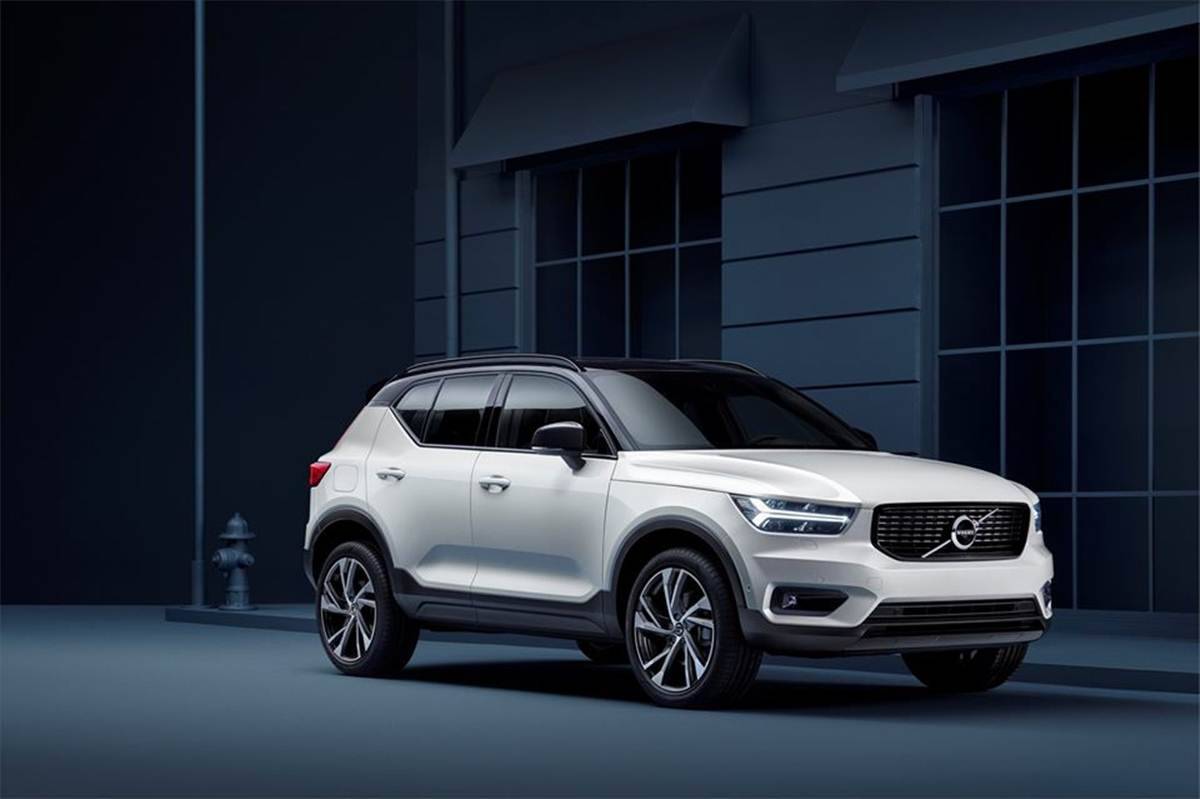
    Volvo drivers could see increased range improvements from smart battery management and regeneration performance and a smarter timer to precondition the EV battery. Currently, the first car to receive the update is the Volvo XC40 Recharge and this update will also come to the C40 Recharge.

    The update will also come to the Polestar branded cars which will also get the Range Assistant app which includes a new eco climate mode that enhances efficiency and reduces demand on the battery from the climate system.

    The battery preconditioning system is also now linked to the Google Maps app which is embedded in the car as it is based on Android Automotive enabling the driver to know where public charging stations are, destinations, or waypoints – allowing them to optimize for the fastest possible charge times on the road.

  • Volvo Car India Announces Lifetime Parts Warranty Scheme

    Volvo Car India Announces Lifetime Parts Warranty Scheme

    Volvo Car India announced a new “customer lifetime parts warranty” scheme across its model range. Under the new scheme, parts bought after the standard period of warranty and installed at an authorized workshop will carry a lifetime warranty and will be applicable on genuine parts bought from October 1, 2021. The coverage period begins on the date of purchase of the part and remains till the time the ownership of the car does not change. However, the scheme will lapse when the ownership changes. Under this scheme, both parts and the labor costs are covered. The initiative has been taken to provide customers reassurance on aftersales services given the high spare parts and replacement cost in luxury cars.

    Jyoti Malhotra, Managing Director, Volvo Car India said, “It is for the first time in India that such an initiative has been offered to the luxury customers. This is a unique offer in the automotive industry that gives the customer carefree and secure car ownership. In the unlikely event of customers requiring a part changed for their car, the company will give a lifetime warranty on the part. The warranty commences on the date of purchase of the part and will follow the combination of car and car owner. If the car has a new registered owner, the warranty will end.”

    Moreover, the company also reaffirmed that any genuine Volvo part which will require repair or replacement because of material or manufacturing defect will be repaired or replaced free of charge by an authorized dealer. However, the scheme is not applicable of normal wear and tear of parts, consumables, batteries, accessories, and Software which is not associated with a hardware replacement. Also, parts replaced under new car warranty or extended warranty or goodwill warranty would not be covered under this scheme.

  • Volvo Cars To Go Leather-Free In All Pure Electric

    Volvo Cars To Go Leather-Free In All Pure Electric

    Volvo Cars is taking an ethical stand for animal welfare in its fully electric cars. Starting with the new C40 Recharge, all-new fully electric Volvo models will be completely leather-free. In the coming years, Volvo Cars will launch a completely new family of pure electric cars. By 2030 it aims to offer only fully electric cars – all of them leather-free.

    As part of its ambitions to go completely leather-free, Volvo Cars is working actively to find high-quality and sustainable sources for many materials currently used in the wider car industry. By 2025, the company is aiming for 25 percent of the material in new Volvo cars to consist of recycled and bio-based content, as it looks to become a fully circular business by 2040. As part of its climate action plans, it also aims for all its immediate suppliers, including material suppliers, to use 100 percent renewable energy by 2025.

    Volvo Cars has created a new interior material – Nordico. It will consist of textiles made from recycled material such as PET bottles, bio-attributed material from sustainable forests in Sweden and Finland, and corks recycled from the wine industry.

    The company’s move towards leather-free interiors is also driven by a concern about the negative environmental impacts of cattle farming, including deforestation. Livestock is estimated to be responsible for around 14% of global greenhouse gas emissions from human activity, with the majority coming from cattle farming.

    Instead of leather interior options, Volvo Cars will offer its customers alternatives such as high-quality sustainable materials made from bio-based and recycled sources.

    For example, Nordico, a new interior material created by Volvo Cars, will consist of textiles made from recycled material such as PET bottles, bio-attributed material from sustainable forests in Sweden and Finland, and corks recycled from the wine industry – setting a new standard for premium interior design. This material will make its debut in the next generation of Volvo models.

    Instead of leather interior options, Volvo Cars will offer its customers alternatives such as high-quality sustainable materials made from bio-based and recycled sources.

    Volvo Cars will also continue to offer wool blend options from suppliers that are certified to source responsibly, as the company looks to ensure full traceability and animal welfare in its wool supply chain. Volvo Cars is also looking to reduce the use of residual products from livestock production commonly used within or in the production of plastics, rubber, lubricants and adhesives, either as part of the material or as a process chemical in the material’s production or treatment.

    The company takes this step because it believes that while going leather-free is a step in the right direction, doing so alone does not make a car interior vegan.

    By aiming to actively replace these materials as much as possible, Volvo Cars takes a strong and ethical position to do what it can to help stop animal harm, by contributing to a reduced demand for these materials containing animal products.

  • Volvo’s Global Sales Down By 10% In August

    Volvo’s Global Sales Down By 10% In August

    Volvo Cars reported global sales of 45,786 cars in August, down 10.6 percent compared with the same period last year. Overall underlying demand in the car industry and for Volvo Cars’ products remained very robust. Since mid-July, supplier shut-downs due to Covid-19 in South East Asia, especially in Malaysia, has worsened an already strained supply situation. These material shortages have led to temporary production halts at Volvo Cars’ facilities in Sweden, Belgium, China and the US, with reduced production volumes as a result.

    Volvo Cars continue to monitor the situation and currently expects that, for the second half of 2021, it will be challenging to achieve the volume levels achieved during the same period in 2020. This will have an impact on revenue and profit. In the first eight months of the year, the company sold 483,426 cars globally, up 26.1 percent compared with the same period last year.

    The sales of Volvo Cars’ Recharge line-up of chargeable models remained strong and accounted for 24.2 percent of all cars sold in the month. In Europe, Volvo Cars reached an all-time high as 47.0 percent of all cars sold in August were from the Recharge line-up.

    The US reported a solid sales performance in August with 10,686 cars sold, a 3.0 percent increase compared with the same period last year. The increase was led by strong customer demand, mainly for the XC90 – which was the best-selling model – followed by the XC60.

    In Europe, Volvo Cars reached an all-time high as 47.0 percent of all cars sold in August were from the Recharge line-up.

    For the month of August, sales in China were impacted by the Covid-19 outbreaks in South East Asia. This led to lowered retail deliveries despite strong underlying demand and order intake. Total volumes for the month reached 13,112 cars, down 17.2 percent compared with August last year.

    European sales for the month were 13,052 cars, a 25.4 percent decline compared with the same period last year. The decline in sales was related to the material shortage, which affected the production volumes and, consequently, the sales performance in the region.

  • Chip Shortage Prompts Production Halt At Volvo Cars In Gothenburg

    Chip Shortage Prompts Production Halt At Volvo Cars In Gothenburg

    Volvo Cars, owned by China’s Geely Holding, will temporarily stop production at its Swedish plant in Gothenburg due to the shortage of semiconductor chips, it said on Wednesday. A global chip shortage has hit manufacturing, with automakers cutting down on production and electronic device makers struggling to keep up with a pandemic-led surge in demand for phones, TVs and gaming consoles.

    “Production at Torslanda will be paused temporarily from this evening due to a material shortage linked with the semiconductor issue,” Volvo Cars said in an emailed statement.

    “Production will restart as soon as possible, at the latest before next week,” the Swedish carmaker, which in June halted production at its Belgian plant in Ghent for a week, said.

    Volvo Cars, which last month reported a return to profit in the first half as demand for electric cars grows, is considering listing on the Nasdaq Stockholm stock exchange this year.

  • Volvo Cars To Harness Real-Time Data From Customer Cars To Set New Safety Standards

    Volvo Cars To Harness Real-Time Data From Customer Cars To Set New Safety Standards

    The next generation of Volvo cars are set to be the company’s safest ever, thanks to cutting-edge software and hardware levels, coupled with continuous and more rapid improvements to safety features with the help of real-time data. Volvo Cars has always taken a data-driven approach to safety, using traffic data from real-life situations to develop new safety technologies and make its cars even safer. For its next generation of cars, Volvo Cars is now looking towards processing data from customer cars in real-time, if customers choose to share data and help Volvo Cars make its cars safer.

    Volvo Cars and Zenseact are investing in a data factory that will contain over 200 PebiBytes (225 million gigabytes) of data within the next few years.

    By allowing customers to choose and be a part of improving safety levels and traffic safety in this way, Volvo Cars can make continuous and much faster improvements to its cars, constantly improving safety levels. This data would include continuous inputs on the car’s environment from sensors like the high-resolution LiDAR delivered by technology company Luminar.

    Volvo Cars engineers would be able to validate and verify autonomous drive (AD) features quicker, to promote a safe roll-out of AD technology. Thanks to the data generated from millions of kilometers driven by tens of thousands of Volvo drivers around the globe, engineers would be able to validate AD features for specific geographic locations much quicker than with a limited number of cars on a test track.

    Verified updates to existing systems and new features can be rolled out rapidly through over-the-air updates, increasing the safety of Volvo cars step by step. The first car to benefit from this new approach to safety development is the company’s first SUV on a completely new electric-only technology base.

    To process the real-time traffic data they will collect, Volvo Cars and Zenseact are investing in a data factory that will contain over 200 PebiBytes (225 million gigabytes) of data within the next few years. By using artificial intelligence (AI) capabilities, data can be crunched at record times. Customers will be able to choose whether this data is collected about them, and all collected data will be aggregated with adequate safeguards for customer privacy.

    Volvo Cars engineers would be able to validate and verify autonomous drive (AD) features quicker, to promote a safe roll-out of AD technology.

    The use of real-time data is part of Volvo Cars’ longer-term vision for a future where collisions simply no longer happen, by equipping its cars with some of the best sensors available and advanced, continuously improving safety and autonomous drive systems.

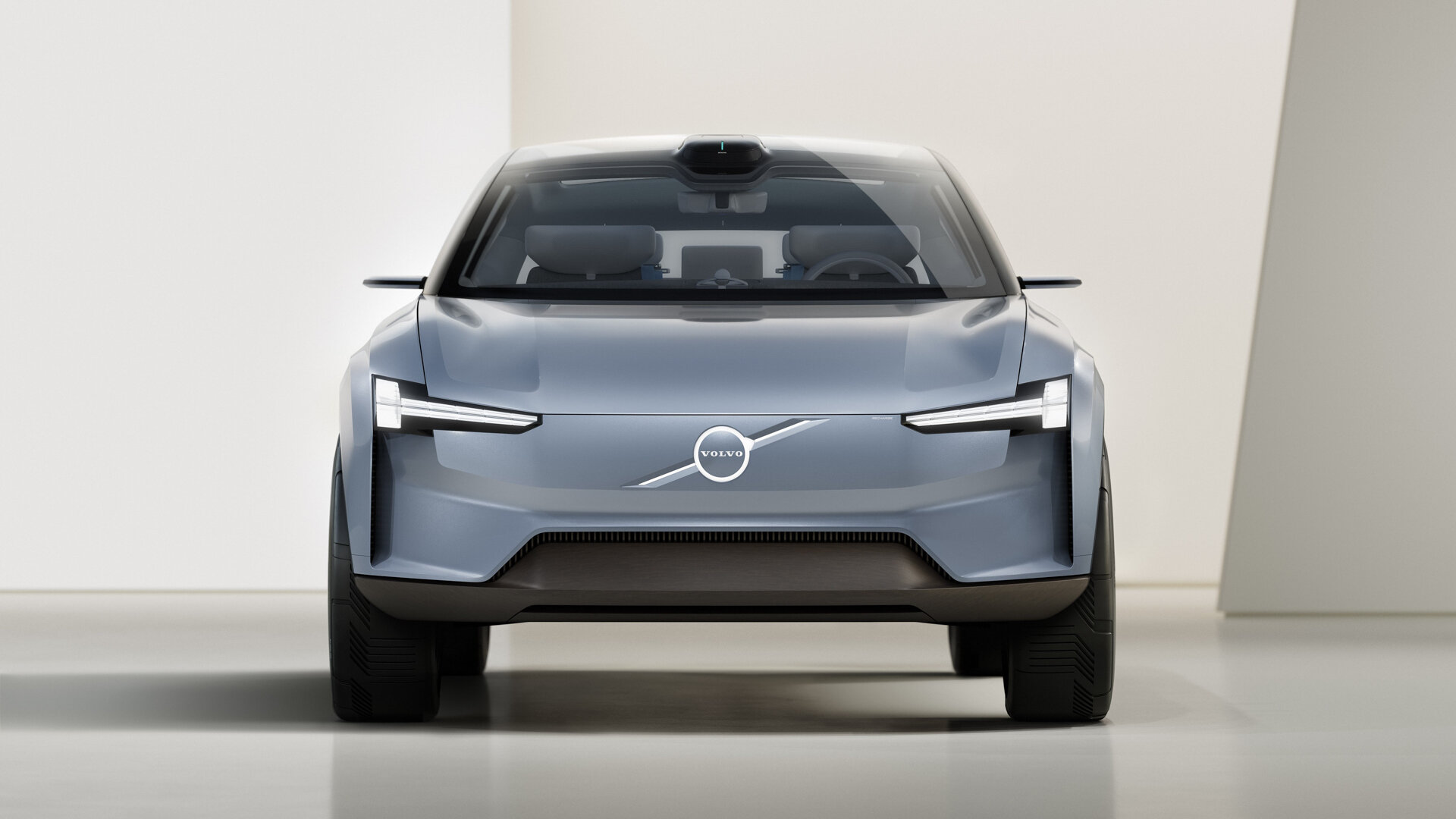
    Volvo Cars’ forthcoming fully electric flagship SUV will have industry-leading safety technology as standard, helping the company to save even more lives as it sets a new standard for automotive safety. It will come with state-of-the-art sensors, including a LiDAR developed by Luminar and an autonomous driving computer powered by the NVIDIA DRIVE Orin system-on-a-chip, as standard.

    By combining this state-of-the-art hardware with software by Volvo Cars, Zenseact and Luminar for the next generation of its well-established collision avoidance technology, Volvo Cars expect its new safety package to reduce fatalities and accidents as a whole.

    Over time the car will improve and have the hardware and software capabilities to allow the car to take over on its own, in case the driver does not respond in life-threatening situations after repeated warnings. So while the driver always remains in ultimate control, the car and its safety technology can both support and watch over the driver like an extra pair of eyes and brains.

  • Volvo And Google Extend Partnership For VolvoCars.OS

    Volvo And Google Extend Partnership For VolvoCars.OS

    Volvo and Google have announced that they are extending their partnership for Android Automotive which will not hook into a new user experience that the Swedish brand is developing called VolvoCars.OS. VolvoCars.OS uses an assortment of operating systems be it Android Automotive, QNX, and Linux. But the big deal is that it will hook into the cloud, or Android Automotive in its electric cars, and will also have a new front end for in-car displays.

    This is a more integrated approach mirroring what Google is doing with its other platform – wearOS on the smartwatch platform which is now merging with Samsung’s Tizen OS or even on the phone with its partnership with Reliance Jio in India for the Jio Phone Next. It is integrating more closely with OEMs and creating a more unique and customized experience.

    Of course, on the car, especially on Volvo’s cars, which are known the world over for their safety. This new UI is going to optimize safety. As always, this starts with a high-resolution infotainment screen and even a heads-up display, and everything will be available through voice, embedding the Google Assistant at the heart of the experience. Volvo and Google are already doing this, but what they will probably end up making is something more unique for Volvo than something stock that makes every Android Automotive car feel the same.

    “Our teams have spent a lot of time with Google to further develop and improve our user experience for the next generation of Volvo Cars,” said Henrik Green, chief technology officer, Volvo.

    “Especially in terms of safety, serenity, and simplicity, we have made great strides thanks to a deeper integration of design and technological development. We are convinced that it will allow us to create even better Volvo cars and set a new industry standard,” he added.

    Of course, these cars will also integrate better with mobile phones and the phone will act like a key leveraging a car key feature that Google unveiled at Google IO earlier this year. Volvo will also have an app that will connect you to everything else that comes with owning a modern electric car, the company claims in an official release.

    It is building features for paying for charging and connecting the with home devices and also pre-cooling and preheating the vehicle remotely. All these cars will also support OTA updates, but that’s something that has become a standard-issue these days with connected cars.

  • Volvo Cars India To Set Up Digital Technology Hub In Bengaluru

    Volvo Cars India To Set Up Digital Technology Hub In Bengaluru

    Volvo Car India announced that it is expanding its Digital Technology Hub at Bangalore which will help strengthen its digital presence in India. The company has appointed Jonas Olsson as the Head of Digital Technology Hub with effect from June, 1 2021. Olsson comes from Volvo Group India, where he was HR Director Region APAC, and was part of the Group IT Leadership Team. His experience with Volvo Group IT spans over 20 years, with the past 15 years in India, and he has played an instrumental role in leading the set-up of Volvo Group’s IT-delivery center in Bengaluru.

    Volvo Cars India seeks to leverage on the talent available in the country, by being an attractive and inclusive employer and offering the value proposition to contribute to the organization’s journey of creating the cars of tomorrow.

    Jyoti Malhotra, Managing Director, Volvo Car India said, “Olsson’s rich experience will value add and strengthen Volvo Car India’s core strategy of going digital in all its customer offerings in the future. We welcome him in his new assignment and are confident that he will play a key role in strengthening our digital footprint in India”

  • Volvo’s Global Sales Increase By 97.3% In April

    Volvo’s Global Sales Increase By 97.3% In April

    Volvo Cars achieved its 10th consecutive month of sales growth, as the company’s global sales increased by 97.5 percent in April compared with the same month last year. In April, Volvo Cars sold a total of 62,724 cars, up from 31,760 cars in the same period last year. The growth was mainly driven by strong demand in the US and Europe, in combination with a recovery from a sales drop in April last year related to the Covid-19 pandemic. In China, where sales returned to growth around this time last year, the company reported a steady increase of 11.6 percent.

    Sales in the January-April period landed at 248,422 cars, up 51.8 percent compared with the same period last year. Sales of Volvo Cars’ Recharge line-up of chargeable models, with a fully electric or plug-in hybrid powertrain, remained strong in Europe during the month of April, representing 42.0 percent of the company’s overall sales in Europe. Globally, Recharge cars accounted for 24.3 percent of the total sales volume.

    In the US, sales increased by 185.5 percent in April compared with the same month last year, mainly driven by strong demand for the XC90 and XC60. Total sales reached 11,036 cars, an increase from 3,866 in the same period in 2020, when many states implemented stay-at-home orders due to the pandemic.

    European sales grew to 25,816 cars for the month of April, up 178.0 percent compared with the same period last year. The increase was mainly driven by markets that have started to recover after last year’s pandemic-related shutdowns, as well as strong sales increases in the UK, Sweden and Germany.

    China, Volvo Cars’ biggest market, reported solid sales growth in April, with total sales reaching 16,435 cars. The increase was led by high demand for the locally assembled XC60 and S90 models.

    In April, the XC40 was the top-selling model, with sales of 19,833 cars (2020: 5,708), followed by the XC60 with total sales of 17,925 cars (10,908 units) and the XC90 with 9,371 cars (4,425 units).

  • Volvo Cars Reports 29.1% Sales Growth In The First Two Months Of 2021

    Volvo Cars Reports 29.1% Sales Growth In The First Two Months Of 2021

    Volvo Cars’ global sales performance remained strong in February after the company posted a 29.1 percent growth for the first two months of the year, compared with the same period last year. Total sales during the period amounted to 110,383 cars as US, Europe and China reported a growth in volumes. The sales increase was driven by an ongoing recovery from the Covid-19 pandemic in China compared to last year, a solid performance on the US market, and increased sales in Sweden.

    For the month of February, Volvo Cars sold a total of 50,795 cars, up 27.8 percent compared to the same month last year and the company’s best February sales performance ever.

    For the month of February, Volvo Cars sold a total of 50,795 cars, up 27.8 percent compared to the same month last year

    Its Recharge line-up of chargeable models, with a fully electric or plug-in hybrid powertrain, continued to grow in popularity among customers and accounted for 26.6 percent of all Volvo cars sold globally in February. In Europe, Recharge cars represented 44 percent of the overall sales volume.

    In China, Volvo Cars sold 29,243 cars in the first two months, up 160.6 percent year-on-year, as the company managed to more than recover lost sales due to Covid-19 shutdowns last year.

    US sales continued to grow year-on-year and reached 17,315 cars in January and February, up 23.7 percent compared with the same period last year. The strong increase was led by the brand’s premium SUVs which accounted for 80 percent of total sales. The company’s European sales grew 5.5 percent in the first two months of 2021 to 48,784 cars, compared to the same period last year, driven mainly by increased sales in Sweden.

  • Volvo To Produce Only Electric Vehicles By 2030

    Volvo To Produce Only Electric Vehicles By 2030

    Chinese-owned Swedish automaker Volvo said Tuesday it will produce only electric vehicles by 2030 and sell them all exclusively online. Volvo is among a growing crop of companies planning to ditch fossil fuel vehicles in the next few years, as demand for zero-emission cars rises and governments put pressure on firms to cut pollution. Indian-owned Jaguar said last month it would produce only electric vehicles from 2025, while US auto giant Ford said it would aim to have an all-electric fleet in Europe by 2030.

    “The company intends to only sell fully electric cars and phase out any car in its global portfolio with an internal combustion engine, including hybrids,” Volvo said in a statement. The company said half of its cars should be electric in 2025, with online sales accounting for half of its volume.

    China’s Geely Holding bought a struggling Volvo Cars in 2010 from Ford and has since helped it enjoy a renaissance as a maker of high-quality vehicles. However, last month Geely Auto said it would not go ahead with a planned merger with Volvo but the two companies would instead reinforce their collaboration on electric vehicles. Volvo is due later Tuesday to unveil its second all-electric vehicle, a C40 SUV, and is readying a smaller model especially suited for European road conditions.

    The company says its move to online sales will provide more transparency on pricing and options for its customers. “If you ask people it is quite a big irritation that you don’t have a clear picture of the price,” company boss Hakan Samuelsson said.

  • Volvo Cars Initiates First Ever Over-The-Air Software Update On XC40 Recharge

    Volvo Cars Initiates First Ever Over-The-Air Software Update On XC40 Recharge

    Volvo Cars is rolling out its first ever over-the-air (OTA) software update on the XC40 Recharge, the company’s first fully electric car. Starting soon, XC40 Recharge drivers in Europe will receive a range of updates, including new features, bug fixes and stability improvements to the car’s infotainment and propulsion systems. The introduction of OTA updates means that customers no longer have to visit a workshop in order to enjoy the latest software and new, updated features on their electric Volvo.

    It also means that a new Volvo is no longer at its finest when it leaves the factory, but keeps improving over time as additional OTA updates are launched.

    The update is available automatically and XC40 Recharge drivers only have to accept the download and installation.

    “The benefits of over-the-air updates are obvious,” said Henrik Green, chief technology officer. “Yesterday you still had to drive to the workshop in order to get the latest updates to your car. Today you simply click OK and your electric Volvo takes care of the rest. It couldn’t be easier.”

    Features included in this latest software update are a new base software for the car’s main electronic systems, an increase in charging speed and an improved driving range.

    There are also updates to the Android Automotive operating system that powers the car’s infotainment system, as well as an important safety-related propulsion bug fix.

    Finally, the software package also includes updates to a variety of items such as Bluetooth connectivity, climate timers, the car’s digital owner’s manual and the 360-degree camera. The update is available automatically and XC40 Recharge drivers only have to accept the download and installation.

  • China’s Geely Sets Out To Become A Force In Electric Cars

    China’s Geely Sets Out To Become A Force In Electric Cars

    Like many others in his industry, Geely Chairman Li Shufu has been irked by skyrocketing valuations for electric car manufacturers such as Tesla Inc and Nio Inc, sources at the Chinese automaker say.

    Getting Geely, which owns Volvo Cars and 9.7% of Daimler AG, to a place where it too may claim a sizeable chunk of China’s burgeoning electric car market and burnish its share price at the same time, has preoccupied Li for much of the past year, they added.

    The result: a flurry of tie-ups unveiled last month that lay bare Geely’s intention to position itself as the go-to contract manufacturer for electric vehicles in China and beyond – assembly services that will also offer up its engineering and development expertise.

    “The chairman’s attitude towards contract manufacturing is clear: he is embracing it and actively pursuing it,” a Geely executive told Reuters.

    Outsourcing production of some models through original equipment manufacturing (OEM) deals is common in the auto industry, but Geely’s plans represent the most aggressive attempt yet by an automaker to build up a contract manufacturing business.

    Of the four deals announced, a venture with Taiwan’s Foxconn to provide electric vehicle (EV) contract manufacturing, is the most important, said the sources, who were not authorized to speak to media and declined to be identified.

    A subsequent agreement to build mass-market electric vehicles for embattled Los Angeles-based startup Faraday Future would be handled by the venture with Foxconn.

    Geely, which is China’s largest privately-owned automaker, has also made a separate pact to make smart electric cars for internet giant Baidu Inc, with the first model due to be launched next year. In addition, it is joining hands with Tencent Holdings Ltd on smart car control and autonomous driving technology.

    Geely declined to comment for this article or make Li available for comment.

    Geely has several electric car models on the market and in September launched a brand new EV-focused platform, developed at a cost of 18 billion yuan ($2.8 billion).

    But amid a two-year slump in sales, Li became convinced Geely was being too conventional in its approach and began pushing for an aggressive adoption of “Big Tech” partnerships, sources said. In doing so, Li returned to a more active running of the group after stepping back somewhat in 2017 and 2018.

    The shift did not come without some opposition. At management meetings, some people raised concerns that any big shift to contract manufacturing could make Geely a lesser partner in its relationships with tech firms and cause it to lose its edge as an independent automaker, senior sources said.

    Caution was also expressed about picking Faraday Future as the first client for the venture with Foxconn, as the startup has a track record of over-promising and slow progress in development.

    Li dismissed those concerns, they added.

    The deal with Faraday was not well received by the market with shares in its main unit, Geely Automobile, sliding some 16% over four days in the wake of the news.

    On the plus side, however, the deals could address chronic under-utilisation at Geely plants. For example, Geely Automobile, which houses its Geely brand cars, is capable of building more than 2 million vehicles a year but sold only some 1.3 million in 2020.

    The deals could also help Geely get the most out of the EV-focused platform, which is now open-sourced and can be used for small to large cars and even light commercial vehicles.

    That said, just how big contract manufacturing will become for Geely is uncertain and the company has no internal numerical targets to meet at the moment, the sources said.

    “Basically, it’s unclear now how many clients we will have in the coming years,” said one source.

    Li is also planning to shore up Geely’s financial base with a secondary listing for Geely Automobile on the mainland’s STAR board this year. Its Hong Kong listing values the unit at $37 billion, with shares having risen over 12% so far this year.

    That, sources say, has been a deeply unsatisfactory state of affairs for Li who compares it to the $800 billion-plus valuation for Tesla and the $98 billion valuation for Nio, which sold less than 44,000 cars last year.

    Geely had looked at investing in Nio previously, sources have said.

    Analysts describe the rush of new deals as bold, potentially allowing Geely to save much time and money in developing and launching electric cars. At the same time, there are risks.

    “Integrating one major partner is challenging enough for any company’s management regardless of the sector, so asking the management team to successfully launch all of them seemingly all at once is a pretty big ask,” said Tu Le, analyst at Sino Auto Insights.
  • Volvo Cars To Produce Electric Motors In Skovde, Sweden

    Volvo Cars To Produce Electric Motors In Skovde, Sweden

    Volvo Cars will assemble electric motors at its powertrain plant in Skovde, Sweden, and plans to establish complete in-house e-motor production by 2025. It will invest 700 million SEK to this end in the coming years. The company is committed to becoming a premium electric car company and aims for its global sales to consist of 50 percent fully electric cars by 2025, with the rest being hybrids.

    Volvo Cars announced earlier this year that it is investing significantly in the in-house design and development of e-motors for the next generation of Volvo cars. With the planned investments in Skovde, it now takes the first steps towards in-house e-motor assembly and manufacturing. In the first stage, the Skovdefacility will assemble e-motors. At a later stage, the company intends to bring the full manufacturing process for e-motors in-house into a facility in Skovde.

    Bringing the development and production of e-motors in-house will allow Volvo Cars engineers to further optimize electric motors and the entire electric driveline in new Volvos. This approach will allow engineers to make further gains in terms of energy efficiency and overall performance.

    Design and development of the company’s electric motors take place in Gothenburg, Sweden, and Shanghai, China. Earlier this year Volvo Cars opened a new electric motor lab in Shanghai, in addition to ongoing e-motor development in Gothenburg, Sweden, and state-of-the-art battery labs in China and Sweden.

  • New-Gen Volvo S60 Sedan To Be Unveiled This Month

    New-Gen Volvo S60 Sedan To Be Unveiled This Month

    The new-generation Volvo S60 sedan will be unveiled in India on November 27, 2020. Of course, given the current situation with the pandemic, the car will be revealed via a digital event, while the official launch will take place in the first quarter (Q1) of 2021. While the car was supposed to be launched this year itself, the COVID-19 and the resultant lockdown has forced the company to push the launch to next year. Last year, Volvo India had announced that it will be introducing 4 new electrified cars in the country in the next 3 years, so the S60 coming to India could be the plug-in hybrid version.

    Volvo Cars plans to slowly phase out conventional powertrains and focus only on electrified vehicles like PHEVs and fully electric vehicles (EVs). The company has already committed to a goal of featuring some form of electric propulsion in its models from 2019 onwards and now India too is part of this plan. Every new Volvo from 2019 onwards will be electrified.

    Volvo India had announced that it will be introducing 4 new electrified cars in the country, so the S60 could get a plugin hybrid version.

    The Volvo S60 coming to India has been in the global market for a couple of years now, and we have already driven the global-spec model. Overall, the car has become much sleeker now and flaunts some bold character lines that give it a sculpted look. Upfront the car comes with a wide grille with a chequered grille and the Volvo badge at the centre. It’s flanked by a set of sharper-looking headlights with the signature Thor Hammer LED daytime running lamps, and a sporty bumper. The car also comes with a set of 19-inch alloy wheels, along with a new rear design featuring S90 style C-shaped LED taillights, centrally positioned Volvo lettering, and the muscular rear bumper.

    The Volvo S60 is a petrol-only model and it comes with a 2.0-litre in-line 4-cylinder engine, mated to an 8-speed automatic transmission.

    The regular petrol model gets a 2.0-litre in-line 4-cylinder engine which is turbo-charged and pumps out 310 bhp and 400 Nm of peak torque, while mated to an 8-speed automatic. The plug-in hybrid version though gets the same 2.0-litre motor, but, with an electric motor at the rear. The combined power output is about 413 bhp and the total torque output stands at 670 Nm. In pure electric mode, the car can cover a range of up to 45 kilometres.