Tag: vw

  • VW investors demand faster progress in dieselgate reforms

    VW investors demand faster progress in dieselgate reforms

    Volkswagen needs to do more to regain the confidence of investors in the wake of its emissions scandal, despite a swift recovery in earnings, several shareholders told the German carmaker at its annual meeting on Wednesday.

    The world’s largest automaker reported better-than-expected first-quarter profits and has announced a raft of plans to recover from the biggest business crisis in its history, including cost cuts and investment in cleaner cars.

    But some shareholders said its emissions test cheating on diesel engines would continue to haunt it for years if it did not publish the results of an investigation into the scandal, address outstanding claims and improve corporate governance.

    “I am shocked and speechless, that was the case at the time and it still is today,” said Gerd Kuhlmeyer, head of staff shareholders group Community of VW, referring to a scandal that broke 20 months ago. “An end of ongoing investigation proceedings and possible further effects is not in sight.”

    Volkswagen (VW) has agreed to spend up to $25 billion in the United States to address claims from owners, environmental regulators, states and dealers and offered to buy back about 500,000 polluting U.S. vehicles.

    But it still faces billions of euros in claims from about 3,500 customer lawsuits and about 2,000 investor suits globally.

    The German group, which is tightly controlled by its founding families and home state of Lower Saxony, rejected calls by Kuhlmeyer and other investors for it to publish the results of a company-commissioned investigation by U.S. law firm Jones Day into the scandal, saying it couldn’t for legal reasons.

    “There is no written concluding report by Jones Day and there will not be one,” VW Chairman Hans Dieter Poetsch said.

    “I ask for your understanding that VW for legal reasons is prevented from publishing such a final report,” he told the gathering of about 3,000 shareholders.

    TRUST

    The carmaker initially pledged to inform shareholders about the findings of the Jones Day report which was used as the basis for a $4.3 billion settlement with the U.S. Justice Department, but has since abandoned this plan.

    It says the report was incorporated in the “statement of facts” published by the Justice Department, and that as part of the settlement deal it cannot publish separate findings.

    But some shareholders criticized this explanation.

    “Your reference to the statement of facts agreed in the U.S. is completely insufficient and almost insulting to all those who are interested in complete clarification of responsibilities,” said Christian Strenger, supervisory board member at DWS Deutsche Asset Management GmbH.

    Hermes EOS, representing large institutional investors, called on VW to seek agreement with U.S. authorities to be allowed to publish at least a summary of Jones Day’s findings.

    “That’s the only way to regain lost trust with investors and to win back customers,” Hans-Christoph Hirt, head of Hermes EOS said. “Only then, it can be found out whether the company is drawing the right conclusions.”

    VW shares have bounced back from their post-scandal lows, but are still trading below the level when it broke in September 2015. At 1500 GMT, the stock was up 0.2 percent at 144.6 euros.

    Separately, Chief Executive Matthias Mueller said VW would support without reservation Larry Thompson, a former U.S. deputy attorney general, who has been picked by the Justice Department to oversee the company for three years.

    Thompson and his team will have access to VW documents and assess the efforts of its board of management and senior management to comply with environmental laws.

    “I see this as an opportunity,” Mueller said. “The work of the monitor can and will contribute to bringing risk management, compliance and integrity within the group to new levels.”
  • Volkswagen Jetta gets a facelift

    Volkswagen Jetta gets a facelift

    Volkswagen’s D-segment fighter has just been given a facelift. The Jetta has features like Xenon headlamps with integrated washers, LED daytime-running lamps, dual-zone Climatronic air-con and 16-inch alloy wheels. It also gets a 12-way electrically adjustable driver’s seat, front and rear parking sensors, and cruise control.

    Volkswagen’s D-segment fighter has just been given a facelift. The Jetta gets some additional features to make it more competitive and desirable.

    The Jetta now comes with additional features like Xenon headlamps with integrated washers, LED daytime running lamps, dual-zone Climatronic air-con and 16-inch alloy wheels. It also gets a 12-way electrically adjustable driver’s seat, front and rear parking sensors, and cruise control.

    There are no changes regarding the engine and the car is available in a 2.0-litre TDI and 1.4-litre TSI avatar. The new Jetta will be made available in 3 trims. Both engines come with a six-speed manual transmission, and the 2.0-litre TDI also gives you an option of a six-speed DSG automatic gearbox with paddle shifters.

    Commenting on the launch of the new Volkswagen Jetta, Arvind Saxena, managing director, Volkswagen Group Sales India, said, “With Volkswagen’s acclaimed engineering expertise, we are able to build some of the most comfortable, safe, fuel-efficient and performance-oriented luxury sedans, which offer outstanding power delivery and driving dynamics. We are sure that the new Jetta, with its range of petrol and diesel engine options and optional 6-speed DSG automatic transmission, will offer a delightful driving experience for premium-segment car buyers in the Indian market.”

  • Volkswagen Converts Its Aurangabad Facility To Run On 100% Green Energy

    Volkswagen Converts Its Aurangabad Facility To Run On 100% Green Energy

    Volkswagen Group has announced that its Aurangabad facility has transitioned to 100 percent green energy. The group had initially targeted reaching the goal by 2025, but it has done so ahead of its target. The facility received its Green Energy Certificate from Maharashtra State Electricity Distribution Company Limited (MSEDCL).

    Piyush Arora, Managing Director and CEO, Skoda Auto Volkswagen India Private Limited, said, “In the Volkswagen Group, ‘goTOzero’ is not only a roadmap for effective climate protection, it is also an integral strategic initiative towards sustainable mobility. We take a holistic approach to decarbonization – from production through service life to recycling.”

    “By replacing the external energy supply with renewable energy from MSEDCL,  SAVWIPL’s Aurangabad Plant has become the first automotive facility in Aurangabad Plant has become the first automotive facility in Aurangabad to be certified as a Green Energy Plant by MSEDCL,” the company said in a statement.

    With the move to green energy, VW’s Aurangabad plant will now achieve a 48 percent reduction in CO2 emissions per year. The VW group targets to become a carbon-neutral company by 2050.

  • Tesla, VW, SAIC Look To Recommence Shanghai Operations

    Tesla, VW, SAIC Look To Recommence Shanghai Operations

    Tesla VW and SAIC are among several companies that are looking to get production back up and running at their Shanghai facilities after almost three weeks of COVID-19 related shutdowns. The news comes following Beijing having drawn up a “whitelist” of companies prioritised to re-open or keep operations going in Shanghai. The list included a number of companies ranging from carmakers to semiconductor manufacturers and medical firms.

    As per Reuters, Tesla had already recalled workers to its Shanghai factory where they would be required to live on-site. The company had planned to commence production today though it has now been deferred to tomorrow citing logistical issues from a supplier. SAIC Motor meanwhile reported that it was commencing stress testing from Monday with an eye on recommencing production while VW said it was evaluating the feasibility of resuming production at its SAIC joint venture.

    However, with COVID-related closures in other cities in the country, it remains to be seen how manufacturers work around supply chain disruptions.

    Shanghai meanwhile aims to stop the spread of COVID-19 outside of quarantined areas by Wednesday with reports saying that the city had stepped up testing measures and transfer positive cases and their close contacts to isolation.

    Companies are being required to ensure ‘closed loops’ for workers being called into work while also maintaining medical supplies. Under ‘closed loops’ employers have been asked to minimise employee exposure to others while transiting to work or arranging for employees to live on their factory premises.

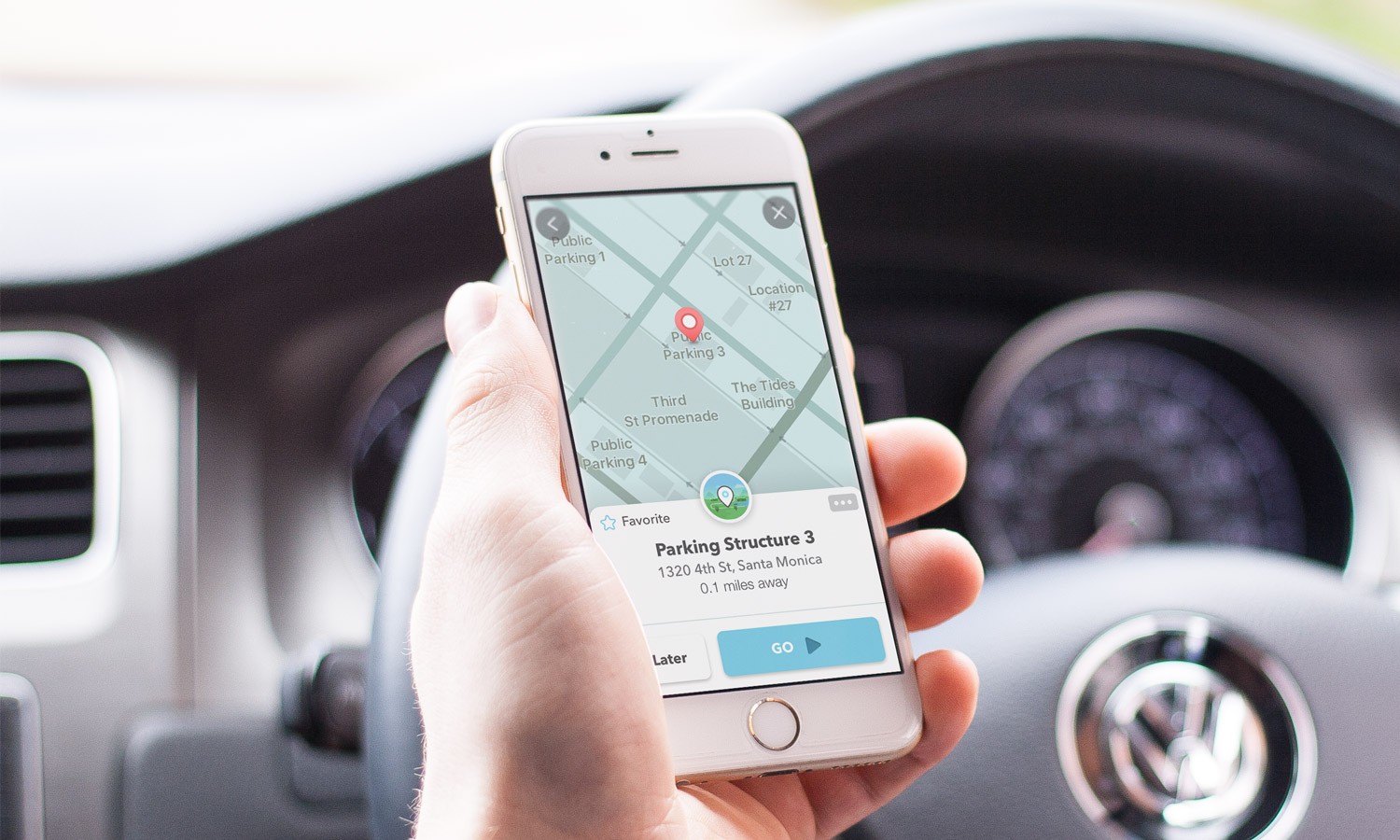
  • With the Waze Retro Mode, go back in time and drive a VW bus as you navigate to your destination

    With the Waze Retro Mode, go back in time and drive a VW bus as you navigate to your destination

    If you’re Google, what do you do with Waze? Google reportedly paid anywhere from $1.1 billion to $1.3 billion for the crowdsourced navigation app and several Waze features ended up on Google Maps including speed limit signs, the speed of your vehicle, the ability to report speed traps and accidents, the cost of the tolls that you will be asked to pay en route to your destination, and more.
    Waze helps Google sell hyper-local ads which sets it apart from Google Maps as a revenue generator from Google’s point of view. Also setting Waze apart from Google is a new feature for Waze called Retro Mode. Sounds groovy, man. With Retro Mode, you can change the app’s appearance and the sound of the turn-by-turn directions to match the 1970s, 1980s or 1990s.
    To activate Retro Mode, open the Waze app. In the bottom left corner tap on My Waze. From the menu that appears, tap on Drive with the 80’s. You will then have options to change how you appear on the app by pressing Moods. You can select a lava lamp (1970s), a boom box (1980s), or a Mac (1990s).
    Tap on Car to choose between an iconic “flower power” VW bus, a race car, or an SUV (representing the 79s, 80s, and 90s respectively). Keep in mind that your car icon is only visible to you. Next, you can choose Voice directions to pick from a 70’s DJ, an 80’s Aerobic Instructor, and a 90’s Pop Star.
    With Retro Mode enabled, you can mix and match elements from each era. For example, you can choose to have the VW bus from the 1970s, the voice of the Aerobic instructor from the 1980s, and the SUV from the 1990s. Cool, huh? You won’t see Retro Mode on Google Maps.
    Once you’ve finished making your selection, tap on the Done button. You’re now ready to drive into another era. Install Waze from the App Store or from the Google Play Store.
  • Chip Undersupply To Last Until 2024, Says Volkswagen CFO Boersen-Zeitung

    Chip Undersupply To Last Until 2024, Says Volkswagen CFO Boersen-Zeitung

    Semiconductor chip supply is unlikely to be enough to completely satisfy demand again until 2024, Volkswagen Chief Financial Officer (CFO) Arno Antlitz said in an interview with German daily Boersen-Zeitung on Saturday.

    He said that although bottlenecks would likely begin to ease towards the end of this year, with production returning to 2019 levels next year, this would not be enough to meet heightened demand for the chips.

    “The structural undersupply will likely only resolve itself in 2024,” Antlitz said.

    A lack of wire harnesses from Ukraine was also still causing some shifts to be canceled, Antlitz said, even as the company was establishing new supplier relationships to source the component from other countries.

    Asked about how funds from a possible IPO of Porsche AG, planned for the end of the year, could be used to bolster Volkswagen’s finances, Antlitz said the money could help fund the carmaker’s software unit and its battery production plans.

    “Only those who can map out their battery supply chain have the advantage at scaling in electromobility. Securing the supply chain comes with that. A Porsche IPO could give us a lot more flexibility in financing this,” Antlitz said.

  • VW To Give Its Green Light For Audi, Porsche To Enter F1

    VW To Give Its Green Light For Audi, Porsche To Enter F1

    Audi and Porsche owner Volkswagen is likely to give the green light for the two brands to make their entry into motor racing’s Formula One at a meeting next week, two sources familiar with the matter said on Thursday.

    “We will hopefully be able to communicate our intention to enter into Formula One then,” one of the sources said, with the second adding there was a “good chance” of a positive decision.

    Volkswagen declined to comment. The news was first reported by Business Insider.

    There has long been a talk of Audi and Porsche forming partnerships with existing Formula One teams, their most likely method of entry into the highest class of international racing.

    Audi and McLaren denied reports last year that a partnership between the two brands had already been formed but said that it was under discussion, with a decision to be expected this year.

    Audi will offer around 500 million euros ($556.30 million) for McLaren, one source said, while Porsche intends to establish a long-term partnership with racing team Red Bull starting in several years’ time.

    Volkswagen has not previously been involved in Formula One but has worked with Red Bull, notably in the world rally championship. McLaren and Red Bull were not immediately available to comment.

    A source told Reuters in November that Volkswagen’s ultimate decision will rest on whether Formula One follows through on its plans to switch to synthetic fuels by 2026, and on McLaren’s progress regarding electrification of its vehicles.

    Volkswagen has invested the most of any global carmaker by far in electric vehicle production and batteries in an attempt to clean up its image from the Dieselgate emissions scandal and remain in line with governmental carbon reduction targets.

    The decision comes as Volkswagen grapples with the uncertainty of the impact of the Ukraine war on its finances, which will also be discussed at next Thursday’s meeting.

  • Swiss Set To Drop Criminal Probe Of VW Emissions Scandal

    Swiss Set To Drop Criminal Probe Of VW Emissions Scandal

    Swiss federal prosecutors are set to drop a nearly five-year criminal investigation into Volkswagen’s diesel emissions scandal after concluding they did not have a strong enough case to file charges, they said on Tuesday.

    The Office of the Attorney General said it had informed the German carmaker and its Swiss dealership arm this month “that it considers the investigation to be complete and intends to drop the case,” it said in a statement, confirming a report by broadcaster SRF.

    The defendants and private plaintiffs can still review the case file and submit more evidence before the case is closed officially, it said.

    VW admitted in September 2015 it had installed secret software in hundreds of thousands of U.S. diesel cars to cheat exhaust emissions tests and make the cars appear cleaner than they were, and that as many as 11 million vehicles could have similar software installed worldwide.

    SRF said Swiss plaintiffs could still claim damages through civil law, noting VW has already paid out billions abroad.

    Swiss prosecutors opened criminal proceedings after a court ruled they must conduct their own investigation into hundreds of complaints lodged in Switzerland.

    The case centred on the potential damage to around 175,000 customers who bought or leased VW group vehicles with diesel motors that at least some VW officials must have known had been manipulated.

    SRF said Swiss plaintiffs could still claim damages through civil law, noting VW has already paid out billions abroad. “But without official culprits, such proceedings in Switzerland are very costly and difficult for individuals,” it added.

    Contacted by Reuters on Tuesday, VW had no immediate comment.

  • Volkswagen Brings Back The Microbus Together With A Battery

    Volkswagen Brings Back The Microbus Together With A Battery

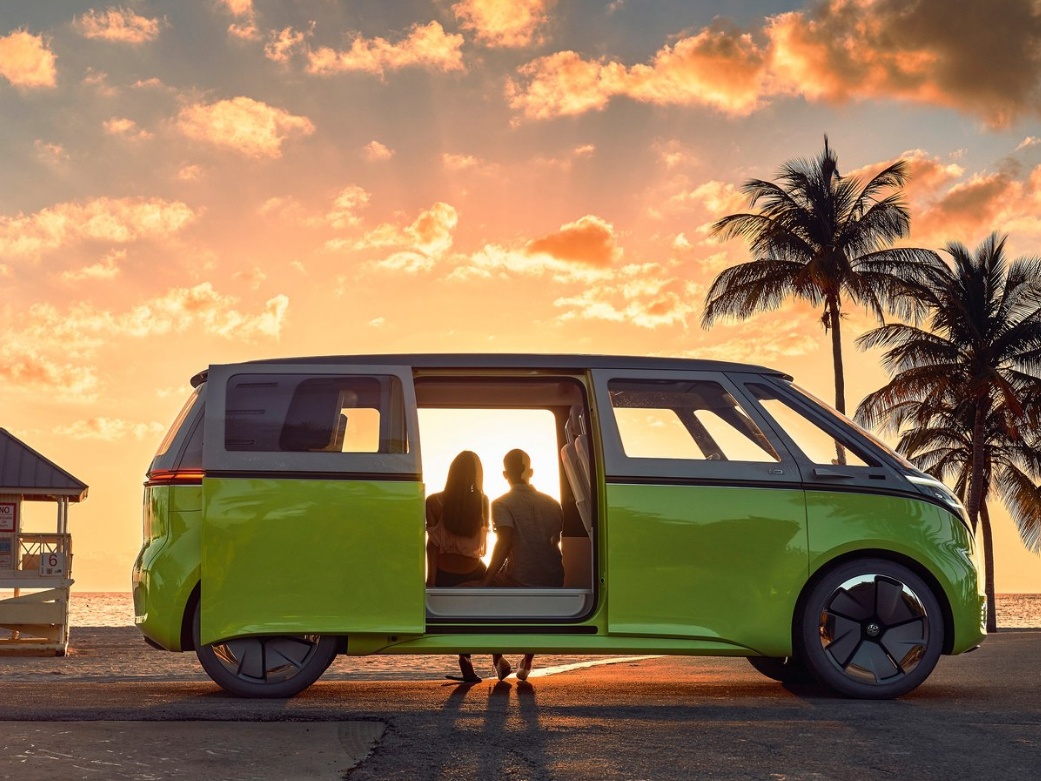
    Volkswagen will show a production version of its long-awaited ID.Buzz, an electric reincarnation of its beloved Microbus or Kombi, on March 9 and plans to launch it in the United States in late 2023, the company said on Friday.

    The ID.Buzz is one of “the most anticipated and most hyped” models anticipated from the Volkswagen brand since the company launched its new Beetle in the late 1990s, Scott Keogh, head of Volkswagen’s North American operations said during a media call.

    Volkswagen Chief Executive Herbert Diess tweeted on Thursday “The legend returns on 03/09/22!” The tweet contained a sketch of the profile of the ID.Buzz van.

    Volkswagen has shown a series of prototypes for a new Microbus over the past decade. But those prior show vans – the Budd.E and the Bulli – never made it to production, to the frustration of fans of the vehicle.

    Keogh said that a three-row version of the ID.Buzz will launch in the United States, where the original microbus became an icon of the counterculture, in late 2023 or early 2024. Volkswagen will launch a two-row version in Europe.

    “You want to get to 100,000 units before you localize,” Keogh said.

    Volkswagen will ramp up production of its ID.4 electric SUV at Chattanooga this year.

    Earlier Friday, Volkswagen said U.S. sales of its VW brand vehicles rose 15% in 2021, driven largely by strong sales of gasoline-fueled SUVs such as the Atlas and Tiguan.

    Shortages of vehicles caused by chip supply chain problems will continue to limit vehicle production and sales in the United States through 2022, Keogh said.

    He said he believes as many as two million potential car buyers did not buy a vehicle in 2021 because of the lack of supply, creating pent up demand for this year and beyond.

  • Volkswagen Powers Up The Grid To Take On Tesla

    Volkswagen Powers Up The Grid To Take On Tesla

    Volkswagen plans to double staff numbers at its charging and energy division, roll out new payment technology next year and strike more alliances to take on Tesla in a key electric vehicle (EV) battleground: power infrastructure. By ensuring there are enough fast-charging plugs – and enough power – for the EVs it wants to sell, Europe’s biggest carmaker hopes to convince drivers worried about battery ranges that they can ditch their fossil fuel cars for good.

    Underlining its electric ambition, Volkswagen has drafted in power industry veteran Elke Temme, who spent nearly two decades at German energy companies RWE and Innogy, to help the carmaker get in better shape to take on Tesla. In the job since January, Temme, 53, has been tasked with bundling the carmaker’s various power activities such as procuring energy, enabling customers to charge their cars at home, and on the road, and selling the electricity required.

    Getting this done will require a bigger workforce and Temme plans to double the staff at Volkswagen’s European charging and energy division, known as Elli, to about 300 in 2022, having already tripled it this year, she told Reuters in an interview. “We’re investing in huge growth areas that don’t always have to be profitable right away. We always see these investments in the overall context of our group strategy,” she said. “That’s why building up a comprehensive infrastructure is key.”

    Temme declined to specify the budget she has been given but said Volkswagen, led by Tesla admirer Herbert Diess, has approved the investment requests for the division, which also sells home battery storage systems similar to Tesla’s Powerwall. Volkswagen leads the pack worldwide by far with its investment plans for EVs and batteries through 2030, according to a Reuters analysis, and it is planning to spend 35 billion euros on battery EVs by 2025.

    But when it comes to the networks of fast-chargers that many analysts believe are crucial for bringing EVs into the mainstream, VW has some catching up to do. Tesla has been rolling out high-performance Superchargers for years and has a global network of about 30,000 fast-chargers that it says can give a 200 km (125 mile) boost in 15 minutes. The company said in October that its own network has doubled in the past 18 months – and will triple over the next two years.

    Volkswagen, meanwhile expects its network of fast-chargers to nearly quadruple to about 45,000 by 2025 – when it aims to overhaul Tesla as the global EV market leader – with 18,000 EV pumps in Europe, 17,000 in China and 10,000 in North America. Volkswagen in March said it plans to spend 400 million euros on expanding its fast-charging network on the continent by then. But that’s a drop in the ocean compared with the 5 billion euros the European Union reckons is needed every year until 2040 to expand charging infrastructure on the continent, and it is raising the pressure on utilities and governments to step up.

  • Volkswagen Mulls Board Change That Could See Labour Chief Move On

    Volkswagen Mulls Board Change That Could See Labour Chief Move On

    Volkswagen is considering a change to its supervisory board that could lead to the replacement of Bernd Osterloh, the head of its powerful works council who clashed with CEO Herbert Diess last year, sources familiar with the matter said on Thursday.

    Osterloh’s departure, if confirmed, could weaken resistance to faster and more drastic restructuring at the German carmaker.

    Last year, the 64-year-old opposed an attempt by Diess to extend his contract as the CEO strives to cut costs and free up resources to invest more in electric vehicles.

    One source said Osterloh had been offered the position of personnel director at Traton, Volkswagen’s truck unit that was spun off and separately listed in 2019.

    Osterloh’s departure could weaken resistance to faster and more drastic restructuring at the German carmaker.

    A second source said the group was considering proposing a new labor representative to its board but did not give a name.

    The company, its main shareholder Porsche SE and the works council declined to comment.

    Five sources in total said Volkswagen would in the near future debate an important change in the composition of its supervisory board, adding no final decisions had been taken.

    The move follows a surge in Volkswagen’s shares, as investors warm to its efforts to overtake Tesla and become a world leader in electric cars.

    The shares have risen by more than half in value so far this year, giving the company a market value of 132 billion euros ($159 billion).

    Osterloh has been a member of Volkswagen’s supervisory board since 2005. Labour representatives make up half the board, under Germany’s system of corporate governance.

    Should Osterloh leave the supervisory board, as would be required should he take up an executive role at Traton, the most likely candidate to replace him would be deputy works council head Daniela Cavallo, the sources said.

    Any nomination would be subject to a confirmatory vote by shareholders at the annual meeting in July.

  • New GTX Brand Joins The Volkswagen ID. Family

    New GTX Brand Joins The Volkswagen ID. Family

    We knew it would happen sooner or later but Volkswagen is all set to bring in a sporty top-of-the-range model to its electric vehicle range – the new ID.4 GTX. The car will be unveiled on April 28 and the company has already teased the logo. Similar to GTI and GTE, it stands for its own product brand.

    We’ll know more about the car itself, but we know a few details for now. Volkswagen says that the GTX models will impress when it comes to performance and design. An additional electric motor on the front axle brings the all-wheel-drive into the ID. Family. The additional motor switches on intelligently within a few milliseconds when very high performance or strong traction are required. In the new “Traction” driving mode, it is even permanently activated.

    Klaus Zellmer, Board Member for Marketing and Sales at the Volkswagen brand said, “Now the X is building the bridge to the mobility of the future. Sustainability and sportiness are not mutually exclusive but complement each other intelligently. ”

    The new product brand for the ID. Family gives the ACCELERATE corporate strategy a further boost. Volkswagen wants to become the most desired brand for sustainable mobility. The goal is to increase the share of pure electric cars in Europe to 70 percent of sales by 2030. Volkswagen wants to become climate neutral by 2050; around 16 billion euros will be invested in e-mobility, hybridization and digitization by 2025.

  • Volkswagen Takes Aim At Tesla With Own European Gigafactories

    Volkswagen Takes Aim At Tesla With Own European Gigafactories

    Volkswagen plans to build half a dozen battery cell plants in Europe and expand infrastructure for charging electric vehicles globally, accelerating efforts to overtake Tesla and speed up mass adoption of battery-powered cars. The world’s No. 2 carmaker, which is in the midst of a major shift towards battery-powered cars, said on Monday it wants to have six battery cell factories operating in Europe by 2030, which it will build alone or with partners.

    “Our transformation will be fast, it will be unprecedented,” Chief Executive Herbert Diess told Volkswagen’s Power Day, which also featured the CEOs of BP, Enel and Iberdrola in an effort to match some of the buzz of Tesla’s Battery Day last September.

    “E-mobility has become core business for us,” he added.

    Volkswagen, whose shares rose as much as 3.8%, did not specifically say how much the plan will cost. It said in December that it planned to spend 35 billion euros ($41.7 billion) on e-mobility as a whole by 2025.

    The group had been laggard on electrification until it admitted in 2015 to cheating on U.S. diesel emissions tests and had to deal with new Chinese quotas for electric vehicles. It now has one of the most ambitious programs in the industry.

    Volkswagen said the European factories will have a joint production capacity of up to 240 gigawatt hours (GWh) a year, adding the first 40 GWh would come from Sweden’s Northvolt, with production starting in 2023.

    As part of the deal, Volkswagen will raise its 20% stake in Northvolt and also take over the Swedish firm’s stake in a planned battery cell venture in the German city of Salzgitter, which will form the second factory from 2025.

    This will be followed by a factory in Spain, France or Portugal in 2026 and a site in Poland, Slovakia or the Czech Republic by 2027. Two more plants will be set up by 2030.

    While the first two factories are already reflected in Volkswagen’s financial planning, the group is currently in “deep discussions” about how the subsequent plants fitted with financial targets, board member Thomas Schmall said.

    Volkswagen is also working on a major expansion of charging infrastructure, a lack of which is still seen as a big barrier to the mass adoption of battery-powered cars. Via existing efforts and partnerships with oil major BP as well as top European utilities Enel and Iberdrola, Volkswagen aims to operate about 18,000 public fast-charging points in Europe by 2025.

    This represents a five-fold expansion of the existing fast-charging network, Volkswagen said, adding it would invest 400 million euros in the initiative.

    In North America, Volkswagen targets 3,500 fast-charging points by the end of 2021 via its Electrify America unit, while in China, the world’s largest car market, the group aims for 17,000 by 2025.

    In China, where Volkswagen last year acquired 26.5 percent of battery maker Guoxuan High-tech Co Ltd, the carmaker now aims to sell more than 2 million electric vehicles a year by the end of the decade.

    Shifting to design, Volkswagen unveiled plans to have a new unified prismatic battery cell from 2023, which will support cost cuts generated by the higher level of in-house cell production and could impact its current suppliers.

    South Korean battery makers’ shares, including in LG Chem, whose unit LG Energy Solution makes batteries for Volkswagen, and SK Innovation, fell as much as 5.8% and 5.3% respectively on Tuesday after the news.

    Electric vehicle makers, including Tesla, are using cylindrical battery cells, which resemble flashlight batteries and are relatively inexpensive and easy to manufacture.

    Prismatic cells, which resemble a thin hardcover book, are housed in a rectangular metal case and are more expensive. Pouch cells, another alternative, are thinner and lighter, and resemble a flexible metal mailing envelope.

    “On average, we will drive down the cost of battery systems to significantly below 100 euros ($119) per kilowatt hour,” Schmall said. “This will finally make e-mobility affordable and the dominant drive technology.”

  • What Volkswagen India’s SUVW Strategy Entails

    What Volkswagen India’s SUVW Strategy Entails

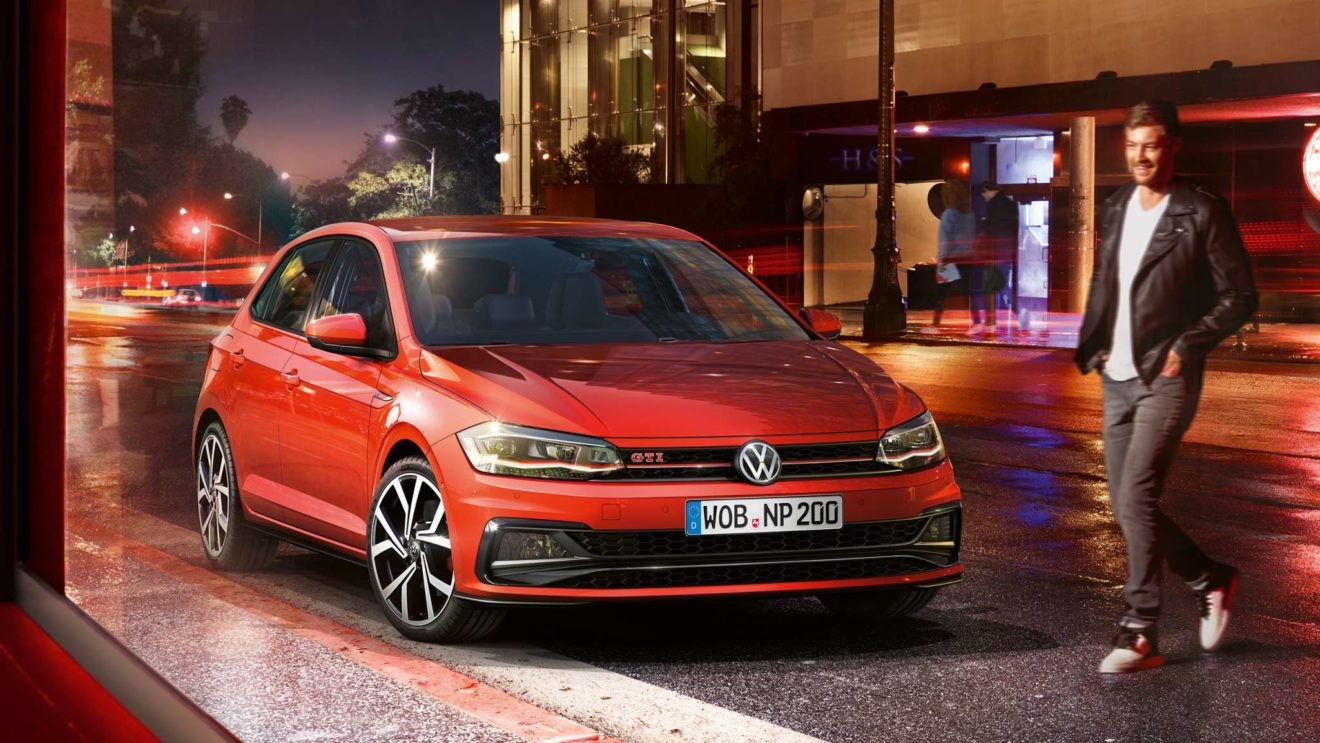
    How many times have you seen a Volkswagen Beetle and not given it another look? Well, the answer is zero and that’s because its design is timeless, ageless. That’s also why we can’t help but look at the new-gen models from Volkswagen India like the Jetta, Polo, Vento, Polo GTI or now even the Tiguan, T-Roc, and even the Tiguan AllSpace. It’s the design of all these cars evoke the same reaction – wow!

    And it’s because these cars have a strong lineage. They all are a culmination of what the company has been able to learn in so many years of being part of the global automotive fraternity. That’s why you see the technology funnel down to cars like the Polo GT TSI making it one of the best hot hatches in the country. In fact, it was the car that started the hot hatch trend in India and remains to date one of the most loved driver’s car in the country.

    But with SUVs fast becoming a trend in global markets, VW had to go back to the drawing board and figure out what it could do. It’s not as if the company had no SUV in the market earlier. Remember the Touareg? Yes, the one with the V6 engine. But it was ahead of its time, in fact, Indian buyers weren’t looking at buying SUVs back then, they were more into sedans. But as the market matured, VW India adapted to the change. The big step then in the SUV direction was in 2017, when the company introduced customers to the 5-seater Tiguan.

    With the Tiguan, Volkswagen tested the shores to understand the response and yes, it was a good one. The fact that you get German engineering, precision driving capabilities and of course great build quality, customers knew exactly what to expect from these products. And that was one reason why there’s a more strong focus on bringing in SUVs to India under the India 2.0 Project.

    With the Group investing ₹ 8000 for the India 2.0 project, there was going to be a strong focus on three aspects a) building cars with a high amount of localization content, b) align the business to make sure that service costs come down, and finally, make cars in India for the world!

    The company has already inaugurated a tech center in Pune in 2019 which will look into the development of these upcoming products but the attention is more on the new localized MQB-A0-IN platform. Just like the modular architecture of the MQB platform, where a number of body styles are made on a single platform, the A0-IN will also serve a similar purpose but given the high level of local content on the cars, all the products based on it will be price competitive. To put things into perspective, currently, the localized content in VW cars like the Polo and Vento is around 82 percent that will go up to 95 percent and that’s a massive leap.

    The Volkswagen Taigun will be one of the first SUVs to be built on the new localised MQB-A0-IN platform.

    The first car to be based on this platform is going to be the Taigun which was showcased just ahead of the Auto Expo 2020 and you got to see the car in the flesh back then. And this car will lead the charge for everything that comes post it. Now, the Tiguan AllSpace and the T-Roc have already had their fair share of success, so yes, it’s perfect timing for the Taigun to enter the market. The SUVW strategy then is falling into place and in 2021, we’ll see the Taigun and one more product coming to India. We can’t wait to drive everything that comes our way!

  • My Volkswagen Connect App Launched

    My Volkswagen Connect App Launched

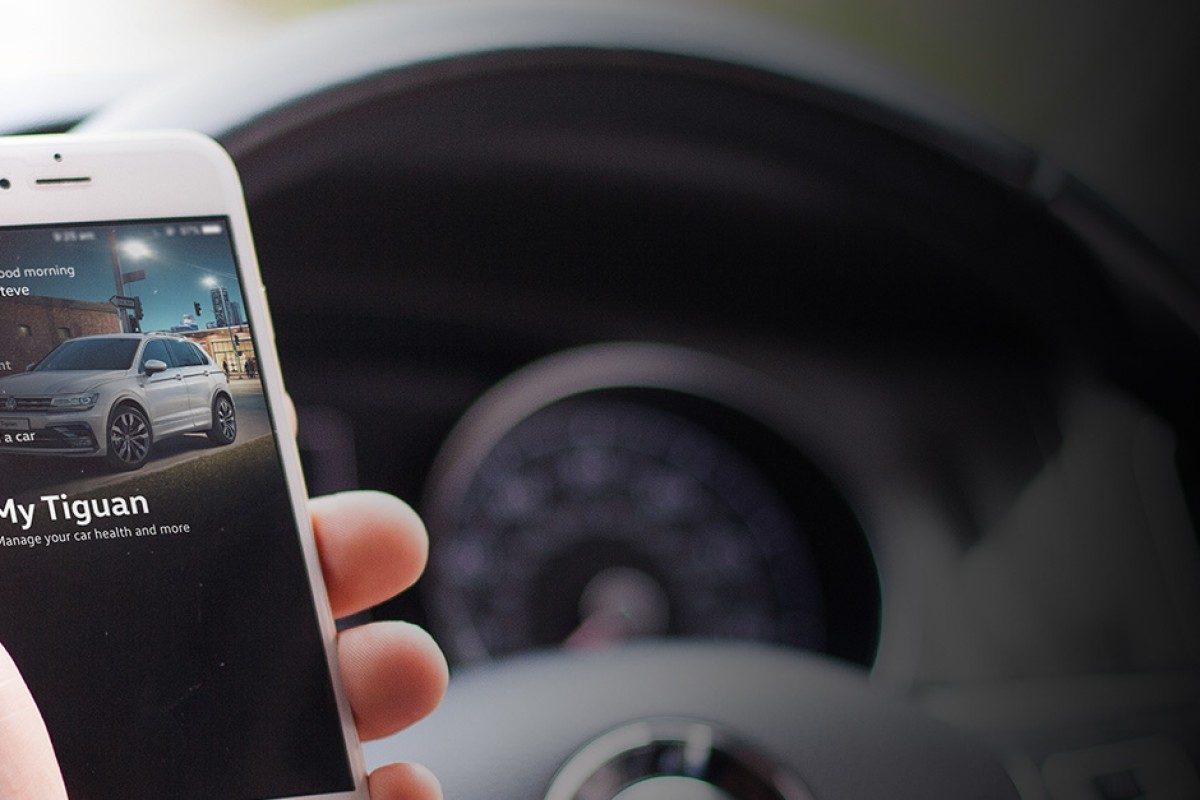
    Volkswagen India has joined the connected car bandwagon with the launch of the ‘My Volkswagen Connect’ mobile app. The new interactive sim-based app brings connected car technology to Volkswagen cars sold in the country and provides access to a host of features like vehicle telematics, geofencing, remote tracking and more. The app is available for both Android and iOS devices. The new Polo GT TSI and the Vento Highline Plus will get the new My Volkswagen Connect app as standard, the company has said in a statement.

    Commenting on the launch, Steffen Knapp, Director, Volkswagen Passenger Cars India said, “At Volkswagen India, we have relentlessly been working towards enhancing and providing our customers the best of technology and connected solutions. Today, we introduced the upgraded ‘My Volkswagen Connect’ app that offers customer convenience and safety at their fingertips. Customers will have access to real-time vehicle analysis and assistance that would make them aware of their vehicle condition, driving patterns, and enhance the overall fun-to-drive experience that a Volkswagen stands for.”The new Volkswagen connected car app essentially uses a dongle that’s plugged in the car’s on-board diagnostics (OBD) port that relays information on the mobile app. The app offers a range of data that includes the user’s driving style quantifying speed, braking behavior, coolant temperature, acceleration, and rpm. The app also enables users to locate the point of interest and also reach out to customer care or roadside assistance, in case of emergencies.

    The My Volkswagen Connect app also has the provision to scan and store vehicular documents for a paperless record. You can also use the app to set reminders for vehicle insurance renewal. Volkswagen India is offering the app with a three-year subscription for free and three years of warranty. Similarly, Honda Cars India also offers the Honda Connect app on its cars, while Nissan offers the Nissan Connect app on the same lines. It is noteworthy to mention that both companies among several others have been offering the technology for about a few years now.