Retail News CRM

Tag: vw

  • Volkswagen Teases Electric SUV

    Volkswagen Teases Electric SUV

    Volkswagen is all set to bring in the ID. ROOMZZ1 concept at the Auto Shanghai 2019. The ID. ROOMMZZ1 is the next member of the ID family and gives us a glimpse into the company’s upcoming version of a zero emission SUV.

    The production version based on the ID ROOMMZZ1 will first make its debut in the Chinese market in 2021 after which the model will be brought into other global markets. Just like the compact I.D.1, the I.D. CROZZ1, the I.D. BUZZ1, the I.D. VIZZION1 and the I.D. BUGGY1 before it, the sixth member of the fully electric family is based on the modular electric drive matrix and comes laden with innovations.

    The I.D. ROOMZZ1 gets variability in terms of vehicle interior, boasting of new seat configurations, high-quality materials and customizable light. It also gets the IQ.DRIVE systems which will drive the I.D ROOMZZ1. There’s a I.D. Pilot mode too in which the vehicle can be driven autonomously without an active driver which basically hints at a level 4 autonomous vehicle.

    There’s not much information yet about the what powers the ID ROOMZZ1, and what user experience will be like. We will know more about this, once the company showcases the car at the 2019 Auto Shanghai.

  • Volkswagen To Improve Production With Amazon Cloud

    Volkswagen To Improve Production With Amazon Cloud

    Volkswagen on Wednesday said it has teamed up with Amazon Web Services to link up and integrate the data from 122 VW Group plants, machines and systems, as a way to improve its production systems and processes. Amazon will help Volkswagen join up its plants and supply chain with over 30,000 locations and 1,500 suppliers using a data platform known as the “Volkswagen Industrial Cloud”, the company said in a joint press release with Amazon.

    The cloud platform could be made available to other car manufacturers and specific negotiations with major industrial companies interested in migrating to the Volkswagen Industrial Cloud are already underway, VW and Amazon said.

    The cloud helps VW to detect supply bottlenecks and process disruptions early as well as to optimize the operation of machinery and equipment.

    Amazon’s machine learning analytics and production know-how will be extended to the requirements of the auto industry, VW and Amazon Web services said.

  • Skoda’s electric-car push includes low-cost EV

    Skoda’s electric-car push includes low-cost EV

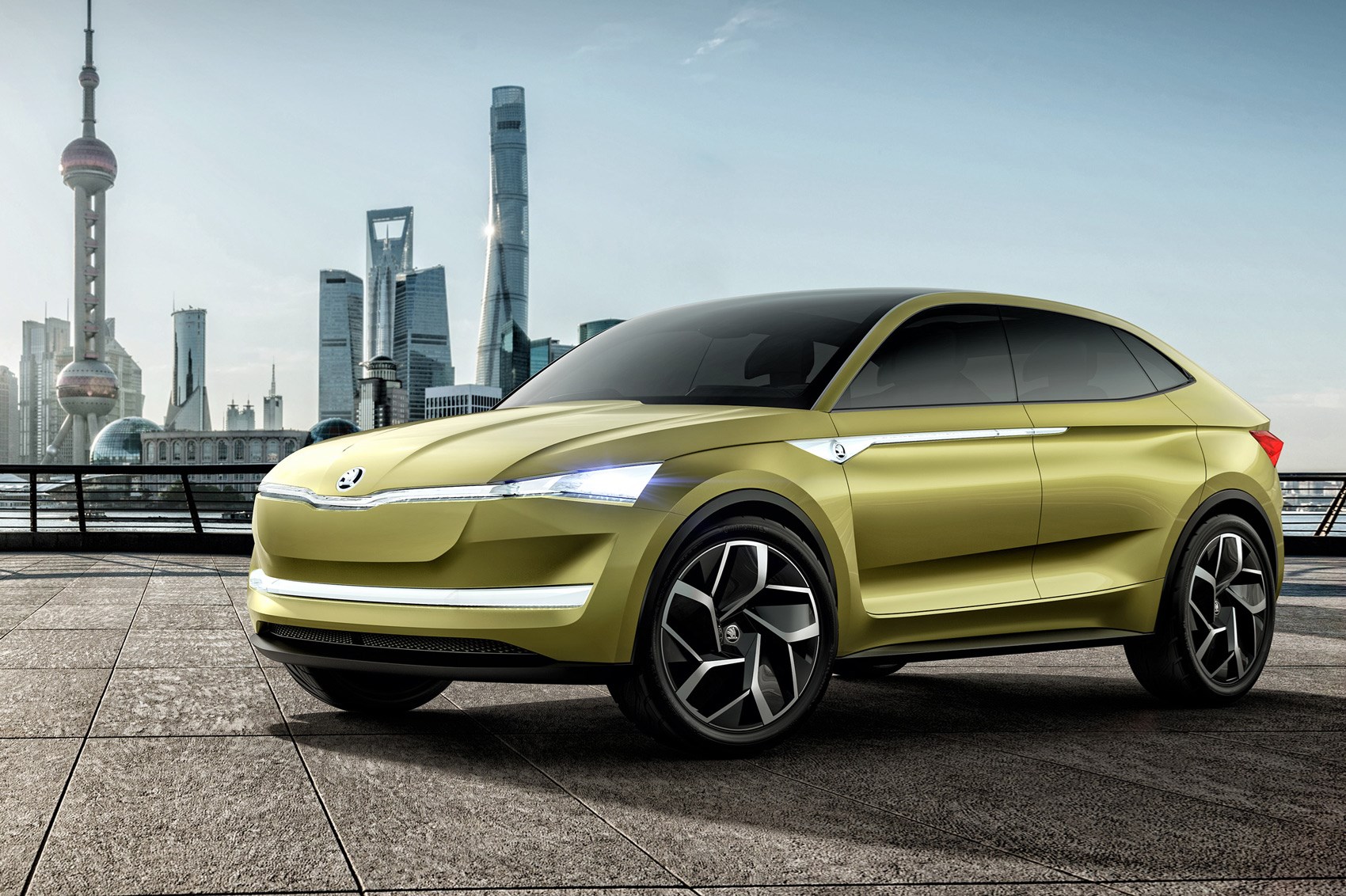
    Skoda plans to build three electric cars based on the Volkswagen Group’s MEB platform in the Czech Republic within the next four years, including a small, affordable model. Skoda’s flagship MEB electric car will be based on the Vision IV coupe crossover concept revealed at the Geneva auto show earlier this month.

    It will be joined by a second car based on the same concept, Skoda CEO Bernhard Maier told journalists at the brand’s annual results conference here on Wednesday.  The second vehicle is expected to be a more conventional SUV and will be built at Skoda’s Mlada Boleslav plant alongside the flagship model, which starts production in the second half of 2020 ahead of its market launch in early 2021. Both vehicles will be built on the same line as the Skoda Octavia compact car.

    “That gives us a lot of flexibility. We can scale and adjust to some extent if customer demand changes,” Maier said.

    A third, more affordable electric car will be built at Skoda’s Kvasiny plant and will form part of a new “MEB entry family” of cars announced by the VW Group at its annual press conference earlier this month. The model is still in the planning stage, Maier told journalists. “We are looking for a lower specced car and once we have a positive business case we will come up with a clear solution,” the CEO said.

    Cars in the MEB entry family will be smaller than VW’s Golf compact car, while offering similar interior space. They will arrive about 2023, VW CEO Herbert Diess told earlier this month.

    Skoda will launch a full-electric version of its Citigo minicar, based on the VW e-UP, later this year. The model will be built in VW’s plant in Bratislava, Slovakia, and will have an electric range of 300 km (186 miles), Maier said.

    Skoda has said 25 percent of all its cars sold by 2025 will be electrified and the brand plans to launch more than 10 electrified cars by the end of 2022, including plug-in and mild-hybrid models. Its first plug-in hybrid will be a version of the Superb midsize and will go on sale later this year. By 2025 Skoda will sell five separate pure electric cars, the company has said.

    Maier said Skoda remains unsure of the demand for its electric models.

    “I don’t know how the customers will reflect on our offer,” he said. “If our reference was those customers who have driven our electric cars in focus groups, then we can easily achieve 25 percent, but it is quite obvious the demand will be different if you talk to customers living in urban areas than those living in rural areas.”

    Customers in rural areas have concerns about charging and range, he said.

    Volkswagen Group is turning its Zwickau, Germany, factory into a specialist plant for MEB models for the VW, Audi and Seat brands but Skoda has placed great importance on building its MEB-based electric cars in in its Czech Republic home.

    “Electromobility is being developed in the heart of Skoda in the Czech Republic. That ensures the future of jobs here,” Maier said.

    The first MEB EV, based on the Vision IV concept, is likely to cost about the same as the brand’s Kodiaq or Superb models, Skoda sales chief Alain Favey told. The average selling price of the Kodiaq SUV is around 40,000-45,000 euros. For the Superb it is about 40,000 euros.

    Favey said Skoda aims to offer a package that will entice customers to want to spend that amount. He said the car would also adhere to the same philosophy of “smart understatement” shown by other models in Skoda’s range. “It’s an extremely modern way of thinking,” he said.

    Maier said replacing today’s internal combustion engine cars with electrified versions to meet the tough European targets on CO2 will drive up the price of all cars. “Individual mobility will be more expensive, there’s no doubt about that,” he said.

  • VW recycling project targets spent batteries

    VW recycling project targets spent batteries

    The auto industry’s big push into electric vehicles will lead to a big problem down the road: What to do with all those lithium ion batteries once they’ve lost their oomph? It’s the central question behind a pilot recycling project that Volkswagen Group plans to launch at a factory in Salzgitter, Germany, about 30 miles from its global headquarters in Wolfsburg. Beginning in 2020, the plant will accept about 1,200 tons of used automotive lithium ion battery packs a year — the equivalent of what’s in about 3,000 EVs today.

    The battery packs will be analyzed and sorted; those with some life left will be given a second use, such as mobile vehicle charging stations similar to the way a power pack can be used to recharge a cellphone. Batteries that are spent will be shredded and ground to a fine powder, Volkswagen says, so their valuable and rare raw materials — including lithium, cobalt, manganese and nickel — can be extracted and sorted for use in new battery packs.

    Volkswagen believes that, within 10 years, it will be able to recycle up to 97 percent of all the raw materials used in the battery packs driving its upcoming EVs. It expects the pilot project to help it reach 72 percent, up from 53 percent today.

    Thomas Tiedje, Volkswagen’s head of technical planning, said the automaker has spent 10 years researching how best to recapture the valuable minerals used to make modern batteries.

    “We already have sustainable battery expertise in the Group and are developing this further,” Tiedje said in a statement.

    While the pilot plant is ramping up in Germany, the company has not determined plans for battery recycling in North America after it begins selling EVs here this year with the Audi e-tron and in 2020 with the Volkswagen I.D. Crozz. “We are in regular contact with our colleagues in [North America] about recycling,” a spokesman said.

    Today’s lithium ion battery packs have an estimated useful first life of about 150,000 miles, or roughly 10 years, given average driving cycles. In Europe and in China, automakers are required to pursue end-of-life strategies for their products, especially those containing materials that are hazardous to the environment. In the U.S., however, similar recycling research efforts are in their infancy, though the nation’s largest EV maker, Tesla, last year said it is working toward a closed-loop battery recycling process at its Gigafactory battery-production locations.

    Playing catch-up

    Just in February, the U.S. Department of Energy launched a three-year, $15 million effort to industrialize the recycling of lithium ion EV batteries. The ReCell Center, at Argonne National Laboratory in suburban Chicago, will coordinate research with automakers, material and battery suppliers, and several universities with the aim of using recycled materials to drive down the cost of EV batteries by 10 to 30 percent, to a goal of $80 per kilowatt-hour.

    One more spin: Volkswagen’s pilot EV battery recycling plant in Germany will test whether cells are still useful or should be recycled.

    “We’re trailing the other countries,” Jeffrey Spangenberger, the center’s director, told Automotive News. “There aren’t many lithium ion battery recyclers in the U.S., so work needs to be done to catch up.”

    Spangenberger said ReCell’s efforts will be focused on “trying to increase the value of the materials coming out of the battery recycling stream. A lot of the processes that are used currently recover low-value materials. We’re trying to find ways to get the materials back that can make more money,” including cobalt, nickel and lithium.

    Reusing the good stuff: Once a battery is no longer useful, it is shredded and dried, with most of the expensive minerals recovered so that they can be reused to make future cells.

    In addition to guiding battery recycling efforts, the research will focus on three areas:

    1. Direct cathode recycling to develop processes that generate products to go back into new batteries without the need for reprocessing.

    2. Recovery and recycling of other battery materials that can be resold for a second use, providing an additional source of revenue.

    3. Design for future batteries to optimize the recapture and recycling of raw materials.

    A big problem fast

    The scope of global automotive lithium ion battery recycling is expected to grow fairly quickly into a huge issue. The International Energy Agency predicts that the number of EVs on the world’s roads could grow from about 2 million today to as many as 140 million by 2030. Volkswagen believes it will sell as many as 15 million battery-electric vehicles globally by 2025.

    In addition to all those extra EVs, higher-powered fast-charging increases the battery degradation rate by as much as 400 percent, Asad Farid, an analyst at Berenberg Thematics, told the Advanced Automotive Battery Conference in Strasbourg, France, in January. That means all those quick-charging EVs will need new battery packs sooner than 10 years. Berenberg estimates that by just 2022, as many as 262,000 metric tons of automotive lithium ion batteries will need to be recycled.

    “The car manufacturers have an upcoming problem, and one that we are already starting to see — this massive volume of batteries,” Johan Stjernberg, CEO of Box of Energy, a Swedish company working with Porsche and Volvo Cars, told Bloomberg last year.

    “The market will be enormous for second-life applications with storage.”

  • VW new sedan model launched

    VW new sedan model launched

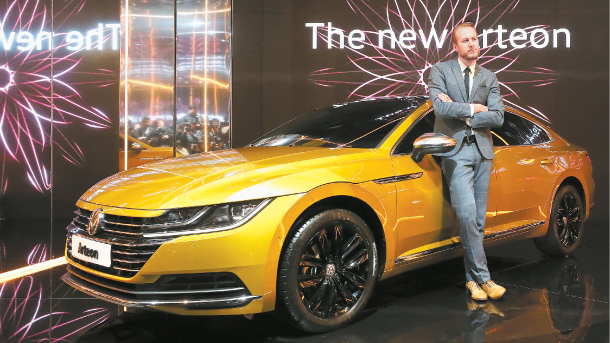
    Volkswagen launched its sleek new midsize Arteon sedan in Korea on Wednesday with high hopes that the car will overshadow consumers’ memories of the company’s emissions rigging scandal, which was first revealed three years ago. The sedan is the last of the five cars the German automaker promised to roll out in the local market in April, when it opened up a press event to show it was back in Korea after suspending sales in 2016.

    Stefan Krapp, the managing director of Volkswagen Korea, said he is “convinced the new Volkswagen Arteon will be another best seller in the Korean market, alongside the Tiguan, Tiguan Allspace and Passat,” during the launch event. He introduced the new sedan as its “new flagship model that opens a new chapter of Volkswagen’s design language.”

    The latest sedan is positioned at the top of the carmaker’s sedan line up, even above the Passat GT, according to Krapp.

    Under its sporty-looking exterior lies a spacious interior, thanks to the Arteon’s 28.40 centimeters (11.18 inches) wheelbase, which the carmaker says is the longest among its competition. The storage space can be as large as 1,557 liters (55 cubic feet) when the backseats are folded down.

    All Arteons come with a whole package of driving assistance programs, including adaptive cruise control and parking assist as basic features, in line with the digital trend sweeping the auto market. The cars come in two trims – Arteon Elegance Premium and Arteon Elegance Prestige. The most distinct feature of the Arteon is its quality assurance program.

    Krapp said the carmaker’s utmost priority is regaining consumer trust and reaffirmed the company will not compromise on quality.

    Volkswagen’s Triple Trust Program, exclusive to the Arteon, offers a bumper-to-bumper warranty for five years or 150,000 kilometers (93,205 miles), whichever comes earlier. The program also guarantees up to 1.5 million won ($1,347) in maintenance costs when metal plating or painting is necessary after an accident. For windshield glass, side mirrors and tires, which often need to be replaced, the company will guarantee up to 2 million won in repair cost.

    “This package is the best available in the market, I would say,” Krapp said. He added that in the import car market, where consumers usually sacrifice either style or value for money, the Arteon offers both.

    “This is how we will challenge our competitors,” he added.

    Though Volkswagen had no sales at all last year, it has gradually been coming back to life thanks to the popularity of the four models it launched earlier this year: the Passat GT, Tiguan, Tiguan Allspace and Passat TSI. The automaker’s market share in the local market is still in the single digits, low compared to good days when its shares were in the double digits, but it managed to reach 5.65 percent market share this year through October and sell a total of 12,294 cars.

    Whether the Arteon will help sales is another question, as it’s a pricey product. The more affordable Arteon Elegance Premium carries 52.2 million won price tag, while the Prestige model sells for 57.1 million won.

  • SK unit to supply batteries to VW

    SK unit to supply batteries to VW

    SK Innovation is supplying electric car batteries to Volkswagen Group along with existing suppliers LG Chem and Samsung SDI, the Korean battery maker said Wednesday. The Volkswagen Group brands plan to launch 50 new fully electric models by 2025, and the group said it needs more battery supplies in a statement Tuesday. SK Innovation was the last of the four battery suppliers selected by the carmaker.

    SK Innovation will start supplying batteries to Volkswagen cars in Europe from 2019. LG Chem and Samsung SDI are also strategic partners in the auto company’s European operations.

    From 2022, SK Innovation will also supply batteries for the North American market.

    The group’s electric car production in China will source batteries from Chinese partner Contemporary Amperex Technology (CATL) from 2019.

    SK Group’s battery arm is planning on covering Volkswagen orders by setting up new facilities in Europe and the United States. Currently, the company is mulling three locations in the United States, it said, without giving details about the production capacity or the amount of investment. As for its newly-planned European plant, the company said it is considering multiple locations including Hungary, where it is already building a plant.

    When all planned factories are in place, SK Innovation’s battery production capacity will increase to 20 gigawatt-hours per year by 2022, the company said. Despite being a latecomer to the market, SK Innovation has been rapidly expanding its battery business. Daimler and Kia Motors are also using SK batteries.

    Its share of this year’s global battery market, excluding China, was 2.2 percent based on accumulated battery sales through the end of September, according to data from market tracker SNE Research, growing from 1.4 percent the same period last year.

    LG Chem is still the largest local player, with a 17.5 percent market share, followed by Samsung SDI, with an 8.2 percent market share.

    “With SK Innovation, LG Chem, Samsung and CATL, we have found strong partners for the long-term supply of cells for our electric vehicles,” said Stefan Sommer, a Volkswagen board member responsible for components and procurement.

  • Skoda names new compact the Scala

    Skoda names new compact the Scala

    Skoda says it will rename its Rapid compact hatchback the Scala when the new model goes on sale next year. The car’s name comes from the Latin word for “ladder,” Skoda said in a statement.

    The Scala was previewed as the Vision RS concept that was unveiled at the Paris auto show this month.

    The name change signifies the step up Volkswagen Group’s Czech subsidiary has made with the new car, Skoda CEO Bernhard Maier explained in the statement. “This is a completely new development that sets standards in terms of technology, safety and design in this class,” he said.

    The Scala will be pitched further upmarket compared with the current budget Rapid to create a more credible rival for cars such as the Ford Focus.

    “I think the problem of the current Rapid is maybe it’s too low-market. Maybe we went too far toward value for money,” Bjorn Kroll, Skoda’s head of product marketing and the brand’s commercial leader on electric cars, said at a preview of the concept ahead of the Paris show. “With this one, we tried to balance it out.”

    Skoda said the car would offer innovative features that “have only been seen in higher segments,” without being specific about those features.

    The Scala will be engineered for Europe on the VW Group’s small-car MQB A0 platform. The current model uses a version of the low-cost PQ platform.

    The name change also signifies a break with the Rapid sold in China and Russia. A future replacement for the Rapid in those markets is expected to use an updated version of the PQ platform to keep costs down.

    Instead of a badge, the Scala will feature the word Skoda affixed to the tailgate — the first Skoda to feature this, the brand said.

    The range is expected to include an RS high-performance version using the same plug-in hybrid drivetrain previewed by the Vision RS concept. It combines a 150-hp, 1.5-liter gasoline turbo engine with a 102-hp electric motor to accelerate the car from 0 to 100 kph (62 mph) in 7.1 seconds. The 13-kWh battery provides a range of 70 km (43 miles), compared with 50 km (31 miles) in the discontinued VW Golf GTE plug-in hybrid.

    Skoda sold 35,206 units of the Rapid notchback and Spaceback hatchback in the first half of this year across Europe, down 2.7 percent compared with the year before, figures from JATO Dynamics show. The notchback will be discontinued in Europe, Skoda said.

  • Volkswagen, Toyota lead a surge in imports

    Volkswagen, Toyota lead a surge in imports

    Audi and Volkswagen have roared back to the Korean imported car market after a two-year absence.

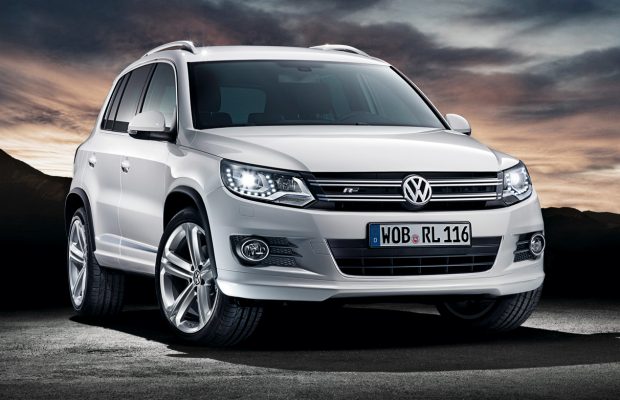
    After launching in May, Volkswagen’s flagship midsize Tiguan SUV became the best-selling imported car model in Korea in June.

    The Tiguan 2.0 TDI sold 1,076 units in June, according to the Korea Automobile Importers & Distributors Association on Thursday. It was the only imported model that sold over 1,000 units last month.

    In its launch month, Volkswagen Korea sold 1,561 Tiguans.

    “Although Volkswagen’s brand image was dented due to the emissions scandal, the Tiguan SUV is widely known to be well-made and it seems like Korean consumers have been waiting specifically for the model,” said Kim Pil-soo, an automotive engineering professor at Daelim University.

    “At the moment, there are no substitutes for the Tiguan SUV that satisfy those who want to buy an imported car in a medium price range. Due to its relatively low price, Tiguan is able to appeal to consumers who were thinking about buying domestic brands.”

    On the back of those strong sales, Volkswagen Korea was ranked third in sales of imported cars in June with only two models on offer, the Tiguan and the Passat sedan.

    As for specific imported models, BMW’s 5-series sedan 520d came in second in June sales with 963 units, followed by Audi’s A6 35 TDI with 891 units.

    Korea’s imported car sales continued to grow in the first half of this year.

    According to KAIDA statistics, a total of 140,109 imports were sold between January and June, which was an 18.6 percent year-on-year jump.

    Mercedes-Benz Korea managed to maintain its top spot for six consecutive months. It sold 41,069 units in the Jan.-June period, an 8.9 percent year-on-year increase. BMW Korea followed, selling 34,568 units, a 19.2 percent year-on-year jump.

    Japanese brands are expanding their presence in Korea. In the past, Japanese brands were largely neglected here because they were considered overly expensive.

    Toyota Korea came in third spot in the Jan.-June period. It sold 8,350 units, recording a whopping 60.8 percent year-on-year increase. A hybrid version of its new Camry sold 3,051 units in the first half, followed by the gasoline-powered Camry, which sold 2,104 units.

    Toyota’s luxury arm Lexus tumbled two steps from last year’s third spot to fifth, but its sales still recorded solid growth. It sold 6,276 units in the first half, a 7.2 percent year-on-year jump.

    “With the rising interest in imported cars, people who would have bought domestic brands are now turning to import brands. Japanese brands are benefiting from that shift in consumption patterns,” Kim added.

  • Volkswagen to invest Rs 7,600 crore to launch new models

    Volkswagen to invest Rs 7,600 crore to launch new models

    The Volkswagen Group plans to invest 1billion euros more in India, several people in the know said, as the world’s largest carmaker seeks to launch a flurry of vehicles and expand capacity to shrug off its underperformance in one of the fastest-growing markets.

    The group will spend the money to set up a new manufacturing line at its existing facility at Chakan in Pune, build an engineering centre and develop products, these people said, speaking on the condition of anonymity. Developing electric vehicles is also under consideration, they said.

    The German auto major is reworking its India plan after an aborted attempt for a partnership with Tata Motors to make products for emerging markets, where the most crucial factor that sells a vehicle is its affordability. Despite the group being present in India for more than a decade and half, it could garner only a less than 2% market share between the Volkswagen and Skoda brands.

    Positioning as a premium brand that sits above the likes of market leaders Maruti Suzuki and Hyundai Motor has hurt its performance. The group has now decided to come out with an affordable portfolio on its own for emerging markets, based on the MQB-A0 platform. The new models will be heavily localised to keep the cost low.

    Czech unit Skoda Auto is driving this India and emerging market strategy for the group. Skoda chairman Bernhard Maier visited India towards the end of October, followed by a contingent of 40 senior engineers who came to understand the critical issues here before executing the plan. The group has also conducted one-on-one workshops with over a dozen-and-half vendors to put finishing touches to its emerging market strategy, the people said.

    The Volkswagen board discussed the progress of the plan on December 19 and is hopeful of finalising a blueprint within a quarter, they said. About half a dozen cars are planned with the new MQB-A0 underpinning, including a hatchback each from Skoda and Volkswagen positioned in the Maruti Baleno and Hyundai Elite segment, a mid-size sedan that will replace the Rapid and Vento, and a B-segment SUV that will be benchmarked against the Volkswagen T Cross to take on the Hyundai Creta. Discussions are currently ongoing on the SUV project, codenamed VW216.

    “We believe we are in a good position to tackle new segments in the Indian market now,” Skoda chairman Maier told ET in a statement. “We will invest a substantial amount into the Indian market. We are in the process of ascertaining the total investment,” he said, but declined to get into the specifics. The company is studying volume scenarios of 1,80,000, 2,50,000 and 3,20,000 units for capacity expansion. A chunk of the production will go towards exports.

    Till the time the MQB-A0 car project goes fully on stream by 2022-2023, an existing platform is being upgraded to meet requirements in overseas markets.

  • VW in talks to buy stake in Russia’s GAZ

    VW in talks to buy stake in Russia’s GAZ

    German carmaker Volkswagen is in talks to buy a stake in GAZ, a Russian manufacturer of light commercial vehicles (LCV), five sources familiar with the talks told.

    It was not immediately clear how big a stake is being discussed or the value of the deal.

    GAZ is a part of the Basic Element group that holds the assets of Russian businessman Oleg Deripaska. Both GAZ and Basic Element declined to comment, while a spokesman at VW headquarters said he does not comment on market speculation.

    “There are talks, they are trying to reach an agreement. Deripaska has long been looking for a partner and VW does not have a Russian partner,” one well-placed industry source said.

    Another well-connected car industry source, two financial market sources and another person familiar with the matter also said talks were under way.

    One of the sources said that a decision on the size of the proposed stake sale has yet to be made.

    A source close to VW also confirmed that talks were in progress but said the possibility of the German group taking a stake in GAZ is not the only mater under consideration.

  • VW brand forecasts record sales of over 6 million models

    VW brand forecasts record sales of over 6 million models

    The Volkswagen car brand expects deliveries to hit a record this year and raised its midterm profitability forecast on Thursday, citing cost cuts and expanding ranges of higher-margin models.

    While the emissions scandal of September 2015 has cost Volkswagen (VW) billions of euros in fines and penalties, it doesn’t seem to have had a lasting effect on the carmaker’s popularity with motorists.

    The world’s largest automaker said it expects to significantly exceed last year’s record 5.99 million VW brand auto sales in 2017, counting on strong momentum in China, Europe and the United States.

    The operating profit margin at the VW brand may climb to between 4 and 5 percent by 2020, the carmaker said, still lagging rivals such as PSA Group and Toyota  but higher than the 4 percent or more VW has previously been indicating.

    The increase brings the VW group’s largest division by sales into line with a more upbeat outlook for overall VW group profit announced earlier in November.

    “We have completed the first five kilometers of a marathon,” VW brand chief executive Herbert Diess said. “We are all aware of the challenges that lie ahead of us.”

    The maker of VW’s top-selling Golf hatchback expects to significantly improve underlying earnings this year from the 1.9 billion euros in 2016, which would mark the brand’s first profit gain year-on-year since 2011, Diess said at a news conference.

    Profit will be driven by a growing number of more lucrative sport-utility vehicles (SUVs), whose share of overall brand sales may triple to about 40 percent by 2020 from currently 14 percent, the CEO said, citing the redesigned Touareg and an all-new T-Cross due to hit dealerships in 2018.

    “With SUVs, we are earnings the money we need to fund the shift towards electric mobility,” Diess said, referring to the brand’s accelerating push into zero-emission vehicles.

    The VW brand, which has been undergoing heavy restructuring for about a year, said it has kept fixed costs broadly stable this year despite growing spending on model launches.

    The carmaker said it will achieve 3,800 job cuts in Germany by the end of 2017, a year after it agreed with unions to slash 23,000 positions via natural attrition by 2020.

  • VW considers setting up commercial vehicles venture in China

    VW considers setting up commercial vehicles venture in China

    Volkswagen may expand cooperation with China’s Anhui Jianghuai Automobile (JAC) beyond electric cars to jointly develop and build commercial vehicles in the world’s largest autos market.

    The German group and JAC announced in June they were to set up a joint venture to develop and build zero-emission passenger cars as Volkswagen (VW) is pushing efforts to achieve the Beijing government’s production and sales quotas for new-energy vehicles.

    On Monday VW said it was looking along with its commercial vehicles division at deepening the cooperation with JAC to include the design, technology, product quality and development of multi-function vehicles.

    The venture would affect combustion engined and alternative-energy powered vehicles, would be owned equally by JAC and VW and would be based in JAC’s home town of Hefei, VW said.

    “VW Commercial Vehicles has a growing number of loyal customers in China,” executive Joern Hasenfuss said. “But there are significantly more opportunities,” he said without elaborating.

    Under the tie-up, VW and JAC could jointly tap growing demand for light pick-up trucks in China while the German group would also save customs duties by building its multi-van and Caddy vehicles at JAC facilities, analysts said.

    It’s also the latest evidence of VW’s foreign expansion not being confined to its passenger car operations.

    In September VW’s commercial vehicles arm started building the Amarok pick-up truck in Ecuador with local partner FISUM after starting production of the box-type Caddy model at a new multi-brand facility in Algeria two months earlier.

  • ‘Robo-taxis’ hold promise, and perils, for automakers

    ‘Robo-taxis’ hold promise, and perils, for automakers

    Are ‘Robo-taxis’ the future of public traffic?

    It’s November 22, 2028 and Sarah, a young mother, gives her two children a kiss goodbye before buckling them into the driverless car that will bring them to school.

    Sarah doesn’t have a car and has no plans to buy one. Living in a suburb, she has run the numbers and the result is clear: It’s much cheaper to order a car only when she needs one.

    The “robo-taxi” has also made her life easier, but only after such vehicles upended the business models which carmakers had relied on for decades.

    The revolution is already underway, with every major brand racing to create autonomous electric cars and trucks that will always be just a few clicks of a smartphone away.

    Fully electric cars are expected to make up 12 percent of the global market in 2025, before jumping to 34 percent in 2030 and 90 percent by 2050, analysts at Bank of America Merrill Lynch forecast last month.

    Adapt or perish

    The motivations are clear: Smog is becoming a serious menace in cities around the world, with China in particular demanding cleaner vehicles for its rapidly growing market.

    Traffic jams are also eating up hours of commuters’ time, meaning car ownership is already no longer a given for many city dwellers.

    And carmakers have nimble new rivals: Apple, Google and Tesla — which last week unveiled an all-electric semi truck — see a chance to dominate a market that will soon depend as much on software as on engineering.

    Industry chiefs aren’t waiting: France’s PSA is betting on car-sharing and other “services” with its Free2Move division, which it hopes will let it get back into the huge US market.

    In Germany, Daimler is working with Bosch to develop self-driving electric cars that could be on the road by the early 2020s, and has already launched its own car-sharing service, Car2Go, in some two dozen cities worldwide.

    Its German rival Volkswagen has created Moia, a “social movement” unit exploring e-shuttles, ride pooling and car hailing.

    “Even if in the future not everyone is going to own a car, with Moia we’re trying to make sure everyone will be a client of ours one way or another,” VW’s chief Matthias Mueller said.

    Robo-taxis could generate 40 percent of auto industry profits by 2030, according to German consulting firm Roland Berger, which expects demand for private vehicles to drop 30 percent in the period.

    And industry experts warn that the automakers which fail to adapt to the shift risk might not survive.

    Lagging behind Asia

    But that means investing billions in batteries, charging infrastructure and autonomous driving technologies with little prospect of seeing a payoff anytime soon.

    VW announced Friday a plan to spend 34 billion euros ($40 billion) over the next five years on hybrid and electric cars and services in a bid to “reinvent” the automobile.

    But for now, so-called “zero emission” vehicles remain a tough sell: Renault’s Zoe range of electric cars, which is has offered since 2012, made up just 1 percent of its sales last year.

    Its chief, Carlos Ghosn, is hoping that figure will reach 5 percent by 2022.

    The contest will be costly for all automakers, with PriceWaterhouseCoopers estimating that production costs for the next generation of electric cars will be 20 percent higher than traditional models, while warning of “serious problems” for returns on investment.

    “The speed” of the shift toward an electric future “will have to be taken on by all automotive companies,” PSA’s chief executive Carlos Tavares said at the Frankfurt auto show in September.

    Yet Western carmakers and government officials already fear they are lagging behind Asian rivals, with China in particular making headway on electric motors and batteries.

    That led the EU Commission to urge the creation of an “Airbus for batteries”, with European companies joining forces for large-scale battery production.

    “This technology is too important to import it from overseas,” the commission’s vice president charge of energy, Maros Sefcovic, warned.
  • VW brand upbeat as cost cuts, new models boost earnings

    VW brand upbeat as cost cuts, new models boost earnings

    Cost cutting and new models such as the Arteon fastback should continue to boost Volkswagen’s main car brand in the fourth quarter after it doubled core earnings in July-September, it said on Monday.

    Analysts see reviving the VW brand, which has long suffered from high staff and development costs, as crucial to the group’s ability to recover from its diesel emissions scandal.

    The brand said on Monday it expected sales and profits to keep growing in October-December, despite the hit across the industry to demand for diesel vehicles and their resale value in the wake of the German carmaker’s 2015 scandal.

    “Our model offensive is increasingly paying off, the turnaround programs in the markets are having an effect,” VW brand chief Herbert Diess said in a statement.

    Operating profit at the brand doubled to 728 million euros ($847 million) in the three months to Sept. 30, helped by cost cuts and staff reductions agreed with labor unions last year.

    Volkswagen shares were up 2.9 percent to 156.40 euros at 1150 GMT.

    By contrast, the group’s premium Audi division said it was bracing for a “demanding quarter” with costs for vehicle overhauls including the high-end A6, A7 and A8 as well as the Q3 and A1 compacts weighing on results.

    Audi’s quarterly profit and sales were broadly flat, held back by spending on foreign capacity and electrification of its model fleet.

    The VW brand now expects its operating margin to moderately exceed a 2.5-3.5 percent target range this year, it said.

    That is in line with the more upbeat profit outlook announced by parent Volkswagen on Friday.

    The VW brand is aiming to raise the margin to at least 4 percent by 2020 and 6 percent by 2025 – still lagging some major competitors such as Japan’s Toyota and PSA Group.

    Brand revenue could increase around 10 percent this year on 2016 levels, VW said, keeping previous guidance and citing demand in markets such as the United States, Brazil and Russia after reporting an 8.3 percent gain in year-to-date revenue.

    Fixed costs at the brand were flat in July-September, despite a growing number of model launches which have included the top-of-the-line Arteon and the redesigned Polo subcompact, it said, without being more specific.

    Analysts expect VW brand earnings to keep growing next year on the back of more higher-margin sport-utility vehicles such as the all-new T-Roc and redesigned Touareg, as well as the ongoing restructuring efforts.

    VW’s upbeat comments echo recent announcements by peers.

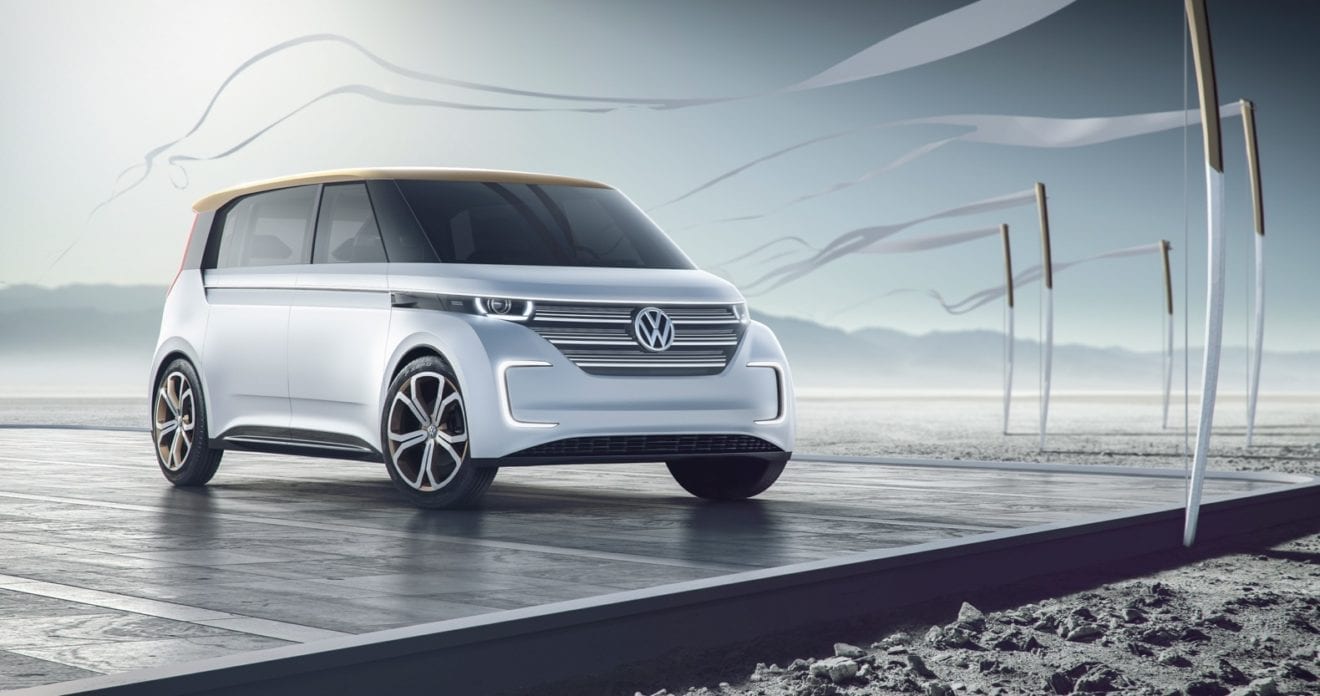
  • VW gives green light for electric version of classic Microbus camper van

    VW gives green light for electric version of classic Microbus camper van

    Volkswagen has decided to go ahead with production of an electric version of its classic Microbus camper van as it seeks to boost its electric vehicle credentials.

    The potential battery-powered revamp of the van, known as the Bulli in Germany, was first announced at the Detroit auto show in January.

    “After the presentations at the global motor shows in Detroit and Geneva, we received a large number of letters and emails from customers who said, ‘please build this car’,” Volkswagen brand chief Herbert Diess said in a statement.

    The electric van, known as the ID Buzz, will go on sale in 2022 and VW said it will target customers in North America, Europe and China. The company will also build a cargo version of the van, it added.

    Tesla, headed by Elon Musk, has shaken up the auto industry with its ambition to build a mass market for electric cars, posing a competitive threat to established manufacturers that remain reliant on producing cars with combustion engines.

    VW plans to have more than 30 all-electric models by 2025.