Retail News CRM

Tag: vw

  • Volkswagen Sees Mild Growth In China’s Premium Car Segment This Year

    Volkswagen Sees Mild Growth In China’s Premium Car Segment This Year

    German automaker Volkswagen AG expects slight growth in China’s premium car segment this year despite a slide in broader market sales, a senior executive said.

    Volkswagen Group’s China chief, Stephan Woellenstein, made the remarks to reporters in Beijing on Friday.

    Volkswagen replaced Herbert Diess as chief executive of the VW brand on Monday and installed Chief Operating Officer Ralf Brandstaetter to lead cost-cutting efforts.

    In China, the world’s biggest auto market, Volkswagen has joint ventures with local partners including SAIC Motor, FAW Group, and JAC.

  • Volkswagen Appoints Ralf Brandstaetter As VW Brand CEO

    Volkswagen Appoints Ralf Brandstaetter As VW Brand CEO

    Volkswagen replaced Herbert Diess as chief executive of the VW brand on Monday and installed chief operating officer Ralf Brandstaetter to lead cost-cutting efforts at the company’s largest plants in Germany.

    The management reshuffle comes after weeks of squabbling between Volkswagen’s powerful labor leaders and managers over the pace and scale of cost-cutting plans to free up resources for a radical shift toward electric cars.

    Volkswagen said Brandstaetter would take over on July 1 to give Diess, who remains group chief executive, more leeway to run the rest of the company, which includes brands such as Audi, Bentley, Skoda, Lamborghini, and Porsche.

    Herbert Diess to continue to hold his position as the Chief Executive Officer of the Volkswagen Group

    “Ralf Brandstaetter is one of the company’s most experienced managers,” Diess said in a statement. “I am therefore very pleased that Ralf Brandstaetter will be forging ahead with the development of the brand as CEO.”

    Volkswagen said Diess retained overall responsibility for Volkswagen passenger cars and that the management reshuffle would also result in the departure of procurement and components chief Stefan Sommer.

    Sommer joined VW in 2018 and oversaw ambitious procurement plans, including the construction of large factories to power Volkswagen’s ambitious electrification shift as the carmaker encountered supply bottlenecks.

    Volkswagen India has launched the Polo and Vento TSI Edition in India. Hero announces the price hike of Destini BS6. Bajaj Auto Opens Showrooms

    Earlier on Monday, sources told Reuters that Volkswagen’s supervisory board was hosting an extraordinary meeting to discuss replacing Diess as CEO of the VW brand.

    Diess is trying to get the company’s powerful labor leaders, who control nine of the 19 seats on the supervisory board, to agree to painful cost cuts.

    The savings are designed to help pay for a 34 billion euro (29.89 billion pounds) investment in electric and autonomous cars and 50 billion euros for EV battery procurement.

    Diess also came under pressure after Volkswagen was forced to halt sales of its newest VW Golf model because of software glitches at a time when the company is preparing to mass-produce VW’s ID.3 electric car.

  • Volkswagen Group Considering More Cost Cuts To Cope With Downturn

    Volkswagen Group Considering More Cost Cuts To Cope With Downturn

    Volkswagen is considering more cost cuts to help cope with the economic impact of the coronavirus pandemic, a spokesman for the German automaker said on Saturday.

    The issue was recently discussed at an internal event, the spokesman said, when asked about a report in industry magazine Automobilwoche.

    “There were general deliberations about what further cost measures could be taken to respond to the pandemic,” the spokesman said. “There are no concrete decisions yet.

    Volkswagen and Daimler both said Wednesday that they foresaw full-year profits despite taking a beating from the global virus crisis.

    Automobilwoche quoted Volkswagen CEO Herbert Diess as telling top managers at a meeting on Thursday: “We must significantly cut R&D expenditure, investments and fixed costs compared with the previous planning.”

    The group’s net liquidity would “continue to decline at least until July due to weak demand”, the magazine, citing participants at the event, quoted Diess as saying, adding that not all group brands would achieve a positive result in 2020.

    This meant the main VW passenger car brand must reduce its so-called material overheads by 20%, the magazine said.

  • Volkswagen Group Sales Down 23% In Jan-March

    Volkswagen Group Sales Down 23% In Jan-March

    Volkswagen Group on Friday said sales of its cars dropped by 23% on the year to 2 million cars in the January to March period.

    In March alone, deliveries were down 37.6% overall at 623,000 vehicles, the figures showed, reflecting the coronavirus crisis which triggered plant closures and falls in sales as consumers were tied up at home in lockdown measures across the world.

    German carmakers to resume production as lockdowns ease

    German carmakers including Volkswagen and Mercedes-Benz will restart production at some German factories next week. It’s part of a partial reopening of business and shops over the next few weeks.

    More specifically, March sales were down 44.6% year-on-year in western Europe, down 23.1% in central and eastern Europe, down 42% in North America, and down 35% in China, the company said.

    Experts believe that declines in April sales could be steeper as the full impact of the lockdowns works its way through the system.

    Volkswagen on Thursday withdrew its outlook for 2020 due to the uncertainty related to the virus outbreak which caused operating profit to drop 81% in the first quarter.

  • Volkswagen To Aid U.S. Dealers Supporting Coronavirus Relief Efforts

    Volkswagen To Aid U.S. Dealers Supporting Coronavirus Relief Efforts

    Volkswagen AG said on Monday it would give financial assistance to its U.S. dealers who wish to use their loaner fleet to pick up and deliver essential supplies in areas affected by the COVID-19 pandemic.

    The loaner cars, typically offered to customers to drive while their vehicles are in a shop for repairs, can be called upon for delivering food to a local food bank, transporting masks and gowns, and dropping off necessary items to those who are unable to leave their home, the automaker said.

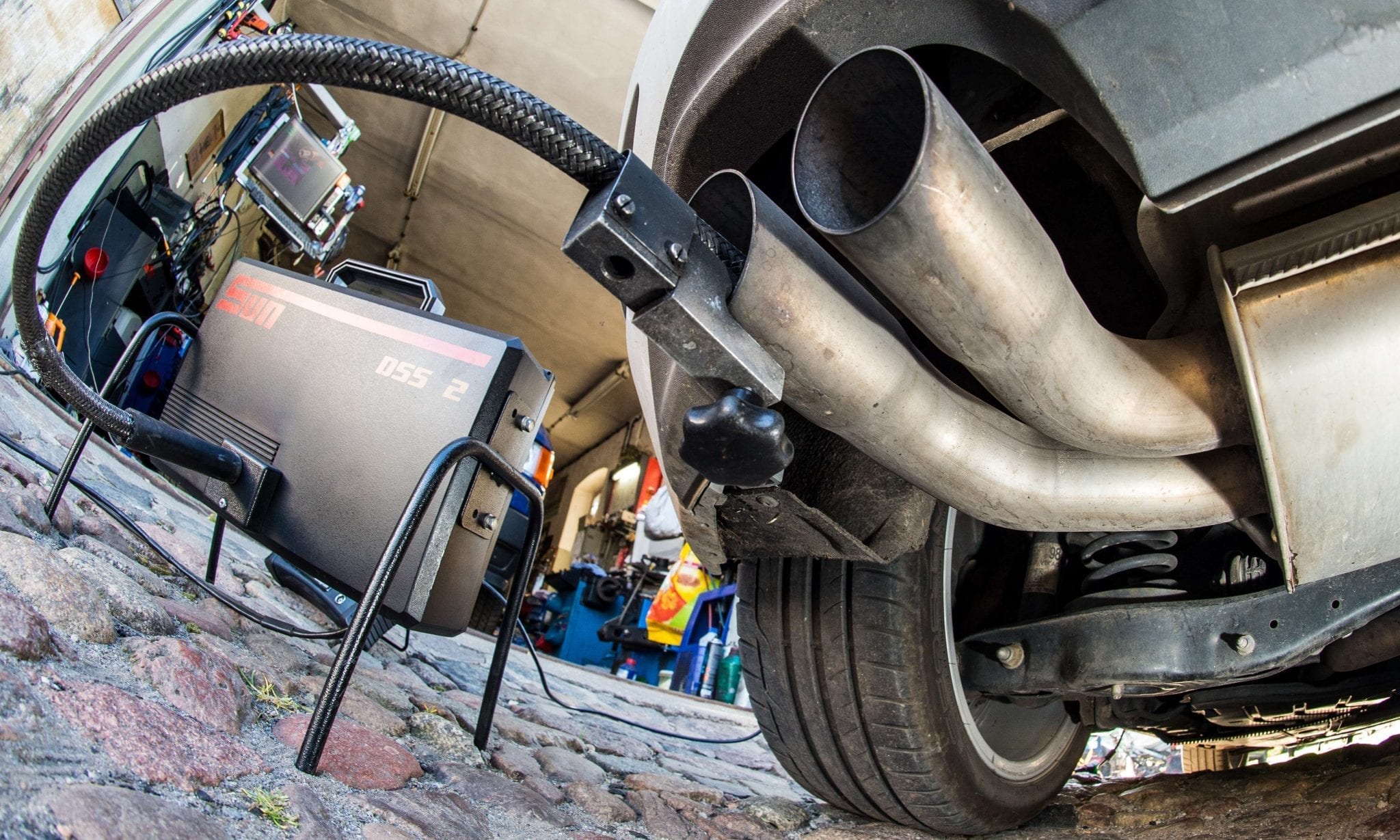
    Dieselgate’ made headlines around the world. For deliberately cheating the system, Volkswagen was made to pay a record $20 billion fine. But, as this investigation shows, they were far from the only culprits.

    Volkswagen said its dealers would not charge the group or person making such a request.

    “Only dealership employees will be permitted to drive vehicles. Volkswagen corporate will offer dealers a daily stipend per vehicle to cover fuel and lease costs,” the automaker said.

    Volkswagen’s network of more than 600 U.S. dealers maintains a loaner fleet of nearly 7,000 vehicles, although some dealerships could be closed or working with reduced personnel due to state and local guidelines.

  • Volkswagen Tests Ventilator Output As Carmakers Join Coronavirus Fight

    Volkswagen Tests Ventilator Output As Carmakers Join Coronavirus Fight

    German carmaker Volkswagen said on Friday it was joining other manufacturers around the world to explore using 3D printing to make hospital ventilators to combat the coronavirus.

    Governments are enlisting automakers including Ford, General Motors, Ferrari and Nissan to ramp up production of ventilators and other equipment they are short of to treat the fast-spreading disease.

    In a statement, Volkswagen said it had assembled a task force, was testing materials, and checking supply chains, to see how it can use 3D printing to help manufacture hospital ventilators and other life-saving equipment.

    Carmakers consider making ventilators at plants

    Automakers are thinking about making ventilators at their plants to help in the battle against the coronavirus. It’s an idea that at least one expert says comes with some complications.

    “Medical equipment is a new field for us. But as soon as we understand the requirements, and receive a blueprint, we can get started,” Volkswagen said, adding that prototype components had been printed and its Skoda arm was included in the project.

    A spokesman said the Wolfsburg-based, multi-brand company, which has more than 125 industrial 3D printers, was in close contact with governments and other authorities to assess needs.

    Volkswagen’s sports car brand Porsche also said on Friday it wanted to help in relief efforts. “We are collecting ideas about what we could do in terms of humanitarian help,” Chief Executive Oliver Blume said on a call to discuss earnings.

    US’ Electric Carmaker Tesla too has offered to make ventilators at its plants

    Munich-based carmaker BMW said it too was ready to help. “The production of components using 3D printing technology is a possibility,” it said.

    Sweden’s carmaker Volvo urged all governments to take the crisis equally seriously and limit movements.

    “I think for the economy, we need to do something drastic, rather then trying half-hearted measures that drag on forever,” Chief Executive Hakan Samuelsson said. “We are seeing the effect of this coronavirus is increasing every day.”

    The auto industry’s chances of recovery depended on coordinated action, Samuelsson told Reuters.

    “There is a big difference between countries. Some have curfews, with restaurants and schools closed. In other countries, there are less drastic measures. I just think we need to synchronize that more.”

  • Volkswagen’s Group Deliveries In China Fall 11.3% In January 2020

    Volkswagen’s Group Deliveries In China Fall 11.3% In January 2020

    Volkswagen, one of the world’s biggest carmakers, on Friday said deliveries in China declined by 11.3% in January as the auto sector feels the effects of the coronavirus outbreak.

    The German company said the group, which includes brands like Volkswagen and Audi, delivered 343,400 vehicles in China and Hong Kong. The country is VW’s biggest market.

    Worldwide, group deliveries dropped by 5.2% to 836,800 vehicles, Volkswagen added.

    The China Association of Automobile Manufacturers said on Thursday that the country’s vehicle sales likely fell by almost a fifth in January, marking a 19th consecutive month of decline, hurt by Lunar New Year holidays that started earlier than last year and by the coronavirus outbreak.

  • VW CEO Says Carmaker Faces Same Fate As Nokia Without Urgent Reforms

    VW CEO Says Carmaker Faces Same Fate As Nokia Without Urgent Reforms

    Volkswagen Chief Executive Herbert Diess said the German carmaker needs to accelerate its transformation to avoid becoming another Nokia, which lost its dominance in the handset market to Apple.

    “The big questions is: Are we fast enough?,” Diess told VW’s senior managers following a global board meeting on Thursday. “If we continue at our current speed, it is going to be very tough.”

    Volkswagen needs to shift from being a manufacturer of vehicles toward a maker of mobile devices, he said.

    “The era of the classic carmakers is over,” Diess added.

    Volkswagen needs to get a grip on software and vehicle electronics as well as producing a raft of electric vehicles and batteries so it can comply with stringent anti-pollution rules.

    “In summary this is probably the most difficult challenge Volkswagen has ever faced,” Diess said, adding that in 2020 the carmaker should seek to maintain profit margins.

    Volkswagen will seek to cut down on complexity, hike productivity and slash costs, particularly in Germany, Diess said.

    VW will cut resources devoted to fuel cells, since they will not be as competitive as electric vehicles for at least another decade. VW will also cut the resources devoted to its MOIA mobility services unit.

    “We need to reduce our engagement and stretch it, until the prerequisites for better profitability are given,” Diess said.

  • Volkswagen Starts Settlement Talks With German Consumer Groups Over Diesel Scandal

    Volkswagen Starts Settlement Talks With German Consumer Groups Over Diesel Scandal

    Volkswagen on Thursday said it was in talks to discuss a settlement with German vehicle owners who are suing the carmaker over excessive pollution caused by VW’s diesel cars. In 2015 the carmaker admitted to using manipulated engine management software to mask excessive pollution levels in its diesel cars, sparking a raft of prosecutions and lawsuits that have led to at least 30 billion euros in legal costs and fines.

    “Volkswagen and the Federation of German Consumer Organisations have agreed to enter into discussions regarding a possible settlement,” the carmaker said.

    “The discussions are at a very early stage, and there is no guarantee that they will result in a settlement. Both parties have agreed that the discussions should remain confidential.”

    German consumers have had less success than vehicle owners in the United States in securing compensation from VW because German cars did not lose their road worthiness certification in the wake of the diesel scandal.

    In Germany VW’s diesel vehicles retained their road worthiness certification if customers agreed to an update of vehicle engine management software, leading VW to take a different approach to compensate consumers.

  • VW’s German Plants Need To Shape Up

    VW’s German Plants Need To Shape Up

    Volkswagen’s German plants need to boost efficiency to match overseas operations, production chief Andreas Tostmann was quoted as saying, targeting 2 billion euros ($2.2 billion) in savings by 2023. German carmakers, including Volkswagen’s Audi brand, have announced thousands of job cuts in recent weeks to address an expected 5% drop in global auto sales this year, with declines likely to spill into 2020.

    “The pace of improvement is better abroad. In Germany, despite all the successes we’ve achieved, we have to do better,” Tostmann told trade journal Automobilwoche.

    Tostmann wants to implement the savings in the production of VW branded cars through a bundle of measures on top of automation, including a leaner logistics operation.

    “The result is that we need 15% less space, 60% fewer logistics vehicles and are able to move 20% more product,” said Tostmann, according to extracts from his Automobilwoche interview.

    VW’s luxury Audi division last month said that it would cut up to 9,500 jobs, equating to 10.6% of total staff, by 2025 in a move to free up billions of euros to fund the shift towards electric vehicle production.

    Rival Daimler, as well as car suppliers Continental, Robert Bosch and Osram, have also recently announced staff and cost cuts.

  • VW Ramps Up China Electric Car Factories

    VW Ramps Up China Electric Car Factories

    Volkswagen AG is ramping up production of electric cars to around 1 million vehicles by end of 2022, according to manufacturing plans seen by Reuters, enabling the German carmaker to leapfrog Tesla Inc and making China the key battleground.

    Volkswagen is readying two Chinese factories to build electric cars next year. The Chinese plants will have a production capacity of 600,000 vehicles, according to Volkswagen’s plans, which have not been previously reported – revealing VW’s ability to industrialize production faster than other pioneers in the electric vehicle market.

    Tesla is still trying to reach its goal of making more than 500,000 cars a year by building a new factory in Shanghai, China, while VW can rely on an established workforce in two of its plants in Anting and Foshun to build zero-emission cars.

    The scale and speed of VW’s electrification push marks a shift in favour of established manufacturers that can use existing factories and profit from combustion-engined sport utility vehicles (SUVs) to scale up faster than startups.

    “The truth is barriers to entry in autos remain high,” said Max Warburton, an analyst at Bernstein Research. “Making cars is hard. The move to electric vehicles will be expensive, but will probably be led by traditional manufacturers.”

    VW is leveraging its large infrastructure of suppliers, factories and workers, long a handicap to its profitability, more aggressively than rivals BMW, Renault SA, General Motors Co and Tesla, which were all quicker to sell a custom-designed electric car.

    Rather than adjusting production gradually, and using multi-powertrain platforms, Volkswagen is making a massive bet on a dedicated electric vehicle architecture, known as MEB, in the hope of increasing economies of scale sufficiently to push down the price of electric cars to around 20,000 euros ($22,262). The Wolfsburg, Germany-based carmaker is retooling eight plants across the globe by 2022 to specialise in manufacturing electric cars, and license its electric MEB platform to rivals, senior VW executives told Reuters, putting it on track to become the world’s largest maker of zero-emission vehicles.

    Tesla has emerged as a serious competitor with a credible car, its Model 3, Volkswagen Chief Executive Herbert Diess told Reuters last week. But startups have a hard time entering mass production without sufficient production facilities, he said.

    “The question is, can you expand your production quickly enough? The capital intensity is increasing,” Diess said.

    To fund its own electrification shift, the German carmaker aims to increase sales of VW SUVs, with combustion engines, to 40% of overall sales by 2020 from 23% in 2018.

    The power station that supplies energy for VW’s flagship e-vehicle factory in Zwickau, Germany, marked by two tall chimneys, was built to power production of the combustion-engined Volkswagen Golf.

    Now Zwickau can piggyback off this infrastructure to ramp up production to 330,000 VW ID electric cars by 2021.

    Volkswagen Group will increase economies of scale by rolling out electric vehicle platforms to its Audi, Skoda and Seat and Porsche brands.

    Volkswagen Group will be in a position to build 22 million electric cars by 2028, of which 11.6 million could come out of Chinese factories, VW said.

    PRODUCTION PAIN

    VW’s expansion push comes at a time when investors have started to question businesses delivering growth without real profit, a change in sentiment that is crippling the ability of several electric car pioneers to raise more cash.

    Back in 2016, Tesla said it wanted to build more than 500,000 Model 3 cars by 2018, a goal it has failed to meet. This year it expects to deliver 360,000 to 400,000 cars, a target that includes selling all models.

    Tesla’s struggles have dampened optimism about how easy it is to enter the car business, making it harder for China’s NIO, backed by internet company Tencent Holdings Ltd, as well as others like Faraday Future and Byton Ltd, to fund the next stage of growth: capital-intensive volume production and sales.

    “So much respect for those doing high volume manufacturing, Tesla CEO Elon Musk tweeted earlier this month. “It’s insanely hard, but you make a real thing that people value. My hat is off to you.”

    After starting trial production runs at its factory in Shanghai, Tesla now hopes to reach its 500,000-vehicle target in the 12-month period ending June 30, 2020. Tesla is also looking for a site to start production in Europe.

    Volkswagen is converting two German plants, Hanover and Zwickau, to build electric vehicles and will retool other factories including plants in China: Foshan which VW runs together with its joint-venture partner FAW-Volkswagen, and another in Anting, which VW runs together with SAIC.

    It will retool plants in Emden and Dresden in Germany, Mlada Boleslav in the Czech Republic, and Chattanooga, Tennessee, in United States, as part of a 30 billion-euro ($33.24 billion)investment push into e-mobility by 2023.

    As a result, Volkswagen Group will be the No. 1 electric vehicle producer globally by 2025, while Tesla is likely to remain a niche player, according to UBS autos analyst Patrick Hummel.

    TECHNOLOGY INTERLOPERS

    The cutthroat rivalry between automakers and software companies started when Alphabet Inc’s Google presented a prototype autonomous vehicle in 2012, leading analysts and industry executives to fear a so-called Nokia moment. This occurs when a new player from the tech sector unveils a superior design, in the way that Apple Inc presented the iPhone in 2007, ending Nokia’s dominance of the mobile handset business.

    Today, Tesla’s cars are generally perceived as cutting-edge and potentially more sophisticated than VW’s. Volkswagen’s ID.3, which starts production this year, has an operating range of between 330 and 550 kilometers (205 to 341 miles), below the 560 km long-range Model 3 version offered by Tesla.

    That is because Tesla has a sophisticated software algorithm to control how much electricity goes to the electric motor, air conditioning, seat heaters, in-car infotainment, and cooling system.

    Volkswagen’s edge is more blunt: price and massive economies of scale.

    The ID.3 has a starting price of under 30,000 euros ($33,363) in Germany. By contrast, Tesla’s Model 3 had an average selling price of $50,000 in the second quarter. The long-range version retails for 52,390 euros in Germany.

    The VW vehicle’s lower price comes from the carmaker’s ability to place large orders which, by nature of their size, help drive down the price. Volkswagen is investing 50 billion euros ($55.5 billion) to buy battery cells and will also license its MEB electric car platform to rival carmakers to further increase economies of scale.

    That is, Volkswagen will make that huge investment if suppliers can keep up.

    “There is a lot of investment,” Stefan Sommer, Volkswagen Group’s board member responsible for procurement, told Reuters last month. “But even the big companies like Samsung, CATL, LG Chem, the big guys, SK, they hesitate to take so much money and invest because they are not seeing the market on the other side.”

    “We are now seeing the first battery plants, LG in Poland, CATL in Germany, they don’t have the skilled workforce. That will be the bottleneck,” Sommer said. “It’s a learning curve everybody has to work through. This will cause some lags in supply. We have no other choice.”

    VW plans to license its electric MEB vehicle platform to rival Ford Motor Co, which will give VW $10 billion in revenue over the next six years.

    Thomas Ulbrich, Volkswagen’s member of the board who oversees production of electric vehicles, told Reuters, “Ford and Volkswagen’s agreement will be a blueprint for further licensing deals.”

    In the short term, Volkswagen and its Chinese joint venture partners will invest 15 billion euros to produce 15 different electric cars for China alone by 2025.

    “The first MEB-based vehicle is an SUV model,” Volkswagen said about its China push.
  • Volkswagen Confirms Participation At The 2020 Auto Expo

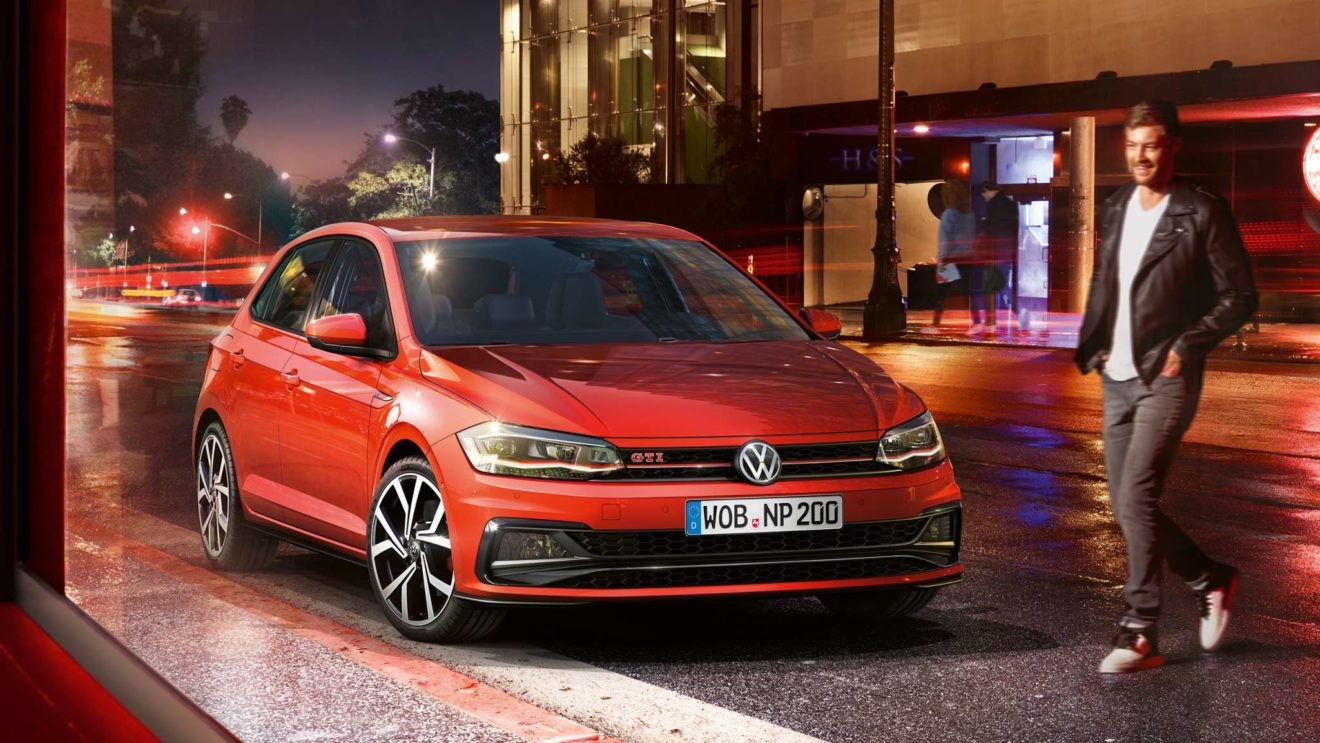
    Volkswagen Confirms Participation At The 2020 Auto Expo

    After missing out on the Auto Expo in 2018, Volkswagen India has confirmed that it will participate in the 2020 Auto Expo which is all set to be held from February 7 2020. We’ve already told you about the dates of the 2020 Auto Expo but Volkswagen promises that there’s a lot that it will bring to the Expo. Steffen Knapp, Director, Volkswagen Passenger Cars India said, “You will see Volkswagen at the Auto Expo in 2020. You will experience a completely different Volkswagen and that I can assure you really stay tuned to it because we will have a lot of fun on this show. Volkswagen will be seen in all its glory and we at Volkswagen are very excited about it. So it will be really different”

    2020 marks the beginning of the India 2.0 strategy for the Volkswagen Group. The India 2.0 strategy will see major changes within the Volkswagen Group, and is part of the company’s consolidation efforts across multiple markets. In India, the Skoda-led VW Group will introduce its first ‘Made in India’ and ‘Made For India’ offering around 2020, which will be a Hyundai Creta rivaling midsize SUV. The Skoda and VW SUV will be built on the MQB A0-IN platform, a domesticated version of the company’s modular architecture. The company has also confirmed that all future model will be based o on the MQB platform. The automaker also plans to export vehicles built in India on the said platform and is currently evaluating the feasibility.

    Part of the strategy also includes production rising more of the small displacement TSI petrol engines in India, including the new global 1.0 3-cylinder engine that will go into the new SUV. In fact Maier believes that the car may launch as petrol only, though the final choice of fuel types will be made based on unfolding policy and market trends. The 1.0 TSI would also go into other products of course; making economies of scale kick in on a wider basis.

    The India 2.0 plan also keeps future electrification in mind, something the new MQB A0 based models would also provision for. The investments will also cater to a significant ramp-up of Skoda and VW’s existing countrywide network. This would be crucial towards achieving the market share target for the VW Group, according to Maier. VW currently operates 121 dealerships in India, while Skoda’s network is 70 strong.

  • Volkswagen Second-Quarter Operating Profit Up 30% As SUV Push Pays Off

    Volkswagen Second-Quarter Operating Profit Up 30% As SUV Push Pays Off

    Volkswagen Group shares rose 2 percent after the carmaker posted a 30 percent rise in second-quarter operating profit despite a drop in vehicle sales as rising demand for sports utility vehicles and premium brands boosted margins. Volkswagen bucked a trend of falling demand for passenger cars by launching a range of higher-margin sports utility vehicles at a time when demand for sedans is falling. Daimler, Aston Martin, and supplier Continental warned on profits this week. “Very solid and clean set of numbers, marginally ahead of consensus,” Jefferies analyst Philippe Houchois said about Volkswagen’s earnings in a note on Thursday.

    The Wolfsburg, Germany-based company’s operating profit rose to 5.13 billion euros ($5.71 billion), up from 3.94 billion euros in the second quarter last year. It was boosted by the absence of a diesel charge VW booked in the year-earlier period.

    Volkswagen reiterated it expects vehicle deliveries in 2019 to exceed a prior-year figure and for revenue in the passenger cars and commercial vehicles divisions to grow at least 5%.

    VW said it continues to expect an operating return on sales in the passenger cars area and the group of between 6.5% and 7.5%. It reiterated that after special items, it expects the operating return on sales to be at the lower end of the expected range for the group and the passenger cars business area.

    Peugeot said on Wednesday it had delivered an operating margin of 8.7 percent in the first half of 2019, without releasing a more detailed breakdown of quarterly results.

    By contrast, Volkswagen Group’s operating return on sales rose to 7.2% in the first half, up from 6.8% in the year-earlier period.

  • Prosecutors Fine Bosch 90 Million Euros For Illicit Emissions Software

    Prosecutors Fine Bosch 90 Million Euros For Illicit Emissions Software

    Automotive supplier Bosch has agreed to pay a 90 million euros ($100.21 million) fine for lapses in supervisory duties which enabled carmakers to engage in emissions cheating, German prosecutors in the city of Stuttgart said on Friday.

    Privately-held Bosch, the world’s biggest automotive supplier, delivered around 17 million technical devices equipped with engine management software, including tools that allowed carmakers to manipulate emissions tests, prosecutors said in a statement.

    Bosch has accepted the fine and will not appeal the decision, they added.

    Volkswagen used the software provided by Bosch to help the carmaker mask illegal pollution in diesel-engined vehicles.

    Volkswagen has borne the brunt of penalties and fines for emissions cheating since carmakers, rather than suppliers are responsible for certifying that cars meet clean air rules

  • European Union Says BMW, Daimler, VW Colluded To Limit Emissions Technology

    European Union Says BMW, Daimler, VW Colluded To Limit Emissions Technology

    European Union authorities said Friday that German automakers BMW, Daimler and Volkswagen colluded to limit the development of emissions-cleaning technology in cars. The finding adds to the car industry’s woes after Volkswagen in 2015 admitted to cheating on emissions tests in the U.S., which led to a worldwide reevaluation of how cars are tested and how to limit emissions to make air cleaner and fight climate change.

    The EU antitrust regulator said that after an in-depth investigation, it found that BMW, Daimler and Volkswagen, including its Audi and Porsche units, broke EU laws from 2006 to 2014 by illegally agreeing among themselves to limit the roll-out of the technology. The technology helps eliminate nitrogen oxides, which can be harmful to human health, from both gasoline and diesel passenger cars.

    The alleged actions could have limited Europeans’ opportunities to buy less polluting cars, but would not have affected price, the EU said. It did not explain how the companies might have profited.

    The probe is separate from other legal procedures against carmakers for allegedly breaching environmental laws or using illegal software in car engines. EU authorities raided the offices of the three companies in October 2017 and opened their investigation on this case in September last year.

    BMW said discussions among engineers were meant to improve exhaust gas technologies and that the whole industry was aware of these talks. It said they did not involve any secret agreements or intend to hurt customers.

    Daimler said it was cooperating with the EU and does not expect to receive a fine. Volkswagen said it was also cooperating and would issue a statement once it has reviewed the EU investigation. The EU noted that its preliminary findings do not prejudge the final outcome of the investigation.

    The case comes after Volkswagen admitted four year ago to using software in diesel car engines to cheat on U.S. emissions tests. It has set aside some 27.4 billion euros ($32 billion) for fines, settlements, recalls and buybacks. Former CEO Martin Winterkorn was criminally charged by U.S. authorities but cannot be extradited; Audi’s division head was jailed.

    Renewed scrutiny of diesel emissions revealed that cars from other automakers also showed higher diesel emissions in everyday driving than during testing, thanks in part to regulatory loopholes that let automakers turn down the emissions controls to avoid engine damage under certain conditions. The EU subsequently tightened its testing procedures.

    Anti-trust fines can be steep. In 2016 and 2017 the EU Commission imposed a fine of 3.8 billion euros after it found that six truck makers had colluded on pricing, the timing of introduction of emissions technologies and the passing on of costs for emissions compliance to customers.