Retail News CRM

Tag: vw

  • VW makes ‘substantial progress’ toward 3.0 liter diesel agreement

    VW makes ‘substantial progress’ toward 3.0 liter diesel agreement

    U.S. District Judge Charles Breyer said on Thursday that Volkswagen AG has made substantial progress in talks with the U.S. Justice Department and other government agencies toward resolving the fate of about 80,000 polluting diesel 3.0 liter vehicles.

    At a San Francisco court hearing, Breyer set a Dec. 1 deadline for a report on the status of the talks and said he is “very optimistic” an agreement will be reached. VW previously agreed to spend up to $16.5 billion, including as much as $10.3 billion to buy back up to 475,000 polluting 2.0 diesel vehicles.

    Volkswagen submitted proposed fixes for larger Porsche, Audi and Volkswagen diesel vehicles earlier this year and has been in intensive discussions with U.S. and California regulators. People briefed on the talks say VW may agree to buy back at least 21,000 older Volkswagen Touareg and Audi Q7 diesel vehicles and might only offer to repair the 60,000 newest ones if regulators agree, but no final agreements have been reached.

    If VW were required to repurchase all of the larger, more expensive 3.0-liter vehicles, its costs could increase by billions. They include the diesel Porsche Cayenne, Audi A6 Quattro, A7 Quattro, Audi A8 and Audi Q5.

    Among the undecided issues is how much Volkswagen may be willing to compensate owners of the 3.0 liter vehicles.

    VW agreed to offer owners of the 2.0 liter vehicles between $5,100 and $10,000 in compensation, in addition to the estimated value of the vehicle.

    The 2.0 liter diesel vehicles have software that allowed them to evade emissions rules in testing and emit up to 40 times legally allowable emissions in onroad driving. The 3.0 liter vehicles have an undeclared auxiliary emissions system that allowed the vehicles to emit up to nine times allowable limits.

    VW has been barred from selling diesel vehicles in the United States since 2015 and has said it has not decided whether it will resume U.S. diesel sales.

  • VW brand profit plunges, Porsche lifts group

    VW brand profit plunges, Porsche lifts group

    Volkswagen said third-quarter operating profit at its core brand plunged more than half, adding weight to management calls for cutbacks at VW’s biggest division.

    Operating profit at the VW namesake brand dropped to 363 million euros ($396 million) from 801 million a year earlier, VW said on Thursday, or just 1.5 percent of sales.

    The figure was well below a consensus forecast of 462 million euros in a Reuters poll of analysts.

    Europe’s largest automaker needs to make savings at high-cost operations in Germany to help fund a shift to electric cars and self-driving vehicles while facing billions of euros in costs from its diesel emissions test-cheating scandal.

    “The results reinforce the need for cost cuts at the VW brand,” said Commerzbank analyst Sascha Gommel, who has a “hold” recommendation on the stock.

    In the seasonally slow July-to-September period, business at the VW brand was marred by suppliers halting parts deliveries to protest against the cancellation of a contract by VW, curbing output of the top-selling Golf and Passat models at the Wolfsburg and Emden plants by about 20,000 units.

    Analysts estimated the supplier dispute shaved a three-digit million-euro amount off the brand’s quarterly profit and said the carmaker also offered incentives to offset the impact of its emissions scandal on sales.

    Year-to-date sales of the VW brand swung back to growth on a 6.7 percent gain in September and posted the strongest growth in two-and-a-half years last month at group level, helped by strong demand in China and Europe.

    The VW group raised its guidance for profit and revenue this year after posting higher-than-expected quarterly earnings of 3.3 billion euros, adjusted for special items, reflecting strong gains at premium brand Porsche.

    The group said it expected revenue to match last year’s 213 billion euros after predicting in July that revenue would fall by as much as 5 percent this year.

    The group’s operating margin may come in at the upper end of VW’s 5-6 percent target range before special items, the carmaker said. It previously forecast the profitability benchmark to fall within that corridor.

    The shares were trading up 0.1 percent at 126 euros as of 0804 GMT.

    “Despite major challenges and the negative impact of the diesel issue, the Volkswagen Group remains on a solid financial footing,” finance chief Frank Witter said.

  • VW’s Audi steps up collaboration with Chinese tech groups

    VW’s Audi steps up collaboration with Chinese tech groups

    Volkswagen’s luxury car unit Audi has agreed to deepen collaboration with Chinese internet technology groups to offer more digital services in the world’s largest car market.

    Audi and FAW-Volkswagen, VW’s joint venture with FAW Car Co Ltd (000800.SZ), have signed letters of intent with Alibaba (BABA.N), Baidu (BIDU.O) and Tencent (0700.HK), Audi said on Sunday. Financial terms were not disclosed.

    Parent Volkswagen has been hobbled by a scandal over the rigging of emissions tests, distracting it in a race with global carmakers to develop computer-aided services for drivers.

    VW’s CEO told a newspaper on Sunday that it has to remain in control of its relationship with car users, which is why it stopped talks with U.S. ride-hailing service Uber and technology giants Google (GOOGL.O) and Apple (AAPL.O).

    Under the agreement with online search company Baidu, Audi aims to improve the use of smartphone apps in its cars.

    Its projects with social network and online gaming group Tencent include helping drivers to make better use of the WeChat communication app.

    The alliance with Alibaba aims to develop more real-time traffic news services and 3D maps.

    VW in May took a $300 million stake in smaller ride-sharing company Gett.

  • Volkswagen sets up shop in Malaysia to handle direct sales here

    Volkswagen sets up shop in Malaysia to handle direct sales here

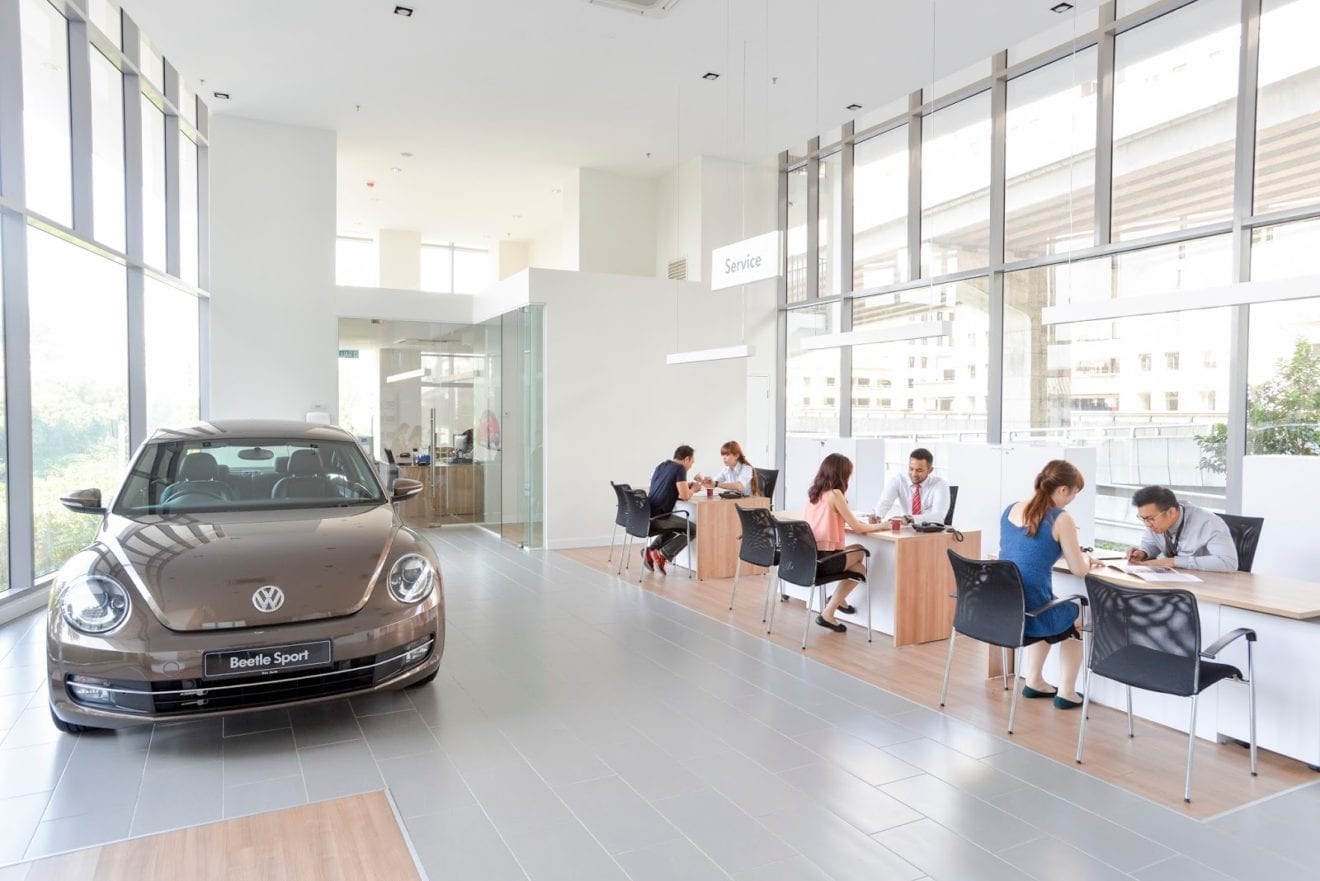
    Volkswagen Passenger Cars Malaysia (VPCM) Sdn Bhd will be the official distributor of Volkswagen cars in the domestic market.

    VPCM is managed by European automotive retail specialist, Porsche Holding Salzburg, the car distributor said in a statement.

    The announcement comes after a series of consolidation exercises within Volkswagen Malaysia over the past six months.

    Alin Tapalaga, one of two managing directors to lead VCPM, said the company would be increasing the Completely Knocked-Down model line-up, and continue to import Completely Built-Up models into the country.

    Moving forward, Volkswagen Group Malaysia will concentrate its business interest in Malaysia on the Audi brand, as well as its vehicle assembly operation in Pekan, Pahang.

    Meanwhile, VPCM is introducing a five-year manufacturer warranty for all Volkswagen cars purchased from today, while launching the new Jetta and all-new Passat within the next few months.

    The Volkswagen franchise in Malaysia was previously handled by DRB-Hicom Bhd.

  • VW, suppliers struggle to resolve dispute in marathon talks

    VW, suppliers struggle to resolve dispute in marathon talks

    Volkswagen and two of its auto parts suppliers were pushing to resolve a contract dispute early on Tuesday, spokespeople said, but had no progress to report despite 17 hours of talks as the conflict threatens to cost the carmaker thousands of vehicles in lost output this week.

    Top-level negotiations between VW and the two Prevent DEV group suppliers that began at about 1100 GMT (0700 ET) on Monday and continued through the night failed to yield a breakthrough, spokespeople for VW and the suppliers said. But the two sides are continuing to seek a solution, they said, without elaborating.

    The dispute affected about 28,000 workers at six of VW’s 10 German factories on Monday when the automaker halted production of the top-selling Golf and Passat models, as well as assembly of engines, gearboxes and emissions systems, due to the Wolfsburg-based suppliers’ refusal to deliver products like seat covers and gearbox parts.

    VW’s supplier conflict poses a threat to the company’s profitability as it seeks to recover following its diesel emissions test cheating scandal.

    Analysts at UBS estimate that a one-week production halt at VW’s Wolfsburg headquarters would result in about 100 million euros ($113 million) in lost gross profit, and could have knock-on effects on other suppliers.

    CarTrim, which makes seats, and ES Automobilguss, which produces cast iron parts needed to make gearboxes, are seeking compensation after saying they faced lost revenue running into tens of millions of euros after VW canceled a contract.

    Europe’s largest automaker has been trying to force the two companies to resume deliveries, suggesting they could face fines or even seizure of missing parts.

    Lower Saxony Economy Minister Olaf Lies, a member of VW’s supervisory board, has said the dispute is hitting VW “at the worst possible time”. Whether VW management should face questions for over-reliance on single suppliers needs to be clarified, he added.

    Some industry analysts were also critical of VW.

    “A global player has based its entire production chain on a mid-sized company,” said Ferdinand Dudenhoeffer, head of the Center of Automotive Research at the University of Duisburg-Essen. “That is not only amateurish but also extremely naive.”

    Faced with billions of euros of costs from its emissions scandal, VW has indicated it would seek price cuts from its suppliers.

    While the disruption may keep workers at home, there could be a silver lining for VW in limiting Golf output. The automaker had already canceled Golf production shifts on October 4-7 and December 19-22 due to falling demand.

    VW said the stoppages were part of regular production adjustments.

    “Given the slowdown of VW sales (excluding China), the brand certainly needs to slightly trim production levels,” said London-based Evercore ISI analyst Arndt Ellinghorst.

  • Electric car charging station companies issue warning over VW settlement

    Electric car charging station companies issue warning over VW settlement

    Electric vehicle charging companies are calling for independent oversight of the $2 billion Volkswagen AG is required to invest in clean car infrastructure, saying VW should not have the power to shape the nascent electric car charging space.

    The German automaker agreed to invest the money, which includes $1.2 billion nationally and $800 million in California, as part of its penalties for equipping hundreds of thousands of its diesel vehicles sold in the United States with software designed to cheat tailpipe emissions tests.

    While charging station companies called the money a potential “game changer,” they worry that if it is misspent, it could hurt competition.

    “The agreement shouldn’t pick winners and losers, especially given that this emerging market transition will in no small part define 21st century transportation,” twenty eight companies, including ChargePoint, EV Connect and Electric Vehicle Charging Association, said in a letter to the U.S. Justice Department on Friday.

    The letter, seen by Reuters on Tuesday, said an independent administrator is key to ensuring that the program treats all industry participants, regardless of business model and technology, fairly.

    VW did not immediately respond to a request for comment.

    “The program should be structured to benefit drivers in California and across the nation, not enable the settling defendants to enter or influence the markets for (zero emission vehicle) charging and fueling equipment and services,” the letter said.

    It said regulators should earmark some of the funds for a rebate program to incentivize employers, apartment owners, workplaces and other facility managers who want to install EV charging stations.

    A shortage of charging stations at workplaces and multi-unit apartment dwellings is seen as a key hurdle to the widespread adoption of electric vehicles.

    VW’s plan for spending the $2 billion, which has yet to be released, will be overseen by the California Air Resources Board and the U.S. Environmental Protection Agency.

  • VW’s Audi posts 2.3 percent rise in July sales

    VW’s Audi posts 2.3 percent rise in July sales

    Audi sold 2.3 percent more cars in July on growing demand for the redesigned top-selling A4 saloon, though kept trailing behind German luxury rivals BMW (BMWG.DE) and Mercedes-Benz (DAIGn.DE).

    Audi’s global sales increased to 149,400 cars and sport-utility vehicles from 146,073 a year earlier, the Ingolstadt-based carmaker said on Thursday, with its year-to-date deliveries up 5.2 percent to 1.10 million cars.

    Daimler’s Mercedes-Benz last week posted a 9.4 percent increase in sales to 163,770 cars, its best-ever July result, compared with a 4 percent gain at BMW’s core brand to 153,392.

    After seven months, Mercedes-Benz is on course to become the world’s biggest luxury carmaker by sales, replacing BMW which has kept the lead since 2005.

  • South Korea May Halt Volkswagen Sales

    South Korea May Halt Volkswagen Sales

    South Korea’s environment ministry has accused local VW officials of fabricating reports on emissions and noise-level tests.

    As a result, Volkswagen may have sales of its vehicles in South Korea suspended later this month. The environmental authority in South Korea, the National Institute of Environmental Research, will decide at a hearing on July 22 whether to suspend the sale of 32 VW Group models, which includes the Audi brand too, currently available in the market.

    Prosecutors last month raided the Seoul offices of the German automaker and arrested an employee as part of the investigation. The automaker stands accused of fabricating reports on 26 different VW Group models including the VW Golf and the Audi RS7.

    The South Korean unit of Volkswagen has seen sales slide dramatically in the first half of 2016. Sales are down 33 percent to 12,463 units for January through to June compared to the same period last year.

    Volkswagen has said it may take legal action to fight any decision to halt sales.

    The situation with VW isn’t without precedent.

    Earlier this year, South Korea suspended sales of the Nissan Qashqai after accusing the Japanese automaker of manipulating the model’s emissions control system. The local Nissan unit has filed a lawsuit against the environment ministry in response.

  • Toyota’s Daihatsu Buyout May Widen Global Lead Over Volkswagen

    Toyota’s Daihatsu Buyout May Widen Global Lead Over Volkswagen

    Toyota Motor Corp. is staying on the offensive after besting Volkswagen AG for bragging rights as the world’s biggest automaker. Now, it’s weighing a deal that might widen its lead, especially in Southeast Asia.

    In buying the rest of its 51 percent-owned Daihatsu Motor Co. unit, a move Toyota confirmed Wednesday that it’s considering, the automaker would gain full control of a company that’s a sales leader for Japanese minicars and compact vehicles in Indonesia and Malaysia. Daihatsu said it’s cooperating with Toyota in buyout discussions and its shares surged by the most since 1999.

    Toyota continues to bound from strength to strength and has grabbed the industry’s sales crown for the fourth straight year. It was also the only automaker to sell more than 10 million vehicles, with Volkswagen falling back amid the diesel-emissions scandal that has tainted its image with consumers and regulators. The potential Daihatsu purchase points to another acquisition option at Toyota’s disposal: It has an almost identical stake in truck maker Hino Motors Ltd.

    “Daihatsu needed support,” Koji Endo, an analyst at Advanced Research Japan, said by phone. “It could not make business in China, the Indonesian market is not doing as well as expected, especially for the last two years, and their domestic minicar business is in harsh competition with Suzuki.”

    Shares of Daihatsu climbed 16 percent, their biggest gain since November 1999, at the close Wednesday in Tokyo. Toyota rose 3.8 percent after confirming it was considering a deal, which was first reported by the Nikkei newspaper.

    At Daihatsu’s current market value, the portion of the company Toyota doesn’t already own is worth about 360.8 billion yen ($3 billion). The deal would give Toyota full say over a company that competes with Suzuki Motor Corp. in Japan’s minicar segment, which has expanded even as the overall domestic auto market has shrunk.

    The Nikkei reported separately Wednesday that Toyota had begun talks with Suzuki to form an alliance and better compete in emerging markets including India, without citing a source. Toyota and Suzuki denied the Nikkei report in filings with the Tokyo exchange.

    Although Daihatsu is a force in Japan’s minicar segment and in Indonesia and Malaysia, the company struggled last year. Sales in its domestic market fell 14 percent, the result of a price war with Suzuki for sales leadership in the fiscal year ended in March 2015.

    Daihatsu sales have been slumping in Indonesia, with deliveries dropping 10 percent through the first half of its fiscal year. Owning all of the carmaker could help Toyota to better navigate these challenges, said Matt Stover, a Boston-based analyst at Susquehanna International Group.

    ‘More Latitude’

    “There are certain things that you can’t get at when it’s an independent company versus when it’s something that you totally own,” Stover said by phone. “There are some duplicate expenses you can get rid of and you have a lot more latitude to pursue your strategy.”

    Global sales for Toyota, including Hino and Daihatsu, slipped 0.8 percent to 10.15 million vehicles last year, the company said Wednesday in a statement. Volkswagen earlier this month reported a 2 percent drop to 9.9 million, while General Motors Co.’s deliveries rose 0.2 percent to 9.8 million.

    “Toyota’s hegemony will probably not be challenged for the next few years after the big setback for VW,” said Zhou Jincheng, a Nagoya-based analyst at researcher Fourin Inc. “The gap will only get wider and wider because VW will take time to adjust its strategies for markets such as the U.S. and Europe.”

    Toyota first tied up with Daihatsu in 1967 and has owned its majority stake since 1998. Daihatsu started making Toyota-branded minicars in 2011 and also builds vehicles for its parent in Indonesia. The company was the top-selling automaker in Malaysia for nine straight years through 2014.

    Daihatsu traces its beginnings to March 1907, when two academics and a group of businessmen set up a company in Osaka, Japan’s second-largest city, to produce internal combustion engines. The company changed its name to Daihatsu Motor in December 1951.