Retail News CRM

Tag: wechat

  • JD start to have parcel delivery in logistic division

    JD start to have parcel delivery in logistic division

    Chinese e-commerce company JD is opening its logistics network up to consumers to send parcels around the country, marking the first entry by an e-commerce company into the parcel delivery business. The new JD parcel delivery service announced enables users of the company’s app in Beijing, Shanghai and Guangzhou to send items intra-city and throughout Mainland China, using the same fast and reliable delivery service JD offers with online purchases. The company, which will expand the program to include high-value items like luxury products and high-end consumer electronics, as well as more diverse options based on delivery timing, aims to eventually make residential and business deliveries for shippers from anywhere to anywhere within Mainland China in the future.

    JD is the only large-scale e-commerce company in the world to operate a nationwide in-house logistics network, down to the last mile. The company says its network, powered by its proprietary supply chain management technology, is able to deliver more than 90 per cent of orders same- or next-day, and reaches 99 per cent of China’s population.

    The new JD parcel delivery service includes a range of competitively priced options, including same-day delivery between different cities; same-day intra-city delivery; standard next-day or two-day delivery and next-day delivery between cities.

    “Depending on the delivery option chosen, packages may be sent by high-speed rail or air,” the company said in a statement. “Individual shippers can use the same JD app they use for shopping to schedule a pickup by one of JD’s full-time logistics staff, and have a parcel delivered thousands of miles away at the speed they choose. They will even be able to select JD’s luxury ‘white glove’ delivery service if they want to make the delivery extra special.”

    Zhenhui Wang, CEO of JD Logistics says the JD parcel delivery service marks the next step in leveraging the nationwide logistics network that JD has built over the past decade, to expand the range of services offered to its customers.

    “JD is known throughout China for the fastest and most reliable delivery, and we are confident that users will appreciate the convenience of this new service.”

    The program has already begun user trials with multiple ways for customers to request pickups. In addition to the JD app, shippers can request pickups on a JD Delivery mini program in WeChat, China’s largest social network operated by JD’s partner Tencent, and a JD “Delivery Team” WeChat account.

    JD unveiled the parcel delivery service at its 2018 Global Smart Supply Chain Summit held in Beijing today. Other initiatives announced at the summit – part of JD’s Global Smart Supply Chain Network Strategy – include JD’s smart warehouse management system initiative, an expansion of the company’s green initiatives, and the formation of a new energy union with 20 industry partners.

  • The sharp rise of Pinduoduo – What is the secret?

    The sharp rise of Pinduoduo – What is the secret?

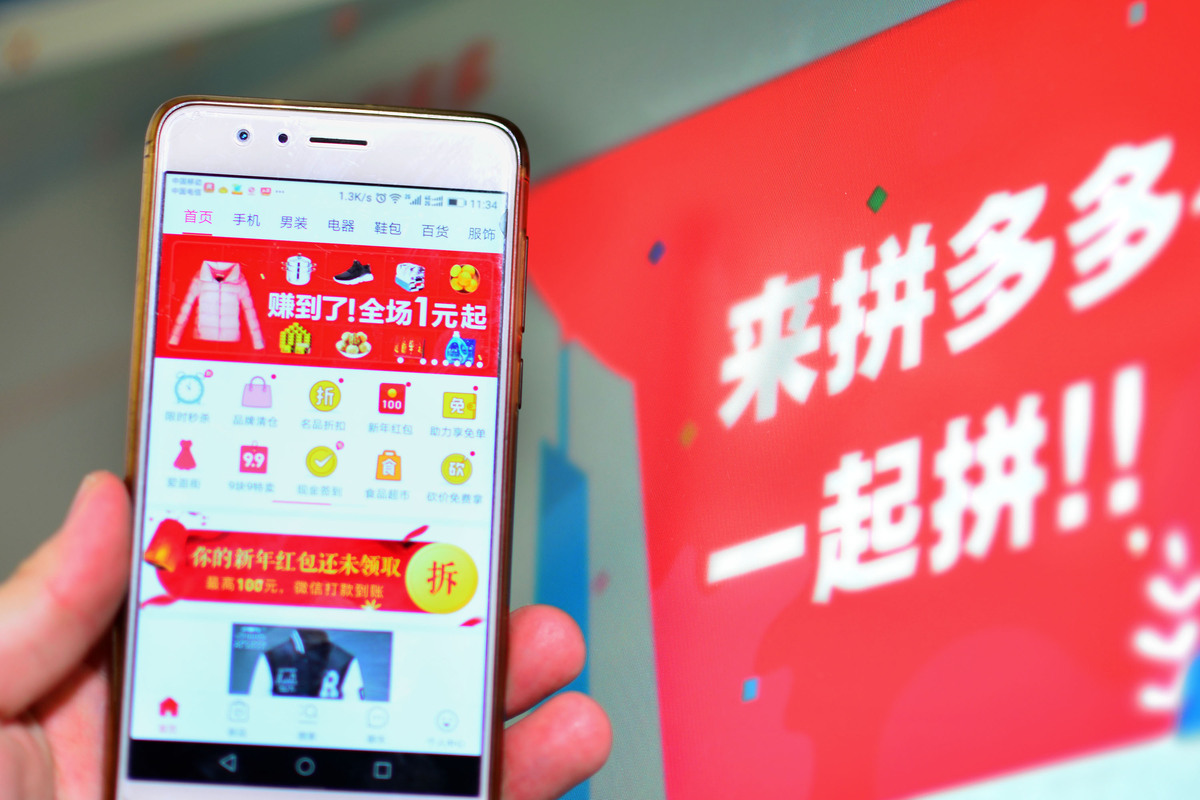
    Pinduoduo, also known as PDD, founded by the Ex-Googler Colin Huang, is currently the fastest growing app in the history of the Chinese Internet and the leading Chinese App for social e-commerce. Pinduoduo is reported to have raised a US$3 billion investment round led by Tencent Holdings, at a valuation of US$15 billion. A significant point here is the collaboration with Tecent’s WeChat app (The Chinese analogy to WhatsApp), which plays the most significant role in the functionality of the app and the way it works.

    The app has a list of techniques to push the users share it with their friends and to keep them actively using it after. Pinduodo allows users to participate in-group buying deals with their friends, mostly via Wechat. Pinduoduo can be described best with the words, viral, quick, addictive, attractive, and convenient. Also, probably the most contemporary version to online shopping, bringing into integration the most powerful tools of nowadays communication- messaging and group chats.

    The app, often used through WeChat messaging service, offers merchandise at times 20 percent cheaper than market price by letting consumers buy directly from manufacturers, cutting out middlemen, advertising and acquisition costs. Huang and his developers also used their experience to add gaming elements to the shopping experience, offering coupons and rewards.

    At the end of December 2017, PDD had more than 156.5 million users. PDD gives people a different experience than at traditional e-commerce sites like Amazon.com or Alibaba. PDD is like a digital version of shopping at the mall with friends.

    The strongest asset of PDD is that it is doing extremely well in small cities. Most of the users are price-sensitive women above 40 years old, living in small cities in China. Which gives us a clear picture – frequent purchases for the whole family.

    Pinduoduo has got a few main features:

    1. Group Buying. In order to get discounted price, find a friend to join the group buy deal.
    2. Free products. If you get enough new users to follow the Pinduoduo Official Account, install the App and sign up via WeChat login.
    3. Buy it now coupons. Unlike other coupons in China, PDD offers coupons for two hours only. Which means the user has to take action immediately.
    4. “Bargain” with friends. Each time a friend volunteers to help you “bargain”, the price decreases a bit. You can even succeed getting the product free.
    5. Get cash rewards for inviting friends.
    6. Use of lotteries. Invite friends to join within a specific period of time and win the product for less than 10% of the cost.
    7. Automatic payment. PDD uses automatic WeChat payments. After allowing “password-less payments” by default at the end of your first purchase, you will not have to enter your password anymore and you will be able to pay with one-click payments.

    Pinduoduo has a strong asset over other online retailers and it is in offering cheap deals. To maximize this, Pinduoduo makes the best out of its own users. You may ask how? Very simple, to get the best bargains, users have to invite more buyers, which helps the company maintain the low prices.

    What are the reasons for the fast growth?

    The first point to highlight is the “social shopping” that PDD offers. WeChat has a monthly active user base of over 1 billion. It allows purchases as a group through which users can receive a group discount for purchasing as a group. Users get a product link that they can share with their WeChat friends. The will of users to get a good deal, it is what makes them want to share the app, with as many as possible people. In 2016, when people did not think it was impossible to exponentially grow user traffic, Pinduoduo accumulated one hundred million users through the above method.

    The second smart move of Colin Huang, the Founder of Pinduoduo is the fact that he knew that he must know his market. To understand Pinduoduo, we must understand the users behind Pinduoduo. Comparing Pinduoduo and JD.com’s user distribution, we see that 65% of Pinduoduo users are from third tier cities or more rural areas, while half of JD.com users come from first plus second tier cities, and half from the rest of China. Pinduoduo has achieved unprecedented growth by targeting the low-income population who are also new internet users with its value game.

    Last but not least key move of Huang was giving more profit for the merchants.  Pinduoduo attracts merchants by charging zero fees for selling on their platform. Advertising is achieved through users sharing to social media. As the number of Pinduoduo users grows, the app has formed an ecosystem of user-generated product promotion, allowing merchants to reach the 300 million users directly. By this, satisfying the survival needs of the mid-tail merchants. Colin Huang gave the small merchant a dream opportunity to grow big. And stories such as “Girl born after 1980 achieves 5 million yuan in sales after four months on Pinduoduo”, and “Selling 260 million packs of napkins in two years with three cents of profit per pack” began to appear on the news.

    Along with that, Huang does not compromise on the quality and makes sure that users know that the rapid rise of PDD is not accidental. After some users being dissatisfied with the poor quality, speed of delivery, inconsistencies between product and photo, and failure to receive refunds after waiting for a long time. To address these problems, a customer protection fund was set up by PDD. It helps consumers deal with after-sales disputes and claims. By this focusing on maintaining returning customers and not one time excitement, that will be the end of the customers’ interaction, with the app.

  • JD.com expands logistics services to include parcel delivery

    JD.com expands logistics services to include parcel delivery

    Chinese e-commerce company JD is opening its logistics network up to consumers to send parcels around the country, marking the first entry by an e-commerce company into the parcel delivery business. The new JD parcel delivery service announced enables users of the company’s app in Beijing, Shanghai and Guangzhou to send items intra-city and throughout Mainland China, using the same fast and reliable delivery service JD offers with online purchases. The company, which will expand the program to include high-value items like luxury products and high-end consumer electronics, as well as more diverse options based on delivery timing, aims to eventually make residential and business deliveries for shippers from anywhere to anywhere within Mainland China in the future.

    JD is the only large-scale e-commerce company in the world to operate a nationwide in-house logistics network, down to the last mile. The company says its network, powered by its proprietary supply chain management technology, is able to deliver more than 90 per cent of orders same- or next-day, and reaches 99 per cent of China’s population.

    The new JD parcel delivery service includes a range of competitively priced options, including same-day delivery between different cities; same-day intra-city delivery; standard next-day or two-day delivery and next-day delivery between cities.

    “Depending on the delivery option chosen, packages may be sent by high-speed rail or air,” the company said in a statement. “Individual shippers can use the same JD app they use for shopping to schedule a pickup by one of JD’s full-time logistics staff, and have a parcel delivered thousands of miles away at the speed they choose. They will even be able to select JD’s luxury ‘white glove’ delivery service if they want to make the delivery extra special.”

    Zhenhui Wang, CEO of JD Logistics says the JD parcel delivery service marks the next step in leveraging the nationwide logistics network that JD has built over the past decade, to expand the range of services offered to its customers.

    “JD is known throughout China for the fastest and most reliable delivery, and we are confident that users will appreciate the convenience of this new service.”

    The program has already begun user trials with multiple ways for customers to request pickups. In addition to the JD app, shippers can request pickups on a JD Delivery mini program in WeChat, China’s largest social network operated by JD’s partner Tencent, and a JD “Delivery Team” WeChat account.

    JD unveiled the parcel delivery service at its 2018 Global Smart Supply Chain Summit held in Beijing today. Other initiatives announced at the summit – part of JD’s Global Smart Supply Chain Network Strategy – include JD’s smart warehouse management system initiative, an expansion of the company’s green initiatives, and the formation of a new energy union with 20 industry partners.
  • Indonesia Central Bank says Alipay, WeChat non-compliant with e-transaction rules

    Indonesia Central Bank says Alipay, WeChat non-compliant with e-transaction rules

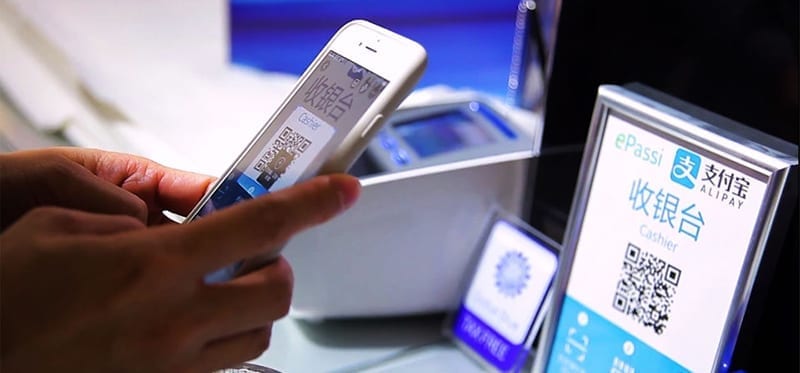
    Bank Indonesia has said that foreign consumer payment applications, like China’s Alipay and WeChat that Chinese tourists reportedly used in Bali, are not approved for local use.

    The central bank said the applications did not comply with regulations, in particular because they did not have a cooperation with local payment systems.

    BI payment system policy executive director Onny Widjanarko said in Jakarta on Thursday that all foreign payment applications, including Alipay and WeChat, were required to comply with Indonesian regulations. “Any payment system should be adjusted to existing regulations,” he said.

    Under the National Payment Gateway (GPN) system, any foreign principles involved in retail transactions are required to cooperate with local switching companies.

    Onny said foreign payment applications must meet two requirements to be approved for conducting transactions in Indonesia: establish cooperation with a local switching company and be connected to major Indonesian banks.

    “So far we have found two cases. The foreign payment apps have cooperated with local switching companies, but they are neither connected to nor are cooperating with Book 4 major banks,” Onny said. He also stressed that all transactions in the country were required to use the rupiah.

    He said BI had halted any transactions made through foreign payment apps that did not have a cooperation with local companies.

    Onny said the central bank would monitor the situation to ensure that all transactions were made through local switching companies in compliance with regulations.

  • Burberry is launching ‘See Now, Buy Now’

    Burberry is launching ‘See Now, Buy Now’

    British luxury fashion house Burberry is releasing a see-now, buy-now collection exclusively on Instagram and WeChat.

    Limited-edition pieces from the collection, the first released under the Burberry label by designer Riccardo Tisci, will be made available through 24-hour product releases on the two platforms. The inclusion of WeChat on the see-now, buy-now program illustrates the importance of the Chinese market for the brand.

    A physical sale for the collection will be held in the Regent Street, London flagship store at 5.30 pm on September 17, immediately after Tisci’s runway presentation at London Fashion Week. The store will be visually transformed under a Tisci-designed concept for the 24-hour sale.

  • WeChat launches digital wallet in Malaysia

    WeChat launches digital wallet in Malaysia

    WeChat, China’s most popular social media app, has launched its digital payments platform in Malaysia. It is the platform’s first market in Asia beyond China and Hong Kong.

    The digital payment feature of WeChat allow its users to transfer money among themselves and make payments to offline merchants in ringgit. Rather than taking the common route of overseas expansion used by Chinese mobile-app providers catering to Chinese tourists or nationals living abroad, Tencent here seems to be building a local payment service.

    Malaysia’s central bank has been implementing policies promoting electronic payments in a bid to boost a network that lags behind other Southeast Asian markets. Their move has triggered the launch of digital wallets by other strong players, including Grab, the south-east Asia ride-hailing company.

    “Malaysia is a vibrant market. Technology-savvy Malaysians are embracing a digital lifestyle and to meet this shift, the payment experience has to evolve. Bringing WeChat Pay to Malaysia is our response to this,” said WeChat Pay Malaysia.

    SY Lau, senior vice-president at Tencent said in November when the company acquired a Malaysian epayment licence, that WeChat had 20m users in the country, equivalent to almost two-thirds of the population.

    The potential for mobile payments is vast in Malaysia, where cash is still king, but the number of mobile phones, mostly smartphones, outstrips a population of 32.1m by more than 10m, according to the central bank.

    But collaborations with local banks, of which WeChat has none, will be just as important for WeChat Pay to flourish there.

    At home, it took Tencent and Ant Financial, Alibaba’s electronic payments affiliate, years to build the links with hundreds of Chinese banks that make their services possible.

    Grab has already partnered with top local bank Maybank to bolster its mobile wallet, GrabPay. Coupled with its strong ride-hailing network in its market of origin, Grab is set to be a tough competitor for WeChat in Malaysia. According to Grab, its app and mobile wallet are already on half of all mobile phones in Malaysia.

    The number of emoney licences issued by Bank Negara to non-bank entities has almost doubled to 44 in the past two years as the central bank looks to reduce cash usage to curb tax evasion and corruption, according to Nor Shamsiah Mohd Yunus, Malaysia’s central bank governor.

    In Asia more broadly, however, some analysts say WeChat might struggle to expand beyond Malaysia, where the population is more than one-fifth ethnic Chinese.

    While the use of mobile payments is rapidly overtaking cash and cards for daily transactions by China’s smartphone users, WeChat Pay also faces the challenges of different local infrastructure and app-use habits in going abroad.

    WeChat Pay’s Malaysia launch comes at a tricky time for Tencent, whose second-quarter earnings were hit by domestic reforms delaying the licensing of new games.

  • Facebook blocked by China’s Great Firewall

    Facebook blocked by China’s Great Firewall

    Earlier last week, the rumor of Facebook’s comeback to China was spreading fast.

    Banned since 2009, the technology giant was apparently trying to gain a foothold into the country with the establishment of an innovation hub. The word spread as screenshots of the subsidiary’s registration in Hangzhou were released on the Internet.

    By Thursday, the filing had vanished from the website of China’s National Enterprise Credit Information Publicity System. According to the New York Times approval was withdrawn after the national internet regulator, the Cyberspace Administration of China, disagreed with the provincial government’s approval of the subsidiary.

    Moreover, all terms related to the operation were censored on Chinese social media.

    The country has the media and Internet on a very short leash. Foreign companies strive every day to operate in the region as they face legions of ministries, regulators and local and central authorities. But the Chinese market is a very attractive one as it is the world’s biggest Internet market with over 710 million users as of 2017 (Forbes).

    The numerous bans and difficulties foreign companies are experiencing have favored the emergence of a monopolist in the market: WeChat. Indeed, along with Facebook, Twitter is also banned in China while messaging apps such as WhatsApp work intermittently. Apple and Google services are also very restricted.

    The legal status of Facebook’s expansion remains uncertain. Nevertheless, we are a long way from fully removing the ban of the platform even should the innovation hub manage to go through. Speaking of the company’s efforts in China, Mark Zuckerberg said they are “a long time from doing anything”.

    2018 has so far been a hard year for the social media giant as the company is facing many other challenges from slower user growth and tanking share price to scandals over user data.

  • Mr Bags x Tod’s big success in China event

    Mr Bags x Tod’s big success in China event

    The influential fashion blogger is also collaborating with Montblanc on a limited-edition collection of women’s handbags, a new category for the brand.

    Tao Liang has an unapologetic love for handbags. And he also knows how to sell them to his over 3.5 million readers on China’s biggest social media platform Weibo and more than 850,000 followers on WeChat, a microblogging messaging app.

    In just six minutes, Mr. Bags, as Liang is better known, helped Tod’s sell 3.24 million RMB worth of handbags on his new Mini Program shop within WeChat, called “Baoshop.” The second collaboration between the Beijing-based fashion blogger and Tod’s, 500 pieces of the limited-edition “Wave” backpacks were created — double the amount from last year’s capsule collection.

    Three-hundred of the canine-like handbags, a nod to the year of the dog being celebrated in China this year, pre-launched on Mr. Bags’ Baoshop in June. The handbags, each priced at 10,800 RMB (about $1,620), sold out within six minutes, generating 3.24 million RMB (almost $500,000) — a new record for the 26-year-old influencer. (His previous record was selling 1.2 million RMB worth of Givenchy handbags in 12 minutes in 2017.)

    “China is a key strategic market for Tod’s and Mr. Bags, with his extensive and insider knowledge of this market and its customer, is the perfect collaborator for us,” a spokesperson from Tod’s said. High-profile individuals from Zhang Zetian, China’s youngest female billionaire, to models like Liu Wen and Xiao Wen Ju and actresses Ouyang Nana, Guli Nazha, Sun Yi and Song Zuer, also wore the “Wave” backpack and posted images on social media, helping to popularise the style.

    Now, Mr. Bags is readying for his next launch: a collection of limited-edition Montblanc handbags for both men and women.

    The partnership came about, said Liang, after “many bag fans commented on social media, asking [for recommendations] for mini-backpacks that are classic, good-looking, affordable and practical.”

    It will be the first time the stationery brand, which has recently been expanding its offering of leather accessories, has introduced handbags for women. It also marks the first time the company has collaborated with a fashion blogger. The capsule is designed for the Qixi festival — commonly referred to as Chinese Valentine’s Day — which falls on August 17 this year. “We wanted to give it a modern interpretation,” said Montblanc’s creative director Zaim Kamal. A total of 497 pieces will be pre-launched on Baoshop, with prices starting at 4,800 RMB (about $717.1).

    Liang launched Mr. Bags in 2012 and quickly became an arbiter of handbag taste among Chinese readers locally and internationally. Ranked #3 on Exane BNP Paribas’ 2017 list of China’s most influential fashion bloggers, Liang uses his encyclopaedic fashion knowledge not only to keep his following informed about luxury brands and the latest handbag trends, but also to help mega brands understand what Chinese consumers are looking for in the latest “it” accessory.

    Baoshop, which Mr. Bags launched last month, only sells exclusive or customisable products, and claims to be the first WeChat Mini Program in China to work directly with luxury brands and sell handbags costing over 10,000 RMB. “For me, the success of a project is not measured by how many bags we sold in a short period of time or how much revenue we generated. It’s really about how much impact it creates,” he said.

    And there’s significant opportunity. Luxury goods purchased in China make up 8 percent of global sales, while Chinese shoppers — who make three-quarters of their luxury purchases overseas — drive 32 percent of the worldwide total, more than any other nationality, according to Bain.

    While collaborations between fashion bloggers and companies are not uncommon in China, e-commerce partnerships through WeChat are growing as luxury brands become more comfortable with hosting sales on the social media platform.

    Recently, top Weibo fashion blogger Gogoboi launched a WeChat store, called Bu Da Jing Xuan (不大精选), where he curates and sells luxury goods from online retailers like Yoox and Farfetch.

  • Givenchy opens WeChat store in China

    Givenchy opens WeChat store in China

    France’s Givenchy is revamping its retail reach in Asia, with the rollout of a WeChat store in China.

    Bowing 15 May 2018, the new WeChat boutique store is an extension of Givenchy’s premium offline service, and aims to offer a convenient yet immersive shopping experience for wealthy Chinese consumers, according to a statement from the Paris brand.

    Via WeChat, Chinese users can now browse through an exclusive, limited-edition collection, with pieces from ready-to-wear apparel and leather goods to accessories, allowing shoppers to place orders directly on the app.

    The WeChat store was designed by the newly appointed Creative Director, Clare Waight Keller, who was also named the couturier behind the bridal gown worn by the newly crowned Duchess of Sussex, Meghan Markle, commemorating her marriage to Prince Harry.

    The LVMH Group-owned maison becomes the latest in a slew of stellar brands to open a WeChat store for Chinese customers, following the digital footprint of rivals Christian Dior and Gucci.

    Prior to WeChat, Givenchy targeted offline shoppers in Chian through collaborations with the country’s top-tier fashion KOLs – gogoboi and Mr.Bags.

    WeChat’s monthly users figure hit 1 billion per month in March this year and the app has become a marketing must-have for international luxury brands looking to build a connection with Chinese consumers.

    LVMH group has been witnessing solid sales growth in Asia. Demand from Asian shoppers has boosted makers of high-end handbags, clothing and watches the past year, thanks in particular to thriving Chinese demand.

    In 2017, shopping, food, and travel increased exponentially, up 22.2 percent to 333.9 billion RMB (approximately $52.22 billion).

  • Tencent Beats Forecasts as Revenue Surges 48% in First Quarter

    Tencent Beats Forecasts as Revenue Surges 48% in First Quarter

    WeChat parent Tencent Holdings has achieved a 48 per cent increase in revenue during the first quarter of this year.

    Revenue from Smartphone games, payment-related services, digital-content subscriptions and sales, and social advertising were key contributors overall growth in the three months to March 31.

    Operating profit grew by 59 per cent and operating margin was 42 per cent, up three percentage points year-on-year, while profit attributable to shareholders increased by 61 per cent.

    Tencent says the number of monthly active users (MAU) on smart devices was up by 2.4 per cent year-on-year to 694.1 million and smart-device MAU for users aged 21 years or below also increased year-on-year as it enriched chat features and entertainment-driven content appealing to young consumers.

    Tencent’s online advertising business achieved 55 per cent revenue growth.

    “For media advertising, revenues grew by 31 per cent year on year. Within that, video ad revenues increased 64 per cent due to more pre-roll ads benefiting from the growth in video views, and our enhanced capability to develop creative ad formats within original productions.”

    Other businesses grew revenues by 111 per cent, driven by its payment-solutions business and related financial services, as well as cloud services.

    “The growth in our payment solution business was mainly contributed by the rapidly increasing offline commercial transaction volumes and consumer cash withdrawal fees.”

    Digital content viewers grow

    Total fee-based value-added services subscriptions grew by 24 per cent to 147 million, primarily driven by video- and music-streaming services.

    “We strengthened user engagement of our video platform, where the number of daily active users and per-user time spent on mobile grew rapidly. Mobile daily video views increased by more than 60 per cent, driven by the premium-quality content from our self-commissioned and licensed productions. Total video revenues were up 75 per cent year on year.”

    Tencent said its investment in self-commissioned content enhanced Tencent Video’s user engagement, helping increase conversion-to-subscription rates and subscriber-retention rates. Video subscription revenues grew by 85 per cent year on year.

  • Kinofy app opens door to 1 billion Chinese consumers on WeChat

    Kinofy app opens door to 1 billion Chinese consumers on WeChat

    Singaporean brands have been promised access to more than 1 billion Chinese consumers through a new cross-border e-commerce app which runs on the WeChat ecosystem.

    Kinofy Group has launched its plug-and-play, cloud-based, platform which is designed to allow international brand owners and small- and medium-sized businesses to sell goods and services in China.

    The platform offers merchants a single view of their business and customers across sales channels and enables them to manage products and inventory, process orders and payments, build customer relationships and leverage WeChat’s analytics and reporting. From a legal perspective, the Kinofy platform enables merchants to export and sell their products seamlessly across different sales channels through an official product registration and importation channel. The platform integrates multiple channels: e-commerce, social selling tools and operational management of product registration, importation, warehousing and logistics, last-mile delivery and overseas-payment settlement into a single platform, allowing brands to enter the Chinese market faster and more efficiently. Kinofy also offers warehousing and logistics solutions at the Ningbo Free Trade Zone (NFTZ) giving businesses infrastructure to reach China’s 613 cities.

    Leveraging the platform, brands can accelerate their entry into the fast-growing Chinese market – reducing entry time to three months with official product registration approval.

    Singapore trade and industry minister S Iswaran officially launched the platform to an audience of 300 guests including some of Singapore’s top brand owners.

    Kawee Chong, CEO of Kino Biotech Group and co-founder of Kinofy Group, said the opportunity for Singaporean brands in China is immense – and Kinofy being smart, simple and seamless makes market entry frictionless.

    “We are proud to welcome brands like Naturext, Health Domain, Yohmo Tonic, GreenLife, Lipaddict, SkinSoul, SWANZ, Kinohimitsu, Fitwhey and Esthemedica to the Kinofy family and look forward to inviting more of our fellow Singaporean brands to join us on this exciting journey.”

    Kinofy is a pre-approved solution supported by the SkillsFuture Singapore grant. The partnership enables local companies to construct digital business channels and grow sales plus revenue through cross border trade. Local small and medium enterprises will enjoy a 70 per cent subsidy for their first year subscription to the Kinofy platform through SkillsFuture Singapore. Training is also provided at 90 per cent subsidy from SkillsFuture Singapore. The Kinofy Group also works extensively with Enterprise Singapore to conduct outreach efforts in markets like the US, Germany, Korea, and Thailand.

  • WeChat has now 1 billion monthly active users

    WeChat has now 1 billion monthly active users

    China’s popular messaging app WeChat now counts 1 billion monthly active users (MAU) worldwide, up 12% from 889 million MAU in Q4 2016, according to Tencent CEO Pony Ma.

    Ma said the platform reached the record figure during last month’s Lunar New Year Festival. However, it’s important to note that Tencent refers to MAU as user accounts, rather than individuals.

    WeChat users can create multiple accounts, and it’s common for a user to create both a personal account and a business account. For WeChat users, the app acts as a central hub of the digital world — consumers use it to perform tasks ranging from texting and calling friends, to paying bills for goods and services, to booking doctor appointments.

    WeChat’s recent user growth is likely driven by international users. Most of the recent user growth likely came from Southeast Asia, Europe, and the US, according to founder of WeChat-focused consultancy ChinaChannel Matthew Brennan.

    With WeChat nearing saturation within its domestic market, the Tencent-owned company is banking on international expansion to drive growth. Roughly 83% of all smartphone users in China use WeChat. WeChat’s penetration of smartphone users jumps up to 93% in China’s Tier 1 cities. As of August 2017, there were around 100 million international WeChat users.

    However, WeChat may hit a speed bump as it looks to expand further internationally. Although chat apps are rapidly spreading globally, many countries and regions already have one app or another that dominates. For example, WhatsApp and Facebook are the preferred chat apps for a majority of smartphone users globally, especially Android users, with a few exceptions including China, Japan, and South Korea. WeChat will face some difficulty swaying users already signed up to these apps.

  • WeChat gives more effort to support anti-counterfeit

    WeChat gives more effort to support anti-counterfeit

    WeChat has tightened its anti-counterfeit measures with 38 improvements to its Brand Protection Platform revealed in its annual Brand Owner Protection report released yesterday.

    WeChat claims more than 72,000 vendors were punished last year for attempting to sell counterfeit goods on its platforms.

    WeChat has also standardised the online infringement complaint system to make it easier for companies and individuals to report offenders.

    The WeChat team collected more than 126,000 valid infringement clues through user complaints on its Brand Protection Platform, 99.9 per cent of which led to crackdowns facilitated by brand owners.

    Fake-selling had even been occuring on so-called ‘mini programs’. As of early February, 976 mini programs have been permanently banned by WeChat. More than 22,300 infringing links and pieces of content have been removed.

    WeChat’s monthly active users reached 1 billion worldwide last week.

    More than 180 domestic and foreign enterprises from 18 countries and regions covering more than 400 well-known trademarks at home and abroad have registered on WeChat’s Brand Protection Platform. Most of the registered enterprises are from the US, China, Switzerland, Japan and France.

  • Retail brand Cue will roll out WeChat and Alipay payments across Australia

    Retail brand Cue will roll out WeChat and Alipay payments across Australia

    Fashion brand Cue Clothing Co. has staked a claim as the first Australian retailer to offer WeChat and Alipay payment services in every one of its standalone store sites, nationwide.

    In a statement, Cue said its three fashion brands, including Cue, Veronika Main and Dion Lee, will be using RoyalPay, a software platform that allows customers using WeChat or Alipay to pay in store using their local currency, such as the Chinese Yuan.

    The Cue group operates 126 Cue stores in Australia and New Zealand, as well as 108 Veronika Maine outlets. There are eight standalone Dion Lee stores.

    According to its website, RoyalPay acts as an intermediary between buyer and seller by taking the Yuan payment and settling the transaction with the merchant in Australian dollars.

    WeChat and Alipay are both major players in the Chinese market, with WeChat hosting over 900 million daily active users. Alipay is the third-largest payment platform globally, with 500 million users.

    “We have seen continued growth in Chinese customers shopping with us, particularly over the Chinese New Year period,” Cue chief information officer Shane Lenton said.

    “During this time Australia was the biggest market for cross-border WeChat payments outside of Asia.”

    While Cue Clothing says it is the first retailer to implement the new payment options across its entire network, it appears plenty of other Australian businesses also see value in experimenting with these platforms. More than 10,000 Australian shops and restaurants are using the WeChat Pay system and according to the RoyalPay website, Australian retailers including Priceline, Terry White Chemists and IGA have also already joined the platform to process Yuan transactions.

    WeChat presents potential to access to Chinese market

    According to Dr Gary Mortimer, an associate professor in the business school at Queensland University of Technology, adopting these new payment platforms is just one way Australian businesses, big and small, are attempting to attract the Chinese customer base.

    And it is happening at the same time as Chinese e-commerce giants Alibaba and JD.com are paying more attention to Australia.

    “There are some great opportunities in China for businesses. We’ve seen the growth of daigou businesses getting into the Chinese market,” he says.

    “Certainly with JD.com launching last year in Australia, it indicates there is a healthy appetite for Australian brands in the Chinese market. This looks like Cue is making headways by adopting these types of payment platforms.”

    However, Mortimer says security will be front of mind for any shoppers interested in using the new options. He believes Cue will have to show customers the platforms have been integrated with security in mind.

    “It’ll be vital that as Cue integrates these platforms into these websites that there’s enough security so consumers can feel confident that their platforms are secure,” he said.

    Mortimer says businesses are starting to facilitate digital payments and transactions through wearable technology and even through social media, as well as through the introduction of Apple Pay and other alternatives to cash and credit card payments.

    However, Cue’s existing customer base may not align with the kinds of customer willing to use WeChat or Alipay, meaning the company could be chasing a brand new demographic.

    “I suspect the demographic using these types of payment plans would be younger, Gen Y consumers. I don’t think that’s the core customer of Cue,” he says.

    “This is more about getting their product into the Chinese market using social media rather than facilitating extra sales.”

  • No more airport queues for overseas tax refund thanks to WeChat, Alipay

    No more airport queues for overseas tax refund thanks to WeChat, Alipay

    WeChat Pay and Alipay, China’s two biggest mobile payment platforms, have recently forged partnerships with tax refund companies to enable Chinese tourists to obtain rebates on their purchases via their respective mobile apps.

    Within this year, WeChat also plans to offer instant refunds in-store overseas as it competes for a larger share of rising Chinese tourist spending abroad.

    Their strategy is driven by how China has embraced mobile payments faster than any other country and is also the biggest source of outbound travellers. In 2016, mobile payment transactions in China reached US$5.5 trillion, making the country the largest mobile payments market in the world, according to iResearch.

    Both WeChat Pay and Alipay have been expanding their services as mobile payments are used for everything from food delivery, taxi rides and in-store purchases, both on the mainland and abroad.

    WeChat Pay, operated by Tencent Holdings, and Alipay, the payments subsidiary of Ant Financial Services Group, account for a combined 66 per cent of the third-party payments market in China, based on estimates of Analysys International.

    Ant Financial is an affiliate of New York-listed Alibaba Group Holding, which owns the South China Morning Post.

    WeChat Pay and Alipay, along with its overseas mobile payment partners, have estimated a total of 600 million and 800 million users, respectively.

    Late last month, WeChat Pay partnered up with Swiss firm Global Blue to offer an instant tax refund service for Chinese tourists leaving from Madrid airport, while Alipay rolled out a similar service for returning Chinese tourists at Singapore’s Changi airport.

    With those instant tax refund services, users can get their rebates settled in yuan and sent to their WeChat Wallet or Alipay accounts immediately once their tax refund forms are stamped and approved at the airport counter.

    The rising affluence of Chinese consumers and the boom in outbound China tourism also made it attractive for WeChat Pay and Alipay to facilitate tax rebates.

    According to a recent report by the China Tourism Academy and online travel agency Ctrip, an estimated 6.5 million outbound Chinese travellers spent this year’s week-long Lunar New Year holiday overseas. Each tourist was expected to spend an average of 9,500 yuan (US$1,500) on their trip.

    “Offering instant tax refunds is a smart strategy by both Chinese players to capture further market share beyond what is likely to be a close to saturated market within the mainland,” said Michael Yeo, research manager for financial and retail insights at IDC.

    “Many outlets across Asia, Europe and Northern America already accept both WeChat and Alipay payments. Offering instant tax refunds provide convenience and may prove to be an effective tool in luring these tourists to switch from other payment methods, such as cash or credit card, for such trips.”

    Similar to other WeChat Wallet and Alipay programmes, the tax rebate service makes use of quick response (QR) codes. The tax refund officer scans the QR code on a user’s smartphone to credit the refund to their account.

    While Alipay allows users to access the QR code in the Alipay app, WeChat Pay users will have to search for its WeChat Tax Refund feature to process the refunds.

    Global Blue and WeChat Pay are now working to offer in-store refunds, which means that Chinese travellers would no longer need to line up to get their tax refund forms processed at the airport. The service is expected to be rolled out across Europe within this year, according to a joint statement.