Retail News CRM

Tag: wechat

  • WeChat Pay Now Links to Non-Chinese Cards

    WeChat Pay Now Links to Non-Chinese Cards

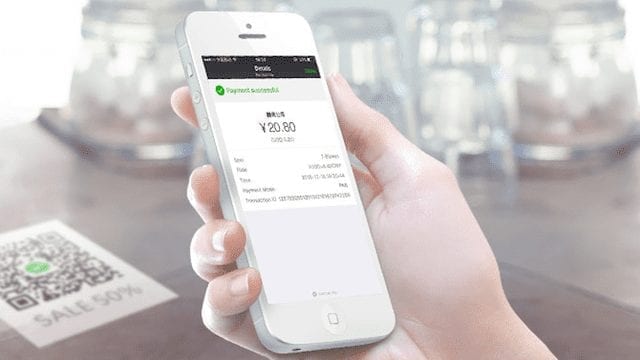
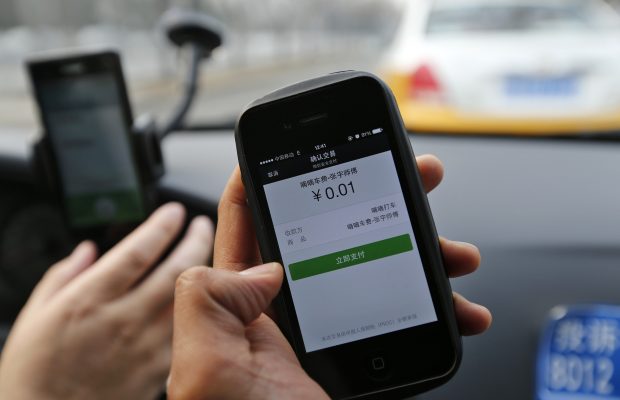
    Tencent’s WeChat Pay is now linking to non-Chinese credit cards for mobile payments.

    This means expats in China and foreign residents of Hong Kong, Macau and Taiwan can now bind and activate WeChat Pay accounts with credit-card services provided by JCB, MasterCard and Visa.

    Tencent says it is the first time WeChat Pay users do not need a Chinese bank account or credit card.

    With China going cashless, Alipay and WeChat Pay are now used for online shopping, ride-hailing, buying tickets, renting bikes, food delivery and hotel bookings.

    In its five years, WeChat Pay has expanded to 25 countries, serving Chinese tourists.

    According to a Tencent data report last year, more than 64 per cent of expats in China use WeChat Pay for their daily needs.

  • Luxury on WeChat : The keys to succeed in 2018

    Luxury on WeChat : The keys to succeed in 2018

    Today, China leads the world in technical innovation and WeChat is its most iconic ambassador.

    With more than 900 million daily active users (as of September 2017) and close to 40 billion messages exchanged daily, WeChat is now more than ever the daily life tool for Chinese netizens.

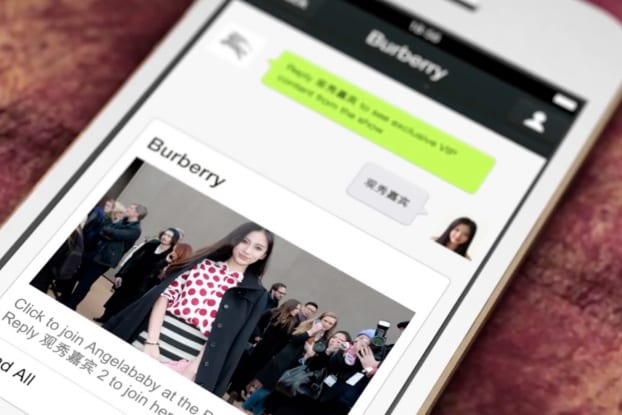
    On the business front, Chinese consumers represent +32% of all luxury goods sold worldwide, with Chinese travelers accounting for an increasing share, and WeChat represents the perfect tool to connect with these consumers. Today’s leading luxury brands have anchored WeChat at the center of their O2O strategy in China, operating on three main pillars: Social, CRM/Data, and E-Commerce.

    On the social front, luxury brands strongly improved their digital creativity (HTML5, Canvas, Gaming, VR, Mini Program, etc.) and combined social campaigns with KOL engagement and significant media buying investment to increase impact. In 2017, we saw a clear shift away from traditional media spending in favor of digital media where the ROI is more immediate and transparent.

    Furthermore, luxury fashion brands have taken a page from FMCG brands and begun to implement CRM integration, message segmentation and advanced user tagging based on social behavior and consumption data. Some of them have gone a step further and developed WeChat loyalty programs aimed to increase user engagement and drive repetitive spending.

    Finally, 2017 witnessed the rise of 3rd party luxury platforms (Luxury Pavillon, Toplife, Viplux, Secoo), coupled with the emergence of the WeChat mini program and an increased investment by brands into their own .CN websites.

    WeChat provides the perfect ecosystem for luxury brands to court the Chinese consumer, from immersive branding campaigns to boutique appointment systems and integrated WeChat e-commerce.


  • Tencent expands WeChat Pay to HK residents

    Tencent expands WeChat Pay to HK residents

    Tencent has expanded its WeChat Pay user base to Hong Kong residents, who now will not need to have a Chinese bank account or credit card to take advantage of the Mainland’s popular cashless payment system.

    With the announcement, Hong Kong residents can now bind and activate their WeChat Pay accounts with any international credit cards, including MasterCard, Visa and JCB.

    They can activate WeChat Pay in two ways:

    • Bind any Mastercard, Visa and JCB credit cards for online payments such as online shopping, taxi hailing, ticket purchasing, bike-shares, food delivery and hotel booking.
    • Bind any credit cards or bank cards issued by 71 banks in China, together with proof of a valid passport, China Resident Identity Card, a Mainland Travel Permit for Hong Kong and Macau Residents or a Mainland Travel Permit for Taiwan Residents, to pay for all online and offline payments. Users with these bank cards can also activate their QQ Wallet.

    Besides Hong Kong residents, Tencent opens WeChat to expatriates living in China as well as to Macau and Taiwan residents.

    According to the 2017 WeChat Data Report that tracked consumption habits of foreign residents in China, over 64% of expatriates use Weixin Pay for their daily needs, especially for splitting bills, food delivery, transportation, dining, as well as shopping in stores, supermarkets and online.

    With the introduction of using credit card accounts, this number is expected to grow as the payment system will be simpler and more convenient to use for citizens outside of China.

    In China, WeChat is being used by a group of friends to split a restaurant bill, check into or out of a hotel, board a bus or train, hail a car service or hop on a bike. WeChat provides access to China’s car hailing service Didi Chuxing and bicycle-sharing system Mobike.

  • WeChat launches first pop-up store in Shanghai

    WeChat launches first pop-up store in Shanghai

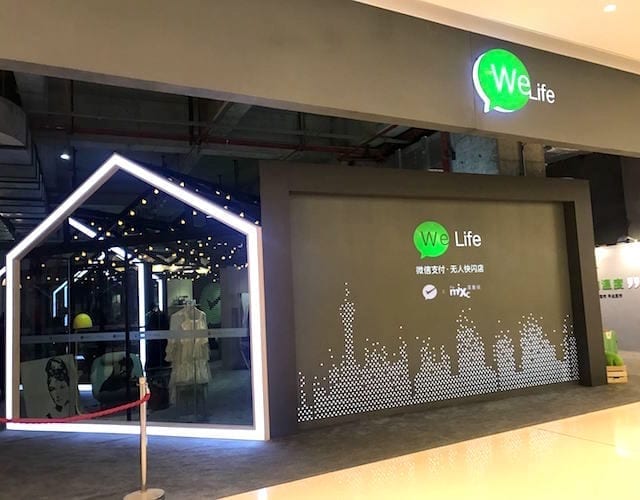
    Chinese messaging app WeChat has launched its first cashierless pop-up store in Shanghai.

    The Tencent company has teamed with more than 300 merchants, including EasyGo and Elle, as well as shopping mall The Mixc to build up its first “flash retailing” pop-up store.

    By scanning a QR code via WeChat, customers can enter the store. The system verifies the customer’s identification and gains access to their digital wallet WeChat Pay. All products have RFID tags to identify them and their price. Buyers can easily check the bill by scanning codes.

    The Bai Zhenjie company, which applies WeChat Pay to the retail industry, says the concept of flash retailing is constantly being polished. Face-recognition technology and a credit-evaluation system are expected to also be applied to the stores.

  • Bestseller’s smart stores to arrive in China

    Bestseller’s smart stores to arrive in China

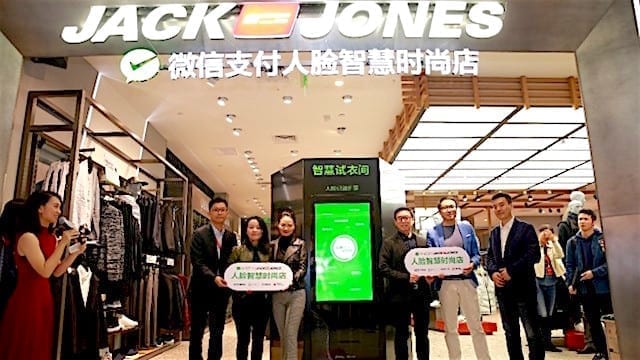
    Danish fashion retailer Bestseller has opened smart stores in Shenzhen and Guangzhou for its Jack & Jones and Vero Moda brands.

    Facial-recognition technology from Tencent’s Youtu Lab is used to register shoppers in store, enrolling them in WeChat Pay’s AI Club. This means they can pay without the need for wallets or phones.

    And the automated systems are not only replacing cashiers – sales assistants are also redundant as store visitors receive customised recommendations for Bestseller clothes and accessories they might want to try on virtually.

    Bestseller says the first day the tech was used, the gross revenue from customers who paid via facial recognition accounted for more than 80 per cent of turnover. The total store income that day improved by 40 per cent.

    It is a new approach for the fashion industry, which is following in steps of smart supermarkets and other stores from companies such as Alibaba, Amazon and JD.com.

    Tencent also has its eye on other retail segments. At its global partner conference in November, COO Ren Yuxin said the company aims to provide smart retail services like big data, cloud computing and AI to brands and offline retailers to help brick-and-mortar stores transform into smart, digital ones that can “really think”.

    Bestseller head of digital sales Liu Dongyue says customers expect a “more personalised, more entertaining and more convenient” experience when buying in the store, which is why fashion brands need help from big data.” So it is not so much about automated payment as about user data.

    Vqudo, a WeChat marketing software provider, says facial recognition enables stores to match customers with their WeChat ID, which contains information about their buying habits as well as social data.

  • VIMO to provide Wechat payment at Airport outlets in Vietnam

    VIMO to provide Wechat payment at Airport outlets in Vietnam

    Dealers are now turning their attention to the release later in the day of key U.S. jobs data, which is expected to show the world’s top economy continuing to improve.

    A forecast-smashing reading Thursday on private take-ups boosted optimism, which had already been bolstered by U.S. tax cuts, healthy corporate profits and strong manufacturing figures from around the world.

    Global markets powered ahead in 2017 as economies showed long-running improvements after years of faltering.

    Greg McKenna, chief market strategist at AxiTrader, said in a note that data from the manufacturing and services sectors “suggests economic strength across the globe remains robust”.

    He noted that an index of world factory activity was at its highest level in seven years.

    On Wall Street the Dow ended above 25,000 for the first time, leading records across Wall Street.

    In Tokyo the Nikkei ended up 0.9 percent at a 26-year high following its more than three percent jump Thursday, while Sydney added 0.7 percent.

    Seoul rose 1.3 percent, with dealers buoyed by news that North Korea had accepted the South’s offer of talks next week, further easing geopolitical tensions in the region.

    Shanghai closed 0.2 percent higher but Hong Kong lost 0.1 percent and Singapore eased 0.2 percent.

    Pause in oil?

    While oil prices inched down in Asia they remain elevated after recent rises to around three-year highs thanks to Middle East tensions, while the U.S. sees stockpiles fall as it is hit by a severe cold snap.

    The latest gains have given impetus to petroleum-linked firms, sending them rallying this week. In Hong Kong Sinopec was up two percent while CNOOC was also higher. Woodside Petroleum in Sydney was up along with Santos, though Tokyo-listed Inpex eased.

    However, Ric Spooner, a Sydney-based analyst at CMC Markets, said: “There’s been a one-way, very steep and uninterrupted rally off the last minor low in mid-December near $56, so it won’t be surprising to see a pause here.”

    On forex markets the dollar rose slightly against the euro, but the single currency remains buoyant with the eurozone continuing to improve, which raises the chances of a reduction in the region’s massive stimulus programme, bringing monetary policy in line with the Federal Reserve.

    McKenna added: “It’s again the story of a weaker U.S. dollar as the fact its data is solid and improving is lost on traders focused on expectations that the EU strength will drive the European Central Bank to chase the Fed, and that synchronised global growth will, in fact, drag most central banks along the tightening path.”

  • WeChat and Guangzhou government to introduce WeChat ID

    WeChat and Guangzhou government to introduce WeChat ID

    WeChat may soon become an indispensable part of the Chinese citizens after a report emerged claiming that the Tencent-owned messaging app will be used to officially ID people.

    The Guangzhou government has reportedly initiated a pilot program which creates a virtual ID card through WeChat account of registered users. This Virtual ID card has the same purpose as that of a normal state-issued ID card.

    The South China Morning Post claims that according to Xinhua, the service will soon be introduced in the rest of the country as well.

    WeChat is currently the largest social media platform in China and also has additional features such as payments and money transfers. The program, called the WeChat ID, was co-developed by the Ministry of Public Security and the WeChat team said the report.

    The WeChat ID can be used as an official ID to register in hotels or applying for government jobs without bringing in the state issued ID.

    A similar kind of electronic ID system was earlier implemented in the city of Wuhan, where the branch of the Public Security Bureau partnered up with Alipay to launch an electronic ID card service as reported.

  • LANCÔME’s Haitang Bay Store Unveils New Retail Identity

    LANCÔME’s Haitang Bay Store Unveils New Retail Identity

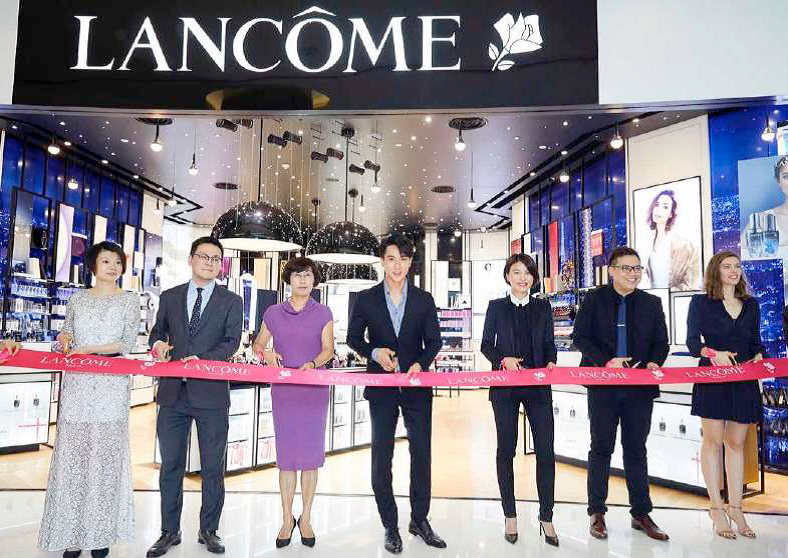
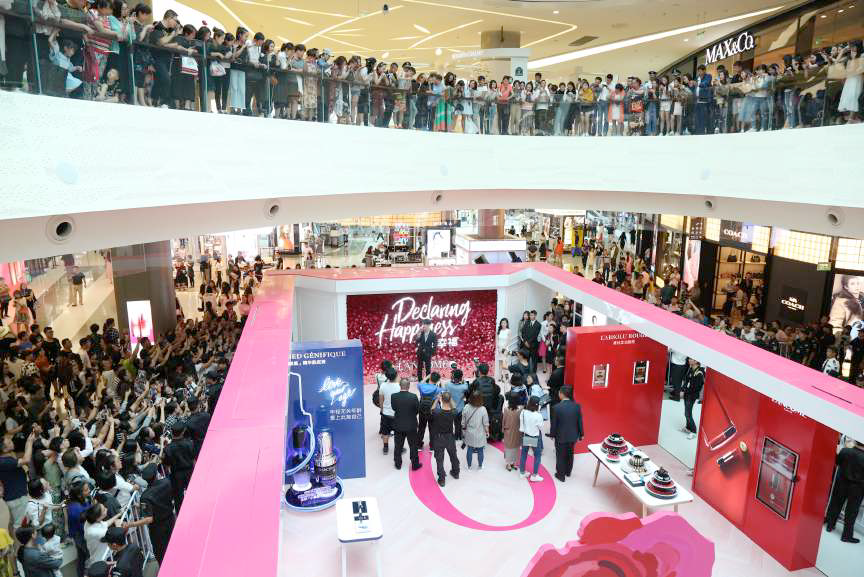
    On 24 November 2017, LANCÔME Travel Retail Asia Pacific, leading French luxury beauty brand, unveiled the brand’s latest 2020 retail concept at its newly revamped No.1 Point-of-sale (POS) at Haitang Bay, China. The latest in line to celebrate the brand’s ‘Declaring Happiness’ global campaign across Asia, the grand opening event was graced by international celebrity and Brand Friend, Wu Zun, who officiated the ribbon cutting ceremony and attended the opening of the interactive Declaring Happiness popup concept. Wu Zun was also joined by the likes of 17 top Chinese social media influencers such as LU ⼀丝 and ⼩猪姐姐 in spreading beauty and happiness with LANCÔME’s consumers. Having achieved an astounding digital outreach of 127 million via WeChat, Weibo and livestreaming, the event was a tremendous success in elevating the brand’s digital presence and generating genuine brand engagement with consumers. Further bolstering brand engagement and buzz on social media, the influencers also shared additional Weibo stories and WeChat moments in appreciation of LANCÔME’s hospitality at the event.

    Currently the No.1 POS for the LANCÔME brand worldwide, the Haitang Bay store is the
    largest travel retail store at 120sqm and the second store to unveil the brand’s latest 2020 retail
    identity, opening after Lotte Hotel in Seoul, South Korea. Consistent with LANCÔME’s global
    strategy to roll out a new retail design language that is fully consumer-centric, the new
    Haitang Bay store is efficiently adapted towards the travel retail channel. “The introduction of
    the 2020 retail identity to our No.1 POS and largest store in Haitang Bay marks a key milestone
    in LANCÔME Travel Retail Asia Pacific’s plans to transform and optimise our stores for the
    modern traveller. The design concept of the new 2020 store is set to provide an immersive brand
    environment for consumers to fully experience the world of LANCÔME, while at the same time
    offer time-pressed travellers a quality and smooth shopping experience through the store’s
    thoughtful layout and features,” says Ms. Tao Zhang, General Manager of LANCÔME
    Travel Retail Asia Pacific.

    (L-R): Ms. Cao Xiaodan, Deputy General Manager of Sanya International Duty Free Shopping Complex, Mr. Luke Chang, Director of Cosmetics & Confectionary Department, CDFG, Ms. Liu Jing, General Manager of Sanya International Duty Free Shopping Complex, Mr. Wu Zun, International Celebrity and Brand Friend, Ms. Tao Zhang, General Manager of LANCÔME Travel Retail Asia Pacific, Mr. Don Huang, Area Manager of LANCÔME Travel Retail Asia Pacific, Ms. Anna-Maria Marini, Marketing Manager of LANCÔME Travel Retail Asia Pacific

    Designed with a Parisian ‘apartment with a view’ concept, the new Haitang Bay store is an
    inspirational place full of discovery with elegant touches of Parisian chic featured throughout the
    store. The interior is warmly lit with soothing tones of greys, white and warm wood to create a
    more intimate and welcoming feel for customers. Against a backdrop of virtual video walls
    reminiscent of bay windows in a Parisian apartment overlooking the breathtaking panoramas of
    Paris, customers will be taken through the beautiful four seasons with roses and petal rain or
    Parisian night under starry firmament taking turn to decorate the walls. Other key elements to the store include sharing tables for skincare and makeup, as well as a Grab & Go counter.

    Featuring the newest product launches, the sharing tables encourage customers to discover LANCÔME’s world of beauty, from experimenting with different makeup textures and colours to customising their skincare routine through one-on-one personal consultations with LANCÔME’s beauty experts. Latest launches and travel exclusives are also available at the Grab & Go counter for an easy and fuss-free experience.

    In celebration of the Haitang Bay store reopening, LANCÔME Travel Retail Asia Pacific also
    introduced an interactive pop-up concept that blends retail with entertainment at four
    different online and offline touchpoints named after the brand’s key products – Génifique, Absolue, L’Absolu Rouge and Miracle Zones. The Virtual Mirror at the L’Absolue Rouge Zone, which is an augmented reality virtual makeover application that allows guests to experiment with different face and lip makeup looks, was an instant hit at the event. At the Génifique Zone, guests also had the opportunity to win a sample of Advanced Génifique Sensitive through a touch-screen interactive game vending machine. Complimentary engraving services were also available at the Absolue Zone, where guests can choose to personalise their very own LANCÔME mirrors. While experiencing the Miracle Blossom fragrance at the Miracle Zone, guests were also seen playing with the swing photo booth to recreate their fun Parisian moments against the beautiful backdrop of the Eiffel Tower.

    In addition to the retail-tainment zones, the 17 Chinese social media influencers also participated
    in a LANCÔME skincare and makeup workshop held within the store. Leveraging on livestreaming social sharing to expand the workshop’s audience reach beyond those who were
    physically present, social media influencers brought LANCÔME workshop experience to their
    followers, inviting them to join in the LANCÔME brand universe through organic, usergenerated
    content and engagement via their personal brand journey at the event.

    In December, the LANCÔME ‘Declaring Happiness’ campaign will make its final stop at Hong
    Kong.

  • More Chanel Flagship for Asian Shoppers

    More Chanel Flagship for Asian Shoppers

    Seoul will have one of six Chanel flagship stores being launched next year, with the brand also about to open in Beijing’s China World mall.

    “These will be either brand new stores or major re-openings, which will be very impactful,” says Chanel fashion and accessories divisions president Bruno Pavlovsky.

    On December 1, Chanel opened a second Tokyo flagship in Ginza following a three-year renovation by architect Peter Marino.

    Just before that, designer Karl Lagerfeld was in Chengdu, where Chanel reprised its Ancient Greek Goddess cruise collection, originally shown in Paris in May.

    “We scored 698 million hits from that show on WeChat and Weibo and so on,” says Pavlovsky. “That impact allows us to create an accessible dream: a chance to see and touch and understand what the brand is all about. That has nothing to do with customers – we don’t have 500 million customers in our boutiques.”

    He believes the key equation in luxury is balancing accessibility to the dream with exclusivity inside boutiques. This is why Chanel’s e-commerce is essentially limited to beauty and eyewear.

    “Chanel is not a click,” says Pavlovsky. “But when you think of a $5000 jacket or a $10,000 dress, the customer experience has to be more than just a click.”

    He says business in China has been boosted by the policy of global price harmonisation he started introducing in 2015. “We see more and more Chinese in China coming to our boutiques regularly.

    They don’t need to travel to Paris, New York or London to buy Chanel, and this is very important.”

    One vehicle to boost sales in China will be harnessing influencers, says Pavlovsky. “What is interesting about influencers in China is their point of view of the brand. Some are followed by 20 or 25 million people, which is quite impressive. And they are very clear that what their followers want from them is a point of view. We have to work with them not to dilute this kind of positioning.”

  • Malaysia sees mobile commerce boom as mobile payments become widely available

    Malaysia sees mobile commerce boom as mobile payments become widely available

    Malaysian people’s love for mobile shopping has led to more transactions generated on mobile platforms.

    The data compiled from Malaysia’s three major online marketplaces — Lazada, 11street and Shopee — revealed that 70 percent of the online transactions on Single’s Day and MyCyber sales were done through mobile devices, said iPay88, a leading regional payment gateway provider in South East Asia.

    MOBILE USERS GROWING

    “Mobile users are growing faster than our anticipation, we expect the momentum to continue,” Ipay 88’s executive director and co-founder Chan Kok Long told Xinhua in a recent interview.

    According to Malaysian Central Bank, there are 42.8 million mobile phone subscriptions in Malaysia currently. Meanwhile, smartphone penetration stands at 70 percent and it is expected to increase.

    In view of the growing mobile phone user base and more friendly mobile applications, Chan said the transactions generated on mobile platform will account for 60 percent of the total before climbing to 70 percent in the next two years. Last year, the ratio stood at 50 percent, he said.

    MOBILE PAYMENTS’ CONTRIBUTION

    Another key driver is the introduction of mobile payment, which several banks are looking to launch Quick Response (QR) code-wallets that enable payment to be done in an easier way.

    IPay88 is currently the payment gateway market leader in Malaysia, accounting for 60 percent of Malaysia’s online payments system transaction.

    Chan also believed the two major Chinese online payment companies — Alipay and WeChat Pay — making their ways into Malaysia e-payment segment, could potentially double the online transactions.

    “When you see m-commerce growing tremendously, the next thing will be mobile-wallets. It is no doubt that they (the two Chinese players) will contribute a lot to the online transactions in Malaysia going forward,” said Chan.

    Cited Alipay as an example, he said, the retail transaction volume has grown robustly since it was launched four months ago.

    “Although Alipay is new in Malaysia, the growth potential is tremendous because of the increasing Chinese tourists in Malaysia,” Chan said, adding that more Malaysian retailers have to adopt the payment system as they are also afraid of losing competitiveness in dealing with Chinese tourists.

    Chan also sees great potential from WeChat Pay, which will be unveiled in Malaysia next year, as it has 20 million WeChat holders in Malaysia and 600 million active users in China.

    Earlier this year, Alipay, a unit of Alibaba affiliate Ant Financial, has inked agreements with Malaysian banks for the rollout of its service this year.

    Its competitor, WeChat Pay by Tencent Group, was then granted an e-payment license in Malaysia and planned to unveil its service in early 2018. Since then, it has secured Hong Leong Bank as its partner for the service.

    The payment gateway provider that has presence in other Southeast Asian countries, also sees Malaysia ahead its peers in embracing cashless payment.

    This is due to Malaysia’s strategic position with decent population and better infrastructure, in addition to the Malaysian government’s encouraging policies, Chan said.

    “Malaysians are more ready than its counterparts in the Association of Southeast Asian Nations, also because of the Alibaba-led Digital Free Trade Zone, which is expected to drive the country’s e-economy,” Chan said.

  • China’s Tencent surpasses Facebook in valuation a day

    China’s Tencent surpasses Facebook in valuation a day

    Chinese internet giant Tencent has surpassed Facebook in terms of market value just a day after it became the first Asian technology firm to reach the $500 billion valuation mark.

    Tencent shares hit a record high of 439.6 Hong Kong dollars during Asian trading hours on Tuesday 21 November 2017, giving it a market capitalization of 4.17 trillion Hong Kong dollars ($534.5 billion).

    The Chinese firm’s value overtook Facebook’s $519.4 billion market capitalization, which was hit at the close of the U.S. markets on Monday 20 November 2017.

    Also Monday 20 November 2017, Tencent beat Alibaba to become the first Chinese technology company to hit the $500 billion market capitalization mark. Tencent is also within touching distance of Amazon’s $542.7 billion valuation.

    Tencent went public in Hong Kong in 2004 at 3.70 Hong Kong dollars per share. Since then, it has rallied over 11,000 percent. Tencent’s stock this year alone is up 126.69 percent.

    Still, the company is not well-known outside of China, but owns the country’s most popular messaging service, WeChat, which has close to 1 billion users. Tencent is a sprawling business that spans gaming, social media, news and content.

    Online and mobile games are a key part of the business — the division brought in over $4 billion in revenue last quarter. In 2016, Tencent acquired a majority stake in Finnish smartphone maker Supercell, the company behind the popular “Clash of Clans” mobile game.

    Tencent has also been trying to move outside of China, but not necessarily through the expansion of its own products. Instead, it has been making investments across the U.S. and Asia. It has acquired stakes in both Tesla and Snap, and invested in numerous start-ups in Asia, including India’s Uber rival Ola.

    Analysts were positive on Tencent’s stock after it smashed past market expectations when it reported third quarter earnings earlier this month. Barclays raised its price target for Tencent from $49 to $59, and upped its revenue forecasts for 2018 and 2019.

    “We mainly attribute accelerating revenue growth to the continued monetization improvement across multiple key business segments, such as gaming, video, and payment services, and note that user growth is still strong,” Barclays said.

  • Digital wallet WeChat Pay launches in UK

    Digital wallet WeChat Pay launches in UK

    In the middle of London’s Camden Market, a trader from China hands red-bean cakes to a group of tourists from Sweden, as tattooed locals dressed in black leather weave their way between food stalls cooking up dishes including barbecued meat and fish and chips.

    The market, which has been at the heart of London’s punk scene since the 1970s, has evolved into one of the capital’s busiest tourist attractions. It draws hundreds of thousands of people every week to its maze of clothing shops, tattoo and piercing parlors, and food stands.

    And starting this month, Chinese visitors will be able to buy goods with the help of mobile payment platform WeChat Pay.

    Camden Market is a sharp contrast to luxury shopping hotspots such as Bicester Village and Oxford Street where Chinese tourists spend millions of pounds each year and might not seem the obvious choice for the United Kingdom launch of WeChat’s hugely popular digital wallet, which accounts for 40 percent of the Chinese mobile payment market.

    However, the number of Chinese visitors to Camden is climbing. In September 2016, 5 percent of visitors were Chinese. The proportion doubled to 10 percent in March.

    “In terms of demographics, the number of Chinese tourists in Camden is certainly growing, and in terms of a brand, Camden was an obvious choice. It’s iconic in London,” said Craig Jacoby, head of retail payments at SafeCharge.

    WeChat has worked with SafeCharge, a British payment technology company, to make WeChat Pay available at point-of-sale locations in the UK for the first time.

    During the next four months, SafeCharge will provide more than one thousand Camden Market vendors with a software update that enables in-store payment terminals to generate QR codes and perform transactions.

    Chinese tourists spent 513 million pounds ($681 million) in the UK last year, according to tourism authority VisitBritain. Camden Market’s management wants to better accommodate those bigspenders.

    Jacoby said WeChat Pay will soon be available at other shopping destinations in London, and it is also launching at six large retailers in Paris as WeChat moves forward with its international expansion.

    WeChat Pay rival Alipay has also made recent moves in Europe. In October, Alipay expanded its partnership with Dutch payment company Adyen to facilitate in-store mobile payments at retail partners in the UK.

    In Camden, merchants and customers were upbeat about the development. Yi-yin Wei, a shopkeeper from Taiwan who sells red-bean cakes at Wheel Cake Island, thought the update will be useful.

    “Chinese people are used to paying for things with their phones, so it will be like home for them,” Wei said.

    And Angel Chow, a tourist from Hong Kong, said Chinese shoppers will likely spend more now they have WeChat Pay as an option.

    “They will find it convenient if they can use their phones and will buy more. I think they will be excited to be able to use it in England,” Chow said.

    Other Camden merchants were not sure there would be enough demand. Vari McGeachy, manager of Books Iconica, said fewer than 5 percent of her customers are from Asia.

    “We don’t have many Chinese people coming through the doors, and when they do they don’t have a problem paying with cash or card,” McGeachy said. “It wouldn’t be worth having to train my staff about a new system.”

    SafeCharge Chief Executive David Avgi said in general there is great motivation to accommodate Chinese consumers in Europe, where 50 percent of luxury purchases are made by Asian tourists.

    And he said it is a matter of time before the mobile payment systems that are ubiquitous in China catch on in the West.

    “This innovative payment method is seen as the next big payment phenomenon in Europe,” Avgi said.
  • It Is All About Tencent In China

    It Is All About Tencent In China

    Asia has been the best performing region globally this year as China 2.0 kicked in as a theme with China (at the MSCI level) being the best performing market and tech being the best performing sector. As Mark Tinker, responsable de AXA IM Framlington Equities Asia, comments: “In Hong Kong the story has all been about Tencent, while in Korea it has been about Samsung.”

    In fact, in Hong Kong in particular the impact of Tencent has been extra-ordinary as the largest stock in the market with a current weighting of almost 12% has effectively doubled over the last 12 months, while the second biggest, HSBC, is up a mere 17% – albeit with a significant dividend to yield a total return of 23%. In South Korea, where Samsung Electronics is more than 20% of the index, it has risen by 83%. Probably not since Apple became the biggest stock in the US market back in 2011/2 and then doubled has the index effect had such a big impact on so many active institutional investors.

    “Of course the argument threatens to become circular” says Tinker.  Therefore, he wonders if Tencent or Samsung are up so much because people are buying the index or vice versa?

    For Tencent there may well be some influence from the fact that mainland Chinese investors can buy it through the Southbound Stock Connect, which continues to expand its influence on Hong Kong markets. Tencent is affecting the real economy in China as well as here in Hong Kong.

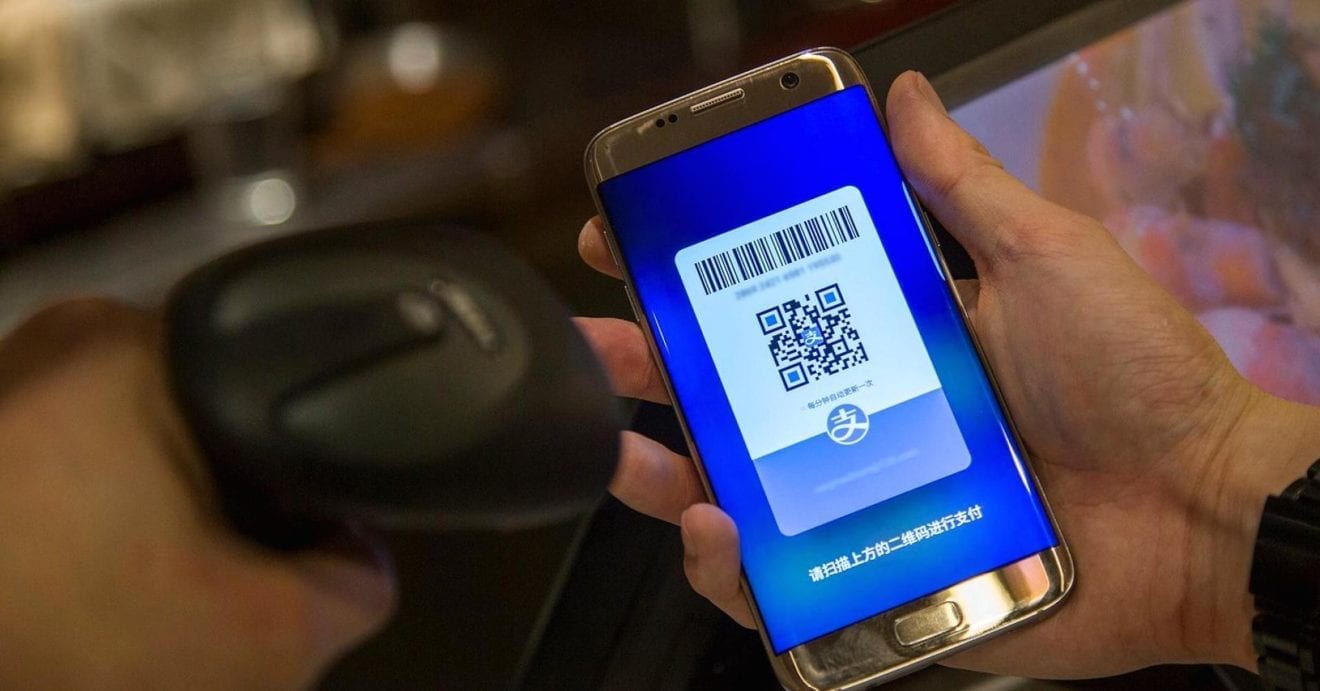
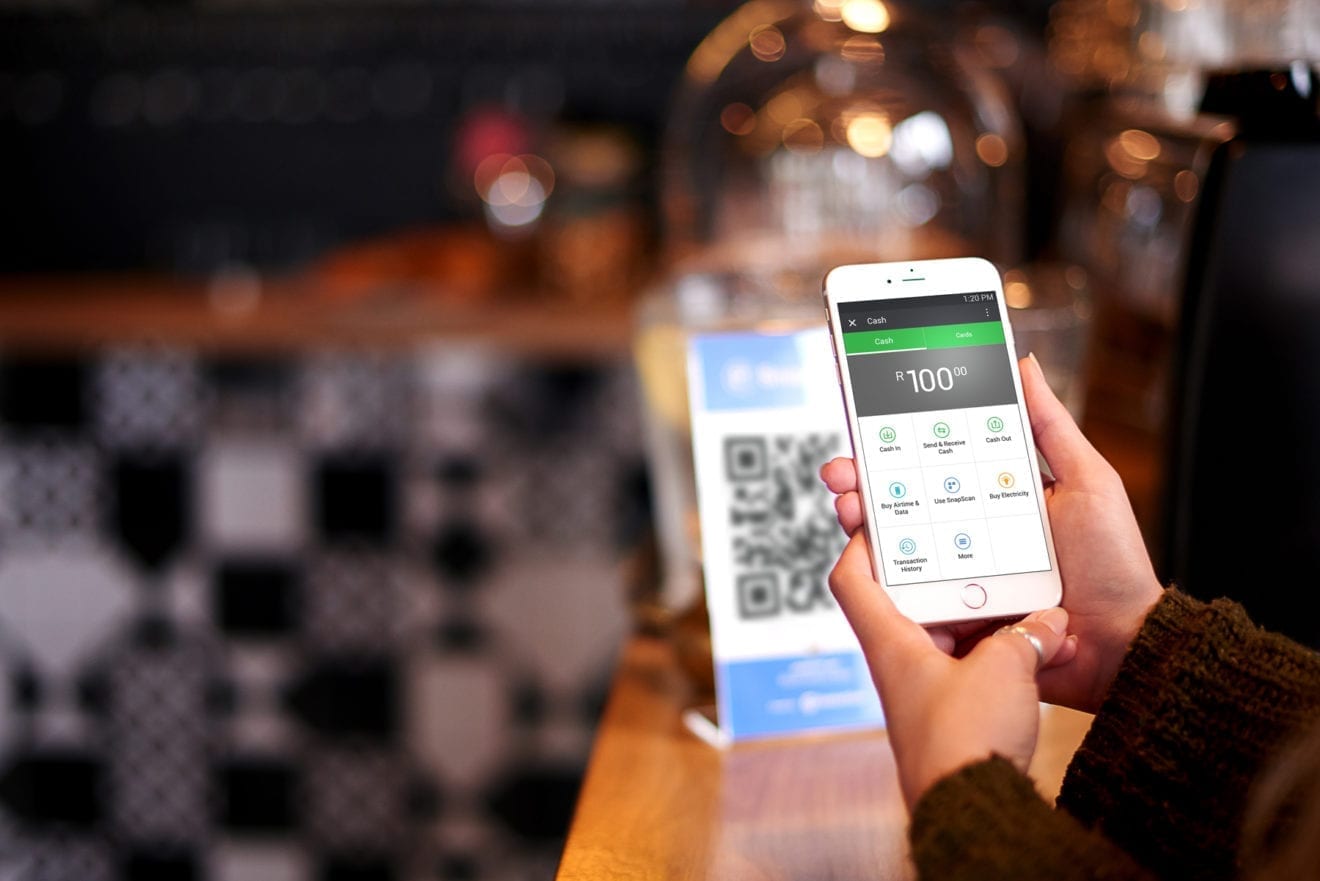
    As previously noted by Will Chuang in Hong Kong, “it is not only possible but actually significantly easier to spend a weekend in Shanghai without using either cash or a credit card, simply using WeChat pay by Tencent. Tinker adds that “all you have to do is click on your phone to call up a quick response (QR) code that the merchant scans and you are done.”

    It is now said that you can always spot the tourists in Shanghai as they are the ones using credit cards, or if they are really old fashioned, cash.The fact that the largest note in China is RMB100, which is the equivalent of around EUR15 is probably a factor in using WePay to replace cash, but even here in Hong Kong it is increasingly being used.

    Tencent is mainly Chinese but it is also having something of a wealth effect here in Hong Kong as the number of people trading the stock and several of the connected spin-offs that have recently IPO’d here are clearly celebrating their ‘success’ in the bars and restaurants in Central. The expert of AXA IM in Asia explains:

    The retail offering of Tencent spin-off China Literature for example was 625 times oversubscribed and effectively doubled on opening, having caused a huge spike in interbank rates as money was locked up in anticipation.

    Former Hong Kong Chief Executive Chun-ying Leung used to refer to Hong Kong as “where the rest of the country meets the rest of the world” and as well as offering an outbound conduit for mainland investors through its H share listing, the company itself is, like a number of others, investing overseas, most notably when it picked up around 12% of SNAP as that particular stock continued to slide. Many have noticed the contrast between the performance of US tech IPOs and their Chinese equivalents.

  • Hundreds of new shops for China’s Auchan Minute

    Hundreds of new shops for China’s Auchan Minute

    “Several hundred” Auchan Minute shops without checkout counters are planned for China by year’s end.

    Customers enter by scanning a code via the WeChat app. After products are scanned, they are added to a virtual cart. The customer then pays via AliPay or WeChat Pay.

    Every Auchan Minute will offer 500 products 24 hours a day.

    Founded in 1961, Auchan is France’s second-largest retail group after Carrefour.

  • Hermès enhances China digital game with first WeChat pop-up store

    Hermès enhances China digital game with first WeChat pop-up store

    French luxury brand Hermès launched its very first WeChat pop-up store, a strategic move signaling the brand’s ambition to step up its digital innovation in China. But it also raises the question of just how aggressive it can be in the digital space.

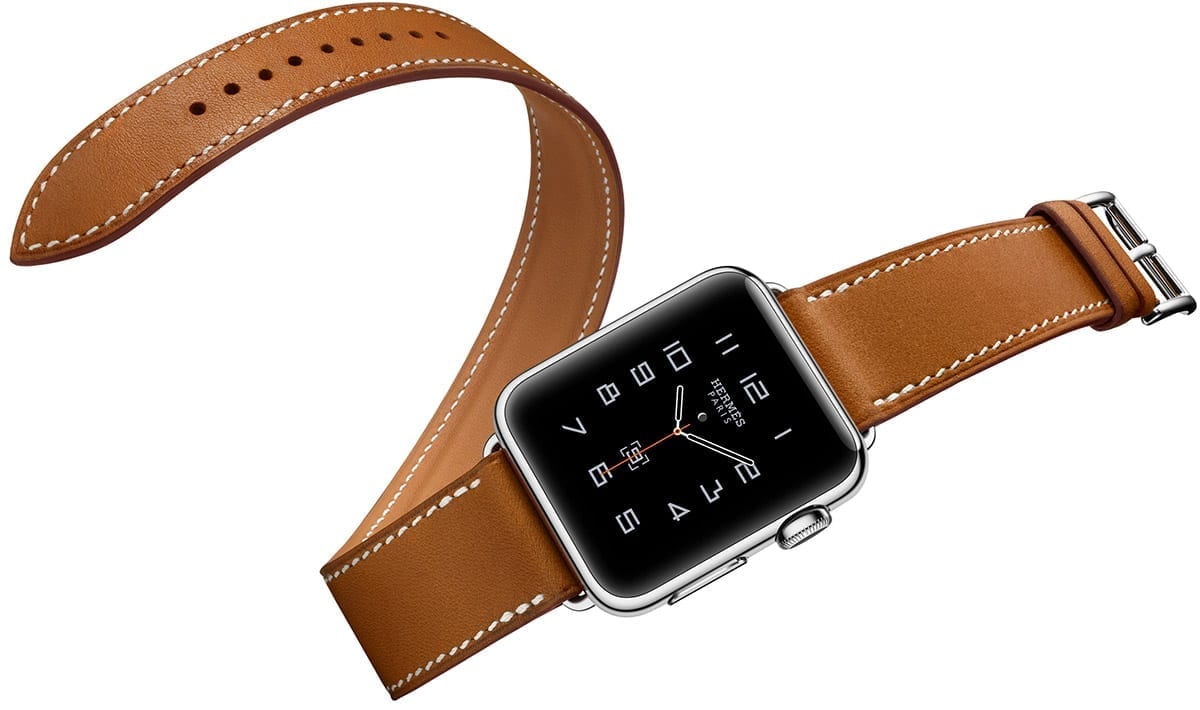
    The WeChat post by the brand to introduce the pop-up store has a 13-second promotional video about the new Éperon d’Or Hermès x Apple Watch.

    The product, in collaboration with Apple, features the classic pattern of Hermès scarf on the wristband. The pop-up store will last for two weeks.

    When clicking on “read more” at the bottom of the post, readers are taken directly to Hermes’ watch collection page which offers a detailed view of six models.

    The prices range from 8,988 yuan ($1354) to 10,988 yuan ($1655). Buyers need to register an account with the site—leaving their phone number and other relevant information—to track the order, and they must use WeChat Pay to complete the deals.

    Chinese consumers have shown high interest in Hermès’ WeChat offering: by the time of this publication, the post had attracted 15,986 pageviews.

    According to Hermès’ earnings results of the first six months of 2017, China led the growth in the Asia-Pacific region, contributing 14 percent to the region’s total revenues.

    The brand continues to see rising interest among Chinese customers in purchasing its signature handbags, namely the Birkin Kelly, Constance, and Lindy models.

    “We have really seen a recovery of China,” the global chief executive of Hermès International Group Axel Dumas said in an interview with Financial Times, “and the beginning of growth again in Hong Kong and Macau.”

    For Hermès, the rebound of luxury consumption in China posed the question of how it can best capture the demand in the market for digital shopping.

    Compared to many other luxury powerhouses, Hermès is a latecomer to the digital shopping game in China.

    Hermès set a textbook example for hunger marketing, a strategy often deployed by brands to make consumers feel hungry for certain type products through a limited number of offers. Hermes has used this strategy before to promote the Birkin bag. With limited time and quantity, the offer of Apple Watch in the WeChat store has employed a similar technique.

    However, this strategy of utilizing a sense of urgency is certainly not a new approach. Many brands, namely Dior, Longchamp, and Bulgari, were early adopters of WeChat flash sales, making headlines with impressive sales numbers from the flash sales. For example, during last year’s Chinese Valentine’s Day, Dior offered a Lady Dior handbag for 28,000RMB ($4,210) for four days; the media reported that all 200 models were sold out by 2 August 2017.

    As the brand’s key rivals like Louis Vuitton and Gucci are selling online in China, there is a possibility for Hermès to open an exclusive e-commerce site for the country’s consumers, too.

    There might be reasons why Hermès has been slow to adopt this digital trend; it is a reflection of a general attitude of the luxury industry to digital change.

    They face many questions such as whether going digital can deliver the same luxury experience to consumers, or if it can become a steady purchase channel for high-priced goods. Luckily, the past experiences of early adopters show that the value of luxury can still be held if the brands approach it appropriately.

    For Hermès, it is going to be a task to balance exclusivity and availability on the digital channel in China and their answer to it will set up an example for many luxury brands.