Tag: wechat

  • Macau police bust WeChat gambling racket

    Macau police bust WeChat gambling racket

    Macau’s Judiciary Police (PJ) arrested seven mainlanders for their alleged involvement in an illegal WeChat gambling operation on April 12, a PJ spokesperson said during a special press conference last week.

    According to the spokesperson, the seven male suspects, aged between 28 and 40, from Zhejiang province solicited gamblers to place bets at local casinos’ VIP tables via WeChat.

    One of the suspects claimed to be a bricklayer while the remainder claimed to be unemployed.

    The spokesperson said the gang had been streaming live gambling from local VIP rooms via the app, adding the police estimated that the racket attracted at least HK$10 million in bets and made a profit of about HK$1.2 million.

    According to the spokesperson, the gang mainly solicited customers from Zhejiang province who paid the gang via bank transfers or Alipay. The spokesperson said police believed that the gang had been “in business” for at least a month.

    The spokesperson said the gang operated out of a suspected illegal inn in Nam Van. The Judiciary Police discovered the illegal gambling activity while investigating the illegal inn.

    The spokesperson said the suspects were facing possible arraignments on illegal gambling charges.

    Several gang members were still at large, the spokesperson said on Thursday.

  • WeChat Pay launches new service in Hong Kong

    WeChat Pay launches new service in Hong Kong

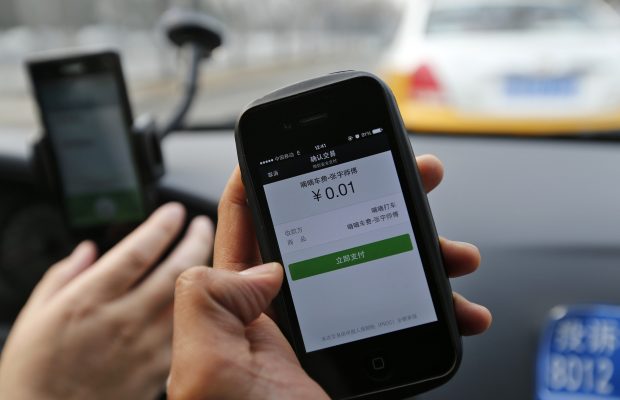
    WeChat Pay, one of the Chinese mainland biggest mobile payment platforms, has boosted its cross-border business by launching a new service in Hong Kong.

    In a move that is expected to promote businesses of local merchants, it opened a channel for membership card applications when customers pay through WeChat.

    After paying for their goods through the platform, they will receive information from local merchants’ WeChat official accounts automatically on becoming a member.

    The virtual membership card will enable customers to be given details on vendors’ latest activities, while at the same time help local merchants gain new followers and promote their businesses.

    Hong Kong, which is a major destination for Chinese mainland outbound tourists, is a key market for WeChat Pay to develop its cross-border business, said Grace Yin, director of WeChat Pay international operations.

    “We will further increase our investment in the cross-border payment business in Hong Kong to help local merchants better serve mainland tourists,” Yin said.

    WeChat Pay’s move comes at a time when Hong Kong’s retail industry is still struggling to recover from a “chilling winter” caused by the decline in the number of mainland visitors.

    Mainland arrivals dropped 6.7 percent year-on-year in 2016, according to the Hong Kong Tourism Board. The situation saw a slight improvement this year, rising 1.1 percent from January to February compared with a year earlier.

    “Linkage of WeChat payment and the merchants membership system will enable us to provide a better shopping experience to consumers, thereby enhancing our brand reputation. Moreover, with data on WeChat Pay users, we will be able to understand our consumers better,” said Wang Yifan, social media specialist with British cosmetics brand Lush, which has a number of stores in Hong Kong.

  • Bad record for Bonjour Holdings

    Bad record for Bonjour Holdings

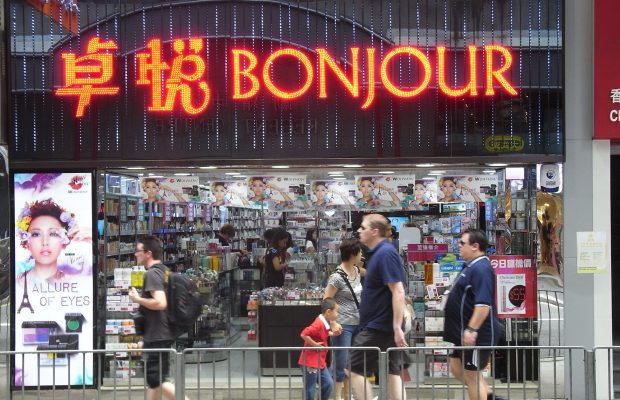
    Tumbling turnover and gross profit margin have flipped an operating profit to a loss for beauty and healthcare retailer Bonjour Holdings.

    Its turnover for last year fell 12.8 per cent to HK$1.995 billion (US$256.8 million), while its gross profit margin dropped from 41.8 to 38.1 per cent. This gave the group a loss of HK$77.9 million compared to a profit of HK$50.7 million in 2015.

    During the year, the group rationalised its retail network from 47 to 42 outlets.

    Hong Kong and Macau retail sales fell for the second straight year, the company’s audited results show.

    Same-store sales fell 10.1 per cent despite the average sales value per transaction for mainland tourists rising by 7 per cent. However, the total number of mainland customers dropped by double digits last year. The company says the drop in its total number of customers contributed about 9 per cent of the overall retail decline during the year.

    Bonjour says an enormous demand continued for Korean beauty and skincare products in Hong Kong’s retail market. Because of this, the group has formed dedicated procurement team to explore this trend.

    During the year, Bonjour continued to introduce a variety of mass Korean beauty products to keep the market competitive and to offset the negative impacts of the falling sales of Western and Japanese premium brands.

    Meanwhile, the group has been increasing awareness of its brand through online platforms. It partnered with Tmall and WeChat during the year to broaden its touch points with target consumers.

    “Additionally, with the rapid rise of live-streaming and photo-sharing apps, video and photo content and key opinion leaders (KOL), partnerships has taken up a significant role in our marketing campaigns,” says Bonjour. “Online image sharing has become a critical element for us to communicate with our target consumers.”

    Delivery service

    The group partnered with Alipay in two one-day events during the year, “2016 Carnival All the Way” and “Double Eleven”. The group also cooperated with China Post Cross-border eCommerce (CPCBE) to launch the cross-border shopping platform www.bonjourO2O.com (BonjourO2O). With its direct delivery service, customers can buy overseas items not available in Bonjour’s mainland stores.

    Online retail sales last year reached HK$40.1 million, up 7.4 per cent from 2015.

    At the end of the year, the group had 42 stores in Hong Kong, Macau and Guangzhou. During the year, sales continued to decline in the face of “sky-high” rents. While rents have been adjusting over the past two years, the reduction has not been fully reflected in the company’s income statements as it is usually locked into leases with a three-year term. The company is able to renew only about a third of its agreements each year.

    “We believe that stabilising sales along with falling rents should help improve our profitability gradually,” says the group.

    Bonjour currently distributes 180 international cosmetic, skincare and healthcare products including Dr Schafter, Suisse Reborn, WowWow and Yumei. During the year the company adjusted the product mix, increasing international parallel-import products and mid-to-lower-priced trendy products while cutting back on higher-priced exclusive products.

  • WeChat’s transformative role for beauty brands in China

    WeChat’s transformative role for beauty brands in China

    Both beauty and luxury fashion brands in China have been utilizing WeChat—Chinese consumers’ all-in-one mobile app—to promote brand awareness and interact with their audiences. A new finding on audience engagement with beauty brands on WeChat in 2016 challenges the traditional role of the app as a content-producing platform. The emerging trend seems to suggest that content is no longer as important as it used to be, leading beauty brands to use a number of alternative methods to drive engagement. From a one-sided, brand-directed conversation to a more interactive, one-on-one communication tool, the change of users’ preference along with the evolving platform itself has shaped the app’s new identity—a central hub that encompasses customer relationship management (CRM), commerce, online-to-offline (O2O), content, and more.

    In the latest “Beauty China 2017” report that studies the Digital IQ Index of 98 beauty brands in China, digital intelligence firm L2 found there was a dramatic drop in viewership of WeChat posts by these brands. Statistics show 84 percent of all posts accumulated less than 25,000 views. In previous years, posts by well-known brands, including Shiseido and Lancôme, could easily generate more than 50,000 views. These brands accordingly decreased the frequency of their posts from 2.78 times per week in Q4 2015 to 1.73 in Q3 2016. In spite of the dramatic drop in post viewership, the overall level of engagement between brands and customers on the app was still able to increase slightly from the year before.

    A basic interpretation of the figures suggests that followers of these beauty brands on WeChat seemed to lose interest in reading posts in 2016. Indexed brands thus recognized the lackluster response early on and pushed out a number of alternative ways to interact with their audience so that the overall level of engagement was not largely affected. According to the report, brands that have performed well digitally have used diverse ways to prevent a sharp drop in audience engagement due to decreasing interest in blog posts last year. The methods range from sampling campaigns and live-streaming events, to daily check-ins, loyalty programs, and gamification.

    Ever since WeChat became one of the most powerful communication platforms in China, blog posting has been frequently used by brands to interact with their audience. This one-sided, content-dominated method of communication helps many brands grow their number of followers and raise brand awareness among Chinese consumers when they’re starting out.

    However, late last year, digital marketing agency Curiosity China noted that the value of WeChat had shifted away from “pushing as many messages as we can to an underdetermined audience.”

    In a content-saturated media world, Chinese WeChat followers expect to receive more value-added services and experiences from brands. A close look at the digital strategy of premium cosmetic brand Estée Lauder, the “sole genius” brand in L2’s 2016 Digital IQ Index, can provide insights into what Chinese customers like. On WeChat, the brand offers a wide range of customer-centered services. For example, followers can easily enroll in its loyalty program simply by providing their phone number.

    In 2017, if beauty and luxury brands hope to continue to benefit from WeChat, it is time for them to recognize “(the app) is not a mass communication platform, but instead ideal for one-on-one communication,”. “Instead of being a content-driven platform, for brands it is ideal for CRM and commerce.”

    -Jing Daily

  • Tencent brand is still China’s most valuable

    Tencent brand is still China’s most valuable

    Chinese technology giant Tencent remains China’s most valuable brand, growing its worth 29 per cent to US$106 billion, according to the BrandZ top 100 most valuable Chinese brands report.

    It shows that technology brands continued to lead the way, with the Tencent brand strengthening its hold on the top spot thanks to the popularity of its social-media platform WeChat. Tencent was also one of three technology brands in the top 20 “risers” listing.

    With Tencent on the top 100 list are NetEase (31) and Sina (61). Making its debut in the 40th spot is e-commerce brand VIP.com.

    Web portal Sina’s initiatives in live video and self-broadcasting through its Weibo platform helped build its following among young people and attract advertising revenue, driving a 43 per cent rise in brand value to $900 million.

    NetEase, which makes online and mobile games and offers an e-mail service, grew 36 per cent to $2.6 billion.

    Sectors still dependent on the traditional economy, such as banks, insurance, and oil and gas, have declined 6 per cent in value. The exceptions are alcohol, and food and dairy.

    Several brands of baijiu, China’s traditional rice wine, have expanded distribution and adjusted pricing and marketing to reach a broader audience. This allowed them to make up for a decline in sales after government measures to limit extravagance at official events reduced demand for alcohol, especially premium brands. Moutai increased 41 per cent in value, entering the top 10 for the first time in ninth position.

    Some entrepreneurial Chinese brands are looking for overseas success before returning attention to their home market, such as digital brands Anker, DJI, Elex and Ninebot.

    Millennials are playing an increasing role in commercial and brand success in China, says the report. They tend to favour brands that are famous or trendy, and the research reveals the brand most successful at increasing millennial loyalty is mobile phone Oppo, up 157 per cent since 2014.

    “Chinese brands are taking the leap and going global on the back of three key factors: the country’s rising international stature, pressure to find alternative sources of growth as the domestic market slows, and increasing overseas consumer receptivity to Chinese brands,” says BrandZ global head Doreen Wang.

  • Hugo Boss China focus online

    Hugo Boss China focus online

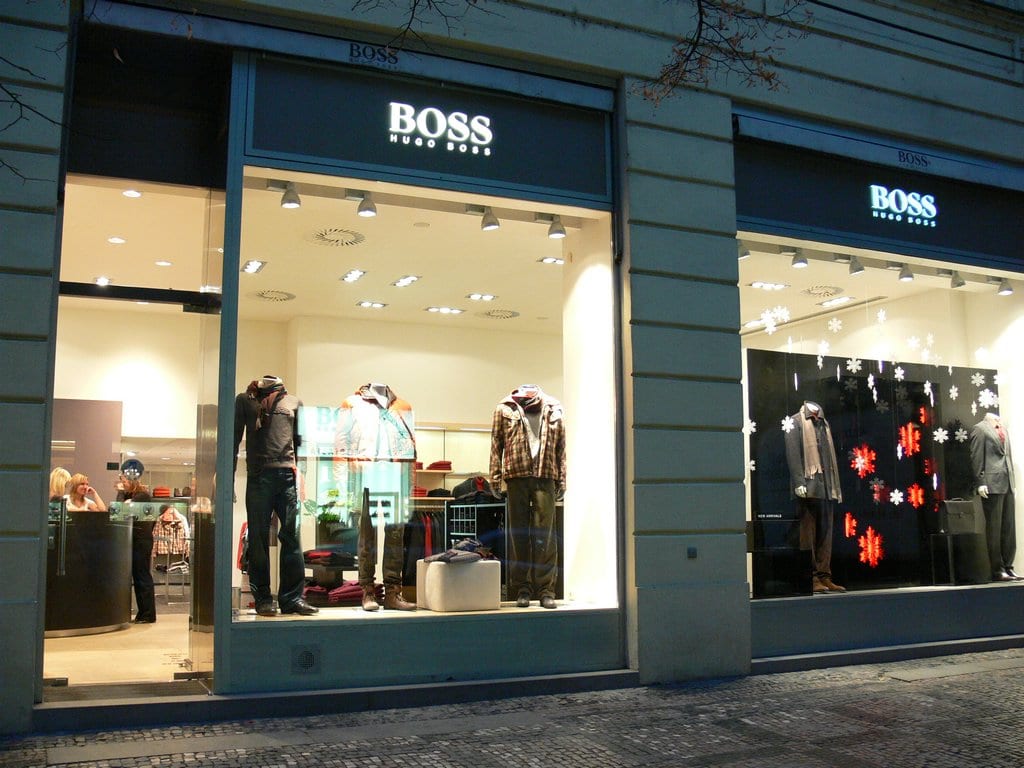
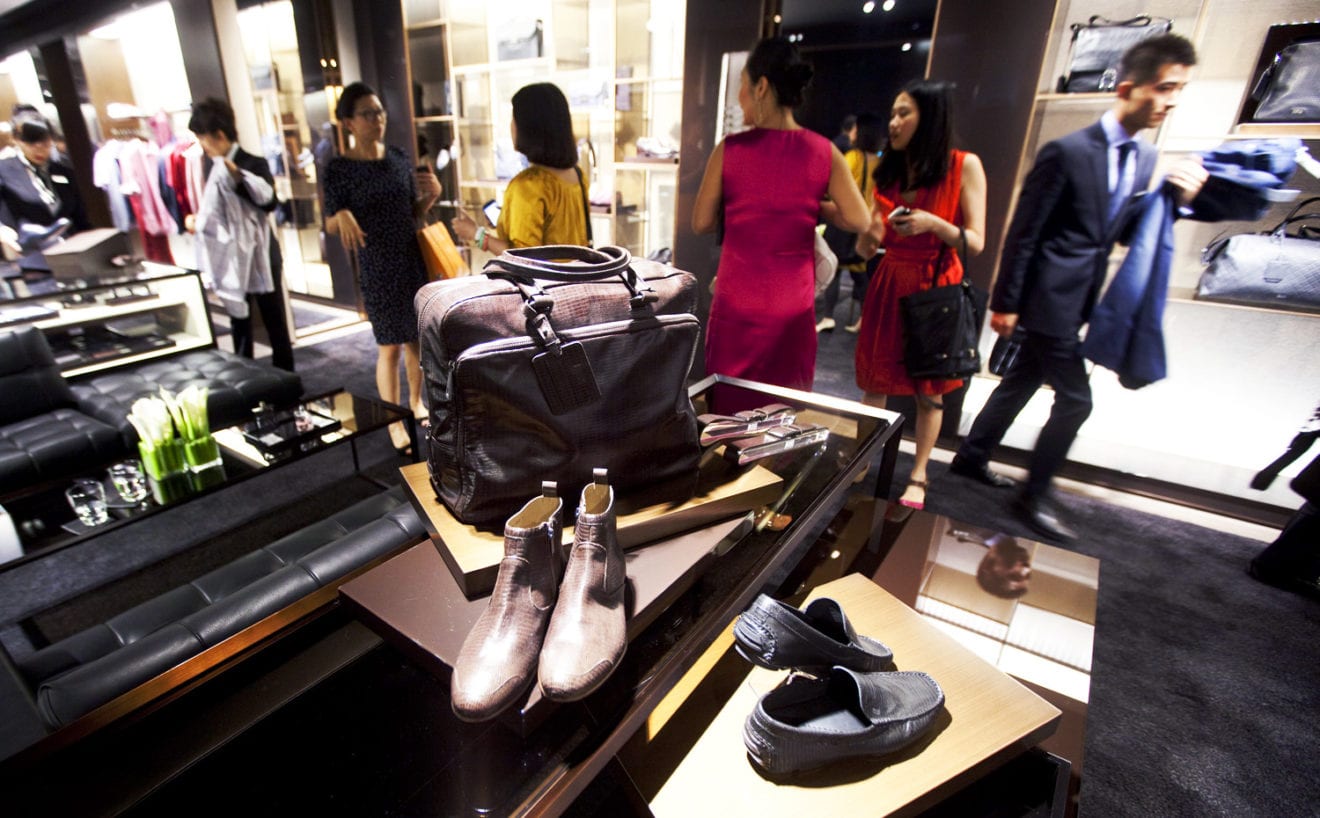
    German fashion house Hugo Boss says that improving its online business will be a priority this year as it shores up its recovery in China after slashing prices there.

    Since taking over as Hugo Boss chief last May, former finance chief Mark Langer has been cutting costs by renegotiating rents, shutting stores, trimming brands and shifting marketing spending back to menswear. This reverses the course of previous CEO Claus-Dietrich Lahrs, who invested heavily in promoting its womenswear. He quit in February last year after sales slumped in China and the US.

    Hugo Boss says it saved more than €100 million (US$106.8 million) in costs and investment last year and will continue to keep a strict control on expenses this year.

    Langer has also slashed prices in China to bring them closer to European and US levels, helping sales there rise by almost 20 per cent on a like-for-like basis in the fourth quarter.

    Hugo Boss says it expects currency-adjusted sales to be stable this year after a 4 per cent fall to €2.69 billion last year, with online sales down 9 per cent to €76 million, less than 3 per cent of the total.

    “Online and retail stores must be more closely linked together,” says Hugo Boss sales chief Bernd Hake.

    The company plans to roll out services like “click and collect” to stores across Europe by the end of this year.

    E-commerce sales at Hugo Boss were disrupted by a move last year to fulfil orders in Europe itself, instead of via a partner, and the relaunch of its website.

    It also plans more digital marketing, forecasting it will spend 70 per cent of its budget online and only 30 per cent on print this year, compared to a 50-50 split two years ago.

    Hugo Boss says digital communication has been an important driver of its recovery in China, with a jump in followers on social-media sites WeChat and Weibo last year.

  • Closing shop on China’s e-commerce platforms

    Closing shop on China’s e-commerce platforms

    The closures of a number of retail and luxury brand giants on China’s e-commerce platforms indicate that retail competition is no less fierce online than offline.

    It is old news that the Chinese market is highly competitive and unlike any other market in the world. What may sell on the high street in London is not guaranteed to sell in China. The rainbow-lensed promises of e-commerce seem to be an easy way to access China’s 770.4 million working population, 0.2 per cent or over 1.5 million of which have an average income of US$500,000.

    Political concerns and falling sales: Lotte

    In 2015, Lotte Group Retail opened a Tmall store, hoping to widen its reach in China, where over 60 per cent of its overseas stores are located. The large South Korean multinational conglomerate has had a presence in China for over 20 years, with 115 supermarkets and five shopping malls.

    But on January 12 this year, Lotte closed its Tmall store – along with three brick-and-mortar stores in Beijing – after rising political tension between China and South Korea. In December, Lotte’s China headquarters admitted that the company was facing investigations for tax, fire control and safety issues. However, the closure of its Tmall store seems to have stemmed also from the fact that China is Lotte’s only international market where growth is stymying. Sales fell during the last three months of 2016, year-on-year.

    While Lotte remains in the market through its physical shopping malls and supermarkets, and on the JD.com website, the company has not announced whether it will be reopening its Tmall store at any future date.

    Heavy local competition: Asos

    Asos, the UK’s largest online fashion retailer, entered China in 2013 with high expectations. The company announced it was investing RMB 100 million (US$14.5 million) towards the market, importing British styles and developing a sales force. Its business model relied exclusively on e-commerce, with its own website, as well as a Tmall store.

    However, Asos failed to attract enough customers and was running a loss of GBP 4 million (US$5 million) by April of 2016, when it announced that it was shutting down its China operations.

    Asos faced a number of problems in the Chinese market, from operations to marketing. When it first started, the company encountered issues with shipping though China Post, with customers paying import taxes on clothes. Eventually, Asos obtained a local warehouse, but then it encountered complex clothing trade regulations in China, particularly in regards to correct labelling. As a result, Asos had to spend additional funds on restitching to comply with local code, contributing to higher than expected start-up costs.

    Effective marketing was also a major issue for Asos, with the company failing to distinguish itself from local, more affordable brands. While it may be a major player in the US and Europe, Asos was relatively unknown to Chinese millennials, its target consumer base.

    Tmall concerns for luxury brands: Coach

    Coach was one of the first US luxury handbag brands to launch a Tmall store, creating a pop-up store from December 2011 to January 2012, and then an official one in 2015. However, citing a shifting operational strategy, Coach announced that it was leaving the platform just one year later in September 2016.

    China is a critical market for luxury goods, as sales in the US and Europe steadily decline. Many brands see e-commerce as a way to directly access customers and receive greater exposure, which is why many have moved onto online platforms en masse. Despite this, online platforms have always been a concern for luxury brands, who fear appearing too mass market. Moreover, Alibaba has been criticised by brands for not doing enough to remove fake goods, despite a counterfeit removal program. In 2016, Gucci and Michael Kors quit the anti-counterfeit coalition as protest against the program’s inefficacy.

    Coach still remains in the Chinese market through its WeChat account, an avenue that is growing in popularity amongst luxury brands. Cartier, Longchamp, and Montblanc all have WeChat shops with WePay functions. Some companies believe that WeChat offers a more personalised shopping experience, as well as greater control over its brand.

    For many luxury brands, online platforms are more for marketing and building brand image, rather than sales. However, official Tmall flagship stores do not receive priority listing on searches. In fact, according to a 2016 study by L2, only 12 per cent of first page Tmall search results were through the official Coach shop. The only luxury brands that controlled more than 80 per cent of first page search results were Ports 1961, Burberry, Tommy Hilfiger, Calvin Klein, and Tumi.

    Key Takeaways

    E-commerce is a high-growth sector, with online retail sales totaling US$581.61 billion in 2015, and it is estimated to grow 20 per cent annually by 2020. China is now the biggest online retail market in the world, and Chinese consumers make up almost half of all online sales globally.

    Companies looking to take advantage of China’s market size and sell to Chinese consumers often mistakenly believe that e-commerce offers a shortcut to success. While a misconception, this idea is understandable. There are fewer licensing requirements to operate through e-commerce, and customs clearance is faster.

    However, as has been demonstrated through high-profile store closures in 2016, e-commerce requires extensive pre-entry knowledge of current regulations, a realistic logistics plan, and a local marketing strategy. Those who enter the market blindly do so at the risk of expensive learning curves and wasted efforts.

    • This article was first published on dezshira.com.  Since its establishment in 1992, Dezan Shira & Associates has been guiding foreign clients through Asia’s complex regulatory environment and assisting them with all aspects of legal, accounting, tax, internal control, HR, payroll, and audit matters. For inquiries, email info@dezshira.com.

  • Samsonite Asia heightens focus on China

    Samsonite Asia heightens focus on China

    Branded luggage-maker Samsonite Asia aims to make China its biggest market within five years, pinning its hopes on eCommerce and social media to fuel growth.

    While sales in China now account for more than 10 per cent of its total revenue, Samsonite CEO Ramesh Tainwala says they are likely to double by 2022, thanks to the explosion in online shopping and a wealthier population keen to travel.

    “Now that 20 per cent of our Chinese businesses come from online, we expect the number to grow by about a third in a couple of years,” he says.

    Global net sales in 2015 reached US$2.43 billion for the Indian company.

    Virtual stores on B2C sites JD and Tmall have claimed 60 per cent of Samsonite’s online business in China. Its luggage is also sold through the digital outlets of shopping malls and department stores.

    Samsonite will open its own direct online shopping portal this year aimed at more sophisticated buyers who want bigger-ticket items via the brand rather than a third party.

    First-half sales last year remained flat for Samsonite, according to its interim report, partly because of sluggish performance in China as consumers forsake department stores for online retail.

    Samsonite president for China and the Philippines Frank Ma says the company spares no effort in using social media campaigns to guide traffic to brick-and-mortar stores. For example, followers of Samsonite’s official WeChat account are given a discount coupon when they sign up for promotional events in shopping centres.

    Ma says content marketing helps attracts customers and adds to another 5 per cent to its offline sales.

    Seven of Samsonite’s nine brands have been introduced to China, ranging from the entry-level American Tourister to the newly acquired Tumi, which targets high-end business travellers.

  • Esprit Holdings moves out of the red

    Esprit Holdings moves out of the red

    Fashion group Esprit Holdings says it has made a “significant recovery”, turning around its HK$238 million (US$30.6 million) loss to record a net profit of HK$61 million for its first half.

    While the improvement was driven by retail sales, the group says two other major developments were a vital element of the growth in overall profitability for the half-year, to December 31:

    • The ongoing downsizing of the scale of the business, including the closure of unprofitable stores and low-performing wholesale locations.
    • Management moves increased the group’s gross profit margin, including fewer promotional activities, price markdowns and discounts for wholesale partners.

    As a result, the first-half unaudited figures show a 9.9 per cent drop in revenue to $8.323 billion. However, the measures produced the intended improvement in profitability, with gross profit margin increasing by 2 per cent .

    During the period, the group closed 9412 sqm of retail space, with coupled with the closure of 25,806 sqm in the previous six months represented a 11.1 per cent year-on-year reduction.

    Asia Pacific retail, excluding online sales, at HK$951 million, fell by 21.5 per cent. Retail space was reduced by 18.5 per cent.

    “It is important to note that in APAC we had the most drastic reduction of promotional activities and price markdowns,” says the company.

    Esprit’s Eshop brought in 24 per cent of total group revenue, generating HK$1.993 billion, down by 2.4 per cent. However, there was a 58.7 per cent leap in revenue for Eshop APAC to HK$119 million.

    China represented more than 80 per cent of the Eshop sales in the region. It recorded revenue growth of 54.9 per cent, fuelled by the integration of the Esprit Friends loyalty program, the strengthening of activities with Tmall, the expansion of its online presence through platforms such as WeChat and Weibo, and collaborations with celebrities and opinion leaders to enhance brand equity through social media.

  • Starbucks’ social gifting feature launches in China

    Starbucks’ social gifting feature launches in China

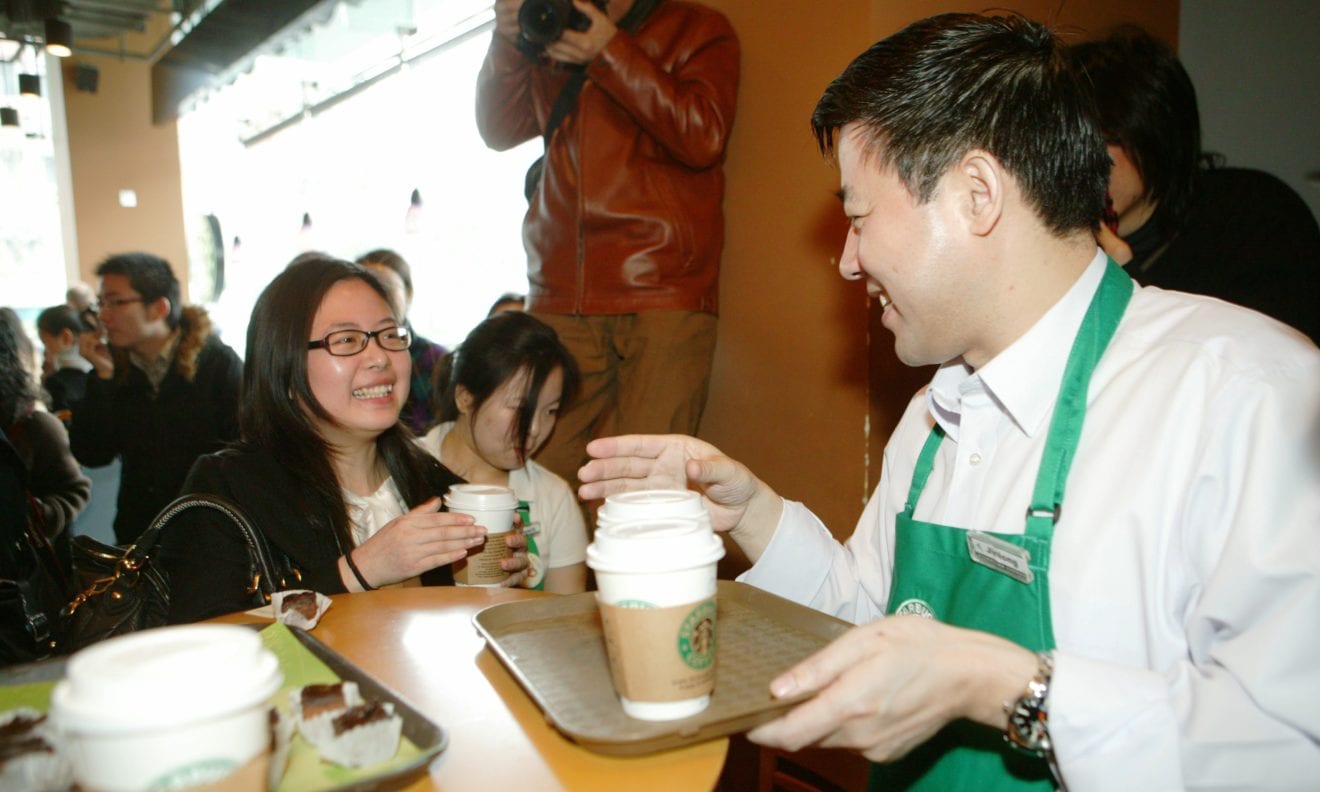
    Starbucks has extended its social gifting promotions into China, where it has launched a major expansion program to double its stores within the next five years.
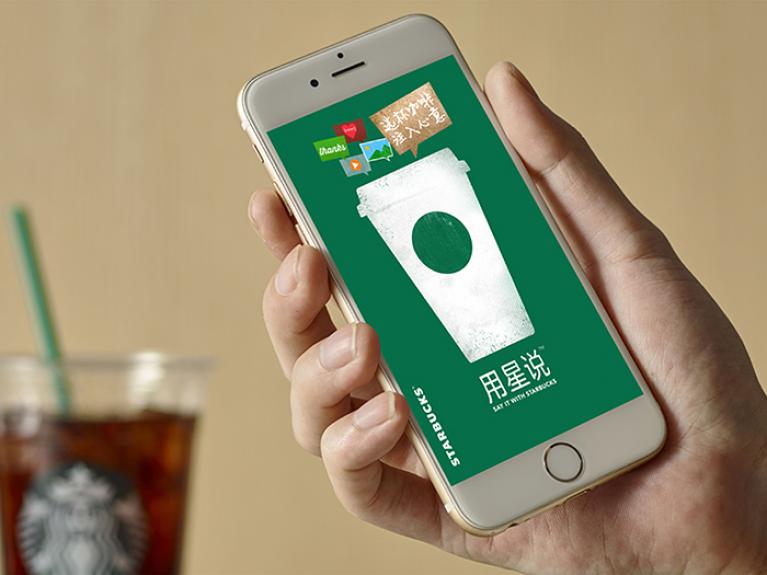
    The coffee giant’s new “Say It With Starbucks” program, created by Starbucks and Weixin, China’s leading mobile social communications app, enables users to gift a Starbucks beverage or digital gift card via a social gifting platform.
    A sister product of WeChat, China’s leading mobile social messaging app, Weixin’s platform has 846 million global monthly active users, as of third quarter 2016. The launch comes on the heels of a strategic partnership between Starbucks and Tencent, WeChat’s developer, in December 2016.
    Users will be able to select from a curated selection of Starbucks-branded gifts and add a personalized message in the form of text, images or video to uplift the day of a loved one, Starbucks explained. Once a gift is received, it will be saved in the recipient’s Weixin app and can be redeemed at any Starbucks store in Mainland China.
    During the initial launch period, Weixin added access to ‘Say it with Starbucks’ users in its Weixin Wallet-function. This partnership makes Starbucks the first retail brand to bring a locally-relevant social gifting experience in China, the coffee giant said.
    Starbucks launched a trial phase two weeks ago among employees and Starbucks customers.
  • Sino Grandness to sell through WeChat Food

    Sino Grandness to sell through WeChat Food

    Sino Grandness Food Industry Group’s full range of own-branded products will be sold online through Wechat Food.

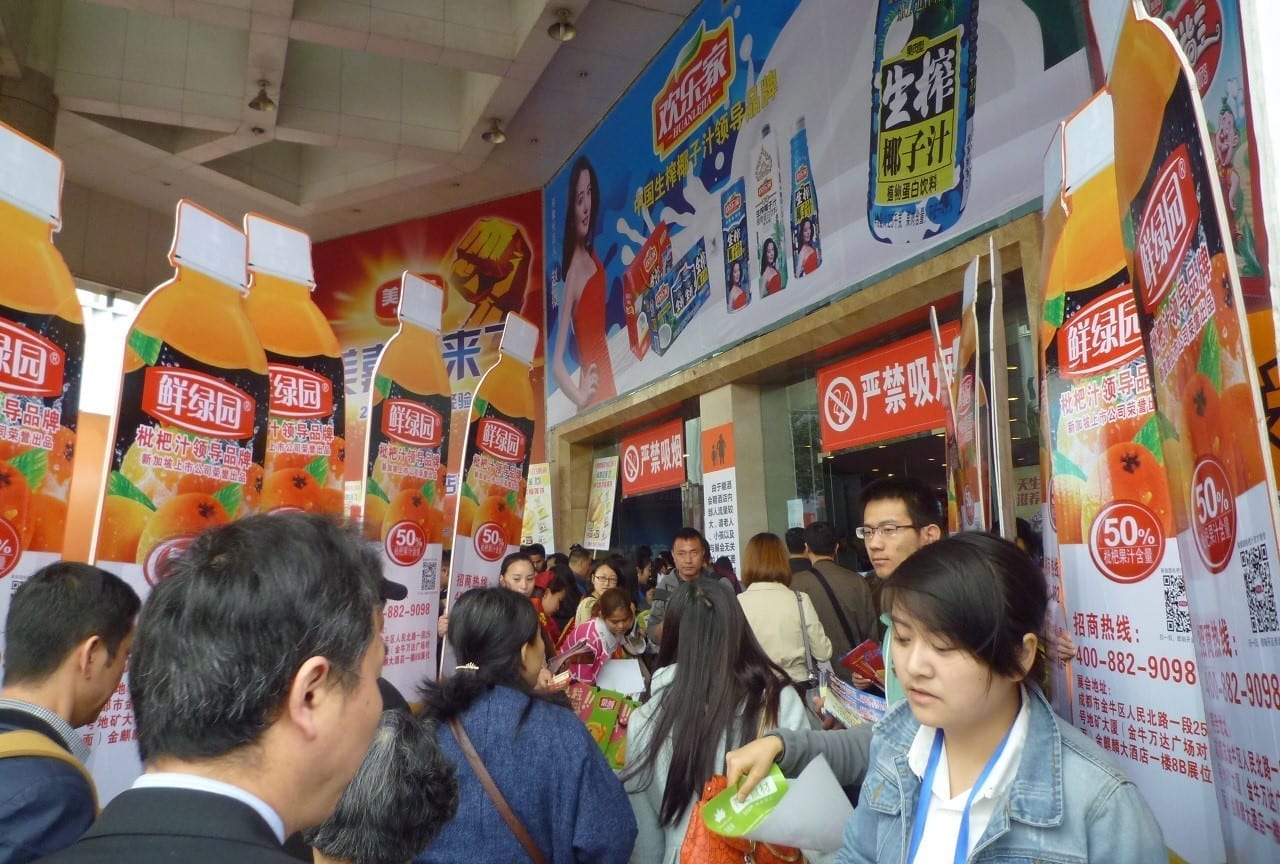
    A mobile platform has been developed by Wechat Food, and under the agreement products such as Garden Fresh beverages, Grandness canned food and Hao Tian Yuan snack food will be available.

    Sino Grandness chairman/CEO Huang Yupeng says the collaboration with Wechat Food is in line with government initiatives to promote the new economy with online and offline business models working together “to achieve synergies in cost savings and to generate greater turnover.”

    He says that although Sino Grandness still generates its revenue predominantly through offline transactions, he is aware of the rapid growth of retail eCommerce sales in China.

    “We are positioning for this new trend through working with partners with established platforms such as Wechat Food to connect the supply chain from the farms to the retail points.”

  • Tencent Singapore office targets tourists

    Tencent Singapore office targets tourists

    Chinese-based online social media platform parent Tencent has opened a Singapore office to help drive Asian brands improve their reach to Chinese consumers.

    Tencent, which owns the WeChat messaging and browsing platform, has created an International Business Group charged with raising awareness of the opportunities offered by WeChat, especially targeting people who live outside China.

    While WeChat is as mainstream in the mainland as facebook is outside China, its takeup across the rest of Asia is limited.  The new Tencent Singapore team believes there are huge opportunities marketing to Chinese when they are travelling outside their home country.

    A growing number of luxury brands are establishing a presence on Wechat – Gucci even sells handbags worth several thousand US dollars on the platform, and BMW reaches out to prospective customers. Other consumer retailers like Hong Kong’s Sa Sa have developed extensive interactive eCommerce platforms which work across channel and drive customers in-store.

    Benny Ho, senior director of business development at Tencent, told The Drum that inbound marketing is a big opportunity in Singapore, especially.

    “These tourists are setting their own itinerary and they know precisely what store to buy from and in what colour before they arrive; they come to buy, not to shop. This means you need to build all the brand consideration and purchase intent way before they arrive and that is part of the core service we are trying to offer,” he said.

    WeChat alone has just over 800 million monthly active users.

    “That’s a huge number,” said Ho. “Every market we go to, we educate the market and tell them the numbers and it’s mind blowing. Our role is to make something that big [more] understandable.”

  • How to grow for Luxury brands

    How to grow for Luxury brands

    Luxury brands need to use new technologies and offer experiences for their customers, the second Luxury Society keynote event in Shanghai has been told.

    UCO Cosmetics CEO Arthur Zhang told the event that the early-stage eCommerce model of simply providing a platform for selling products online is dead.

    He said key technologies being experimented and improved upon in China include augmented reality, virtual reality and live-streaming.

    “The millennial generation in China, which already numbers about 300 million people, seeks experiences and emotional connection – they are not just bystanders,” DLG China partner/MD Pablo Mauron told the audience of more than 150 luxury-industry brand executives. “As a result, live-streaming has become a medium for them to express themselves.”

    He told how brands such as Maybelline, Montblanc and Swarovski are taking advantage of these new opportunities.

    Underlining the key message of the event that eCommerce is changing, CEO Thibault Villet of luxury fashion eCommerce platform Mei.com told how a live-streamed show in collaboration with TMall resulted in 65 per cent of the products featured quickly selling out.

    Meaningful data

    Social customer-relationship management (CRM) makes highly targeted messaging and engagement possible, the event was told by Four Seasons Hotels Asia Pacific director of marketing communications John Hamilton. He said the luxury hotel chain has been gaining meaningful data about its customers, which in turn has driven growth. In the past year, through trial-and-error and optimisation, the group has defined a CRM-led content strategy on WeChat.

    Celebrity and key-opinion-leader partnerships can make a big impact in China, said East Entertainment commercial director Qing Dai, who spoke of her experience of partnering luxury brands with appropriate celebrities. One of Easy Entertainment’s most successful was in linking up Cartier with singer/actor Lu Han.

    Baidu GM for East China Wan (Grace) Zhang said Cartier was the most-searched luxury watch brand among the generation born between 1990 and 2000, linked to Cartier’s collaboration with Lu Han.

    Other speakers at the event included Four Seasons Hotel Pudong (Shanghai) GM Arthur Ho, writer Casey Hall of Women’s Wear Daily, Digital Luxury Group founder/CEO David Sadigh and MD for China Pablo Mauron, Baidu senior project manager Di Fu and Sephora China digital manager Vanessa Qian.

    Attendees included representatives of Alexandre de Paris, Baume & Mercier, Bottega Veneta, Bulgari, Cartier, Chanel, Chaumet, Conde Nast, De Beers, Dior, Hublot, Loewe, LVMH, Marc Jacobs, Massimo Dutti, Michael Kors, Montblanc, Nars, Net-a-Porter, Nike, Sephora, Shiseido, Swarovski, TAG Heuer, Tiffany & Co and Vacheron Constantin.

    Luxury Society, published by Digital Luxury Group, is an online destination for luxury-brand executives covering digital and technology matters and with more than 40,000 members across 150 countries.

  • Starbucks, Tencent debut social gifting on WeChat

    Starbucks, Tencent debut social gifting on WeChat

    Starbucks Coffee Company and Tencent Holdings have entered an alliance to co-create a new social gifting feature on WeChat.

    The new service, which will be rolled out early next year, will make it easy for Starbucks China customers to gift items to a friend or a family member.

    Customers will be able to select from Starbucks-branded gifts and products and add a personalized message. Recipients of these personal gifts and messages can save their gifts and memories on their WeChat accounts and redeem their gift at Starbucks stores across China.

    Users can use WeChat Pay to pay for their goods and services from their mobile devices at Starbucks retails stores. In China, more than 300 million users (as of March 2016) have linked their bank cards with WeChat or QQ, another flagship service of Tencent.

    “Just as Starbucks cards are among the most gifted around the globe, we aspire to also become the most gifted brand digitally in China,” said Belinda Wong, Starbucks China’s newly appointed CEO.

    The online social gifting platform is part of the company’s growing digital presence focused on connecting with customers through digital channels, including the Starbucks Mobile App, the My Starbucks Rewards program and social media.

    The announcement also builds on Starbucks rapidly expanding the portfolio of digital innovations in the country, which integrates the in-store experience with the digital “Fourth Place” experience.

    Earlier this year, Starbucks also launched a mobile payment system in China aimed at providing My Starbucks Rewards (MSR) members access to a fast, seamless and convenient way to pay for purchases, using their pre-loaded Starbucks Gift Card on their mobile devices.

    Wong, who was appointed from president to CEO of Starbucks China in October, has been instrumental in Starbucks unprecedented growth in country – from 400 stores in 2011 to over 2,300 stores today.

    The company said in a news release when her appointment was announced that she will oversee Starbucks plans to double its scale to operate 5,000 stores in China by 2021.

    Aside from focusing on the company’s overall long-term growth strategy, she will be responsible for key areas, including the vast digital and e-commerce opportunities across the market.

  • Starbucks, Tencent to launch social gifting on WeChat in China

    Starbucks, Tencent to launch social gifting on WeChat in China

    Starbucks Coffee Company and Tencent Holdings Limited has partnered  to co-create a new social gifting feature on WeChat, China’s leading mobile social communications service.

    The new service, which will be rolled out early next year, will make it easy for Starbucks China customers to gift Starbucks to a friend or a family member.

    Customers will be able to select from Starbucks-branded gifts and products and add a personalized message. Recipients of these personal gifts and messages can save their gifts and memories on their WeChat accounts and redeem their gift at Starbucks stores across China.

    Users can use WeChat Pay to pay for their goods and services from their mobile devices at Starbucks retails stores. In China, more than 300 million users (as of March 2016) have linked their bank cards with WeChat or QQ, another flagship service of Tencent.

    “Just as Starbucks cards are among the most gifted around the globe, we aspire to also become the most gifted brand digitally in China,” said Belinda Wong, Starbucks China’s newly appointed CEO.

    The online social gifting platform is part of the company’s growing digital presence focused on connecting with customers through digital channels, including the Starbucks Mobile App, the My Starbucks Rewards program and social media.

    The announcement also builds on Starbucks rapidly expanding the portfolio of digital innovations in the country, which integrates the in-store experience with the digital “Fourth Place” experience.

    Earlier this year, Starbucks also launched a mobile payment system in China aimed at providing My Starbucks Rewards (MSR) members access to a fast, seamless and convenient way to pay for purchases, using their pre-loaded Starbucks Gift Card on their mobile devices.

    Wong, who was appointed from president to CEO of Starbucks China in October, has been instrumental in Starbucks unprecedented growth in country – from 400 stores in 2011 to over 2,300 stores today.

    The company said in a news release when her appointment was announced that she will oversee Starbucks plans to double its scale to operate 5,000 stores in China by 2021.

    Aside from  focusing on the company’s overall long-term growth strategy, she will be responsible for key areas, including the vast digital and e-commerce opportunities across the market.