Author: Mei Ling Tan

  • South Korea hopes Vietnam will not quarantine Samsung experts

    South Korea hopes Vietnam will not quarantine Samsung experts

    he South Korean envoy has expressed concern Samsung may suffer huge losses if 1,000 South Korean experts are isolated upon arrival in Vietnam.

    “If experts and engineers of Samsung Electronics enter Vietnam and are placed in quarantine for 14 days, this giant can suffer great damage,” Ambassador Park Noh-wan told reporters in Hanoi Friday.

    Samsung needs to bring in another 1,000 experts to Vietnam to support production line operations, he said.

    Vietnam has suspended entry for those arriving from Daegu City and North Gyeongsang Province, South Korea’s two largest Covid-19 outbreak areas, over the past two weeks. Those arriving from South Korea are automatically quarantined for 14 days as a preventive measure.

    The South Korean Embassy in Vietnam has proposed that the Vietnamese government adjusts its policy, allowing representatives of Korean businesses, including experts and engineers of Samsung and LG, to enter the country and not be quarantined.

    South Koreans with diplomatic and official passports should also be considered for this policy, Park said, adding that all people with a medical certificate issued by Korean medical authorities should be allowed to enter Vietnam normally.

    “The fact that they are in an isolated area will cause a lot of damage. We are very worried,” Park said.

    Park said the number of South Koreans coming to Vietnam has plummeted after Vietnam halted visa waivers for South Korean nationals starting February 29. During the first two months of this year, only 100 South Koreans arrived every day, compared with the previous figure of 13,000, he said.

    The ambassador said that from March 7, Vietnamese airlines are suspending all flights to South Korea. Previously, there were 80 non-stop flights every day between Vietnam and South Korea, around 550 flights per week. About 170,000 South Koreans live in Vietnam now.

    “I hope that the two countries will take effective measures to prevent the (Covid-19) epidemic (from spreading) but not affect the two countries’ long-term relations,” he said.

    South Korea sent three emergency response teams to Vietnam Thursday to provide consular support to more than 270 citizens quarantined over the novel coronavirus outbreak.

    The teams plan to stay in Vietnam for a week starting Thursday, but they could decide to extend their stay if needed. They will discuss with Vietnamese authorities the possibility of lifting the quarantine, while helping citizens who want to return home and those facing visa and other consular problems.

    South Korea is one of Vietnam’s biggest trade partners and investors. The country is the second-largest feeder market of Vietnamese tourism, after China.

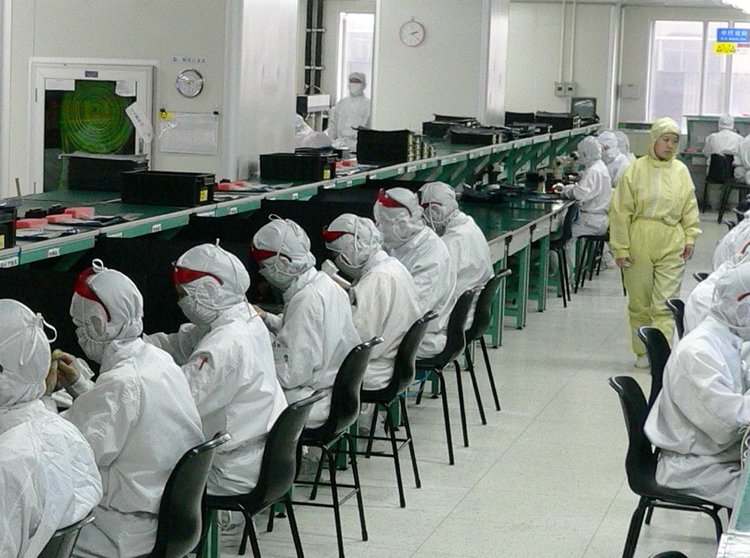
    Samsung, the world’s biggest smartphone maker, is the largest foreign investor in Vietnam, employing around 160,000 people.

    Samsung Electronics began construction on a $220 million research and development center in Hanoi, the first of its kind outside South Korea, on Monday.

    Samsung Electronics said on Friday that it would temporarily move some smartphone production to Vietnam from South Korea. The announcement was made after another of its Korean staff tested positive for the coronavirus, forcing it to temporarily close a factory in the southern city of Gumi in South Korea.

    Since late February, a total of six workers have tested positive at the factory complex in Gumi, close to the city of Daegu – the epicenter of South Korea’s virus outbreak – leading to previous temporary closures at the plant. “Once the Covid-19 situation stabilizes, we plan to move back the output to Gumi,” it said in a statement.

    The global death toll from the Covid-19 epidemic had reached nearly 3,600 in 102 countries and territories by Sunday morning, mostly in mainland China (3,097), followed by Italy (233), Iran (145) and South Korea (50).

    The Vietnamese government has deployed various measures to prevent the spread of the virus, including requiring everyone coming from mainland China, Italy, Iran and South Korea, the worst-hit countries so far, to be quarantined for at least 14 days on arrival.

    As of Sunday afternoon, Vietnam has confirmed 30 Covid-19 infections, with the latest nine being foreign tourists. All nine have been quarantined.
  • UOB Launches Financial Solution for Women in Singapore

    UOB Launches Financial Solution for Women in Singapore

    United Overseas Bank and Prudential Singapore launched a financial solution for women in Singapore that combines a savings account with complementary medical insurance for six female-related cancers.

    United Overseas Bank (UOB) designed a solution for women who may not be placing enough emphasis on their own financial and health needs such as the 37 percent who put the needs of their loved ones before themselves, according to a 2017 survey by UOB and Prudential Singapore. Among married women, this figure went up to 52 percent. The survey also found that close to one in two women (45 percent) say they want a savings account that comes with free critical illness protection.

    To help women protect their wealth and health, UOB and Prudential Singapore have worked in partnership to offer women a dedicated savings account that comes with free coverage for six female-related cancers. The coverage amount is based on their monthly average balance over the past three months.

    For example, if the account holder saves between $50,001 to $75,000 on average over the past three months, she will receive $75,000 in coverage. If the account holder saves more than $100,000 on average, the sum assured increases to $200,000.

    «Women in Singapore today juggle multiple responsibilities, including our careers, parenthood, aging parents, relationships and community involvement, and often this means our own wellbeing takes a backseat. Even as more women are placing a priority on growing their savings, such as our female customers who have increased their current and savings account balances by 20 percent in the past five years, more than one in four women are still not sufficiently protecting their savings with insurance in the event of a critical illness,» Jacquelyn Tan, Head of Personal Financial Services Singapore, UOB, said the UOB Lady’s Savings Account was created with the intent to help women take care of themselves so they would not have to exhaust their personal savings in the unforeseen event of a cancer being diagnosed.

    The UOB Lady’s Savings Account will help female consumers to fill the gap for medical insurance coverage in their financial portfolios. While each individual needs an estimated $316,000 in critical illness protection needs, the average Singaporean only has $60,000 in coverage, leaving a gap of $256,000.

  • Japanese online watch rental concept Karitoke opens third store and launches AR app

    Japanese online watch rental concept Karitoke opens third store and launches AR app

    Japanese watch rental service Kairtoke is launching in Tokyo’s Shinjuku Marui building next Friday.

    The Karitoke store offers monthly watch rentals from more than 40 available brands and 1100 models, with users invited to preview how each watch will look on their wrist before visiting the outlet via an AR app. Users can check from home whether the size of any particular watch matches the size of their wrists, and can coordinate the timepieces with their clothes and suits.

    The Karitoke AR app is unique in Japan in that it is not limited to a specific brand or model of watches. All watches advertised on the brand’s website are now available in the Shinjuku Marui store, the brand’s third physical outlet following its locations in Yurakucho Marui and Namba Marui.

    All Karitoke rentals must be reserved in advance online.

  • Samsung’s new television ad promotes its 5G Galaxy phones

    Samsung’s new television ad promotes its 5G Galaxy phones

    By now, you would have to be Rip Van Winkling your way through life not to know that wireless operators worldwide are building out their 5G networks. Why is 5G so important? As the next generation of wireless connectivity, 5G offers download data speeds 10 times faster than 4G LTE. That will help with the creation of new industries and technologies, most of which haven’t even been thought of yet. Consider that the move from 3G to 4G LTE helped create the rideshare industry which has a pair of billion-dollar companies competing for business (Lyft and Uber). In other words, the countries that are first to embrace 5G will be the first to benefit from the coming 5G economic boom.
    Now that’s not to say that individuals won’t see amazing changes as well. Videos that currently take minutes to download will take seconds to load on a 5G phone. In fact, that is one of the advantages of running a 5G Galaxy phone on a 5G network according to a new television commercial released Friday by Samsung. The timing of the spot coincides with the official release date of the company’s latest flagship series, the Galaxy S20. The new line is comprised of three models, the Samsung Galaxy S20, the Galaxy S20+, and the Galaxy S20 Ultra 5G. All three phones are available with support for 5G.
    Besides rapid downloads of streaming video content, Samsung points out that its Galaxy 5G phones will also be able to offer faster video gaming, enhanced video chats, and more immersive live events. In the commercial, Samsung shows a Galaxy 5G user sitting on a bus while at the same time she is able to experience a live concert through her phone (and view it from any seat in the house).
    Right now, not everyone’s 5G experience is going to be the same; much depends on their wireless provider. T-Mobile was the first to launch nationwide 5G service in the states thanks to the use of its low-band 600MHz spectrum. These airwaves have the advantage of traveling farther than high-band signals which is why T-Mobile already covers 200 million Americans with 5G. And while these low-band airwaves penetrate structures better than high-band signals do, they cannot offer the blazing-fast download speeds that high-band mmWave spectrum delivers. In addition, mmWave signals can carry more traffic and provide lower latency. That means that the time it takes to send data from one device to another is shorter. Low latency is one of the features of 5G that could lead to driverless vehicles.
    Verizon is advertising that its 5G network is “Built Right.” The nation’s largest carrier is talking about the use of mmWave spectrum to build its 5G network. While this will require Verizon to spend more time to complete the network, when it is finished it will deliver faster download data speeds than the competition. Last month, Open Signal released the results of its real-world tests and Verizon’s 5G network, using mmWave spectrum, had the fastest average download data speed in the states at 722.9Mbps. T-Mobile’s 600MHz 5G network had an average download speed of 47.5Mbps. Sprint’s 2.5GHz mid-band 5G signal (which will soon belong to T-Mobile) averaged 183Mbps down and AT&T’s consumer 5G service, using its 850MHz spectrum, recorded an average download data speed of 59.3Mbps.
    There is a long way to go before the next generation of wireless connectivity starts to reach its potential. But 5G is available now and with the Galaxy S20 series officially released, you can now own a phone that supports both mmWave 5G signals and signals produced by sub-6GHz networks. The question is whether you want to spend big bucks now for technology that is clearly in its infancy. Samsung is hoping that this commercial will motivate you to make the switch to 5G now.
  • Walter Mart expands network in Luzon, Philippines

    Walter Mart expands network in Luzon, Philippines

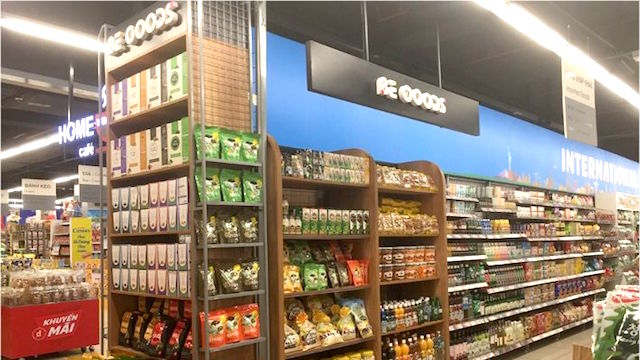
    Luzon supermarket operator Walter Mart has added six new stores to its network this year and the company has also ventured online.

    The Philippine firm says online retailing is its way of expanding its customer base beyond its physical stores across Metro Manila.

    Rosemarie D Caalam, Walter Mart Supermarket GM, said that the expansion would further boost Walter Mart’s presence in Luzon. The company has no plan yet to expand in another area however she stressed it will continue to provide the community’s needs.

    Caalam was commenting during the opening of ‘I Love Philippines’, a program of the Department of Trade and Industry (DTI), and part of the government’s Go Local project.

    Walter Mart Supermarket has now 41 stores in Metro Manila, Central, and South Luzon. The chain operates its anchor stores such as the Walter Mart Supermarket, Walter Mart Cinemas, Abenson Appliances, Homeplus Furniture, Electroworld, and SB Furnitures.

  • Tesla Wins Approval To Sell Longer-Range China-made Model 3 Vehicles

    Tesla Wins Approval To Sell Longer-Range China-made Model 3 Vehicles

    Tesla Inc has secured Chinese government approval to sell longer-range China-made model 3 vehicles in China, the Ministry of Industry and Information Technology said on Friday.

    The vehicles will have a driving range of more than 600 kilometers before they need to be recharged, the ministry said in a statement, while the current China-made Model 3 has a standard driving range of more than 400 kilometers.

    Tesla started delivering cars in December from its $2 billion factories in Shanghai.

  • HKTV Mall sets records as Hongkongers move online during coronavirus crisis

    HKTV Mall sets records as Hongkongers move online during coronavirus crisis

    HKTV Mall has achieved the highest monthly turnover of its six-year history in the wake of the coronavirus crisis.

    In a personal post on social media, HKTV Mall CEO Ricky Wong said the e-commerce company achieved sales of HKD482 million (US$62 million) last month, compared with HKD179 million ($23 million) in February last year.

    As Hongkongers choose to self-isolate and avoid crowds, constantly rising demand for daily essential supplies is fuelling a new wave of online shopping in the territory. Orders have surged year on year from an average of 12,300 a day to 32,600.

    During the initial days of the coronavirus outbreak in January, the epidemic sparked momentum for online shopping with HKTVmall experiencing a 64.7-per-cent uptick in its average orders to 22,400 a day. However, customers were met with prolonged waiting times for both end-to-end delivery and self pick-up, which prompted the retailer to expand its click-&-collect network to more than 100 additional locations in partnerships with various retail chains. This included HKTV Mall’s own O2O shops, its mobile pick-up trucks and other merchants’ pick-up points across the city.

    In a LinkedIn post, Wong said the company’s recent success was attributable to its ability to adapt during moments of crisis and said he hopes “all retailers in Hong Kong will take this opportunity to change their mindset and mode of operation to make more use of technology to alleviate pressure from landlords”.

    HKTV Mall now reigns as the top local operator in the market, despite facing tough competition with Alibaba and JD.com in the past, as local consumers favored cross-border shopping due to its low pricing. And, since the protest movement began last year, many locals have opted to boycott China businesses helping HKTV Mall to rise through the ranks. Wong’s pro-democratic stance helped the brand as well.

    HKTV Mall was one of the first local companies to source surgical masks as the city faced shortages early on in the coronavirus crisis. Wong bought a face mask machine at his own expense, paying four times its normal cost at US$200,000 (HK$1.56 million) and sourcing raw materials from a supplier in Taiwan in order to produce more than 1 million masks in just 30 days.

    The empathy the retailer showed towards Hong Kongers has since earned the brand top spot among local consumers on YouGov’s Brand Index, reflecting positive affiliation.

    Hong Kong has always been slow to adopt e-commerce given the city’s compact nature, rendering online shopping unnecessary, to say the least. Revenue from e-commerce only makes up 11 percent of Hong Kong’s total retail spend (SCMP, 2018) and only a quarter of Hong Kongers shop online (eShopworld, 2018) despite a high internet penetration. However, there is good growth potential in the digital space as it is forecast to expand at a CAGR of 10.2 percent by 2021 (China Daily, 2017).

    The epidemic has propelled changes in consumer behavior and accelerated adoption, although has left many single-channel retailers under pressure due to the absence of a digital presence. However retailers has been alert and responsive to the opportunity as we’ve witnessed many partnerships come to fruition between online platforms and local merchants to achieve quick turnarounds, such as Pandamart’s 15-minute deliveries with local traders, and ticketing system The Gulu, partnering with Sasa and Japan Home Centre in the distribution of masks.

  • Struggling Shandong Ruyi fails to support Bally buy

    Struggling Shandong Ruyi fails to support Bally buy

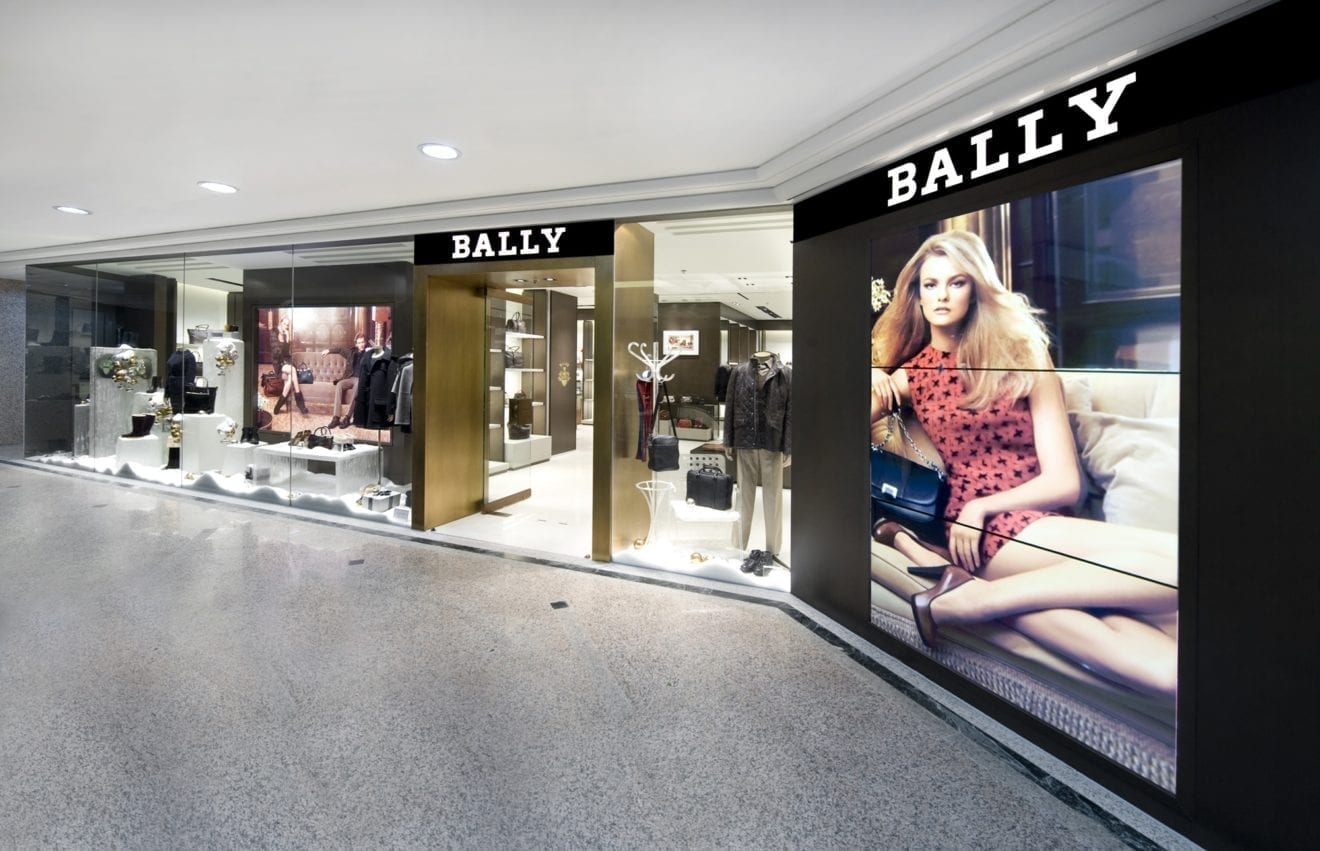
    Chinese apparel group Shandong Ruyi has been unsuccessful in raising funds to settle its planned purchase of Swiss luxury brand Bally.

    According to a Reuters report, the potential deal has been in the works for more than two years and would have required funding of US$600 million. Since making the agreement, the firm has suffered financial difficulties, with the recent coronavirus outbreak proving the final insurmountable hurdle against the transaction.

    Shandong Ruyi has already spent billions of dollars in purchasing luxury brands from Europe, including Aquascutum and SMCP brands Sandro, Maje and Claudie Pierlot, with a view to establishing a major luxury fashion house to rival the likes of LVMH, which has brought significant pressure to bear on the firm’s own financing. It also bought the iconic Lycra business last year.

    Sales of its newly purchased brands have suffered heavily during the epidemic.

    The firm recently suffered negative publicity for its difficulties settling payment for a controlling stake in Israeli menswear group Bagir. Another disgruntled partner, Japanese clothing group Renown, has reported losses caused by failure to collect debts from Ruyi, while Portuguese tailoring company Calvelex has also moved to sue Ruyi for non-payment of debts.

  • Hongkong Land posts record profit, despite protests

    Hongkong Land posts record profit, despite protests

    Property developer Hongkong Land has reported a 4-per-cent rise in underlying profit to a record US$1.076 billion for last year – but warned that the advent of the coronavirus outbreak will dent results this year.

    “The group’s results in 2020 will be impacted by the COVID-19 outbreak, with the performance of development properties in the Chinese mainland and the group’s retail properties expected to be most affected,” said chairman Ben Keswick.

    “The extent of the impact will be dependent on the duration and geographic extent of the outbreak. Stable contributions are expected from the group’s other businesses, although there are expected to be higher financing costs,” he said.

    In Hong Kong, where the company’s high-profile retail portfolio is centred, beneath its Central office towers, all store spaces were fully occupied and delivered “a respectable performance over the Christmas period” following several challenging months for the retail market in the city relating to anti-extradition bill protests.

    “Despite positive base rental reversions, however, the average retail rent in 2019 decreased to HK$222 per sqft from HK$233 per sqft in 2018, due to temporary rent relief and a decline in turnover rent,” the company said in a statement.

    Meanwhile, planning of the group’s 49-per-cent owned prime mixed-use retail and Grade A office development in Bangkok’s CBD, a partnership with local Central Group, continues on schedule. The development is expected to complete in 2025.

  • AirAsia offers six million promotional seats

    AirAsia offers six million promotional seats

    Asia’s leading low-cost carrier, AirAsia, is offering guests six million promotional seats, including zero-fare seats, to many popular destinations in Malaysia as well as overseas.

    AirAsia said customers can enjoy the promotional seats for travel beginning March 8, 2020, to July 1, 2021.

    “Booking is open for the public from March 9 to March 15, 2020, while booking for BIG members and BigPay begins on March 8,” it said in a statement today.

    It said BIG members can enjoy discounted domestic flights from as low as RM12 one way to fly from Kuala Lumpur to Johor Bahru, Penang, Langkawi, Alor Setar, and Kota Bharu.

    BIG members can also enjoy fares as low as RM71 one way when they fly AirAsia X from Kuala Lumpur to overseas destinations, including Fukuoka, Seoul, and the Gold Coast.

    Besides Japan, South Korea and Australia, international destinations covered under the promotion include Thailand, Indonesia, Cambodia, Vietnam, India, and Taiwan.

    Meanwhile, free seats are available when one books a SNAP (flight plus hotel) package from RM129 per person.

    airasia.com chief executive officer Karen Chan said AirAsia understands the current sentiments of its customers so it provides ample opportunity for people to book in advance for an affordable getaway with the travel period up to July 2021.

    “The best way to snap the lowest fares and best value travel deals is to plan ahead and book early as with this latest BIG Sale 2020,” she said.

  • Starbucks sales down in Mainland China

    Starbucks sales down in Mainland China

    Starbucks China has predicted sales will halve in the current quarter due to the coronavirus crisis.

    According to the US parent company’s CEO Kevin Johnson and CFO Patrick Grismer, sales at Starbucks China stores dropped 78 percent year on year because of a sharp decline during the coronavirus outbreak.

    Prior to the outbreak, Starbucks aimed to achieve 3-per-cent sales growth in China at stores open at least 13 months. At the moment, the company predicts a 50 percent drop in sales this quarter and delays store openings in the country.

    “We remain confident in the strength of the Starbucks brand and the long-term profitability and growth potential of our business in China,” the company said in a statement.

    Starbucks China temporarily closed most of its stores in China last month to protect staff and customers from exposure to the virus. Recently, the coffee chain has progressively reopened stores business with limited trading hours. The company aimed to open 95 percent of its stores by the end of the second quarter, said CNN.

    Meanwhile, Ikea China is reopening nine more stores after resuming trade at five stores last week, as it slowly returns to normal business.

  • Crypto Trading In Different Countries

    Crypto Trading In Different Countries

    Cryptocurrency is an acceptable legal tender anywhere in the world. “Anywhere in the world”, does not mean you take ‘cash’ crypto to a pawn shop to get whatever you want. It is an e-currency. Hence, by “anywhere in the world”, it means digital businesses that are run from locations based anywhere in the world. According to a resourceful material on https://insidebitcoins.com/bitcoin-trading, the topmost countries in the world that accept crypto trading, include the US, the UK, Canada, and Australia.

    Crypto Trading in the UK

    Several UK-based platforms allow bitcoin as the legal trading currency. Many of those platforms are regulated by certain guidelines. For most, of all, FCA act as the primary regulator. Most of the UK-based platforms allow different deposit methods, all of which can be linked within a short time. In fact, either deposit is made via euro or pound, or bitcoin, you can also cash out in any of the currencies as well, when you make transactions that can bring money. Binance and Plus500 are the topmost UK online brands where you can make bitcoin trading if you are in the UK. However, Binance is not an actively-regulated site by the FCA; hence, it does not allow trading CFD products, rather the actual bitcoin transaction. 

    In the United Kingdom, cryptocurrency trading can be done by common transactional exchanges between a seller and a buyer, or you can invest in other cryptocurrency trading systems that will give you return on investment. 

    Crypto Trading in the United States

    In the United States, trading bitcoin can happen through different methods. The most widely accepted methods are to make sales and purchases on platforms that allow crypto trading and investing in a cryptocurrency trading platform, based in the US. Interested traders of bitcoins buy bitcoin assets on approved websites and they make trades accordingly, not by price or equivalence with other currencies. Some huge risk-takers afford to go for bitcoin trading robot and they wait to get their returns on investment after a while.

    Certain states in the United States, such as Las Vegas are more liberal and permit online casinos that allow residents within the states to gamble and earn returns in bitcoins. This allows them to gamble and cash out their profits in cryptocurrency or any other means allowed by a specific casinos.

    Crypto Trading in Canada

    Canada is like the United States; similar trading rules and methods apply to both. 

    Crypto Trading in Australia 

    Gradually, bitcoin is becoming an acceptable trading means for online-based businesses. Sadly, bitcoin and PayPal are barred as transaction means in certain regions of the country. Nonetheless, by using Plus500, you can link your PayPal account and fund your Plus500 account. Funds are transferrable between PayPal and the Plus500 platforms. Then, you can use trade with your Plus500 account. With your Plus500 as a major funding source, you can now purchase bitcoin CFDs as instructed. Australians are also able to trade with bitcoin trader robot, maximizing their bitcoin profits and cashing out the equivalent value of their profit.

    Crypto Trading in New Zealand

    Like Australia, New Zealand is gradually embracing cryptocurrency trading. Thus, there are still many platforms where cryptocurrencies cannot be used. Nonetheless, by setting up a funding account source on the Plus500 platform, with PayPal, it becomes possible to trade on several platforms using your Plus500 account. Same conditions are applicable to Australia and New Zealand.

    Crypto Trading in Germany

    Bitcoin trading in Germany is quite technical. Bitcoin trading faces a lot of negative pressures in Germany, but it is not impossible to trade bitcoin. For the few platforms that allow bitcoin trading, verification processes are always rigorous. By leveraging certain global platforms, folks in Germany can make bitcoin trades via credit and debit card, ACH bank transfer, and other transfer means. Berlin accepted Bitcoin, early enough. Most of the cryptocurrency adoption rate from Germany source from Berlin.

    The challenge with cryptocurrency in Germany is that it is not ruled as a financial instrument, even though about 29% of Germans think cryptocurrency is worth investing in, according to a survey by German retail bank Postbank.

    Germany also has bitcoin ATMs where people can make certain bitcoin transactions. Furthermore, there are certain companies where people can transact bitcoins and companies to invest in. You don’t have to necessarily look for a German platform, you can check out global bitcoin trading platforms that are eligible for German citizens. 


  • Huawei lawsuit against ‘unconstitutional’ ban in the US is thrown out

    Huawei lawsuit against ‘unconstitutional’ ban in the US is thrown out

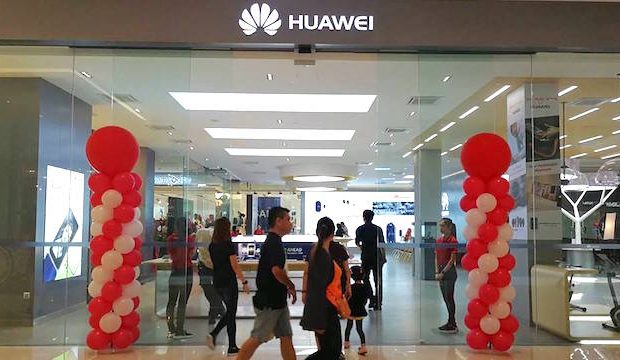
    A judge has ruled against a lawsuit filed by Huawei in the US relating to a ban on government personnel using the company’s devices.

    Huawei filed the lawsuit on the basis that the ban was “unconstitutional” back in 2018. Since then, Huawei has faced increased US-led scrutiny globally over claims the company is controlled by Beijing – an allegation the company denies.

    US District Court Judge Amos Mazzant ruled that Congress has the right to ban federal agencies from using equipment manufactured by specific firms.

    In a 57-page ruling on Tuesday, Mazzant wrote: “Contracting with the federal government is a privilege, not a constitutionally guaranteed right—at least not as far as this court is aware.”

    Huawei is now considering its options and said in a statement the “approach taken by the US Government in the 2019 NDAA provides a false sense of protection while undermining Huawei’s constitutional rights.”

    Earlier this month, the Department of Justice charged Huawei and its subsidiaries with racketeering and conspiracy to steal trade secrets.

    Last week, a bipartisan US delegation voiced their concerns about Huawei during this year’s Munich Security Conference.

    Secretary of State Mike Pompeo claimed that Huawei, and other firms backed by Beijing, are “trojan horses for Chinese intelligence”. Meanwhile, Defense Secretary Mark Esper said China is conducting a “nefarious strategy” through companies like Huawei.

    From the other side of the House, Republican Speaker Nancy Pelosi said the use of Chinese telecoms equipment would be “choosing autocracy over democracy” and “putting the state police in the pocket of every consumer in these countries”.

    February is typically a great month for those in telecoms as it’s a time when everyone convenes at MWC in Barcelona to show off their latest technologies, make deals, and celebrate the industry. Of course, this year’s MWC has been canceled over fears about the spread of the deadly coronavirus.

    The best recent news for Huawei arrived last month when the UK government announced it will be allowing the company to have a “limited role” in national 5G networks following a comprehensive security review.

    Huawei will be hoping for fewer months like February for the rest of 2020.

  • The Impact of Libra and Alipay on Monetary Policy

    The Impact of Libra and Alipay on Monetary Policy

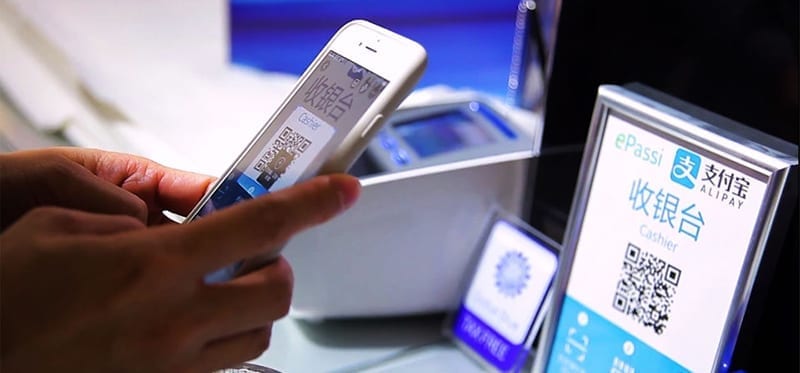
    Digital payment systems such as Libra and Alipay may eventually weaken traditional tools of monetary policy. In doing a good job, central banks can prevent this from happening though, according to a high-ranking Swiss central banker.

    The Swiss National Bank (SNB) is currently engaged in a fight against an appreciation of the Swiss franc and – presumably – is spending huge amounts of money on the purchase of euros and dollars. A fight against all odds it seems – and with the emergence of Alipay or eventually even Libra, the risk is that traditional means of monetary policy lose their effectiveness.

    Once such a purely digital means of payment takes on the role of a trading currency across national borders, central banks are faced with a set of whole new questions.

    It is clear that it would become more difficult to implement the monetary policy if a major part of payments in Switzerland is conducted in another currency than the franc, said Thomas Moser, member of the enlarged governing board of the SNB.

    Moser is convinced that central banks can meet the challenges by simply doing a good job, and thereby prevent people from opting for alternative means of payment. But, at the moment, the bank estimates that the introduction of digital central bank money for consumers would entail hardly an advantage, but major risks.

    The emergence of such means of payment is closely linked to the Blockchain, which is the focus of the second wave of digitization and decentralization. The Blockchain-enabled things beyond our imagination, Moser said. «Today as then, expectations were exaggerated. But in the long run, the consequences are underestimated.»

    Central banks and governments are keen to provide a legal framework for such new projects and to make them conform to the current regulation in a bid to enable the financial market to exploit the new opportunities arising.

  • Google Assistant loses this fun feature on March 23

    Google Assistant loses this fun feature on March 23

    Google Assistant has long featured celebrity voices, but you might want to use them while you still can.

    John Legend’s Google Assistant cameo first debuted in April of 2019, becoming the first celebrity to virtually lend his voice to devices all over the world. The singer’s smooth tones were a big hit among fans, and though Google said the option would be temporary, they didn’t specify a date.

    Or until now, at least, because the Pixel makers just announced that it will be gone come March 23. So after just under a year, the first celebrity voice on Google Assistant will be gone. It’s a good reminder that, as Google warned from the start, these cameos are not permanent. The company also debuted a second celebrity voice from actress and producer Issa Rae back in October. Her voice is still available for now, but we assume it might be gone in six month’s time as well.

    Whether you’ll miss the Legendary voice or not, the good news is that Google will still do everything it used to. Just with a more robotic voice.