Author: Mei Ling Tan

  • Twitter cracks down on hate speech with new policy

    Twitter cracks down on hate speech with new policy

    Twitter is taking a sharper stance against the multitude of hate speech finding its way onto the platform with a stricter set of policies that go into effect now.

    As with any social media platform, it isn’t difficult to find any number of controversial or bigoted messages on Twitter. The platform evidently recognizes that such hate speech is a significant issue in our society that doesn’t just end at digital prejudice.

    Twitter took to its company blog to update its users on new policies, which are focused on three types of bigotry, which are described as “dehumanizing”. These include hateful speech based on age, disability, and disease.

    For example, Twitter says it will remove messages that claim disabled individuals are not human, or that certain age groups don’t deserve rights. Accounts linked to these Tweets may also be suspended.

    These policies seem quite timely in the midst of the novel coronavirus outbreak, which has unfortunately caused a surge in racism and xenophobia. It’s also worth noting that Twitter has already taken action against hate speech in other topics, such as race, religion, and others.

    Twitter’s new policies take effect today, but Tweets will still need to be reported before being deleted. Previous Tweets that go against the guidelines are also required to be deleted, but Twitter has said no suspensions will take place for Tweets from the past.

    In any case, the new policies seem to be a positive step forward in making the Internet a better place for everyone.


  • Lunar New Year timing boosts Singapore retail sales in January

    Lunar New Year timing boosts Singapore retail sales in January

    Excluding motor vehicles, Singapore retail sales in January rose by 0.6 percent, but it will be another month until the effects of the growing coronavirus crisis on tourism and domestic consumer spending is evident.

    Including vehicles, Singapore retail sales in January decreased by 5.3 percent year on year, but this as much reflects changing criteria for vehicle ownership certificates of entitlement in the city-state as an economic trend. Month on month, retail sales were down by 0.5 percent excluding vehicles.

    Online retail sales in January comprised about 5.8 percent of the total. The major categories here were computer & telecommunications equipment, where online accounted for 25.9 percent of total category sales, furniture & household (10.9 percent) and supermarkets & hypermarkets (7.8 percent).

    Overall retail sales of furniture & household equipment declined by 16 percent in January, while sales of optical goods & books fell by 9.4 percent.

    However, sales by supermarkets & hypermarkets, food & alcohol, and apparel & footwear grew by between 6.4 percent and 8.7 percent, due partly to increased spending during the Lunar New Year.

    January saw 9.1 percent growth in sales of food & beverage services, again due mainly to the timing of Lunar New Year, which was earlier this year. On a seasonally adjusted basis, sales of food & beverage services increased by just 0.8 percent in January.

    The value of food & beverage services in January was estimated at S$963 million. Of that, online sales comprised about 9.8 percent.

    Turnover of restaurants, fast-food outlets, and food caterers increased by between 8 percent and 16.4 percent in January, again fuelled by increased spending due to the Lunar New Year.

    Sales by cafes, food courts & other eating places fell by 2 percent.

  • Coronavirus to wipe US$8.3bn off Asia-Pacific duty-free sales

    Coronavirus to wipe US$8.3bn off Asia-Pacific duty-free sales

    The coronavirus outbreak has substantially altered forecasts for Asia-Pacific duty-free sales this year, according to research firm GlobalData.

    Takings were originally forecast to reach US$43.4 billion by the end of the year. New calculations show the outbreak will likely cost the industry $8.3 billion off that figure.

    Globaldata now expects Asia-Pacific duty-free sales to reach $35.2 billion, 19.1 percent lower than the original forecast. Positive outlooks for China and South Korea especially have been dashed by the epidemic, with regions expecting to profit from burgeoning Chinese tourism now forlorn.

    “Other Asia-Pacific countries such as Japan, Singapore, Hong Kong, and Thailand with a considerable increase in the number of new cases over the past few days are estimated to worsen the impact,” said GlobalData Retail analyst Suresh Sunkara.

    “The forecasts may change further during the course of time if the virus spread is prolonged to the second half of this year or if it spreads to other key duty-free markets in the region including India, Malaysia, and Australia, which are currently not significantly affected by the spread.”

    Many key airports in the region have closed with travel between countries broadly impacted by the viral threat. Major duty-free operators such as Shilla, Lotte, Shinsegae and China Duty-Free Group are now left re-evaluating their strategies and identifying other consumer groups and markets to help offset a weakening in revenue.

    “The Tokyo Olympics should … aid the recovery in Asia-Pacific duty-free sales over the summer,” said Sunkara, “on the provision that the crisis has calmed down and travel restrictions have been relaxed. If not, the market growth will take an even more serious hit this year.”

  • Toyota Recalls 3.2 Million Vehicles Worldwide Over Fuel Pump Problem

    Toyota Recalls 3.2 Million Vehicles Worldwide Over Fuel Pump Problem

    Toyota said the recall now covers 1.8 million U.S. Toyota and Lexus vehicles in total in the United States, including older vehicles from as far back as the 2013 model year — and more than 1 million vehicles than it announced in January.

    Toyota Motor said Wednesday it is now recalling 3.2 million vehicles worldwide to address a fuel pump issue that could result in engine stalling. The Japanese automaker first said in January it would recall 696,000 U.S. vehicles with a fuel pump that may stop operating and lead to stalling of the engine. Dealers will replace the fuel pumps with new ones.

    Toyota said the recall now covers 1.8 million U.S. Toyota and Lexus vehicles in total in the United States, including older vehicles from as far back as the 2013 model year — and more than 1 million vehicles than it announced in JanuaryToyota began a probe into the fuel pump issue in June.

    The automaker told the U.S. National Highway Traffic Safety Administration in January it was aware of 66 field reports and 2,571 warranty claims that relate to fuel pump failures in the vehicles initially recalled. Owners have complained of rough engine running, engine not starting and loss of power while driving at low speeds. Toyota said the reports occurred more commonly in areas of the southern U.S. with warmer climates.

  • Japan Food Town in Isetan Singapore shuttered

    Japan Food Town in Isetan Singapore shuttered

    Isetan’s Japan Food Town restaurants on the Singaporean department store’s fourth floor have been unexpectedly shuttered.

    A Straits Times report said Isetan filed a statement with the Singapore Exchange in late January, saying that notice had been served to the development for non-payment, immediately terminating the tenancy. The food court was a collaboration between the Japan Association of Overseas Promotion for Food & Restaurants and the Cool Japan Fund, backed by the government of Japan.

    Optimistic reports dating from just four years ago spoke of a long term commitment to the success of the project – those sentiments have now given way to an austere notice on Japan Food Town’s website announcing its closure and social-media announcements of promotions that faded out in late February.

    At least one of the tenants has now relaunched in multi-stall restaurant Picnic Food Park down in Wisma Atria, with potentially more to follow.

  • Fresh insights on how Singaporean men shop online

    Fresh insights on how Singaporean men shop online

    The majority of Singaporean men spend at least 30 minutes of shopping online every day, according to a survey by Southeast Asian e-commerce platform Shopee.

    The Men’s Online Shopping Behaviour Survey 2020 has also found the target group of 2515 Singaporean male spends almost 70 percent more money online compared to last year.

    Comparing prices to find the best deals is very important to close to 70 percent of Shopee’s male users. The data also revealed that most male users prefer to shop after work, especially from 11 pm to 1 am, or during lunchtime.

    Singaporean men tend to shop for consumer electronics such as phone cables and wireless earphones as well as beauty & personal care products such as hair pomades and pimple patches. When not shopping, close to 60 percent of survey respondents revealed that they regularly use Shopee’s entertainment features, including in-app games.

  • Seven & I drops Speedway US bid

    Seven & I drops Speedway US bid

    7-Eleven operator Seven & I has canceled its plans to purchase the American petrol station chain Speedway.

    The deal was terminated because the expected asking price of around US$22 billion was considered too pricey by the group’s board of directors. The acquisition was hoped to be a vehicle for the group’s expansion in the US with Speedway’s approximately 4000 locations coupled with convenience stores.

    A report in Nikkei suggested factors implicated in the canceled deal could include the risk of significant loss if revenues failed to meet expectations and the potential decline of the industry in general in the age of online shopping

    The American convenience store chain has been wholly owned by Seven & I since 2005. It currently has around 9000 outlets.

  • Fendi Venice boutique opens in San Marco

    Fendi Venice boutique opens in San Marco

    Italian luxury brand Fendi has launched a new flagship boutique in Larga dell’Ascensione in the Venetian district of San Marco

    The Fendi Venice boutique, which retails women’s and men’s clothing through to bags and accessories, is located in a 180sqm space within a roughly century-old palace furnished with terrazzo stone floors, diamond-shaped ceilings, and walls with marmolino finishes. The room also features large windows that flood each room with natural light, creating a see-through effect for stores spread over four floors.

    The women’s bag and accessory floor display products on ivory leather shelves supported by a champagne-gold metal-tube structure. The second floor is divided into two rooms, with a corner for women’s clothing and shoes surrounded by light champagne-gold thread curtains and purple carpeting and featuring luxurious vintage furniture.

    The men’s floor of the Fendi Venetian boutique is also divided into two rooms set in green colors. Gold metal detail and forest-green leather stand against a carpet of the same shade. Briar timber rotating counters, green satin, and satin-finished steel also feature in the space. The fourth and top floors are VIP rooms and luxurious terraces unified with a sky-blue theme, with a geometric stucco motif and a convex witch-eye mirror on the wall against turquoise velvet furniture.

    The terrace, surrounded by untouched vegetation, houses the Fendi Casa outdoor collection.

  • Most Hong Kong e-commerce businesses are eyeing offshore markets

    Most Hong Kong e-commerce businesses are eyeing offshore markets

    More than half of Hong Kong e-commerce businesses want to develop new offshore markets, according to a whitepaper released by e-commerce platform creator SHOPLINE.

    The report found that about three in five online merchants in the territory want to develop new products and 57.5 percent wanted to expand sales into other countries.

    The most popular destination is Taiwan (45.8 percent), followed by other Asian countries including Malaysia and Japan.

    One in five respondents said they want the O2O business model to be a focus of their future plans, including opening pop-up stores to build brand awareness and drive traffic online.

    “While opening online stores has become a trend, the competition is fierce and the market is increasingly saturated,” the report concluded. “Hence the integrated O2O model has become an emerging concept for businesses.”

    Just over half the merchants using SHOPLINE’s platform in Hong Kong said they operated physical stores as well as an e-commerce portal.

    SHOPLINE, which has offices in Hong Kong, Taiwan, Ho Chi Minh City, Shenzhen, and Kuala Lumpur, says fashion and apparel is the most popular category for Hong Kong e-commerce companies, accounting for 36.7 percent. This is likely to be due to a low barriers to entry, especially in terms of the cost of setting sites up.

    Food and beverage, household items, and beauty products make up about one-third of total sales. However, due to the low entry barrier, the ease of sourcing products, and fierce competition in the category, the conversion rate for fashion and apparel is less than for household products and other categories, ranking about the middle.

    The report also found that discounts and free shipping are the most effective sales promotion strategies to retain customers.

  • Reliance Brands plans to launch a fresh luxury e-commerce platform

    Reliance Brands plans to launch a fresh luxury e-commerce platform

    Indian conglomerate Reliance Brands is planning to launch a luxury fashion in the e-commerce portal through its online fashion site Ajio.

    The launching of the e-commerce portal is aimed at widening the company’s market share as online marketing in the country booms. The move pitches the company against established e-commerce players including Flipkart, Amazon and Myntra.

    While an Ajio spokesperson shared information about the business with Vogue, they added that no brand partnerships with labels have yet been signed and declined to comment on the timing.

    The luxury fashion move will be built upon Ajio Gold, Reliance Brands’ premium retail site that carries known brands including Superdry and Steve Madden.

    “Data-driven insights from the ‘bridge to luxury’ brands that retail on Ajio have indicated strongly the possibility for Ajio to craft a luxury vertical, and we are exploring that,” the Ajio spokesperson told Vogue.

    Reliance owner Mukesh Ambani has partnered with 46 international brands including Tiffany & Co, Burberry and Kate Spade and operates 882 physical stores.

  • Google Assistant can now read web articles on your Android phone

    Google Assistant can now read web articles on your Android phone

    Google is making Android more accessible with every major update. Google Assistant is one of the tools used by the Mountain View company to make Android users’ lives much easier. Since we’re living times where it’s impossible not to multitask, having something read to you while you’re focusing on something else is a great feat.

    Audiobooks are a big thing these days, but they weren’t in the beginning. However, the birth and rise of personal digital assistants put everything under a different perspective, and Google Assistant was at the forefront of it.

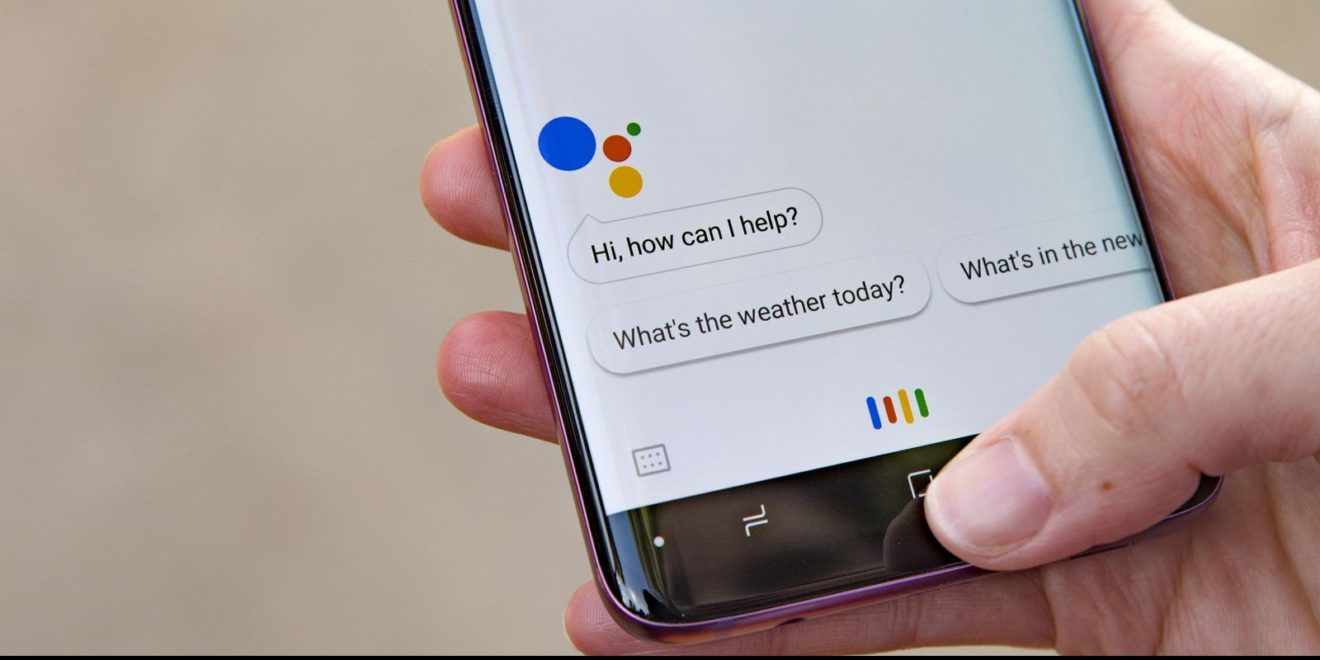
    Now we learn that Google Assistant can read stories posted on the web out loud on your Android smartphone. To make your phone start reading an article, simply say “Hey Google, read it” or “Hey Google, read this page” and you should hear Google Assistant’s voice.

    But the new feature added by Google goes beyond just reading web articles. You’ll be able to adjust the reading speed and even choose from multiple voices. Google says that “the web pages are read aloud in expressive and natural voices, aiming to use the same intonation and rhythm that you’d use if you were reading it aloud yourself,” so that’s a huge plus as well.

    But wait, there’s more. Google announced that its Assistant can read aloud in no less than 42 languages, so make sure that you’re using the translation menu if the article you want to be read isn’t in your native language.

    The new Google Assistant text-to-speech feature should roll out to Android users starting today, but it may take a few days to reach all compatible devices.

  • New-Gen Hyundai Creta To Come With Blue Link Connected Car Tech

    New-Gen Hyundai Creta To Come With Blue Link Connected Car Tech

    The soon-to-be-launched Hyundai Creta will now come with the company’s Blue Link connected car technology. Slated to be launched on March 17, the second-gen Creta will be the third Hyundai car to get the Blue Link system, after the Venue and Elantra facelift. And while the other two only got up to 34 connectivity features, the Creta will come with over 50 connectivity features. Furthermore, in addition to the natural language-based voice recognition program, and Smartwatch integrated Blue Link application, the system now also comes with the ‘Hello Blue Link’ – a wake-up word for activating in-car controls with a voice command.

    Tarun Garg, Director – Sales, Marketing & Service, Hyundai Motor India, said, “With the All-New Creta, Hyundai aims to offer customers the Ultimate Technology Experience. All New Creta will feature Blue Link Connectivity, bringing in ‘Hello Blue Link’ – a wake-up word to activate voice recognition service at ease for in-car control and assistance alongside New Smart Watch Integrated Blue Link application. With Smart and Intuitive solutions offered on the All-New Creta, Hyundai aims to give customers a Quality Time on the go, enhancing the driving experience and providing a Happy Life to its customers.”

    With the new Blue Link system, Hyundai offers connectivity features across a wide range of spectrum like – safety, security, remote access, vehicle relationship management, location-based services (live-tracking), and alert services (theft alert). These, of course, are in addition to the new voice recognition system that understands Indian accent, and Hey Blue Link command. By just saying ‘Hello Blue Link’ you can now control several functions like – Sunroof Open/Close, Seat Ventilation Control, Climate Control -Temperature, Fan Speed control, Wind Direction and Air-intake type control (Fresh/ Circulation)

    The New-Gen Hyundai Creta’s smartwatch connectivity offers remote access to several in-car controls

    Similarly, the smartwatch connectivity feature also offers you remote access to several in-car controls like – engine start/stop, remote door lock/unlock, and remote horn+lights. You can also turn on the in-car air purifier along and check your in-car air quality information with the smartwatch. It also shows vehicle status via the Blue Link app, along with vehicle alerts like stolen vehicle alert, Geo-Fence Alert, Speed Alert, Time Fence Alert, Valet alert, Idle Alert.

  • Fruitas to launch grilled chicken, fresh foods concepts

    Fruitas to launch grilled chicken, fresh foods concepts

    Philippine food-and-beverage kiosk operator Fruitas Holdings will soon launch two new concepts in addition to their popular fresh-fruit shakes concept.

    The first is a store concept under Babot’s Farm brand, while the second represents Fruitas Holdings’ new forway into the fast-growing grilled chicken market segment.

    “Babot’s Farm is a collection of fresh products which Fruitas is excited to serve to Filipino consumers. Our mission is to make fresh products easily accessible to Filipinos, thus bringing the farm closer to them,” said FHI president and CEO Lester Yu.

    Babot’s Farm will initially have three verticals of fresh products in its own portfolio,

    including the company’s buko beverage line, a new soy range under Soy & Bean, featuring products from its recent acquisition, The Tofu Store, and fresh dairy.

    Soy & Bean’s soy-based products will initially include fresh soy milk, tofu, taho, and soy-based ice cream.

    Meanwhile, Fruitas’ grilled-chicken business will be offered through its existing kiosk network along with new solus stores to be opened in strategic locations. The firm will leverage off its recently acquired Heat Stroke Grill and Kuxina Ihaw na.

    Yu said the company is excited about its impending entry into the chicken business and confident it can do so in a cost-effective manner and develop a “well-loved product”.

    Fruitas Holdings started in 2002 from a single Fruitas stall. The company ended last year with 1068 stores across the country.

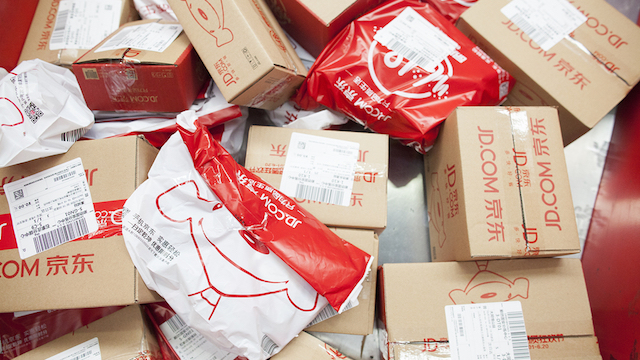
  • JD E-Space reopens Chongqing store with strict precautions

    JD E-Space reopens Chongqing store with strict precautions

    Chinese e-commerce giant JD has reopened its E-Space business in Chongqing.

    The 50,000sqm mega experience store, which retails small household appliances, computers, digital products, and mobile phones, has been shuttered since late January due to the current coronavirus epidemic.

    E-Space allows customers to purchase items within the store on the JD app with a single click to be delivered to their home address – although many shoppers elect to carry smaller items home themselves. With many students in the territory now studying from home, computers, printers, and projectors are currently among the store’s fastest-selling items.

    “After we re-opened, many customers came into the store to shop,” said JD E-Space GM operations Xuefei Li. “We didn’t do any advertising of the re-opening besides posts on our own WeChat and Weibo accounts, showing that consumers are following the store closely.”

    Employees at the store have been required to quarantine themselves for 14 days before returning to work, where they must wear masks at all times and undergo daily temperature checks. Customers are subject to the same restrictions within the store.

  • YouTube Music update brings new player, more controls to Android users

    YouTube Music update brings new player, more controls to Android users

    It looks like Google is very serious about YouTube Music, as the app received two major updates in less than a month. After adding the option to upload music in February, the app is getting another update on Android devices that introduces a new design for the “Now Playing” screen, which includes more accessible controls, static lyrics, and a few other improvements

    The new changes should be available to everyone rocking an Android device, if not now, in the next few weeks.

    • Flipping between songs and videos in the app is now always visible on the player page to make it easy to move seamlessly between a song and its music video, a feature only offered by YouTube Music.
    • Static lyrics are being rolled out within the app, offering highly visible access to follow along to tracks. While still in the experiment phase, this feature will continue to be developed.
    • Playback control is more convenient with repeat and shuffles now located on the player page.
    • Downloading, sharing and adding songs to playlists is now easier than ever with all three features accessible by tapping on album art.

    A new version of YouTube Music has been uploaded in the Google Play Store on March 4, but we’re not sure if it contains all the changes announced today or these will be enabled via YouTube’s servers.