Author: Mei Ling Tan

  • AirAsia Is Accepting Applications For Its ‘Dare To Fly!

    AirAsia Is Accepting Applications For Its ‘Dare To Fly!

    If you are among those who wish to become pilots someday, now is your chance to reach your dream. AirAsia has recently announced it is now accepting applications for the “Dare to Fly! The Allstars Cadet Pilot Program.”

    The aim, according to a press release from AirAsia, is to select as well as train aspiring young pilots.

    In this program, AirAsia has teamed up with Omni Aviation Corporation in a bid to provide successful cadets with up to two years of technical and leadership training. It is to reach the competencies that are required by the Civil Aviation Authority of the Philippines.

    “AirAsia is proud to have the best pilots in the country and we will strive to train more young cadets with our partner Omni Aviation Corporation,” said Ricky Isla, the CEO of AirAsia Philippines. “Through the ‘Dare to Fly! The Allstars Cadet Pilot Program,’ we invite Filipinos to dare to dream with AirAsia.”

  • Tigers Australia boosts e-commerce processing capacity with new omni-channel facility in Sydney

    Tigers Australia boosts e-commerce processing capacity with new omni-channel facility in Sydney

    Tigers has opened a new omni-channel facility in Yennora, Sydney, Australia to meet rising demand in domestic and cross-border e-commerce for B2B, B2C fulfilment and retail scan pack.

    The omni-channel warehouse is fitted with Tigers’ Automated Transport Sortation System and SmartHub: Connect (SH:C) technologies that enable customers to manage orders and view their inventory remotely.

    “The way we all shop is changing and will continue to change,” said Frank Cafasso, Managing Director (MD) Tigers Australia.

    “The Yennora facility, with its state-of-the-art systems, will keep Tigers agile in adapting to the evolving e-commerce market.”

    “The new warehouse’s upgraded capabilities will allow us to facilitate a variety of storage mediums, and with its centralised processing area, the facility will offer increased scalability as the market grows.”

    The new facility expands Tigers’ processing capacity at its Sydney operations to 17,000 pallet locations.

    “E-commerce in Australia will increase not only for domestic but also international (cross-border) trade, and our new Sydney facility is expected to handle an initial 20 percent of our B2C e-commerce traffic, with predicted yearly increases,” added Cafasso.

    The facility will process a range of consumer goods including, cosmetics, apparel, giftware, manchester and homeware among others.

    The new facility is part of Tigers’ two-year strategy to invest in e-commerce and B2B verticals, and similar facilities are planned for construction in Sydney and Melbourne.

    SH:C is the world’s first combined freight, e-commerce, and logistics portal, which gives customers end-to-end visibility of the supply chain globally, from transport, to e-commerce fulfilment delivering cost-effective and customisable solutions.

    The Sydney hub is part of an ongoing global expansion plan for Hong Kong-headquartered Tigers, and the facility was developed by Fife Capital.

  • New Generation Hyundai i10 Commences Production For EU

    New Generation Hyundai i10 Commences Production For EU

    The new generation Hyundai Grand i10 Nios was launched last year in India and now its European sibling, the 2020 Hyundai i10 is all set to be made available in the continent. Hyundai has commenced series production of the new i10 for Europe with sales to begin by early February 2020. The popular hatchback is produced at the Hyundai Assan Otomotiv Sanayi (HAOS) plant located in Izmit, Turkey. The plant has been operational since 1997 as the company’s oldest-running overseas facility and has a production capacity of 230,000 nits per annum.

    The new generation Hyundai i10 for Europe is identical to the India-spec model but gets a host of changes. This includes a more smartly styled front grille with circular LED daytime running lights in place of the boomerang-shaped ones on the Indian model. The fog lamp housing is different as well and the overall design looks sharper for a sporty look. Other changes include 15-inch alloys with optional 16-inch units; dual-tone paint scheme with a contrast roof and a new tail lamp design that looks sharp.

    The Euro-spec 2020 Hyundai i10 also gets smaller proportions and is about 135 mm smaller, 160 mm shorter with a 25 mm shorter wheelbase. The cabin is loaded with features including the 8-inch touchscreen infotainment system with Apple CarPlay and Android Auto, wireless charging, and BlueLink technology for connected tech. The European version also gets collision avoidance assist, high beam assist, lane-keeping assist, driver attention warning and speed limit warning as standard.

    The new i10 will be sold in over 45 markets across Europe with the Turkey plant catering to the demand. The Hyundai Assan plant employs around 2500 personnel and will also be producing the third generation i20 that is expected to be revealed at the upcoming Auto Expo 2020 in New Delhi. The new i20 will go on sale in India first, followed by other markets later in the year.

  • Shanghai Seeks Fintech Hub Status in Five Years

    Shanghai Seeks Fintech Hub Status in Five Years

    The Shanghai government announced a series of policies to motivate firms and talent while formally challenging the similar ambitions of nearby Hangzhou.

    Shanghai’s municipal government is taking an admittedly expedited path, according to a report citing a statement, to becoming a fintech center and will accelerate this development through a series of incentives including a tax cut on related tech firms to 15 percent (from 25 percent) and attractive housing and medical benefits to lure talent.

    Ant Financial, Hangzhou’s homegrown fintech pioneer, also announced yesterday that it would host a fintech conference to support Shanghai’s efforts with expectations to draw up to 30,000 global attendees. The «INCLUSION» conference held in late April will cover themes such as the global digital economy, digital finance, innovative technology, commerce and cities, and sustainability.

    Shanghai’s plans parallel that of Hangzhou’s which is also aiming to be a major hub in the field. In May last year, its local government delivered a plan in to transform the city into a global fintech center by 2030 while leveraging the sector to provide 120 billion yuan ($17.4 billion) in added value to the economy by 2022.

  • Allianz Opens Insurance Holding in China

    Allianz Opens Insurance Holding in China

    Based in Shanghai, the China holding company will support the German insurer’s growth ambitions in the country as it aims to play a larger role in China’s insurance sector and grow with the market.

    Global insurer Allianz has opened China’s first fully foreign-owned insurance holding company, the firm announced in a statement on Thursday.

    Allianz (China) Insurance Holding Company will be led by chairman Sergio Balbinot and CEO Solmaz Altin. The firm said it hopes the establishment of the company will support Allianz’s growth ambitions in China by enhancing its strategic and financial flexibility to capture business opportunities, further increase Allianz’s investment and drive long-term success in the market.

    Allianz received the approval from the China Banking and Insurance Regulatory Commission (CBIRC) to commence operations in November 2019. The launch follows a series of measures recently announced by the Chinese government to further open up and encourage investment in China by foreign financial insurance institutions.

  • Assa Abloy plans 500 Yale Smart Shop franchise stores across Asia

    Assa Abloy plans 500 Yale Smart Shop franchise stores across Asia

    Locks and security-solutions company Assa Abloy plans to expand its Yale Smart Shop franchise network to 500 stores across Asia after a successful pilot in Toa Payoh, Singapore.

    The company has launched a franchise program for Yale Smart Shop with a new store in Tiong Bahru, Singapore.

    The store-in-store retail concept includes modular display cases that are geared for rapid deployment in new stores, the company said in a statement. The e-commerce platform fully supports a scalable yet sustainable business model to translate offline experiences into online purchases.

    To ensure a consistent brand experience and smooth launch and operations at new locations, all franchisees will receive a Yale Smart Shop playbook, a store operator starter kit, and comprehensive training at the pilot store in Singapore.

    “During the first few months, franchisees will receive all the support they need to build awareness in their neighborhood and local area,” said Patrick Ng, GM at Assa Abloy Singapore.

    “We are very encouraged by the record-breaking results recorded at the pilot store in Singapore and look forward to significantly growing the Yale brand and e-commerce sales across the Asia-Pacific region over the next two years,” he added.

    Adding to the eight Yale Smart Shops across five countries already operational in Asia Pacific, Assa Abloy plans to open 100 stores this year and add 400 stores by the end of next year.

  • UBS in Asia Undergoes Major Khan-Led Shakeup

    UBS in Asia Undergoes Major Khan-Led Shakeup

    UBS’s wealth management arm undergoes a major restructuring exercise led by the business’ global co-head Iqbal Khan and Tom Naratil.

    Through the reorganization, Khan will make his mark on the wealth management business’ highest growth market by region with the goal of improving costs and efficiency at the bank.

    The bank has appointed LH Koh, head of the China business, as the APAC co-head of the global family office, alongside the current head of the unit, Anurag Mahesh. David Man, a UBS veteran since 1996 credited for building a sizable international wealth business in Taiwan, was also appointed as vice-chairman of wealth management for Greater China.

    Post-restructuring, the Asia Pacific wealth business will be led by co-heads Amy Lo and August Hackete. In Hong Kong, Marina Lui will be sector head for China likely absorbing Koh’s former responsibilities overseeing the bank’s international China business. Succeeding Man to man the Taiwan helm is Francis Liu who was previously focused on the ultra-wealthy segment for Greater China. Also joining them in the city is Adeline Chien, sector head for Hong Kong and Southeast Asia.

    And in Singapore, the bank named Patricia Quek, as sector head for Singapore and Malaysia; Tian-Ong Foo, sector head for Thailand and Philippines; and Raymond Ang, sector head for Indonesia, Greater China and offshore Japan.

    Asia’s restructuring follows EMEA where Khan and Naratil divided the business into three parts to better responds to changing client needs. The restructuring is reportedly expected to help shed 500 jobs globally with affecting management layers in Asia alongside noteworthy portions of Europe. Switzerland and the U.S. are expected to be less impacted by the cuts.

  • Hyundai Department Store aims to eliminate paper receipts

    Hyundai Department Store aims to eliminate paper receipts

    Hyundai Department Store says it will launch an electronic receipt issuance service with the aim of “zero” paper receipts within three years.

    Electronic receipts will be issued in the form of the automatic issuance of receipts through mobile applications instead of paper receipts when purchasing goods.

    Last year, about 160 million paper receipts were issued by Hyundai Department Store and Hyundai outlets.

    If an average length of paper receipt is 25cm, the total length of issued paper receipt would be able to circle the earth once – about 40,000km.

    Even if one is not a member of the department store’s loyalty program, the company will introduce a “mobile receipt” service that sends receipts by text message if a mobile phone number is entered in the process of product payment, which will also eliminate paper receipts.

    The issuance of electronic receipts is a measure under the “paper receipt elimination” agreement signed with the Ministry of Environment and other government ministries last August.

    The department store expects that the issuance of electronic receipts will have the effect of eliminating paper waste and waste disposal issues as well as minimizing concerns over personal information leaks.

  • New partner signed to manage Esprit Kids range

    New partner signed to manage Esprit Kids range

    Hong Kong-headquartered fashion brand Esprit has signed with Kids Fashion Group (KFG) to manage the firm’s design, production, and distribution of the Esprit Kids collection.

    The new contract follows the end of a five-year agreement with French childrenswear retailer Groupe Zannier, which has managed Esprit’s childrenswear brand since first signing in 2015.

    KFG’s first Esprit Kids collection under the new agreement is expected to be released to the market in around July this year. Customers will be able to purchase items from the collection at wholesalers, online and selected retail outlets.

    Kids Fashion Group has a significant distribution network throughout Europe and has a strong sales force in the German market.

    “Kids Fashion Group is a true children’s apparel expert with rich experience in designing and producing high-quality children’s apparel that transport great brand statements,” said Esprit in a statement.

  • Hong Kong restaurants bounce back in final quarter of 2019

    Hong Kong restaurants bounce back in final quarter of 2019

    Hong Kong restaurants appear to have shrugged off the worst of the impact from the city’s social unrest in the final quarter of last year,

    According to food-delivery service Deliveroo’s second Restaurant Confidence Index, a quarterly survey of restaurant partners that details F&B trends in Hong Kong, eateries in the territory are seeing increased revenue turnover and profits, even as they continue to face a challenging business environment.

    During the final financial quarter of last year, 37 percent of restaurants saw an increase in revenue turnover quarter on quarter, when more than 71 percent of restaurants faced decreasing or unchanged turnover rates.

    However, only 20 percent of restaurant partners surveyed in the latest index saw an increase in profits due to the fact that many restaurant partners surveyed saw an increase in operations, ingredient and labor costs. One in three reported rising order-out revenue.

    On average, restaurants rank their satisfaction in overall business performance at 6.6 out of 10 for the fourth quarter of last year, a one-point jump from the average rating of 5.6 the previous three months.

    Many restaurants experienced year-on-year revenue decreases during the Christmas and New Year period, with 55 percent experiencing a holiday-period revenue fall from the previous year. The decrease in revenue was much more significant for dining in as compared to ordering out, with 61 percent of restaurants witnessing a decrease in dining in revenue as compared to 41 percent who said the same of delivery.

    Consumers appear to have spent less during the festive season this year as just 17 percent of restaurants increased their total turnover, however, 16 percent of restaurants did note an increase in delivery revenue during the period.

    “Last year was unique for Hong Kong‘s F&B industry, with restaurants facing a number of challenges in terms of operating costs, customer turnover and overall business environment,” said Deliveroo Hong Kong GM Brian Lo. “Still, it’s a positive sign that restaurants are more satisfied with their business performance as compared to the previous quarter.”

  • Braun Buffel unveils new store design at Ion Orchard

    Braun Buffel unveils new store design at Ion Orchard

    Braun Buffel has launched its new store concept at Ion Orchard in Singapore, creating a brand experience with multiple physical and digital touch-points.

    The store’s facade features Champagne-gold fonts against soft white frames. To create a modern look, marble stone tiles in light grey with streaks of white tones are used. Hand-brushed finishes on the cement provide a three-dimensional textured effect on both the floors and walls. Pastel rose pink is chosen as the themed color for the walls.

    The Braun Buffel store at Ion Orchard has also unveiled its Spring/Summer 2020 collection with the theme of “Individualism” featuring different selections for men and women.

    Founded 1887, Braun Buffel is exclusively distributed in the Asia Pacific region by Lianbee-Jeco, and has boutiques in The Shoppes at Marina Bay Sands, Ion Orchard, VivoCity, Suntec City Mall, Westgate, and Terminals 2 & 3 (Departure/Transit Lounge) at Changi Airport, as well as counters in selected department stores.

  • Luk Fook upbeat despite plans to trim Hong Kong store network

    Luk Fook upbeat despite plans to trim Hong Kong store network

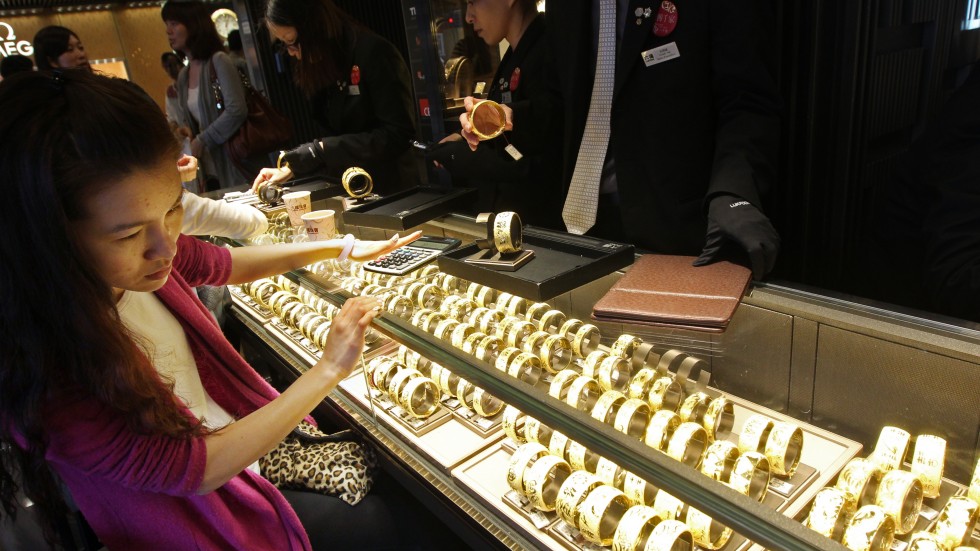
    Hong Kong-headquartered Luk Fook group has followed its archrival Chow Tai Fook in revealing plans to shutter stores in the territory’s tourist areas – but it sees growth opportunities in Macau.

    “The group will reduce the number of shops in areas which are considerably impacted by the social incidents in Hong Kong, and search for opportunities for opening new shops in Macau market,” chairman Wai Sheung Wong advised shareholders in a stock exchange filing.

    However, unlike Chow Tai Fook, which plans to close about 15 stores in Hong Kong when leases come up for renewal from this coming April, Luk Fook still expects to achieve a net gain of three stores this financial year in Hong Kong and Macau.

    “Rental renewal depends very much on whether profit is expected for the relevant shop under new rental,” said Wong. “A single-digit drop in the rental renewal is predicted for the current financial year and a double-digit drop for the next financial year.”

    The continuing impact of the strong gold price, US-China trade war and social incidents in

    Hong Kong on market sentiment saw same-store sales for the jeweler fall by 25 percent during the December quarter. Same-store sales of gold products fell by 20 percent and of gem-set jewelry by 32 percent.

    On a positive note, the overall decline eased when compared to the previous quarter. Sales in Hong Kong and on the mainland fell by a lower rate than in the September quarter, while the Macau market returned to growth since October. Sales in Hong Kong and Macau fell by 27 percent, which the group attributed to a high gold price and a “substantial decline” in the number of visitors to Hong Kong contributed by the recent ongoing social activities.

    In the first two weeks of January, the same-store sales decline gradually narrowed in Hong Kong and there was continued growth momentum in Macau.

    Luk Fook has responded to falling sales by reducing staff, however this has been achieved by natural turnover without the need for a redundancy scheme.

    As of December 31, the group had 1969 Lukfook shops, 45 Goldstyle shops, three Dear Q stores and three 3D-Gold shops operating on the mainland – 2020 in all.

    “Apart from actively seeking expansion opportunities in Macau, the group will also speed up expansion in Mainland, with the target of at least 300 net shop additions there for the 2020 financial year, most of which would be licensed shops at low-tier cities,” said Wong.

  • Bose shutting stores across Australia, North America, Europe, Japan

    Bose shutting stores across Australia, North America, Europe, Japan

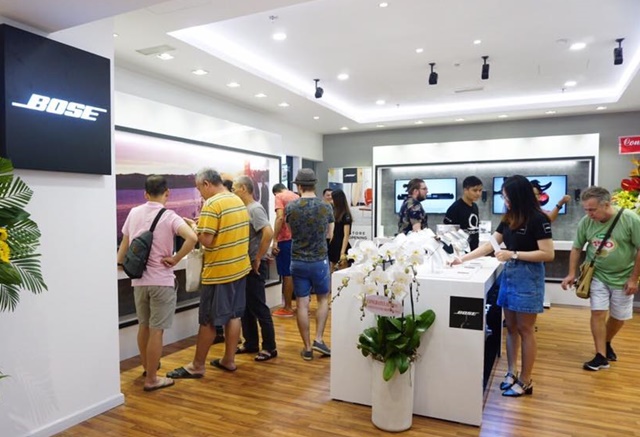
    Electronics retailer Bose is shutting down its 19 Australian retail stores over the next few months, with the intent to focus on its e-commerce offer in the region.

    Locations across North America, Europe, and Japan will also be affected, putting hundreds of people out of work across the store network.

    The business said in a statement that the approximately 130 stores located across Greater China, the United Arab Emirates, India, Southeast Asia, and South Korea will remain open.

    “Originally, our retail stores gave people a way to experience, test, and talk to us about multi-component, CD and DVD-based home entertainment systems,” Colette Burke, vice president of global sales for Bose said.

    “At the time it was a radical idea, but we focused on what our customers needed, and where they needed it – we’re doing the same thing now.  It’s still difficult because the decision impacts some of our amazing store teams who make us proud every day.”

    According to the brand, it will be offering assistance and severance packages to affected employees.

    Bose joins a list of retailers who have committed to closing stores over the next few months, with EB Gamesshutting 19 stores, Harris Scarfe closing 21, Bardot closing 58, and Curious Planet’s closure seeing 63 doors shut.

    In total, this brings the number of guaranteed store closures to 180 – not taking into account what Jeanswest’s voluntary administration will mean for its 146 stores across Australia.

    While consumer sentiment has been historically low recently, the added pressure on the economy and public sphere due to the unprecedented bushfires burning across the country has raised fears that the Christmas period may not have lived up to retailers’ expectations.

    Australian Retailers Association executive director Russell Zimmerman warned that the consensus for December and January trade is still out, to expect the fires to have an impact on trade figures.

  • Bangkok’s Thaniya Plaza to be refurbished for the first time in 30 years

    Bangkok’s Thaniya Plaza to be refurbished for the first time in 30 years

    Thai developer Thaniya Group plans to invest more than THB1 billion (US$33 million) on renovating Thaniya Plaza, its first major makeover project in 30 years.

    The project will cover the refurbishment of its exterior and interior design as well as the transformation of Thaniya Road, the company said in a statement.

    Located in the heart of the tourist precinct of Silom, Thaniya Plaza is a major drawcard for golfers, especially visitors from Japan and South Korea.

    “Thaniya Plaza will further strengthen our position as the well-known landmark on Silom Road and fulfill needs of people in the Silom area,” said Tasnawat Sombuntham, MD of Thaniya Group. “We are confident that we can cater to a need for business operators in terms of the customer traffic and the prime location in Bangkok’s CBD. We have also improved our space-rental services to align with today’s business landscape.”

    Thaniya Group chose a design concept emphasizing modern and green, based on public feedback suggesting there was a need for more green spaces in the Silom area. The 12,000sqm retail space spans four floors in two buildings connected by bridges. The landscape on the ground floor will be transformed to increase more green area and create a link between the two buildings.

    The first phase of the renovation will start in April with the work expected to be completed by early next year. During the renovation, the mall will continue to trade.

  • Why Google’s acquisition of Irish startup Pointy is big news for retailers

    Why Google’s acquisition of Irish startup Pointy is big news for retailers

    Google has acquired Irish start-up Pointy, a firm that allows physical stores to make their products discoverable online.

    The deal is expected to be completed within the next few weeks, with TechCrunch reporting that the acquisition has seen Google pay €147 million (US$163.7 million) on the business.

    “For Google, this provides the opportunity to present shopping search results for physical stores as well as those online – something it already does in a limited capacity – and so significantly increase the value of Google Shopping for users,” says research firm GlobalData’s technology editor Lucy Ingham.

    “However, while this is a significant step in bridging the divide between brick-and-mortar stores and the online e-commerce world, the acquisition has the potential to be even more impactful. It is a significant step for Google, because it provides the search engine giant with a way to cheaply and easily catalog physical assets on a large, yet decentralized scale.”

    Google is likely to be seeking to expand its adoption of Pointy in ways that may include dropping or reducing the current one-time integration cost of £699 ($914), or even getting leading point-of-sale manufacturers to directly integrate the technology into their products, says Ingham.

    If the firm can successfully increase the prevalence of Pointy, it could eventually have coverage of physical stores to rival those of digital stores, bringing with it a potential step-change in how people shop.

    “However, there are also potential applications beyond e-commerce. What Google has bought, in essence, is a means to catalog real-world items, and the same technology in the Pointy Box could be put to use in many other fields,” said Ingham. “Potential applications could include medicines, enabling Google to collect data on gluts and shortages of particular items and use this to provide industry-targeted services, inform users or even assist its own moves into the healthcare space.”