Author: Mei Ling Tan

  • Luxury streetwear label Opening Ceremony to close all stores

    Luxury streetwear label Opening Ceremony to close all stores

    Luxury retailer Opening Ceremony will shutter its entire store network this year.

    The store closures follow the brand’s sale to streetwear brands conglomerate New Guards Group. Boutiques in Japan, New York and Los Angeles will close down permanently as the firm transitions to become a brand only rather than a retail operator.

    “It’s incredibly emotional for us to announce today that we will be closing our Opening Ceremony retail locations sometime in 2020,” wrote founders Carol Lim and Humberto Leon on the brand’s social media page. “We’ve made a decision to focus on growing Opening Ceremony collection and brand with our new partners, New Guards Group, and expand the designs of Opening Ceremony. Our brand takes the beautiful spirit of experimentation, fun, and collaboration embodied in our stores and imbues this energy into the clothing we make.

    “We know our decision may surprise you, and it may be interpreted in many different ways. Ultimately, in this time of immense change in the way that people shop, we still believe in the power of passionate and unique retail. But we also believe in the necessity for change, reflection, and an opportunity to refresh.

    “We are stepping back from multi-brand retail, for a moment, so we can come back with an experience that is just as inspiring, filled with love and relevant for the years ahead as Opening Ceremony has been,” they said.

    Opening Ceremony stores previously carried multiple fashion brands and had a reputation as a somewhat offbeat industry player.

  • Watsons China launches WeChat Work and Cloud stores

    Watsons China launches WeChat Work and Cloud stores

    Health and beauty retailer Watsons has partnered with Tencent’s WeChat Work platform to establish an online presence and launch cloud-based WeChat stores this quarter.

    Watsons China’s launch on WeChat Work and the establishment of cloud stores will enable the brand to provide more personalised, round-the-clock services to its more than 65 million-strong customer base shopping at Watsons’ 3800 physical outlets – each of which will have a corresponding cloud store under the new system.

    “To retain our over 65 million loyal members as well as appeal to new customers, we have to be at the cutting edge of retailing, and find a way to stay close with them,” said Watsons China CEO Kulvinder Birring. “With big data technology, these social-commerce platforms add another dimension to our relationship with customers, enabling us to connect and interact with them, and ultimately become the most-loved brand of our customers.”

    “We’ve been working very closely with Watsons,” said WeChat Work senior industry director Hau Lu. “Combining the advantages of both parties, we will further cooperate and jointly search for more business opportunities.”

    The new Watsons China’s WeChat Work platform will establish a communication channel in which customers can add store staff as WeChat friends, who then become their personal beauty consultants. Customers can seek advice from store staff at any time, from anywhere, and enjoy one-to-one customer service. If a product is not available from a customer’s nearest branch, store staff can help to order the item in the cloud store system. Customers can also choose to have their order delivered via courier, “click & collect” or the “one-hour flash delivery” service.

    “WeChat Work helps us nurture a closer relationship with our customers,” said Wanda Plaza ZhengZhou Watsons store manager Ellen Shen. “They can now contact us any time for personalised service and advice. We’re glad to be able to earn their trust and become their friends. Since its launch, we’ve received very positive response from customers who have added us as friends to enjoy this one-to-one service.”

    Watsons has also introduced an AI chatbot called Wilson, who is a virtual spokesperson for the brand available 24/7 via WeChat Work. The bot can provide customers with professional and personalised advice, aimed at providing an entertaining and useful addition to the shopping experience.

  • Yum China prepares to list in Hong Kong

    Yum China prepares to list in Hong Kong

    Pizza Hut and KFC restaurant operator Yum China is preparing for a second listing in Hong Kong.

    The US-listed firm is currently working on proceedings with China International Capital and Goldman Sachs to establish a footing closer to its base territory. The listing could take place as early as this year.

    Bloomberg revealed that the Hong Kong Stock Exchange is seeing a spike in inquiries about second listings from Chinese companies since Alibaba’s US$13 billion share sale two months ago.

    Yum China operates more than 8900 restaurants across the Chinese market and recently agreed to purchase a majority shareholding in simmer pot restaurant operator Huang Ji Huang.

    Meanwhile, shares in Chinese restaurant chain Jiumaojiu International soared by than 40 per cent when they debuted on the Hong Kong Stock Exchange yesterday. Jiumaojiu has 328 outlets trading under five brands in Mainland China, where it plans to focus its business for now, before expanding into Hong Kong, other Asian markets and North America in the longer term.

  • Tiffany Flagship Next Door opens in New York

    Tiffany Flagship Next Door opens in New York

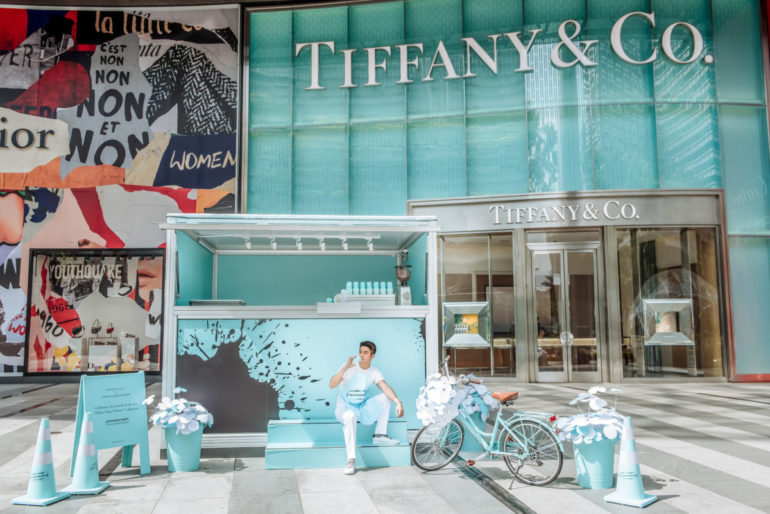
    Tiffany & Co has opened The Tiffany Flagship Next Door – a two-year pop-up store in New York City.

    Located at the adjacent 6 East 57th Street, the Flagship Next Door will serve as Tiffany’s New York City flagship store until the transformation of No 727 Fifth Avenue is complete next year.

    The store’s main floor features high jewellery and famous collections including Tiffany T, Tiffany Paper Flowers, Tiffany Victoria, Tiffany Keys, and Tiffany HardWear. The Tiffany Men’s Collections is presented on the second floor, while third floor displays love and engagement collections and the fourth floor offers homewares and accessories

    The Tiffany Flagship Next Door also features private selling rooms and a VIP salon, offering customers the same level of service that they were accustomed to in the original flagship store.

    The store is designed around a vaulted, escalator-flanked atrium and retains “a playful, fun look with a modernised attitude”, the company said in a statement. Inspired by the original store, the new store’s interior uses concrete and stainless steel as its main materials.

    Tiffany brand codes are displayed throughout the store, from wood paneling with Tiffany’s Flora and Fauna motif stenciled onto crates, to Tiffany’s signature Wheat Leaf motif reimagined as a ‘Color Block’ painted feature wall.

    “We have created something truly unique and visually dynamic with this space,” said Reed Krakoff, chief artistic officer at Tiffany & Co.

    Tiffany unveiled its transformation plans for its iconic New York City flagship store last year. The building is an architectural icon that has served as the cornerstone of Manhattan’s shopping district since 1940. The brand says the transformation of the New York flagship store marks a new chapter on Fifth Avenue and further interlaces the brand into the fabric of New York City.

  • Google brings iPhone support for an important security feature

    Google brings iPhone support for an important security feature

    In the age of digital security, two-factor authentication, or 2FA, is one of the most important lines of defense against a wide array of cybersecurity issues. Recently, Google released an update to let iPhone users take advantage of this tech a lot more easily.

    Need a refresher on what 2FA is? Basically, it’s a security system that requires two different authentication mechanisms to bypass, which are often based on something you know or have, such as a password or security key. Over decades, this technology has been integrated neatly into our lives, as the PIN code on your ATM card, perhaps, or, more recently, as those ubiquitous codes texted to you whenever you do basically anything.

    Several years ago, Google announced a new way of using 2FA, where your phone can act as its own security key, or one of the two factors you need to unlock your account. You might have run into this system if you’ve recently tried to reset your Gmail password from your computer—you were probably able to reset it just by interacting with a notification on your phone. The system is super simple, easy to use, fast, and secure.

  • Qualcomm has started a price war that will impact prices of 5G phones

    Qualcomm has started a price war that will impact prices of 5G phones

    A report issued by reliable analyst Ming-Chi Kuo says that a price war has begun in the 5G chip industry. Kuo’s note to clients, says that Qualcomm has cut pricing for its mid-range 5G Snapdragon 765 chipset after sales of high-end 5G smartphones fell short of expectations. By cutting the cost of its mid-range 5G chips to manufacturers, Qualcomm is trying to get these firms to produce more affordable 5G handsets to entice the public. The price cuts will also extend to Qualcomm’s low-end chips as well.
    As a result of the price cut, Kuo sees MediaTek facing pricing pressure for its Dimesnity line of 5G chips three to six months earlier than expected. Instead of achieving gross margins of 40% to 50% for its chips as the consensus expects, the analyst sees MediaTek’s margins dropping to less than 30%-35%.
    Qualcomm has reportedly cut the price of the 5G Snapdragon 765 chipset (SD7250) by $25-$30 to $40. MediaTek’s Dimensity 1000 5G chipset costs the company $45-$50 to make and it sells for $60-$70 per chip. As a comparison, Qualcomm’s top-of-the-line Snapdragon 865 Mobile Platform with the Snapdragon X55 5G modem costs $120-$130 and has not had its price cut. The company’s flagship chip outperforms the MediaTek Dimensity 1000 and Qualcomm sees no need to drop the price of its high-end chipset.
    The recently announced MediaTek Dimensity 800 chipset, which supports only the slower sub-6GHz 5G signals, is due to be released in May. This chip, developed for lower-priced 5G handsets, is expected to be sold at a price of $40-$45 per chip and costs MediaTek $30-$35 to make. There might not be that much room for MediaTek to maneuver in response to Qualcomm’s pricing actions.
    The pricing shakeup could cost MediaTek some business. The company’s major 5G chip customers like Oppo, Vivo, and Xiaomi are said to be switching orders for 20 million to 25 million chips from MediaTek to Qualcomm. These components are scheduled to be shipped next month.
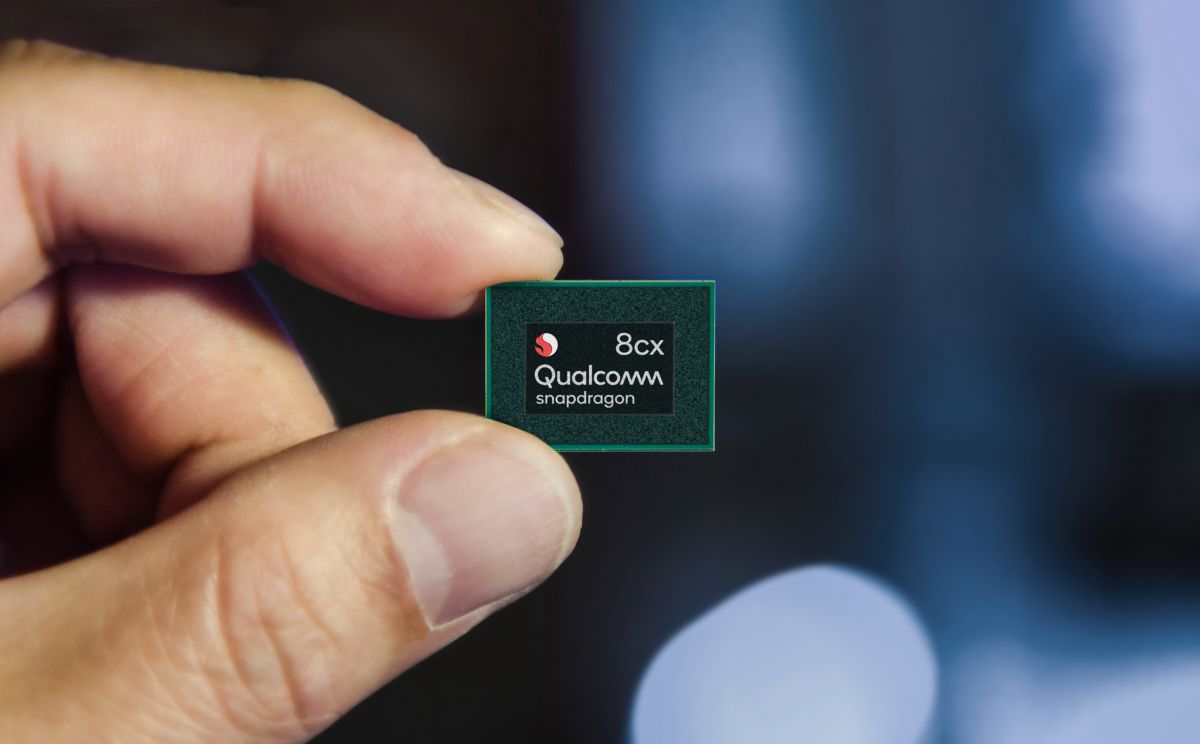
    The Snapdragon 765 SoC is equipped with eight Kryo 475 CPU cores running at a clock speed as fast as 2.4GHz. It features an integrated Snapdragon X52 5G modem that supports both mmWave and sub-6GHz 5G signals, and sports the Adreno 620 graphics processor. There is also a Snapdragon 765G for gaming phones that is equipped with an enhanced version of the GPU offering 10% faster graphics rendering compared to the standard Snapdragon 765 chipset.
    The Dimensity 1000 also has an integrated 5G modem and is packed with four performance Cortex-A77 CPU cores running at a clock speed of up to 2.6GHz. Four efficiency Cortex-A55 CPU cores are also included. This SoC is equipped with the ARM Mali-G77 MC9
    Qualcomm’s salvo would have less of an impact on the market if MediaTek’s margins were a little wider. A larger margin would allow the company to take a hit and still thrive. But the Dimensity 1000 brings $10-$25 per chip to MediaTek’s bottom line and the Dimensity 800 garners profits of $5-$15 per chip.
    MediaTek’s Dimensity 1000 and Dimensity are manufactured by TSMC using its 7nm process. The Snapdragon 765/765G will be manufactured by Samsung using its 7nm process. The flagship Snapdragon 865 Mobile Platform is also a 7nm chip, and it also will be produced by TSMC. Qualcomm originally planned to have Samsung’s foundry roll out the Snapdragon 865, but the chipmaker was concerned about allowing Samsung to get a peek under the hood of its top chipset for 2020.
    Chip prices might also run into pressure halfway through this year when TSMC starts producing more powerful and energy-efficient 5nm chips. Among the first to be manufactured will be Apple’s A14 Bionic and Huawei’s next high-end IC expected to be named the Kirin 1020.
  • Mercedes-Benz India Dealerships To Cross The 100 Mark In 2020

    Mercedes-Benz India Dealerships To Cross The 100 Mark In 2020

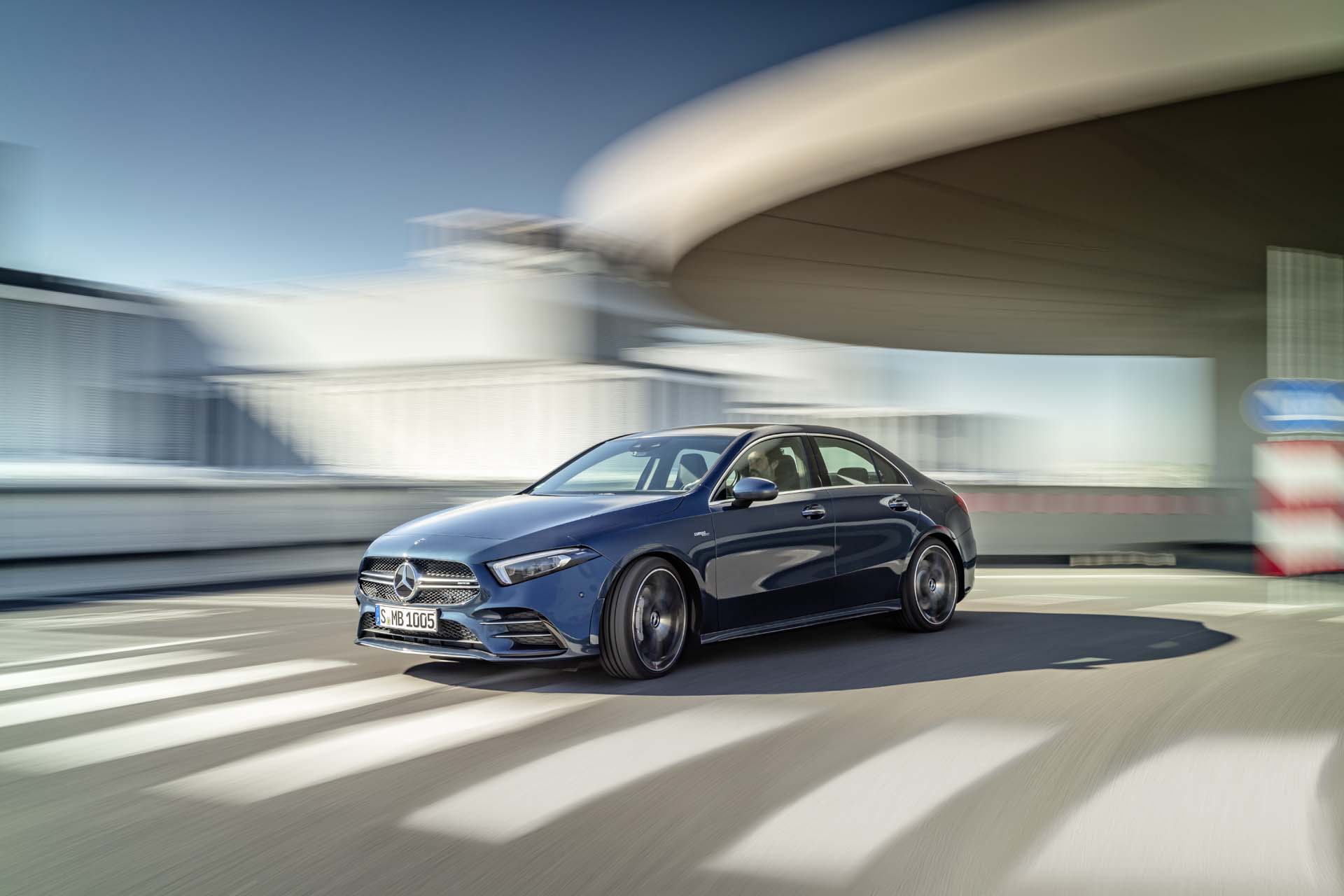
    Mercedes-Benz India has started 2020 with a bang announcing the launch of the EQ electric sub-brand in India, but there’s a lot more coming and on January 28, 2020, the company will launch the GLE SUV in the country. There are of course more launches scheduled this year and that’s one reason why even the dealers are looking forward to a great year. Martin Schwenk, MD and CEO, Mercedes-Benz India said, “Last year, the markets were down and it didn’t make sense pushing new cars then, but the fourth quarter of last year has been promising as it showed a growth. Our dealers have had a sneak preview of many of the cars that are coming to the market and it wasn’t difficult to convince them that this year’s sales numbers cannot be the same as last year.”

    Mercedes-Benz stuck to its growth in a very volatile market sentiment in 2019 and still is in the No.1 position in India in the luxury car segment. The company will be growing its dealership network too and it will cross the three digit mark in 2020. The company currently has 95 dealers in the country and crossing the 100 mark will certainly be a milestone. Schwenk said, “We are still working on expanding our dealer network. We are roughly at 95 right now in India and we will be getting into the three digit mark this year. It is not essentially because we’re bringing the EQ brand but rather covering the whole of India, so that we are close to our customers.”

    The company’s AMG arm continued to remain the most dominating performance brand in India and registered a robust 54 per cent in the calendar year 2019 in comparison to the same period last year and of course with more cars coming into the country, Mercedes-Benz sure looks forward to a positive response from the market in 2020.

  • Musk Nears $346 Million Payday As Tesla Market Value Soars

    Musk Nears $346 Million Payday As Tesla Market Value Soars

    Tesla Inc Chief Executive Elon Musk is coming close to earning the first $346 million tranche of options in a record-breaking pay package, after the electric vehicle maker’s stock more than doubled in the last three months.

    Shares of Tesla surged 9% to a record high on Monday. They need to rise another 6% to put Tesla’s stock market value at $100 billion and then be sustained at that level for both a one-month and six-month average in order to trigger the vesting of the first of 12 tranches of options granted to Musk to buy Tesla stock.

    Musk has already hit an operational target that is also necessary for the options to vest.

    For Musk’s subsequent tranches to vest under the terms of the 2018 package, the company’s market cap would have to continue to sustainably rise by $50 billion increments over the agreement’s 10-year period, with the billionaire earning the full package if Tesla’s market capitalization reaches $650 billion and the electric car maker achieves several revenue and profit targets.

    A full payoff for Musk, who is also the majority owner and CEO of the SpaceX rocket maker, would surpass anything previously granted to U.S. executives, according Institutional Shareholder Services, a proxy advisor that recommended investors reject the pay package deal at the time.

    Musk receives no salary or cash bonus, only options that vest based on Tesla’s market cap and milestones for growth.

    “This is the very definition of pay for performance,” said Ian Keas, senior director at Longnecker & Associates, an executive compensation consulting firm. “But is he the only individual that could serve in that seat as CEO and deliver that value to shareholders? That’s the billion dollar question.”

    Musk’s potential payout compares to the $638 million received by Snap Inc founder Evan Spiegel in 2017 after the social network company’s initial public offering. In 2018, Walt Disney CEO Robert Iger earned stock grants worth as much as $149.6 million, including awards related to Disney’s purchase of film and television assets from Twenty-First Century Fox.

    Musk has transformed Tesla from a niche car maker with production problems into the global leader in electric vehicles, with U.S. and Chinese factories. So far it has stayed ahead of more established rivals including BMW and Volkswagen.

    Last week, Tesla’s stock market value hit nearly $89 billion, eclipsing the sum of General Motors’ and Ford’s for the first time, fueled by a surprise third-quarter profit, progress at a new factory in China and better-than-expected car deliveries in the fourth quarter.

    Many investors remain skeptical that Tesla can consistently deliver profit, cash flow and growth, however. More Wall Street analysts rate Tesla “sell” than “buy,” and the company’s stock has been one of the most shorted on Wall Street.

    Tesla was valued at about $53 billion when shareholders approved the pay package in January 2018 and faced a cash crunch, production delays and increasing competition from rivals. It was viewed as massively ambitious because it implied the company’s value could grow as much as ten-fold in 10 years.

    Last year, Musk hit two operational milestones, pulling in revenue above $20 billion and adjusted earnings before interest, tax, depreciation and amortization of $1.5 billion over four straight quarters. Tesla’s “adjusted” EBITDA excludes stock-based compensation, which in the first nine months of 2019 reached $617 million.

    Musk currently owns about 34 million Tesla shares, equivalent to 19% of the company. His compensation package would let him buy another 20.3 million shares if all of his options vest.

    When Tesla first unveiled Musk’s package in 2018, it said Musk could in theory reap as much as $55.8 billion if no new shares were issued. Tesla has since awarded stock to employees and last year sold $2.7 billion in shares and convertible bonds.

  • Grab installs first female CEO for Vietnam operations

    Grab installs first female CEO for Vietnam operations

    Nguyen Thai Hai Van will commence her role as Vietnam CEO of Singapore-based ride-hailing giant Grab on February 1.

    Van, the first female Grab CEO in Vietnam, will oversee business strategy and operations across the country, Grab stated Monday.

    Van boasts 17 years’ prior marketing experience at the Netherlands-backed personal care products maker Unilever Vietnam ahead of joining Grab on November 1 last year. Besides, she co-chairs Vietnam Mobile Marketing Association.

    She takes over as Grab Vietnam CEO from predecessor Jerry Lim, who will return to Singapore to serve as regional head of customer experience.

    Grab has seen strong development since entering Vietnam in 2014. Payments via Moca, its e-payment partner, grew by 150 percent between January and June last year while its number of active monthly mobile users rose by 70 percent.

  • Drivers more geared towards luxury cars

    Drivers more geared towards luxury cars

    Sales of luxury cars in Vietnam surged in 2019 with the rich showing greater preference for premium vehicles in a fast-growing economy. Mercedes-Benz sold the highest number of luxury cars at 6,800 units, up 8 percent from 2018.

    The imported crossover SUV Mercedes-Benz GLC 300, priced at VND2.56 billion ($110,600), was the best-seller, accounting for 40 percent of the number of units sold by the German brand.

    With 20 models, many assembled in Vietnam, Mercedes-Benz created sales gap with the rest of the luxury market.

    Toyota’s luxury brand Lexus recorded a sales surge of 157 percent year-on-year to 1,511 units in 2019.

    Sales of the only Asian luxury brand rose after plummeting in 2018 due to a government decree limiting car imports.

    Swedish brand Volvo recorded sales of 500 units last year, up 250 percent from 2018, with the most in-demand model being the compact crossover SUV Volvo XC60 priced at VND2.85 billion ($123,200).

    Sources said most other German brands like Porsche and BMW recorded increasing sales. Audi was the only brand with decreasing sales due to import challenges, a representative confirmed.

    Insiders say Vietnam’s fast-growing economy and expanding middle class, along with rising car discounts led to the sales surge last year.

    Manufacturers plan to export new models this year to Vietnam, giving customers even more luxury options.

    Auto sales in Vietnam last year rose 11.6 percent from 2018 to 322,322 units, with 58.8 percent of them locally-assembled, according to Vietnam Automobile Manufacturers Association.

  • DBS Obtains Bond Settlement Agent License in China

    DBS Obtains Bond Settlement Agent License in China

    DBS Bank (China) announced that it received a Bond Settlement Agent license in the China Interbank Bond Market, making it the first and only Singapore bank to be granted such a license.

    DBS Bank (China) has received a Bond Settlement Agent license from the People’s Bank of China to act as a bond settlement agent in the China Interbank Bond Market, the lender said in a statement on Tuesday. Prior to the license, DBS China has been involved in the China bond market as Trial Bond Market Maker in the China interbank bond market for years.

    This license will enable DBS China to serve overseas investors who are interested in the China bond market because from now on, we can provide the bond settlement or custody services to them.

    The China bond market is the largest in Asia and the second-largest in the world and is of significant interest to international investors. With the license, we look forward to introducing more overseas customers to the China bond market and providing our comprehensive service to international institutional investors said Neil Ge, CEO of DBS China in the statement.

    China’s onshore bond market worth was 88 trillion yuan ($13.12 trillion) in February last year, according to the country’s central bank. Since last April, the phased inclusion of Chinese sovereign bonds and debt sold by three key state-owned policy banks into the Bloomberg Barclays Global Aggregate Index has attracted a new group of investors into China’s domestic bonds.

    Up to then, inflows have been dominated by central banks and sovereign wealth funds. With the inclusion of China bonds into such indices, private-sector managers following the index would be looking to join the market.

  • UBS Wealth Management Starts Job Cull

    UBS Wealth Management Starts Job Cull

    A new organizational structure, intended to speed up decision making, is being introduced in Asia, with other regions to follow.

    UBS has begun cutting jobs at its wealth management unit in Europe and Asia, with as much as 20 percent of its workforce in European regions and management layers in Asia affected.

    The round of cuts will affect about 500 employees, with cuts affecting staff at every level, from managing directors to assistants, according to people familiar with the matter. However, staff in the U.S. and Switzerland are less likely to be affected by the cuts, the report said.

    In December, UBS announced it would dismantle its ultra-high net worth business, the first major move under new private bank co-head Iqbal Khan, who joined from Credit Suisse in September 2019.

    Earlier in January, it said it would be restructuring its private bank and break up its European, Middle East, and African wealth business into three regions to speed up local decision making.

  • UBS’s Hong Kong IPO Sponsorship Ban Lifted

    UBS’s Hong Kong IPO Sponsorship Ban Lifted

    Hong Kong’s market regulator demonstrated leniency by lifting UBS’s IPO sponsorship ban two months early due to satisfaction with its enhanced governance processes.

    The Securities and Future Commission (SFC) cited a 10-month review as the basis of its decision to lift the ban against UBS which prevents the bank from leading initial public offerings.

    The SFC was «satisfied after its own assessment that UBS has clear requirements and procedures in place to enable staff members to understand and properly perform their responsibilities», it said in a statement adding that compliance was further enabled by systems, controls, policies, and procedures it found effective based on a separate independent review.

    The ban was imposed against UBS following due diligent failures on three previous IPOs – China Forestry, Tianhe Chemicals, and China Metal Recycling – that also resulted in a HK$375 million ($48.2 million) fine. In the case of Tianhe Chemicals, for example, there was a failure to follow up on a meeting with the manufacturer’s alleged largest customer, named only as X, who appeared at a meeting with no business card or other identification and left abruptly.

    «The SFC would like to make clear that the standards assessed in the case of UBS are equivalent to those that are expected to be adopted by all licensed sponsors,» the regulator added.

  • Burberry launches online game Ratberry before Chinese New Year

    Burberry launches online game Ratberry before Chinese New Year

    Burberry has launched an online game called Ratberry as part of its 2020 Lunar New Year campaign.

    The game builds on the popularity of B Bounce, the brand’s first online game launched in October last year. In the new game, Ratberry is the central character in a world inspired by the limited-edition Thomas Burberry Monogram motif, in honour of the Chinese Year of the Rat.

    Players bounce Ratberry upwards between platforms, aiming to get as high as possible, collecting gold coins and catching Chinese lanterns along the way.

    Burberry has also released Lunar New Year stickers on WeChat, featuring Ratberry and products from the dedicated Luna New Year capsule collection.

    Burberry has seen a growing appetite for gaming among younger consumers, particularly in China. As interactive digital content is increasingly becoming a source of inspiration, Ratberry is another opportunity for consumers to connect with the Burberry community online.

  • Liverpool FC pop-up store opens in Vietnam

    Liverpool FC pop-up store opens in Vietnam

    Liverpool FC has partnered with CRC Sports to launch a merchandise pop-up store in Vietnam.

    Located at Estella Place shopping mall in District 2, the pop up offers fans a full range of New Balance replica kit as well as authentic Liverpool FC merchandise, apparel and fashion accessories.

    “Our new store in Vietnam will enable us to continue to expand our retail operations, so all our fans can enjoy authentic LFC experiences and purchase our whole range of official merchandise,” said Mike Cox, senior VP, merchandising at Liverpool FC.

    During the Liverpool FC store’s launch event, fans were given the opportunity to meet and take photos with former Liverpool forward Luis Garcia.