Author: Mei Ling Tan

  • The rise and rise of retailer recycling, repurposing and reusing schemes

    The rise and rise of retailer recycling, repurposing and reusing schemes

    Just 3.4 percent of consumers globally are using retailer recycling schemes, according to a report by GlobalData – but the trend is on the rise as leading players find new ways to reduce waste, use fewer resources and even adopt circular business models.

    Fashion is recognized as one of the largest polluters on the planet, and growing awareness of that is encouraging retailers to make innovative and sustainable changes to their manufacturing and production processes to lessen waste.

    Adidas has introduced the second generation of its first 100-per-cent-recyclable performance running shoe. The FutureCraft Loop Generation 2 is made using a mix of new raw materials and recycled components of the initial shoe – and is expected to be 100-per-cent recycled in the product’s next iteration.

    Meanwhile, Hong Kong brand Dyelicious creates color dye out of organic waste such as coffee, red cabbage, sweet potato and ginger in its garments.

    Reducing resources

    Outdoor apparel brand Patagonia has established a new ReCrafted collection where each item has been made from donated pieces, upcycled and repurposed into a “one-of-a-kind” piece. Each ReCrafted jacket, shirt, vest and bag is upcycled from three to six used pieces of clothing.

    Hong Kong’s very own label curated from The Mills in partnership with H&M foundation – Alt: – also uses a garment-to-garment recycling system to create new knitted pieces from the repurposed yarn of former old pieces which would otherwise have been discarded. Professor Edwin Keh, founder of Alt:, was crowned Inside Retail Hong Kong’s most Innovative Retailer in 2019.

    While many brands have launched programs to take in used garments to deconstruct – and some may even offer incentives for consumer’s donations – research from GlobalData shows that just 3.4 percent of consumers use a retailer’s recycling scheme to get rid of unwanted textiles. That could present a challenge to scaling up such schemes.

    “The practice of both repurposing and restoring post-consumer goods has the potential to help the fashion industry operate in a more sustainable manner, moving away from the traditional ‘take-make-waste’ model,” says Beth Wright, GlobalData apparel correspondent.

    “However, while both trends ultimately mean fewer items are being produced and keep products out of landfill, they still represent just a drop in the ocean compared with the amount of new clothing that continues to be made.”

  • First Best Mart 360 Macau store opens

    First Best Mart 360 Macau store opens

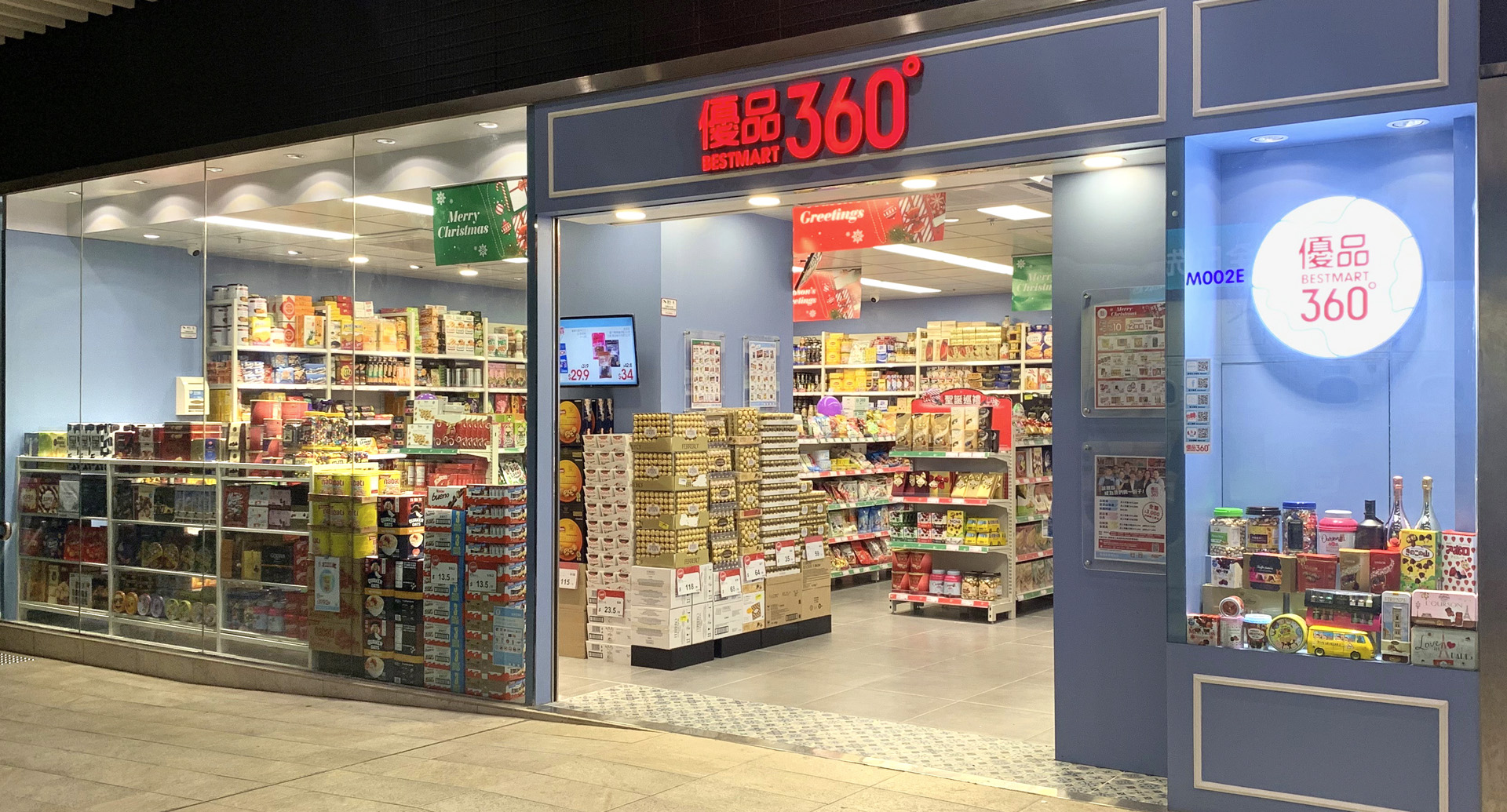
    Best Mart 360, the Hong Kong-listed ‘leisure-food retailer’ opened its first store in Macau yesterday.

    The company – which has suffered vandalism to some 75 of its Hong Kong stores during recent protest activity – believes there is potential for as many as 15 stores in Macau.

    In an interview with the South China Morning Post, chairman and co-founder Lin Tsz-fung said the expansion into the new territory was planned many years ago.

    “We hope to diversify our markets to Macau and Mainland China. We think Macau has a lot of tourists,” he said.

    A significant expansion in Best Mart 360’s store network helped boost sales in the first half of this year, despite the company being heavily impacted by protests since June.

    As at the end of September, Best Mart 360 operated 98 stores, a net 21 more than the same time a year earlier. Most of the new outlets are on the mainland.

  • StanChart Makes Good on Climate Change Fight

    StanChart Makes Good on Climate Change Fight

    Standard Chartered recently announced its commitment to combat climate change with real and substantial anti-coal financing policies and even exited three controversial power plant deals.

    Standard Chartered Group will only support clients who actively transition their business to generate less than 10 percent of earnings from thermal coal by 2030, according to a statement. The business will adapt to this commitment on a phased basis beginning on January 1, 2021.

    We are taking bold and ambitious actions in support of the Paris Agreement, being the first bank active in emerging markets to confirm that we will be out of thermal coal by 2030 and set a massively increased target for helping our clients transition into low-carbon technologies,» said Bill Winters, group chief executive of Standard Chartered.

    The bank announced an increased target to finance $35 billion by 2025 in deals linked with clean technology and renewable with a particular focus on emerging markets.

    According to the bank, emerging markets across Asia, Africa and the Middle East not only have an opportunity to «leapfrog to new low-carbon technology» but face insufficient financing, citing the U.N. figure of a $2.5 trillion per year funding gap.

    The statement accompanied a release of a Taskforce on Climate-related Financial Disclosurs (TCFD) report on the bank’s progress with aligning its lending portfolio to Paris Agreement goals of limiting global warming to significantly below two degrees.

    Of the moves announced towards supporting renewable energy, the boldest deliverable was the bank’s decision to withdraw from three projects it had said it would finance in September 2018 – assumed to be Vung Ang 2 and Vinh Tan 3 in Vietnam, alongside Java 9 and 10 in Indonesia.

    Prior to the withdrawal from the deal, Standard Chartered was lambasted by environmental campaigners that challenged the credibility of the bank’s leadership position in «Equator Principles». A Banktrack executive likened the matter to «putting the fox in charge of the hen house».

    Standard Chartered’s latest move should send a signal to other banks, including DBS, that building coal is financially risky, environmentally and socially unsound and morally reprehensible,» said Bernadette Maheandiran, a legal analyst from Market Forces.

  • HSBC Singapore Announces Digital Wealth Management Solutions

    HSBC Singapore Announces Digital Wealth Management Solutions

    Two solutions are part of the bank’s doubling of investments into digital over the past two years to better support its retail banking proposition.

    HSBC has expanded institutional analytical capabilities to retail investors in Singapore through its HSBC Wealth Portfolio Plus application, which launched in December, and is introducing the HSBC Structured Product Online Platform from Q1 2020 to allow accredited investors to invest in structured products offered by the bank, it announced in a statement on Wednesday.

    Given their work and lifestyle choices are no longer confined to one single market or region, our customers expect banking tools and wealth solutions that match their personal circumstances, Anurag Mathur, HSBC Singapore’s head of Retail Banking & Wealth Management, said about the new digital solutions the bank is rolling out.

    In the past two years, HSBC has made significant investments in enhancing its digital capabilities globally. In the first half of the year, HSBC spent $2.2 billion on digital solutions, up 17 percent from the same period for 2018, the bank said. A considerable proportion» of its investments in this area has been in Singapore, one of the bank’s eight scale markets.

    Singapore is often used as the pilot site for the development of digital solutions that will strengthen our foothold as the Asian wealth hub serving HSBC customers with international needs, Mathur said.

  • WeChat Adds Diamond Purchase Traceability Feature

    WeChat Adds Diamond Purchase Traceability Feature

    Tencent partnered with Russian diamond miner ALROSA Group to offer an in-app blockchain-based feature that provides traceability for diamond purchases made through WeChat.

    WeChat adds a new capability for affluent users to access transparent information about the «origin, characteristics and ownership history» of diamonds purchased through the platform.

    In addition to ALROSA – which accounts for nearly one-third of global rough diamond production – UK-based tech firm Everledger was also part of the partnership, likely to power the blockchain technology the new feature leverages.

    Chinese diamond demand grew five percent to reach approximately $10 billion, according to De Beers’ Diamond Insight Report 2019. As a comparison, the U.S. market is currently at $36 billion.

  • Pork prices keep rising to new highs

    Pork prices keep rising to new highs

    Low supplies courtesy of the African swine flu epidemic have pushed pork prices up 29.6 percent from a month earlier.

    Small-scale farmers in the northern region were selling pork at VND92,000 ($4) per kilogram, up 29.6 percent from the five-year high of VND70,000 ($3) that was reached last month.

    Industry insiders said the rise followed price increases by major pork producers. The C.P. Group, which has been increasing its pork prices steadily, has a sales price of VND81,000 ($3.5) per kilogram now.

    At the Hoc Mon wholesale market in Ho Chi Minh City, pork supply has fallen by 23.5 percent from earlier this month to 287 tons a day.

    Nguyen Tri Cong, chairman of the Dong Nai Livestock Association, said farmers in the southern province were unable to increase supply despite a high profit margin of around 50 percent at current high prices.

    Authorities have been seeking to stabilize pork prices as Tet, the Lunar New Year, approaches (last week of January 2020). This is a time when demand for pork soars. One of the solutions proposed was to increase imports.

    But Doan Ngoc Tho, CEO of meat importer THO Group, said at a recent meeting that global supply of pork has also reduced. The FOB (freight on board) prices at Vietnamese ports have doubled to $4 per kilogram, excluding taxes, he said.

    Vietnamese importers also have to contend with China importing large quantities of pork from Europe, he said.

    Furthermore, Tho said, selling imported pork has become difficult because their prices are higher than domestic pork.

    The African swine flu has claimed the lives of 5.9 million pigs since it broke out in Vietnam in February, according to the General Statistics Office. As of October, the number of pigs in stock had fallen by 20 percent year-on-year, it said.

    The country will likely face a pork shortage of 200,000 tonnes by Tet 2020, according to the Ministry of Industry and Trade.

  • Samsung smartphones market share dips to annual low in Vietnam

    Samsung smartphones market share dips to annual low in Vietnam

    Samsung smartphones’ market share slipped 2.3 percentage points to 38.45 percent in October, the first time it has dipped below 40 percent this year.

    The South Korean brand sold over 500,000 smartphones in October, an increase of 20 percent compared to the previous month, according to a report by market research firm GfK.

    But total sales of smartphones in Vietnam surged 28 percent month-on-month in October to nearly 1.37 million units, resulting in a drop in Samsung’s market share, the report said.

    A focus on high value products was also a reason Samsung lost market share in October, a representative of cellphoneS, a leading smartphone retailer in Vietnam, told VnExpress.

    In October

    With 38.44 percent market share in October, Samsung still led the Vietnam market, followed by Chinese brands OPPO and Xiaomi with 25.2 percent and 10.2 percent respectively.

    China’s Realme had dislodged Apple from its fourth position in September, gaining 6.2 percent of the market share. Apple slipped a notch to fifth place with 6.1 percent. Industry insiders said Vietnamese consumers waiting for the latest iPhone model, which was released in November, was the main reason for the falling sales in October.

    Strong sales in the first quarter of 2019 allowed Samsung to retain its leading position in terms of market share in the first 10 months this year, accounting for over 43 percent of total sales. Samsung’s market share had peaked at over 50 percent in March, two times higher than second-placed Chinese brand OPPO, according to the GfK report.

    The report said the market could see major shifts in the last two months of 2019, with Apple having released its three new Iphone 11 models, new products from Xiaomi, Realme, and Chinese phone-maker Vivo entering the market and retailers simultaneously launching discounts for year-end promotional events like the Singles Day (November 11), Black Friday, Christmas and the New Year.

  • YouTube Music gets more personal with three new mixes

    YouTube Music gets more personal with three new mixes

    YouTube Music has announced three new personalized mixes are now available for its customers. The music streaming service is rolling out today the new Discover Mix, New Release Mix, and Your Mix, which should introduce music lovers to a wider range of artists, new and old, based on their listening history.

    All three mixes announced today will be updated regularly, so they’ll remain fresh to offer listeners unique experiences every week. For example, the Discover Mix is a place where you usually head to discover new music. It consists of 50 tracks every week, which will be changed every Wednesday.

    The New Release Mix, as the name suggests, makes it easier for YouTube Music users to find the most recent releases by their favorite artists, as well as artists the service thinks you might like. Every Friday, YouTube Music will refresh this personalized mix with new tunes, but smaller updates will be released throughout the week as well.

    Last but not least, Your Mix is a playlist of songs by artists that you know and love. In addition, YouTube Music is adding other songs and artists that you might have never listened to, but it thinks you’ll love. The mix will receive small updates regularly, so the more you listen to and like these songs, the better your mixes are supposed to be.

    All three new personalized mixes are now available globally for all YouTube Music listeners on both the Android and iOS devices.

  • Mercedes-Benz Pushes Back US Launch Of Electric SUV Until 2021

    Mercedes-Benz Pushes Back US Launch Of Electric SUV Until 2021

    Mercedes-Benz has rescheduled the US launch of its first mass-market electric vehicle — an SUV known as the EQC to 2021. The SUV was introduced in Europe earlier this year, and it reportedly “generated high interest”, enough so that Mercedes’ parent firm Daimler made a “strategic decision to first support the growing customer demand” in Europe, Engadget reported on Tuesday.

    The US is the second-largest car market in the world after China, but it is only on par with, and sometimes behind, Europe when it comes to sales of all-electric vehicles.

    One factor driving the availability of cleaner cars in Europe is the strict emissions regulations package put in place by the European Union (EU), which requires automakers to reduce the emissions of their new vehicle fleets by 37.5 percent by 2030.

    In contrast, President Donald Trump has spent the bulk of his presidency unsuccessfully trying to roll back Obama-era emissions regulations that are similarly meant to support the adoption of cleaner cars, according to The Verge.

    Price of Mercedes’ EQC base model is expected to begin at $67,900 — less than the $74,800 Audi E-Tron and the $84,990 Tesla’s Model X.

  • Honda Cars India Partners With Tranzlease For Smart Auto Loan Solutions

    Honda Cars India Partners With Tranzlease For Smart Auto Loan Solutions

    In a bid to make its cars more attainable, Honda Cars India has tied up with TranzLease to offer ‘Smart EMI’ auto finance solutions to its customers. The company will be leasing its cars via TranzLease and offer customized EMI packages that not only include the cost of the vehicle but also registration, insurance and maintenance requirements of the car during the financing period. The company says that Smart EMIs are much lower than the standard EMIs that customers opt for via the standard banking network. Customers will have the option to lease the car or return it at the end of the tenure or retain the car by paying the balance amount to the company. In addition, Smart EMI guarantees a high resale value on the vehicle.

    Speaking about the innovative auto finance solution, Rajesh Goel, Senior Vice President and Director, Marketing & Sales, Honda Cars India Ltd said, “Honda is committed to providing innovative ownership solutions with evolving customer preferences. The first of its kind SMART EMI option now makes it easier and convenient for the consumer to enjoy the Honda range of cars in a unique financing option.”

    Anindya Chakraborty, MD & CEO, TranzLease said, “In today’s age where consumers want a car but uneasy about the associated hassles, risks, cost of ownership, Smart EMI comes as a solution that allows the love of car without the chaos – Smart EMI blends the best features of auto loan, auto lease and subscription model to create a true fit for the Indian car buyer.”

    Initially, the service will be offered to customers in Delhi-NCR and Mumbai and will be later made available in Bengaluru, Pune, Hyderabad and Chennai. The Smart EMI plan can be availed at any of the Honda dealerships in the cities, and based on the response it will be rolled out pan India at a later stage. Post-delivery of the car, Smart EMI will have a personalized car portal for customers to manage the entire car life-cycle during the leasing period.

    Smart EMI also provides protection from risk arising out of insurance tariff fluctuations, unforeseen maintenance costs and fluctuation in the resale value of cars. While the payment solution is innovative for cars, Bangalore-based start-up OTO Capital introduced something similar earlier this year that promise 30 percent lower EMIs when on a vehicle when compared to that from a bank. Much like TranzLease, OTO too offers the option for complete ownership or to return the vehicle at the end of the tenure.

  • Michelin Targets 2050 To Go Carbon Neutral At All Plants

    Michelin Targets 2050 To Go Carbon Neutral At All Plants

    2019 has been one of the hottest years in recent decades, marking a new milestone in the worldwide increase in greenhouse gas emissions and extreme weather events. The transportation sector alone is responsible for 23 percent of CO2 emissions worldwide. Looking at these numbers Michelin has decided on an objective and that is all of its plants across the world will emit zero CO2 emissions by 2050. The company is also looking to reduce tire-related energy consumption per kilometer traveled by 20 percent by 2030. This strategy is in line with the Paris Agreement signed at the COP21 in 2015 to limit global warming to below 2 degrees Celsius.

    To reduce the carbon footprint of production at a global level, Michelin developed a strategy founded on two pillars: consume less, and implement an energy transition. This strategy has already had concrete and positive effects: in Europe, 85 percent of its plants are powered by electricity that is guaranteed to come from renewable sources. Between 2010 and 2018, CO2 emissions from the company’s production facilities were down by 22 percent.

    The company is looking to improve energy efficiency of its industrial tools, using more renewable energy, and eliminating coal. Currently, 5 out of 70 of the Group’s sites around the world are still coal-fired. We have already launched studies to evaluate the feasibility of replacing coal with another source of primary energy, such as gas or biomass. All our plants will phase out the use of coal by 2030 at the latest.

  • Jeep Working On A Suzuki Jimny Rival For Europe

    Jeep Working On A Suzuki Jimny Rival For Europe

    Fiat Chrysler Automobile (FCA) is reportedly working on an ultra-compact Jeep SUV which will be positioned below the Renegade, in the European market. According to the report filed by Auto Express, which recently spoke to Marco Pigozzi Jeep’s Head of Brand Marketing in Europe, the new subcompact off-road SUV will act as a rival to the popular Suzuki Jimny. The report also claims that the new Jeep SUV could possibly come with an all-electric powertrain acquired from FCA’s planned merger with PSA.

    Speaking to Auto Express, Pigozzi said that the upcoming Jeep SUV will be about 4 meters in length, and in addition to being a capable everyday vehicle, it will also come with the off-road capabilities that the Jeep brand is known for. Furthermore, given the brands push for electrification, even if not fully electric, the upcoming ultra-compact Jeep SUV could possibly take the Plug-in Hybrid route, like the Renegade and the Compass. Commenting on that Pigozzi told Auto Express, “We have the capability to deliver the electrification we need.”

    While a sub-4 meter Jeep could really turntable for the brand in the Indian market, given the popularity for SUVs, but right now it is too soon to even speculate the SUV coming to our shores. Also, with the FCA and PSA merger underway, it is possible that the SUV might borrow the Common Modular Platform architecture used by Peugeot-Citroen. Engine and other technical specifications are currently unknown, but the SUV is expected to arrive sometime in 2022.

  • Instagram will now shame you before you post something offensive

    Instagram will now shame you before you post something offensive

    Instagram prides itself on actively fighting against bullying through numerous features that prevent people from trolling and/or shaming users of the social network. Instagram announced yet another feature that’s meant to prevent users from posting messages that could be considered offensive.

    Several months ago, Instagram launched a tool that notifies people when their comments may be considered offensive before they’re posted. The most recent feature expands on that tool by using the social network’s AI to detect a potentially offensive caption.

    Those who write such messages will receive a prompt informing them that their caption is similar to those reported for bullying and that they might want to reconsider their message. Instagram will let users edit messages before they are posted if they’re flagged as potentially offensive.

    The new feature is meant to educate Instagram users and prevent them from breaking the social network rules and potentially lose their accounts. According to Instagram, the new caption-warning feature will be rolled out in select countries, then expand across the world in the coming months.

  • Update to Google Maps solves issue with gesture navigation

    Update to Google Maps solves issue with gesture navigation

    One thing that Android users are appreciative of is Google’s desire to keep tinkering with its apps. And once again, it is Google Maps that is the beneficiary of the latest update to come from Mountain View. The new Maps UI eliminates the side menu. Swiping to the right from the left edge will also no longer bring up the side menu, which is a boon to those who use gesture navigation on Android 10. That’s because opening the side menu can accidentally trigger the “back” gesture on the latest Android build. And the three-bar hamburger menu no longer appears on the left side of the search bar.
    The three tabs found on the bottom of Google Maps (Explore, Commute, For you) now number five and include Map, Commute, Saved, Post and Latest. Once your Google Maps app has been updated to the new UI (and it hasn’t yet on our Pixel 2 XL running Android 10), you can find the settings and some of the other options that were on the side menu by tapping on your avatar. A box will open that allows you to switch the account linked with the app, enable incognito mode (so that your travels and location searches won’t be recorded by Google), view the app’s settings and more.
    The latest version of the Google Maps app is 10.31.2, but even if you have just updated the app (as we did right as we started writing this article), there is no guarantee that the new UI will appear. Nope, you are going to have to wait since this is a server-side update that cannot be triggered by Android users.
  • Skype’s latest new feature lets you invite non-Skype users to meetings

    Skype’s latest new feature lets you invite non-Skype users to meetings

    Skype is clearly not the best messaging apps out there, but Microsoft is adding more features and improvements with every update. The mobile and desktop versions of Skype usually receive different updates, but many times they share some features.

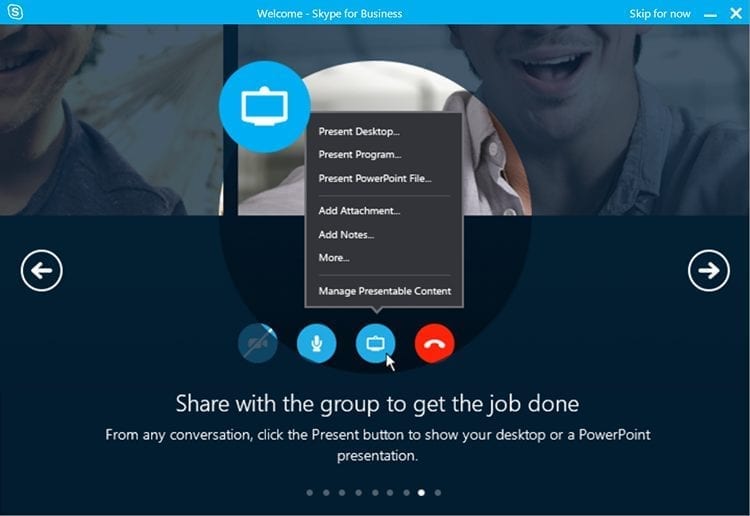
    The latest Skype update brings one feature that’s common to both mobile and desktop versions – Meet Now. Up until now, you could only invite fellow Skype users to meetings created with the messaging app, but there are a lot of people who don’t have a Skype account.

    Meet Now allows Skype users to create a meeting and invite anyone just by sharing a link, including non-Skype users. Microsoft is rolling out the new feature to all users on Android, iPhone, and iPad since last week, so if it’s not yet available for you, then give it a few more days.

    Apart from the new Meet Now feature, the most recent Skype update adds a few camera improvements for Android users, such as the ability to scan and send documents. Also, Microsoft mentions the update includes some photo and video personalization enhancements, along with many bug fixes and stability improvements.