Spotify has just announced two new personalized playlists are now available for music lovers with obsessions: On Repeat and Repeat Rewind. The new playlists let Spotify users enjoy the songs they played most all over again.
With On Repeat, Spotify users can keep track of what they’ve been playing most over the past 30 days. The playlist auto-updates, which means you can be sure everything that’s playing is the most up-to-date account of what you’ve been playing most frequently.
The second new playlist, Repeat Rewind lets you rediscover the songs that you played over a month ago. Just like the On Repeat playlist, songs can span across artists, moods, and genres. Repeat Rewind will update itself every five days, although the tracks won’t appear on both personalized playlists at the same time.
As mentioned earlier, both personalized playlists are now available globally for Free and Premium users in the Made For You Hub, as well as the “Uniquely Yours” shelf on Home.
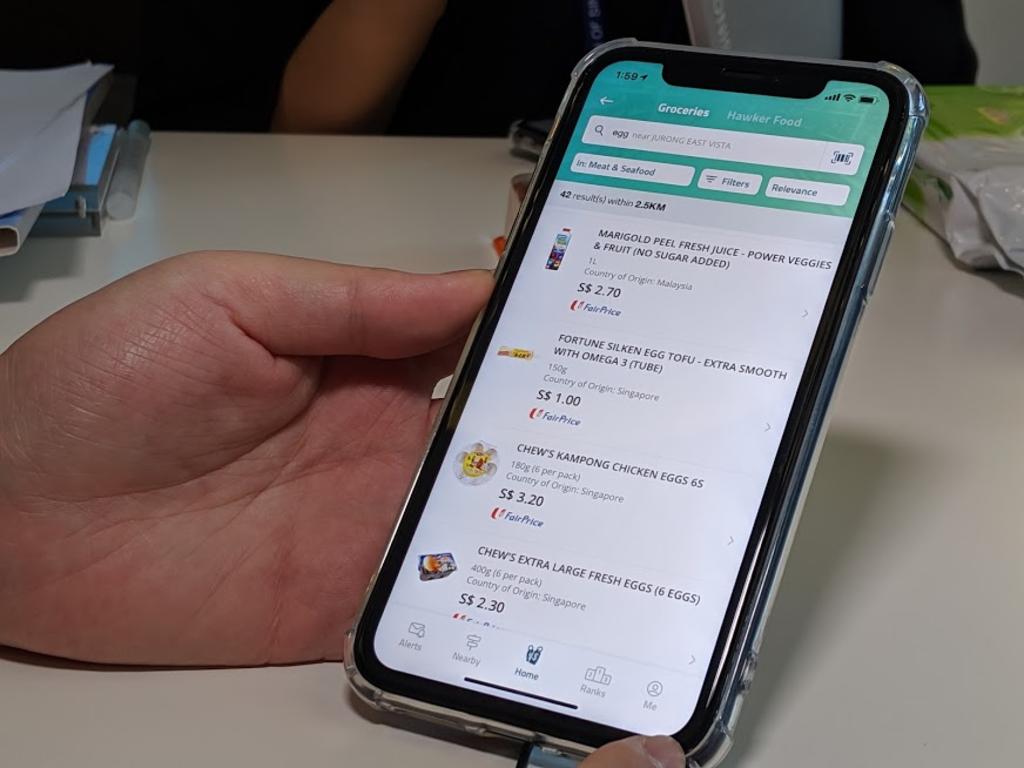
The Consumers Association of Singapore (Case) has released an app rewarding users for sharing pricing information to allow comparisons while shopping.
Users of the Price Kaki app, which is expected to launch at the end of this month, can submit photos of any prices they come across while shopping for hawker food or groceries, allowing other users to save costs. Contributors to the pricing information platform are eligible to claim rewards such as film vouchers.
Price Kaki’s base pricing information will be updated daily by FairPrice, Giant, Sheng Siong and Prime Supermarket.
Future updates to the app are expected to be broad-ranging and include other businesses such as cafes.
The Amazon Web Service cloud service had recently received one of its biggest consumers from Singapore, but it was quickly discovered after a small investigation that the user was impersonating several US-based personalities and thus using the computing power for his own benefit by mining several cryptocurrencies such as BTC, ETH, and LTC.
Ho Jun Jia, also known as “Prefinity” and “Ethereum Vendor” was arrested in Singapore in September 2019 and is waiting for the United States court to decide if they want to extradite him from the country.
This is very likely to happen as the US and Singapore have an extradition treaty. If the extradition does happen, Ho will have to face fines above the $5 million’s worth of computing power he consumed as well as some jail time for identity theft and fraud.
Who did Ho impersonate?
According to the investigation, Ho was impersonating an unnamed game developer in California, which was actually paying the bills on Ho’s illegal activity on the AWS. Furthermore, Ho had also undertaken the identity of a Texas-based individual and an Indian businessman.
In total, Ho had consumed a staggering amount of $5 million’s worth of computing power, thus potentially generating far more in profits than anticipated.
Investigators also say that Ho was using trading bots to then speculate with the cryptocurrencies he had generated through his illegal activities.
It is easily understandable as according to this Bitcoin Trader review on InsideBitcoins, the larger the amount deposited on a Bitcoin trading robot, the higher the chance of not making too much of a scene, therefore helping Ho keep his identity a secret.
It’s assumed that Ho made far more from speculations than he made with simply mining the cryptocurrencies, thus the unauthorized exchange of securities could also be added to his list of illegal activity.
Why will Singapore approve the extradition?
According to investigators, it is assumed that Ho was also hiding his identity in Singapore as well, therefore he was not subject to any type of income or capital gain tax that is active within the country.
Therefore, it’s easy to say that even if Ho is not extradited he will have to face charges of tax evasion in Singapore, which, although garners a much lighter punishment, would still mean the disclosure of the fortune he accumulated as well as several years served in prison.
However, considering that most of the damage was caused to US-based individuals as well as companies, Singapore is very unlikely to deny the extradition and allow US authorities to punish Ho.
In the end, all victims will be compensated for the damage they received from Ho’s illegal activities and further security measures will be implemented on the AWS and Google Cloud platforms.
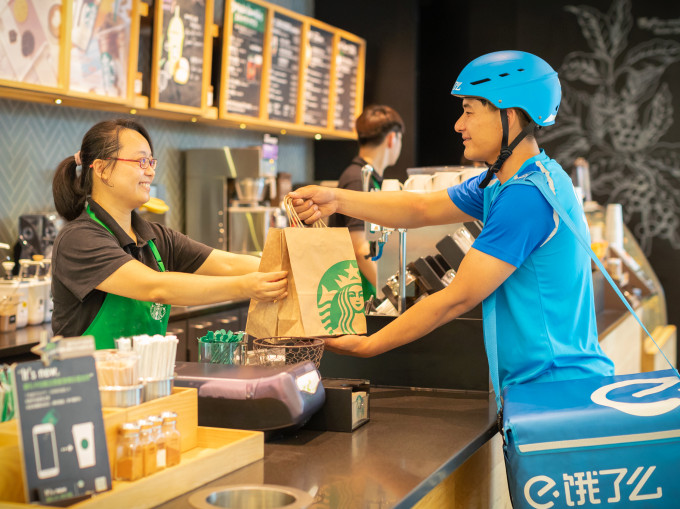
Starbucks and Alibaba have teamed up to allow consumers in China to order coffee using their Tmall Genie smart speaker.
From the comfort of their sofa, those seeking a hot latte or an iced tea can simply call out “‘Tmall Genie: I want Starbucks delivered’. And within 30 minutes of placing a verbal order for food and beverages, it will arrive, thanks to Alibaba’s Tmall.
They can also track the delivery status of their orders in real-time, as well as connect membership accounts to the smart speaker to earn Star rewards with every purchase, which add up to free food and drinks.
Soon, members will also receive personalised recommendations based on their previous orders and trending items from Starbucks’ seasonal menu, says Miffy Chen, GM of Alibaba A.I. Labs, the artificial-intelligence research unit behind the Tmall Genie.
She said the collaboration helps both companies meet the needs of China’s digitally savvy consumers, who are increasingly expecting seamless, on-demand deliveries for everything from ordering groceries to food and medicine.
Molly Liu, VP and GM of the digital ventures division at Starbucks China, said the new smart speaker marks a new era of digital customer engagement for Starbucks and will help “[elevate] their connection with customers to new heights.”
“We are focused on ensuring that Starbucks voice-ordering is truly personal, and we look forward to offering our customers more convenient moments and new opportunities to engage with Starbucks on a single integrated platform as they move throughout the day,” Liu said.
As part of the partnership between Starbucks and Alibaba, the Seattle-based coffee chain has also exclusively debuted a new Starbucks-themed Tmall Genie through its flagship store on Tmall, Alibaba’s B2C e-commerce site. The smart speaker, which comes in the brand’s classic shade of green, features its teddy-bear mascot “Bearista” behind a DJ turntable. Users can play music from a curated playlist by telling the Tmall Genie to “play some Starbucks music,” a feature powered by Alibaba’s music-streaming app Xiami.
About 3000 Starbucks Genies, priced at RMB 199 (US$28) each, sold out instantly during a livestream hosted by popular Taobao livestreamer Viya Huang on Monday. Huang’s five-hour stream had attracted more than 829 million views.
The new Tmall Genie feature comes as Starbucks and Alibaba celebrates the one-year anniversary of their strategic partnership to transform the coffee experience in China. Starbucks has since tapped Alibaba’s New Retail infrastructure, such as partnering with Ele.me to expand its delivery coverage or opening back-of-room “Star Kitchens” inside Freshippo, which leverage the supermarket chain’s fulfillment capabilities to enhance its delivery speed and reach.
In 2017, Starbucks’s cafes began accepting mobile wallet Alipay for payment. In December of the same year, Starbucks opened its first roastery outside of its home market in Shanghai, which featured mobile technology and augmented-reality experiences designed by Alibaba.
While China’s per-capita demand for coffee is still a fraction of US consumption – an average mainland Chinese consumer drinks three cups a year versus 363 cups in the US – total consumption grew at an average annual rate of 16 per cent in the last decade, significantly outpacing the world average of 2 per cent, according to the International Coffee Organization.
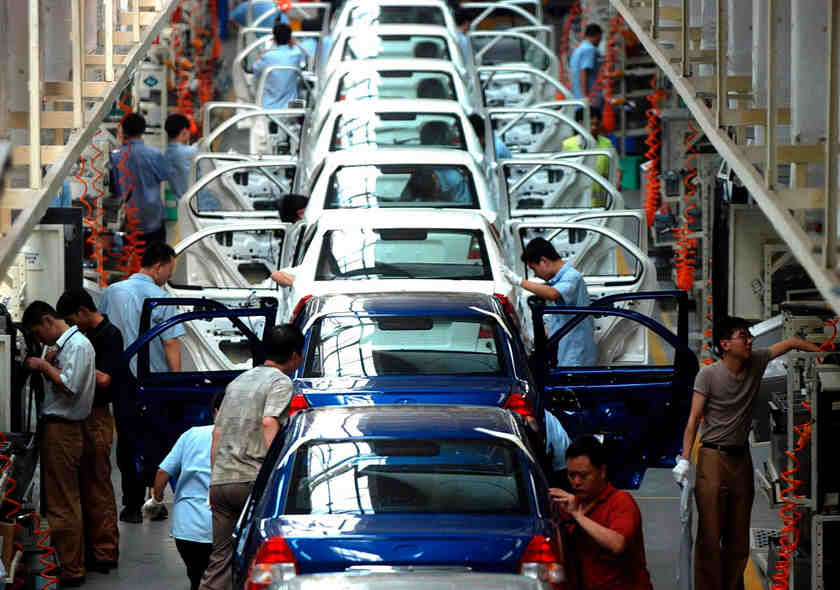
Vietnam imported around 9,000 completely built-up cars in August, down from the average of 12,500 in the previous seven months.
The imports cost $174 million, according to the General Statistics Office.
Imports dropped sharply in August because it coincides with the seventh lunar month, traditionally called the “ghost month” in which locals avoid buying new things to avoid bad luck, said car dealerships.
Vietnam imported over 96,000 CBU units worth a total of $2.1 billion in the first eight months of this year.
This represents an increase of 320 percent in volume and 300 percent in value from the same period last year, when the government issued a decree with tougher conditions, requiring importers to provide certain certificates to ensure quality and countries of origin.
Vietnam imported 72,650 cars last year, down nearly 20 percent over 2017, according to Vietnam Customs. But their value exceeded $1.64 billion, up 21 percent.
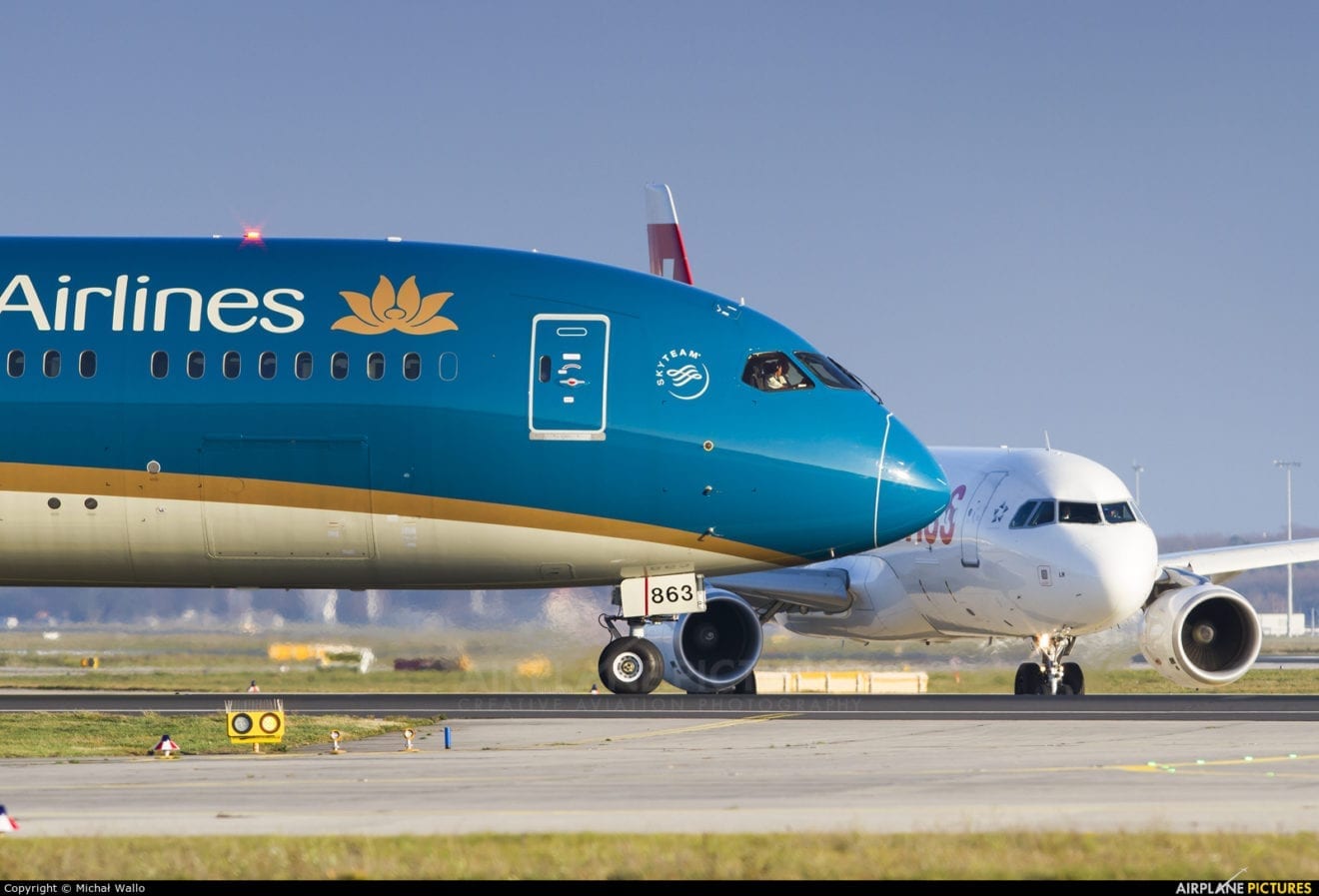
Vietnam Airlines has been allowed to operate direct flights from Hanoi and Saigon to several American destinations. It is the first Vietnamese airline to receive such permission, according to FlightGlobal, a leading news site about the global aviation community.
The national flag carrier will be allowed to operate flights from Ho Chi Minh City and Hanoi, Vietnam’s two biggest metropolises, to Los Angeles, San Francisco, New York, Seattle and Dallas-Fort Worth. It can also continue these routes to the Canadian cities of Vancouver, Montreal and Toronto.
The permit also allows Vietnam Airlines to operate its flights to the U.S. via stops in Taiwan’s Taipei and Japan’s Osaka and Nagoya airports.
The U.S. Federal Aviation Administration (FAA) granted a Category 1 rating to the Civil Aviation Authority of Vietnam (CAAV) under its International Aviation Safety Assessment program last February, which meant the latter met safety standards to operate flights to the U.S.
Besides Vietnam Airlines, low-cost air carrier Vietjet Air and Bamboo Airways are in the running to launch direct flights to the U.S. and are ordering aircraft for the purpose.
There are currently no nonstop flights between Vietnam and the U.S. Flights now take 20.5 hours to fly from Ho Chi Minh City to San Francisco via South Korea’s Incheon International Airport, while the planned direct service to major cities along the U.S. West Coast would take only around 13 hours.
Thanks to simplified visa requirements, Vietnam has emerged among the fastest-growing international travel destinations for Americans, who are big spenders in the country, shelling out on average $3,233 per trip, according to a survey released last year by travel insurance comparison site Squaremouth.
Americans are among the top foreign visitors to Vietnam, with 687,226 arrivals last year, an 11 percent year-on-year increase.
An ethnic Vietnamese population of over 2.1 million in the U.S. is also expected to be a steady source of travel demand.
55 percent of Vietnamese online shoppers choose social networks over e-commerce platforms to buy fashion products, a new survey has found.
Survey results released Thursday by HCMC-based market research firm Q&Me says just 41 percent of respondents chose e-commerce platforms when shopping for fashion products because they found social networks carrying more relevant information.
Fashion products require consultation with sellers, therefore shoppers prefer using social networks to ask for more information while waiting for an email response from an e-commerce platform is a hassle, the report said.
88 percent of respondents say they get the information they need by chatting with social network shops, with most common inquiries are product prices, details and images.
The survey polled 582 people aged 16-45 online – mostly in Hanoi and Ho Chi Minh City – in July 2019.
The main advantages of social network shopping are convenience (37 percent) and interaction with friends (31 percent), the survey found.
As Facebook is the app people use most often, users don’t need to install another app for shopping that they would need to log into with a password, the report said.
Stores on social networks tend to specialize in a certain category, therefore there is a higher chance that customers will find a product they need, it added.
The report also found that the top reasons respondents find out a new store is through social network ads and friends’ recommendations.
The triggers for a buyer to return to a social network store is good quality products, according to 59 percent of respondents, followed by product variety and their interactions with store owners.
However, e-commerce platforms are still the most popular online shopping channel among Vietnamese consumers (91 percent) compared to 43 percent who shop on social networks.
The reason for this is that e-commerce platforms offer more promotions, according to 55 percent of respondents, and offer cheaper prices (48 percent), compared to social networks.
Techcombank plans to issue VND10 trillion ($430 million) in bonds through two private placements before the end of this year. The bonds will have a maturity date of up to three years with a par value of VND1 billion ($43,000) or a multiple of VND100,000 ($4.3), the bank said in a statement.
The interest rate of the bonds, which are non-convertible and non-collateral, will be decided by the bank’s CEO at each issuance.
The bonds are set to be issued in the third and last quarter of this year, with each issue worth VND5 trillion ($215 million).
Buyers will include individuals and corporates, both local and foreign, but not credit organizations, foreign bank branches and member companies of credit institutions.
Techcombank, the largest private bank in the country, said the bond issuance aims to increase its capital adequacy ratio and scale up operations.
Techcombank’s plans follow a large number of banks that have been issuing bonds since earlier this year to increase their capital.
Between January-August, banks issued over VND56 trillion ($2.42 billion) worth of bonds, accounting for half of bond issues, according to stock brokerage Saigon Securities Inc (SSI). 99.6 percent of bank bonds were bought, it added.
Ride-hailing giant Grab has followed Russian delivery firm Dostavista and local ride-hailing app Be to invest in express delivery services. The Singapore-based ride-hailing firm announced last week that it plans to invest $500 million in Vietnam over the next five years to expand its transport, food and payment networks. The money will also go towards developing fintech, mobility solutions and logistics, it said.
In the beginning of August, Grab signed a strategic partnership agreement with budget carrier Vietjet Air, tech-based courier Swift247 to launch an integrated express digital platform that provides delivery solutions by ground and air in Southeast Asia.
The new service would allow goods to be delivered between Hanoi and HCMC in as little as five hours, Vietjet had said in a statement.
In mid-August, Dostavista, a “crowd-sourced” same-day delivery startup founded in Russia, raised $15 million in its series B round to invest in Southeast Asia. Dostavista owns express delivery app MrSpeedy Vietnam, which was launched in June 2018 and now has 6,000 partner drivers and 2,000 supplier clients in Vietnam.
With competition from foreign firms heating up, domestic enterprises have also been boosting their operations in this industry. On August 6, ride-hailing service Be Group launched the beExpress delivery service in Vietnam, focusing on e-commerce deliveries and aiming for 30 percent of Vietnam’s express delivery market by next year.
In July, logistics startup Giao Hang Nhanh JSC (GHN) also opened a fully automated warehouse in Hanoi to support its quick delivery services. It will open a second in Ho Chi Minh City before November, and is currently building a third with an area of 50,000 square meters in Hanoi, GHN said.
With competition heating up, delivery firms are trying to differentiate themselves by racing to offer increasingly fast shipping services.
E-commerce platform Tiki has a shipping policy that offers delivery of over 100,000 products within two hours. Shopee, the biggest e-commerce player in terms of users, offers delivery of certain products in four hours, Sendo in three hours, South Korea’s Lotte, one hour, and electronics retailer giant Mobile World has committed to ship some items in as little as 30 minutes.
This is a particularly fierce period for the express delivery market, and the advantage falls to large enterprises or those who can raise large amounts of capital from investment funds, Do Hoa, CEO of business consultancy IME Vietnam, told local media.
“Speed is the most important factor in delivery. In this competitive stage, large apps with many services will have an edge because they can cross-subsidize express delivery with profits from other segments, allowing them to hang on for longer.
“This is a long-term game, requiring large investments, partners and warehouse networks. Smaller businesses with fewer financial resources will be easily eliminated,” Hoa said.
Growth in Vietnam’s e-commerce industry will drive demand for express delivery services, especially in the business-to-consumer segment, Ken Research said. The e-commerce industry itself is also recording robust growth, with online sales rising by 30 percent last year to over $8 billion, according to the Ministry of Industry and Trade.
Vietnam’s express logistics market is expected to reach over $1.4 billion by 2022, growing at an average CAGR of 22.8 percent per year, according to market research firm Ken Research.
The agriculture ministry seeks to turn Vietnam into one of world’s top 15 organic farming countries by 2030, and has its sights on the EU market given trade deals. Under a draft proposal it will submit to the prime minister in the fourth quarter, the Ministry of Agriculture and Rural Development plans to have 7-10 percent of the farming area in the country under organic crops by then.
The targeted rates are at least 5 percent for animal husbandry and 100,000 hectares of ponds, or 7-8 percent of the total for aquaculture.
Tran Thi Loan, deputy director of the Center for Sustainable Rural Development (SRD), said at a recent forum that organic farming in Vietnam is mostly small in scale.
Industry insiders said Vietnam lacks policies to encourage organic farming and a system of certification and supervision to ensure quality.
Olivier Catrou, head of the organic farming division at France’s National Institute of Origin and Quality, said the government needs to establish such a system so that farmers can produce in larger scales.
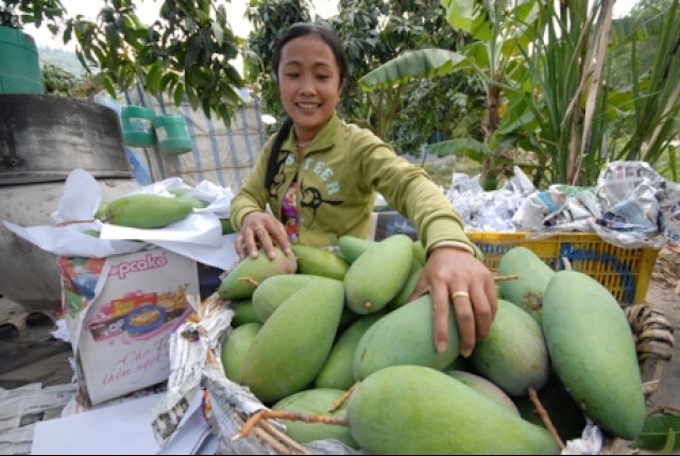
Vietnam has great potential to export organic produce to the EU thanks to the upcoming EU-Vietnam Free Trade Agreement, the agriculture ministry said. Last year, with almost 13,000 tons, the country ranked 39th in organic exports to the EU.
Data from the ministry shows organic farming is done in 40 localities on a total area of 23,400 hectares, 97.5 percent of them are under EU, U.S. and Japanese standards, and most of the produce are vegetables, fruits and tea.
Domestic consumption of organic produce is worth around VND500 billion ($21.5 million) a year in Hanoi and VND400 billion ($17.2 million) in Ho Chi Minh City.
There are 20 exporters of organic produce who ship 260,000 tons a year worth almost $15 million.
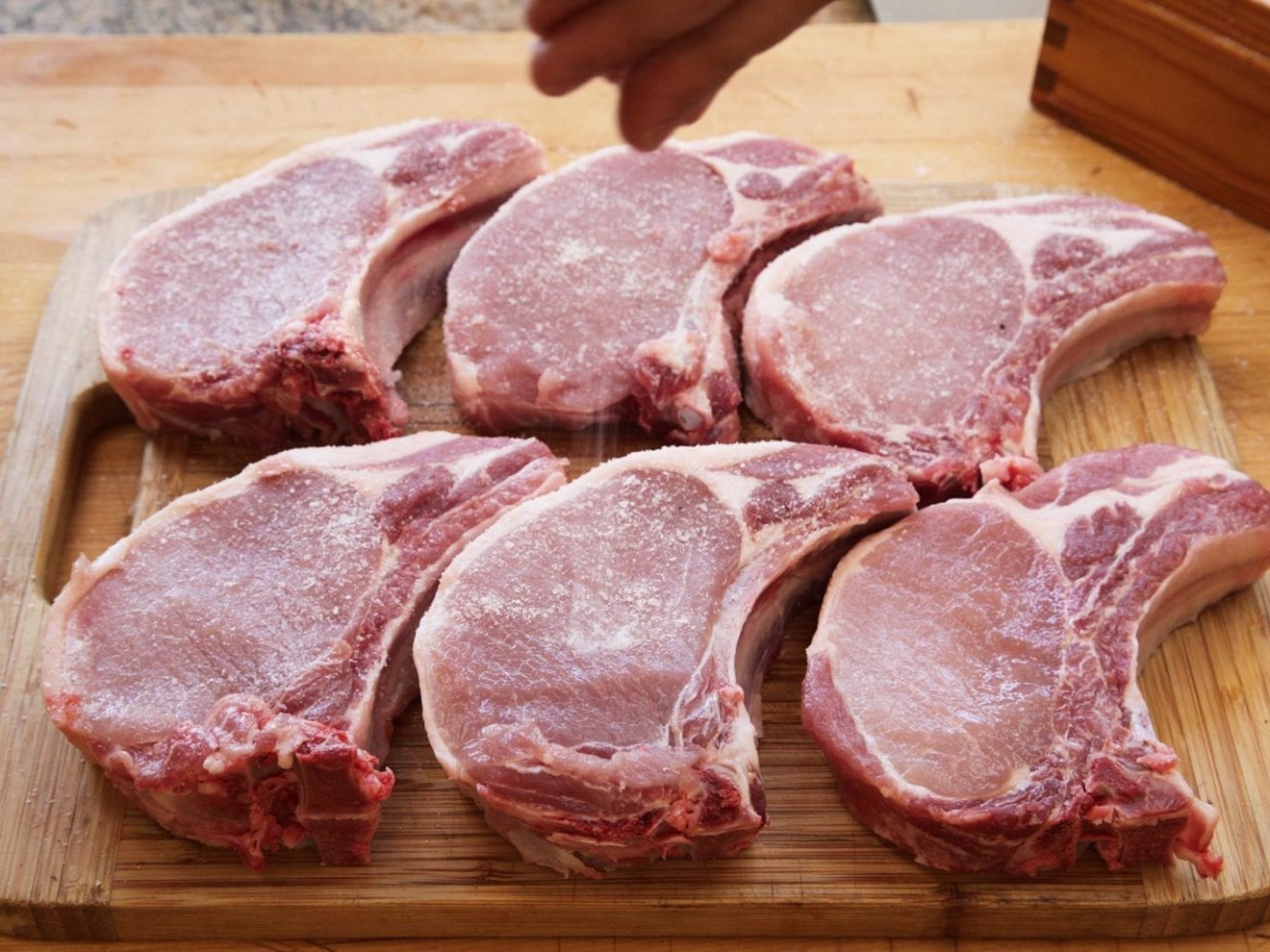
Vietnamese traders are exporting pork to China despite forecasts of declining domestic supply due to outbreaks of the African swine fever.
Tam, who buys pork in the south, said his exports to China have increased in the last two months, and fetch a margin of VND500,000-1 million ($22-43) per pig. “Prices are high in China because it stopped buying from the U.S.”
Nguyen Kim Doan, deputy chairman of the Dong Nai Breeding Association, said traders are selling Vietnamese pork to China because of the large gaps in prices in the two countries.
Pork costs CNY26.67 ($3.7) in China and just VND50,000 ($2.2) in Vietnam, a 43 percent difference.
China, the world’s top pork consuming nation, earlier this month canceled orders to buy 14,700 tonnes of U.S. pork as the trade war between the two largest economies continued. Industry insiders have forecast prices in China to increase by 70 percent from last year in the coming months.
In Vietnam, they have risen by up to 28 percent to VND50,000 ($2.2) in the north and VND40,000 ($1.7) in the south since supply has been falling after African swine fever swept the country.
Some 4.7 million pigs have been culled since the disease was first detected in February this year.
Producers are reluctant to return to the business after having to cull infected animals, the Department of Processing and Market Development of Agriculture Products said.
It estimated prices to rise further, especially during Lunar New Year Festival (Tet) next January.
Vietnam could face a shortage of 500,000 tons in the second half of this year, or 20 percent of demand, according to market research firm Ipsos Business Consulting.
In January-August the country exported $449 million worth of meat, up 3.6 percent year-on-year from 2018, mostly because of the rise in pork exports to China.
All provinces and cities have reported the disease, which does not pose a risk to humans but is fatal to pigs.
Pork accounts for three-quarters of meat consumption in Vietnam, a country of 95 million.
African swine fever was first detected in Asia last year in China, the world’s largest pork producer. Half of its breeding pigs have died or been slaughtered because of the disease, twice as many as officially reported.
Telecom giant Viettel Global Investment JSC has made VND1.17 trillion ($50.5 million) in pre-tax profits after reporting a loss last year. Viettel Global, which covers overseas investments by military-run Viettel Group, had made a VND15.77 billion ($681,000) loss in the same period last year, according to the company’s audited consolidated financial statements.
Revenues in the first six months reached VND7.9 trillion ($341 million), down 1.5 percent year-on-year, but a sharp decrease in the cost of sales improved profits, the company’s management board said.
In the first half of the year, the company focused more on its core business of telecommunications, raised its average revenue per user (ARPU) and cut down the sale of equipment with low-profit margins. This raised the company’s operating profit margin (excluding financial income) to 35.3 percent from 26.4 percent in the same period last year.
Revenue in Southeast Asia, especially driven by growth in the Cambodian market, accounted for 53 percent of Viettel Global’s revenue in the first six months, followed by Africa with 33 percent and South America with 14 percent.
Viettel Global was established in 2006 to spread Viettel Group’s presence in foreign markets. It currently operates in ten markets, namely Cambodia, Laos, Timor Leste, Mozambique, Burundi, Haiti, Peru, Cameroon Tanzania and entered Myanmar last year.
Viettel Global said it has plans to enter new markets, mainly in ASEAN.
Viettel Global is one of the largest enterprises on Vietnam’s Unlisted Public Companies Market (UPCoM) in terms of both asset size and market capitalization. As of June 30, the company’s total assets were VND59 trillion ($2.54 billion), of which equity accounted for VND25 trillion ($1.08 billion).
Duong Thi Mai Hoa, who used to be deputy chairwoman of startup Bamboo Airways, has moved to real estate firm Sunshine Group. A spokesperson for Sunshine Group told VnExpress she had joined as deputy chairwoman earlier this month.
A Bamboo Airways spokesperson said Hoa would be replaced internally.
Hoa had been with Bamboo for almost a year and before that the CEO and CFO of Vingroup between 2012-2017, and the CEO of ABBank and Vietnam International Bank before that.
The 50-year-old graduated from the Hanoi University of Technology and holds a master’s degree in business administration from the Free University of Brussels, Belgium. She is a member of the Association of Certified Public Accountants (ACCA).
Sunshine Group is also in construction, education and technology.
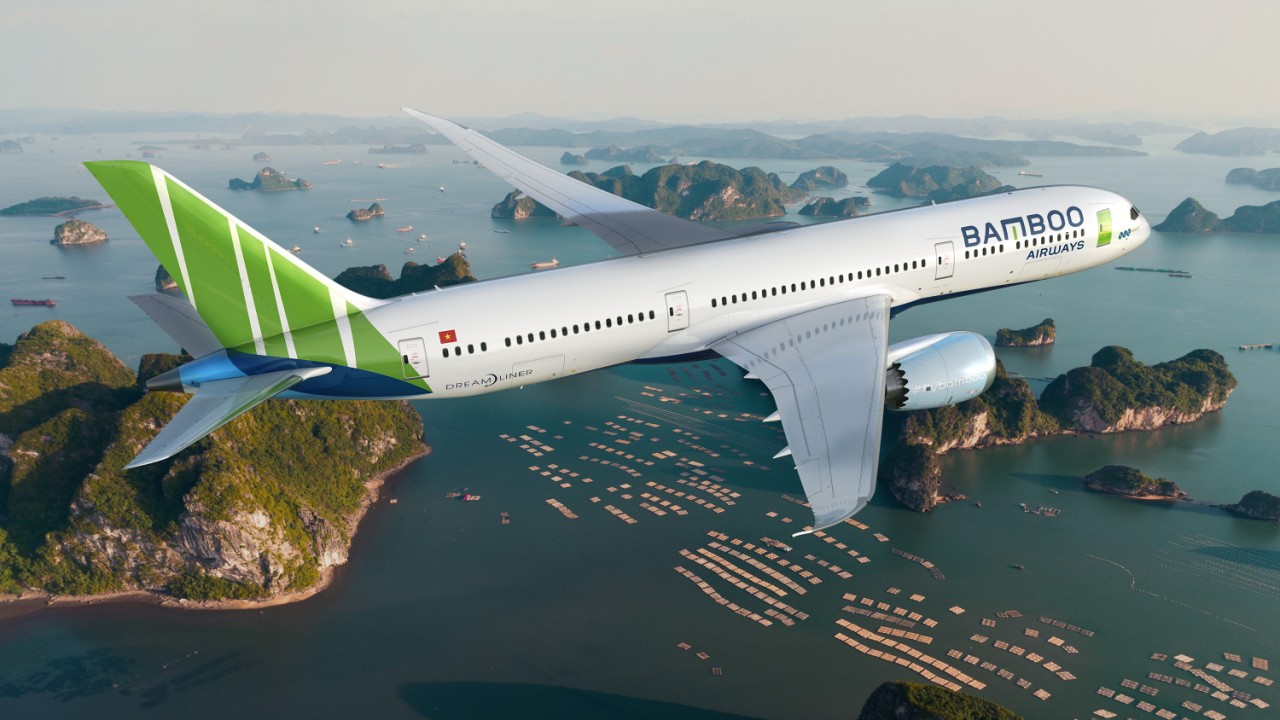
Bamboo Airways plans to have a fleet of 100 aircraft by 2024 with the majority of them being Boeing 787-9 or Airbus A321.
The carrier said in a statement Thursday it would lease the first Boeing 787-9 in October since the 10 it has ordered would not be delivered until the fourth quarter of 2020.
Bamboo has received permission from the Ministry of Transport to operate 30 aircraft, and it plans to achieve this number by the end of the first quarter of 2020. The airline, which began flying in January, has yet to break even.
Its chairman, Trinh Van Quyet, has said that with 30 aircraft the carrier could get into the black by the first quarter of 2020. The carrier now flies 10 aircraft on 26 domestic routes besides international charter flights.
Vietnam hopes to grow its aviation market by 16 percent a year in 2015-20 and 8 percent in 2020-30.
This means there will be a possible 117 million air travelers by 2023, 85 percent by Vietnamese carriers, which will require 340 aircraft, according to the Civil Aviation Authority of Vietnam.
E-commerce platform Tiki’s losses have wiped out a total of VND506 billion ($22 million) gaming firm VNG had invested in it. As of June 2019, VNG had suffered a cumulative loss of $22 million of its 24.6 percent shareholding in Tiki, according to the gaming firm’s recently released audited semi-annual financial statement.
In accordance with current accounting practices, the value of VNG’s investment in Tiki is now effectively zero.
Tiki JSC started off as an online bookstore in 2010 before venturing into e-commerce. Just six years later, the firm was valued at $45 million, following domestic tech firm VNG injecting some $17 million in a 38 percent stake acquisition deal, which was then the largest shareholding in Tiki.
However, by June 30 this year, VNG’s stake in Tiki had fallen to 24.4 percent after JD.com, China’s second-biggest e-commerce firm behind Alibaba, made a series of investments for undisclosed sums to raise its ownership to 25.65 percent.
Tiki, like other e-commerce giants in the Vietnamese market, has been struggling to make profit for years due to high operational costs in a competitive market.
Tiki has reported losses totaling VND380 billion ($16.4 million) in 2016 and 2017. Tiki made a record loss of VND757 billion ($32.75 million) last year, of which VND254 billion ($11 million) was attributed to VNG.
Founded in 2004, VNG provides online games, music streaming and messaging applications.